US-Israel war on Iran

A new regional order for the Strait of Hormuz | GCC

The ongoing war of choice launched by the United States and Israel against Iran has shattered the geopolitical status quo in our region. As Washington finds itself entangled in another Middle Eastern quagmire, reports suggest that US President Donald Trump’s administration is increasingly in need of a political off-ramp.

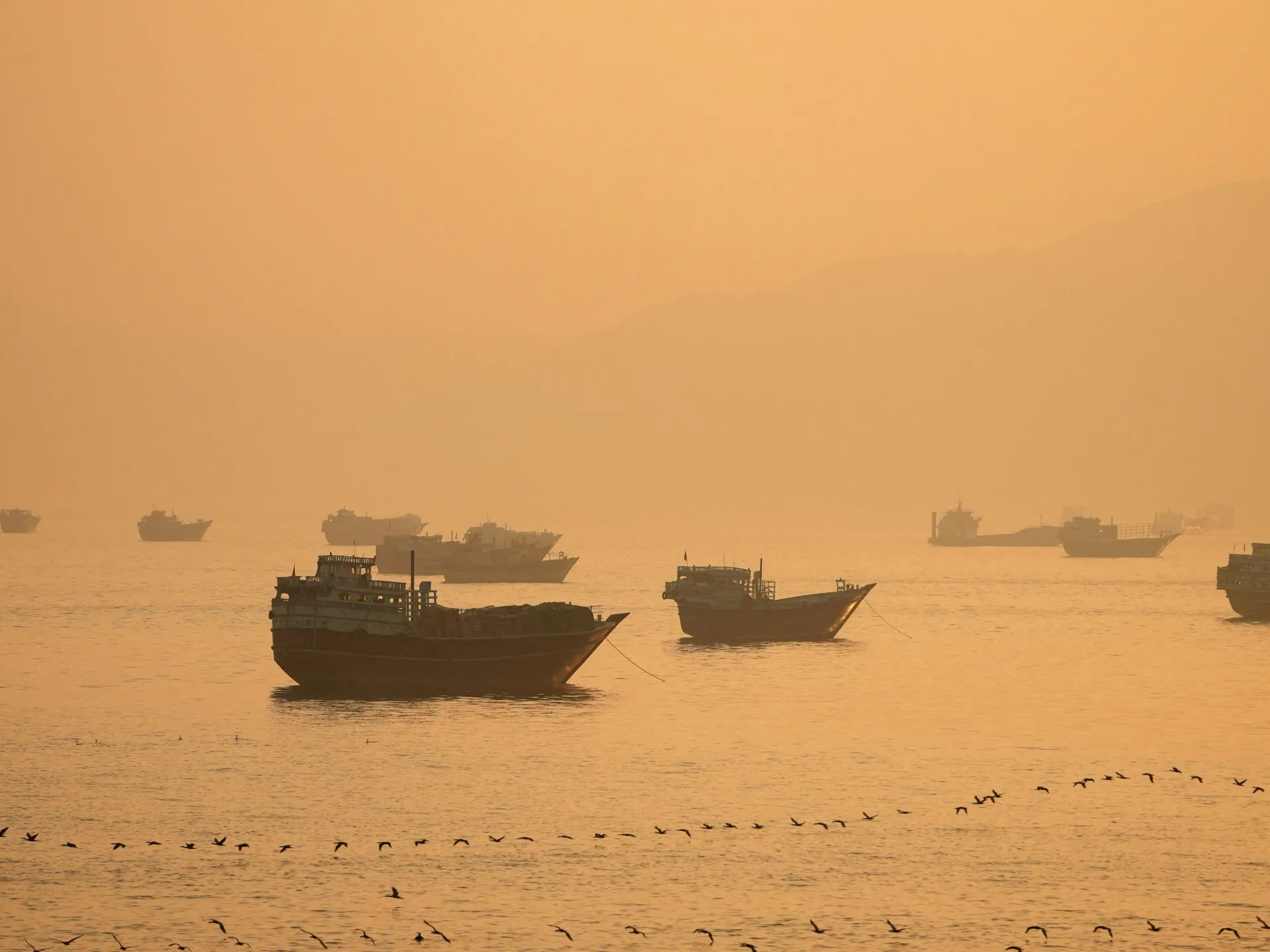
The Hormuz littoral states possess a rare, collective opportunity to provide the American president with an exit strategy. By taking the initiative to establish a new, locally managed security architecture for the Strait of Hormuz, our nations can further elevate their strategic significance in regional geopolitics and the global economy. The alternative to this win-win scenario is prolonged conflict that would ensure that a new regional order is eventually imposed unilaterally by Tehran.

Seeking to balance their positions, the Gulf Cooperation Council (GCC) states appear trapped between two bad options. Confronting Trump, especially in the middle of a war, would undoubtedly carry significant costs and unpredictable reactions from an increasingly unpredictable leader.

At the same time, their inability to avoid being seen by Iran as at least passive participants in the aggression against the country makes them legitimate targets under its increasingly assertive military doctrine, which seeks to prevent the repetition of such wars for the foreseeable future.

Yet, this reality also demonstrates the limits of the United States’ security patronage. These limits—especially during what appears to be a historically unconditional alliance with Israel in which Israeli interests increasingly trump American interests in the region—suggest that the status quo is unsustainable.

A new order will inevitably replace the existing one, as conditions for all regional states will further deteriorate if the conflict continues to escalate. There is no longer any scenario in which Iran remains a target while the GCC carries on as usual, as was the case during the 12-day war in June 2025.

Iran’s ability to choke the flow of maritime traffic with $20,000 drones that can be produced underground and launched from anywhere in the country suggests that it possesses immense leverage. Iranian officials have clearly stated that it will now be utilised to forge a new order for Hormuz.

Relations between Iran and the GCC states have seen ups and downs since the Islamic Revolution in 1979. The relationship was defined by hostility for a long time until it underwent a radical, positive transformation in the past few years.

Iranian attacks against the military and economic infrastructure in the GCC states, along with the recent expulsion of Iranian diplomats from some GCC capitals, undoubtedly constitute a severe setback and a regression toward the past.

However, this crisis has also demonstrated that security is a collective good; the current war proves how one state’s insecurity renders all states in the region insecure. A security architecture built at the expense of a neighbour is no longer viable. Iran has already begun dismantling the former order, but the new order does not need to be exclusively Iranian in its design.

For a path forward, we can look to Europe’s successful historical experiences in achieving a regional order. From the Congress of Vienna, which stabilised Europe following Napoleon’s wars of aggression, to the gradual economic, political, and security integration that followed World War II, these milestones should not serve as templates, but as sources of inspiration for our region.

The Strait of Hormuz suffers from a legal anomaly, as it remains one of the few critical maritime arteries of its kind lacking a dedicated international regulatory treaty. Unlike Turkiye, whose sovereign control and regional stability are in part anchored in the Montreux Convention regulating the Bosporus and Dardanelles, Hormuz operates without a codified maritime framework, which has made it uniquely vulnerable to superpower impositions throughout history. The current war can thus, to some extent, be understood as a product of this unregulated environment.

Convening a “Congress for Hormuz” could help regional states collectively design a security architecture, fill this legal vacuum, and ensure the stability of not only our own region but the global economy as well.

The ultimate goal of such a platform should be the codification of a treaty that formalises the status of the strait and provides the legal certainty currently absent, while also elevating the strategic weight of regional states in the global economy by ensuring that the management of Hormuz remains a local prerogative.

In the short term, this framework can serve to reopen the strait, providing Trump with a way out of the quagmire by claiming that his regional allies have helped reopen it. In the long term, this framework would protect GCC countries from a patron willing to sacrifice international law and regional stability for the benefit of its principal ally, Israel, an ally that none of us will ever be able to replace or compete with.

The future of Hormuz belongs in the hands of its inhabitants, not the superpowers who have exploited it and are currently destabilising it to pursue their own, or Israel’s, interests.

While a multilateral platform and a formal treaty represent the ideal path towards long-term stability, it is imperative to recognise that the current existential war launched against Iran—a conflict facilitated by the regional status quo—has made the emergence of a new order a non-negotiable necessity for Tehran.

Should the GCC states choose to prioritise the requests of their Western allies over regional integration—which is likely to also prolong the conflict, inflicting costs on all sides—Iran will undoubtedly proceed to forge this new order unilaterally.

In such a scenario, the resulting framework would also be an imposed order, born of strategic necessity and survival rather than consensus. Under these conditions, the common ground for shared peace, regional stability, and collective prosperity would be significantly diminished. This would be a lost opportunity.

The GCC states must now decide whether they wish to be the architects of this new regional era, or passive observers.

The views expressed in this article are the author’s own and do not necessarily reflect Al Jazeera’s editorial stance.

Source link

Vietnam’s gig workers slammed by rising fuel costs amid fallout of Iran war | Business and Economy News

Ho Chi Minh City, Vietnam – After a long day of ferrying passengers to and fro recently, e-hailing driver Nguyen was dejected to find he had spent half of his earnings on fuel.

“I drove for around seven or eight hours, making around 240,000 Vietnamese dong [$9.11] and then I paid 120,000 Vietnamese dong [$4.56] on petrol,” Nguyen, a motorcyclist who connects with passengers via the locally developed super-app Be, told Al Jazeera, asking not to be identified by his real name.

Recommended Stories

list of 4 itemsend of list

“I can’t survive with this amount of money in the city.”

In Vietnam, the ripples of the US-Israel war on Iran are hitting many gig workers hard.

The Southeast Asian country normally sources about 80 percent of its crude oil from Kuwait, but shipments have dried up amid Iran’s effective blockade of the Strait of Hormuz, driving up fuel prices.

Diesel prices have more than doubled, while petrol prices have risen almost 30 percent, making getting from point A to point B an increasingly expensive proposition in cities such as Ho Chi Minh City, home to more than 7 million motorcycles.

“Because the petrol price is so high, so many drivers are turning off the app, going home and just not working,” Nguyen said.

“After today, I will turn off the app and stop working for a few days to see if the price goes down or if the government is helping in any way.”

Govi
A Be driver picks up a passenger at Thu Duc Metro Station in Ho Chi Minh City, Vietnam, on March 30, 2026 [Govi Snell/Al Jazeera]

Vietnam’s government has rolled out a series of emergency measures to cushion the blow for citizens.

Prime Minister Pham Minh Chinh last month announced that an environmental tax on diesel, petrol, and aviation fuel would be suspended until April 15 to help stabilise prices.

Nguyen Khac Giang, a Vietnamese-born visiting fellow at the ISEAS-Yusof Ishak Institute in Singapore, said authorities had been forced to act to stave off rising disgruntlement among citizens.

“There are a lot of complaints and frustrations about rising living costs, because gas prices are everything in Vietnam,” Giang told Al Jazeera.

“It’s not only necessary in terms of making the population feel relief about the rise of gas prices, but at the same time, it will keep the macroeconomic stability intact, given the turbulence outside Vietnam.”

Despite the government sacrificing an estimated $273m in revenue via the tax cut, signs of strain are mounting across the economy.

Public transportation is stretched to capacity in major cities, while domestic carriers such as Vietnam Airlines and Vietjet Air have slashed flights.

“As a very, very open economy, Vietnam is super vulnerable to international shocks,” Giang said.

Gig workers have been particularly exposed due to the double whammy of heavy fuel consumption and minimal labour protections.

“Their income is changeable due to factors beyond their control,” Do Hai Ha, a research fellow at the University of Melbourne who has studied Vietnam’s gig platforms, told Al Jazeera.

“They have no chance to negotiate with the platforms.”

Many drivers have had no choice but to work longer hours as they are “excluded from labour protection, so there’s no guarantee in terms of minimum wages or overtime pay”, Do said.

A commuter refuels at a Ho Chi Minh City petrol station on March 27. Govi Snell _ Al Jazeera_-1775367397
A commuter refuels at a petrol station in  Ho Chi Minh City, Vietnam, on March 27 [Govi Snell/Al Jazeera]

Companies, too, are feeling the crunch.

Anh Dao, who collects fares on Ho Chi Minh City’s bus route 13, said the bus operator has been losing money due to the surge in diesel prices, despite raising ticket prices by 3,000 Vietnamese dong ($0.11).

“As we already signed the contract, we cannot just stop running the buses,” Ahn told Al Jazeera.

For one fisherman in the coastal region of Binh Thuan, about 200km (124 miles) from Ho Chi Minh City, rising fuel costs have prompted a frantic search for cheaper options to power his basket boat.

“Now that fuel prices are rising, it’s having a big impact,” the fisherman told Al Jazeera, asking not to be identified by name. The middlemen he does business with have been citing weak demand to justify offering lower prices for his catch, he said.

“What I was usually able to sell for 800,000 Vietnamese dong [$30] is now only selling for 650,000 Vietnamese dong [$24],” he said.

Families kept apart

For some low-income families, the rising costs are reshaping daily life in other ways.

After a weeklong trip to the Mekong Delta region, Uyen Pham, a communications manager for the Saigon Children’s Charity, said she has seen the strain firsthand.

“Several parents noted that the cost of bottled cooking gas has nearly doubled,” Pham told Al Jazeera.

“Most of our beneficiary families have always relied on wood-fired stoves or a hybrid of wood and gas to save money. With the recent price hike, they are now strictly limiting their gas usage even further, relying almost entirely on wood to cut every possible expense.”

For many parents, the rising fuel costs have also meant less time with family.

“Many parents in remote areas must leave their children with grandparents to work in cities,” Pham said.

“Rising fuel prices directly increase their commuting costs, while manual labour wages remain stagnant. This pinches their take-home pay and, in some cases, reduces how often they can afford to travel home to see their children.”

For the government in Hanoi, the price volatility has intensified the focus on greater energy independence, Giang, the visiting fellow, said.

“The longer-term question this crisis has enacted is a very important question about the strategic autonomy of Vietnam in terms of energy dependencies, especially when we are a net importer of oil,” he said.

Policymakers will need to “more aggressively accelerate Vietnam’s energy independence by building more refineries,” Giang said, “because now we only have two refineries, which is not enough for the Vietnamese market.”

With long-term solutions likely to take years to come to fruition, authorities are scrambling for short-term fixes.

Commuters wait for the train at Thu Duc metro station. Govi Snell_ Al Jazeera. 30_03_-1775367388
Commuters wait for the train at Thu Duc Metro Station, in Ho Chi Minh City, Vietnam, on March 30, 2026 [Govi Snell/Al Jazeera]

Late last month, Vietnam’s prime minister and a delegation from the Ministry of Industry and Trade visited on the Nghi Son Refinery and Petrochemical Complex, the country’s largest refinery, in Thanh Hoa, a coastal city about 1,500km (932 miles) north of Ho Chi Minh City.

During their visit, officials said the refinery, which supplies about 40 percent of Vietnam’s petrol needs, would urgently need to find alternative sources of crude, as current supplies were expected to run out by the end of May.

The war on Iran also appears to be reshaping at least some domestic investment.

Vingroup, Vietnam’s largest conglomerate, last month informed authorities that it wanted to halt plans to build the country’s largest liquefied gas-fired power plant and put the funds towards a renewable energy project instead, according to a letter reported by the Bloomberg and Reuters news agencies.

In the letter, the company cited “the significant risk of high fuel prices for LNG power projects” due to the war.

In the meantime, Duy, who works at a cafe tucked behind a Ho Chi Minh City petrol station, is feeling some relief after the government’s fuel tax cut, which authorities projected would reduce petrol prices by about one-quarter and diesel prices by about 5 percent.

“I usually pay 100,000 Vietnamese dong [$3.80] a week on gas, but at the peak of the high prices a few days ago, it was almost double that,” she told Al Jazeera.

“It affected my income.”

Additional reporting by Nguyen Hao Thanh Thao

Source link

Ukraine and Syria to cooperate on security, Zelenskyy says | Military News

During a trip to Damascus, Ukrainian President Volodymyr Zelenskyy said the two countries agreed to work together to provide ‘more security and opportunities for development for our societies’.

The leaders of Ukraine and Syria have pledged greater security cooperation, President Volodymyr Zelenskyy said, as Kyiv offers its military expertise to governments across the Middle East region amid the US-Israeli war on Iran.

Zelenskyy held talks with Syrian President Ahmed al-Sharaa in Damascus on Sunday, in his first trip to the Syrian capital since former leader Bashar al-Assad was ousted in 2024.

Recommended Stories

list of 3 itemsend of list

Zelenskyy wrote on Telegram that the leaders agreed to work together to provide “more security and opportunities for development for our societies”.

“There is a great interest in exchanging military and security experience,” he said.

Since the war began on February 28, Iran and its allied groups have attacked US and Israeli targets, as well as targets in Gulf countries, using a range of missiles and drones.

Ukraine, which has developed expertise in countering drone attacks in its more than four-year war with Russia, has offered its country’s expertise during Zelenskyy’s visits to countries in the region, and has sent teams to Qatar, Saudi Arabia and the United Arab Emirates.

During his visit to the Gulf states last week, Zelenskyy signed long-term military cooperation deals with Saudi Arabia and Qatar.

Syria is not known to have any air defences capable of dealing with Iranian drones or missiles.

Zelenskyy also told al-Sharaa that Kyiv was a reliable grain supplier and said the two leaders “discussed joint opportunities to strengthen food security across the region”,

According to Turkiye’s Foreign Ministry on X, the country’s foreign minister, Hakan Fidan, also met Zelenskyy in Damascus on Sunday, as well as his Syrian counterpart, Asaad al-Shaibani and Ukraine’s Andrii Sybiha.

The meeting with foreign ministers came a day after Zelenskyy visited Turkiye, met with President Recep Tayyip Erdogan, agreed on “new steps” in security cooperation, and discussed joint gas infrastructure projects and gasfield developments.

Source link

OPEC+ agrees to hike oil output, warns of slow recovery after attacks | OPEC News

The rise is largely symbolic as some key members are unable to raise ​production amid the US-Israel war on Iran.

The Organization of the Petroleum Exporting Countries (OPEC) has agreed to increase oil output quotas by 206,000 barrels per day for May, a rise that is largely symbolic as some of its key members are unable to raise production due to the US-Israeli war on Iran.

The war has effectively blocked the Strait of Hormuz – the world’s most important oil route – since the end of ⁠February and cut exports from OPEC+ members Saudi Arabia, the United Arab Emirates (UAE), Kuwait and Iraq.

Recommended Stories

list of 3 itemsend of list

In a statement on Sunday, eight members of OPEC+, including Saudi Arabia, Russia, Iraq, the UAE, Kuwait, Kazakhstan, Algeria, and Oman, agreed to increase May quotas during a virtual meeting.

“The countries will continue to closely monitor and assess market conditions, and in their continuous efforts to support market stability,” the statement read.

“The eight countries also expressed concern regarding attacks on energy infrastructure, noting that restoring damaged energy assets to full capacity is both costly and takes a long time, thereby affecting overall supply availability,” it added.

While the quota increase represents less than two percent of the supply disrupted by the closure of the strait, OPEC+ sources told the Reuters news agency that the pledge had signalled readiness to raise output once the waterway reopens.

Crude prices have surged to a four-year high amid the war, close to $120 a barrel, leading to higher prices for transport fuels.

On Thursday, JPMorgan said oil prices could spike above $150, an all-time high, if oil flows through the Strait of Hormuz remain disrupted into mid-May.

May’s increase is the same as the eight members had agreed on for April at their last meeting on March 1. But amid the war, oil supply disruption on record is estimated to have removed as much as 12 to 15 million bpd or up to 15 percent of global supply.


INTERACTIVE - Different types of crude oil - March 13, 2026-1773391867
(Al Jazeera)

With the strait still closed, Iran has allowed some countries in the region to use the waterway.

Iran has said Iraq was exempt from any transit restrictions through the strait, with shipping data on Sunday showing a tanker loaded with Iraqi crude passing through the waterway.

Oman’s Foreign Ministry announced on Sunday that deputy foreign minister-level talks were being held with Iran to discuss ⁠⁠options to ensure the smooth transit of vessels through the Strait ‌‌of Hormuz.

US President Donald Trump threatened to escalate attacks and target Iranian civilian infrastructure, including bridges and power plants, if the Strait of Hormuz is not reopened by Monday.

Source link

Mearsheimer: No signs of quick end to US-Israel war on Iran | US-Israel war on Iran

US political scientist John Mearsheimer argues that Israel – not Iran – is the Middle East country that is ‘highly aggressive’.

The greatest threat to stability in the Middle East is not Iran, but “the US working closely together with Israel”, argues United States political scientist John Mearsheimer.

Mearsheimer tells host Steve Clemons that the notion that the US and Israel are making a safer, more stable Middle East is “ludicrous”. And the idea that Iran is “the great destabiliser” in the region is “a myth that the US and Israel purvey”.

After US President Donald Trump insisted that “We have all the cards; they have none”, Mearsheimer says the exact opposite is true – “and that’s why we are in desperate straits”.

Source link

Trump threatens ‘hell’ for Iran over Hormuz Strait as deadline approaches | US-Israel war on Iran News

US president threatens to strike power plants and bridges on Tuesday in an expletive-laden social media post.

United States President Donald Trump has threatened to attack civilian infrastructure inside Iran, including bridges and power plants, if the Strait of Hormuz is not reopened by his stated deadline of Monday.

Trump made the threat in an expletive-laden social media post on Sunday, in which he repeated previous threats to pummel vital infrastructure across Iran.

Recommended Stories

list of 3 itemsend of list

“Tuesday will be Power Plant Day, and Bridge Day, all wrapped up in one, in Iran. There will be nothing like it!!! Open the F****** Strait, you crazy b*******, or you’ll be living in Hell – JUST WATCH! Praise be to Allah,” Trump said in a Truth Social post.

On March 26, Trump set a 10-day deadline for Iran to reopen the Strait of Hormuz, a key shipping route for the global energy market, where traffic has ground to a halt since the US and Israel first attacked Iran on February 28.

He told Fox News on Sunday that Iran was currently negotiating with the US and that he believed the two could reach a deal before the deadline.

The US president has frequently repeated that Iran is seeking a deal to end the war and that fighting will end soon since the conflict began. Iran has stated that it is not seeking to end the war and has vowed to step up escalation across the region if its infrastructure is targeted.

Throughout the war, US officials have threatened Iran with overwhelming violence if it does not capitulate to US demands. Last week, US Secretary of Defense Pete Hegseth threatened to send Iran “back to the Stone Age”.

US-Israeli strikes have already targeted civilian infrastructure and facilities, including bridges, schools, healthcare facilities, and universities. Experts have warned that some of those strikes could constitute war crimes.

The US president has said that he will hold a news conference in the White House on Monday.

Trump also offered additional details about the operation to locate and extract the pilot of an F-15E fighter jet that was shot down over Iran on Friday.

“We have rescued the seriously wounded, and really brave, F-15 Crew Member/Officer, from deep inside the mountains of Iran,” he said in a separate social media post on Sunday.

“An AMAZING show of bravery and talent by all!”

Source link

Iran’s ex-FM Zarif proposes peace roadmap; Gulf points at erosion of trust | US-Israel war on Iran News

Former Iranian Foreign Minister Mohammad Javad Zarif has proposed a roadmap for ending the United States-Israeli war on Iran as tensions escalate across the Middle East.

Zarif’s plan was published by Foreign Affairs magazine on Friday and goes “beyond a temporary ceasefire”.

Recommended Stories

list of 4 itemsend of list

The war, which erupted on February 28 with US-Israeli strikes on Iran, has spread across the Middle East and convulsed the global economy as Tehran attacked its neighbours, claiming to be targeting US assets there and restricting movement of vessels in the Strait of Hormuz.

Regional hostilities showed no signs of abating on Sunday, a day after US President Donald Trump said Iran had 48 hours to cut a deal or face “all hell”.

Against this backdrop, Zarif’s roadmap said that although Iran viewed itself as successful in the war, prolonging the conflict – while potentially “psychologically satisfying” for Tehran – would only result in further loss of civilian lives and destruction of infrastructure.

Iran should, therefore, offer to “place limits on its nuclear program” under international monitoring as well as “reopen the Strait of Hormuz in exchange for an end to all sanctions”, Zarif wrote.

Since the war began, Iran has virtually blocked the key waterway, through which one-fifth of the world’s crude oil and natural gas supplies normally pass.

Nuclear limits on Iran would include a commitment to never seek nuclear weapons and to blend its entire stockpile of enriched uranium so its enrichment levels fall below 3.67 percent, Zarif said.

According to the International Atomic Energy Agency (IAEA) estimates, Iran is believed to have about 440kg (970lb) of uranium enriched to 60 percent, a level at which uranium can be quickly enriched to the 90 percent threshold needed to produce a nuclear weapon.

Zarif called Trump’s demand for zero enrichment “fanciful” thinking.

Iran should also “accept a mutual nonaggression pact with the United States” in which both countries pledge to not strike each other in the future, the former minister said.

The US should also end all sanctions and United Nations Security Council resolutions against Iran, he added.

Regional consortium

Zarif also outlined potential roles for regional and international actors.

He suggested that China and Russia along with the US could help create a regional fuel-enrichment consortium with Iran and its Gulf neighbours at West Asia’s sole enrichment facility with Iran transferring all enriched material and equipment there.

Zarif additionally proposed that Gulf states, UN Security Council powers and possibly Egypt, Pakistan and Turkiye should form a regional security framework to “ensure nonaggression, cooperation and freedom of navigation”, including arrangements to guarantee safe passage through the Strait of Hormuz.

“To further consolidate peace, Iran and the United States should initiate mutually beneficial trade, economic and technological cooperation,” Zarif added.

The Iranian politician said this roadmap would benefit Trump, offering him a “well-timed off-ramp” and an opportunity to claim peace.

“Emotions may be high, and each side is boasting about its war-front victories. But history best remembers those who make peace,” he said.

The US has presented Iran with a 15-point plan for a ceasefire as Pakistan, Turkiye and Egypt have been trying to achieve direct talks, but there has been no signs of progress on the diplomatic front.

What about the Gulf?

Officials from Gulf states have responded to Zarif’s proposal, criticising it for overlooking Tehran’s attacks against its neighbours.

“Reading M. Javad Zarif’s article in Foreign Affairs ignores one of the core flaws in Iran’s strategy: aggression against its Gulf Arab neighbors,” Anwar Gargash, the diplomatic adviser to the president of the United Arab Emirates, said on X on Saturday.

“Thousands of missiles & drones targeting infrastructure, civilians, even mediators, is not strength; it is hubris & strategic failure. The Arab world has seen this before: destruction peddled as victory,” he added.

Former Qatari Prime Minister Hamad bin Jassim Al Thani also responded to Zarif’s plan, writing on X on Sunday that he “agreed with much of it” and it took a “clever” approach.

Still, he pushed back, stating that the war has “led us all into a path that is more complicated and dangerous” and chiding Iran for its attacks on the Gulf.

“You may believe that you have achieved progress in some aspects, and perhaps temporary tactical gains, but the cost was clear: the loss of an important part of your friends in the region, and the erosion of the trust that was built over years,” he wrote.

“Today, we need a voice like yours [Zarif’s] merging from within Iran to propose solutions to this war,” he added.

Source link

Oman, Iran discuss smooth transit in Strait of Hormuz, Muscat says | US-Israel war on Iran News

The talks have focused on a ‘smooth passage’ through the Strait of Hormuz, as Tehran effectively blocks the vital waterway.

Oman and ⁠⁠Iran ⁠⁠have held deputy foreign ⁠⁠minister-level talks, discussing ⁠⁠options to ensure the smooth transit of vessels through the Strait ‌‌of Hormuz, according to the Omani Foreign Ministry.

The meeting was held on Saturday “at the level of undersecretaries in the foreign ministries of the two countries”, the ministry said on Sunday in a post on X, adding that it was “attended by specialists from both sides”.

Recommended Stories

list of 3 itemsend of list

“Possible options were discussed regarding ensuring the smooth passage through the Strait of Hormuz during these circumstances witnessed in the region,” it added. “During the meeting, experts from both sides presented a number of visions and proposals that will be studied.”

On Sunday, three Omani ships appeared to be transiting the Strait of Hormuz, outside Iran’s “approved corridor” near Larak Island, according to tracking data monitored by shipping journal Lloyd’s List.

The convoy consists of two large oil supertankers and one liquefied natural gas (LNG) carrier that are sailing “unusually close to the Omani coast”, according to the United Kingdom-based outlet.

INTERACTIVE - Strait of Hormuz - March 2, 2026-1772714221

The developments come after an Iranian ⁠⁠official said on ⁠⁠Thursday that Iran was drafting a protocol with ⁠⁠Oman to monitor ⁠⁠traffic in the ⁠⁠strait, through which about a fifth of global ‌‌oil supplies travel, and which Iran has severely restricted in retaliation for the ongoing US-Israeli war on the country.

Since the war began on February 28, Iran’s Islamic Revolutionary Guard Corps (IRGC) has allowed some vessels to transit, including Pakistani, French, and Turkish-linked vessels. But about 3,000 others are stranded.

Strait effectively blocked

The waterway is a critical chokepoint for global energy shipments, especially oil and gas moving from the Gulf to Europe and Asia.

Disruptions there have injected volatility into the market and pushed oil- and gas-importing countries to seek alternative sources.

United States President Donald Trump, in a social media post over the weekend, threatened to unleash “all Hell” if it is not opened by Monday.

Egypt’s ⁠⁠Foreign ⁠⁠Minister Badr Abdelatty held separate calls ⁠⁠to discuss proposals for regional de-escalation ⁠⁠with US Special Envoy Steve Witkoff and regional counterparts, including Iranian ‌‌Foreign Minister Abbas Araghchi, the Egyptian ministry said in a statement on Sunday.

Amin Saikal, a professor emeritus at the Australian National University, said an expansion of the war “is going to be hell for the whole region”. “There has to be some kind of negotiated settlement,” he told Al Jazeera on Sunday.

“But at this stage, the door for a diplomatic solution seems to be very narrow, unless President Trump decides that this conflict has caused so many problems for him domestically, as well as internationally, that it is really time to reach some compromise with the Iranians,” Saikal concluded.

Source link

US pilot from downed F-15E plane rescued in Iran: What we know | US-Israel war on Iran News

United States President Donald Trump said early on Sunday that an American soldier who went missing in Iran after the downing of his F-15E jet has been rescued following what observers called a dramatic firefight between Iranian and US rescue forces.

The US and Iran were racing to find the airman for about two days, with Tehran calling on the public to hand over the soldier to the authorities in what appeared to be attempts to capture an American prisoner of war as the US-Israel war on Iran entered its 37th day.

Recommended Stories

list of 3 itemsend of list

That scenario would have delivered a significant win to Tehran amid the ongoing pummelling of its territory, and for Washington, a stunning blow, analysts say. It could have been the moment that parts of Trump’s support base, which has so far supported the war, started to rethink their stance, they say.

“It was a major test for the American military because they really don’t want to leave any of their servicemen behind enemy lines,” Amin Saikal, a professor of Middle East and Central Asian studies at the Australian National University, told Al Jazeera.

But this rescue “also really frees up President Trump to pursue whatever strategy he has in mind”, Saikal added, referencing Trump’s 48-hour deadline for Iran to make a deal or open the Strait of Hormuz “before all Hell will reign down on them”. Trump has already threatened to bomb energy plants in Iran. Targeting of civilian infrastructure is seen as a violation of the laws of war.

At least 2,076 people have been killed, and 26,500 have been injured in Iran since February 28, when the US and Israel first launched strikes on Iran and killed Supreme Leader Ayatollah Khamenei and several other senior military and political leaders.

The conflict has since escalated into a regional war with Iran retaliating against Gulf countries hosting US military and commercial assets.

What happened to the missing airman?

The F-15E jet carrying two members was flying over southern Iran when it was shot down on Friday morning local time.

According to Tehran, the aircraft was shot down by Iran’s “new advanced air defence system”, which it said remained effective despite claims by the US that it had been destroyed.

It was the first time during the war, and the first time since the invasion of Iraq in 2003, that a US aircraft had been shot down.

Washington immediately launched a rescue mission. Although US forces rescued one crew member hours after the crash, the second pilot, believed to be a colonel-rank weapons system officer, was yet to be found.

At least one Black Hawk helicopter was hit in the initial rescue, but US officials said it managed to stay airborne.

Trump suggested that the US appeared to have the location of the airman and was tracking him as the rescue mission unfolded in an area with difficult, mountainous terrain that made physical recovery challenging.

An A-10 Warthog aircraft was also hit near the Strait of Hormuz around the same time as the F-15E, but its pilot was able to eject before the plane crashed and was subsequently rescued. Iranian media reported that this aircraft was also hit by Iran’s defence system.

INTERACTIVE - F-15How did Iran react?

Following the downing of the F-15E, Iran’s Islamic Revolutionary Guard Corps (IRGC) cordoned off some parts of the mountainous southwestern Kohgiluyeh and Boyer-Ahmad province because they believed the airman went down in the vicinity.

Iranian media also reported that parts of the southern Khuzestan region, an important energy hub, were being scrutinised. That region was the focus of heavy US-Israeli strikes on Saturday that killed at least five people and injured dozens.

Iranian authorities, in a rare move, called on the public on Friday to help find and capture the missing American soldier. State media reported that Tehran offered a $60,000 reward for the airman as clips on state TV repeatedly played footage showing the remnants of the downed US aircraft.

Nomadic tribes in the area, appearing to heed the calls, set about searching for the US airman. Footage from state media showed men carrying rifles and Iranian flags moving in between the mountains of the country’s southwest region.

Some successfully shot at two US Black Hawks that were part of the rescue mission, Iranian officials said. The BBC also verified footage appearing to show Iranian men firing their rifles at US helicopters.

Nomadic groups in Iran, and elsewhere, usually carry rifles to protect their cattle from wildlife and bandits.

The IRGC on Sunday claimed that Iranian forces destroyed two C-130 aircraft and two Black Hawk helicopters during the operation to rescue the US pilot in southern Isfahan.

What did the US do to retrieve the soldier?

Early on Sunday morning, Trump announced in a post on Truth Social that the missing soldier had been rescued in “one of the most daring Search and Rescue Operations in U.S History”.

“This brave Warrior was behind enemy lines in the treacherous mountains of Iran, being hunted down by our enemies, who were getting closer and closer by the hour, but was never truly alone because his Commander in Chief, Secretary of War, Chairman of the Joint Chiefs of Staff, and fellow Warfighters were monitoring his location 24 hours a day, and diligently planning for his rescue,” Trump said in his message.

The president revealed some details of the high-risk operation. He had ordered that dozens of aircraft carrying “lethal weapons” be sent in to retrieve the airman who had managed to evade Iranian forces for two days. All the while, the US was tracking the airman.

Although Trump did not reveal details of the firefight believed to have ensued when the US closed in on the airman and went to retrieve him, he confirmed that the officer “sustained injuries” and added that “he will be just fine”.

Al Jazeera’s John Hendren gathered that there was a “heavy firefight” as what was meant to be a “get-in and get-out” rescue operation dragged on.

While US forces had aimed to use the cover of night to conduct the rescue mission after closing in on the airman, enemy fire prolonged the mission into daylight, making it more dangerous.

“We’ve heard it described to us as a heavy firefight,” Hendren reported. “In the end, they managed to spirit that airman out of the country … and into safety, but it didn’t come without injuries, including injuries to that airman himself, but in the end, the US was allowed to avoid a situation where they would have a prisoner of war inside of Iran.”

Hendren added that the US had earlier started a disinformation campaign in Iran, according to officials, claiming the airman was already rescued, to jeopardise Iran’s search.

Iran has not yet confirmed the incident. Al Jazeera’s Tohid Asadi, reporting from Tehran, said the firefight appeared to have occurred in the Kohgiluyeh Boyer-Ahmad region, and that nine people have been reported killed in “strikes”, although it is unclear if it was related to the US rescue mission.

Meanwhile, Iranian authorities said on Sunday morning that yet another US aircraft – a Lockheed C-130 Hercules – had been downed.

The US has not responded to those claims. At least one such aircraft was spotted flying low over southwest Iran, along with two smaller refuelling helicopters, during the rescue mission effort of the last 48 hours.

Source link

Thousands rally in Iraq against ‘senseless’ US-Israel war on Iran | US-Israel war on Iran News

Tens of thousands of Iraqi Shia leader Muqtada Sadr’s supporters rallied across Baghdad and other cities on Saturday, protesting against the US-Israel war on Iran.

Iraq has been unwillingly drawn into the regional tension, suffering attacks targeting both US interests and pro-Iranian factions within its territory.

In Baghdad’s Tahrir Square, enormous crowds, including some women, filled the streets, brandishing Iraqi flags and shouting: “No, no to Israel” and “No, no to America”.

“What America and Israel are doing in their aggression against the countries of the region is not a war of a military nature, but a senseless war,” said Dhirgham Samir, a demonstrator in his 40s.

“Today’s demonstration is an expression of rejection of aggression, arrogance, and injustice throughout the world, not just in Iraq,” he told the AFP news agency, adding that “this is a senseless war, targeting civilians”.

The ongoing war has resulted in thousands of casualties throughout the region since it began.

Sadr had issued calls for peaceful demonstrations “to condemn the Zionist-American aggression and to establish peace in the region”.

Beneath Baghdad’s Freedom Monument, which honours Iraq’s independence declaration, protesters denounced what they characterised as US and Israeli meddling in regional matters.

“They violate the rights of all the peoples of the region first, and then the world,” Muslim leader Ali al-Fartousi told AFP. “Humanity must speak out against these people and stop them. The time has come for the entire world to stand united against global Zionist-American arrogance.”

Sadr commands a loyal following of millions within Iraq’s Shia majority and has consistently demonstrated his ability to mobilise large crowds. Though he has opposed various governments over the years, his influence extends into Iraqi ministries and official institutions through his representatives.

Source link

‘Miraculous’: US rescues second pilot downed in Iran, Trump confirms | US-Israel war on Iran News

Iran claims another US aircraft involved in the rescue of the F-15 fighter pilot has been shot down.

The United States has rescued the second crew member of a US F-15 jet shot down, President Donald Trump confirms, as Iran claims another US aircraft involved in the rescue has been downed in the province of Isfahan.

“This brave Warrior was behind enemy lines in the treacherous mountains of Iran, being hunted down by our enemies,” Trump posted on his social media platform Truth Social on Sunday. “He sustained injuries, but he will be just fine.”

Recommended Stories

list of 3 itemsend of list

The airman, who Trump said held the rank of colonel, was the second member of a two-person crew of an F-15 that Iran said on Friday had been brought down by its air defences.

“This miraculous search and rescue operation comes in addition to a successful rescue of another brave pilot yesterday, which we did not confirm because we did not want to jeopardise our second rescue operation.”

The rescue resolves a crisis for the White House with the war on Iran in its sixth week.

The first member of the crew had been rescued, triggering a high-stakes search for the remaining airman by both Iran and the US.

Al Jazeera’s Tohid Asadi, reporting from Tehran, said there had been no confirmation or denial from the Iranians on the pilot’s rescue.

“Over the past 24 hours, we have witnessed continuous air strikes on the location where the fighter jet was downed,” he said.

Another plane down?

Separately on Sunday, the Islamic Revolutionary Guard Corps (IRGC) said it shot down a US aircraft that was looking for the missing officer in the southern province of Isfahan, according to Iran’s Fars news agency.

Fars posted a photo on its Telegram channel, showing thick smoke rising from a field, and said: “Trump’s desperate attempt to cover up a huge defeat.” Fars did not provide any details on the plane that was downed.

The high-stakes US rescue effort, which involved dozens of military aircraft, encountered fierce resistance from Iran.

Before Trump’s confirmation, Al Jazeera’s Jon Hendren, reporting from Washington, DC, quoted a US official as saying that US forces had encircled and were moving in on the downed airman, who had managed to avoid Iranian units for about two days.

“And then a firefight broke out. This happened in daylight,” Hendren reported. “Generally, special operations troops would go in for a rescue operation like that, and they would try to extract someone very quickly in the darkness. This went on for hours, we were told.”

In a separate incident, an A-10 Warthog fighter crashed after being hit over Kuwait, with the pilot ejecting, officials said. The degree of any injuries among the aircraft crew remained unclear.

Still, Trump was triumphant.

“The fact that we were able to pull off both of these operations, without a single American killed, or even wounded, just proves once again that we have achieved overwhelming air dominance and superiority over the Iranian skies,” he said in his statement.

Source link

US satellite firm Planet Labs announces blackout on war on Iran images | US-Israel war on Iran News

Company says move amid US-Israel war on Iran comes after a request from the US government.

Satellite imaging company Planet Labs has said it will indefinitely withhold visuals of Iran and the ⁠region of conflict in the Middle East to comply with a request from United States President Donald Trump’s administration.

The US company announced the decision in an email to customers on Saturday, with news agencies quoting it as saying the government had asked satellite imagery providers ⁠to impose an “indefinite withhold of imagery”.

The restriction expands upon a 14-day delay on imagery of the Middle East that Planet Labs implemented last month, which extended an initial 96-hour delay, a move the firm said was meant to prevent adversaries from using the imagery to attack the US and its allies.

Planet Labs said it will withhold imagery dating back to March 9 and ‌that it expects the policy to remain in effect until the end of the war, which began on February 28 when the US and Israel launched aerial attacks against Iran. The conflict has since spread across the region, with Iran firing missile and drone barrages at Israel and US assets, as well as civilian infrastructure across the Gulf.

Planet Labs, which was founded in 2010 by former NASA scientists, said in its email to customers that it would switch to a “managed distribution of images” deemed not ⁠to pose a risk to safety.

Under a new system, Planet Labs will release imagery on a case-by-case basis for urgent, mission-critical requirements or in the public interest.

“These ⁠are extraordinary circumstances, and we are doing all we can to balance ⁠the needs of all our stakeholders,” the California-based company was quoted as saying.

Military uses of satellite technology include target identification, weapons guidance, missile tracking and communications. Some space specialists say Iran could be accessing commercial imagery, including pictures obtained via US adversaries. Satellite images also help journalists and academics ⁠studying hard-to-reach places.

Source link

Iran says Iraqi ships can pass Strait of Hormuz as transits tick up | US-Israel war on Iran News

Tehran says Iraq will face no restrictions in waterway, praising country’s ‘struggle’ against the US.

Iran has announced that Iraqi ships are free to pass the Strait of Hormuz, the latest sign of Tehran easing its stranglehold on the critical conduit for global energy supplies.

Iraq will be exempt from all restrictions in the strait, with controls only applying to “enemy countries”, Iran’s Khatam al-Anbiya Central Headquarters said in a statement on Saturday.

Recommended Stories

list of 4 itemsend of list

“We hold profound respect for Iraq’s national sovereignty,” the military command said in the statement carried by the semi-official Tasnim News Agency.

“You are a nation that bears the scars of American occupation, and your struggle against the US is worthy of praise and admiration.”

Iran’s announcement came as US President Donald Trump reiterated his demands for Tehran to make a deal or relinquish control of the waterway, warning in a social media post that “all hell” would rain down within 48 hours otherwise.

Iran’s Khatam al-Anbiya Central Headquarters rejected Trump’s demand, calling his threat a “helpless, nervous, unbalanced and stupid action”.

Iran has effectively blockaded the strait, which usually carries about one-fifth of global oil and liquified natural gas supplies, since the US and Israel launched their war on the country on February 28.

While maritime traffic has ticked up in recent weeks under a de facto toll booth system imposed by Tehran, it is still down more than 90 percent from normal levels, according to ship tracking data.

According to Lloyd’s List Intelligence, there were 53 transits through the strait last week, up from 36 the previous week and the most since the war began.

The collapse of shipping in the waterway has thrown a wrench in global energy markets, pushing up fuel prices and prompting authorities in many countries to roll out emergency energy conservation measures.

Brent crude, the international benchmark, has hovered above $109 a barrel in recent days, with many analysts predicting prices to surge much higher if the waterway is not unblocked soon.

Iraq’s oil production, which provides most of Baghdad’s revenues, has been hit especially hard by the war.

Iraq’s oil ministry announced last month that production had fallen to 1.2 million barrels a day, down from 4.3 million barrels, amid declining crude shortage capacity due to the effective halt of exports through the strait.

Iraq was the world’s six-biggest oil producer in 2023, accounting for 4 percent of global supply, according to the US Energy Information Administration.

Source link

How will Pakistan deal with the fallout from Iran war? | US-Israel war on Iran

War in the Middle East is worsening economic crisis in Pakistan.

Soon after the war between the US, Israel and Iran began, its ripple effects were evident.

Pakistan stands out as one of the countries paying a heavy price.

It’s heavily dependent on energy supplies from the Gulf.

And with the Strait of Hormuz blocked, the government increased the fuel price twice in a month.

The increases triggered mass protests, with people furious at the government’s decision to pass on the burden of higher costs.

Why is Pakistan more vulnerable to the current crisis than other countries?

Presenter: Rishaad Salamat

Guests:

Kaiser Bengali – Economist and former head of the Chief Minister’s Policy Reform Unit for Balochistan

Michael Kugelman – Senior fellow for South Asia at the Atlantic Council

Ali Salman – Founder and CEO of the Policy Research Institute of Market Economy

Source link

Tehran psychiatric hospital not usable after US-Israeli strike | US-Israel war on Iran

NewsFeed

“This explosion will definitely worsen their condition.” The chief of Tehran’s Del Aram Sina Psychiatric Hospital showed media the damage a recent US-Israeli strike caused to the medical facility. He says it is now unable to treat patients suffering conditions like PTSD.

Source link