united states

US launches second night of strikes on Iran after ship hit by drone | US-Israel war on Iran News

For a second day in a row, the United States has launched strikes on Iran, once again citing an attack against a commercial vessel as a motivation.

Saturday’s renewed attacks are the latest indication that a Middle East ceasefire, established as part of a June 17 memorandum of understanding between the US and Iran, might be at breaking point.

Recommended Stories

list of 3 itemsend of list

In a statement, US Central Command (CENTCOM), which directs military action in the Middle East, explained that the latest attacks came “at the Commander in Chief’s direction”.

“CENTCOM forces launched strikes today in direct response to continued Iranian aggression against commercial shipping,” the command centre wrote.

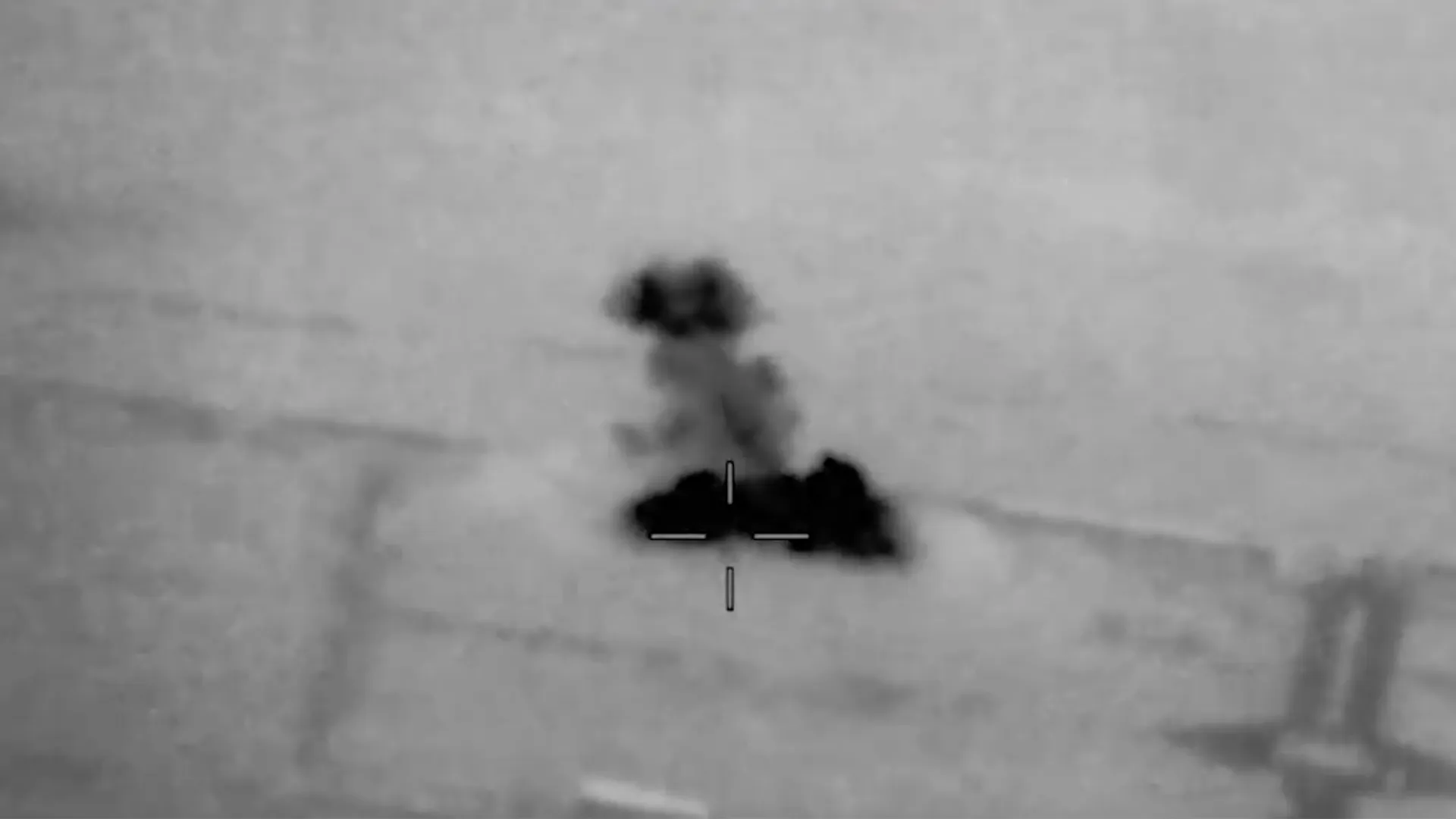
“U.S. military aircraft targeted Iranian military surveillance infrastructure, communication systems, air defense sites, drone storage facilities, and minelayer capabilities.”

Explosions were reported in southern Iran, around the village of Tahrui, near the port of Sirik, which was also the focal point of Friday’s US attacks. State media also indicated that Qeshm Island had been hit.

Responses to cargo ship strikes

Saturday’s strikes against Iran followed a similar playbook to Friday’s.

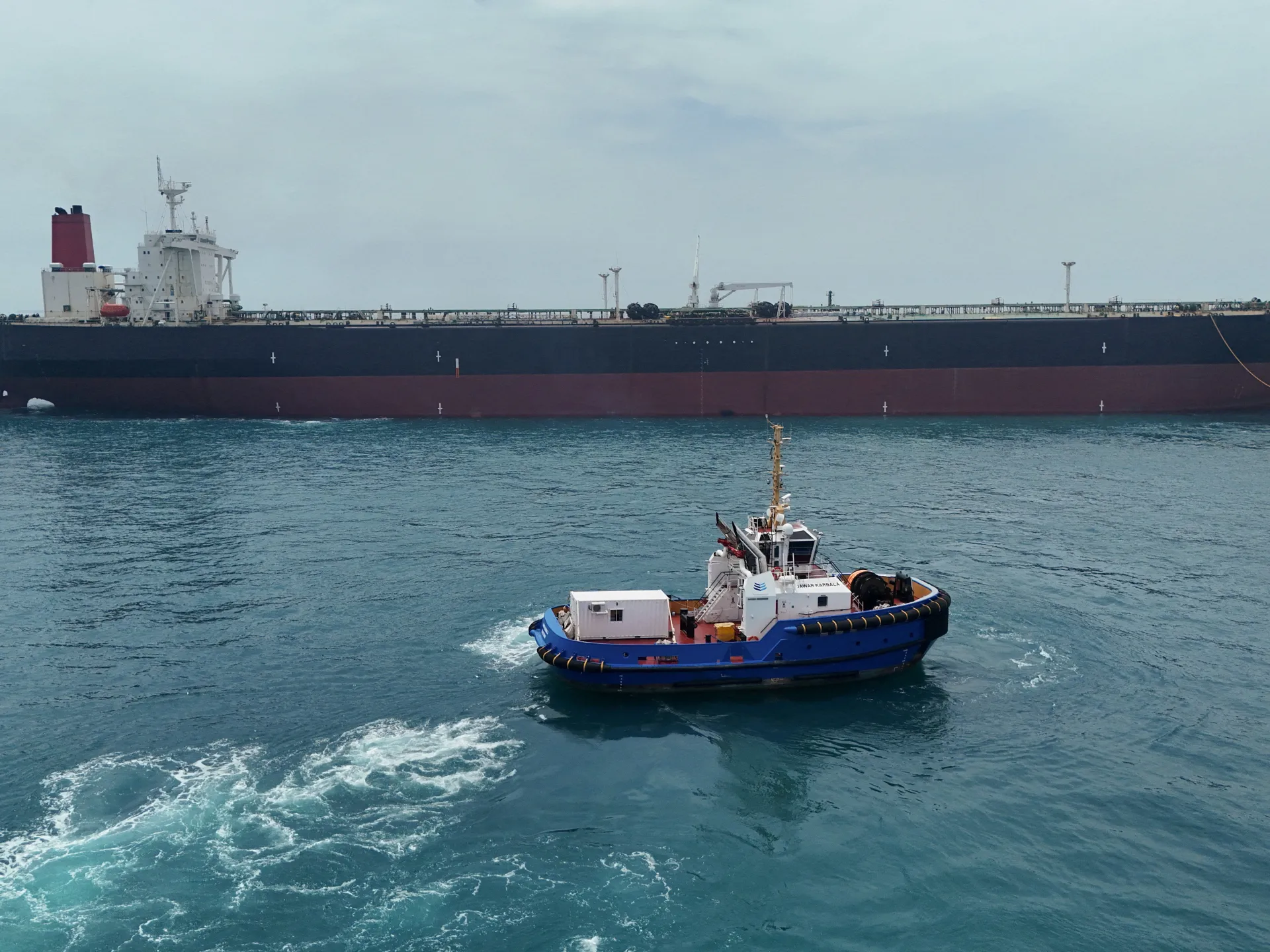
Early on Saturday morning, at about 4:30am Eastern US time (08:00 GMT), the Panama-flagged tanker Kiku was travelling through the Strait of Hormuz when it was reportedly hit by an unidentified projectile.

No crew members were injured, and no leakage was reported from its cargo.

CENTCOM said the ship had been carrying more than 2 million barrels of crude oil when it was hit by a “one-way attack drone”.

The website MarineTraffic.com indicates that the tanker left the Al Shaheen oilfield on Thursday and is due to dock in Fujairah, in the United Arab Emirates, on Sunday.

A similar sequence of events prompted Friday’s volley of US attacks.

In that case, a Singapore-registered container ship, the Ever Lovely, was struck by a drone as it sailed through the Strait of Hormuz on Thursday. No one on board was injured, and the boat continued on its travels.

But US President Donald Trump denounced the drone strike on Friday as a “foolish violation” of the June 17 memorandum.

By that evening, the US and Iran had exchanged fire, with the US targeting the area around Sirik, and Iran hitting US military installations in the Middle East.

CENTCOM referenced Friday’s actions in announcing the latest round of strikes.

“After yesterday’s U.S. strikes in response to the Iranian attack on M/V Ever Lovely, Iran was given a chance to honor the ceasefire agreement,” CENTCOM wrote.

Iran “elected not to”, it added, citing the Kiku drone strike. CENTCOM also maintained that commercial traffic through the Strait of Hormuz, a sticking point in ceasefire negotiations, would continue, with US military backing.

“U.S. forces remain vigilant, lethal, and ready,” CENTCOM said in its statement.

Controlling the strait

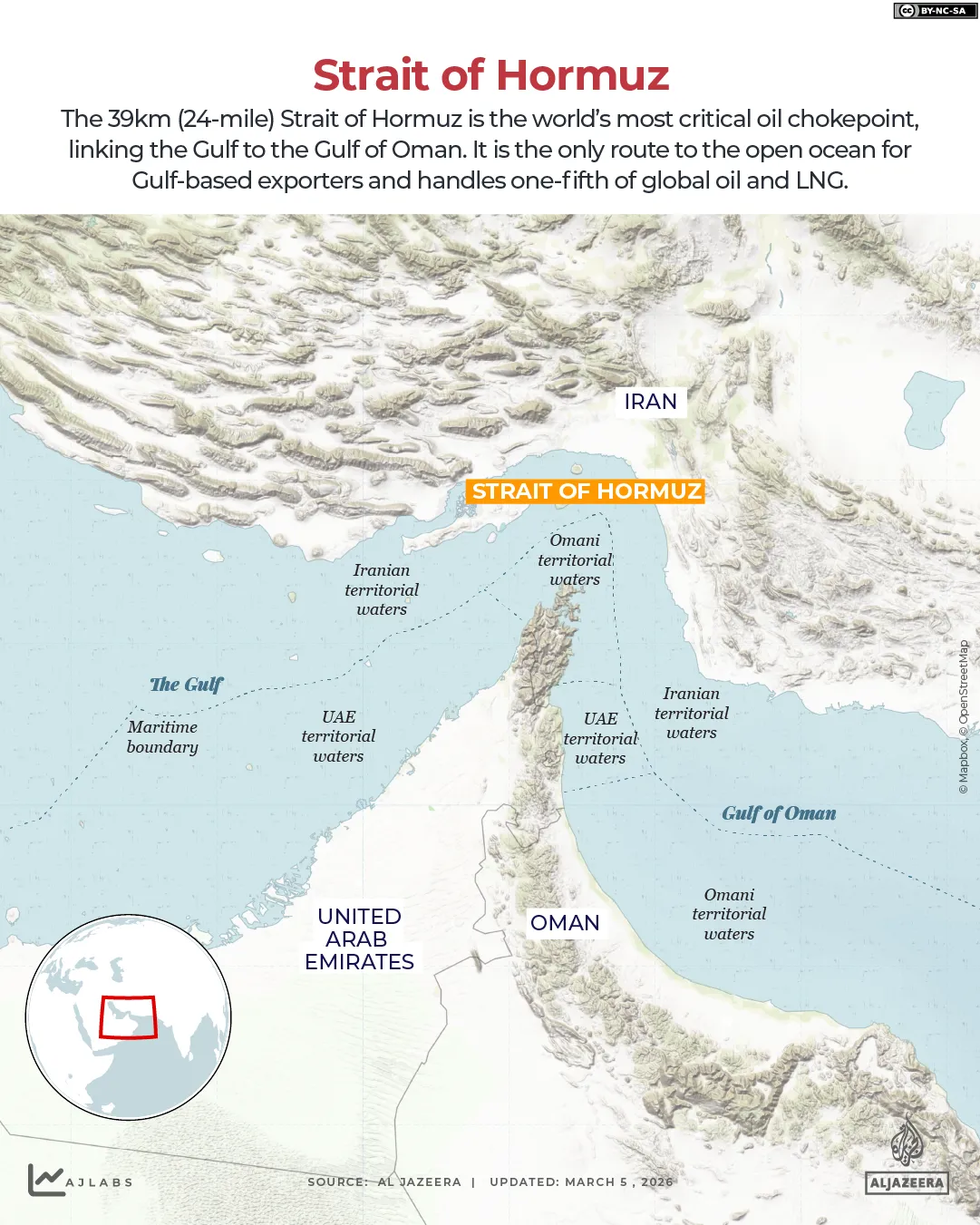
Central to the latest round of fighting is control over the Strait of Hormuz, a key artery for maritime traffic. Nearly 20 percent of the world oil supply passed through the narrow waterway in peacetime, as well as significant quantities of fertiliser and natural gas.

But after the US and Israel launched attacks on Iran on February 28, launching the present-day war, Tehran moved to shut down traffic through the strait, which sits between its shores and Oman’s.

Iran’s decision sent global fuel prices skyrocketing, and that generated pressure, both domestic and international, for the Trump administration.

The June 17 memorandum was designed to provide relief. Though it was a prelude to further negotiation, the deal called for the US, Iran and their allies to “declare the immediate and permanent termination of military operations on all fronts, including in Lebanon”.

It also outlined a 60-day period during which time Iran was to make its “best efforts” at allowing commercial traffic to transit through the Strait of Hormuz at no charge.

That part of the memorandum specified that Iran and Oman, the two countries that border the strait, would determine “future administration and maritime services” in the waterway.

But continued fighting in Lebanon has prompted Iran to threaten the strait’s closure once more.

Then, there is the question of the memorandum’s terms. Experts say the US and Iran have come to different understandings of how the June deal should be enforced.

Al Jazeera correspondent Resul Serdar Atas explained that Iran believes it should be allowed to restrict commercial traffic that does not have prior clearance to pass through the strait.

“Article Five of the memorandum of understanding, according to the Iranian officials, is clearly saying that any ship, whether it’s going through the Iranian territorial water or the Omani territorial water, has to be in full coordination with the Iranian authorities,” he said.

“But that is not understanding of Americans. The Americans are saying, ‘Well, if it is going through the Omani territorial waters, they do not need to coordinate with the Iranian authorities.’”

That, in turn, is leading to a disagreement over who is violating the terms of the ceasefire. The US sees Iran as violating the agreement by interfering with commercial vessels, while the Iranians perceive the US as breaking its commitment to stop fighting.

“That is the pattern,” Serdar Atas said. “For Americans, keeping the Strait of Hormuz open is quite important for the stability of the global economy. But for Iran, the Strait of Hormuz being under Iranian control is the ultimate deterrence and the biggest leverage.”

Tit-for-tat ‘could get out of hand’

Some of the hostilities are a result of the high level of distrust between Iran and the US, according Hassan Ahmadian, a professor at the University of Tehran.

He noted that Iran’s insistence that ships passing through the Strait of Hormuz receive its clearance could be read as a defensive action.

“I think the Iranians will not let go of this because obviously they want only commercial ships, according to the MoU, to pass through the strait. So any ship that doesn’t coordinate might be a military one, might carry military stuff,” Ahmadian said.

He believes that the latest flurry of US attacks may prompt Iran to halt any deliberations with the Trump administration as they seek to cement a peace deal.

The US side, meanwhile, is likely to face pressure from rising oil prices as the result of the renewed fighting, according to Harlan Ullman, a retired US naval officer and chairman of The Killowen Group, a global advisory firm.

Still, Ullman warned that the latest exchange of fire could spiral into an escalation in violence, rendering the memorandum of understanding moot.

“The agreements are very, very fragile, and this tit-for-tat could get out of hand,” Ullman said.

“If prices go up, as I suspect they will, that will be a moderating influence, and I think the United States will consider that rising oil prices are not good, and it will probably continue the negotiations.  But right now, who knows?”

Source link

With water cuts looming in Arizona in US, locals fight data centres | Water

Every morning Marisol Winfrey Herrera’s three-and-a-half-year-old daughter Jo reminds her to turn off the tap while washing her hands and brushing her teeth.

When they leave home, she reminds her mother to keep a bottle of ice with them to offer it to homeless people, who they sometimes find wilting in the Tucson heat. At first, they press the ice-filled bottles on the homeless folks to help them revive, then they offer the water to drink and hydrate. At her daycare, Jo is taught water-saving habits to combat Tucson’s soaring heat.

It is what prompted Herrera to join No Desert Data Center, a residents’ group that opposes two large data centres coming up on either side of Tucson – the $3.6bn project on the city’s southeast edge and a $5bn project on its northwest side in the town of Marana, together known as Project Blue.

The group believes these would consume more water and power than the city set in the Sonoran Desert can afford.

“We are in the middle of a 30-year drought, which is now an extreme drought,” says Lisa Shipek, co-executive director of the Watershed Management Group, a Tucson-based nonprofit.
“Water was a unifying theme in our campaign. The Colorado River cuts are looming, and this project would take water away,” Herrera told Al Jazeera.

Water flows in the Colorado River, which provides much of Tucson’s water through the Central Arizona Project canal system, have dropped by 20 percent since the year 2000 compared with water flows in the 20th century due to climate change, melting snow caps and warmer weather, making water cuts to Tucson imminent as the state could face as much as 77 percent water cuts.

“We say Not One Drop for data centres,” says Herrera, speaking of the campaign’s particularly emotive appeal for residents as water cuts get deeper and temperatures rise, with Tucson recording the warmest weather in 125 years last July and August.

Beale Infrastructure, a San Francisco-based company that is owned by investment management company Blue Owl in New York, had asked the city of Tucson to acquire 290 acres that were outside city limits for Project Blue. That would make it the city’s largest water consumer and among its largest power consumers. Beale did not respond to an emailed request for comment.

But at city council meetings, City Councillor Kevin Dahl began seeing hundreds of residents turn up to express their opposition to the project.

“Not for many issues do we get so much response,” he said. Herrera was among those who went.

Pitting environment against unions

At council meetings, Beale executives proposed that Project Blue could be the economic engine the city needed. It would create a few thousand jobs for construction workers, ironmongers, plumbers and other such workers during the construction of the project and a few hundred after that.

“Sometimes people travel as far as Phoenix for work,” Dahl said about Arizona’s largest city, which is nearly a two-hour drive from Tucson.

The project could bring jobs closer. Beale also expected the project to generate nearly $250m in taxes for the city, county and state in the first 10 years.

This left councillors with a difficult decision to make, weighing the project’s economic benefits against allocating it a share of the city’s increasingly scarce water and power.

Residents raising concerns with city councillors in Colorado, US
Tucson residents raised questions in a town hall about whether proposed rate hikes by TEP, their power utility, is due to capacity expansion for data centres [Photo Courtesy Kathleen Dreier]

Activists also raised concerns about whether Tucson Electric Power (TEP), the power utility, would raise rates for consumers so it could expand capacity to provide power for Project Blue. After raising rates by 10 percent in 2023, TEP proposed a 14 percent rate hike in June 2025 for grid upgrades made in the previous year.

Lee Ziesche, an activist from the Democratic Socialists of America who is campaigning to make TEP a public utility, said Project Blue could “lead to higher temperatures and higher rates” because of the heat island effect of the air conditioners and higher rates for power.

She often hears from residents that a rate hike would make it hard to pay bills or put on air conditioning, even as the number of 100-degree Fahrenheit (37.8 degree-Celsius) days has increased in Tucson, which is among the hottest cities in the United States.

The same concerns of needing ramped-up air conditioning would plague data centres too, experts say.

“The viability of data centres in Arizona will always be subject to climate change and heat risks,” says Kate Gordon, chief executive of California Forward, a think tank that works on a sustainable economy.

“The heat in Arizona makes energy less efficient, and servers heat up, so projects will need higher amounts of water and cooling, which developers have to balance against a possibly lower real estate and labour cost,” she said. “I am always amazed at how climate does not figure in business plans.”

Dahl and Andres Cano, a supervisor in Pima County, in which Tucson is located, had discussions with Beale representatives.

“We thought they would go elsewhere if the city did not acquire the land” for the project, Dahl said. Cano also came away with the same impression.

In August 2025, Tucson councillors voted unanimously not to acquire the land for the project or provide it with water and power. In December, Cano became one of only two supervisors in Pima County to oppose the project, and it was approved for construction in an unincorporated part of the county.

“It will create short-term construction jobs for what will ultimately be a project with few wins,” Cano said. “This pitted the environment and unions, but industry is not for unions. This will have just about 100 jobs when it is done.”

With no access to Tucson’s water supply, Beale decided to cool its servers with air conditioners rather than water and use a closed-loop water system, so it would recycle and reuse water.

But Vivek Bharathan, a spokesperson for the No Desert Data Center, said using air conditioners would increase power usage.

Nearly half of TEP’s power comes from fracking, he says. Data centre demand will only mean “more fracking somewhere else, climate and health consequences all along the way”.

The state’s largest data centre

Even as Project Blue was making its way through a fraught approval process, Beale announced another data centre project in the neighbouring farming town of Marana. It was to be spread over 600 acres (242 hectares), twice the size of Project Blue. The area was spread over two farm plots, one owned by the Mormon church and the other by a family trust of city council member, Herb Kai.

This project, too, is slated to bring thousands of construction jobs to a farming town as well as tax revenues.

No Desert Data Center protestors outside the Project Blue site in Pima county, Arizona, US as construction begins on a data center
Tucson residents are protesting upcoming data centres [Photo courtesy Kathleen Dreier]

But when Jackie McGuire, a mother of three and former Wall Street banker, heard about it, she and other residents launched a campaign to stop the land from being rezoned for a data centre. Residents wanted Marana to stay a farming town.

McGuire, who works as a research analyst, said the data centres’ servers and large air conditioners that would be installed to keep them running would raise the project’s cost and make Marana unbearably hot.

Temperatures rose by up to 2.2F (1.22C) downwind from data centres in the Phoenix area, a study published in May had found.

“The heat generated will be like one to two million space heaters,” McGuire says. “It can go up to 112 degrees [44.4C] here already. The heat island effect could make Marana uninhabitable.”

The Marana data centre will be provided power by TEP and Trico, which announced a 7.23 percent rate hike in January.

McGuire and other residents campaigned to have a referendum on whether the land could be rezoned for a data centre. Their plea was not successful, and the city council approved the rezoning of the land.

But the experience of the campaign had invigorated McGuire, and she decided to run for city council herself. The central issue of her campaign is to bring transparency to the data centre’s functioning.

Even as the campaigns in Pima County and Marana raged on, La Osa, the state’s largest data centre project, took shape in Tucson’s neighbouring Pinal County. The 3,300-acre project by the Vermaland real estate group was expected to house 59 data centres and two of its own natural gas facilities, as well as a utility-scale battery storage system.

But residents worried about noise pollution from protracted project construction and a possible increase in power costs.

“I’m worried about the constituents in that area, about the power bills going up, even though you’re saying that they’re going to pay for it,” Pinal County Supervisor Rich Vitiello said in a board of supervisors meeting on May 27.

In the face of such opposition, a La Osa lawyer spoke at the meeting to say the project had been scaled down and would now house 11 data centres from the 59 planned earlier.

‘A straw to the aquifer’

Sharing limited water has long been an emotive issue in the state, and the looming Colorado River cuts and data centre projects have brought such concerns to a head.

Arizona fought one of the longest-running cases, stretching more than three decades, in the US Supreme Court over the sharing of Colorado River water with California. Eventually, Congress adjudicated to provide California with a greater share of the water, which turbocharged its economic growth.

“No water can flow into Tucson and Phoenix unless California gets its full share,” says Jason Robison, co-director of the Gina Guy Center for Land and Water Law at the University of Wyoming College of Law.  “Arizona has always been in a tough spot.”

It strengthened the state’s long-held tradition of conservation.

“Arizona communities have been preparing for the drought conditions we see today since 1980,” a spokesperson for the Arizona Department of Water Resources said in an emailed response.

Authorities have curtailed lawns in Tucson, he said, and educational campaigns of the kind Herrera’s daughter underwent are the norm.

It has meant that groundwater reserves go deep, and homeowners are assured of a water supply before it is given to data centres or farms.

“The use by data centres is low compared to farm use, especially alfalfa and hay,” says Eric Kuhn, retired general manager of the Colorado River Water Conservation District and co-author of Science Be Dammed: How Ignoring Inconvenient Science Drained the Colorado River.

However, “data centres are not under the same rules to replenish water” as other industries, says Sharon Medgal, director of the Water Resources Research Center at the University of Arizona. “So it adds a straw to the aquifer.”

Arizona’s governor, Katie Hobbs, who is up for re-election in November, has represented to the Bureau of Reclamation that the state is home to essential industry, including semiconductors, space and data centres, and so needs a higher share of water from the Colorado River. Water, as well as its use for data centres, has been an important issue in primary races across the state.

Construction began for Project Blue at the end of April. No Desert Data Centers’ activists arrived just after dawn to protest. Within days, they found subcontractors bringing in water to control dust on site from construction. County authorities cited Beale.

Then Beale began digging wells on site after reportedly receiving permits allowing that from the Arizona Department of Water Resources. This is likely for 31,000 gallons  (more than 117,000 litres) a year, which is just enough for toilets and kitchens and will likely be recycled for reuse after.

“This may not yet be a winning story,” Bharathan, the spokesperson for the No Desert Data Center, said. “But it is a continuing story.”

Source link

Cape Verde break record as smallest nation to reach World Cup knockouts | World Cup 2026 News

Tiny Cape Verde have become the history makers of World Cup 2026 by defying all odds to become the smallest country to earn a spot in the knockout stages of the competition.

Their improbable run through the group stage, with a third straight World Cup draw, was completed with a 0-0 draw against Saudi Arabia on Friday night to advance in the tournament.

Recommended Stories

list of 4 itemsend of list

Keeping goal for Cape Verde throughout has been Vozinha, 40, who has embodied the grit of his nation.

“We are small, but we have big hearts and we are fighters,” said the goalkeeper, who last season played for Chaves in Portugal’s second tier.

The island nation off the western coast of Africa, which is making its debut on football’s grandest stage, already held 2010 champion Spain to a 0-0 draw – a shock in itself to begin their campaign.

They then came from behind to get a 2-2 result against Uruguay – the winners of the inaugural World Cup in 1930.

“The team was very eager to show this to the whole world,” Cape Verde coach Bubista said while draped in his country’s flag after the Saudi Arabia game.

“We are proud of having arrived at this stage. We have shown that we are a small country, but that we fight for the things that we want to achieve.”

Cape Verde’s three points put the team in second place behind Spain, which beat Uruguay on Friday night and won the group.

Cape Verde will play reigning World Cup champion Argentina in Miami on July 3.

Drawing all three group matches doesn’t guarantee advancement at major football tournaments, but several teams have done it in the past. Those include: Wales in 1958, Ireland and the Netherlands in 1990, and Chile in 1998. New Zealand, however, also got three draws at the 2010 World Cup and were eliminated.

On the eve of the match, Bubista mused, “Everyone is entitled to dream and nothing is impossible.”

The Blue Sharks proved him right, overcoming seemingly insurmountable odds as this country of just  530,000 reached the round of 32.

A woman, her face painted with a flag of the archipelago, held a sign that read: “Small Islands, Big Dreams,” a dream that these underdogs have made reality as they continue their charmed run on the world stage.

They did it with another strong game from Vozinha, whose tournament success has helped him amass more than 16 million Instagram followers.

He had a save in first-half stoppage time, grabbing a header from Mohamed Kanno to keep Saudi Arabia scoreless. Another save came in the 66th minute when he leaped to deflect a shot from Mohammed Abu al-Shamat.

A third came in the 92nd minute when he stopped a shot by Abdullah al-Hamdan.

Cape Verde players and staff celebrate after the Saudi Arabia match match as Cape Verde qualify for the knockout stages of the World Cup
Cape Verde players and staff celebrate after the Saudi Arabia match [Phil Noble/Reuters]

“There is a lot of quality in our national team,” Vozinha said. “Maybe for many of you, you think the Cape Verdean player is not good enough. But we came here to show that we have a lot of quality and we are here to compete and our players can play everywhere in the big competition, in the big leagues.”

A group of shirtless men in the crowd each painted one letter of his name on their chests as they cheered Cape Verde.

But Vozinha had a much bigger fan among the crowd of 68,278 as his mother Ana Candida Evora watched from a luxury suite, waving a tiny Cape Verde flag. It was her second match of the tournament after missing Vozinha’s epic seven-save performance against Spain because of visa issues.

Cape Verde had a chance to score in the 50th minute, but Kevin Pina’s shot from distance was just above the crossbar. Another chance came in the 74th minute when Laros Duarte’s shot from the middle of the box was stopped by goalkeeper Mohammed al-Owais.

A last chance to score came in the final seconds when Nuno da Costa sent a shot from the middle of the box wide left.

But it didn’t matter because a couple of minutes after the final whistle, Spain completed its victory over Uruguay and set off a joyous celebration among Cape Verde’s players and fans, many of whom cried as they rejoiced.

Having led his squad to new heights, Bubista was asked if he could have imagined such a run entering the tournament.

“I’ve always said that sooner or later Cape Verde would be on such a stage,” he said. “Of course, it’s hard to have such a forecast, but I always knew.”

Saudi Arabia were eliminated after finishing with two points in the group stage.

“We were very poor in terms of creating things, controlling the game and creating actions,” coach Georgios Donis said. “And one cannot win a game this way. It would be very difficult.”

Source link

Ronaldo, Portugal play Colombia in World Cup: Prediction, kickoff, schedule | World Cup 2026 News

The 2026 World Cup will have 13 different kickoff times. You can use the Al Jazeera Sport widget to find out exactly when your team is playing in your local time.

Who: Colombia vs Portugal
WhatFIFA World Cup 2026 Group K match
Where: Hard Rock Stadium, Miami
When: Saturday, 7:30pm local time (23:30 GMT)
How to follow: We’ll have all the build-up on Al Jazeera Sport from 20:30 GMT ahead of our live text commentary stream.

Recommended Stories

list of 4 itemsend of list

One of the biggest group games of the 2026 World Cup takes place in Miami on Saturday when Colombia face Portugal in a battle of Group K’s top two.

Colombia, powered by Luis Diaz and Daniel Munoz, have already booked their ticket to the round of 32 as the current table-toppers, while Cristiano Ronaldo-led Portugal, who are second, are also assured of a knockout berth.

Those standings could change after Saturday’s fixture at Hard Rock Stadium, where a capacity crowd is expected after tickets reportedly sold for thousands of dollars.

Al Jazeera tells you everything you need to know about Colombia vs Portugal:

Portugal expect ‘away’ atmosphere in Miami

Spearheaded by the larger-than-life presence of superstar Ronaldo, Portugal are a huge and popular draw globally – but for this match, Colombia will hold the spectator edge at Hard Rock Stadium.

With hundreds of thousands of Colombian Americans living in ‌the Miami metropolitan area, the Colombian team has a partisan crowd behind them. In the lead-up, Portugal coach Roberto Martinez remarked that his side would be playing “away from home” while acknowledging the enormous hype around the final matchday for both teams.

Colombia vs Portugal is the most in-demand fixture of all 72 group-stage games, according to The Athletic, with five million ticket requests made in the first 24 hours of the Random Selection Draw in December.

“It means I had to buy tickets for my family in November,” Martinez quipped when asked about the fan dedication. “That’s what it means, because I knew it was going to be difficult to get tickets.”

“I think it’s fascinating. The passion of the game in a difficult moment in the world. Football still brings unity, it brings passion, it brings inspiration for the kids … So I hope football wins and inspiration of anyone that watches the game.”

While Colombia have reached ⁠the knockout stages with six points from two games, Portugal sit second on four points and are all but through. Finishing second could give them a tougher path in the knockout stage, with England or Croatia potential opponents.

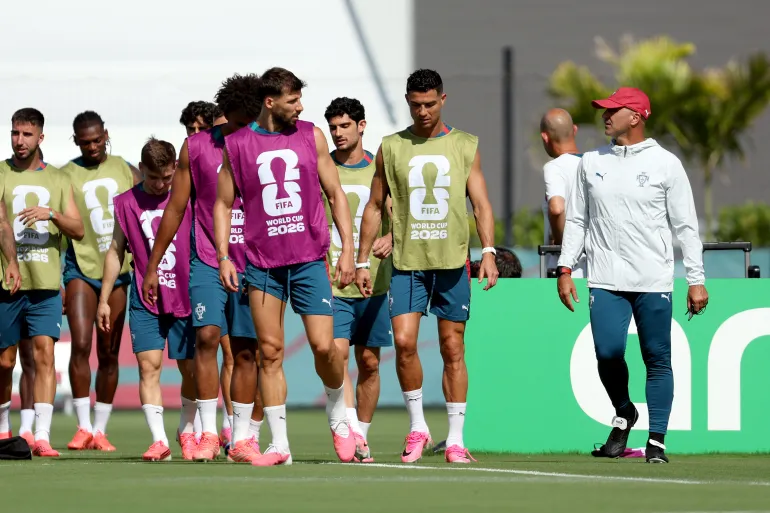
PALM BEACH, FLORIDA - JUNE 22: Ruben Dias #3, Cristiano Ronaldo #7 of Portugal speak with Head Coach Roberto Martinez of Portugal during the training of Portugal one day ahead of the FIFA World Cup 2026 Group K match between Portugal and Uzbekistan at Palm Beach Gardens Tennis & Pickleball Center on June 22, 2026 in Palm Beach, Florida. Leonardo Fernandez/Getty Images/AFP (Photo by Leonardo Fernandez / GETTY IMAGES NORTH AMERICA / Getty Images via AFP)
Portugal train ahead of their game against Colombia, where they’ll be aiming to earn the top spot [Leonardo Fernandez/Getty Images via AFP]

Colombia coach warns team against Ronaldo, Vitinha

Colombia coach Nestor Lorenzo said his team will need “special tactical discipline” against Portugal, whom he considers one of the favourites to win the tournament. The Colombians need to avoid defeat to advance as group winners, but Lorenzo was taking nothing for granted against the No 5 side in the FIFA world rankings.

“We’ll try to maintain our style and our footballing identity,” he said.

“But without a doubt, we have to pay attention to the other characteristics and strengths [that Portugal] has. It’s a very well-coached team. They have a coach and players who are at the elite level of world football … and ‌that shows in their game.”

Lorenzo also said Colombia will be wary of the threat posed by Ronaldo, who scored twice in the last match, and Vitinha, the defensive midfielder known for his ball control, work rate and playmaking abilities.

“Both Vitinha and Ronaldo are decisive players. One in the organisation of the game and the quality of his playmaking, and the other in finishing,” he added. “So we absolutely cannot leave them alone or neglect them. Hopefully, the team collective will be well-oiled.”

Colombia are set to feature in the World Cup knockouts for the first time since 2018, having failed to qualify for the 2022 World Cup in Qatar.

Colombia's defender #02 Daniel Munoz celebrates scoring his team's first goal during the 2026 World Cup Group K football match between Colombia and Democratic Republic of Congo at the Guadalajara Stadium in Zapopan on June 23, 2026. (Photo by Ulises RUIZ / AFP)
Wing-back Daniel Munoz has been a standout player in the Colombia squad, with two goals in two games [Ulises Ruiz/AFP]

Colombia vs Portugal prediction

Opta’s supercomputer has calculated a 48.9 percent probability of Portugal winning this fixture, while Colombia is assessed a 26 percent chance of victory. There is a 25.1 percent probability of the game ending in a draw.

Overall, Colombia are favourites to finish on top of Group G, with a 53.32 percent probability, according to Opta.

Colombia vs Portugal: Kickoff time, TV channel

  • Colombia: DSPORTS, RCN TELEVISION SA, CARACOL, DGO (6:30pm Colombia Standard Time)
  • Portugal: RTP 1, RTP Play, LiveModeTV, SPORT.TV5 (00:30am on Sunday, Western European Summer Time)
  • United Kingdom: BBC iPlayer, BBC One, Red Button 1 (00:30 am on Sunday, British Summer Time)
  • USA: FOX, FOX One, Telemundo App, Telemundo Network, Peacock, (7:30pm, Eastern Daylight Time)

To check the TV listings for your country, head to FIFA’s TV listing schedule here.

What’s the scenario in Group K?

Colombia (six points) and Portugal (four points) are assured of a round of 32 berth each as the top two teams. The Democratic Republic of the Congo are third with one point, and Uzbekistan bottom with zero.

The top two teams from each of the 12 groups, along with the eight best third-placed teams, will proceed to the round of 32.

DR Congo have to beat Uzbekistan to stand a chance of advancing via the third-place team route.

Can Portugal finish on top of Group K?

Yes, Portugal can topple Colombia from first place in Group K if they beat the South Americans. Currently, they have a two-point difference.

If Portugal draw with Colombia or lose to them, Ronaldo’s side will remain second.

What’s the benefit of winning a group?

Group winners start their knockout campaign against a third-placed team from another group.

In this case, the Group G winner will face a third-placed team from Group D, E, I, J or L in the round of 32 in Kansas City on July 3.

Form guide

(Last five games, latest first)

Colombia: W-W-W-W-L

Portugal: W-D-W-W-W

Both teams have a solid record over the last five matches, with Portugal edging Colombia with an unbeaten streak over that period.

Portugal thrashed Uzbekistan 5-0 and were held to a 1-1 draw by DR Congo in the first game of the World Cup. They defeated Nigeria and Chile in pre-World Cup friendlies and beat the USA in a March friendly.

Colombia defeated DR Congo 1-0 and Uzbekistan 3-1 at the tournament. Before that, they beat Jordan and Costa Rica in June friendlies but lost to France in a March exhibition fixture.

Portugal's forward #07 Cristiano Ronaldo (C) celebrates after his team's fourth goal during the 2026 World Cup Group K football match between Portugal and Uzbekistan at the Houston Stadium in Houston on June 23, 2026. (Photo by RONALDO SCHEMIDT / AFP)
Portugal have scored six goals across two matches at the tournament, including a double from Cristiano Ronaldo [Ronaldo Schemidt/AFP]

Colombia vs Portugal: Team news

No injuries have been reported by either Colombia or Portugal.

Colombia predicted lineup

(4-3-3): Vargas (goalkeeper); Munoz, Sanchez, Lucumi, Mojica; Puerta, Lerma, Arias; Rodriguez, Suarez, Diaz

Portugal predicted lineup

(4-2-3-1): Costa (goalkeeper); Cancelo, Dias, Veiga, Mendes; Neves, Vitinha; Neto, Fernandes, Felix, Ronaldo

The Colombian winger celebrates on the pitch after scoring their second goal
Luis Diaz is one of Colombia’s most lethal attackers [Eloisa Sanchez/Reuters]

Source link

Joy, disappointment, protests: A view from Egypt-Iran World Cup tie | World Cup 2026 News

Seattle, United States – There were goals. There were jubilations and heartbreak. There were raucous crowds, confrontations and comradery. There were protests, politics and Palestinian flags. There was a missed penalty. There was joy. There was disappointment.

Egypt’s 1-1 draw with Iran in Seattle at the FIFA World Cup on Friday had it all. Iran is still in contention to qualify as one of the eight best third-place finishers, depending on Saturday’s results.

Recommended Stories

list of 4 itemsend of list

Wild celebrations among the Egyptian fans erupted outside the stadium after the match, as the country proceeded past the World Cup group stages for the first time.

“The feeling is outstanding,” Daniel Salib, who was draped with an Egyptian flag, told Al Jazeera.

“After this game, and the game we played against New Zealand, and how we played against Belgium, we absolutely deserve it. So, I couldn’t be more proud of this country and this team.”

Egypt survived a late Iranian onslaught that saw Team Melli, as the Iran team is known, hit the woodwork and have a goal chalked off by VAR for offside.

Iran also had a penalty saved in the first half, but the entire match was action-packed, going blow-for-blow.

Iran supporter Saeed Nassef said he was disappointed with Friday’s result but hopeful that Iran would still make it through to the round of 32, all depending on the results of Sunday night’s games.

“The Iranian team did a beautiful job. They faced a lot of hardship, but we’re really happy how they played,” Nassef told Al Jazeera.

Protests

Protesters against the Iranian government had gathered outside the stadium, waving US and Israeli flags and holding up photos of Iranian opposition figure Reza Pahlavi.

Nassef, who carried the official Iranian flag, which features the name of God, was one of several fans who told Al Jazeera they faced harassment from opposition activists.

“We’re here to support the team. We’re here to support sports… It’s not cool for people to come here and say bad things because we are here to support the players. We want some happiness,” he said.

After the match, Al Jazeera witnessed a confrontation between antigovernment activists and a supporter carrying an Iranian flag.

The protesters hurled insults at the fan, calling him a “terrorist” and saying he should leave the country. They also engaged in expletive-laden Islamophobic chants.

The fan, who identified himself by his first name only as Milad, approached a man leading the chants on a megaphone and criticising Team Melli fans. He stood inches away from the protester before police officers intervened to pull them apart.

“My issue is not political. My issue is: Players, they play for the country, they play for the people. I support the people. That’s it,” Milad said.

“Good or bad, it doesn’t matter. Our people went and they tried to create joy for other people, and that’s all that matters,” he added.

But the commotion did little to overshadow the nearby festivities where Egyptians had gathered, singing and dancing at their country’s historic moment.

Israeli flag
Protesters against the Iranian government outside the Seattle Stadium, June 26 [Ali Harb/Al Jazeera]

Electric atmosphere

Inside the stadium, the atmosphere was electric throughout the match – not an empty seat, not a quiet moment.

When the first half concluded, several sets of Iranian and Egyptian fans started taking pictures together.

The players also showed support for each other. After the final whistle, several Egyptian players consoled their Iranian counterparts, who were visibly upset with the result.

Throughout the 90 minutes, spectators appeared to be alternating in their chants between “Iran, Iran” and “Misr, Misr”, Arabic for Egypt, rather than chanting over each other.

There were a few pre-Islamic revolution Iranian flags in the crowd – featuring a regal lion and sun – but they were far outnumbered by the country’s official flag.

Some people waved LGBTQ+ pride flags and rainbow paraphernalia, due to the game being designated the World Cup’s “Pride Match”. But there did not appear to be any problems in the stadium, despite the hype around the issue.

The Egypt supporters boasted their ancient heritage with pharaohs’ headdresses and outfits.

“We’re so proud to be Egyptian and so proud of our national team,” said Karim Elshabini, who was sporting a gold and black pharaoh’s headpiece and a red Egypt football top.

“It feels amazing. Everybody’s vibing really well. People are really cool. The Egyptian fans, the Iranian fans, we’re all having a really good time.”

There were numerous Palestinian flags at the match, including a couple that were prominently displayed behind the goals.

Egypt fan Bilal Ali, who brought a Palestinian flag to the stadium, told Al Jazeera he would like to keep politics out of football, but with Israeli atrocities continuing in Gaza and elsewhere, he could not remain silent.

“I feel guilty sometimes when I get to [see] the game and our people in Palestine just get bombed and killed,” Ali added.

Several Egyptian and Iranian fans shouted “Free Palestine” as they walked past Ali with his flag.

Hameed
Iranian fan Hameed with his children outside the Seattle Stadium, June 26 [Ali Harb/Al Jazeera]

‘Minab 168’

There was more than football at the game.

Hameed, an Iranian fan who wished to be identified by his first name only, wore a shirt that said Minab 168.

The message is meant to honour the victims of the school in southern Iran that was bombed on the first day of the US-Israel war on the country.

“I just want to remind the world that the plight of these kids who were bombed, either intentionally or not intentionally, should not be forgotten,” Hameed told Al Jazeera.

“This is why we should not have wars.”

He added that there must be a credible investigation into the incident.

“Politics aside, humanity needs to survive, and the only way to do it, whether the kids are being blown up in Palestine, in Lebanon, in Iran, in Sudan, in Congo, we’ve got to protect them,” Hameed said.

Political statements, flags and protests aside, at the final whistle, the moment belonged to Egypt with a historic sporting achievement.

“Seeing your country after all these years of cheering them, all the highs and lows, finally putting in all the high, good effort and getting good results is a surreal feeling,” said Rafael Youssef, who had the colours of the Egyptian flag painted on his cheek.

“I’m very happy for them, very happy to be here with them.”

Source link

Somali intelligence helps US arrest alleged leader of Minnesota fraud | Crime News

US prosecutors reach into Somalia for a suspect in US fraud case.

Mogadishu, Somalia – United States prosecutors have reached across the world to seize a leading suspect in a Minnesota fraud case, arresting him in the Somali capital, Mogadishu.

Abdikerm Abdelahi Eidleh, 42, was taken into custody on Thursday, with US authorities announcing the arrest on Friday. His capture is the clearest sign yet that the pursuit of those behind the scheme has gone international.

Recommended Stories

list of 3 itemsend of list

Neither US nor Somali officials have disclosed how Eidleh was located. However, the Department of Justice said his arrest was the result of cooperation between the Federal Bureau of Investigation (FBI) and Somalia’s National Intelligence and Security Agency.

Prosecutors describe Eidleh as the alleged second-in-command to Aimee Bock, the convicted mastermind of a scheme built around Feeding Our Future, a Minnesota nonprofit that channelled federal money meant to feed needy children during the COVID-19 pandemic.

In 2022, the US charged 47 people over a roughly $250m fraud that exploited a federal child-nutrition programme, the largest pandemic-relief fraud prosecuted in the country to that point.

Eidleh fled to Somalia as the scheme unravelled. Bock was recently sentenced to more than 40 years in prison.

According to prosecutors, Eidleh recruited operators into the scheme and collected bribes and kickbacks, often disguised as consulting fees and funnelled through shell companies.

He is accused of setting up his own meal sites under the names of stand-in owners, falsely claiming they were serving thousands of children a day, and inventing supplier firms to bill the government for food never delivered.

“This is a big fish,” US Attorney for Minnesota Daniel Rosen told CBS News, calling Eidleh a key figure who recruited businesses and paid bribes to loot public money.

Crackdown on Somali community

The Trump administration has seized on the Feeding Our Future case to target Minnesota’s Somali community, the largest in the country, with about 84,000 people of Somali descent in the Minneapolis-St Paul area.

Most were born in the US or are naturalised citizens.

Somalia was placed among a list of countries on Trump’s travel ban when he returned to power in 2025 and he has also threatened to revoke the citizenship of naturalised Americans convicted of fraud.

Late last year, he also described Somalis as “garbage” in one of his many rhetorical attacks on both Somalia and the Somali American community.

Federal immigration enforcement agents flooded the Minneapolis area, and two people were killed by ICE agents – Renee Good in early January and the nurse Alex Pretti weeks later – igniting weeks of protest.

In January, Homeland Security Secretary Kristi Noem moved to end Temporary Protected Status, a designation shielding people from deportation to dangerous homelands, for about 1,100 Somalis, ending protections that had stood since 1991.

A federal judge blocked the termination in March, and the legal fight continues.

Source link

Belgium reach World Cup knockouts as New Zealand exit tournament | World Cup 2026 News

A double strike from Arsenal’s Leandro Trossard against New Zealand carried Belgium to top of Group G, ahead of Egypt on goal difference.

Belgium defeated New Zealand 5-1 to book their place in the knockout rounds of the 2026 World Cup on Friday, eliminating the All Whites from the tournament. The result secured the European nation’s first win of the World Cup, as they finished on top of Group G in Vancouver.

A double strike from Arsenal’s Leandro Trossard and goals from Kevin De Bruyne, Romelu Lukaku and Alexis Saelemaekers carried Belgium into the last 32 in first place ahead of Egypt on goal difference.

Recommended Stories

list of 4 itemsend of list

Egypt claimed the runners-up spot after a 1-1 draw with Iran in Seattle. The Iranians finished third in the group and face an anxious wait to know about their knockout fate.

Belgium dominated a lopsided first half and had alarm bells ringing in the New Zealand defence early on when Trossard’s angled shot cannoned off the inside of the upright only to be cleared off the line by Tyler Bindon.

Belgium looked poised to take the lead moments later when Jordanian referee Adham Makhadmeh pointed to the penalty spot after Trossard’s shot hit the arm of covering defender Finn Surman.

But VAR sent Makhadmeh to the monitor to take another look at the decision, which was subsequently overturned and New Zealand breathed again.

Yet Belgium did not have long to wait before the breakthrough and again it was Trossard who proved to be in the right place at the right time, bundling home from close range after De Bruyne’s corner sowed panic in the six-yard box.

Trossard effectively made the game safe five minutes into the second half, controlling a rebound in a crowded area to volley home past New Zealand goalkeeper Max Crocombe at the near post.

VANCOUVER, BRITISH COLUMBIA - JUNE 26: Kevin De Bruyne #7 of Belgium celebrates after scoring his team's third goal during the FIFA World Cup 2026 Group G match between New Zealand and Belgium at BC Place Vancouver on June 26, 2026 in Vancouver, British Columbia. Emilee Chinn/Getty Images/AFP (Photo by Emilee Chinn / GETTY IMAGES NORTH AMERICA / Getty Images via AFP)
Kevin De Bruyne #7 of Belgium celebrates after scoring his team’s third goal [Emilee Chinn/Getty Images via AFP]

De Bruyne then stroked home an elegant low finish in the 66th minute to make it 3-0, a crucial goal which saw the Belgians leapfrog over Egypt into first place on goal difference.

Yet there was to be a dramatic end when New Zealand’s Elijah Just volleyed home a consolation strike from the edge of the area to make it 3-1.

That could have been potentially costly, with the goal suddenly bumping Belgium down into second place.

But Lukaku nodded home his team’s fourth in the 86th minute with his first touch just a minute after coming on as a substitute to return Belgium to the top of the table.

Saelemaekers completed the scoring with a shot from the edge of the area.

Source link

Trump justifies strikes on Iran amid ceasefire | Conflict News

NewsFeed

The US has struck Iranian missile and drone storage sites in retaliation for what it says was an Iranian attack on a commercial ship in the Strait of Hormuz. The tit-for-tat has raised doubts about the stability of the US-Iran agreement, as Kimberly Halkett reports.

Source link

UN rights chief calls for probe into migrant deaths in US detention centres | United Nations News

Deaths of immigrants held in US detention centres have surged during Donald Trump’s second term.

The United Nations High Commissioner for Human Rights, Volker Turk, has called for an independent investigation into the severe uptick in deaths in migrant detention centres during President Donald Trump’s second term in office.

In a statement on Friday, Turk expressed concern over the lack of transparency over those deaths, at least 19 of which have occurred so far this year, according to US government statistics.

Recommended Stories

list of 3 itemsend of list

“Those responsible for violations of the law must be held to account, and the rights of the victims’ families to truth, justice and reparation and guarantees of non-recurrence must be upheld,” the UN rights chief said.

Deaths in immigrant detention centres have surged during Trump’s second term in office, a by-product of what rights groups and immigration lawyers have depicted as systematic neglect, inhumane conditions and abuses.

The Trump administration has sought to rapidly expand the network of immigrant detention centres, some operated by private contractors, as it seeks to carry out the mass deportation of immigrants in the US.

Trump stated in a social media post on Friday that his administration has the “Highest Average Daily Arrest Rate by ICE and CBP, including Total Detention, with Final Orders of Removal, than any other president, by far!”

The reported death of a Georgian man, Mamuka Artmeladze, in a detention facility in Louisiana on June 4 increased the number of fatalities so far this year to 19, compared to 33 last year and 11 in 2024.

“The mortality rate of deaths in ICE custody is at its highest level in over a decade and has more than doubled since Trump’s second term began,” the watchdog group Human Rights Watch wrote in a report on detention deaths earlier this month. “The rate is nearly four times that of the Biden administration and more than two and a half times as high as that of the first Trump administration.”

That report said the 52 people who have died in detention during Trump’s second term ranged in age from 19 to 75 and came from 20 different nationalities.

Turk wrote on Friday that there have been “concerning allegations regarding the use of force” at such facilities and that five of the deaths recorded in 2026 were classified as suicides.

He also expressed concern over the reported use of solitary confinement, which is associated with a heightened risk of suicide and considered a form of torture by the UN after a period of 15 days.

“All these factors exacerbate vulnerability and raise serious concerns as to whether some of these deaths in ICE custody could have been prevented,” he said.

Source link

Advocates warn of wide-ranging implications of US Supreme Court TPS ruling | Migration News

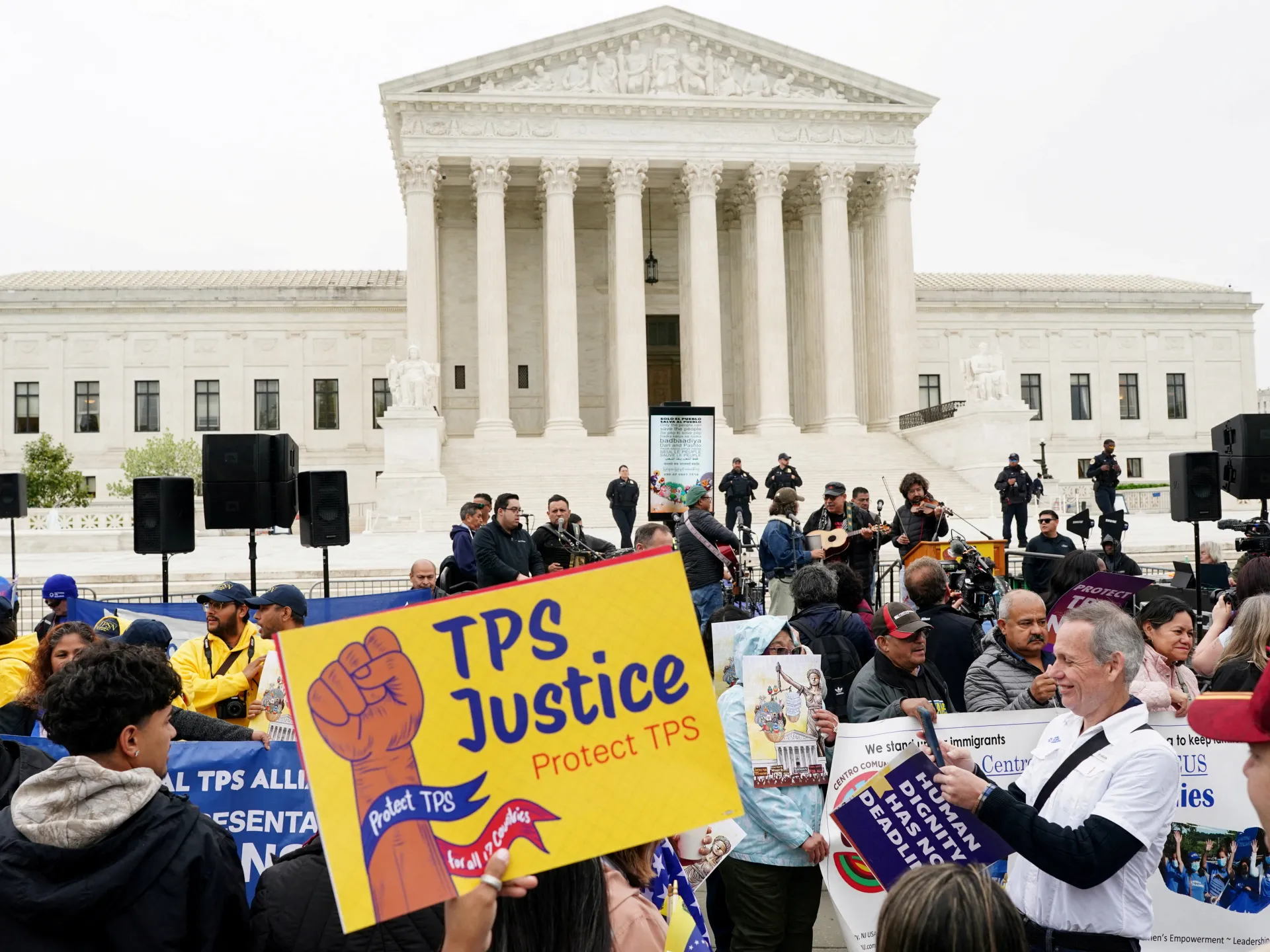
The Supreme Court’s ruling allowing the administration of US President Donald Trump to do away with a special legal status for Haitians and Syrians has sent shockwaves through communities across the country.

Immigration advocates say the 6-3 majority decision allowing the Trump administration to terminate Temporary Protected Status (TPS) will have a resounding impact on nationals of Haiti and Syria, raising the spectre of deportation and family separation, while likely leaving US employers in the lurch.

Recommended Stories

list of 3 itemsend of list

But the ruling is set to have more far-reaching implications, advocates have warned, creating a new tool to “empower Trump’s ICE deportation machine to take away legal protections and work permits from hundreds of thousands of people”, according to Hector Sanchez Barba, the president of the Mi Familia Vota advocacy group.

“This has been a defining element of the Trump- [White House adviser Stephen] Miller campaign of cruelty, revoking legal or temporary status, taking away work permits and forcing immigration judges to dismiss cases to accelerate detentions and deportations,” Barba said in a statement following Thursday’s ruling.

Here’s what to know.

What does the ruling mean for Haitians and Syrians on TPS?

Temporary Protected Status (TPS) was created by Congress as part of the Immigration Act of 1990. It allowed the executive branch, particularly the Secretary of Homeland Security, to declare that it is unsafe for foreigners to return to their home countries in light of extraordinary temporary conditions, such as armed conflict, natural disasters or other internal crises.

When a country is designated under TPS, its nationals are granted temporary legal status to reside and work in the US.

Haiti was first designated for TPS following the devastating earthquake in 2010, which killed over 250,000 people. The status has been repeatedly renewed as the Caribbean nation has suffered overlapping political, security and humanitarian crises.

Syria has been designated for the status since 2012, after the start of the civil war which lasted almost 14 years.

All told, about 350,000 Haitians and about 6,000 Syrians are believed to be in this status.

Immigration advocates say the ruling will send TPS recipients scrambling to find other legal pathways to stay in the US or become deportable under Trump’s mass deportation drive.

Given that both countries have been designated for TPS for over a decade, the decision also raises the spectre of family separation, particularly for parents with children born in the US.

“Ending these protections for hundreds of thousands of Haitians and thousands of Syrians will tear families apart, disrupt workplaces and communities and place vulnerable individuals at risk,” Council on American Islamic Relations (CAIR) national executive director Nihad Awad said.

“Many TPS holders have lived in our nation for years, raised American children, built businesses, contributed to our economy and become integral members of their communities.”

What does it mean for US employers?

Several labour organisations and unions have underscored the impact the sudden change in status could have on US industries.

Neidi Dominguez, the executive director of Organized Power in Numbers, called the ruling a “gut punch that requires workers, immigrant communities and the employers who rely on them to hit back together through our organising”.

“They work in hospitality, food service, education, construction, health care and every industry,” Dominguez said. “These are our coworkers, our neighbours and the backbone of the economy across this country, from service to construction and healthcare.”

The healthcare industry is expected to be particularly hard-hit by the decision, with the Migration Policy Institute finding that Haitian immigrants held over 103,000 healthcare jobs in 2021.

“This unconscionable ruling will leave thousands more immigrants – not just registered nurses and healthcare workers, but also teachers, airport workers, hard-working people – vulnerable to the Trump administration’s deadly, money-making deportation machine,” the National Nurses United union said in a statement.

“This decision will further strain our healthcare workforce and worsen the nurse staffing crisis,” it said.

Why does this extend beyond Haitian and Syrian TPS?

Lower courts had previously ruled that the Trump administration did not follow proper procedures, including conducting an inter-agency review to determine that conditions in both countries had improved, in terminating TPS for Haiti and Syria.

But, as Aaron Reichlin-Melnick, a Senior Fellow at the American Immigration Council, explained, the Supreme Court’s majority ruling did not even address whether the Department of Homeland Security Secretary had followed the legally mandated procedures in terminating TPS.

“Rather, the Court said that questions of whether the DHS secretary followed the law cannot be heard by courts in the first place,” he wrote, “meaning that in the future even an openly unlawful decision to grant or terminate TPS could be entirely insulated from judicial review”.

The ruling will further allow the Trump administration to “return to federal court in other cases and overturn decisions ruling against the termination of TPS for countries such as Venezuela, Somalia, Ethiopia and others”, he added.

Angelica Sedgwick Oun, a US immigration researcher at Human Rights Watch, said the ruling “leaves the DHS secretary with unfettered power to make a life-and-death decision about whether it is safe enough to send someone back to a country facing rampant violence, like Haiti, or conflict, like Syria, without meaningfully consulting on human rights conditions there”.

What comes next?

Because the Supreme Court is the top appellate court in the US, there is little recourse available through the judiciary.

But an array of advocacy groups have called on Congress to intervene.

In a rare bipartisan move on immigration, the US House of Representatives in April passed an extension to Temporary Protected Status for Haitians until 2029. The Senate has not yet taken up the measure.

Others have called on Congress to pass legislation to assert a process for courts to review any TPS terminations.

Source link

US announces framework agreement between Israel and Lebanon | News

BREAKING,

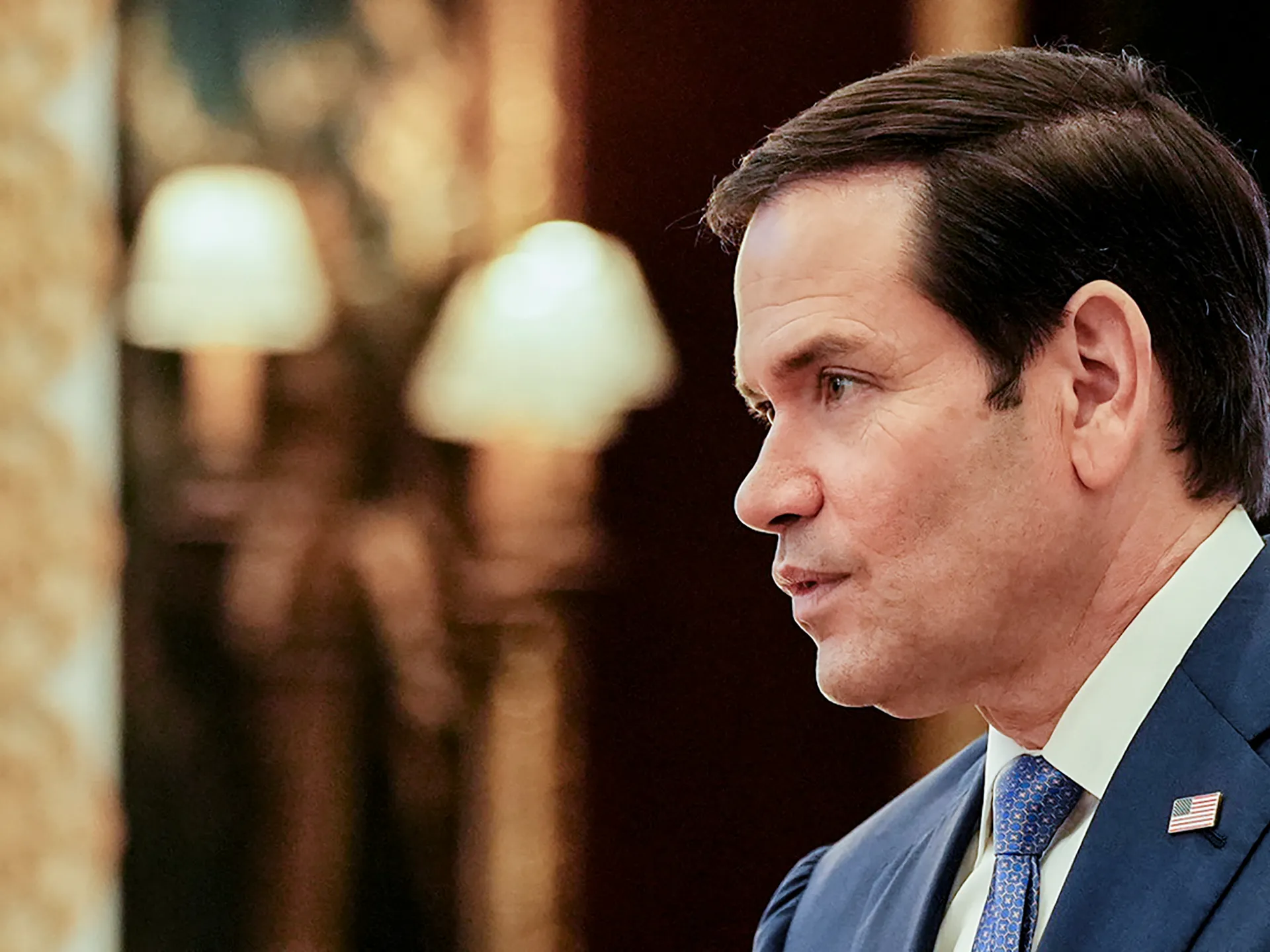
US Secretary of State Marco Rubio has announced the deal after talks unfolded in Washington, DC.

United States Secretary of State Marco Rubio has announced a deal framework between Lebanon and Israel after negotiations in Washington, DC.

Details about the agreement remain scarce. But in his remarks on Friday, Rubio made clear that the deal was only the “first step” in further negotiations.

“It’s the beginning of the beginning,” Rubio said, surrounded by representatives from both Lebanon and Israel.

“There’s a lot of work ahead. We don’t in any way underestimate the difficulty of the task ahead, but we understand the importance of it, how vital it is.”

The two sides had gathered in Washington, DC, for three days of US-mediated talks this week, starting on Tuesday.


More details to come…

Source link

Iran war day 119: Israel hits Lebanon as IAEA says it will return to Iran | US-Israel war on Iran News

Israeli and Lebanese delegations will continue their talks on Friday.

Israel continues to attack southern Lebanon on Friday as Israeli Prime Minister Benjamin Netanyahu pledges that the Israeli military is “not going to withdraw” from occupied areas.

Israel currently occupies about one-fifth of Lebanon.

This comes amid progress on the interim peace accord between the United States and Iran aimed at ending the US-Israel war on Iran, which began on February 28.

Here is what is happening:

In Iran

  • IAEA chief says inspectors to return to Iran: The interim US-Iran peace accord – also being referred to as the Memorandum of Understanding (MoU) – gives inspectors from the International Atomic Energy Agency (IAEA) access to Iran, the agency’s chief Rafael Grossi said, after Tehran indicated that key sites would remain off-limits until a final deal with Washington is reached and sanctions are lifted.
  • “There is an agreement and to comply with that agreement, the IAEA will have to have access and inspect,” the UN nuclear watchdog chief Grossi said at a news conference in Japan. “We hope to be there soon.”
  • UN halts escort of ships through Hormuz: The UN International Maritime Organization (IMO) paused its operation to escort ships through the Strait of Hormuz on Thursday after a vessel reported an attack, reigniting concerns about whether a preliminary deal to end the Iran war will hold. The cargo ship said it was hit close to Oman by a projectile, the British Navy agency UKMTO said.
  • On Thursday, Iran’s Islamic Revolutionary Guard Corps (IRGC) warned vessels not to attempt to pass the strait without its express permission, despite Oman and the IMO releasing details of a new safe route. In April, the IRGC released its own safe-transit route for approved ships, showing shipping lanes much closer to its own coast.
INTERACTIVE - Alternative route throughthe Strait of Hormuz - APRIL 14, 2026-1776162674
(Al Jazeera)

In the US

  • Trump says unfrozen Iranian assets will be used to buy US agricultural products: US President Donald Trump reiterated during an event for US farmers that unfrozen Iranian assets will be spent on buying wheat, soya beans and corn from the US. Iran has not confirmed this.

In Lebanon

  • Two killed in Israeli raid: Two people were killed and another person was wounded in an Israeli raid on the town of Mayfadoun, in southern Lebanon’s Nabatieh district, the National News Agency reported, citing the country’s Ministry of Public Health.
  • An Israeli air raid also hit the town of Nabatieh al-Fawqa, according to Al Jazeera Arabic.
  • Talks to continue: A US State Department official has told Al Jazeera Arabic that Israeli and Lebanese delegations will resume their meetings on Friday.
INTERACTIVE - Israel south lebanon bint jbeil map-1777363494
(Al Jazeera)

Global economy

  • India ends commercial gas restrictions: India has lifted restrictions on supplies of commercial liquefied petroleum gas (LPG) imposed during the war, when energy supplies were hit by the closure of the Strait of Hormuz, the global energy chokepoint.
  • Aramco resumes oil loading: Saudi Aramco, the world’s largest oil company, has resumed oil loading at its Ras Tanura terminal in the Gulf after a nearly four-month halt, shipping data showed.

Source link

Asylum seekers may be turned away at the southern border, Supreme Court rules

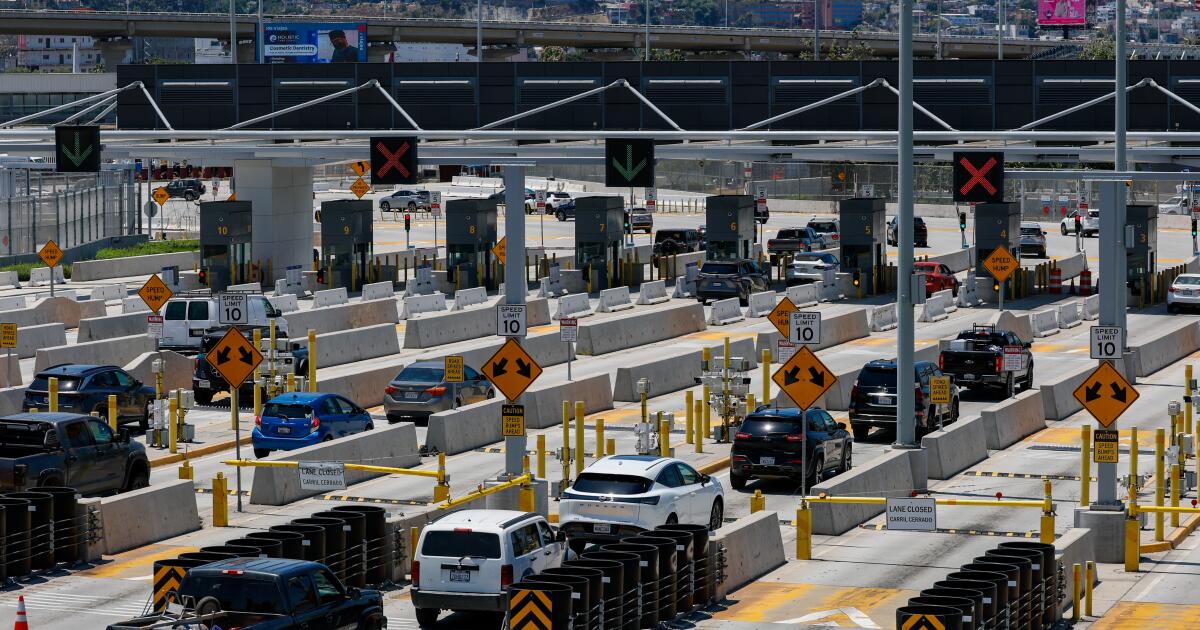
Asylum seekers may be turned away without a hearing at the southern border, the Supreme Court ruled Thursday in a historic retreat from the promise of relief for those who say they are fleeing persecution.

The justices split over whether this was a simple dispute over legal wording or a moral question involving desperate families.

Siding with the Trump administration, the court’s conservatives said the Refugee Act of 1980 offers a right to seek asylum to migrants who “arrive in the United States” but not those who are turned back when they approach a border crossing or a port of entry.

“This case presents a straightforward question” that turns on the word “in,” said Justice Samuel A. Alito Jr. “In ordinary speech, no one would say that a person ‘arrives in’ a place — for example, a house, a city, or a country — before the person enters that place.”

The liberal dissenters agreed with immigration rights lawyers who saw this as a nonsensical reading of the law.

Justice Sonia Sotomayor said the asylum law arose from the “international moral reckoning that followed the Holocaust and World War II.”

She cited the infamous voyage of the MS St. Louis in 1939. More than 900 Jewish refugees attempted to flee persecution in Nazi Germany by setting sail aboard the ship, which was turned away from Cuba and the United States.

Most of the passengers were returned to Europe, and several hundred died in the Holocaust, she said.

“Congress passed the Refugee Act in 1980 because it did not want this country to repeat the mistakes of its past. Yet if the refugees on the M.S. St. Louis were to walk up to a port of entry on our southern border today, the majority’s interpretation would allow immigration officers to refuse even to consider their asylum applications by physically blocking them from stepping foot onto U. S. soil,” Sotomayor wrote.

Justices Elena Kagan and Ketanji Brown Jackson agreed.

The decision upholds a turn-back policy that began in 2016 as an emergency response to a surge of Haitian immigrants at the San Ysidro border crossing.

The Department of Homeland Security said these asylum seekers must wait on the Mexican side of the border until they could return for a scheduled interview. The policy was extended to other border crossings, but it was challenged as illegal in federal court in San Diego.

Last year, a divided 9th Circuit Court of Appeals ruled that those restrictions were illegal if they prevented migrants from applying for asylum.

“To ‘arrive’ means ‘to reach a destination,’” wrote Judge Michelle Friedland. “A person who presents herself to an official at the border has ‘arrived.’”

She said the “government’s reading would reflect a radical reconstruction of the right to apply for asylum because it would give the executive branch vast discretion to prevent people from applying by blocking them at the border.”

The 2-1 decision upheld a federal judge in San Diego who ruled for migrants who had filed a class-action suit and said they were wrongly denied an asylum hearing.

But Solicitor Gen. D. John Sauer urged the Supreme Court to review and reverse the appellate ruling, noting 15 judges of the 9th Circuit joined dissents that called the decision “radical” and “clearly wrong.”

The administration argued federal immigration law “does not grant aliens throughout the world a right to enter the United States so that they can seek asylum.”

From abroad, they may “seek admission as refugees,” Sauer said, but the government may enforce its laws by “blocking illegal immigrants from stepping on U.S. soil.”

Defenders of the asylum system denounced the decision.

“We believe that today’s ruling violates international law, as well as the express intent of Congress,” said Erika Pinheiro, executive director of the migrant support organization Al Otro Lado, which led the legal fight. “For decades, the United States has allowed individuals and families who are fleeing persecution, torture and death to ask for protection at U.S. borders.”

“Cruelty is not a substitute for real solutions. Blocking people from seeking asylum at official ports of entry will do nothing to fix our broken immigration system, said Rebecca Cassler, senior litigation attorney at the American Immigration Council. “It only makes things more chaotic and dangerous for vulnerable families.”

The Federation for American Immigration Reform applauded the decision.

“Our immigration laws are written to be pro-enforcement, not-anti-enforcement,” said Christopher J. Hajec, deputy general counsel of FAIR. “Because of this, courts that hamstring enforcement are often forced to violate basic logic, as the 9th Circuit did here. We are pleased the Supreme Court saw that the lower court’s reading would make immigration law incoherent, and reversed.”

Source link

Pragmatic choice: Israel’s war backfires as Gulf backs US-Iran deal | US-Israel war on Iran

Doha, Qatar – Gulf states have welcomed a breakthrough agreement between the United States and Iran to end a war they never wanted.

Six countries – Saudi Arabia, the United Arab Emirates (UAE), Qatar, Kuwait, Bahrain and Oman – form the Gulf Cooperation Council (GCC), which was created in 1981 following fears of the perceived expansionist ambitions of the new Iranian government.

Recommended Stories

list of 4 itemsend of list

Since the 1979 Islamic revolution, Israel has attempted to isolate Iran and its wide network of regional proxy groups. But in a twist of irony, Israeli aggression in this pursuit has pushed some Gulf states closer to Tehran.

When Israel and the US launched strikes on Iran on February 28 – and Tehran responded by attacking Gulf states – they were again forced to reassess their relationship with their neighbour.

Gulf relations with Iran, at present, appear more shaped by realism than reconciliation, but this approach could help them navigate the uncertain road ahead.

“The ongoing conflict … compelled the Gulf states to pursue a more pragmatic relationship with Tehran, one that will include enhanced dialogue to deter conflict,” Farah al-Qawasmi, a researcher at the Gulf Studies Center at Qatar University, told Al Jazeera.

Embracing de-escalation – not Iran

All six GCC member states have welcomed a memorandum of understanding (MoU) signed by Iran and the US last week. But this is shaped more by the Gulf states wanting the war to end rather than a newfound trust of Iran.

“An agreement between the two parties is being [highly] advocated by the Gulf states in [an] attempt to prevent and contain regional conflicts,” al-Qawasmi said.

Shortly after the US and Iran agreed in 2015 to the Joint Comprehensive Plan of Action (JCPOA) – putting guardrails on Tehran’s nuclear programme – Gulf states remained sceptical about their neighbour.

The current war has only heightened these suspicions, but it has also seen regional states seek diplomacy with Tehran rather than military confrontation, despite Iran directly attacking Gulf cities.

“The Gulf states still feel like diplomacy is better than using force to get a deal … to change Iran’s behaviour and to insulate them from Iran’s destabilising actions,” Rob Geist Pinfold, a lecturer on security studies at King’s College London, told Al Jazeera.

Pinfold points out that Iran closed the Strait of Hormuz via drones and missiles, not nuclear weapons, making dealing with that threat a priority for Gulf states rather than Tehran’s nuclear programme.

Gulf states will want a more comprehensive agreement between Iran and the US, rather than the nuclear-focused JCPOA, said Pinfold.

“If you talk to people in Gulf capitals, they will tell you that the nuclear programme is a tomorrow problem for them,” he said.

“The today problem is Iran’s use of drones and proxies to destabilise and undermine the sovereignty of Gulf states, but also states throughout the region.”

US Secretary of State Marco Rubio’s three-day tour of the Gulf, which ends Thursday, is seen as a way of allaying these fears and assuring the GCC that Tehran will not be strengthened by the agreement.

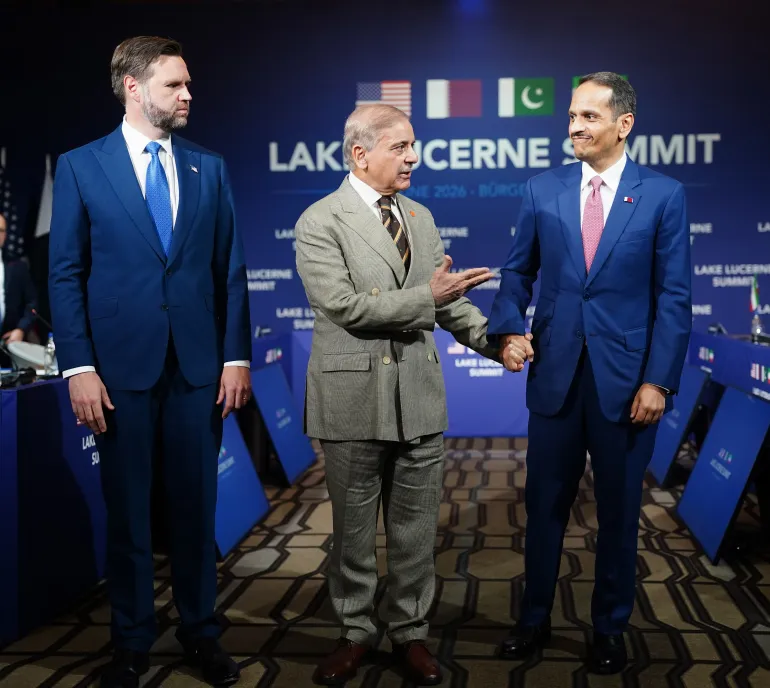
STANSSTAD, SWITZERLAND - JUNE 21: (EDITOR'S NOTE: Alternate crop) U.S. Vice President JD Vance looks on as Pakistan's Prime Minister Shehbaz Sharif speaks while gesturing towards Qatar's Prime Minister and Minister for Foreign Affairs Sheikh Mohammed bin Abdulrahman bin Jassim Al-Thani at the start of a quadrilateral meeting between the U.S., Iran, Pakistan, and Qatar at the Lake Lucerne Summit, aimed at advancing a deal to end the Middle East conflict at the Buergenstock Resort, Lake Lucerne on June 21, 2026 near Stansstad, Switzerland. Vance is visiting Switzerland for negotiations with Iran to end the war and open the Strait of Hormuz that have been delayed by Israeli strikes in Lebanon. (Photo by Nathan Howard-Pool/Getty Images)
US Vice President JD Vance, left, looks on as Pakistan’s Prime Minister Shehbaz Sharif, centre, speaks and gestures towards Qatar’s Prime Minister and Minister of Foreign Affairs Sheikh Mohammed bin Abdulrahman bin Jassim Al Thani, right, at the start of a quadrilateral meeting between the US, Iran, Pakistan and Qatar [File: Nathan Howard/Pool via Getty Images]

Seat at the table

Mehran Haghirian, the director of research and programmes at the Bourse & Bazaar Foundation, believes Gulf states are in a better position to guide the outcome of the current US-Iran talks than in 2015.

“They are at the heart of the negotiations,” Haghirian said regarding the Gulf states’ role in the current talks.

In its role as a co-mediator, Qatar is essentially representing the GCC and their interests during the talks, while articles five and six of the Iran-US MoU place Gulf states at the centre of the agreement.

Among the biggest concerns for the GCC are the future of the Strait of Hormuz, with Tehran demanding tolls on shipping, and calls for the creation of a regional investment fund for Iran.

“There really cannot be any new Hormuz authority by Iran that would not include other GCC countries,” Haghirian told Al Jazeera.

US Vice President JD Vance claimed last week that the investment fund would be financed by the Gulf coalition, but Rubio said this week that regional allies would not be asked to contribute to any reconstruction fund for Iran.

Qatar’s Prime Minister Sheikh Mohammed bin Abdulrahman bin Jassim Al Thani has described the reported $300bn figure as “aspirational” in an interview with the Financial Times, while no Gulf state has yet said if it will contribute to the fund.

‘Maximum pressure era’

The analysts stress that the GCC is not a monolith – with Gulf states having contrasting and changing approaches towards Iran.

Oman, Qatar and Kuwait were broadly supportive of the JCPOA. Saudi Arabia, the UAE and Bahrain were more sceptical, but even these states publicly backed the agreement, said Haghirian.

When Trump pulled the US out of the JCPOA in 2018, Saudi Arabia, the UAE and Bahrain believed they had “found a partner in DC”.

That led to a “maximum pressure era” that brought a period of brinkmanship in the region, said Haghirian.

Suspected Iran-linked attacks on Saudi Arabia’s Abqaiq-Khurais oil facilities and vessels off the coast of Fujairah in 2019 were “the initial reaction by the Iranians to that maximum pressure” campaign, he added, but paradoxically, this also triggered a recalibration of relations.

The UAE and Iran restored ties in 2022, and a China-brokered Saudi-Iran agreement took place in 2023.

“That was enough of a reason for Saudi Arabia [and] the UAE, particularly, to basically restructure their approach towards Iran,” Haghirian said.

The war and accelerated pragmatic rapprochement

While Israel has used war to attempt to increase its presence in the Gulf region – reportedly sending an Iron Dome battery to the UAE – other Gulf states view both Iran and Israel as unsettling forces in the region.

“Israel started the war, which was a destabilising act, and then Iran escalated by targeting the Gulf states, which was in turn a destabilising act,” Pinfold said.

Despite this, the Gulf states targeted by Iran still demonstrated patience and pragmatism in dealing with their neighbour.

Qatar, for example, has played a leading role in mediating between the US and Iran, even after being on the receiving end of Iranian drone and missile attacks.

“All six got attacked, and that’s really a level of foreign policy decision-making that is very difficult for any state to be able to really undertake, considering the fact that it was a military attack,” Haghirian said.

“But again, this pragmatism came out within this context to engage Iran and to actually speak for themselves at these negotiations. This war has really initiated a complete rebalancing of the entire region.”

Source link

US Supreme Court scales back Roundup cancer lawsuits in victory for company | Courts News

The United States Supreme Court has sided with the maker of Roundup weedkiller in a ruling expected to block thousands of lawsuits alleging it failed to warn people the product could cause cancer.

The ruling on Thursday was tied to a case that came before the justices after a tidal wave of litigation that included some multibillion-dollar verdicts against the global agrochemical manufacturer Bayer, a Germany-based company that acquired Roundup when it bought its original producer Monsanto in 2018.

Recommended Stories

list of 4 itemsend of list

The decision is a victory for US President Donald Trump’s administration, but one that could be tricky politically since allies in the “Make America Healthy Again” movement want to rein in pesticide use.

The high court, in a 7-2 ruling, found that the company cannot face failure-to-warn lawsuits in state courts because federal regulations have found a cancer link unlikely and do not require a warning label.

The justices overturned a jury verdict in Missouri awarding $1.25m to a man named John Durnell who said he was diagnosed with non-Hodgkin lymphoma after years of exposure to glyphosate in Roundup. The Supreme Court agreed with Bayer that a US law that governs pesticides precludes failure-to-warn claims that are brought under state law from moving forward in court.

Bayer shares jumped nearly 18 percent following the ruling.

Trump’s administration had backed Bayer in the case.

Conservative Justice Brett Kavanaugh, who authored the ruling, said the US Environmental Protection Agency, or EPA, has concluded glyphosate does not cause cancer and has not required a cancer warning on Roundup.

The law preempts Durnell’s claim because it “would require Monsanto to add a cancer warning to Roundup’s label even though federal law requires Monsanto to use the EPA-approved label without a cancer warning”, Kavanaugh wrote.

Liberal Justice Ketanji Brown Jackson, in a dissent joined by conservative Justice Neil Gorsuch, said that Durnell’s claim would impose equivalent labelling requirements on Monsanto that the federal law requires and so should not be preempted.

Jackson called the ruling “remarkable and regrettable, for it unjustifiably closes the courthouse doors to state tort plaintiffs like Durnell”.

Bayer acquired Roundup as part of its $63bn purchase of agrochemical company Monsanto in 2018. More than 100,000 plaintiffs have filed cases in US state and federal courts alleging a cancer link, and the German drugmaking and crop science company had said that the lawsuits could threaten its ability to supply the herbicide to farmers.

The torrent of litigation already prompted Bayer to remove glyphosate from its consumer version of Roundup. Bayer said before the Supreme Court ruled that a decision in its favour could largely end the Roundup litigation.

“The US Supreme Court decision is good for science, farmers, and industries that depend on regulatory clarity for innovation. It should help significantly contain the Roundup litigation after nearly a decade of legal battles. The ruling should result in the dismissal of current warning-based claims and bar future failure-to-warn claims,” Bayer spokesperson Tino Andresen said in a statement.

The company emphasised throughout the litigation that the EPA repeatedly found that glyphosate does not cause cancer and approved its product labels without a warning.

Facing billions of dollars in potential liability, Bayer announced in February a proposed $7.25bn settlement to resolve tens of thousands of current and future lawsuits. The settlement would not affect claims that stem from pending appeals or that fall outside the deal, according to the company. Those amount to nearly $1bn, it said.

‘Disaster for public health’

Environmental activists and others criticised the court’s ruling on Thursday.

“Once again, the Supreme Court has sided with big business over people and the environment. Today’s ruling is a disaster for public health,” said Tarah Heinzen, legal director at the advocacy group Food and Water Watch.

“The harm from this decision will perpetuate our cancer, infertility and general chronic disease epidemic for generations to come,” said Kelly Ryerson, co-executive director of advocacy group American Regeneration and a Make America Healthy Again activist who posts on social media under the moniker “The Glyphosate Girl”.

The sprawling dispute centres on a US law called the Federal Insecticide, Fungicide and Rodenticide Act, or FIFRA, that governs the sale and labelling of pesticides and bars states from imposing differing or additional requirements.

The measure prohibits pesticides that are “misbranded” with labels that lack an adequate warning to protect health and the environment.

Bayer has argued that Durnell’s claims are preempted by this law. The EPA has repeatedly approved labels without such a cancer warning, demonstrating that these products are not misbranded, the company said, adding that labels cannot be substantially changed without the agency’s approval.

Durnell’s lawyers said that despite the EPA’s registration of Roundup, the label may still be challenged as misbranded. They also said Durnell’s claims are not preempted because Missouri state law that requires products to adequately warn of dangers imposes the same requirements as FIFRA’s prohibition on misbranding.

‘A new era’

Union Investment fund manager Markus Manns called Thursday’s ruling a significant milestone for Bayer, adding that a decade after the Monsanto acquisition, the company is “entering a new era”.

“While future lawsuits are not entirely off the table, they will become considerably more difficult. A final breakthrough would come if the settlement is accepted by the plaintiffs and approved by the competent court in July. This would bring Bayer’s glyphosate litigation chapter to a definitive close, allowing management to fully refocus on operational and strategic matters,” Manns said.

Durnell sued Monsanto in Missouri state court in 2019, claiming it failed to warn users of the dangers associated with Roundup and glyphosate.

He was diagnosed with a rare and often aggressive form of non-Hodgkin lymphoma, a cancer that starts in the white blood cells, and attributed the disease to his exposure to Roundup starting in 1996. For about 20 years, he was the “spray guy” for a neighborhood association in St Louis, killing weeds at local parks without protective equipment, according to court papers.

A jury sided with Durnell in 2023, and in 2025, a state appeals court upheld that verdict.

Source link

IRGC warns against new Hormuz route for ships: What we know | US-Israel war on Iran News

Iran’s Islamic Revolutionary Guard Corps (IRGC) has warned commercial vessels to only use routes through the Strait of Hormuz approved by Tehran, reopening a point of friction in fragile negotiations between the United States and Iran over the future of the strategic waterway.

The warning came after Oman announced a new shipping transit route through the strait on Wednesday, saying it had coordinated the route with the International Maritime Organization (IMO) as maritime traffic slowly resumes following weeks of disruption.

Recommended Stories

list of 4 itemsend of list

The dispute remains one of the unresolved issues after a memorandum of understanding (MoU) was signed by the United States and Iran last week, which largely halted hostilities in the four-month US-Israel war on Iran and which launched a 60-day negotiation process aimed at reaching a broader peace agreement.

The MoU, which includes the reopening of the strait, followed months of severe disruption to shipping after Iran effectively closed it, and the US imposed a corresponding naval blockade on Iranian ports.

Both Washington and Tehran have declared the strait open to commercial shipping, but questions remain over whether Iran will seek greater control over vessel movements, whether it will impose transit or service fees on ships using the strait following the 60-day negotiating period, and whether disagreements over the waterway could derail efforts to reach a permanent agreement altogether.

Why is the Strait of Hormuz so important?

The Strait of Hormuz is one of the world’s most strategically significant waterways, with around one-fifth of global oil and liquefied natural gas (LNG) supplies normally being shipped through the narrow passage linking the Gulf to the Arabian Sea.

Bordered by Iran to the north and Oman and the United Arab Emirates (UAE) to the south, the strait is only about 50km (31 miles) wide at its entrance and exit, narrowing to about 33km (21 miles) at its tightest point. Despite its width, it is deep enough to accommodate the world’s largest oil tankers.

According to the US Energy Information Administration, about 20 million barrels of oil and petroleum products transited the strait each day in 2025, representing hundreds of billions of dollars in annual energy trade.

The route is used not only by Iran but also by Iraq, Kuwait, Qatar, Saudi Arabia and the UAE. It is also vital for global fertiliser exports, with roughly one-third of international fertiliser trade normally passing through the strait.

Because disruptions to shipping there rapidly push up global energy prices and destabilise US markets, control of the waterway has become one of Iran’s strongest sources of strategic leverage in its conflict with the US.

INTERACTIVE - Strait of Hormuz - March 2, 2026-1772714221
(Al Jazeera)

Why is Iran objecting to Oman’s new route?

The IRGC says Oman and the IMO announced the new shipping corridor without consulting Tehran. “Certain authorities have announced a new shipping route through the Strait of Hormuz without prior notification to or coordination with the Islamic Republic of Iran. The proposed route is unacceptable and poses serious safety risks,” the force said.

“The only authorised transit routes through the Strait of Hormuz are those designated by the Islamic Republic of Iran,” it said, adding that ships must maintain contact with the IRGC Navy while transiting the waterway.

Iran first issued its own map of acceptable routes through the strait in April, showing that ships should pass much closer to the Iranian coast than they had previously.

INTERACTIVE - Alternative route throughthe Strait of Hormuz - APRIL 14, 2026-1776162674
(Al Jazeera)


The IRGC’s warning came after a Liberian oil tanker passed through the strait on Thursday using a route much closer to Oman’s coastline.

Al Jazeera’s Resul Serdar, reporting from Tehran, said the IRGC appeared frustrated because the Omani route partially bypasses Iran’s direct control over shipping.

“The control of the Strait of Hormuz has been a huge leverage for Iran to put pressure on its adversaries and the global economy since the beginning of the war,” Serdar said.

Oman defended the corridor route it had announced, saying it was intended to restore safe navigation while complying with international law. Foreign Minister Badr Albusaidi said Oman remained committed to ensuring freedom of navigation through the waterway and stressed that “future arrangements related to the strait do not involve imposing any transit fees”.

What does the US-Iran agreement say about the strait?

In the MoU signed last week, Iran agreed that it would “make arrangements using its best efforts for the safe passage of commercial vessels with no charge, for 60 days only, from the Persian Gulf to the Sea of Oman and vice versa”.

While the agreement states that “the traffic of commercial vessels will immediately start”, it also acknowledges that demining operations will be required before normal shipping routes can fully resume, stating that “demining by the Islamic Republic of Iran will be instated within 30 days”. It also provides for discussions between Iran, Oman and other Gulf states on future arrangements for managing the waterway.

However, the memorandum does not specify what will happen after the initial 60-day period. Ali Vaez, Iran project director at the International Crisis Group, said the temporary rerouting of vessels had always been expected because of the mine-clearing operations outlined in the agreement.

“We always knew that if there was a deal, there would be several weeks of mine-clearing operations in the international shipping lane running through the middle of the Strait of Hormuz,” he said.

“During that period, vessels would have to transit through Iranian and Omani territorial waters instead.”

However, Vaez said the latest announcement by Iran was unexpected. “The important thing now is that the Iranians do not start taking fees or other tolls,” he said, “because that is not provided for in the memorandum of understanding.”

Asked whether the IRGC’s position differed from that of Iran’s government, Vaez said: “There is no distinction between the IRGC and the state. They are effectively one and the same. The IRGC is calling the shots.”

Can Iran charge ships fees?

International law generally protects the right of transit through international straits, including Hormuz, making it difficult for coastal states to impose unilateral transit fees on vessels simply passing through international shipping lanes, even where they are within territorial waters.

Last week, Iran announced it would waive planned fees through the strait for 60 days while talks with the US continue in Switzerland, suggesting charges may be introduced once the negotiating period expires.

Iran’s chief negotiator, Mohammad Bagher Ghalibaf, has signalled that Tehran views the post-war arrangement as fundamentally different from the status quo that existed before the conflict.

“Hormuz will never return” to its prewar status, Ghalibaf said.

The suggestion that Iran could charge fees was dismissed by US Secretary of State Marco Rubio this week. Speaking at the start of a regional tour in the United Arab Emirates, he said: “It’s an international waterway. No country is allowed to charge tolls or fees on an international waterway.”

Rubio added that he believed “all the countries in this region would agree”.

Speaking in Manama, Bahrain, after meeting with the Gulf Cooperation Council (GCC) – a bloc comprising Bahrain, Kuwait, Oman, Qatar, Saudi Arabia and the UAE – on Thursday, Rubio also told reporters: “Iranians are saying one thing, but then something else is actually happening.

“It’s now obvious to us that … the Iranian system is going to produce all sorts of maximalist rhetoric. What we’re interested in is not their press conferences. What we’re interested in is whether or not ships are moving. If ships are moving as they should be moving, then that’s what we’re going to judge.

“If, on the other hand, this rhetoric is backed up by actual ships being threatened and ships are not moving, then that’s a violation of the agreement, and we’re going to have a problem with it.”

Rubio claimed there is no regional support for Iranian transit fees, saying, “There is zero support among Gulf countries for any sort of toll or fees charged for the use of international waters … that isn’t going to happen.”

His comments came after UAE presidential adviser Anwar Gargash said that new “geopolitical facts” could not be imposed on the Arab Gulf states as a result of what he described as the “treacherous aggression against them”.

Are ships returning – and which route are they taking?

Some commercial shipping through the strait has resumed, although traffic remains well below normal levels. Before the conflict, between 120 and 140 vessels typically transited the strait each day.

According to shipping analytics company Kpler, confirmed crossings rose to 70 vessels on Wednesday as demining progressed and more operators began using the Omani route.

“The US-Iran MoU framework and apparent lifting of the US blockade appear to have supported a short-term confidence boost, although IRGC warnings against use of the Omani route could create a new source of contention,” Kpler reported.

The company added that incomplete demining, continued “dark” routing by some vessels – when ships limit or switch off their tracking transponders – and unresolved questions over inspections, sanctions and future governance meant shipping had not yet returned to prewar conditions.

This comes as oil prices drop to the lowest level since before the Iran war, with Brent crude, the global benchmark, falling to a low of $72.24 a barrel on Thursday. This remains above the prewar price of $66, however.

The chart below shows how shipping through the strait before the war compares to its status in recent weeks:

INTERACTIVE - 100-daysHow many ships passed through the Strait of Hormuz-1780591111

Is a peace deal achievable?

The future administration of the Strait of Hormuz is only one of several issues still to be resolved before negotiators hope to reach a comprehensive agreement within 60 days, with another major sticking point being Iran’s nuclear programme.

International Atomic Energy Agency (IAEA) Director-General Rafael Grossi has said the agreement explicitly provides for international monitoring of Iran’s nuclear activities.

However, Kazem Gharibabadi, Iran’s deputy foreign minister for legal and international affairs, has said inspectors’ access to nuclear sites damaged during the conflict will only be considered as part of a final agreement.

Questions also remain over the fate of Iran’s enriched uranium stockpile, the sequencing of sanctions relief and the release of frozen Iranian assets, while regional tensions continue to pose additional risks.

Israeli forces remain deployed in parts of southern Lebanon occupied during the conflict, according to a Lebanese military source, while Israeli strikes have continued, despite the MoU explicitly calling for “a permanent end to the war on all fronts, including Lebanon”.

Vaez said visible progress would be essential if negotiations are to survive, noting, “Both sides have to see progress, whether that’s greater access for UN nuclear inspectors, sanctions relief, or resolving the issue of Iran’s uranium stockpile.”

He cautioned against viewing the interim agreement as a series of smaller deals. “Nothing is agreed until everything is agreed,” Vaez said.

“They [the Iranians] are determined to reach a comprehensive agreement within 60 days. That’s a very ambitious timetable, but there has to be visible momentum or the process risks falling apart.”

However, Vaez said both Washington and Tehran have strong economic incentives to bring about a lasting peace. “The situation in the Strait had become one of mutually assured economic destruction,” he said.

“The United States was facing rising energy and oil prices ahead of the midterm elections … At the same time, Iran was already in a deep economic hole before this conflict began. The war only made that worse.

“It became a lose-lose dynamic, and both sides needed a way out.”

Source link

Oil prices back to pre-war levels on rising Middle East supply | Business and Economy News

The price of Brent crude has reached its lowest since February 27, before the war started.

Oil prices have extended their decline to levels last seen before the start of the Iran war, as expectations of rising supply from the Middle East outweighed demand concerns.

Prompt-month Brent crude futures for August delivery fell $1.06 (1.44 percent) to $72.68 a barrel by 06:39 GMT, while US West Texas Intermediate (WTI) lost 76 cents (1.08 percent) to $69.58 a barrel.

Recommended Stories

list of 4 itemsend of list

Both contracts hit their lowest since February 27.

August Brent was trading lower than September, which was priced at $73.59, signalling ample short-term supply.

Brent had fallen by more than $3 on Wednesday as supply concerns eased, while WTI settled down nearly $3.

US Energy Secretary Chris Wright told a forum that flows through the Strait of Hormuz were close to those before the start of the Iran war, with at least 20 million barrels having exited the strait in the past 24 hours.

A return to complete normality would take a few weeks, however, because the strait needs to be cleared of mines, he added.

Rising Middle East supply, together with Iran set to boost sales after a temporary reprieve from US sanctions, drove down prices of physical crude oil cargoes around the world.

New routes

An initial accord last week to end the US-Israeli war with Iran, which began on February 28, has allowed the resumption of traffic through the strait.

The accord set up a 60-day period of negotiations to tackle tougher issues, such as Iran’s nuclear programme.

Wright said oil would continue to flow through the strait even if the deal did not hold, and that Iran would not be able to close it again.

Tehran has said it plans to impose what it calls maritime service fees, as opposed to tolls, while the United States argues it is an international waterway and therefore should not be charged.

Oman opened temporary routes on Wednesday to ease tanker departures from the strait, with the International Maritime Organization and Omani authorities coordinating movements.

On Thursday, Iran’s Revolutionary Guards warned against any crossings of the Strait of Hormuz without authorisation, saying vessels not complying “will be dealt with” and condemning the new routes.

Source link

Trump says UK’s likely next leader Andy Burnham is ‘extremely liberal’ | Donald Trump

NewsFeed

US President Donald Trump has made his first comment on the UK’s likely next leader describing Andy Burnham as ‘extremely liberal’. He also declared that Britain is ‘dying’ and urged greater oil drilling in the North Sea. The comments came after Keir Starmer announced plans to step down, with Burnham the only candidate to succeed him.

Source link

Rutte attempts to ease Trump-NATO rift over Iran ahead of annual summit | US-Israel war on Iran

NewsFeed

NATO chief Mark Rutte visited the White House to ease tensions with US President Trump ahead of next month’s NATO summit. Trump has said NATO isn’t doing enough, ordering a review of US forces in Europe after saying allies did not support the US war on Iran.

Source link