I paired Sweden’s pretty capital with an island adventure for one unforgettable trip

THE sound of bugles, trumpets and tubas fills the street as a parade of horses trot towards The Royal Palace.
I always thought Buckingham Palace’s changing of the guard was impressive, but shiny silver helmets off to the Swedish Army who, decked out in pristine blue uniforms, have us completely captivated for a full 45 minutes.
“It’s like being in a movie!” my five-year-old son Raffy shouts above the beat of kettle drums halfway through.
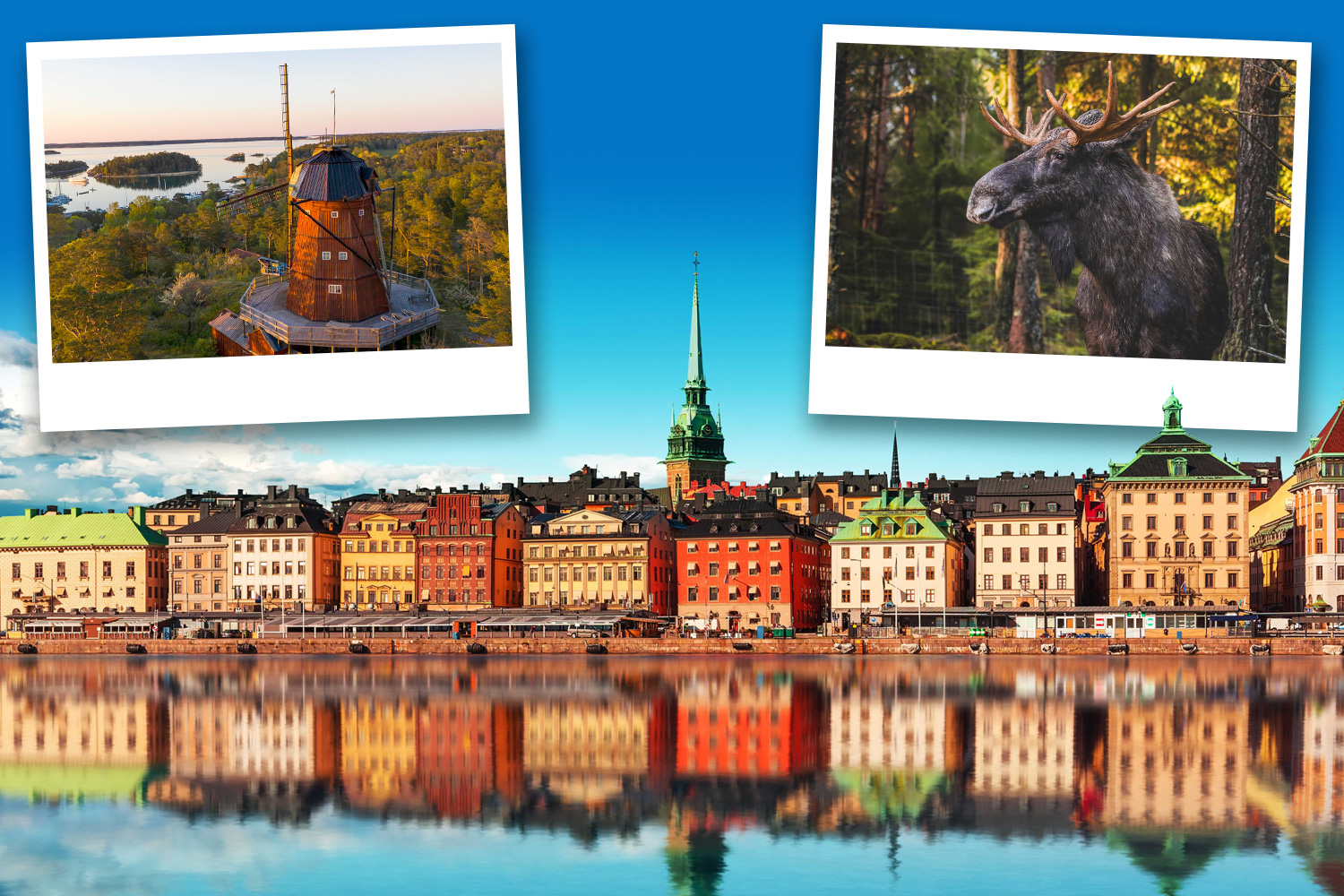
And he’s right. In the picturesque setting of Gamla Stan, Stockholm’s historic old town, it is an incredible spectacle. And even better – it doesn’t cost a penny. Or krona, rather.
I like big buns
Your wallets will, however, take a hit in Gamla Stan’s winding, cobbled streets, which are brimming with gift shops, such as Liten Amanda with its Nordic home decor (Litenamanda.se), plus bistros like Petit Pastis (Pastis.se) and confectioner Konfektyr & Glass offering an eye-boggling array of treats.
We search for the tiny Iron Boy statue hidden in a courtyard, before ordering a sizeable cinnamon bun, coffees and hot chocolates with lashings of cream for £28, at Kaffekoppen in Stortorget Square (Cafekaffekoppen.se), then chancing upon vintage H&M and antique glassware at charity shop Stockholms Stadsmissions nearby (Stadsmissionen.se).


Stockholm city consists of 14 islands connected by bridges. On Djurgården, we all stand in awe as we first set eyes on Vasa, a 17th-century warship that sank on its maiden voyage, its intricate carvings painstakingly restored.
A bonus for my teen self (in the temporary exhibition) is seeing Rose’s dress and Heart of the Ocean necklace from the film Titanic, while learning about director James Cameron’s 2012 deep-sea expedition 10,000 feet down to the ocean floor, and squeezing into a replica capsule. Adult entry costs £18.50, under-18s are free (Vasamuseet.se).
Mamma Mia!
The kids’ favourite outing is the neighbouring ABBA Museum. Poppy, seven, adores the greatest hits album (thanks to her Yoto music player), and despite being a tad overpriced, it’s undoubtedly a super-fun interactive space with lots of opportunities to dress up and perform like – and even alongside – the band (in hologram form), pose for an album cover, rock out in a silent disco and ogle the showstopping stage costumes.
Adult entry costs from £20.50, kids over seven from £8.50 (Abbathemuseum.com).
On one of our days on Djurgården, we tuck into shrimps piled atop egg mayo and syrup bread, £18, while the kids scoff pancakes with cream and jam, £7.50, bathed in sunshine on cafe Skroten’s terrace.
There’s free bread, butter and lingonberry juice on offer, too (Skrotens.se). Later, we hit Skansen, home to a farm, zoo, funfair and a historic town with glassblowers, pottery studio and bakery.
The children are wide-eyed at both the playful bears and the molten glass being transformed into chic confetti lampshades. Adult entry costs £23.50, under-12s are free (Skansen.se).
Viking vibes
At dinner that night, a roar fills the dining hall as our host announces the arrival of more guests – this time from the US – with a horn and a bellow.
I pause devouring my crawfish and prawn soup, £13.50, to join in the hollering.
We’re at Viking restaurant Aifur, and while it may be touristy, Raffy again gets all the film-set feels when he’s declared a “baby Viking” and presented with a giant sword to look after.
Thinking his night couldn’t get any better, and just as a musician begins playing the hurdy-gurdy (Google it!), the waitress presses souvenir coins into both his and Poppy’s palms (Aifur.se).
Continuing the theme, the next morning we learn how to fight and write like a warrior at the Viking Museum, which is worth a stop, even if it’s just to lunch at its restaurant Eld.
Highlights include Ukrainian gnocchi with smoked feta, £22, deer medallions with black garlic and potato gratin, £22.50, and the pretty harbour views (Thevikingmuseum.com).
Isle be back
The sweet spot for visiting Sweden with kids is balmy mid-August, just after the Swedes return to school. Keen to get a taste of the Stockholm Archipelago, home to more than 30,000 islands, we take the 43X train from Stockholm City station to Västerhaninge, catch the 846 bus to Årsta Brygga and then hop on the 21 boat to Utö.
Although it sounds complicated, it’s super-simple, and for our transport-mad kids, the hour-and-a-half journey in itself is thrilling.
But Utö, all rugged landscapes, pine forests and sparkling sea, is the real thrill. Photos really don’t capture its beauty.
We kip in one of hotel Utö Värdshus’ sweet self-catering cottages, which cost from £101 per night, and at the restaurant that evening, we dine on buttered kingfish with potato, leek and cheese pie and crayfish broth, £29, while the kids wolf down steak with Béarnaise sauce and fries, £10.50 (Utovardshus.se).
Holidaying on the island is all about hiking, biking and the wonderfully wild beaches.
One afternoon is spent picnicking at Barnens Bad beach, not far from our cottage – its crystal-clear shallow water is perfect for kids, and we’re joined by only one other family, who stylishly arrive and depart by kayak.
The next day, we set off on a 11km bike ride (daily hire costs £15 per adult, £11 per child).
We pass colourful wooden houses and breathtaking vistas to Stora Sand, a wide expanse of white beach, which again we only have to share with one other couple.
Sandcastle building and chasing waves makes for a blissful few hours, topped off only by a wild moose deciding to clumsily gallop across our path on our ride home.
I fear that the kids’ tales of this trip may sound a little far-fetched when they get back home and share them with friends. But Sweden really has proved super (trouper).
FYI
Plan your trip at Visitstockholm.com.
Flights from the UK to Stockholm start
from £57 return.
PSST…
Check into Stockholm’s Downtown Camper by Scandic for cool vibes, ping-pong tables on every floor and free firepit marshmallow toasting for kids.
Family rooms cost from £275 per night (Scandichotels.com).
Or try Hotel Kung Carl, set in historical buildings, for a more quaint feel, pastel decor and plants to borrow each night. Family rooms cost from £285 B&B (Kungcarl.se).