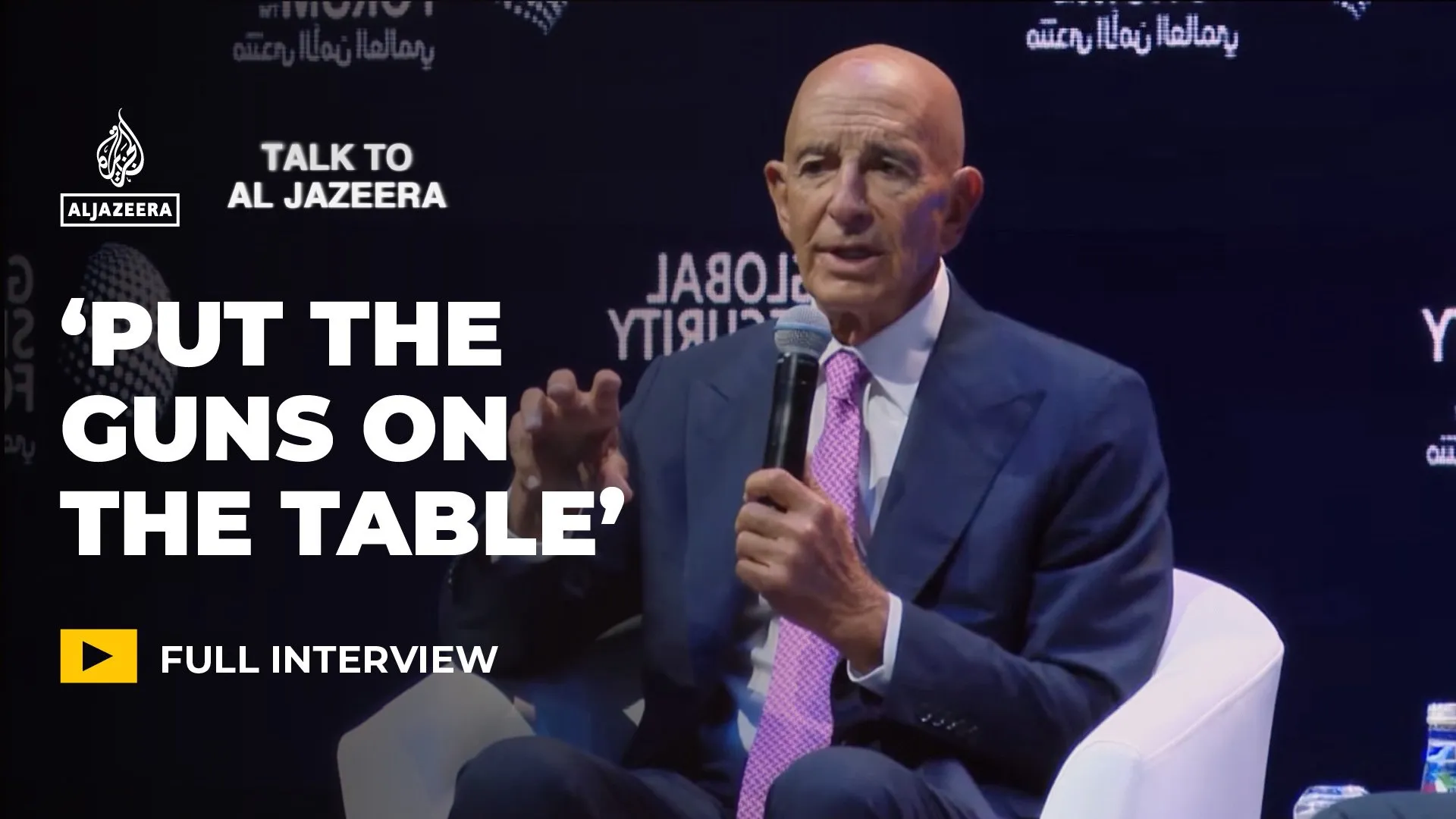
The US ambassador to Turkiye, Tom Barrack, says Washington’s relationship with the Middle East needs to change, from one of control to one of support.
The United States ambassador to Turkiye and special presidential envoy for Syria and Iraq says Washington’s relationship with the countries in the Middle East needs to change.
Tom Barrack says the US no longer seeks to dominate the region.
He won’t say whether the war in Iran was a mistake – but acknowledges the instability it caused has led to unintended consequences.
Barrack says President Donald Trump is against what he calls “forever wars”, and ending the US-Israel war on Iran will require a major compromise. According to him, each side will have to accept conditions it does not like.
However, he is worried that growing tensions could lead to miscalculation.
Barrack says trust is lacking between Washington and Tehran, and that is hampering talks to agree on a deal.
He tells Al Jazeera that countries in the region should not depend on the US to solve their problems and that they need to look out for themselves. He insists the Trump administration has not abandoned the region, but is rather re-examining its role.
Barrack admits that years of US involvement in the region demonstrate that intervention and regime change do not work. He says it is time to put down the guns and resolve disputes through negotiations and mutual respect.
Qatar, Turkiye, Pakistan and Indonesia sign ‘Badr’ defence pact
Al Jazeera’s Osama Bin Javaid reports on the ‘Badr’ Memorandum of Understanding, a new defence agreement signed today by Qatar, Turkiye, Pakistan and Indonesia to boost joint weapons production, research, and technology cooperation, reducing reliance on foreign suppliers.
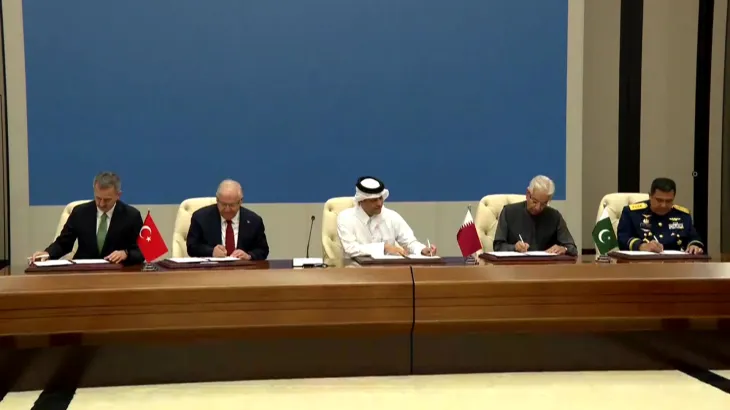
Qatar, Turkiye, Pakistan and Indonesia signed a deal on Wednesday to deepen their defence industry cooperation, reflecting a broader effort by countries in the region to widen their network of security partners amid the prolonged US-Israel war with Iran.
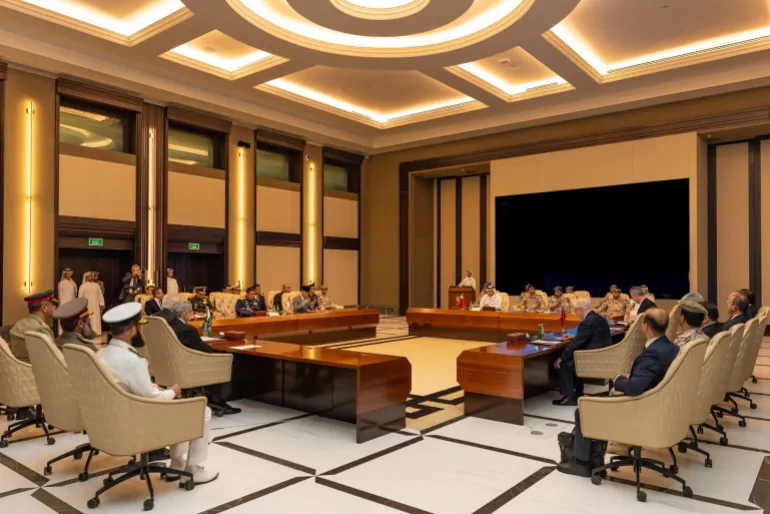
The four countries signed the memorandum of understanding in Doha, building on existing military projects through joint production, technology transfers and more closely integrated supply chains.
Recommended Stories
list of 4 itemsend of list
The initiative comes as the failure of the United States and Iran to reach a concrete peace agreement pushes countries in the region to diversify their defence partnerships and look beyond what experts described as an overreliance on Washington for their security. But they stress that closer cooperation does not mean abandoning long-standing alliances. Instead, the ambition is to gain greater control over their own security while strengthening pre-existing partnerships.
Arda Mevlutoglu, a defence industry analyst and managing director of Mergen Analytical Strategies, told Al Jazeera that the implications could extend well beyond the four participants.
“We may be witnessing the emergence of an interconnected network of defence and security arrangements extending from the Gulf to South and Southeast Asia, rather than a single formal alliance,” he said.
The multilateral ‘Badr’ agreement was signed in the Qatari capital, Doha, on Wednesday, October 21, 2026 [Handout/ Ministry of Defence via Al Jazeera]
What would the agreement do?
In a statement, the Qatari Defence Ministry said the “Badr” Memorandum of Understanding “aims to foster cooperation in the field of defence manufacturing, enhance defence capabilities among the four countries, and promote collaboration in technical defence training, as well as in research and development areas, thereby contributing to the creation of solutions and industries worthy of the evolution of modern defences”.
Experts say that under the agreement, each country will bring its own resources or set of skills to the table. “Turkiye contributes technological expertise, systems integration and a mature defence industry; Pakistan and Indonesia offer manufacturing capacity, skilled workforces and sizeable domestic markets; and Qatar provides investment potential and demand,” said Mevlutoglu.
Together, the four nations could “establish integrated supply chains, allowing these countries to jointly develop, manufacture and sustain defence systems”, he told Al Jazeera.
Such arrangements could give buyers a larger role in producing and supporting their own equipment, while providing manufacturers with longer-term orders and investment. Albert Vidal, a research associate at the International Institute for Strategic Studies, told Al Jazeera that Pakistan and Indonesia were both willing to purchase Turkish weapons and locate part of their production at home.
This could bring down costs for Turkish companies and bring jobs to Pakistan and Indonesia, while Qatar brings “financial depth”, he said.
Building on existing partnerships
Turkiye, home to one of the world’s most advanced defence sectors, already has military manufacturing ties with Qatar, Pakistan and Indonesia separately. Qatar and Turkiye, for instance, signed a bilateral defence industry memorandum in October 2025.
But Vidal says that the new agreement, bringing together all four nations, points to a strategic calculation alongside an industrial one. Closer relationships could give more countries a stake in each other’s security. He pointed to Qatar’s investment in the Turkish defence industry over more than a decade and Ankara’s deployment of forces to Doha during the 2017 diplomatic crisis.
Pakistan’s existing naval manufacturing project with Turkiye, meanwhile, shows how weapons purchases can support domestic manufacturing. Of the four ships announced under the project, two are to be built in Istanbul and two at Karachi Shipyard.
Indonesia and Turkiye, meanwhile, are jointly building a tank.
“The rationale is to streamline these distinct defence export and joint production agreements under a more structured and resilient networked hub, rather than reinvent the wheel with each new defence agreement,” Burcu Ozcelik, a senior research fellow at the Royal United Services Institute, told Al Jazeera.
Less dependence on Washington?
The US-Israeli war with Iran and recent Houthi attacks on Saudi Arabia have heightened regional security concerns, analysts say, while reported US weapons shortages may be adding urgency to efforts to strengthen pre-existing partners and bolster domestic arms-building capacity.
“Diversification is a major driver, particularly as recent conflicts have exposed vulnerabilities associated with dependence on foreign suppliers, technology restrictions and supply chain disruptions,” Mevlutoglu said.
But he cautioned against interpreting the memorandum as a break with Washington. “Qatar is unlikely to abandon its strategic relationship with Washington, while Turkiye seeks greater technological independence within NATO, not autonomy from it,” he said.
According to Bader Mousa Al-Saif, an associate fellow with Chatham House’s Middle East and North Africa Programme and an assistant professor at Kuwait University, the initiative reflects Gulf countries increasingly looking towards the Global South and fellow Muslim countries.
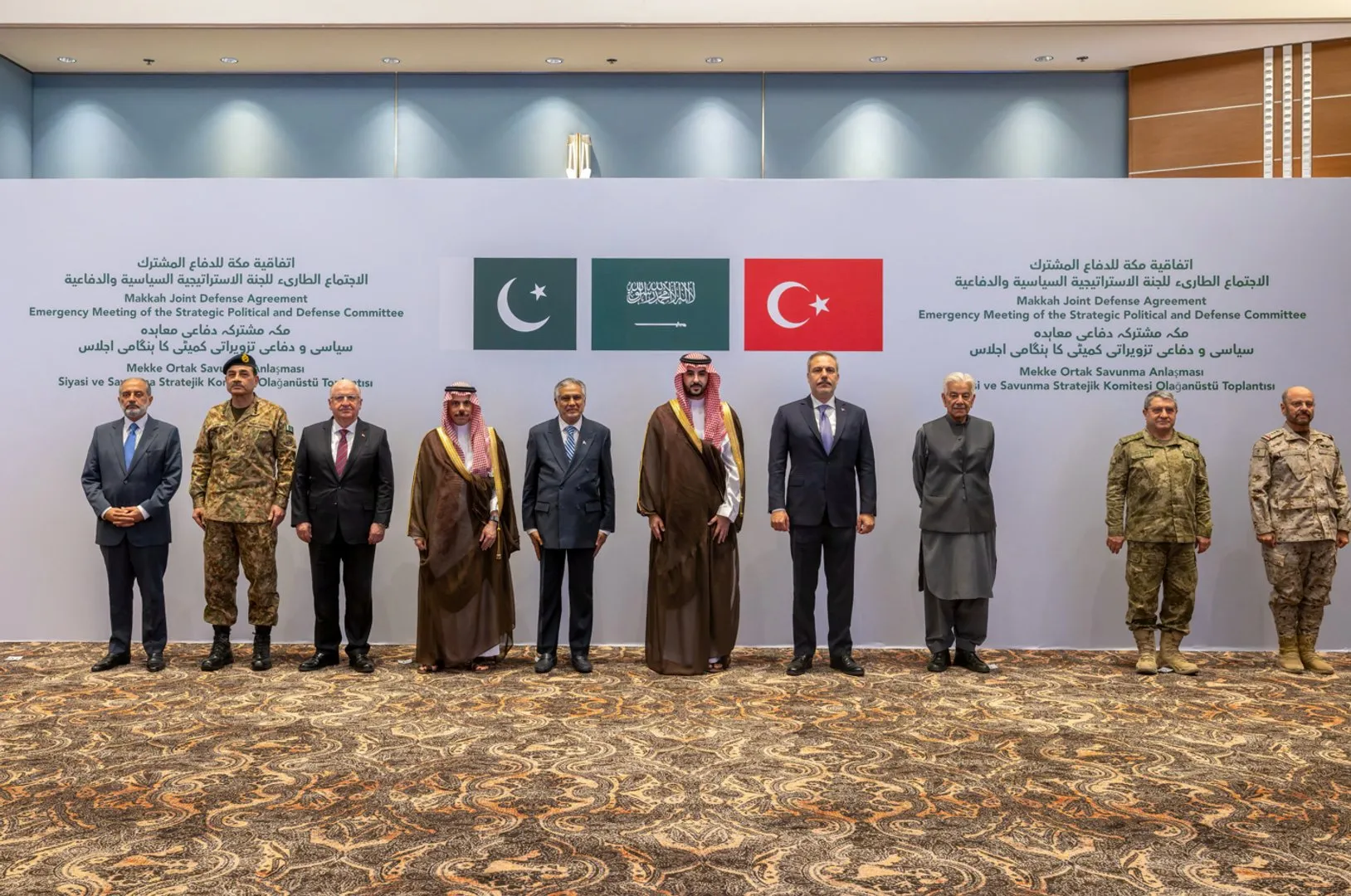
It also complements a separate effort to formalise military cooperation across the region, analysts say. Saudi Arabia, Pakistan and Turkiye signed the Mecca Joint Defence Agreement in August, establishing a mutual defence commitment. Ankara submitted the agreement to parliament for ratification on Wednesday, although deploying Turkish troops abroad would require separate parliamentary approval.
The Doha memorandum concerns industrial cooperation rather than a mutual defence pledge, but Mevlutoglu sees a connection between the two initiatives. “While Mecca focuses on collective deterrence and military cooperation, Doha could provide the industrial and technological foundations for such partnerships,” he said.
Ukraine says it has received proposals from India, Turkiye, Egypt and the United States to broker talks with Russia. The offers come as the two adversaries escalate attacks on each other’s energy and port infrastructure with their war now in its fifth year.
Ukrainian Foreign Minister Andrii Sybiha revealed the four proposals at a briefing in Kyiv on Friday and singled out New Delhi’s. “The most comprehensive is India’s proposal,” he said, adding that India had signalled a willingness to play a role for the first time.
Recommended Stories
list of 3 itemsend of list
None of the proposals aims to end the war. Each seeks a narrower truce, covering energy facilities, ports or commercial shipping in the Black Sea.
Here’s what we know:
What is India proposing?
India has not made its plan public. Quoting unnamed sources, however, Indian media have reported it has three parts. According to the Hindustan Times, it would aim to protect infrastructure, keep grain and energy supplies moving through Black Sea ports, and ensure the safety of commercial shipping.
The first part – mutually halting strikes on energy facilities and ports – matches what Kyiv has been demanding. Sybiha said any deal must be a complete energy truce that covers port infrastructure as well.
The second part builds on the Black Sea Grain Initiative, which Turkiye and the United Nations mediated in 2022 but Russia abandoned in 2023.
The third part, protecting merchant ships and their crews, is particularly important to India because Indian sailors have been killed or harmed on Black Sea routes.
The sources were quoted as saying India’s plan goes further than the other three proposals because it covers infrastructure and shipping together. A Ukrainian official told the Kyiv Independent that it incorporates elements of the Turkish, Egyptian and US initiatives. The Kyiv Post reported that Sybiha also described the plan as addressing a possible ceasefire along the front lines, although other accounts said he gave no specifics.
The proposal likely took shape during Indian External Affairs Minister Subrahmanyam Jaishankar’s first visit to Ukraine last month and in a later meeting with Sybiha at the UN General Assembly in New York, also in September. Jaishankar said New Delhi was “trying to be helpful, starting with the Black Sea safety of shipping issue”.
What do we know about the Turkish and Egyptian proposals?
Very little. Neither Ankara nor Cairo has published details. Both reportedly focus on keeping Black Sea grain supplies moving by suspending attacks on commercial shipping. Some reports said the two countries proposed a grain truce jointly while others described two separate plans.
Turkiye has done this before. With the UN, it steered the 2022 grain deal, one of the few narrow truces of the war to hold for any length of time. Ankara and the UN are now organising new Black Sea talks with a round planned for October.
Beyond its Black Sea focus, almost nothing is known about Egypt’s proposal. Its interest, however, is clear: Egypt relies on Ukraine for nearly one-third of its grain supplies.
What is the US pitching?
According to Ukrainian President Volodymyr Zelenskyy, Washington has proposed three steps: a mutual halt to energy strikes, a reopening of the grain corridor and a trilateral meeting with Ukraine and Russia, possibly in Abu Dhabi.
The latest effort began in early September when US President Donald Trump’s envoys visited Kyiv and Moscow and secured an agreement in principle for a trilateral meeting. Steve Witkoff and Jared Kushner met Russian President Vladimir Putin in Moscow on September 5 while Kremlin envoy Kirill Dmitriev visited the US twice in September.
The trilateral meeting has since been pushed back. It had been expected to take place in the United Arab Emirates in early October. Washington now wants it in late October, and people close to the talks blamed the delay on Russia.
Washington has also invited Putin to the Group of 20 summit in Miami, Florida, in December. “We hope that’s an invitation he’ll accept,” US Secretary of State Marco Rubio said. The Kremlin said no decision has been made.
At the same time, the US is applying pressure to try to end the war. Trump recently signed a law giving him sweeping powers to sanction buyers of Russian energy.
He has also called on Ukraine to stop targeting Russian diesel facilities amid a diesel prices crisis in the US, where Trump faces tricky midterm elections next month. “Mr Zelenskyy has to do one thing,” he said on September 13. “He has to stop knocking out diesel fuel in Russia.” This drew much criticism that Trump instead should focus his comments on Russia, which began the war with its invasion of Ukraine in February 2022.
He is reportedly sceptical about his own government’s latest diplomatic initiative. People familiar with his thinking have told US media that he doubted Putin would agree to an energy truce before winter.
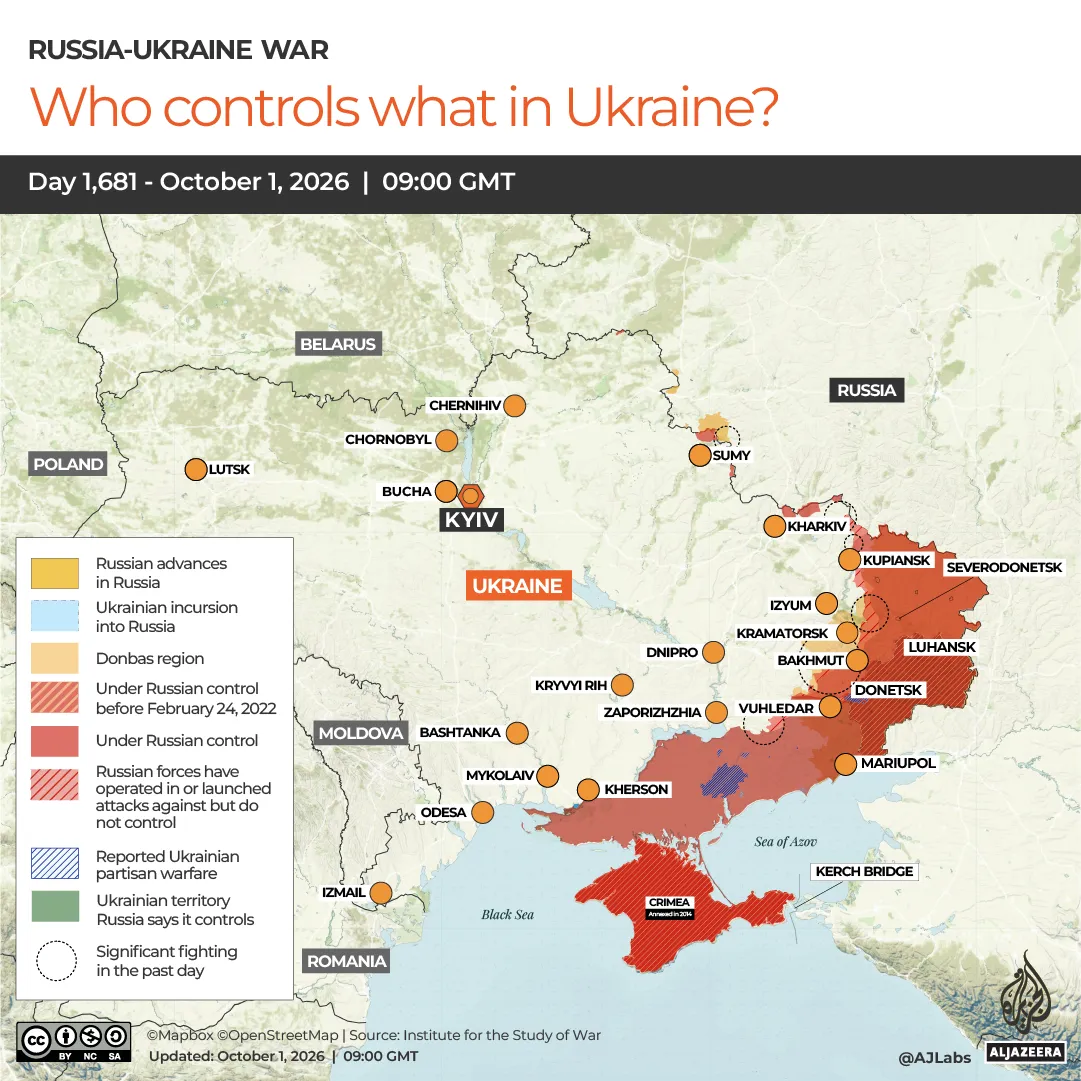
(Al Jazeera)
How have Russia and Ukraine responded?
Sybiha said Ukraine would agree to a truce but with conditions. It would accept an energy and Black Sea shipping ceasefire, but only as a combined package, he said.
He added that Kyiv is also open to an unconditional ceasefire along the current front lines. Zelenskyy backs the US-proposed meeting but stressed it needs “not only Ukraine but also the Russian side” to support it.
Moscow has been warm in tone but has committed to nothing. Kremlin spokesperson Dmitry Peskov said Russia would welcome India’s peace efforts while Putin said Modi has “very good ideas aimed at finding mutually acceptable solutions”, but he did not elaborate.
In private, Moscow appears to have said no. A Ukrainian official told the Kyiv Independent that Russia has rejected India’s proposal although this has not been confirmed publicly. Ukraine’s agriculture minister said Russia had rejected every Black Sea ceasefire option the mediators have presented.
Why are Global South countries becoming more involved?
Food supplies, the lives of their citizens and fuel prices are all at stake.
“I think it’s clear to many countries that this war is not a localised war, but it’s a war that has these global consequences,” Fredrik Wesslau, a senior policy fellow at the European Council on Foreign Relations, told Al Jazeera.
Russia and Ukraine account for more than a quarter of global wheat shipments, and their attacks on each other’s ports helped push wheat futures to a three-year high in August.
Sailors from countries with no links to the war are being killed. At least five Indian seafarers have died in strikes on Black Sea shipping in recent months along with seven Azerbaijani crew members since June. On Saturday, a Russian strike on a Liberian-flagged ship in a port in the Odesa region killed a crew member. Ukraine, for its part, has targeted tankers it links to Russia’s shadow fleet since July.
The energy war is also being felt in global markets. Ukraine reported more than 194 drone attacks on Russian refineries this year, hitting all 11 of the largest. Bloomberg News estimated that Russia’s fuel output has fallen by more than 30 percent. With Middle East supply already down as a result of the US-Israel war on Iran, global diesel markets are more exposed to the loss of Russian supplies.
Maximilian Hess, a nonresident senior fellow in the Eurasia Program at the Foreign Policy Research Institute, said energy is at least as important as grain in driving the diplomatic efforts. He pointed to a “clear frustration” among many countries over high oil prices, which reflect both the Russia-Ukraine war and the crisis in the Middle East.
“Of course, Ukrainian grain is important for them, but the oil-price factor is important there as well,” he told Al Jazeera. “I think it is those commodity-shock concerns that are pushing them to re-embrace this rhetoric, rather than anything else.”
What are the challenges ahead?
Every previous attempt at diplomacy has failed to end the Russia-Ukraine war. A US-brokered, 30-day energy truce in early 2025 collapsed amid accusations of violations on both sides. At talks in Istanbul in May 2025, Zelenskyy complained that Russia had sent a junior delegation with no authority to sign a ceasefire.
In August 2025, a meeting between Trump and Putin in Alaska yielded no results despite Trump claiming to be close to a deal ahead of it.
Wesslau said Washington’s efforts have faltered partly because Trump – who had boasted he would end the war within 24 hours of taking office in January 2025 – has appeared unwilling to put real pressure on Moscow. “The Russians see this, and they conclude that they can continue this war,” he said.
Deep distrust remains. Oleksandr Merezhko, head of the Ukrainian parliament’s foreign affairs committee, said: “Putin never keeps agreements.”
Moscow’s actions on the ground suggest it is in no hurry, Wesslau said “They’re trying to strangle Ukraine, strangle the economy, and make it unliveable ahead of the winter,” he said. He added that Moscow’s occasionally softer rhetoric was aimed mainly at the Trump administration and “has always proved to be a bluff”.
Russia’s terms are another obstacle. Hess said Moscow’s demands have not softened at any point since it launched the war and at times have grown. Putin has demanded all of Ukraine’s Donetsk, Luhansk, Kherson and Zaporizhia regions, including territory Russian forces have never controlled, as well as a buffer zone in northern Ukraine. Moscow is also seeking sanctions relief and military concessions for any Black Sea deal.
“I don’t think it’s a question of who actually mediates. I think it’s really a question of the calculation in Moscow,” Wesslau said. “Fundamentally, the problem is that Putin doesn’t want a ceasefire or a peace agreement. He wants to continue the war. He believes that he can win.”
Analysts said only greater economic pressure is likely to change that calculation.
Wesslau said if Europe can close down Russia’s shadow fleet of oil tankers, “this would be a massive blow to Russia’s war economy.” Hess said the country best placed to shift things quickly is China, rather than the US, by cutting its purchases of Russian oil. However, he added: “I don’t think Beijing is interested in doing so.”
Hess said that unless there is an outside shock, the war “is much more likely to last another four years than another four months”.
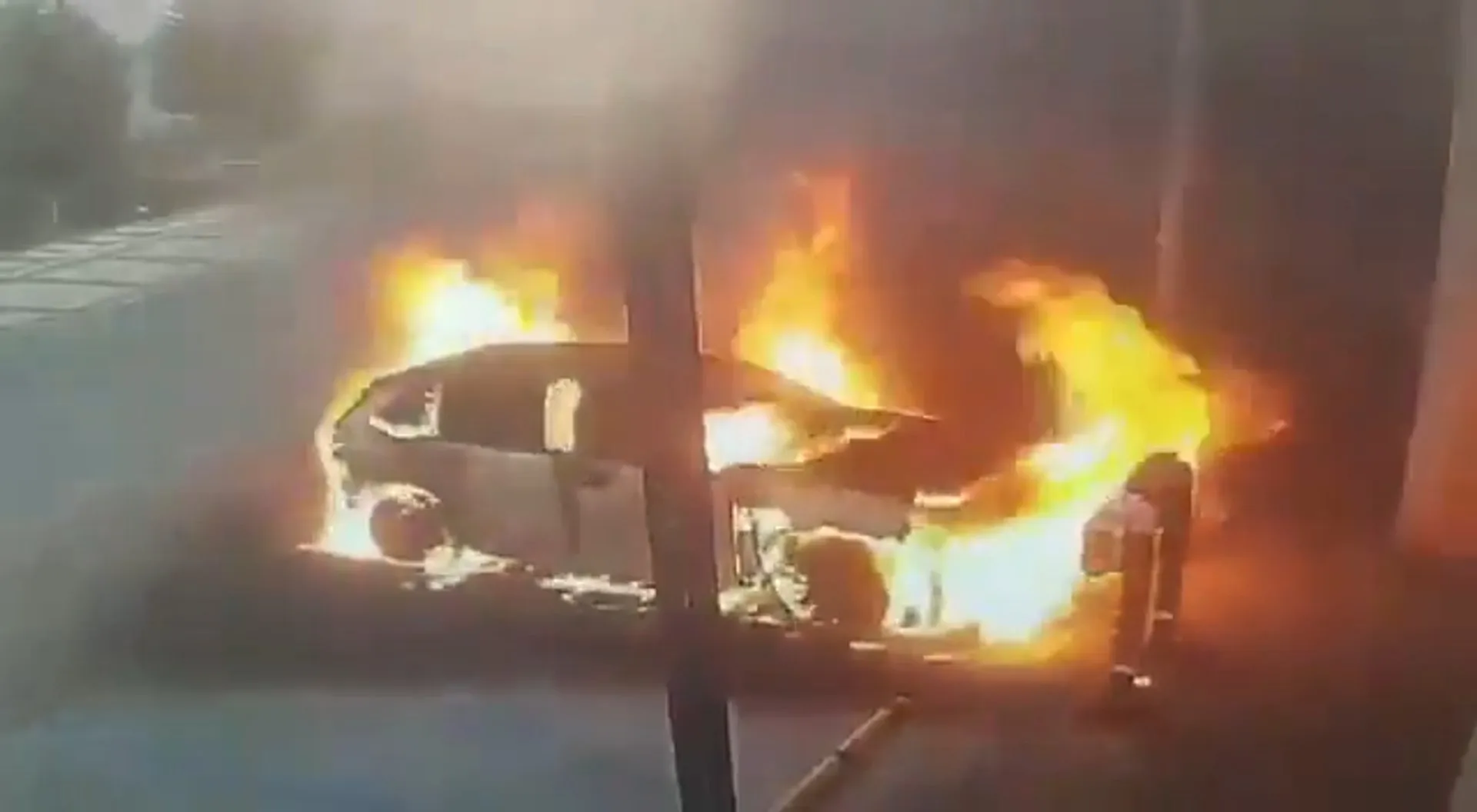
Turkiye’s first domestically produced electric SUV, the Togg T10X burst into flames at a charging station. No one was injured and the operator says the car was not charging when the fire started. EVs reportedly accounted for 52% of new car sales in Turkiye so far this year.
During emergency talks in Riyadh, Turkiye and Pakistan agreed to send rapid deployment forces to Saudi Arabia. Yemen’s government forces, which are backed by Riyadh, launched a counter-offensive against the Houthis to regain lost territory.
The Mecca Alliance says it has agreed to trigger collective deterrence measures in response to “heinous attacks” by Yemen’s Houthi group against Saudi Arabia.
In a statement on Monday, the Pakistani Foreign Ministry said Saudi Arabia, Pakistan and Turkiye had decided to “provide the agreed military forces and capabilities and ensure their rapid deployment” to the kingdom.
Saudi Arabia’s Defence Minister, Khalid bin Salman, said the member countries agreed to trigger the alliance in response “to the attacks and all those responsible for them”.
The announcement comes as the Saudi-backed Yemeni government has launched a counteroffensive to push the Iran-aligned Houthis back from territory captured last month.
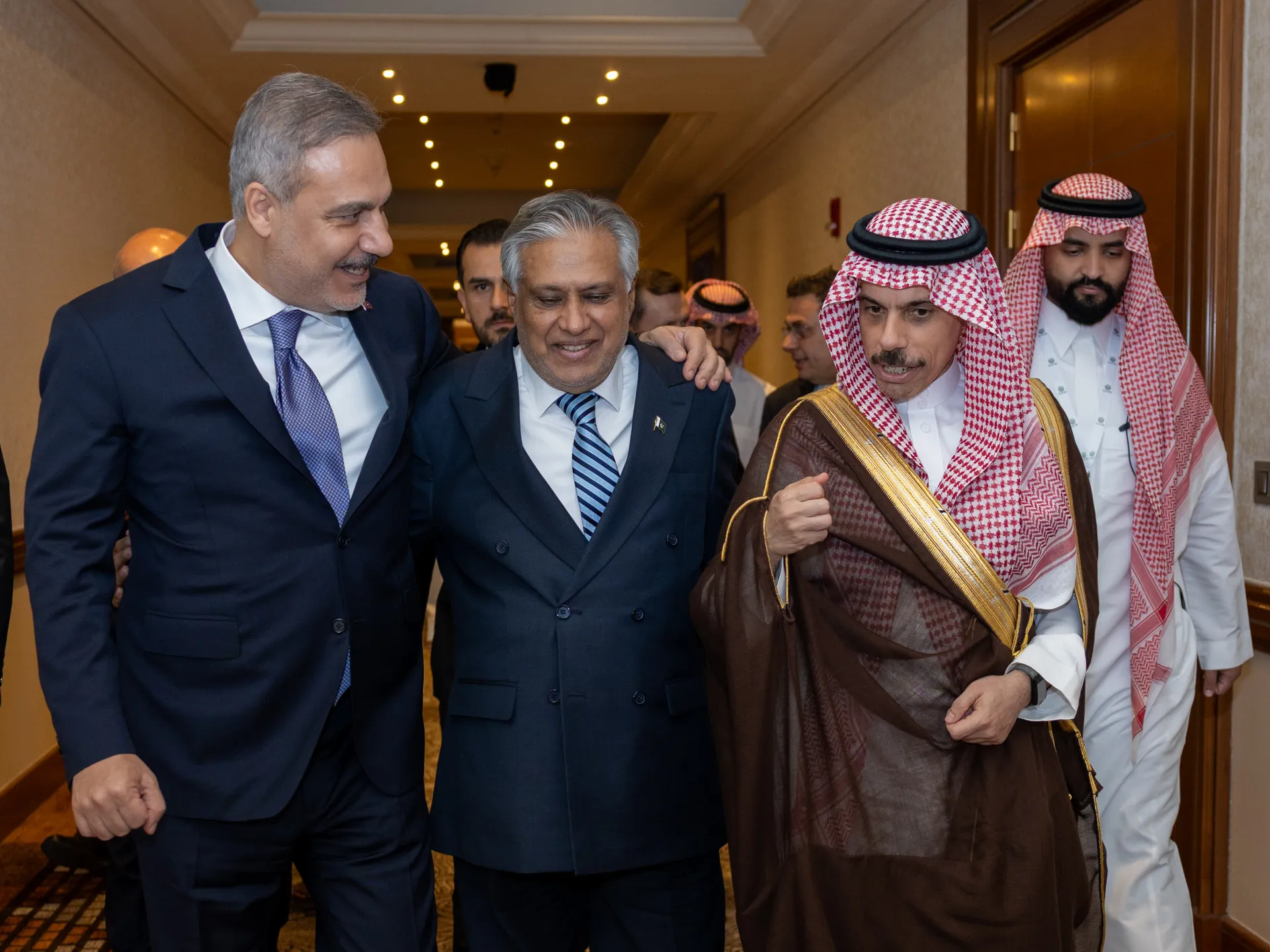
The agreement was reached during an emergency meeting of the Strategic Political and Defence Committee under the Mecca Alliance in Riyadh.
The mutual defence pact was signed in August, shortly before the Houthis launched their offensive in Yemen, which has included attacks against Saudi targets. Questions as to whether Islamabad and Ankara would agree to trigger the agreement have persisted since.
However, with hostilities increasing in Yemen, the committee agreed to “move immediately” to implement the collective defence measures to “ensure their rapid deployment in the Kingdom,” the joint statement reads.
The defence commitments will be executed under “approved arrangements” and the national laws of the three countries, the statement added.
Arrests were made over interference with refereeing procedures, among other accusations, Turkish justice minister says.
Published On 29 Sep 202629 Sep 2026
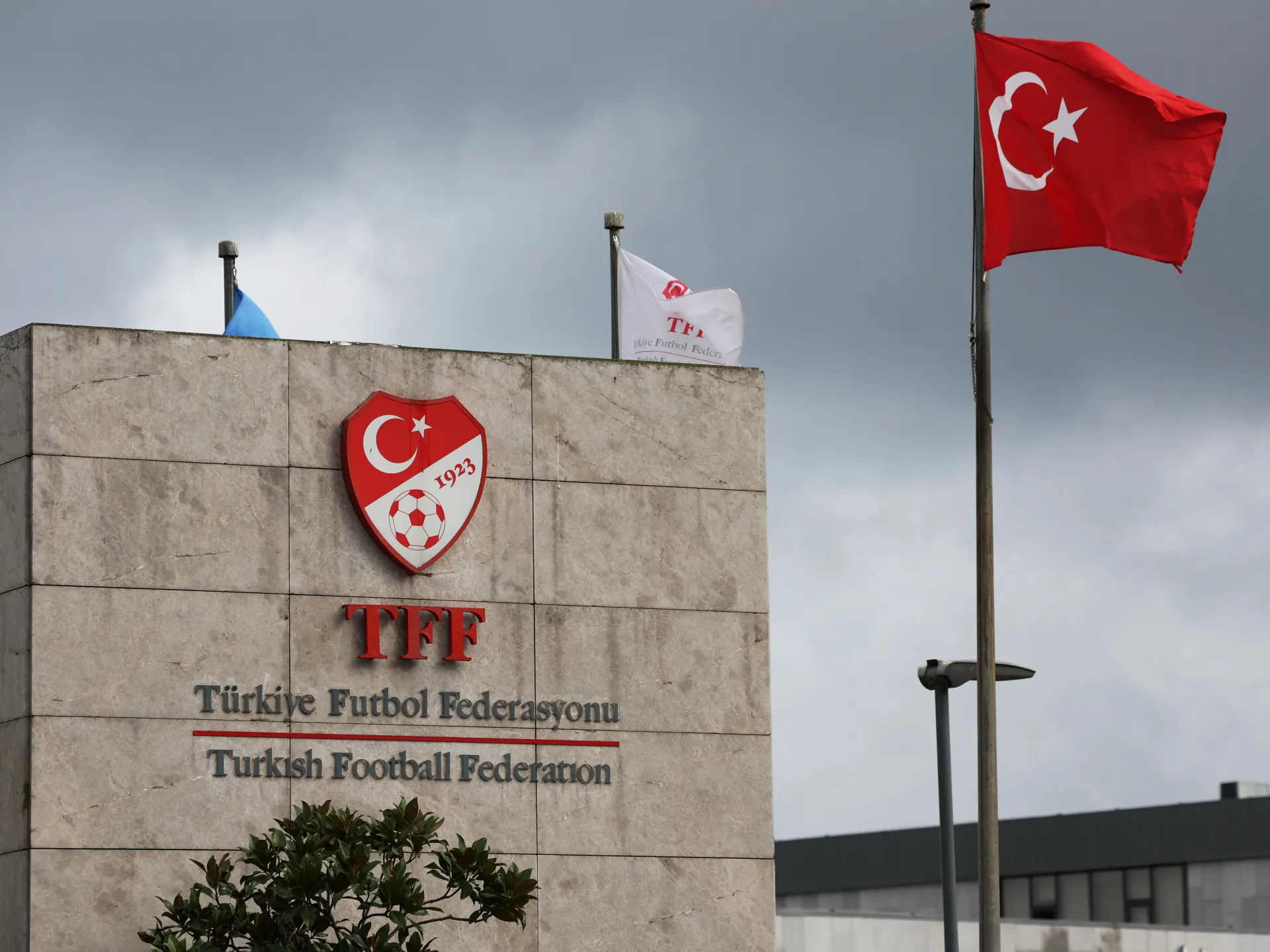
The head of Turkiye’s football refereeing body and six other people have been arrested over accusations of interference in refereeing procedures, Justice Minister Akin Gurlek said.
“Claims regarding interference in the formation of referee classifications, assignments, scoring and appointment processes, as well as rule examinations, have been investigated,” Gurlek wrote in a social media post on Tuesday.
Ferhat Gundogdu, the president of the refereeing body, and his deputy were among those arrested.
Gurlek said searches had been carried out at the suspects’ “residences, workplaces and offices”.
“We will steadfastly continue the fight for clean football so that claims undermining trust in Turkish football are clarified, those responsible are held accountable before the law, and football is remembered for the effort, struggle, and sportsmanship on the field,” Gurlek added.
A year ago, the Turkish Football Federation (TFF) suspended 149 referees on charges of involvement in an illegal betting scandal.
The TFF investigation found that 371 out of the country’s 571 referees officiating in the professional leagues had betting accounts and 152 of them actively placed bets.
Some 29 people were arrested in the sprawling scandal, including 14 footballers, one of whom was Fenerbahce’s international midfielder Mert Hakan Yandas.
Authorities suspended more than 1,000 players, including 25 from the first division.
However, Gurlek did not draw any link between last year’s betting scandal and the current investigation.
Who: Turkiye vs France What: UEFA Nations League Where: Kocaeli Stadium in Izmit, Turkiye When: Friday, September 25, at 9:45pm (18:45 GMT) How to follow: Al Jazeera Sport will have all the build-up from 15:45 GMT.
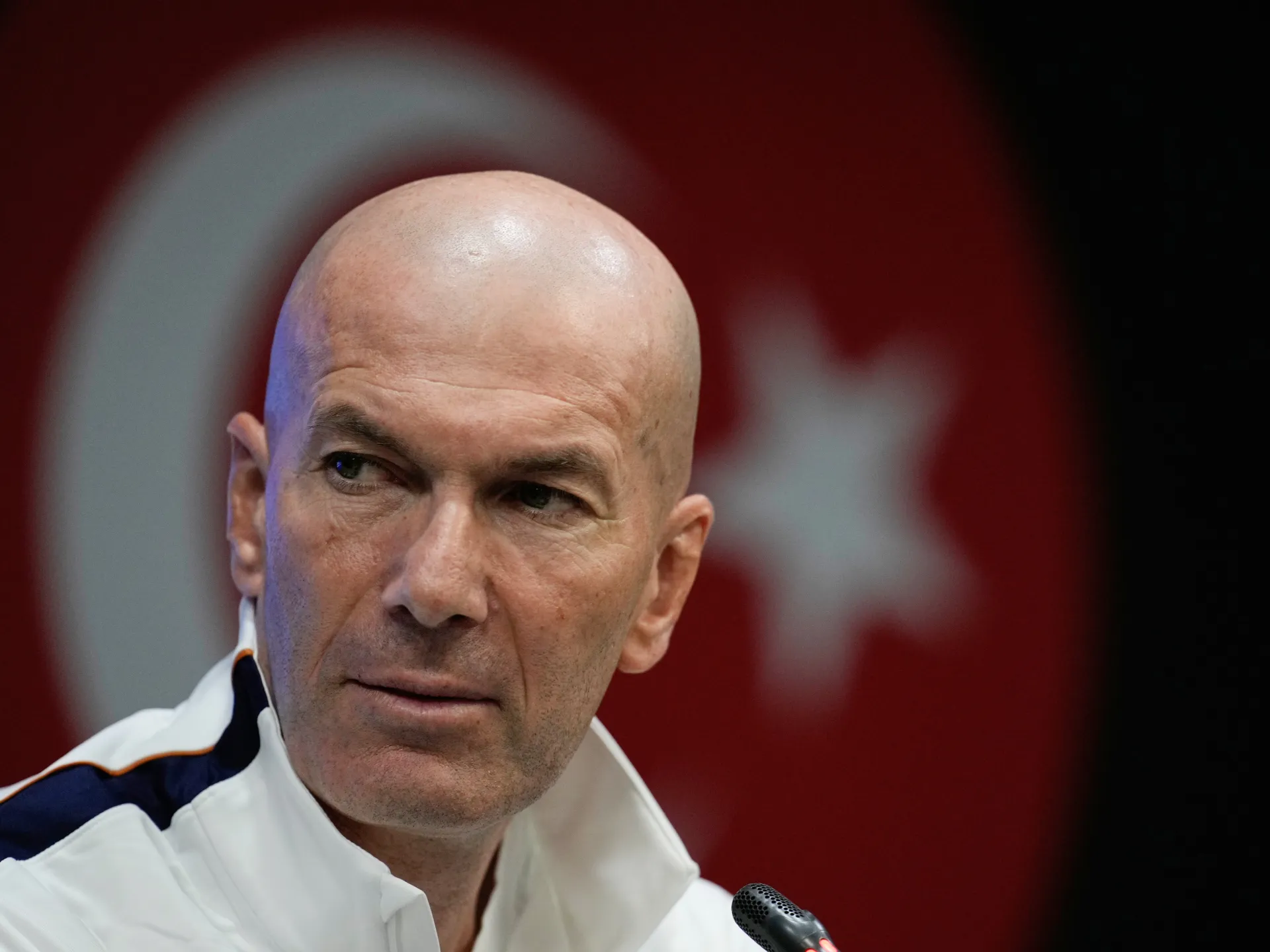
Zinedine Zidane was asked if taking charge of his first France game on Friday will feel just as special as his playing debut for Les Bleus more than 30 years ago.
Recommended Stories
list of 4 itemsend of list
“Even more so, maybe,” a smiling Zidane said on Thursday ahead of a Nations League game in Turkiye. “I feel an immense emotion being at the head of this France team.”
Zidane’s dream was realised when he replaced Didier Deschamps after the 2026 World Cup. His former teammate Deschamps was in charge for 14 years, winning the World Cup in 2018 and losing the 2022 final.
Now it’s Zidane’s chance to make his mark on a team he once starred for.
Affectionately nicknamed “Zizou”, his face was beamed onto the Arc de Triomphe in Paris the night France celebrated its first World Cup triumph in 1998.
Zidane scored two headers in the final in a 3-0 win over Brazil and later that year he won the Ballon d’Or. Two years later, he was instrumental in France winning the European Championship.
His rise to the top seemed almost fated, for his international career began brilliantly in 1994 with two stunning goals against the Czech Republic after coming on as a substitute.
He then won league titles with Juventus and Real Madrid and scored a brilliant volley to help Madrid win the Champions League in 2002.
Zidane understands expectations are high, given his achievements as a player and how he led Real Madrid to three straight Champions League titles as a coach.
“It’s something new. I’m taking over as head coach so people are talking about it,” he said. “That makes sense.”
After facing Turkiye, France plays Belgium away on Monday before hosting Italy on October 2, and Belgium three days later, with both those games at the Stade de France.
Mbappe given all clear for France’s trip to Turkiye
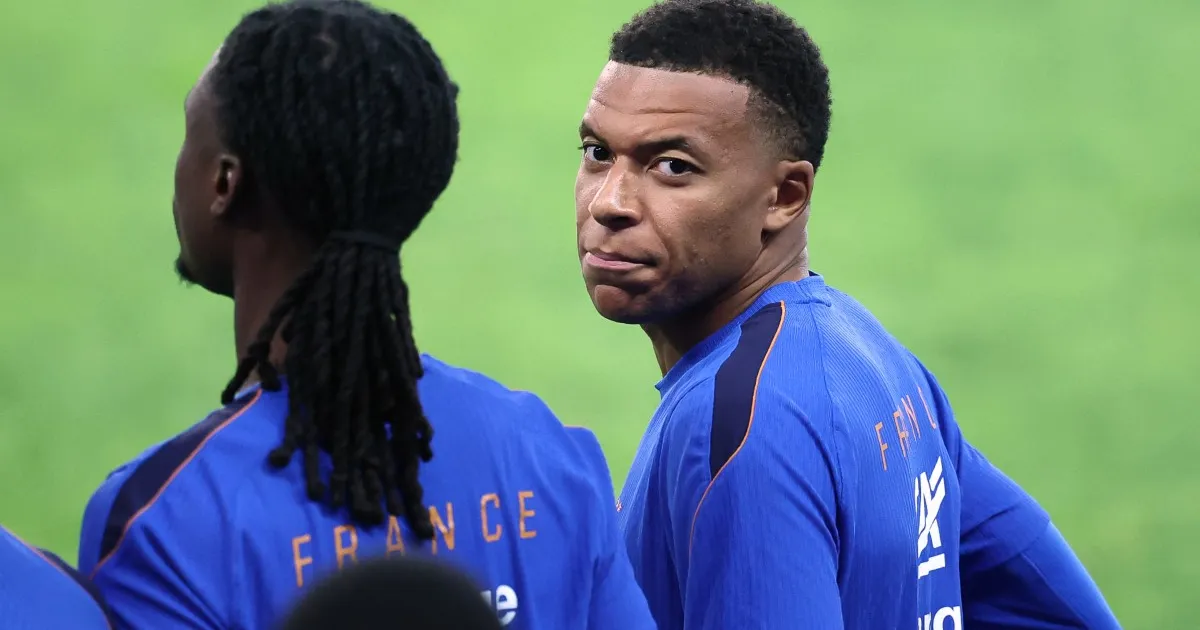
France’s all-time top scorer Kylian Mbappe is set to captain the side, having shrugged off a minor injury.
Zidane was asked why, given that Mbappe is captain, he was not present at Thursday’s pre-match news conference. Instead, it was midfielder Adrien Rabiot who spoke to the media.
“The obligation is to have one player and the coach,” Zidane said. “[Mbappe] is fine. He will be ready to play tomorrow.”
Rabiot is one of France’s vice-captains along with forward Ousmane Dembele and right back Jules Kounde.
Rabiot said the huge attention placed on Zidane gave the players a welcome back seat.
“His aura means he commands a lot of attention,” Rabiot said. “In a way, it’s a good thing that the focus is more on the coach than the players. It gives them a bit more peace and quiet.”
Zidane understands the limelight but does not seek it.
“You have to accept how things are. But I’m not here for that,” he said. “Winning matches is what interests me the most.”
What happened the last time Turkiye played France?
The sides shared a 1-1 draw in Paris in 2019 in a qualifier for Euro 2020.
Olivier Giroud gave the home side the lead in the 76th minute before Kaan Ayhan levelled for Turkiye five minutes later.
Head-to-head
This will be the seventh meeting between the nations, with France claiming four wins to Turkiye’s one in the previous encounters.
Turkiye team news
Turkiye will be without the services of Hakan Calhanoglu and Kenan Yildiz due to injury. Real Madrid starlet Arda Guler, however, is available despite fears of a knock.
Zidane can choose from six new faces in his squad.
Striker Esteban Lepaul (Rennes), defenders Leny Yoro (Manchester United) and Jeremy Jacquet (Liverpool), midfielder Lucas Da Cunha (Como), Andy Diouf (Inter Milan) and Guillaume Restes (Toulouse) are set for their debuts.
“I’m happy with what I’ve seen so far. The French team is open to everyone,” Zidane said. “We’ve got a good squad, some veterans, some newcomers.”
Iraqi Prime Minister al-Zaidi and Turkish President Erdogan pledged deeper security cooperation at UNGA.
Published On 24 Sep 202624 Sep 2026
Turkiye and Iraq have agreed to a gradual transfer of Ankara’s military base in Bashiqa to Baghdad, according to a statement released by the Iraqi prime minister’s office.
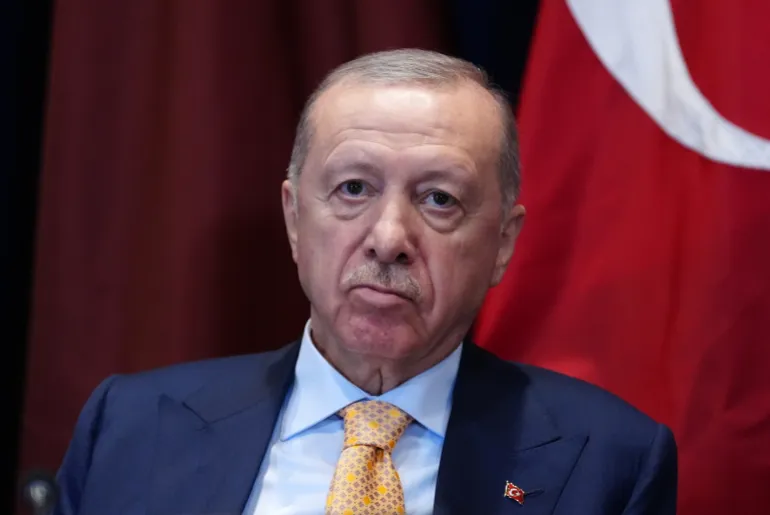
The announcement followed a meeting on Wednesday between Iraqi Prime Minister Ali al-Zaidi and Turkiye’s President Recep Tayyip Erdogan on the sidelines of the United Nations General Assembly in New York.
Recommended Stories
list of 3 itemsend of list
“Within this framework, they reached an agreement on fully establishing state authority in Sinjar and ending the presence of outlawed foreign armed elements,” Iraq’s prime minister’s office announced, in an apparent reference to the Kurdistan Workers’ Party (PKK), which has maintained a presence in the mountainous Sinjar region of northern Iraq.
“The two sides also agreed to expand the volume of bilateral trade and investment, to implement signed agreements immediately, and to accelerate joint strategic projects, particularly the Development Road project,” the office added.
Turkiye’s President Recep Tayyip Erdogan at the United Nations General Assembly on September 22, 2026 [Julia Demaree Nikhinson/AP]
The decision to transfer the facility addresses a longstanding flashpoint between the two neighbours.
Turkiye first established the base in Bashiqa, northeast of Mosul, in December 2015 through an agreement with the autonomous Kurdistan Regional Government to train local forces fighting the ISIL (ISIS) group.
The deployment of up to 600 Turkish soldiers drew criticism from Baghdad, which viewed the presence as a violation of Iraqi sovereignty.
The Sinjar region has long been a focal point for Turkish military operations targeting fighters from the PKK.
Kurdistan Workers’ Party fighters, who reportedly withdrew from Turkiye with their weapons, stand at attention during a ceremony in the Qandil area of northern Iraq in 2025 [File: Rashid Yahya/AP]
Cross-border operations in Sinjar had eased following a landmark peace process between Ankara and the PKK in 2025, paving the way for federal authorities to assert control over the border zone.
Wednesday’s accord caps months of efforts by Baghdad to consolidate state authority over northern flashpoints, while aligning with Ankara on trade corridors and security coordination along their shared frontier.