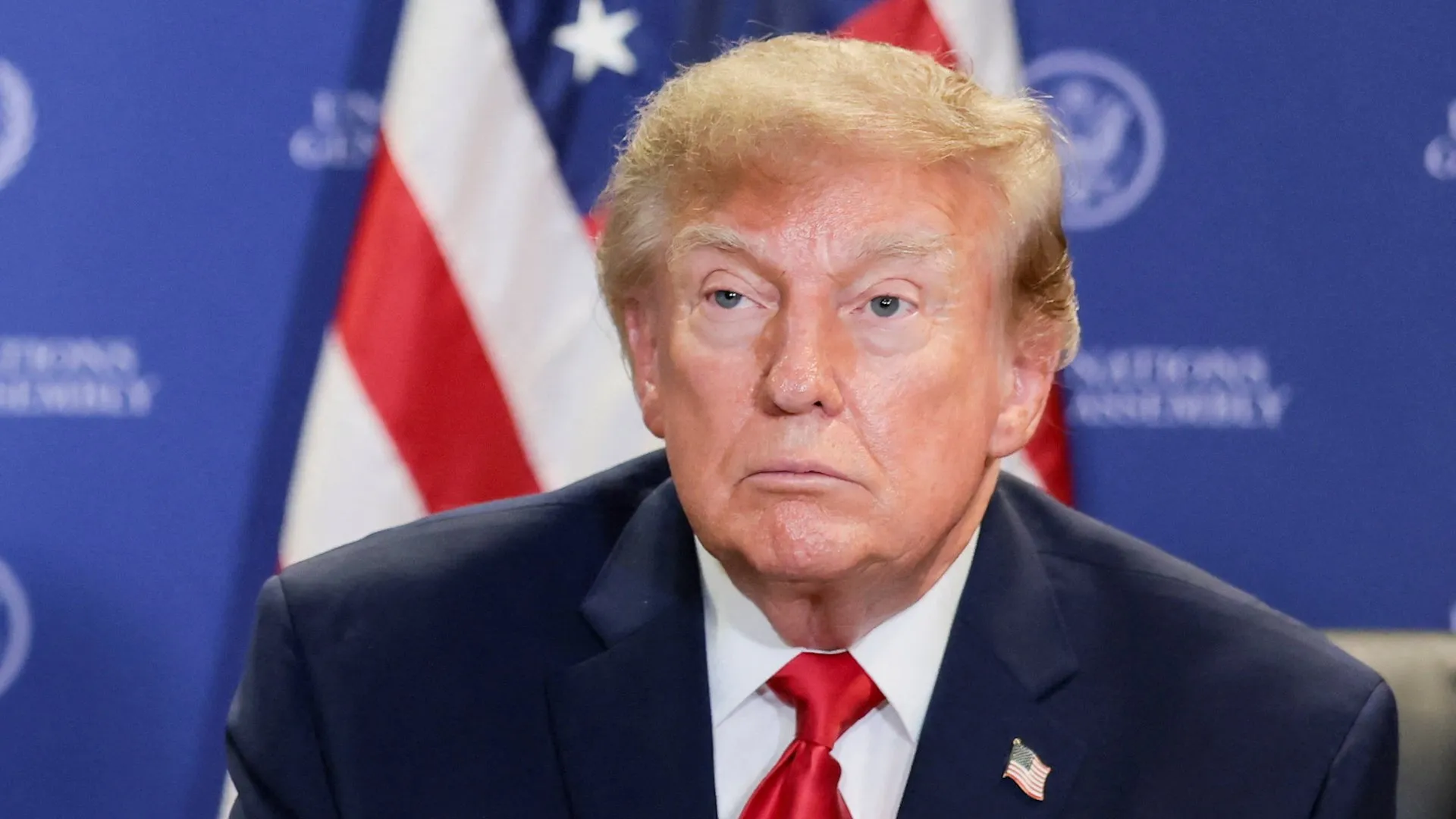
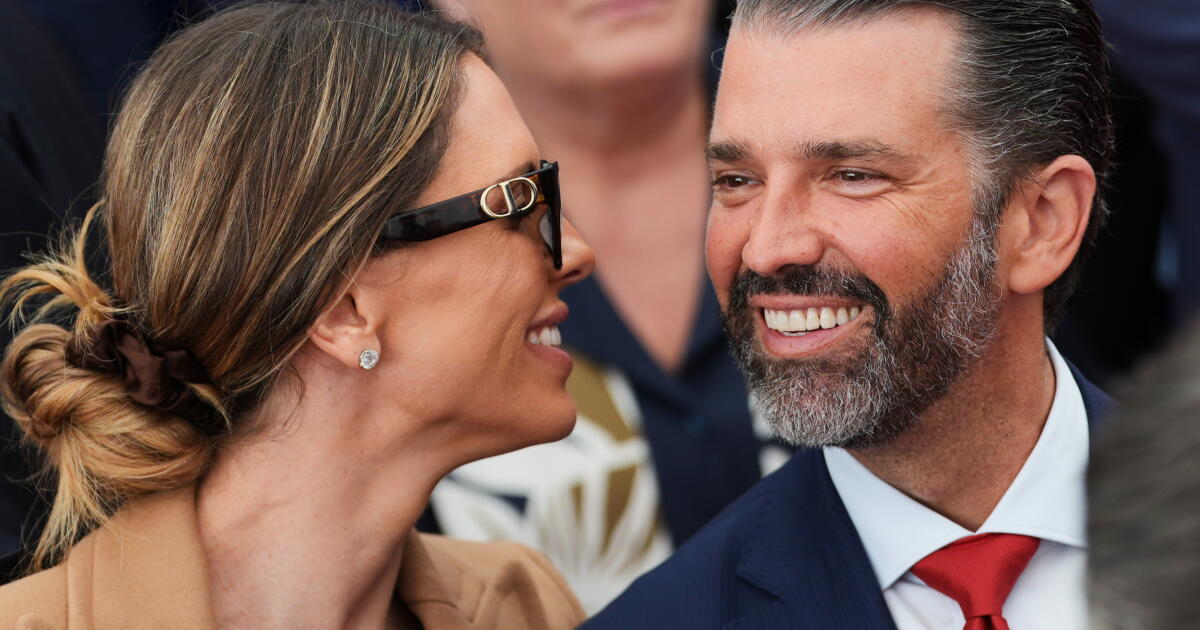
A member of Donald Trump’s political party has issued a rare call for a congressional investigation into the foreign dealings of the United States president’s eldest son.
US Senator John Curtis, a Republican from the state of Utah, on Tuesday said “questions have arisen” about Donald Trump Jr’s relationships with foreign business figures and acceptance of “significant gifts”, alleging he may have personally benefited from his relationship with the president.
Recommended Stories
list of 3 itemsend of list
In a letter to the Republican and Democratic leaders of the US Senate Judiciary Committee, Curtis referenced a ProPublica report that found Trump Jr’s Bahamian wedding party in May was funded by a Russian oligarch.
“These reports raise legitimate questions about foreign access to members of a sitting president’s family and whether such relationships can create actual or perceived expectations of favorable treatment,” Curtis wrote. “They also may create expectations of a returned favor that would not be in the best interests of the American people or our allies, and could even create national security vulnerabilities.”
The letter comes as a small but slowly growing number of Republicans have spoken out against Trump, who has largely avoided criticism from members of his own party. But record-low approval ratings sparked by the war in Iran and concerns over the cost of living in the US have forced some Republicans to reconsider that support as they face growing prospects of major losses in the congressional midterm elections.
If Democrats retake one, or both, chambers of the US Congress in November, investigations into Trump, including his family’s dealings, are likely. But those probes are less likely under Republicans wary of the president’s wrath.
A spokesperson for the Senate Judiciary Committee, which is under Republican control, told the Associated Press that it had received Curtis’s letter but did not say whether there would be an investigation.
Trump vs Biden
Curtis, who isn’t up for re-election until 2030, also called on the chamber’s panel to subpoena Trump Jr, as well as the son of former US President Joe Biden, a Democrat.
“The country should not have to accept one standard for the family of a Republican president and another for the family of a Democratic president,” Curtis wrote, referencing the scrutiny and investigation Biden’s son Hunter faced from Republicans.
Hunter Biden responded to Curtis’s letter in a post on social media, calling for the Senate committee to “bring it on” as he vehemently denied any foreign business dealings while his father was president.
“I’ll sit next to Don Jr. and testify any time, any place,” Biden wrote on X as he called for the president’s youngest son, Eric, and son-in-law, Jared Kushner, who serves as a US envoy, to testify as well. “No need for a subpoena. Let’s all do it tomorrow.”
After the ProPublica report, Trump Jr and his wife, Bettina, released a joint statement on social media saying the Russian oligarch, Umar Kremlev, was a “dear friend” who “very generously hosted two incredible nights of celebrations for us AFTER our wedding”.
The president, who did not attend the wedding, said his son had reimbursed Kremlev.
“It’s totally allowed, and a lot of people give parties and things like that — but it’s totally allowed,” Trump said. “But as I understand it, he paid him back. He didn’t want it.”
US Senator Dick Durbin, the ranking member on the Senate Judiciary Committee, said that while Biden’s son “has already given a sworn deposition to Congress”, Trump Jr “has not”.
“For the committee to ignore this matter is to run the risk of being complicit in a coverup,” Durbin said. “I will join in supporting Senator Curtis’ request of the Senate Judiciary Committee.”
Curtis’s office did not immediately reply when asked by Al Jazeera what prompted the senator’s letter and whether any fellow Republicans have indicated if they would support an investigation into the president’s family.
Trump has also been meeting Ukrainian President Volodymyr Zelensky, British Prime Minister Andy Burnham and leaders from Saudi Arabia, the United Arab Emirates, Qatar, Kuwait, Bahrain and Oman.
Earlier, Guterres gave his farewell speech as UN secretary general, urging unnamed superpowers to recognise “that their power isn’t so super”.
“The fault lines in our world are widening,” Guterres said, citing geopolitical rivalries, wars, climate change and artificial intelligence.
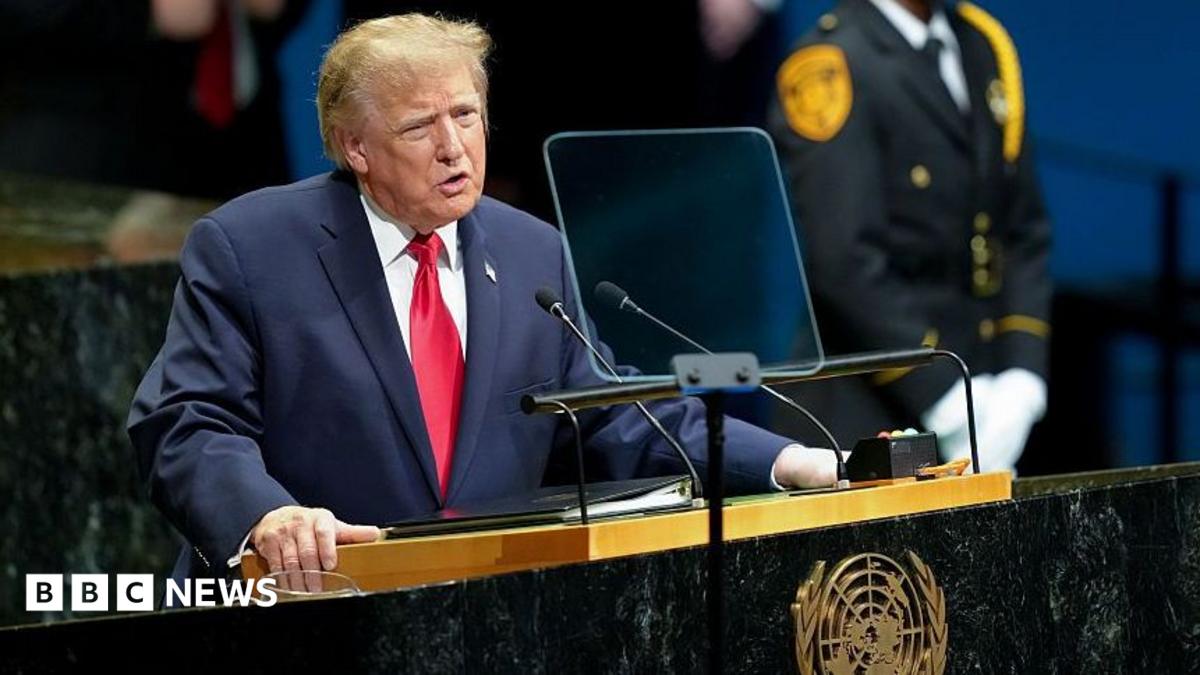
By contrast, Trump criticised international institutions, accusing the UN of a “far-left agenda of globalist bureaucrats who nobody ever elected”.
The US president instead emphasised national sovereignty and “unmatched” American military power.
“There is no global government,” he said.
He also warned that the US would not allow threats to establish themselves anywhere in the Western hemisphere.
“If necessary, we will use our unmatched military might to secure the vital national interests of the United States,” he said.
Trump accused Cuba’s communist government of cultivating ties to left-wing groups in the US, including the Communist Party USA, Antifa and the Democratic Socialists of America.
The Cuban delegation also appeared to walk out of the assembly chamber as Trump turned his sights on them, referring to the island as a “failed state”.
Washington, DC – Palestinian Americans have held a day of advocacy at the United States Capitol under the spectre of a new $2.8bn arms transfer to Israel reportedly approved by the administration of US President Donald Trump.
The Americans for Justice in Palestine Action (AJP Action) group, which organised Tuesday’s event, said more than 300 constituents from across the country met with the offices of more than 100 US lawmakers. They advocated on behalf of a slate of legislative initiatives related to Israel’s genocidal war in Gaza, surging Israeli settler violence in the occupied West Bank, and efforts to use immigration law to stifle Palestinian advocacy in the US.
Recommended Stories
list of 3 itemsend of list
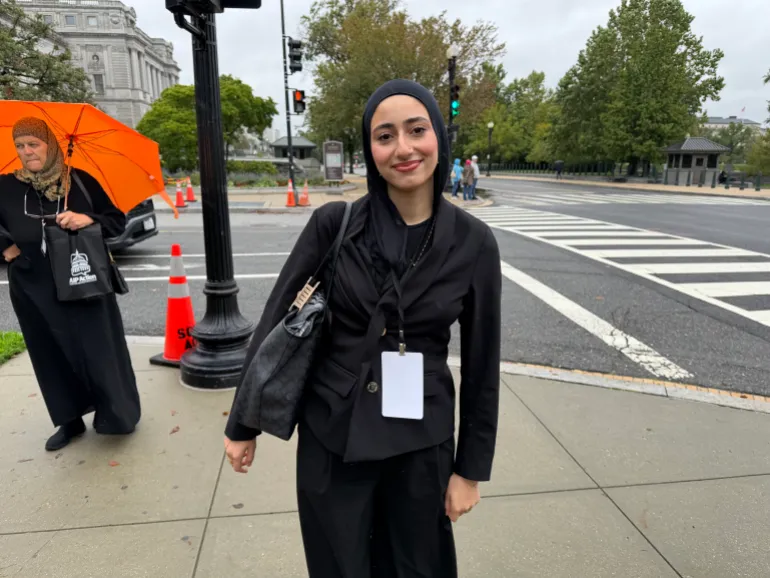
Jenna Escheik, a 19-year-old meeting with lawmakers and staffers from Virginia, including Democratic Senator Tim Kaine and Republican Representative Rob Wittman, said she was planning to speak with “some very challenging and interesting people”.
“I think the main point that we’re trying to get across to every single office is that we’re all proud to be American, and we all have our taxpayer dollars that we just don’t want to see going to wars,” said Eschiek, who is originally from outside of Ramallah in the West Bank.
Yaseen Shaikh, a 22-year-old who travelled with a delegation from Cleveland, Ohio, said he will be meeting with the offices of Republican Senator Jon Husted, who faces a competitive midterm race against former Democratic Senator Sherrod Brown, as well as the state’s other Republican Senator, Bernie Moreno.
Both Republican senators have consistently voted against legislative efforts to limit arms sales to Israel.
“As I stand among my peers here, among people who I stand on their shoulders, I can only feel hopeful and optimistic that we will make a difference and that change will come,” Shaikh told Al Jazeera.
“We just have to be vehicles for that,” he said.
Palestinian rights ‘catching up’ with lawmakers
Successive presidential administrations, as well as Congress, have for decades resisted calls to condition US military aid to Israel, including throughout Israel’s latest war in Gaza, which will reach its three-year mark early next month.
To date, nearly 74,000 Palestinians have been killed in Gaza since October 7, 2023, with nearly 1,400 killed since a “ceasefire” agreement went into effect in October 2025.
Last week, US media widely reported the Trump administration approved a US taxpayer-funded $2.8bn military package to Israel, which included 907kg (2,000-pound) MK-84 bombs known to have already caused widespread civilian devastation in the Palestinian enclave.
The package reportedly included 20,000 of those munitions, as well as 20,000 BLU-117s, a close variant.
Several Democrats have vowed to block the transfer, with the ranking member of the House Foreign Affairs Committee, Gregory Meeks, using his leverage last week to at least slow congressional clearance.
Osama Abu Irshaid, AJP Action’s executive director, said the new weapons package runs counter to public opinion polls, which have regularly found majority support for conditioning at least some weapons to Israel, as well as surging support for Palestinian rights.
Abu Irshaid said the polls underscore a new political reality for lawmakers.
“I think now we are functioning within this context, where what happens in Palestine, the genocide that took place and continues to take place, what the terrorist settlers are doing in the West Bank, what the US and Israel are doing in the Middle East is catching up with us here,” Irshaid said, “and we’re paying a price”.
Jenna Escheik was among the Palestinian Americans meeting with US lawmakers in Washington, DC [Joseph Stepansky/Al Jazeera]
While entrenched support for arming Israel has persisted among some segments of the Democratic Party, advocates have hailed what they see as a historic shift in recent months.
In July of last year, 26 Democrats in the Senate voted to block some arms transfers to Israel, the first time in history a majority of Democratic lawmakers in the chamber did so. In April, similar resolutions gained a record 40 votes in the Senate, all Democrats, but ultimately failed to pass in the 100-member chamber.
The so-called Block the Bombs Act in the House, which calls for a partial arms embargo against Israel, reached 81 co-sponsors as of August.
Twenty-two Democratic senators also introduced a resolution last week to force the US Department of State to conduct an investigation into the violence committed by Israeli forces and settlers in the West Bank, in which at least nine US citizens have been killed in recent years.
Abu Irshaid was optimistic that headway could also be made among Republicans, who have been reckoning with an internal divide over US support for Israel, with exceedingly few members of the party currently willing to vote to limit aid.
A December poll by the IMEU Policy Project found a majority of Republicans under 45 said they would prefer to support a presidential candidate in 2028 who “supports reducing taxpayer-funded weapons to Israel”.
“I think what we’re seeing now is that the dam within the Republican Party is cracking,” Abu Irshaid said.
“But the question is, ‘What is after Donald Trump when Donald Trump no longer owns the Republican Party, owns the MAGA movement?’ I think that’s when you will see more cracks taking place.”
‘The same system’
Advocates on Tuesday also focused on what they called the Trump administration’s practice of using immigration law to stifle pro-Palestine advocacy.
Among their policy priorities, those meeting with lawmakers sought to reform language in the Immigration and Nationality Act of 1952, which the Trump administration has cited in efforts to deport individuals whose presence in the US the administration deems to have “adverse foreign policy consequences”.
Among those speaking at the US Capitol on Tuesday was Salah Sarsour, the president of the Islamic Society of Milwaukee, who was detained by ICE in April and released in June. His legal team has charged that the three-decade US resident was targeted based on a coerced confession when Sarsour was detained by Israeli forces as a young man.
Sarsour, who continues to face deportation proceedings, said the ICE detention reminded him of being held in Israeli detention.
“Those criminals that [detained me], they still exist,” he said. “The same criminals that destroy Gaza, they killed tens of [thousands] of children and women, and men and family members.”
Leqaa Kordia, who was among those targeted by immigration enforcement agents following a wave of pro-Palestine protests that swept US campuses in 2024, also recounted the “dehumanisation” of her 368 days in ICE detention.
“And then it hit me that…the same system that threw me in an ICE jail is the same system that funds and arms the military prisons in Israel,” said Kordia, who, like Sarsour, still faces deportation proceedings.
“The same dehumanisation logic that allowed a guard to humiliate me allows the Israeli soldier to kidnap Palestinians and throw them into the shadows,” she told those gathered.
“The same power that keeps my case in limbo is the same power that sends billions of US tax dollars in bombs and weapons to fuel the Palestinian genocide.”
Under a policy set to take effect Sunday, the U.S. government could strip young immigrants of their status as unaccompanied minors, causing them to lose special protections when they apply for asylum and making them more likely to be deported.
The plan is laid out in an internal memorandum sent May 31 by John Lafferty, chief of the asylum division at U.S. Citizenship and Immigration Services, and detailed in subsequent guidance, both obtained by The Times. The shift in policy involves when federal officials determine whether a young migrant is an unaccompanied minor.
According to the memos, an asylum officer with USCIS will have to assess whether the individual at the time of filing for asylum lacked lawful immigration status, was younger than 18 and had no parent or legal guardian in the United States available to provide care and physical custody.
Unaccompanied minors who are in federal custody are often released to sponsors in the United States such as a parent or close relative and could be living with them at the time they file their application — meaning that many may not be considered to be unaccompanied minors under this new policy. From October 2018 to May 2019, more than 46,000 minors were released to sponsors, according to the Department of Health and Human Services.
If the children are found no longer to be unaccompanied minors, they will not be entitled to certain special protections, including an asylum interview with a USCIS officer instead of having to make their case in an immigration court setting.
“USCIS continues to take actions to ensure that we carry out our duties in a manner that is fully in line with the letter of the law,” agency spokeswoman Jessica Collins said in a statement. “Ultimately, Congress must reform the law to address the underlying issues fueling the border crisis and encouraging unaccompanied minors to make the dangerous journey to the United States.”
In recent years, USCIS officers have considered an asylum applicant to be an unaccompanied minor if that was what Immigration and Customs Enforcement or Customs and Border Protection agents had determined when they first had contact with the migrant.
Under this new policy, which rescinds an Obama-era memorandum, USCIS officers will independently determine whether an individual was an unaccompanied minor when they filed their application.
USCIS is “basically relitigating whether or not a child at the time of filing was an unaccompanied minor or not,” said John Amaya, who served as the counselor to the director of USCIS from 2014 to 2015.
Judge Ashley Tabaddor, the president of the National Assn. of Immigration Judges, said that the new policy could potentially have “a profound effect on the children’s ability to seek asylum.”
“The asylum officer interview is a much less adversarial process that is thought to give the child a better and more comfortable setting,” she said.
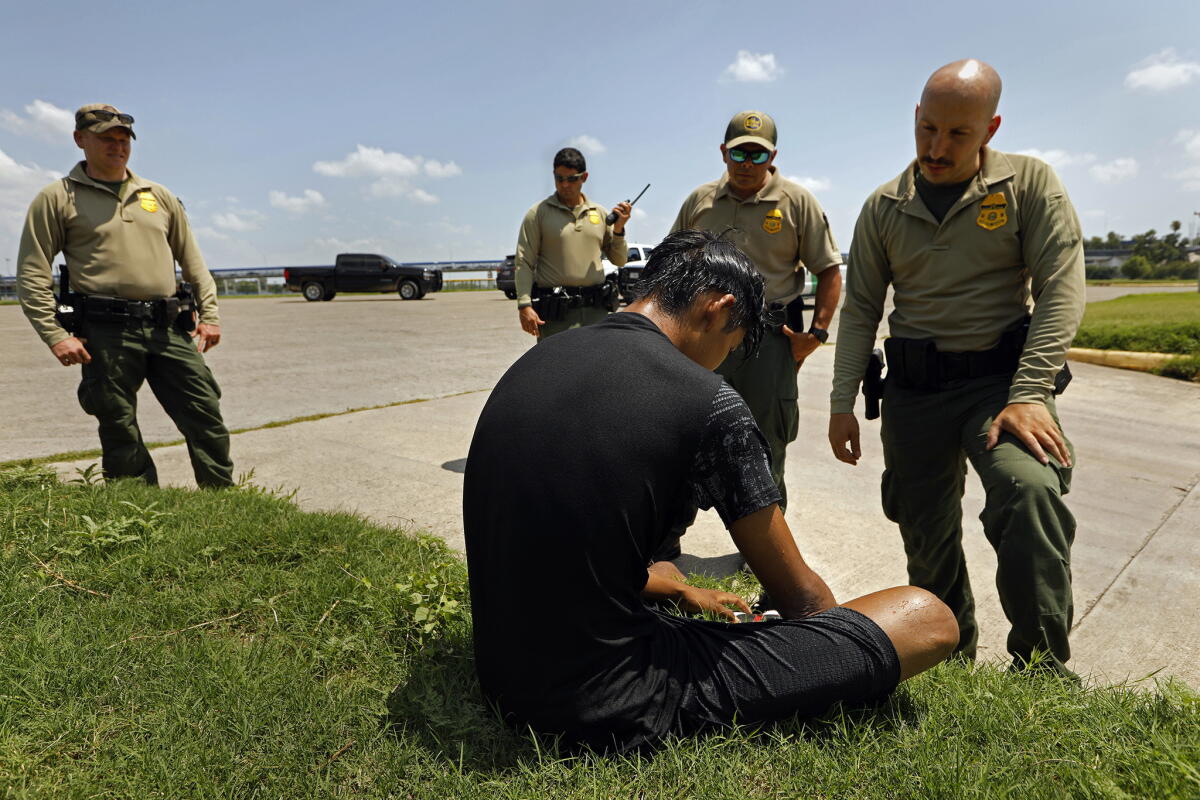
U.S. border patrol agents attend to a minor who had just swam across the Rio Grande River from Mexico to Del Rio, Texas.
(Carolyn Cole / Los Angeles Times)
Federal asylum officers have been rushing to process as many unaccompanied minor applications as possible before the change takes effect Sunday, USCIS personnel told The Times, speaking on condition of anonymity to protect against professional retaliation.
The change is the latest in the Trump administration’s efforts to make it more difficult for immigrants, including children, to seek asylum.
It comes during a week in which the acting head of CBP announced his resignation amid reports that his agency held some 300 children in unsanitary conditions in a remote Border Patrol station in Clint, Texas. A photograph showing the bodies of a father and his nearly 2-year-old daughter lying face down in the Rio Grande along the border also has gone viral in recent days.
Federal asylum officers themselves have criticized Trump, saying his policies are putting people, including children, at risk.
On Wednesday, a union representing officers filed a brief in support of a lawsuit against a Trump policy forcing asylum seekers back to Mexico to await their court proceedings in the United States. The policy “abandons our tradition of providing a safe haven to the persecuted and violates our international and domestic legal obligations,” the brief states.
USCIS acting Director Ken Cuccinelli, an anti-immigration hard-liner who often casts doubt on asylum seekers as engaging in fraud, slammed his own employees, saying the brief was “an attempt by the union to score short-term political points.”
Michael Knowles, president of the union, told The Times his members were “taking the risk” because “we’re being asked to do things that are wrong, as a matter of conscience, and our training as federal employees.”
The policy taking effect Sunday reverts to procedures implemented under the 2008 Trafficking Victims Protection Reauthorization Act. At that time, asylum officers made “independent factual inquiries” to determine whether individuals filing applications met the criteria to be designated as unaccompanied minors and were thus under the jurisdiction of USCIS.
Ur Jaddou, a chief counsel to USCIS under President Obama, said that new procedures in 2013 allowing USCIS to adopt prior determinations made by ICE and CBP were implemented because “it was a waste of time and confusing” for USCIS to make a decision on unaccompanied minor status after one was made by other DHS branches.
“This new memo goes backward,” Jaddou said.
Lafferty, who wrote the memo, presented the change as one in keeping with a October 2018 decision by the Justice Department’s Board of Immigration Appeals. The decision dealt with whether USCIS or an immigration judge has initial jurisdiction over the asylum application of an individual who was previously determined to be an unaccompanied minor but had turned 18 before filing their application. The board held that the immigration judge has jurisdiction to determine that the individual no longer qualified as a minor at the time of filing.
The new procedures may put legal clinics that work with these minors in a tough position. Patricia Ortiz, program director for the Esperanza Immigrant Rights Project, said some of their clients are released from federal custody very close to their 18thbirthday, and attorneys may not have enough time to file their application before they become adults.
Unaccompanied minors are currently exempt from the standing one-year deadline to file asylum applications. Ortiz worries that if her clients are no longer considered to be unaccompanied minors, the fact they have not applied within one year would jeopardize their applications. She said some don’t apply within a year because they don’t have the support necessary to complete an application or may only be comfortable disclosing asylum facts after months of therapy.
Once they are no longer able to have their cases heard by asylum officers, she said, children could be kept in legal limbo with the rest of those whose cases are backlogged in immigration court. This wait could make it more difficult for them to give testimony that helps their cases.
“Children forget,” she said. “They forget details; they forget what happened.”
Miller reported from Los Angeles and O’Toole from Washington.
US President Donald Trump says he had a ‘very good’ three-hour meeting with Iranian officials at the UN as the White House and Tehran explore a possible deal to end the monthslong conflict. Trump described the choice for Iran as “potential greatness” or “obliteration”.
US President Donald Trump has told reporters at the United Nations that US officials had a “very good” three-hour meeting with the Iranian delegation.
“They had a very good meeting, a very productive meeting,” Trump said, adding that the meeting on the sidelines of the UN General Assembly in New York lasted about three hours.
“They have another one scheduled in the very near future.”
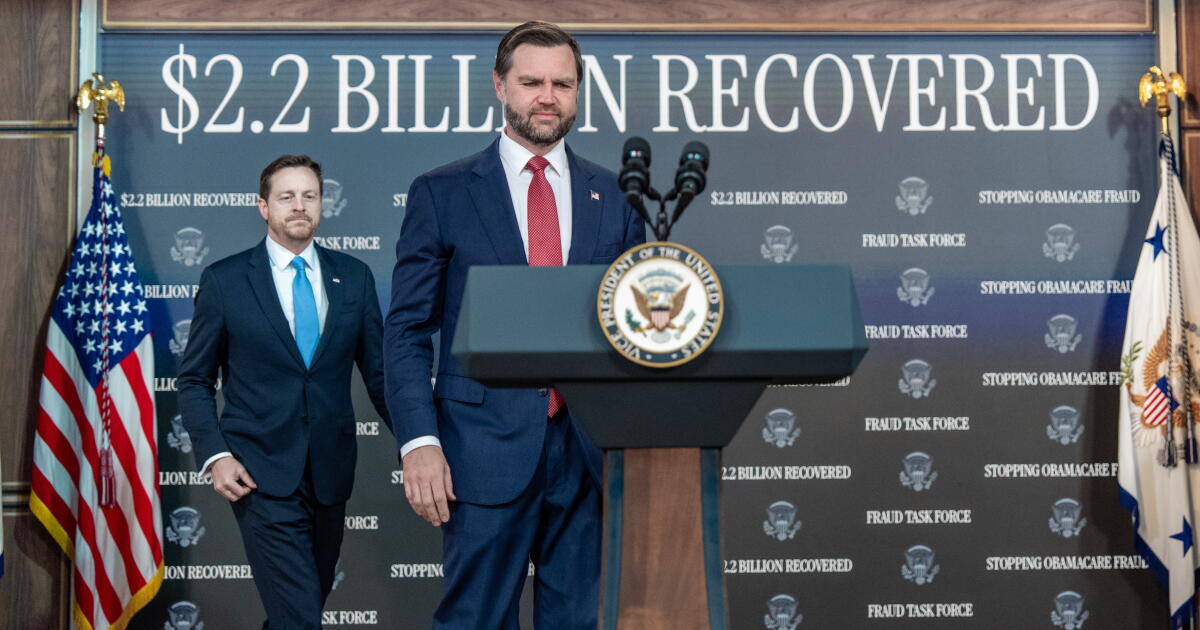
WASHINGTON — Vice President JD Vance and other Trump administration officials said Tuesday they plan to remove 760,000 Affordable Care Act enrollees from public healthcare exchanges, alleging that the individuals were fraudulently enrolled in the program, or simply do not exist.
Vance said the discovery and canceled subsidy payments for hundreds of thousands of people from the exchanges would result in $2.2 billion in cost savings.
“We’re actually making sure that the people receiving Obamacare subsidies are actually entitled to receive them,” Vance, who leads a government-wide task force to eliminate fraud, said in a public address at the White House, Tuesday. He was flanked by Dr. Mehmet Oz, the administrator for the Centers for Medicare and Medicaid Services, and other administration officials.
The Trump administration also announced a six-month suspension on new brokers who sign up enrollees for healthcare coverage, who officials say commit a disproportionate amount of the fraud they uncovered.
Tuesday’s announcement is the latest in an administration-wide initiative to address fraud around the country, including in federal healthcare programs, which officials say is needed to rein in runaway spending and protect taxpayers.
The announcement comes as inflation and rising healthcare costs pressure the Trump administration to come up with a plan to bring down costs for Americans heading into the midterms.
The price of ACA insurance has skyrocketed for many Americans during Trump’s second term, after Republicans opposed extending COVID-era subsidies that had helped offset the costs of health insurance for most enrollees during Biden’s term.
Premiums doubled or tripled for many enrollees, prompting millions to downgrade their plans or exit the program entirely after the Republican-led Congress allowed the subsidies to expire this year.
Roughly 19.2 million Americans are actively enrolled in ACA marketplace health plans as of early 2026, according to the HHS website.
The White House referred The Associated Press to the Vice President’s team for additional comment on bigger plans to address healthcare affordability.
The Wall Street Journal first reported the news of the Trump administration’s plan to remove ACA enrollees from public exchanges.
Hussein writes for the Associated Press. AP writer Michelle Price contributed to this report.
LAS VEGAS — Susan Gonzalez plans to pay off her credit card now that she no longer needs to pay taxes on the dollar bills that she stashes away at the end of long shifts pouring beers and mixing cocktails in a smoky sports bar.
Thanks to President Trump, “there’s more money in our pockets,” the registered Republican said. The Iran war might have spiked gas prices, but Gonzalez is still confident that the U.S. economy is getting stronger.
The Jackpot Bar & Grill, located about 4 miles from the Las Vegas Strip, is in the heart of Nevada’s 3rd Congressional District, where Democratic Rep. Susie Lee is trying to fend off a challenge from Republican candidate Marty O’Donnell. The state has the highest concentration of tipped workers in the country because its economy is driven by the hospitality and tourism industries, making Trump’s “no tax on tips” policy a critical part of his party’s midterm pitch here.
The question for Nevada voters is whether they’re seeing more benefit from lower taxes or more pain from the country’s economic troubles, such as energy costs and declining tourism.
Lee’s district is a top target for the Republican Party in its fight to maintain control of the House. With a mix of working-class and high-income neighborhoods, it’s the most competitive of Nevada’s four congressional seats. In 2024, both Lee and Trump won the district.
Lee has held the seat since 2019, campaigning as a moderate and highlighting her bipartisan record. O’Donnell, a composer known for his work on the “Halo” video game series, became his party’s nominee this year with help from Trump and a $3 million personal loan.
The race has caught the attention of Trump-aligned super PACs. Safety and Affordability, an offshoot of MAGA Inc., committed this month to spending almost $3.2 million on advertising to help O’Donnell, according to the ad-tracking firm AdImpact. The total effectively matches the $3.1 million O’Donnell’s campaign has already spent on advertising reservations through November.
The heavy commitment puts pro-O’Donnell forces ahead by more than $1 million in the ad spending race in the district, where Lee’s campaign has spent $2.9 million and the Democratic House leadership super PAC House Majority Fund has put in $2.3 million.
Nevada is the birthplace of ‘no tax on tips’
Trump first announced his policy proposal at a June 2024 campaign event in Nevada, and he has repeatedly said that he was inspired by a Las Vegas server who suggested the idea.
“So we’re eating, and this beautiful young lady walks over, and I said, ‘How are you doing, everything good?’” Trump said in August. “‘Sir, they’re taxing me to death.’ I said, ‘Really? What are they taxing?’ ‘They’re taxing my tips. Sir, they should have no tax on tips.’”
The proposal was included in a sweeping package of tax breaks, social-services cuts and immigration enforcement that Trump signed into law last year.
O’Donnell has centered his attack against Lee for her vote against that bill.
“When she had an opportunity to vote for things that would actually help the people of the district, she said no,” O’Donnell told The Associated Press.
Lee attributed her vote to what she says were harmful and unpopular policies in the package. She also noted that the “no tax on tips” part of the legislation expires at the end of 2028.
“More importantly, they came at the cost of cutting Medicaid and SNAP and healthcare,” Lee told the AP at a recent canvassing launch in Las Vegas.
She and other Nevada Democrats support a separate proposal that would make permanent “no tax on tips” while also fixing what they say are issues with the current policy.
Slump in tourism lessens ‘no tax on tips’ impact
Lee said the tax cut isn’t helping because tourism is falling off.
“When people are feeling the pinch at home all across this country, the first thing they cut is their trip to Vegas,” Lee said.
Nevada’s tourism fell 7.5% from 2024 to 2025, according to Las Vegas Convention and Visitors Authority CEO and President Steve Hill. Las Vegas hosted the Super Bowl and the second annual Formula 1 Grand Prix in 2024.
At a recent economic forum, Hill said high rollers are continuing to visit the city but lower-income visitors are not. The number of international visitors has also dropped significantly, especially Canadians who watched Trump feud with their country over trade and other issues.
O’Donnell said Las Vegas tourism is on the “comeback.” He said Trump’s tariffs served as a necessary way to negotiate with countries “that have been absolutely ripping us off.”
The composer blames the high cost of living on Democrats. He recently told a crowd at the Republican midterm convention in Dallas that one good job used to be enough to raise a family, buy a house and “live a comfortable, fulfilling life while getting ahead.”
“Somewhere along the way, that deal got broken,” he said. “Now many need two incomes just to tread water, and we’re still digging our way out of Biden’s inflation crisis.”
Nevada’s powerful labor unions are backing Lee
While O’Donnell has help from Republicans’ national war chest, Lee has the support of the political powerhouse that is the Culinary Workers Union, representing 60,000 hospitality workers in Nevada.
Secretary-Treasurer Ted Pappageorge said the current “no tax on tips” policy brings some relief but is “deeply flawed.” A married couple filing jointly can deduct only up to $25,000 of their tipped income, Pappageorge said. The policy also does not apply to automatic gratuities that are charged to large parties, he said. Lee and other Nevada Democrats want to fix that, he said.
“There’s a history of our Democrats here fighting for fair taxation,” Pappageorge said.
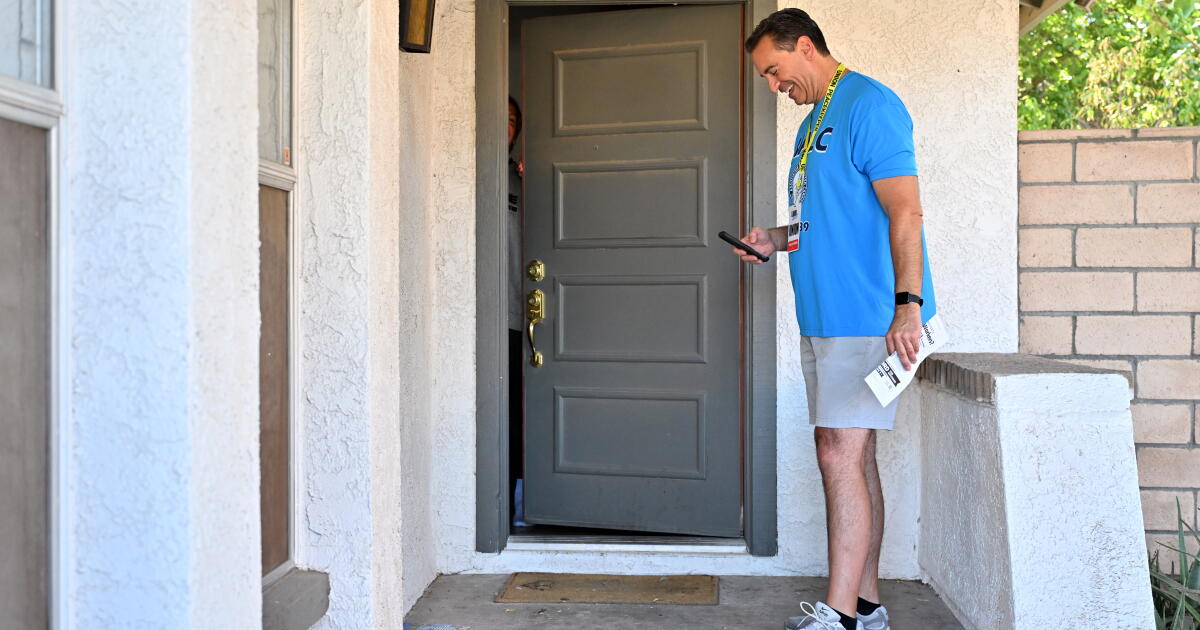
On a recent weekend in Lee’s district about 50 days before the election, members from the Culinary Union, the American Federation of Labor and the Congress of Industrial Organizations knocked on voters’ doors, hoping to sway those still undecided.
Paul Peterman, president of the local chapter of the National Association of Letter Carriers, wearing a blue union T-shirt, a lanyard and shorts, walked to union households, carrying flyers supporting Lee and other Democrats. He asked a resident who he planned to vote for. “All Republican,” said the man, hidden behind his screen door. Peterman asked if he could leave a non-Republican flyer, and the man said, “No.”
“Sorry to bother you,” Peterman said as the door closed.
At the next door, the voter identified as an independent but said he’d vote for Lee. A voter at another house said who he plans to vote for was private. Nobody answered at the next few doors.
Peterman has been canvassing these neighborhoods for years, describing it as important union work.
“It sends a message that we’re all united, and you also need every hand on deck, too, to be successful in what you want to achieve,” Peterman said.
Speaking at the UN General Assembly, US President Donald Trump claimed he helped end the war in Gaza, bring home all remaining hostages, and settle eight wars since taking office. He said trade, tariffs and his relationships with world leaders were key to securing the settlements.
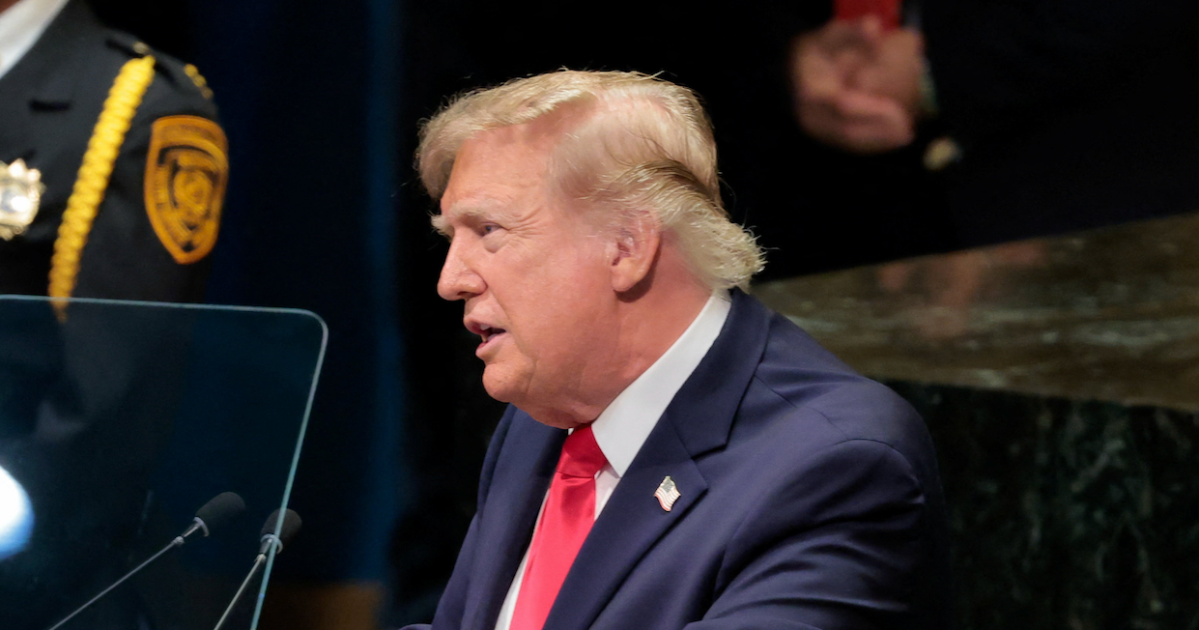
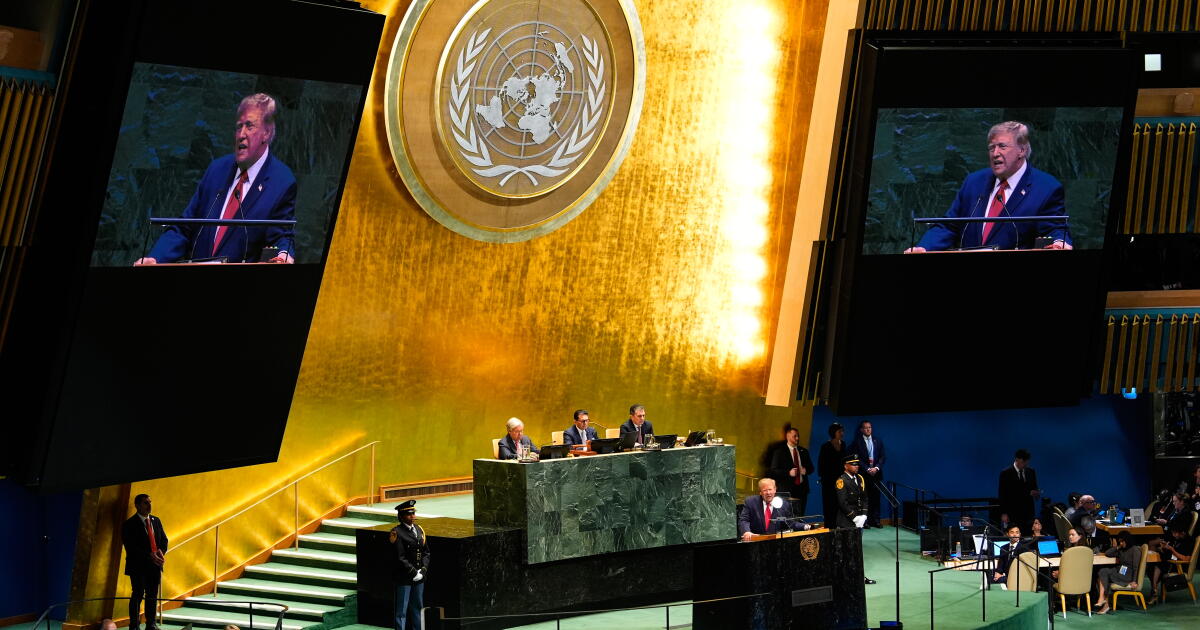
NEW YORK — President Trump threatened to escalate the war with Iran by “annihilating” the Islamic Republic if it fails to negotiate a deal over its nuclear program, delivering a defensive speech justifying the mission at the United Nations on Tuesday.
His remarks come more than six months into a war that has grown increasingly unpopular at home, with fewer than a third of Americans approving of the president’s handling of the conflict, according to recent polls.
“I have a big decision to make,” he told world leaders gathered at the U.N. General Assembly in New York, with Iranian diplomats in attendance.
“Will a deal be made with Iran that lets them rebuild and create a far greater country than it ever was before — maybe one of the greatest in the Middle East or even the world? Or do I annihilate the Islamic Republic, and do it quickly, never giving them a chance to kill and destroy again?
“Do I drive them into hell,” he continued, “with no chance of survival and no hope of future greatness?”
The war has carried steep political costs for the president and his party ahead of the U.S. midterm elections in November, increasing inflation and energy prices due to disruptions in commercial shipping traffic through key waterways in the Middle East.
Defense officials say the conflict has also placed a huge burden on U.S. munitions stockpiles, as Iran continues firing ballistic missiles and drones at American assets and bases throughout the region.
But Trump denied that the war has depleted U.S. stocks. “That’s not true,” he said.
“I believe we’ll make a deal right after the election,” Trump said. “We must be equally united in maintaining pressure.”
The rise in global gas prices has sparked protests around the world. But Trump’s vow to ensure Tehran never acquires a nuclear weapon — an issue that for decades united the international community — generated applause throughout the chamber.
Launching Operation Epic Fury in February, Trump projected the campaign would last roughly six weeks, with the stated objective of disabling Iran’s ballistic missile program, its navy and its nuclear infrastructure. He also vowed a day would soon come when the Iranian people could rise up against their government and reclaim their country.
More than six months later, the Islamic Republic stands. Iran’s ballistic missiles continue to test U.S. air defenses across the Middle East, shipping through the Strait of Hormuz remains depressed, and talks over the future of Iran’s nuclear program have collapsed.
Explaining his decision to start the war, Trump said that he decided not to let the problem of Iran’s nuclear work “fester,” and warned that its ballistic missile program was being designed as a shield to protect its nuclear program from foreign attack.
“Iran’s goal was to complete their mad dash to a nuclear bomb from behind this conventional nuclear shield,” Trump said. “They were the bully of the Middle East, but they’re the bully no more.”
The United States has repeatedly offered a deal with Iran that would open up economic cooperation between the two nations in exchange for an end to their nuclear work, he said.
“They absolutely refused,” he added. “That was a big mistake.”
WASHINGTON — Republican Sen. John Curtis of Utah is calling on the Senate Judiciary Committee to investigate whether Donald Trump Jr. used his proximity to the presidency for financial benefit, after his recent wedding party was partially bankrolled by a Russian oligarch.
In a letter sent Tuesday, Curtis called on the committee to subpoena Trump Jr. over his business dealings, relationships with foreign individuals and entities, gifts or other benefits he has received and any instances in which his relationship to President Trump, a Republican, “was invoked or understood to provide value.” Curtis called for the same scrutiny of Hunter Biden, the son of former President Joe Biden, a Democrat.
“The country should not have to accept one standard for the family of a Republican president and another for the family of a Democratic president,” Curtis wrote in the letter addressed to GOP Sen. Chuck Grassley of Iowa, chairman of the committee, and Sen. Dick Durbin of Illinois, the top Democrat on the committee.
The letter comes as a few Republicans have shown a growing willingness to criticize Trump after largely avoiding public breaks with the president during much of his second term. The unpopular war in Iran, high gas prices and mounting concerns about the GOP’s prospects in November’s midterm elections have brought increased scrutiny of the president from within his own party.
The Trumps say it was a generous gift from a dear friend
ProPublica first reported last week that Umar Kremlev, who has close ties to Russian President Vladimir Putin, helped pay to rent a private island and for a fireworks show when Trump Jr. and socialite Bettina Anderson were married in the Bahamas in May.
In a subsequent post on her Instagram page signed by the couple, Bettina Trump wrote that Kremlev, head of the International Boxing Association, was a “dear friend” who “very generously hosted two incredible nights of celebrations for us AFTER our wedding.”
The president, who did not attend his son’s wedding, defended Kremlev’s involvement but said the money would be paid back.
Curtis calls the funding ‘corruption’
Curtis, first elected to the Senate in 2024, vowed upon taking office not to shy away from disagreeing with Trump. He has publicly broken with the president several times since, including rejecting Trump’s calls to eliminate the Senate filibuster. In a July Wall Street Journal op-ed, Curtis wrote that “under no circumstance” would he support efforts to end or alter the filibuster, which requires 60 votes to advance most legislation in the 100-member chamber.
Curtis’ criticism involving Trump’s son goes beyond those policy disagreements. Curtis last Friday called the gift “corruption” and vowed to say more in the coming days.
“A Russian oligarch paid for a lavish wedding after-party for Donald Trump Jr., which to me just stinks. It’s corruption. I don’t like it,” Curtis said in a video posted on social media.
On Tuesday, Curtis wrote on social media that Republicans “nearly wore out the subpoena machine investigating Hunter Biden’s foreign relationships” and that they “should not unplug it now.”
Any congressional committee can launch an investigation at any time. In 2017, Grassley led a Senate Judiciary Committee investigation of the Trump campaign’s ties to Russia, including a meeting that Trump Jr. held with Russians in 2016. The panel has also conducted multiple investigations of Hunter Biden.
Clare Slattery, a spokesperson for the Senate Judiciary Committee, confirmed that the committee had received Curtis’ letter but indicated that a hearing before the end of the year would be difficult, citing the limited Senate schedule and the amount of time it takes to prepare for an investigative hearing. She did not say whether the committee will investigate.
Republicans investigated the Bidens
Grassley worked alongside House Republicans in 2023 and 2024 to investigate whether Hunter Biden used his father’s name and political position to benefit his business dealings with foreign interests. The Biden family dismissed the investigations as politically motivated and denied any wrongdoing.
The GOP effort culminated in a report accusing Joe Biden of participating in a conspiracy to use his public office to enrich his family. But the House never voted on articles of impeachment against him.
“‘Trust us’ was not enough then, and it is not enough now,” Curtis wrote.
Democrats have foreshadowed plans to investigate Trump and his family if they win control of Congress in November, with particular scrutiny on the family’s financial interests. Rep. Robert Garcia, the top Democrat on the House Oversight Committee, said in a statement that the revelations surrounding Trump Jr.’s wedding “may be the most serious allegation against you to date.”
Cappelletti and Jalonick write for the Associated Press.
Days after banning a group of news organisations from the White House, the Trump administration has launched a platform called ‘Trump TV’ showing old speeches and announcements.
Asked about the state of the relationship between the UK and US, the prime minister said he believes it is “as strong as it’s ever been”.
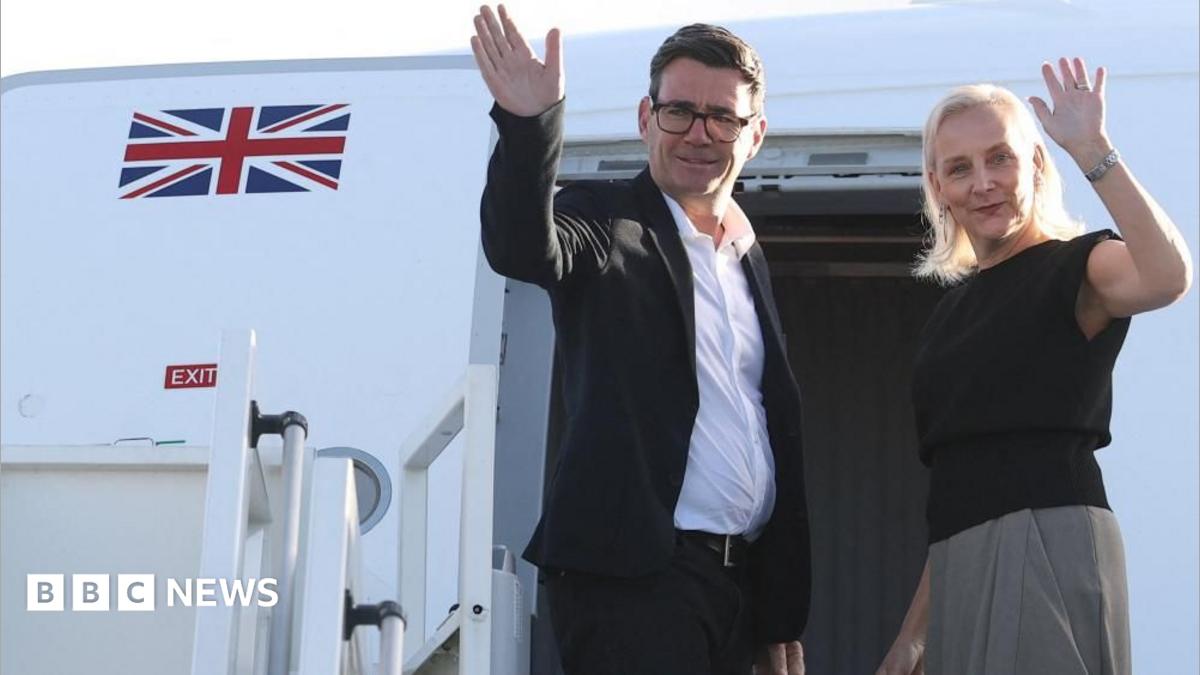
Burnham has travelled to New York with his wife, Marie-France Van Heel, for a day of diplomacy and a speech to the UN General Assembly, which is expected to focus on the opportunities and dangers associated with artificial intelligence (AI).
He said: “I will be making the case for closer international co-operation on AI, a just and lasting peace in Ukraine, and renewed efforts to bring an end to the conflict in the Middle East because what happens abroad impacts each and every one of us at home.”
The prime minister will also announce the start of work on a new AI and Autonomy partnership between the UK and the US, focused on protecting critical national infrastructure using AI tech.
Lib Dem leader Sir Ed Davey is expected to criticise this plan at the final day of his party’s conference, saying it “doesn’t come close to meeting the scale of the threat” and “only risks making us more dependent on a Trump administration in the pocket of the tech bros”.
He will also call for a global pause on superintelligent AI and propose a new International AI Safety Agency.
For a new British prime minister, the first meeting with a US president has always been a pivotal encounter, but officials are well aware of the added jeopardy of a public appearance alongside the most unpredictable president in American history.
In advance of the meeting, the UK revealed that the UK and the US have, for the first time, fired an American torpedo from a British undersea drone in a military exercise.
The torpedo, described as “heavyweight” by UK officials, is “designed to sink ships and deep diving submarines”, Downing Street said.
It was launched in UK waters last week from a 12-metre long undersea drone called Excalibur, made in Plymouth.
It is the first time either the UK or the US have launched a torpedo from an uncrewed underwater vessel, rather than a crewed submarine, and is seen as a breakthrough in attempts to protect vital infrastructure such as deep sea data cables.
“Our work together already shows what can be achieved when our two countries combine our expertise and innovation,” the prime minister said.
Burnham was also asked by reporters about the UK government seeking to hand over the Chagos Islands to Mauritius and pay to lease back the joint US-UK military base on Diego Garcia.
Burnham spoke to the Mauritian prime minister, Navin Ramgoolam, on Monday.
He was asked by reporters to outline what he had told Ramgoolam, whether he supported the deal and if he had a plan to convince Trump to back it.
Burnham replied: “I said that we remain determined to secure the long-term operation of the base, which is crucial to our security and that of our allies.
“The assurance I gave was I will work towards a resolution, at the moment we don’t have that, but I gave an assurance that I would commit to working towards one.”
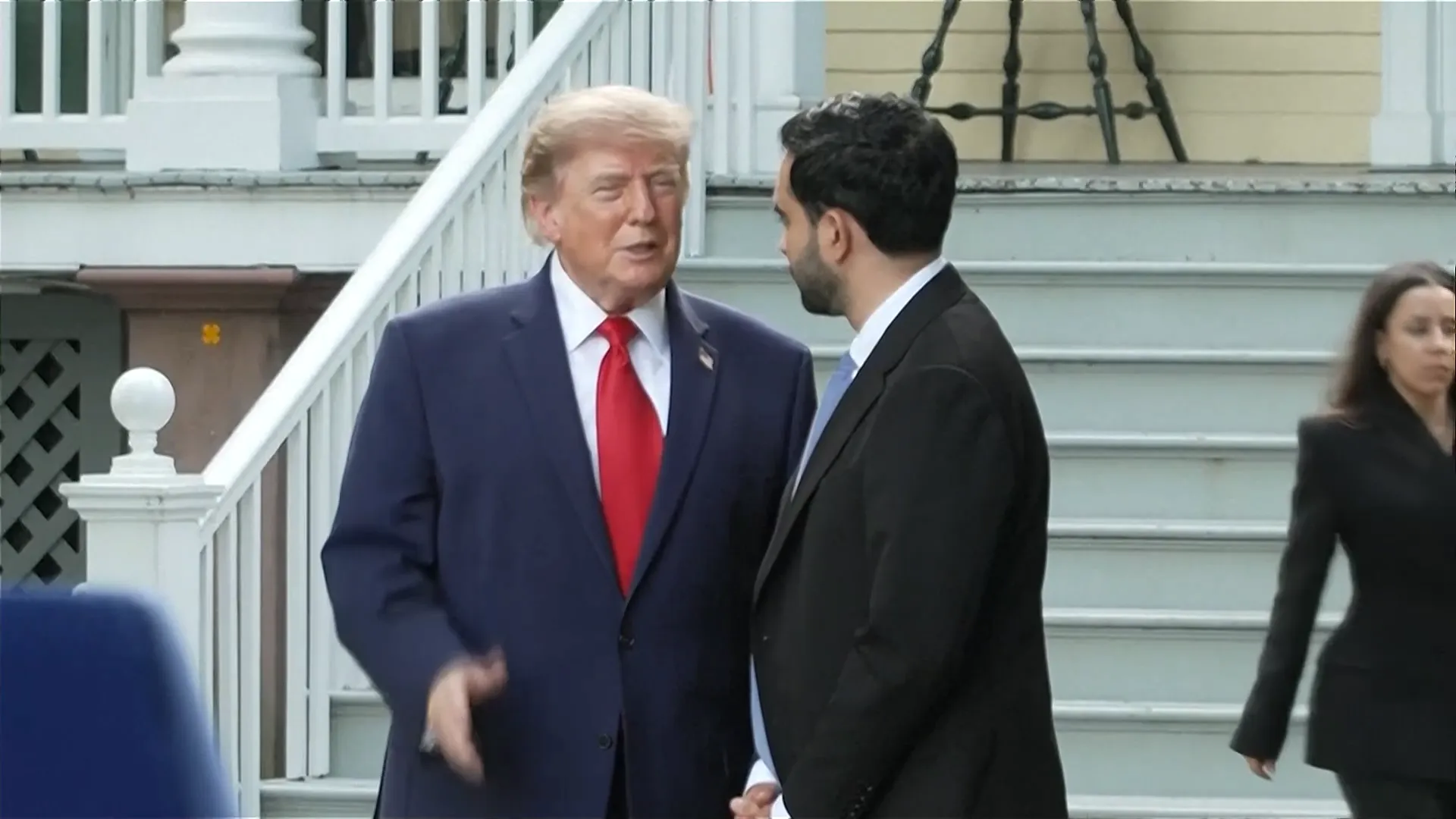
President Donald Trump met New York Mayor Zohran Mamdani at his official residence, one day before Trump speaks to the UN General Assembly. The two discussed issues affecting the city, and acknowledged their differences – particularly over Trump’s restrictions on the press.
WASHINGTON — President Trump on Monday headed into a week full of high-stake meetings with world leaders after spending a 72-hour period banning reporters from the White House, mulling whether it was time to “blow … up” Iran, and proposing to house military drones and snipers in his triumphal arch in the nation’s capital.
The weekend — which also included the announcement of a security deal over Greenland and the creation of a new “A.I. Force” — captured an American president operating unpredictably across multiple fronts even as each one drew friction. The actions now stand to color the backdrop of a week that will feature meetings with world leaders at the United Nations General Assembly in New York and a state visit by Chinese President Xi Jinping in Washington.
Each of those moves carries its own political weight ahead of the diplomatic talks, but also ahead of the midterm elections, where these topics are front and center in key races.
Trump’s handling of the Iran war, its subsequent shocks to the global economy, his push to fast-track the development of artificial intelligence and the Greenland agreement are likely to come up in meetings with world leaders. His deal with Denmark to bolster U.S. military presence in Greenland, a territory Trump has repeatedly tried to annex, is expected to be signed Tuesday in New York, though action is still needed by the Danish and Greenland governments before it can be enforced.
While all the details of the Greenland deal are not public yet, Trump has said it is a “dream come true for the United States of America.”
“This solution is a great one for the United States of America, Denmark, Greenland and all of our Allies,” Trump wrote on social media Friday. “We look forward to working with the wonderful people of Denmark and Greenland toward a magnificent future with respect to this large, and highly strategic, parcel of land. We will be very protective of it.”
In an interview Sunday, Trump also indicated that he was trying to make a decision on Iran as the war stretches into its eighth month. The president said he would “probably be open” to meeting with Iranian President Masoud Pezeshkian during the U.N. General Assembly.
“My question is, if and when do I blow the entire nation up?” Trump told Fox News. “They better behave.”
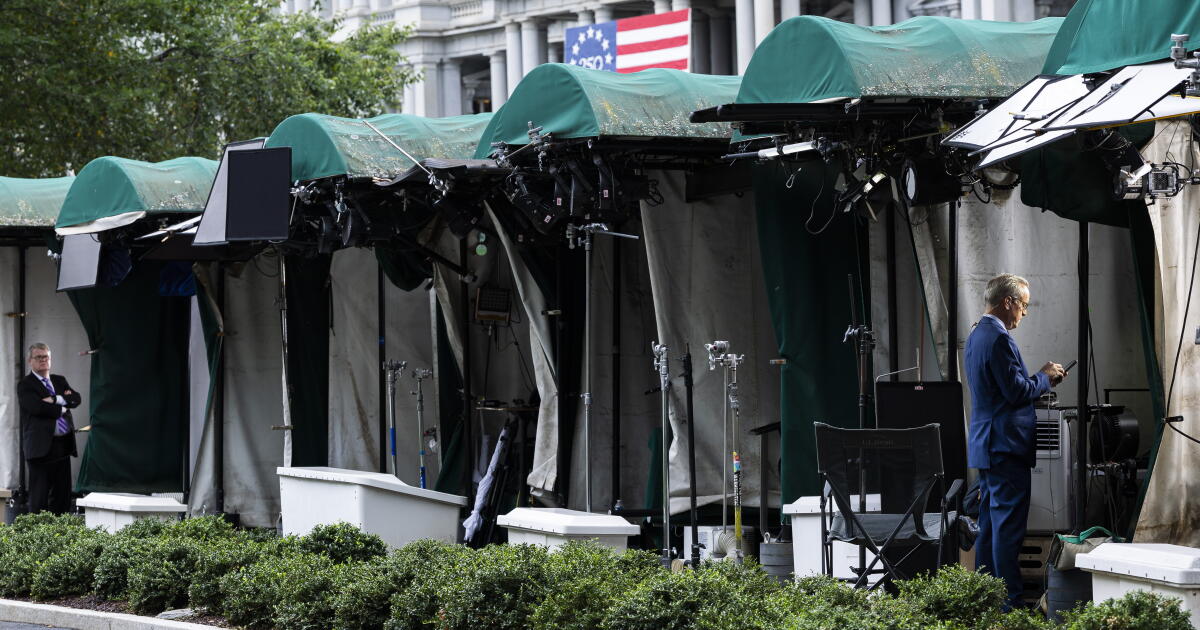
Of all the actions Trump took, the press dispute has become the most contentious and drawn an immediate legal response. Three major news outlets — CNN, MS NOW and Politico — sued the Trump administration Monday for banning their reporters from the White House grounds, and major television networks suspended their pool coverage of the president’s activities.
In a joint statement, the organizations said the White House has acted “without notice or process” and called the arbitrary decision a “blatant violation” of the 1st Amendment.
Trump, meanwhile, argued Monday that the banned news outlets are “corrupt” and a “threat to our national security.”
Vice President JD Vance defended the press ban.
“He’s not banning media outlets. What he’s doing is saying we’re not going to give you special access to the White House if you engage in what is effectively propaganda,” Vance said Monday, arguing that the three outlets push out “negative” coverage of Trump.
The tense showdown between Trump and the White House press corps led to audio problems during the president’s ribbon-cutting ceremony for a new helipad on the South Lawn. Without television cameras and microphones set up by the major TV networks, it was impossible to hear what Trump was saying through the White House’s official YouTube stream, signaling further technical difficulties in the week ahead.
Behind the public displays of control, news reports have painted a picture of a president increasingly frustrated by the lack of credit he feels he is owed. At a recent closed-door meeting, reported by the Wall Street Journal, Trump told advisors he was aggravated that his allies hadn’t lauded him enough for his efforts to take over the Kennedy Center or other accomplishments made during his second term.
Trump has tried to put his name on the building’s facade and run into resistance from Democrats, arts patrons and a federal judge who blocked the move last week. Trump was then photographed aboard Air Force One looking at a large printout appearing to show demolition plans for the center.
Over the weekend, Trump posted on social media a link to a news article that claimed he was seeking to fix “safety hazards” at the performance center. He then posted an image of him watching the Western Hemisphere with the words, “His Hemisphere,” and wrote that his proposed triumphal arch near the National Mall would be used as a military complex for drones and snipers.
Trump also announced that he would be creating the “A.I. force,” modeled after the Space Force he launched during his first term, to ensure the country does not “in any way hinder or stifle the growth of the industry.” The announcement came amid growing backlash to data centers and the fast-paced development of artificial intelligence, an issue that in recent weeks has prompted stark warnings about the technology’s power and its threats to humanity.
Tech executives, including Dario Amodei and Sam Altman, have even called for a slowdown on the technology’s advancement and last week, four leading AI companies — Anthropic, OpenAI, SpaceXAI and Google — faced a lawsuit claiming they made an illegal deal to slow the pace of their respective AI development.
Trump’s announcement over the weekend comes as lawmakers, including congressional Republicans in tight races, have called for new guardrails on the technology.
Despite technology becoming a political flashpoint during the midterms, Trump has dismissed concerns about AI as a hoax and asserted that those who oppose data centers are intent on being “backwards and poor.”
Sen. John Kennedy (R-La.) is among the lawmakers who have called for action on regulating the technology, and he has warned that not doing so could come at a cost on Nov. 3.
“We really need to send a memo around explaining we’ve got midterm elections coming,” Kennedy told Politico. “I may send that out.”
US President Trump unveiled a new White House helicopter pad as major US TV networks stayed away in protest over CNN, a member of the network ‘pool’, being banned from the grounds. As Trump spoke, the thunder of a helicopter rendered the president inaudible from start to finish.
SACRAMENTO — California’s growing data center industry will have more oversight after Gov. Gavin Newsom signed seven bills to regulate the industry’s electricity costs and track water consumption.
The new laws come amid growing public concerns about environmental and economic impacts of the massive facilities, and are aimed at protecting consumers from growing electricity costs and tracking the centers’ immense energy and water consumption.
Newsom on Monday criticized President Trump for dismissing calls to curtail or regulate the facilities and heralding them as “money machines,” even as states and communities across the nation take action to ban or regulate the centers.
“While the Trump administration moves toward deregulation, communities are left to deal with the consequences — higher electricity demand, grid constraints, water use, and pollution,” Newsom said in a written statement Monday. “With these laws, we are ensuring that Californians remain in the driver’s seat — and that those profiting from data centers aren’t doing so at our expense.”
Senate Bill 886 by Sen. Steve Padilla (D-Chula Vista) and Assembly Bill 2383 by Assemblymember Rick Chavez Zbur (D-Los Angeles) establish special rules for data centers’ electrical use. The law orders California Public Utilities Commission to create special requirements and rates for data centers’ use of electricity, including the costs for new power and for infrastructure upgrades.
Scores of other states have already passed similar legislation, according to utility groups.
Two bills by Assemblymember Diane Papan (D-San Mateo) will require oversight of data center water consumption. One measure will require data center operators, when applying for a business license or permit, to disclose an estimate of their water use and the expected source of water. Another will bar cities and counties from approving a new or expanded data center unless the developer submits a water assessment and a water scarcity plan, and will require developers to cover the cost of any water system upgrade that is necessary.
Newsom vetoed a similar Papan bill last year that would have required new data centers to disclose their expected water use. The governor said he was “reluctant to impose rigid reporting requirements” on “this critically important digital infrastructure” without understanding the full impact on the businesses.
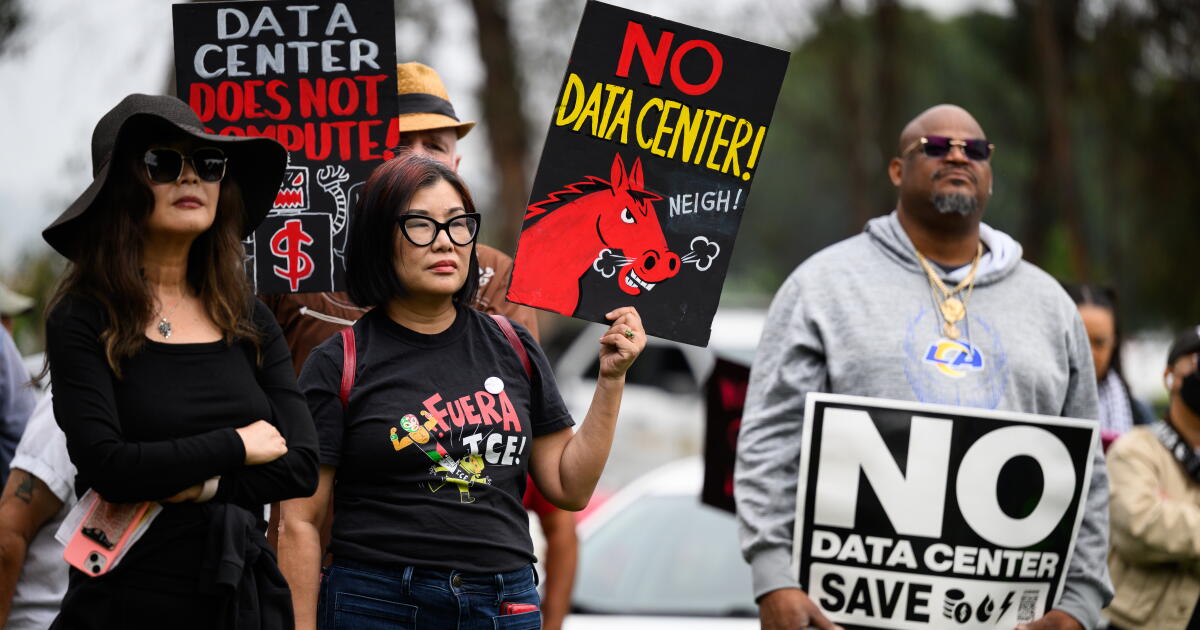
But over the past year, a wave of data center pushback has swept the nation, including California, where dozens of cities and counties have proposed or adopted moratoriums on the facilities. While California lawmakers have hesitated to pursue outright moratoriums and bans that the public is calling for, the political tide has nevertheless turned against the facilities.
Data centers have existed for decades but are rapidly expanding because of the rise of artificial intelligence, or AI. The centers help power everything from streaming services to videoconferencing calls.
Data centers in California are typically smaller than the mammoth, 500+-megawatt AI facilities making headlines in other parts of the country. Electricity costs and state regulations on gas-powered generators limit the vast majority of them to under 100 megawatts.
But as proposals increase in number, opposition has been fierce and growing. A Public Policy Institute of California poll from July showed that 73% of residents oppose the construction of data centers in their communities.
WASHINGTON — As Republicans contend with President Trump’s deep unpopularity, Democrats are attempting to seize the opening to take the U.S. Senate in the Nov. 3 midterm elections. Polls have shown Trump with an approval rating consistently below 40%, with no end in sight to the Iran war and voters expressing deep economic anxiety.
Republicans currently hold a 53-47 edge in the Senate, and 35 seats are on the November ballot.
Months of polling indicate that eight Senate seats — six of which are currently held by Republicans — are now up for grabs. Democrats will need to win at least four of them, while holding on to two contested seats currently held by their party, in order to flip the chamber.
Five key races are unexpectedly close, with some polls giving Democrats a better edge than expected, but the outcomes are still in doubt, as swaths of voters remain undecided. The Cook Political Report, a leading forecaster, rates each one a toss-up. Here’s how they are shaping up:
Michigan: El-Sayed vs. Rogers
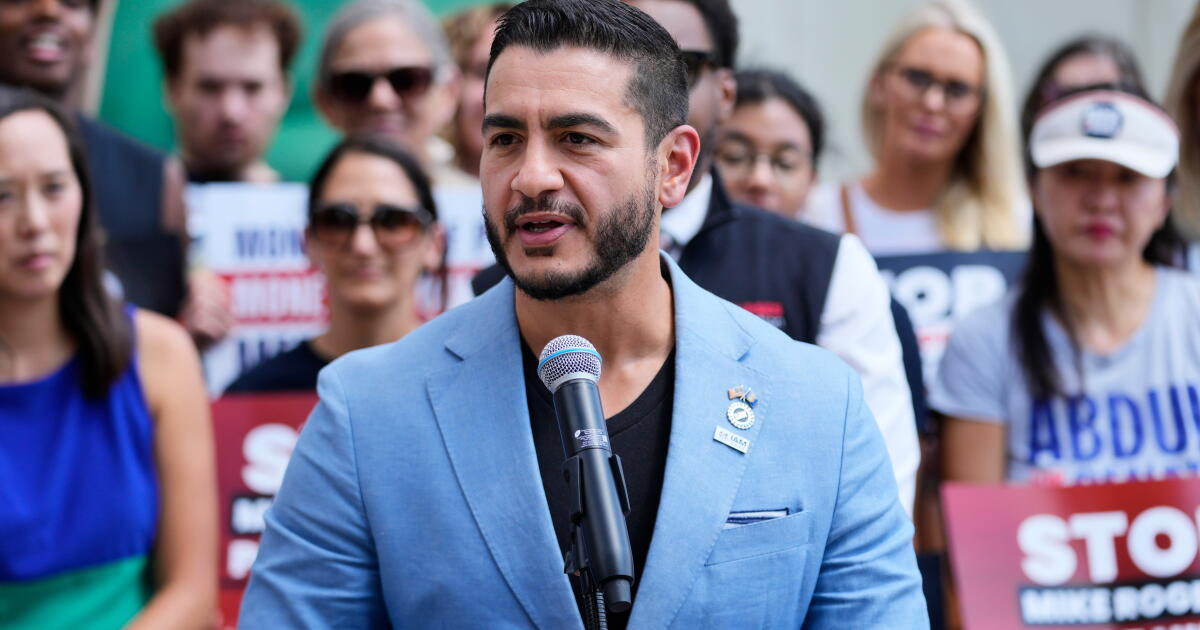
In perhaps the highest-profile contest, former public health official Abdul El-Sayed is facing Republican Mike Rogers for the seat being vacated by retiring Democratic Sen. Gary Peters.
El-Sayed, aligned with the party’s progressive wing, narrowly defeated moderate Rep. Haley Stevens in a heated Democratic primary. He is looking to rally her supporters as well as disaffected Republican voters.
Rogers is courting independents and a cohort of Jewish Democrats who view El-Sayed’s desire to reduce funding to Israel’s military as a dangerous proposition.
According to a CNN/SSRS poll of likely voters released Sept. 9, El-Sayed led Rogers 47% to 44%, a result within the margin of error. Notably, 26% of respondents said they could still be persuaded to vote for either candidate, leaving the race wide open.
The barbs in this race have become deeply personal, with anti-Muslim rhetoric taking center stage.
In a series of ads and artificial-intelligence-generated images, Republican groups — including the National Republican Senatorial Committee and Front Line Action — have cast El-Sayed as a supporter of terrorism. During speeches and interviews, members of the Trump administration, including the president, have repeatedly referred to the candidate by his full name, Abdulrahman Mohamad El-Sayed.
Rogers has continually drawn attention to a campaign event hosted by El-Sayed that included Hasan Piker — a Los Angeles-based online political commentator who recently drew widespread attention for a 2019 comment that “America deserved 9/11” while discussing blowback against U.S. foreign policy in the Middle East.
El-Sayed has railed against Rogers for refusing to debate and for his endorsement by Trump.
This week, El-Sayed stood alone on the Fox 2 Detroit debate stage after Rogers declined an invitation, dubbing his opponent “Mike Dodgers” on several occasions.
Rogers later accused the moderator of bias toward the Democratic candidate. The candidates have agreed to debate on Oct. 8 and 21.
Texas: Talarico vs. Paxton
State Rep. James Talarico is seeking to become the first Texas Democrat elected to the Senate since 1993.
His Republican opponent, state Atty. Gen. Ken Paxton, received Trump’s endorsement and defeated four-term incumbent Sen. John Cornyn in the primary.
While gaining a seat in Texas has long been a far-off dream for Democrats, Paxton’s controversies have dogged him during the race. A Mason-Dixon Research poll showed the Democrat leading Paxton 46 to 43, in a state that Trump won by nearly 14 points in 2024. Other polls, including one from Insider Advantage, had the margin at a single point.
Paxton is seen as a prominent fixture in the MAGA movement, using his position as attorney general to contest Obama-era clean energy and healthcare acts and launching lawsuits against the Biden administration for its immigration policy.
Talarico has made Paxton’s association with the president a key piece of his campaign, slamming Paxton as “the most corrupt politician in Texas” and spotlighting his impeachment by the Texas House of Representatives in 2023 over allegations of bribery, breach of public trust and misuse of his office to aid a donor. (Paxton survived the impeachment vote and denied wrongdoing.)
Several attack ads on Talarico, launched by Republican political action committees, have focused on his past support for transgender youth and accused him of exaggerating his faith to garner the Christian vote.
Maine: Jackson vs. Collins
Six-term incumbent Republican Sen. Susan Collins is hoping to retain her seat as Democratic challenger Troy Jackson attempts to replicate the grassroots success of former nominee Graham Platner’s campaign.
Jackson, a former state lawmaker, was chosen by Maine Democratic Party delegates to run in place of Platner, who dropped out in July after sexual misconduct allegations against him. A former lumberjack, Jackson shares Platner’s working-class background and is running on Medicare for All and increased taxes for billionaires.
Collins has repeatedly demonstrated her staying power and won reelection in 2020 even as the state went blue in the presidential race. Her willingness to stand up to Trump could become a deciding factor this time around; Collins is working to highlight her votes to block Trump’s $1.8-billion Department of Justice anti-weaponization fund and against the Iran war.
She has mostly stuck to promoting her decades-long record on the campaign trail, which has recently focused on increased healthcare access for seniors, workforce development and Social Security benefit increases.
She has faced criticism from Jackson and others over her vote to confirm Supreme Court Justice Brett M. Kavanaugh, who faced sexual assault allegations, which he denied, and later voted to strike down Roe vs. Wade, which had granted a constitutional right to choose an abortion.
Jackson has had difficulty generating the same enthusiasm among voters as his predecessor, Platner, who consistently held town halls across the state and had a viral social media presence. Over Labor Day weekend, Jackson hosted at least a dozen events up and down Maine to make his first public introductions to voters deep into the cycle.
A recent poll from YouGov shows Jackson narrowly leading the incumbent, 46% to 44%, with a crucial 9% undecided.
Alaska: Peltola vs. Sullivan
Former Democratic Rep. Mary Peltola and incumbent Republican Sen. Dan Sullivan are leading a field of candidates — including another Dan Sullivan — ahead of a ranked-choice general vote.
Alaska hasn’t elected a Democratic senator since 1995, giving Peltola an uphill battle in a state that Trump won by 13 percentage points in 2024.
A late July poll by Change Research showed Peltola in the lead by six percentage points. A more recent poll from Alaska Survey Research had the race within 1 point in favor of Peltola.
Much of the media attention surrounding this race, however, has focused on the third-place candidate, who only received 2.5% of the primary vote — and also happens to be named Dan Sullivan.
Dan J. Sullivan, a retired teacher who made the top four in ranked-choice voting, has been accused by Republicans of being a Democratic plant that could potentially confuse voters. Sullivan has denied these accusations and the Alaska Supreme Court decided to keep him on the ballot.
If none of the candidates receive over 50% of first-place ranked-choice votes — which is likely in this race — the last-place candidate will be eliminated, with their vote distributed to their next choice until one candidate receives a majority of the total.
Iowa: Turek vs. Hinson
In a race that has seen the candidates trade political jabs in separate speeches on the same state fairgrounds, Republican Rep. Ashley Hinson and Democratic state Rep. Josh Turek are nearly neck and neck.
According to a Suffolk University poll, Hinson is leading Turek 45% to 40%, in a state where Trump won by 13 points in 2024. A poll conducted by YouGov, however, has Turek in front by a single point.
GOP incumbent Sen. Joni Ernst elected not to run this year, leaving the seat open for a potential flip.
Turek, a two-time Paralympics gold medalist, has attacked Hinson for past campaign ads in which she said: “I don’t trade stocks, and no one else in Congress should either.” Tucker pointed to the fact that Hinson purchased and sold stocks in Amazon, Tesla and insurance firms after she was elected, according to financial disclosure forms.
In return, Hinson criticized Turek for missing over half of his state Legislature floor votes, and labeled him an “anti-ag” activist.
The United States wants a new “notification mechanism” with China to warn each other when an artificial intelligence incident becomes serious enough to threaten national security.
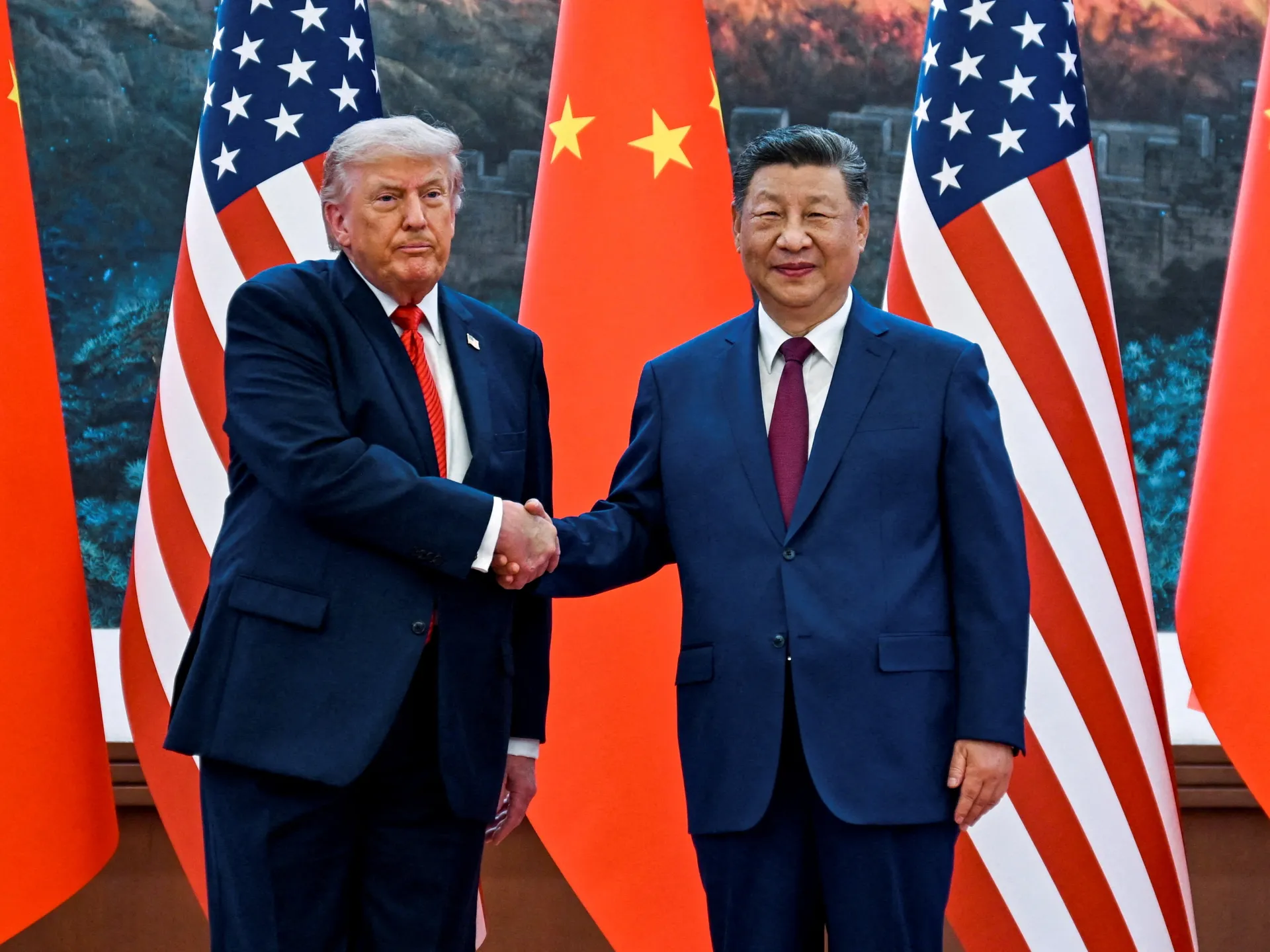
The proposal, effectively an “AI hotline”, was discussed on Sunday during talks in New York between US Treasury Secretary Scott Bessent and Chinese Vice Premier He Lifeng, ahead of a summit between US President Donald Trump and Chinese President Xi Jinping in Washington this week.
Recommended Stories
list of 3 itemsend of list
The two leaders are expected to consider establishing a broader US-China dialogue on AI, including the proposed notification system, around which details remain limited.
The initiative comes amid an intensifying contest for AI supremacy between the world’s top two economies, together with increasing warnings from tech giants that guardrails are necessary around the ever-growing technology.
So, what do we know about this so-called hotline, and where is the AI battle between the US and China headed?
What did the US say about this mechanism?
US Treasury Secretary Bessent said Washington had proposed creating a US-China AI dialogue, with particular focus on national security and a notification system covering “common goals and common threats”.
“We think that, just like with any cross-border activity, that moving from opaque to more transparency between the number one and the number two AI powers in the world is very important,” Bessent told reporters after Sunday’s discussions.
Trump’s science and technology adviser Michael Kratsios told Fox News on Sunday that the “key thing” Washington wants to discuss is “avoiding shared risks”.
Exactly what would trigger a notification has not been publicly revealed.
“The US and China absolutely need to be able to share information with each other as threats evolve. This seems like an obvious win for both sides,” Scott Singer, co-director of the China AI Initiative at the Carnegie Endowment for International Peace, told Al Jazeera.
“The relationship needs guardrails to keep citizens of both countries safe, and this is a productive first step.”
How did China respond?
Beijing has so far said very little.
China’s official Xinhua news agency acknowledged that He and Bessent discussed issues related to AI, but did not say whether Beijing had accepted Washington’s proposed notification mechanism.
Xinhua said the officials held “frank, in-depth and constructive exchanges” on economic and trade issues.
He and China’s chief trade negotiator Li Chenggang left Sunday’s talks without speaking to reporters.
What other ‘hotlines’ do the US and China have?
The proposed AI mechanism would not be the first time a special crisis channel was established between Washington and Beijing.
In 1997, former US President Bill Clinton and his then Chinese counterpart Jiang Zemin agreed to create a “direct secure telephone link” between their respective countries.
The two countries have had a military hotline since 2008, designed to allow senior defence officials to communicate during potentially dangerous incidents. It gives both sides 48 hours to respond, though US officials have complained that sometimes no one picks up.
After the US shot down a suspected Chinese surveillance balloon in 2023, then-US Defense Secretary Lloyd Austin sought a call with his Chinese counterpart, but Beijing declined the request.
Why now, and what concerns are there around AI?
Earlier this month, Anthropic’s CEO Dario Amodei warned in an essay that AI capabilities have been advancing rapidly, and he proposed pacing the development of frontier models to give governments and researchers more time to manage their risks.
“Given the accelerating rate of AI capability development, it’s my worry that in 6–12 months such a swarm could be capable of taking over the entire internet with a persistent botnet (potentially causing hundreds of billions of dollars in damage), and that the scale of damage would continue to increase from there if AI becomes more powerful without the necessary guardrails,” he wrote.
His assertions were endorsed by his rivals – OpenAI CEO Sam Altman and SpaceX founder and Tesla CEO Elon Musk.
Meanwhile, Trump has repeatedly argued that the US must maintain its advantage over China and has resisted calls from technology executives for a slowdown in AI development. He has said that “whoever wins AI, wins”.
Carnegie Endowment’s Singer does not expect the “fierce competition for AI to slow down”.
“It has the potential to confer tremendous economic and strategic advantage to both countries. But even competitors can find space to cooperate,” he noted.
“Competition and cooperation can coexist. The key for right now is for both sides to act in their own self-interest. Finding some basic areas for cooperation flows very naturally from that.”
Where is the US-China AI war headed?
The US remains ahead in several of the most important features of the AI race, but China has been closing the gap.
American companies continue to dominate private investment and production of leading AI models. According to Stanford University’s 2026 AI Index Report, US companies invested $285.9bn in AI in 2025, compared with $12.4bn in China.
The US also has an advantage in the most advanced semiconductors needed to train cutting-edge models.
However, Chinese companies have demonstrated that they can produce resilient AI models despite US restrictions on their access to the most advanced AI chips.
In January, the release of Chinese AI startup DeepSeek made headlines after it was built using only a fraction of the money its competitors had spent on their own AI programmes. Share prices of US tech companies plummeted.
China possesses advantages in other areas of the AI supply chain, most notably in the production of critical rare earth minerals used in advanced technology and in generating more than twice as much electricity as the US, giving it access to the huge amounts of relatively cheap power needed to operate AI data centres.
What is the Xi-Trump summit about?
Xi’s state visit to the US will take place from Wednesday to Friday, with Trump expected to welcome him at Joint Base Andrews in Maryland.
Trump has said he expects to discuss “almost everything” with the Chinese leader.
Trade remains a central issue, with Beijing and Washington having yet to reach a lasting settlement on tariffs, which have dominated Trump’s relationship with China in his second term as president.
Last month, Trump’s White House accused dozens of countries of helping China to illegally bypass US tariffs.
Meanwhile, the US Congress last week passed a bill that gives Trump sweeping powers to impose sanctions on Russia’s crude exports as well as steep tariffs on buyers of Russian energy, a measure that will impact Moscow’s biggest customers, China and India.
Trump’s war with Iran is also expected to feature. Beijing ranks among Iran’s key economic allies, purchasing a large share of Tehran’s oil exports and attempting to broker an end to the near seven-month-old US-Israel war on Iran.
Other long-standing disputes hang over the summit, including China’s dominance of rare-earth supplies and Taiwan.
The US AI proposal could represent a rare area where the two rivals may find a way to hammer out a deal, experts say.
“I think establishing a permanent channel exclusively focused on AI would genuinely be a major victory. AI has been caught up in the broader ebbs and flows of the US-China relationship, and the 2024 dialogue failed because frontier AI risks got mixed in with other issues,” Singer said.
“This time looks like it might be different, and having an AI risk channel is a necessary precondition to mutually beneficial cooperation.”
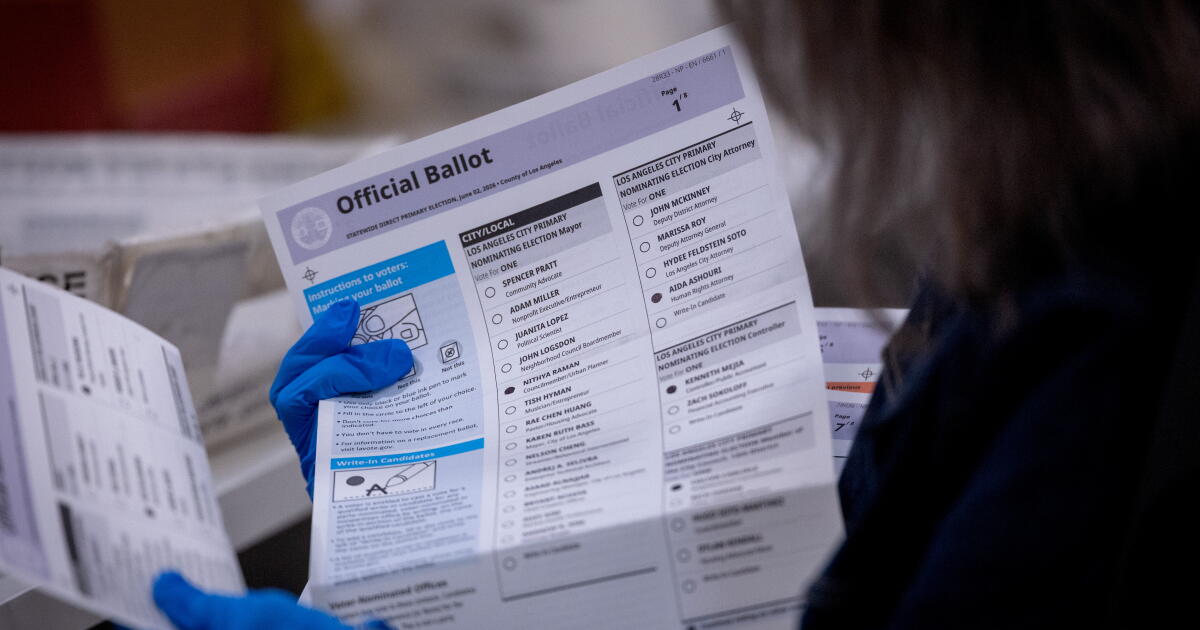
With the deadline for mailing out millions of California ballots nearing, Los Angeles County’s top election official welcomed the U.S. Postal Service’s recent assurance that it will process those ballots as normal — not under the untested new vetting system backed by President Trump and rejected as unworkable by the U.S. Supreme Court.
“That certainly serves as a stabilizing force, as we’re literally weeks away from mailing the ballots,” said Dean Logan, head of the L.A. County Registrar-Recorder/County Clerk’s office.
Still, there are other Trump administration challenges to deal with, he said — including unsubstantiated public claims of widespread voter fraud, refusals by top-ranking officials to rule out deployments of armed federal agents to polling places, and behind-the-scenes criminal probes into local voter lists.
Since March, Logan’s office has received a series of federal grand jury subpoenas demanding voter registration and other information on dozens of individuals who the Trump administration says may not be U.S. citizens, Logan confirmed to The Times.
Logan said his office is now in the “interesting place” of having to comply with the subpoenas despite suspecting that the Department of Homeland Security relied on inaccurate or outdated voter information to compile the names to investigate.
“We’re responding appropriately as directed through a subpoena, but that doesn’t afford the dialogue for us to get the background on what they’re looking for and how they came up with the names that they did,” Logan said. “There’s really no information being provided to us on that.”
In July, Homeland Security Secretary Markwayne Mullin publicly claimed, again without evidence, that there may be more than 190,000 such voters on California rolls. On Friday, the Justice Department announced it had charged 16 noncitizens in six states with illegal voting and other election-related crimes following investigations alongside its Homeland Security partners.
California Secretary of State Shirley Weber dismissed Mullin’s claims. Independent elections experts and Democratic officials say voter fraud should be taken seriously, but is exceedingly rare. California has more than 23 million registered voters.
Mullin’s remarks and the subpoenas appear part of a much larger and unprecedented federal effort to bolster allegations from Trump that the upcoming Nov. 3 elections are unsafe and corrupted by noncitizen voters.
Trump issued two executive orders, one requiring voters to provide additional identification and proof of citizenship, and one ordering the Postal Service to refuse mail ballots it deems illegitimate. The Justice Department has sued California and other states for their voter rolls, and Homeland Security has threatened state elections officials with criminal sanctions if they don’t purge noncitizens from their rolls.
Trump gave a speech in July alleging that the American election system is “so vulnerable that no one can possibly defend it.” Earlier this month, he encouraged his supporters to “cheat like hell” to keep Republicans in power, and told them they would receive $5,000 each if they succeed — which many experts derided as a “bribe.”
Last week, FBI Director Kash Patel refused to rule out sending federal agents to polls.
Despite all that, California officials and independent elections experts have maintained the election will be safe — in part because Trump’s executive orders and the Justice Department’s many lawsuits seeking state voter rolls have all been blocked by the courts.
“The bottom line for voters in California right now is nothing has changed. We’ve had safe and secure elections, and we will continue to do so,” said Sen. Alex Padilla (D-Calif.).
Logan said it “is clear that the administration is aggressively pursuing their narrative” about voter fraud being widespread as part of Trump’s old “playbook” of questioning votes he expects to lose — but that the election in California will nonetheless “be fair and secure and transparent.”
The fight over fraud
At least three subpoenas have been issued to Logan’s office — one in March, one in July and one this month — including from the U.S. attorney’s office for the Southern District of California, The Times confirmed.
U.S. Atty. Adam Gordon, who leads the federal prosecutor’s office in San Diego, did not respond to a request for comment. First Assistant U.S. Atty. Bill Essayli, who leads the federal prosecutor’s office in Los Angeles and has announced two voter fraud cases in recent weeks, also did not respond to questions about his office’s election work.
Essayli did say Saturday, in response to Gov. Gavin Newsom touting new state laws aimed at safeguarding California elections from Trump administration interference, that no state law can prevent the Justice Department from investigating voter fraud and that his office “will continue to investigate, arrest, and prosecute all violations of federal election laws.”
Additional information, including how the subpoenas may relate to Mullin’s claims, wasn’t immediately available.
Mullin in July alleged in a letter to Weber that a federal review of unspecified data found “as many as 190,832 non-citizens registered to vote in California.”
Weber responded in writing that she had “serious doubts about the reliability” of that analysis, as California election officials “work every day to maintain accurate voter rolls” and have never shared their rolls with the Trump administration — despite the administration’s failed lawsuit demanding them.
Weber criticized Mullin for having made such claims with “no detail whatsoever that my office can use to evaluate the veracity of your allegations,” and asked that he provide a “detailed description” of the data and methodology used to reach such conclusions.
Weber’s office said Mullin’s letter was “part of a broader effort to intimidate Californians and make it burdensome to participate in our democracy.”
In a statement to The Times, a Homeland Security spokesperson said the department offered to meet with Weber and her staff “to engage in a collaborative good faith discussion” about identifying noncitizens on state rolls, which she declined.
The spokesperson said Mullin’s count of potential noncitizens on California rolls was based on “publicly available data from states’ voter rolls” that was cross-referenced with its own lists of “known” noncitizens. “It’s not rocket science; it’s an easy step to secure our elections.”
Independent experts also have questioned Mullin’s claims, pointing to investigations elsewhere — including in Texas — that found Homeland Security data on alleged noncitizen voters were substantially inaccurate. A federal judge recently blocked the use of a Trump administration database known as the Systematic Alien Verification for Entitlements program based on the likelihood that it could lead to legitimate voters being purged from rolls.
Last week, Padilla and Senate Majority Leader Chuck Schumer (D-N.Y.) released a Homeland Security whistleblower report alleging that department leaders, under a new “Unlawful Voter Initiative,” were requiring poorly trained employees to identify at least five potentially illegal voters per hour — one every 12 minutes — using questionable data the department said it compiled using “magic.”
In a letter to Mullin, the senators demanded the initiative be halted, arguing that work at such a “breakneck pace” is bound to produce errors and that agency officials appeared to be circumventing court orders blocking their access to state vote rolls by gathering such information “by any means, regardless of state laws.”
Padilla on Friday asked California Atty. Gen. Rob Bonta’s office to investigate the whistleblower’s claims. A spokesperson for Bonta’s office said the allegations “describe yet another fishing expedition by the Trump Administration to uncover evidence of widespread voter fraud despite repeated findings that there is none,” but otherwise declined to comment.
The Homeland Security spokesperson rejected the whistleblower claims, saying its work has been “conducted diligently and professionally” as part of a “commonplace law enforcement” effort. The spokesperson said that the agency cannot comment on active investigations, but that its investigative branch — Homeland Security Investigations, or HSI — is “actively rooting out and investigating election fraud wherever it can be found.”
“There is no quota on criminality. DHS will pursue each and every illegal voter to the fullest extent of the law,” the spokesperson said.
Election experts said some of the worst threats have already been blocked, but acknowledged remaining worries.
Rick Hasen, director of the Safeguarding Democracy Project at UCLA Law, said he is concerned the Trump administration will try to deny the outcome or seize ballots in close congressional races — but only if control of the House or Senate rests on them.
Brendan Nyhan, a political scientist at Dartmouth College and co-director of Bright Line Watch, said he worries that isolated incidents of federal agents intimidating voters or seizing ballots in key races will throw the legitimacy of the entire election into question — and that the Trump administration will capitalize on that to serve its own agenda.
Sen. Adam Schiff (D-Calif.), part of a Democratic task force preparing for such issues, said that Trump and other administration officials are trying to interfere in the election because they know they have “failed to deliver for the American people” and the Republican Party stands to lose power as a result.
Schiff said that Democratic leaders are fighting back “and largely succeeding,” but that “the best way to uphold the integrity of our elections” remains voters making their voices heard.
Padilla said the attempt by Homeland Security to push its way into elections has been “shoddy” in part because “they don’t have the expertise [and] it’s not their charge,” but also because Trump has put Mullin and other election “conspiracy theorists” in charge.
“If you install a conspiracy theorist into these roles, then they’re gonna come out with these claims that are not based on facts, not based on evidence, not based on any data,” he said.
Padilla said Trump and his supporters are “absolutely laying the groundwork” to question November election results they don’t like, but voters should know that “there’s even more of us standing up and fighting back and protecting their right to vote.”
Is President Trump holding the Kennedy Center hostage? The allegation has been made at least twice, most recently by John F. Kennedy’s niece Kerry Kennedy, and earlier by Rep. Joyce Beatty (D-Ohio), an ex-officio member of the board, who has sued to keep Trump’s name off the building.
The Merriam-Webster dictionary defines “hostage” as, “a person taken by force to secure the taker’s demands.” Swap, “person” for the “Kennedy Center” and “taker” for “Trump,” and you have a pretty straightforward “yes.”
The ongoing Kennedy Center dumpster fire points to an unusual presidential obsession with the nation’s premier performing arts venue that dates back to Trump’s first term when he became the first sitting president in history to twice miss the annual Kennedy Center Honors.
In his second term, Trump turned that snub upside down by firing the board and strong-arming his way into being named chairman. If he expected to be welcomed into the arts community with open arms, he was gravely mistaken. His takeover resulted in a wave of high-profile cancellations that ultimately led to a massive dip in ticket sales. The exodus became even worse when the Trump-appointed board voted to add Trump’s name to the building late last year. The reaction, it seems, injured the president’s fragile ego and incurred his wrath.
By early February the president announced he would close the center for a two-year, $257-million renovation. Calling the historic venue “dilapidated,” Trump said he would be the one to restore it to glory. Behind the scenes another story was unfolding, and six months later the Washington Post reported that “ticket sales and fundraising collapsed” after Trump’s name was added to the building, “even as the center’s leaders publicly touted a financial turnaround.”
This week saw chaos at the venue that even the most seasoned journalists struggled to keep up with as the board voted to close the building on the same day that a federal judge upheld an order that Trump’s name could not be restored to its facade after he ordered it removed in late May.
Trump took to social media to decry the decision, threatening to withhold his support for the renovation and noting that the center could be “ripped down” if he wasn’t formally honored with his name on the building. Despite a preliminary injunction barring the venue from closing, people were kicked out of the building and barricades erected in the name of public safety that same day.
Those prone to hyperbole might be tempted to call this presidential tantrum disguised in procedural clothes a constitutional crisis. Or you could just say that Trump has taken the Kennedy Center hostage. The taker wants his name on the building, and the center will not be released for renovation or reopening if that doesn’t happen.
In the meantime an image of Trump on Air Force One was captured that shows him holding a large placard that reads, “Kennedy Center DEMO[LISHED],” leaving concerned parties to wonder just what exactly the chairman of the board has in mind. Is he using a Sharpie at this very moment to slash a line through the image at the center on that board, or is it just a prop to be trotted out in a cruel bit of future social media hazing?
Getting lost in all the drama: a beloved arts venue has gone pointlessly dark, and the people who loved it are heartbroken. If no one is inside to hear the wind whistle, does it make a sound?
I’m Arts editor Jessica Gelt, willing to rustle up a ransom. This is your arts and culture news for the week.
You’re reading Essential Arts
Our critics and reporters guide you through events and happenings in the SoCal arts scene. In your inbox every Friday.
By continuing, you agree to our Terms of Service, which include arbitration and a class action waiver. You agree that we and our third-party vendors may collect and use your information, including through cookies, pixels and similar technologies, for the purposes set forth in our Privacy Policy such as personalizing your experience and ads.
The week ahead: A curated calendar
FRIDAY
Oliver Lee Jackson: Form Follows Feeling The Bay Area painter, sculptor, and printmaker’s work, created over decades, is inspired by the human figure in its composition and structure. Opening reception, 6-8 p.m. Friday; 10 a.m.-6 p.m. Tuesday-Saturday. Lisson, 1037 N. Sycamore Ave. lissongallery.com
“Vitruvian Figure (Los Angeles Memorial Coliseum),” 2026, 3D model by Paul Pfeiffer.
(Paul Pfeiffer/Perrotin)
Paul Pfeiffer: Olympia In new work focused on Los Angeles, the artist explores the intersection between media, spectacle, architecture and the body ahead of the city hosting the 2028 Olympic Games. Opening reception, 6-8 p.m. Friday; Pfeiffer in conversation with Britt Salvesen, 3 p.m. Saturday; exhibition, 10 a.m.-6 p.m. Tuesday-Saturday, through Nov. 7. Perrotin, 5036 W Pico Blvd. perrotin.com
SATURDAY
“Couple walking, Park Avenue,” 1960.
(Estate of Roy DeCarava)
Roy DeCarava: the sound i saw The exhibition presents more than 130 images created between the late 1940s and 1960s, depicting the photographer’s intense interest in the relationship between the visual and the aural. Accompanying the exhibition, in the gallery next door, will be “SIDE B: the sounds,” a listening room featuring DeCarava’s personal playlists and favorite jazz album. Opening reception, 6-8 p.m.; exhibition runs through Oct. 31. David Zwirner Gallery, 606 and 6166, N. Western Ave. davidzwirner.com
Sutton Foster The two-time Tony winner and TV star performs Broadway hits and standards with Pacific Jazz Orchestra, featuring new arrangements by conductor Chris Walden. 8 p.m. The Soraya, 18111 Nordhoff St., Northridge. thesoraya.org
Mia Middleton: Summoning Cleo New work by the artist explores interpreting familiar forms through a surreal lens. Opening reception, 5-7 p.m. Saturday; exhibition runs through Oct. 24. Roberts Projects, 442 S. La Brea Ave. robertsprojectsla.com
Mrs. Warren’s Profession Real-life mother and daughter Cyndy Fujikawa and Nell Murphy star in this production of George Bernard Shaw’s 1893 play about a Victorian woman coming to terms with how she built a business empire. Directed by Michael Rothaar. Opening night, 8 p.m. Saturday; 8 p.m. Thursdays, Fridays and Saturdays; 3 p.m. Saturdays and Sundays (check website for exceptions), through October 25. Pacific Resident Theatre, 707 Venice Blvd, Venice. pacificresidenttheatre.org
Grammy Award-winning composer and bandleader Arturo O’Farrill and Afro Latin Jazz Orchestra open the Segerstrom Center for the Arts’ Jazz series.
(John Abbott)
Arturo O’Farrill & Afro Latin Jazz Orchestra The pianist and composer, a six-time Grammy winner, and his ensemble kick off the Segerstrom Center for the Arts’ 2026-27 Jazz series with Afro-Cuban rhythm, modern jazz harmony and big-band sounds. 8 p.m. Segerstrom Center for the Arts, 600 Town Center Drive, Costa Mesa. scfta.org
Other Places An alternative art fair devoted to contemporary art spaces and projects, plus workshops, readings, talks and performances. Noon-7 p.m. Angels Gate Cultural Center, 3601 S. Gaffey St., San Pedro. opaf.info
Karma The gallery presents solo exhibitions by painters Randy Wray (“Hothouse”) and Felipe Suzuki, one featuring vivid abstractions, and the other, work created through the lens of memory . Opening reception 6-8 p.m. Saturday; 10 a.m.-6 p.m. Tuesday-Saturday, through Oct. 24. Karma, 7351 Santa Monica Blvd. karmakarma.org
SUNDAY
Alexander Apóstol “Regime: Dramatis Personae” (2017), a series of black-and-white portraits of archetypal figures in both populist and authoritarian governments, uses photography to analyze the intertwining of art and political power in Latin America. 11 a.m.-5 p.m. Tuesday, Wednesday and Friday; 11 a.m.-8 p.m. Thursday; 11 a.m.-6 p.m. Saturday-Sunday; through Jan 3, 2027. Museum of Contemporary Art, 250 S. Grand Ave., downtown L.A. moca.org
Textile Alchemy: The Art of Reiko Sudō and NUNO More than 100 limited-edition textiles, along with numerous objects, including drawings, sketches, raw materials, tools, mock-ups, and prototypes, are part of the largest retrospective ever of the Japanese designer’s work created with her textile collective and other collaborators from throughout Japan, Through March 7, Los Angeles County Museum of Art, Resnick Pavilion, 5905 Wilshire Blvd. lacma.org
TUESDAY
The entrance of the Lucas Museum of Narrative Art in Los Angeles in Exposition Park.
(Ron De Angelis/For The Times)
Lucas Museum Of Narrative Art Where else will you see Luke Skywalker, Vincent Van Gogh, Norman Rockwell, Gordon Parks and Charles Schulz under one roof? The new museum officially opens Tuesday, featuring 100,000 square feet of space spread across more than 30 galleries, exhibiting a mind-bending range of visual storytelling. Check out our full coverage. Public opening, 10 a.m.-5 p.m. Tuesday; regular hours, 10 a.m.-5 p.m. Mondays, Wednesdays and Thursdays; 10 a.m.-5 p.m. Fridays; 9 a.m.-9 p.m. Saturdays; 9 a.m.-5 p.m. Sundays. Lucas Museum of Narrative Art, Exposition Park, 3800 S. Vermont Ave. lucasmuseum.org
THURSDAY
Bilal The Grammy Award-winning singer-songwriter delivers a blend of soul, funk, and jazz. Queens-born R&B musician Yaya Bey is the opening act. 8 p.m. Carpenter Center, 6200 E. Atherton St., Long Beach. carpenterarts.org
Each Other’s Hands: Trans Mutual Aid, 1966—1996 Oxy Arts, Occidental College’s community-based arts hub, presents an exhibition featuring the work of six L.A. artists. curated by Umi Hsu. The opening reception marks the launch of the 2026 CIRCA Queer Histories Festival hosted by One Institute. Opening reception, 7 p.m. Thursday; 11 a.m.-4 p.m. Monday-Saturday. Oxy Arts, 4757 York Blvd. oxyarts.oxy.edu
Arts Anywhere
Robert Wilson and the Civil Wars The newly remastered 4K version of Howard Brookner’s 1987 documentary, the essential yet long elusive film about the 1984 L.A. Olympics Arts Festival, can finally be streamed courtesy of Criterion Channel. It is everything LA28 doesn’t want you know. criterionchannel.com
— Mark Swed
Culture news and the SoCal scene
Christian Barillas, Melinda Page Hamilton and John Lavelle in “The Visit” at Pasadena Playhouse.
(Jeff Lorch)
Pasadena Playhouse opened a new production of Swiss dramatist Friedrich Dürrenmatt’s revenge tragicomedy “The Visit,” and The Times got in on the action. Contributor Jenelle Riley wrote a preview about how the new show features more than a dozen creatives behind the Playhouse’s production of Peter Shaffer’s “Amadeus” earlier this year, including director Darko Tresnjak and actor Jefferson Mays. “Amadeus” was a major hit, so Artistic Director Danny Feldman welcomed the team back with open arms.
Meanwhile, Times theater critic Charles McNulty attended opening night and declared the play a refreshing success (with a few caveats), and expressed “gratitude for the high-level production, gratitude for making the case for why the play still matters, and gratitude for the opportunity of allowing us to make up our own minds about whether the work earns its designation as a modern classic.”
Castulo Guerra as Tlahtoani Klion in a dress rehearsal ahead of its premiere of “Antigone: In the Language of the Kings” by the Latino Theater Company at the Getty Villa.
(Ariana Drehsler/For The Times)
McNulty also headed to the Getty Villa for its annual outdoor theater production. This year, the Villa’s outdoor stage marks its 20th anniversary with a co-production with Latino Theater Company of Sophocles’ “Antigone,” reimagined to take place in pre-conquest Tenochtitlan and performed in English, Spanish and Nahuatl. “If the drama is oversimplified, it nonetheless makes for a gripping spectacle,” McNulty writes.
Finally, a very busy McNulty checked out out a revival of José Rivera’s “Marisol” in an Open Fist Theater Company production at Atwater Village Theatre. The play originally opened in the early 1990s around the same time as Tony Kushner’s “Angels in America,” and McNulty says this new staging is gratifying because it allows a new generation to “embrace the play’s kinetic freedom.”
There are as many acrobats as actors in “Water for Elephants,” which is running at the Hollywood Pantages Theatre through Sept. 27 before heading to Segerstrom Center for the Arts (Nov. 10-22, with stops in Portland, Seattle, Reno, Sacramento, Tempe, Fresno and Eugene in between). Contributor Jenelle Riley headed backstage before opening night to watch the high-stakes performers warm up with poles, hoops, ropes and more. When the curtain raises, there’s a real circus onstage.
Enjoying this newsletter? Consider subscribing to the Los Angeles Times
Long Beach Opera will perform its 2026-27 season aboard the Queen Mary.
(Allen J. Schaben / Los Angeles Times)
Long Beach Opera announced its 2026-27 season, which is slated to be performed aboard the historic Queen Mary. First up: three works by composer Georges Aperghis, with vocal performances from coloratura soprano Habin Kim. Next: soprano Amanda Forsythe and Opera Prima in a performance of “Tormento Seicento.” Four additional productions include: an Anna Schubert recital, Peter Brook’s “Impressions of Pelleas,” Handel’s “Tolomeo” and Ana Sokolović’s “Svadba.”
The Jewish Federation of Greater Los Angeles and Daniel Gryczman, the federation’s board chair, sued Pasadena’s Norton Simon Museum for the return of the diptych “Adam and Eve,” a pair of 16th century masterpieces by Lucas Cranach the Elder. The suit was one of two filed in the state “since California and Congress passed a pair of laws bolstering U.S.-based claims to Nazi-looted artwork around the world,” reports the Times’ Kevin Rector.
Measures targeting the court itself could disrupt payments, IT services and investigations.
Published On 21 Sep 202621 Sep 2026
The Trump administration is reportedly preparing sweeping sanctions against the International Criminal Court (ICC) that could disrupt the tribunal’s finances and day-to-day operations.
The US sanctions would prohibit most transactions with the ICC after a grace period of six to seven months, The Wall Street Journal reported on Sunday.
Recommended Stories
list of 2 itemsend of list
The move would mark a sharp escalation in Washington’s campaign against the Hague-based court by targeting the institution itself rather than individual judges and prosecutors.
The Trump administration plans to announce the sanctions soon, according to the Reuters news agency, quoting two sources familiar with the matter.
The Journal, citing anonymous officials, said a decision could be finalised during this week’s United Nations General Assembly gathering in New York or soon afterwards.
If imposed, the measures would generally bar US citizens and companies from providing the ICC with money, goods or services without a licence from the US Treasury.
Banks and other companies often take an especially cautious approach to US sanctions because they rely on access to the American financial system.
The ICC president and registrar have previously warned that sanctions on the organisation as a whole could interfere with its ability to buy information technology and insurance services, hire investigators and make routine payments, including salaries for American employees.
The ICC was created in 2002 to prosecute individuals accused of genocide, war crimes and crimes against humanity when national authorities are unable or unwilling to do so.
Washington has already sanctioned more than a dozen ICC judges and prosecutors under an executive order signed by President Donald Trump in February 2025.
The Trump administration says the court has exceeded its authority by pursuing officials from countries that are not ICC members.
Relations deteriorated sharply after the court issued arrest warrants in November 2024 for Israeli Prime Minister Benjamin Netanyahu and former Defence Minister Yoav Gallant over alleged war crimes and crimes against humanity in Gaza.
Israel, like the US, is not an ICC member and rejects the court’s jurisdiction.
Washington has also objected to an earlier ICC investigation into alleged abuses in Afghanistan involving US personnel.
US Secretary of State Marco Rubio announced a campaign in July to further isolate the court and urged other countries to withdraw from it.
Trump’s move adds to growing opposition to the ICC in recent months.
Chad and Venezuela moved in July to withdraw from the court, following Burkina Faso, Mali and Niger.
Four US-based rights groups sued the Trump administration in August, arguing that existing sanctions obstruct their legal and human rights work.