trips

From Sussex to Scotland, my road trip through four centuries of British holidays | Road trips

One of my favourite recent photographs is of me (unusually), perched on the bonnet of our car, about to set off on a solo, two-week road trip from our Sussex home to the wilds of Scotland, taking in Eryri (Snowdonia), Lancashire, the Lake District and Yorkshire. I had no idea that the research trip I was about to embark on – for my book, which traces the story of British holidays over 400 years – was going to reveal my homeland as somewhere I barely knew.

As a southerner, it was the northern half of Britain that I needed to discover. I’d stitched together my route with visits to museums, archives and classic seaside resorts that had once blazed so brightly. I’d visited Cumbria before, but the Conwy coast, the Lancashire countryside, Blackpool, Morecambe, Scarborough? All these were unknowns.

My first stop was Eryri, where it turned out my hotel, the Royal Oak in Betws-y-Coed, had been welcoming artists such as JMW Turner since the late 18th century. Fifty years later, it became the hub of the country’s first artists’ colony, drawn here by the dramatic beauty of the dense, bottle-green swathes of the Gwydir Forest and the spectacular peaks of the Glyderau range and Moel Siabod.

Llandudno has one of the most complete Victorian promenades in the UK. Photograph: James Clarke/Alamy

Over coffee, hotel manager Katie Valentine told me about the artists who called the area home – David Cox, Henry Clarence Whaite and Thomas Collier among others – at least until Betws railway station opened in 1868. “At that point,” she said, “many moved to houses further up the valley, grumbling that the place was becoming flooded with tourists.” As I would discover on this journey, it seems overtourism is far from a contemporary travel trend.

From Eryri, it was a short hop to Llandudno, a beach town so pristine it felt a little like a Victorian theme park resort. “In some ways it is,” Judith Phillips, trustee of the Llandudno Museum, told me. “The family who built Llandudno in the mid-19th century – the Mostyns – still own much of it now, and control everything from what colours people can paint their hotels to what businesses are allowed on the promenade.”

The Llandudno Museum made plain that much of our history is not in the great city museums, but in libraries, archives and small museums on quiet high streets, often run by passionate volunteers with an encyclopaedic knowledge of their local heritage.

Driving from Llandudno up to Lancashire along the North Wales Expressway, I whipped in and out of tunnels, emerging to see great swathes of the cobalt-blue Irish Sea stretching to the horizon.

Further into my journey, I was pointed towards early editions of the very first guidebooks to the Lake District, written by Thomas West and William Wordsworth, at the Armitt Library in Ambleside; shown handwritten letters by Queen Victoria at Blair Castle (including her personal recipe for potato salad); and told wonderful stories of Wakes Week holidays in Blackpool by the dapper Richard Croisdale at Blackburn Museum – their longest-serving volunteer, at a sprightly 90 years old.

Annabelle Thorpe drove up from Sussex to the Highlands via north Wales and Lancashire. Photograph: Annabelle Thorpe

Blackburn’s grandiose Victorian museum and Bolton’s neoclassical town hall stand as legacies of the era when Lancashire towns were affluent manufacturing bases home to tens of thousands of factory workers. The Georgian streets of Richmond are like a mini Bath, but steeped in Yorkshire heritage. But perhaps nowhere confounded my expectations more than Blackpool.

Arriving on a Friday night, the promenade buzzed with lights and life; the illuminations blazing all the way to the tower, kids skipping along the seafront entirely unaware they had been brought to one of the most deprived towns in the country. “We are a town of extremes,” said Claire Smith, co-owner of the chic Number One South Beach B&B. “We have pockets of absolute joy next to complete caverns of woe. There’s no blending. It’s either amazing or awful.”

Claire and husband Mark shared stories of Blackpool in the 1970s, not least his coming back from the pub as a teenager to find his parents had let his bedroom – along with their own – to guests, leaving them to sleep in the lounge. This was the era when guests queued in their dressing gowns to use the bathrooms, landladies locked the doors between mealtimes, and peach Melba was the height of culinary flair.

“They were simpler times, people expected much less,” Claire told me, a little wistfully. “But I do think people were happier.” There’s still plenty of joy to be found, though. When I visit the Pleasure Beach as it opens on a Sunday morning, families are streaming in; the first coasters rattling skywards; a general air of giddy excitement that is a stark counterpoint to the rundown streets elsewhere in the town.

So many of my preconceptions were corrected or reversed: the elegant St George’s Hotel in Llandudno showed me that not all grand dame seaside hotels are faded or old-fashioned. And while we do love to run down our own seaside resorts, I saw beaches to rival anything the Med has to offer, from Scarborough’s South Bay to Morecambe’s vast, empty sandscapes.

Nowhere confounded Annabelle’s expectations more than Blackpool. Photograph: Alex West/Getty Images

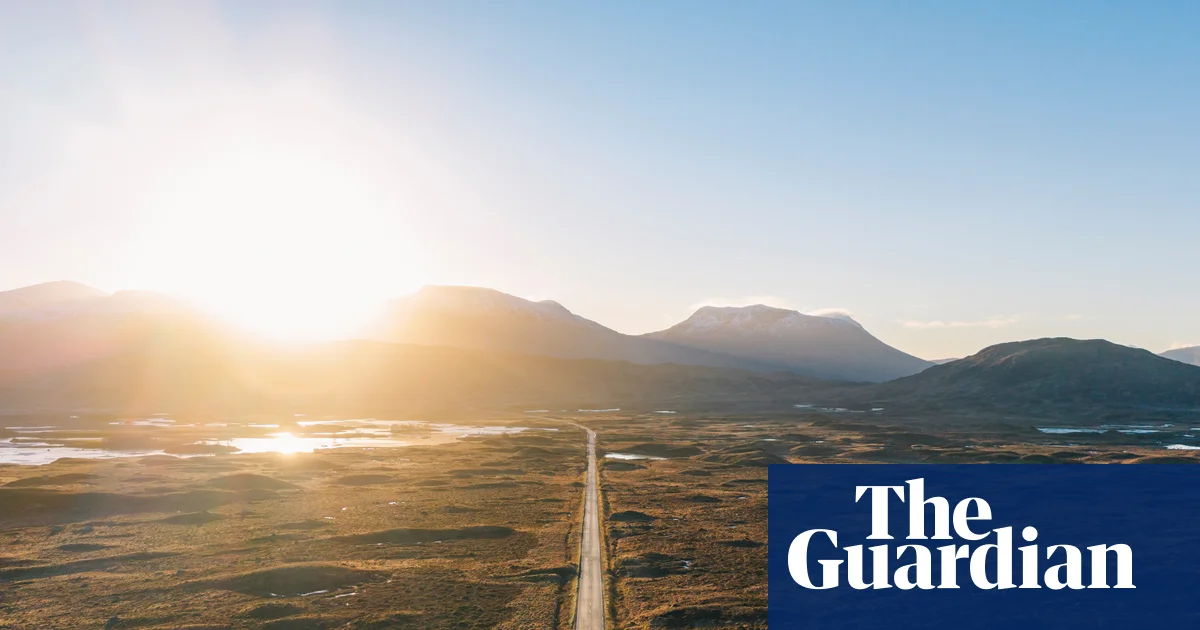
Beyond the seaside, it was Scotland that really blew my mind. Following in the footsteps of William and Dorothy Wordsworth, who toured the Highlands and Lowlands for six weeks in 1803, I headed up the western flank of Loch Lomond, entirely unprepared for what I was about to discover. Dusk was falling as I drove across Rannoch Moor – a silent, pockmarked moonscape that seemed entirely bereft of life, save for a lone pair of car headlights, somewhere up ahead. And then, in the distance, great, hulking mountains began to rise up, guarding the entrance to Glen Coe. It is a landscape so forbidding that when I pulled up at the Three Sisters viewpoint, I was genuinely relieved to see another couple, so I didn’t have to stand alone among the ominous peaks.

Scotland had stories, too: from the spruce and redwood trees planted in Glen Coe by Lord Strathcona in the 1890s to make his Canadian wife feel at home, to Queen Victoria taking the first ever fly-and-flop (train-and-flop, perhaps more accurately) at Blair Castle in 1844. Her visit was hosted by the 6th Duke of Atholl, who promised the security of his own private army (and who had to move out of his own castle during the royal stay). It was the beginning of a royal love affair with Scotland that led to the purchase of Balmoral in 1852.

When I got home from the long road trip – 13 days and 1,600 miles later – my husband took the same photograph of me perched on the car. It had been more of an adventure than I could have ever imagined – to lands unknown on the island I call home.

The Great Escape: Britain’s 400-Year Love Affair with Holidays by Annabelle Thorpe (£18.99, DK Red) is available now. To support the Guardian, buy a copy from guardianbookshop.com for £17.09
Source link

Journey into the midnight sun: my solo road trip to the top of Norway | Road trips

It’s midnight, in June. Powder pink and dark grey clouds drift across a pallid sky, the palette reflecting in the motionless water of Lake Inari. Islets of pine and just-budding birch create pools of distorted shade close to the horizon of this 420 sq mile (1,080 sq km) lake in Lapland, northern Finland. There is not a sound. It’s so silent, I barely breathe to avoid disturbance. Only me, the lake and a moonbeam-coloured moth, whose wingbeat is inaudible.

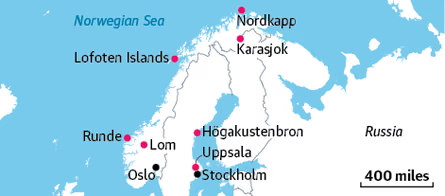
I am sat beside my car-sized campervan, with mesmerised reverence for the rose-tinged panorama. I do not wish to go to bed and miss this moment. And I am loving the wild freedom and deliciousness of being entirely alone, with nobody in the world knowing my exact whereabouts. Ordinarily, I would be long asleep by midnight, exhausted after a day of work and family life. But I have left my husband and (adult) children at home in England for an eight-week solo camping adventure through Denmark, Sweden, Finland and Norway, with the singular aim of reaching Nordkapp (North Cape) and Knivskjellodden, Europe’s northernmost point at the top of Norway, in time for midsummer.

Travel Scandi road trip

Earlier in the day, I’d met Father Christmas. “If you’re driving north, be careful of the reindeer,” the costumed gentleman said as I sat beside him at Santa Claus’s Main Post Office in Rovaniemi, the capital of Finnish Lapland, a place considered over-touristy in winter, but certainly not during my summer visit.

“We have 230,000 reindeer here in Finland, but only one of them has a red nose.” As it happens, I see countless reindeer, in Finland, as well as Norway and Sweden, creeping through forests and grazing at the coast. Not Rudolph to my knowledge, but many females with calves, all legs and ears.

A pitstop along the way – off-grid camping is legal in Norway.

My meetings with reindeer and the night beside Lake Inari are two of many memorable experiences on my road trip through the Land of the Midnight Sun, so called because north of the Arctic Circle the sun doesn’t set below the horizon during the summer months. It doesn’t set for long south of it either, including in Denmark, where (after I’d driven my campervan from the UK via Germany) my Nordic adventure started in Rødby, on the island of Lolland.

Other than reaching Nordkapp, I have no plan; no accommodation booked either. Instead, I am utilising the popular practice of Allemansretten (everybody’s right, as it’s known in Norway), which is also legal in Finland and Sweden: the right to stop off-grid overnight on uncultivated land, leaving without a trace. On my journey I’m able to park up and stay overlooking fjords, beside mountain passes, with lake or coastal views.

From the flat plains of Lolland, Denmark’s fourth-largest island, my route north takes me to Helsingør for the ferry across the Øresund to Helsingborg in Sweden, leaving a rear-view image of Kronborg Slot – “Hamlet’s Castle” – at dawn.

Luminous lupins and puce pinks litter the roadsides of my 370-mile cross-country route to Sigtuna, 30 miles north-west of Stockholm. The lakeside settlement of colourful timber houses is Sweden’s oldest town. Half an hour’s drive north is Linnaeus’ Hammarby, a pretty 18th-century farm that once belonged to Carl Linnaeus, the botanist who developed the binomial system of naming species we use today.

Watching the midnight sun from Nordkapp.

Hammarby is wonderfully representative of this Uppland region of Sweden. I walk 10 miles through the cultivated countryside along the Dannmark Trail between Linnaeus’s farm and Uppsala, a route he would walk with his biology students for nature studies. Students at Uppsala University (where Linnaeus was a professor) are celebrating finals when I arrive, mingling around ice-cream cafes and in floral parks and botanical gardens. Nearby, the vast twin spires of the city’s rust-red cathedral protrude above blossoming rowan trees.

From Uppsala, I follow the E4, a road that reaches the border with Finland, covering more than 600 miles over six days. Along the way I cross Scandinavia’s longest suspension bridge, the Högakustenbron, at the Höga Kusten, or High Coast, a Unesco world heritage site.

Vast stretches of empty road lined with little but pine trees provide a chance for contemplation. But it’s not until I arrive in the colourful town of Karasjok days later, having crossed from Finland into Norway, that I truly understand the scale of the Nordics. For Karasjok feels very far north, yet it is still a four-hour drive to Nordkapp.

Karasjok is the Norwegian administrative centre for the indigenous Sámi population of Sápmi, the cross-border cultural region that includes parts of Norway, Sweden, Finland and Russia. The parliament building resembles a traditional lavvu tent and, nearby, Sápmi Park offers an introduction to Sámi traditions.

Leaving Karasjok, the road winds its way alongside Porsangerfjorden, passing fishing hamlets, waterfalls, shaly mountain cliffs and tremendous viewpoints before dipping beneath the Arctic Ocean by tunnel to reach Magerøya, the island upon which Nordkapp sits. I chance upon fine weather as I climb beyond Honningsvåg, one of Norway’s northernmost towns, over snowy mountain plateaux to reach Nordkapp. A tear forms in the corner of my eye. I am alone, about 2,500 miles from home by the quickest route, and I wish my family could see what I can. But this is a solo adventure, and I have reached my goal, staying up all night to watch as the midnight sun sends orange beams across the Arctic Ocean. Captivating.

The writer on a windswept plateau near Nordkapp.

It is not by the quickest route that I return home, though. My journey back south through Norway (and ultimately Sweden and Denmark, too) is contorted, meandering west and east. Picnics beside turquoise sea coves on the Lofoten Islands, watching pods of dolphins in the Norwegian Sea. Bulging rivers and thundering waterfalls in Saltfjellet national park. Then small farms and meadows with emerald stripes of hay, amassed buttercups, and long lakes through the region of Trøndelag. It is Norway bursting into colour after the bleached landscapes of the north. Occasionally I’ll put in a long stretch in one day – 200 miles or so. Other days, I simply stay put, enjoying the view or stepping out for long walks.

Atlanterhavsvegen – a 22-mile national scenic route across skerries and strung together by bridges – is captivating. Then Runde, one of Norway’s westernmost islands, renowned for a colony of puffins that breed on the cliffs here. A steep mountain walk across the island reveals clusters of people perching on cliff edges in the hope of witnessing the spectacle of birds coming in to roost.

But it is the east of the island where I park up and sit alone for days, watching an otter swimming among the lichen-speckled black rocks, alerted by a clatter of ducks and ducklings, shelducks, wigeon and oystercatchers. Keeping my distance, I observe parent gulls sheltering fluffed-up chicks as curlew call overhead. Orchids, sea campion, clover and a host of other flowers smother the coastal ground. A memorable time.

View from the campervan while overnighting on Norway’s Atlanterhavsvegen scenic route.

So, too, my wild camp at the summit of Sognefjellet mountain pass, the highest road in Scandinavia. I set out from Lom, an attractive town that sits between three national parks and possesses a famous stave church and the fascinating Norwegian Mountain Centre. The road, also a designated national scenic route, runs alongside the pretty Bovra River initially, then climbs into some of Norway’s wildest scenery. My overnight is cold, with huge frozen lakes of glacial blue and roadside snow above the height of the campervan. In the morning, as Nordic skiers and a pack of snowmobiles head out to nearby glaciers, I brush snowflakes from my windscreen to begin the descent to the green and luscious Sognefjord. It’s as if I have stepped through a wardrobe and imagined the wintry summer scene.

I appreciate that being alone by choice is entirely different to loneliness. I am often asked of my solo travels, “Don’t you ever get lonely?” I can feel lonelier, I explain, in a crowded room than camping in the wild. Yes, leaving family behind creates a sense of “wish you were here”; special moments I’d like to share. Then again, this adventure is understanding that the memory is mine alone. The thrill, the excitement, the calm and occasionally the trepidation. I’d do it all again tomorrow.

The writer travelled in her own campervan, using Scandlines ferries between Puttgarden, Germany, and Rødby, Denmark. In the UK and Europe, hire of Roadsurfer’s smaller vehicles starts at £49 a night

Source link

Hairpin bends and bears on the highway: readers’ favourite European road trips | Road trips

Bear right in Romania

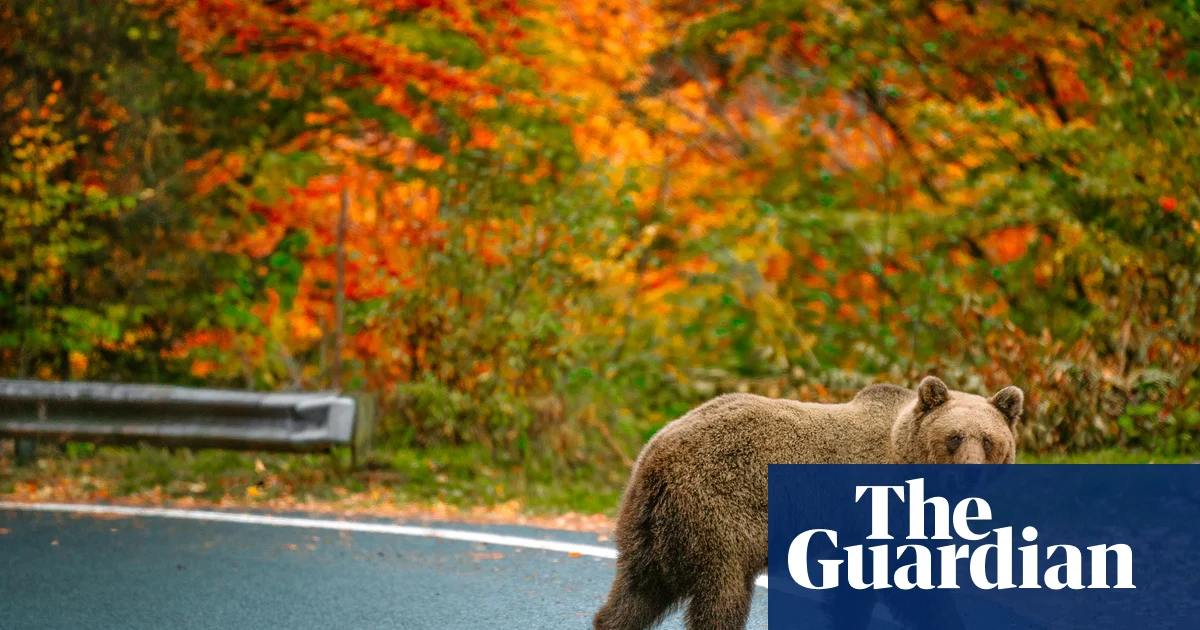
Jeremy Clarkson described Romania’s Transfăgărășan Highway as “one unbroken grey ribbon of motoring perfection”. The route (the second highest in Romania after the Transalpina) with its hairpin bends and climbs over the mountain was thrilling. Although we’d been told bear sightings were possible, we didn’t anticipate spotting them literally on the roadside, with one hanging over a stone wall posing for photographs, taken through the car window. Because of the harsh winters in the southern Carpathian Mountains, the section of the road to Bâlea Lake is open only for a few summer months – it proved particularly beautiful.
Helen Jackson

Profile

Readers’ tips: send a tip for a chance to win a £200 voucher for a Coolstays break

Show

Guardian Travel readers’ tips

Every week we ask our readers for recommendations from their travels. A selection of tips will be featured online and may appear in print. To enter the latest competition visit the readers’ tips homepage

Thank you for your feedback.

Highlights of Ireland

The karst landscape of the Burren. Photograph: Hemis/Alamy

In 2022 my wife and I set off on a 1,000-mile road trip around the island of Ireland after taking the overnight ferry from Liverpool to Belfast. After exploring Belfast, we stopped in Dublin, Kilkenny, Waterford, Cork, Dingle, Ennis, Galway, Castlebar, Sligo, Donegal, Derry and back to Belfast. We stayed in youth hostels, B&Bs, spare rooms, hotels (the Ellison Hotel in Castlebar was our favourite) and holiday lets. The scenery was incredibly varied, with the peninsula drive on the Ring of Kerry and the karst landscape of the Burren in Co Clare being particularly memorable. There were beautiful beaches (the wild sands of Glassilaun in Co Galway was our favourite), rich history and culture, superb food, characterful towns and cities, and, of course, the best pubs, and such friendly, warm people.
Joe

Around the fjords of Norway

The Norwegian village of Flåm. Photograph: Beachmite Photography/Getty Images

My wife and I drove from Bergen to Vossevangen along the Hardangerfjord (the second-longest fjord in Norway), with a diversion to Flåm for a sauna and dip. Then we took the Myrkdalen road, which includes hairpin bends, waterfalls and an exciting descent into Vikøyri. We visited Nese, a secluded village on the western shore of the Arnafjorden. Then we took the car ferry over to Dragsvik, on to the village of Rysjedalsvika, then along the northern shore of the Sognefjord (Norway’s longest and deepest fjord) for another car ferry over to stay in Dingja on the coast, to do some fishing. Then all the way back to Bergen.
Nick Martin

Geothermal bliss on Iceland’s ring road

View of Iceland’s southern mountains from Route 1. Photograph: Paul Brough/Getty Images

We started from Reykjavík and drove around the whole country on the ring road. We have done a few road trip holidays – this one was the most interesting. Every day we saw multiple dramatic landscapes and weather conditions, as well as very few other cars (we went in May). Iceland is an expensive country but being able to whale-watch and swim in geothermal pools made it worth it.
Jess

The road to Orkney

Dunnet Head, Caithness. Photograph: Markus Keller/Getty Images

We drove up to Orkney, taking our time, stopping in Glasgow, Falkirk, Perth and Tain. As lovers of history and design, we stopped at the Falkirk Wheel and the Kelpies, as well as Scone Palace just outside Perth and Dunrobin Castle in Sutherland, the most northerly of Scotland’s great houses. But, really, you’re spoilt for choice with castles, brochs and standing stones. For us, the spectacular Caithness coastline was the main attraction – not least Dunnet Head, mainland Britain’s most northerly point. There are oodles of excellent eateries along the way – we loved the River Bothy in Berriedale and Paesano Pizza in Glasgow.
Tania

Romance in Bavaria

Schloss Neuschwanstein castle in the Bavarian Alps. Photograph: Alamy

The Romantische Strasse (Romantic Road) was an early postwar successful example of a themed tourist route. It covers 286 miles through Bavaria from Würzburg to Schwangau. We drove the entire route, diligently following the tourist signs. On the way, we visited picturesque medieval towns, climbed the clock tower at the medieval walled town of Nördlingen – built entirely inside a meteor crater – and ended at the fairytale castle of Schloss Neuschwanstein. We sampled the hearty Bavarian cuisine, firmly centred on pork and sausages, enjoyed the local beer, and stayed in simple local hotels.
Marilyn

Winning tip: traversing Italy’s Abruzzo Apennines

Lago di Barrea in the Abruzzo national park. Photograph: Valerio Mei/Getty Images

Abruzzo’s Valle del Sagittario snakes between narrow limestone cliffs, giving a peek into Italy’s wild heart. From vertiginous Anversa degli Abruzzi, head south to Scanno, pausing to solve its riddle of stone stairways and cobbled alleys, made famous by photographers and artists (including Maurits Cornelis Escher). Continue through mountain pastures, still traversed by shepherds and flocks and the region’s endangered brown bear population. Take a deep breath at the Godi mountain pass (1,630 metres) and relish the sparkling turquoise of Lago di Barrea below. As you begin the beech-clad descent into the national park, look out for the aptly named roadside hotel: Paradiso.
Emma de Heveningham

Source link

The breathtaking Irish island with hundreds of puffins, ferry trips & stunning coastal views perfect for summer day out

A TINY island off the coast of Wexford could make for one of Ireland’s most spectacular summer day trips.

The breathtaking Saltee Islands are just a two-hour drive from Dublin — with a short ferry ride from Kilmore Quay bringing visitors straight to Great Saltee.

The Saltee Islands is ideal for a summer day out
Razorbills, puffins and gulls can all be spotted at the brilliant bird sanctuary

The islands are famed for their incredible wildlife, with puffin-watching a must for anyone visiting during the summer months.

Day trippers can spend around three-and-a-half hours exploring the stunning island, spotting seabirds, seals and dramatic coastal views.

And with return ferry tickets costing €40 for adults, it could be the perfect seaside escape to kick off the summer.

The islands are located just 5km off Kilmore Quay in Co Wexford — and a 20-minute ferry trip is all it takes to get there.

HIDDEN GEM

Island with only Irish cable car, whales & dolphins near most colourful village

Fabulous views across the sea Credit: Design Pics RF – Getty
A black backed seagull with three chicks spotted on the Saltee Islands

Parking is available at Kilmore Harbour in the free public car park.

However, the little harbour is a busy spot during the summer months.

Visitors are advised to leave plenty of time to get to Kilmore Quay as parking spaces can be limited.

The ferry service picks visitors up at the top of the harbour in Kilmore Quay, beside the boat launching slip.

It brings passengers straight to Great Saltee, as permission to visit Little Saltee cannot be granted due to hazardous landing conditions.

But visitors can only access the island during certain hours each day.

Day trippers are allowed on the island between 11am and 4.30pm, and anyone landing on a boat outside these times will be asked to leave.

The popular Saltee Ferry is a daily service that runs from April to October every year.

A return ticket costs €40 for adults and €20 for children under 12.

Each ferry can carry up to 12 passengers at a time.

Visitors are advised to arrive at the ferry gate ten minutes before the trip.

A smaller transfer boat will meet the ferry just off the shore of the island.

It picks passengers up and brings them on the final part of the journey to Great Saltee.

Once you arrive, you will be given approximately three-and-a-half hours to explore the mesmerising island.

The ferry crew will give you an exact time to be back at the landing area for the return trip to Kilmore Quay.

The ferry trip can be booked in advance online at salteeferry.com.

The Saltee Islands are known as the most famous bird sanctuary in Ireland — and puffin-watching is a must on any trip there.

Puffin season is predominantly between May and June.

There are plenty to spot, so make sure to take lots of pictures.

One visitor said: “The trip of a lifetime. There were hundreds of puffins just a short stroll from the boat. If you sit quietly they’ll wander around you.”

But Discover Ireland chiefs have warned that the puffin population is in a dangerous position, and visitors are advised to keep their distance to avoid disturbing the wonderful birds.

As well as the magnificent puffins, the island is also home to an array of seabirds, from gannets and gulls to Manx shearwaters.

While exploring the picturesque island, you might also come across some friendly sea creatures.

Grey seals are known to breed around the Saltee Islands.

It is one of the very few places in eastern Ireland with a seal population.

Up to 120 animals are present in autumn and up to 20 pups are born annually.

The seals can regularly be spotted resting on the rocks around the island.

The Saltee Islands are among the most ancient islands in Europe.

As long ago as 3,500 to 2,000BC, people were living on the islands.

In December 1943, the Saltees were purchased privately by the late Prince Michael the First.

Since his death in January 1998, the islands have been owned by his five sons and one daughter.

Permission for people to visit the island was granted by the family in recent years — but visitors are asked to respect the island.

When the family is in residence, a flag will be flying at the house — which visitors are asked not to approach.

No one is allowed to stay or camp at the historic spot, but there is no admission fee for a day trip to the island.

But island chiefs have issued a major warning to visitors.

They said: “Please do not approach the nesting birds closer than six metres.

“The footfall is having a devastating effect on the bird population. Should visitors see photographers not obeying the signs, please explain to them that they are killing the birds and to use their lens instead of their feet.

“If things do not improve with the bird population due to the current footfall, we will be forced to close the island to visitors.”

Source link