The ferry operator issued an important reminder for any passengers with bookings
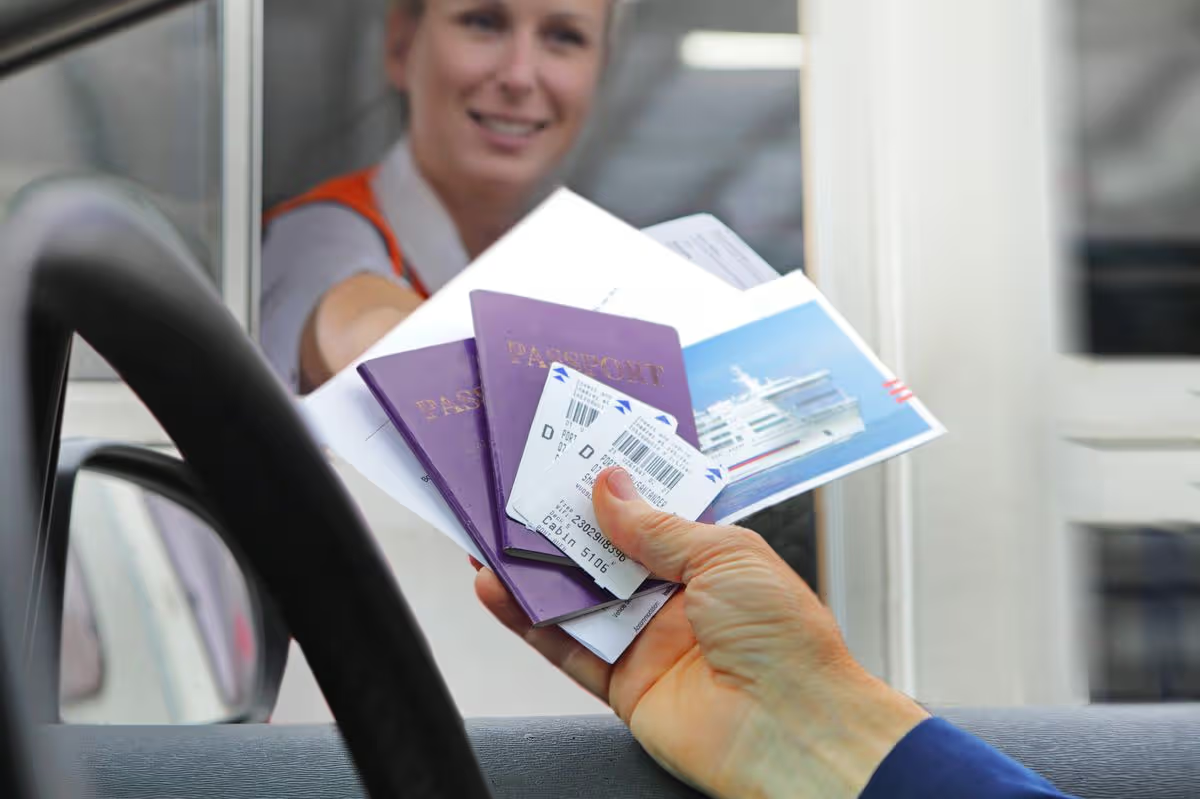
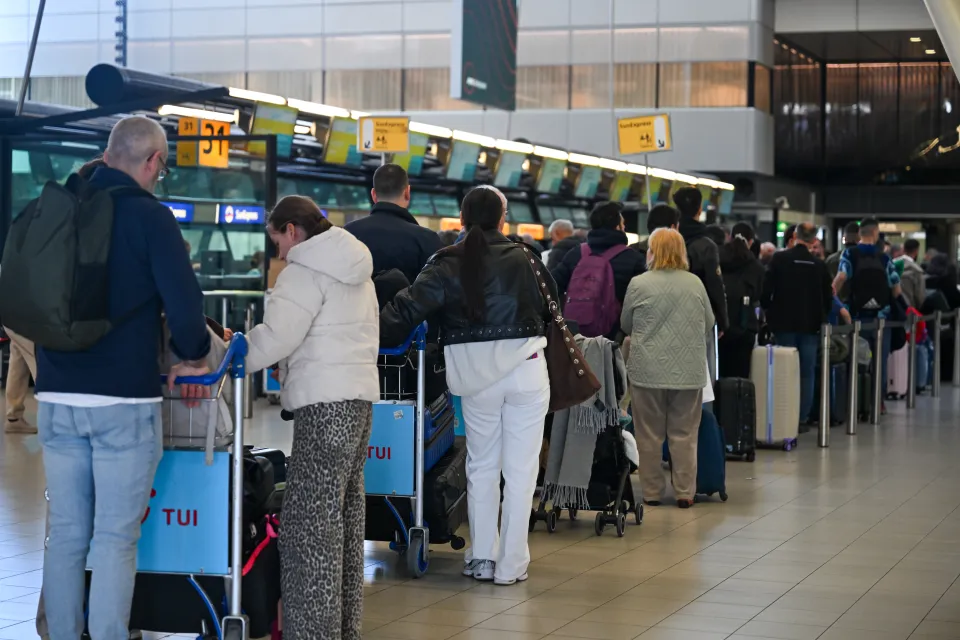
The port information applies to all passengers (stock photo)(Image: Getty)
DFDS has issued an important reminder to passengers travelling on its ferry services. Ahead of summer, many families are looking forward to their holidays and getting everything ready for their trips. For those making ferry crossings, the operator has issued a message about ‘travel documents’ to help ensure journeys are as smooth as possible.
Posting on social media, DFDS outlined advice for customers in a post on X. In the message, @DFDSLiveUpdates shared port information for passengers. It read: “Please have all travel documents and passports to hand and open at the photo page before arriving at booths.”
In the post, DFDS explained: “Keep your passports, booking confirmations, and any necessary ID easily accessible for check-in and border control.” As such, the guidance could be helpful to any customers with upcoming bookings.
As customers will know, they need to keep a record of their confirmation. They will also want to pack their luggage accordingly, ensuring they can easily access any documents they will need when travelling.
Passengers can find more information about the check-in and boarding process on the ferry operator’s website. The boarding advice states: “All passengers must present relevant documents upon arrival to the terminal for check-in.
Content cannot be displayed without consent
“These may include a valid passport, booking confirmation, documents for vehicle or pet travel, and/or other required documents, depending on the rules and regulations of country you are travelling to. Routine security checks of passengers, luggage and vehicles are carried out in all ports before you board the ship.”
DFDS also shares border control updates, including guidance on the UK eVisa and ETA. The website explains: “Travel requirements to the UK are changing.
“The UK is transitioning from physical immigration documents, such as biometric residence permits (BRPs), passports containing visa vignette stickers and ink stamps, or biometric residence cards (BRCs), to eVisas.
“If you hold a UK visa and use a physical immigration document to prove your rights, take action now by creating a UK Visas and Immigration account to access your eVisa: www.gov.uk/eVisa.
“If you already have an eVisa, ensure your travel information is up to date by notifying the UK Government about the passport you intend to use if it is not already linked to your eVisa account: www.gov.uk/update-uk-visas-immigration-account-details.
“Those who are visa-exempt for short visits to the UK, i.e. visits of up to six months, will still need to obtain an Electronic Travel Authorisation (ETA), which is digital permission to travel.”
New research shows where and when will be most dangerous for motorists this Bank Holiday weekend
12:59, 19 May 2026Updated 13:00, 19 May 2026
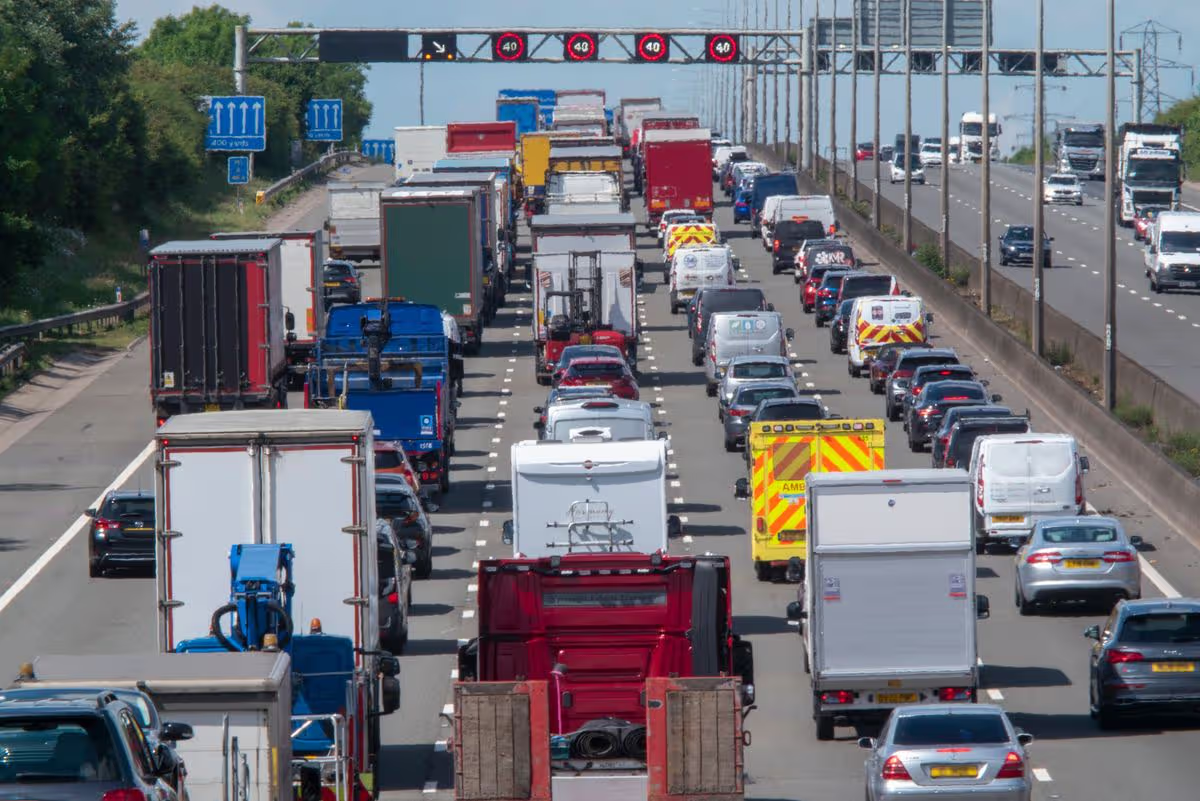
Millions of Brits will take to the roads this Bank Holiday weekend
Most motorists reckon the roads are at their most treacherous during rush hour, when traffic is bumper-to-bumper and congestion is at its peak. But with millions of Britons set to hit the road this Bank Holiday weekend, fresh research suggests the greatest danger may lurk when the roads seem at their emptiest.
Fresh analysis by Confused.com appears to reveal the single most hazardous hour to drive in the UK, with motorists being urged to steer clear of this time slot where possible over the bank holiday weekend. Drawing on Department for Transport (DfT) traffic flow and collision data, Confused.com has developed an interactive Safety Index to work out the probability of being caught up in an accident relative to the volume of vehicles on the road.
Rhydian Jones, Confused.com car insurance expert, explains why the emptiest roads can often prove the most perilous, identifies the riskiest and safest times to drive in the UK, and offers guidance on how motorists can use Confused.com’s new Safety Index tool to plan safer journeys during the bank holiday exodus.
Whether you’re heading off for a long weekend away, popping to see relatives or making your way home after a day out, understanding when collision risk peaks could help you sidestep the most dangerous times to be behind the wheel.
Why Quiet Roads Can Be More Dangerous
It appears to defy logic. Fewer vehicles should surely mean fewer crashes. But experts suggest that emptier roads often encourage more reckless driving behaviour. Almost 1 in 3 motorists (29%) acknowledge they break speed limits at least from time to time, while more than 1 in 4 (27%) admit they’re more inclined to speed when traffic is lighter. Factor in poor visibility, driver fatigue and the heightened chance of encountering drink-drivers, and the hazard increases dramatically.
“Road safety relies on more than just how many cars are on the road. It depends on how conditions evolve through the day, and our analysis makes that pattern unmistakably clear. The late afternoon sees the highest number of collisions because the roads are busy. But when we look at the risk per vehicle, it’s the late-night and early-morning hours that are proportionately the most dangerous. That’s when visibility drops, fatigue sets in and roads are quiet enough that drivers may take more risks.
We know journeys become longer, traffic becomes heavier, and weather conditions get tougher. Our research shows many drivers already feel nervous, especially at night or in unfamiliar areas, and nearly a third admit to speeding when the roads look quiet. Our interactive ‘Safety Index’ tool can help drivers make informed decisions about when they travel, reducing risk and helping them stay safer behind the wheel.” Rhydian Jones, Confused.com car insurance expert.
The analysis found that the hours with the highest collision risk relative to traffic volume are:
Sunday: 3am to 4am
Saturday: 2am to 3am
Friday: 11pm to midnight
Monday: 1am to 2am
Tuesday to Thursday: midnight to 1am
These findings suggest that the greatest danger is not necessarily when roads are busiest, but when drivers are most tired and conditions are less forgiving.
The Safest Times to Drive
By contrast, the safest times to drive are generally in the early morning. Weekdays between 5am and 7am were found to carry the lowest risk, with Wednesday 5am to 6am ranking as the safest hour of the entire week.
On weekends, the safest time shifts slightly later, with 9am to 10am emerging as the lowest-risk period. Experts believe these times are safer because traffic tends to be more predictable and speeds are generally lower.
Over Half of Drivers Have Witnessed or Experienced a Crash
The study also found that road accidents are a common experience for UK motorists.
60% of drivers have either been involved in or witnessed a road accident.
33% say the incident happened in the afternoon.
39% say they have become more cautious and aware of other drivers afterwards.
19% say they felt more nervous behind the wheel.
The emotional impact of accidents can have a lasting effect on confidence and driving behaviour.
The Driving Situations That Make People Most Nervous
The research revealed that many drivers feel uneasy in certain conditions:
26% feel most nervous on inner-city roads.
32% worry about encountering drivers under the influence of alcohol or drugs at night or on weekends.
More than 1 in 3 (37%) actively avoid driving at night.
50% avoid driving in poor weather.
41% leave earlier to avoid feeling rushed.
The UK Areas with the Most Collisions
When looking at total collisions rather than risk per vehicle, the busiest crash period is 5pm to 6pm, coinciding with school pick-ups and the evening commute.
During this hour, the councils with the highest number of reported collisions were:
Kent – 265
Surrey – 215
Essex – 205
Nationally, there were 100,927 injury collisions recorded by police and logged by the Department for Transport over the last year.
Why This Hour Is So Dangerous
Several factors combine to make this the most hazardous hour of the week:
Drivers may be returning home after late nights out.
Fatigue is at its peak.
Reduced traffic can encourage speeding.
Visibility is poor.
There is a greater risk of drink-driving.
The result is a period where even a small mistake can have serious consequences.
In a bid to help motorists gain a clearer picture of road risks, Confused.com has unveiled an interactive Safety Index tool that highlights the safest and most dangerous times to drive on each day of the week.
By cross-referencing traffic volumes with collision statistics, the tool enables drivers to pinpoint lower-risk windows and make better-informed choices about when to set off.
For anyone considering a bank holiday road trip or a late-night drive home, the message couldn’t be more straightforward: quiet roads don’t necessarily mean safer roads.
IF you don’t fancy the faff of an airport this summer, why not pop over to one incredible coastline that’s mere hours away from the UK?
You can get to the beautiful French region of Normandy by ferry or the Channel Tunnel to explore its beaches and pretty fishing villages – so there’s no need to even set foot on a plane.
Sign up for the Travel newsletter
Thank you!
Normandy is hours from the UK with beautiful coastal spots like Mont Saint-MichelCredit: AlamyThe ‘trending’ destination has pretty fishing villages too – like BarfleurCredit: Getty
Follow The Sun’s award-winning travel team on Instagram and Tiktok for top holiday tips and inspiration @thesuntravel.
Airbnb has revealed the trending destinations this summer and for Brits, one spot that is increasing in popularity is Normandy.
It stated that not only is the French countryside in demand, but so are “rural coastal bookings”.
The Normandy region is generally much quieter than other tourist hubs in France like Paris, the Côte d’Azur, or the Dordogne.
If you’re tempted to visit, here are some places to consider – one Sun Writer discovered “village life” in peaceful Pourville.
She stayed in a beachside boutique hotel called Vue Sur Mer where guests can expect a basket of warm pastries, jams, juice and strong coffee to start the day.
The former fishing village is backed by towering chalk cliffs and has a pebble-sand beach perfect for a picnic, or having a paddle.
Pourville’s scenery even made it into artwork thanks to Claude Monet who painted ‘Cliff Walk at Pourville’ in 1882.
When it comes to sightseeing, a must-see along the Normandy coastline is Mont-Saint-Michel.
For Disney fans, the tidal island is said to have inspired the backdrop for Tangled.
Deauville is less rural but a glitzy town along the coastlineCredit: Alamy
It has a huge abbey at the very top and is surrounded by museums, shops and restaurants.
The island is best explored by foot and when the tide comes in, it’s cut off from the mainland.
Further down the coast, Barfleur is often considered one of the prettiest villages in France.
It’s a traditional Norman fishing port with granite houses and little restaurants that sit around the harbour.
Any fans of seafood will love it as Barfleur is where you can try moules de Barfleur – these are wild mussels which are usually accompanied with crusty bread and a glass of wine.
Or, if you’re after glitz and glamour, then a trip to Deauville could be on the cards.
The seaside town is a classic Norman resort with a huge beach and it even pulls incelebrityvisitors – the likes of Clint Eastwood and George Clooney have all been there.
On the beachfront is a huge casino with 300 slot machines as well as roulette and blackjack tables.
Follow The Sun’s award-winning travel team on Instagram and Tiktok for top holiday tips and inspiration @thesuntravel.
Sun Travel spoke to Christian Foster, Director of FlyDoncaster – the company in charge of the reopening of the airport.
He shared his thoughts on new routes for holidaymakers, rail links and what visitors can expect from the shops and restaurants inside the airport.
The regional airport in the north of England provided a gateway to Europe for those living in and around Doncaster up until four years ago, after it was deemed ‘not financially viable’, and closed.
Christian Foster, Director of FlyDoncaster – the company set up to manage the airport – told us: “It would be nice if we could immediately open with the flick of a switch, but it’s not that simple.
“There were around 2,700 people working around the site when it was last open, and we need to recruit again.
“Right now, we’ve been appointing key roles in the leadership team, and we’re also in a number of commercial negotiations with different airlines.”
When it comes to opening up to passengers, Christian says there’s high-ambition for the airport.
He said: “It does feel like the world has changed post-Covid, whereas people were focused two weeks in Spain or Greece, nowadays we’re seeing a lot of people keen to take city breaks.”
New designs show-off a potential new look for the airportCredit: City Of Doncaster / Mayor Ros Jones
He continued: “We’d love to fly to places like Croatia, and other destinations that are a bit more quirky like Azerbaijan.”
The airport has one of the longest runways in Europe at 2,893 meters meaning it could also potentially take bigger jets for long-haul routes.
Christian said: “We’re keen to look at emerging places to visit as well, like India.
“And Pakistan is one of our largest ethnic populations in the UK, so could we ensure greater connections there?
“But of course, we won’t forget about the bucket and spade holidays either.”
There aren’t just big plans for the planes either – plenty of thought is being put into the experience between check in and boarding gate.
Images reveal a lounge area and lots of seating in the main terminalCredit: City Of Doncaster / Mayor Ros Jones
Christian revealed that they are keen to give the airport a sense of the region by having independent vendors on-site.
He told us: “When people go through a terminal, they tend to look for Costa Coffee, Starbucks or World Duty Free.
“What we’ve created is a corridor for the local supply chain – whether that’s actually fixed base or pop-up market stores is yet to be decided.
“But the idea is that individuals will get a sense of some of the great produce to show off the region, for example, rhubarb from Wakefield, then butterscotch from Doncaster.
“We want to have food and beverage outlets, where you can have, not only the national or international feel, but a local one too.”
With the airport being closed to travellers, it gives a chance for it to be redesigned and Christian confirms that there will be a change in its layout.
One alteration is to the layout of security lanes and system which were “not located in the best place”.
These will be moved to make the passenger experience “slicker” and “swifter”.
There are special arrangements being made for those with disabilities too and Christian said that the team is determined to make the airport one of the “UK’s most-friendly” for everyone.
Since its closure four years ago, airports have had a change in rules as well as technology, for example, the scrapping of 100ml liquids.
Christian said: “The easy answer to that one, is yes.
“We recognise that the world has moved on since 2022, and we are investing in brand-new technology.”
Previously, the best way to get to the airport was by car as the parking was right outside and families could walk straight through.
This layout is set to be retained for ease – but there could also be new rail links giving travellers from further afield the chance to hop on a train to the airport.
Christian said: “There’s a railway that runs to the north of the site, but we’re also keen to look at connections on the East Coast Mainline.
“It comes through Doncaster already and is in close proximity to the site, so for the airport, it would be a game-changer.”
Wizz Air previously served the airport – but no airlines have been confirmed for 2028Credit: Getty
Around the airport, developments are happening too – in one case a five-star hotel is being built on the outskirts.
Christian described the Bawtry Park Hotel in nearby Austerfield as a “Dubai-style” resort with a golf course and spa.
The reopening of the airport has been met with positivity by many in the local area who, since its closure, have had to travel to the likes of Manchester and Leeds Bradford.
Christian explained: “130,000 people signed a petition to retain the airport which is rare because most people go the other way.
“But for locals, once they land, they can be in, out and home in 15-20 minutes, it’s a complete game changer, isn’t it?”
The stations’ decades-old tracks and platforms will be given a revamp.
The closures will take place between Sunday, July 26, and Sunday, August 16, as well as on Sunday, May 31, and Sunday, June 7.
There will also be a full weekend closure from Saturday, August 22, to Sunday, August 23, – and again from Saturday, October 10, to Sunday, October 11.
The closures will allow a £20million revamp project to go aheadCredit: AlamyRepairs will be made to the Hungerford BridgeCredit: Alamy
On these dates, no trains will stop at Charing Cross or Waterloo East, although the Southeastern services will continue throughout the closures.
Trains that usually terminate at Charing Cross will be diverted to London Victoria, London Blackfriars, London Cannon Street or London Bridge. Tickets will be accepted on these alternative routes.
Meanwhile the London Underground service from Charing Cross will run as normal.
The closures will allow a £20million engineering project to be completed, with almost two kilometres of 36-year-old track set to be replaced.
Sections of Charing Cross’s platforms will undergo repairs along with updates to the drainage systems on the tracks.
Structural repairs to the Waterloo East to London Waterloo pedestrian link bridge and the Hungerford Bridge are also required.
Scott Brightwell, train services director at Southeastern Railway, said: “The £20 million investment we are delivering will see 1990s track and platforms upgraded to make journeys safer and more reliable, and Victorian era structures strengthened to remain fit for the future.
“By consolidating the work into 22‑day closure, supported by preparation and follow‑up weekends, we can complete the work more quickly and with less disruption overall than the alternative options of 60 weekend closures or four to five 9-day closures.”
Urging passengers to “plan ahead and check before they travel”, he added: “We have planned the closure for the summer, when passenger numbers are around 20 per cent lower and schools are closed, to help manage the impact on customers.”
On a Thursday night in West Hollywood, a sleek, multi-level townhome is filled with stylish guests holding fragrance vials the way partygoers cling to cocktails. They raise scents to their noses as they mingle and float through the space.
In one nook, two well-known faces in the fragrance community, Tishni Weerasinghe (@thatbrownperfumegirl) and Chase Chapman (@thescentchase), host stations with their favorite home scents — pre-bedtime spritzes to everyday comforts for working from home — as a small group leans in, asking questions and noting which scents resonate. Inhaling the blend of white musk, floral notes and amber of Rouat Al Musk by Lattafa, a $16 fragrance from Weerasinghe’s collection, attendees oooh and nod in enthusiastic approval.
In another corner, guests try fragrance pairings, scents expertly paired with drinks, letting the aroma and flavors mingle through their senses. Outside on the rooftop, the crowd spills into smaller conversations over refreshments and city views.
Sarah Bowen, co-founder of the Smellers Club, sniffs a fragrance.
This is the Smellers Club. To an outsider, it might seem like a gathering centered around a niche fixation, but within this world, fragrance is much more expansive. Here, it’s a bridge between people, a tool for self-expression, a way to understand your own taste and increasingly, a reason to connect. The night’s gathering is taking place in the home of Daniel Scott and Ronn Richardson, the duo behind the fine home fragrance line Space.
Some guests are simply scent-curious, while others have deep roots in the world of fragrance. One attendee, Jess Blaise, the co-founder of Haitian Spotlight LA, credits her Haitian heritage and the fragrance rituals modeled by her mother for her connection to scent. She recently purchased a bottle of Carnal Flower by Frederic Malle for her personal collection, a luxe tuberose known for its white floral profile and appeal among niche collectors. Of her culture, she explains, “Part of your presentation — of dressing up — is your scent.”
The gathering was hosted in the home of Daniel Scott, left, and Ronn Richardson, co-founders of the home fragrance brand Space. Space offers a range of luxury home fragrances and candles.
Across Los Angeles, fragrance clubs are transforming what was once a solo ritual into something communal. From rooftop gatherings in West Hollywood to casual park meetups further east, these hangouts tap into a growing desire for laid-back, low-stimulation ways to spend time together, offering an alternative to the usual rotation of restaurants, bars and crowded nights out.
Reverie of Scent turns a small nook of Elysian Park into a mini fragrance lounge on Saturday mornings once a month. Founded in November 2025 by Marian Botrous, with support from her husband, Errol, and her sister, Marlene, the club started with just four members at the first meetup. By their sixth gathering this past April, attendance had quintupled, with a mix of regulars and newcomers at every session.
“It’s a huge world,” Botrous says of perfume. “Exploring it together makes it more interesting.”
Fragrance lovers hang out on the rooftop at Smellers Club’s West Hollywood gathering.
At her picnic-like gatherings, attendees show up with blankets, snacks and scents to swap or discuss. With 2-milliliter samples running up to $12, “collecting new scents gets expensive fast,” Bostrous says. “Our meetups make it accessible and fun.”
There’s a mix of casual socializing and structured discussion — conversations have explored the motivations behind wearing fragrance, from seduction to personal comfort, as well as the cultural impact of certain perfumes, like Chanel No. 5 and its connection to Marilyn Monroe and old-school luxury glamour. At one meetup, a member brought in a fragrance called Scentless Apprentice, inspired by the novel “Perfume: The Story of a Murderer” by Patrick Süskind (which Kurt Cobain loved so much that he wrote the Nirvana song “Scentless Apprentice”).
Artist Megan Lindeman, who founded Silverlake Scent Club in August 2025, is also bringing people together to explore scent as a shared social experience. Lindeman says she was inspired by Los Angeles’ broader scent culture and a curiosity about what it would feel like to center smell in a communal setting. The group meets monthly in her Silver Lake backyard, where attendees explore fragrance as both material and memory.
Black Girl Perfume Club was founded in 2023 by Taylyn Washington-Harmon, launching online before expanding into in-person meetups. Across Substack, Instagram and IRL gatherings, it brings together fragrance lovers and newcomers eager to deepen their understanding in an interactive way. “I started the club back when fragrance’s popularity was still pretty niche, and now seeing it move into the mainstream is really exciting,” says Washington-Harmon. As interest grows, she hopes more people will also explore the range of artistry produced by Black-owned fragrance lines.
Back at the house in West Hollywood, people continue to vibe at the event led by Sarah Bowens and Jon Kidd, Los Angeles natives and the duo behind the Smellers Club, launched in January. They’re siblings-in-law who grew up together in the church and are quick to note that their respective partners, Zana and Zion, are unofficial team members and rock-star supporters.
Jess Blaise tests out a scent by Selnu.
Between the both of them, Kidd brings the “fraghead” energy — a name for fragrance devotees who bring a passion and certain fluency of fragrance culture. Bowens, who comes from an events background, heads curation and considers herself more in the beginning stages of her fragrance journey.
When they first started hosting these events, Bowens wasn’t sure how captivating they’d be. “I was like, can people really sit here for hours and talk about fragrance?” she says. She got her answer quickly, watching guests chat, laugh and dive into lively conversations for hours.
Kidd points to wine and book clubs as “event muses” for the Smellers Club. “At a certain point, it stops being about the books or the wine — and for us, even the fragrances,” he says. “It becomes about the people.”
Chase Chapman sets up scents from his personal collection of fragrances for guests to discover at the Smellers Club gathering.
As people navigate adulthood and personal growth cycles, challenging habits and shedding old identities, there are a few underlying questions: Who am I, really? What do I actually like? And what feels good and in alignment with being at ease? Fragrance communities can be a surprisingly grounding place to explore these existential meditations. Bowens, for example, was recently drawn to strawberry-forward Fruits of Love by Dossier, which surprised her since she considered herself someone who didn’t like fruity scents. Such realizations are familiar in the community: You can miss out on something satisfying simply because it doesn’t match your predefined tastes.
Farah Elawamry, a fragrance-focused content creator known as Farah’s Thoughts, has examined fragrance marketing and its ties to rigid gender norms, explaining that “the iris note is always given to women’s fragrances and orris is always given to the masculine fragrance genre, and they’re literally the same note — one is the root, one is the flower.” Once you start diving into the history and psychology of fragrances, she says “you begin to question what you actually like versus what marketing people are telling you to enjoy.”
Compared with the typical nightlife scene in Los Angeles, attendee Shaunt Kludjian says gatherings like these feel more intentional. “This turned out to be better than the clubs in L.A.” he says. “Everyone’s just vibing and connecting over scent.” Kludjian is founder of the Los Angeles candle company Whiff and came to the event to network. Frustrated by traditional candle formats, he launched a line of portable candles packaged in small, tuna-like tins designed to make “home follow you wherever you go.”
As Kidd looks around and watches strangers become friends over a sniff of musk or jasmine, he reflects on part of the magic of the Smellers Club and other fragrance communities.
“Fragrance is a portal to your memory,” he says. “So by coming to something curated that’s a wonderful night, you’re ingraining a memory.”
What started as a question of what smells good has become something else — small moments of recognition between many people who, just hours earlier, had been total strangers. Maybe that’s the point. The bottles will get put away. Everyone will return to their separate corners of the city. But the feeling of being seen, of finding your people — even briefly — sticks with you long after the scents dissipate.
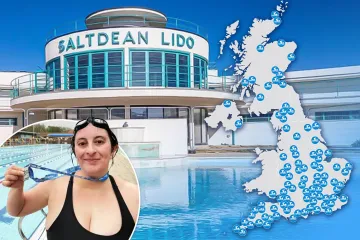
ACROSS the UK this bank holiday weekend, temperatures are set to hit 28C and what better way to enjoy it than heading for a refreshing dip?
Well, the good news for Brits is that there are a ton of lidos reopening this weekend across the country.
Sign up for the Travel newsletter
Thank you!
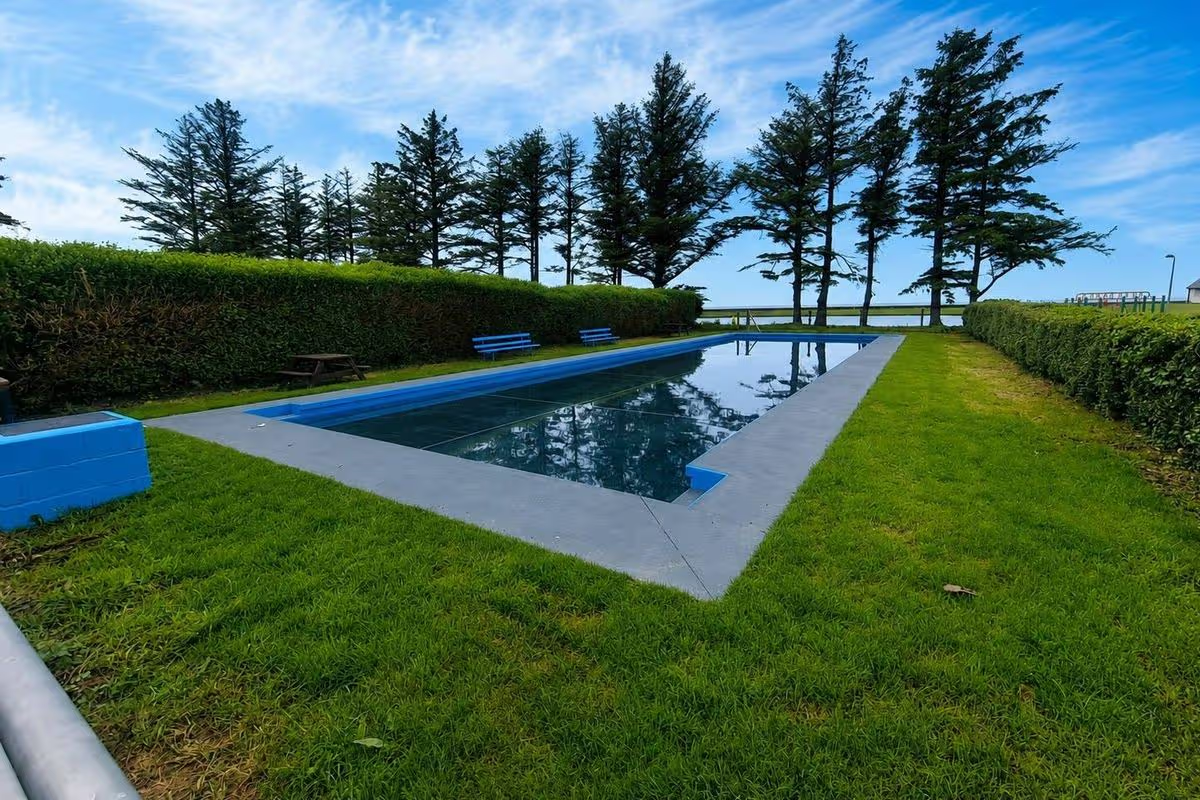
There are a number of lidos across the UK opening this weekend, including Teignmouth Lido in DevonCredit: Facebook/TeignbridgeLeisureElsewhere in Devon, Salcombe Lido will also be reopening this weekendCredit: Tripadvisor
Follow The Sun’s award-winning travel team on Instagram and Tiktok for top holiday tips and inspiration@thesuntravel.
Saturday May 23
Lots of lidos will be reopening on Saturday May 23, including some with upgrades.
In Devon, Teignmouth Lido will reopen after being saved from closure by the local community.
Travel Reporter Cyann Fielding who grew up in the area and visited the lido each summer, said: “Teignmouth Lido is more than just a gem on the South West coast; for me, it’s the backdrop of my childhood.
Hitchin Lido in Hertfordshire will open on SaturdayCredit: Tripadvisor
“For over a decade, my school summer holidays were defined by afternoons spent there with my family.
“With ample patio and sun-drenched patches of grass surrounding the 25-metre crystal clear pool, it was the rare kind of place where parents could relax while kids felt a bit of freedom.”
Swim sessions cost from £8.40 per adult and £5.40 per child.
Also in Devon, Moretonhampstead Lido has recently been upgraded with a new pool lining.
Sessions at the 25-metre, 27C heated pool cost from £4 per child and £5.50 per adult.
In Cornwall, Mount Wise Lido is also reopening and is free to visit.
The lido claims to be “one of the best outdoor swimming complexes in the country” with a 25- metre main pool, fun pool with fountains, stepping stones and awhirlpoolo, and a separate paddling pool.
Riverside Park and Pools in Wallingford will open this weekend as well and is located directly next to a campsite, making it the ideal weekend escape.
Woodstock Lido in Oxfordshire will also reopen on SaturdayCredit: Facebook
Swim sessions cost £7 per person to swim and you can stay in the neighbouring campsite for £35 a night.
Other lidos reopening on Saturday include:
Letchworth Lido, Hertfordshire
Hitchin Lido, Hertfordshire
Aldershot Lido, Hampshire
Bathurst Pool, Gloucestershire
Bourne Outdoor Swimming Pool, Lincolnshire
Clyst Hydon Lido, Devon
Eversholt Swimming Pool, Bedfordshire
Finchley Outdoor Lido, London
Greystoke Lido, Cumbria
Hayle Lido, Cornwall
Brightlingsea Lido, Essex
Salcombe Lido, Devon
Shap Lido, Cumbria
Tinside Lido, Devon
Woodstock Lido, Oxfordshire
Sunday May 24
Three lidos are set to reopen for the season on Sunday.
The first is Chagford Lido, near Dartmoor in Devon, which will celebrate with a barbeque from 2pm.
Having originally opened back in the 1930s, the lido can be found on the banks of the River Teign and is heated to 27C.
Chagford Lido near Dartmoor National Park will reopen on SundayCredit: Facebook/ChagfordSwimmingPool
There is also a Tea Shed for refreshments and snacks as well as a toddler pool.
You don’t need to book to visit, and sessions cost from £6.50 for an adult swim or £3.50 per child.
Also opening on Sunday in Devon is Dartmouth Lido, which is heated to 28C and stretches 25 metres by 8.5 metres.
There is also a small shop onsite and two-hour sessions cost from £7 per adult and £5 per child.
Over in York, Helmsley Lido – Yorkshire‘s only open air pool – will also open on Sunday.
Sessions cost from £6.25 per adult and £3.95 per child.
Several cruise lines have introduced new passenger rules in 2026 – and if these are broken, passengers could be fined, removed or even handed a lifetime ban from the ship
People must stick to the rules onboard a cruise ship (stock)(Image: eucyln via Getty Images)
Several cruise companies have introduced a raft of new rules in 2026 to ensure the safety of passengers travelling on board — but those who break them could find themselves thrown off the ship. As technology continues to advance and people snap up the latest gadgets, cruise operators are keeping their policies up to date to safeguard holidaymakers and protect their privacy while travelling at sea.
There is a comprehensive list of regulations that passengers must adhere to when sailing with cruise operators including Disney, Virgin, P&O and Fred. Olsen. Should any of these rules be breached, travellers could face a formal warning, a financial penalty, or even be removed from the vessel and handed a lifetime ban.
Don and Heidi, a couple who have clocked up 100 cruises between them, regularly share updates and handy tips on TikTok, and have been keeping a close watch on shifting cruise policies over recent months.
Don said: “Cruise lines are instituting new policies and in 2026, these behaviours will get you fined, banned, or removed from the ship entirely.
Content cannot be displayed without consent
“One, recording other passengers without their consent using technology like Meta Glasses is a serious violation of privacy policies and fellow cruisers are reporting it.
“Two, flying a drone from the ship is banned on nearly every cruise line. Get caught launching one and you’ll be escorted off at the next port.
“Three, fights on cruise ships are all over the news and lines are done looking the other way. Passengers involved in physical altercations are now being banned from certain cruise lines for life.”
The couple behind the video also used the chance to explain what happens when passengers break three longstanding cruise ship regulations – smoking violations, missing the muster drill, and attempting to smuggle prohibited items aboard.
Don said: “Four, getting caught with prohibited items in checked luggage and you get escorted to a security meeting. Try to bring something more serious on board and you could be handed over to authorities at the next port.
“Five, this isn’t optional. It’s international maritime law. Skip the muster drill and crew will track you down to complete it. Refuse entirely and you’ll be removed from the ship before a set sail.
“Six, lighting up on your balcony, in your cabin, or anywhere else outside the designated smoking areas can get you fined and repeat violations can get you escorted off the ship.
“This includes vaping. Don’t forget to share this one with your cruise mates for your next sailing.”
Little you may know, passengers travelling with Ryanair should obey by a certain rule when on planes. As soon as you board, it’s wise to remove a key item of clothing
09:32, 19 May 2026Updated 09:33, 19 May 2026
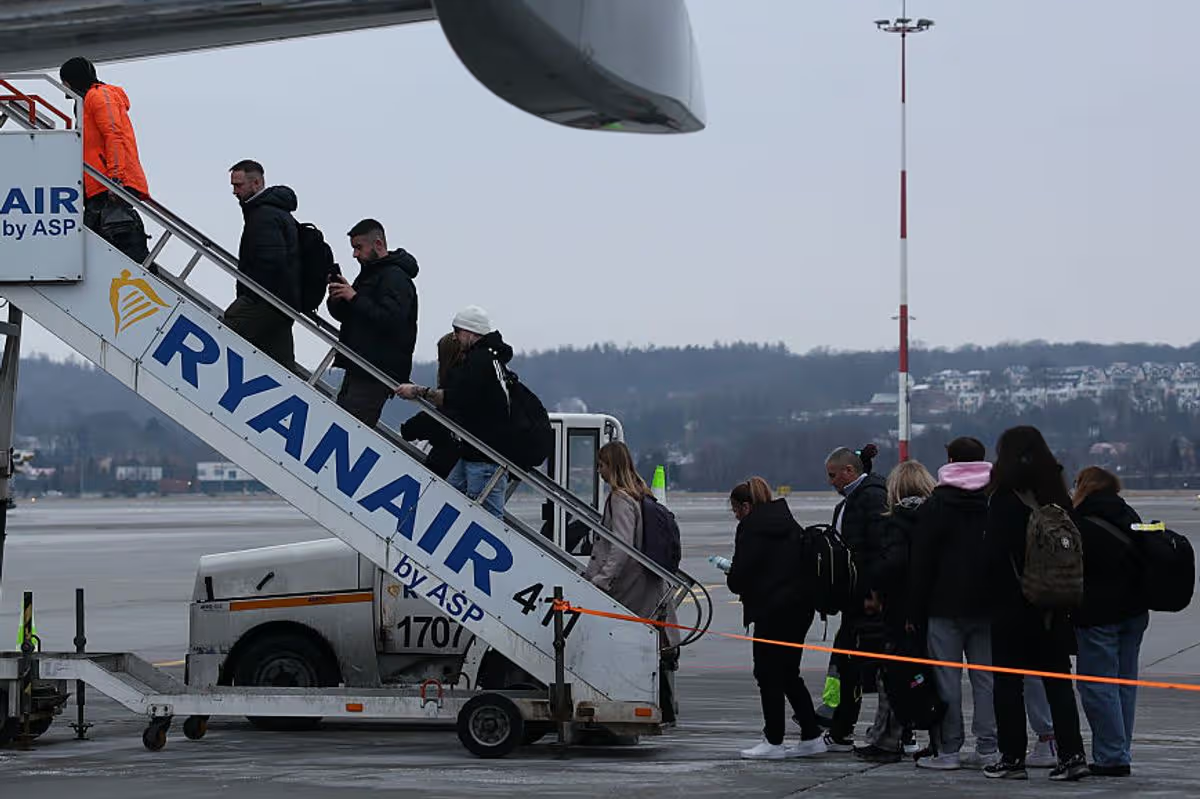
Ryanair passengers should remove the item of clothing (stock image)(Image: Jakub Porzycki/Getty Images)
Thetravel tip was recently shared online by a woman known as Sarah Geissler who alluded to the rule in a light-hearted way. Even so, she drew attention to something a lot of people may not be aware of when they’re jetting off onholidays, and this is that a certain item of clothing should be removed on flights.
She shared a clip of a sign on a plane seat, which seemed to show that heels are not permitted to be worn. Over the top of the clip, she wrote: “No heels allowed on your Ryanair flight.”
Sarah also teased that this was “bad news for baddies”, but it actually put a spotlight on something important. When it comes toair travel, there are some important things you need to be clued up on, but it’s not as simple as it seems.
Content cannot be displayed without consent
Indeed, while there are rules you need to follow about wearing heels when flying with Ryanair, this doesn’t mean you can’t wear them when at the airport. There are actually vital guidelines you should follow, especially in case of an emergency.
What you need to know
Even though people aren’t banned from wearing heels when travelling with the airline, it is highly recommended that they avoid doing so. Heels significantly increase your risk of tripping in the cabin and can puncture the inflatable emergency evacuation slides.
For safety reasons, cabin crew will instruct you to remove your heels prior to going down an escape slide in an emergency. This is why it’s best to remove them before boarding a plane, and perhaps slip into something more comfortable.
Even better, you could avoid wearing them in the first place. During an emergency, you must remove all high heels before going down the slide.
To ensure a swift escape, flight attendants suggest slipping them off before sliding, should an emergency ever occur. If one took place, passengers are also advised to leave their hand luggage behind.
In the footage shared online, the video also showed you shouldn’t wear glasses or smoke in such an emergency either. It’s a topic that’s got people talking on Reddit in the past.
One person said: “Heels can damage an escape slide, and I’d guess that glasses, ear rings and false teeth could be ripped out during impact. Hence, get them off before the event.”
Another noted: “My theory. Remove glasses, dentures. They may come loose and become lost (so, put them in a pocket).
“Remove high heels (especially important if you leave the plane via slide). Remove ear buds or headsets (so you can hear emergency instructions).”
A third also suggested: “The point is not to wear pointy things when coming down the inflatable slide in order not to make holes in it.”
On a January morning in 1938, Pitmiddle’s last resident, James Gillies, closed the door to his cottage for the final time and walked away through the snow. High on the south-facing slopes of the Sidlaw Hills in Perthshire, the village is now little more than a jumble of half-ruined walls gradually being reclaimed by the land.
My children pick around the overgrown stones like explorers discovering a lost civilisation, before scampering back through the gate and over the grass to our cabin in a neighbouring field. Called the Pitmiddle Hut, it’s the latest addition to Guardswell Farm, which spans 81 hectares (200 acres) of countryside halfway between Perth and Dundee (an hour and a half from Glasgow or Edinburgh). “People gradually moved away from Pitmiddle’s way of life,” says Anna Lamotte, who runs Guardswell with her husband, Digby Legge, often aided by their four-year-old daughter and a smiley 10-month-old in a vintage pram. “Villagers each had a pendicle, the small area they could farm, a system of outfields, infields and ‘kailyards’ – a Scots word for a kitchen garden.” Anna and Digby grew up on farms and small-holdings nearby, and today they rear cattle, sheep, goats and chickens and tend to the vegetable gardens, alongside welcoming guests to stay.
The boat-turned-bothy called Girl Linda’s cabin. Photograph: Claire Fleck
The Pitmiddle Hut sits in the old village’s pendicle field and the slim volume Pitmiddle Village and Elcho Nunnery in our cabin inspired the names of Guardswell’s huts: the Pendicle with its wildflower roof, the Infield with a stargazing window above the bed and shepherd’s hut the Kailyard. They can be rented alongside two cottages and a large farmhouse, all clustered around the Steading, once a dilapidated barn that is now a smart events space for weddings, craft and cuisine classes including cheese-making, and a popular monthly market. It’s also home to a small shop (stocked with the farm’s meat, eggs and Diggers cider), smart washrooms and a cosy room filled with games and wellies.
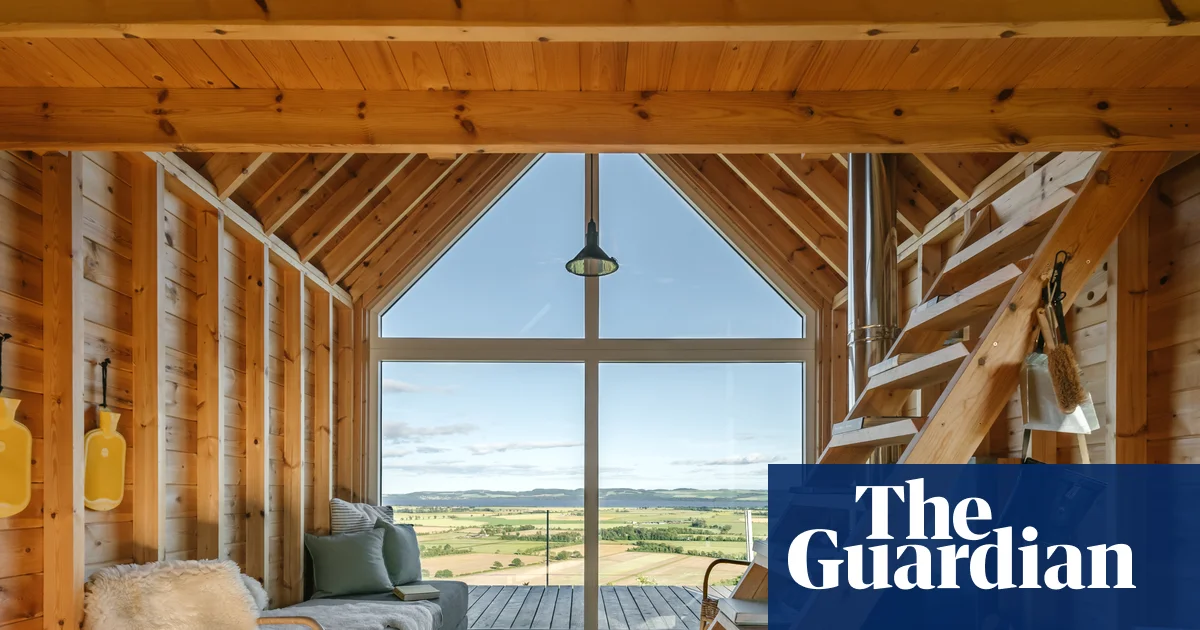
All the existing cabins were made for two, but as Anna and Digby’s family grew, and couples who married at Guardswell returned with first a dog then a baby, a bigger hideout made sense. The Pitmiddle Hut is a 10-minute stomp uphill and has a mezzanine bed up above the kitchen for grownups and a second bedroom for children to pile into the set of bunks and a double bed. The two are linked by a central indoor-outdoor space, with sliding doors for sunnier days. It’s the end of March when we stay, and the thick blankets (made with wool from Digby’s parents’ farm) and douglas fir planks lining the cabin give it a deep cosiness.
Fiona Kerr’s children loved being largely off-grid in the Pitmiddle Hut. Photograph: Fiona Kerr
As a somewhat reluctant camper in a tent-loving family, it’s an ideal balance. We build fires in the Esse Bakeheart stove to cook dinner and keep the wool-insulated cabin toasty (there’ll soon be an outside kitchen and a firepit for toasting marshmallows too). My son dashes in and out fetching ingredients from the giant coolbox on the deck. The hut is off-grid, but uses solar-power for lights and the single induction hob. There’s a proper loo, but it’s a walk down to the Steading in the morning for a shower. It quickly becomes our favourite part of the day, saying good morning to fluffy Shetland cows, dinky Hebridean sheep, donkeys Ollie and Hugo, and cheeky pygmy goat Jimmy, who once escaped his pen and crashed a wedding. It feels as though we have the farm to ourselves.
There’s no wifi, no TV and, on my phone at least, blissfully little phone signal. Instead, a basket beside the kindling is filled with Uno, playing cards, drawing pencils and a watercolour set. My daughter washes a page with streaks of blue sky and green fields that are framed by the hut’s huge picture window, before taking a nature scavenger hunt sheet around the farm, checking off pine cones and primroses.
There are four huts, a cottage and farmhouse rooms at Guardswell. Photograph: Hidden Scotland
It would be easy to simply roam here for a couple of days, foraging for wild garlic, helping feed the animals and exploring the Big Wood at the bottom of the farm, counting the 198 steps cut into the hillside among the trees. But with all of Perthshire on the other side of the Sidlaws and Fife across the River Tay there’s plenty to get stuck into, from sandy beaches at East Neuk to Highlands hills just beyond the foodie town of Dunkeld, where the Taybank pub and Aran Bakery make a delicious detour. We swerve the Munros and instead stride out on the nearby Scone circular, starting at Old Scone Church, rebuilt stone by stone in 1805 when the village moved a couple of miles east from its original site next to Scone Palace, and climbing through gorse-thick moorland to MacDuff’s Monument and the Lynedoch Obelisk with their sweeping views to Perth beyond.
We get back to the farm just as some wet weather blows in and hole up in the boat-turned-bothy called Girl Linda’s cabin at the top of a field. Scooping up a bottle of Diggers cider and apple juice from the hut, we run for it, the kids screaming into the wind. We light candles and the tiniest wood-burning stove – the valley below now so lost in mist that it feels like the River Tay might rise up and sweep us out to sea. We play Monopoly Deal as the rain whips against the portholes, before rousing a sing-song with the boat’s motley crew of instruments – bongos, guitar, glockenspiel and a giant metal triangle. “Let it go, let it go, I am one with the wind and sky …” My daughter’s favourite, suddenly apt.
We wake on the final morning to milk-glass skies and the rhythmic whirl of two woodpeckers in the trees as the sun rises through a fringe of woodland below us. There are recorded Guardswell morning meditations to start the day, a gentle prompt to pause. But stillness is low on my children’s agenda, so we throw on boots and fleeces over pyjamas and head for the swings on the hill above the hut. Pitmiddle’s simple way of life might not have survived against the advances of the modern world, but for a few days its slower rhythm feels within reach.
Accommodation was provided by Guardswell Farm. The Pitmiddle Hut sleeps six (two adults and up to four children) from £220 a night (two-night minimum), guardswell.co.uk
I COULD feel my body softening with each wave of my masseuse’s hand.
She scrubbed in circular motions, massaging the salt into my skin until it sparkled like the sea just beyond the spa door.
Sign up for the Travel newsletter
Thank you!
Learn from the experts how to harvest your own jar of salt flakesCredit: UnknownThe pool at Iberostar Selection Es TrencCredit: supplied
Salt, it turns out, is so much more than just a seasoning to sprinkle on your food — especially here on this picturesque stretch of Majorca’s southern coast.
I was staying at recently-opened five-star hotel Iberostar Selection Es Trenc, in the town of Colonia de Sant Jordi, half an hour’s drive from Palma airport.
It oozes relaxation, with its seafront location, ocean-coloured decor and knock-out spa treatments.
The hotel is also big on using local produce — including the nearby salt flats’ Flor de Sal.
The views from here are breathtaking and great for photos.
Those who prefer a more intense workout can pick from kickboxing, TRX gym work and Zumba classes.
The local salt is used in food and drinksCredit: suppliedSoak up the breathtaking sea view from the hotel roomCredit: supplied
I opted instead for a dip in the pool on the hotel’s rooftop terrace, also used for sunrise yoga classes.
I’m sadly not a very nimble yogi, but did join a session and felt serenely relaxed.
Not that I needed to unwind any more — the hotel is designed so every room has a sea view, and I opened my curtains each morning to soothing views of the waves.
Another treat is the hotel’s a la carte restaurant, Salvient, which has a homely feel.
The Sun’s Tilly Pearce visits the Majorcan salt flatsCredit: suppliedA Flor De Sal salt flats tour costs from €10 per adult and €6 per childCredit: supplied
It takes its name from the Spanish word for salt — sal — and you will not struggle to guess why.
If you’ve developed a taste for Es Trenc’s “white gold”, as the locals call it, make sure to order the dentex — a sea bream-style fish cooked whole and served on a huge bed of salt.
The large fish can be shared with family or friends, but was so light and flaky I reckon I could have eaten the entire thing by myself.
Or the hotel has a buffet-style restaurant — and there’s plenty of restaurants in town, too.
5Illes restaurant, by the town beach and about a 15-minute walk from the Iberostar, is well worth a visit.
It specialises in rice dishes and my paella was one of the best I’ve ever tasted, served sizzling in a large pan and stacked with seafood.
Tummy well and truly satisfied, I ended my Majorca getaway with a private boat trip around the island to soak up my final sunset.
I’m not sure what was better — the view from the Iberostar rooftop or this one from the sea.
As long as I have a salt-rimmed cocktail in hand, who cares?
GO: MAJORCA
GETTING THERE: EasyJet flies from London Gatwick to Majorca from £28.99 each way.
Local officials the Democratic Republic of the Congo on Sunday updated reporters on the Bundibugyo Ebola virus outbreak there, which has caused the WHO to declare it a health emergency of international concern and the United States to enacte travel restrictions. Photo by Marie Jeanne Munyerenkana/EPA
May 18 (UPI) — The U.S. Centers for Disease Control and Prevention on Monday restricted non-U.S. passport holders from entering the United States if they have been in Uganda, the Democratic Republic of the Congo or South Sudan in the past 21 days.
The agency made the announcement as there have at least 346 cases and 88 deaths in the DRC, on top of several cases that have been confirmed in nearby nations in people who been there, the CDC said over the weekend.
The CDC said that is coordinating with various agencies and companies to manage travelers who have been exposed to Ebola as it also deploys employees to support containment of the outbreak in the three nations.
“CDC assess the immediate risk to the general U.S. public as low, but we will continue to evaluate the evolving situation and may adjust public health measures as additional information becomes available,” the agency said in a situation summary.
In the last five days, the World Health Organization confirmed that the Ebola virus circulating in the three countries right now is the Bundibuyo virus, one of four known strains that have affected humans since Ebola was discovered in mid-1970s.
Although there is an approved, licensed vaccine against Ebola which has successfully been used to quell outbreaks, the vaccine — called Ervebo — only protects against acquisition of the Zaire species of Ebola virus, making it useless in the current outbreak, according to the CDC.
WHO on Saturday declared the outbreak a public health emergency of international concern.
In its update, WHO said that there are “significant uncertainties to the true number of infected persons and geographic spread associated with this event at the present time. In addition, there is limited understanding of the epidemiologic links with known or suspected cases.”
Ebola spreads from wild animals to humans and from human to human through direct contact with blood or other bodily fluids from infected individuals, and carries a case fatality rate of roughly 50%.
A number of affected Americans have reportedly been exposed to the virus during the outbreak.
The CDC has recommended that people who have traveled through the two countries in the last 21 days should immediately seek medical attention if they develop Ebola symptoms, which can include fever, weakness, vomiting, diarrhea or unexplained bleeding.
In addition to roughly 30 CDC employees dispatched to the region, and will join officials from several other global and regional health agencies, the WHO is expected to convene an emergency committee to advise the agency’s director-general on its response the outbreak.
An investigation into the incident has been launched
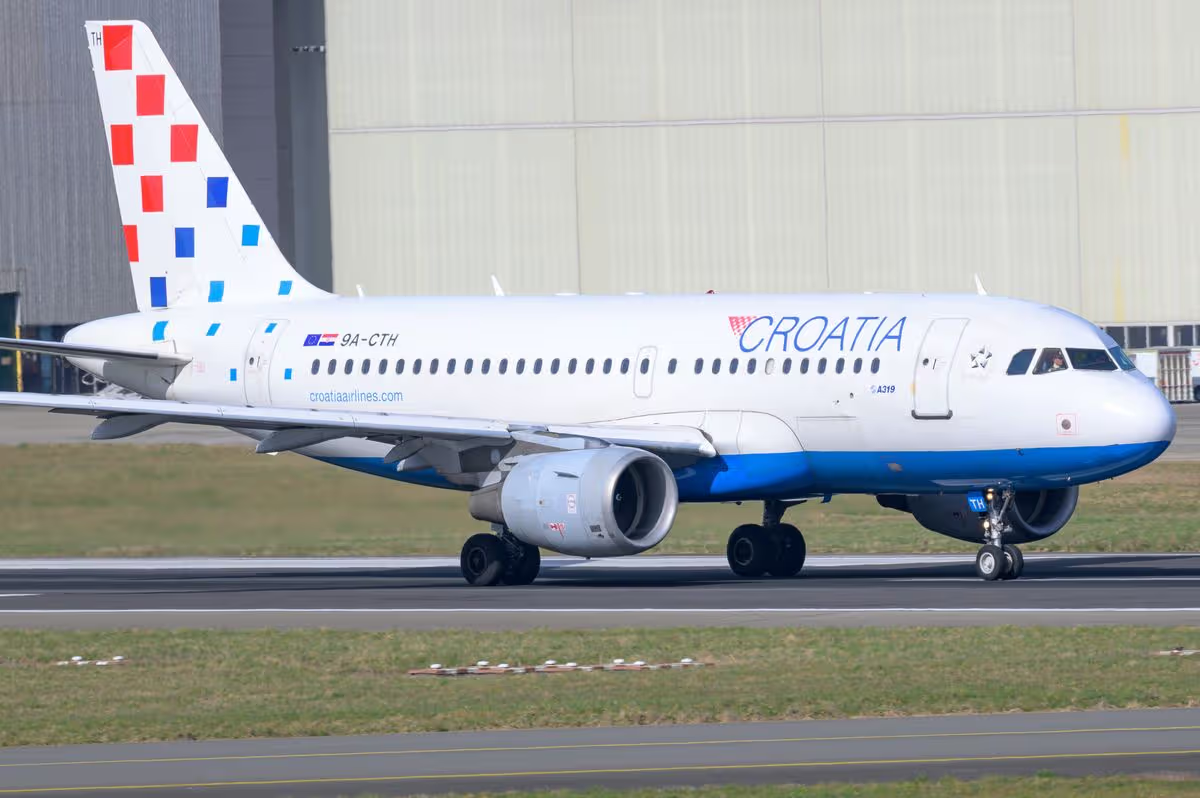
A Croatia Airlines 9A-CTH Airbus A319-112 (stock image)
A plane reportedly containing more than 130 people veered off the runway during take-off before skidding across grass and crashing through airport signs. Shocking footage shows the Croatia Airlines Airbus A220-300 swerving to the left before eventually grinding to a halt.
The drama unfolded at Split Airport in Croatia on Saturday, May 16 at 1.35pm local time. An investigation has been launched, with no injuries reported among the 130 passengers and five crew members.
Passengers and crew were evacuated from the plane, which reportedly sustained damage to the front landing gear and left-hand engine.
Darko Petrin, chief investigator at Croatia’s Air, Maritime and Railway Accident Investigation Agency, said the investigation is still in its early stages.
Content cannot be displayed without consent
“It is known that the aircraft, for reasons still undetermined, drifted to the left during takeoff, left the asphalt part of the runway and ended up on the grassy surface next to the runway,” Mr Petrin said.
It is understood that the black boxes on the plane have been taken for analysis. It is thought the investigation into events could take months. The plane – which was flying to Frankfurt – was thought to be travelling at around 130knots (150mph) when pilots aborted the take-off for reasons which are still not yet clear.
The jet itself was delivered less than a year ago to Croatia Airlines. Split Airport was closed for a number of hours after the incident.
WHEN it comes to flying to the States, a major airline has unveiled a huge new revamp of their planes – and it’s making it much comfier to fly long-haul.
Having flown to and from America several times over the past five years to visit family, I quickly found a love for United Airlines‘.
Sign up for the Travel newsletter
Thank you!
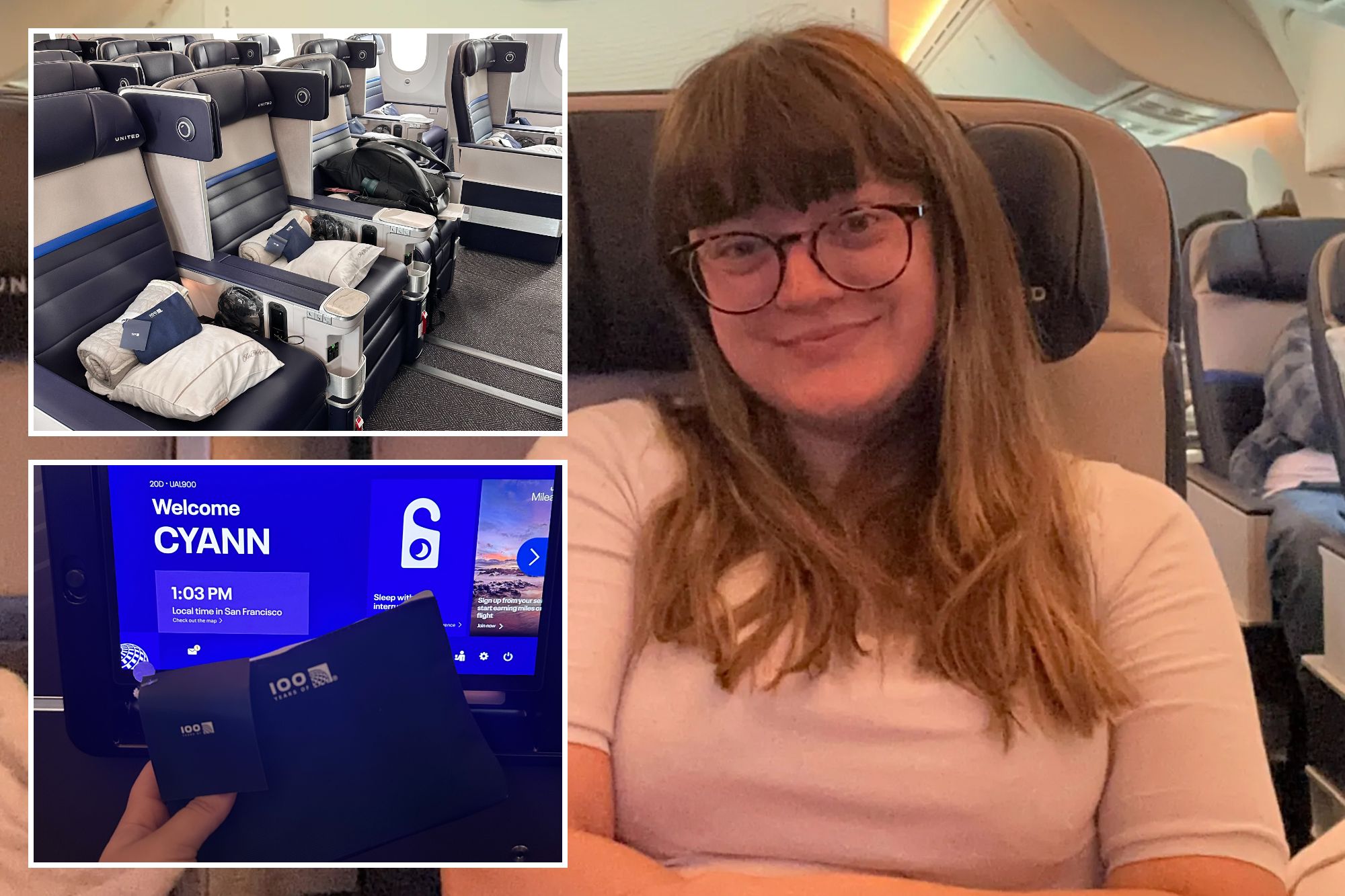
United Airlines has launched a new cabin on its 787-9 Dreamliner aircraft between London Heathrow and San Francisco, AmericaCredit: Cyann FieldingThe new spacious Premium Plus seats feel more like business classCredit: Cyann Fielding
Follow The Sun’s award-winning travel team on Instagram and Tiktok for top holiday tips and inspiration @thesuntravel.
The airline recently announced they were launching a brand new ‘Elevated’ cabin on their 787-9 Dreamliner between San Francisco and London Heathrow, upgrading every single class from economy to business.
This includes the rollout of the first ever new business class United Polaris Studio suites, which have more spacious seats, larger screens and Bluetooth connectivity.
I, however, was trying out United’s new Premium Plus Economy seat which they say has “elements normally reserved for business class customers” – a welcome sight when leaving gloomy London.
Each seat comes with a pillow, blanket and amenity kitCredit: Cyann FieldingEach seat has a 40.6cm screen with Bluetooth connectivityCredit: Cyann Fielding
There’s a total of 35 United Premium Plus seats arranged in a 2-3-2 configuration in the new cabin design, each with privacy dividers and a built-in reading light – both firsts for United Premium Plus seats.
And in all honesty, the seats felt closer to business class than economy and even better than some business class seats I’ve experienced on other airlines.
I opted for the very first row with enough room that when stretching out my legs straight, they still didn’t hit the wall in front of me.
Plonking myself down in my aisle seat – which actually felt more like an armchair – I was immediately impressed by how comfortable it was.
And then when it came to checking out the generous 40.6cm 4K OLED screen, I was excited to snuggle down and watch one of the latest film releases.
Pressing play on Wuthering Heights, I connected my Airpods to the Bluetooth to listen in to the film and placed my phone on the quartzite cocktail table between my seat and the next seat to connect it to the wireless charging.
In the amenity kit, you’ll will find skincare products, an eyemask and socksCredit: Cyann FieldingThe seats even have a bottle holderCredit: Cyann Fielding
As for the amenities, a small ‘United 100’ pouch to celebrate the airline’s centenary was on my seat featuring branded socks, an eye mask and some Vitamin C Perricone MD products.
Also on my seat was a Saks Fifth Avenue pillow and blanket, which added to my cinema experience when Wuthering Heights started to play.
When it comes to space, passengers get 96.5cm pitch and 50.8cm width, and then 15cm of recline – which while not much felt spacious enough and with the new privacy screen acting as a good headrest, I was more than comfortable.
Power outlets and bottle holders are located between the seats for added convenience too.
Located on one armrest is also a remote for the TV and a small cubbyhole where you’ll find your overhead earphones.
Of course, you can now also get Starlink Wi-Fi on United flights – even if it is just for messaging – which I have to admit was super speedy.
The seats also have wireless chargingCredit: Cyann Fielding
Another thing I love about United is that you are always fed well,
My first meal consisted of an artichoke salad and bread for starter, with roast chicken for my main and chocolate truffles for dessert.
Mid-flight, I then enjoyed a chicken burrito and before landing, tucked into another salad and a paneer curry.
In between these courses, the cabin crew were great at always ensuring I had enough water or a drink of my choosing – whether that be alcoholic or non-alcoholic.
You will also get fed well with two meals and plenty of snacksCredit: Cyann FieldingElsewhere in the cabin, Polaris and economy seats have been upgraded tooCredit: Cyann Fielding
United aims to have at least 30 planes with the new Elevated interior flying by the end of 2027.
So if you’re trying to decide which airline to go with on your next trip to the US? I’d recommend United – if you want a business class experience on a premium economy budget.
What about United’s business class?
United Polaris Studio suites (the business class plus) includes lie flat seats, with a total area around 25 per cent bigger than the average Polaris seat.
Each of the eight studios feature a 68.6cm screen – which is the largest among US airlines – accompanied by noise-cancelling Meridian headphones.
They even have privacy doors, an extra ottoman seat, exclusive entree options, caviar and huge amenity kits.
The standard United Polaris seats (standard business class) have also been upgraded.
These seats also lie flat and passengers can choose to either face the window or centre of the plane, with these seats in particular having the ability to remove the wall between if you are travelling with someone.
Screens in United Polaris measure 48.3cm, and there is also a Snack Bar passengers can help themselves to.
BRITS could soon be able to fly to a destination in Africa with winter highs of 30C, beautiful beaches and beers for 71p.
Air Tanzania has revealed it’s planning to launch direct flights, for the very first time, between the UK and Tanzania next year.
Sign up for the Travel newsletter
Thank you!
Air Tanzania could start direct flights to Tanzania and Zanzibar next yearCredit: BoeingTanzania has pretty beaches, islands and resortsCredit: Alamy
Follow The Sun’s award-winning travel team on Instagram and Tiktok for top holiday tips and inspiration @thesuntravel.
The airline’s CEO Peter Ulanga announced the flights will operate from London Gatwick to Kilimanjaro International Airport and wants to start the route from July 2027.
Talking to Africa Travel & Tourism Association (ATTA), Peter Ulanga said there be a ‘minimum’ of three flights a week to Tanzania.
Not only that, but he also said they want to run flights to its well-known archipelago as well.
He added: “We will also run direct flights to Zanzibar, expanding the tourism potential of that destination from the UK, too.”
Currently there are no direct routes to Tanzania or Zanzibar – and historically there haven’t been any from the UK.
Airlines from the UK currently have to stopover at the likes of Nairobi to get there.
The new route would make travel for Brits much easier and reduce flight time that is currently between 11 and 15 hours.
The most popular part of Tanzania for Brits is Zanzibar which lies just of the coast, thanks to its white-sand beaches, winter highs of 30C and pretty resorts.
Despite its luxury feel, Zanzibar is cheap too with meals costing around £3.54 and beer can be from 99p.
The Zanzibar archipelago is a popular winter sun spot with beautiful beaches like NungwiCredit: Alamy
Zanzibar has an incredible coastline, some of the best beaches include Nakupenda, Nungwi and Paje which have powder-like sand and are lined with palm trees.
Tanzania is also home to the Serengeti National Park and a popular activity is to book a safari tour to see the Great Migration of wildebeest and zebras.
What makes the perfect family holiday? Whether you travelled with toddlers, teenagers or as part of a multi-generational group, tell us about the choice of destination and fun activities that made your trip successful, or even special. Where did you go in the UK or Europe, what did you do and what made it work?
The best tip of the week, chosen by Tom Hall of Lonely Planetwins a £200 voucher to stay at a Coolstays property – the company has more than 3,000 worldwide. The best tips will appear in the Guardian Travel section and website.
Keep your tip to about 100 words
If you have a relevant photo, do send it in – but it’s your words we will be judgingfor the competition.
We’re sorry, but for legal reasons you must be a UK resident to enter this competition.
The competition closes on Monday 25 May at 10am BST
A glorious seaside spot with a brilliant cafe, beach, play areas and a fantastic quirky place to stay the night.
14:59, 18 May 2026Updated 15:00, 18 May 2026
I stayed in seaside village locals with so much to offer, including this free paddling pool(Image: MEN)
British coastal resorts have long been popular hotspots for families but the seaside village of Llanfairfechan is one I have to say I’ve never stopped in over the years, despite it being just off one of the country’s busiest roads. Now that I have two young sons to entertain, it was time to rectify that, and what a treat we had in store at this beautiful little spot.
It feels like a bit of a hidden gem in many ways: lovely and quiet and a place I never hear mentioned when people talk about great seaside towns and villages in Wales. Slipping under the radar has its perks though: it was so peaceful, we found that we had the stretch of beach all to ourselves a lot of the time. We enjoyed long walks splashing in the waves while admiring the glorious views out to Puffin Island and Anglesey, and over to the Great Orme and Llandudno.
Llanfairfechan grew as a resort town in north Wales in Victorian times, and was a favourite spot of Prime Minister William Gladstone. It features a lengthy promenade next to the sea, as well as a beautiful row of pastel-coloured villas, with the spectacular Penmaenmawr mountain as the backdrop giving it a picture postcard feel. When the sun is shining, as it did across our weekend stay, it’s just the most perfect place for a family visit. Ever likely locals jokily call it “Llanfairote” (a playful nod to the Spanish island).
Things to do in Llanfairfechan
There are two free play areas, a skate park, a boating lake and, from May through the summer, an adorable free community paddling pool open daily from 10am to 7pm. And with that vast expanse of beach to explore there’s loads to do without even having to spend a penny.
The beach offers glorious views along the Welsh coast and if you look closely enough you can even see the shape of Beaumaris Castle and as far as Penrhyn.
While we found there was plenty to entertain us in Llanfairfechan itself (and the kids would have happily spent day and night on the beach) it also offers the perfect base for wider explorations in this gorgeous part of Wales.
We headed up for a walk to Aber Falls on one day, while we also made the short journey to the historic town of Conwy to visit the castle there which, again, my kids absolutely loved.
Where we stayed
We were fortunate enough to stay in one of the colourful seafront villas in Llanfairfechan during our visit, at the pretty pink Claremont with glorious views right next to the beach.
The family-owned home has been passed down through several generations, and has recently become a very chic holiday let thanks to the interiors inspiration of owner Kate.
The family spent three years renovating the property with an eclectic mix of stylish furnishings. Kate said: “This house is very special to us and has been in my family for over 80 years.
“It’s been a real labour of love, we have been letting the house out for coming up to 4 years now and it is really rewarding having other families fall in love with the house and area and getting lots of lovely reviews and return visits.”
It’s easy to see why families fall in love with this place. It boasts wonderful airy rooms spread across three floors, with bed accommodation for up to eight people, including one room with bunk beds for children. There’s also a private back garden that gets the sun in the mornings, and the long stretch of garden at the front looking out to the sea.
On the ground floor is the very stylish kitchen and dining room, while upstairs is the main living room – both of these making the most of the spectacular bay front windows with views out across the beach and the sea on to Puffin Island and Anglesey.
I cannot begin to explain how glorious it was to sit in these windows and watch the sun set over the islands each evening during our stay, and then see the bright lights of Llandudno prickle to life on the coast as night fell.
You can feel its warmth as a family home, and the owners have also kindly left some board games available for use during your stay. Monopoly went down a treat with my two boys which we played while gazing out of those windows.
My kids totally fell in love with this place and were fighting back tears when we had to pack up to head home after our sunny weekend. I’m already plotting a return, as it would be a great place to bring other family members with us too next time.
Food and drink
Another joy of this village is the brilliant local cafe and takeaway Seagrass. This was recommended to us by Claremont’s owner Kate, who suggested we book our Friday night takeaway ahead of arriving that day to ensure we had a slot as it gets busy.
We are so glad we did. We had the most epic fish and chips, with a really unusual light batter, and chips in the traditional “like my gran used to make” style. We also ordered some of the weekly specials including a spicy fried chicken with salad, while the kids enjoyed their chicken and chips.
They were also doing pizzas on the night we visited that seemed to be very popular. And with the weather being so good we were able to sit out on the beach to eat our food from the takeaway boxes too. They also cook up some epic brunch dishes, while there’s also an array of freshly-baked cakes and traybakes, as well as a cabinet of ice creams too.
For those wanting something more casual, there’s also a traditonal beachside cafe right on the Promenade where you can get hot and cold food too.
Again, on the recommendation of Kate, we also booked a visit to Johnny Dough’s pizzas in Conwy on our day out there. They serve up giant fresh wood-fired pizzas, and if you head there before 6pm kids can do a “make their own pizza” too.
Staying there
Dianne was a guest at Claremont on The Promenade in Llanfairfechan. It is a full house holiday let which can sleep up to eight people, with four bedrooms and three bathrooms.
Minimum break is three nights, while four-day short breaks start from £645. There is still good availability for bookings in June and September in 2026. All bookings are via the Claremont by the Sea website.
Llanfairfechan is just off the North Wales Expressway (A55) between Llandudno and Bangor. There is also a train station.
Have you ever wondered what the inside of one of the most expensive hotel penthouses looks like? For a whopping £75,500 a night, it might leave your eyes watering
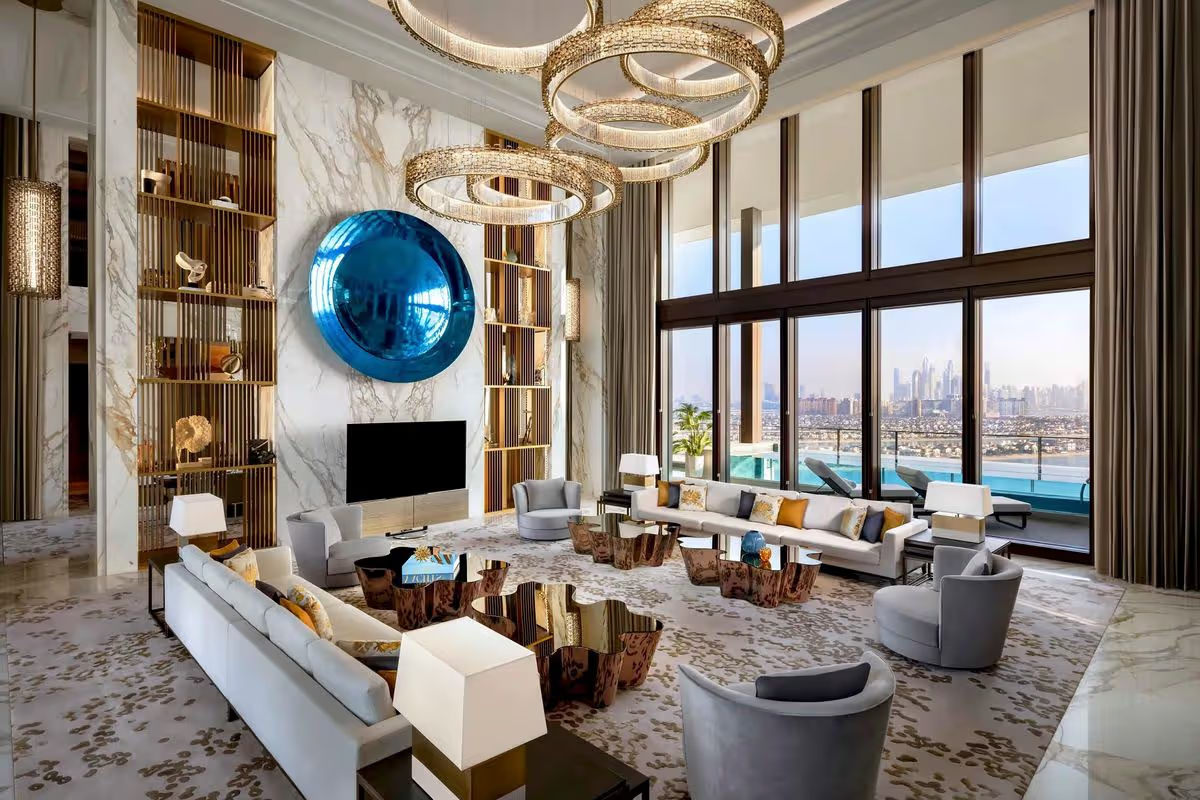
Could this be one of the most lavish hotel rooms in the world?(Image: Royal Mansion at Atlantis The Royal in Dubai)
We all like a bit of luxury every now and then, but for a staggering £75,500 a night for a hotel suite, that’s something else entirely.
For that sum of money, you’d expect your own butler, sprawling swimming pool, private entrance, and some of the best views across Dubai – and that’s exactly what those forking out for a lavish stay at the Royal Mansion at Atlantis The Royal get. The price tag makes a little more sense considering a literal mansion in one of the world’s premier luxury capitals.
Dubai is renowned for its selection of opulent hotels and resorts, but the five-star Atlantis The Royal is one of the city’s most famous and luxurious beach resorts. Frequently named one of the best hotels in the world, it sits on the crescent of Palm Jumeirah, boasting a whopping 795 rooms, 17 restaurants, and 90 swimming pools, with its striking structure of six towers linked by an intricate design.
For those who want to ‘live like royalty’ during a stay at Atlantis The Royal, the Royal Mansion is one of its signature penthouses, priced at around £75,500 (Dhs370,000 or $100,000) per night. Dubbed the ‘crown jewel’ of the resort, it spans 1,128 square metres across two levels, forming a penthouse that connects to both sides of the iconic hotel.
There’s a private foyer, complete with glass olive trees and sky-high ceilings, and four bedrooms that can sleep up to ten adults and one child, with three king beds and two queen beds. One of its most incredible features is the 476-square-metre terrace with an infinity pool, offering panoramic views across the Palm Jumeirah and the Dubai Skyline from a secluded, and very lavish retreat.
In addition, the penthouse features an outdoor kitchen, bar area, entertainment room, a library, a huge dining room table, both indoors and outdoors, a living area, a family room, a steam room and sprawling bedrooms with en-suites that are easily the size of a flat in London. The interiors are just as sumptuous and bespoke as you would imagine, with every corner designed to ooze indulgence.
As Atlantis The Royal states, “Every detail in the Royal Mansion will make you feel like royalty”. And there’s more.
Guests forking out for a stay in the mansion will also be given the five-star treatment. This includes in-room check-in, 24-hour dedicated butler service, 24-hour room service, a private in-suite lift, a private entrance, and privacy glass.
They can also lap up the benefits of an exclusive in-room celebrity chef dining, complimentary return airport transfers, complimentary minibar and complimentary breakfast, with the option of Gastronomy, in-room dining, or a floating breakfast. If that wasn’t enough, they also have daily access to the resorts’ AWAKEN Elements Retreat and exclusive “premium seating” at Aquaventure World, along with daily fast passes.
That’s just some of the additional benefits of booking the sprawling penthouse, which undoubtedly only welcomes the ultra-wealthy who can justify splashing out on what is twice the average annual salary in the UK for a hotel night away.
Do you have a travel story to share? Email webtravel@reachplc.com
A physics teacher has shed light on the hidden dangers of inflating your life jacket inside an aircraft cabin during an emergency – it could have deadly consequences
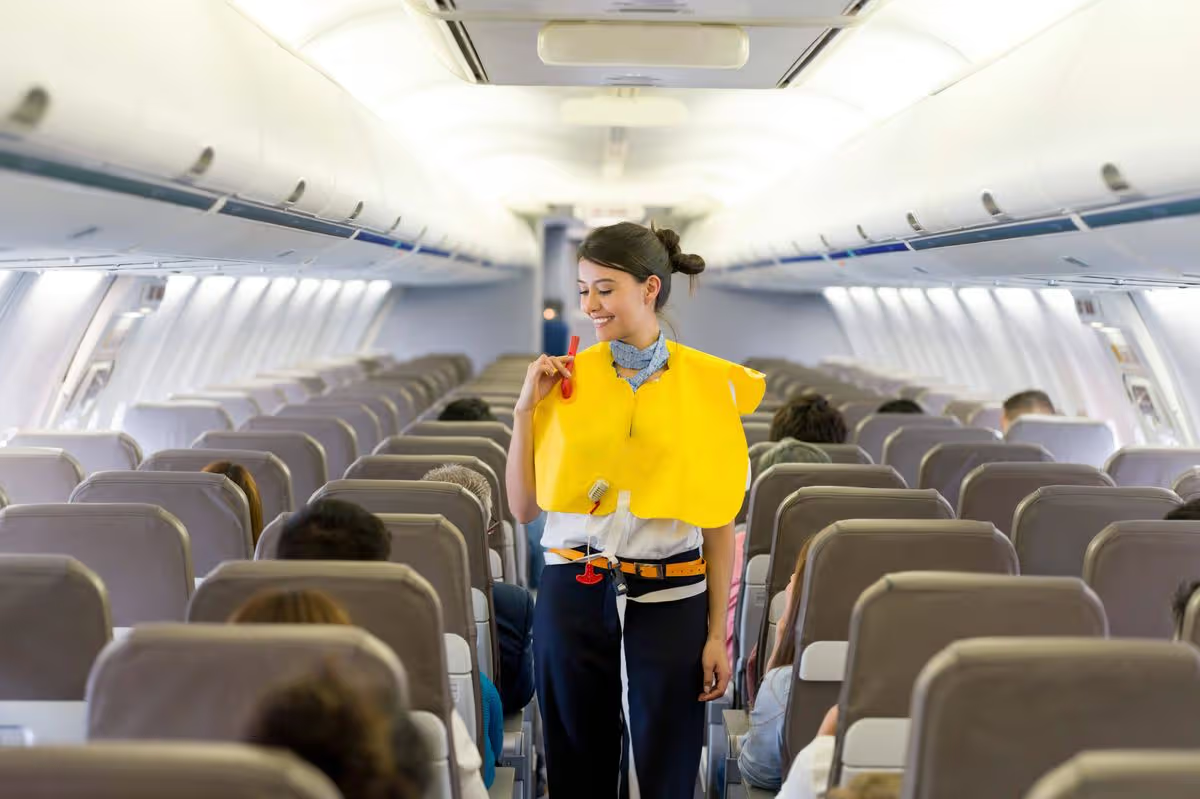
Cabin crew demonstrate how to inflate a life vest – but you should never do this while inside the aircraft (stock image)(Image: Hispanolistic via Getty Images)
A physics teacher has explained the “horrific” risks that come when a life jacket is inflated by a person who’s still onboard a plane. When boarding any flight, the cabin crew run through a comprehensive safety briefing explaining to passengers where the emergency exits are, how to secure their seat belts, where to locate and how to utilise oxygen masks, how to operate life jackets, and more.
Life jackets are typically kept in a compartment beneath your plane seat. It’s crucial to only ever inflate the vest once you’ve exited – and are away from – the aircraft, by pulling down firmly on the red toggles. But why shouldn’t you inflate it while you’re still inside the plane?
Some people think it’s related to efficiency and movement – wearing an inflated life vest could make it more challenging and awkward to navigate through the aircraft.
There is some validity to that but the real reason is to prevent a far more alarming consequence. A physics teacher took to YouTube to clarify this in depth.
The footage shows a split screen, with the teacher at the bottom and demonstration clips in the upper portion to offer additional insight and understanding.
There was a clip of a plane passenger sitting in his seat who inflated his life jacket. The teacher began: “This passenger inflated his life vest during the safety briefing. But that was the exact death trap of some passengers on the Ethiopian Airlines flight.”
She then discussed the notorious hijacking of Ethiopian Airlines Flight 961, which was seized while travelling from Addis Ababa to Nairobi by three Ethiopians seeking asylum in Australia. The aircraft crash landed in the sea and, of those aboard, 125 out of 175 died – including all three of the hijackers.
The teacher elaborated: “This aircraft was hijacked in 1996 and was forced to crash land in the ocean after running out of fuel. So during the chaos, some passengers panicked and inflated their life jackets inside the cabin.
“But why is that such a big deal? Think about how these vests inflate instantly using compressed carbon dioxide from that tiny cartridge. So the moment it inflates, it makes you buoyant – but isn’t that its job?”
This is where matters take a “horrific” turn. The teacher explained: “It is, but you don’t want it to do that inside of the cabin when the cabin gets flooded because you won’t be able to dive down and swim out of the aircraft.
“Instead, those passengers were pushed upwards by the water and got pinned to the ceiling. They were trapped by the very thing that was designed to save them.”
In the comments section, fellow YouTube users were keen to offer their perspectives. One person said: “No matter how good a tool is, it can be dangerous if not used properly.”
Another said: “What’s worse is that some people can end up preventing others from escaping because they don’t listen to the safety rules”.
A third person said: “It’s also a hindrance when moving through the narrow seat rows and crowded aisle.” While a fourth commented: “Panic really changes how people react in those moments!”
Another shared: “Thanks for the explanation! I was honestly confused why inflating life vests inside the plane was wrong. But this makes sense!”
Someone else added: “I was thinking that the inflated life vest would make it harder to move through the inside, but the actual reason is much more horrific”.
Health experts are urging Brits to ensure they are “up-to-date” with their vaccines
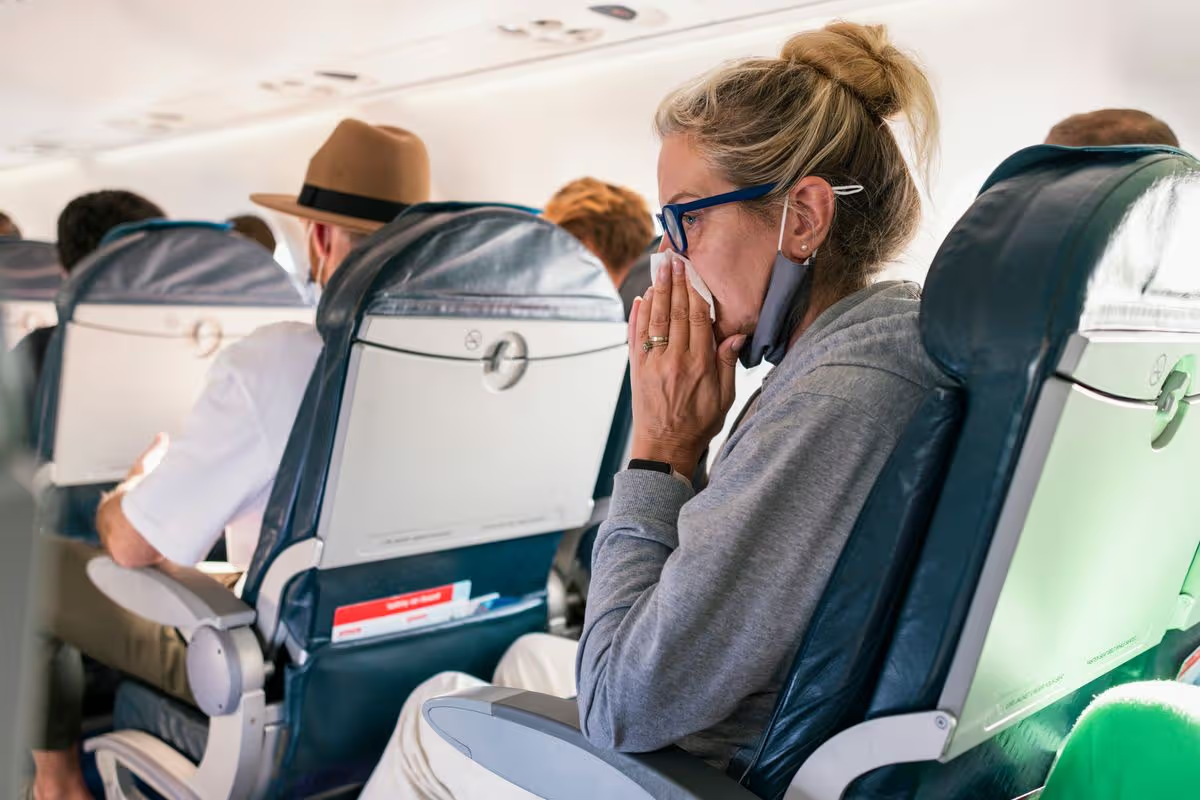
Travel experts warned that cases of a contagious illness are rising worldwide(Image: Getty)
Brits planning a summer getaway have been urged to ensure they are “up-to-date” with their vaccinations. The warning follows an “increase” in measles cases globally, including across parts of Europe and Asia.
Measles is a highly infectious viral infection that triggers cold-like symptoms, red eyes, and a characteristic blotchy rash. In severe instances, it can result in serious complications such as meningitis and seizures, and can be fatal.
In guidance published on the Travel Health Pro website, experts highlighted that the disease has risen in numerous countries. They said: “The summer holidays provide opportunity to explore different countries, head off for a city break, have a beach holiday or take the children to visit friends and family overseas.
“Good preparation and planning ahead helps ensure a safe and enjoyable trip. Travellers should be up to date with routine vaccination courses and boosters as recommended in the UK.
“These vaccinations include, for example measles-mumps-rubella (MMR). Measles is a risk in many countries, and there has been an increase in measles cases and outbreaks reported worldwide, including in parts of Africa, Asia, Europe, and the Americas, including Canada and the United States.” Data from the European Centre for Disease Prevention and Control revealed that a total of 3,607 measles cases were reported by 30 EU/EEA member states in the year following 1 April 2025.
Breaking down the figures further, it stated: “Of 3,029 individuals (84.0 per cent of all cases) with a known age and vaccination status, 2 369 (78.2 per cent) were unvaccinated, 320 (10.6 per cent) were vaccinated with one dose of a measles-containing vaccine, 301 (9.9 per cent) were vaccinated with two or more doses, and 32 (1.1 per cent) were vaccinated with an unknown number of doses.
“During the 12-month period, five deaths (case fatality rate (CFR): 0.139 per cent) attributable to measles were reported to ECDC by France (three), Netherlands (one) and Romania (one).”
Meanwhile, a report by the World Health Organisation (WHO) and United Nations Children’s Fund (UNICEF) discovered that measles cases in Europe reached their highest level in 2024 since 1997. A total of 127,350 measles cases were recorded in the European Region in 2024, double the figure reported for 2023 and the highest number since 1997.
Children under five made up more than 40 per cent of reported cases in the Region – covering 53 countries across Europe and Central Asia. Over half of the reported cases necessitated hospitalisation. A total of 38 deaths have been documented, according to preliminary data received as of 6 March 2025. The resurgence has been linked to falling vaccination rates. Dr Hans P Kluge, WHO regional director for Europe, warned: “Measles is back, and it’s a wake-up call. Without high vaccination rates, there is no health security. As we shape our new regional health strategy for Europe and Central Asia, we cannot afford to lose ground.
“Every country must step up efforts to reach under-vaccinated communities. The measles virus never rests-and neither can we.”
Measles cases are also on the rise across the UK. Figures from the UK Health Security Agency (UKHSA) revealed that in 2024, there were 2,911 laboratory-confirmed measles cases in England – the highest annual total recorded since 2012. In 2025, there were a total of 959 laboratory-confirmed measles cases. Data for 2023 to 2025 and historical data are available.
Between 1 January 2026 and 11 May 2026, there have been 542 laboratory-confirmed measles cases reported in England, an increase of 65 cases since the last report on 27 April 2026.
Symptoms
The virus transmits very quickly. Initial symptoms typically resemble those of a common cold, with a distinctive rash emerging several days afterwards.
The first symptoms of measles can include:
A high temperature
A runny or blocked nose
Sneezing
A cough
Red, sore, watery eyes
The rash initially appears on the face and behind the ears, subsequently spreading across the entire body. Occasionally, the spots associated with the measles rash become raised and merge, creating blotchy patches. These are typically not itchy.
The NHS cautions that measles can trigger severe complications should it migrate to other bodily areas, particularly the lungs or brain. Potential consequences include pneumonia, meningitis, loss of vision, and convulsions. In the most serious instances, the disease can be life-threatening.
How to prevent the spread
Measles is spread when an infected person breathes, coughs or sneezes. You’re infectious from when you first have symptoms (around four days before the rash appears) until four days after you get the rash.
The NHS advises that to curb the transmission of the infection, individuals must remain absent from educational institutions or workplaces for a minimum of four days following the emergence of the rash. According to its website, the guidance states: “Stay off nursery, school or work for at least four days from when the rash first appears. Also try to avoid close contact with babies and anyone who is pregnant or has a weakened immune system.”
However, the initial step if you or your child develops measles is to arrange an urgent consultation with your GP. The NHS advises: “Measles can spread to others easily. Call your GP surgery before you go in.
“They may suggest talking over the phone or arrange for you to come to a part of the surgery where you’re separated from others. You can also call 111 or get help from 111 online.”
After seeing a GP, there are things you can do to help ease the symptoms and reduce the risk of spreading the infection. It can help to:
Rest and drink plenty of fluids, such as water, to avoid dehydration
Give your child paracetamol for children or ibuprofen for children if they’re distressed or uncomfortable – check the packaging or leaflet to make sure the medicine is suitable for your child, or speak to a pharmacist or GP if you’re not sure
Adults can take paracetamol or ibuprofen for a high temperature
Use cotton wool soaked in water that has been boiled and allowed to cool to gently remove any crusts from your or your child’s eyes
The NHS also recommends you:
Open windows and doors to help reduce the risk of measles spreading – only open the top window or use safety catches if you have young children
Wash your hands often with soap and warm water
Use tissues when you cough or sneeze and throw them in the bin immediately after using them
Do not share cutlery, cups, towels, clothes, or bedding
Vaccination
Having the MMRV or MMR vaccine is the “best way” to prevent measles. The NHS says: “Both vaccines also protect you from mumps and rubella, and the MMRV vaccine also protects you from chickenpox.
“The MMRV vaccine is offered to all young children in the UK. The MMR vaccine is recommended for adults and older children if they were not vaccinated when they were younger.”
Ask at your GP surgery if you’re not sure you or your child has had either of these vaccines. Your GP can vaccinate you for free on the NHS.
The airport is expected to welcome passenger flights again in 2028
13:24, 18 May 2026Updated 13:25, 18 May 2026
The airport was once a key regional flight hub known as Robin Hood Airport(Image: tupungato via Getty Images)
A UK airport that shut down three-and-a-half years ago is set to reopen following the resolution of a funding dispute this week. Doncaster Sheffield Airport (DSA) near Finningley in Doncaster was once a key regional flight hub known as Robin Hood Airport, operating from 2005 with flights to holiday destinations including Alicante, Majorca, Paris, and various other locations.
However, the airport was compelled to close in 2022 after its owners, Peel Group, declared it financially “unviable”. The closure left South Yorkshire without an international airport.
Yet, in September 2025, the South Yorkshire Mayoral Combined Authority (SYMCA) officially approved a £160million funding package based on previous commitments to reopen the airport as DSA in a significant boost for the region. Its resurrection followed campaigning by residents and local politicians, and received backing from the British Government.
Nevertheless, the scheme had been thrown into doubt in recent weeks during a deadlock over a £57million loan from Doncaster City Council to support the reopening plans, after Reform UK councillors expressed concerns about whether taxpayers would receive a return on investment.
The airport scheme was championed by the local authority’s Labour mayor, Ros Jones, who is believed to have been re-elected by a narrow margin largely owing to her commitment to delivering the potentially transformational scheme, despite a surge in support for Reform.
The structure of local Government in Doncaster means she retains executive authority as Mayor despite Reform securing a majority on the council at the last election, and now controlling the budget.
Nigel Farage’s party originally backed the airport scheme, but in April indicated they would contemplate voting to withdraw approval, as they requested additional details about how the funds would be allocated and benefit local people, reports the Express.
At the end of last month, Mr Farage attacked the terms of the lease agreement being negotiated with the current site owners, The Peel Group, arguing the council needed to secure the freehold to prevent it becoming a “massive drain” on taxpayers.
Ms Jones told the BBC News at the time: “Last week Reform said DSA should be privately funded and today they’re saying it should be acquired by the council or government, even if that means through a compulsory purchase order (CPO).
“It is important to remember we offered to buy the freehold back in 2022 and Peel refused, the offer of a lease effectively killed off any chance of a successful CPO.”
She added that a CPO application could take between five to seven years with minimal chance of succeeding. The standoff sparked concerns that the scheme would have to be scrapped, despite significant progress in attempts to prepare it for commercial air traffic once more.
However, at an extraordinary meeting of the council last week, Reform dropped its opposition to the loan on the condition that they are able to review copies of the new lease before it is approved, according to ITV News.
Ms Jones said she was “delighted to see Reform’s done the U-turn”, dismissing the threat from the hard-right party as a “political stunt”.
Freight services at the flight hub could get under way as early as next year, with passenger flights expected to launch in 2028, according to reports.
FlyDoncaster, a council-owned company established to reopen and run the airport, has teamed up with German operator Munich Airport International (MAI) on the venture.
In an update last month regarding preparatory work at the site, Christian Foster, Director of council-owned operator FlyDoncaster, said: “Over recent months we’ve been building the right team to take on this task. That has included individuals with experience at major airports such as Manchester, Gatwick and East Midlands, taking up roles like Head of Security, Head of Airfield Operations and Head of Health & Fire Safety.
“We’re also going through a critical Airspace Change Process, a regulatory hurdle that means we’ll have our own area of airspace around the airport to manage. This is critical to our plans.
“We’re due to hear the result of stages one and two imminently, and we’ll be asking the public for their views in the summer, with a view to being re-certified in spring 2027.”
He says preparations for reopening and welcoming passengers back have been well underway, which has involved acquiring “vital equipment such as a new radar and fire appliances, completely refurbishing the fire station and control tower, and making plans for renovating the terminal building”.
The terminal building is set for a “full makeover, giving passengers somewhere that feels really special at the start of their holidays”, alongside improvements to the site’s infrastructure “to make this one of the most accessible airports in the UK for those with a disability”.
On top of this, talks are ongoing with airlines and partner organisations.
Mr Foster says the airport is already equipped to handle hundreds of thousands of tonnes of freight, and is also in dialogue with firms at the forefront of aviation innovation – including sky taxis, vertiports, and alternative fuel technologies – about how these could be incorporated into the site.