IF you’re desperate for a getaway but don’t want to spend loads, it might be time to look beyond the usual high street holiday agents.
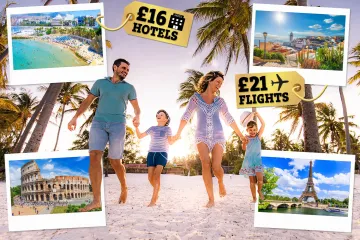
We’ve found a lesser-known booking site where you can bag entire package holidays from just £118, hotel rooms from £16 a night, and flights for as little as £9.
Your next holiday could be closer than you think with these bargain getawaysCredit: Alamy
Browse cheap holidays, flights and hotels on Opodo
Opodo acts as a massive travel search engine, scouring hundreds of airlines and millions of hotels to pull together some of the absolute cheapest deals on the internet.
As a travel writer who scours the internet each week for the cheapest holidays for Sun readers, these are some of the lowest travel fares I’ve ever seen.
Sign up for the Travel newsletter
Thank you!
So whether you’re after a quick weekend city break, a week-long beach escape, or even a solo travel retreat – here’s our guide to the very best travel bargains on Opodo right now.
Package holidays
Package hols are where you get the most bang for your buck on Opodo, as you can save up to 40% extra by booking your flights and hotel together through the website.
Or you can click here to browse all cheap package holidays.
Mallorca – from £121pp
Boat sailing, Majorca island, Spain. Cala MarmolCredit: Getty
With flight times around two and a half hours, Mallorca is an easy hop away for some autumn sun, with pleasant October temperatures of around 24C.
Spend your days exploring the winding, cobbled streets of Alcudia’s Old Town, hiking the spectacular Serra de Tramuntana mountains, or soaking up the sun on the pristine white sands of Es Trenc.
Browse Mallorca holidays from £121pp
Tenerife – from £147pp
Playa de las Teresitas in TenerifeCredit: Getty
The flight to Tenerife is only four hours from the UK, yet it still reaches highs of 26C in October.
Once you’re there, stroll the volcanic beaches of Costa Adeje, enjoy €3 tapas in traditional tavernas, hit up award-winning waterpark Siam Park or even go whale watching.
Browse Tenerife holidays from £147pp
The Algarve – from £118pp
Beautiful village of Carvoeiro in the Algarve, PortugalCredit: Getty
Autumn is the perfect time to visit Portugal‘s stunning southern coast, offering warm highs of 25C without the overwhelming summer crowds.
Wander around the bustling Olhao fish market, hike along dramatic coastal cliffs to see the spectacular rock formations, or simply relax on the golden sands of Praia dos Pescadores right by Albufeira’s old town.
Browse Algarve holidays from £118pp
Rome – from £119pp
You don’t need a huge budget to experience Rome, especially with Opodo offering package holidays from £119pp.
In the Italian capital the streets themselves are their own attraction. Soak up the atmosphere at the Spanish Steps, or toss a coin over your shoulder into the Trevi Fountain.
Browse Rome holidays from £119pp
Flights
You could fly to Barcelona from £9 if you’re signed up to Opodo PrimeCredit: Getty
Opodo offers super cheap flights to destinations in Europe and beyond, but they get even cheaper if you join Opodo Prime.
For example, you can bag a one-way flight to Barcelona for £24 each way, but if you’re signed up to Opodo Prime this sinks down to £9.
It costs £8.99 a month and also gets you discounts on hotels, so if you like to go on holiday regularly, it could save you some serious cash.
THE festive wrapping paper is on sale, the family-size box of Quality Street is stacked in shops – Christmas is officially on its way.
If you’re a true fan of the season, you’ll obviously want to head to the UK’s biggest Christmas market.
Manchester Christmas Market will return in early NovemberCredit: AlamyThe festive market will have 210 stalls across 10 locations across the cityCredit: Visit Manchester/Mark Waugh
And the largest is actually in Manchester which opens at the beginning of next month.
Returning on November 6, it will run for over six weeks – so there’s plenty of time to visit whether you’re a local or not.
Sign up for the Travel newsletter
Thank you!
It’s so enormous that there are 210 stalls across 10 locations spread about the city centre.
The stalls will sell everything from festive food and drink – think hot chocolate and mulled wine – to international street food, if you’re over the yorkshire pudding wraps.
Handmade gifts and stocking fillers can be found there too, if you’re ready to start Christmas shopping.
Albert Square will be where most of the city’s festivities will be, including its 50-metre high Ferris wheel.
There will also be a pop-up ‘pub’ for the festive season as well as a giant Santa, a vintage Helter Skelter and a huge tree installation and life-sized selfie sleigh.
If you’re on the hunt for ice skating, you’ll find it at Cathedral Gardens along with some market stalls too.
Across the city will be live entertainment, and plenty of Christmas lights.
The Manchester Christmas Parade will be held again this year on December 6.
There will be a ‘pop-up pub’ and Christmas ParadeCredit: Visit Manchester/Manchester City
Kids will be able to spot Snow Queens, reindeers, Nutcrackers, toy soldiers and even Santa who will be travelling onboard the Elf Express.
Visitors will find the market spread across locations including; Albert Square, Lincoln Square, King Street, St Ann’s Square, Exchange Street, New Cathedral Street, Exchange Square, Corn Exchange, Cathedral Gardens, and Market Street.
A recent study by Christmas Tree Worldalso recently crowned Manchester Christmas Market as the UK’s best.
Factors were based on the number of Google searches, social media posts and videos, hotel prices, history, number of stalls, entry cost and closeness to public transport.
With much cheaper hotel prices than the like of New York city, the Manchester Christmas Market was also voted second best in the world.
The market will come to a close on December 22.
However, the Albert Square and Cathedral Gardens will remain open throughout the Christmas period until January 3, 2027.
SPAIN has long reigned as the most popular holiday destination for Brits – but a cheaper alternative is set to rival it, according to easyJet.
Destinations across North Africa are seeing a huge boom in bookings, as holidaymakers look for better value holidays.
North Africa is continuing to boom in popularity as Spain slowsCredit: AlamyDestinations like Morocco, Egypt and Tunisia are seeing a jump in demandCredit: Alamy
North African holiday destinations include Morocco, Egypt and Tunisia – which all offer great winter sun options as well.
EasyJetholidays CEO Garry Wilson said at the recent ABTA convention in Madeira: “When we look at demand for next year, places like North Africa, we will see that continue to grow in popularity.
Sign up for the Travel newsletter
Thank you!
“Spain has been a bit overheated and we will see capacity demand slow down a bit.”
Luxury five star hotels are much cheaper across North Africa compared to mainland Europe.
For example, a five-star, all-inclusive week in Egypt can be found for under £450 each in November with loveholidays – the same in Spain is over £1,000.
Tunisia is even cheaper, with five star, all inclusive breaks just £249pp each in November for seven nights, while Morocco is around £509pp.
The Sun’s Head of Travel Lisa Minot explained further: “Holidaymakers looking for the best value this winter and into nextsummer should be honing in on the emerging – and wallet-friendly – North African destinations of Tunisia, Morocco and Egypt.
“With the number of flights from the UK more than doubling since 2019, they have become a serious contender to our traditional Spanish favourites.
“Now tour operators are joining the fray with easyJet Holidays, TUI and the UK’s largest tour operator Jet2 all offering even greater choice – at very competitive prices.”
She added that Brits are “recognising the value they offer as the cost of living crisis continues to hit family budgets,” which is despite the conflict in the Middle East.
New flights and holiday to Egypt have resulted in record tourism numbers this yearCredit: Alamy
Lisa continued: “I saw for myself the premium offering in Marsa Alam on a trip in February and holiday prices for this winter to the Red Sea resort are lower than before the escalating tensions.”
Egypt recently announced they had welcomed a record 14.4million international tourists in 2026, an increase of four per cent compared to last year.
With a target of 30million by 2030, hotel capacity is set to double, with plans for 35,000 extra hotel rooms.
BRITS could be in trouble if they plan jetting off for half-term as over 135,000 passports are set to expire before the end of the month.
This could wreak havoc for anyone heading away in October for a half-term break.
Hundreds of thousands of Brits have passports which will expire by the end of the yearCredit: AlamyWizz Air has found that over 135,006 passports are due to expire in OctoberCredit: ALBIT / SplashNews.com
Wizz Air has found that over 360,000 passports are set to expire before the end of the year.
The rule to remember is that British passports must have been issued within the last 10 years.
Lots of Brits fall victim of this rule as sometimes the expiry date can outdate the issue date.
For example, if a passport has July 2016 start date but a December 2026 expiry, it technically expired in July as it’s older than 10 years.
To travel to Europe and Schengen countries, passports must also be valid for at least three months after your planned return date.
Yvonne Moynihan, Managing Director at Wizz Air UK, said: “Nobody wants to arrive at the airport ready for their half term holiday only to discover there’s a problem with their passport.
“With more than 135,000 adult passports expiring this month alone, we’re encouraging anyone planning to travel to dig theirs out now and make sure everything is in order.”
Valid British passports cannot be older than 10 yearsCredit: Alamy
“Check your passport, check the entry requirements for where you’re going and get it sorted early if you need to.”
Yvonne added that if you’re heading on a Christmas getaway, it’s worth looking at your passport now so there’s time to renew it before December if you need to.
A hike among redwoods is fine if you go in for that sort of thing.
But to gaze upon those towering trees from a slow train with a stiff drink in your hand — that’s something else entirely.
And with the latest added offerings from Mendocino County’s historic Skunk Train, slow-rolling drink-sipping is possible on short excursions from the railway’s stations in both Fort Bragg along Highway 1 and Willits along U.S. 101.
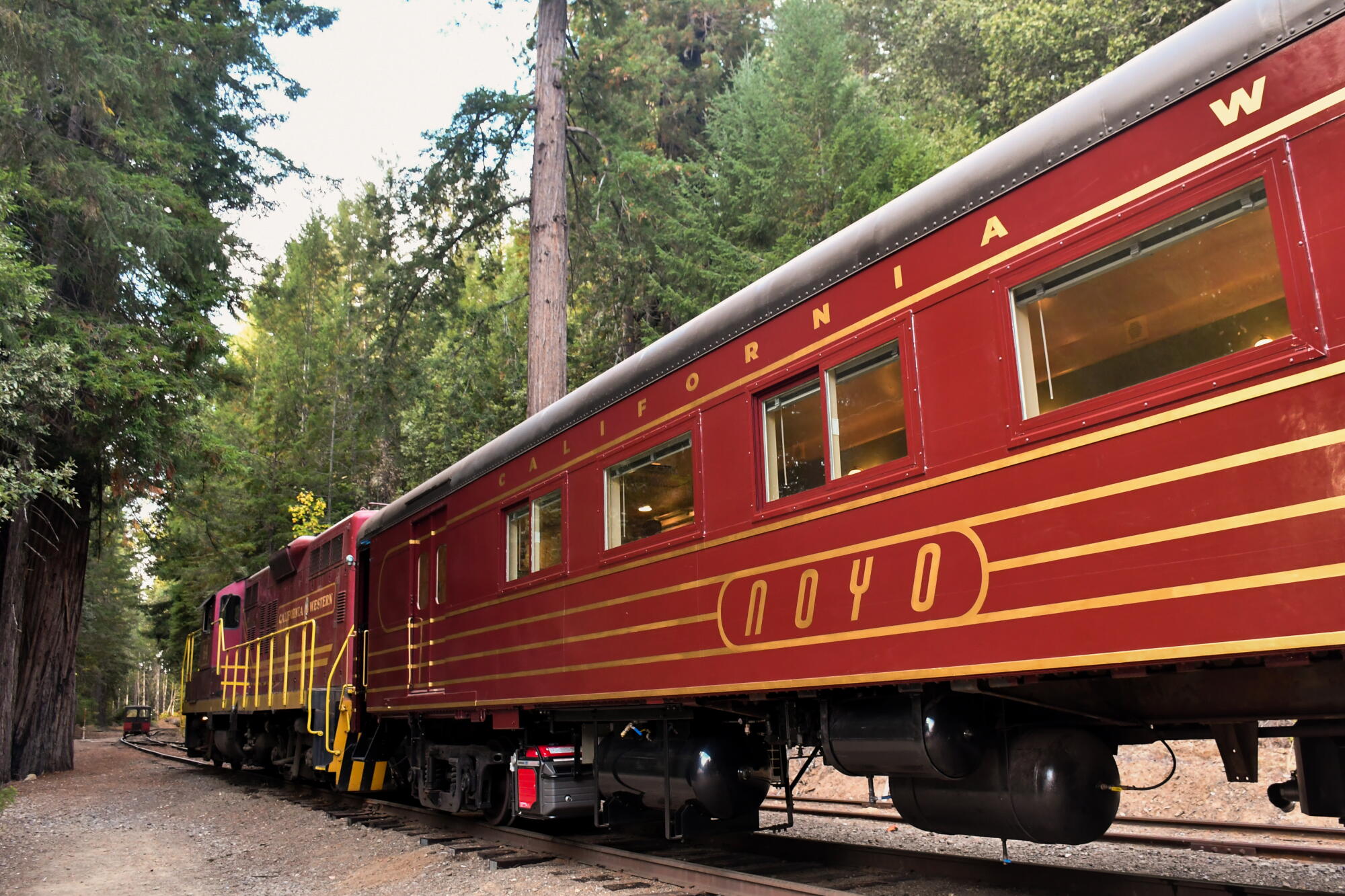
Known as the Noyo, this car is a new cocktail car that’s part of the Skunk Train, rolling from Willits, Calif.
(Christopher Reynolds / Los Angeles Times)
The first part of this expansion happened last year when the Mendocino Railway, better known as the Skunk Train, unveiled the Redwood, a fancy railcar offering cocktails as part of a seven-mile round trip from Fort Bragg. The Willits end of this expansion followed in September, when the railroad introduced another reconditioned traincar, this one known as the Noyo. Formerly a U.S. Army railcar, it’s now been reborn as a rolling cocktail lounge for up to 22 guests, featuring leather chairs, plush couches, a carpeted floor and ‘50s overtones.
On the journey I joined recently, passengers mingled in a spacious, adults-only railcar with vintage jazz on the sound system and servers outfitted in spiffy white jackets. For about $200 each, Willits-based passengers get a 16-mile round trip, charcuterie snacks and two cocktails (or mocktails).
Most popular cocktail so far: the Redwood Martini, made with dry gin, dry vermouth and orange bitters, served with a sprig of redwood.
The journey takes about two hours, passing through an 812-foot-long tunnel (a.k.a. Tunnel No. 2), then pausing to turn around in a clearing known as Crowley.
Passengers relax in the Skunk Train’s “presidential class” railcar, the Noyo, from Willits.
(Mendocino Railway)
Crowley, once a logging camp, can’t be reached by road, but train passengers can wander among picnic tables, fire pits, cornhole games and a massive, gnarled old redwood known as the Wolf Tree. (In September, when the performers of the Flynn Creek Circus were in town, the troupe hauled a big tent out to the clearing and staged two weeks of live performances there.)
Through October and November, the Skunk Train offers “presidential class” cocktail-car trips four to five days per week from Fort Bragg, two to three days per week from Willits. In December, trips from Willits are also offered on most weekdays and service from Fort Bragg drops to two days per week. (Willits-based service shuts down in January and February before resuming in March.)
1
2
1.Passengers in the Skunk Train’s “presidential class” railcar, the Noyo, from Willits get two cocktails (or mocktails) with the price of admission for a two-hour round-trip journey.2.Besides cocktails or mocktails, service aboard the Skunk Train’s “presidential class” cars from Willits and Fort Bragg includes charcuterie plates.(Mendocino Railway)
These cocktail cars are the latest additions in a decade of Skunk Train team improvisations in the wake of long history and, more recently, trouble on the tracks.
The Fort Bragg Railroad started up in 1885 to haul redwood and fir logs to the coast for shipping south to San Francisco. By 1911 there was steam-driven passenger service between Fort Bragg and Willits, and by 1925, locals had nicknamed it the “skunk train” because of the odor that billowed from the railcars’ recently introduced gasoline-burning engines and oil-burning stoves.
That moniker might have faded, but in May 1959, National Geographic magazine devoted a spread to the train under the headline “The Friendly Train Called Skunk.” In its 40 miles, that article noted, the train climbed more than 1,600 feet, crossed 34 bridges and trestles and rounded some 381 turns, occasionally pausing to deliver groceries to rural neighbors.
A passenger soaks up atmosphere on the two-hour, round-trip Skunk Train journey from Willits in Mendocino County.
(Christopher Reynolds / Los Angeles Times)
Alas, the timber industry faded, a mail delivery contract was lost and railroad ownership changed hands. On the way, the Skunk Train began to depend mostly on tourists. Then in 2013, the railroad’s Tunnel No. 1 collapsed, blocking the tracks about four miles east of Fort Bragg. Repairs followed, but the same tunnel collapsed again in 2015. There were no injuries in either accident, but it remains impossible for any railcar to make the full 40-mile journey between Fort Bragg and Willits.
“We are committed to reopening the tunnel,” Mendocino Railway president and CEO Robert J. Pinoli has said. But the reopening won’t be quick. Besides the challenge of rebuilding the tunnel, the railroad has been tangled for several years in legal disputes with the city of Fort Bragg and the California Coastal Commission. For now, every trip on the Skunk Train, including traditional railcars and increasingly popular pedal-assisted railbikes, is an out-and-back journey designed to avoid the blocked tunnel.
From Fort Bragg, most train and railbike trips go 3.5 miles east and 3.5 miles back again. From Willits, most trips go eight miles west and turn around, including the fall Pumpkin Express and Christmas Train. The great exception is “Railbikes on the Noyo,” a 25-mile journey that begins near Fort Bragg with a hike to the east end of Tunnel No. 1. From there, guests pedal an eastbound railbike for 12.5 miles through the forest, including a dozen wooden trestle bridges and recurring views of the Noyo River. After a picnic lunch, guests double back to where they started. That adventure usually takes about six hours and starts at $564 (combined) for two people sharing a two-seat railbike.
The new cocktail car excursion, meanwhile, requires less time, less money and less perspiration.
A view of the Skunk Train’s Noyo railcar.
(Mendocino Railway)
After our train reversed direction at its midway stop in Crowley, I could have stayed in my comfortable cocktail-car seat. But I had been tipped to check out the back end of the train. That’s the open observation car (no ceiling) in the back of the train. Skunk Train employees say it was first built for the U.S. Marines to transport Sherman tanks. It works just fine carrying us gawking civilians.
“Ahhh,” said 2-year-old Elle Davis, looking up to the sky and standing by her mother, Kaitlyn Davis of Willits. The observation car is open to all aboard — that is, the Noyo Car passengers and to those Skunk Train passengers who pay standard fares ($81.47 per adult) for less luxe railcars (open to all ages).
As you stand there with the wind in your face and the rails rattling below, the evergreen boughs whoosh past. Depending on the hour and humidity, the sky might be dimming or masked by fog. These days you don’t get that skunky scent of years gone by, but a ride is still a full sensory experience. And even if you have an adult beverage in your hand, you might find yourself with the same sense of rejuvenation that engineer Johnny Galliani described to National Geographic back in 1959.
“Young or old, they’re all kids when they ride with us,” Galliani said. “Nothing like a ride on this train to take the years off your back and make you young again.”
Passengers board the Skunk Train on an excursion from Willits to a forest clearing (once a lumber camp) called Crowley.
BRITS could face hefty fines if caught smoking, or playing loud music at one popular holiday spot.
In some cases, the penalty could be as much as £2,500.
In areas of Tenerife it’s now it’s been banned to smoke on the beachCredit: Getty It’s also been banned to be disruptive around natural swimming poolsCredit: Getty
The area of La Laguna in Tenerife, has approved new rules banning smoking, camping, overnight stays and disruptive music on its beaches and natural swimming pools.
The announcement was made on October 7 and has been put in place to protect the coastline.
Sign up for the Travel newsletter
Thank you!
Under the new rules, beaches within the areas and natural pools are now smoke-free.
It also stops visitors from leaving rubbish behind including soap and shampoo in public showers.
Natasha Whitley has saved a huge amount compared to the costs people expect to pay
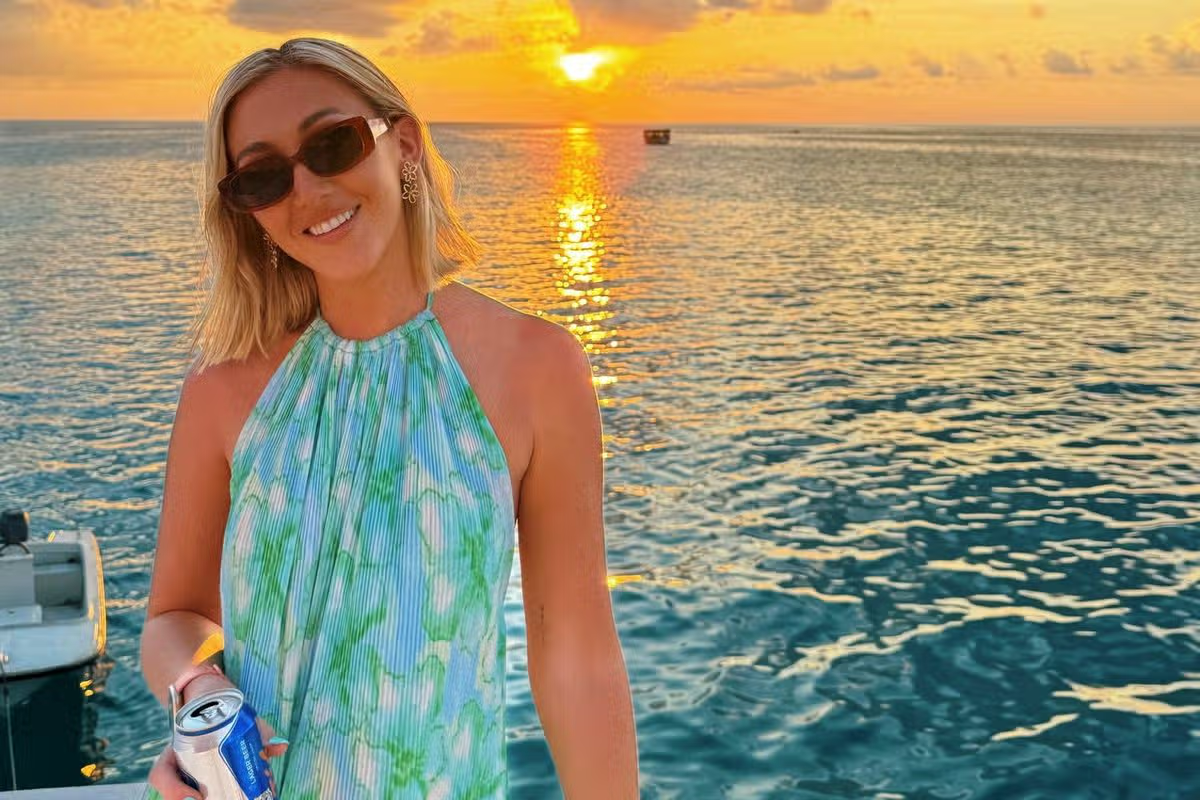
Natasha Whitley on her budget holiday to the Maldives(Image: Natasha Whitley/SWNS)
A budget traveller who has been to the Maldives four times has revealed how she spent less than £350 on one trip.
Natasha Whitley, 30, first travelled to the country in April 2024 with friend Kara, 26, for five days and tried out two islands – Thulusdhoo and Dhiffushi. Staying in cheap accommodation costing just £60 per night and a local ferry costing them just £1 to get from the airport, Natasha “loved it”.
Since then Natasha started her own business for solo travellers, Say Yes Adventures, and returned to the Maldives a further three times as part of group trips. Her most recent visit in February 2026 saw her travel solo on a new island – Fulidhoo – for three nights.
She flew from Gatwick Airport with her flights costing £800 – but it cost just £2.50 for the three-and-a-half-hour ferry trip from Malé to Fulidhoo. She stayed at a hotel costing £260 for three nights, she explored the local island and tried out local food like Maldivian fish curry while there. After paying £29 for a speedboat back from Malé, she continued on to stay at an all-inclusive resort called Niva Kuramathi Maldives – which she says was “not affordable at all but interesting to see the contrast”.
Love of travel
Natasha, a content creator from Bournemouth, Dorset, said: “I’ve always loved travel and I was lucky my parents were interested in travel. They met while travelling in the 80s, so it’s always been a part of my life and story.
“I’m a pharmacist and I worked for four years and took a career break, which was meant to be eight months – it was a big round-the-world trip to Australia, New Zealand, Hawaii and Central America all on a budget.
“I quit my pharmacy job for a content creation summer job. I met my friend Kara the following year and put the feels out there to see if she wanted to come to the Maldives with me.
“There’s not much online about the Maldives on a budget – people know it as somewhere super expensive and a honeymoon destination. In terms of budget I think we said we’d spend around £100 per day on accommodation and activities.
“We spent less than that and spent £420 over the five or six days. You see all the resorts across from you on the local islands, which is crazy because people are paying thousands and you’re spending a fraction of the price in the same waters. Staying on local islands has saved me a lot of money.”
2026 trip
In February 2026, Natasha headed out on her fourth trip to Fulidhoo.
She said: “In the Maldives my favourite food is the Maldivian fish curry, which is usually five dollars. From that island you can do snorkelling trips and watch wild stringrays and nurse sharks from the jetty at night.
“You can snorkel off the beach as well. If you’re nervous about solo travelling just start small, don’t think big because a big six-month trip can be quite overwhelming. The best way to start is to join a group trip because you travel solo, but as soon as you arrive you’re in a group of people, so you get a bit of both”.
In total, Natasha has spent more than 100 nights in the Maldives over the last two years, which would have cost her more than £45,000. You can follow Natasha’s adventures on @travelsbytash and find out more about her group travel company Say Yes Adventures at sayyesadventures.com.
Costs for Natasha’s trip to Fulidhoo
Accommodation: £261 for 3 nights, including breakfast
Transport: £2.50 for local ferry, £30 for speedboat
Food: £7 to £10 per meal
Total cost: £344.50
Example costs for a trip to a resort
Accommodation: £2,482 for 3 nights in an overwater bungalow with private pool and full-board
Transport: £127 return speedboat from Malé
Food: £47, including shrimp pad-Thai at à-la-carte restaurant
In the early hours of 2 June 1953, guests at the Pen-Y-Gwryd hotel in the heart of Eryri (Snowdonia) were woken from their sleep by the sound of footsteps running down the corridor outside their rooms. The commotion was followed by gleeful shouting and the sound of champagne corks popping. A late-night telephone call to the hotel’s owner had moments earlier confirmed that Edmund Hillary and Tenzing Norgay had successfully summited Mount Everest. It had taken two days for the news to travel from the Himalayas to London. Serendipitously, news of the historic achievement coincided with the coronation of Queen Elizabeth II later that day.
In the days and weeks that followed, the two mountaineers were feted across the front pages of newspapers around the world. Posing awkwardly for the cameras, their beaming smiles shone out of frost-burnt faces. In the decades that followed, Tenzing Norgay’s role in the expedition was increasingly marginalised – he was a Sherpa, indigenous to the area, and the load-carrying guide, while Hillary firmly planted his ice axe in the history books.
Edmund Hillary, left, with Tenzing Norgay, after their epic achievement. Photograph: Granger/Historical Picture Archive/Alamy
A new film, set for release this week on Apple TV, aims to set that record straight. Tenzing, starring Genden Phuntsok and Tom Hiddleston, tracks Tenzing Norgay’s life from a young boy growing up in the Khumbu Valley to his rise as one of the most accomplished climbers within the Sherpa community, and his eventual recruitment to the 1953 British expedition to Mount Everest (known locally as Chomolungma)led by Colonel John Hunt.
The film opened the Zurich film festival last month, where its director, Australian film-maker Jennifer Peedom, told audiences: “It’s often reduced to a familiar shorthand: Hillary conquered Everest, assisted by a Sherpa. But Tenzing had more experience on Everest than anyone else on that 1953 expedition. He wasn’t just helping another man achieve his dream. He had his own dream.”
Tom Hiddleston as Edmund Hillary and Genden Phuntsok as Tenzing Norgay in the film Tenzing. Photograph: Apple TV+/PA
In the spring of 1952, a full year before the British expedition, Tenzing, alongside Swiss climber Raymond Lambert, came agonisingly close to reaching the summit – less than 250 metres stood between them and glory. After a storm-lashed night on the south-east ridge, and with little oxygen, they were forced to retreat, albeit having set a new altitude record.
Meanwhile, back in the UK, Hunt, having been assigned by the Joint Himalayan Committee to assemble a team of climbers, set up base camp at the Pen-Y-Gwryd hotel at the foot of the Llanberis Pass. It was here they would practise their technical climbing skills and test the state-of-the-art equipment that had been designed specifically for this adventure, in particular the closed-circuit oxygen tanks that would be critical in keeping them alive in the “death zone” above 8,000m. The teams spent weeks on Yr Wyddfa’s (Snowdon) notorious Crib Goch ridge and on Yr Lliwedd mountain, testing the revolutionary new high-altitude boots that would replace the old leather and hobnail ones, which offered little to no protection from the freezing temperatures of Everest.
Artefacts from those pioneering days can be seen at the hotel today. A glass cabinet contains some of the summit team’s original equipment and mementoes: goggles, an ice axe, a ledger of Sherpas’ fingerprints as most could not read or write, a compass and a battered tin mug. Little has changed in the 73 years since Christopher Briggs woke his guests with those glasses of champagne. The Pen-Y-Gwryd is a time capsule; it remains in family hands, now run by Briggs’s grandsons, Nick and Rupert Pullee, who are determined to maintain the hotel’s legacy and the traditions that have made it a beloved destination for those with a penchant for adventure and late-night conversations in front of roaring fires.
Mementoes from the Everest expedition on display at Pen-Y-Gwryd hotel.
“My grandfather was originally from Scarborough,” Nick says. “He was a chemist, but his shop was bombed during the war, so [in 1947] he persuaded a friend to lend him the money to buy a hotel in Wales. The building had been used to home children during the blitz and had fallen into terrible disrepair, but he somehow managed to turn it into a success.”
Briggs also started the Snowdon Club, where guests under the age of 16 who have successfully climbed the mountain take part in a small ceremony in which they are quizzed on their mountain knowledge. Those who answer correctly get to drink (lemonade) from Hillary’s pewter tankard and are awarded a sterling silver ice-axe brooch, with their name added to a book of members – a ritual that still happens today.
The Smoke Room serves as the residents’ bar, a tiny wood-panelled snug whose walls are adorned with photos of the Everest team, with Tenzing featuring prominently. In one, he’s perched in the bar drinking tea with George Band, the youngest climber on the 1953 expedition. Inanother, he’s on a rocky outcrop of Tryfan, another famous Snowdonia peak, with team leader Hunt.
“I was only a toddler when Tenzing last visited the hotel,” says Nick. “I remember he was incredibly kind and was constantly smiling. He used to give Rupert and myself piggybacks up the stairs. He was great friends with my grandfather, who visited him in Nepal often.”
Landlord Christopher Briggs with Tenzing Norgay and George Band in the Smoke Room. Photograph: Pen Y Gwryd Archive
Built in 1810 on the bedrock that makes up the Glyderau range, the Pen-Y-Gwryd hotel is also the original starting point of the Pyg track, one of the most iconic routes to the summit of Yr Wyddfa, and today guests can walk directly from the hotel’s door to the path that snakes upwards towards Pen y Pass. The timeless interior of the hotel is devoid of TV screens or piped music, and the only concession to the 21st century appears to be the wifi.
This summer’s endless heatwaves saw sun-scorched hillwalkers cool their limbs in the natural outdoor pool in the grounds of the hotel. Fed by mountain streams, it offers unparalleled views of the hills and sweeping valley towards the mountain village of Capel Curig. The addition of an outdoor sauna and the popularity of cold-water swimming mean it’s now a year-round proposition.
The 20 rooms are all named evocatively after local peaks: Pen yr Ole Wen, Elidir Fawr, Crib Goch, Y Garn. Each is as cosy as one would expect from a rain-lashed mountain hotel: softly lit and with comfy mattresses wrapped in vintage Welsh wool blankets. In the labyrinthine corridors upstairs, you’ll discover bathrooms with Victorian roll-top tubs and Heath Robinson-esque showers. The bathroom doors are adorned with illustrations in the style of Aubrey Beardsley, and photos and artworks capturing the surrounding landscape and its mountaineering history adorn virtually every wall.
Climbers on the challenging Crib Goch. Photograph: Bailey-Cooper Photography/Alamy
Dining at the Pen-Y-Gwryd is an event in itself: mealtimes are announced by the banging of a gong, the dining room is an unapologetic whirlwind of Axminster and silverware, and the menu features roast Welsh lamb and Welsh steak and ale pies, sticky toffee puddings or rhubarb crumble – everything you’ll need to replenish after a long mountain trek.
The ceiling of the Everest Room in the public bar has been signed by pretty much every big-name mountaineer of the past 100 years, and each corner of the building appears to have a story and artefact attached. It’s this authenticity that Nick believes gives the hotel its charm.
“I think our greatest attraction may be that things remain unchanged,” says Nick. “We have a lot of regular guests from all over the world, and for many people the opportunity to step back from the world in the wilds of Snowdonia is extremely enticing. It’s something we aim to protect and cherish.”
Rooms at the Pen-Y-Gwryd hotelrange from £114 to £172B&B; three-course dinner £49.Tenzingis on Apple TV from 16 October
FORGET Mykonos, Saint Tropez and Dubai – if you want to holiday like a celebrity, there are plenty of spots loved by A-listers in the UK.
From English seaside towns to tiny Welsh village, all of these places are loved by celebrities – and you’re likely to see them there too.
Mawgan Porth in Cornwall has been dubbed ‘Hollywood-on-Sea’Credit: AlamyThe coastal village is home to celebrities like actress Cate BlanchettCredit: Getty
Mawgan Porth
Cornwall is sprinkled with beautiful beaches and pretty fishing villages, but there’s one spot in particular that has become a favourite hideaway for A-listers.
The small coastal village of Mawgan Porth is quite often less busy than other towns which is another reason why it’s drawn in celebrity names – it’s even been nicknamed Hollywood-on-Sea.
Sign up for the Travel newsletter
Thank you!
The likes of Cate Blanchett, Stanley Tucci and Jason Statham have properties in the area, while other big names have also been spotted.
Aquaman star Jason Momoa has been reportedly eyeing up a property in the town.
The Roslin Beach Hotel in Southend-on-Sea has drawn in celebrity visitorsCredit: Google mapsMichelle Keegan spent her first Mother’s Day as a mother at The Roslin HotelCredit: Getty
One local called Karen who works at the Osborne Cafe and Seafood merchant on the seafront, previously told The Sun: “We’ve had Boris Johnson, Priti Patel, Prime minister Rishi – oh and Bridget Jones’ dad – Jim Broadbent.
Leigh-on-Sea is the hometown of Helen Mirren, who moved there as a child.
The trendy seaside town has lots to explore like its high street filled with pubs, tearooms and cafes.
Some of the most popular spots include Ye Olde Smack, which overlooks the Thames Estuary, as well as the neighbouring The Boatyard.
Broadway is the spot for independent shops, antique stores and plenty of boutiques like Just Fox, Heatherbie of Leigh and The Magic Wardrobe.
Mumbles, Wales
The town of Mumbles sits on the Gower PeninsulaCredit: AlamyActress Catherine Zeta Jones grew up around the area and is rumoured to have property thereCredit: Getty
This popular coastal village in Swansea is considered the gateway to the Gower Peninsula.
It’s also considered an Area of Outstanding Natural Beauty where you’ll find the ruins of an old castle, a lighthouse, a promenade, and the Swansea Bay Rider Land Train.
The village is a great shopping spot, with a number of high-end shops, independent boutiques, and galleries.
BRITS will get more choice of where to go on holiday next year as TUI has announced eight new routes.
These will take-off from London Gatwick to destinations from sunny Spanish cities to North African islands.
TUI is adding eight new routes from London Gatwick for summer 2027Credit: AlamyOne of these routes is to the popular winter sun city of SevilleCredit: arcady_31
For summer 2027, TUI is adding eight new routes which will contribute to its 17 million seats and 84,000 flights planned for next year.
There will be three new routes to Spain, one of which will be to Seville which is popular for winter sun thanks to its year-round sunshine.
Sign up for the Travel newsletter
Thank you!
Even in the winter, Seville can experience highs of 18C.
The city has plenty to see like Royal Alcázar of Seville, Seville Cathedral and Plaza de España which is a cobbled square with four bridges over its small river.
In Greece, one of the new routes is to the Greek city of AthensCredit: Getty
He added: “I climbed Mars Hill to catch the sunset over the city — an experience that’s usually a shoulder-to-shoulder fight in July, but in winter felt like my own private viewing platform.
Another of TUI’s new routes is to Mytilene (Lesvos) which is on the Greek island of Lesbos.
In the city, visitors can explore Mytilene Castle, stroll around Ermou Street Market and enjoy seafood at the tavernas along the waterfront.
It even has its own Statue of Liberty in the harbour.
One of the three Spanish routes is to ValenciaCredit: GettyThe island of Lesvos has bright blue Mediterranean watersCredit: Getty
TUI will also fly to Palermo, the capital of the Italian island of Sicily.
It sits on the northern coast of the country with both sandy and rocky beaches like Mondello Beach and Addaura.
One free attraction is San Domenico Square which is the entrance to La Vucciria a market selling things like food, jewellery and souvenirs.
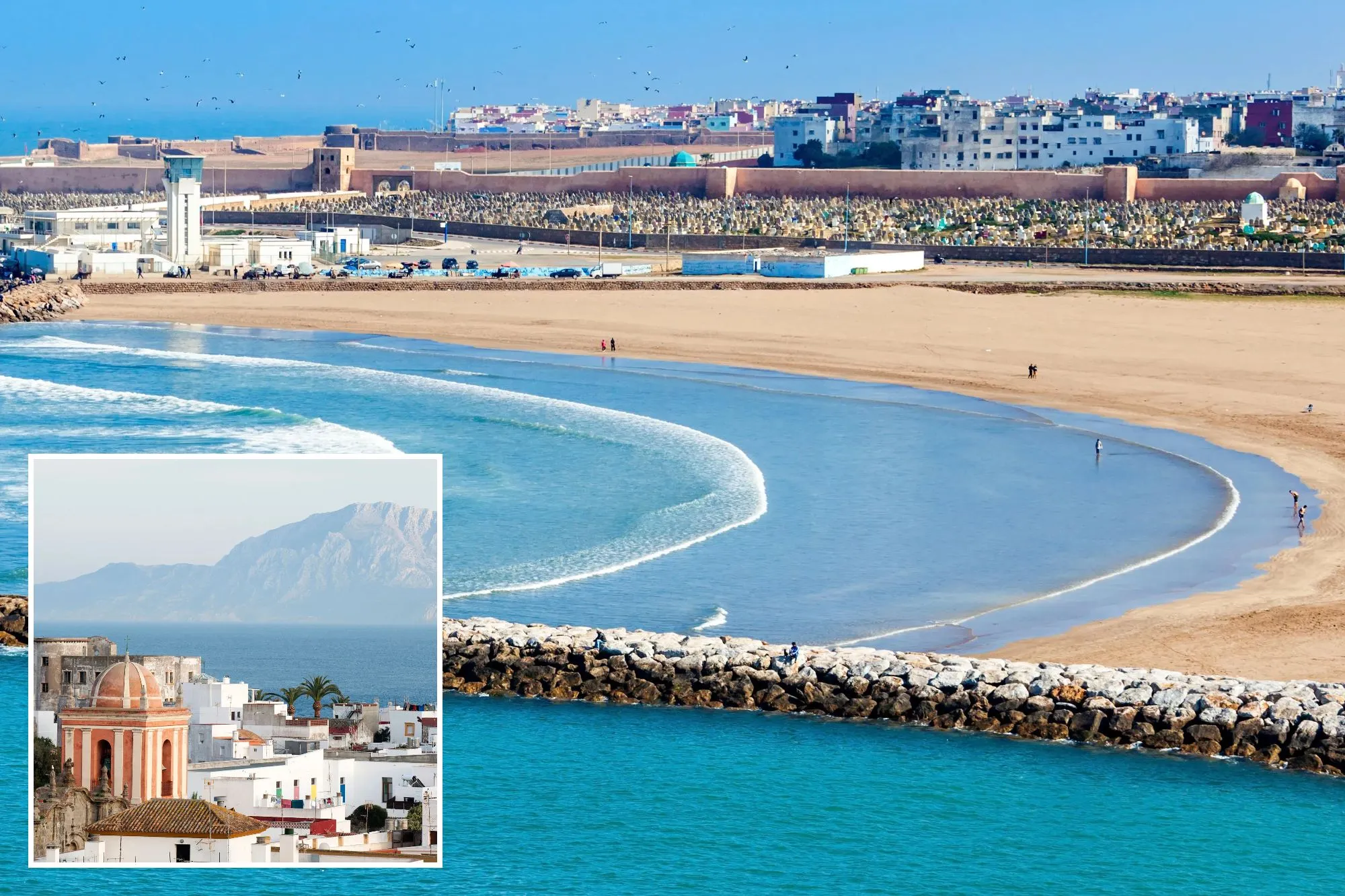
TUI is also offering a direct route to Tangier in Morocco which sits along the Strait of Gibraltar.
The city itself has plenty to see including its medina, busy souks, and landmarks like the Kasbah and the Caves of Hercules.
The city itself has a blend of cultures; African, French and Spanish.
It has a vibrant café culture thanks to its French influence, tapas culture from Spain.
In the summertime, Tangier sits at around 30C so it’s warm, but still mild enough to explore.
Tangier in Morocco boasts souks and the Cave of HerculesCredit: DoraDaltonDjerba is off the coast of Tunisia and is hot all year-roundCredit: BTWImages
Another route is to Djerba, a large island off Tunisia’s southeastern coast.
It has sandy beaches and for any Star Wars fans, it was the filming location for Star Wars: Episode IV – A New Hope – and there are regular tours too.
Head of Sun Travel, Lisa Minot, visited Djerba last year, she said: “Relatively undiscovered by us Brits, Djerba is a great-value option for those looking to explore beyond the Med favourites.
“Sizzling in summer, temperatures remain high all the way through to November and rarely dip below the 20Cs, even in the depths of winter, making it ideal for out-of-season sunshine.”
The top trending travel destinations for 2027 according to Expedia – and one UK location features among the top holiday spots
14:23, 14 Oct 2026Updated 14:25, 14 Oct 2026
Discover the top bucket list destinations for 2027(Image: Getty Images)
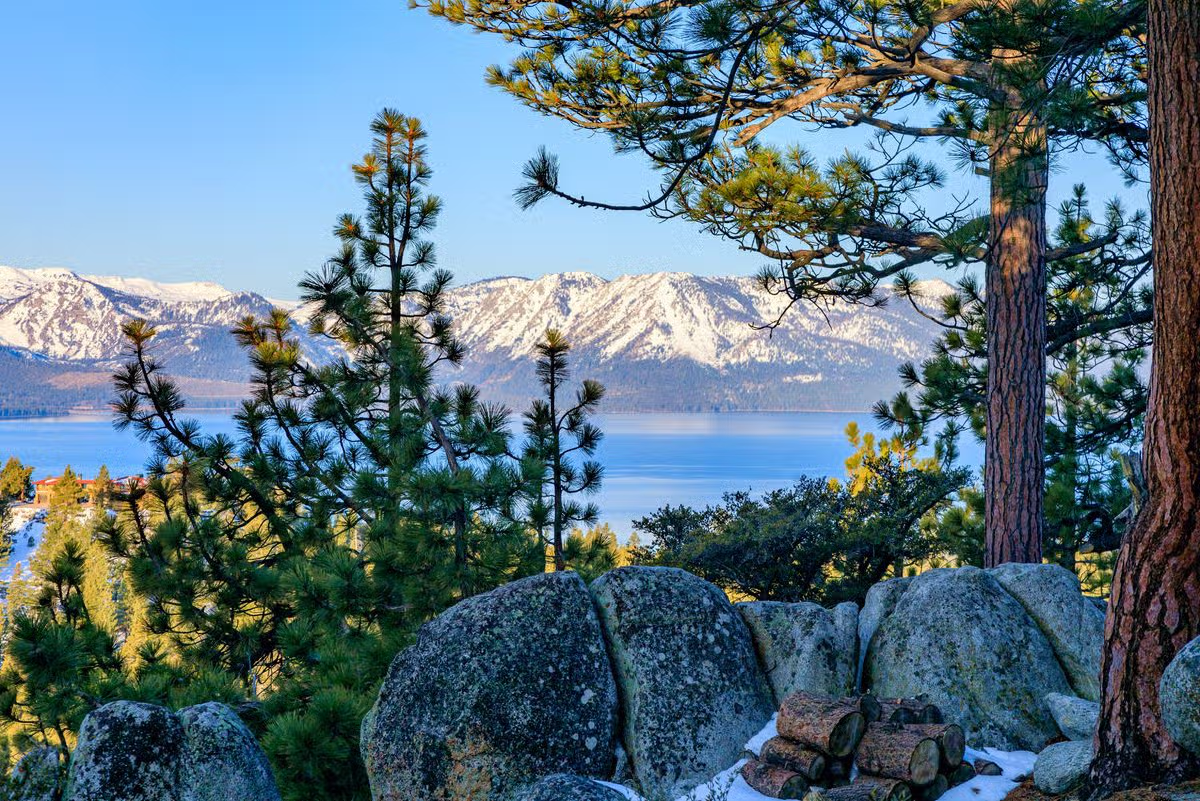
The hottest holiday destinations for 2027 include South Lake Tahoe in California, Hyogo in Japan and Punta del Este in Uruguay, according to Expedia Group.
The global marketplace has analysed flight and accommodation search data to pinpoint where traveller interest is soaring. Between 1 September 2025 and 27 July 2026, compared to 1 September 2024 to 27 July 2025, searches for “South Lake Tahoe” in California, USA, jumped by 195%.
The resort city nestled in the Sierra Nevada mountains is described as ideal for adventure seekers and outdoor enthusiasts, offering everything from skiing to picturesque hiking trails. Coming in second place is Hyogo in Japan, with searches climbing 95%, while Punta del Este, Uruguay secured third spot, with searches rising 65%.
The destinations form part of Expedia and Hotels.com’s “Unpack’27: The Trends in Travel” report, which details the destinations and travel behaviours expected to shape the year ahead.
Other locations making the top 10 include Sedona, Arizona, USA (up 55%), Busan, South Korea (up 50%) and Holbox, Mexico (up 45%). Perugia, Italy (up 35%), The Tweed, New South Wales, Australia (up 35%), Niagara-on-the-Lake, Canada (up 35%) and Chichester, UK (up 30%) also made the list.
CEO of Expedia Group Ariane Gorin said: “Travel is about creating memories, and Unpack ’27 uncovers the destinations and experiences shaping those moments.
“In 2027, travellers are being more intentional in choosing their next adventure, seeking experiences that are more personal and purposeful to them.”
The report from the global marketplace also surveyed 26,000 respondents worldwide, including 2,000 from the UK, all of whom have previously been on holiday and plan to do so within the next three years.
Adults from 16 countries took part – including the UK, USA, New Zealand, Singapore, Australia, Brazil, Canada, Germany, Denmark, France, Hong Kong, Japan, South Korea, Mexico, Norway and Sweden.
Both the research and search data were used to determine 2027 travel trends, including the ‘2027 Destinations of the Year’, ‘Un-Adulting’, ‘Trip Snacking’, ‘Gothic Getaways’ and ‘The 2027 Set-Jetting Forecast’.
‘Un-Adulting’ emerged as a standout trend, with 57% saying they are “likely” to book an over 18s trip to an amusement park next year, a figure that climbs to 71% amongst Gen Z and Millennials.
For UK travellers in particular, these trips are all about having fun and enjoying a carefree day out (74%) and spending quality time with their partner, friends or other loved ones (64%). Escaping the pressures of everyday responsibilities (60%) also plays a significant role.
The ‘Trip Snacking’ trend has come to light as searches on Hotels.com for one-night stays between Thursday and Sunday soared by nearly 10% over the past 12 months compared to the previous year . The poll revealed that 79% of travellers are planning to book a one-night stay in the coming year, with this figure climbing to 83% amongst Gen Z and Millennials.
The surge in popularity is driven by a desire to attend concerts, shows and sporting events (49%), to mark life milestones (42%) and to enjoy a break between ‘normal’ holidays (23%).
‘Gothic Getaways’ have also emerged as a major trend, with 65% of respondents expressing a specific interest in booking a Gothic-style hotel in 2027 – rising to 71% amongst Gen Z and Millennials. Some 56% have previously chosen hotels purely for their atmosphere or aesthetic.
Amongst the 54% of UK travellers keen on booking a Gothic-style hotel in 2027, 51% favour historic hotels, castles, or properties steeped in a rich past.
Furthermore, 41% are drawn to destinations associated with folklore, legends or the supernatural, while 40% find the dramatic architecture and striking visual atmosphere of Gothic-style hotels particularly appealing.
Finally, ‘The 2027 Set-Jetting Forecast’ comes as searches for Monaco soared by more than 120% in the 30 days after Emily in Paris season six was confirmed to be filming there.
It also emerged that 18% have booked a trip to a destination after seeing it featured on television or in films.
Meanwhile, 46% of those who watch TV or films have researched or booked trips to locations featured in yet-to-be-released shows and films – rising to 58% amongst Gen Z and Millennials. On average, UK respondents said they would splash out £600 to visit a set location – rising to £629 for those with children in tow.
Gorin added: “We’re making it easier to discover, plan, and book the right trip, so travellers can spend less time managing the details and more time enjoying the moments that matter.”
Ryanair and Jet2 both have clear policies(Image: Dominika Zarzycka/SOPA Images/LightRocket via Getty Images)
Passengers flying with certain airlines including Ryanair and Jet2 will need to produce an additional document in order to be allowed to board, according to the terms and conditions outlined on both carriers’ websites.
NHS guidelines state that most women can fly safely well into their pregnancy, providing they take the necessary precautions, such as securing adequate travel insurance. It is advised that travellers ensure their policy covers all potential eventualities, including pregnancy-related medical care during labour, premature birth, and the cost of amending the return journey date should labour occur.
While each airline has its own specific guidance, their policies concerning pregnant women flying at various stages are broadly similar. For example, beyond a certain point in their pregnancy, women travelling with Ryanair and Jet2 will be required to produce a medical document or face being refused boarding.
Ryanair
Ryanair’s guidance states that “you may fly up to 28 weeks of pregnancy” and once a pregnancy reaches week 28 “you will need to carry a completed ‘fit to fly’ letter from your doctor/midwife”. Further details on its website add: “If you have a single pregnancy, travel is not permitted beyond the end of the 36th week of your pregnancy; For a twin/triplet pregnancy, a ‘fit to fly’ letter is required between 28-32 weeks, and travel is not permitted beyond the end of the 32nd week of pregnancy.
“If you have any doubts about your suitability to fly or if you have had any complications while pregnant, please consult your doctor before booking your flights.”
Jet2
Jet2’s policy echoes this, and reads: “We are not able to carry expectant mothers after: the end of the 35th week of pregnancy in the case of a single pregnancy; or – the end of the 33rd week of pregnancy in the case of multiple pregnancies (for example twins).
“After the end of the 27th week of pregnancy, expectant mothers must provide us with a doctor’s certificate confirming their stage of pregnancy and that they are fit to fly, failing which we reserve the right to refuse carriage. This certificate needs to be dated within 7 days of the outbound date of travel and 16 days of the inbound date of travel.”
easyJet
easyJet’s guidance is comparable, noting “you are able to travel until quite late into your pregnancy” while adding: “If you have experienced any complications during your pregnancy, you should consult your medical practitioner before flying with us.
“You can travel up to the end of the 35th week for single pregnancies. If you are expecting more than one baby you can travel up to the end of the 32nd week”.
Expectant mothers wishing to travel with an infant on their lap are permitted to do so.
IT might not be a traditional theme park, but Kynren – An Epic Tale of England still has plenty to shout about.
The UK’s first live action show park hosts immersive historical reenactments and its ‘The Storied Land’ has just been named a ‘European Top New Attraction’.
Kynren is a new theme park in County Durham and one of the best in EuropeCredit: SuppliedRather than rides, the attraction has historical shows and reenactmentsCredit: Alamy
The award is for theme parks that ‘have introduced the finest new attractions during the recently concluded season are selected’ – these include rollercoasters, dark rides, shows and special events.
Sign up for the Travel newsletter
Thank you!
Parksmania complimented ‘The Storied Lands’ for its five productions that ‘transform history, myth and nature into a full-day experience’.
The five action shows are ‘Legend of the Wear’ which is a water show performed over a lake – it’s inspired by North East folklore.
The Lost Feather is a new show where more than 250 birds fly freely in front of the audience from pelicans, to scarlet ibis, African grey crowned cranes, and birds of prey.
Land of the Vikings takes the audience through a traditional Viking village where they’ll see blacksmiths, fires, fisherwomen – and a jousting tournament.
The Trusty Seed is an equestrian show where there are plenty of daring stunts all performed on horseback.
Victorian Imaginariums is a new show which will launch in July 2027.
Here, visitors will be immersed in Victorian Britain where they’ll discover ‘winding passageways, shadowy alleys and atmospheric cobbled streets’ and meet interesting characters along the way.
There are also night shows and the Pyromusical which is an upcoming 25-minute fireworks display which will return for October 31.
The Storied Lands attraction opened in July of this yearCredit: Alamy
If you’re keen to visit, Pyromusical is the only event until next year as the park is now closed for the season.
It will reopen on July 7 until September 11 – tickets are set to go on sale soon.
The theme park first opened in 2016, but its The Storied Lands first opened in July 2026.
One writer who visited Kynren earlier this year said: “If you love knights on horseback, Vikings fighting with flaming axes, exotic birds swooping overhead, clever aquatic acrobatics and a fireworks finale – this is the experience for you.”
She was particularly impressed by the Lost Feather and added: “This is certainly an ambitious undertaking – the sheer range of animals from ravens to cranes, from macaws to birds of prey, is unlike anything I’ve seen at other falconry shows.
“The stunning set and the theming are quite something to behold, but what I really love is how the whole park feels at one with its surroundings, drawing on the the fields, trees and the 11 arches of the nearby viaduct.”
Here are the list of awards from Parksmania Awards 2026…
EUROPEAN PARK OF THE YEAR Disney Adventure World – Disneyland Paris Resort
BEST EUROPEAN INITIATIVE Europa-Park Children’s House Little Heroes – Europa-Park
EUROPEAN TOP NEW ATTRACTION Astérix et la Potion d’étoiles – Parc Astérix
EUROPEAN TOP NEW ATTRACTION Cornwall Coaster – Hansa Park
EUROPEAN TOP NEW ATTRACTION The Storied Lands – Kynren
EUROPEAN TOP NEW ATTRACTION Fireline Redwood – Fraispertuis City
EUROPEAN TOP NEW ATTRACTION Konoha Land – Parc Spirou
EUROPEAN TOP NEW ATTRACTION
Valgard – Paultons Park
EUROPEAN TOP NEW ATTRACTION Dønnervind – Freizeitpark Plohn
Anna Warnecke, Chief Executive of Kynren, said: “To receive international recognition in our very first season is a wonderful moment for everyone who has helped bring The Storied Lands to life.
“We knew when we started that we were attempting something very different. There are extraordinary theme parks across Europe, but our attractions bring the thrills and excitement of live performances directly to audiences.
“To see that recognised alongside some of the best new attractions in Europe is enormously rewarding and a real vote of confidence in what we have created here in Bishop Auckland.”
MANY parents usually spend years saving up for family holidays abroad.
But one savvy couple has managed to swap life in the UK for a full-time travel adventure – all while saving £36,000.
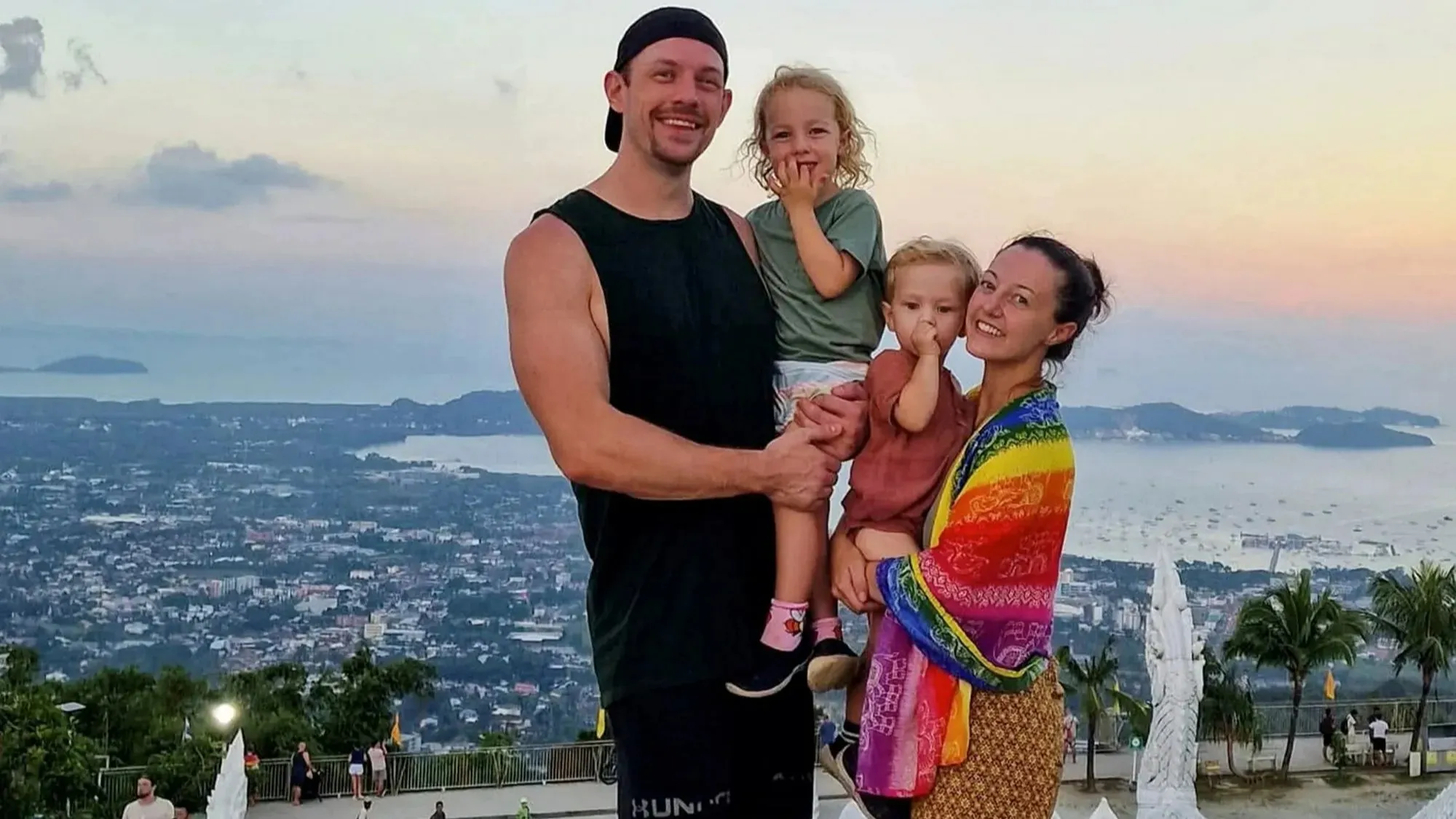
Steven, Aurora, Atlas and Ruth in Phuket, ThailandCredit: SWNSSteven and Ruth enjoying quality time with their kids in Sri LankaCredit: SWNS
Back in 2023, Ruth and Steven Rowe made a decision which shocked a lot of people after “selling everything they owned” and buying a one-way ticket to Sri Lanka.
They have been globe-trotting ever since on a budget of just £30 a day, and have turned the world into a classroom for their two children Aurora, five, and Atlas, four.
Ruth, 35, and Steven, 36, said they had always dreamed of travelling full-time and, as the moment approached to put the children into a nursery, they felt the time was right.
Ruth said: “We knew those early years were precious and we wanted more time together as a family before school routines took over.”
The family-of-four looking over a field Bali – one of the 17 countries they have visitedCredit: SWNSSteven, carrying Aurora, and Ruth with Atlas in her armsCredit: SWNS
They flogged all their belongings on Facebook Marketplace or via car boot sales and set off from the village of Eardisley, Herefordshire, with just two suitcases of clothes and a few toys.
The family has already been to 17 different countries, ticking off bucket-list destinations such as Costa Rica, Guatemala, Ecuador, and Indonesia.
They stay four weeks at a time in Airbnbs and have also visited the likes of Thailand, Malaysia, Cyprus, the USA, Colombia, and Peru – all while saving around £12,000 a year.
They currently have no plans to return and want to continue world-schooling in exotic locations – while spending around £2,000 a month, compared to £3,000 back in the UK, as a result of their rent and outgoings being less.
Ruth and Steven had been renting a barn conversion and had both children during the Covid-19 pandemic.
They had travelled extensively before having kids but couldn’t shake the feeling that there was still so much of the world they wanted the children to experience.
Ruth added: “We wanted more time with them as we know those early years are precious, so we thought, why not just do it? So we did.
“Selling everything was an exhilarating experience.
“Our car, furniture and most of our possessions all went through Facebook Marketplace and car boot sales.
“We kept only a handful of memory boxes filled with special items from the children’s early years and a few clothes.
“We set off at the start with two big suitcases, a medium and a small one – and a stroller.
“And since then we’ve downsized to just two suitcases – it is really surprising how little you really need.
“Possessions don’t make you happy, life experiences do.”
They arrived in Sri Lanka with no return ticket and no real plan beyond seeing where life took them.
Ruth added: “And we’re still travelling now. We’ve been travelling full-time ever since, slow-exploring the world as a family, while my husband runs his coaching business remotely and we embrace world-schooling on the road.
“It’s been beautiful, chaotic, challenging and incredibly freeing.”
Steven, Aurora, Ruth and Atlas pictured together in GuatemalaCredit: SWNSThe family pose in Antigua, GuatemalaCredit: SWNS
The couple also support themselves financially via Steven’s online coaching business – which he can still run wherever they are in the world.
However, Steven revealed the lifestyle isn’t always glamorous.
He added: “We use Airbnbs mainly but I’ve been working out of little cupboards in some places – it has been challenging at times but we’re in a fortunate position.
“We aim to live off around £30 a day and we stay in places for a month at a time so I can work Monday to Friday.
“But it can vary greatly; a two-bed apartment in one country can be £800 but a smaller one in another country £1,300.”
The couple say their children are now educated through “life experiences” – be it picking up Spanish in Latin America or learning about volcanoes while hiking in Peru.
And they say giving the kids no screen time whatsoever on their travels has helped them to become more patient and creative.
Ruth added: “They are also learning counting through things like paying a tuk-tuk driver in different currencies and the first time Aurora ever wrote her name it was in sand on a beach with a stick.
They also visited a waterfall in ColombiaCredit: SWNSChilling out at the Pacific coast of Costa RicaCredit: SWNS
“We give them no screen time at all – which I think has taught them patience on their travels and to be more creative when they are bored sitting on a bus.
“They thought the TV back home was a radio as we’d only use it for Spotify and we think that’s allowed their imagination to flourish.
“I have just seen their confidence grow so much, and of course there’s no way of really telling how they would have been at home, but they are just so open and talk to anyone – young and old.
“I will sit down and teach them some reading and phonics and writing – but we’re not rigid with it and it’s still very much about learning through playing.
“It wasn’t a case of we hated the UK – we just love the world. But I was never a fan of the cold and rain so that is something I don’t miss.
“Also, we’ve found children aren’t treated like nuisances like you find in some restaurants in the UK.
“They are welcomed in and looked after, lots of places have playgrounds too to keep them entertained; that was a big difference to the UK too.
“Sri Lanka is just the most welcoming place we’ve ever been – people would invite us to eat in their homes and absolutely loved the kids.
“Costa Rica is beautiful with all the wildlife and jungle, Guatemala is underrated – it is also an incredible place and one of our favourites.”
Ruth was also not a fan of the cold and wet British weather – but admits she misses British chocolate.
She added: “The only thing I miss is friends and family – and also British chocolate.”
Steven also believes the lifestyle has been transformational for the children.
He said: “These positive environments have brought such positive developments so far in our children. Atlas was swimming independently at two.
“This way they get one-to-one without being part of the larger school system, which we have no issue with, we just see the benefits from doing it this way.
“We make sure the children are at the centre of what we do, we always research kids’ clubs and activities wherever we stay.
“They are loving learning about all the wildlife too – we had iguanas and sloths outside our doors in Costa Rica.
“Aurora had surf lessons in Bali and will be sandboarding in the Peruvian desert; it’s magical for them.
“The children have most enjoyed all the swimming they’ve been able to do and all the wildlife has been a massive enjoyment for them too.”
SCHOOL holidays – two words guaranteed to make any parent’s bank account start sweating.
The moment the school gates close, holiday prices normally launch straight into orbit, leaving us staring at a rainy weekend in Morecambe rather than a gloriously sunny break abroad.
You can still get some great cheap holidays in October during half termCredit: On the Beach
But if you know where to look, you can find some mega October half term breaks without having to remortgage your house.
I’ve dug up eight cracking five-night breaks with direct return flights starting at £295pp – and every single one is in October half-term.
We’re not talking about the bottom of the barrel here either – I’ve found Spanish beach favourites, theme-park thrills, Italian lakes and Croatian coastlines, all coming in under £334 each.
So you can get a proper change of scenery for the family without dipping into your overdraft.
1. Alicante, Costa Blanca – from £295pp
Alannia Costa Blanca is our biggest bargain destinationCredit: On the Beach
If your main mission this October is keeping the kids from tearing the wallpaper off while keeping costs down, this is a strong contender.
Alannia Costa Blanca is inland near Crevillente, where October daytime highs average around 24C – warm enough for spending time outdoors without the fierce summer heat.
You’re staying in cabin-style accommodation with kitchen facilities, (a lifesaver when the little ones demand a third bowl of Weetabix at 5.30am).
And the resort has tropical pools and slides, playgrounds and an indoor pool, plus an on-site supermarket for when you inevitably run out of snacks.
This is my biggest bargain, as I found five nights self catering and direct return flights from East Midlands from £295pp.
It is a good shout for families who want plenty to do around their accommodation and the flexibility to keep some meals cheap.
2. Salou, Costa Dorada – from £297pp
Inter2 Apartments is simple but affordableCredit: On the Beach
Salou is a must-stay if you want options beyond staring at the same resort pool for five days.
You’ve got broad seafront promenades for a wander, big family-friendly beaches and PortAventura World nearby if you want to brave the big rides.
October daytime highs average around 22C, making it a good time for mixing exploring with beach afternoons when the sun’s out.
And my pick of hotel, Inter2 Apartments, is simple, affordable and practical.
You get kitchen facilities to keep breakfast costs down, a balcony for a quiet drink once the kids are asleep, and you’re around 500 metres from the beach and coastal path.
At £297pp for five nights self catering, including direct return flights from London Luton, it leaves a bit more in the holiday budget for ice creams and days out.
Just remember to budget separately for theme-park tickets.
Manilva is right by Gibraltar so expect great viewsCredit: On the Beach
For southern Spanish warmth without staying in the thick of a busy resort, head west along the coast to Manilva.
It’s a quieter option that suits families who want to slow the pace down.
It sits right on the edge of the Costa del Sol, near Gibraltar, so expect great beaches without huge tourist numbers.
October daytime temperatures typically reach the mid-20s, which is comfortable weather for exploring, coastal walks and long lunches outside.
And Pierre & Vacances Terrazas Costa del Sol gives you spacious apartments with balconies or terraces and overlooking the water.
There are outdoor pools, a playground and a sports court, and plenty of options for transport down to the beach and exploring the surrounding area.
The five-night self-catering stay I spotted comes in at £298pp with direct return flights from East Midlands.
It makes for a super-practical option if you want room to spread out without spending a fortune on accommodation.
4. Lloret de Mar, Costa Brava – from £305pp
Skip the expensive resorts for your own apartment with a kitchenCredit: On the Beach
Lloret de Mar is an absolute staple for October half-term.
You’ve got beaches, coastal scenery and opportunities for days out, including nearby Tossa de Mar and its old town.
Plus, October daytime highs average around 23C, making this a good choice for getting out and exploring with a light jacket to hand.
Condado Apartments gives you equipped kitchens, living space to spread out and balconies.
There are also two rooftop pools, including one for children, and a sun terrace.
Having a kitchen means you aren’t forced to pay restaurant prices three times a day when the kids decide to eat two bites of dinner and declare themselves full.
With five nights on self catering and direct return flights from London Luton from £305pp.
It’s a straightforward way to keep holiday costs down while still getting a proper break.
5. Fuengirola, Costa del Sol – from £310pp
This Fuengirola hotel has a fantastic rooftop pool areaCredit: On the Beach
Fuengirola does the familiar Spanish family holiday incredibly well.
There are loads of beaches, a seafront prom and plenty of places to stop for food or coffee.
So you don’t need a complicated itinerary when a walk, some sand and a decent lunch can comfortably fill the day.
October daytime highs average around 23C, so there’s still a good case for eating every meal outside and enjoying the beach every day.
Las Palmeras Affiliated by FERGUS sits on the seafront promenade opposite the marina, with the beach and plenty of restaurants within easy reach.
But the real win: the hotel also has a pool and rooftop sun terrace overlooking the harbour. And it’s gorgeous.
It’s £310pp for five nights with return flights from East Midlands.
A great price and a decent hotel which I’d treat as a base for getting out and enjoying Spanish town life, rather than spending the whole holiday there.
6. Lake Garda, Italy – from £319pp
Why not skip beaches for Italy’s Lake GardaCredit: On the Beach
Here’s the wildcard: swap the sand for lakeside scenery in Italy.
Peschiera del Garda gives you canals, waterfront walks and plenty of opportunities for pizza and gelato, which tend to work well as encouragement when the kids have decided they’ve finished sightseeing.
Late October is a little cooler here, so you might not be out sunbathing.
But Gardaland theme park is nearby if you fancy a bigger family day out, (just make sure to check opening dates and budget separately for tickets).
Residence Eden has apartment accommodation in green surroundings outside the town centre.
Kitchen facilities make it easy to knock together a quick pasta dinner without taking tired children out to a restaurant at 8pm.
And it leaves plenty of time for trips into town and around the lake.
With five nights and direct return flights from East Midlands from £319pp, it’s a wicked alternative to the usual half-term beach break.
7. Cala Galdana, Menorca – from £315pp
Menorca is a great island to visit for a half term holidayCredit: On the Beach
Cala Galdana is a proper postcard setting.
It has a curved sandy bay backed by pine-covered surroundings, with coastal walking routes for when you fancy stretching your legs.
It’s a good choice for families who want a slower few days away.
Menorca’s October daytime highs average around 22-25C, so I’d come for beach walks and exploring, with swimming as an added bonus.
Alta Galdana is a simple budget base with a pool and sun terrace.
The bay and surrounding scenery are the main draw here, rather than a big programme of hotel entertainment.
At £315pp for five nights on room only, including direct return flights from London Luton.
It’s definitely worth a look if you’re happy heading out for meals and letting the destination do most of the entertaining.
8. Seget Donji, Croatia – from £334pp
Croatia is a great alternative to SpainCredit: On the Beach
If you fancy something totally different from the usual Spanish escape, Croatia’s Dalmatian coast is well worth a look.
You’ve got Trogir nearby, Split as another option for a day out, and seaside walks around Seget.
October daytime highs around Trogir average roughly 22C, making this more of an exploring-and-long-lunches holiday than a guaranteed week of swimming.
Apartmani Medena is an apartment complex near the beach, around four kilometres from Trogir.
A seaside promenade connects it with Seget’s old fishing village, giving you an easy option for getting out for a walk.
The five-night stay I found comes in from £334pp with direct return flights from London Gatwick.
Food is extra but cheap enough around Seget, and this deal gives you a base for exploring a different stretch of Europe at a very, very reasonable half-term price.
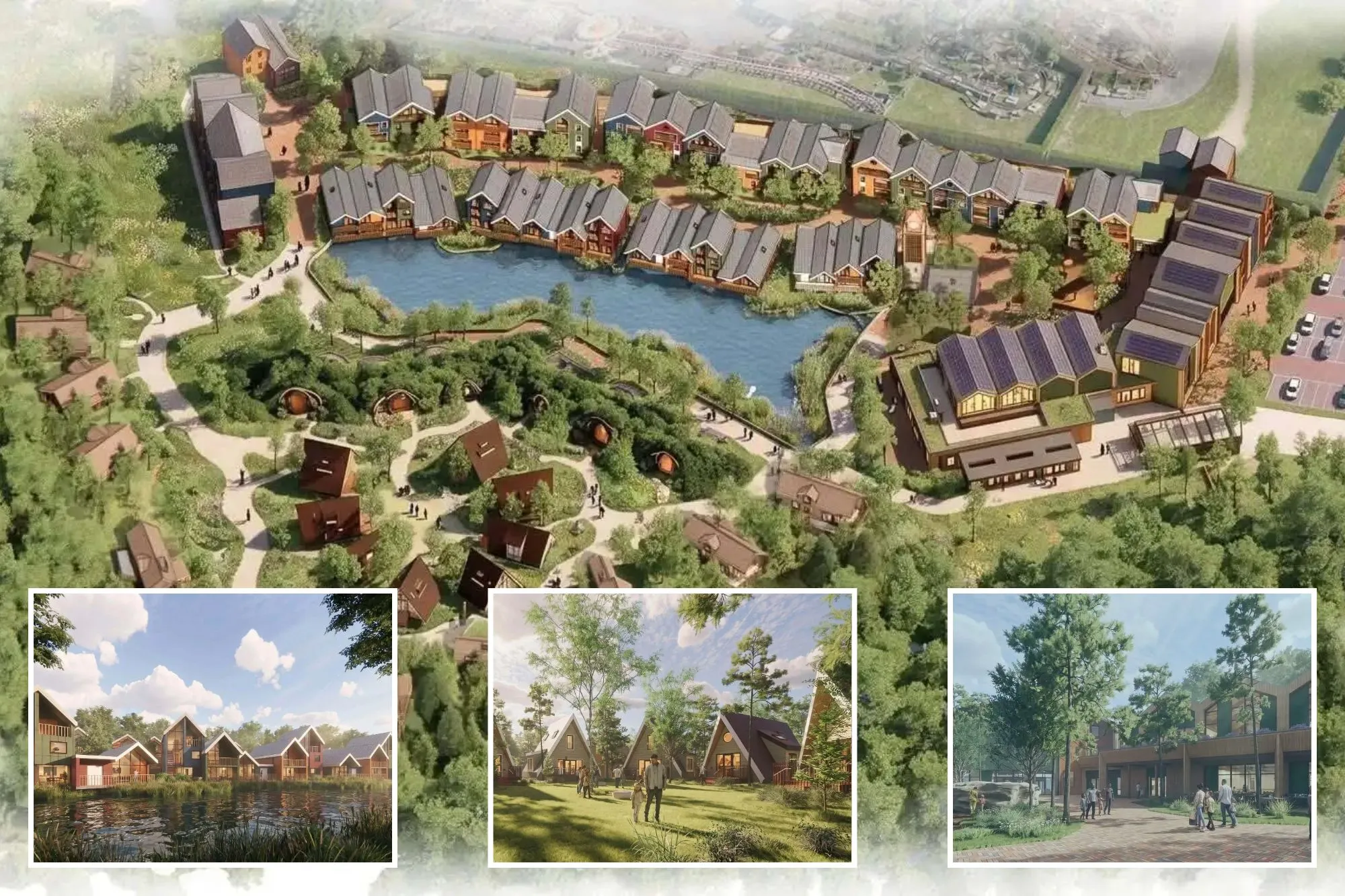
Paultons Park has revealed new images of their first ever holiday villageCredit: Paultons ParkThere will be 129 lodges, some overlooking the lakeCredit: Paultons Park
Images show lakeside and riverside lodges, treehouses and A-frame cabins.
Suites and ‘burrowed lodges’ that look like grass-covered Hobbit houses are part of the plans too.
Sign up for the Travel newsletter
Thank you!
The lodges will range from two bedrooms to four, suggesting space for as many eight guests in each.
There will be space for around 600 guests, with 129 lodges to choose from.
A-line cabins are also part of the plansCredit: Paultons ParkTreehouses will be some of the beautiful accommodation optionsCredit: Paultons Park
The park’s deputy managing director James Mancey previously said: “Our vision is to deliver 129 units, designed to comfortably accommodate just under 600 guests at full capacity, 100 guests fewer than previously outlined.
“We anticipate it will be several years before our vision for on-site accommodation is brought to fruition; however, we are committed to continually reinvesting in our attraction, providing a world-class experience for our guests, and planning for the long-term.”
In the mean time, Paulton’s Park is also opening a new water coaster called Serpent’s Curse next year.
The village wlil be the first accommodation on site for the parkCredit: Paultons ParkIt hopes to be open by 2030Credit: Paultons Park
The Sun’s Head of Travel (Digital) Caroline McGuire was one of the first to visit.
She said: ” I loved Drakon – the park’s first-ever inverting coaster starts with a vertical hill and drop, followed by two great inversion flips at speeds of 44mph.
But for all the speed, drops and twists, I never once felt nauseous – it is easily the smoothest rollercoaster I’ve ever been on and remarkably silent, none of that rattling you get on so many other coasters.
“The second coaster, Raven, was almost scarier despite not going upside down, thanks to its high-speed bobsleigh style, which whips you round tight hairpin turns and was great fun.
“There’s also a very cute new ‘Orchard Playground’ for kids up to the age of 10, the kind that Paultons does so well throughout the park, with treehouses, a lookout tower, net bridges and slides.
“The rollercoaster fan next to me was right, everything felt like the extra quality that you expect of somewhere like Disney.”
THE biggest tropical waterpark in the UK will close at the end of October – and won’t reopen until 2027.
Waterworld in Staffordshire is a year-round attraction for families, thanks to its 30C temperatures.
The UK’s biggest tropical indoor waterpark will close on November 2Credit: Facebook/Waterworld Aqua ParkIt will undergo upgrades and is expected to open in early 2027Credit: Facebook/Waterworld Aqua Park
But after the end of October half-term, Waterworld will temporarily close for upgrades to its waterpark.
It is expected to reopen early next year, although no date has been confirmed.
Sign up for the Travel newsletter
Thank you!
Visitors can enjoy the last day of thrills on Waterworld’s 30 rides and attractions on November 1 along with a live DJ.
Wayne Goodall, managing director of Waterworld Leisure Resort, said: “Our closing party is the perfect chance for visitors to make a last splash with us before we close for a short time to make exciting changes across the Aqua Park.
“At its heart, Waterworld offers families a place to spend time together, escape from everyday life and enjoy that holiday feeling, whatever the weather.
“The upgrades we have planned are set to build on that sense of fun and enhance the way we tell our story, creating a more immersive experience for our guests. We can’t wait to reveal more about the upcoming investment soon.”
He added that the Adventure Mini Golf and Adventure Mini Village will remain open.
The tropical waterpark sits at 30C even in the winter along with slides like the Space Bowl which is shaped like a UFO.
Nucleus is a popular water rollercoaster, there’s also Stormchaser and Cyclone.
The waterpark is also home to Thunderbolt, which is the UK’s first trap door drop slide.
On November 1 will be the ‘Last Splash’ partyCredit: Waterworld
As well as the main wave pool, there are river rapids and the Jungle House is suitable for youngsters with water cannons and the monsoon monster splash.
The bubble pools are a more relaxing spot away from the high-speed watercoasters thrills.
During the summertime, there’s an outdoor pool open to visitors too.
Of course, the waterpark is still available to book now with tickets available for £17.50 – for children under three-years-old tickets start from £7.
Away from the waterpark, there are two mini golf courses inside the resort, each with 18-holes as well as a mini Adventure Village with everything from doctors to libraries.
Both of these attractions will remain open throughout the rest of the year.
At Waterworld Resort is also two mini golf coursesCredit: Refer to sourceThe play village opened three years ago in 2023Credit: Refer to source
There’s also a restaurant, cafe and gift shop on-site which are also expected to remain open.
In recent years, the attraction has undergone a number of renovations.
One of the newest additions to the waterpark as well is the M Club Spa and Fitness.
In 2023, it opened its new £250,000 immersive play village, then in 2024, £13million was spent on behind-the-scenes upgrades to the waterpark.
Our journalists strive for accuracy but on occasion we make mistakes. For further details of our complaints policy and to make a complaint please click this link: thesun.co.uk/editorial-complaints/
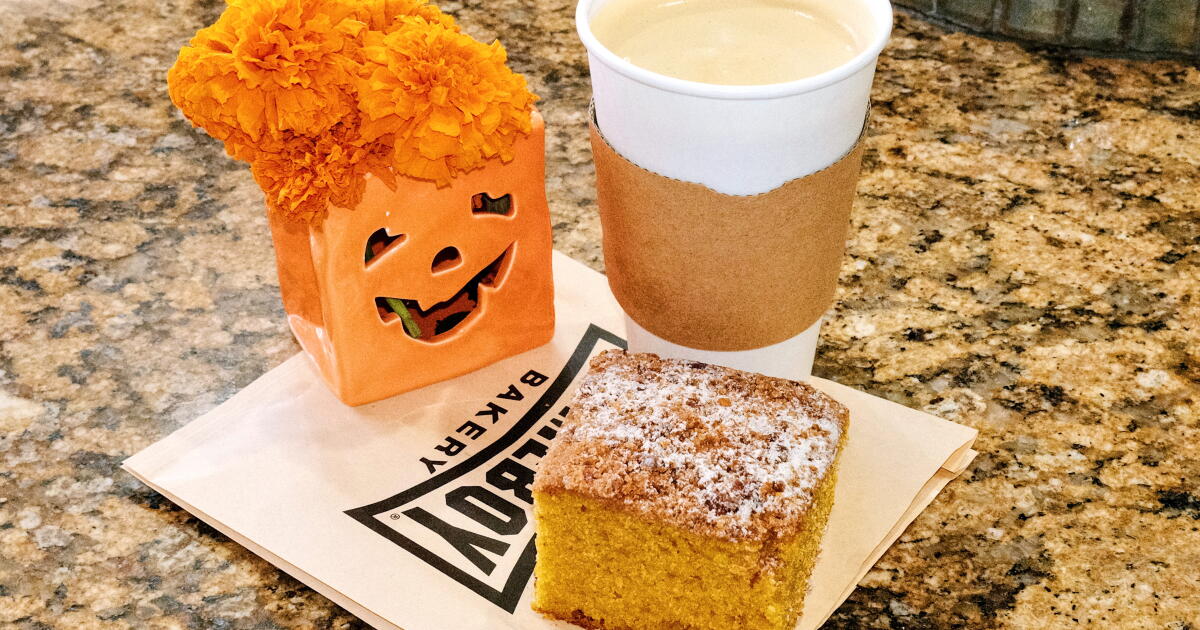
Thank You Coffee’s Kabocha Squash Latte, or KSL, has garnered a cult fandom over the years. The gourmet, Asian-inspired take on the pumpkin-spice originator is made with fresh squash and house-made syrup, and it will return to the Chinatown and Anaheim locations in early November. Until then, and finding a home in the newly opened Chinatown space, are two new seasonal lattes. The cozy apple latte (pictured) is fragrant, comforting and available through November, made with a house syrup involving cold-pressed apple juice, green tea, sour plum powder, ginger, cardamom and more. It’s topped with a dash of even more sour plum powder, which gives the effect of tart green apples on the nose and tongue. The sweet corn latte, inspired by cornbread, is a sweet-savory mix of brown butter, malted milk powder, annatto seed and beyond, and can be found through October.
Everyone is going to die. Acknowledging this — and reminding oneself daily of one’s mortality — is a core tenet of Buddhist teachings. Few places make that reminder more vivid than Hollywood Forever Cemetery, the iconic Los Angeles graveyard where more than 90,000 people are buried.
Inside the Masonic Lodge on the cemetery grounds, beneath chandeliers, dozens of people search for stillness with a meditation class. In an ornate Italian Renaissance-style room, participants sit scattered across couches and cushions, cross-legged with their eyes closed. The room is silent.
Headstones at Hollywood Forever Cemetery.
Nico Cary is one of the meditation group leaders at Hollywood Forever Cemetery.
For meditation teacher Nico Cary, the cemetery is an ideal backdrop for mindfulness and a lesson in impermanence. “It is quite grounding and an extension of some of the practice we do,” Cary says.
Beth Kaiserman, who regularly attends the meditation group, sees the cemetery as a chance to demystify death. “It’s accepting it as part of life. We’re coming out of our lives to come to this meditation. We’re walking by these gravestones that have been here for so long,” she says. Death, in her mind, doesn’t have to be taboo. “It is a big part of the practice to hopefully come to some level of acceptance that it’s just part of the cycle.”
Practicing meditation at Hollywood Forever is a privilege, explains Cary. The cemetery is not simply a place where people come to mourn; it is a place where relatives return to remember, honor and love those who have died.
Hollywood Forever is, quite literally, livelier than most cemeteries. The grounds are home to a colony of roughly 60 abandoned cats that has attracted a group of loyal caretakers, as well as dozens of peafowl roaming freely. The cemetery is also the final resting place of Hollywood legends, including Cecil B. DeMille, Judy Garland and the rock group the Ramones, where fans leave offerings. Since 2002, Cinespia has hosted outdoor screenings of iconic films at the cemetery during the summer, drawing hundreds of people to the grounds. The cemetery also hosts summer concerts.
“It feels pretty special to be somewhere, on land that’s so cared for, and that so many people come to share love, really — to remember their loved ones, to honor their ancestors,” Cary says.
For more than eight years, Insight LA has brought meditation to Hollywood Forever every Monday night, with a revolving list of teachers leading sessions in the Masonic Lodge. The class is donation-based, as is traditional in the Buddhist practice. Often, the teachers will lead a guided walking meditation through the cemetery grounds.
Insight LA, a Buddhist teaching nonprofit that was founded in 2002 by Trudy Goodman, is based in Santa Monica but also has a retreat house in Benedict Canyon for daylong events.
Members of a weekly meditation group at Hollywood Forever Cemetery participate in a guided session inside the Masonic lodge.
“We have yearlong programs. We have residential retreats. We have weekly drop-in meditation classes, and then we have the Hollywood Forever group too,” says Melissa McKay, the executive director at Insight LA.
According to McKay, the benefits of meditation are striking. “Put simply: It decreases stress, bringing calm and clarity, becoming more aware of oneself,” she says. “It decreases the negativity of the mind, self-hatred, the fears, the spiraling judgment — all of that. It increases the positive sides of our mind: our compassion, care, friendliness, clarity.”
A 2026 UC San Diego study confirms that just seven days of meditation can create molecular changes in the brain linked to stress relief, enhanced neuroplasticity and natural pain relief. The study also shows that meditation can positively affect the immune system and metabolism.
James Rokel practices mindfulness while walking alongside tombstones.
Despite the backdrop, meditation is not just about facing death, McKay says — it’s about learning how to live consciously. One participant, Jared Swanson, thinks of the meditation group as a school for emotional awareness.
“There was a moment where I realized I was in a lot of cycles — relational cycles — and wanted change,” says Swanson. He has been integrating the mindful practices into his life. “I think it’s a desire to be more responsible for my life, to be more present and responsible for my actions and choices,” he says.
Meditation nights attendees range from curious first-time visitors to seasoned veterans who have been practicing Buddhism for over two decades. Cary says the practice can benefit people regardless of their experience level.
“The intentional space to be with ourselves is so nourishing,” says Cary. “Then we practice. You add in a practice on top of that and magical things start to happen.”
Cary leads the group in 30 minutes of silence before a lesson. Participants settle into their cushions. He invites them to rock gently back and forth, a movement he calls “grandmother wisdom,” the kind of care one might offer a crying child. He poses a question for reflection: “What are you trusting right now?”
Insight LA has brought meditation to Hollywood Forever Cemetery every Monday night for nearly 10 years; a walking meditation is often involved.
Nicki Katz, who has been attending the meditations for two years, enjoys the practice of sitting in the quiet. Last year, she attended a 10-day silent retreat, only to accidentally break her silence by excitedly greeting a bunny during a picnic. “I come back to the body and the present awareness of allowing my mind to find some sense of gratitude,” says Katz. She explains that silence also helps her become more intentional with her words.
Tonight’s lesson is on truthfulness and embodying loving kindness. Lessons vary from week to week. “Oftentimes, it’s what the teacher is feeling or what’s come up for them in their practice,” says Cary.
For Monday meditation, the teaching group has assigned the 10 paramis (spiritual virtues) of Buddhism, which explore topics like generosity, wisdom and patience. “We’ve been going into that all year, so each month is one of the paramis,” says Cary.
“The intentional space to be with ourselves is so nourishing,” says meditation leader Nico Cary.
To begin the lesson, he reads a letter he wrote to the president at 5 years old, cautioning him of the perils of nuclear war. The letter is met with snaps and giggles, as a 5-year-old Cary warns of imminent death. “Apparently I was a peculiar child with a morbid sensibility, preoccupied with nuclear war,” he says, smiling. “It makes a lot of sense as to why I became a Buddhist.”
Cary begins to speak about the current moment and how he believes truth has become distorted and refracted in the age of social media. “Trauma is a distortion of reality,” he says. He then invites group members to consider love and kindness in their daily practice.
As the session winds down, participants spring to their feet to discuss the evening. The Masonic Lodge bursts into chatter — the silence abandoned. Tonight, the cemetery is alive.
We’ve all been there – booking a flight and hoping for a decent seat. But which spot on the plane should you avoid at all costs? I asked the experts, and they all agreed on one area to steer clear of.
Boarding a plane can feel like a lucky dip(Image: Oscar Wong via Getty Images)
Finding yourself in the wrong plane seat is a surefire way to start off a holiday with a whimper.
I recently found myself wedged next to an increasingly wound-up man on a Ryanair flight. He kept huffing, puffing and angrily texting his girlfriend until, five minutes after take-off, he erupted. “Get your elbow off me, my guy,” he shouted at the man sitting on the other side of him, who understandably looked surprised and confused.
Although shouting at strangers probably isn’t the solution, being in an uncomfortable budget airline seat, wedged between strangers on a hot summer day, is no fun. Which is why choosing the right plane seat can make a big difference to the start of your holiday. From cabin noise to limited storage, an uncomfortable spot can leave you wishing you had booked elsewhere.
Do you have a travel story to share? Email webtravel@reachplc.com
To help holidaymakers make that choice, we asked travel experts which seats they would avoid. Most pointed to the same area: the very back of the plane, and not because you’re more likely to sit next to angry passengers there. Nicholas Smith, Holidays Digital Director at Thomas Cook, said the rear of the aircraft can be particularly uncomfortable for passengers who are unsettled by turbulence.
He explained: “Seats at the very back are typically less desirable. They are close to the galley and restrooms, service can be slower, food choices may be limited, and it is also the area where movement during turbulence feels strongest.”
Nicholas recommended thinking about what matters most before choosing a seat. Although seat selection often costs extra, it may be worthwhile if comfort is a priority.
He said: “Thinking about your priorities in advance also makes a difference – nervous flyers will be more comfortable over the wings, those with a tight connection should choose an aisle near the front, while couples booking a row of three might secure the window and aisle, leaving the middle free for a chance at extra space.”
Izzy Nicholls, a travel expert and founder of road trip blog The Gap Decaders, also advised avoiding the rear of the cabin. She said: “Seats at the back are best avoided. They’re typically noisier because of engine proximity and galley activity, and you’ll be among the last to board and leave the plane.”
For a quieter journey with fewer interruptions, Izzy recommended sitting towards the front. She explained: “Travellers who want a calmer journey should book seats at the front of the plane. This area is away from restrooms and heavy foot traffic, so you’ll experience fewer interruptions.
“Choosing an aisle seat here also gives you the freedom to stretch your legs and get up easily without disturbing others. Select these placements to make long flights more comfortable and reduce the effects of motion.”
Storage is another consideration, particularly for passengers who board late. Jacob Wedderburn-Day, CEO and co-founder of luggage storage company Stasher, warned that overhead space near the back may be harder to find. He said: “Avoid sitting near galleys and toilets, where staff members often store their things in overhead bins, leaving less space for passenger baggage. The last few rows are a concern because if you board late, the bins above you may be filled, which means you may have to store your luggage several rows away. Also, stay away from seats that are located behind bulkheads, as these spaces often have limited storage.”
Andrea Platania from Transfeero highlighted further drawbacks of the last row, including restricted recline and noise. Andrea said: “The very last row is typically the least desirable: limited recline, proximity to bathrooms, and more cabin noise. Middle seats anywhere are usually least popular unless you’re traveling in a group.”
Passengers looking for extra legroom could consider an exit-row or bulkhead seat, although these options come with restrictions. Andrea added: “Exit-row and bulkhead seats offer more space, but they come with trade-offs: fixed armrests, limited recline, or restrictions for passengers traveling with children.”
For those concerned about turbulence or prone to motion sickness, Andrea recommended choosing a seat over the wings rather than at the back. The expert advised: “Sit over the wings. This area is closest to the aircraft’s centre of gravity, so you’ll feel less turbulence compared to the back, where bumps are magnified.”
Both Puglia and the Amalfi Coast are ideal if your idea of a holiday involves spending your days wandering around pretty coastal towns, stopping for seafood and taking a dip in the Mediterranean
“I recently travelled around southern Puglia, which sits east of Amalfi across Italy, and I found myself constantly comparing the two”(Image: Supplied)
There is a reason the Amalfi Coast is one of Italy’s most famous holiday destinations. The combination of dramatic cliffs, turquoise water, colourful villages and incredible Italian food makes it almost impossible not to fall in love with it. But there is also a downside to being somewhere that beautiful and well-known: everyone else wants to visit, too.
I recently travelled around southern Puglia, which sits east of Amalfi across Italy, and I found myself constantly comparing the two. Both regions have a lot in common: they’re hot, beautiful and have an unmistakable Mediterranean atmosphere.
But one thing in particular sets them apart. Instead of huge crowds filling every viewpoint, I found myself in Puglia walking through quiet streets where locals were still going about their everyday lives. The region isn’t exactly a secret, with places such as Alberobello firmly on the tourist trail, but it’s still much easier to escape the crowds there.
So how else do the regions match up?
Do you have a travel story to share? Email webtravel@reachplc.com
Landscape and towns
The biggest similarity between Puglia and the Amalfi Coast is, unsurprisingly, the sea. Both destinations are ideal if your idea of a holiday involves spending your days wandering around pretty coastal towns, stopping for seafood and taking a dip in the Mediterranean.
The Amalfi Coast is famous for its steep cliffs, with towns seemingly built into the mountainsides above the sea. Puglia, meanwhile, is generally much flatter. I didn’t mind losing the cliffside views as Puglia’s flatness made exploring much easier. You don’t have to spend your day navigating steep roads and packed coastal viewpoints.
Otranto is a perfect case in point. Located on the Adriatic coast, the easternmost city in Italy has scenery you might expect on the Amalfi Coast, but with a much quieter atmosphere. This fortified old town is packed with tiny streets, historic buildings and restaurants, while the seafront opens out onto bright blue water.
I never felt overwhelmed by tourists there. I could simply wander around without having to constantly dodge people or wait for a gap to take a photograph. Greek and Byzantine influences have shaped the town, as did a brutal massacre in 1480 when Ottoman forces killed hundreds of residents who refused to renounce their Christian faith. The event is still remembered at Otranto Cathedral, where the remains of the 800 martyrs are kept.
Travel a little further south and you’ll reach Alberobello, the most touristy town in Southern Puglia. Alberobello is probably the most famous destination in Puglia, thanks to its extraordinary trulli: small whitewashed stone houses with distinctive conical roofs.
There are more than 1,400 trulli in the town, and the area has UNESCO World Heritage status. It is incredibly pretty, but also extremely touristy. The main streets are packed with souvenir shops, restaurants and visitors taking photographs, so if you’re expecting to discover a completely hidden Italian village, you might be disappointed.
But I found an easy way around this. Cross the town’s valley into Rione Aia Piccola and the atmosphere changes almost immediately. This is a residential area where people still live in traditional dry-stone huts, called trulli, and the streets are noticeably quieter.
The contrast summed up my experience of Puglia: even in the places that are undeniably touristy, there’s another side to discover if you’re willing to walk a little further.
Which is cheaper?
One of the biggest advantages Puglia has over the Amalfi Coast is the price. The star-studded West Coast has a reputation for being expensive, particularly in famous towns such as Positano, Amalfi and Ravello, where accommodation and restaurants can quickly add up.
Puglia isn’t necessarily a budget destination, particularly in peak summer, but I found it much easier to eat well without spending a fortune. Otranto was particularly affordable, with filling paninis and seafood dishes for around €12 or less. On the Amalfi Coast, finding a bargain is nearly impossible. You find yourself paying a premium simply for a location and view.
The food
This is an area where Puglia and the Amalfi Coast have plenty in common. Both regions make excellent use of fresh seafood, vegetables, olive oil and wine, but they have their own specialities.
In Puglia, olive oil is everywhere, used liberally along with tomatoes, almonds, fresh root vegetables and local cheeses. One of the region’s most famous foods is orecchiette, the small ear-shaped pasta traditionally served with broccoli rabe, while burrata is another staple.
I also kept coming across focaccia barese, a soft bread topped with tomatoes and olives, as well as panzerotti, fried pockets of dough usually filled with tomato and mozzarella. Along the coast, seafood naturally features heavily, with octopus, mussels and other freshly caught fish appearing on menus.
The Amalfi Coast has its own distinctive flavours. Lemons are perhaps the biggest one. The region is famous for its large Amalfi lemons, which are used in everything from desserts and drinks to savoury dishes, while delizia al limone and limoncello are two of the most recognisable treats.
Seafood is also central to the Amalfi Coast, with dishes such as seafood scialatielli, a type of fresh pasta, and totani e patate, squid cooked with potatoes.
Which Italian destination is better?
It’s not that Puglia has made me fall out of love with the Amalfi Coast. The destination is spectacular, and there is a reason millions of people want to see those famous cliffs and colourful villages for themselves.
But after travelling around Puglia, I found myself wondering whether it might actually be the better choice for a traveller who wants a quieter, more authentic experience. If you want dramatic cliffside scenery, glamorous restaurants and famous Instagram views, Amalfi is hard to beat. But if you’re after beautiful beaches, historic coastal towns, incredible Italian food and somewhere less crowded, I’d seriously consider Puglia.
The price includes return flights from London Gatwick or Heathrow to Brindisi, accommodation at a four-star all-inclusive resort, all coach travel, and guided tours and excursions. You can find out more and book on greatrail.com.