Right now, the White Island is 30C, whereas parts of the UK could reach 40C this week. Now seems like the perfect time to head to the beach for a little cooling dip
As everyone who’s been to Ibiza likes to tell you, the Balearic island is more than just Pacha, 50 euro glasses of Prosecco, and ecstasy tabs. It’s also very pretty.
Ibiza’s coast is defined by turquoise waters, dramatic pine-forested cliffs and hidden sandy coves. The most visually stunning spots are scattered across the island, with top-rated options including the sunset views at Cala Comte, the lush nature of Cala Saladeta, and the iconic rock formations at Cala d’Hort.
Right now, the White Island is 30C, whereas parts of the UK could reach 40C this week.
In Cornwall, the thermometer is bopping around the mark, making a trip to the coast a tempting prospect. Happily, there is a beach that shares many of the qualities of those on the comparatively chilly Ibiza.
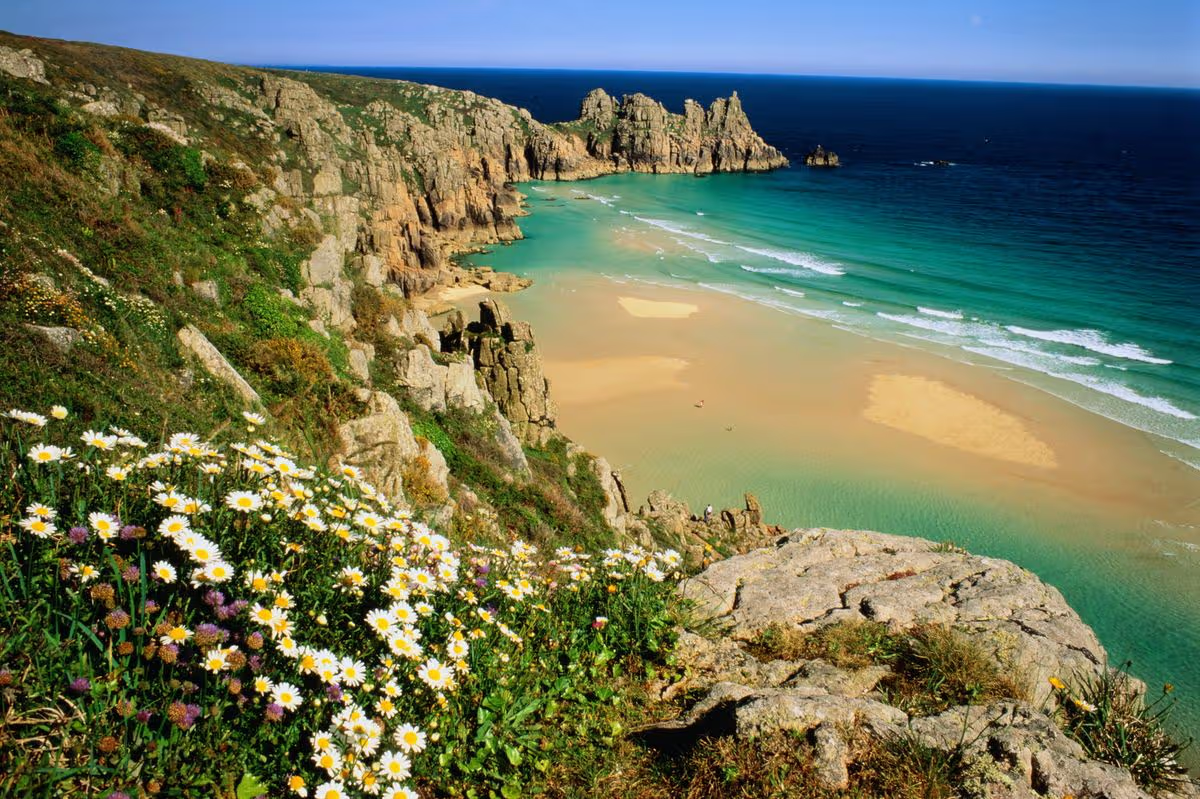
It sits beneath towering cliffs that shield it from the wind, with stunningly clear waters that prove ideal for swimming and snorkeling.
Porthcurno has pure white sand with gorgeous turquoise waters to match. It has the ability to transport you to paradise.
The sand is made up of seashells pounded to powder by the sea over millions of years, which is partly responsible for the beautiful colour of the water. Porthcurno’s south-facing direction, flanked by high headlands, provides natural shelter from the wind and weather, giving the beach its own near-microclimate. The towering cliffs on either side make it easy to find a sheltered spot even on the most blustery of days.
The renowned open-air Minack Theatre is carved into the cliffs above, meaning you can enjoy a Shakespeare play with a sea view.
The theatre was the vision of one woman who decided to carve a clifftop theatre at the bottom of her garden. It’s well worth the climb up the cliff path, if only for the view back down over the bay. You need to book tickets in advance for performances.
The best time to visit is mid to low tide. At low tide the beach widens dramatically, and you can walk to nearby Pedn Vounder. As the tide retreats from Pedn Vounder, a golden sandbar rises out of the turquoise sea creating a shallow lagoon pool. It’s visible for around two hours either side of low tide, according to Cornish SecretsAnywhere We Roam
In the late nineteenth century, Porthcurno became the British connection point of the world’s very first international telegraph cable, stretching all the way to India. In the inter-war period, the cable office briefly became the busiest telegraph station in the world, capable of transmitting up to two million words a day. The Porthcurno Telegraph Museum is right there and well worth a visit.
Driving is by far the easiest way to get to the beach, with public transport options sadly limited. It takes about 25 minutes from Penzance or 45 minutes from St Ives. The car park fills up quickly on peak days, so arrive early or late.
Dogs are banned from the beach between 15 May and 30 September, between 10am–6pm. RNLI lifeguards patrol from mid-May to the last weekend of September.
One visitor wrote on Tripadvisor the beach was “absolutely breathtaking. The most amazing beach beautiful white sand and turquoise sea. Breathtaking views and definitely one of the best beaches you will ever find.”
Another said: “Spent the day here, it’s just like being abroad, clear blue skies water, perfect sandy beach and so peaceful. No arcades, no boats, no noise, just gorgeous.”
Bob Blumenfield would like to see Angelenos’ old banana peels and moldy bread stay local.
On Tuesday morning, the City Council member told a small crowd of waste advocates in front of city hall that he was introducing a motion to reduce the city’s greenhouse gas emissions by strengthening local composting infrastructure and decreasing reliance on distant facilities.
Currently, when city residents separate their food waste and yard clippings, chances are it’s being trucked to faraway processing facilities in Bakersfield or Lancaster.
The motion would help the city meet targets set by California’s Short-Lived Climate Pollutant Reduction Strategy, or Senate Bill 1383, which phases out sending green waste to the landfill, because it is a major source of the powerful climate pollutant methane.
It also would help meet Mayor Bass’ Climate Action Plan, which aims to use at least 50% of locally produced compost and mulch within Los Angeles by 2030. Currently, only 25% to 30% of the city’s material is applied to land locally.
The city produces approximately 350,000 tons of organic material a year, Blumenfield told the crowd, which he said equates to roughly 1.2 to 1.5 million metric tons of carbon dioxide.
“That’s a big number, and when you do the math,” he said, that’s roughly the same amount of carbon dioxide released by the entire country of Belize, the entirety of Humboldt County or the equivalent of burning 1.6 billion pounds of coal per year.
As the announcement was underway, in the background a fire burned for a sixth day in a Boyle Heights warehouse, where 85 million pounds of frozen food was thawing and beginning to rot.
Signed into law in 2016, the state’s composting bill mandated a gradual increase in the amount of organic waste that must be diverted away from landfills. It required 50% of all green and food waste be diverted by 2020; by 2025, that number was supposed to hit 75%.
But it hasn’t. Although Los Angeles has pushed to get a residential curbside bin program in place — recall the “Great Green Bin Apocalypse of 2025” — it has struggled to get people to comply.
According to reports for the recycLA program, a commercial and multifamily waste collection franchise program, only about half of households and business are separating their compostable waste.
Alex Helou, assistant general manager of L.A. Sanitation & Environment, provided a much brighter picture of the city’s food waste situation. L.A. is the first major city to provide green bins to 750,000 residential customers, he said. The city has “exceeded expectations” in food recovery, he said, saving 80 million meals that would have been thrown out and redirecting them to people in need.
Helou said Blumenfield’s motion completes the loop by keeping food waste close to home, creating more local composting and reducing greenhouse gas emissions from transporting waste outside of the city. It doesn’t directly affect the city’s compliance with SB 1383, but that isn’t necessary, he said. “We’re meeting that and exceeding that at multiple fronts.”
Blumenfield’s initiative directs the Bureau of Sanitation to develop a plan for expanding local composting across the city. It would also increase the use of locally produced compost and mulch.
For instance, the motion would encourage using the compost on urban farms and at community gardens and city parks. It also would be used to replace artificial grass and turf.
It will support a “citywide transition away from artificial turf and towards nature-based solutions, such as California native plants and natural grass plant fields, and ensure everyone has access to safer, cooler, and sustainable parks, schools, and communities,” said Terry Saucier, a Tarzana resident and member of the Neighborhood Council Sustainability Alliance and the Tarzana Neighborhood Council.
The state’s composting law has proved challenging on several fronts.
The Antelope Valley has become a dumping site for many of the city’s haulers looking to cut transport and facility costs — causing concern among environmentalists and others who say the material is destroying fragile ecosystems.
Complying has been particularly difficult for Los Angeles and much of coastal Southern California, where there are few large composters and low demand for compost. Unlike areas to the north, there is little agricultural demand for compost and mulch.
Experts say dumping in the desert has always been a problem, but the law made it worse by making it more expensive and difficult to deal with.
In addition, composters are struggling with the amount of plastic and other debris that people and businesses put in the food waste bins.
According to a report by Closed Loop Partners, which partners with companies such as Pepsico and McDonald’s, nearly 4% of food waste is contaminated with other materials — most of it plastic. State law requires that finished compost contains no more than 0.5% by dry weight of physical contaminants.
A Wizz Air flight attendant explained why cabin crew greet passengers and revealed that they use ‘secret codes’ when everyone is boarding
12:12, 24 Jun 2026Updated 12:25, 24 Jun 2026
Cabin crew use a ‘secret code’ when greeting passengers (stock photo)(Image: Getty)
A cabin crew instructor has revealed that flight attendants often use a ‘secret code’ when greeting passengers. As most travellers know, it’s common to be greeted by cabin crew when boarding a flight. Whether you’re excited for your holiday or a nervous flyer, it’s reassuring to be met by a friendly face and know there’s help available as you find your seat and get ready for takeoff.
While crew members enjoy welcoming passengers on board as part of their service, there’s another important reason passengers are greeted at the door, and it might surprise some. Gabriel Randone, a Wizz Air Cabin Crew Instructor, told the Mirror that flight attendants are trained to greet passengers as part of their safety measures.
He explained that cabin crew complete a “mental scan of passengers” to ensure that everybody is fit to fly. What’s more, he says cabin crew are taught a secret acronym that they check during the process.
While Gabriel couldn’t reveal all of the details, as the acronym is not shared with passengers, he did explain what cabin crew would be looking for. For instance, cabin crew will check whether anyone appears aggressive or intoxicated. They’ll also keep an eye out for any medical conditions that could prevent someone from flying. “The goal is safety,” Gabriel said.
Any passengers seated near the emergency exit rows will also spot cabin crew hanging around in the area for similar reasons, Gabriel said. The instructor explained that the crew are trained to assess passengers, as some “categories of passengers” can’t be seated next to the emergency exit.
While many passengers might try to book the emergency exit rows, as they are classified as extra-legroom seats, Wizz Air’s website makes it clear that they are not suitable for all passengers.
The airline’s website states: “For safety purposes, regulations prohibit passengers under 16 years old, overweight passengers, individuals with special needs, expectant mothers, and those travelling with infants (under two years old) from occupying Extra Legroom or Front Row seats.”
Passengers seated in these rows must be able to open the exits in case of an emergency, and they receive a briefing that makes this clear. This protocol is so important that if nobody books the seat, the cabin crew will find a volunteer to move there.
“Sometimes, because the flights might not be fully booked, there would be no one close to the emergency exits”, Gabriel explained. “So what we need to do is to select someone who we call an ABP, an able-bodied person, and select them and to move them close to the emergency exits so that they can help out in case of an emergency”.
In the event of an emergency, the passenger would need to detach the safety cover from the door and pull a lever to open it. As Gabriel explained, every second counts in an emergency. “In an emergency, our priority is to get you out as quickly as possible,” he said. “We only have 90 seconds to evacuate a full cabin with 239 passengers.”
You can find out more about Wizz Air’s routes on wizzair.com.
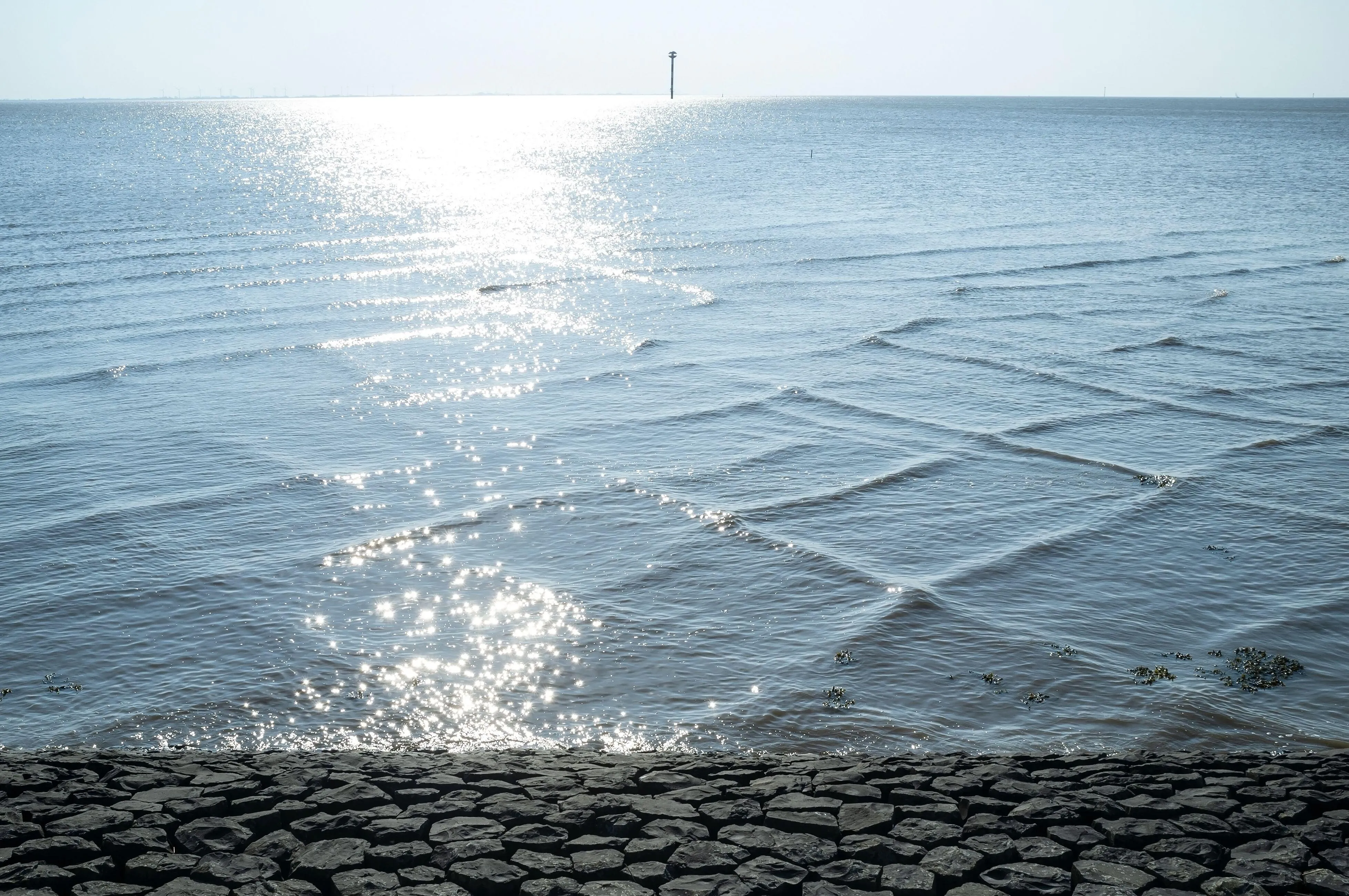
They can be found both close to the shoreline and far out at sea – which has even resulted in causing shipwrecks, according to the European Space Agency.
Some of the places they have been spotted include La Rochelle in France, where they can seen from above via the lighthouse.
They are caused by two weather systems collidingCredit: AlamyPlaces like Turkey (pictured), France and Portugal have all reported them
Lisbon in Portugal and Hawaii are all places where they can occur too.
One person previously wrote on social media: “We were always taught to keep an eye out for the ‘squares’ – the grid can pull you back and fourth for hundreds of feet and make it hard to stay calm.”
PEOPLE are only just realising that there is a secret cabinet in plane toilets.
The cupboards hold essential products to help passengers in need.
Sign up for the Travel newsletter
Thank you!
Period products are kept in a secret cabinet in plane toiletsCredit: GettyTatti Sorokina shared her experience with the secret plane cupboard on InstagramCredit: instagram @tatti.sorokina
Sanitary products are hidden behind airplane mirrors for flyers that have been caught short by an unexpected period.
Mum-of-two Tatti Sorokina took to Instagram to share her positive experience of the plane cupboard.
She filmed herself opening the mirror in the airplane toilet to reveal a cabinet of sanitary towels.
Some commenters were quick to qualify the video, with one writing: “Usually, passengers should not open this in the bathroom,
Yes, you should visit Mexico City. Don’t overthink it and don’t delay. Despite excessive tourism and rising gentrification fears, the seething capital of Mexico — 25 million souls strong — remains a top-tier international destination for any committed food lover. And the intensity of its dining scene seems to be only growing.
Sure, a wave of privileged remote workers oozing dollars and euros may have dampened the vibe for Mexico City natives, leading to protests. The post-pandemic issues of housing displacement and rising costs for locals are serious challenges that political leaders must address. Yet time and again, on every visit, the resiliency and passion that original defeños have for their gastronomical paradise proves to be boundless.
Use these handy dining guides for all of your summer travel, near and far.
I have traveled to Mexico City regularly since 2002 and lived there for nearly a decade. I won’t feel slighted if you prefer the dining advice of current residents, or from any of the numerous local dining guides online. But one thing about me, I have an aversion to hype, and tend to avoid the city’s contemporaneous food magnets where the ratio of foreigners to locals is too out of whack. (No, the Michelin-starred taqueria was never extraordinarily better than any others in its bracket.) Where my native friends go, I go.
Here are highlights of my top, top, top recommendations from my L.A. Times restaurant guides on Mexico City, plus a few more favorites. My goal here is to distill down your options for a concentrated, food-centric visit, from nostalgic jewels beloved by hardscrabble chilangos to the celebrated shrines of high-end chefs reaping the bounties of the Valley of Mexico.
The giveaway that Lima should be on every food lover’s wish list is not just that it is home to the reigning No. 1 restaurant in the world according to the most recent World’s 50 Best Restaurants ranking. Maido in Lima’s famed Miraflores neighborhood, a longtime magnet for fine dining, is where chef Mitsuharu “Micha” Tsumura is transforming Peru’s traditional Nikkei cuisine, integrating the flavors of the Amazon in his own blockbuster style.
But it’s what’s happening one neighborhood over, just about three miles away in Lima’s Barranco district that make Peru’s capital more than a stopover for a single splurge meal on your way to Machu Picchu. The epicenter of the food lover’s Barranco is the garden-lush culinary complex, Casa Túpac, home to Virgilio Martinez’s Central, named to the World’s 50 Best Restaurants’ “Best of the Best” list after its No. 1 ranking in 2023, and to Pía León’s Kjolle, the current 50 Best’s No. 9 restaurant in the world.
Use these handy dining guides for all of your summer travel, near and far.
Beyond those walls, several other food hubs have emerged. There is the growing constellation of Barranco restaurants that chef Juan Luis Martínez runs with his wife, designer Michelle Sikic. Their Mérito is currently No. 26. on the World’s 50 Best list; Demo is a morning-to-night cafe with beautiful breakfast dishes; and more recently they opened Clon, with accessibly priced a la carte expressions of Martínez’s Venuezulan-Peruvian cuisine.
A few short blocks away are Ricardo Martins’ pair of restaurants, Siete, a romantic spot with beautiful food and cocktails, and La Perlita, devoted to the chef’s nostalgic take on criolla cuisine. Then there is the venerable Canta Rana, run by an Argentine devoted to soccer and ceviche, and, more recently, the Chilean and American partners who created a mecca for coffee and chocolate lovers.
This is just a hint of the culinary activity happening in one of the world’s great food cities.
It’s puzzling, then, why the Michelin guide doesn’t waive its requirement that tourist boards or local governments pay a fee to have its inspectors visit the city. On the other hand, Lima is doing just fine without Michelin stars.
See for yourself with your own visit to Lima. The suggestions that follow are a delicious way to begin your adventure.
A fine place to stop for a milk tea-centered breakfast or lunch after exploring the labyrinth of African, Indian and other international shops and food stalls inside Chungking Mansions — one of the last remaining film locations in Wong Kar-wai’s iconic “Chungking Express,” where Brigitte Lin’s drug-dealing retired actor is seen conducting her business in a blond wig, trenchcoat and sunglasses. Lan Fong Yuen, in the basement of Heath Mall (which is technically part of Chungking Mansions but has a separate street entrance), has its own historic pedigree. Late founder Lam Muk-ho is credited with originating silk-stocking milk tea (it’s strained through a long cloth filter), and possibly yuenyeung (milk tea mixed with coffee), at the still-operating Gage Street stall he opened in Central in 1952. He’s also said to have popularized the thick-cut Hong Kong-style French toast and pork-chop buns so familiar in our own San Gabriel Valley cafes, as well as “lo-ding” instant noodle dishes, especially the chicken-chop version. The Tsim Sha Tsui location opened in 2009 but has an older diner aesthetic that attracts tourists and locals who line up for the scene and affordable Hong Kong comfort food.
Heath Mall basement, Shop No. S09, Chungking Mansions, 44 Nathan Road, Tsim Sha Tsui, Kowloon, Hong Kong
Tokyo isn’t one city. It’s many cities, and each is its own universe.
Occasionally — at a certain subterranean bar big enough for only seven people, or a sushi counter on the fifth floor of a random office building — I feel as if I’m stepping into another time or dimension.
Finding your way to any of the millions of restaurants, cafes, bars and shops (some are micro-businesses in an alley in a village in the city) can be like figuring out a many-layered puzzle. Like Tokyo, each experience is dense.
Use these handy dining guides for all of your summer travel, near and far.
The Japanese word for hospitality is omotenashi. But its meaning goes far beyond just customer service. Even the translations “wholehearted, selfless hospitality” or “flawless care” don’t cover all of the philosophies that make up omotenashi: magokoro (“true heart” or “sincere feeling”), ichigo ichie (“one time, one meeting”) and kuuki wo yomu (“reading the air”). The last refers to the intuitive ability to anticipate guests’ needs before they ask — an idea rooted in tea ceremony, which is rooted in Buddhism. It’s hard to grasp that level of selflessness.
Here are some of our favorite places to lose yourself in Tokyo. — Betty Hallock
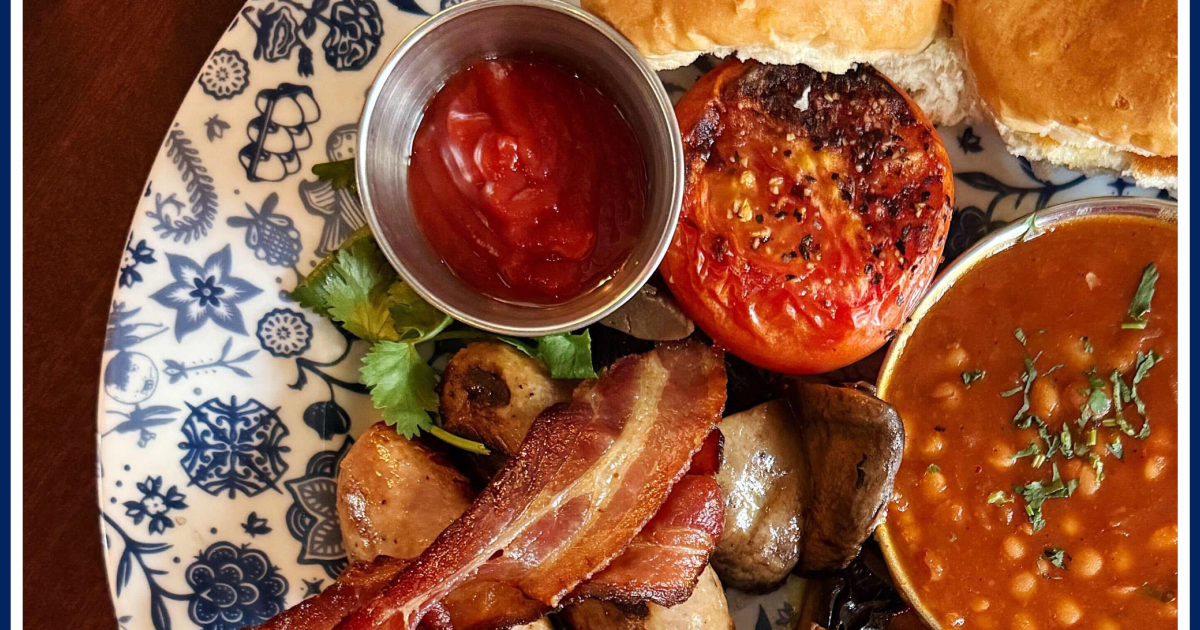
With more than a dozen locations across the United Kingdom and its first stateside location landing in Manhattan next year, Dishoom is hardly a secret. But each outpost offers a distinct vibe and set of influences, with the location in Shoreditch recalling an eccentric Iranian cafe by way of Bombay with mismatched furniture, bamboo blinds and gently frayed rugs. For breakfast, there are stuffed naan rolls, date and banana porridge or a Bombay-inflected take on a full English breakfast with akuri, bacon, peppery Shropshire pork sausages, masala beans, grilled field mushrooms, grilled tomato and buttered buns, best paired with fresh juice, chai or a sesame espresso martini. The all-day menu features well-established hits such as chicken ruby, lamb and veggie samosas and the famous black daal that’s slow-cooked for 24 hours, with a range of lassi yogurt drinks, Indian beers and cocktails that put a spin on the classics, such as the thandai mai tai with rum, almond milk, black pepper, cardamom bitters and house thandai syrup. The restaurant doesn’t accept dinner reservations, and lines can get notoriously long, but hospitable servers help pass the time with free chai and sherry samples.
The Latin Quarter’s cobblestone Rue Mouffetard is a walking street lined with fishmongers, bakeries, cheese shops, produce stands and cafes. Once you’ve talked triple-cream Brillat-Savarin with the cheese pros at Androuet and admired displays of glistening seafood along Mouffetard (Poissonnerie Quoniam sells fresh oysters that you eat standing with an inexpensive glass of wine), there is lunch or dinner to consider. A wonderful choice is Otto, a modern izakaya-style project with MOF chef Eric Trochon, who provided menu guidance to proprietors Stéphane Offner and Tony Alvarez-Parage plus occasional turns at the binchotan-fueled grill when he’s not running his Michelin one-star restaurant Solstice 700 meters away. Observe the action in the open kitchen from your bar seat or find an intimate corner to enjoy Otto’s small plates — maybe “fish no chips” with black curry mayonnaise, razor clams with garlic butter or celery root beignets. Oh, and at lunch you can choose three dishes for €22. A terrific deal.
Among coffee geeks, “pilgrimage” isn’t too strong a word to describe visiting the Collingwood neighborhood cafe owned by barista/roaster/industry visionary Nolan Hirte and his wife, Shari. Nolan was one of the leaders who built on Melbourne’s early coffee culture, established by Italian immigrants and their daily espresso habits in the mid-20th century. After Nolan took a tour of America’s burgeoning third-wave coffee shops in the mid-2000s, he returned to Melbourne determined to push the expressive possibilities of filter coffee even further.
At the cafe, the drink menu — whether drip, espresso drinks or pour-overs — includes flavor descriptions that can resemble wine-tasting notes, but there’s nothing fussy about the experience, or the easygoing breakfast and lunch options. Pour-over freaks looking for the highbrow deep dive should walk two blocks to Aunty Peg’s, the Hirtes’ laboratory/counter/roasting facility, for two or three rounds of Panamanian geishas.
I sat down recently and counted — surprising myself — that I’ve notched visits to 24 of Mexico’s 32 states, for leisure or while reporting. Querétaro is a highland charmer. Nuevo León is the country’s muscular northern colossus. Campeche, a verdant beauty. Everywhere I go in this country, I find new wonders. Then I visited Colima, and it hit me that Mexico is an endless cornucopia that will never vanquish a traveler’s curiosity.
Never heard of button-sized Colima? Don’t fret. A lover of Mexico may be vaguely aware of its important port at Manzanillo, or the state’s spectacular volcano complex. Otherwise, Colima is not commonly on visitors’ radar. The tourism industry is consistently ranked among Mexico’s smallest.
Yet it is a refreshingly contained and relaxed culture, with foods that are only found here. The depth of its riches are laid out in an ambitious recent series of culinary guidebooks by a group called Colima Sabe.
Use these handy dining guides for all of your summer travel, near and far.
The state has international airports in Manzanillo and Colima, which you might call Burbank-sized, largely serviced by connecting flights from Mexico City. Weekend travelers also come in by road from Guadalajara. There is a smattering of mid-tier or boutique hotels in central Colima or the nearby village of Comala, and a few resort hotels in Manzanillo. If you go, here are a handful of to-do’s for a sure-to-be-surprising Colima journey.
Share via
Taste the tuba
Glass of tuba compuesta, a fermented drink made from the sap of the coconut palm.
(Daniel Hernandez/Los Angeles Times)
Colima’s traditional devotion to tuba, the coconut palm ferment imported from the Philippines hundreds of years ago, comes into focus as you traverse the region and notice vendors congregating on busy street corners or central plazas with gourds or jugs of a milky liquid. It is tart, crisp and infinitely cooling for tropical temperatures. Embrace the “compuesta” style: tuba poured over ice and adorned with crumbled nuts and ruddy red fruit chunks, turning the liquid pink. El Camellón de la Tuba, a well-known stand near central Colima, made the best that I tasted on my visit. Avoid tuba that looks too brown or tastes too vinegary. * El Camellon de la Tuba, Avenida Constitución 2008, Centro, 28017 Colima, @camellondelatubaoficial
Savor Nico Mejía’s restaurants in Manzanillo
Ceviche colimense by chef Nico Mejía.
(Daniel Hernandez/Los Angeles Times)
La Sal, breezy and surprising in a former carport at his mother’s home in Manzanillo, launched the fame of chef Nico Mejía as a destination cook in 2020. Earlier this year, he moved La Sal (Colima’s coastal lagoons produce excellent salt) to a plot directly on a beach facing the Pacific. The restaurant makes refined regional favorites like ceviche colimense and his tostada de pozole seco, and mixes cocktails with tuba. The white-walled Casa Rangel is Mejía’s power-meeting magnet for internationally inspired local fare. Not too far away, Mejía’s partner Melissa Santamaria Mora runs an excellent bakery called Santamaria. These are restaurants on par with any you’d see in Guadalajara or Mexico City. * La Sal Playa, Avenida Lázaro Cárdenas 797, Playa Azul las Brisas, 28217 Manzanillo, @lasalplaya_
Sip the prizewinning beers of Cervecería de Colima
Cervecería de Colima is one of Mexico’s most acclaimed breweries.
(Daniel Hernandez/Los Angeles Times)
Winner of the Copa Cerveza México 2025 for best large brewery, Cervecería de Colima has been my go-to for quality, consistency and innovation since I first tasted its pale ale, the Páramo. I’d hold it against any other in this style. Over the years, I’ve found that just about everything Cervecería de Colima brews is satisfying. I’ve enjoyed the session IPA called Piedra Lisa, the bright pilsner Colimita, and the brewery’s recent entrant in the nonalcoholic market, Colima Cero. The headquarters just outside Colima city offer tastings, and in February, co-founder Esteban Silva and his team opened a taproom in the city called Estación Colimita. When a restaurant anywhere in Mexico offers these beers, I know they know what they’re doing. * Estación Colimita, Avenida Constitución 1401-local 1, Jardines Vista Hermosa IV, 28017 Colima, @cerveceriadecolima
Take in coffee and casual dining in Comala and Colima
A cucumber and mezcal cocktail at a rooftop bar overlooking Colima’s central square.
(Daniel Hernandez/Los Angeles Times)
Comala is a postcard-ready pueblo a few miles north of Colima. Those familiar with Mexican literature will recognize the name matching the fictional town in Juan Rulfo’s 1955 novel “Pedro Páramo,” the groundbreaking book that Gabriel García Márquez said inspired his magical realism masterpieces. The connection is coincidental, yet a certain air of enchantment hangs over Comala’s cobbled streets and tiled rooftops. According to Silva, who lives near Comala, the restaurants worth noting here are Cuaxiote, De La Suerte, and Hacienda Pascual Nogueras with chef Alan Ramos. In Colima city for coffee and a nice meal, visitors should bookmark Puerto Café and Cumbre, a restaurant and bakery that stands out in a scene of growing maturity and ambition. * Cuaxiote, Degollado 81, Centro, 28450 Comala, @cuaxiote
Bite into Colima’s iconic pozole seco
Pozole seco is Colima’s signature regional dish.
(Daniel Hernandez/Los Angeles Times)
It is Colima’s most famous regional specialty: all the ingredients and most of the preparation of a traditional white pozole, only without the liquid that makes it a stew. Its origins are uncertain, with one tale suggesting that a cook at Manzanillo’s mercado left a pot of pozole over fire and forgot it. When she returned to find the broth dried out, the lore is the cook slathered the remaining mass of meat and hominy on a tostada, and pozole seco was born. Find it at the local markets, cenadurías, comedores, and the sit-down restaurants that ring Colima city’s central plaza, such as Ramos’ new ¡Aquí Es Colima! * Aquí Es Colima! Portal Morelos 1, Centro, 28000 Colima, @aquiescolimaporgloriadedios
Explore Colima’s ancient history
A ceramic figurine of the extinct Mexican dog breed tlalchichi, which was native to Colima.
(Daniel Hernandez/Los Angeles Times)
Colima’s major pre-Hispanic site is La Campana, a grid of streets and structural bases that is believed to have been settled as early as 1870 B.C. in Mexico’s Pre-Classic period. The archaeological zone sits right beside urbanized Colima. At the former hacienda community Nogueras near Comala, an impressive museum features historical and archaeological artifacts, and the restaurant Pascual mentioned above. The museum holds ceramics of a dog from ancient times that is native to Colima, similar to Mexico’s more well-known native hairless dog the xoloitzcuintle. Colima’s tlalchichi breed is similar, with shorter legs. Though now sadly it is extinct, the tlalchichi is the state’s unofficial mascot, incorporated in signage, marketing and touristy knickknacks. * Museo Universitario Alejandro Rangel Hidalgo Nogueras, Nogueras s/n, 28450 Nogueras, Comala, @alejandrorangel_udec
When you live in Los Angeles, there are far worse fates than being stuck in the city all summer. Our thriving food capital draws diners out with sunlit farmers markets, midnight taco stands, multigenerational kebab shops and serene sushi dens. Community-oriented breweries, stylish wine bars and glimmering rooftop destinations round out the scene.
Whether you’re a lifelong Angeleno, new transplant or just passing through, you’ll want to get to know the 50 essential dining experiences that define eating in L.A. right now, from a pastrami sandwich at an iconic deli near MacArthur Park to a char-spotted tlayuda at a burgeoning food bazaar in West Adams and an L.A.-shaped churro from a rising Highland Park panadería.
Don’t miss our guide with nearly two-dozen new bar openings across the city. Finally, a handful of sparkling rooftops recently debuted across the city, offering vistas into neighborhoods we rarely spy from up above.
Thoughtfully compiled by our Food staff over the course of several months, we invite you to return to these lists whenever you’re seeking an answer to that perennial question: Where should I go next? — Danielle Dorsey
If You Go
(Giacomo Bagnara / For The Times)
There’s no easier way to get to know a new place than through its food. Wandering markets, eating at food stalls, sitting among locals and fellow travelers at the restaurants that embody a city. Its flavors and customs and ways of living are revealed to us over dinner or even a simple morning coffee.
And for those of us who are lucky enough to write about food for a living, traveling with an eater’s mindset gives us a deeper understanding of places we’ve read about in cookbooks and novels or seen in movies.
Each of us at L.A. Times Food keeps a running list of our favorite restaurants in some of the world’s great cities — and we want to share what we know with you. The recommendations that follow are not meant to be definitive for any given place. These are personal guides by dedicated eaters to some of the places we’ve loved during our wanderings around the globe.
If you’d like to share your own personal favorites with us, we’d love to hear from you in the comments below. — Laurie Ochoa
WITH the warm weather staying, you don’t need to fly away to experience a destination that feels like abroad.
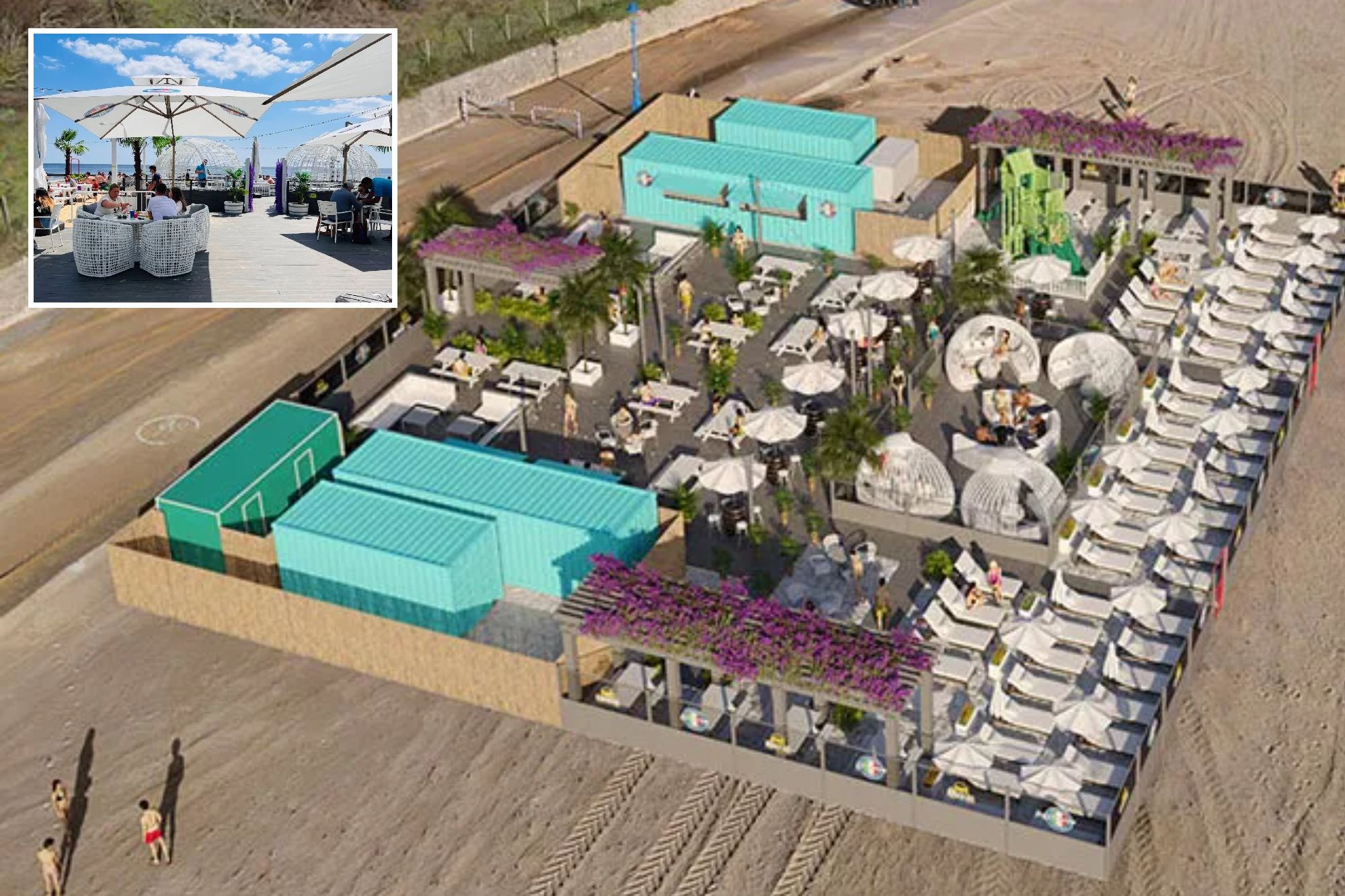
El Murrino Beachside Kitchen sits on East Cliff Beach, between Bournemouth and Boscombe Piers in Dorset.
Sign up for the Travel newsletter
Thank you!
El Murrino Beachside Kitchen in Bournemouth is said to feel like the MedCredit: Google mapsThe beach bar even has VIP cabanas you can bookCredit: El Murrino Beachside Kitchen
One recent visitor claimed the bar has “Mediterranean beach vibes”.
Another added: “The food was tasty and the atmosphere was like being abroad in Spain.”
A third agreed: “The sun was shining and the music made it feel like we were in Ibiza for the afternoon.”
Others even compared it to Miami, saying it feels like being on holiday abroad.
It doesn’t matter what time of day you visit as the kitchen serves breakfast, lunch and dinner.
Breakfast options include American pancakes for £8 and then when it comes to lunch or dinner you can grab a burger, salad, fish and chips or pizza for £14.
The beach bar sits right on the beach as wellCredit: Google mapsAnd in the summer they host live DJ sessionsCredit: El Murrino Beachside Kitchen
Even your four-legged friend won’t be left out with doggy ice cream available for £3.50 a tub.
And of course there are plenty of tipples on offer including cocktails for £9 or a pint for £6.50.
If you want to elevate your experience, there is the option to book a VIP Cabana for £75.
The cabana can be used by up to 10 people and includes two pizzas and four drinks or a bottle of wine or prosecco with your booking.
Each booking lasts two and a half hours.
If you don’t fancy booking a cabana there are plenty of picnic-style tables as well, surrounded by sand.
And during the summer months, you can also catch a live DJ session at the beach bar.
The beach bar is open each day until 11pm and makes for the perfect pitstop when exploring Bournemouth’s beaches.
A CLOSED English pier is set to be knocked down for good – with plans to build an entirely new one instead.
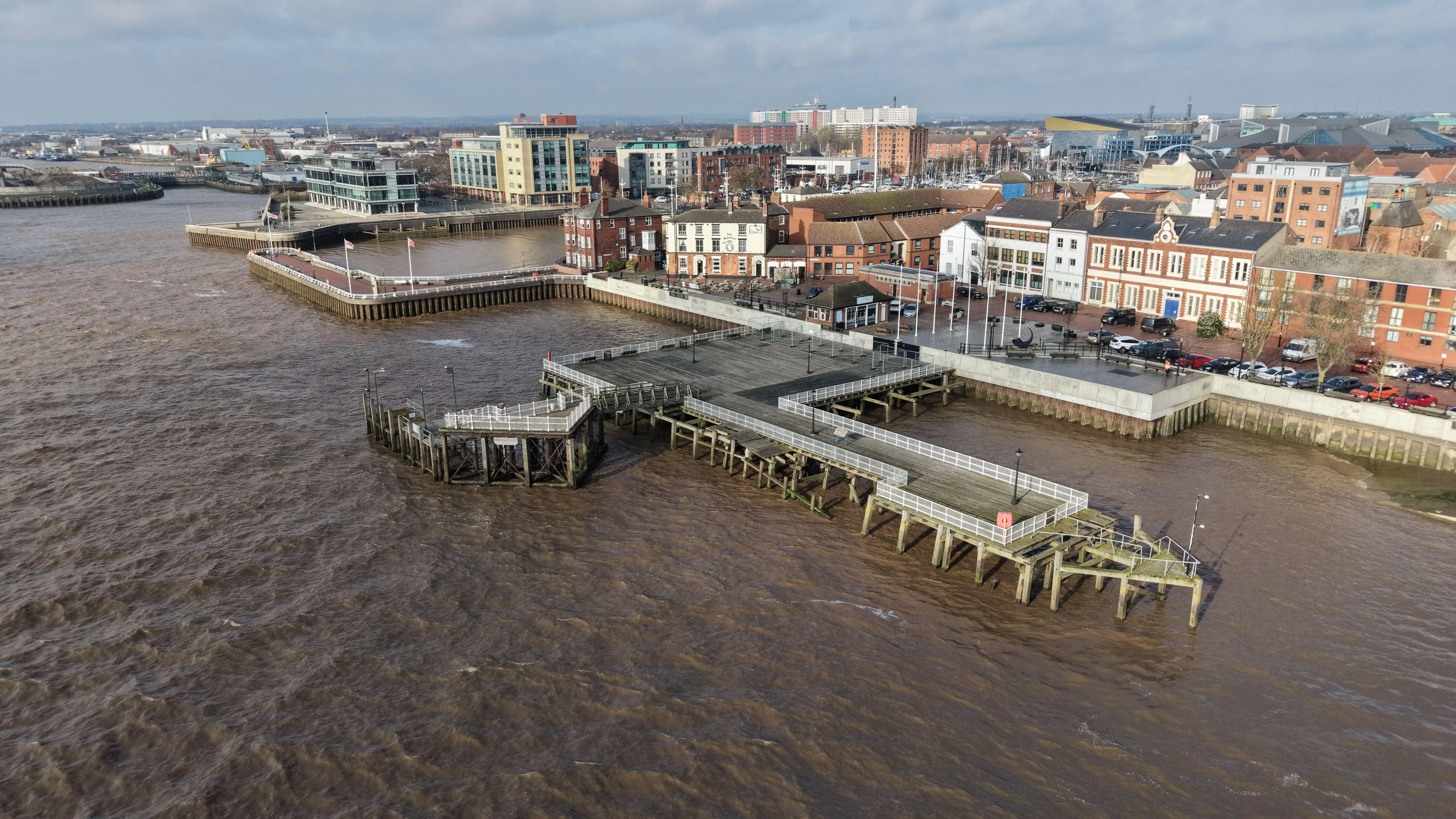
Victoria Pier in Hull has been closed for four years after being deemed ‘structurally unsafe’.
Sign up for the Travel newsletter
Thank you!
Victoria Pier has been in Hull for over 200 yearsCredit: CollectLocals have been asked to vote on a new design for Victoria PierCredit: Mason Clark Associates/Hull City Council
The historical structure, that stands over Humber Estuary, is instead set to be replaced with a new £1million pier.
The pier first opened in 1810, and later was known as Corporation Pier when it was used as a ferry terminal linking Hull and Lincolnshire.
It was renamed ‘Victoria Pier’ after Queen Victoria visited in 1854, but closed in June 2022 after deterioration and rotting, making it unsafe for people to stand on.
Now the plans are to knock it down and build a new one.
THE biggest hotel guest faux pas have been revealed – including jumping the breakfast buffet queue, washing undergarments in kettles and stealing from rooms.
Other frowned upon acts include reserving pool chairs with towels for long periods, leaving rooms excessively messy and being loud in the hallways late at night.
Sign up for the Travel newsletter
Thank you!
Jumping the breakfast buffet queue, washing undergarments in kettles and stealing from rooms are considered major hotel faux paxCredit: hotels.comPutting the incorrect number of guests in for a reservation is frowned uponCredit: hotels.com
Smoking or vaping in hotel rooms is also considered a no-no, as are putting the incorrect number of guests on the reservation and leaving alarms or phones to ring without turning them off.
While not reading reviews when booking and not collecting or cashing in rewards points are also viewed unfavourably.
In response, Hotels.com, which commissioned the research, is offering holidaymakers £100 in ‘Hotels.comCash’ for future trips after staying for 10 eligible nights through its rewards programme.
Melanie Fish, travel expert and spokesperson for the global marketplace, which has also teamed up with William Hanson for a ‘Grand Etiquette Hotel’ guide, said: “Small tweaks can make a world of a difference.
The vast majority of Brits believe they are considerate guestsCredit: hotels.comLeaving rooms excessively messy and returning late at night are big no-nosCredit: hotels.com
“Taking the time to check reviews or making the most of rewards can turn a good trip into a great one, and help your travel budget stretch further, too.”
Researchers found the vast majority (90 per cent) consider themselves to be considerate guests – although 39 per cent think residents have become less respectful in recent years.
Other divisive acts include hanging damp laundry on the balcony, not leaving a review after staying and being rude to staff.
Sneaking extra guests in and constant public displays of affection around the pool are also frowned upon by hotel guests.
WILIAM HANSON’S GRAND ETIQUETTE HOTEL GUIDE:
1. THE ART OF ENGAGING STAFF WITH DIGNITY – Treat every member of staff, from the cleaner to the manager, with genuine respect and an open ear.
2. HALCYON HALLWAYS (AND THE VIRTUE OF SILENCE) – Corridors are not thoroughfares for celebration, but shared spaces requiring a degree of restraint.
3. LIBATIONARY LESSONS – A well-enjoyed drink need not become a public performance. Moderation is key, particularly in shared spaces where one’s behaviour is on quiet display.
4. ON BURNING EMBERS AND BETTER JUDGEMENT – Hotel rooms are designed for comfort, not combustion. Lighting a cigarette indoors undermines both the space and the experience for future guests.
5. HOUSEKEEPING IS NOT AN ARCHAEOLOGICAL ACTIVITY – Keeping your space in reasonable order (not pristine, but certainly not chaotic) ensures that housekeeping can do their job efficiently.
6. LAVATION GENTILITY – The kettle, charmingly utilitarian as it is, exists for hot drinks only. Incredulously, some people attempt to use it for laundry.
7. BORROWING, OWNERSHIP, AND OTHER DANGEROUS ASSUMPTIONS – Hotels provide generously, but not without limits. Slippers and toiletries may accompany you home; larger items most certainly may not.
8. MARSHALLING ONE’S MORNING REPAST – The breakfast buffet is not a free-for-all, but a civilised ritual governed by the simple act of queuing.
9. THE FOLLY OF FLAG PLANTING BY TOWEL – Placing a towel on a sun lounger at dawn and vanishing until mid-afternoon is a practice best left unadopted.
10. LOYALTY, AND WHY IT GETS ONE FURTHER – By consolidating bookings and collecting rewards, one quietly accumulates tangible benefits.
Those polled were also asked which nationalities they consider to be the gold standard for politeness – and which ones they perceive to be rudest.
Japanese tourists came top for being the most considerate, followed by Sweden in second place, with U.K. respondents placing themselves third.
At the other end of the scale, Americans are regarded as the most impolite, just beneath those from Germany, according to Hotels.com research conducted through OnePoll.
William Hanson said: “Better hotel etiquette doesn’t just benefit others, it can directly enhance your own stay.
“At the heart of my guide is the idea that small, thoughtful behaviours add up to big rewards: from a better night’s sleep and improved service to savings on future trips.”
TOP 20 BIGGEST HOTEL FAUX PAS:
Being rude to hotel staff
Being really loud (e.g., loud hallway conversations, blasting music late at night or early in the morning)
Putting the incorrect number of guests on the reservation
Becoming drunk and annoying other guests
Not reading the reviews when booking
Smoking or vaping in hotel rooms
Not looking at the pictures when booking
Leaving rooms excessively messy at check-out
Washing undergarments or personal items in the in‑room coffee maker
Stealing items you’re not supposed to from the room
Jumping the queue at the hotel breakfast buffet
Reserving pool or beach chairs with towels or personal belongings for long periods
Playing music on a personal speaker at the pool
Allowing pets at the table in the hotel restaurant
Bringing children into the adults‑only pool
Sneaking extra guests into rooms
Walking through hotel hallways or common areas wearing only a robe or sleepwear
Not collecting reward points when booking
Not checking out on time
Leaving rubbish or room‑service trays in the hallway
The fluorescent green gaiters seemed a ridiculous suggestion, but prove a godsend as we plod across the sand. “I bet you’re glad I told you to get a pair of these bad boys now, aren’t you?”my friend Luke jokes. We’re marching across a wide, crescent-shaped, honeyed beach. The sun is high in the sky and slivers of light flicker through a thick sea fog, as 6ft waves crash and fizz, their white foam licking the towering limestone cliffs.
I’m in Portugal, in the west Algarve, with two friends, hiking part of the Rota Vicentina, or Fishermen’s Trail, a 140-mile (226km) trek that runs from Lagos to São Torpes in Alentejo. Traversing cliffs that lead to wild, remote beaches like this one is part of the trail’s calling card. As the name suggests, it was originally carved out by fishers to reach otherwise inaccessible fishing spots along the Atlantic Ocean. Now it’s part of the Rota Vicentina, a hiking and cycling route spanning 466 miles across Portugal.
Already, this corner of the Algarve feels a far cry from downtown Lagos, where we’d been woken up the night before by noisy tourists after one too many Super Bocks. Our official starting point is 25 minutes away in Salema – a fishing village set within the Vicentine Coast natural park.
Barriga beach, on the Atlantic coast near Vila do Bispo. Photograph: Jose Luis Alvarez Esteban/Alamy
The sedate seaside haven is perhaps how the rest of the Algarve was before mass tourism arrived in this part of the Iberian peninsula following the opening of Faro airport in the 1960s. More than 20 million tourists visited the Algarve last year, 5.7 million of them from the UK.
Visitors to Salema drift in and out like the tide, pottering along cobbled streets, past traditional blue-and-white fishers’ cottages, stopping to indulge in fresh seafood on the terraces of family-run restaurants overlooking the long, empty beach flanked by chalky cliffs.
Tempted to postpone the first day of hiking to idle away the hours, we instead polish off a load of pastéis de nata and a bica or two down at Pastelaria Solmar, then set off. For the first few miles, we wend along a relatively flat, clay-coloured coastal path, following the blue-and-green striped Fishermen’s Trail logo that should lead us to Sagres.
A street in Salema. Photograph: CMS Pic/Getty Images
Keeping the sea to the left (we’re heading north), it’s easy to navigate. Magical, too, with views stretching as far as the eye can see, across an Atlantic Ocean glinting in the summer sun. Occasionally, we have to scramble up or down a steep, rocky embankment. But the rewards, a series of serene beaches that seem to get better with every mile, make it worthwhile. Given the remote location, these pretty coves attract only the hardiest beach-goers, and the odd naturist.
Over the day’s almost 12-mile hike, we hardly see another soul. So, when we arrive at Sagres, we’re ready for some human interaction. The seafaring town is where slave trader Henry the Navigator spent the final years of his life. Nowadays, Sagres is better known for its enviable surf breaks.
“I’m ready for a Sagres in Sagres,” Luke says, as we drop our bags and freshen up at Alojamento Mareta, a modest two-bed apartment that hovers on a cliffside with a blushing garden and sea views (about £78 per night). We mooch around looking for somewhere for dinner and a cold beer.
Sagres doesn’t have any sense of coherent organisation; its scattering of cafes, restaurants and bars appear to have been sketched out by bored teenagers when the city planners were on holiday. Instead of joining a growing gaggle of surfers waiting for live music to start at Three Little Birds, we order piri-piri chicken and a glug of local wine from the family-run Cafe Conchinha and retire to bed.
Waking early, we zip down to the empty Mareta beach for a meditation session led by another friend, James, before plunging into the icy sea. As if the morning isn’t already wholesome enough, we head to the Laundry Lounge – a boho, wooden-clad laundrette-cum-brunch spot – for a 90-minute yoga session and some breakfast before getting back on the road.
‘Craggy cliffs bathed in a golden light’ …. the lighthouse at Cabo de São Vicente. Photograph: Allard1/Alamy
We make our way to Cabo de São Vicente, where a 19th-century lighthouse sits perilously on an isolated rocky headland whipped by the elements. Mainland Europe’s most southwesterly point was known as the “end of the world”. It’s not hard to understand why. There’s nothing but an endless melange of blue water and craggy cliffs bathed in a golden light. It’s little wonder that the Greeks and Romans believed it to be a sacred promontory.
Later, we cut inland across a pancake flat expanse of arid shrubland with only the odd purple thistle for colour. Then, after 12 miles or so, we arrive in Vila do Bispo, a dusty, eerily quiet town, like something from a spaghetti western. Low-rise, pastel-coloured houses seem worn by time and old dusty cars sit beneath purple wisteria on cobbled street corners.
Fish, hung out to dry on washing lines, flap around in the wind as we wander the streets looking for somewhere to eat. We stumble across Pisco, an unassuming restaurant with a cosy atmosphere – whitewashed walls hung with art and crammed with wine bottles – where the vegetarian menu has excellent Mediterranean dishes, sourdough pizzas and organic wines.
Charging back towards the coast the following morning, we arrive at perhaps the most picturesque part of the hike. On the cliffs above Praia da Pena Furada, a vast, windswept beach, we perch on the cliffside for a moment to admire tall sea stacks battered by waves, the wind whistling through them as gulls swoop like kites overhead. It feels more like Steinbeck’s California than the Algarve. But for the hissing of the sea, everything is silent.
We barely say a word to one another until we land at the impossibly long sandy beach of Bordeira near Carrapateira a few hours later. The atmosphere here couldn’t be more different. The beach is busy with Portuguese holidaymakers and surfers. It’s the perfect antidote to hiking fatigue, so we settle in for a well-deserved burger at the hillside beach bar Amadobar as low-fi rock drifts from the speakers and surfers paddle out to distant breakers.
The hike ended at Praia da Arrifana in the Aljezur area of the west coast. Photograph: GM/Getty Images
Our digs for the night, which we make our way to after sunset, are about 20 minutes from the beach. Carrapateira Lodge (about £52 per night) sits in the centre of a small, charming whitewashed town with a scattering of restaurants, bars, cafes and surf shops. We dine alfresco on the cobbles just off the main plaza at O Pontal, getting to work on plates of tender octopus, roasted salt cod and beef entrecote to sustain ourselves for tomorrow’s final push.
When we arrive at Arrifana, our final destination the following afternoon, we’re beat. The parish town is settled on the hillside in the Aljezur municipality. Like Carrapateira, it’s popular with surfers. It feels closer to the Algarve most visitors know in some ways, but it’s still relatively low key. A single lane road helter-skelters down to another postcard-worthy beach, where there’s a sprinkling of bars and restaurants. Shattered, we round off the trip watching sunset at Café Restaurante Sol E Mar, a no-frills bar that spills out on to the headland overlooking the beach, which is busier than others we’ve passed but not as crowded as other Algarve hotspots I’ve visited. No rowdy Britons in sight – except us three.
WITH hundreds of holiday parks across the UK to pick from, it can be hard to choose where to go when you want a staycation.
But there are a number that are home to waterparks as well with everything from rapids to fast flumes.
There are hundreds of holiday parks across the UK, but only a handful have waterparks on-siteCredit: http://www.haven.com
Some spots are right by the beach too!
Here’s our round-up of the best holiday parks across Britain with waterparks.
South West England
Hendra Holiday Park, Cornwall
Hendra Holiday Park is only 10 minutes from NewquayCredit: Hendra Holiday Park
Around 10 minutes from Newquay in Cornwall is Hendra Holiday Park – which has previously been named one of the most underrated holiday parks in the UK.
At the park, there is a giant water complex with an indoor pool, water rapids, tipping buckets and three water flumes.
And then outside, guests will find another pool with sea scooters and inflatables.
You do not need to stay at the holiday park to access the waterpark.
You can book a one hour 20 minute session online in advance; however, the website currently shows that no slots are available.
A week’s stay at the park costs from £685 in August.
Haven Riviere Sands, Cornwall
Haven Riviere Sands has both an indoor and an outdoor poolCredit: Haven
Another Cornish spot, this time in Hayle, is Haven’s Riviere Sands.
The park boasts both an indoor and outdoor swimming pool, with a number of slides too.
For little ones, there are paddling pools as well.
You’ll need to be a guest at the park to use the on-site water attractions.
A week’s stay at the park costs from £525 in July.
Haven Devon Cliffs
At Haven Devon Cliff, there is a four-lane water slideCredit: http://www.haven.com
At Haven Devon Cliffs, you’ll get access to a private beach as well as a huge indoor pool with a four-lane water slide.
At the beach, you can learn sea kayaking and paddleboarding too.
You’ll need to be a guest at the park to use the on-site water attractions.
A week’s stay at the park costs from £435 in July.
Center Parcs Longleat Forest
Visitors at Center Parcs in Longleat Forest can gently float down a lazy riverCredit: Alamy
In Wiltshire, Center Parcs Longleat Forest is a great place to stay in a woodland setting.
Typical for Center Parcs sites, the park has a Subtropical Swimming Paradise, which is an indoor waterpark.
Inside, visitors will find wave pools, waterslides, a lazy river and water rapids.
Adults can also head to the Aqua Sana Spa.
You’ll need to be a guest at the park to use the on-site water attractions.
However, if you are a staying guest but have friends or family who aren’t staying, you can get them a visitor pass for the day, which costs around £50 per adult and £38 per child.
A week’s stay at Longleat costs from £2,338 in August.
Butlin’s Minehead
Butlin’s Minehead has special areas for little onesCredit: Unknown
Just like the other two Butlin’s sites, Butlin’s Minehead has an indoor Splash Waterworld.
Inside, visitors can try out a number of different flumes or chill out on a lazy river.
There is also a wave pool and special areas for little ones getting used to the water.
Visitors can book a day pass for £15 per adult and just 85p per child.
A week’s stay at Butlin’s Minehead costs from £215 in July.
Unity Beach, Somerset
At Unity Beach in Somerset, you can grab a day pass for £12ppCredit: Pitch Up
Set across 240 acres, Unity Beach has its own waterpark.
At Splash Waterpark, you’ll find a six-lane pool as well as a splash zone and waterslides.
The general public can head to the waterpark for a session, which lasts an hour and a half.
A session pass to the indoor pool and splash zone costs £12 per person.
A week’s stay at Unity Beach costs from £610.20 in July.
Freshwater Beach Holiday Park, Dorset
Freshwater Beach Holiday Park sits right by Chesil Beach on the Jurassic CoastCredit: Campsite UK
Found in Dorset, Freshwater Holiday Park is set on Chesil Beach on the Jurassic Coast.
Previously named one of the “outstanding sites for 2025” by Campingsites.co.uk, the holiday park has three indoor and outdoor pools.
There are also water slides to enjoy, and guests get private access to the beach.
Day passes are available from £7.50 per adult and £4.50 per child.
A week’s stay at Freshwater Holiday Park costs from £375 in July.
Lady’s Mile Holiday Park, Devon
Found in the popular seaside spot of Dawlish Warren, Lady’s Mile Holiday Park has two pools and two waterslides.
Inside, visitors will find a 33-metre twisting slide, and outside there is a long slide that heads into the pool.
There is also a splash pad outside and a splash zone inside for toddlers.
Day passes are available to the pools at the park, costing £5 per adult and £4 per child.
A week’s stay at Lady’s Mile Holiday Park costs from £803 in July.
South East England
Butlin’s Bognor Regis
All three Butlin’s resorts offer day passesCredit: Free for editorial use
Sat right on the beach, Butlin’s Bognor Regis is home to a massive indoor Splash Waterworld with Seaside Garden Rapids and a dedicated pool for little ones.
There are also more thrilling flumes, including Stick of Rock and the Family Raft Ride.
Visitors can book a day pass for £19 per adult and just 85p per child.
A week’s stay at Butlin’s Bognor Regis costs from £404 in July.
Seal Bay Resort, Chichester
Oasis Bay at Seal Bay Resort has day passes costing £10 per adult and £6 per childCredit: Unknown
At Seal Bay Resort in West Sussex, you can head into Oasis Bay, where you’ll find a huge pool, Coral Creek Lazy River, splash zones and slides.
There’s also Wave Rider – a surfing experience.
And outside, you’ll find a lido with private cabanas to chill in.
You don’t have to be a guest to use Oasis Bay at Seal Bay Resort – day passes are available for £10 per adult and £6 per child.
A week’s stay at Seal Bay Resort costs from £505 in July.
East of England
Center Parcs Elveden Forest
Center Parks Elveden Forest sits in rural SuffolkCredit: Center Parcs
Dubbed the perfect Center Parcs village for nature lovers, Elveden Forest sits in rural Suffolk.
The Subtropical Swimming Paradise and luxury forest spa include a heated wave pool, water rapids and a Tropical Cyclone ride.
The park is also home to Center Parcs’ longest zip wire.
You’ll need to be a guest at the park to use the on-site water attractions.
However, if you are a staying guest but have friends or family that aren’t staying, you can get them a visitor pass for the day, which costs around £50 per adult and £38 per child.
A week’s stay at Center Parcs Elveden Forest costs from £2,008 in August.
Center Parcs Woburn Forest
Center Parcs Woburn Forest is a great spot for escaping the capitalCredit: Unknown
Set across 362 acres, Woburn Forest in Bedfordshire is Center Parcs’ newest location, having opened in 2014.
The park’s Subtropical Swimming Paradise features both indoor and outdoor pools as well as a lazy river, rapids and a splash zone for little ones.
It’s a great option for those wanting to escape the capital, as it is under an hour away on the train.
You’ll need to be a guest at the park to use the on-site water attractions.
However, if you are a staying guest but have friends or family that aren’t staying, you can get them a visitor pass for the day, which costs around £50 per adult and £38 per child.
A week’s stay at Center Parcs Woburn Forest costs from £1,808 in July.
Haven Seashore, Norfolk
Haven Seashore in Norfolk has smaller slides for little kids
Haven Seashore Holiday Park on the Norfolk coast has direct access to the beach, as well as an indoor waterpark.
At the waterpark, you’ll find flumes and slides, including ones on inflatable doughnuts.
Little ones can enjoy a toddler’s pool as well, with a Splash Zone and smaller slides.
You’ll need to be a guest at the park to use the on-site water attractions.
A week’s stay at Haven Seashore costs from £319 in July.
Haven Hopton Holiday Village, Norfolk
Haven Hopton Holiday Village, Norfolk, was recently named AA’s Holiday Park of the Year
Right by Hopton-on-Sea, the holiday park has its own indoor pool with slides, flumes and even a splash zone for little ones.
Adults can also enjoy a bar and lounge with evening entertainment.
You’ll need to be a guest at the park to use the on-site water attractions.
A week’s stay at Haven Hopton Holiday Village costs from £351 in August.
East Midlands
Butlin’s Skegness
Butlin’s Skegness has a huge 3,000sqm indoor Splash WaterworldCredit: Unknown
When it comes to a bargain break, Butlin’s is a great option, and the one in Skegness has a huge 3,000sqm indoor Splash Waterworld.
Inside, visitors will find flumes, racing rapids, a wave pool and an area for toddlers.
One ride ideal for families is the Riptide Raft Ride, where people sit in a raft and travel through rapids.
Visitors can book a day pass for £19 per adult and just 85p per child.
A week’s stay at Butlin’s Skegness costs from £251 in July.
Center Parcs Sherwood Forest
Center Parcs Sherwood Forest is the original UK Center Parcs villageCredit: Alamy
Home to the original UK Center Parcs village, Sherwood Forest in Nottinghamshire is spread across 400 acres.
Like its other sites, the park has a Subtropical Swimming Paradise kept to 29.5C year-round.
In the waterpark, you can expect a sandy beach, a lazy river and slides.
You’ll need to be a guest at the park to use the on-site water attractions.
However, if you are a staying guest but have friends or family that aren’t staying, you can get them a visitor pass for the day, which costs around £50 per adult and £38 per child.
A week’s stay at Center Parcs Sherwood Forest costs from £2,048 in August.
Haven Cleethorpes Beach, Lincolnshire
Haven Cleethorpes Beach has a lazy river outdoorsCredit: Unknown
Haven Cleethorpes Beach in Lincolnshire boasts an outdoor splash park with water features and fountains.
There’s also a lazy river for a cooling chill session in the pool.
You’ll need to be a guest at the park to use the on-site water attractions.
A week’s stay at Haven Cleethorpes Beach costs from £349 in July.
West Midlands
Alton Towers, Staffordshire
Or you could head to Alton Towers for £20 a dayCredit: Alamy
While many people think of the theme park when they hear Alton Towers, the truth is the attraction also has a huge indoor and outdoor water park.
In fact, Alton Towers claims it is one of Europe’s biggest and best waterparks.
In addition to different pools, the water park has lazy rivers, water cannons, a splash area for little ones and even a Master Blaster coaster.
There are some waterslides to try out as well, such as the Flash Floods flume ride.
A waterpark pass for the day costs from £20.13 per person.
A week’s stay at Alton Towers costs from £1,270 in July.
North West England
Center Parcs Whinfell Forest
To use Center Parcs facilities, you need to be a staying guestCredit: Center Parcs
For those wanting to visit the Lake District, you could head to Whinfell Forest.
The Subtropical Swimming Paradise has an outdoor river rapid, wave pools and water slides.
Also at the park, you can rent bikes and explore a number of woodland trails.
You’ll need to be a guest at the park to use the on-site water attractions.
However, if you are a staying guest but have friends or family that aren’t staying you can get them a visitor pass for the day, which costs around £50 per adult and £38 per child.
A week’s stay at Center Parcs Whinfell Forest costs from £1,778 in August.
HavenMarton Mere, Blackpool
Haven Marton Mere features an outdoor SplashZone for little ones and a lazy river
Haven Marton Mere is just 10 minutes from Blackpool seafront.
At the holiday park, there is a heated indoor pool with a Space Bowl flume, as well as an outdoor SplashZone for little ones and a lazy river.
You’ll need to be a guest at the park to use the on-site water attractions.
A week’s stay at Haven Marton Mere costs from £409 in July.
Wales
Haven Hafan y Mor, Wales
At Haven Hafan y Mor you can head down a four-lane waterslideCredit: haven.com
In Wales, make sure to visit Haven’s Hafan y Mor, which even has views of Snowdonia.
Inside, guests will find a waterpark with a lazy river, a four-lane waterslide, and giant tipping buckets.
The park also has dry activities such as Segway excursions and mini 4x4s.
You’ll need to be a guest at the park to use the on-site water attractions.
A week’s stay at Haven Hafan y Mor costs from £609 in July.
Bluestone National Park Resort
Bluestone National Park Resort in Wales has a wave machine in the poolCredit: Not known clear with picture desk
Around six miles from Narberth in Wales, Bluestone National Park Resort is tucked away in the countryside.
At the resort, you’ll find Blue Lagoon – the indoor swimming complex.
The indoor waterpark also has a lazy river, and every so often, the wave machine will send waves through the pool.
You’ll need to be a guest at the park to use the on-site water attractions.
A week’s stay at Bluestone National Park Resort costs from £1,390.50 in July.
Scotland
Haven Craig Tara, Ayrshire
Craig Tara in Scotland is home to the largest indoor pool in ScotlandCredit: Haven
In Scotland, head to Haven Craig Tara, which is home to the largest indoor waterpark in Scotland – Splashaway Bay.
The waterpark boasts a giant indoor pool with flumes, multi-lane water slides, a lazy river and an interactive splash zone for toddlers.
The park also has a number of other activities, including the Airspace sports hall, where you’ll find a climbing wall, soft play, a golf simulator and electronic target walls for sports.
You’ll need to be a guest at the park to use the on-site water attractions.
A week’s stay at Haven Craig Tara costs from £409 in August.
Now Home Bargains is selling what it says is “convenient” and contains all the beauty products you need for your break. It is selling the Travel Essentials Filled Bag for £24.99 – that is 75% less than its recommended price of £100.
Listing some of the contents on its website it describes it as: “A complete travel beauty and self-care kit featuring skincare, makeup, haircare, body care, and travel accessories. Includes Glow Hub, W7, Jil Sander, Escada, Aussie, and more, all packed in a stylish reusable travel bag.”
Then, in the product description, it adds: “Take your beauty and self-care routine wherever you go with the Travel Essentials Filled Bag. Packed with a carefully curated selection of skincare, haircare, makeup, and travel accessories, this convenient kit contains everything you need to refresh, hydrate, and pamper yourself while travelling.
“Inside you’ll find Glow Hub skincare favourites, W7 beauty essentials, Jil Sander shower gel, Escada body cream, Aussie travel-size haircare, and practical travel accessories including an eco scalp massaging brush, shower cap, and reusable travel bag. Whether you’re heading on holiday, a weekend getaway, or a business trip, this all-in-one collection helps you stay organised and feel your best on the go.”
Shoppers will not be able to pick up the bag in-store as it is an online-only deal. However the website gives further details of the Star Buy listing the products:
Glow Hub Calm & Soothe Face Mask Stick 35g
Glow Hub Calm & Soothe Serum Mist 90ml
W7 Lip Drink Lip Oil 10ml
Jil Sander Sun Shower Gel 150ml
Glow Hub Scar Slayer Skin Mask 100ml
Whind Dissolving Jelly Cleanser 6ml – Oasis Fresh
Revolution Hot Shot Kombucha Kiss Primer 25ml
W7 Sherbet Pop Eyeshadow Palette 18g
Escada Santorini Sunrise Moisturising Perfumed Body Cream 50ml
Meanwhile, if this is not to your taste, M&S also has an option. Its Summer Beauty Bag is priced £40 – a saving of 81% compared with buying the same amount.
It is described as “sunshine-ready” and contains some beauty-favourite products from brands including Clinique and Estée Lauder. It lists the contents as:
Floral Street Wonderland Peony Eau De Parfum – 10ml
Iconic London Prep Set Glow Original – 120ml (Full Size)
Leighton Denny I love Juicy Opague Nail Polish – 13.5g (Full Size)
Hair by Sam McKnight Sundaze Sea Spray – 150ml (Full Size)
Clinique Dramatically Different Moisturizing Lotion SPF50 – 50ml (Full Size)
TRAIN passengers have been told to expect significant delays and cancellations over fears of rails ‘buckling’ in the hot weather.
Hundreds of journeys have been affected as temperatures of up to 40C could be recorded in the UK this week.
Sign up for the Travel newsletter
Thank you!
Railway operators face cancelling services over hot weather warningsCredit: tupungatoRailway tracks can buckle if exposed to temperatures above 30CCredit: Kanda Peeraoranan
Railway operators have begun cancelling services, as red weather warnings have been issued in parts of England and Wales for the coming days.
Network Rail has urged passengers to only take essential journeys to, from or within areas affected by extreme heat, and to prepare for the conditions ahead of time.
They added: “For safety reasons, trains will operate at reduced speeds and to amended timetables, meaning journeys will take longer and there is a heightened risk of delays, cancellations and last-minute alterations.”
Several operators, including Avanti West Coast, Great Western Railway and South Western Railway, have planned to run reduced services during the hottest days.
Between Tuesday, Wednesday and Thursday, Chiltern Railways has also ceased more than half its services “to ensure the safe operation of the railway”.
This is over fears of rails “buckling” – a term used to describe steel rails expanding and curving as they heat up – which can occur as temperatures reach 30C.
Lineside fires create another risk to railways, as vegetation near tracks may be set alight from a combination of train sparks and dry conditions.
A number of tube lines, namely the Elizabeth and Mildmay Lines, have been further affected by flooding as a result of overnight thunderstorms as well as the hot weather.
This follows record-breaking temperatures expected this June.
Met Office spokesman, Grahame Madge, said: “The Met Office is flagging 39C as a headline maximum temperature on Thursday, most likely for somewhere in London or the South East.
“It is possible we could see temperatures higher than the 39C.”
Northern Network – Reduced services between several routes
Cleethorpes and Barton-on-Humber – No trains
Transport for Wales – Reduced services between Wrexham General and Bidston, Coryton and Penarth. No services between Shrewsbury and Birmingham International, and services cancelled at 13.00pm between Pontypridd and Cardiff Bay
Avanti West Coast – Reduced services
Great Western Railway – Reduced services
London Paddington and Heathrow Terminals – Severe disruption
Elizabeth Line – Partially flooded
MerseyRail – Speed restriction to Headbolt Lane line
CrossCountry – Routes affected
Chiltern Railways – Lines between Between Birmingham and London Marylebone, Oxford and London Marylebone, and Aylesbury and London Marylebone (via Amersham) severely affected.
The Met Office has issued a series of amber and red heat alerts this week as temperatures are set to rise close to 40C in some parts of the UK, with the RAC urging drivers without air conditioning to postpone non-essential journeys
An expert has spoken about driving in the UK this week (stock)(Image: CHUNYIP WONG via Getty Images)
Britain is being battered by a sweltering heatwave this week, with temperatures threatening to nudge close to 40C in some areas of the country. In response, the Met Office has issued a raft of amber and red heat warnings.
Britons are also being urged to keep their fluid intake up and remain vigilant for signs of heat-related illness brought on by the scorching conditions.
Some people may look to escape the heat by jumping into their car and cranking up the air conditioning. However, one motoring expert has cautioned drivers that even if their vehicle is available to them, they should think twice before getting behind the wheel this week.
In a statement published on the RAC‘s website, the organisation’s road safety spokesman Rod Dennis warned that motorists without air conditioning in their vehicles should consider putting off their journeys altogether.
Explaining his reasoning, he said: “Red extreme heat warnings are rare and we urge everyone to take them seriously this week. Drivers whose vehicles don’t have effective air conditioning should strongly consider postponing any non-essential car journeys until the Met Office’s weather warnings are lifted and temperatures drop.
“If this isn’t possible, our best advice is to travel during cooler times of day. This is especially important for anyone travelling with vulnerable people, including young children and older adults, who are at greater risk from the intense heat.”
Red heat warnings, set to take effect on Wednesday and Thursday this week, have been put in place owing to the exceptionally high temperatures forecast across the south and south-east of the UK.
Temperatures are expected to soar so dramatically that some forecasters believe records for June could be shattered. The current record for the hottest June day stands at 35.6C, set in Southampton in 1976 and in Camden Square, London, in June 1957.
The last time Britain endured a prolonged spell of temperatures reaching as high as 40C was roughly four years ago, in July 2022.
In a statement addressing the warnings, Met Office Deputy Chief Forecaster Mark Sidaway made it clear that red warnings are not handed out lightly, and are reserved solely for the most extreme weather conditions.
He said: “Red warnings are reserved for the most severe events and we’re expecting severe and significant impacts from this heatwave, with health impacts likely for many, even beyond those who are normally more vulnerable to the heat.
“The last time the UK recorded temperatures this high was in July 2022, but on this occasion the heat is expected to be accompanied by high humidity.”
Meanwhile, Dr Agostinho Sousa, Head of Extreme Events and Health Protection at the United Kingdom Health Security Agency, added: “We are urging health and social care services across the country to ensure they are prepared.
“A red heat health alert indicates a risk to life for even the healthy population, but simple actions like staying hydrated, avoiding the sun during the hottest part of the day, and keeping your home cool can make a big difference.”