Until I went to Oslo recently, the best cinnamon roll I’d ever eaten was in Chicago — at the venerable Swedish-American diner Ann Sather, where a milky sugar glaze used to be drizzled onto the still-warm, pillowy pastry right at the table. (These days the rolls are glazed in the kitchen after they’re baked.)
Los Angeles, of course, also has show-stopping cinnamon rolls. This spring, Food senior editor Danielle Dorsey, with help from Stephanie Breijo, Jenn Harris and Angela Osorio, put together a guide to 11 of L.A.’s most intriguing cinnamon rolls, including the hip-hop-inspired over-the-top creations at All About the Cinnamon, the sweet-savory buns with honey and sesame seeds at Modu and the tallboy “cinnamon goo”-filled rolls topped with caramel-toffee sauce from SweetBoy. Harris also recommends the especially decadent cinnamon roll served during brunch at Baltaire in Brentwood, where the cake-size roll is wheeled out on a cart and “slathered with frosting at the table.”
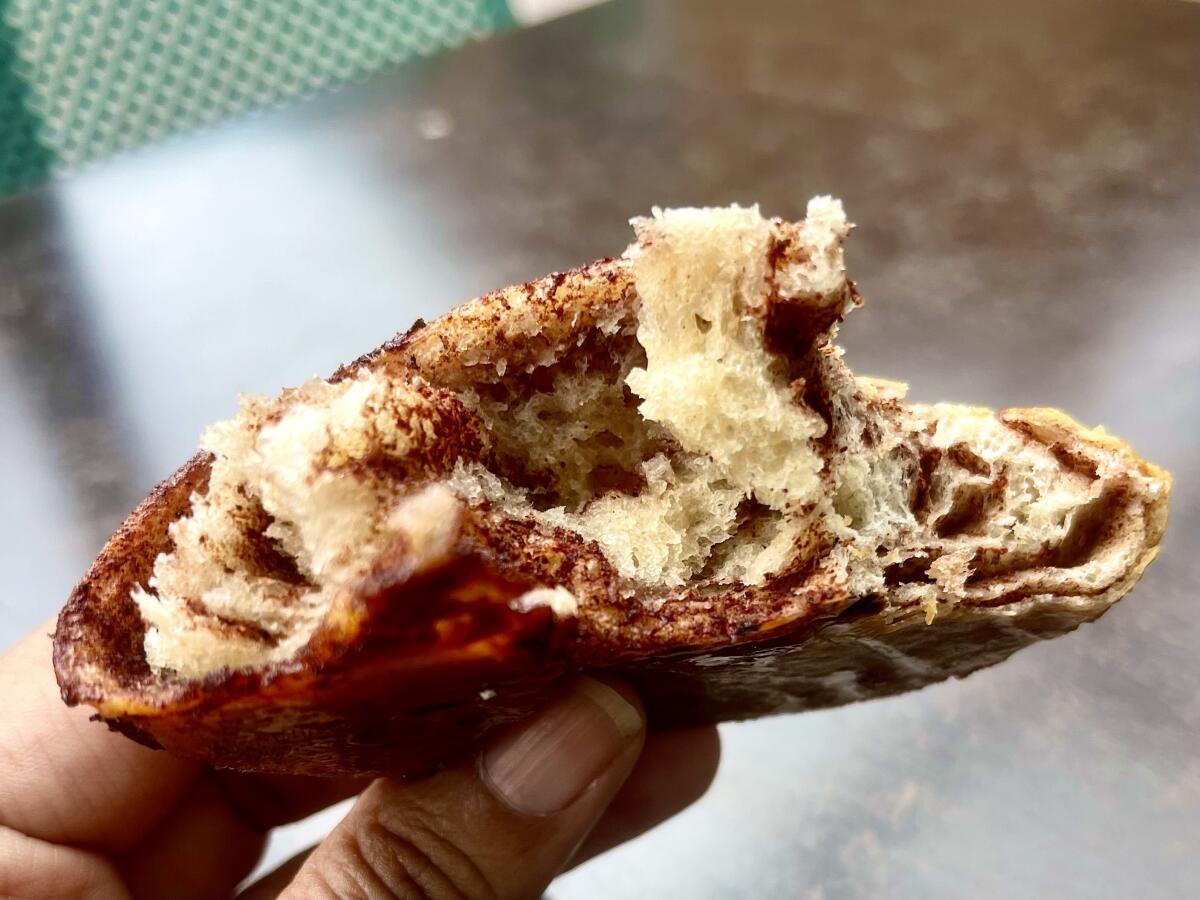
In Oslo, however, I discovered a cinnamon bun that stripped away the excess and let the essence of the spiced dough reveal itself.
Daegens, a tiny cafe and bakery hidden away in Oslo’s pretty Lilleborg neighborhood, is run by Anta Stinnerbom, a young entrepreneur who spent several months sharpening his coffee knowledge and barista skills at the acclaimed roastery Tim Wendelboe and is now deep into his explorations of sourdough baking. It’s the sourdough, in fact, that gives the Daegens cinnamon bun its character.
Baker and barista Anta Stinnerbom at his Daegens cafe in Oslo.
(Laurie Ochoa / Los Angeles Times)
Even more than Stinnerbom’s cardamom bun — which some praise as the best in Oslo — the more elemental cinnamon notes, enhanced with lemon zest and juice, allow the sourdough’s multifaceted dimensions to come through. Not just tang, but the taste of time.
When you can’t decide between Anta Stinnerbom’s cardamom bun, front, or cinnamon bun at Daegens in Oslo … get both.
(Laurie Ochoa / Los Angeles Times)
Daegens’ BMO (bolle med ost), which the Oslo bakery makes with a good seeded sourdough roll topped with fresh butter and cheese.
(Laurie Ochoa / Los Angeles Times)
The discovery of a great sourdough cinnamon bun is just one of the reasons I love to travel.
Lately, I’ve been absorbed in the world of Norwegian writer Karl Ove Knausgaard, both for his most recent novel, “The School of Night,” which features a grand-scale narcissist captured in a Faustian downfall, and for “So Much Longing in So Little Space,” which documents the author’s search for the meaning of art through his encounters with the work of Edvard Munch. At Oslo’s boldly vertical, 13-story Munch museum and Bergen’s more contemplative Munch collection at the Kode museum’s Rasmus Meyer galleries, I was able to see for myself the wild stylistic leaps taken by the artist before and after “The Scream,” including the paintings he did for the women’s cafeteria at Oslo’s Freia chocolate factory.
But it was only after the first of many good meals in Oslo that I started to get a feel for the city. As I wrote in the introduction to our new collection of summer vacation dining guides, traveling with an eater’s mindset gives us a deeper understanding of places we’ve read about in cookbooks and novels or seen in movies and paintings. Wandering markets, eating at food stalls, sitting among locals and fellow travelers at the restaurants that embody a city or its surrounding countryside … these are the ways we absorb the rhythm of a place. Its flavors and ways of living are revealed to us over dinner or even a simple morning coffee accompanied by a beautifully baked cinnamon bun.
If you go …
(Giacomo Bagnara / For The Times)
For those of us lucky enough to write about food for a living, each vacation is a chance to add one more spot on our individualized maps of the world’s great places to eat. And this year, we’re sharing our personal maps and notes on places we’ve loved during our wanderings with readers.
Given that these suggestions are not meant to be definitive — they are our personal favorites — we know that there are many other worthy places to explore. We’d love to hear from you if you have your own personal picks. We’ve built a form for entering your favorites from around the world and will publish the results in the coming weeks.
We’ve also introduced a new way to save your favorite recommendations and build your own custom guides. Times senior product manager Jeff Poirier explains the new feature, which includes maps and is as simple to use as hitting the “save” button on any individual entry.
Introducing …
Los Angeles Times cooking editor Cody Reiss
(Stephanie Breijo / Los Angeles Times )
We are thrilled to introduce our new cooking editor Cody Reiss, who learned most of what he knows about cooking professionally at Alice Waters’ Chez Panisse Cafe in Berkeley and did time behind the counter at Murray’s Cheese in New York. He also had a part in Eva Victor‘s “Sorry, Baby” and played himself in the very funny “narrative cooking short” “Breakfast for Liz.” Read more about Cody in his hello to readers, which describes the teaching approach he’s aiming for in the food videos he’ll be doing. And check out the videos he released this week on why you should throw away your salt shaker and how to cut a tomato. Finally, with Cody taking over our Cooking Newsletter — which is moving from Sundays to Fridays so that you can have more time to plan your weekend cooking — now is an excellent time to sign up for the free weekly dispatch if you’re not already a subscriber. This week, he provides two crucial lessons on salt and why you might be using it wrong.
Chilaquiles heaven
Chilaquiles, molletes and salsas at Taquearte in Pico Rivera.
(Jason Armond / Los Angeles Times)
Restaurant critic Jenn Harris’ latest review is about Pico Rivera’s Taquearte, which happens to be one of my favorite places to get chilaquiles and a loaded Mexico City-style taco campechano, which made our 101 Best L.A. Tacos list. I first heard about Taquearte from my mom and her friend Pablo. (She went to high school in Pico Rivera and lives in nearby Whittier.) Harris bookmarked the place when Eater’s Bill Esparza wrote about the chilaquiles as L.A.’s best. Harris wholeheartedly agrees and loved how “the chips … were noticeably thin, delicate but sturdy enough to retain their crunch. They hovered in a magical state of limbo between wet and dry, crisp and wilted.”
Gil, who is credited with helping the late Joe Miller‘s now-closed Joe’s Restaurant in Venice gain a Michelin star, and went on to co-found the much-missed Tacos Punta Cabras and Hamburguesas Punta Cabras, as well as the pop-up Supper Liberation Front, established the Alta California restaurants Mírame in Beverly Hills, which closed in 2023, and the still-running Mírate in Los Feliz, which Gil left after a legal dispute. He also established the rooftop raw bar Mother of Pearl, which is closed at the moment, and the teppanyaki restaurant Maison Kasai, both at the downtown L.A. dining collection Level 8.
Chef Katsuya Uechi in 2016 at the 10th anniversary celebration of the Brentwood location of Katsuya.
(Michael Kovac / Getty Images for Katsuya)
Late last week, we also got word that Katsuya Uechi, the sushi master whose name has become synonymous with the global Katsuya brand, has died at the age of 67.
“The Okinawa-born chef altered the DNA of the L.A. sushi scene with his innovative, genre-bending creations,” writes Melody Xu of the chef who first came to prominence for many L.A. diners at Sushi Katsu-ya in Studio City, which he opened in 1997. “Spicy tuna crispy rice, which he debuted in the early 2000s, has since become a modern staple in sushi restaurants across the U.S.”
You’re reading Tasting Notes
Our L.A. Times restaurant experts share insights and off-the-cuff takes on where they’re eating right now.
By continuing, you agree to our Terms of Service, which include arbitration and a class action waiver. You agree that we and our third-party vendors may collect and use your information, including through cookies, pixels and similar technologies, for the purposes set forth in our Privacy Policy such as personalizing your experience and ads.
Also …
Amid the puestas of Olvera Street in downtown Los Angeles.
(Etienne Laurent/For The Times)
Many were hoping that the World Cup would provide an incentive for downtown Los Angeles’ city leaders and other stakeholders to invest in the area’s infrastructure. But it’s sobering to read reporter Angela Osorio’s look at the sad state of downtown’s once-bustling Olvera Street — with even taquito mecca Cielito Lindo facing a precarious financial situation that has left it shuttered … we hope only temporarily.
Melody Xu talked with the owners of some of L.A.’s prominent Venezuelan restaurants about how they are connecting people and fundraising for survivors of the twin earthquakes. At publication time, the parents of Full Arepas’ Kelly Montano, writes Xu, “who were on vacation in La Guaira when the quakes happened, [were] among the more than 40,600 people still unaccounted for.”
“For the first time in its history,” writes Stephanie Breijo, the Michelin Guide awarded a Mexican restaurant three stars.” That honor went to Val Cantú‘s Californios in San Francisco. Breijo has all of the news from the announcement of Michelin’s California guide, including the new two-star designation for Los Angeles’ Kato.
And Hailey Branson-Potts has the story of the beer queen of Mendocino County, Lost Coast Brewery’s Barbara Groom, one of the country’s first female microbrew owners, who turns 80 this year.
Eat your way across L.A.
Like what you’re reading? Sign up to get it in your inbox every week.
By continuing, you agree to our Terms of Service, which include arbitration and a class action waiver. You agree that we and our third-party vendors may collect and use your information, including through cookies, pixels and similar technologies, for the purposes set forth in our Privacy Policy such as personalizing your experience and ads.
I HAVE normally necked far too much Ouzo the night before to rise with the sun during a holiday in gorgeous Greece.
But my eyes are being opened, literally, to a much more wholesome and healthy way to start the day here on the island of Crete.
Sign up for the Travel newsletter
Thank you!
This Crete resort right on the beach has lagoon pools and island day trips, pictured Old Venetian HarbourCredit: GettySteve Corbett takes to the blue MedCredit: Supplied
While my downward dog should arguably be put down, as my balance has gone walkies, the sound of the Cretan Sea gently lapping at the shore does make a sunrise yoga session surprisingly satisfying.
Never mind sinking sambuca shots, this is how holidays should be — relaxing, restful and geared towards recuperation.
I’m staying at Giannoulis Santa Marina Plaza, a 4* adults-only hotel tailored to a quieter and more authentic Cretan vacation.
Superbly serene, with a calming, child-free environment, it’s right on the golden, sandy, Blue Flag-rated Agia Marina beach.
My double room is small but comfortably formed, with an ensuite bathroom, TV and compact balcony to enjoy the sunrise over Kri-Kri island (more on that later).
With just 51 rooms and suites at this boutique hotel, even at full occupancy you’ll always get a sun bed.
The food is as good as you’d expect in Greece — super souvlaki, terrific tzatziki, outstanding olive oil — but the jewel in the crown is the hospitality.
From reception staff to the waiters and cleaners, this family-run resort is full of welcoming faces, attentive and always ready with a friendly “kalimera” (good morning) or “kalispera” (good evening).
The majority of guests are couples, over 50, enjoying the easy-going vibe.
By day, the only activity is people rising from a sun lounger for a refreshing dip in the pool or sea.
By night, it’s all about a game of cards on your balcony or a casual al fresco dinner by candlelight.
Crucially, this tranquil base is only 20 minutes — by bus, right outside the hotel, or taxi — from Chania, Crete’s charming old town, where ancient architecture meets a more modern city.
It’s an easy-on-the-eye cultural hub, with shops carved into honey-coloured stone walls, restaurants, cute cafes and churches.
After a few relaxed hours searching for souvenirs down its narrow, cobbled streets and snapping away at the beautiful Venetian harbour and 16th-century lighthouse, it’s time for a change of location, as I head west along the coast to Giannoulis’s sister hotel, Cavo Spada.
A much larger complex, with 150 deluxe rooms and suites, this sporty 5* leisure and spa resort is more suited to active holidaymakers. With tennis and padel courts, an assault course, a running track and indoor and outdoor gyms kitted out with top-quality equipment, its facilities are so good that the Swedish Olympic team use it for their training camps.
You can take part in a calendar of events ranging from spinning to body combat.
Sprawling pool is great for relaxing eveningsCredit: SuppliedCavo Spada offers excellent dining facilitiesCredit: Supplied
But that’s not my idea of a holiday.
Instead, I take advantage of the all-inclusive board to sample the decent cocktail menu at the bar overlooking the huge lagoon pool at the heart of the resort.
After over-exerting my right arm with the repeated lifting of a pina colada from table to mouth, I head to the on-site spa for a full-body massage, followed by a sauna and steam room.
Clearly a gem of a resort for keep-fit couples, it’s also a good option for families, with a kids’ outdoor playground and indoor play room.
And it’s just a short taxi ride from Kolymbari port, where I clamber aboard a catamaran for a half-day at sea. Destination — Kri-Kri island.
Our deckhand tells us of the ancient Greek mythology that Kri-Kri — AKA Thodorou island — was created when a massive sea monster and its child were turned to stone by Crete’s protector Poseidon, God of the Sea.
Now it’s a breeding ground for the protected Kri-Kri wild goat.
And while anchoring up for some paddleboard play and a snorkel in clear azure water, it’s fun to see if you can spot any of the cliff-climbing goats.
Having worked up an appetite thanks to all that, well, relaxing, back at the hotel’s Azzuro restaurant I really get stuck into a sensational a-la-carte option with Michelin star-worthy food.
After another cocktail workout (my right arm really is doing the heavy lifting on this break), I educate myself with two mainstays of Greek culture.
A complimentary olive-oil tasting session (FYI: trust the Cretan chef and store your olive oil in the fridge) is followed by wine-tasting with the hotel’s maitre d’.
I could quite easily finish a bottle of the white — an indigenous Vidiano.
But like I have done since arriving in Crete, I’m taking it easy — I’ve got another yoga session at sunrise.
Relax in style at Cavo Spada spaCredit: Supplied
GO: Crete
GETTING/STAYING THERE: Seven nights’ half-board at Giannoulis Santa Marina Plaza is from £913pp, including flights from Birmingham on October 20, transfers and 20kg hold luggage.
Seven nights’ half-board at Giannoulis Cavo Spada Sports & Leisure Resort is from £782pp including flights from Bournemouth on October 9, transfers and 20kg hold luggage.
A new study has named one place as the most expensive seaside destination in the UK, with a day trip costing £38.20 – meaning £100 lasts just over two days
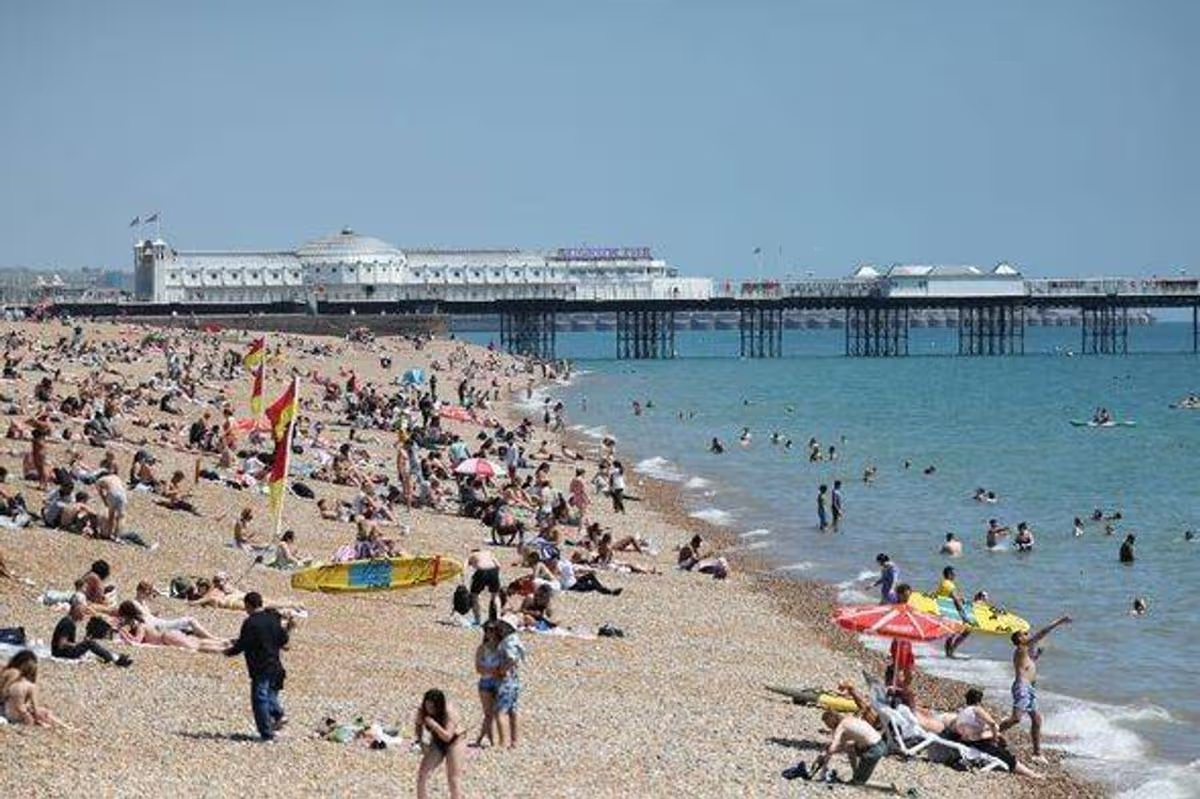
Beachgoers soaking up the sunshine on Brighton beach (Image: Adam Gerrard / Daily Mirror)
From parking fees to the price of fish and chips or an ice cream — a classic day trip or a longer stay at a UK coastal destination could leave a serious dent in your wallet.
New research has looked at some of Britain’s most popular summer hotspots, calculating the cost of deckchair hire, a ’99’ ice cream, and a fish and chips meal — and one city has come out on top as the priciest of the lot.
The study revealed that £100 in this particular seaside spot will ‘only last just over 2 days’, according to figures drawn from the new UK Seaside Affordability Index. The data has laid bare significant differences around the British coastline in terms of how far your hard-earned cash will actually go.
When taking into account everything you’d need for a perfect day at the beach, all the must-have essentials add up to £38.20 per day in this particular city.
Brand new research from NoDepositRewards.org breaks down the cost of a traditional beach day out at locations across the UK, reports the Express.
The study looked at all-day parking charges (based on current local council rates), the average price of a ’99’ ice cream, a large fish and chips meal (using local chippy prices) and full-day deckchair hire.
The research was carried out with the aim of establishing how long £100 would last on a seaside outing.
Brighton was named the most expensive coastal destination in the country, according to the findings. All-day parking came in at £18, while the classic ice cream was priced at £2.70.
By comparison, in the most affordable spot, Swansea, parking for the day costs just £3 and an ice cream is £1.65. A fish and chip supper in Brighton will set you back £11.50, though it’s not the priciest location for the classic British takeaway — in Bamburgh, Northumberland, the same meal will cost you £14.88.
Renting a deckchair in Brighton will generally cost around £6 for the day — meaning the total ‘seaside basket’ for a day at this popular coastal destination comes to a whopping £38.20 per day for all the essential sunny day basics.
Coming in second was the Cornish town of St Ives, labelled the ‘second priciest seaside destination in the UK’. St Ives was ranked as the second most expensive spot, with visitors forking out an average of £25.30 per day.
In St Ives, holidaymakers can expect to pay around £10 for all-day parking, £12.50 for a large fish and chips, and just over £2.50 for an ice cream.
Swansea was named as the most budget-friendly seaside destination, with the same selection of items totalling approximately £16.71 per day.
Mason Jones, data expert at NoDepositRewards.org, said: “Families are budgeting harder than ever for summer 2025.
“Our Seaside Index shows you can triple the number of beach days simply by choosing a different stretch of coast.
“With parking now topping local cost charts, the North and Wales clearly win on value.”
WATCHING the morning sun sparkle on an immaculate padel court as the first players warm up, I can’t help but admire their dedication.
I, however, have a different priority in mind and a few minutes later I’m settled at a shaded table on a flower-filled terrace, enjoying breakfast of omelette, mini tortillas and crushed tomatoes on crusty bread.
Sign up for the Travel newsletter
Thank you!
I stayed at the beautiful Higueron Spanish hotelCredit: SuppliedIndulge in Michelin star foodCredit: Supplied
Fellow guests in their pristine tennis whites head towards yet more courts as the Andalusian sun rises into a clear blue sky.
Perhaps later. For me, the comfy Balinese beds beside the terrace pool are calling.
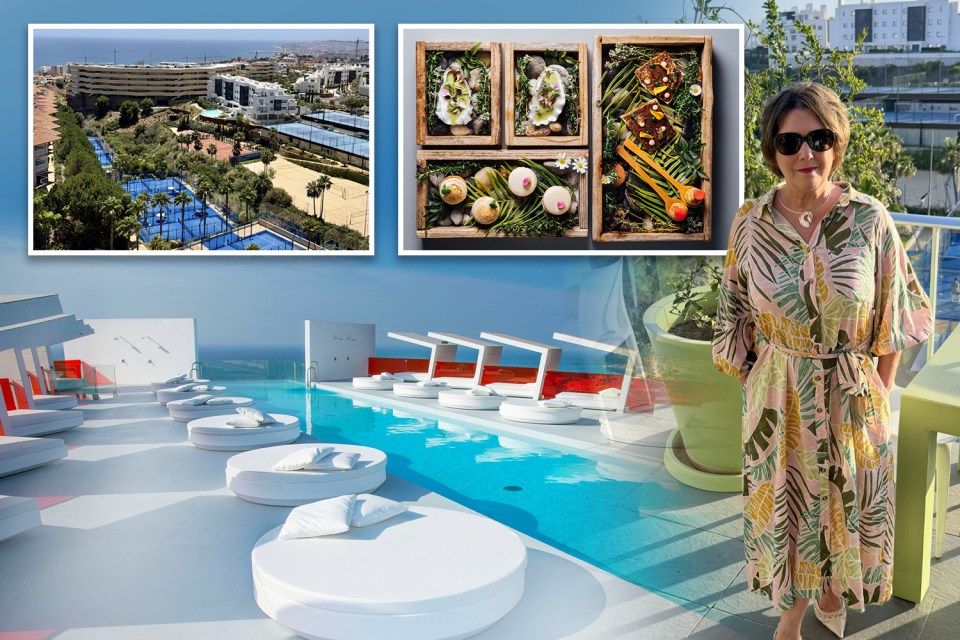
And that’s the joy of the Higueron Hotel Malaga Curio Collection by Hilton on Spain’s Costa del Sol.
There are sporting and spa facilities that would put a posh country club to shame — and all sorts of indulgent ways to do very little but soak up all that sunshine.
While it has Malaga in the title, the hotel actually sits in the hills directly above the bustling, British beach favourites of Benalmadena and Fuengirola.
Malaga city itself — with its Picasso Museum and buzzing tapas bars — is an easy 30-minute drive away.
Meanwhile, the superyachts, designer boutiques and champagne-fuelled glamour of Marbella and Puerto Banus sit 30 minutes in the other direction.
Snag yourself a cheap hire car from the airport and the whole coast is your oyster.
But the joy of this hotel is just how much there is to keep you busy without ever leaving the grounds.
The extensive sporting facilities include not just the ten padel and tennis courts, but beach volleyball sand courts and three for basketball as well as indoor and outdoor pools and a huge air-conditioned gym.
The spa is just as comprehensive, with a hydro circuit in its heated pool with pressure jets, massage beds, Jacuzzi and waterfalls.
There’s also a sauna, steam rooms and dedicated rooms for treatments.
Luckily for me, the hotel had plenty to keep non-sporty guests busy.
As well as the main pools and terraces — including a stunning adult-only rooftop infinity pool — there’s also a private beach club on the coast.
Work up a sweat at the expansive tennis and padel courtsCredit: SuppliedThe Sun’s Lisa Minot at the stunning resortCredit: Supplied
A free hotel shuttle whisks you down the hill to yet more comfy lounging spots, a pool and two superb restaurants.
And what could be more indulgent on a sunshine break than food created by a Michelin-starred chef?
There are seven a-la-carte restaurants in the hotel and the beach club, three of which have menus designed by award-winning chef Diego Gallegos.
While the Michelin-starred Sollo has tasting menus at £150pp, you can still enjoy the chef’s creations at funky fusion restaurant Arara.
Its £51 tasting menu features Brazilian, Peruvian and Andalusian flavours with a South East Asian twist, with eight courses designed to be shared by diners.
For daytime indulgences, catch more chef- inspired dishes at the beach club, including clams cooked in sherry with flying fish roe and delicious prawns in a spicy pil pil sauce.
Rooms in the main resort are ultra-modern — opt for a deluxe for stunning views of the resort and Mediterranean beyond.
And if you’ve really got cash to splash, the exclusive Leiro Suites are another level.
There’s more space, Scandi designs and funky balcony furniture.
But you’ll also get the choice of breakfast at the rooftop Infinity restaurant and access to the Balinese beds there and at the Beach Club.
Also included is spa access, free guided sports activity, early check-in and late check-out and parking, as well as priority reservations.
The hotel offers the best of the Costa Del Sol and a host of sporting options to keep you fit and healthy.
For me though, those Balinese beds at the Infinity Rooftop are the reason
I’ll definitely be returning for the stunning views — and the most chilled of snoozes.
There will be an update from Jet2 this week(Image: Pavel1964 via Getty Images)
Jet2 is set to make a key announcement on Wednesday.
Shareholders in what is one of Britain’s largest package holiday operators will be eagerly awaiting news on whether US-Iran peace negotiations have helped boost travel demand and stabilise jet fuel supplies as the summer booking season gets under way. Jet2 is set to unveil its full-year financial results on Wednesday, following a turbulent period for the travel sector.
The airline and package holiday giant informed investors it was anticipating an operating profit of between £435 million and £440 million for the year ending March. Passenger bookings for the summer were up in April compared with the same period last year, across both package holidays and flights, fuelling hopes of a bumper season ahead.
Jet2 disclosed that holidaymakers were increasingly leaving it later to book their trips, suggesting that anxiety surrounding the Middle East conflict was pushing travellers towards last-minute decisions.
AJ Bell analysts Russ Mould and Dan Coatsworth said shareholders will be keen to learn how travel demand has held up since US President Donald Trump announced he had struck a peace deal with Iran last month.
“Jet2’s commentary on current trading will be much more important than its full-year numbers to March 31,” they said. “Reports suggest holiday companies have enjoyed a strong bounce in trading since Donald Trump said a peace deal had been agreed with Iran.
“We’ve already seen oil prices return to pre-Iran war levels and there are reports from various holiday companies of a surge in bookings to Cyprus and Turkey.”
Jet2 offers holidays to both destinations and throughout the Mediterranean. The effective closure of the Strait of Hormuz, which had severely restricted shipping since the outbreak of the Iran war, resulted in a drop in the global supply of jet fuel, prompting some airlines to scale back their summer travel schedules.
However, Jet2 moved to reassure holidaymakers in May that its flight schedule would run as normal throughout the summer, and pledged not to impose surcharges on any pre-booked trips to offset the increased costs.
In addition, the company launched its first flights from a brand new base at London Gatwick airport earlier this year, which it hopes will unlock bookings from an extra 15 million potential customers.
FORGET garden centres, DIY jobs and lazy weekends at home – a growing number of Brits are flying to European cities for just a few hours before heading home the very same day.
Called “extreme day tripping,” the new trend is thanks to cheap return flights costing less than a meal out.
Sign up for the Travel newsletter
Thank you!
More Brits than ever are going on extreme day trips to Europe – including Emily Benham (pictured)Lisa Houston raved about how easy they are too
These adventurous travellers manage to squeeze in croissants in Paris, canal cruises in Amsterdam and pizza in Milan without booking a hotel room.
Lisa Houston, from Edinburgh, caught the extreme day trip bug after taking her son to Paris in January.
“My son had recently split up from his girlfriend and I wanted to give him something completely different to look forward to,” she said.
“He hadn’t been abroad since he was seven, so I surprised him with a day trip to Paris.
“We saw Les Invalides: Napoleon’s Tomb, sailed down the Seine, ate croissants in a little Parisian cafe and stood gazing at the Eiffel Tower. He absolutely loved it.”
The pair flew out at 7am and returned home the same evening.
“The flights were about £100 each, but you can often get them much cheaper,” Lisa said. “It was enough time to enjoy the city without feeling rushed.”
The trip sparked a love for Lisa and has since ticked off Amsterdam, Copenhagen, Milan and Dublin, with Barcelona, Paris and Poland still to come later this year.
One of her biggest bargains was Copenhagen, where she managed to secure return flights for just £34.
After spotting photos of the colourful waterfront district of Nyhavn on Instagram, Lisa booked the trip and spent the day exploring the Danish capital.
Places like Copenhagen often have cheap flights and easy-to-navigate streetsCredit: Alamy
“By lunchtime I was sitting outside a cafe with Nyhavn behind me,” she said.
Despite the early starts – often leaving home before 3am to catch the first flight – Lisa insists it’s worth every minute.
“I treat the whole day as the adventure, not just being in the destination,” she said.
Like other Extreme Day Trippers, Lisa gets some inspiration from a Facebook Group of like-minded people but said the appeal fitting in holidays around busy schedules.
“I’ve got a busy job, a granddaughter living with me, elderly parents and caring responsibilities,” she said.
“Sometimes I just need a day that’s all about me. Telling people that I’m ‘off to Paris to have lunch’ is my vibe these days.”
She estimates most of her trips cost around £150 in total, including flights, food and attractions.
“I think it’s brilliant value for money – in a couple of hours you’re somewhere you’ve never been before, seeing things you’ve only dreamed of. That’s priceless.”
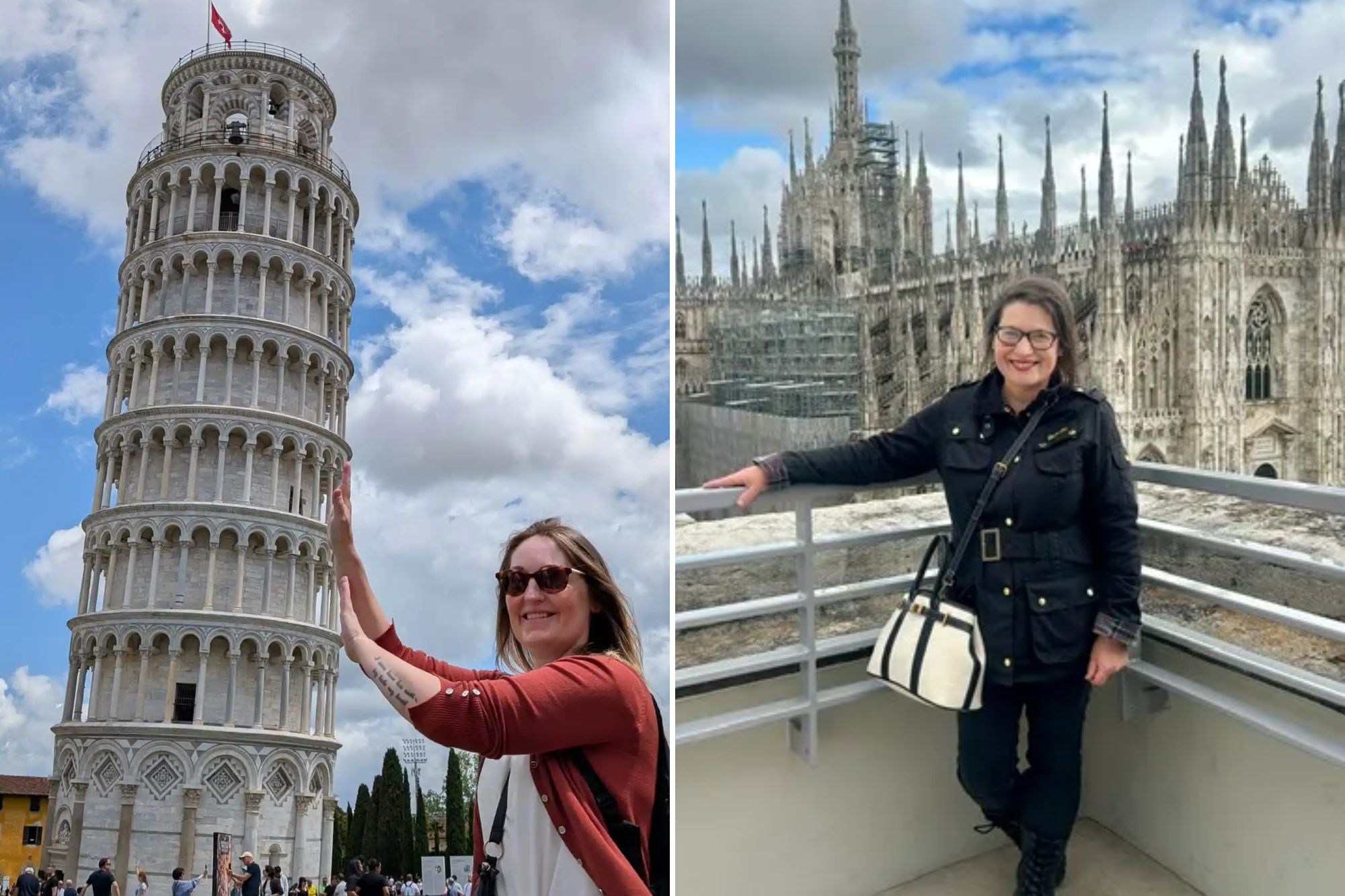
“We left home at 4am and arrived in Pisa at 11am,” she said.
Cassie Goodfellow said you can fit in more than you think in a day
“Our flights were £125 each – I would have preferred them to be £75 or under as I think part of the fun is keeping it as cheap as possible but my daughter chose the destination and it was worth it.”
“A highlight was seeing the Leaning Tower for the first time. It was breath-taking.”
The pair spent eight hours exploring the city, visiting the cathedral, eating pizza and wandering the back streets before heading home that evening.
“It was my first extreme day trip and I’ve already booked another one to Frankfurt with my brother and sister,” she said.
For Cassie Goodfellow, from Bathgate, an extreme day trip was the perfect way to celebrate turning 40.
After spotting inspiration online, she booked a return flight to Copenhagen and spent 12 hours exploring the city solo.
Even places like Pisa can be done for the dayCredit: Alamy
“Most people thought I was a bit crazy,” she admitted.
“They couldn’t understand why I’d travel abroad for just a day or the fact I was doing it solo, But the memories and experience made it worthwhile.”
Flights cost just £63 return, while her total spend for the day came to around £160.
“The highlight was wandering Copenhagen’s beautiful streets and landmarks,” she said.
“I was surprised by how much I managed to fit into one day.”
Looking back, she says it was one of the best things she has ever done.
“There’s something exciting about proving you can have a meaningful travel experience in a single day,” she said.
Hundreds of new Hols from £9.50 are being released across holiday parks in the UK and Europe this July.
Sign up for the Travel newsletter
Thank you!
Tracy has been taking £9.50 holidays with The Sun for over 30 years – and has stayed across the UKCredit: Tracy Kennedy
To be among the first to bag your holiday for under a tenner, make sure to sign up to Sun Club.
While Sun readers collecting codes can access hundreds of new hols from July 8, Sun Club subscribers can bag the best deals a whole day early on July 7.
This gives Sun Club members priority in booking their desired dates and places at popular parks that might soon sell out.
To help you pick a park, our Queen of £9.50 Holidays Tracy Kennedy is here to share some of her favourite spots.
She’s picked her top holiday parks in beautifully British seaside towns with beachfront sports bars, waterslides and more.
Here’s Tracy’s guide to her favourite British seaside towns, and their holiday parks where you can stay from £9.50.
Lower Hyde, Shanklin, Isle of Wight
Lower Hyde holiday park gives you direct access to the charming town of Shanklin on the Isle of WightCredit: Getty
Tracy said: “The best holiday park I’ve ever been to is Lower Hyde on the Isle of Wight – that is my firm favourite. I’ve returned several times because my family and I really liked it.
“There’s loads to do on site itself, it’s actually one of the only sites where we didn’t mind spending the entire day there. There’s plenty of nature trails around the park, and there’s also an adventure park on site.
“The entertainment teams are top-quality at Lower Hyde and plenty is free compared to other parks.
“In the evenings, the entertainment starts off with discos and character meet and greets for the younger kids, with their own show. Then there’s some great bingo, followed by an adult game show.
“Later in the evening there’s more acts from visiting acts such as comedians or magicians, or a performance from the entertainment team.
“There’s then a disco until midnight, so you can stay there all night, if you fancy it.
“Lower Hyde also have a restaurant with really good pub-style food called The Barnhouse,plus they also have little food huts such as the Thunderbird Chicken shack and an ice cream parlour.
“The must-visit spot nearby is Shanklin. There’s lots of little artisan shops, and it’s not a far walk, about a 10-minute walk into the centre.
“If you walk further, it takes you into Shanklin Old Village. There’s a lovely little restaurant there called The Crab, with beautiful seafood.
“There is also the famous old thatched cottage from all the postcards. Not only is it lovely to look at, but it does afternoon tea inside (from £7.95).
Parkdean Resorts Newquay, Cornwall
Book a stay at Parkdean Resorts Newquay for access to the popular stretch of Cornish coastCredit: Getty
Tracy said: “When I first arrived at Newquay Holiday Park I was totally flabbergasted. We stayed four days, and I don’t think it was long enough!
“The park has three outdoor pools which are perfect for hot days, and cracking evening entertainment.
“There’s also a 200ft-long waterslide and mini golf and amusements, which are perfect for a summer holiday.
“When you want to go out and explore Newquay itself, you’re only 10 minutes away by bus or car, and there’s buses right outside the park.
“Newquay is just beautiful. There’s 11 beaches there and they’re all gorgeous.
“There’s a traditional seaside promenade by Towan Beach too with seaside treats like candy floss and hot doughnuts.
“It’s great for families as there’s lots of cafes and places to sit down, an Asda if you need to pick up any last-minute bits, and the seafront here actually has proper toilets!
“We visited all the local beaches and walked past the hotel where the Roald Dahl film The Witches was made: The Headland.
“We also drove out to Port Isaac, and walked around where Doc Martin was filmed. All you have to do in these places is pay for is parking and bring your own food.
“Then you can just walk around and see all of these really cool filming locations, and that costs you nothing!”
Lyons Robin Hood, Rhyl, North Wales
Tracy Kennedy enjoys the pool, activities and the entertainment at Lower Hyde holiday parkCredit: Google maps
Tracy said: “This site is really up-to-date. It’s recently undergone a £1.5m makeover, with all the new developments ready for this summer.
“Some of my favourite things about this park are the enthusiastic entertainment staff, as well as the food.
“The pool here is so good that my youngest went swimming every single day. It has a brand-new splash zone, three super slides and even a spa for the adults.
“It’s just had activities like go-karting added to the list of things to do, and there’s new sports courts and trampolines.
“Ilast went at Halloween and it was just absolutely fantastic, but the entertainment is great year-round too. The costume characters come out to meet the kids after shows.
“I’ve stayed in three levels of accommodation here, and I liked all of them. Each caravan was clean and spacious, with multiple big bedrooms, so you can’t go wrong here no matter what your budget is.
“I’d recommend going for the highest-ranking caravan option if you can, which is a platinum. We’ve stayed in platinum and it’s lovely. We had a little bit of a balcony that we had our coffee and drinks on.
“I usually like to bring my own food to save money, however the food here is just lovely and definitely worth the money.
“We had cod and chips (£6.95) from the on-site chip shop here and really enjoyed it – in fact, we had it twice because it was that good.
“There’s a beautiful beach just across the road from the park. You might even see some seals – we saw some on my last visit and I was so excited.
“Rhyl is just 5 minutes away, and there’s loads to do there. Shops, a massive marine lake, and my favourite – a miniature train that takes you around the town (£4 per adult £3 per child).
“A trip into Rhyl could even be a free day out if you planned for it. Pack a picnic, wander through its streets, plus there’s even a free attraction: Rhyl Museum and Arts Centre.
Seal Bay, West Sussex
Seal Bay in West Sussex is one of the most popular sites at club950.co.ukCredit: Google maps
Tracy said: “Seal Bay is a very popular holiday park, and for good reason.
“The site feels like one big party park. It’s got its own fairground on-site, and it’s directly on the beach.
“There’s a free bus that picks you up and takes you where you want all around the park – which is especially great if you’re not so mobile.
“The entertainment here is spectacular. It’s not just your standard holiday park shows, there’s aerial performances, fire eaters and all sorts.
“They’ve got a great sports bar too, and its right on the beach. So you don’t even have to leave site if you don’t want to.
“Plus there’s a lovely outdoor seating area where you can have Greek gyros, burritos and ice cream. My teenager loves her takeaways!
“If you do want to get off-site and explore, you can go to Bognor Regis for the day.
“Bognor is a truly Great British seaside town. It’s got a beautiful seafront, a small traditional pier, and all the classics like hot doughnuts and fish and chip shops by the sea.
“You could easily spend a full day in Chichester, too.
“It’s a historical town with a great big cathedral and lots of interesting things to do, like museums and galleries.”
“Seal Bay is also one of the parks that offers dates during the school holidays with Hols from £9.50 – and you’re not going to get a holiday there any cheaper if you book direct.
“So if you’ve been wanting to visit a popular site like this one, it’s definitely worth doing it through £9.50 Holidays.
All the ways to book your holiday from £9.50
There are six ways to book our Holidays From £9.50 – however Sun Club members gain access an entire day early
Book with Sun Club: Join Sun Club for £1.99 per month. Then go to the Sun Club Offers hub and find the Hols from £9.50 page. You do not need to collect any code words or Sun Savers codes. Sun Club members can book from 00:01 on Tuesday, July 7 2026.
Collect codes then book online: Simply collect five out of 20 code words printed in The Sun daily from Saturday July 4 to Thursday, July 23, 2026. Then enter them at thesun.co.uk/holidays to unlock booking. Code collectors will be able to book from Wednesday, July 8.
12-Page pullout – Gather codes from the pullout on Saturday, July 4, 2026. Then enter them at thesun.co.uk/holidays to unlock booking.
Book with Sun Savers: Download the Sun Savers app or register at sunsavers.co.uk. Then go to the ‘Offers’ section of Sun Savers and click ‘Start Collecting’ on the ‘Hols From £9.50’ page. Collect five Sun Savers codes from those printed at the bottom of the Sun Savers page in the newspapers from Saturday, July 4, 2026. Then enter or scan the codes on Sun Savers to unlock booking from Wednesday, July 8.
Book by post: Collect five of the code words printed in The Sun each day fromSaturday July 4 to Thursday, July 23, 2026. Cut the code word out and send it back with the booking form – found in paper onor online at thesun.co.uk/holidays.
Book with The Sun Digital Newspaper: Sign up to The Sun Digital Newspaper at thesun.co.uk/newspaper. Then download the Sun Savers app or sign up at sunsavers.co.uk, log in to Sun Savers with your Sun account details (the same email and password you use for your Digital Newspaper) and enjoy automatic access to Hols, without the need to collect Sun Savers codes daily. Digital Newspaper subscribers can book fromWednesday, July 8.
QUEEN of the Sun £9.50 holiday, Tracy Kennedy, is back to answer your burning questions on all things budget breaks
Tracy has been taking £9.50 holidays for 30 years, and even runs a Facebook group dedicated to helping people book their Sun holidays.
Sign up for the Travel newsletter
Thank you!
Our Hols from £9.50 Agony Aunt Tracy Kennedy is here to help you pick the right holiday park for youCredit: Paul Tonge
Now she’s here to answer all things Hols from £9.50, from how to get a good deal during the school holidays to the items she can never leave without packing.
You can leave a question for Tracy by filling out the form above, and with each Q&A with Tracy we will pick one lucky reader to win a £100 Amazon voucher.
This week’s winner of a £100 Amazon voucher is Stephanie Marriott. Congratulations, Stephanie!
Yes! The next top up is coming on July 7 for Sun Club members, and July 8 for people collecting codes.
The first lot of £9.50 holidays come out in January, but there are many promotions throughout the year. The cheapest holidays do tend to go quick, but don’t let that put you off.
My secret tip is that some people book and then they choose to upgrade, so those cheaper dates that were once sold out come back and are then released again.
And if you are signed up to Sun Club, you’ll get first pick of the holidays during each top-up.
Always keep an eye out for the top-up promotions and check the website regularly.
Hols from £9.50 are having a major restock this July, where Sun Club members can book earlyCredit: Destination Selsey
How do I get a good deal during the school holidays?
Fiona Curry
If you have specific dates in mind, I always recommend being up and waiting for the moment when the £9.50 holidays are released.
Sun Club get to book first, so I’d recommend joining so you get first access. It’s only £1.99 a month, and we all stay up for when access opens to Sun Club members at midnight.
That way you get to book your holiday before the final codes drop.
Firstly, research the parks you’d like to go to, and have all the parks and dates you’d ideally want written down in front of you.
Just in case they don’t come up, I suggest having some alternatives that you wouldn’t mind going to.
Not every park has availability during the school summer holidays, but quite a few of them do.
There is also quite a lot of availability in other school holiday periods, like October half term, which can be a lovely time to go with lots of themed activities.
Seal Bay and Golden Coast are two family-friendly parks that have offered dates in the school summer holidays – and you’re not going to find a holiday at popular parks like that for a cheaper price anywhere else.
What is your essential packing item? Not the obvious (food, clothes, towels) but a little something that makes the trip so much easier?
Lorraine Cooper
Every time I go away, I take an essentials box with me. My mum used to always bring one on trips when I was little, and now I do the same.
It’s basically a box packed with all your essential bits, like washing up liquid and sponges. I even take those little travel-sized bottles and siphon off any cleaning products or toiletries into them.
We also bring tins, pasta, spices, non-perishable foods like that. The kind of bits you’d reach for in your cupboard at home, that might not be there in your caravan.
Bringing those sorts of bits with you will save you spending an extortionate amount at the on-site shop. Then you only need to buy any fresh food once you’re there.
Also, always pack a tin opener and potato peeler, just in case!
Tracy recommends a trip to Seal Bay for a longer break, as there are plenty of on-site activitiesCredit: Seal Bay, Cove UK
What are the best parks for a longer (seven day) trip?
Sharath Reddy
For a longer trip, you’ll want a holiday park with loads to do on-site so that there’s enough to keep you busy for a whole week.
For this I’d recommend Seal Bay in Selsey, which is in West Sussex. It’s definitely got enough to keep you busy.
On site it feels like one big party park. Seal Bay has its own fairground and it’s right on the beach, so definitely have a beach day. There’s even a bar which is practically on the beach.
It’s also got a lovely big pool with lots of water activities, so you could also have a pool day. It’s also got a Wave Rider surfing machine.
Then when you want to explore off-site you’ve got Bognor Regis, Chichester and Littlehampton all nearby.
You could easily spend a full day in Chichester. It’s a town with a great big cathedral and lots of artsy and historical things to do, with museums and galleries.
In Littlehampton you’ve got beaches and Harbour Park with rollercoasters, and it also has a miniature railway.
Then of course you’ve got Bognor Regis, which is a fantastic British seaside town. It’s got a beautiful seafront, a small traditional pier, and all the classics like hot doughnuts and fish and chip shops by the sea.
You could even buy a day pass to Butlins if you wanted. So you can bag a cheap stay with £9.50 holidays, then buy a Butlins day pass to go over and do all their daytime activities and visit the fairground.
Hundreds of new Hols from £9.50 will become available at club950.co.ukCredit: parkdean resorts camber sands
What would you suggest to make a £9.50 holiday a bit more manageable for SEN families?
Stephanie Marriott
I actually get this question a lot in my Facebook group, and it’s a very important one.
Depending on how old your children are, if you can go away outside of the school holidays, then do. The parks tend to be a lot quieter which can be helpful.
But if that isn’t doable, you can always ring the site and ask if they have any special hours for kids with extra needs. Quite a lot of them offer a quiet hour at the pool, for example.
I’d also recommend having a look at the activities and entertainment program ahead of time to see what you would like to spend each day doing.
There are usually things like arts and crafts and indoor activities which might be a bit quieter than the full-on evening entertainment.
All the ways to book your holiday from £9.50
There are six ways to book our Holidays From £9.50 – however Sun Club members gain access an entire day early
Book with Sun Club: Join Sun Club for £1.99 per month. Then go to the Sun Club Offers hub and find the Hols from £9.50 page. You do not need to collect any code words or Sun Savers codes. Sun Club members can book from 00:01 on Tuesday, July 7 2026.
Collect codes then book online: Simply collect five out of 20 code words printed in The Sun daily from Saturday July 4 to Thursday, July 23, 2026. Then enter them at thesun.co.uk/holidays to unlock booking. Code collectors will be able to book from Wednesday, July 8.
12-Page pullout – Gather codes from the pullout on Saturday, July 4, 2026. Then enter them at thesun.co.uk/holidays to unlock booking.
Book with Sun Savers: Download the Sun Savers app or register at sunsavers.co.uk. Then go to the ‘Offers’ section of Sun Savers and click ‘Start Collecting’ on the ‘Hols From £9.50’ page. Collect five Sun Savers codes from those printed at the bottom of the Sun Savers page in the newspapers from Saturday, July 4, 2026. Then enter or scan the codes on Sun Savers to unlock booking from Wednesday, July 8.
Book by post: Collect five of the code words printed in The Sun each day fromSaturday July 4 to Thursday, July 23, 2026. Cut the code word out and send it back with the booking form – found in paper onor online at thesun.co.uk/holidays.
Book with The Sun Digital Newspaper: Sign up to The Sun Digital Newspaper at thesun.co.uk/newspaper. Then download the Sun Savers app or sign up at sunsavers.co.uk, log in to Sun Savers with your Sun account details (the same email and password you use for your Digital Newspaper) and enjoy automatic access to Hols, without the need to collect Sun Savers codes daily. Digital Newspaper subscribers can book fromWednesday, July 8.
HUNDREDS of new £9.50 holidays are set to land this July – including popular holiday parks with previously sold-out dates.
Over at club950.co.uk, Sun readers will soon be able to bag themselves a bargain break at a range of holiday parks across the UK and Europe.
Sign up for the Travel newsletter
Thank you!
Queen of the £9.50 holiday Tracy Kennedy is back to answer all things holiday parksCredit: Paul Tonge
Ahead of the new drop of holidays, our Hols from £9.50 Agony Aunt Tracy Kennedy is here to answer your questions.
Tracy Kennedy has been taking £9.50 holidays for 30 years, and has tried and tested holiday parks everywhere from the Isle of Wight to Wales, and nearly 300,000 follow her advice online about taking The Sun’s budget breaks.
This week, she is answering everything from how to actually book yourself a £9.50 holiday, to the most peaceful holiday parks with walking trails.
You can ask Tracy your own question by filling out the form. As we release each Q&A with Tracy, one lucky reader will be picked to win a £100 Amazon voucher.
Are there any more ways to get a £9.50 holiday this year?
Skye Sinclair
Yes, there is! There is another lot of £9.50 holidays coming in July.
Sun Club members can book from one minute past midnight on July 7, and people collecting codes will be able to book from Wednesday July 8.
If you’ve never done a £9.50 holiday before, there are a few different ways to do it.
You can collect the codes that will appear in the newspaper each day, or join Sun Club (£1.99 per month) and book without having to buy the paper and collect the codes.
Before all of this, make sure to go and have a look on the £9.50 holiday website to see which parks are available that you’d like to go to.
The holidays start from £9.50 per person, and yes you can really book them for that cheap.
Then it’s up to you if you want to upgrade your accommodation or add on any passes.
So your cheapest holiday for a family of four would be £38 – I have never found a holiday online any cheaper than that!
New holidays will become available on the Hols from £9.50 site on July 8, or July 7 for Sun Club membersCredit: TripAdvisor
Do you have regular go to easy meals that you like to make when you go on holiday in a caravan?
Emma Bush
I cook quite a lot when I go away on holiday, and if I’m going to be cooking, it’s got to be quick and easy.
No roast dinners or fancy meals here – some people in my group do that in their caravans, and I think it’s great!
But for me I always bring cupboard foods like pasta and sauces, so that I always have something quick and easy to cook.
Another one of my favourites is hot dogs. They take just minutes to make and will cost you far less than any of the fancy, expensive ones they sell on-site.
Most caravans will come with a fully-equipped kitchen with microwaves, hobs and a full oven, so you might as well make use of them and save yourself some money.
Another one of my favourite quick and easy meals to make is grabbing a hot rotisserie chicken from the supermarket and serving it with some potatoes and salad.
It’s very simple and you can do so much with the leftovers.
Tracy recommends a stay at Lyons Robin Hood for a peaceful park with beach access and walksCredit: Supplied
Which holiday parks are ideal for the elderly? Something quiet with some nice dog walks?
Charlotte Varns
My top tip for finding a quiet park is to go on holiday during school term time.
That way the parks will be much quieter, and you’ll often get a better deal outside of the school holidays, too.
In terms of specific parks, a few come to mind. North Wales is lovely and has some beautiful walks, so I’d recommend a few of the parks there.
Ty Mawr, Lyons Lido Beach and Golden Sands Rhyl are other options which all have beautiful coastal walks nearby.
Outside of Wales, I think Cherry Tree in Norfolk is a lovely option. Norfolk is very flat, so you can get out for walks and it won’t be too challenging.
Are the entertainment passes included, or do you buy them additionally?
Jonathan Smith
Usually the entertainment passes are additional add-ons.
But my secret tip would be to check online first, as there are actually some £9.50 parks that will include your entertainment passes in the price on certain dates.
Park Holidays Pakefield offers club room passes for free for all dates. Park Holidays Sand Le Mere also offers the same.
Make sure to research this ahead of time, as lots of other parks will also offer free passes for specific dates.
Tracy recommends Lower Hyde holiday park in Shanklin, which has a beach with a lift nearbyCredit: Parkdean Resorts
What are your recommendations for the most accessible sites?
Tracey Layton
Firstly, always make sure to call your holiday park and let them know that you will need an accessible caravan.
Lower Hyde in Shanklin is a great option, and if you’d like to go out and visit the beach there’s even a lift that takes you down to the seafront.
Plus to get to the beach lift from Lower Hyde, the ground is completely flat.
I’d also recommend Camber Sands holiday park. It’s a beautiful site that is also very flat, and you’ll have the beach right on your doorstep.
Some places across the UK have also started offering beach wheelchairs for hire.
If you’re wanting to visit a beachfront holiday park, I’d recommend looking up if the local beaches offer this.
All the ways to book your holiday from £9.50
There are six ways to book our Holidays From £9.50 – however Sun Club members gain access an entire day early
Book with Sun Club: Join Sun Club for £1.99 per month. Then go to the Sun Club Offers hub and find the Hols from £9.50 page. You do not need to collect any code words or Sun Savers codes. Sun Club members can book from 00:01 on Tuesday, July 7 2026.
Collect codes then book online: Simply collect five out of 20 code words printed in The Sun daily from Saturday July 4 to Thursday, July 23, 2026. Then enter them at thesun.co.uk/holidays to unlock booking. Code collectors will be able to book from Wednesday, July 8.
12-Page pullout – Gather codes from the pullout on Saturday, July 4, 2026. Then enter them at thesun.co.uk/holidays to unlock booking.
Book with Sun Savers: Download the Sun Savers app or register at sunsavers.co.uk. Then go to the ‘Offers’ section of Sun Savers and click ‘Start Collecting’ on the ‘Hols From £9.50’ page. Collect five Sun Savers codes from those printed at the bottom of the Sun Savers page in the newspapers from Saturday, July 4, 2026. Then enter or scan the codes on Sun Savers to unlock booking from Wednesday, July 8.
Book by post: Collect five of the code words printed in The Sun each day fromSaturday July 4 to Thursday, July 23, 2026. Cut the code word out and send it back with the booking form – found in paper onor online at thesun.co.uk/holidays.
Book with The Sun Digital Newspaper: Sign up to The Sun Digital Newspaper at thesun.co.uk/newspaper. Then download the Sun Savers app or sign up at sunsavers.co.uk, log in to Sun Savers with your Sun account details (the same email and password you use for your Digital Newspaper) and enjoy automatic access to Hols, without the need to collect Sun Savers codes daily. Digital Newspaper subscribers can book fromWednesday, July 8.
YOU don’t need to board a flight for massive waterparks, thrilling rollercoasters and sunset open-air movie nights.
The UK is home to some incredible mega resorts that pack in all the entertainment your family could want.
Sign up for the Travel newsletter
Thank you!
Unity Beach holiday park in Brean has its own theme park, water park and beach nearbyCredit: SuppliedYou can stay at Trecco Bay, the biggest UK holiday park, with Sun Hols from £9.50Credit: trecco bay
And the best part is that you can book them with Hols from £9.50.
Hundreds of new £9.50 holidays are set to land over at club950.co.uk this July.
Being able to book an entire day early can make all the difference, as popular parks and dates send to sell out fast. Sign up to Sun Club for £1.99 a month, and you’l be ahead of the booking crowds.
We’ve rounded up some of the biggest and best UK holiday parks with new dates dropping with the July £9.50 Hols top-up.
These include the UK’s biggest holiday park, and a popular beachfront resort with its own on-site theme park and waterpark.
Here’s our selection of the mega UK holiday parks you can book with Hols from £9.50 this July.
Unity Beach, Brean
Unity Beach in Somerset has its own theme park with fairground rides and rollercoastersCredit: Brean Theme Park
Unity Beach in Somerset is a huge award-winning resort with plenty to do for families, plus you’re just steps away from the seven mile stretch of beach at Brean Sands.
This park boasts its own theme park, Brean Theme Park, which the largest in the South West. It has over 40 attractions, including outdoor rollercoasters, classic dodgems and a log flume.
The park also has its own waterpark, Unity Splash, which is reopening this summer with new upgrades. There’s both an indoor and outdoor splash zone, with waterslides and rubber ring rides.
And if that’s not enough, there’s axe throwing, crossbow shooting, a trampoline park, indoor soft play and a nine hole golf course.
Billing Aquadrome, Northampton
Billing Aquadrome in Northampton has unique attractions like an inflatable course and alpaca farmCredit: meadow bay
Spread across 235 acres of parkland and lakes, Billing Aquadrome in Northamptonshire is a massive playground for family entertainment.
This newly-upgraded site is packed with unique activities, from a BMX pump track and alpaca feeding to paddleboard hire and its very own miniature railway.
The park puts on plenty of outdoor entertainment like silent discos and outdoor cinema shows, plus you can grab a bite at the on-site burger joint or dessert shop.
Then end your nights by retreating back to a cosy lakeside pod right on the water.
Golden Sands, Rhyl
Golden Sands in Rhyl sits on the North Wales coast near LlandudnoCredit: Alamy
Golden Sands Holiday Park in the traditional seaside town of Rhyl is the ideal base to explore North Wales.
This park puts you within short driving distance of legendary castles such as Gwyrch and Bodelwyddan, plus there’s beautiful nature spots like Dyserth Waterfall on your doorstep.
When you aren’t out exploring, on-site there’s a heated indoor pool, arcades, a sports court, plus a soft play area.
Plus there’s plenty of activities that kids will love such as slime workshops and NERF gun battles.
Grab some dinner from the site’s traditional fish and chip shop before settling down to watch the live entertainment kick off in the evening.
Trecco Bay, Porthcawl
Trecco Bay Holiday Park in Porthcawl is the largest in the UKCredit: Parkdean Resorts
As one of Europe’s largest holiday parks, and the biggest in the UK, it’s no surprise that there’s no shortage of things to do at Trecco Bay.
Explore the sprawling pool with aqua jets that help you twist and turn under the water, or hop in an aqua paddler mini boat or inflatable jet ski and take in the views from up top.
Back on dry land there’s bumper zorbing and an outdoor battlefield for NERF guns, plus pirate-themed golf and a Make a Bear zone where kids can create their own cuddly friend to take home.
When it comes to food and drink, you can pick from well known eateries like Papa Johns pizza, Burger King, Thunderbird Fried Chicken and sip on Costa Coffee.
Plus the town of Porthcawl is right on your doorstep, with multiple Blue Flag beaches, a scenic promenade to stroll and a funfair to enjoy.
Lighthouse Leisure, Dumfries
Stay at Lighthouse Leisure for stunning scenery and family attractions in nearby DumfriesCredit: Hoseasons
Just a stone’s throw away from the local beach and its landmark lighthouse, Lighthouse Leisure is a coastal, family-run park with a warm and friendly feel.
Entertainment here offers all the holiday park classics from kids evening discos to bingo, karaoke and race nights.
The site also has a heated indoor pool perfect for rainy days, plus an outdoor adventure playground that kids love to climb.
From here it’s a 28 minute drive to Dumfries, where you can take the kids to meet the animals at Dalscone Farm Fun or explore the massive ruins of Caerlaverock Castle.
All the ways to book your holiday from £9.50
There are six ways to book our Holidays From £9.50 – however Sun Club members gain access an entire day early
Book with Sun Club: Join Sun Club for £1.99 per month. Then go to the Sun Club Offers hub and find the Hols from £9.50 page. You do not need to collect any code words or Sun Savers codes. Sun Club members can book from 00:01 on Tuesday, July 7 2026.
Collect codes then book online: Simply collect five out of 20 code words printed in The Sun daily from Saturday July 4 to Thursday, July 23, 2026. Then enter them at thesun.co.uk/holidays to unlock booking. Code collectors will be able to book from Wednesday, July 8.
12-Page pullout – Gather codes from the pullout on Saturday, July 4, 2026. Then enter them at thesun.co.uk/holidays to unlock booking.
Book with Sun Savers: Download the Sun Savers app or register at sunsavers.co.uk. Then go to the ‘Offers’ section of Sun Savers and click ‘Start Collecting’ on the ‘Hols From £9.50’ page. Collect five Sun Savers codes from those printed at the bottom of the Sun Savers page in the newspapers from Saturday, July 4, 2026. Then enter or scan the codes on Sun Savers to unlock booking from Wednesday, July 8.
Book by post: Collect five of the code words printed in The Sun each day fromSaturday July 4 to Thursday, July 23, 2026. Cut the code word out and send it back with the booking form – found in paper onor online at thesun.co.uk/holidays.
Book with The Sun Digital Newspaper: Sign up to The Sun Digital Newspaper at thesun.co.uk/newspaper. Then download the Sun Savers app or sign up at sunsavers.co.uk, log in to Sun Savers with your Sun account details (the same email and password you use for your Digital Newspaper) and enjoy automatic access to Hols, without the need to collect Sun Savers codes daily. Digital Newspaper subscribers can book fromWednesday, July 8.
FANCY bagging a sunny getaway at a European resort from £9.50?
You don’t need to spend a fortune to book a family break abroad, because our famous £9.50 Hols unlock some of the biggest and best holiday resorts across Europe.
Sign up for the Travel newsletter
Thank you!
You can book a stay at Park Umag in Istria, Croatia with Sun Hols from £9.50Credit: Euro CampHundreds of holidays from £9.50 will become available on July 8, but Sun Club members can bag them a day earlyCredit: Euro Camp
We’re talking massive pool complexes, thrilling waterslides, and doorstep access to gorgeous beaches – plus quirky perks like on-site bakeries with fresh bread delivered straight to your door.
Good news – new dates will be released for all of the following European holiday parks plus more on Wednesday, July 8.
But if you want to beat the crowds and bag yourself a bargain before they all sell out, make sure to sign up to Sun Club.
Sun Club members will get exclusive access to these holidays an entire day early, scoring the best deals before anybody else.
Whether you want to lounge under banana trees in Spain, explore ancient Rome from a shaded pine forest, or splash in Croatia’s clear blue seas, these action-packed parks have something for everyone.
Here’s our selection of the mega European holiday parks you can book with Hols from £9.50.
La Torre del Sol, Costa Dorada, Spain
La Torre del Sol in Spain’s Costa Dorada is just one of hundreds of parks in the £9.50 Hols top-upCredit: Euro Camp
While the kids are busy splashing around in a dedicated pirate pool and splash park, adults can kick back with a cocktail under the shade of lush banana trees at La Torre del Sol.
Centred around a massive swimming pool, this pretty resort is styled with Roman and Moorish designs.
There are plenty of ways to keep the energy high with table tennis, bike rentals, and evening family discos.
But the best way to unwind at this resort is going for a relaxing soak in a hot tub in the unique shape of a snake.
Millau Plage, France
Millau Plage in France has activities like football, paddle-boarding and canoing availableCredit: Euro Camp
Sat on the edge of France‘s Tarn River among rolling green hills and deep rock gorges, this holiday park is a total outdoor playground.
Here you can set off on a canoe or paddleboard onto the water, have a game of basketball or football on the multi-sports pitch, plus kids can tire themselves out on the outdoor adventure course.
Plus you could even hire a bike on-site and load up a picnic with fresh food from the park’s very own bakery, then pedal off to explore the nearby town of Millau.
When you return, you can unwind in your modern holiday home. Each spacious unit comes with full self-catering facilities and a private outdoor space.
Fabulous, Lazio, Italy
Fabulous in Lazio, Italy has a huge outdoor pool and splash park, plus a lazy river and waterslideCredit: Euro Camp
Surrounded by a sprawling 70 acres of beautiful pinewoods, Fabulous is an aptly-names resort that sits on Italy‘s Ostia coast.
The area was once a bustling port city in Ancient Rome, and while there is plenty of history and nature here to explore, the resort itself is packed with top tier amenities.
You can spend your days alternating between a massive outdoor pool and a lazy lagoon, catching thrills on the waterslide, or soaking in the whirlpool.
Plus the resort is a convenient 30-minute drive away from the centre of Rome, where you can tick off all of the must-see sites and restaurants.
Bella Austria
Bella Austria is surrounded by bright green fields, rolling hills and meadowsCredit: Euro Camp
Set in a landscape of massive mountains and vibrant meadows, Bella Austria looks just like a film set.
Tucked away in the rural Katschtal Valley, this active park is built for outdoor adventures.
Nature lovers can set off on scenic hiking trails, guided countryside tours, and cycling routes down to the nearby Mur River.
When you aren’t out exploring the local villages, the resort keeps the whole family happy with a mini animal farm, sports pitches, and a traditional Austrian wellness area complete with saunas.
Park Umag, Istria, Croatia
Park Umag in Istria, Croatia has activities like water zorbing and a giant inflatable obstacle courseCredit: Euro Camp
Facing the turquoise Adriatic Sea, Park Umag is a massive, lively resort on Croatia‘s Istrian peninsula.
With direct beach access, it features two miles of waterfront promenade and Blue Flag beaches that are perfect for exploring on hired bikes.
When you aren’t off exploring the local beaches, the site keeps everyone busy with two seafront pools, waterslides, water zorbing and an inflatable obstacle course.
There’s also four restaurants, a pizzeria as well as supermarkets and a traditional market on-site – so you won’t go hungry.
Orbitur Valverde, The Algarve, Portugal
Orbitur Valverde sits between Lagos and Praia da Luz in The Algarve, PortugalCredit: Euro Camp
Imagine waking up to freshly-baked bread delivered to your door before spending the day out exploring the Portuguese coast.
That’s what’s on offer with a stay at Orbitur Valverde, a holiday park ideal for those who love the outdoors.
Tucked between The Algarve‘s Lagos and Praia da Luz, the resort has a wealth of dramatic coastal walks and sweeping sandy beaches right on your doorstep.
On-site there’s an action-packed itinerary of golfing, horse riding, and scenic boat trips that will fill your days with adventure.
All the ways to book your holiday from £9.50
There are six ways to book our Holidays From £9.50 – however Sun Club members gain access an entire day early
Book with Sun Club: Join Sun Club for £1.99 per month. Then go to the Sun Club Offers hub and find the Hols from £9.50 page. You do not need to collect any code words or Sun Savers codes. Sun Club members can book from 00:01 on Tuesday, July 7 2026.
Collect codes then book online: Simply collect five out of 20 code words printed in The Sun daily from Saturday July 4 to Thursday, July 23, 2026. Then enter them at thesun.co.uk/holidays to unlock booking. Code collectors will be able to book from Wednesday, July 8.
12-Page pullout – Gather codes from the pullout on Saturday, July 4, 2026. Then enter them at thesun.co.uk/holidays to unlock booking.
Book with Sun Savers: Download the Sun Savers app or register at sunsavers.co.uk. Then go to the ‘Offers’ section of Sun Savers and click ‘Start Collecting’ on the ‘Hols From £9.50’ page. Collect five Sun Savers codes from those printed at the bottom of the Sun Savers page in the newspapers from Saturday, July 4, 2026. Then enter or scan the codes on Sun Savers to unlock booking from Wednesday, July 8.
Book by post: Collect five of the code words printed in The Sun each day fromSaturday July 4 to Thursday, July 23, 2026. Cut the code word out and send it back with the booking form – found in paper onor online at thesun.co.uk/holidays.
Book with The Sun Digital Newspaper: Sign up to The Sun Digital Newspaper at thesun.co.uk/newspaper. Then download the Sun Savers app or sign up at sunsavers.co.uk, log in to Sun Savers with your Sun account details (the same email and password you use for your Digital Newspaper) and enjoy automatic access to Hols, without the need to collect Sun Savers codes daily. Digital Newspaper subscribers can book fromWednesday, July 8.
This city break is one of those places where you can do everything on foot – perfect for soaking up the history, incredible food and affordable drinks
This city break is one of those places where you can do everything on foot – perfect for soaking up the history, incredible food and affordable drinks(Image: FilippoBacci via Getty Images)
When it comes to holiday destinations, we in the UK are truly spoilt for choice, with continental Europe practically on our doorstep. It’s precisely why people travel from the far corners of the globe to settle here – drawn by the unrivalled access to a continent they might otherwise never explore.
Each year, my mum and I jet off together for a blissful and adventurous getaway, with me desperate to return to Italy while Mum was keen to add a fresh destination to her ever-growing list. After minimal deliberation, we agreed on Sicily as our next adventure – a magnificent fusion of rich history, sweeping coastline and an irresistible array of regional dishes we’d yet to sample.
Just over half of our trip was spent in the island’s second largest city, Catania, while the remaining days were whiled away exploring the capital, Palermo. It was the perfect blend of relaxation and excitement, indulgence and discovery – precisely what we both needed.
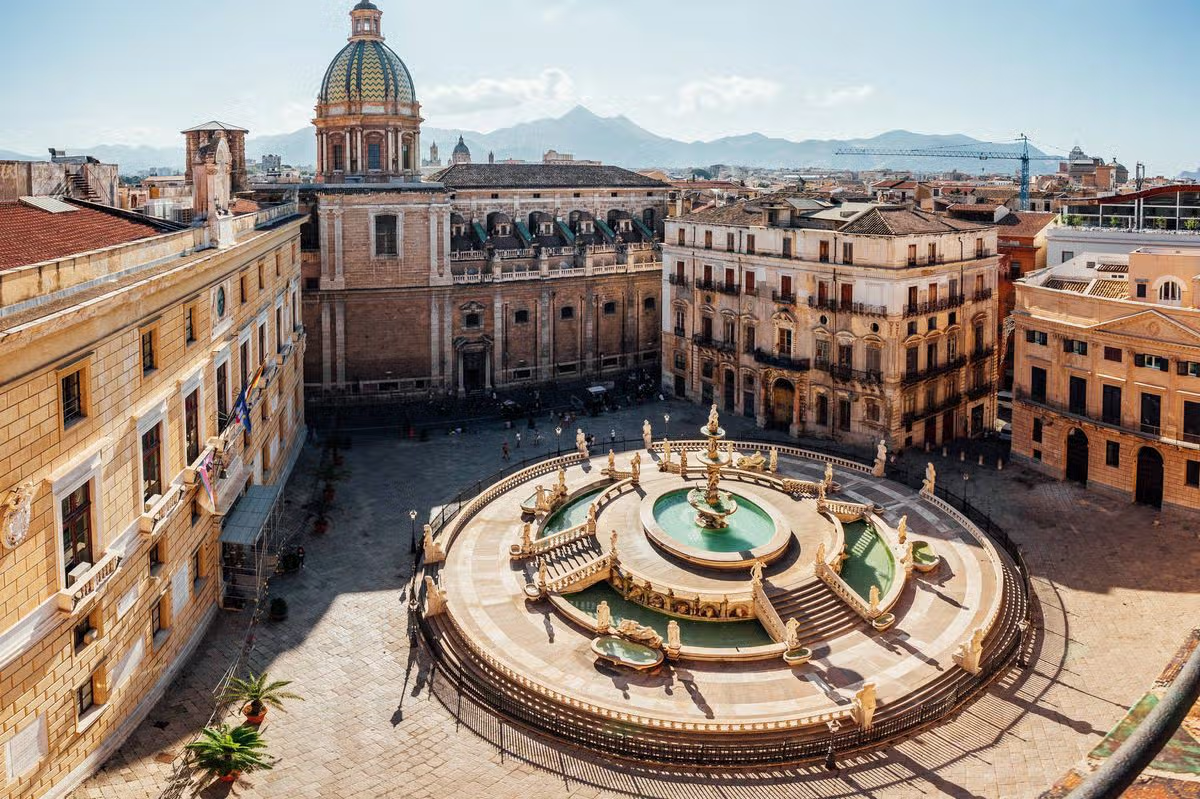
I’m a huge fan of a city break, and Palermo delivers on every front, while also offering easy access to the rest of the island – ideal for those seeking respite from the tourist crowds. The Sicilian capital is one of those rare cities where public transport becomes completely unnecessary, as virtually everything is within comfortable walking distance.
Just be prepared to dart between buildings for shade from the blazing sun. If you’re fond of impressive churches, atmospheric theatres and magnificent palazzos, Palermo has them in abundance, reports the Express.
Cattedrale di Palermo, Palazzo dei Normanni, and Teatro Massimo di Palermo are traditional must-sees, but the authentic city reveals itself amongst the twisting side streets and cobblestone lanes.
Architectural treasures are plentiful, though some might suggest they merely mask the island’s more recent violent past. We’d been advised beforehand against mentioning the mafia while in the city, yet one of the most compelling aspects of my visit was exploring the No Mafia Memorial.
While the activities and offences of the mafia and criminal gangs are portrayed in films and television, nothing truly prepares you for the overwhelming number of photographs documenting the harsh reality. The connection between the corrupt powerbrokers and sinister underworld was undeniable.
You’re left bewildered by just how much violence occurred. Nevertheless, this free museum provides a perspective you simply won’t discover on screen.
Naturally, all the architecture and heritage makes Palermo undeniably striking, yet the primary attraction for us was the regional food. Endless servings and dishes of fresh seafood and handmade pasta represents my gastronomic paradise.
You absolutely cannot skip a visit to Mercato Ballarò, a hidden alleyway brimming with stall after stall of meat, fish, vegetables, cheese, and fruit; whatever you’re after, Mercato Ballarò stocks it. The market is definitely not for the faint-hearted.
It’s a feast for all the senses, with a dazzling array of colours, aromas and sounds. It can be incredibly overwhelming, with vendors desperately trying to hawk their wares or entice you into their eatery.
Instead, try a comforting bowl of Zuppe Di Mare at Osteria Villena on Via Maqueda, a seafood stew generously packed with calamari, prawns, mussels and cod, all brought together with a San Marzano sauce. It’s salty, warming, satisfying and absolutely divine. I could have happily devoured several bowls.
For pasta lovers who still crave that seafood fix, the Tonnarelli Mare Mare is an absolute must. Yes, it may appear to be packed with tourists, but Osteria Villena is clearly doing something right, as every lunch and dinner sitting was completely full.
However, no visit to Sicily is truly complete without sampling one of its most abundant fish: swordfish.
Think of it as a white fish with the texture of a tuna steak when cooked, but with a distinctive flavour you simply won’t get from eating the likes of cod or haddock. Best enjoyed served with caponata.
If you enjoy a spot of people watching, my favourite haunt was Enotequa, a dark and atmospheric wine bar serving up crisp Sicilian wines in all varieties, €7 (£5.99) Aperol spritzes, and a meat and cheese board to round it all off for just €30 (approximately £25) for two people. If spritzes aren’t your cup of tea, a bottle or pint of beer will set you back between €4 to €5 (£3.42 to £4.28), according to Numbeo. London could never!
And make sure you sample a cannolo, packed with fresh ricotta cream and topped with as many nuts, chocolates and glace fruit as your heart desires.
Palermo is a paradise for anyone seeking a getaway that’s not too far from home. It boasts glorious weather, stunning architecture, and incredible food to match. Despite only spending two days there, I could quite easily have stayed far longer.
I’m still daydreaming about that seafood stew… and the spritzes, naturally.
The TWA Hotel at New York’s JFK Airport is a luxury plane-themed hotel that was once a disused airport terminal – transformed into a stunning hotel after a $265million (£200m) renovation
08:04, 05 Jul 2026Updated 08:04, 05 Jul 2026
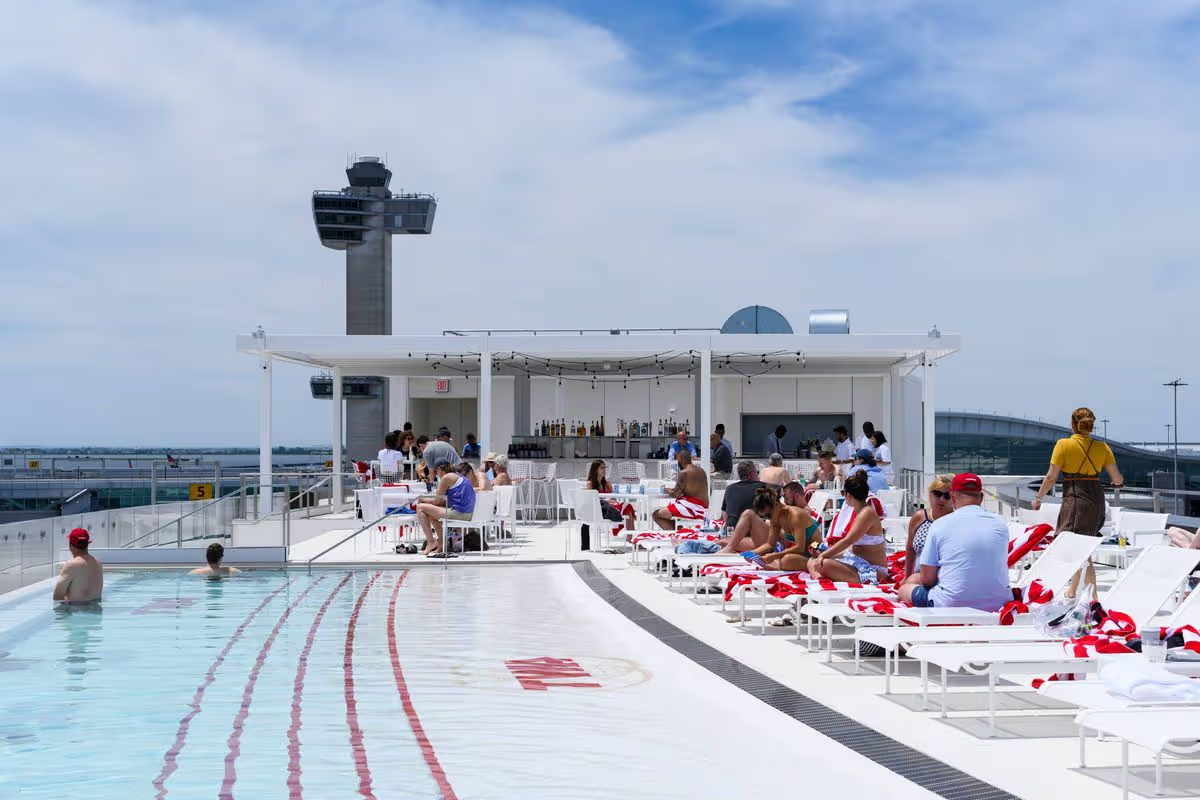
People lounge beside the rooftop pool at the TWA Hotel(Image: The Washington Post via Getty Images)
A former airport terminal that sat abandoned for years has been transformed into a stunning aviation-themed luxury hotel — following a jaw-dropping $265million (approximately £200m) restoration to revive it to its former glory.
The TWA Hotel flung open its doors in 2019, boasting a rooftop infinity pool with breathtaking views over an active runway at New York’s JFK International Airport. Originally serving as a TWA flight terminal, the iconic building was designed by renowned architect Eero Saarinen before it closed its doors in 2001, only to be reborn 18 years later.
The hotel, which occupies the TWA Flight Center, now comprises two buildings at each end of the former terminal, offering 512 rooms for guests to choose from.
Designers painstakingly worked to recreate its appearance when it first opened back in 1962, hailed by the Landmarks Preservation Commission as “one of the great masterpieces of expressionistic modern design”.
Earlier this year, it was recognised as one of the top five best airport hotels on the planet at the prestigious Skytrax World Airport Awards.
The original terminal now serves as the lobby for the four-star hotel, which also features a round-the-clock 10,000 square feet gym — claiming the title of the world’s largest hotel gym — alongside a selection of restaurants.
One of the most striking highlights is a 1958 Lockheed Constellation aircraft that has been cleverly converted into a cocktail lounge, with an aviation history museum also housed within the hotel.
Time magazine previously featured it on their coveted list of “The World’s Greatest Places of 2019”, and one recent visitor was British travel YouTuber Hannah Ricketts.
She explained that she was keen to visit the hotel to get a taste of what the golden era of air travel felt like during the 1950s and 60s.
Upon reaching the lobby, she told her 489,000 subscribers that it was one of the “coolest entrances” she had ever seen.
Spotting a vintage Coca Cola machine, she remarked that it felt like stepping back in time, before adding that the place was far more impressive than she had anticipated.
She went on to reveal that she paid around $400 (approx £300) for a room with a deluxe runway view. Hannah confirmed this included taxes, with standard rooms starting at roughly $200.
Gazing out from her room, she exclaimed: “This looks so much better in person. I feel like the camera isn’t going to do it justice.”
She said it felt like being on the set of Mad Men, describing the building as “utterly stunning”, packed with period details that truly transported you back to the 1960s.
“I’ve never been anywhere like this in my life,” she added. “And it’s obviously pristine where it’s been refurbed. It’s almost surreal. Wow.”
The travel vlogger described the swimming pool as “insane”, though pointed out that it cost $25 (approx £19) to use, even as a guest.
She then savoured a Mile-High Margarita aboard the converted cocktail lounge plane, telling her audience: “Maybe you’re a Brit watching this and you’re going to come back from JFK, back to the UK, back to reality, back to work. If you want to plan this, it’s a really positive end to a trip.”
Her sole gripe was with the food, which she rated a 5/10, though she described the overall experience as immersive and one she would happily repeat.
Summing up her one-night stay, she said: “This is a four-star hotel, I would say this is literally better than quite a lot of the five-star hotels we’ve been looking at.”
Some stories never get old. The poems and songs from Greek mythology – tales of tragedy, love and loss, war and revenge, jealous gods, magic and monsters – have been retold through the ages for good reason. Like all stories that really resonate, they deal in the flawed nature of humankind.
To the ancients, though, they were far more than legends; they explained the universe. From the Earth’s origins and the stories of constellations to ideas of justice and morality, they shaped the arts and sciences, and carved a shared cultural identity. Visiting Greece today, it’s clear how deeply rooted the myths still are in modern culture. From the capital (named after wise Athena) and beyond, this is a country steeped in legends.
Photograph: Guardian Graphics
Blaze a trail in the footsteps of heroes and monsters, but pay due respect to the gods – particularly Zeus (king of all, commanding the sky), and his brothers Poseidon (ruler of oceans) and Hades (overseer of the underworld) – lest, like Odysseus, you inadvertently anger them and spend the next 10 years trying to get home.
Navel gaze with Zeus at Delphi
Ancient Greek column at the Delphi archaeological site. Photograph: Ankarb/Getty Images
When Zeus wanted to find the world’s centre, the story goes that he released a pair of eagles. One flew east; the other west. They met “in the middle” – on the slopes of Mount Parnassus, at Delphi, navel of the ancient Greek world. While Athens’ Acropolis occupied Greece’s political centre, Delphi was its spiritual heart. Apollo established his temple here, and the seat of the oracle. Anyone seeking guidance – from lowly shepherds worrying about their goats to kings mulling matters of state – headed up the mountain to consult Apollo through his tongue-speaking vapour-sniffing priestess Pythia. Answers were considered divine truth, but notoriously cryptic (a bit rich after a three-day slog).
Today’s pilgrims are better-served by the present-day town of Delphi, beside the stunning archaeological site. Its tavernas and hotels, terraced into the southern edge of the cliffside, share the jaw-dropping panorama. Eat, drink and seek guidance at Apollo’s old pillars. Gawp at the impressive amphitheatre, framed by the peaks of Mount Kirfi, and the Pleistos valley below (a million-strong grove of ancient olive trees). Gaze west as the sun sets over the Corinthian gulf. Eagles or no eagles, you will feel yourself at the centre of the universe. Where to stay: Kastalia Boutique Hotel, Delphi, doubles from £62 room-only, kastaliahotel.gr
Bathe in Hades’ river in Epirus
The Acheron Springs near the village of Glyki in Epirus. Photograph: Hercules Milas/Alamy
When the infernal heat of July and August hits, the only reasonable response is a refreshing dunk in a shady river. I favour the Acheron (as recommended by Circe to Odysseus when he needed a fast route into the underworld). Seek out this “River of Woe” – one of the five rivers encircling Hades’ realm of the dead. Not the happiest destination for the poor souls Hermes delivered to its banks, a coin for the ferryman clamped in their cold dead mouths. But for us? Absolutely delightful.
Cool, clear waters wind from the Tomares mountains, through the Acheron valley and out to sea. Its banks are fringed by lush forest and verdant hillsides. Visit Mesopotamos for the Necromanteion (oracle of the dead) and the fishing hamlet of Ammoudia where the river slows and spreads out to a delta (watch for otters) before pouring into the deep blue sea.
Swim, raft or zipline at the scenic Acheron Springs near Glyki. Head into the mountains, to the historic Souli watermills, and a laid-back taverna or Paradosiako, (literally a “traditional cafe”) by a stream, all rough-hewn tabletops on giant stones.
For the most magical trip, round the mountain to the Gates of Hades, where the river cuts through towering limestone cliffs, like an entrance to the other realm. Electric-blue dragonflies, bright butterflies and raptors fly overhead. Strong currents and deeper pools mean that some care is needed. Like Orpheus, Heracles and Odysseus, you’ll want to make sure to return from the underworld. Where to stay: Atman Eco Lodge, near Glyki, doubles from £103 room-only, atmangreece.com
Float up to Nestor’s cave at Pylos
Homer’s ‘Sandy Pylos’ – a handsome seaside town inside the lovely Navarino bay. Photograph: Georgios Tsichlis/Alamy
Homer’s “Sandy Pylos” is a handsome seaside town with a great deal going for it. Strategically placed inside the deep, well-protected – and gorgeous – Navarino bay, it was the site of a triumphant naval battle against the Ottoman empire during the war of Greek independence (proud locals re-enact it each October). It features prominently in both the Odyssey and the Iliad as the manor of wise old King Nestor (Nestor’s Palace, nearby, is Greece’s best preserved Mycenaean monument). It’s also an easy distance for a day trip to ancient Messine, a wonderful and underrated archaeological site.
Guarding Pylos itself is the well-preserved Ottoman castle, Niokastro, but I prefer the old ruined Paliokastro to the north of the bay. It overlooks Voidokilia, a bay where turtles nest. No sunbeds, no cafes, just piles of soft sandy dunes, backed by wetlands hosting hundreds of migratory birds and rare reptiles. You’ll want to go down there. Nestor’s cave is here, the spot where a precocious infant Hermes hid the cattle he stole from Apollo. If you can’t face another ascent, float in turquoise water and stare up at its gaping entrance. Where to stay: Dio Pigadia ecovillage and farm, cottages from €50 a night, tiny cabins from €25, dio-pigadia.com
Inside the treasury of Atreus, a beehive-shaped tomb at Mycenae. Photograph: Image Broker/Alamy
Mycenae, the bronze-age citadel, is steeped in myth, founded, the ancients believed, by Perseus, son of Zeus. This is the legendary homeland of Agamemnon, king of “well-built Mycenae, rich in gold” as Homer had it (archaeological excavations confirmed his accuracy). The acropolis straddles a hilltop in the Argolid plain, overlooking the Saronic gulf’s approaches towards Nafplion and Argos. Strategic for the Mycenaeans, breathtaking for us.
You’ll want to stop at the Lion Gate entrance, an impressive example of megalithic architecture: a pair of lions are sculpted in stone relief. I stood with my father and stared. He always found the myths rather nonsensical, but even he had pause for thought at these Cyclopean walls, colossal blocks, 20 tonnes apiece.
Inside are the ancient palace ruins, the tomb of Clytemnestra and the treasury of Atreus. Admire Mycenaean craftsmanship and culture in the museum – excavated artefacts include tablets in Linear B (the earliest attested form of written Greek). Don’t miss the copy of Agamemnon’s golden funeral mask (the original is in Athens). Where to stay: Grand Sarai hotel in Nafplion, doubles from £130 B&B, grandsarainafplio.com
Poseidon’s love shack on Paxos
Lakka bay and Lakka village on the island of Paxos. Photograph: Hercules Milas/Alamy
This is one for the romantics and lovers of nature – and is a laid-back holiday. It’s a rare treat to see the gods’ softer side, and the ridiculously pretty island of Paxos came about thanks to Poseidon at his most tender. The usually raging, storm-stirring god created this little Eden (now a protectedsite) in the throes of passion – his trident is the island’s emblem. Smitten at first sight by the sea nymph Amphitrite, who fled to the deepest ocean to evade him, a deeply infatuated Poseidon sent Delphin, a kind of charming dolphin, in pursuit to talk up his good side. It worked – she returned, as his queen (and mother of dolphins and seals).
Poseidon struck off the southern tip of Corfu to form Paxos – effectively one large olive grove – as their love nest, and placed Delphinus among the stars as a reward. Honour the couple by enjoying that uncannily turquoise sea, snorkel over beautiful (and protected) posidonia seagrass meadows, and look out for the dolphins that are often seen here (depicted pulling Amphitrite’s chariot along with seahorses that are very occasionally spotted in the area).
The famous blue caves here are said to be the pair’s love-shack-cum-palace, and attract numerous boat trips in season. Take care on approach to avoid disturbance to sealife. Visit lovely Lakka for its horseshoe bay and Gaios, the pretty little main town. End your days stargazing and remember to toast the five-starred Dolphin constellation in thanks for this paradise. Where to stay: Village Life Penthouse from €195, paxosownersdirect.com
Susan Smillie’s book, The Half Bird, recounts her sailing voyage from the UK to Greece, and the mythical destinations she encountered along the way.To support the Guardian, order your copy at guardianbookshop.com. Delivery charges may apply
SOAKING up the breathtaking Perthshire scenery in style is the perfect way to unwind.
Here, Janice Hopper goes glamping in a wagon and discovers some of the area’s best beauty spots.
Sign up for the Travel newsletter
Thank you!
The Pad
Monachyle Mhor’s restored 1950’s Pilot Panther showman’s wagon is unforgettableCredit: Supplied
With a wood-fired bath that offers sweeping views over Loch Doine and Loch Voil, an outdoor pizza oven and a wood-burning stove, a stay in Monachyle Mhor’s restored 1950’s Pilot Panther showman’s wagon is pretty unforgettable.
Set on a 2,000-acre working family farm within the stunning Loch Lomond & The Trossachs National Park, it has a double bed, cute bunks and bucketloads of vintage charm.
At the estate’s blush-pink farmhouse, you’ll find your private bathroom and get a free cuppa as you sink into deep-green sofas beside the fire to play board games – just be sure to tuck into delicious, home-made chocolate cake, £4 a slice, while you do.
Explore
Hop in a canoe and paddle on beautiful Loch TayCredit: Getty Images
Start your day with a bracing wild swim in Loch Voil, before warming up in Monachyle’s cocooning sauna, from £20 per hour.
Then stroll five minutes along the shore to discover the LookOut artwork – a mirrored cube reflecting the landscape.
Kids will love the hour-long farm tour, collecting eggs, meeting donkeys Jake and Mylo, and feeding lambs, £20 per family.
Or, ditch the clan to try apitherapy – lying in an “apipod”, listening to 60,000 bees buzzing away in the hives beneath you.
It’s surprisingly calming and costs £25 for one hour, including soothing lemon balm tea (Monachyle mhor.net/experience).
Just four miles away is the quaint village of Balquhidder, where you can check out the resting place of famed Scottish outlaw Rob Roy, buried in 1734.
Later, hop in a canoe to beaver-spot on beautiful Loch Tay with CAG Adventures. A two-hour tour costs £40 per person (Cagadventures.com).
Refuel
Quaint cafe The Golden Larches serves up tasty cream teasCredit: Getty Images
Combine seafood with the landscape at Falls Of Dochart Smokehouse.
As the roar of the waterfall surges in the background, tuck into a platter of hot and cold whisky-smoked salmon, cheddar, paté, plus oatcakes and blinis, from £22, while sipping gin infused with local tayberries, £7.40 (Fallsofdochart.co.uk).
Quaint cafe The Golden Larches serves up tasty cream teas, £4.75 (Thegoldenlarches.com).
Or join exuberant owner and chef of Monachyle Mhor, Tom Lewis, on a wine safari, combining walking Balquhidder Glen with nibbles and plenty of vino stops. Six-hour wine safaris cost £150 per person.
After a hiking pit stop? It’s got to be Broch Cafe’s suntrap terrace in Strathyre, where you can recharge with a generous BLT, £9.50 (Brochcafe.com).
It handily sits on the 79-mile Rob Roy Way, and the scenic stretch from Strathyre to Callander along Loch Lubnaig is a much more manageable nine miles (Robroyway.com).
Book It
Stays in The Wagon cost £170 per night for up to four guestsCredit: Supplied
Stays in The Wagon cost £170 per night for up to four guests (Monachylemhor.net).
From World Cup watch parties to spa breaks and seaside getaways, guests can enjoy a slap-up breakfast on the house
This article contains affiliate links, we will receive a commission on any sales we generate from it. Learn more
Best Western has more than 200 properties across the UK(Image: Getty)
If this current heatwave has got folks fantasising about a proper summer getaway, they’re certainly not alone. There’s something about not having to make the bed or sort out breakfast that makes a morning on holiday feel infinitely more relaxing.
But with household budgets under pressure, finding a getaway that won’t break the bank is more crucial than ever. Hotel breakfasts alone can easily set a family back £40 or more per day, which is why Best Western’s latest summer offer really catches the eye.
Holidaymakers who book a break with Best Western before the end of July can bag a free breakfast for the duration of their stay. To help you capitalise on this, we’ve explored how a tasty start to the day can be teamed up with their newly launched “GEMS” (Great Experiences, Memorable Stays) packages.
READ MORE:
With the 2026 World Cup currently taking over our screens, attempting to host watch parties in a stuffy living room isn’t exactly appealing. With selected Best Western locations offering dedicated sports packages or lounge bars, escaping for a football-watching break could prove an inspired choice, reports Wales Online.
These convenient bundles combine a hotel room with local experiences, meals or added extras, making the entire trip simpler to arrange. Whether you’re sticking closer to home in Wales or venturing further afield, here are some of the smartest ways to maximise the offer this summer.
Enjoy a free breakfast at over 200 Best Western properties
Of course, the UK is also home to some of the finest golf courses in the world, and many Best Western hotels provide specially designed packages for golfers. Trade the confines of the office for the fairways with a package that includes your stay and course access.
If the summer heat is leaving you feeling more exhausted than energised, a spa package might be exactly what you need. Guests can enjoy a short break with accommodation and spa access, with optional treatments available at a selection of Signature Collection Hotels.
As temperatures rise, many Brits are drawn towards the coast. Best Western boasts a range of seaside hotels positioned along some of the UK’s most breathtaking coastlines, including Brighton, Blackpool, Newquay and Scarborough. Before venturing out to build sandcastles in the sun, a complimentary breakfast awaits.
City breaks are equally popular with families seeking entertainment during the summer holidays. With over 200 Best Western properties scattered across the UK, there are as many as 12 places to stay in London, with many more in sought-after destinations such as York, Manchester, Bristol and Edinburgh, offering numerous heritage and urban escapes.
With a growing number of Brits opting to holiday on home soil this summer, Macdonald Hotels is offering a range of breaks for golf enthusiasts and spa-goers, with discounts available at selected venues. For families seeking great-value getaways with entertainment and activities on their doorstep, Parkdean Resorts boasts more than 65 parks in coastal spots across the UK.
One guest who stayed at the Best Western Aberavon Beach Hotel described it as a “Brilliant hotel”, adding: ” A first class experience, pleasant stay, staff very helpful, rooms good, breakfast just what you want, good place to stay.”
Another traveller who opted for a more tranquil semi-rural stay near the Heritage Coastline chose the Premier Heronston Hotel and Spa, saying: “We were looking for somewhere to stay that was local to a beach and luckily this hotel is near Ogmore by Sea. We had a lovely, spacious room. We have 2 small children, and the hotel went above and beyond to help us with all our needs.”
A third guest who stayed at the upscale Best Western Lamphey Court Hotel and Spa remarked: “Absolutely spot on. The staff on arrival were excellent, kind and patient. Went out of their way to accommodate us. Nothing was hurried. Room was spacious and spotless. I wanted to take the bed home. Food in both restaurants was really good and breakfast although buffet style was all fresh ( I’m a fussy breakfast eater ) A perfect stay – trying to find an excuse to go back.”
Not every visitor was quite so enthusiastic, however, with one reviewer of the Pontypool Metro Hotel commenting: “The views from the hotel are not brilliant, however, everything else was very good. The room was spacious and clean and tidy. The staff were friendly and efficient. The lounge area was small but adequate. Breakfast was well-cooked and tasty. All in all a very satisfactory stay.”
A separate guest who stayed at the very same hotel offered a contrasting perspective, writing: “I came and stayed here when I was setting up a new retail store on the park. Safe car park, friendly staff. The bar is 24/7 which for me was great as I was working overnight shifts. Thank you for an easy stay, my partner and I are already planning to come back.”
Pope Leo XIV greets migrants at the Favaloro Pier to bless a plaque dedicating the pier to late Pope Francis during his pastoral visit to the island of Lampedusa, Italy, Saturday. Photo by Ciro Fusco/EPA
July 4 (UPI) — Pope Leo XIV, the first American pope, spent his second Fourth of July as the pontiff at Lampedusa, Italy, an island at the forefront of the European migrant crisis, and appealed to Americans to treat immigrants with “compassion and generosity.”
Leo visited Lampedusa, an Italian island in the Mediterranean Sea between Tunisia and Malta, instead of celebrating the day in the United States.
Soon after his arrival, he released a letter to Americans about the 250th Anniversary of the country’s birth, reflecting on the principles that have shaped the United States for two and a half centuries, particularly religious freedom and human dignity.
In the letter Leo said that, “among the principles that have guided the development of this country is the God-given dignity of every human life, each person being endowed with an inherent worth that calls for reverence, protection and care … and of building a society in which the vulnerable, the suffering and the forgotten are always met with compassion, solidarity and love.
“Defending human life also includes welcoming, protecting and assisting immigrants, whose hopes, sacrifices and contribution have formed part of the history of this country from its very beginning. In every generation, those who have arrived seeking freedom, opportunity and a place to belong have helped to shape the nation’s character. To receive them with compassion and generosity is not only an act of charity, but also a recognition of the dignity that belongs to every human person,” Leo said.
He said he hopes Americans “honor the courage and vision of those who came before them by strengthening their communities, respecting their differences and working together toward a more perfect union.”
Upon landing at Lampedusa, the pope visited the “Door to Europe,” a piece of art that is a memorial to thousands of migrants who died or disappeared trying to cross the sea.
He also visited the Cemetery of the Nameless in Cala Pisana to pray over the graves of migrants who died at sea. The graves are marked with crosses made from the wood of boats that sank off the island’s coast, Euro News reported.
Leo then visited Molo Favaloro, a site where migrant boats are brought to shore. He unveiled and blessed a plaque dedicated to Pope Francis there. The quay there will now be named Molo Francisco. Francis visited the island in 2013.
The pope met and shook hands with 15 migrants brought from a migrant housing center run by the Red Cross. It now houses 138 people, including 51 unaccompanied minors. On Friday night, the Italian coast guard rescued 17 people aboard a small boat, Euro News said.
“By deciding to name Molo Favaloro after Pope Francis you are giving a sign of the bond my predecessor forged with your community and with migrant brothers and sisters: the Pope has stood by you in these very demanding times. And today I am here to tell you that the Pope continues to walk alongside you, to support you and encourage you,” Leo wrote in a letter to the mayor of Lampedusa.
On Friday, Leo gave a virtual speech to Philadelphia when he was awarded the Liberty Medal. The medal has been awarded since 1989 and was managed by the Philadelphia Foundation until 2006, when it became part of the National Constitution Center in Philadelphia.
A SPOT that has previously been mocked as the worst place to live in the UK could be getting a sparkling new lido.
Hull has previously had a bad reputation, including being named the worst town in the book Crap Towns: The 50 Worst Places to Live in the UK in 2003.
Sign up for the Travel newsletter
Thank you!
Hull has previously been named one of the worst places to live but National Geographic recently named it one of the best places to visit this yearCredit: Alamy
Though over the past few years it has had a bit of a resurgence with National Geographic naming it one of the “best places in the world to travel to in 2026”.
And soon, there could be even more of a reason to visit the city as it could reopen a historic outdoor lido.
East Park Lido in a park of the same name opened back in 1964 as an unheated swimming pool.
Though, in 1985 it closed and was demolished three years later.
Councillors are now exploring whether the lido could reopen and how much it would cost to do this.
If plans went ahead at the former site, it would mean redeveloping the free splash pad with 43 jets and animal enclosures that are currently there.
Many people have taken to social media to share their thoughts on the news.
One person said: “Should never have gotten rid of the lido.”
East Park Lido opened in the 60s before closing in the 80sCredit: MEN Media
Another added: “About time get the lido open again on a new site.”
Now councillors are looking at the possibility of reopening the lidoCredit: Alamy
East Park itself is Grade II listed and already has some other attractions including a Grade II listed water ride that was built in 1929 called The Splash Boat.
Riders head down a 30.5metre drop into the boating lake below.
The ride is only open at weekends, bank holidays and during school holidays with each ride costing £2.
There are also swan pedalos at the park which cost £2 per person.
Hull currently has only one outdoor lido, which is Albert Avenue Pools and Fitness Lido.
The lido reopened in 2023 after an extensive £10.5million refurbishment.
The pool is heated to 28C throughout the summer season.
While in the city, make sure to head to Hull Minster – the largest parish church in England.
The church is over 700-years-old and is known to have some of the finest medieval brickwork in the country.
You can also climb up 180 steps in the church to see panoramic views of the city.
Hull has also been a backdrop more recently for big blockbuster films and TV series’ including The Crown, Victoria and Enola Holmes 2.
And thanks to lots of money being pumped into the city over the past decade, many of its former warehouses are now thriving restaurants, bars and cafes.
“TIKTOK made me do it”, I say to my friend, as I send her a snap of my coffee made by a robot.
If there was ever a city that embraces technology to celebrate the ridiculous, it’s Tokyo. And coffee is just the beginning.
Sign up for the Travel newsletter
Thank you!
Tokyo is one of the most interesting cities in the worldCredit: GettyThe Sun’s Helen dons traditional Japanese dressCredit: supplied
Last time I went to Japan’s capital, around 10 years ago, it was an expensive trip. Back then, the Yen (the country’s currency) was strong against the British pound and everything was twice the price.
This time around, with rates dropping over the years, one of the world’s coolest cities is surprisingly affordable again.
And I was buzzing to begin exploring on a budget.
Starting strong, I’d checked into trendy Yotel, a slick and modern hotel that embodies Japan’s futuristic vibe.
With 23 properties around the world, the brand is known for its prime locations, without the steep price tag.
The Tokyo one has room rates from £118 per night and is just steps away from one of the city’s coolest areas, the Ginza district.
The well-heeled neighbourhood is packed with stylish restaurants and bars, high-end shopping and elegant department stores.
Shopping is a major activity in Tokyo, with the flagship Uniqlo store just a few minutes from Yotel. This is the biggest Uniqlo in the world, its 12 floors packed with cool clothes and knitwear at a fraction of the UK price.
Then there is possibly the most famous shopping district in Tokyo, Harajuku. This is the place for eccentric outfits, outrageous headwear and funky souvenirs.
There are also cool vintage stores nestled between the tourist tat, but I was more concerned with all the ridiculous things to eat and drink along here.
Carve your own chopsticks like HelenCredit: suppliedA traditional Japanese tea ceremonyCredit: Getty
A toasted sandwich with rainbow cheese, followed by a giant multicoloured candyfloss and a coffee at Café Reissue that had a foamy top in the shape of Hello Kitty.
This is where you will also find the Shibuya crossing, the busiest pedestrian crossing in the world, where crowds get ready to race across when the traffic stops.
With 3,000 people crossing every two minutes, this interchange has become a tourist attraction in itself, as you run for your life and dodge people making TikTok videos, taking selfies and proposing.
For dinner, we bunked down at Kushiyaki Bistro Fukumimi Ginza, an underground izakaya.
The antidote to Tokyo’s tech-savvy tourist trails, this traditional tavern serves meat skewers and Japanese picky bits, with lots of lively banter.
As well as the great food, we made some new pals at the bar.
The language barrier didn’t seem to matter in the jovial atmosphere.
After a taste of authentic Japanese dining, I wanted to experience the country’s unique culture and try some traditional pastimes.
First stop was a Tea Ceremony at Maikura (£43, mai-ko.com).
Once we’d been decked out in colourful kimonos, we all sat on the floor to enjoy matcha with a special blessing.
Then it was straight on to Ginzabashi to make and carve our own chopsticks at an independently owned cafe (£18, ginzabashi.com).
By this point, we had worked up quite the appetite, so we tried our hand at sushi making at the famous Tsukiji Fish Market.
Covered in rice and with a not-so-artistic display of Nigiri and Maki in front of me, I can confirm it is not as easy as it looks.
Making some delicious sushiCredit: supplied
But, our patient sushi master was on hand to help us out and the end result was a lot more impressive than I was expecting.
The experience is £52 per person, but the price includes a tour of the market and you get to eat all the sushi you roll and some extras too (japanwondertravel.com).
Simply wandering around the city itself is enough to keep you busy. Street art, historic buildings, quirky characters and buzzing neighbourhoods are all part of Tokyo’s appeal.
That’s how I found myself at the hole-in-the-wall coffee shop in Harajuku being served by a bear.
The name Anakuma Café means “bear in a hole” in Japanese, and this tiny booth is exactly that.
I order my flat white on a tablet and it’s served through a hole in the wall by a comedy furry hand.
By the time I stopped laughing and taking pictures, my coffee had gone cold, but it was all about the experience. Which is as cheap as chopsticks.
GO: Tokyo
GETTING THERE: British Airways flies from Heathrow to Tokyo from £1,013 return.
Sure, there’s no destination with more theme parks than Orlando — which has ten to choose from, including big-ticket names Disney and Universal — but San Antonio’s four are unique.
And, best of all, they are significantly less hard on the wallet.
First stop on my theme park crawl of the city was Morgan’s Wonderland, the world’s first ultra-accessible theme park and a prime example of what makes San Antonio so special for this type of holiday.
The thinking behind the 25-acre park’s “inclusive” billing is that there are genuinely rides for everybody to enjoy — families can truly participate together and have fun with one another.
Boat rides along the San Antonio river are shady and cool, plus a load of fun for families.Credit: Zocha_KA stunning cityscape across San AntonioCredit: Kruck20
Then there’s SeaWorld which, while also plying its trade in Orlando, provides a much more immersive and educational experience in Texas — really shining at a time when many are questioning the ethics around zoos and aquariums.
On my visit, I was hugely impressed by the knowledge and passion that staff brought to our animal encounters, and by the lack of showiness around these — the sense was that we were there to observe, not that the marine life was there to perform.
Adrenaline seekers are not forgotten about in San Antonio, either.
They can get their kicks at Six Flags — a site of more than 200 acres with 11 roller- coasters and a waterpark.
The Sun’s Sarah gets in the saddle in San AntonioCredit: SuppliedThe Dinosaur Hall at the Witte MuseumCredit: Alamy
The rides may not be as dramatic or heavily themed as those at Walt Disney World, but they will certainly impress even the biggest coaster buffs.
Meanwhile, those travelling with younger children can avoid the heaving tourist crowds that you will likely encounter on a holiday to Orlando.
But what also makes San Antonio a sure hit for parents, compared with Orlando, is that you can save mega-bucks on entry.
On average, you’re looking at spending around US$50-$100 per adult here, compared to US$99-$147 in Florida — a huge difference if paying for an entire family.
Theme parks aside, San Antonio is a marvel in itself, too.
It predates Orlando by around 150 years so has more of a story to tell, having played a significant part in The Texan Revolution.
You can learn all about this at the fabulous Alamo heritage site.
Visitors can view the preserved Catholic mission where the Battle of Alamo was fought in 1836, between a small number of plucky Texan defenders and the mighty Mexican army.
It’s rare to see anybody, let alone a proud US state, celebrate a fight they lost. But this two-week conflict, where the Texans ultimately met with defeat, has become synonymous with bravery and resistance.
Touring the historic site, which includes a chapel and barracks, I was struck by the overarching message that comes across: it’s not about winning but about trying. And at $48 entry for a family of four, it’s great value for money.
San Antonio also has an impressive zoo, in Brackenridge Park — but if your holiday aim is to do things you’d not easily be able to do back home, then take a short stroll through the park to the Witte Museum.
It is somewhat akin to London’s Natural History Museum in terms of being brilliantly kid-friendly.
It’s also fascinating — to the extent that little ones will barely even clock how much local and historical knowledge they’re soaking up.
Naturally, the Dinosaur Hall is a draw, but the Texas Wild Gallery and McNay Family Global Gallery are each special.
Wildlife habitats in the former, and tales of how locals lived in ancient times in the latter, combine in a way that’s compelling for visitors both young and old.
Do note, however, that some attractions in San Antonio are closed in winter, or operate on a limited schedule. Six Flags, for instance, opens only on weekends.
In summer, meanwhile, beware the heat — which can near 40C. But there is welcome air-con at museums such as the Witte, and the very child-friendly DoSeum — a hands-on, learn-through-play space.
Outdoors, the San Antonio Botanic Garden has a water-play feature, and boat rides along the San Antonio river are shady and cool, plus a load of fun for families.
San Antonio serves up great food, too. While “family friendly” can mean highly processed hot dogs and chicken nuggets, it’s a different story here — where barbecue, Tex Mex dishes and celebratory decor make for fun and flavourful dining.
In particular, do eat at local institution Mi Tierra, which is festooned with colourful paper banners and wandered through by traditional Mexican mariachi musicians.
The Tejas Rodeo is unmissable, too, bringing people of all ages together for an evening of bull and horse riding, as well as barrel racing, against a backdrop of Western music and steakhouse aromas.
Even littlies get in on the action, with “mutton bustin’” — trying to stay on the back of a bucking sheep.
You’re not likely to find that in Orlando.
GO: SAN ANTONIO
GETTING THERE: Virgin Atlantic flies from Heathrow to San Antonio via Atlanta from £944 each way. See virginatlantic.com.
STAYING THERE: An eight-day holiday combining San Antonio with a two-night ranch stay starts from £1,750pp, including private transfer on arrival, car hire, excursions, a San Antonio City Pass, accommodation based on two sharing and full board meals at the ranch.
The travel offcials have urged people to not risk stress and ask for help where needed
Before you head to the airport, you may want to get a lanyard if you need extra help(Image: Getty)
A UK airport has issued guidance for passengers set to travel very soon in a bid to help make the process less stressful.
Ahead of the busy summer travel season, officials at Manchester Airport have reminded passengers that those with non-visible disabilities can wear the Sunflower lanyard if they prefer not to disclose their condition or use the airport’s assistance service. The lanyard discreetly signals to staff that the wearer may need extra time, patience, or understanding while travelling through the airport.
Manchester Airport explains: “The Sunflower lanyard now offers access to all lanes at departure security, in addition to our Family and Assisted Travel lane.
“All channels at departure security offer next-generation security screening, offering a quicker, quieter and more customer-friendly process for all passengers. Security colleagues have hidden disability awareness training and will assist you with any questions that you may have while passing through the security process.”
If you’d like to pick up a lanyard at Manchester, you can collect one from the Assistance Reception areas in the Terminal 2 and Terminal 3 check-in halls on the day of your travel.
It says: “We will be happy to provide you with a lanyard, even if you feel you don’t need or haven’t booked assisted travel in advance. If you have a Sunflower lanyard already, you can use it if you wish. We are sorry, lanyards cannot be posted to you ahead of travel.”
What is the sunflower lanyard?
According to Hidden Disabilities Sunflower: “Some disabilities, conditions or chronic illnesses are not immediately obvious to others. For some people, this can make it hard to understand and believe that someone, with a “non-visible” condition genuinely needs support.
“Some people question whether you have a disability because you don’t look ‘like you have a disability’.
“That is why we created the Hidden Disabilities Sunflower – to encourage inclusivity, acceptance and understanding. It is a simple tool for you to share that you have a hidden disability voluntarily.
“Simply by wearing the Sunflower, you’re just letting everyone know that you might need extra help, understanding, or just more time.”
The Sunflower has been launched across Australia, Belgium, Brazil, Canada, Denmark, Ireland, Latin America, the Netherlands, New Zealand, the UK, the UAE, and the USA. Find out where it is known near you using the Sunflower map.
Finding the best price can be tough, as you can book early to snap up a bargain or leave it until the last minute to secure cheap airline seats that haven’t sold out. When looking for flights, prices can also change by the day.
Airlines can use dynamic pricing to raise or lower ticket prices based on demand. Some people have claimed that booking websites can collect information from your browsing history and increase prices because they know you are interested.
It has been suggested to use private or incognito mode and to clear cookies before searching to get the best price. However, expert Simon has given his own verdict on the travel hack, branding it “nonsense”.
On his Travel Expert with Simon Calder podcast, he was asked if using incognito mode works and if it makes bookings cheaper. Simon replied: “Thank goodness for this [question], we have got the chance to get rid of this nonsense absolutely.
“It is an urban myth, and I will of course be delighted to learn if somebody has absolutely got video footage of somebody with a computer with cookies on and cookies without.
“The thought is that ‘oh, we know that Greg is looking for flights, so therefore next time he goes on, we will put the price up to grab all his money’. It doesn’t work like that.”
Simon explained that prices do sometimes change when looking for them because other people have booked onto the same flight.
He said: “We are lucky enough to be living in a very competitive era where airlines are charging whatever they can get away with. If the price has increased since the last time you looked, it’s only because someone like me has come along and booked seats.”
If you already have a holiday booked this summer, Simon previously shared a stark warning to ensure it doesn’t end up “wrecked”. The expert explained that “thousands upon thousands” of travellers have already been caught out and missed their long-awaited breaks.
Brits travelling to EU or Schengen area destinations cannot hold passports that are older than 10 years upon arrival at their holiday destination. The passport must also remain valid for a minimum of three months beyond the date you intend to return home.
Simon appeared on BBC Radio 2 to encourage everyone with holidays booked to check their passports before it’s too late.
He said: “You must remember, if you are going to the EU apart from Ireland, you cannot have a passport older than 10 years on the day you enter. It is the only part of the world that cares about when your passport is issued.
“Everywhere else only cares about the expiry date. Please, if you are going away in June, July, and August, please check that your passport will comply.
“Has it had its 10th birthday on the day you plan to go away, and has it got at least three months left on the date you plan to leave? That way, we can hopefully avoid too many more wrecked holidays.”