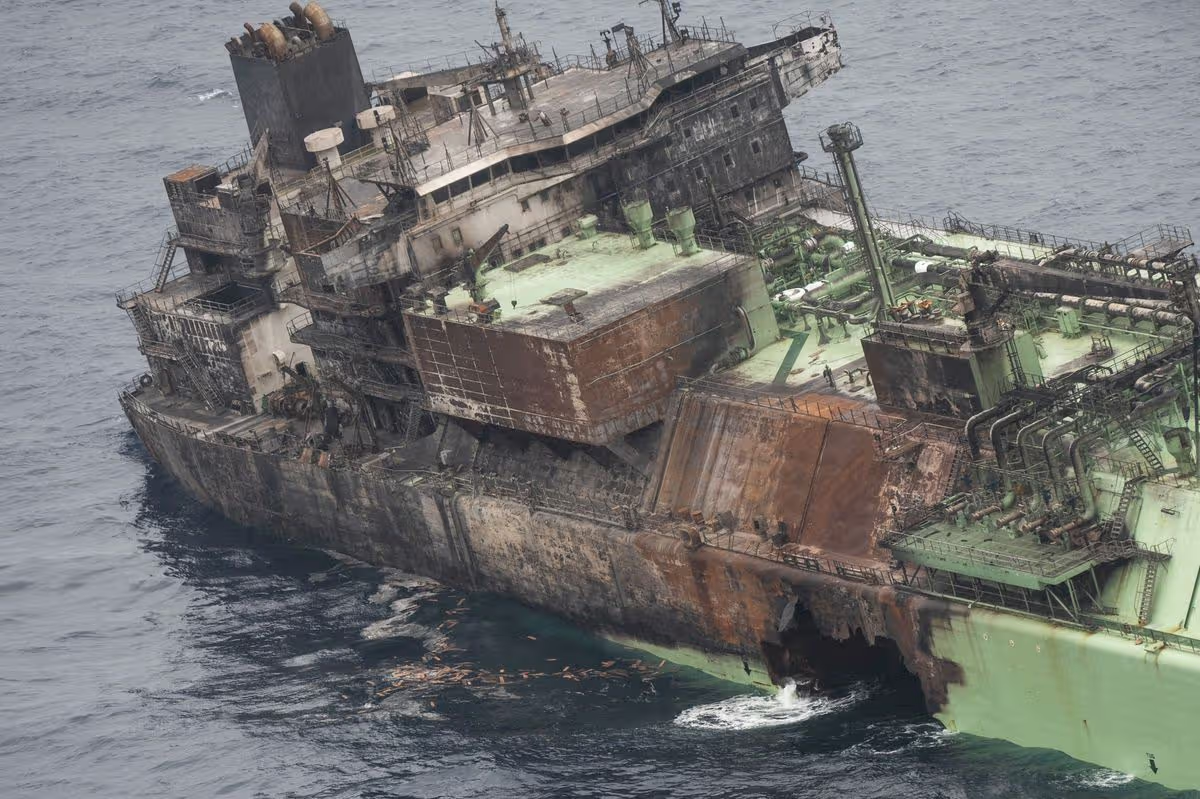
The 900ft Arctic Metagaz, a charred Russian ghost tanker, has drifted dangerously close to Malta, an archipelago in the central Mediterranean known for its history and culture
23:17, 16 Mar 2026Updated 23:19, 16 Mar 2026
The carrier is adrift between Malta and Lampedusa(Image: Newsbook Malta/AFP via Getty Ima)
Malta — a popular holiday hotspot — is said to be under threat of a “major ecological disaster”.
A charred Russian ghost tanker is believed to be around 50 nautical miles southwest of the island, and is drifting crewless towards the archipelago. The vessel was blitzed two weeks ago by Ukranian drones and has since, the hole-ridden 900ft Arctic Metagaz has moved towards Malta.
And now multiple European countries have warned an ecological threat is imminent. In a letter to the European Commission, seven nations said the “precarious condition of the vessel, combined with the nature of its specialised cargo” posed a “serious risk”. These countries have described the situation as a “dual challenge” – upholding maritime safety and preventing an ecological disaster against the background of EU sanctions imposed on.
Russia claimed that Ukraine used “uncrewed sea drones” to target the Metagaz in the Mediterranean Sea between Libya and Malta. The Security Service of Ukraine has not responded to the accusation.
According to Russia, the attack took place on March 4 and was launched from the Libyan coast. The vessel had previously been sanctioned by the United States and the European Union for being part of Moscow’s so-called “shadow fleet.”
Composed largely of ageing tankers, the fleet moves Russian oil and gas worldwide while bypassing Western restrictions. Authorities in Malta and Italy have been closely monitoring the wreck amid concerns about potential pollution. Rome said the vessel was carrying “significant quantities of gas, heavy oil, and diesel fuel.”
WWF Italy warned in a statement: “A potential spill could cause fires, cryogenic clouds lethal to marine life, and widespread and long-lasting pollution of water and the atmosphere.”
It added: “The affected area is of exceptional ecological value, with fragile deep-sea ecosystems and some of the highest biodiversity in the Mediterranean basin.”
Salvage experts are already in Malta in preparation for the ship’s arrival in Maltese waters, while a specialist vessel is on its way, a maritime source told AFP on Sunday.
Initial reports indicated that the ship sank after explosions sparked a fire on board. Libyan authorities said the tanker went down about 130 nautical miles north of the port of Sirte. Around 30 Russians were on board the Arctic Metagaz, according to Russia’s transport ministry. They were all found “safe and sound in a lifeboat” by Malta’s armed forces, Maltese Home Affairs Minister Byron Camilleri said.
However, Malta’s transport authority said last week that the wreck was still afloat. Ministry of Foreign Affairs of the Russian Federation acknowledged that the vessel was drifting in the Mediterranean and said Russia’s further involvement in resolving the situation would depend on “concrete circumstances”. It added that efforts to address the situation — including surveillance, monitoring and other technical support — could risk “undermining the integrity, effectiveness and the deterrent value of the EU sanctions regime”.
Russian foreign ministry spokeswoman Maria Zakharova said the ship had no crew and was carrying 700 metric tons of various types of fuel along with “a substantial amount of natural gas”.
“The international legal norms applicable to the current situation imply the responsibility of coastal countries … for resolving the situation with the drifting vessel and preventing an environmental disaster,” Zakharova wrote.
“Further involvement by the shipowner and Russia as the flag state will depend on the specific circumstances.”
IF there’s ever a time to sink a pint of Guinness, it’s got to be today, which is St Patrick’s Day.
You’ll likely find the best pour in its birthplace of Ireland, but there are plenty of bars all over the world pulling stouts for punters.
Sign up for the Travel newsletter
Thank you!
Sophie Swietochowski shares her pick of unlikely destinations to pick up a Guinness, along with some holiday deals for those who are tempted.
NEPAL
Namche Bazaar, Nepal, boasts the Irish PubCredit: Getty
THE aptly named Irish Pub is not only in one of the most off-grid locations in this list — being in the small town of Namche Bazaar — it’s also one of the highest boozers in the world.
Many claim it’s the most difficult pub to reach because of its position in the gateway to Mount Everest.
OK, it may be a two-day hike to get there but it’s well worth it for the views — and at least you can reward yourself with a well-deserved pint at the end.
Find the pharmacy-like bar Svanen in OsloCredit: TONO BALAGUER
ON Paddy’s Day, punters sink Guinness like its medicine, so what could be a more fitting setting than a 19th-century pharmacy?
Svanen, in the Norwegian capital Oslo, ranks 32 in the 50 Best Bars in the world list, with its traditional glass medicine cabinets, marble columns and black and white tiled floors still intact.
You’d be hard pushed to find a quirkier joint for sipping the dark stuff.
GO: NORWAY
Seven nights’ B&B at the 3H Scandic Fornebu is from £409pp including flights from Stansted on April 8.
A pint of Guinness will set you back a fiver at Rick’s Cafe in JamaicaCredit: Getty
RICK’S Cafe has to be one of the most spectacular spots to enjoy a pint, with sweeping views of the Caribbean Sea that are best enjoyed at sunset.
The bar-cum-restaurant in the town of Negril has become a popular spot for cliff jumpers thanks to its hilltop perch, 35ft above a clear and perfectly blue ocean.
A pint of Guinness will set you back a fiver.
GO: JAMAICA
Seven nights’ all-inclusive at the 5H Riu Negril is from £1,264pp including flights from London Gatwick on May 4 with 23kg hold luggage and transfers.
You can enjoy a pint of the black stuff on the Faroe IslandsCredit: Getty
THIS collection of volcanic islands, floating in the sea between the UK, Norway and Iceland, are so unspoilt that it’s hard to picture a bar here being anything more than a few tables and a weathered gent serving only the local poison.
But the Irish Pub (again) is a little more than that.
Located in the capital Torshavn, this charming spot offers lovely views of the harbour.
You may even spot seals, whales and dolphins, too.
GO: THE FAROE ISLANDS
Seven nights’ room-only at the 4H Hotel Foroyar is from £902pp including flights from Heathrow on May 4.
Guinness is even available in IcelandCredit: Getty
IT may be better known for attracting geography enthusiasts than stout-loving stags, but that doesn’t mean there aren’t places serving the black stuff in the Land of Fire and Ice.
Den Danske Kro is a lively spot in capital Reykjavik with Danish-style furnishings and a wide selection of beers on tap — including the Irish favourite for £9.
GO: ICELAND
Seven nights’ B&B at the 4H Reykjavik Lights Hotel is from £705pp including flights from Manchester on April 22 with 23kg hold luggage and transfers.
Price also includes two excursions: Hunt For The Northern Lights and Golden Circle tour. See tui.co.uk.
CZECH REPUBLIC
Head for Waxy Malone’s in PragueCredit: Harald Nachtmann
IN capital Prague, pints are poured with a side serving of history.
Its Old Town dates back more than 1,000 years and is dominated by the Baroque Church of St Nicholas and the dramatic Kinsky Palace.
And just off the square you’ll find Waxy Malone’s.
A pour of Guinness here will set you back around a fiver.
GO: CZECH REPUBLIC
Three nights’ B&B at 4H Plaza Prague Hotel starts at £200pp including flights from Gatwick on May 31 with hand luggage only.
Have fun with the family or unwind your mind with TUI deals for March and April
This article contains affiliate links, we will receive a commission on any sales we generate from it. Learn more
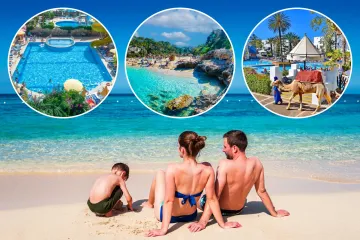
Feel the sand beneath your toes with a last-minute holiday(Image: TUI)
Getting away for a beach break in March or April is a great way to enjoy sunny skies and mild temperatures before the summer crowds arrive, as well as ditch the British rain. It’s the perfect time to relax on golden sands, explore charming coastal towns and soak up the early-season Mediterranean vibes.
As one of the UK’s best-known holiday companies, TUI uses Gatwick to offer direct flights to some of Europe’s best resorts, making it ideal for a spring break. Right now, TUI is offering couples the chance to save up to £250 on selected holidays, departing from Gatwick Airport in March and April.
This offer applies to 7-, 10-, 11- and 14-night stays in 2026, making it the perfect time for an early-season getaway. Even before the first flourish of summer, beach breaks in Lanzarote, Turkey and Portugal offer the perfect mix of sun, sand, and family-friendly fun.
READ MORE:
From stunning coastal locations with pools and entertainment to panoramic Portuguese views and spa treatments, we’ve picked just three of our favourites from TUI that can be booked today.
TUI BLUE Flamingo Beach, Lanzarote
Perched on the sun-drenched coastline of Playa Blanca, Lanzarote, TUI BLUE Flamingo Beach sits just steps from soft sands and calm, turquoise waters, ideal for safe swimming. Designed to look like a charming whitewashed Canarian village, a scenic seafront promenade connects the resort to Rubicon Marina and the town centre with stunning Atlantic views.
The resort is perfect for families, offering multiple pools, a splash park and professional childcare and teen hangouts. Dining is varied, from international buffets to local specialities, while fitness classes and evening entertainment ensure a lively mix of relaxation and fun under the Lanzarote sun.
For the best value break at Flamingo Beach, sunseekers looking to getaway after Easter can enjoy a 7-night break for £642.42* per person. Departing on April 13, this price is based on two people sharing on an all-inclusive basis and includes a whopping £1082.16* discount. Alternatively, a 14-night stay departing on April 14 is also available for the higher price of £1619*.
One visitor left a five-star review on TripAdvisor that said: “This hotel is excellent for families with children 0-10. The location is perfect, right next to Flamingo Beach. The children enjoyed the main pool, where activities took place, and the quiet pool, which was heated. The apartments were clean and spacious with a bedroom and lounge/kitchen”
Another added: “Great Location. Our room was very quiet. Our rate included an excellent breakfast so good value for money.”
A different guest, however, agreed that the location is “brilliant”, but they also felt “let down by amenities not being open. Pool snack bar, pool bar in another area closed. And only one evening bar with no other areas to sit.”
A returning guest highly recommends the Flamingo Beach resort, saying: “Best Place. The location is fantastic, near lovely beach, rooms are fine and clean and the staff are so friendly, the area is very clean and not too much noise. We been coming here nearly every year, the last 25 years. This is where we feel like home.”
Lanzarote is always popular with holidaymakers and there are plenty of deals to choose from. One the Beach is offering a 7-night stay at the five-star Iberostar Selection Lanzarote Park with prices from £1605*, a saving of £425. An upscale all-inclusive resort, guests love the location just a little further along the bay.
For sunseekers on a budget, a last-minute break at the Blue Sea Costa Bastian in Costa Teguise is available for £519* per person through Love Holidays. With flights from Gatwick, accommodation and breakfast included, the hotel is surrounded by beautiful Canary gardens and offers magnificent views over the Atlantic Ocean.
Blue Bay Platinum, Marmaris, Turkey
Blue Bay Platinum in Marmaris blends modern style with central convenience, just 70 meters from the beach with its own private sandy stretch and clear waters. The lively local area, including shops, bars, the marina and old town, is all within easy walking distance.
The resort offers four outdoor pools, including waterslides and a dedicated adult “chill pool,” plus a full-service spa for ultimate indulgence. Guests can enjoy international and local dining, sunset cocktails and stylish ocean-themed rooms with live music and shows, creating the perfect vibrant Mediterranean getaway.
Offering excellent value for money, a seven-night stay at this contemporary hotel in a central location could cost as little as £418* per person. Departing on Wednesday, April 18, the deal includes flights and accommodation on an all-inclusive basis.
With hundreds of five-star reviews on TripAdvisor, one visitor called it a “Stunning, luxury stay”, adding: “Blue Bay Platinum Hotel in Marmaris was absolutely exceptional from start to finish. The hotel itself is beautiful – modern, stylish, and perfectly maintained with a luxurious atmosphere throughout. Room was very comfortable and always clean. Will definitely stay here again.”
Another added: “Booked again for April this year. This will be our 10th visit to Marmaris. We have stayed at the supposedly other top hotels nearby. None of them beat the Blue Bay for overall experience.”
While one visitor did note that they felt uncomfortable at the resort due to the “expectation that tips should be given,” another loved it, saying: “It’s a very nice place to stay. I like this hotel and especially the relaxing swimming pool. There is a great bar.”
Turkey appeals to Brits with its mix of sunny beaches, rich history, delicious cuisine and excellent value for money. Another favourite Marmaris resort for upscale holidaymakers is the five-star Green Nature Diamond Hotel that sits within easy striking distance of the beach.
With a wide range of facilities and comfortable accommodation, this luxurious hotel can be booked through Love Holidays for a seven-night stay in April from £429* per person. Elsewhere, the nearby Prime Beach Hotel has pools with waterslides and a private stretch of beach with prices starting from £490* per person on April 2.
Longevity Health & Wellness Hotel, Portugal
Perched on a hillside with panoramic views over Alvor Bay and the Atlantic, the Longevity Health & Wellness Hotel is a state-of-the-art retreat in the charming village of Alvor. Guests are perfectly placed to enjoy golden beaches, scenic boardwalks and nearby world-class golf courses, all while staying in a serene, high-tech sanctuary.
The hotel is a pioneer in wellness, featuring a rooftop infinity pool and a world-class spa and wellness centre. With sunrise yoga, detox treatments, and healthy Mediterranean cuisine at the rooftop Pure Cafe, every detail is designed for ultimate relaxation and rejuvenation.
While the thought of complete rest and relaxation may be priceless, a stay at the Longevity Resort is worth every penny. For a 10-night stay, departing on March 23, prices start from £891.12* per person, on a bed and breakfast basis. Shorter stays are also available with a seven-night break costing £663* departing on the same day.
Guests who have already found their zen with a stay at the Longevity Health & Wellness Hotel have shared their experiences online. One said: “Absolutely superb place for relaxing stay, very modern, clean, quiet location with 5 mins drive to local beaches and town of Alvor… Fantastic breakfast with great choice. Access to spa facilities included. Would definitely recommend.”
Another added: “A lovely, relaxing stay in a beautiful hotel. We came back feeling revitalised. The cleanliness and the staff at the hotel were everything.”
While one less impressed visitor said: “The restaurant is very expensive for portions,” another was far more impressed exclaiming: “This hotel is truly exceptional, I cannot say enough about this wonderful place only that we cannot wait to return.”
Alternatively, the Falesia Hotel is a sophisticated adults-only retreat in Albufeira, offering elegant rooms, a full-service spa, and both indoor and outdoor pools. Perfectly positioned for relaxation, it sits just a short walk from pristine beaches and the Pine Cliffs Golf Course, and prices for a seven-night stay start from £439 with Love Holidays.
For those who want a family holiday, Portugal is a perfect location for this too. Offering waterslides, a kids club, a water park and plenty of entertainment, theJupiter Albufeira Hotel has something for everyone. Located in the popular resort of Albufeira, prices start from £630* per person, departing on April 21.
Find out more about deals on spring holidays with TUI as well as the full T&Cs here.
Disneyland Paris is opening World of Frozen later this month and we got a first look at the brand new Frozen Ever After ride, as well as where you can meet the princesses and see Olaf
16:28, 16 Mar 2026Updated 16:58, 16 Mar 2026
Disneyland Paris is set to open its huge new World of Frozen land later this month – and I was lucky to get a sneak peek beforehand.
When Anna and Elsa open up the gates on March 29 in Walt Disney Studios Park (which will rebrand as Disney Adventure World on the same day), visitors will be treated to a host of exciting offerings in Arendelle.
That includes brand new ride Frozen Ever After (you can read my verdict on this one below), as well as meet and greets with both Anna and Elsa, interactions with a very impressive Olaf animatronic, and plenty more fun including a chance to hang out with Oaken ahead of his Big Summer Blowout, and chatting to the villagers to hear various fun tales from around the land.
There’s also a new restaurant, shows and heaps of Easter eggs for all Frozen fans. Here’s a rundown of everything you need to know about the new land – including my review of the new ride, and tips on where to actually meet the characters…
The new Frozen themed ride
For the first time (in forever), Disneyland Paris has a Frozen themed ride. ‘Frozen Ever After’ is a gentle boat ride where you sail through the Kingdom of Arendelle and head towards Elsa’s ice castle.
It’s definitely a family-friendly ride but be warned there are a few drops along the way that caught me off guard – including one particularly steep section which was a little more thrilling than I had expected! The ride has all of the makings of that Disney magic; beautiful sets, impressive animatronics, and all of the iconic songs that have become such a staple in most families’ households (whether parents like it or not).
I think overall it’s going to be a hit; it’s got enough of the original Frozen magic for the kids, but for parents it’s got a bit more thrill and fun to it as well. The queue itself also features plenty of little surprises and sets full of hidden gems that will no doubt keep kids entertained while they wait for their turn to board the boats.
Where to meet the characters
If you want to meet Anna and Elsa, you’re going to have to book in for the experience. I think the system could actually work out better for families; no need to spend hours in a queue, and you can actually plan your day around the meet and greet if it’s going to be very important for your kids to meet the Arendelle royals.
If you do manage to bag a slot, the overall experience is pretty intimate feeling. There’s a waiting hall adorned with paintings of Anna, Elsa and their parents, as well as a few paintings you might recognise from ‘For the First Time in Forever’. You wander along the halls of the royal palace before turning a corner into a private room where Anna and Elsa are ready and waiting to greet you. It’s a lovely experience overall, and as you’re the only ones in the room with the princesses and photographer, it means families will get some proper quality time with them all.
If you don’t book a slot, there are plenty of other character interactions throughout the land. Oaken can be found wandering around the land – and a simple ‘Yoohoo!’ call grabs his attention – or you can keep an eye out for the adorable baby troll Mossie who’s more than willing to have a natter. The Arendelle villagers are also around to chat to kids and share their favourite tales from the kingdom.
Even though I knew he was an AI-powered animatronic, he looked absolutely real – it’s a real feat of engineering. kids around us were in complete awe. Although it’s not a traditional ‘meet and greet’ with photos, you can watch him interact with a villager and the crowd, so it makes for a fun show. He’ll make his appearances throughout the day, so keep your eyes peeled!
New show and general atmosphere
The overall atmosphere at World of Frozen is just a lot of fun. A Celebration in Arendelle is a fun new show that takes place on the waters of the land’s bay, featuring Anna, Elsa, Olaf and Kristoff – another chance to get a glimpse of your favourites – with plenty of music and enchantment.
I was pretty blown away by the design of World of Frozen too; from the moment you walk up, you feel like you’re instantly transported into the films. The Nordic-inspired buildings, food and the instrumental takes on the film’s iconic soundtrack all come with a dose of that Disney magic, not to mention there’s so much attention to detail.
There are photo opps everywhere, but two main areas were a hit with the crowd when I was there; the first was the large ice-inspired fountain right by the entrance to the kingdom, and the second was in front of the entrance to ‘Frozen Ever After’, as you can get a picture with a mountainous backdrop that features Elsa’s ice castle too.
The food
World of Frozen has a brand new restaurant, the Nordic Crown Tavern. This quick service restaurant has a menu inspired by Scandinavian cuisine, featuring the likes of salmon, meatballs, quinoa and mashed potato.
Prices range from €12-€20 depending on what you choose, but the portions were pretty generous. I went for the vegan meatballs and mashed potato combination, and I was genuinely impressed at the quality – it left me feeling full up for most of the afternoon, but not so full that I couldn’t get a cheeky ice cream or two later!
The restaurant itself is full of charm, with portraits of the characters and paintings throughout, as well as hidden features (there’s a little cat that you can try and spot from the queue for the food), and it definitely felt like an extension of the rest of the land.
It’s only one part of Disney Adventure World
World of Frozen is undoubtedly the new land that’s got everyone excited, but it’s actually just one part of a much wider expansion for the theme park. Walt Disney Studios Park may be what Kristoff and friends would deem a ‘Fixer Upper’, but it’s being completed transformed into Disney Adventure World. That comes with heaps of fun new additions alongside the opening of World of Frozen.
This will include ‘Adventure Way’ where you’ll find another new ride; Raiponze Tangled Spin, a little bit like the teacups, inspired by the scene in Tangled where Flynn and Rapunzel sing ‘I See the Light’. There are also plenty of food stalls, fun interactions with the likes of Mickey, Peter Pan and Mary Poppins, and even a dance show featuring Rapunzel herself.
This is all laid out around a large lake which becomes the setting for the brand new ‘Cascade of Lights’ show at night. I won’t spoil too much, but let’s just say the drones, pyrotechnics and music were absolutely spectacular.
Package prices start from £129pp per night, based on a Disney Hotel Cheyenne & Ticket package for 2 adults and 2 kids staying four nights/five days, between July 31-August 28. Subject to availability. You can find out more and book at disneylandparis.com.
A London beauty spot is being praised as ‘pretty’ and ‘stunning’ while drawing comparisons to Japan thanks to the abundance of cherry blossom trees that are starting to bloom there
Jess Flaherty Senior News Reporter
15:59, 16 Mar 2026Updated 15:59, 16 Mar 2026
People hoping to see an abundance of cherry blossom trees in the UK are in luck (stock image)(Image: serts via Getty Images)
A “stunning” beauty spot has been branded “special” and “pretty” for offering visitors a taste of Japan, all without leaving the UK.
With spring now in full swing, countless nature enthusiasts are eager to embrace the kaleidoscope of colours emerging as flora and fauna transform with the changing seasons. The bare branches and dormant plants of winter are quickly changing and bursting into bloom.
Cherry blossoms are a highly sought-after sight, strongly linked with regions of Japan. Referred to as Sakura in the East Asian country, blossom trees are the most widespread tree throughout the country, with many tourists timing their Japanese holidays around the cherry blossom forecast.
However, those unable to jet off across the globe in pursuit of picturesque pink petals are in luck, as one corner of London features an impressive display of cherry blossom trees.
Rita Farhi, a digital content creator who focuses on “noticing quiet magic in everyday life” in “London and beyond”, shared a video on Instagram showcasing a “hidden cherry blossom spot” in leafy northwest London.
In the caption alongside the footage, Rita wrote: “London has a few hidden cherry blossom spots… and this little path near Swiss Cottage is one of the prettiest.
“For a few weeks every spring it turns completely pink and feels like walking through Japan. It’s already starting to bloom this year. If you love cherry blossom walks, this one is worth saving for the next sunny afternoon.”
She added: “Have you seen it yet? Swiss Cottage, London. Spring in London never stays long… which makes these little moments feel even more special.”
Content cannot be displayed without consent
In the comments section, Rita provided further detail about her video and explained: “Filmed a few springs ago. The blossoms often start pink and turn paler as they open.”
Felloe social media users were quick to share their thoughts. One person commented: “So pretty”.
Another wrote: “What a beaut!” A third said: “So beautiful” while a fourth agreed: “Stunning”.
Someone else enquired: “This is so beautiful! Thank you for sharing. Where in Swiss Cottage is this?”
Rita replied: “Very close to the tube station”.
Another Instagram user shared: “I saw it yesterday and it’s so beautiful”. While another added: “How beautiful! Love this area”.
For those hoping to spot cherry blossoms across the UK, the Natural History Museum explains: “Most of the common cherry trees planted in the UK blossom in April. Mild winters can result in the trees flowering earlier, sometimes in March, but in cooler years they might not do so until May.
“In London, and other particularly warm and sheltered locations, cherry trees can sometimes burst into flower as early as February.”
AS A RESULT of the Iran crisis, Brits have been looking for different destinations to travel to, with demand rising for some countries.
The conflict in the Middle East has had a ripple effect throughout the travel sector, with Brits being forced to cancel their holidays as the Foreign Office has issued ‘do not travel’ warnings to some destinations.
Sign up for the Travel newsletter
Thank you!
A number of European destinations are experiencing a rise in demand including spots in Spain like Ibiza (pictured)Credit: GettyItaly has seen an increased in demand too, where you could visit cities like Florence (pictured)Credit: GettyWhile some providers are seeing bookings for Greece fall, despite it being safe to travel to (pictured: Corfu)Credit: Getty
And now, Brits looking at booking a holiday are choosing destinations closer to home in Europe.
Last week, On The Beach confirmed that they had experienced a drop in demand for popular holiday destinations including Greece, Turkey, Cyprus and Egypt, as a result of growing tensions in the Middle East.
This is despite the Government having no warning against travel to any of the popular holiday regions in these countries.
But on the other hand, TUI has seen increased interest in Greece, as well as Portugal and Spain, as customers look to “familiar destinations”.
Neil Swanson, a director at TUI, said: “While we are seeing some cancellations in the affected areas, these are currently outweighed by customers choosing to amend their plans instead,” reports The Guardian.
Hays Travel on the other hand, has seen interest grow for trips to Italy, Malta and Croatia.
And Surrey-based holiday operator Kuoni has seen interest in longer haul destinations such as the Caribbean grow although this also comes with a jump in price as well.
Mark Duguid from Kuoni said: “What we’ve seen is huge increases in flight prices, because the seats remaining are limited – we are talking about seats going up by £1,000 a person for an economy seat, which then prices the holiday out of the market for many customers.”
Pure One Travel founder, Wesley Baker, said: “Travellers are still eager to explore the world, but geopolitical events inevitably influence where people choose to go.
“We are seeing customers pivot towards destinations they perceive as easier and more straightforward to reach.”
The tour operator added that interest has increased for destinations such as Spain, Portugal, Italy and Greece.
Baker added: “Many travellers are simply redirecting their plans rather than cancelling them.
“Europe remains extremely popular, while long-haul destinations in Latin America are also attracting interest from travellers looking for something more adventurous.”
According to Expedia, popular European destinations for this spring based on search data include Paris in France; Amsterdam in the Netherlands; Rome in Italy and Majorca and Tenerife in Spain.
Hays Travel has seen interest grow for trips to Italy, Malta and Croatia (pictured: Florence, Italy)Credit: GettyPure One Travel are seeing increased interest for Spain, Portugal, Italy and Greece (pictured: Milan, Italy)Credit: Getty
Ljubljana in Slovenia has seen a 90 per cent increase in search as well, and Valencia in Spain has seen a 65 per cent increase.
The Sun’s Head of Travel Lisa Minot explained: “There’s no doubt the current crisis in the Middle East is going to have a seismic impact on our holiday habits.
“Reports of travellers stranded in the UAE and across the globe will certainly prompt those looking to travel long haul to look at alternative ways to fly – with direct flights to places like Thailand, the Maldives and Japan sure to be very popular.
“Closer to home, the situation will sadly likely impact destinations like Turkey, Egypt, Cyprus and possibly even Greece.
“And with soaring fuel costs, tour operators will be looking to price alternative destinations competitively.
“But there are other options – our traditional resorts in places like Spain and Portugal are good, safe bets.
“Comparison giant TravelSupermarket has crunched the numbers for this summer and declared Spain’s Costa Calida one of the best-value destinations for this summer.
“Dubbed the ‘warm coast’, this region stretching along the south eastern region of Murcia is one of Spain’s most underrated coastlines with 150miles of beaches, crystal clear waters and the unique Mar Menor lagoon, Europe’s largest saltwater lake.
“Also worth exploring are the likes of Montenegro, Albania and even North Macedonia for cheaper hotel and restaurant costs as well as traditional favourite Bulgaria.”
THE UK isn’t short of coastal paths but a new 2,700-mile path will become the longest of its kind in the country and even the world.
The King Charles III England Coast Path will give Brits and tourists access to the country’s entire coastline for the first time.
Sign up for the Travel newsletter
Thank you!
The King Charles III England Coast Path will stretch across 2,700 milesCredit: Getty
Natural England will celebrate the path’s official opening next week, which has been in the works for 16 years.
Around 80 per cent of the path is already open, with the final sections due to open by spring next year.
When the path is completed, it will be the longest managed coastal path in the world and eventually link with the 870-mile Wales Coast Path and 3,260 miles of the Scottish coast.
The new path means that walkers and tourists will be able to see and access hidden coves that were not previously accessible.
For example, new bridges and steps have been introduced in parts of the path.
On the Isle of Wight, new steps to a ‘secret beach’ have been built.
The steps are part of a 2.8-mile route that starts at Gurnard Luck before heading through Lynda’s Woods and reaching the beach dubbed locally as a secret spot.
On the National Trails’ website, you can see which parts of the path are open near you and also if there are any current issues that mean the path is temporarily inaccessible, for example, due to storm damage.
The site has different pages for different parts of the route, and once you go into a page, you will be able to see a map with the route on it.
You can also use filters to find nearby hotels and B&Bs as well as attractions and places to grab a bite to eat.
For example, looking at the South East coast page and map, you can walk directly along the coast through Dover, and if you want to explore more of the area, then head to Western Heights – an English Heritage fortification site that dates back to the Napoleonic Wars, which is free to visit.
Alternatively, in the South West, head on to part of the South West Coastal Path through Outer Hope, which is near Salcombe.
It will include paths and walks past top UK spots including the White Cliffs of Dover and the Jurassic CoastCredit: Getty
You could stay at The Cottage Hotel and Restaurant with sea-view rooms and cream teas out on the terrace.
The hotel sits on the cliffs just above the harbour beach in Hope Cove, so you can get to the sand and sea within a few minutes.
The map of the coastal path also highlights holiday parks, ideal for summercamping trips.
For example, in Devon near Exmouth, you can head to Cofton Holidays which has lodges, cottages, caravans and a campsite.
The holiday park runs a number of events and shows and has a high ropes course, an indoor pool and an arcade and games room.
Other highlights on the 2,700-mile path include the White Cliffs of Dover in Kent and the Jurassic Coast in Dorset.
If you are looking for a day walk that is already fully open, you could venture from Shoreham-by-Sea to Brighton.
Around 80 per cent of the trail is already openCredit: Getty
Setting off from Shoreham-by-Sea, you will walk next to the River Adur estuary where you can spot birds before heading past the old lighthouse in Shoreham Harbour.
The trail then follows on to Hove Esplanade to Brighton, where you can see the remains of West Pier.
Finally, in Brighton, you can enjoy the beach, pier and bustling town.
Or you could travel up north, to walk to Newbiggin-by-the-Sea, which was once a vital port for shipping grain.
You can learn more about the town in the Newbiggin Maritime Centre, and in the town, there are a number of shops and places to grab a bite to eat.
And if you happen to be there in April, make sure to catch the Kite Festival with live music gigs, film showings and of course, lots of colourful kites taking to the skies.
In other UK travel news, these are the beautiful UK hiking trails that have delicious tea rooms and beautiful castles along the way.
V&A Storehouse was named one of TIMEs best places in 2026Credit: PAAs a working museum, the concept is more seeing behind the scenesCredit: PAIt has some fascinating pieces if you know where to lookCredit: Getty
Travelling with kids can be expensive, even if you stay within the UK, but changing your travel dates could potentially save you hundreds of pounds – according to Expedia some dates could be the key to nabbing bargains
This article contains affiliate links, we will receive a commission on any sales we generate from it. Learn more
Here’s what you need to know ahead of the summer holidays(Image: Jacob Wackerhausen via Getty Images)
When you have kids, it feels like the days of cheap holidays are over, especially once they hit school age. Holidays can take a lot more planning and careful budgeting.
However, travel booking site Expedia has given parents a hand, putting together data that shows the cheapest exact dates to travel as a family, as well as the peak travel dates to avoid. Melanie Fish, spokesperson for Expedia Group Brands said: “Using the right dates to dodge peak travel times is a great money‑saving hack, especially when paired with booking everything you need for your trip on Expedia for a hassle‑free holiday.”
It also revealed some up and coming destinations for spring that are seeing a surge in searches, potentially making them popular places for a spring break. These include Conwy, Tenby, and the Cotswolds, all classic family holiday staycation spots.
As you may expect, late-March and early-April are expensive times to travel as parents try to get some time away for the Easter holidays. For domestic travel, the most expensive dates are between May 23 and 31, which is half-term in most schools across the UK. The most expensive dates for international travel were revealed as April 5 and May 23, again both coinciding with school holidays.
The busiest dates for staycations were found to be March 6 and 27, while for international travel, you can expect packed airports and ferry ports on April 2 and 3. If you’re someone who prefers to avoid the crowds and traffic, it’s best to rethink booking a departure on these dates.
When it comes to the cheapest dates, for domestic travel these fall on March 1 and 2, early in the spring, as it’s before the main tourist season kicks off in most staycation spots.
For international travel, the cheapest departure dates include March 2 and April 27. Unfortunately, these do fall outside of school holiday dates, but some parents may be tempted to book a break anyway. However, it’s worth making sure you research school holiday fines before you pull the kids out of school, as a family of four could rack up a £320 bill even for a first offence.
The quietest times to travel also fall outside of school holidays: April 28 and May 31. However, if your school has a later May half-term or inset days tacked onto the holiday, then going slightly later could cut the cost of a break later in the month. Choose flexible dates when searching for flights or holidays to see how much you could save by departing a few days later.
If you’re in a particularly strict area for school holiday fines, don’t worry, shifting your dates within the school holidays can also cut costs. For example, the cheapest dates to book in the six week summer holidays tend to be closer to the end of the holiday, as most people want to go away as soon as school finishes. By opting for a late-August rather than mid-July break you could save hundreds and still be back in time for school.
Have a story you want to share? Email us at webtravel@reachplc.com
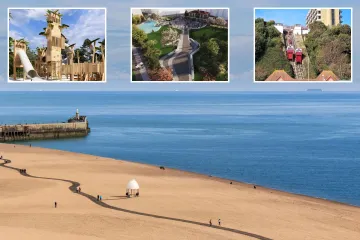
WE’RE spoilt for choice when it comes to seaside towns here in England – from retro to cool, there’s something for everyone.
But some of our favourites are the ones that feel like you’re stepping back in time to a different era – less penny slot machines and more stone fishermans’ cottages.
Sign up for the Travel newsletter
Thank you!
Kara says you should visit her local beach in BroadstairsCredit: AlamyHead of Sun Travel Lisa suggests heading north to SeahousesCredit: Alamy
The Sun Travel team reveals our favourite old fashioned seaside spots…
Sandgate, Kent
“Sandgate is often forgotten about as a day trip destination, being just outside of Folkestone with no train station of its own.
“But it’s one of my favourites to visit with far fewer crowds, and has retained its old-worldy feel.
“It doesn’t have attractions, only Sandgate Castle which was built by Henry VIII but is now a private residence. So instead it’s a great spot for relaxing by the beach, as well as an up-and-coming food and drink scene.
“There’s The Ship Inn overlooking the beach which, on a windy day, is the cosiest spot for a local beer and pie. But the high street itself is just as beautiful, lined with vintage antique stores, coffee shops and bars.
“Start your day with a coffee at Orchard Lane Coffee House, and get tempted by one of their rotating pastry options, or opt for brunch at Loaf just down the road.
“Then go for a long walk on the promenade lining the beach, watching the wind surfers and even canoers (or go for a sea swim yourself in the summer).
“Or if visiting in the evening, John Dory is the best place for some wine tasting with the owners really knowing their stuff.” – Deputy Travel Editor, Kara Godfrey
Brixham, Devon
“The English Riviera in Devon – formed of the three towns of Paignton, Torquay and Brixham – is a great holiday spot, but Torquay and Paignton can often be busy with tourists.
“If you fancy a quieter spot but still want a taste of the English Riviera, then head to Brixham, which remains today one of the busiest fishing ports in the UK.
“The harbour is great for spotting pretty boats and gazing at the swans. And definitely head to the Breakwater as this is where you are most likely to see the town’s resident seals.
“This is also where you’ll find the main beach, Breakwater Beach, which is a Blue Flag spot.
“If dipping into the sea is too daunting, check out the 53-metre saltwater tidal pool, just a couple of minutes’ walk from the beach.” Travel Reporter, Cyann Fielding
“The arrival of the railway in 1861 saw the picturesque town embrace leisurely pursuits with its pier and promenade still remarkably similar to its earliest days.
“Also still delighting tourists is its cliff tramway, a water-powered funicular that connects the town at the top of the lift to the seafront and pier below.
“With the Valley Gardens and Italian Gardens to stroll through and the Saltburn Miniature Railway to hop aboard, the town offers a delightful throwback to simpler holidays.” – Head of Sun Travel, Lisa Minot
Watergate Bay, Cornwall
“A little north of the popular surfing shores in Newquay’s city centre, Watergate Bay is a peaceful and rugged two-mile stretch of sand overlooking foaming, choppy waters.
“The swell ensures it remains a preferred bay for surfers, but outside of the busy summer months you’ll find it’s rather quiet, with just a few dog walkers scattered about.
“Views are breathtaking from pretty much every angle, but especially so from the coastal path that flanks it, winding high above sea level along grassy cliffs.
“Down on shore are craggy caves that kids will be desperate to explore as well as patches of windswept rocks carpeted in mussels that cling to the wet surface.
“A beautiful restaurant, The Beach Hut, overlooks the sands and it’s a great spot for a proper bite to eat, with specials of crab linguine often featuring on its typically Cornish menu.
“For something more casual, WAX serves up pints and burgers in a fuss-free setting.” – Assistant Travel Editor, Sophie Swietochowski
Sophie loves exploring on the two-mile stretch of sand at Watergate BayCredit: Sophie SwietochowskiJenna is a fan of Old Hunstanton in her stomping ground of NorfolkCredit: Jenna Stevens
Old Hunstanton, Norfolk
“Old Hunstanton is the quieter, prettier sister of mega Norfolk seaside resort Hunstanton.
“Whilst Hunstanton has a massive arcade and bowling alley practically smack-bang on the promenade, a 15-minute walk along the clifftops will lead you to a beautiful and less busy alternative.
“The walk there overlooks the town’s famous striped limestone cliffs, plus you’ll pass a Victorian lighthouse and 13th century ruins on your way, too.
“The beach boasts soft, golden sands with rolling dunes and colourful beach huts, backed by a pretty pinewood forest. It makes for a great bucket-and-spade spot for families, with loos, a cafe and plenty of car parking spots all close by.
“I recommend trying a fry-up at the Old Hunstanton Beach Cafe, a dog-friendly spot that serves up a fantastic breakfast, as well as homemade cakes and an entire library of loose-leaf teas.
“Plus the Old Hunstanton RNLI station opposite is often open to let visitors see its impressive hovercraft up close.” – Travel Reporter, Jenna Stevens
Seahouses, Northumberland
“The many working fishing boats bobbing in its compact harbour are the reason why this historic village on the Northumberland coast offers an authentic, classic British seaside break.
“The catch still lands daily – guaranteeing some of the freshest and best fish and chips in the region and the place has no modern distractions like flashing arcades.
“A stroll along the beach and a poke about in the rockpools on land and the chance to take to a boat for a trip over to the Farne Islands.
“It’s home to one of the UK’s largest colonies of Atlantic grey seals – it’s simple classic British coastal charm.” – Head of Sun Travel, Lisa Minot
Salcombe, Devon
“Tucked away on the South Devon coast, Salcombe is well-known for its golden sands beaches.
“The town is often dubbed ‘Chelsea on Sea’ because of its picturesque houses and pretty harbour. Head to North Sands if you want a family-friendly spot.
“Or venture to South Sands, which is accessible by a sea tractor. The town has lots of independent businesses and cost-effective restaurants as well.
“And if you happen to be there in April, make sure to spend time at the Salcombe Crabfest.
“One of the best things to do in the coastal town – no matter the time of year – is to try Salcombe Dairy Ice Cream, which is simply heavenly, especially the honeycomb.” Travel Reporter, Cyann Fielding
Saltburn-by-the-Sea has a cliff lift that’s been operating since 1884Credit: AlamyAlice’s favourite seaside resort is Sidmouth in Devon where you’ll find Jacob’s LadderCredit: Alamy
Frinton-on-Sea, Essex
“I consider Frinton-on-Sea to be the more chilled out sister of Clacton – it’s so much quieter, and very peaceful, but still just as fun for a beach break.
“The Essex town of Frinton has a huge sweeping beach lined with the classic brightly coloured beach huts – a mark of any beach day trip – along with a retro ice cream parlour.
“You can pop into The Lock and Barrel which is minutes away from the beach, and when it opened was the town’s very first pub.
“When the weather is a little breezy and it’s not warm enough to sit on the beach, take a stroll along the many walking paths.
“If you head slightly up the coast, you should try to spot some seals in nearby Harwich.” – Travel Reporter, Alice Penwill
Broadstairs, Kent
“So while Broadstairs technically has a small arcade, it’s a blink-and-you’ll-miss-it one tucked away from the beach.
“Put on the map by Charles Dickens who raved about its beauty, you can even go back in time by visiting the Dickens House Museum.
“But the seaside town is threatening to become a trendy new Kent destination thanks to some new openings.
“There is the new Smith’s Townhouse, a beautiful boutique hotel, as well as the small plates restaurant Bar Ingo, recently named in the top 100 UK restaurants by OpenTable.
“You’re spoilt for choice for trendy cafes, from Giant Coffee and Salt to Forts and Kope + Loke. But it has kept its Victorian seaside charm, with traditional chippy The Mermaid as well as the best ice cream sundaes at Morelli.
“And while the beach certainly welcomes the tourists in droves, you can rent a deckchair and watch the yachts come in for some old-fashioned charm, while listening to live music from the bandstand above.” – Deputy Travel Editor, Kara Godfrey
Robin Hood’s Bay, North Yorkshire
“Any picture you take in Robin Hood’s Bay could immediately become a postcard.
“A visit to the North Yorkshire fishing village feels like stepping back in time, with winding narrow streets snaking through a maze of red-roofed cottages.
“On the steep but scenic walk down to the shore, you’ll pass unique miniature pubs with room for only a bar and a couple of bar stools.
“If you manage to bag yourself a seat in one, you’re lucky – make sure to soak up the ambience of hundreds of years of maritime history.
“The village used to be the smuggling capital of the North coast, and today you can see the same narrow ginnels and cellars where tea, tobacco and gin were once hidden.
“Once you’ve made it down to the beach, you’ll find smooth sands and calm waters equally enjoyed by families and dog walkers.
“Both little ones and four-legged members of the family will enjoy racing across the flat, sprawling sands.
“Plus, at low-tide, there are always fascinating finds and fossils collected in the shallow rockpools.” – Travel Reporter, Jenna Stevens
Sidmouth, Devon
“One of my favourite spots on the Jurassic Coast is Sidmouth.
“It’s famous for its Grade-II listed steps called Jacob’s Ladder which lead down to the shingle beach.
“Or if you don’t fancy them – because they are very steep – you can still get to the beach by walking down the hill instead.
“As the beach is shingle rather than sand, I’d suggest taking something to lie on if you plan on sunbathing.
“Later on, make sure to explore the town, walk along the promenade and check out the independent shops and boutiques. Make sure to pop into Ice Cream Paradise for a frozen treat later on.
“During my visit I stayed in the incredible Harbour Hotel & Spa which has an outdoor pool, beautiful gardens with sunloungers.
“It’s elevated position means it has unbeatable views across the coastline.” – Travel Reporter Alice Penwill
Tenerife is a top holiday destination for countless Brits and one man, who made a permanent move there, has shared a key step for any Brits considering moving to the Spanish island for good
Jess Flaherty Senior News Reporter
14:18, 16 Mar 2026Updated 14:21, 16 Mar 2026
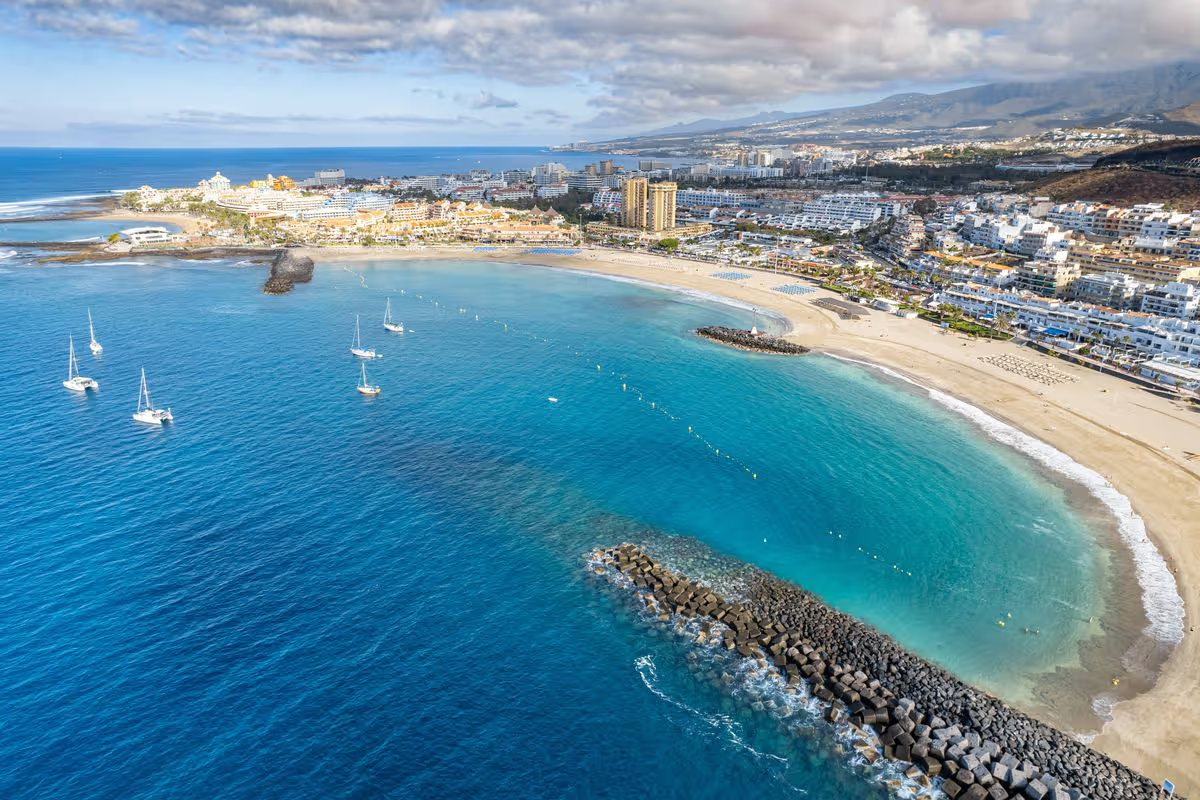
Lots of Brits are looking to make a permanent move to Tenerife, the largest of the Canary Islands(Image: mvaligursky via Getty Images)
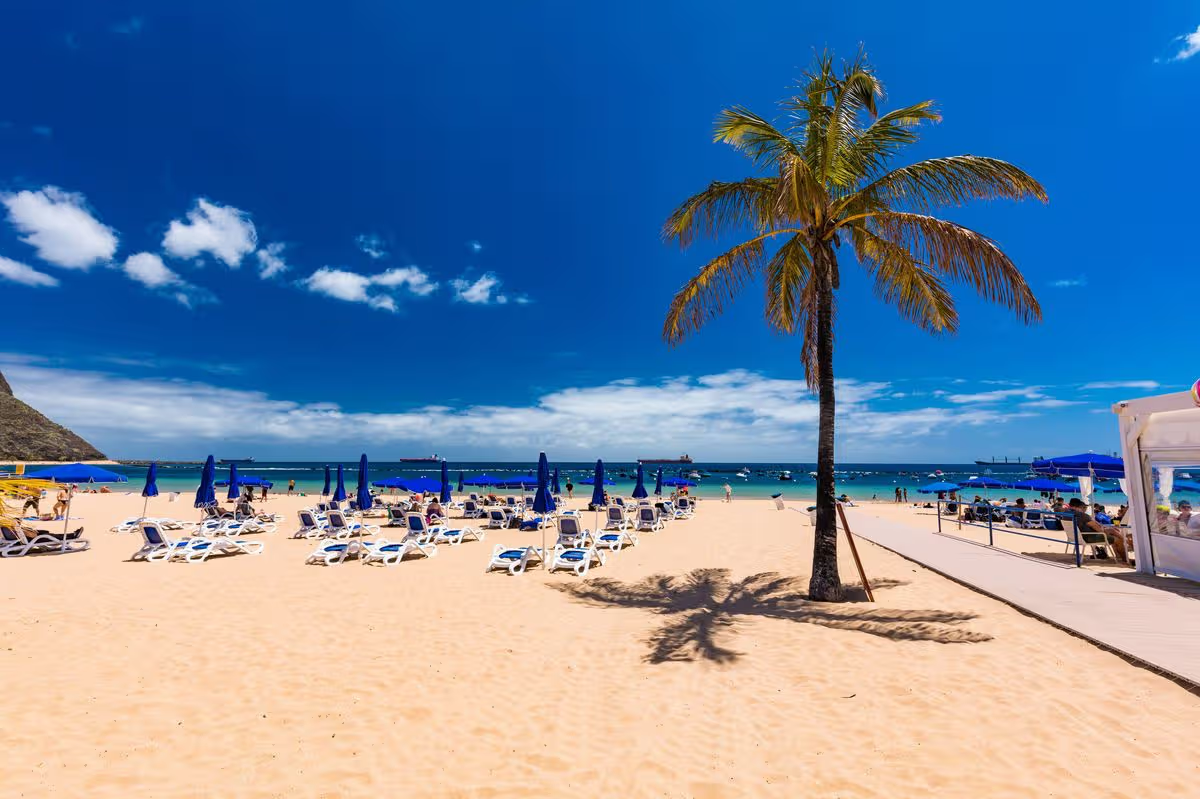
Any Brits weighing up a move to sunny Tenerife have been advised to do key one thing before committing to a permanent decision. The Spanish island is a hugely popular holiday spot for many UK residents.
As the largest of the beloved Canary Islands, Tenerife is celebrated for its sweeping beaches, extensive resorts, eclectic bars and restaurants, and much more – all of which provide locals and holidaymakers alike with no shortage of things to do.
Additionally, nature enthusiasts can make the most of the island’s breathtaking scenery, which includes volcanic peaks, vast and diverse national parks, dramatic coastal cliffs and even lush forests. Tenerife’s appeal is enhanced by its status as the “Island of Eternal Spring”, earned thanks to its year-round warm and stable temperatures, typically ranging between 20-28 degrees.
The island’s charm has plenty of Brits eager to move there permanently. A man, who posts content online under the username Mattie Baarnett, is currently living in Tenerife and took to TikTok to offer his guidance for those considering a permanent move to the Spanish island.
Speaking directly to the camera, he began: “These would be my tips if you’re wanting to move to Tenerife – before we get the video started, hang on a second.”
He then turned around to capture the sun setting behind him, bathing the evening sky in a warm glow. Mattie went on: “That tip alone is ‘just do it’ because you’ll get sunsets like that.
Content cannot be displayed without consent
“I would always recommend, if you’re wanting to come to Tenerife and you don’t really know if you want to actually live in Tenerife, go on Airbnb, rent an apartment for a month, see if you like it.
“Try and get a job, get all your legal paperwork in order and then, after you’ve done that, then source a long-term rental on one of the Facebook pages for an estate agent and then just go from there.”
Mattie reiterated his advice and continued: “Come for a month, rent an Airbnb, that’s gonna cost you £1,500 to two grand for the month – Airbnb, tourist prices – get here, get a job, see if you like it, get a job contract, make yourself legal then go for the long term, and then that’s it.”
He added: “You can do it in a month. Piece of p**s, mate.”
What Brits need to do if they want to move to Spain
Brits can move to Spain, but post- Brexit regulations have made the process significantly more complex. A visa isn’t required for short visits to the EU or countries in the Schengen area, which is a vast, border-free zone in Europe allowing more than 450 million people to move freely between 29 countries, including Spain, without internal border checks.
If you’re planning to spend 90 days or less in Spain over a 180-day period, a visa isn’t required. You also won’t need one if “you’re visiting as a tourist or for certain other reasons”, or you’re “studying a short course, getting medical treatment, travelling for business for your UK employer, for example to attend a business meeting or conference”, or if you’re visiting for “journalism or other media activities”, according to UK government advice.
Government guidance states: “The type of visa you need depends on the length of time you’re carrying out the work. You need to apply for a:
C-type EET visa if you’re working up to 90 days
long-term D visa if you’re working for more than 90 days
“If you’re staying for longer than six months, you will need to apply for a residence card once in Spain.”
Countries in the Schengen are include Austria, Belgium, Bulgaria, Croatia, Czechia, Denmark, Estonia, Finland, France, Germany, Greece, Hungary, Iceland, Italy, Latvia, Liechtenstein, Lithuania, Luxembourg, Malta, Netherlands, Norway, Poland, Portugal, Romania, Slovakia, Slovenia, Spain, Sweden, and Switzerland.
The island is hugely popular with UK tourists(Image: MICHAEL WORKMAN via Getty Images)
For those seeking some sunnier climes, a popular holiday spot boasting temperatures of up to 23C next month could be just a £19 flight away.
Ryanair is offering direct flights from London to Tenerife South throughout April, presenting an opportunity for budget-conscious travellers to grab a deal. The Canary Island basks in approximately nine hours of sunshine each day and enjoys average high temperatures of 23C in March. In contrast, London’s average high temperature for April is a mere 15C. This consistently balmy climate is a significant attraction for UK holidaymakers heading to Tenerife.
Hello Canary Islands portrays Tenerife as an “island of a thousand experiences”. It elaborates: “There are a thousand things you can do at any time of year, thanks to the mild climate and the enormous range of activities on offer on the largest of the Canary Islands.”
Ryanair is providing one-way fares to Tenerife throughout April starting from £19. At the time of writing, a flight on Monday, April 13, is available at this price from London Stansted – departing at 8.40pm and arriving at 1.10am.
There are also several basic fare seats on other April dates currently priced at £22, and others starting from £24.99 one-way. The cheapest return flight we could find for April was £24.99, meaning you could potentially secure a return trip for just £43.99.
There is no time difference between the UK and Tenerife. All flight prices were accurate, according to Ryanair’s website, at the time of publication.
Experts say people should be checking their passports immediately to make sure they are still valid, as the window for standard renewals is already beginning to tighten. With Easter Sunday falling on April 5 this year, travellers who have not yet checked their passports may already be close to the usual processing deadline for standard applications.
According to official government guidance, most UK passport applications are usually processed within three weeks or less, although travellers are advised to apply well before their trip whenever possible. A standard adult passport renewal currently costs £94.50 when applying online, while applications submitted using a paper form cost £107.
However, if you leave this too late, urgent processing services mean prices rise sharply. The government’s Premium one-day passport service, used for urgent adult renewals, now costs £222, more than twice the price of a standard online application.
Andrea Platania, travel expert at Transfeero, says the weeks leading up to Easter are a common moment when travellers suddenly realise their documents may need attention. It is then a race against time to make sure they can still travel.
He says: “Easter trips often creep up on people. Many families book their flights weeks or even months earlier, then only check their passports when they start preparing for the journey.”
According to Andrea, discovering a passport issue close to departure can quickly complicate travel plans. “Renewing a passport is normally straightforward if you give yourself enough time,” he says. “But when travellers realise just a few weeks before departure that their passport has expired or does not meet entry requirements, the situation becomes much more stressful.”
Because standard applications can take around three weeks to process, travellers who are planning to leave the UK around the Easter period may now be close to the point where urgent services become the only realistic option. Urgent passport services require travellers to attend an appointment at a passport office.
The Premium one-day service can provide a renewed passport within hours of the appointment, but the convenience comes at a significantly higher cost. Andrea says this situation is surprisingly common during busy travel periods.
“People often assume passport renewals can be sorted out quickly at the last minute,” he explains. “But if the departure date is already approaching, travellers may find themselves forced to use urgent services that cost far more than the standard application.”
He advises travellers to treat passport checks as one of the very first steps when planning any international trip. He said: ” “When you start looking at flights and accommodation, that is the moment to check your passport. If it needs renewing, doing it early keeps the process simple and affordable.”
He also notes that some countries require passports to remain valid for several months beyond the date of travel, meaning a passport that appears valid may still not meet entry rules, warning: “That is another detail people often overlook. A passport might technically still be valid, but it may not meet the entry requirements of the country you are visiting.”
With Easter travel approaching quickly, Andrea says travellers who have not yet checked their passports should do so as soon as possible. “A quick check today can prevent a lot of stress later,” he says. “If your passport needs renewing, acting early helps you avoid both the pressure and the much higher cost of urgent processing.”
France is one of the world’s most popular tourist destinations but there are still plenty of hidden corners where you can go to escape the crowds. We’d love to hear about your favourite under-the-radar places in France, whether it’s an underrated city break destination, a little-known museum, gallery or cultural attraction, a beautiful village, national park or stretch of coastline.
The best tip of the week, chosen by Tom Hall of Lonely Planetwins a £200 voucher to stay at a Coolstays property – the company has more than 3,000 worldwide. The best tips will appear in the Guardian Travel section and website.
Keep your tip to about 100 words
If you have a relevant photo, do send it in – but it’s your words we will be judgingfor the competition.
We’re sorry, but for legal reasons you must be a UK resident to enter this competition.
The competition closes on Monday 23 March at 10am GMT
Your responses, which can be anonymous, are secure as the form is encrypted and only the Guardian has access to your contributions. We will only use the data you provide us for the purpose of the feature and we will delete any personal data when we no longer require it for this purpose. For alternative ways to get in touch securely please see our tips guide.
If you’re having trouble using the form click here. Read terms of service here and privacy policy here.
I was one of the first to visit the UK’s biggest beach saunaSea Scrub Sauna is on Folkestone’s main beachThere are two saunas to choose from, including the 10-person shepherds hut
According to the British Sauna Society, the number of public saunas in the UK has increased 1,200 per cent in the last three years – from 48 in 2023 to more than 600 today.
And as one of the newest, Sea Scrub Sauna is set to be a huge attraction for tourists visiting the seaside town.
Its co-founder, Robin Bartlett, said: “We’re seeing an exciting shift in the UK from exclusive, high-end spa, to more accessible, communal, and ‘wild’ sauna experiences and it’s brilliant to be part of this.
“We can’t wait to welcome new faces and grow a community of sauna enthusiasts in Folkestone, from regular locals to intrepid day trippers and holidaymakers.”
The fourth of its kind by the company – with others in Margate, Whitsable and Faversham – the complex is certainly the fanciest as well.
As I entered the reception, the smell of new wood hit me as I was handed a glass of prosecco.
There’s a full menu of wines and beers (although perhaps save them for after the session to avoid any woozy heads).
Floor to ceiling glass windows meant I had full views of the sea, which on a clear day can sometimes even include seeing France.
What sets this sauna apart is the extra facilities. There’s men’s and women’s changing rooms, a HOT shower, and onsite bathrooms.
But onto the sauna experience.
The site has two saunas to choose from – the 16-person Scandinavian sauna, and the smaller Shepherds Hut Sauna, for up to 10 people.
I recommend the one on the right if visiting in the evenings, for some of the best orange sunsets over the beach.
I settle in on my towel, embracing feeling the warmth after months of the freezing winter.
Ten minutes in, and I’m drenched in sweat. We’re all playing a silent game of chicken to see who can last the longest in here.
I bail out first, sliding off the wooden bench and fleeing for the chilly air.
It’s over to plunge pools in the middle, with the steamy hot tub calling me.
But first, a cold plunge. My breath is taken from me as I slowly lower myself into the 7C tub, focusing on my breathing as I was told.
This is where the health benefits kick in, with everything from improved circulation and reduced muscle aches to better sleep and mood levels.
The Scandinavian sauna can fit up to 16 peopleBoth of the saunas were perfect for warming up in
My overheated skin prickles as it goes from too hot to too cold.
Yet I last barely a minute, much to the enjoyment of my friend who is already submerged.
My relief is loud as I sink into the much warmer pool right next to her, letting my body temperature heat back up again.
And its not just saunas and pools that you can enjoy there too, with experiences such as silent sessions and even Aufguss rituals, a German sauna ceremony with fragranced oil infused water.
I try the latter, and the heat is waved over me with a fan as smells of lemongrass and eucalyptus clear my chest.
After all that, I’m on a high, but ravenous.
And the sauna has you covered there too, with warming bowls of ramen to take the edge off. As well as a second glass of fizz…
Even better, the Harbour Arms is right next door so you can pop over for drinks and dinner there afterwards as well.
It costs £20 for an hour-long session, and can be booked from 8:30am to 8:30pm.
I imagine the early sessions will be popular with sea swimmers, although you can also rent it out for private sessions – perfect for birthdays or hen dos.
My bowl of ramen and prosecco was needed after my hour-sessionSafe to say I chose the warmer pool over the cold plunge…
Budget rail operator Lumo is starting a new route between London and StirlingCredit: AlamyStirling is a Scottish city that is north of Glasgow and EdinburghCredit: Alamy
Rail travel across the UK can be very expensive but Lumo, which is part of FirstGroup, is known for its affordability.
Starting July 10, Lumo will start its new route from London Euston to Stirling for as little as £29.90.
When the service launches it will have four daily return trains between the two cities.
Between the two cities, trains will call at Milton Keynes, Nuneaton, Crewe, Preston, Carlisle, Lockerbie, Motherwell, Whifflet, Greenfaulds and Larbert.
For those travelling between London and Preston, tickets start from £23.90.
And between Preston and Stirling, tickets can be booked from £14.90.
Stirling sits north of both Glasgow and Edinburgh and it’s known for its huge historic castle and even has an interactive Old Town Jail attraction.
Visitors often head to The National Wallace Monument which is a 220ft tower in the countryside.
The city also has a high concentration of pubs for its size – the oldest alehouse is The Settle Inn which has been serving ale since the 1700s.
Stuart Jones, managing director of First Rail Open Access, which runs Lumo said: “These fares are about putting customers first.
“By offering simple, low-cost tickets and direct services between Scotland, the north west of England and London, we’re making it easier and more affordable for people to travel for work, leisure and family visits.”
Onboard a Lumo train, there are no first class seat options – but wherever passengers sit, there’s access to USB sockets and tray tables.
Lighting can be personalised by using the button on the back of the seat in front of them.
Lumo has no first class seats but all passengers get USB sockets and free Wi-FiCredit: Alamy
Passengers can also use the free Wi-Fi, and each seat has a winged headrest for comfort and a coat hanger.
Lumo offers other routes too like London King’s Cross to Edinburgh.
But its latest started in December 2025 from London to Glasgow.
The company announced the news on social media, it said: “Our new timetable starts on 14th December 2025!
“Our new Glasgow service will start in December and we’re also adding an additional service from Newcastle to London King’s Cross every weekday.”
Lumo runs two northbound and one southbound service on weekdays and one service in each direction on Sundays between London King’s Cross and Glasgow.
Go out? In this economy? We get it, and we’re with you. But the city’s vibrant offerings still beckon — and many of them can be experienced for less than an Erewhon Malibu Mango Smoothie.
Cheaper school fees and endless sun are part of the reason celebrity stylist Gayle Rinkoff moved to Majorca – but there are some things about the UK she struggles to live without
Since moving in 2023, Gayle has ‘never looked back’(Image: gaylerinkoff/Instagram)
A British mum who left the UK behind to give her youngest daughter a more balanced life in Spain says she could never go back to the UK – but there are definitely some things that she misses.
Fashion and celebrity stylist Gayle Rinkoff gave up her London home for a remote farmhouse on the island of Majorca. She told the i newspaper: “When friends visited, they were shocked at how remote we are. In London, we lived on a busy street of Victorian terraced houses and a train station at the end of the road. Now, we are up a mountain and a 45-minute walk to the local village, or six minutes by car.”
One of Gayle’s main reasons for leaving the UK, she says, was the way that living in London turned her three daughters into social media addicts. While her two oldest daughters remained in the UK to attend university, Gayle’s 14-year-old daughter Leni is now a “through-and-through island girl”, she says.
The trigger for Gayle’s dramatic move was, she says, the Coronavirus pandemic. During lockdown, her daughters were “glued to their phones” because it was the only way to stay in touch with their friends, and moving to Majorca was, she says, a way to “break the cycle.”
While that aspect of the relocation was a success, with Leni often completely forgetting about her phone, there are definitely a few things that Gayle misses: “I do miss British things like M&S and ManiLife peanut butter, and of course, I miss my oldest girls. I thought they would fly out more,” she says. “But they’re enjoying being young and their lives in the UK.”
Living in Majorca isn’t cheap, Gayle admits: “You’re on an island, so everything has to be imported.” She and her husband treat themselves to a restaurant meal once a week, but says: “In Palma, you pay London prices.”
Gayle has prioritised her daughter’s education, marvelling that she has become almost completely fluent in Spanish in under two years: “Leni’s school fees are about a third of what they would be in London.
“However, it’s not the same level of education, so we top up with a maths tutor and a Spanish tutor. But, for us, the quality of life and everything else offset what she might be lacking in her education.”
Relocating from the UK to Spain isn’t as easy as it was before Brexit. Would-be expats need to demonstrate proof that they’re financially secure, with adequate private healthcare and a clean criminal record.
Spain’s so-called “Digital Nomad Visas” allow non-EU professionals to legally reside in the country while continuing their remote work for foreign companies — giving people who mainly use the internet for work the best of both worlds.
In Gayle’s case, that was ideal. She explains: “My husband has a remote job and I have always worked remotely as a fashion and celebrity stylist. I wasn’t ready to give it up, but I was ready to slow down.”
But there were some tough conversations before they finally pulled the trigger on their move. They finally did so in 2023: “This summer will mark three years since we moved to the magical island,” she says, “and we have never looked back.”
Connected to the German mainland by a single rail causeway, Sylt is just over three hours from Hamburg by direct train. The largest of the North Frisian islands, it slices through the North Sea and the Wadden Sea, with salt marshes and mudflats to the east and 25 miles of white sands sweeping along the western coast, grassy dunes buffering the bracing winds.
Relatively unknown to UK visitors, the island has long been a popular destination for Germans and appeals to an affluent crowd, although not exclusively. Luxury hotels and pioneering health resorts sit side by side with multistorey apartment blocks, modest campsites and laid-back surfing schools.
Trains from Hamburg – soon to be upgraded with the new intercity (ICE L) fleet – arrive in Westerland, the largest town on the island, which expanded significantly during the 60s and 70s. Alternative bases include well-heeled Kampen or Keitum, the latter known for its maritime history and traditional thatched houses. Designated nature reserves cover other parts of the island, from the shifting dunes in List to the vast Braderup Heath, partly managed by a hardy breed of sheep.
Grab a coffee from Kaffeerösterei Sylt, order the herring sandwich from Hafenkiosk 24 and don’t miss the salty Sylter Royal oysters from Germany’s only commercial oyster farm. The restaurant Oma Wilma focuses on hearty fare, while the shop and bistro Käseklub, located on an old goat farm, serves a curated selection of cheeses. Where to stay: Villa Klasen is a recently renovated boutique hotel in a charming art-nouveau style building with doubles from €120B&B Kate Mann
Sherkin, Ireland
The ruins of a Franciscan friary on Sherkin. Photograph: David Lyons/Alamy
It takes an hour and three-quarters by car, plus another 10 minutes by ferry, to get from Cork city, with its lively markets and revelrous pubs, to the relative tranquillity of Sherkin, one of the seven inhabited islands off the coast of West Cork.
None of these islands is especially large – the biggest, Bere Island, takes up about seven square miles – but they are all remarkably different, from sheltered little Garinish with its fine Edwardian gardens, to the ruggedness of Dursey, exposed to the elements at the tip of the Beara peninsula.
Sherkin is the one I know best. A few years back, I joined a group of friends who go there for a fortnight every summer, staying at a simple but appealing retreat called Sherkin North Shore. The kids do sailing courses down on Roaringwater Bay while the adults generally lounge around and enjoy life in a lower gear. There’s a sauna and a cafe where owner Michael O’Connor and his family cook terrific communal dinners. They also stage a (by all reports excellent) music festival, Open Ear, on the June bank holiday weekend.
Sherkin has three marked walking trails, taking you through the lush interior to white-sand beaches and a stunning horseshoe-shaped cove. Down towards the harbour, you’ll find the island’s only pub, the Jolly Roger, which serves chowder and toasties, and hosts music sessions in the busier months. And dotted around the island are artists’ studios (opening times vary, but you can call ahead to arrange a visit).
The buzzy mainland town of Baltimore is the gateway to Sherkin and also to Cape Clear farther south.
The other islands all have separate access points. For Heir or Hare Island, drive to Cunnamore Pier, half an hour west of Baltimore, and hop across on the ferry. You’ll be rewarded in the summer months by a brilliant restaurant and cookery school called Island Cottage – I had the good fortune to go for lunch in 2019 and the food was hearty and delicious. Where to stay: Sherkin North Shorehas rooms from €65 a night per adult, €30 for under-13s) and camping from €80 for a bell tent, €15 for a pitch Killian Fox
Torcello, Italy
The Ponte del Diavolo (devil’s bridge) on Torcello Photograph: PhotoFires/Getty Images
Venice is a city full of attractions, from its beautiful bridges to its Renaissance galleries and hidden spots to enjoy cicchetti or small plates. After a few days, however, the narrow streets and winding canals packed with tourists often spur a desire to escape the island. For many that will mean a trip to Murano, famous for its glass-making heritage, or even Burano, with its wildly coloured houses, both a short boat journey away. But for a real change of pace, switch to a smaller boat at Burano for the short ride to the sparsely populated island of Torcello, at the northern end of the Venetian lagoon.
The first thing that strikes you as you disembark is the sense of space. Following a wide path through the centre of the island, with water on one side and trees on the other, will bring you past green fields and quaint houses to the Ponte del Diavolo,or devil’s bridge, a rare example of an old Venetian bridge without parapets. If you find yourself feeling peckish, stop off at Taverna Tipica Veneziana, where you can get a selection of fried seafood and vegetarian meals. If you sit in the garden, you can see the restaurant’s goats and guinea pigs.
Continuing on the path will lead you to the main attraction: the Basilica of Santa Maria Assunta, founded in 639. It is unassuming from the outside, but the interior walls are decorated with stunning 11th-century mosaics, including a depiction of the last judgment.
Finish your visit by enjoying an ice-cream next to the church by the water’s edge, before retracing your steps back to the buzz of the city or, better still, stay overnight to enjoy the peace of the island once the day trippers have left.
Where to stay: Junior Suites Venezia has a restaurant, coffee shop, garden and doubles from £183 for a two-night stay Kitty Croft
Frioul islands, France
Pomègues in the Frioul islands is an easy day trip from Marseille. Photograph: Yann Guichaoua /Getty Images
Just 20 minutes by boat from the Vieux Port of Marseille, the Frioul islands, part of the protected Calanques national park, make a great day trip from the city – but it’s even better to stay longer to enjoy the wild beauty.
The two main islands, Rattoneau and Pomègues (each about 1.5 miles long), are linked by a 19th-century dyke, and hiking trails wind across the white limestone landscape to secluded swimming coves, pretty creeks and viewpoints back across the sparkling Med to town.
The ferry arrives at Rattoneau, where a few restaurants, shops and houses cluster around the harbour. Eat here or stock up on supplies, as there’s little elsewhere. Ou Sinon restaurant is a good choice for fresh seafood (try organic sea bass farmed on Pomègues).
About half an hour on foot from the port, Saint-Estève is the biggest beach on Rattoneau – sheltered, sandy and good for snorkelling (and there’s a small bar). Nearby, the 19th-century Hôpital Caroline, once used to quarantine travellers, is sometimes used for concerts today, while the old fort and second world war bunkers reveal the islands’ strategic importance. Across on Pomègues, it’s worth taking the long hike to the picturesque, remote cove Calanque de la Crine.
There are two other islands in the archipelago: tiny, rocky Tiboulen, used mostly for diving, and If island, home to a 16th-century fortress turned prison, the Château d’If (made famous by Alexandre Dumas’s The Count of Monte Cristo). Some ferries stop here en route to Rattoneau. Where to stay: accommodation is limited to mainly rental apartments near the harbour. La Daurade du Frioul is a one-bed apartment right on the beach, from £70 a night Jane Dunford
Cíes islands, Spain
Praia de Rodas. Photograph: Jarana Creatives/Getty Images
For a Caribbean-like break on a camping budget, it’s hard to beat the car-free Cíes islands in north-western Spain. This archipelago off the Galician city of Vigo has the white-sand beaches, the turquoise sea and even the exclusivity – visitor numbers are limited as the islands are part of a national park, and overnight stays are allowed only at Easter and in summer (15 May to 14 September). Admittedly, the illusion is shattered when dipping a toe in the chilly Atlantic …
To reach the islands, visitors must request a free authorisation code up to 90 days in advance (at autorizacionillasatlanticas.xunta.gal), then use it to buy a boat ticket (details at turismodevigo.org). There are daily crossings from Vigo to Monteagudo island (45 minutes), which is linked to Faro island by a sandbar across a lagoon; the third island, San Martiño, can only be reached by private boat.
Rodas, the biggest beach, is a short walk from the pier, and has kayaks and snorkels to rent – there are no tropical fish, but plenty of octopuses, lobsters and crabs, and often bottlenose dolphins. Seven quieter beaches can be discovered along four hiking trails, which link lighthouses, viewpoints, forests and a bird observatory. The beachside Restaurante Playa de Rodas specialises in seafood – scallops, razor clams, Galician barnacles – and local albariño wine. Where to stay: Camping Islas Cíes on Faro island has an excellent restaurant, tents with beds and pitches from €10.90, plus €10.90 per adult, €7.90 per child, booking essential Rachel Dixon
This spectacular Victorian mansion is Britain’s original smart home and the world’s first hydroelectric-powered building, featuring historic gardens and starred as Lockwood Manor in Jurassic World: Fallen Kingdom
19:05, 12 Mar 2026Updated 07:59, 16 Mar 2026
The house is now in the hands of The National Trust (Image: Iain Buist/Newcastle Chronicle)
Nestled within a spectacular mountain setting, this Victorian property stands as a genuine architectural trailblazer and the very first of its kind.
Cragside in Rothbury, Northumberland, holds the title of Britain’s original smart home, and it’s utterly magnificent. From the exterior, the enormous mansion looms over the water beneath it, all asymmetrical and striking, resembling something straight out of a film.
Its multiple pointed roofs and curved brickwork give it a distinctly Tim Burton-esque quality, and indeed, it has featured in numerous productions thanks to its remarkably distinctive beauty.
It appeared in the 2018 blockbuster hit Jurassic World: Fallen Kingdom as the location for Lockwood Manor.
Yet it’s truly the fact this was the world’s first building powered by hydroelectricity and operated by hydraulics that makes it such an extraordinary marvel. Rivers, lakes and even waterfalls all work together to power the property and its enchanting gardens.
Best Northumberland holiday cottage deals
This article contains affiliate links, we will receive a commission on any sales we generate from it. Learn more
Northumberland is famed for its rugged coastline, ancient castles and unspoiled natural beauty. Sykes Cottages has a range of places to stay starting from £38 per night
History
Cragside was brought to life through the vision of William and Margaret Armstrong, with William serving as an engineer and industrialist responsible for numerous groundbreaking inventions.
Meanwhile, Margaret had extensive expertise in botanical life, which inspired the creation of the gardens.
What began as simply a sporting lodge in 1863 gradually evolved into a sprawling estate, developed over three decades. The architectural masterpiece was expanded in three principal phases between 1870 and 1884 by architect Richard Norman Shaw.
It quickly evolved into a hub of groundbreaking innovation as the married couple developed their revolutionary vision for electricity and power generation.
The property operates through hydraulics in an entirely unique manner, standing as the world’s first water-powered home. It pioneered central heating, electric lighting, gravity-fed plumbing, water-driven machinery and a hydraulic lift, delivering unprecedented levels of domestic comfort.
Contributing to the property’s pioneering spirit is the electric lighting, which was installed in 1878 using carbon-arc lamps in the Gallery room.
Working alongside chemist Joseph Swan, they advanced this further in 1880 by enabling the first residential installation of incandescent lightbulbs.
Following years of refurbishment and innovation, the property eventually passed to their great-nephew, William Watson Armstrong, after he inherited it.
As they had no children, he became the rightful heir to the estate, and following their passing, the home remained with his family for two additional generations.
Walking
Due to its breathtaking setting, Cragside provides an excellent location for extensive walks across and surrounding the grounds, featuring two particularly lengthy routes – one called the Hydro-power Trail and the other Views of Cragside.
Stretching a lengthy 6.5 miles, these trails are closer to a hike than a leisurely stroll and could occupy the majority of your visit, but the estate serves as an excellent launch pad for the adventure.
The Hydro-power Trail is one that guides you past every aspect of the technology used to harness water power.
On the other hand, the Views of Cragside route offers panoramic views of the Northumberland hills and beyond. It leads you past the Formal Garden, where you can pause to appreciate the meticulously arranged flower beds.
There are signposts scattered throughout the estate directing you to various trails suitable for a range of abilities. The most family-friendly and considered easy to moderate is Nelly’s Moss, which takes up to an hour to complete.
Visiting the estate
To fully enjoy all that Cragside has to offer, there’s no need to pre-book, and parking is included in your entry fee – National Trust members excepted, naturally. Adults are charged £27.00, whilst children pay £13.50 upon entry.
Families consisting of two adults and up to three children can opt for a family ticket priced at £67.50. The site opens its doors from 11am, with the house closing at 3pm and the remaining facilities open until 4pm.
The fishing village sits magnificently in a stunning cove on a peninsula, offering fresh seafood, timeless charm and an escape from typical tourist crowds
The village seems to be frozen in time(Image: Getty Images)
Cornwall harbours a hidden gem which truly seems frozen in time.
Encircled by stunning scenery and overflowing with authentic Cornish charm, this South Cornwall fishing village stands amongst the area’s most exceptional locations.
Described by Secrets of Cornwall as “a great secret frozen in time”, this tiny harbour village nestles magnificently at the foot of a steep, dramatic valley that opens out onto the splendid Veryan Bay.
Considered the crown jewel of Cornwall’s Roseland Peninsula, this coastal village provides quintessentially Cornish views, yet remarkably stays free from the usual tourist masses.
The late Sir John Betjeman – Poet Laureate and famously the campaigner who saved St Pancras Station from destruction during the 1960s – once described this little hamlet as “one of the least spoiled and most impressive of Cornish fishing villages”, and it’s safe to say Portloe has fully lived up to such acclaim.
Save on the best holiday cottages in Cornwall
This article contains affiliate links, we will receive a commission on any sales we generate from it. Learn more
Famous for its rugged coastline, golden beaches, picture-perfect villages and rich maritime heritage, Cornwall is one of the most-visited corner of the UK. Sykes Cottages has a large number of holiday homes to choose from, with prices from £36 per night.
Timeless Cornish treasure
The village derives its name from the Cornish ‘Porth Logh’, meaning ‘cove pool’ – a fitting description reflecting its picturesque position within a cove surrounded by dramatic hillsides.
This naturally sheltered spot established its role as a flourishing pilchard fishing harbour throughout the 17th and 18th centuries.
In fact, until the 20th century, over 50 fishing boats operated from the village’s protected cove harbour, a number that has since dropped to just two.
These remaining operational vessels continue their work, hauling in lobster and crab which is then supplied to the village’s two venues – The Lugger and The Ship Inn.
Considered among Cornwall’s most delightful villages, Portloe stands as a true hidden gem, preserved from the passage of time and modern development, reports Cornwall Live.
The steep valleys encircling the village have guaranteed Portloe’s protection from urban sprawl over the years, leaving the settlement and its buildings practically unaltered since their initial construction during the 17th and 18th centuries.
Like much of Cornwall, Portloe’s past is linked with smuggling, with French brandy being the main contraband transported through the village in a bid by locals to supplement the hamlet’s dwindling fishing trade.
Famous connections
Portloe provides a genuine escape from Cornwall’s well-known summer crowds, offering simply a scenic historic harbour and a small beach which exposes a limited stretch of sand at low tide – its picture-perfect surroundings undisturbed by tourist commotion.
The village’s unspoilt appeal has also rendered it a popular filming destination over the years, most notably appearing in Forever England (1935) starring John Mills, Treasure Island (1949), The Camomile Lawn (1991), and more recently in Richard Curtis’ rom-com blockbuster About Time (2013), the BBC’s Wild West television series, and Irish Jam (2006).
What to see and do in the picturesque coastal village
Tourists should not overlook Portloe’s two most renowned establishments – The Lugger hotel and The Ship Inn.
Situated right at the top of the harbour slipway, The Lugger provides diners with the opportunity to relish freshly caught lobster, crab and fish while taking in unmatched views of the Cornish coastline.
Immersed in Portloe’s history, The Lugger was once a notorious smuggler’s refuge, with its landlord even meeting his end at the gallows during the 18th century for smuggling French brandy.
For those favouring a valley-facing view and a more traditional pub atmosphere, the much-adored Ship Inn awaits – originally a 17th-century fisherman’s abode that remains decorated with maritime memorabilia.
Serving delicious meals, The Ship Inn has established its reputation on fresh seafood whilst also accommodating lovers of more typical pub favourites.
One Tripadvisor review of this beautiful village reads: “One of those hidden treasures that we love. Tucked away and not easy to find, but so well worth the trip.
“There is no beach to speak of, this is still very much a fishing village. One hotel, one pub, lots of fancy pants second homes and a handful of old fishing boats plying their trade.
“A great place to start a section of the coast path also. Or just sit and be, and let the day drift by.”
Another visitor said about Portloe: “Lovely, timeless location, where they still winch small fishing boats up on the beach. The only other place I know of like this is Cadgwith Cove on the Lizard peninsula. Simple and unspoiled – thankfully not inundated with tourists like Polperro. There are beautiful clifftop walks to enjoy, or you can just sit and listen to the waves lapping on the shore.”
There’s remarkably little else to keep you busy in this charming Cornish fishing village apart from dining, enjoying a drink and absorbing the breathtaking coastal views – and frankly, we can’t think of a better way to spend your holiday time.
March 15 (UPI) — A group of aviation CEOs sent a letter to Congress asking it to end the partial government shutdown and pay TSA, customs and air traffic controllers, as they said the overwhelming number of Americans wants them to.
Airlines for America, a trade association for passenger and cargo airlines, sent an open letter to Congress asking it to fund the Department of Homeland Security so that government employees at airports responsible for the safety of air travel receive their salaries.
This is the second time in six months that the federal government has at least been partially shutdown and follows a 43-day shutdown of nearly all of the government that was the longest in U.S. history.
The letter includes a plea to end the shutdown, on behalf of travel and shipping services that are essential to the nation, and to pass laws that guarantee air traffic controllers, customs agents and TSA agents all continue to be paid in the event of future shutdowns.
“Americans — who live in your districts and home states — are tired of long lines at airports, travel delays and flight cancellations caused by shutdown after shutdown,” the CEOs wrote in the letter. “Yet, once again, air travel is the political football amid another government shutdown.”
The CEO’s who sign the letter include those from Alaska Air, American Airlines, Atlas Air, Delta Air Lines, FedEx, JetBlue Airways, Southwest Airlines, United Airlines, UPS and Airlines for America.
The CEO’s predict that with spring break, the World Cup, America’s 250th birthday and anything else that an expected 171 million passengers will travel for in the coming months, the chaos similar during the shutdown last fall is likely to happen again.
“TSA agents just received $0 paychecks,” they wrote in the letter. “That is simply unacceptable. It’s difficult, if not impossible, to put food on the table, put gas in the car and pay rent when you are not getting paid.”
Last year’s shutdown was ended when Congress agreed to fund the government through Jan. 30, with plans to pass appropriations bills to then fund the government through the rest of the year.
Amid the Trump administration’s immigration crackdown, after the deaths of two U.S. citizens in three weeks at the hands of U.S. Customs and Border Control agents, Democrats and some Republicans in Congress held back an appropriations bill for the Department of Homeland Security.
While the agencies handling the administration controversial crackdown are under DHS, the department also is responsible for the Transportation Security Administration, which handles air travel.
Democrats have refused to vote for the funding until guardrails are put in place with the funding for the department’s immigration enforcement efforts, including limits and certain tactics and requiring officials in the field to wear body cameras.
TSA employees missed their first paycheck of the current shutdown this weekend, after Republicans refused a proposal to fund TSA, the Coast Guard, the Federal Emergency Management Agency and the Cybersecurity and Infrastructure Agency, while continuing to hold back funding for those for immigration-related agencies for further debate.
In addition asking the government to fund TSA, the CEOs asked Congress to pass the Aviation Funding Solvency Act, the Aviation Funding Stability Act and the Keep America Flying Act would guarantee that federal aviation workers get paid in the face of future government shutdowns.
President Donald Trump speaks during an event celebrating Women’s History Month in the East Room of the White House on Thursday. Photo by Bonnie Cash/UPI | License Photo