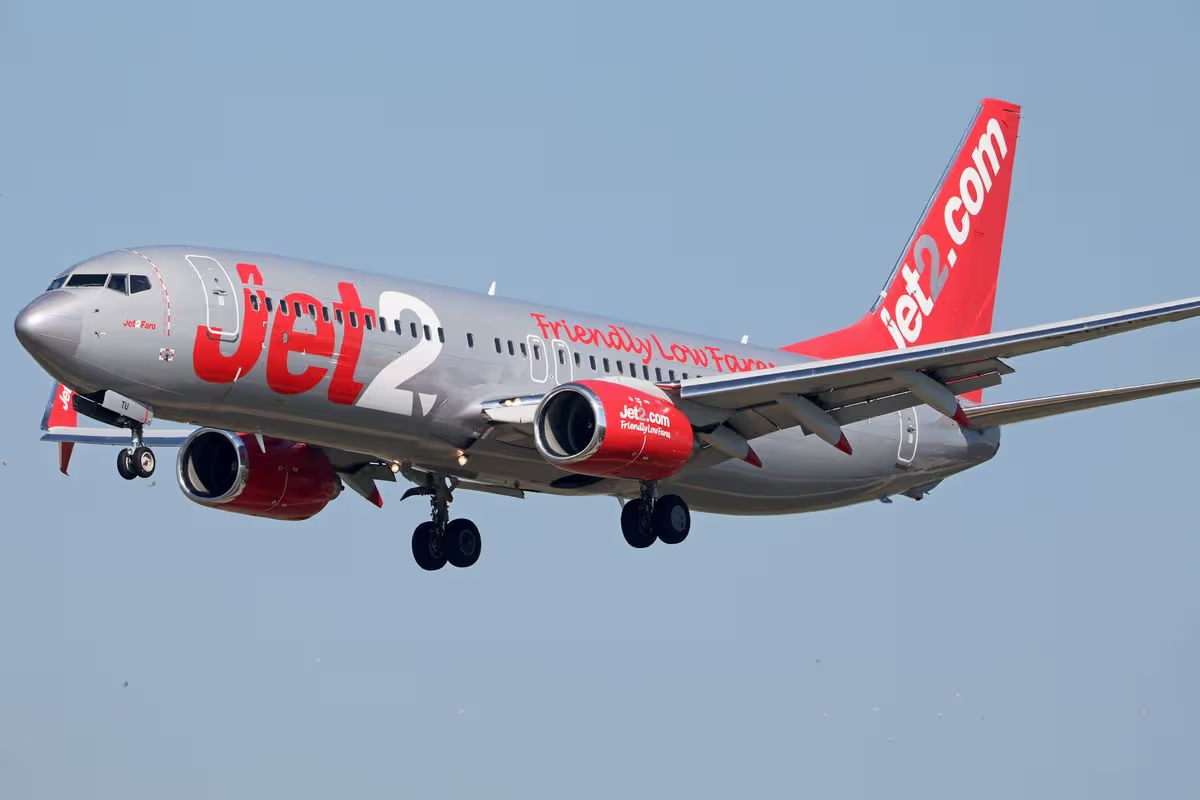
A EUROPEAN theme park less than two hours from the UK has been named the best in the world.
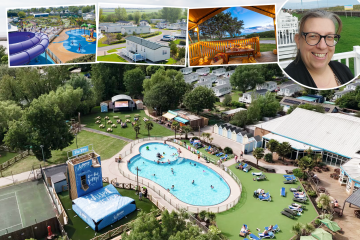
Liseberg in Gothenburg, Sweden is home to Europe‘s longest dive coaster and highest free-fall ride – and will soon be getting a new waterpark.
Sign up for the Travel newsletter
Thank you!
Liseberg theme park in Gothenburg, Sweden, has been named the best theme park in the worldCredit: AlamyLiseberg theme park is getting a new waterpark which could open this yearCredit: LisbergInside, it will feature 19 water slides and a “dynamic river”Credit: Lisberg
Follow The Sun’s award-winning travel team on Instagram and Tiktok for top holiday tips and inspiration.
Named the top theme park by Blooloop, Liseberg has over 40 rides and attractions which include the new £87million Oceana waterpark.
Following a fire in 2024, plans for the waterpark were revised and now the attraction is expected to open either this year or next year.
The Oceana waterpark will feature 6,000-square-metre of indoor pools and 4,000-square-metres of outdoor water attractions.
The new attraction will be able to host up to 1,750 guests at any one time, across both the indoor and outdoor areas.
A café, a shop and a restaurant will be on-site as well.
Last year, the theme park revealed a new family attraction called Stormvåg (Storm Wave) which will open this summer.
The new Stormvåg (Storm Wave) ride will be a family swing ride, with a boatyard theme.
Liseberg can be found on a forested hillside and has a number of different areas including Rabbit Land which is dedicated to the park’s green rabbit mascots and features gentle rides for little kids.
The park has a number of different areas including Luna Park which is a retro space themed area and another area is themed around Nordic mythology.
Thrill rides include a wooden rollercoaster called Balder and a launch rollercoaster called Helix.
There will be both indoor and outdoor attractions at the waterparkCredit: LisbergThe new attraction will be able to host up to 1,750 guests at any one timeCredit: LisbergThere will also be a café, a shop and a restaurantCredit: Lisberg
Unlike other theme parks in Europe, visitors have to navigate around the theme park using escalators due to its hillside location.
Tickets to the park cost £29.30 per person, and that includes unlimited goes on the rides.
For those wanting to extend their time at the park, there is a hotel as well – The Grand Curiosa Hotel.
The hotel can be found at the park’s entrance and boasts 457 rooms.
Inside, there is an 18th century whimsical and ‘curiosity’ theme with a slide in the lobby and even a carousel in the restaurant.
Each floor has its own theme ranging from the ocean to mythical creatures and is meant to reflect the curiosity of explorers from the 18th century.
There will also be a new family attraction called Stormvåg (Storm Wave) which will open this summerCredit: LisbergThe theme park features over 40 rides and attractions in totalCredit: Alamy
There is also a cinema room in the hotel, as well as playrooms.
Rooms at the hotel cost from £107.97 per night.
The easiest way to get to Liseberg is by flying to Gothenburg, which takes just under two hours and costs as little as £13 per way for a one-way flight in April from either London or Edinburgh.
Then from the airport it is about 20 minutes on public transport to the park, or if you are travelling to the park from central Gothenburg it takes only 10 minutes via public transport.
You can even stay at The Grand Curiosa Hotel without going to the theme park, so it makes the ideal base for exploring the city of Gothenburg as well.
In other attraction news, the UK’s best theme park’s £12million Viking-themed land to open next month.
NEW travel rules for Brits visiting Europe are being rolled out tomorrow, and it includes everything from airports to ferry ports.
The new rules require all non-EU nationals to register their details like fingerprints and facial images before going abroad – but it’s set to cause chaos as some countries aren’t ready.
Sign up for the Travel newsletter
Thank you!
The deadline for EES is set to be fully operational is tomorrowCredit: AlamyIf you’re heading to the beach this summer you could experience delays at the airportCredit: Alamy
The EU’s Entry/Exit System (EES) started a phased rollout on October 12, 2025 in 29 European countries and will be fully operational as of tomorrow – April 10, 2026.
EES is replacing the need for a passport stamp by automatically checking when a person enters and exits an EU country.
Non-EU nationals – which includes Brits – will be required to register their details on their first visit to a Schengen area country.
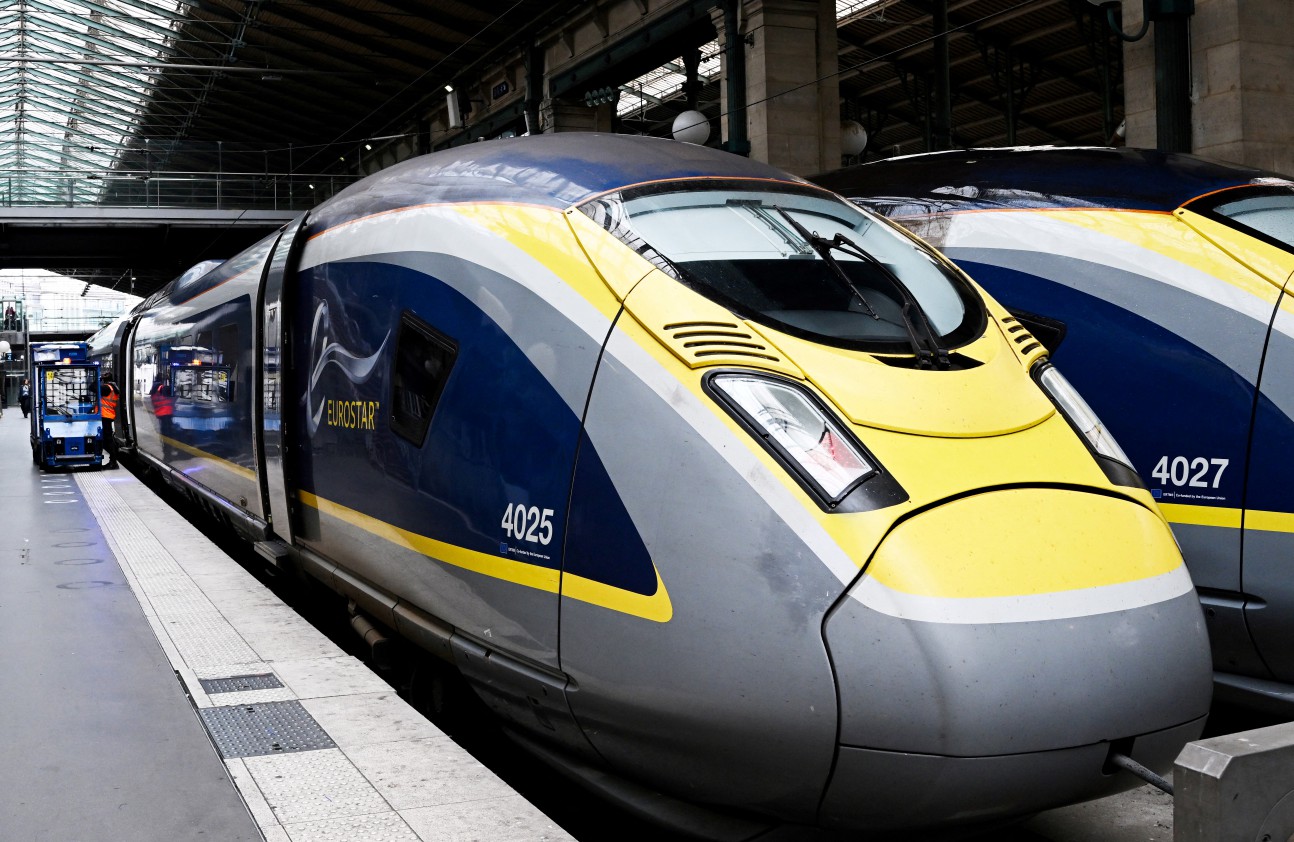
This is done by using the EES machines at airports, ferry terminals and the Eurostar to log fingerprints, facial images and scan passports.
Up until now, not every traveller has had to register with EES, but from tomorrow, that will change.
Even through the phased process, it hasn’t been smooth, and there have been reports of long queues across Europe with travellers at airports waiting for hours to register with EES.
Travel Reporter Alice Penwill spent three hours getting through the arrivals hall at Lanzarote Airport last month.
With summerholidays on the horizon and lots more Brits going abroad than off-peak season, officials have even called for the EES to be delayed until later in the year.
Advantage Travel Partnership chief executive Julia Lo Bue-Said told Travel Weekly just two days ago that there are still “significant issues” with EES.
She added: “While we understand the importance of modernising border processes, a smooth rollout must be prioritised in order to avoid major travel chaos at peak periods.
“With very high demand for travel over the upcoming summer holiday period, we are deeply concerned about the impact delays could have at a time when it is vital we maintain high consumer confidence within a travel sector facing global uncertainty and rising costs.”
Reporter Alice Penwill queued for three hours in Lanzarote Airport
Ryanair boss Michael O’Leary called EES “a shambles” and called for EES to be delayed “for five months” until the end of September to ease congestion.
To avoid the predicted travel chaos, some airports are preparing to open Brit-only border control queues in the hope of easing wait times.
The Spanish operator, Aena, said it would adapt security and border control for Brits at Ibiza, Menorca, Malaga and Palma, Majorca airports.
It’s not just airports, ferry terminals and the Eurostar using EES – but reports state that these will actually miss tomorrow’s deadline.
Visa HQ reported that France’s Ministry of the Interior has postponed full EES checks at border points like the Eurostar terminal in St Pancras and the ports of Dover and Calais.
French authorities said that travellers on Eurostar, Eurotunnel Le Shuttle and cross-Channel ferries will not be asked to provide fingerprints or facial images as the technology is not yet in place.
At the Port of Dover, only lorry drivers, coach and foot passengers are registering with EES.
The EES system has been “paused for several weeks” because reportedly, ‘software integration tests failed and physical booth space is still inadequate’.
Here are Sun Travel’s top tips for those heading on holiday this summer and are likely to be caught up in EES chaos…
Book a seat at the front of the plane. If you want to get to border control before the rest of the passengers on your flight, then by being at the front, you’ll be able to get off first.
When you’re booking, it might ease wait times if you go head out on one of the first flights of the day There are generally fewer scheduled flights and they experience less disruption. So if you get an early flight, there’s less likely to be a backlog.
If you are taking a connecting flight, we’d advise to anticipate delays Of course this varies from airport to airport, but some travellers might find it will take longer to get through because of the EES requirements.
If you can go to a bigger airport and take a longer road transfer, it could be worth it. At a larger airport there’s likely to be more EES machines than at one of the smaller ones.
If you have children, or are generally just bored of queues (and who can blame you?) – think about entertainment. It could be worth setting the kids up with an iPad or something that will keep them occupied.
For those who are disabled, make sure to let the airline know in advance as you would usually. After landing, staff should escort you straight through to the front of border control queues.
Quite simply, if you are going to be waiting in line for hours, then you want to be comfortable. So before landing, go to the toilet on the plane.
A tourist in Tenerife bought a meal abroad for a family of seven, but people were left floored by the bill. Gemma Loveden was taken aback when she saw the cost
07:49, 09 Apr 2026Updated 07:49, 09 Apr 2026
The tourist in Tenerife was left floored by the bill (stock image)(Image: Getty Images/iStockphoto)
Lots of people visit Tenerife to soak up the sun and enjoy a much needed break abroad, but the cost of food has left some a little floored. Mum Gemma Loveden previously took her family of seven for a meal out in the Canary Islands hotspot, and the cost was quite unexpected.
When visiting Tenerife, the family opted to sample treats from steak to pizza, and they washed their food down with drinks when they soaked up the holiday atmosphere. Despite the prices likely being on the menu, the family were left gobsmacked by how reasonable the bill was when it was presented to them at the restaurant.
She shared a clip, stating: “Evening meal this evening cost €54.84 (around £45)”. She wasn’t the only person who was impressed by the value either.
Content cannot be displayed without consent
After the clip was shared, several people commented to share their thoughts. People were stunned by how cheap it was.
One user admitted: “That would be £150 easy in Turkey.” Another wrote: “How? That’s amazing!”
A third commenter added: “Good price. We normally pay roughly €50 to €60 for three people.” Meanwhile, a fourth exclaimed: “Amazing value, and your kids seem very well behaved too. That’s amazing.”
Others were also impressed with her children’s table manners. One noted: “Love their table etiquette. Great parenting.”
Someone else also replied: “That’s amazing. I live in Cyprus. It would be much more than that.”
While it’s no secret that the cost of a lot of things has increased lately, food is generally considered reasonably priced in Tenerife. When compared to the rest of Europe, it’s believed to be one of the most affordable places to eat.
Obviously, holidays can be as cheap or expensive as you choose to make them though. Despite this, you can bag some budget meals when you’re out and about.
Dining out is popular with tourists, with budget meals reported to range from €6 to €15 and mid-range meals averaging €20 to €40 per person. This is considered to be excellent value when compared to other major European cities.
If you’ve never been to Tenerife, it’s a popular destination due to its “eternal spring” climate. The island offers year-round sunshine and warmth and it’s just a few hours’ flight from mainland Europe.
Many people love it as it homes a diverse mix of affordable beach resorts, volcanic landscapes (including Mount Teide), vibrant nightlife and family-friendly attractions. It’s popular with those who enjoy a spot of winter sun too.
When you get into a van with an Englishman, five Irishmen and a Scotsman, you know someone is going to end up looking silly. For the next few days, my aim is for it not to be me. The van is taking us from busy Málaga to remote Andalucía for four days of gravel biking, something I have never done and for which I am not sure I am cut out.
Most of my cycling experience is limited to a flat five-mile commute through London, or long-distance road touring holidays. I love sailing across smooth asphalt, and have always been slightly snobby about the rough stuff. Why bump along when you can glide?
My trepidation levels rise further when it becomes clear my companions are all veteran gravel and mountain bikers who have been training for this tour. They are mostly medical professionals – doctors, dentists and physiotherapists – which will be good news if something goes wrong, but also means they are all fitter than I am. I can see I have bitten off more than I can chew.
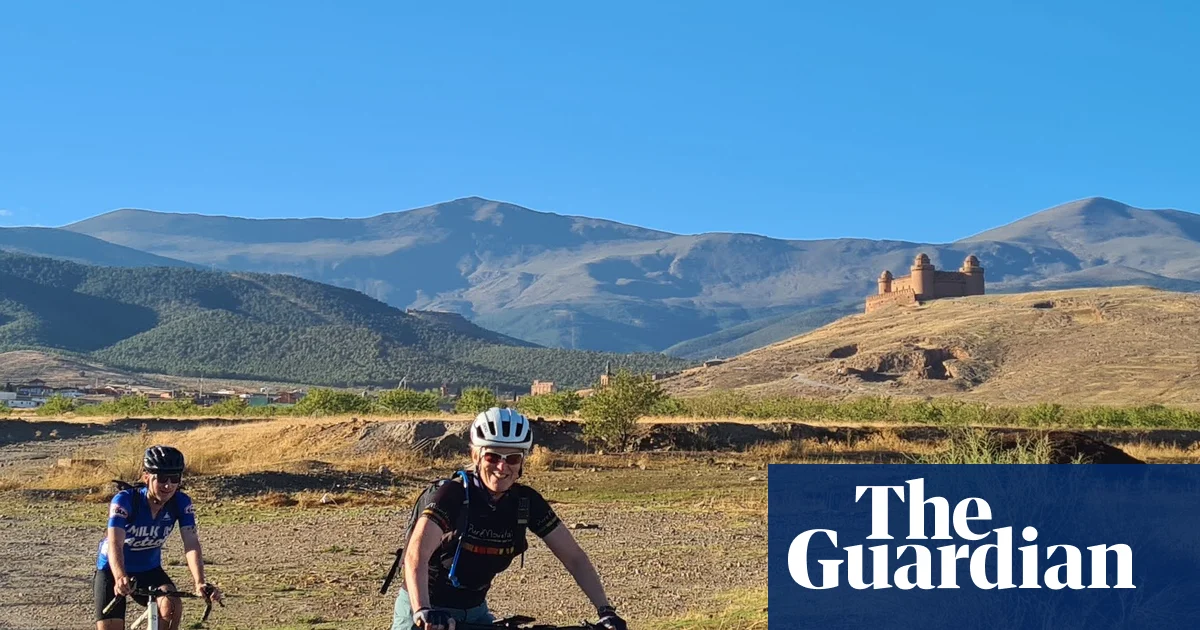
We are deposited on the northern edge of the Sierra Nevada mountain range, where our tour guides, Tim and Jenny, greet us with beers and booklets showing what’s in store. The headline figures: about 60km a day with a daunting 1,400 metres of climbing and descending.
The bike I’m borrowing is much lighter than my own, with tyres twice the width, and drop handlebars splayed out to the sides for extra control. The gearing goes much lower than I am used to, meaning even the steepest slopes should be – eventually – surmountable.
Downhill sections for gravel bike novices proved technically demanding. Photograph: Pure Mountains
The next morning we ride out north towards the Sierra de Baza national park on what my companions refer to as “champagne gravel” – essentially a firm, flat road with a scattering of small stones across it. We breeze across the arid terrain, and past the derelict film set that played the town of Flagstone in Once Upon a Time in the West. The dramatic empty landscape has drawn countless location scouts to the area, and has appeared in Sergio Leone’s Dollars trilogy, Dr Zhivago and a KLF music video.
As we begin to climb through almond groves and into the first proper mountains of the week, the group strings out, with Tim leading the keenest and fastest at the front, and Jenny on an ebike with the stragglers – including me – to make sure nobody gets lost. We regroup every time there’s an unsigned turn, and to refuel with muesli bars and dried fruit.
As we climb, Jenny and the others offer me advice before my first ever gravel descent: hands on the drops so they don’t get knocked off if I hit a bump; weight as far back as possible; heels angled down on my pedals and hips balanced just above the saddle; don’t ride too close to the person in front; use both brakes at the same time; don’t look at the views in case I miss a turn; remember to breathe. It turns out there are a lot of ways to lose control.
Although I am nobody’s idea of fast, I make it down in one piece, but by the time we reach our next hotel, I am sore in muscles I didn’t know I had.
It is notable how empty this part of Spain is; the only cars we saw were when we stopped for a coffee in Gor, one of the main villages visited in the notoriously brutal annual 800km Badlands gravel race. But unlike the teeming beach towns on the Costa del Sol that have seen anti-tourist protests, this quiet part of Andalucía is desperately trying to attract more people, and we feel very welcome. One sign reads: “¡Macrogranjas no, turismo sí!“ (“Megafarms no, tourism yes!”)
Day two is even quieter, with not a single car seen all day. This is just as well, as the day starts with a climb of 1,000 metres up El Chullo, the tallest peak in the Almería region. We wind along a single track path past piles of rocks and holes dug by rootling wild boar before stopping near the summit for a lunch of ham and cheese bocadillos. Today’s descent is easier, and I begin to relax, watching the other riders to follow their lines, although I still find myself forgetting to breathe because I am concentrating so hard.
Day three also begins with a 1,000-metre climb, with glorious views unfolding as we make our way round switchback after switchback and up past the treeline to a plateau. I am beginning to relax – I could do this every day. But what I haven’t banked on is the descent on bone-shuddering roads so bumpy they drew complaints from the professionals in the 2023 World Gravel Series. By the end of the day, my wrists ache. One of my doctor companions tells me it’s because I’m still too tense, but I don’t think I was the only one quietly relieved to hit the asphalt road back to the hotel.
Gravel bikes were ideal for the dirt tracks of the back country areas of Andalucía. Photograph: Pure Mountains
Our final day turns out to be the most dramatic. We ride along dry ramblas, or riverbeds, which provide a new challenge with jungle-like foliage hanging above us and muddy stretches that feel like riding through porridge.
The clouds, which have been menacing us all day, suddenly break and start to soak us. As we grind our way up through the mud, we suddenly see water come round a corner upstream. As the trickle turns into a gush and spreads across the riverbed, turning the porridge to soup, we keep riding. My wheels spin in the sand at points, but I have learned to keep pedalling through it and use my balance to stay upright, rather than to brake or turn.
Tim takes charge and marshals us, giving directions by radio and guiding people uphill until everyone is safely out of the way of the rising waters, and one soggy climb later we are greeted at our final hotel by Jenny with a van full of cava. As we drink, one of the Irish doctors jokes: “Was this what you signed up for?”
I look down at my drenched shoes, filthy bike and sore hands. My face is caked with mud. I have ended up looking silly, but it doesn’t matter. I can see that my snobbery about gravel biking was stupid – I have ridden routes a road bike could never have handled, and had adventures that would never have happened on asphalt. There were plenty of literal bumps in the road on the way to my gravel conversion, but it turns out they’re part of the appeal. Why glide along when the bumps are so fun?
The five-night Sierra Nevada gravel bike tour was provided by Pure Mountains, which provides self-guided tours from £870pp and guided tours from £1,090pp
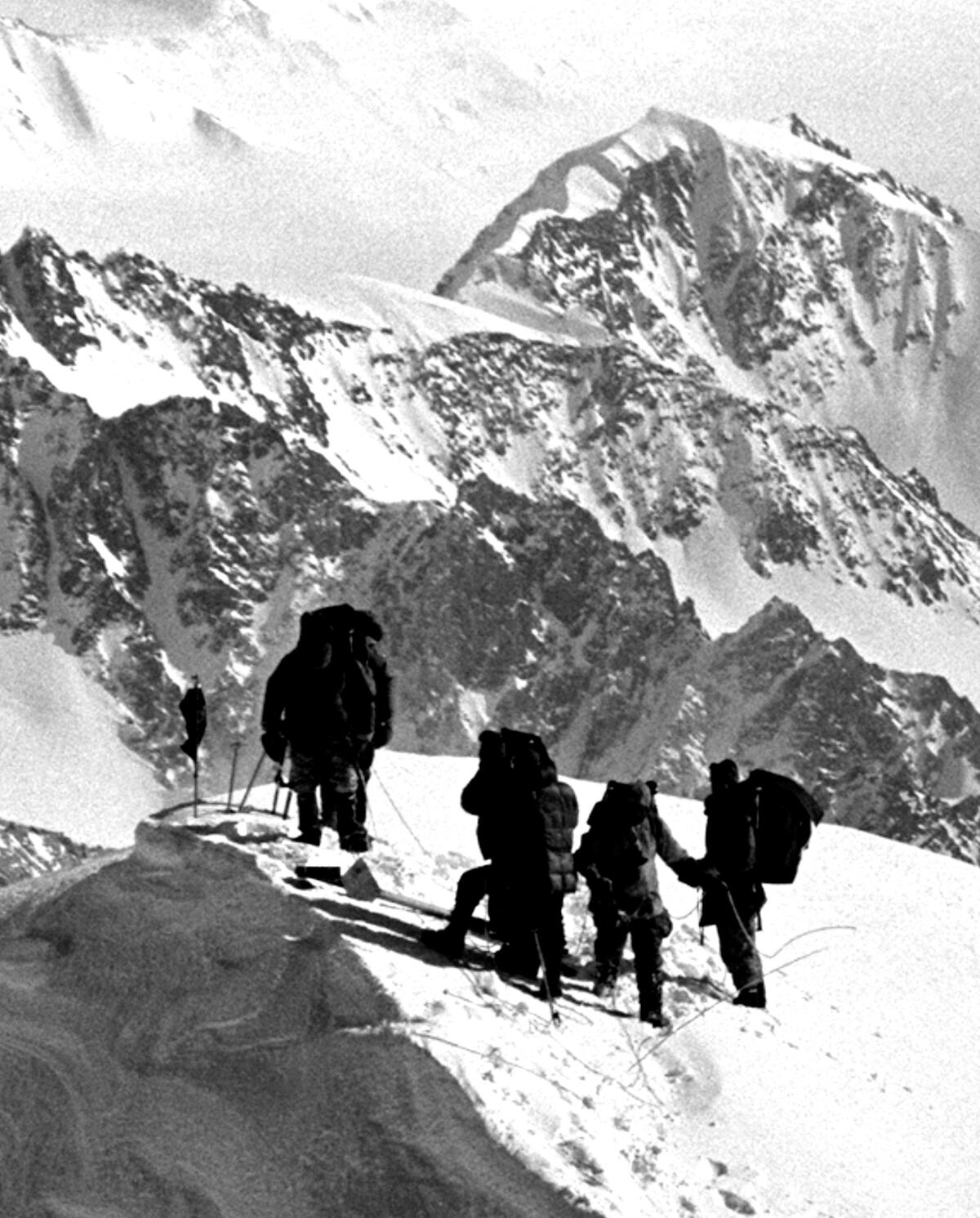
“We were standing in the jet stream, on the edge of space,” Whittaker wrote in his 1999 memoir, “A Life on the Edge.”
He returned home a hero, with his picture on the cover of Life magazine, a White House fete and unexpected celebrity. And though life off the mountain didn’t always go smoothly, he disdained regret.
“If you stick your neck out, whether it’s by climbing mountains or speaking up for something you believe in, your odds of winning are at least fifty-fifty,” he wrote. “On the other hand, if you never stick your neck out, your odds of losing are pretty close to 100%.”
An adventurer until the end, Whittaker died Tuesday at his home in Port Townsend, Wash., his son Leif confirmed to the New York Times. Whittaker was 97. .
On March 24, 1965, Robert F. Kennedy, left, stands atop Mt. Kennedy in Canada after placing a black flag in memorial to his late brother, President John F. Kennedy. With him were Jim Whittaker; William Allard, a National Geographic Society photographer; and George Senner, a ranger.
(Doug Wilson / Associated Press)
He was 34 when he scaled Everest, a feat that shaped much of the rest of his life. His Washington state license plate read 29028, the generally accepted height of Everest when he climbed it. (GPS surveys later put it at about 29,035 feet.)
He was chosen for the expedition by its leader, Swiss mountaineer Norman Dyhrenfurth, because of his experience in climbing under icy conditions, including numerous summits of Mt. Rainier near his Seattle-area home.
But Everest, first scaled in 1953 by New Zealander Edmund Hillary and Nepalese Sherpa Tenzing Norgay, was a far more formidable and dangerous beast. And even if the Dyhrenfurth expedition was successful, only a chosen few of its 19 team members would reach the top. Still, Whittaker thought his chances were good.
“I’d trained hard, put 60 pounds of bricks in my backpack,” he told National Geographic Adventure magazine in 2003. “I swam in Lake Sammamish in winter to build up to the cold we would encounter.
“I didn’t know anyone who was in better shape.”
On only the second day of the group’s climb from base camp, tragedy struck when a giant section of an icefall — a glacier formation resembling a frozen waterfall — shifted, crushing team member Jake Breitenbach.
“I had told everyone back home that Everest was not a difficult climb technically; the only problem was the lack of oxygen and the weather,” Whittaker wrote in “Life on the Edge.” “Now it had killed one of us, and we’d only just begun.”
Because the only way to get back to base camp was via that icefall, Whittaker chose to stay above it on the mountain for five steady weeks as more camps were established up Everest. He lost 25 pounds and a considerable amount of strength due to the thin air.
Still, he was in better condition than many of the other climbers, and Dyhrenfurth chose him for the final assault. He and Gombu left the last camp in the middle of a windstorm, with a scant supply of oxygen.
How hard was it to breathe? “Put a pillow on your face, run around the block, and try and suck oxygen through that pillow,” he said. It was so cold, one of his eyeballs froze, making it unusable.
Reaching the summit after several hours, they stayed only long enough to take pictures and plant flags as 50-mph winds whipped around them.
“When you are up there, you are not ecstatic, you are not afraid,” he told the Los Angeles Times in 2013. “You’re really not anything. But in the back of your mind, you know one thing: You gotta get off. Half of the climb is getting up, the other half is getting down.”
James Whittaker was born on Feb. 10, 1929, in Seattle, about 10 minutes before the birth of Louie, his twin brother. As the boys grew up, they took to rough-housing around the house, much to the chagrin of their mother.
“I believe that command to ‘Go outside and play’ is what started Louie and me on the path we have taken every since,” Whittaker wrote.
He was active in Boy Scouts and as a teenager joined a mountaineering club that sponsored climbs on the nearby Olympic and Cascade ranges. He tested himself on increasingly higher peaks, relishing moments such as breaking through cloud layers.
“I think nature is a great teacher,” he told the Seattle Times in 2013. “Being in nature that way is a good way to find out who the hell you are.”
After finishing West Seattle High School, Whittaker went on to Seattle University, graduating in 1952. He was promptly drafted into the Army, but his mountaineering experience led him to be assigned to the Mountain and Cold Weather Training Command in Colorado instead of combat duty in Korea.
In 1955, he became the first full-time employee of the Recreational Equipment Cooperative (later called REI) when it was housed in a 20-by-30-foot space above a Seattle restaurant. In his first year, he expanded the co-op’s offerings into ski equipment and introduced new concepts — such as opening on Saturday mornings so customers could pick up equipment for weekend trips — that boosted sales.
Whittaker, pictured on April 12, 1975, in Seattle, shows some of the gear he would be taking for an expedition to climb K2 on the China-Pakistan border.
(Associated Press)
Because of his connection to the co-op, he was appointed equipment coordinator of the Everest climb, and REI agreed to keep him on the payroll during the expedition.
In July 1963, he and other members of the Everest team, including Gombu, were presented the Hubbard Medal of the National Geographic Society — which partially sponsored the expedition — by President Kennedy, four months before the president was assassinated.
Two years later, Whittaker led a climb up Mt. Kennedy, a nearly 14,000-foot Canadian peak named for JFK, with Sen. Robert F. Kennedy in the climbing party. The two men forged a close friendship that extended to the wider Kennedy clan. In subsequent years, Whittaker went on ski vacations with the Kennedys, was a guest at the family compound in Hyannis Port, Mass., and hosted gatherings in Seattle that included mountain climbing.
Whittaker organized Robert Kennedy’s 1968 presidential campaign efforts in the Pacific Northwest and spoke to him by phone only minutes before the candidate was fatally shot in Los Angeles. Whittaker caught a flight to L.A. and was at the senator’s hospital bedside when he died and then served as a pallbearer at the funeral.
In mountaineering, Whittaker was closely involved in more high-profile ventures. He led a 1975 expedition up the world’s second-highest mountain, K2, that failed to reach the top. His return expedition in 1978 was successful, though he chose not to go to the summit himself.
That same year, he decided to quit REI, partly because of friction with the co-op’s board. He had been president and chief executive since 1971, and when he left, the co-op was a $46-million business with more than 700 employees.
Whittaker throws out the ceremonial first pitch before a baseball game between the Mariners and the Angels in 2013.
(Elaine Thompson / Associated Press)
Income from an endorsement agreement helped keep him financially sound, but an investment in a new outdoor gear company proved to be a disaster. The financial irregularities of a partner, who was convicted of felony bank fraud, doomed the venture, and Whittaker was left holding the financial bag.
He was nearly wiped out but got back on his financial footing when a venture capitalist asked him in 1986 to be chairman of the board, with stock options, of a new company called Magellan. It was a pioneer in GPS consumer electronics and holds numerous patents in the field.
Appropriately, Whittaker called one of the chapters midway through his book “Roller Coaster.” But he finished it with “Life Well Lived.”
“If you aren’t living on the edge,” he wrote, “you’re taking up too much space.”
Whittaker is survived by his wife, Dianne Roberts, and children Bobby, Joss and Leif.
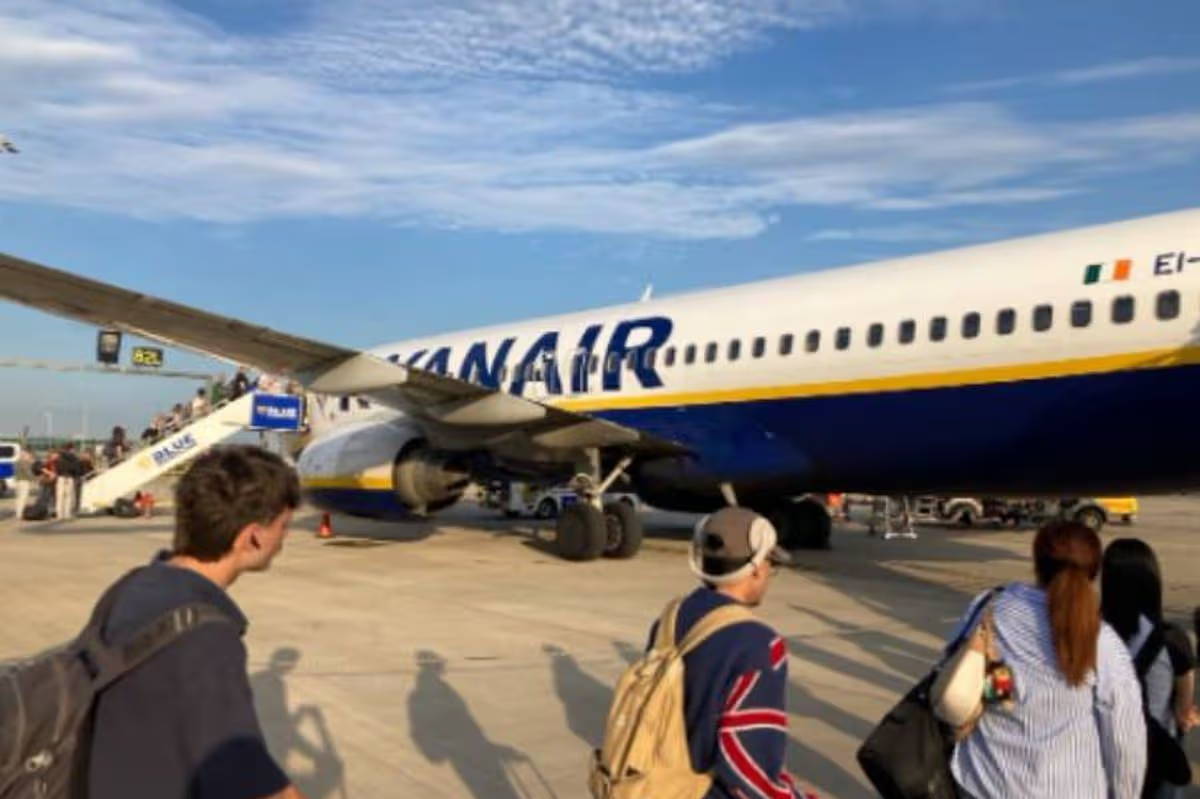
Budget airline Ryanair has told passengers they “do not look cool” wearing sunglasses on board in a cheeky social media post which sparked lively reactions from British holidaymakers
02:01, 09 Apr 2026Updated 02:03, 09 Apr 2026
Ryanair, which flies from Birmingham, is a go-to for British holidaymakers and tourists each and every summer.
Ryanair has issued a “please note” as it urges passengers to cease wearing a particular item while on board.
Ryanair, which operates from several UK airports including Belfast, Birmingham and Manchester, is a favourite amongst British holidaymakers and tourists throughout the summer season. With Easter now passed and attention shifting to the middle months of the year, the budget carrier has issued an important update for its passengers. It stated: “Please note: Passengers do not look cool wearing sunglasses on board.”
Ryanair competes with Jet2, Easyjet and TUI, alongside the likes of British Airways, Wizz Air, Lufthansa and other budget and mid-range domestic and international operators, Birmingham Live reports.
Reacting to the warning, one holidaymaker commented: “I have never understand why airlines don’t first board a plane, from the seats in the back. It will be a lot quicker boarding.”
Another holidaymaker posted online: “No mess with handluggage etc. Why would anyone sit in the plane longer than necessary? Because you have ‘priority boarding.'”
Another stated: “The biggest blight on most flights is “Carry on Luggage”. It slows down the whole boarding process as well as the exit procedure. Passengers at the front half of the aircraft having to put their luggage in the back half of the aircraft causing chaos when landing. Especially as the numpties who insist on standing immediately on touch down, and block the route to your bag.”
One amused commenter laughed: “It’ll come as a blow to Tom Cruise – I guess he’ll be cancelling all his Ryanair bookings then,” referring to Ryanair’s post featuring a snap of the Hollywood star sporting sunglasses as Maverick in Top Gun.
“Gotta shield our eyes from that highlighter-yellow cabin,” another holidaymaker quipped on social media.
“Looking at Ryanair surroundings requires a filter I’m afraid,” a further passenger chuckled in response to the Facebook post.
Another weighed in with: “If it’s good enough for the driver, it’s good enough for the passengers.
“You dont look cool wearing them in youre house either…..,” came yet another response.
It comes after we published a list of items Ryanair has now banned tourists from packing in their suitcases and carry-on luggage. These include guns, firearms and other devices that discharge projectiles. Devices capable of, or appearing capable of, causing serious injury by discharging a projectile are also on the list.
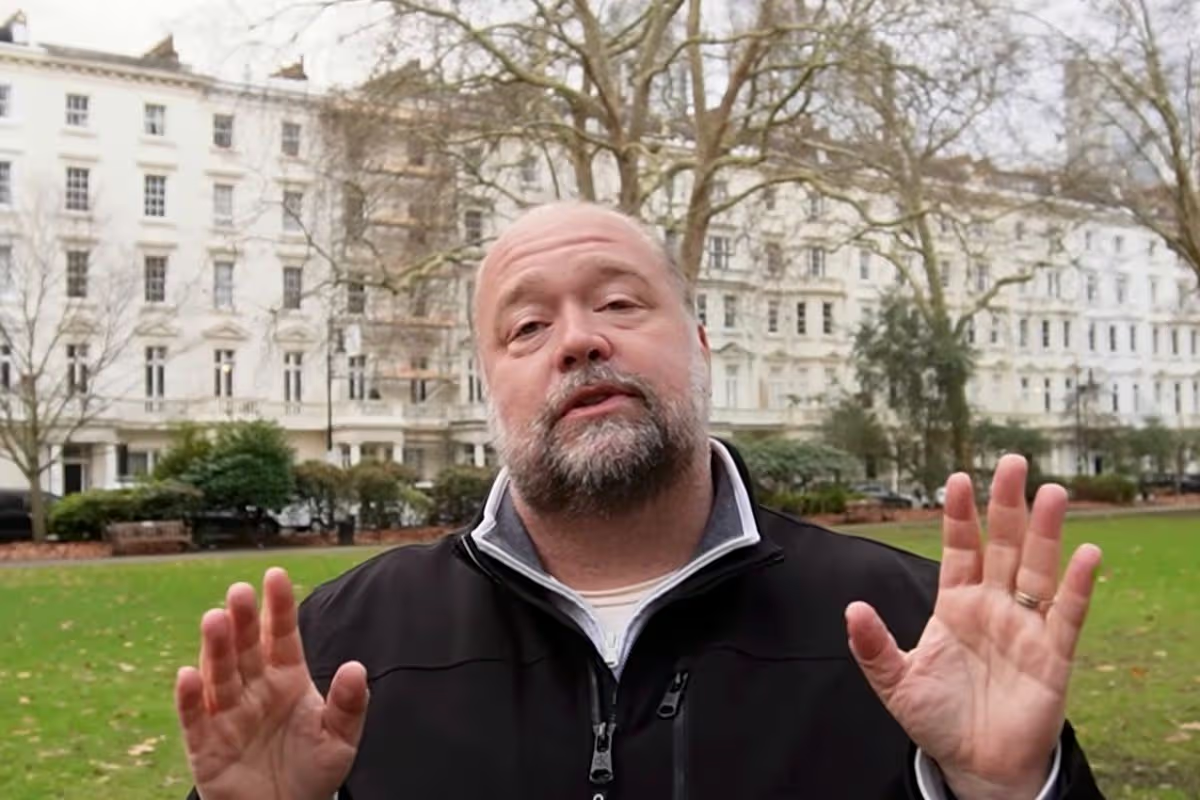
YouTube travel expert Mark Wolters, who has travelled to more than 80 countries, says there are two areas of a hotel guests should avoid staying in – and they may even consider asking to move rooms
Robin Cottle Assistant Editor Trendswatch
19:49, 08 Apr 2026
Mark Wolters offered his tips for which areas of hotels to avoid(Image: WoltersWorld/YouTube)
A travel expert has claimed there are two parts of a hotel where guests should never stay.
Globe-trotting YouTuber Mark Wolters, who runs the channel Wolters World, suggested people should even look to move if they are situated near one of the areas in question.
Mark has visited more than 80 countries so knows a thing or two about staying in hotels, what to expect and what should not be considered acceptable.
While it is generally considered poor etiquette to complain in the UK, he uploaded a video detailing the specific situations where people should be asking to change room in their hotel.
Two of those scenarios are when the room is located near the lifts (or even an ice machine) or by the stairwell.
Speaking on his channel, which has 1.17 million subscribers, he said: “You might want to think about your sleep. If you’re by the elevators (lifts) or ice machine, those are heavy traffic, heavy noise areas. No matter what time people are coming home, they’re using the elevators, right. You’re going to have the drunk people coming back late, the people coming back from the wedding, or the little kids going to the pool in the morning, you’re going to have a lot of movement there.
“So if you want to get sleep, say, ‘can I move my room away from the ice machine or away from the elevator because that might make it a little bit harder to sleep.”
He went on to recommend asking the front desk to move if you’re hotel room is by the stairwell, which he branded a “weird access point”.
Mark said: “Another thing to think about is if you’re by the stairwell. The stairwell is an odd access point. It might have little weird noises, you might want to consider that.”
The well-travelled YouTuber suggested there are a number of other occasions which might persuade tourists to ask their hotel for a switch in rooms.
One of these could be if you feel generally unsafe. This could be an issue with the windows or the door or even your neighbours in the hotel.
Mark explained: “You do not need to explain to them why this makes you feel uncomfortable. It’s about your safety. Something of the things to look out for – the door doesn’t feel quite secure, check the locks, look at the peephole.”
Another big issue could be if the room is not clean. This could include the bed not being made or something unsavoury being left in the toilet.
He added: “We’ve seen lipstick on the mirror in the bathroom. We were like: ‘This obviously hasn’t been cleaned very well.’ These kind of things are important to bring up because sometimes rooms are missed by the cleaning crew or people left a little bit later, these things do happen.
“Maybe you’re ok with the cleaning crew coming up but do you want to wait two or three hours? That’s why it might be better to ask for a new room instead of waiting for them to clean those rooms because they don’t clean those rooms in five minutes.
“When I’m talking about cleanliness I’m also talking about the smell.”
Major strikes across Italy are set to disrupt airports and other transport routes, potentially affecting large numbers of UK travellers
Robert Rowlands Deputy editor, money and lifestyle, content hub and Maria Ortega
17:52, 08 Apr 2026Updated 17:53, 08 Apr 2026
Naples International Airport is one of the locations set to be affected by disruption(Image: NurPhoto, NurPhoto via Getty Images)
A series of strikes is planned throughout April in Italy that could cause significant disruption for British holidaymakers. According to official figures from the Ministry of Transport, the month will see 14 strikes spread across six days. The nation gets around five million visits from UK travellers every year, according to official data.
The aviation sector will be affected in April with three major tourist cities facing action, and there will also be a series of strikes over public transport. The first strike date will be on Thursday, April 10, according to Italian newspaper Corriere della Sera. Air traffic control, ground staff and flight attendants are set to strike on that date.
Il Gazzettino reports that eight strikes will hit the aviation sector simultaneously that day. The walkouts – almost all lasting four hours (1pm to 5pm) and taking place nationwide – are set to involve key locations such as the area control centres in Rome and Milan and major airports including Naples, Malpensa in Milan and Rome Fiumicino.
Travellers are being warned that delays and cancellations could occur. People are being urged to monitor travel information before travelling.
Italian media reports say the action on April 10 could have potential knock-on effects on flights and routes throughout Italy. Other strikes then follow later in the month.
Reports say that between April 13 and 24, there will be a further five strikes in local public transport, all regional or company-specific. The cities affected span a wide geographical area: from Naples (Eav) to Florence (Gest), from Vasto to Milan, where the ATM group will cease operations for eight hours on April 24.
There will also be a strike in the rail sector on April 13, according to local media reports. It is set to affect on-board catering services rather than train operations, and a maritime walkout (April 17) in the Strait of Messina, with an eight-hour stoppage by BluJet staff.
On April 19, Gest tram staff in Florence will strike for four hours from 1pm to 5pm, while on April 20, public transport in Chieti will be disrupted from 9am to 1pm. A public transport strike will also take place in Lombardy on April 24 in Milan when drivers and train operators strike from 8.45am to 3pm.
Elsewhere, from April 14 to 18, freight transport in Sicily is expected to grind to a halt, with protests likely to impact logistics and product distribution across the island. On April 16, press workers will strike in protest at the failure to renew the national contract, while the following day, April 17, doctors and healthcare workers will also walk out. Unions are condemning the failure to renew their contracts.
Airport strikes on April 10 in Italy
Italian broadcaster Espansione TV reports April 10 in particular promises to be a challenging day for those planning to travel by air. The nationwide strike in the sector is expected to affect several of Italy’s most significant airports. Delays, cancellations, and potential operational disruptions cannot be ruled out during the protest period. Passengers are urged to monitor their flight status in real time via the airlines’ official websites.
A 24-hour national strike by railway infrastructure maintenance personnel is also scheduled for Saturday, April 11. The protest could affect the smooth running of services, particularly in the handling of breakdowns and technical interventions, the broadcaster reports.
The broadcaster says that April 24 is also set to be a challenging day for public transport users across Lombardy. The Confial-Trasporti union has announced a fresh strike, which will hit services running in the Milan, Como, and Monza areas particularly hard, with the ATM Group bearing the brunt of the action.
The walkout will run for 8 hours, it is reported. In Milan, tram, metro, and bus services face disruption between 8.45 am and 3pm, while in Monza, passengers may experience interruptions from 2.50 pm through to the end of service.
The Como-Brunate funicular, run by ATM, is also facing potential disruption from 8.30 am to 4.30 pm.
The sunny spot has become a hit with Brits thanks to its warm weather in the spring and inexpensive cost of living, as well as gorgeous beaches just a few hours from the UK
TUI is opening its very first hotel in Bhutan next month.
Called TUI Blue Paro Taktsang, it will be nestled in the Himalayas and in a small village in Paro which is found west of the country’s capital, Thimphu.
Sign up for the Travel newsletter
Thank you!
TUI Blue will open its very first hotel in Bhutan next monthCredit: TUIFirst-look images reveal a huge outdoor dining terraceCredit: TUI
Inside the hotel will be 32 suites, a restaurant, two bars, a ballroom, indoor swimmingpool, spa and gym – all decorated with traditionally Bhutanese design.
Rooms will have incredible views of the mountains and nearby waterfront.
The first-look images also reveal a huge outdoor dining terrace.
The landlocked country betweenIndiaandChina is known for pretty temples, Himalayan mountains and being a very happy place to live.
The hotel is near some major landmarks like Tiger’s Nest Monastery, whose official name is Paro Taktsang.
It’s a sacred Buddhist site which is perched 900metres high on a clifftop.
For any keen visitors, it’s only accessible by foot and a round-trip hike takes between five to six hours.
Another nearby site is the Kyichu Lhakhang Temple, which is the oldest temple in Bhutan; its main chapel has roots as far back as the 7th century.
It’s also considered one of the most beautiful temples in the country.
Nearby is Ugyen Pelri Thang Palace, which is the private residence and often used by the Queen Mother.
Tourists can’t go inside, but visitors can still take in its incredible architecture and gardens from the outside.
Bhutan is nestled within the Himilayan mountainsCredit: Rui T Guedes / 500px
Check out our favourite holiday offers from On the Beach…
*If you click on a link in this box, we will earn affiliate revenue
Bellevue Club, Majorca
There are more pools than days of the week at the Bellevue Club in Alcudia. With 11 swimming pools, a 24-hour bar and a garden theatre offering evening entertainment, you’ll hardly want to leave this resort once you arrive. Nearby, there’s the family-friendly Alcudia Beach as well as the historic old town and promenade of Port D’Alcudia to explore.
This fun hotel has three swimming pools and several water slides to entertain the whole family. If zipping down slides wasn’t enough to tire out the children, they can enjoy the kids club and mini discos, whilst adults can unwind in the Turkish bath. Plus, the family rooms here feel more like an apartment, as they come with a handy kitchenette too – great for cooking up cheaper meal options.
This Calella hotel is the perfect base for a cheap and cheerful sun holiday, with comfy air-conditioned rooms just a few minutes’ walk from the bustling bars of Costa Brava. Make use of the hotel buffet stocked with plenty of family favourites like fresh salads, grilled meats and chips.
The Corona Roja Aparthotel sits on Gran Canaria‘s Playa del Ingles, one of the most popular beach resorts among Brits – and for good reason. Whether you’re the type to set off parasailing or prefer a sunset catamaran trip, there’s plenty on offer in this lively resort town.
Bhutan has revealed plans to build a new airportCredit: BIG-Bjarke Ingels Group
Bhutan itself is considered the ‘Land of Happiness’, but it won’t appear on any of the official Happiness Index.
Instead, Bhutan has goes by its own “Gross National Happiness Index” which focuses on factors like psychological well-being, health, education, good governance, ecology, time use, community vitality, culture and living standards.
The philosophy was introduced in the 1970s to focus on wellbeing and environmental conservation which is valued more highly than things like economic growth.
Just last year, Bhutan revealed plans for its new international airport at Gelephu complete with forests and yoga lounges.
Its initial design plans reveal a building that represents a mountain range with huge gardens and an open-air forest splitting the terminal in half.
One side will operate domestic flights, the other, international.
Across the four zones will be yoga spaces, outdoor lounges and even meditation and sound bath areas.
The hope is that it will open in 2029.
The best time to visit Bhutan is between March and May or September to December when the weather is at its most mild, which can be up to highs of 25C.
The best time of the year to avoid is June to August as this marks monsoon season when it’s humid with high rainfall.
Currently there are no direct flights between the UK and Bhutan with the average journey length taking around 15 hours with at least one stop.
A POPULAR free attraction in the UK capital is set to undergo a multi-million upgrade.
Under new plans, the free-to-visit National Gallery in London is set to undergo a major £750million project, including a new £350million wing.
Sign up for the Travel newsletter
Thank you!
The National Gallery will be getting a new £350million wing for post-1900 artCredit: Kin Creatives
The new wing will house 20th and 21st century art, which will be a first for the gallery as it doesn’t have post-20th century art.
Currently, the gallery is home to the country’s largest collection of paintings in the Western European tradition from the 13th to the 20th century, with works including paintings by Cezanne, Monet and Van Gogh.
Named Project Domani, the expansion is set to be the biggest change for the National Gallery in two centuries.
Inside the new £350million wing visitors can expect a “simple and clean” design with the main floor featuring vaults and arches.
On the upper floor, there will be more of a geometric design.
Judges of the design competition for the project noted that the new wing’s design is “innovative and beautiful”.
They added that this means the main floor of galleries will continue the theme seen in the Sainsbury Wing and North Galleries.
But then, in comparison, the upper floor will have its own style.
The judges said: “The thoughtful design of the external spaces, with links to Leicester Square, evokes an open visitor welcome which is further enhanced using Portland stone and stepped massing, which shows sensitivity to the surrounding streets and allows natural light to be drawn into the building.”
The new wing will be built on the site of the remaining part of the National Gallery’s campus at St Vincent House, which currently houses a hotel and offices.
The museum is also hoping to become the only one in the world to display just paintings.
An opening date for the new wing is yet to be announced.
Behind the huge project is Tokyo-based architecture firm Kengo Kuma and Associates (KKAA) – who designed the V&A Dundee – alongside two other firms.
The new wing will be home to 20th and 21st century art – a first for the galleryCredit: Alamy
National Gallery Chair of Trustees and Jury Chair, John Booth said that Kengo Kuma’s proposal is “a beautiful design inside and out, sensitive to our existing Grade I exteriors and distinctive gallery spaces, the new building will also help to unite two of London’s most important outdoor spaces — Leicester and Trafalgar Squares — by creating enticing new public realm between them”.
National Gallery Director, Sir Gabriele Finaldi added: “The new building will complete the National Gallery’s campus, adding distinction to some already distinguished buildings.”
Kengo Kuma said: “It is a privilege to join the National Gallery in this historic project.
“The National Gallery’s collection is a treasure of humanity, and to be entrusted with the expansion that will hold these masterpieces is a responsibility we carry with the greatest care and humility.”
The National Gallery is one of the world’s most visited art museums, welcoming around six million visitors a year.
And it is completely free to visit – though booking is recommended in busy periods such as the school holidays.
In addition to its vast collection of art, visitors can head to the Ochre restaurant, a cafe and shops inside the museum.
EUROSTAR has launched another huge flash sale with tickets starting at just £35 – but you’ll have to be quick. If you’re looking for your next European getaway, now’s the perfect time to book. The flash sale is across all Eurostar destinations, but the reduced tickets are only too five specific European cities. Travellers can…
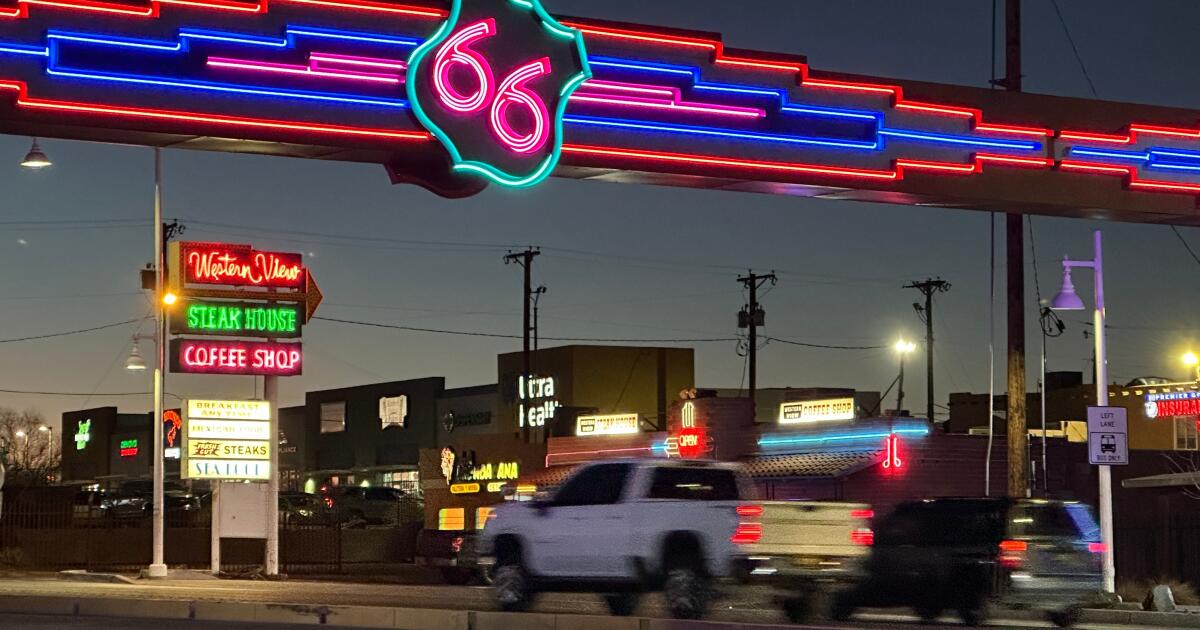
ALBUQUERQUE, N.M. — If you’ve ever planned to motor west and take the highway that’s the best, this might be the time: Route 66 turns 100 this year.
The Mother Road, as author John Steinbeck dubbed it, has evolved over the years from an escape for poor farmers fleeing the devastating dust storms of the 1930s to perhaps the quintessential American road trip that’s still delivering kicks.
Although there have been faster and more direct routes between the nation’s second- and third-largest cities for some time, Route 66’s neon still burns brightly and its vintage signs beckon travelers to restored motor lodges, classic diners and roadside attractions.
Each stop turns the wheels of the imagination, leaving travelers to contemplate what life was like for the people and communities that have made the road hum over the years.
Illinois
Chicago has long been one of the country’s economic engines, with access to international waters and railroads that linked all corners of the country. In the 1920s, Oklahoma businessman Cyrus Avery, known as the Father of Route 66, knew it wouldn’t be long before automobiles would dominate the transportation landscape, and the Windy City would be the perfect place to start the journey he envisioned.
A member of the federal highway board appointed to map the U.S. highway system, Avery opted to go with the number 66. He knew those double digits were ripe for marketing and could be seared into the minds of motorists.
For some travelers, the journey is fueled more by the food than the scenery, and there’s plenty to choose from — slices of homemade pie, thick shakes, cheeseburgers and an assortment of fried delights.
The Cozy Dog Drive In in Springfield, the Illinois capital, is one of the many diners that sprang up along Route 66, and its breaded hot dogs on a stick have stood the test of time. Third-generation owner Josh Waldmire says the recipe is a secret.
Waldmire’s grandfather, Ed, saw the concoction’s potential as fast and convenient road food and developed a system for frying the dogs vertically.
Missouri
Route 66 has its share of twists and turns, and it’s no surprise that a highway famous for its quirky roadside attractions would cross the nation’s most famous river on one of the more peculiar bridges known to modern engineering.
As the road nears St. Louis, the mile-long (1.6-kilometer-long) Chain of Rocks Bridge hovers more than 60 feet (18 meters) above the Mississippi River.
Engineers eventually built a straighter, higher-speed option, and a poor resale market spared the original bridge from the scrap heap. Today it’s reserved for pedestrians and cyclists.
A median in Missouri is home to St. Robert Route 66 Neon Park, which features orphaned neon signs that once beckoned travelers to stop at certain sites and businesses along the highway. Often handcrafted, they weren’t only markers for motels, cafes and gas stations, but were also folk art and symbols of local culture.
Kansas
The Sunflower State hosts only a short stretch of Route 66, but it packs a punch with the Kan-O-Tex Service Station in Galena. A classic example of roadside fare, the station served as inspiration for the animated 2006 Pixar film “Cars.”
Director John Lasseter and his crew took road trips along the route, digging into history and looking for elements that could bring the project to life. It was in Galena where they spotted the old boom truck that served as the basis for the character Tow Mater. The plot wasn’t far off, as so many once bustling towns — like the fictional Radiator Springs — nearly faded away after being bypassed by an interstate.
Kansas also is home to the Brush Creek Bridge, otherwise known as the Rainbow Bridge. It’s on the National Register of Historic Places and is one of few remaining examples of the concrete arched bridges designed by James Barney Marsh.
Oklahoma
There was a real danger for some who traveled the road, particularly Black motorists passing through inhospitable and segregated areas during the Jim Crow era. The Green Book — a guide first published in 1936 by Victor Hugo Green — listed hotels, restaurants and gas stations that would serve Black customers.
The Threatt Filling Station near Luther wasn’t listed in The Green Book, but it was a safe haven — not only for getting fuel, but for barbecue and baseball. Listed on the National Register of Historic Places, it was the only known Black-owned and operated gas station along Route 66.
Route 66 is littered with abandoned buildings and faded signs, but one example of the highway’s resilient spirit stands tall in Sapulpa, near Tulsa. The restored Tee Pee Drive-In Theater offers a step back into the 1950s, when the booming car culture helped spawn thousands of drive-in theaters nationwide.
Built in 1949, the drive-in officially opened in the spring of 1950 with a screening of John Wayne’s “Tycoon.” It was one of the few drive-ins at the time to have paved pathways. Over the years, it survived a tornado, a fire that destroyed the concession stand and break-ins before being shuttered for more than 20 years. It reopened in 2023.
Texas
Blink and you might miss it, but a stop at the Cadillac Ranch in Amarillo is a must for any Route 66 journey. For decades, visitors have been spray-painting the 10 vintage Cadillacs at the site and mulling the transitory nature of time as Bruce Springsteen did in his 1980 song of the same name.
It’s not a ranch, but rather a public art installation created in 1974 by the art and architecture collective Ant Farm. At first, the cars — which were half-buried front-down at a 60-degree angle — were used for target practice. Others would scratch their initials into the metal. The spray painting started later.
Arrive in Adrian and you’re halfway through your trip. Steps from a white line marking the midpoint of Route 66 is the Midway Cafe, where the “ugly pies” are anything but.
If you’re still hungry, head back to Amarillo for a 72-ounce (2 kilogram) steak and all the sides at The Big Texan. If you can finish the meal in an hour or less, it’s free.
New Mexico
More than half of Route 66 cuts through sovereign Native American lands, often tracing routes used by tribes long before settlers arrived. Much like the railroad in the 1800s, the highway opened the door to a new era of commerce, but it also fueled stereotypes about cultures along the way.
There are still faded and crumbling references to tipis and feathered headdresses at some stops along the historic highway. The symbols were easily appropriated for marketing by roadside vendors but weren’t indicative of the separate and distinct Native American cultures in the area.
Today, tribes are telling their own stories and showcasing their creations, whether it be pottery, fruit pies or poems.
Albuquerque boasts the longest intact urban stretch of Route 66. Those 18 miles (29 kilometers) pass through several neighborhoods and business districts, from historic Old Town to Nob Hill.
Some of the old motor lodges and neon signs along what is now Central Avenue have been restored. Other signs are being reimagined using hubcaps, elaborate lowrider-inspired paint jobs and New Mexico’s classic yellow and red license plates in a nod to the car culture that is very much still alive in the city.
Arizona
Musician Jackson Browne was taking his own road trip in the early 1970s when his car left him stranded in Winslow. The experience inspired the lyrics to the Eagles’ hit “Take it Easy.” But it’s certainly not the only song that is a must-have for a Route 66 playlist.
Bobby Troup created a classic American road anthem in the 1940s with “(Get Your Kicks on) Route 66.” Nat King Cole, Chuck Berry, The Rolling Stones and Depeche Mode carried it through the decades, each covering the song with their own flair.
While standing on a corner in Winslow, don’t be surprised if someone saunters up with a guitar and starts strumming favorites from their own road trip playlist.
Before leaving the state, the one-time gold mining town of Oatman features a Wild West atmosphere, daily staged shootouts and beloved burros. Oatman was a destination along one of the original alignments of Route 66 via a treacherous path through the Black Mountains, but it was later bypassed as part of improvements made in the 1950s.
California
Once a desert oasis, Roy’s Motel & Café in Amboy is a quintessential Route 66 landmark. The towering neon sign is one of the most photographed spots along the road. Inside, foreign currency left by international visitors lines one wall. Across the street, a clothing post decorated with shoes, shirts and other items juts up from the desert floor.
This stretch of the highway through the Mojave Desert offers a special kind of solitude. The pavement gets rough in spots and the landscape takes charge, showing off Joshua trees, wide-open spaces and the remnants of ancient volcanic activity.
Much of the area is undeveloped, meaning it looks a lot like it would have when Route 66 was commissioned in 1926.
After making it through oft-congested Los Angeles, the iconic Santa Monica Pier marks the end of the line, and it’s nothing short of a perpetual party with a steady stream of spectators and performers. Although many stretches of Route 66 have lapsed into decay, the breathtaking views of the Pacific Ocean are a reminder of the pursuits made possible by the road over the last century.
Bryan writes for the Associated Press. AP writers John O’Connor in Springfield, Ill., and Sean Murphy in Oklahoma City contributed to this report.
Pastry chef, baker and champion of whole grains Roxana Jullapat opened Friends & Family in East Hollywood nine years ago, a forerunner among a new wave of artisanal bakeries in Los Angeles. Her first book, “Mother Grains,” served as an introduction to baking with freshly milled ancient grains such as rye, barley, buckwheat, corn, oat, rice, sorghum and local wheat. Her follow-up cookbook, “Morning Baker,” centers the same whole grains with an emphasis on incorporating them into easy, everyday bakes and weekend projects, from muffins and scones to viennoiserie and naturally leavened and yeasted breads, along with French toast, pancakes, waffles, doughnuts and quiche. With the first book, “I didn’t anticipate that people were so ready and hungry for cooking and baking with grains,” she said recently. “They were ingredients they already had in their kitchen.” The follow-up book is also a snapshot of Friends & Family’s morning bake, the daily production of several dozen kinds of pastries that fill the pastry case to overflowing. There are recipes that are easy to jump into, and there is a chapter devoted to whole-grain croissants, made with spelt and whole wheat. A primer on her favorite flours and recommended millers is a vital resource.
A HISTORIC market in England is getting a massive revamp – and its in a town named one of the best places to live.
Founded back in 1170, Kingston’s Ancient Market is one of the oldest in London and even the entire UK.
Sign up for the Travel newsletter
Thank you!
Kingston Ancient Market is set for a major revampCredit: ZAP ArchitectureUnder the new plans, there will be even more stalls that are like those in Borough Market in LondonCredit: AlamyThere will also be a roof terrace overlooking the historic squareCredit: Alamy
Today, it is home to about 30 local traders including fishmongers, a bakery and street food.
Plans have now been submitted to give the Kingston Market Square a major revamp turning the square into a ‘piazza’, with 45 new Borough Market-like stalls made from sustainable materials with solar panels on top.
The piazza would host pop-ups as well as farmers’ markets, weekend events and concerts too.
If the plans are approved, the Market House nearby would get a refurb as well with the ground floor turned into a restaurant and cafe and the first floor becoming an events space.
The statue of Queen Anne that currently sits in the square, will be relocated to the edge of the square too.
The planned revamp is also part of a bigger project to completely revive the area.
Since last year, Between the Bridges – the same operator as the Between the Bridges attraction on South Bank in London – has been operating the 800-year-old Kingston Ancient Market.
Throughout the year, the market usually hosts a number of different events including a Maker’s Market and Christmas market.
The market is open every day from 10am to 5pm.
One recent visitor said: “The market is charming, and offers some very nice gourmet foods, both to take home and dine out for lunch.
“Great atmosphere, particularly in the lead up to Christmas when it really comes alive with a kind of German Christmas market feel and the smell of mulled wine fills the air.”
If plans are approved, the ‘piazza’ will also host a number of pop-up eventsCredit: ZAP Architecture
Our favourite UK hotels
*If you click on a link in this box, we will earn affiliate revenue.
Margate House, Kent
This stylish boutique hotel is in a seaside townhouse, a short walk from Margate’s coolest bars and restaurants. Decked out with plush velvet sofas, candles flickering and striking independent art, inside feels like a warm welcome home. Rooms are stunning, especially the ones that give you a glimpse of the sea.
The Alan looks extremely grand, being built into a beautiful Grade II listed building. Spread across six floors, with 137 rooms, each one looks like a fancy design magazine. From the concrete coffee tables to the pink plastered walls, the industrial-inspired designs perfectly replicate the history of the city.
This historic hotel has welcomed the likes of Charles Dickens and Lillie Langtry through its doors. Rooms have richly-patterned carpets with super soft bed linen and premium toiletries in the bathroom. Go for a superior room for extra goodies including bathrobes and snack boxes.
This Cambridge hotel is in the ideal spot, within walking distance to bars, shops and hotspots like the university colleges and Parker’s Piece. The inside couldn’t be prettier, with huge stained glass windows, grand chandeliers, and rooms with enormous clawfoot bath tubs.
“The historic square is also a delightful place surrounded by beautiful and historic buildings.”
Last year, Kingston was also named the second best place to live in the UK by The Times.
The Better Lives Index, which is produced by the International Longevity Centre (ILC) think tank, ranks the authorities across the UK based on nine categories.
Categories include life expectancy at birth, the child poverty rate, pollution, disposable income, housing costs, ‘avoidable’ mortality, life expectancy at 65, economic activity for over-16s and economic inactivity of 50 to 64-year-olds.
If visiting the market or Kingston, make sure to head to the edge of the market square where you will find All Saints Church, which dates back to 1120.
Last year, Kingston was named one of the best places to live by The TimesCredit: Alamy
Venture through the town too, where you can peruse a number of independent shops and grab a bite to eat at one of the restaurants right next to the river.
The UK is in talks about considering making the same decision
13:42, 08 Apr 2026Updated 15:16, 08 Apr 2026
Major decision made for millions across the country (Image: Getty)
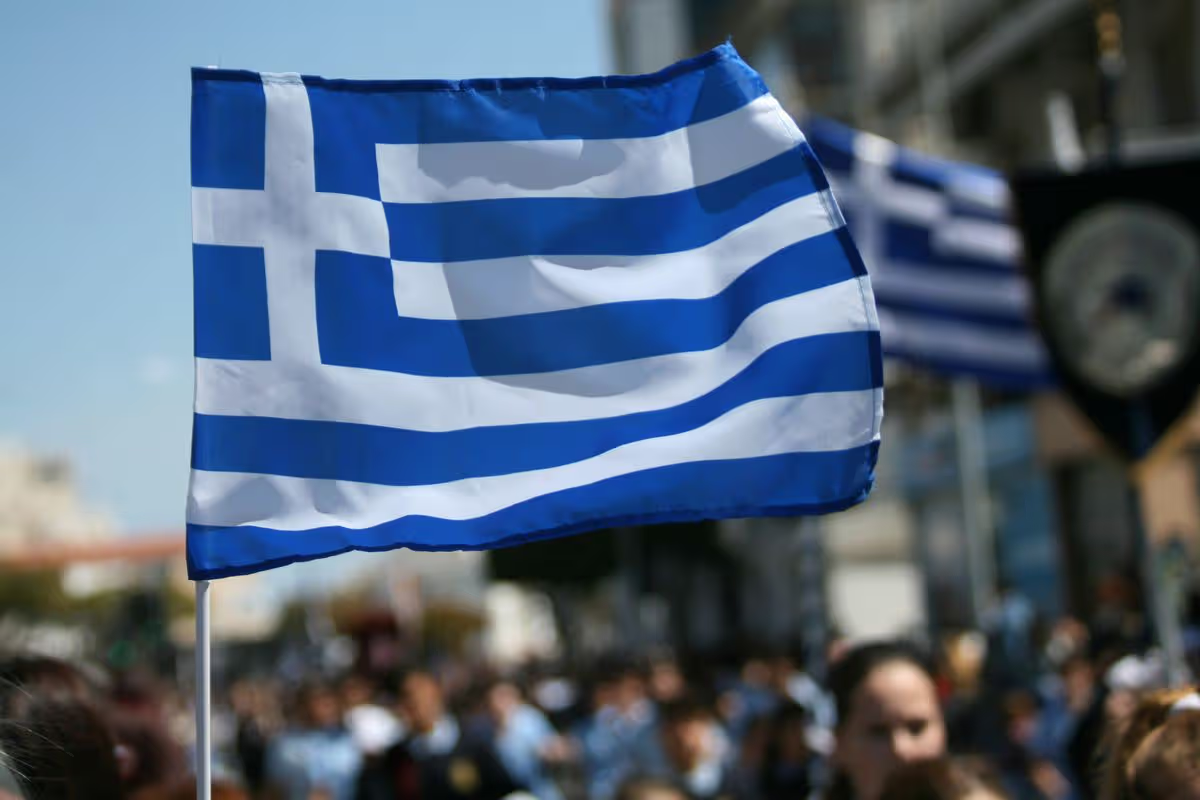
Greece has announced that it will introduce a brand new rule next year that will impact millions of people. The change comes months after Australia implemented a similar decision in December 2025, and now Greece is urging the European Union to follow suit with its upcoming ‘ban‘.
Prime Minister Kyriakos Mitsotakis confirmed on Wednesday, April 8, 2026, that Greece will ban all children under 15 from accessing social media. The measure, which will come into force on January 1, 2027, is designed to protect children’s mental health and will apply irrespective of parental consent.
Kyriakos Mitsotakis cited “unambiguous” evidence that addictive screen time and social media algorithms are contributing to anxiety and sleep deprivation among children. Data from the Greek Safer Internet Centre in Athens shows that 75% of children currently using social media in Greece are of primary-school age.
It comes as the UK government has started a discussion about possibly banning under-16s, and Ireland and Denmark are considering doing the same. Last month, the House of Lords supported a proposal to ban under-16s from using social media platforms in the UK.
In a video posted on TikTok, Kyriakos Mitsotakis said: “We have decided to go ahead with a difficult but necessary measure: ban access to social media for children under 15 years old. Greece is among the first countries in the world to adopt such a measure.” The prime minister went on to say he would put pressure on the European Union to follow suit.
Content cannot be displayed without consent
The Greek government plans to enforce the ban through its existing ‘Kids Wallet’ application, which is already used to verify ages for alcohol and tobacco purchases. This application will be used to filter and block social media access at the device level.
Unlike approaches that rely on social media platforms to police themselves, Greece is pursuing a ‘source-based’ approach. Parents will be required to activate the Kids Wallet app on all of a child’s devices to block access at the system level. Greek officials hope this state-mandated device-level block will effectively counter circumvention methods, such as VPNs.
Greece joins other nations implementing strict age-based digital restrictions, including Australia, which enforces an under-16 ban, and Indonesia. Following the announcement, Kyriakos Mitsotakis wrote to European Commission President Ursula von der Leyen, calling for a common EU-wide “Digital Age of Majority” to be set at 15.
While both Greece and Australia share the goal of protecting children’s mental health, their enforcement methods differ significantly. Australia’s existing under-16 ban places the burden on platforms like TikTok, Instagram, and Facebook to find and remove underage accounts.
Since its launch in December 2025, Australia’s platform-based model has faced challenges. The eSafety Commissioner recently reported “significant concerns” about platforms that allow children to bypass checks or that provide insufficient reporting tools for parents.
Australia’s ban impacts ten major “high-risk” social networks but largely spares educational and messaging services like Google Classroom and WhatsApp. The Greek proposal is part of a broader framework that also restricts minors from online gambling, dating apps, and tobacco and alcohol sales.
Meanwhile, the UK government is actively considering an outright ban on social media for children under 16 through a high-profile national consultation and legislative debate. A three-month government consultation on “digital wellbeing” is currently open, seeking views on restrictions such as overnight curfews and “app caps,” and is scheduled to close May 26, 2026.
In the legislative arena, the House of Lords has twice defeated the government by adding an amendment to the Children’s Wellbeing and Schools Bill that would mandate a social media ban for under-16s. The House of Commons previously rejected this measure in March 2026, with the bill scheduled to return to the Commons on April 15, 2026.
WHEN it comes to Rome, you’ve heard of the Colosseum, the Pantheon and the Trevi Fountain, but what about the other hotspots?
Sun Travel has all the insider tips you need from local experts on how to make the most of your time in one of the world’s most iconic cities.
Sign up for the Travel newsletter
Thank you!
From Rome hotels, to hidden gems, and pizza, these experts have all the top spotsCredit: Alamy Stock PhotoRome has hotels to suit all budgets – including the Crowne Plaza Rome – St Peter’sCredit: /www.ihg.comOr if you want to splash out on a stay, head to the InterContinental Hotel RomeCredit: http://www.ihg.com
There are plenty of options when staying in Rome – but IHG Hotels and Resorts has a hotel to suit every budget – from cheap to fancy.
For a budget spot with rooms from £83 per night is the Garner Hotel Rome Aurelia, with cosy rooms, a quiet outdoor garden away from the chaos of the city, an on-site restaurant and lounge bar.
For a mid-range hotel, Crowne Plaza Rome – St Peter’s has rooms starting from £174 per night, and offers a pretty garden, an outdoor pool – plus it’s easy to get to the centre of Rome.
For a high-end hotel, the luxurious InterContinental Rome Ambasciatori Palace has rooms from around £398 per night, with huge marble hallways, a beautiful restaurant and rooftop bar with city views.
Experts from each of these three hotels have now given Sun Travel the lowdown on EVERYTHING to do in Rome for cheap, mid-range and pricey budgets.
Read on to find out their top restaurants, attractions, hidden gems and more…
Date night restaurants
On a budget but still want to eat and drink well? Then the team at Aurelia suggest opting for one of the best ‘trattorias’ (an Italian eatery).
They say that Armando al Pantheon , right next to the Pantheon in the city centre, is a “beloved spot known for traditional dishes like carbonara and amatriciana”, with mains from 14 euros.
For a blowout romantic dinner head to Idylio by Apreda, which is a Michelin‑starred restaurant near the Pantheon, where you’ll get an intimate dining experience.
Alternatively, take a wander through the the authentic neighbourhoods of Trastevere or Campo de’ Fiori, popular destinations even for the locals, and drop into one of the many restaurants that line the streets.
It has an elegant, 1920s speakeasy atmosphere and creative drinks, that have earned it a spot six times in the “50 World’s Best Bars” list.
Or for something more relaxed with a view, Divinity Terrace is perfect for an aperitivo at sunset, looking out over the Pantheon and St. Ivo alla Sapienza, it serves glasses of prosecco from 6 euros.
Bonci Pizza on Via Della Meloria has lots of pizza offeringsCredit: Alamy Stock PhotoYou can’t visit Rome without tasting some fresh gelatoCredit: Alamy
Pizza & pasta
Trattoria da Polese is a local neighbourhood restaurant specialising in homemade pasta and pizzas, close to Navona Square and Campo de’Fiori that has been described by visitors as ‘faultless’.
For something a bit different, visit the ‘Michelangelo of Pizza’ at Pizzarium Bonci near the Vatican – famous for his gourmet pizza by the slice and creative toppings like ‘buratta with smoked salmon’ and ‘eggs and black truffle’.
The price for a slice varies from 6 to 10 euros, as it’s done on weight and toppings.
Seu Pizza Illuminati, which can be found down a side street in the Trastevere neighborhood of Rome, was billed as the tenth best pizzeria in the world last year.
Prices range from 10 to 18 euros for a pizza, with bold toppings like roasted peaches or green olive cream, and it’s loved by locals.
For traditional Roman pasta dishes, Roscioli Salumeria con Cucina is a deli shop with its own restaurant and huge wine cellar, that is widely considered one of the best restaurants in the city – pasta from 16 euros a dish.
Gelato
For artisanal gelato, Gelateria del Teatro near Piazza Navona is always a favourite thanks to its seasonal flavours and fresh ingredients – with unique combinations like white chocolate and basil or pumpkin, amaretti and chocolate.
For exceptionally creamy gelato, La Romana on Via Cola uses uses fresh organic milk from certified farms and freshly whipped cream, in accordance with old recipes – buy a cone then take a stroll along the nearby River Tiber.
For affordable and creamy gelato with big portions, try Old Bridge Gelateria at Piazza Risorgimento – right near the Vatican museums, where you can get three scoops from just 3 euros.
Alternatively, head to Capriccio di Carla – an artisan gelato shop located in Rome’s Pigneto neighbourhood that is often labelled ‘the best Gelato in Rome.’
It sells two scoops from 2.50 euros.
Hidden gems
There are plenty of very famous iconic spots in Rome, but what about those that are lesser-known?
Try Quartiere Coppedè, a fascinating neighbourhood to the east of the city centre filled with whimsical architecture and fairytale style buildings that’s described as ‘ a living museum of 20th century Italian expressionist architecture.’
Passetto del Biscione is a Rome hidden gem so hidden, not even all locals know about it, despite it being in one of the most central locations; Campo de’ Fiori.
The tiny pedestrian passage is covered in beautiful frescoes.
Another is Basilica di San Pietro in Vincoli, a short distance from the Colosseum, which looks like a modest church, but hides one of Michelangelo’s most powerful sculptures, Moses.
On Sunday mornings, Romans wander through the sprawling Porta Portese Flea Market in Trastevere, Rome’s largest open-air flea market that sells everything from clothes to vintage homeware.
It’s not curated for tourists – it’s chaotic, loud, imperfect, and our experts say “that’s the point.”
The museum is inside a historic villa and showcases decorative arts, fashion and costume collections from the 19th and 20th centuries.
The Divinity Terrace is perfect for an aperitivo at sunsetCredit: Unknown
For more incredible holidays, here are our favourite Loveholidays breaks…
*If you click on a link in this box, we will earn affiliate revenue
Belpoint Beach Hotel, Antalya, Turkey
This hotel is surrounded by the forests of the Toros Mountains, giving your outdoor swim a pretty impressive backdrop. With a pool decorated with colourful parasols and a waterslide, this pretty resort also has plenty to do indoors, including a sauna and a Turkish bath to unwind in.
The huge resort has 363 rooms, each with a balcony or terrace overlooking the sea or gardens. All-inclusive food includes three daily meals in the main buffet restaurant, as well as drinks and snacks such as pizza, hot dogs and burgers at the pizzeria snack bar. If you fancy getting out and exploring, the town centre is a 10 minute drive away.
Terramar Calella puts you right in the thick of the action, with the sea on one side and the buzzing promenade on the other. Here, days start with sea swims and end with sunset drinks. Platja Gran Calella is the area’s largest beach, and here it’s right on your doorstep.
This Corfu resort was built for families, buzzing with entertainment and activities. With four adult pools, three kids pools, a mini waterpark and a beach on your doorstep, there’s plenty of spots for you to stretch out on a sun lounger and for the kids to splash around. And as the day winds down to a close, the party starts with mini discos, Greek dancing, lively quiz nights and karaoke.
Often called the “eighth hill,” it is located behind Trastevere and is renowned for its midday cannon shot, Garibaldi monument, Fontana dell’Acqua Paola, and romantic sunset views.
Or, if you want to explore Rome on a tour, do it in a vintage Fiat 500 – glide through Rome in an iconic Italian car, to see legendary landmarks and cinematic backstreets in true Dolce Vita style.
At the InterContinental, these tours depart right outside the hotel.
Best family attraction
A tour of the Rome Colosseum will be a hit with kids, with special tours allowing you to access to the Arena Floor via the “Gladiator’s Gate and walk where fighters once stood.
Villa Borghese is one of Rome’s most beautiful parks, with bike rentals, playgrounds, shaded gardens and a small boating lake.
There are plenty of family-friendly pizza and tiramisu classes in Rome, where parents and kids can make dough from scratch and build the dessert with local chefs.
Shopping
To shop ’til you drop, Via Sistina is lined with artisan workshops and refined boutiques, it is ideal for discovering handcrafted pieces and authentic Roman craftsmanship.
Another great spot for vintage items is Via del Governo Vecchio, which is one of the most charming streets for shopping in Rome.
Via Cola di Rienzo is one of the most famous shopping streets, and it’s a short walk away from the Vatican.
For great views, head to the Orange GardenCredit: Alamy Stock PhotoLocals love Sant’Eustachio Il Caffè for an espressoCredit: Unknown
Coffee
Coffee lovers should head Sant’Eustachio Il Caffè for a classic Roman coffee experience, using home-roast beans and water from an ancient aqueduct.
It’s a historic café famous for its signature espresso which is best enjoyed standing at the counter.
Barnum Cafe on Via del Pellegrino offers speciality coffee and lots of visitors have also enjoyed its tasty brunch options.
Best views
If you want to see the city at it’s best, the team at Aurelia said that guests often enjoy visiting Villa Doria Pamphili.
It’s the largest public park in Rome and has very pretty and peaceful sunset views.
If you head up to Terrazza del Pincio, you can get incredible views over Piazza del Popolo.
During the day, visit the Orange Garden and Aventine Keyhole.
Freebies
A visit to St. Peter’s Basilica is free to enter and it’s one of the most impressive experiences in Rome – for incredible views, visitors can also climb the dome.
Walk the Via dei Fori Imperiali for open-air, free sightseeing of the most famous Roman remains.
You can see Caravaggio’s masterpieces for free in three churches across Rome; San Luigi dei Francesi, Santa Maria del Popolo and Sant’Agostino.
For culture
Art lovers should book a visit to the Galleria Borghese, housed in the former Villa Borghese Pinciana,which is home to masterpieces by Bernini and Caravaggio.
Of course, the Sistine Chapel is a must-see while in the city.
And then there’s Palazzo delle Esposizioni, one of Rome’s leading cultural venues that hosts art exhibitions and other cultural events, in a grand late 19th century architectural landmark.
You can enter the Basilica for freeCredit: AlamyVilla d’Este is less than an hour away from RomeCredit: Alamy Stock Photo
Day trips from the city
For a seaside escape, Santa Severa is an excellent option.
Visitors can explore the beautiful Castello di Santa Severa located directly on the beach, about 50 minutes from Rome.
Or head to Ariccia and the many villages on the hills around Rome where you can enjoy typical cold cuts and cheeses.
Head to Tivoli, an historic hilltown in the Lazio region of Italy, just 30km from Rome, to explore Villa d’Este and Villa Adriana, where Renaissance fountains meet ancient Roman grandeur.
Tips from the experts
When it comes to exploring Rome, the team at Garner Hotel Rome Aurelia said: “Our advice to visitors is simple: slow down and enjoy Rome like a local.
“Start the day with an espresso at the bar, take an evening passeggiata (slow-paced evening stroll between 5–8om), and always make time for a relaxed dinner.”
The team at Crowne Plaza Rome – St Peter’s said: “Don’t leave without trying the famous ‘Maritozzo con la panna’.
“This famous dessert consists of a small loaf of bread kneaded with flour, eggs, honey, butter, and salt.
“Once baked, the maritozzo is cut in half and traditionally filled with plenty of whipped cream.”
The team at InterContinental Rome Ambasciatori Palace said: “Rome rewards early risers and late wanderers.
“Visit landmarks at dawn or after sunset to experience the city at its most atmospheric and authentic.”
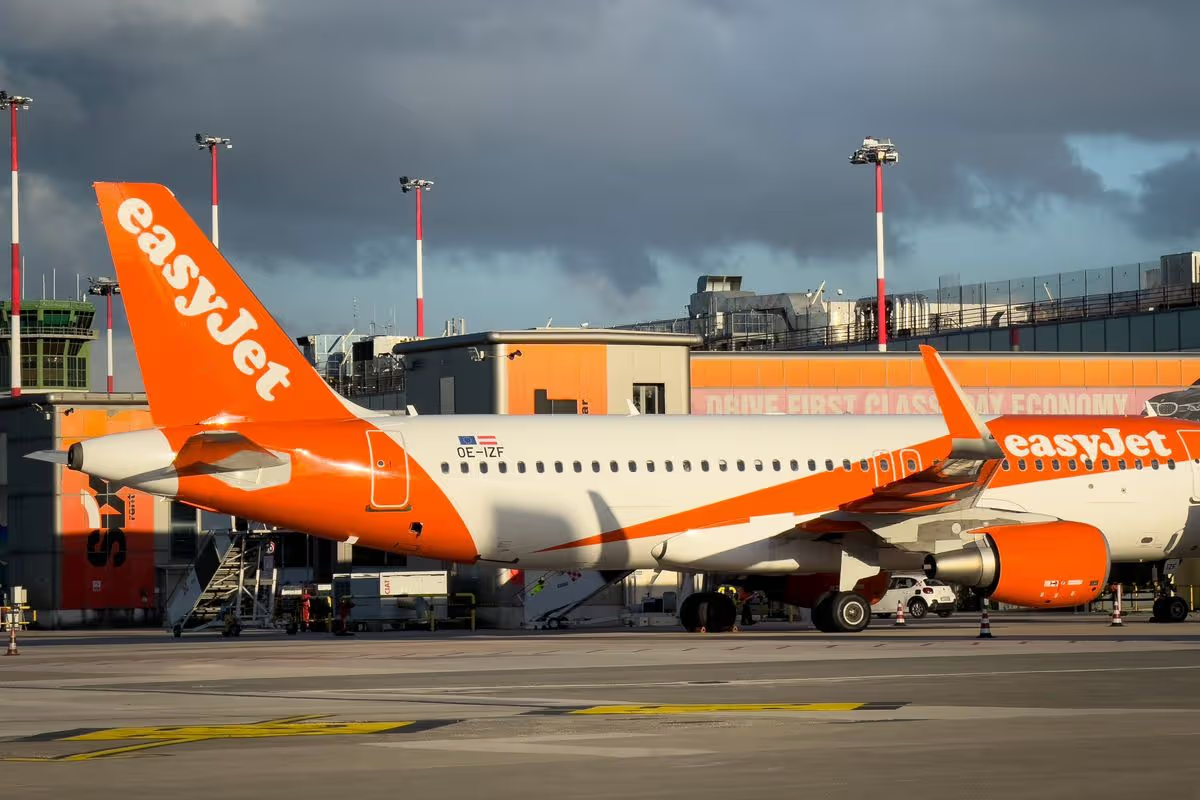
TUI, easyJet, Ryanair and Jet2 can have different rules around what duty free bags you can bring onboard as part of your hand luggage allowance – we take a look at what passengers need to know
13:22, 08 Apr 2026Updated 14:17, 08 Apr 2026
Some airlines are more generous than others when it comes to hand luggage(Image: Getty Images)
Before heading to the airport, it’s crucial to be aware of any hand luggage restrictions and certain duty-free rules that not everyone knows about, with airlines including TUI and Ryanair.
Many of us fly with different airlines, depending on the route, airport and price, so it’s tricky to keep up with the various hand luggage allowances or restrictions. Most airlines allow passengers to take on board a small personal bag for free, which can include a backpack or handbag, while others offer a generous addition of a free cabin bag.
There can also be confusion when it comes to carrying on duty-free, alongside your personal bag or cabin bag. Holidaymakers have often been left questioning whether they can carry it on separately or if they have to pack it into one of their bags.
To ensure you’re fully prepared for your next getaway, we’ve outlined the key hand luggage rules for four major UK airlines. So you know exactly how big your bag needs to be and what to do with your duty-free goodies before boarding your flight.
Ryanair
When it comes to duty-free, Ryanair allows passengers to carry on their duty-free items alongside their cabin bags. Additionally, passengers can purchase checked bags of 10kg, 20kg, or 23kg while flying with Ryanair.
All Ryanair fares include a small personal bag (40 x 30 x 20 cm), but it must fit under the seat in front of you. There is technically no weight limit to this bag, which is typically a handbag, laptop bag, or small rucksack, but passengers must be able to carry it onboard, unless there is an exception.
When booking Priority boarding, travellers can take an additional 10kg cabin bag (55 x 40 x 20cm) on the plane, which is stored in the overhead lockers. While infants (aged from 8 days to 23 months) have no cabin allowance, parents or guardians can bring a 5kg baby bag ( 45 x 35 x 20 cm) and two baby items on board for free. For more information, visit the Ryanair website.
easyJet
In terms of duty-free, the airline states: “You’re allowed to bring some extra things into the cabin. e.g. umbrella, overcoat, crutches, walking stick, one standard bag of goods bought at the airport.”
Everyone flying with easyJet is entitled to bring one small bag (45 x 36 x 20 cm) on board for free, which must fit under the seat in front. It can weigh up to 15kg, but it’s important to note that its size, including handles and wheels, cannot exceed the specified measurements.
The airline notes that travellers “need to be able to lift and carry the bag” themselves. easyJet passengers can pay for an additional cabin bag (56 x 45 x 25 cm) that fits in the overhead lockers, which also comes with their Speedy Boarding service.
For an easyJet Plus member or customer who has booked an Inclusive Plus fare, they can also take a large cabin bag on board, in addition to the standard cabin bag. Of course, there’s the option to book checked-in luggage too.
TUI customers can take one piece of hand luggage (55 x 40 x 20cm) on board for free, excluding infants. It can weigh up to 10kg, and they can also take one small personal bag (40 x 30 x 20cm) on board, which must fit under the seat in front.
A duty-free bag is also allowed on board, and TUI outlines its requirements for liquids purchased at the airport. They said: “Any liquids you buy from duty-free must be carried in a sealed security bag – you’ll be given this bag when you buy the item at the airport. You’ll need to keep the item and the receipt sealed in the security bag throughout the journey.”
A checked-in bag of 20kg or 25kg is also available to book for an extra fee. For more information, visit the TUI website.
Jet2
Holidaymakers are entitled to take a small bag (40 x 30 x 20cm), such as a handbag or laptop bag – or a duty free bag – that must fit under the seat in front.
You can also take one piece of hand luggage (56cm x 45cm x 25cm) on board for free, provided it fits within the measurements, including wheels and handles, and doesn’t weigh more than 10kg.
Parents with infants under 2 years old are also provided with an additional 10kg allowance. They can also take two items per child or infant on board free of charge, including a collapsible pushchair, car seat or booster, a baby carrier, and a travel cot.
When it comes to hand luggage, there are certain packing restrictions to be aware of, and these are typically universal across all airlines. These include the following:
• Liquids: Many airports require liquids to be under 100ml, while some UK airports have ditched this rule. As rules have changed, it’s best to check directly with the airport for both your outbound and inbound flights, as countries outside the UK may have different restrictions.
• Lighters: As outlined on the government website, travellers can only carry one lighter on board a plane. It cannot be packed in hold luggage; instead, it should be placed in a resealable plastic bag in carry-on luggage and kept in your possession throughout the flight.
• Food and powders: While you can carry certain food items and powders in your hand luggage, they can obstruct images on X-ray machines. This means that bags may need to be manually checked at security, which can cause delays. The government advises packing suitable items into your hold luggage to minimise delays.
• Frozen items: Typically, you cannot carry frozen items in your hand luggage onto your flight, such as food, liquids or ice packs. However, there are some exceptions, such as for medicines, medical equipment, dietary requirements, baby food and baby milk. It’s best to check directly with the airline you’re flying with to ensure you meet their requirements.
• Sharp objects: While you can carry scissors on a plane, the blade must be shorter than 6cm to be placed in carry-on luggage. Small sewing or embroidery scissors are generally allowed, while other larger, sharp items can be packed into hold luggage. It’s best to check directly with your airline for specific requirements.
Some airlines may have specific requirements for some of the above items, so before heading to the airport, it’s best to check directly with your airline to avoid being caught out. After all, there’s nothing worse than having something confiscated at airport security.
Do you have a travel story to share? Email webtravel@reachplc.com
WHITE sand beaches, enormous castles, and peaceful canals – no I’m not describing France or Spain or Portugal as you can find all of this in the UK without spending much money.
Sometimes we Brits don’t appreciate what we have on our doorstep, and let’s face it, exploring the country can be costly – but here are some truly bucket list spots that you can see on a budget.
Sign up for the Travel newsletter
Thank you!
You can see lots of what the UK has to offer on a budget – like walking along the coastCredit: AlamyThe new coastal path makes exploring paths around the seaside easy to navigateCredit: Alamy
Richard Madden has been exploring the country on foot, by rail, road even boat for his new book Great British Journeys – and has given Sun Travel an insight into his favourite finds.
Richard says: “Obviously travelling on a budget depends where you start from – but walking, whether it’s on the coast or in the countryside is free.”
By foot
He started by saying: “I was brought up around the Lizard Peninsula, and here are some incredible places to walk to, like Kynance Cove.
“In Sussex, my most favourite walk is along Seven Sisters which is spectacular with Cuckmere Haven, where the estuary meets the sea.
On the fastest services, the full length of the journey takes around 1hr38 and one-way tickets can cost as little as £7.70.
Richard says: “That whole line is beautiful with coastal views and castles.
“You don’t even have to do the whole thing – just go on a couple of stops like to Alnmouth, or go further up and you’ll pass Dunstanburgh Castle.”
On the full stretch of the line, passengers will also see the Tyne Bridge, Lindisfarne Castle, the Edinburgh skyline and Firth of Forth.
Further south, another popular route is onboard the Bluebell Line which is just around the corner from National Trust‘s Sheffield Park.
Tickets for adults to board the heritage steam train start from £27 and when you book, check for children’s rates which are just £1 with their ‘kids for a quid’ offer.
The West Highland Line, also dubbed the ‘Hogwarts Express‘ is another incredibly scenic journey.
However if you’re on more of a budget but still want to get the views, hop on a public service line instead.
A ticket from Fort William to Mallaig which crosses the Glenfinnan Viaduct, typically starts around £9.20.
You can cross the Glenfinnan Viaduct on a train for under £10Credit: Alamy
When exploring the UK – why not check into some of our favourite hotels?
*If you click on a link in this box, we will earn affiliate revenue
Margate House, Kent
This stylish boutique hotel is in a seaside townhouse, a short walk from Margate’s coolest bars and restaurants. Decked out with plush velvet sofas, flickering candles and striking independent art, inside feels like a warm welcome home. Rooms are stunning, especially the ones that give you a glimpse of the sea.
The Alan looks extremely grand, built into a beautiful Grade II listed building. Spread across six floors, with 137 rooms, each one looks like a fancy design magazine. From the concrete coffee tables to the pink plastered walls, the industrial-inspired designs perfectly replicate the history of the city.
This historic hotel has welcomed the likes of Charles Dickens and Lillie Langtry through its doors. Rooms have richly-patterned carpets with super soft bed linen and premium toiletries in the bathroom. Go for a superior room for extra goodies including bathrobes and snack boxes.
This Cambridge hotel is in the ideal spot, within walking distance to bars, shops and hotspots like the university colleges and Parker’s Piece. The inside couldn’t be prettier, with huge stained glass windows, grand chandeliers, and rooms with enormous clawfoot bath tubs.
Waterways and canal boating are a fun way to see the countryCredit: Alamy
By Boat
To explore the country, most of us will hop into the car, but Britain is so well connected through its waterways.
Richard is no stranger to canal boating and reveals some of his favourite journeys to do around the country.
He says: “The Shropshire Union Canal is one I’ve done on quite a few occasions.
“That one goes to Cheshire, and you get these fantastic views of the Roman walls, so it’s a particularly good one.
“Another that I’ve done quite a few times is the River Wye, on the border of Wales.
“It’s Wordsworth country and it’s got incredibly beautiful surroundings in that area like Tintern Abbey which go past on the water.
“To make it better, there are lots of pubs along riversides, so you can moor up and go in.”
One very famous waterways spot is the Leeds and Liverpool Canal, where you’ll find the Bingley Five Rise Locks.
Renting a 6-berth narrowboat for a week generally costs between £900 and £1,500.
If you split that between a group of six, it can work out as little as £21pppn – but this varies depending on the season.
Richard also has some top tips for those planning a staycation or day trip around the UK to reduce the costs.
He says: “My key tip is to work it all out beforehand – the further you book in advance, the cheaper things will be.
“Go through your options as well, like how you’ll travel there and if it’s cheaper to take the bus, or if it’s worth going by train than by car.
“You can consider options like camping to keep costs down, but I would say it’s only worth doing that if you enjoy it – don’t if you’re not going to have a good time.
“There are so many different landscapes in the UK and generally, you don’t have to go far to see them.”
Great British Journeys by Richard Madden (National Trust Books, £14.99) is out on April 9.
Richard has travelled across the country finding some gems that you can see on a budgetCredit: Richard Madden
This quirky village boasts England’s tiniest Grade II listed building and residents who love to see the stars at night
Mary Harris and Mia O’Hare Senior Spare Time Reporter
12:05, 08 Apr 2026
It is a quaint English village to visit (Image: Jonathan Wilson via Getty Images)
England boasts thousands of villages and countless tiny hamlets, each with their own unique stories to share. Communities have been moulded by history, weather patterns, landscape, geology, wildlife, conflict, inhabitants, faith, transportation and commerce.
For those yearning to escape city living and immerse themselves in the natural world, one of Otford’s attractions is that the majority of it lacks street lighting. Certain residents have claimed they “like to see the stars” and one recommending to “buy a torch”.
However, one new arrival wasn’t entirely ready for the darkness, recalling: “I remember my shock the first night after we got the keys to our house.
“I’d never been to Otford at night before. But you will get used to it, and grow quite fond of it, very quickly. Just wait for the first full moon with clear skies and suddenly the penny will drop for you.”
One long-term resident remarked: “Otford doesn’t have street lights as it’s a village not a small suburban town. There are very few people living in Otford who I think want street lights due to light pollution as it’s lovely at night when the skies are clear to see the moon and stars so easily”, reports Kent Live.
The village is home to approximately 3,500 residents, and locals are described as “really friendly” and “lovely”. Surrounded by countryside, it offers the “fresh air” that residents treasure, along with beautiful walking routes.
It’s also conveniently near the M25 and boasts rail connections to London, with journeys taking as little as 35 minutes to London Bridge with one change.
Another intriguing feature of this village — something of a claim to fame — is its diminutive Grade II listed structure, which happens to be England’s smallest. Its occupants are of the web-footed variety, as it’s actually a duck house situated in the village pond.
Historic England said: “The award for smallest listed structure goes to the Duck House in the middle of Otford Village Pond roundabout in Sevenoaks. This rubble and brick circular house shelters the luckiest ducks in England – they enjoy a food allowance from the Parish Council!”
If you are looking to relocate to Otford, Rightmove states the average property sale price over the past year stood at £810,059. The majority of properties sold were semi-detached, fetching an average of £693,458.
Values rose by two per cent compared to the previous 12 months. By contrast, Kent’s average sale price was £421,327.
Otford also has a Solar System, which is a scale representation of planets’ positions. Created for the Millennium, it guides visitors throughout the village to the various planets in proportion.
The village also features the picturesque River Darent, four churches, a village pond, pubs, cafes and shops. If you enjoy travelling back through time, you’ll adore Otford as its history and archaeology reveal people have inhabited this spot for no less than 3,000 years: including farmers during the Iron Age, Romans and Royalty.
Over the years, there has been a palace, a poor house, and a manor court. There’s a heritage trail, a Millennium Mosaic and more attractions to explore, all of which can be discovered on the Otford Heritage website.
The Bull Pub, located on the High Street, is an ancient coaching inn with roots dating back to 1512. The pub is owned by WH Pubs, who also operate The Chaser Inn in Shipbourne, The Little Brown Jug in Chiddingstone, and two other establishments in Kent.
For those keen to delve deeper into Otford’s history, a visit to Otford Palace is a must. This site was once home to the Archbishop’s Palace, dating back to 821 AD.
In 1515 AD Archbishop Warham constructed one of England’s grandest palaces, slightly surpassing Hampton Court in size. Sadly, the buildings fell into disrepair in the 17th Century, and today only part of the North Range remains.
The North West corner tower, part of the Northern Gatehouse and a connecting wall, which has been converted into a row of three quaint cottages. The site, including the Palace Field, is open to visitors.
In 1519, the hunting-obsessed Henry VIII stayed at Otford Palace with his companions, pursuing game in the vast deer park attached to the palace grounds. Between 1532 and 1533, Princess Mary, the future Queen of England, took refuge there amidst the political and religious upheaval that followed the dissolution of her mother’s marriage to Henry.
Ownership of Otford Palace was transferred to a trust in the early 2020s, preventing it from being turned into a housing development.
If you’re up for a five-mile circular walk and prefer not to drive, the railway station is just a third of a mile from your starting point. This route is known as the Otford Walk.
It takes you out of the village, along tracks, over several stiles, through wooded areas and high onto the North Downs for breathtaking views of the countryside. You can park for your Otford Walk in the High Street opposite the Bull Pub.
Airline passengers were issued a warning in a social media post shared by Jet2
Jet2 passengers should be aware of the warning (stock photo)(Image: Getty)
Jet2 has issued a safety warning that applies to all passengers flying with the airline. The low-cost carrier has urged customers to ‘look for the gold tick’ when contacting its customer service agents on social media. The airline regularly responds to passenger questions on X as Jet2tweets, where the Jet2 team assists Jet2.com and Jet2holidays customers.
However, scammers may contact social media users, falsely claiming to be from Jet2. The official Jet2tweets account highlighted the possible risk to passengers in a recent post.
A team member warned a customer named Elaine to ‘look for the gold tick’ before replying to any messages sent to her on X. Elaine had contacted Jet2tweets with a question about an upcoming booking.
She wrote: “Jet2tweets Hi. We leave Faro for Liverpool on 19th April. Please could you advise what time we should arrive. We don’t need to check in any baggage. Thank you.”
Answering the question, Jet2 replied: “Hi Elaine, thank you for getting in touch. Our check-in desks open from two hours and thirty minutes before standard departure time. Please feel free to check in from this time. I hope this helps. If there’s anything further we can assist you with, please do let us know. Thank you, Rachel.”
Content cannot be displayed without consent
In a follow-up response, another Jet2 team member issued a warning to Elaine, which applies to all passengers using X to contact the airline. Jet2tweets wrote: “Hi Elaine, it appears you have been reached out to by a fake account not affiliated with Jet2holidays. Please be vigilant when dealing with these accounts and be aware our only official account is @Jet2tweets (look for the gold tick).”
Jet2tweets is a verified account on X, as indicated by the gold tick next to its name. When customers click on the gold tick, it displays an official message from X, which reads: “This account is verified because it’s an official organisation on X.”
More information is available on the X Help Center, which explains the different checkmarks that social media users might see on the platform. For example, accounts that subscribe to X Premium could have a blue checkmark. Meanwhile, a grey checkmark is used for government officials or organisations.
Any X users impersonating a business or person risk permanent suspension. The Help Center states: “Impersonation is a violation of the X Rules. Accounts that pose as another person, group, or organisation in a confusing or deceptive manner may be permanently suspended under X’s misleading and deceptive identities policy.”
The guidance says that brands can file a report in the Help Center if they believe an account is posing as them. If an X user believes an account is misusing someone else’s identity, they can also report it as a bystander directly on the account’s profile.