L.A.’s only dedicated cinnamon roll shop was born during the pandemic, when stay-at-home orders prevented Lindsay Sears-McDonald from going to her family’s favorite bakery to satisfy her craving for sticky sweet buns.
Instead, she attempted the dessert at home. When her first try yielded delicious results, she set out to perfect the recipe. Soon, she and her husband Lawrence were popping up at events across Los Angeles, and in 2023 they nabbed a vendor spot at Smorgasburg L.A.
They named their outfit All About the Cinnamon, a play on the hit song “All About the Benjamins” that features Lil’ Kim and Notorious B.I.G. The menu follows a similar theme, with plush cinnamon rolls named after the rap and R&B artists that Lindsay and Lawrence grew up listening to, such as the Em dotted with milk-chocolate M&M’s or the Busta topped with warm Nutella. Last summer the couple opened a small storefront in Sherman Oaks, complete with a mural of hip-hop greats.
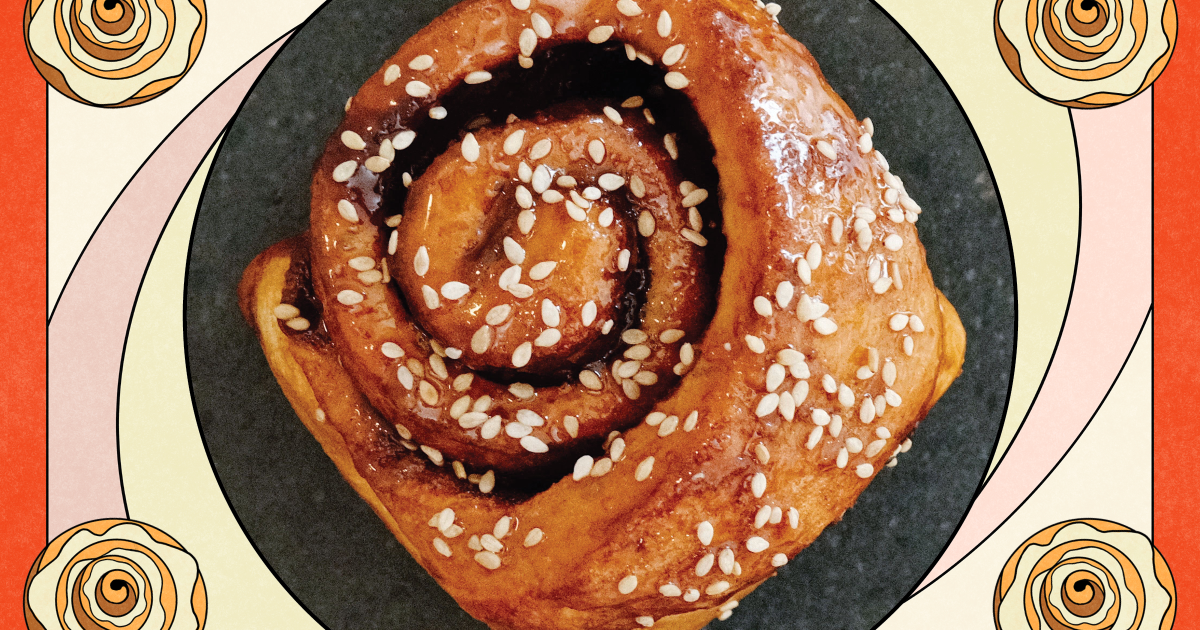
In pastry cases across the city, you’ll see a diverse range of sweet buns inspired by the comforting flavors of childhood. That translates to vegan cinnamon rolls with ube halaya and pandan at a Filipino bake shop in Long Beach and miso-honey milkbread buns sprinkled with sesame seeds at a Korean-inspired bakery in Highland Park. Here are 11 of our favorite cinnamon rolls in L.A.
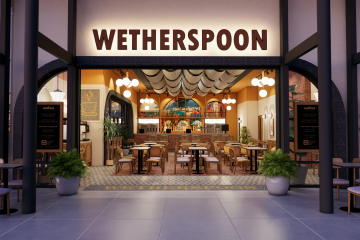
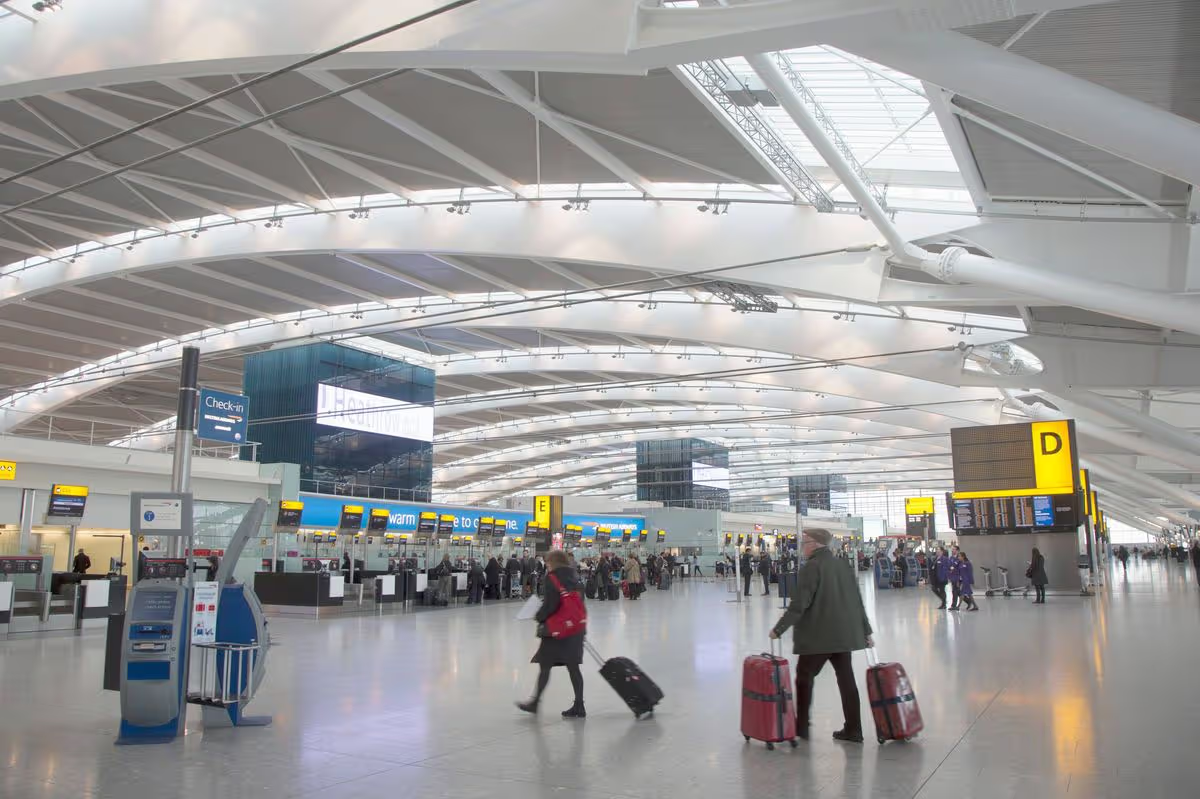
Wetherspoon’s is opening two new Spanish pubs after the success of one in Alicante last month (pictured)Credit: WetherspoonThe two new Wetherspoons pubs will be at Barcelona AirportCredit: Alamy
Following this, two more pubs will now open at Barcelona-El Prat Airport in the capital city.
The first one will be at Terminal 1, set to open by September 2026.
This will be followed by a second at Terminal 2 by January 2027.
Passengers will have to go through security to drink at them as they are both airside rather than landside.
Little else is known about the pubs, including what they will be called, but they will have space for almost 600 passengers.
You can get an early drink too – they’ll be open every day from 5am to 11pm, including real ale.
The menu is likely to be similar to the Alicante menu, which is mainly the British classics with a few Spanish dishes as well.
Drink prices haven’t been confirmed, although the also similar to the Spanish pub, beers are around £3.50.
Wetherspoon boss Tim Martin said: ” We are delighted to have secured two fantastic sites at Barcelona airport.
“In the short time since opening our pub at Alicante airport has proven popular with travellers and we are confident we can replicate that at our two new pubs in Barcelona.”
He added that they aim to open more pubs in mainland Europe in the next few years, particularly at airports.
The Sun’s Assistant Travel Editor Sophie Swietochowskiwas one of the first to try the new Wetherspoons in Alicante, called Castell de Santa Barbara.
She explained: “The pub has pitched close to the gates for UK flights to draw in the near 650,000 Brits that pass through this airport monthly.
“Floor-to-ceiling windows flood the small space with light, while candy floss, glossy tiles give it a warm atmosphere.
“There’s a tea and coffee station in the corner, while behind the bar there’s not a whiff of scampi fries or Walkers in sight but instead European holiday favourite, Lays.
“This one boasts something that all other airport Wetherspoons do not, however – an outdoor terrace, where you can catch those last glimpses of Spanish sunshine before jetting off home to drizzly England.”
Imagine cutting the cost of accommodation on your next holiday to about £5 a day. You can have a whole house, rather than just a bedroom. And you can go almost anywhere in the world and stay as long as you like, within reason. Welcome to house swapping.
You’re sceptical, I know. I was, too. Our terrace house was too small. Too overflowing with stuff. The 1980s kitchen was too old (and battered). We aren’t in a nice enough neighbourhood. Who would want to stay here? Lots of people, it turned out.
Our first swap was with a pair of retired Australian judges who had lived in the UK decades before. They came to our house first and, over a cup of tea and cake in our living room, we talked about where to find a good pint and the best fish and chips locally, as well as mastering the idiosyncrasies of how to run our dishwasher. They told us about their favourite local parks (warned us about snakes) and when to put out the bins, before we headed for our month-long stay at their house in Perth. It’s these conversations and connections that really make house swapping special.
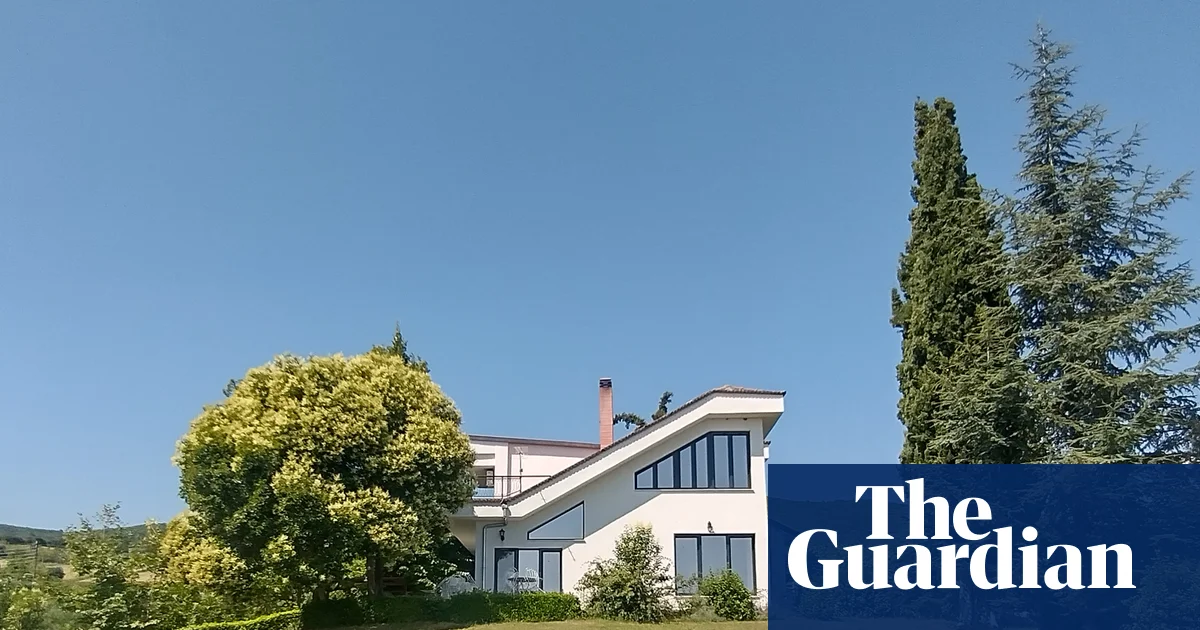
Yes, we have stayed in some truly extraordinary homes. There was a house in Florida where we watched rocket launches while lounging in the pool; a clapboard cottage with a hot tub in the Stockholm suburbs; and a swanky five-bedroom villa in the south of France that we shared with friends. We couldn’t have afforded any of these if it were not for house swapping. In fact, the swaps themselves are free, but I pay $235 (£177) a year to use Home Exchange, a house swap booking platform, which works out at about £5 a night for the 35 or so nights I used it last year.
Rory Boland and family on a house swap holiday in New York. Photograph: Rory Boland
The greatest pleasure, however, is in the genuine relationships forged. Through the messages exchanged before and during the swap, friendships are created. You become, however briefly, part of each other’s lives. We have swapped pets and cars, and watered plants along the way. For a week, we became passionately involved in helping pick a summer school for our Basque guests’ kids. Warm welcomes are universal. We’ve had olive oil from the garden grove of a house in Greece and marmalade from Seville. In return, guests at our house can expect to find sparkling wine from Kent, Essex jam and a pile of Cadbury chocolate bars to try – French guests are big fans of the Crunchie.
Even in challenging moments we found friendship, such as when our shower sprang a leak and rained all over the dining table. We had to arrange an emergency repair via video call with our Spanish guests, an Albanian plumber and a UK insurer, all while frantically looking for a reliable phone signal in the countryside. The babel of languages resulted in a tube of silicone being applied and both parties leaving five-star reviews.
I won’t go back to hotels. I have saved tens of thousands of pounds over the past five years, but what has really hooked me is the interactions with hosts and guests that make my holidays more fulfilling. It’s like having a friend everywhere you go.
Q&A – Everything you need to know
Will I be comfortable house swapping? If you’re precious about the things in your home or anxious about someone sleeping in your bed, a swap is not for you. Likewise, if spending the last day of your holiday cleaning is a deal-breaker.
How do I house swap? For some sites, you pay a flat annual membership fee (£100-£200) to use a booking platform with thousands of homes. I use Home Exchange because it verifies member identities and offers some guarantees such as damage, theft and cancellation protection. Kindred is a smaller and generally more expensive rival, focused on upmarket homes. Instead of locking you into membership, it charges variable service and cleaning fees.
How does it work? Classic swaps are simultaneous; you exchange houses on the same dates. But non-direct swaps are also allowed via a points system: you are awarded credits for stays at your house, which you can then spend to stay somewhere else.
What about scams and safety? Everyone on Home Exchange is a host and a guest, so there is a high degree of trust. Most swaps don’t involve money, so scams are rare. The only exception is a cleaning fee, payable when the stay is at an end. If you’re asked for money in advance, it’s a scam.
The Home Exchange website. Photograph: Home Exchange
How do I pick my accommodation? This is time-consuming. The website looks similar to Airbnb, where you filter by availability, destination and the type of property you want, but you need to match with a host, too. Hosts and guests both have ratings from previous stays, but some people still like to phone or video call before agreeing to an exchange. Then once the exchange is agreed, there are messages to organise the swap and answer questions such as how to use the cooker or where the bedding is. Many hosts prepare a house manual. Cancellations are rare but do happen, usually due to illness in our experience. The one time it happened to us, Home Exchange helped us find a new host in the same city, and it will pay for a hotel in a true last-minute emergency.
Do I need to own a luxury house? No. If you have a pool, hot tub or luxurious mansion, you will certainly get more offers, but flats and smaller houses near popular UK destinations (whether that’s Edinburgh, or the Dorset coast) do just as well. Most houses, like ours, are completely ordinary.
Do I need to put my stuff in storage? Clear a few drawers, perhaps a wardrobe, for guests, and that’s it. Most of the houses on Home Exchange are family homes.
What about cleaning? You do need to scrub that oven and clean that grout. Cleanliness expectations are high (and should be agreed upfront). We usually spend much of the last day of our holiday cleaning, and return to find our own house absolutely sparkling. Some hosts give you the option of paying a cleaner.
And DIY? One of the fringe benefits of house swapping is that it has made us look after our house a little better. Sticky door handles and dripping taps need to be dealt with.
What if I break something? We have broken small things, as have our guests; usually this is simply forgiven. Put more precious items away. For more expensive items, such as a TV or screen door, house swap platforms usually offer a level of cover, but you should make sure you have home insurance.
Will my home insurance cover my house swap? Ask. Some insurers offer no cover, others offer it for a certain number of exchanges, or you may need to buy a bolt-on. House swapping is still relatively unusual, so persevere to get a clear answer. Insurers that cover holiday lets, such as Pikl, are also useful.
Are there legal restrictions? Because no money is exchanged, house swapping is not restricted in the same way as Airbnb and similar services – except in Amsterdam, where only reciprocal swaps are allowed (so no paying with points). You do need to check visa rules if looking after someone’s pet – some countries (such as the US) may view this as providing a service and in breach of a visitor visa.
The cost of a family summer staycation can vary significantly
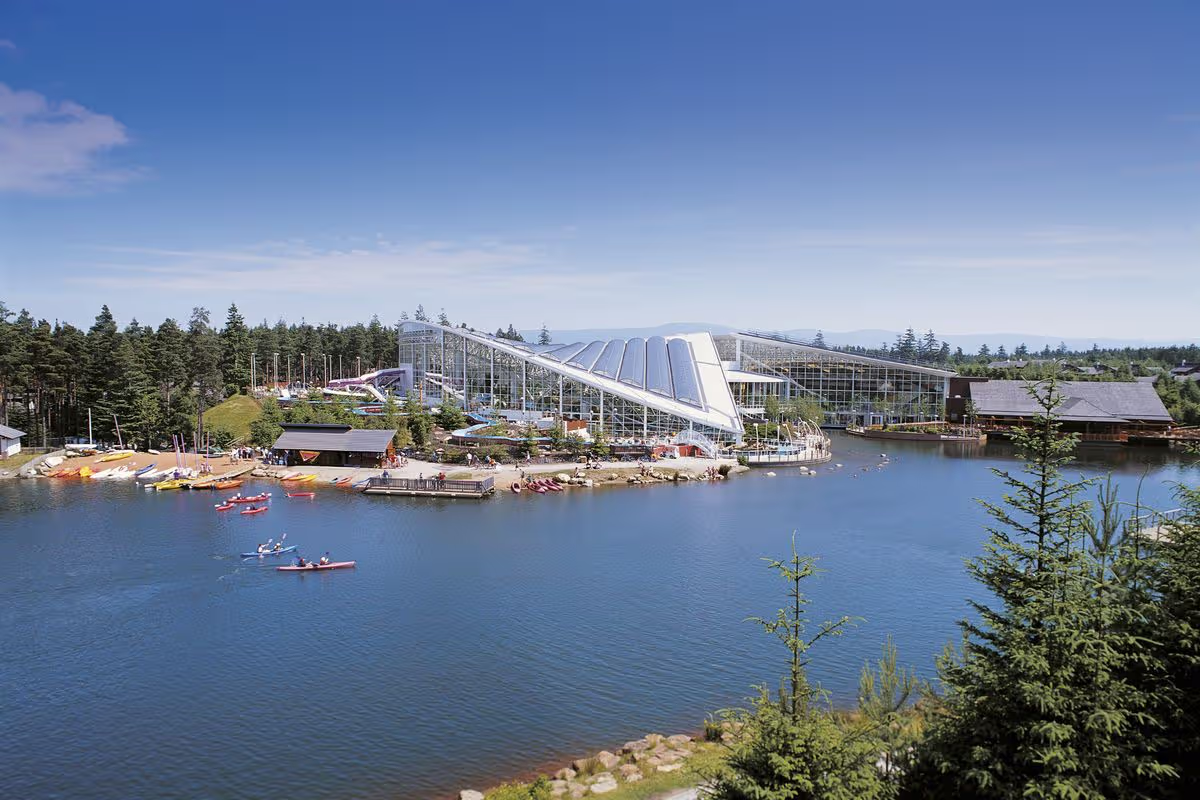
Center Parcs Whinfell Forest(Image: Daily Record)
With the UK experiencing some milder weather this week, and with April just around the corner, many parents are likely thinking ahead to the summer holidays. As children are off school for, usually, around six weeks, the summer is an ideal time to take a family trip.
However, as anyone who has looked at going abroad over the summer will know, prices jump up significantly while the schools are closed. Going on a break in the UK, then, can be a more affordable option. But how much it will cost you depends on where you go – and prices can differ hugely.
We have compared the price of a week-long break at some of the UK’s best loved holiday parks. Prices are based on the cheapest accommodation available for seven nights, from August 7, for a family of four.
Starting with Center Parcs, a week’s stay in a Woodland Lodge at the Whinfell Forest resort will set you back from £2138. The lodge has two bedrooms, a kitchen, a bathroom and an extra toilet, and comes with a dishwasher, brick-built barbecue stand, furnished private patio, safe, a cot and a highchair, a fully-equipped kitchen, a 40″ flat screen TV, and more.
Over at Butlin’s in Skegness, a family of four can book a Comfort Room for the same dates from £962. There are two bedrooms – one with a double bed, the other with two single beds – as well as a bathroom. However there is no kitchen, and no other facilities are mentioned on the booking site – and towels and housekeeping are not included.
And at Haven’s Marton Mere site, a family of four can book a break from £639 – although this jumps to £809 if you want access to swimming pools, activities, and entertainment venues. The cheapest accommodation is the Saver Caravan which is described online as having two bedrooms, a bathroom, and a kitchen.
Other facilities mentioned on the Haven website include a heater or gas fire in the lounge, a 32″ TV, an under-counter fridge, and beds being made up ahead of your arrival.
All of the above prices were correct at the time of publication. Across all three holiday parks there are a range of accommodation available, with these varying in price. The types of accommodation mentioned in this article were the cheapest available at the time of publication.
WASHINGTON — President Trump will travel to Beijing for a rescheduled summit with Chinese President Xi Jinping on May 14 and 15, the White House announced on Wednesday.
Trump had been scheduled to travel to China later this month but previously announced he was delaying the trip so he could be in Washington to help steward the U.S. and Israeli war against Iran. The Republican president had announced a rescheduled trip even though the war in Iran continues and the U.S. is pressing Tehran to accept a ceasefire proposal.
The president and First Lady Melania Trump also plan to host Xi and his wife, Peng Liyuan, for a White House visit later this year, press secretary Karoline Leavitt said.
Leavitt, when asked if the new dates for Trump’s trip could suggest he believes the Iran war could end soon, offered an optimistic tone that the conflict could reach an endgame before he travels.
“We’ve always estimated four to six weeks,” Leavitt responded. “So you could do the math on that.”
The United States and Israel launched the attacks against Iran on Feb. 28.
The China trip had been planned for months but began to unravel as Trump pressured Beijing and other world powers to use their military might to protect the Strait of Hormuz, a critical waterway for the flow of oil. The strait has been effectively closed as Iran targets energy infrastructure and traffic through it.
Trump said last week while meeting with Irish Prime Minister Micheál Martin in the Oval Office that he would be going to China in five or six weeks’ time instead of at the end of the month. He said he would be “resetting” his visit with Xi.
“We’re working with China — they were fine with it,” Trump said then. “I look forward to seeing President Xi. He looks forward to seeing me, I think.”
Trump’s visit to China is seen as an opportunity to build on a fragile trade truce between the two superpowers, but it has become tangled in his effort to find an endgame to the war in Iran. Soon after pressing China and other nations to send warships to secure access to Middle Eastern oil, Trump indicated last week that his travel plans depended on Beijing’s response, though he added then that the U.S. didn’t need help from the allies that rebuffed his request.
FORMER glamour model Katie Price has sparked mystery as her new travel business venture has been shut down just two weeks after its launch amid backlash.
The 47-year-old had created a “Katie Price Travels” Instagram page, trying to recruit agents for InteleTravel under the brand Travel Smarter Group.
Sign up for the Showbiz newsletter
Thank you!
Katie Price appears to have shut down her new travel venture just two weeks after it was launchedCredit: GettyKatie was spotted advertising for new travel agents as she appeared to set up her business venture alongside Danielle LloydCredit: The Travel Smarter Group
Travel Smarter Group “co-founded” by Danielle, promises travel perks, training and financial protection but does not include clear details of its host agency.
The podcast host received a slew of backlash from the travel industry, who branded the venture a “gimmick” and a “slap in the face.”
Katie was most notably called out by Inspire Europe chief executive Lisa Henning.
She criticised the star’s move and accused her of bringing down the industry name amid the ongoing war in the Middle East.
Lisa wrote, as reported by Travel Weekly: “I very rarely comment publicly on things like this. But seeing this today is a step too far.
“For the past 12 days I have worked non-stop, 24/7, supporting our clients and our agents through the disruption affecting Dubai and other destinations.
“I’ve seen agents in tears because they care so much about their clients and are genuinely worried about what’s happening.
Katie was slammed by Inspire Europe chief executive Lisa who dubbed her business a ‘gimmick’ and ‘slap in the face’ amid the ongoing war in the Middle EastCredit: Splash
“To see promotions suggesting that you can simply ‘earn money from travel’ with a glossy campaign featuring Katie Price and Danielle Lloyd — positioning the role of a travel agent as something you do casually around other commitments — honestly feels like a huge mockery of our industry.
“This isn’t a side hustle. This isn’t a gimmick. And it certainly isn’t ‘easy money while you travel’.”
Lisa continued: ” Seeing this kind of messaging feels like a real slap in the face to the thousands of dedicated agents who work tirelessly behind the scenes every single day.
“Well done and thank you to all of those who continue to give our industry a good name by doing this job ‘properly’. Always book with a ‘real travel agent’.”
Following the negative response, the model appears to have now deleted her travel page on Instagram.
Katie’s PA has responded to the remarks, according to Travel Gossip.
“Katie has never stated that she personally books travel. She is simply sharing this platform with others to help people become independent travel agents and create an additional income – whether that be part-time or full-time.
“All agents within the community receive full training and are committed to supporting their clients.”
She added: “Katie was simply advertising an opportunity call.”
Katie’s PA responded to the comments claiming the star was simply advertising an ‘opportunity call,’ according to Travel GossipCredit: Getty
MANY hotels claim to be big on wellness, but the recently-opened Cotswolds escape Hyll has mastered it.
Here’s everything you need to know.
Sign up for the Travel newsletter
Thank you!
Hyll is buried deep in the Cotswolds countryside, near Chipping CampdenCredit: HyllEach of the three lounge areas are kitted out with bookshelvesCredit: Hyll
Where is Hyll?
Buried deep in the Cotswolds countryside, near Chipping Campden and fancy members clubs like Soho Farmhouse, Hyll is undoubtedly as stylish as its plush neighbours – only you won’t need to sell out for an extortionate members fee.
Named after the old English word hill, meaning elevated piece of ground, rural views are pretty spectacular from this retreat’s high perch.
There’s a car park on site or the hotel can arrange transfers from the train station.
What’s it like?
Not just a hotel, Hyll is more of a sanctuary where guests are gently encouraged to switch off – whether that’s with a board game in front of a freshly-stoked fire or with a scenic stroll around the 60 acres of manicured grounds.
Views are just as gorgeous from within the Grade-II listed 14th century manor house thanks to its original stone frame, timber beams and framed artwork that wouldn’t look out of place in a French farmhouse.
What are the rooms like?
The 26 unique bedrooms (some in the main house and some in the courtyard) feel homely yet luxurious with plump feathered cushions, freestanding bathtubs and chic coffee table books.
If the strict colour palette of neutral browns and sandy tones doesn’t soothe you, a guided yoga nidra (a type of specific relaxation yoga) session sure will.
A series of wellness videos have been designed exclusively for hotel guests and are text to your phone ahead of bedtime.
What is there to eat and drink?
Eat in the dining room, living room, outside or wherever you please, thanks to the laid back “mi casa, su casa” ethos.
Dinner relies on local ingredients sourced from nearby farms, mills and distilleries.
Star dishes include Briar Hill Farm hogget served with salsa verde and baklava tart soaked in the hotel’s own honey.
Post dinner, retire to the marshmallow-like sofas next door with a book and signature cocktail – I liked the yuzu and plum sour, both tart and sweet.
Non-drinkers are catered for, too, with a decent selection of no and low cocktails including a sharp No-groni.
Breakfast is a farm-style mix of homemade granola and hot options like full English and scotch woodcock (scrambled eggs on toast, topped with salty anchovies) both on the menu.
Breakfast hampers can also be delivered straight to your bed.
The 26 unique bedrooms feel homely yet luxuriousCredit: HyllGuests can have breakfast in bedCredit: Hyll
What else is there to do?
Small books labelled ‘Do Nothing’ and ‘Do something’ are left on bedside tables with suggestions on how to fully embrace and unwind in the Cotswolds nature.
In-room massages can be booked on request and dogs are welcome in certain bedrooms and throughout living rooms and restaurants in the main house.
The essence of the place, in general, is to do very little.
I’d recommend just kicking back with a book – each of the three lounge areas are kitted out with bookshelves and artsy side tables covered in fiction and non-fictions reads that you can borrow for the duration of your stay.
Thanks to a partnership with Borzoi Books, these are refreshed on a monthly basis.
You can even arrange to take a book home with you, for a fee.
How much are rooms at Hyll?
Rooms cost from £210 per night including breakfast.
Is Hyll family friendly?
Kids are welcome but it’s not the most child-friendly of places.
Cost and additional child beds are available on request, however.
Is there access for guests with disabilities?
Although, staff are always on hand to help, Hyll is not the ideal place for wheelchair users.
Given the historic property is Grade II listed, a lift cannot be installed and therefore bedrooms are accessed via stairs.
Looking for a place to stay? For more hotel inspiration click here.
The restaurant relies on local ingredientsCredit: Hyll
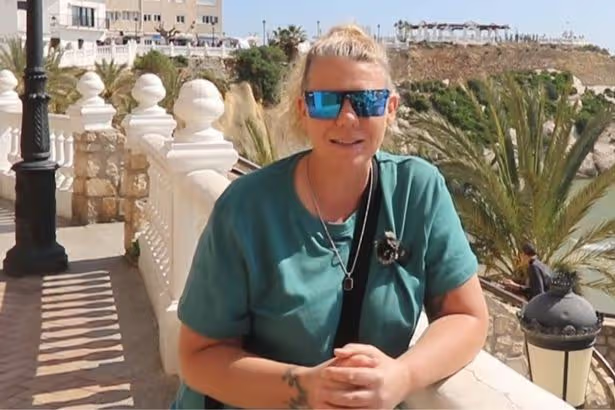
Lucy Young has lived in Benidorm for over 20 years and shares insights on her YouTube channel – she’s warning British tourists that April will see stag and hen parties in full force after a busy Easter
YOU can explore a Santorini-like island with whitewashed villages for a fraction of the price of the real deal.
Folegandros is an island in the Cyclades known for both pretty beaches and cheaper hotels than its sister island.
Sign up for the Travel newsletter
Thank you!
The island is a quiet alternative to Santorini with beautiful beaches like LivadakiCredit: AlamyChora is the main town with whitewashed buildings and blue doorwaysCredit: Alamy
Unlike its neighboursMykonos and Santorini, Folegandros doesn’t have an airport or huge hotels – the island didn’t even have electricity until 1974.
It’s been dubbed an ‘under-the-radar Greek island’ seeing much fewer visitors.
Santorini gets around 3.4million visitors each year, meanwhile Folegandros gets 50,000.
There’s still lots to see and visitors will find most of the island’s life in the main town of Chora of which is perched on a cliff around 200 metres high.
It’s where most of the shops, restaurants, cafes and tavernas are found.
Make sure to try Matsata, which is a handmade fresh pasta, which looks similar to tagliatelle, that was founded on Folegandros.
Usually it’s served with cooked meats like rooster, rabbit, or goat in a rich tomato sauce and topped with grated cheese.
For those who want the best island view, take the steep, winding path up to the Church of Panagia.
CNNlisted Chora in their top seven most beautiful villages in Europe, writing: “Santorini’s streets sag with admirers.
“But on Folegandros, a nearby island, you’ll find similar architecture—streets paved in slate, whitewashed buildings decorated with colourful flowers, the occasionalGreekOrthodox church with a bright blue dome—without the crowds.”
Being a Greek island in the Aegean Sea, Folegandros has plenty of beautiful beaches and has been praised for its “emerald-blue” waters.
Some of the island’s top ones include Katergo Beach which has white sands and blue waters.
Visitors have gone as far as to say it’s the “prettiest beach on Folegandros.”
Stays in Kallisti Hotel start from £82 per nightCredit: KallistiThe hotel has incredible views across Chora and its hilltop churchCredit: Kallisti
Another is Livadaki Beach which most visitors access by boat rather than foot.
Its remote location means it is less busy than other beaches on the island and it’s said to be an ideal spot for snorkelling.
Agios Nikolaos Beach is family-friendly with a small bar and taverna on the shoreline.
Depending on the season, the average price of a hotel in Santorini varies but typically ranges from £143–£251 per night – but luxury stays can be as high as £1,000.
While Folegandros does have some luxe stays, there are some more affordable stays too.
The Beachfront Cycladic House can be booked from £74 per night on Booking.com.
The holiday home has a bedroom, a bathroom, a living room, a balcony and it’s just minutes’ walk away from multiple beaches.
Rooms at the Kallisti Hotel which is built in the style of a small village can be booked from £82 per night.
It has a swimmingpool, bar, breakfast room and rooms with balconies with beautiful island views.
The easiest way for Brits to get to Folegandros is by a ferry from Athens which takes around four hours.
Brits can also fly from the UK to Athens in under four hours from as little as £22.
Nate McFall has spent the past six years travelling the globe curating tourism content for social media, but he says a cold North East beach town is still one of his favourite places
Alan Johnson Politician and Alan Johnson
15:52, 25 Mar 2026
A travel content creator has highlighted a North East town as one of his favourite places in the world(Image: palliki via Getty Images)
A globetrotter who has dedicated the last six years to travelling the world claims the finest destination he’s discovered is a “cold little beach town” in the North East of England.
Nate McFall, whose videos focus on highlighting unusual accommodation and travel adventures, posted on Instagram where he admitted there’s nowhere quite like home.
“I spent six years travelling the world, and yet somehow this is still one of my favourite places I have ever been,” he opened in a clip filmed on the shoreline. “I didn’t realise when I left, but this place shaped me in more ways than I can explain.”
While he may have visited Australia, New Zealand and South East Asia recently, Nate maintains this chilly North East coastal spot still “hits different” whenever he returns.
Content cannot be displayed without consent
“It was actually here about eight years ago that I tried surfing for the first time,” he went on, displaying a photograph from the moment in 2018.
“It was cold – like properly cold – but something shifted in me that day because if I could surf in the freezing cold North Sea, what else is possible?”
Nate admitted that throughout his journeys he had been “chasing something” he’d already discovered.
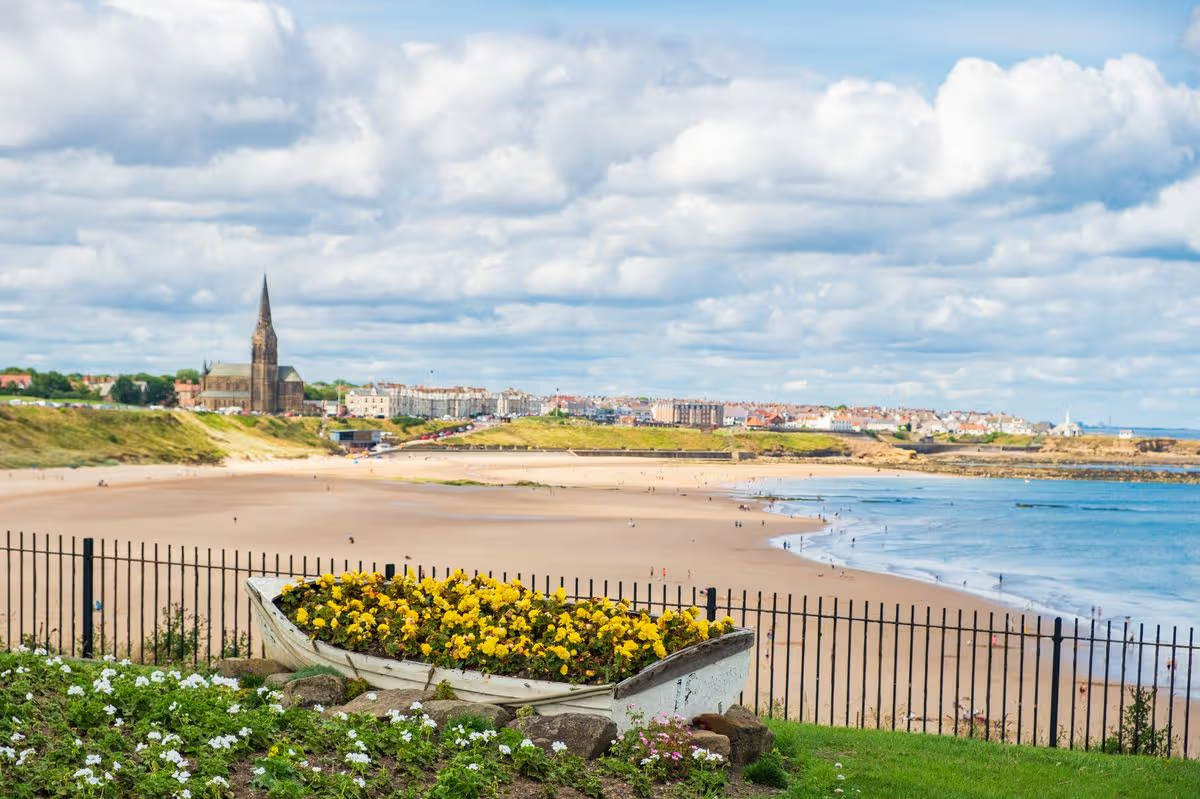
“This is Tynemouth,” he revealed. “A small coastal town, but it’s full of life. Wherever you look, people are enjoying this place running along the seafront, swimming in the sea and surfing.”
Nate also pointed out the wealth of coffee shops dotted around the town, noting that at weekends, Tynemouth’s Victorian railway station “turns into a bustling market” of people selling “delicious food, crafts and handmade trinkets.”
The traveller also declared Tynemouth home to the “best chip shop in England”. He made his way back down towards the beach to show the reasons why.
“It’s served out of what is basically a shipping container [called The View],” he explained. “There’s a fresh sea breeze and with fishcake in hand, I top it off by looking at 1,000 year old ruins [Tynemouth Priory and Castle] right next to me.”
Nate concluded by stating he’s utterly convinced the UK possesses beauty that countless people fail to appreciate.
Enjoying a chilli fish empanada from Riley’s Fish Shack, he closed: “It’s proof that you don’t always need palm trees or plane tickets. Some of the most unreal places are right here on our doorstep.”
Writing in response, one Instagram user enthused: “I love this – I’m from Whitley Bay and am a wild swimmer so am always at the beach when I visit home. It’s such a special place.”
A second person declared: “Love Tynemouth and Riley’s fish shack, on a summers night as it gets a little chillier, sitting around one of the fire pits with friends is such a good way to finish a weekend.”
A third commented: “Love this. I am in New Zealand. So many beautiful places in the world. No country has the title of best place. Tynemouth looks cool. I will visit it now when I next visit UK.”
And a fourth person praised: “Thanks Nate. Spent many lovely days at Tynemouth as a child. Haven’t been back in 50 years since my family moved to Florida, USA. But still have fabulous memories. Thanks so much for reminding me.”
TRAVELLING by car over the Easter break can be a challenge.
As Brits across the nation hit the road to enjoy the school holiday, traffic can reach a peak – and so can frustration.
Sign up for the Travel newsletter
Thank you!
Although you can’t control potential jams, planning your route and choosing the best time to travel, as well as getting your car and the kids prepared beforehand, can help smooth out bumps along the way.
Run through the checklist below to help reduce last-minute mayhem, costly breakdowns and tears on long journeys.
Follow National Highways’ T.R.I.P. tips for hassle-free motoring.
Safe T.R.I.P. Checks
The most essential hack for a smooth ride is to make sure your car is ready for the road before leaving your driveway.
Taking a bit of time in the days leading up to your journey can potentially save hours of hassle and significant costs if your vehicle were to break down.
The checks every driver needs to perform are easy to remember with T.R.I.P.:
TOP UP your fuel or battery charge, oil and screen wash
REST with planned stops every two hours for at least 15 minutes
INSPECT tyre pressure and tread before setting out, to make sure you can drive safely. See how
PREPARE for all weather conditions
Running out of fuel and tyre issues are among the top causes of breakdowns and incidents on roads.
Taking the right precautions will help you get to your Easter break safely and on time – and the good news is that they only take a few minutes to complete.
For help with performing Safe T.R.I.P. Checks, head to the National Highways website for everything you need to get them right, including some handy how-to videos.
Care necessities
After ticking off your Safe T.R.I.P. Checks list, it’s time to make sure you have all your travel essentials to hand.
It might feel like you’re packing for a week on safari, but being prepared for any eventuality means you can enjoy your journey with less stress.
As well as the kids’ snacks and activities, keep coats handy even if the weather looks fine.
Other helpful kit includes travel pillows and blankets, a travel potty for little ones and a first aid kit.
Sunscreen and sunglasses are a must because car windows don’t fully protect us from UV rays and there may be glare from the sun.
If you’re travelling with more than one child, headphones can be a godsend, while a power bank will make sure they don’t run out of juice.
Finally, to keep things clean and tidy, think about packing a seat organiser, a carrier bag for rubbish, a change of clothes in case of accidents and a pack of wet wipes.
Break it up
Make sure the driver doesn’t get tired. As well as planned stops to give everyone the chance to stretch their legs, this means getting a good rest the night before.
When planning your journey, allow enough time for those breaks. Aim to stop every two hours for at least 15 minutes.
As a guide, a baby shouldn’t be in a car seat for longer than two hours at a stretch, while newborns and premature babies need a break every half hour.
Before heading out, try looking for rest spots on your route that will make the journey more interesting.
Twenty minutes at a farm shop, café or garden centre can be a great alternative to a service station.
Snack attack
There’s nothing worse than being stuck in bumper to bumper traffic with a gaggle of hungry kids on board. So make sure you have plenty of goodies to tide them over.
As well as treats, try to include some healthy choices so you don’t have to deal with a sugar crash.
Avoid grapes, which could be a choking hazard, and anything that could trigger car sickness such as greasy or rich foods and dairy products.
It’s important to bring plenty of water, especially on a warm day, so replenish those refillable bottles before hitting the road.
Play time
Entertainment and games on your journey will make getting there part of the fun.
Try trusted favourites like I-spy, 20 Questions or the Alphabet Game, listen to music or audiobooks, or download a film onto the kids’ devices before you leave home.
Sticker books or reusable window stickers are also a winner, while older children will enjoy car-friendly board and card games, like magnetic Ludo or Monopoly Deal.
Visit National Highways to learn more and get ready to have a safe T.R.I.P.
IF you’re planning a trip to the Cotswolds, one of the most popular areas is the ‘Golden Triangle’.
Not to be confused with the Indian Golden Triangle (covering New Delhi, Agra and Jaipur) the Golden Triangle of the Cotswolds covers three of the most popular towns.
Sign up for the Travel newsletter
Thank you!
The Cotswolds has its own ‘Golden Triangle’Credit: AlamyChipping Norton is where a lot of the celebs like The Beckhams liveCredit: Alamy
In between these towns are the famous fancy attractions such as Soho Farmhouse and Daylesford organic farm shop.
The first town is Chipping Norton, which is where a number of famous celebs live.
Storm Therese has wreaked havoc across the Canary Islands, but a British expat is urging holidaymakers not to cancel as he claims big changes are coming at the start of April
Alice Sjoberg Social News Reporter
15:21, 25 Mar 2026
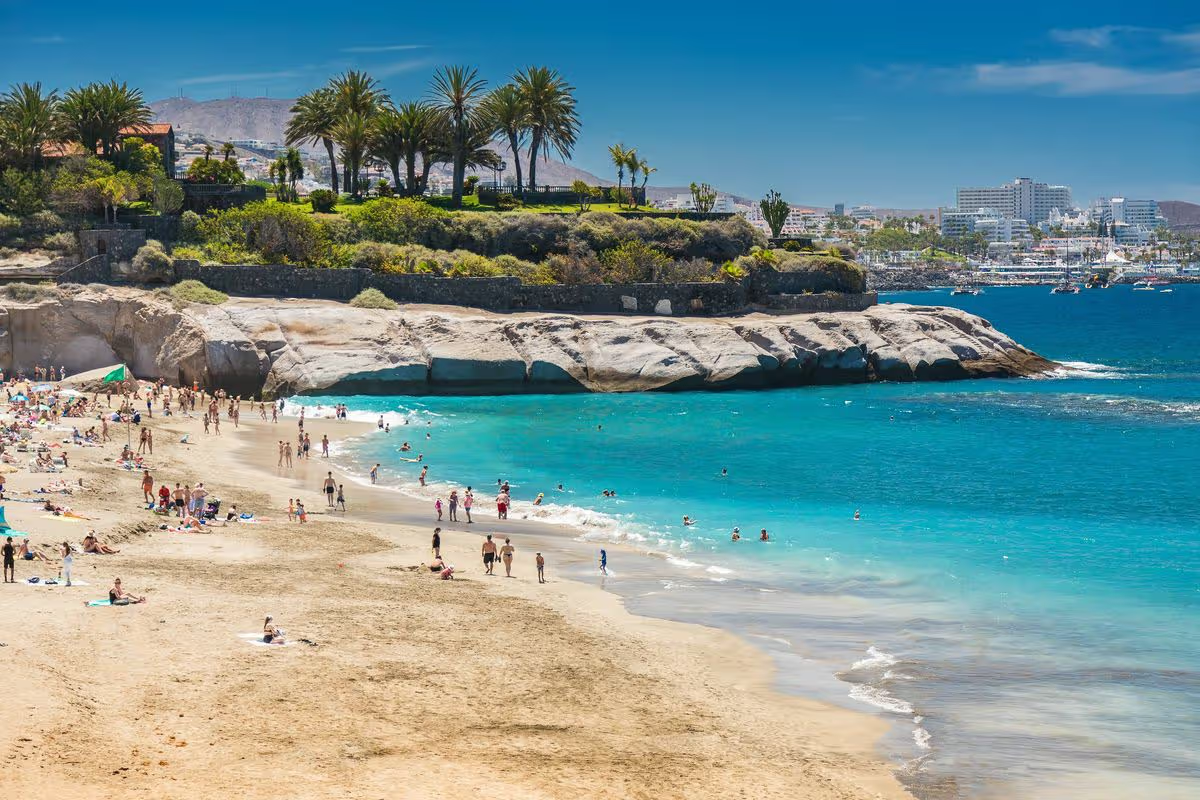
Holiday paradise Tenerife was recently hit by severe weather in Storm Therese (stock image)(Image: Getty Images)
Weather chaos has been wreaking havoc across Spain recently as Storm Therese sweeps through the Canary Islands, particularly Tenerife and La Palma – prompting numerous holidaymakers to abandon their plans after anticipating days basking in the sunshine.
The storm is currently bringing an unusual mix of torrential rain, 100 km/h (62 mph) winds, and significant snowfall at higher elevations. Authorities have issued a full-scale emergency in Tenerife, calling it one of the most serious storms to strike the archipelago in more than a decade. Despite this, it appears locals are beginning to see light at the end of the tunnel, as they’re encouraging people to maintain their holiday plans.
Taking to TikTok, one British expat named Mattie Barnett posted on the Tenerife First Excursions account, where he works, to reveal that a major shift is anticipated to arrive in Tenerife in April.
“Bollocks to the rain in Tenerife,” Mattie declared at the opening of the video, before briefly outlining that they’d been forced to endure days of rainfall in the Spanish holiday hotspot. But now, the sunshine had finally returned.
Content cannot be displayed without consent
Gesturing towards the popular Playa del Camisón beach, he remarked: “There were people queuing at eight this morning to get the sun beds after half a day of rain.”
Mattie, who hails from Lincolnshire, went on to predict that the weather will likely remain sunny with pleasant temperatures of around 24 degrees through to the weekend. While early April may bring some overcast conditions, Mattie expressed optimism that the warm summery weather would return shortly afterwards.
It appears holidaymakers are placing their trust in Mattie’s forecast, as numerous people confirmed they’re pressing ahead with their travel plans.
“Coming next Wednesday. Need to be seeing blue skies, palm trees and everything in between,” one person commented. Another user stated: “I come on the 28th hopefully still good weather.”
Spain’s meteorological agency, AEMET, is forecasting that the rainfall will cease by Friday, 27 March, when sunshine will return, with temperatures hovering around 21 degrees for the remainder of the week and throughout Easter weekend, which is typical for this period.
Meanwhile, weather maps from WXCharts suggest that portions of the UK could be battered by heavy snowfall and temperatures plummeting to -9C between April 3 and April 5 – Easter weekend.
Weather charts indicate the snow zone stretching approximately 480 miles from the Scottish Highlands across northern England and the Midlands down towards areas of southern England.
At least 12 major cities could find themselves in the trajectory of the wintry conditions, which may trigger worries about travel chaos, school closures and hazardous driving conditions.
Air Passenger Duty (APD) is set to increase, with the tax usually passed on to passengers
Airlines will have to pay more tax, and this is usually passed on to customers(Image: Grant Faint via Getty Images)
British holidaymakers are being warned that flight prices are soon very likely to rise.
Among many other price hikes Brits are likely to encounter this April, Air Passenger Duty (APD) is poised to rise on flights departing from most parts of the UK from April 1. While APD is levied on airlines and aircraft operators, the costs are typically transferred to passengers at the point of booking. Charges vary depending on the distance travelled, with categories for domestic journeys as well as distances spanning 0 to 2,000 miles, 2,001 to 5,500 miles, and beyond 5,500 miles.
From April onwards, passengers taking an economy domestic flight within the UK will fork out an additional £1, bringing the cost to £8 per leg. Travellers will pay £2 extra for economy short-haul flights, with the rate climbing from £13 to £15. The levy on an economy medium-haul flight – covering 2,001 to 5,500 miles – will jump by £12 to £102, and by £12 – from £94 to £106 – on a long-haul journey.
The surcharge is considerably steeper for those travelling in premium class, escalating to £32 for short-haul, £244 for medium-haul, and £253 for long-haul. And for those opting for private jets, the hike will see APD rocket from £673 to £1,141.
The aforementioned rates exclude Northern Ireland and the Scottish Highlands and Islands. HM Revenue and Customs (HMRC) clarifies that passengers on flights departing from airports in the Scottish Highlands and Islands region are exempt. This region encompasses:
the Highland Region, Western Isles Islands Area, Orkney Islands Area, Shetland Islands Area, Argyll and Bute District, Arran, Great Cumbrae and Little Cumbrae.
in the Moray District, it includes the parishes of Aberlour, Cabrach, Dallas, Dyke, Edinkillie, Forres, Inveravon, Kinloss, Kirkmichael, Knockando, Mortlach, Rafford and Rothes.
Passengers on flights from other parts of the UK to airports in this area are not exempt.
Direct long-haul flights leaving from Northern Ireland airports are exempt from APD. However, for domestic and short-haul flights departing Northern Ireland, the standard rates apply.
AN American airline’s plan for new couches in economy has been hailed as a “game changer.”
It means a far more comfortable flight for travelers seeking additional space to sleep.
Sign up for the Travel newsletter
Thank you!
United Airlines has revealed that it will launch a new couch option for travelers booked for economy class from next yearCredit: GettyCustomers traveling in United relax row will receive additional amenities for their flight including a custom-fitted mattress padCredit: PRNewswireYou put the arm rests up, and then angle the adjustable, flip-up leg rests to form a couchCredit: YouTube/United
United Airlines has announced a “relaxed row” to allow travelers to stretch out and have a better rest in economy class.
It involves transforming economy seats into a couch between two rows of seats.
The initiative will provide more comfortable international travel, the airline said yesterday.
“Customers will get a custom-fitted mattress pad, specially sized blankets, extra pillows and a stuffed plush for children to help create a cozy, tranquil environment,” the carrier explained.
“Sounds like heaven to me,” said one thrilled customer.
United‘s relax row option is expected to be available from 2027.
Prices for the perk haven’t been released as yet.
“Customers traveling in United economy on long-haul flights deserve an option for more space and comfort, and this is one way we can deliver that for them,” said Andrew Nocella, executive VP.
Once available, United will be “the first North American airline to offer this kind of seating option and holds North American exclusivity on the design,” the carrier said.
The lie-down couch-style seating will eventually be rolled out across some 1,000 United planes by 2030.
More on United Airlines’ ‘relaxed row’ economy seats that transform into a couch
The option will be available for United customers traveling in the economy cabin on long-haul flights from 2027
A new, dedicated row of three seats will be outfitted with individually adjustable leg rests that fold up at a 90-degree angle.
The formation of the couch will create more room to sleep, stretch out or watch a movie.
Customers traveling in United relax row will receive additional amenities for their international flight.
This includes a custom-fitted mattress pad, a specially sized plush blanket, two additional pillows, as well as a plush toy and children’s travel kit for families.
The airline plans to offer it on more than 200 Boeing 787 and 777 widebody aircraft by 2030.
The seats will be located between United economy and premium plus, with up to 12 relax row sections on each plane.
They aren’t just available for families, as single travelers can also purchase the row, added United.
Around nine to 12 couches will be available per aircraft.
The seats will have individually adjustable, flip-up leg rests.
These can then be angled to create more room to sleep, stretch out or watch a movie.
Their provision follows a similar option offered by Air New Zealand, which already offers a row of economy seats that convert into a lie-flat couch after takeoff.
Travelers commenting on United’s version have said that it will be worth the extra money.
United Airlines chief commercial officer Andrew Nocella introduces the United relax row for the economy cabin during on March 24Credit: AFPThey will eventually be rolled out across 200 Boeing 787 and 777 widebody aircraft by 2030Credit: AFP
“I’ve used the sky couch a bunch, and for traveling with young kids on long haul flights it’s an absolute game changer, worth every penny,” raved one flyer on Reddit yesterday.
“I love the skycouch on Air New Zealand and have used it multiple times between the US and Auckland,” wrote another traveler.
“Obviously you don’t get the bells and whistles of a first class seat, but the lie flat feature is the only thing that allows me to sleep on airplanes so for me it’s perfect.”
“Family and I use the Air NZ sky couch every time we travel between NZ/US,” shared one parent.
“It’s a game changer and we always choose Air NZ for that reason. Will start looking seriously at UAL now for our travels.”
Those traveling by themselves can pay for the whole rowCredit: YouTube/UnitedUp to 12 ‘relax rows’ will be available on about 1,000 United planes used for long-haul flightsCredit: YouTube/UnitedUnited hasn’t as yet revealed the price for the new couch perkCredit: Getty
FROM rooftop bars in South Africa to swimming pools in Marrakech and sundrenched terraces in Madrid – Sun Travel has found of the most affordable spots in the world’s best cities.
These 10 stays are the perfect places to rest your head while travelling around the world and they start from just £6 per night.
Sign up for the Travel newsletter
Thank you!
Never@Home Green Point in Cape Town has a rooftop poolCredit: UnknownThe Amsterdam hostel has a bar in a former lecture hallCredit: Unknown
Cape Town, South Africa
Cape Town is the sixth best city in the world according to Time Out.
It has beautiful beaches and buzzy neighbourhoods, all set against the backdrop of the enormous Table Mountain.
When it comes to affordable places to stay check out Never@Home Green Point near Cape Town Stadium.
Along with private rooms and shared ones (including female-only), the hostel has a rooftop swimming pool, bar and chill-out lounge.
A stay at Never@Home Green Point starts from £20 per night.
Amsterdam, The Netherlands
Amsterdam sits at number 34 in the list of the world’s best cities with pretty canals and gabled buildings.
There are plenty of attractions to explore as well as lots of busy bars and cafes to explore.
Anyone heading to the city should take a look at Generator Amsterdam which is inside a former university building overlooking Oosterpark.
One of its most impressive rooms is the bar inside a former lecture theatre.
A bed in one of the dorm rooms starts from £15 per night.
Edinburgh, United Kingdom
With its enormous hilltop castle, winding Royal Mile lined with plenty of shops and of course, pubs – Edinburgh has been announced as the third best city in the world.
It’s easy to walk about on foot and those brave enough should hike up to Arthur’s Seat.
When it comes to where to stay, consider the Castle Rock Hostel which is right next to Edinburgh Castle with easy access to the Old Town.
It has plenty of communal spaces and is a perfect budget stay for Edinburgh explorers – a night in one of the dorms at the Castle Rock Hostel starts from £15 per night.
Osaka, Japan
Travelling to Japan is on the rise, and while flights there are likely to be expensive, staying there doesn’t have to be.
Time Out, which named Osaka as the 39th best city in the world, also said it’s the “undisputed street food capital of Japan“.
When looking for a base to explore and fill your stomach with delicious takoyaki and yakitori, check out Hotel Toyo Hostel.
It’s basic but offers private rooms and is in the heart of the city with stays from £10 per night.
Kraków, Poland
Nicknamed the ‘jewel of the Baltics’, Kraków is said to be ‘fairytale-like’ with its colourful buildings and grand squares.
The pretty city is filled with pretty gardens, parks, and for beer fans, you can get a pint for as little as £1.50.
Any guest that checks into Greg & Tom Beer House Hostel gets free breakfast, dinner and there’s even free beer hour starting from 9pm.
The hostel is three-minutes from the Main Square and rooms start from £10 per night.
Generator Amsterdam has spacious rooms inside a former university buildingCredit: UnknownThis hostel in Marrakech has a pretty courtyard and a swimming poolCredit: Unknown
Marrakech, Morocco
The 24th world’s best city is Morocco’s vibrant Marrakech where you can haggle in busy souks, take in history at the medinas and stop in traditional tearooms.
To get into the spirit of Marrakech, all the while saving pennies, check into the Equity Point Marrakech.
It’s a unique spa hostel with a swimming pool and even offers hammam and massages to guests.
It also has a relaxing courtyard area and a rooftop bar with views across the city.
One visitor wrote in their review: “The Pool, rooftop terrace, and rooms are amazing. I wish we stayed longer and i would definitely recommend it to anyone who is visiting Marrakesh.”
A stay here starts from £8 per night.
Dublin, Ireland
Closer to home is vibrant Dublin a city known for its charm, old boozers, and friendly locals.
The hostel that has a mix of private rooms and shared dorms is near the Jameson Distillery and the famous Temple Bar.
Rooms start from £25 per night.
Lisbon, Portugal
Lisbon is hard to beat with the best of both worlds; coast and city.
Some of the most famous attractions include the Jerónimos Monastery, Belém Tower and with it being so hilly, taking the tram is a popular transport choice.
There are plenty of tascas too where you can dig into bacalhau (salted cod) and sip on sangria.
A stay here starts from £20 per night (a two-night minimum stay is required).
Buenos Aires, Argentina
There’s so much to do in the capital of Argentina from eating its world-class food to exploring the city’s vibrant culture.
Stewart Jackson, the Sun’s UK Digital Editor, who visited the city described it as a “brag-to-your-friendscity breakthat is achingly cool and, once you’re there, incredibly cheap.”
Cocktails can be picked up from £4 and a 30-minute taxi journey can be as little as £3.
Affordability doesn’t stop with places to stay either – First Stop Buenos Aires Hostel is a budget-friendly hostel in the heart of the city.
The hostel offers a variation of rooms – some are private with adjoining ensuites.
A one night stay starts from £20 per night.
Generator Madrid a huge rooftop terrace with a bar, sunloungers and hot tubsCredit: Unknown
Madrid, Spain
Food, nightlife, culture – and just over two hours from the UK, Madrid should be top of your list for a city break.
She said: “It feels more livable than other more tourist destinations, with an amazing food and drink scene.
“I mingled with the locals at Pez, where the only thing on the menu is huge sloppy pieces of tortilla chased with a cana (small beer) or tinto de verano for €2.50 (£2.16).”
Generator Madrid is just off of Gran Vía known as ‘Spanish Broadway’ and is a top pick thanks to its rooftop terrace with a bar, sunloungers and hot tubs.
The hostel holds social events too like yoga and DJ sessions and a night in one of the dorms starts from £6 per night.
THE first ever Bluey rollercoaster in the world is coming to the UK this week.
The new ride will be part of CBeebies Land at Alton Towers.
Sign up for the Travel newsletter
Thank you!
First images of the new Bluey ride in the UK have been revealedThe ride is based on the episode where they dress up a grannies Janet and Rita to cause trouble.Credit: Alton TowersThe ride is designed for preschoolersCredit: Alton Towers
Called “Bluey the Ride: Here Come the Grannies!”, the ride will let both adults and kids hop in a carriage behind Bluey and Bingo.
It’s based on the episode where they dress up a grannies Janet and Rita to cause trouble.
The ride is made for younger riders, specifically for preschoolers.
Meet and greets with all the characters is also possible at the park, which includes Chilli, Bandit, Bluey and Bingo.
Future plans include more Bluey-themed hotel rooms too, with one already at the CBeebies Land Hotel.
Howard Ebison, Vice President of Alton Towers Resort said: “It’s exciting to be able to give eager fans and families an official first-look at our newest attraction Bluey the Ride: Here Come the Grannies! this spring at Alton Towers Resort.
“This first glimpse of the ride shows what promises to be an exciting experience for the whole family – from little ones to grandparents – which bring the limitless energy of Bluey to life.”
The new rollercoaster opens on March 28.
Sun writer, Hannah Ferrett, recently stayed in one of the Bluey rooms that are already open at Alton Towers.
She said: “The kids slept in Bluey and Bingo’s room, complete with bunk beds, the recognisable watermelon rug and the cartoon dogs’ pretty Himalayan rock salt night light — a nice touch for little ones.
“My partner Dan and I were in Bandit and Chilli’s room, which had a king size bed, TV and lots of pictures of Bluey and Bingo as puppies, much to the delight of our kids.”
“Even the bathroom had pictures of Bluey and her sister plastered across the walls.”
A new ranking compares international tourist numbers to locals in European cities – and one tops the list with a staggering 16,250 visitors for every 100 residents
These destinations are the most crowded in Europe(Image: Alexander Spatari via Getty Images)
Summer is on the horizon, and folks are starting to map out their holiday plans. Being based in the UK, we’re fortunate to have some of the world’s most stunning destinations within easy reach, with iconic cities just a short flight away.
However, many of these sought-after spots are now swamped with tourists – in fact, some now host more visitors than locals. DiscoverCars.com has compiled a new ranking that contrasts the number of international tourists with the local population in European cities. Five of the top holiday hotspots now boast more tourists than residents.
Topping the list is Dubrovnik in Croatia. This breathtaking historical city gained even more fame after serving as the backdrop for King’s Landing in the HBO series Game of Thrones.
Last year, this fortified city welcomed 6.5 million tourists – an astounding figure compared to its 40,000 inhabitants. That equates to 16,250 tourists for every 100 locals.
Taking second place is Reykjavik in Iceland, reports the Express. This Arctic city attracted even more tourists than Dubrovnik, with 7.4 million visitors compared to its 140,000 residents, resulting in 5,286 tourists per every 100 locals.
The city is renowned for its Blue Lagoon thermal baths and, of course, the opportunity to witness the Northern Lights illuminating the sky.
Securing third place is the floating city of Venice in Italy. Arguably one of the most famous cities globally, Venice played host to 10.6 million tourists last year.
Compared to its population of 250,000, that’s a whopping 4,240 international visitors per 100 residents. The city is a hit with tourists for its stunning architecture and the opportunity to glide along its canal streets by gondola.
Switzerland’s Geneva secured fourth place on the list, welcoming 7.8 million tourists in 2025. With a local population of 200,000, this equates to 3,900 visitors per 100 residents.
Renowned for its breathtaking views of the Alps, Geneva serves as an excellent base for day trips into the mountains and exploring the picturesque villages scattered throughout them.
Porto in Portugal claimed fifth place. The city attracted seven million international tourists in 2025, against its population of 250,000.
With 2,800 tourists for every 100 residents, it’s a highly sought-after destination. The narrow streets are adorned with beautiful architecture and striking Portuguese tiles, providing a perfect backdrop for photos.
With the river slicing through the city, you can discover both sides of the city in a day – just remember to bring your walking shoes.
A POPULAR train station is getting a long-awaited, multi-million pound upgrade.
South Kensington is often called a ‘museum hub’ by being the gateway to three free attractions – the V&A, Science Museum and the Natural History Museum.
Sign up for the Travel newsletter
Thank you!
South Kensington Station is getting a huge makeoverCredit: TFLThe train station will get a £120million upgradeCredit: TFLIt includes step free access and a reopened platformCredit: TFL
And the train station is about to get a huge makeover to make it much easier to travel to and from.
The new plans revealed by TFL will see the Grade II listed station be modernised.
This includes step free entrances, and a new eastbound platform for the Circle and District lines.
Being the busiest London Underground station with no accessible entrance, it is though as many as 500,000 journeys aren’t made to the station because of it.
Around 30million passengers use the station every year, with the Circle, District and Piccadilly line stopping there.
Works are set to start later this year, and will be completed by 2029.
Bruno Carr, head of investment planning at TfL, said: “This transformational scheme will deliver much-needed step-free access to this station, while also making the area around it more pleasant for the millions who visit the nearby attractions and museums every year.”
Scott Anderson, head of property development at Places for London, said the upgrade would make the station the “jewel of the Tube network”.
Part of the station opened in 1868, with the Metropolitan line (no longer running there) and the District line.
The train station’s crowds are expected to continue, especially after the nearby Natural History Museum was named the most popular attraction in the UK.
Overtaking the British Museum, more than 7.1million people visited last year.
Millions a year also visit the V&A and Science Museum in South Kensington along with the Royal Albert Hall.
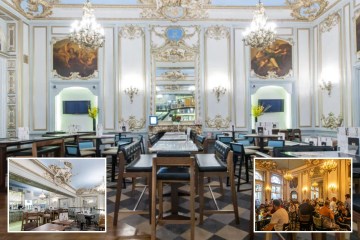
People are raving about a Wetherspoons pub which they say feels like being in a fancy hotelCredit: JD WetherspoonsHamilton Hall is found in London Liverpool Street StationCredit: JD WetherspoonsMany of the original features have been restoredCredit: JD Wetherspoons
Named after Great Eastern Railway Company Lord Claud Hamilton, it became a Wetherspoons in 1991.
It was both the first central London Wetherspoons and the first in a train station.
While the hotel itself is still open – you can stay at what is now the Andaz London Liverpool Street for £260 a night – many of the original features remain in the pub.
This includes the ornate mouldings and frescos, as well as the celling decorations, and artwork.
It is popular with train travellers and football fansCredit: AlamyIt was the first central London Wetherspoons to open more than 20 years agoCredit: JD Wetherspoons