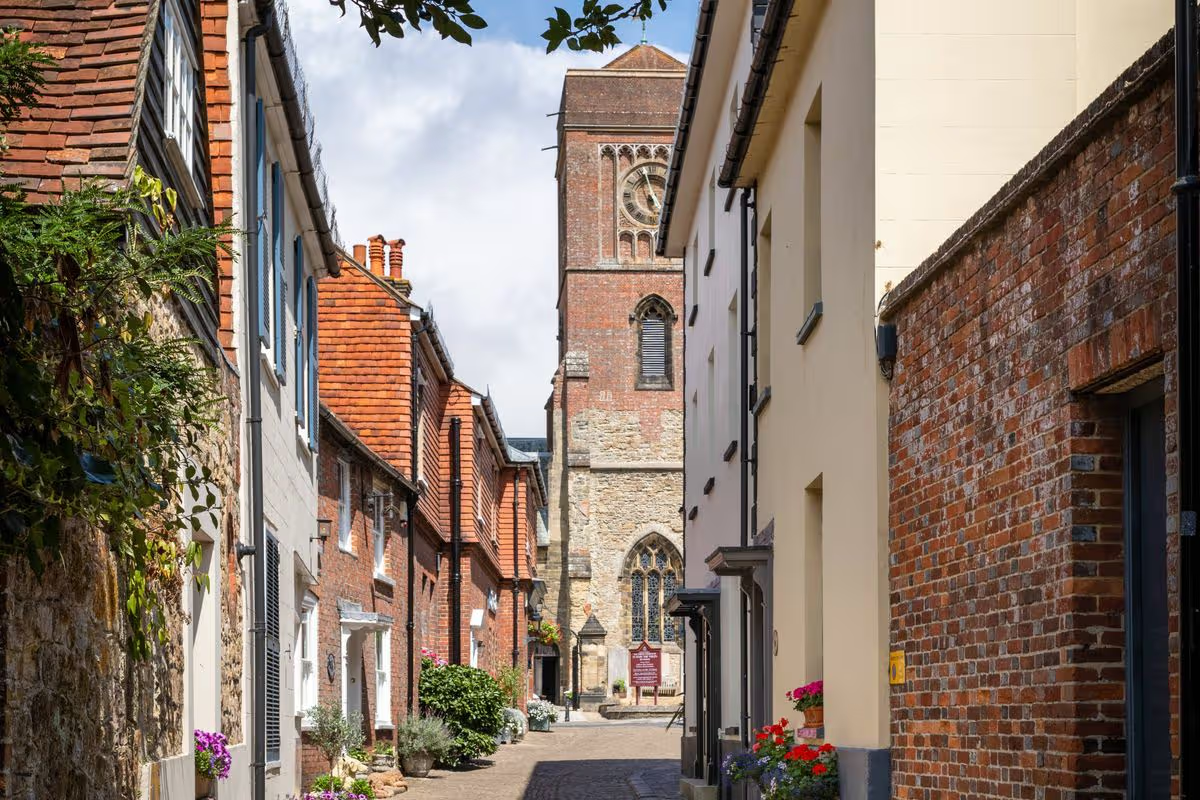
Set against the backdrop of narrow cobbled lanes and ancient Georgian architecture with independent shops and a thriving antique scene, is a picturesque UK town
The town is steeped in history, among its picturesque backdrop(Image: Getty Images)
A charming English town offers a glimpse into bygone eras, with its narrow cobbled lanes and more than 400 listed buildings, set against diverse landscapes.
The historic town of Petworth in Sussex has an undeniable charm with its 17th-century Georgian architecture, ancient stone cottages and winding cobbled alleyways. There are hidden treasures around every narrow corner of this pretty town, brimming with independent boutiques and cosy cafés, as well as delicatessens and welcoming pubs.
It’s conveniently located just over half an hour’s drive from Chichester and approximately 50 minutes from Portsmouth, offering a delightful day out among its unspoilt surroundings. It was even named by Condé Nast Traveller as one of the UK’s most beautiful towns, due to its picturesque location.
But it’s Petworth’s flourishing art and antiques scene that truly stands out. The medieval town, boasting over 400 listed buildings, has an array of galleries and more than 30 antique shops where visitors can discover ancient gems.
One of the most sought-after destinations for vintage items is Petworth Antiques Market, home to more than 40 dealers selling everything from beautiful furniture to ornaments and a vast collection of homeware. One visitor wrote on TripAdvisor: “I absolutely love going to the Petworth Antique Market, the customer service is amazing with extremely friendly, helpful staff, and I always always find beautiful treasures there!!”
After an afternoon spent uncovering vintage goodies, visitors can sample the flavours at one of their eateries, with The Hungry Guest on Middle Street standing out as one of the town’s finest establishments. Offering seasonal, locally sourced, fresh and artisanal dishes, the restaurant truly enhances Petworth’s culinary reputation.
There’s also a selection of welcoming pubs, including The Welldiggers Arms, The Black Horse Inn and The Angel Inn. But beyond the town centre, Petworth serves as a haven for avid walkers.
There are diverse terrains easily accessible from the charming town, including the dramatic chalk hills of the South Downs National Park and the ancient woodland of The Mens Nature Reserve. However, Petworth House and Park remain the town’s crown jewel, with its expansive 700-acre parkland encircling the magnificent 17th-century Petworth House.
Guests can take time touring the historic stately home and uncover an outstanding collection of world-class art and sculptures. The estate stands as one of the finest surviving examples of an English landscape crafted by the celebrated Lancelot ‘Capability’ Brown.
Another striking feature at Petworth Park is the hundreds of deer that roam freely around the sprawling grounds. They can be readily observed, or visitors can take in the breathtaking vistas of the South Downs while wandering through the grounds.
The National Trust park has undoubtedly placed Petworth firmly on the map and is a favourite among visitors. Particularly after featuring in major film productions, such as Napoleon, Rebecca, and Maleficent, as well as Netflix’s hit drama Bridgerton. Visitors
After a visit, one holidaymaker enthused: “Another National Trust gem! Had a wonderful day there. So much to see and wonderful walks in the grounds and deer park. The art collection is outstanding, and as usual, the volunteers in the house were great. Had an interesting talk in the square dining room about the family’s history. Found the kitchens fascinating! Great cafe too. Highly recommend.”
Do you have a travel story to share? Email webtravel@reachplc.com
For the past 36 years, architects, engineers and all sorts of artists have descended on the tiny Swedish town on the outskirts of Kiruna to construct the latest iteration of the ice hotel
It’s not the cold that gets you first. It’s the quiet.
For some of the guests to the ICEHOTEL in the Arctic town of Jukkasjärvi, it isn’t the -10C bedroom temperature that causes them to abandon their £600 ice bed in the middle of the night and make for the hard wooden slats of the mercifully heated changing rooms, but the oppressive, complete silence that comes with being in a room constructed entirely snow packed onto ice foundations.
“If you didn’t know you had tinnitus before, you certainly will once you spend a night in here,” explained guide Glen as he gestured into our icy room for the night.
Poking out from around the doorway was another unnerving element: an adult-sized ice baby.
For the past 36 years, architects, engineers and all sorts of artists have descended on the tiny Swedish town on the outskirts of Kiruna to construct the latest iteration of the ice hotel. The building process begins when massive blocks of ice are harvested from the Torne River. Each block weighs up to two tonnes and is stored cold during the summer, ready for the winter and the construction of the ICEHOTEL in October. They are not there to build uniform, utilitarian ice rooms, however. Instead, they construct something between the fictional ice palace in James Bond’s Die Another Day and a fairground house of fun.
My wife and I were to sleep in one of 12 art suites, ours titled ‘There is no one here’ and created by Turkish artists Ayla Turan and Kemal Tufan. Five round-faced, jellybaby-like figures were in there with us, one standing guard at the door, another popping its head over the bedstead. A third seemed stuck in the wall, as if splinched by a Harry Potter apparition gone wrong.
Before bedding down for the night, guests have a chance to visit the other 11 art suites—that is, before they are shuttered up in April and left to quietly melt into the river beyond. A particularly striking creation is ‘Arctic Archive’, the work of Kristina Möckel and Sebastian Scheller. Each wall is made of rows of shelves filled with hundreds of snow books.
Carl and Malena Wellander’s ‘Survival of the Fittest’ lets guests sleep alongside some of the toughest creatures on the planet: tardigrades. These unusual little “moss piglets” can survive in any habitat on Earth, in space and, it seems, the ICEHOTEL.
What’s less certain is whether Robin Lind and Charlie Hammarlund’s Crystal Souls are evil or benevolent figures. The two blurry, Dr Who-like characters are trapped behind an ice block, seemingly desperate to get through.
There are several ice hotels in the world, but the ICEHOTEL is the first and biggest. Its life began in 1989 when Yngve Bergqvist, who had built an art gallery from ice and snow in his garden, opened its frozen door to Swedish soldiers who needed a place to stay. He woke in the morning in a panic. The temperature had plummeted deep into the -20Cs overnight, and Yngve was convinced he’d killed the troops. He rushed out to the gallery to find them happily making breakfast, having survived the night in their thick Arctic sleeping bags.
Since then, the ICEHOTEL has let thousands of guests do the same. In truth, when tucked up inside a winter duvet-thick sleeping bag, atop reindeer furs, the only real difficulty I had was keeping my snorkel-like nose warm as it peeked out of the bedding folds.
There are several reasons why the hotel is where it is: the proximity of the river and the climate, of course, but also Kiruna, where the vast iron ore mine has delivered untold wealth, an international airport and engineering expertise. Yngve himself spent five years down the mines before turning his skills to hospitality.
It is truly a marvel, both creatively and technically. Using 1,000 tonnes of ice and 30,000 tonnes of snow-ice mixture, the structure is built using steel moulds, snow cannons and huge, perfectly clear blocks.
On the other side of the courtyard from the art suites is the year-round 365 Hotel, which uses cooling techniques to keep the ice from melting even in the height of Arctic summer, which, in fairness, did once reach 24C.
The less transient nature of this part of the hotel has given its creators licence to go bigger. Guests first walk into the bar, where a spiral staircase (made of ice) leads up to an elevated seating area (also made of ice), where you can enjoy a cocktail in a glass (also, ice). Once used, these are tossed into the river from whence they came.
Having donned an extra pair of socks after a foot-numbing tour, I shared a drink with a couple from Leicester who’d spent three days husky sledging, ice fishing and reindeer spotting on a blowout 50th birthday anniversary trip. And blowout it was.
The one hesitation I have about this undeniably magical place is the price point. The cost for an ice room for the night is 4000 SEK (£320) for two, with breakfast included. In itself, not a bad price at all. But once the flight to Kiruna via Stockholm, or the 16-hour night train, is factored in, along with the frankly eye-watering £150pp cost of a fairly average dinner at the ICEHOTEL restaurant, there might not be much left over for excursions. And there has to be given the £400 cost of a private sauna ritual and £800 private transfer to the airport via husky sledge.
But really, no one was in the mood for griping about a few krona or öre once ensconced in this ice palace. I suspected it’d be a magnificent place before I arrived, but I wat I didn’t realise is that it’d be so funny. From my creepy ice baby guard and lounging otter statue to the ice slide that directs tipsy guests back to their room, the ICEHOTEL is packed with witty and unexpected surprises.
Book it
The cost of staying at ICEHOTEL varies depending on the type of room, time of year, and package selected. To sleep in a room made of ice and snow costs from 4000 SEK per night (2 people, B&B). Go to www.icehotel.com
I stayed in a chocolate themed hotel suite that was full of delicious treats – but what surprised me the most wasn’t the edible chocolate in the bathroom.
This article contains affiliate links, we will receive a commission on any sales we generate from it. Learn more
I stayed in a chocolate hotel room
Hidden away, just an hour from the UK, is a hotel suite completely draped in chocolate. This is accommodation that money simply cannot buy, but no, you don’t need a golden ticket – you merely have to be the world’s kindest person.
Tony’s Chocolonely has teamed up with the Social Hub in Amsterdam to offer a select few people an overnight stay in this extraordinary, chocolate-themed room. And I was fortunate enough to become the first guest to experience it.
From the cupboards and shelves brimming with chocolate, the overwhelming chocolate aroma, and the inspirational messages scattered throughout, this suite was a remarkable space I won’t forget in a hurry.
However, it wasn’t just the edible chocolate in the bathroom that surprised me the most: it was the deeper meaning behind the competition.
What to expect
I stepped into the room through enormous red curtains to find a personal bartender, who prepared a beverage of my choosing. I opted for the Salted Caramel Espresso Martini, which was incredibly tasty and decadent. The bartender was welcoming, considerate and engaging.
I was then given free rein to discover the suite’s three spaces: the principal red one, a concealed blue room, and an upstairs monochrome room.
Each space conveyed its own theme and function: the red for community and connection, the blue for self-reflection, and the black and white for gratitude and recognition.
In the red room, I discovered a self-contained kitchen featuring a functioning hob, coffee maker, sink, microwave, a create-your-own ice-cream sundae station, a well-stocked fridge containing various beverages, and (crucially) cabinets brimming with chocolate.
Every visitor receives a shelf packed with chocolate which they can take away, to share with the loveliest people in their lives (or someone less lovely, should they wish). Messages about kindness and connection were dotted throughout. There was even a chocolate Jenga available with questions printed on the wrappers.
The blue room features a fortune slot machine, which requires finding tokens scattered around the suite to operate. Within it, you can collect chocolates and discover self-reflective questions. I invited my brother along, who was posed the question: “What’s one belief you have changed your mind about?”
He answered: “That I’m not good enough.” This wasn’t something I anticipated him revealing or knew he’d struggled with, because to me, my older brother is nothing short of perfect.
Finally, we entered the black-and-white room, where visitors can leave a message of kindness for the team or the following guest. Charlie Ayres, head of brand at The Social Hub, commented: “We wanted every part of the room to spark togetherness and encourage kindness, using chocolate to create opportunities to share, interact and above all, be sweet to one another.
“This is a one-off, limited experience designed to celebrate some of the world’s sweetest people, while also telling a more important story. Through our partnership with Tony’s Chocolonely, we hope to spark conversation around exploitation in the chocolate industry, showing how experiences can be both joyful and meaningful.”
My night in the chocolate ‘red room’
The red room, along with the black and white room, was our accommodation for the evening, and the space is, quite frankly, enchanting.
Upon entering, I was met with a delightful chocolate aroma that wasn’t overly sweet but rather nutty and creamy. Everything appears extraordinary, and just when you think you’ve discovered all the chocolate, you open a new cupboard or area, and there’s even more.
The bed felt like sinking into a cloud, complete with a soft mattress and a thick duvet. Personally, I would have preferred the room to be a tad warmer, as it was a large area with only air conditioning and no heating.
However, there were ample blankets available, which kept me snug and warm. One minor issue was the television, which we couldn’t seem to get working, but this encouraged my brother and me to continue conversing.
I awoke feeling incredibly refreshed. We indulged ourselves with a scrumptious sundae before receiving a heartwarming and delightful wake-up call that encouraged us to share the kindness we’d experienced with the wider world.
Reflecting on his time there following the visit, my brother remarked: “Sweetness and warmth even down to the scent wafting throughout the rooms. It had a spacious bathroom, a comfortable bed and an abundance of chocolate as a treat at hand, anywhere you looked. Thought and caring touches sprinkled throughout promoting mindfulness and a reminder that peace doesn’t happen in a vacuum.”
The chocolate-themed room will remain available for the next three days. Enthusiasts in Amsterdam can also visit the space on March 29 from 1 pm.
The message
When the world requires a touch of kindness, this partnership seeks to inspire people to engage with family, friends, and even complete strangers, and to appreciate the significance of making decisions that benefit those in their community.
Trix van der Vleuten, chief marketing officer at The Social Hub, explained: “The world feels increasingly divided. We’re more digitally connected than ever, yet loneliness is rising. We wanted to come together with Tony’s to showcase that sweetness, simple, human kindness, matters more than ever, and that people can enjoy our products while positively impacting society.”
Through this launch, Tony’s Chocolonely aims to spotlight its commitment to aiding approximately 40,000 cocoa farmers in achieving a sustainable income. The firm’s head of global brand and communications, Sadira E. Furlow, stated that the brand’s goal is to eradicate exploitation within the cocoa industry by demonstrating that chocolate can be produced more ethically.
I thought I had all the time in the world, but it turns out I needed even more.
We were lucky not to miss our flight home from Paris(Image: Vita Molyneux)
For over a year, I’ve been writing articles about the new Entry/Exit system introduced at European borders. This system, which mandates UK travellers to provide biometric data when entering or exiting the Schengen area, began its phased implementation in October 2025.
It’s expected to be fully operational across all airports by 10 April 2026. I’ve extensively covered the rollout and its potential to cause delays for travellers. However, when my partner and I flew back from Paris last month, it completely slipped my mind.
We were returning to London, and since we both prefer lounging in the airport rather than outside, we had some time to spare. We enjoyed a drink, a meal, and then decided it was time to meander towards our gate.
We had been awaiting the gate announcement, and as soon as it was made, we set off to locate it. Imagine my astonishment when we turned the corner to find a queue of people waiting for gate access.
I had entirely forgotten about the additional security checks. Even though I believed we had ample time, that time was now rapidly slipping away.
Only one kiosk was open, with a queue of at least 30 people, and the clock was ticking down to our flight’s departure. As we stood there, another 40 individuals joined the queue behind us, yet still, only one kiosk was operational.
Passengers were slowly allowed through, with groups permitted to approach the kiosk together to have their passports verified, fingers and faces scanned, before being sent on their way.
The process was painfully slow. The queue barely seemed to budge, and more people continued to join behind us. From the snippets of conversations I caught, everyone appeared as taken aback — and stressed — as I was.
I heard more than one person mutter something along the lines of “surely they won’t let us miss our flight?” Another responded: “I wouldn’t put it past them to be honest.”
Fortunately, my partner and I had started relatively close to the front, so we managed to reach the gate just in time. As for the people behind us, I have no clue.
This wasn’t even peak season, and it more than doubled the time it took to board our plane. We were flying at the end of February — very much the off-peak period. I can only envisage the chaos as the rollout completes across all of Europe, and summer travel commences.
Travelling during peak season is already stressful, and if my experience is anything to go by, it’s about to become even more so. All I can suggest is even if you think you have enough time at the airport, add more.
Christmas is still quite some way away, but one attraction is already putting tickets on sale for its magical experiences, and if previous years are anything to go by it could sell out quickly
This immersive experience takes kids on a magical journey to meet Father Christmas(Image: LaplandUK)
It doesn’t feel that long since the Christmas decorations were packed away, but one festive attraction is already putting its tickets on sale today (March 27) for the Christmas 2026 season.
Tickets for LaplandUK, which has locations in Ascot and Cheshire, will go on sale tomorrow at 10AM with over a million people expected to join the queue. The experience is often likened to booking Glastonbury tickets, as hopeful parents will need to wait in a virtual queue and have ten minutes to complete their order once they reach the front.
Ticket prices for 2026 have been confirmed, starting at £60 for midweek dates in November, up to £155 per person for peak weekends in December. Both venues will also host a ‘Superstar Day’ on November 25 which is “adapted for families and guests with access requirements to create a quieter, more relaxed and accessible environment.”
While the tickets are costly, the cost does include a range of experiences that set it apart from the average Santa’s grotto. Families receive a special gift boxed invitation ahead of their day out to build the excitement, and this message from Father Christmas personally invites little ones to visit LaplandUK to help the elves with toy-making.
On arrival, visitors step into a magical world, walking through several different interactive experiences from the Elven Bazaar, where guests have to work out how to enter the door to Lapland, to the Lapland Bakery where kids can help make some Christmas treats before enjoying storytime with Mother Christmas.
The experience lasts around four-and-a-half hours, according to the LaplandUK website, and also includes ice skating, a soft toy for every child, a small toy to give to kids on Christmas Day, and of course, a special visit with the man in red himself, deep in a snowy forest.
Husband-and-wife founders of LaplandUK, Mike and Alison Battle, took to Facebook to update fans of the attraction about changes that are being made for 2026. Alison said: “Every year, we challenge ourselves to make the experience more special, more magical, more believable. And this year, we’ve got some very exciting things in store for you.”
The pair announced that invites would be sent earlier this year, towards the end of the summer, to build anticipation of the event. They added that the return experience will be upgraded, so that “coming home will be just as magical”, and that visitors to Little Rudy’s Stables will now be able to make reindeer food to take home with them.
One of the major changes will be in the Elven Village, which the pair said has expanded over the years to be more immersive and include more characters. Guests will now get more time in the village to listen to stories at Fable’s Library, skate on the ice rink, and meet characters along the way.
Those hoping to grab tickets for LaplandUK can either register on the official site to get a ticket booking link ahead of the sale, or visit the website from 9am to join the queue.
LaplandUK’s Facebook page confirmed that both sites will have their own booking queues accessed through a unique link. It said: “Upon entering a queue, you will be randomly assigned a place before bookings open. When the queue begins moving at 10 AM, you’ll gradually make your way forward.
“Once you reach the front, you will have 10 minutes to complete your booking for your chosen location.. We truly cannot wait to welcome you to Lapland to make treasured memories together this Christmas.”
Have a story you want to share? Email us at webtravel@reachplc.com
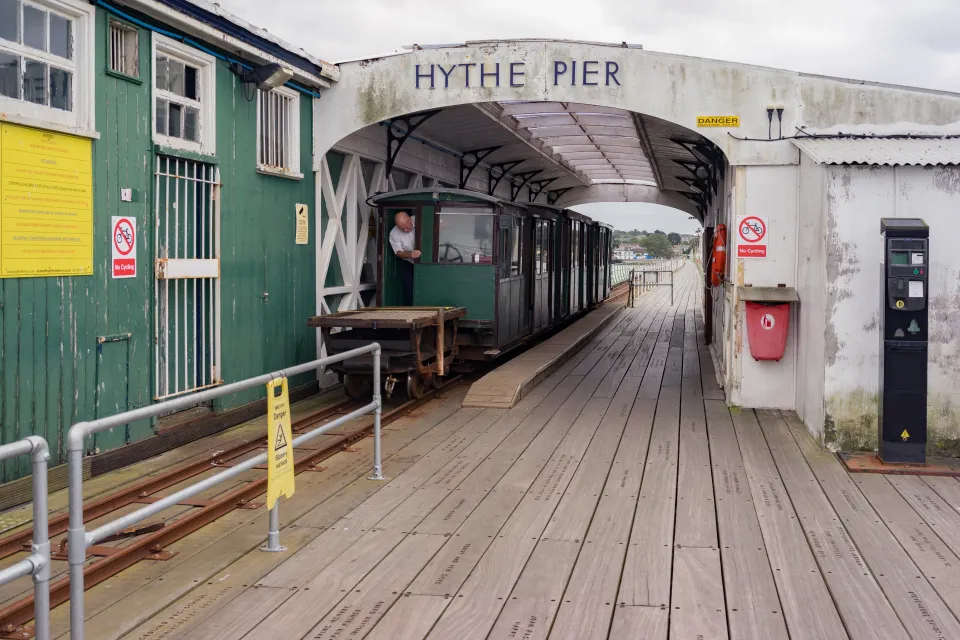
A HISTORIC Hampshire pier is set to reopen to the public for the first time since its closure in 2024 after undergoing months of work.
Hythe Pier will reopen on Thursday, April 2 following major electrical improvements and a subtle revamp.
Sign up for the Travel newsletter
Thank you!
Located in Hampshire, the pier is a crucial stopping point for the Hythe FerryCredit: Getty
Under the management of Hythe Pier Companies, it will cost visitors £1 to walk along the pier, but children under five will be allowed on for free.
A spokesperson for the Hythe Pier, Train and Ferry Group said: “Every £1 you spend goes back into the pier, supporting its future as we begin our transition into a charity.
“Come and walk the full length of the pier (700 yards / 640 meters) take in the views, and be part of this next chapter.”
The attraction is the UK’s seventh-longest pier but has been shut for more than a year and has kept essential ferry services closed, disrupting life for locals.
A crucial stopping point for the Hythe Ferry, which ran regular services to Southampton before the closure, the pier has been essential to the community.
Although the reopening is good news for tourists, the essential ferry and train services that once connected the village to Southampton are not yet back on track.
Local councillor Malcolm Wade explained that the pontoon, owned by ferry operator Red Funnel, has been broken for almost two years, leaving commuters, football fans and day trippers cut off.
“We’re waiting for Red Funnel to decide what they’re going to do, because they’ve already written to us to say they’re not interested in running the ferry anymore and we want our ferry back”, he said.
Hythe Pier, Train and Ferry Group said: “We could see how incredibly important it was that we bring our much-loved pier back to the community.
“This is hopefully the first step towards restoring the service.”
The attraction is the UK’s seventh-longest pierCredit: Getty
THERE’s a pretty hotel hidden in amongst the Buckinghamshire countryside which is perfect for a staycation.
Read on to find out more about Burnham Beeches Hoteland the nearby known for its royal connections that’s just a 15-minute drive away.
Sign up for the Travel newsletter
Thank you!
I stayed in a calming Oak Character Room which had views across the groundsCredit: Kitten & SharkDownstairs is a spa with a swimming pool, jacuzzi, steam room and sauna
Where is the Burnham Beeches Hotel?
Tucked down narrow and windy roads in Buckinghamshire is this beautiful countryside escape.
The huge mansion was once a private Georgian home – and, quite frankly, I’d even go as far as to call it one of the county’s best-kept secrets.
You would never realise it’s there until you turn into the driveway and it opens up to the sprawling hotel with manicured gardens and a tennis court.
Burnham Beeches Hotel is a short drive away from Windsor, Slough and Maidenhead, but its location completely out of the way means you won’t hear any traffic.
In fact, I couldn’t hear much aside from gentle cooing of pigeons, and the hoot of an owl after nightfall.
What is the hotel like?
The main building at the Burnham Beeches Hotel is grand, kept in the style of a manor home.
Inside, there’s a huge contrast in room design, each varying from deep blues with thick orange velvet curtains in the Arden dining room, to light and airy spaces like the pretty Evergreen Tea Room.
On the more modern side of the building, the first thing you’ll notice is the calming scent, which makes sense as it’s where you’ll find the main spa area.
The reception has modern check-in tablets that are very easy to use – but there is always staff around if you need any help.
What is there to do there?
Thanks to its location, the hotel is a great base for those wanting to see more of Windsor which is a 15-minute drive away.
Here, you can see the castle and take a stroll down The Long Walk. The pretty village of Burnham is just down the road as is Ascot Racecourse and Legoland.
Guests can also make the most of the facilities in the hotel too. Use of the Temple Spa is included with an overnight stay, and guests get complimentary robes, towels and slippers.
The spa has a gym, small pool, steam room, sauna and jacuzzi.
Spa treatments are available too from 30-minute relaxing massages to hour-long facials, manicures and pedicures.
You can also hire out equipment to have a go in the tennis and pickleball court.
Or borrow one of the bikes free of charge, to explore the grounds and surrounding countryside.
Afternoon tea is popular here which you can enjoy in the Evergreen Tea RoomCredit: Kitten & Shark ImagesIn the evenings, dine in the plush Arden RoomCredit: Kitten & Shark Images
What is there to eat and drink there?
When it comes to dining, eat in the plush Arden Room. Here, I tried the sharing Gambas al Ajillo, which is Spanish-style prawns, followed by a crispy duck salad.
The king prawn and chorizo linguine (which has a slight chilli kick) and smooth coconut and lime panna cotta was also delicious.
Whether you’re a pre-dinner drinker, or fancy a post-dining tipple, the sleek Verdure Lounge Bar is where you want to be.
There’s a huge range of drinks from cocktails to wine and a refreshing pint of Mahou on draught.
In the morning, find your way to the Brasserie where there’s a generous breakfast buffet waiting for you.
It has everything you could want, from continental options like yogurt and fruit, along with classic English breakfast offerings.
At each table was a Tiptree jam stand, and I’d recommend enjoying a pot with a thick slice of sourdough. You can refill your juice, tea, and coffee as often as you’d like, too.
A traditional afternoon tea is popular here, where guests can sample a selection of sandwiches, cakes, and scones alongside a cup of tea, or upgrade for a glass of Prosecco or champagne.
What are the rooms like?
There are 79 rooms and suites at the hotel all varying in size and design. Each comes with free Wi-Fi, heating, a hair dryer, television, tea & coffee making facilities and an ensuite.
I was lucky enough to stay in one of the beautifully designed Oak Character Rooms, which had nature-inspired wallpapers with an enormous dark blue velvet headboard with green cushions and a burnt orange throw.
Its two large windows looked out onto the gardens and let in lots of natural light.
The modern ensuite had a large shower with White Company toiletries.
For those who are bringing fluffy members of the family, you can book for your dog to come along too, from £35 (max weight of 15kg per room).
Rooms have nature-inspired wallpaper and some rooms have free-standing bathsCredit: Kitten & Shark Images
Is Burnham Beeches Hotel family-friendly?
Yes. The Hive Family Rooms can sleep two adults and either two children under 10 years, or two adults and one child over 10. You get all the normal amenities, as well as 24-hour room service.
Children are allowed in the swimmingpool but must be accompanied by an adult if under 16.
Is there access for guests with disabilities?
The hotel offers accessible ground floor rooms, and while the spa facilities are not currently wheelchair accessible, a selection of treatments can be brought directly to the room.
To book an accessible room, call the hotel in advance.
Room rates start from £149 B&B based on two sharing.
I heard the ribbit of a Pacific chorus frog and couldn’t stop my feet as they veered me off the official trail and onto a foot path leading down to Wiley Creek.
I grew up with a pond in the pasture behind my house where I could listen to the riotous sound of amphibians any evening I wanted. The soundscape of freshwater habitats is such a comfort to me.
I sat down on a boulder near the water, trying to remain still. The frog had quieted after spotting me, and I hoped it would restart its song, understanding I was not a threat but instead just a big fan.
This was the first of many beautiful moments I experienced on my recent hike through Ed Davis Park in Towsley Canyon in Newhall. It features shady canyons with blooming wildflowers and wildlife that appear to be thriving. I would later learn that a walk through Towsley Canyon is also a journey through the history of environmental activism in the Santa Clarita Valley. This area was once slated to become a landfill.
You are reading The Wild newsletter
Sign up to get expert tips on the best of Southern California’s beaches, trails, parks, deserts, forests and mountains in your inbox every Thursday
By continuing, you agree to our Terms of Service, which include arbitration and a class action waiver. You agree that we and our third-party vendors may collect and use your information, including through cookies, pixels and similar technologies, for the purposes set forth in our Privacy Policy such as personalizing your experience and ads.
And because I got confused by this, I will point out: The Rivendale Park and Open Space is also nearby, at the mouth of Towsley Canyon near the northeast corner of Ed Davis Park. So you could find yourself hiking along one of its trails as well.
Ed Davis Park offers access to multiple trails, including:
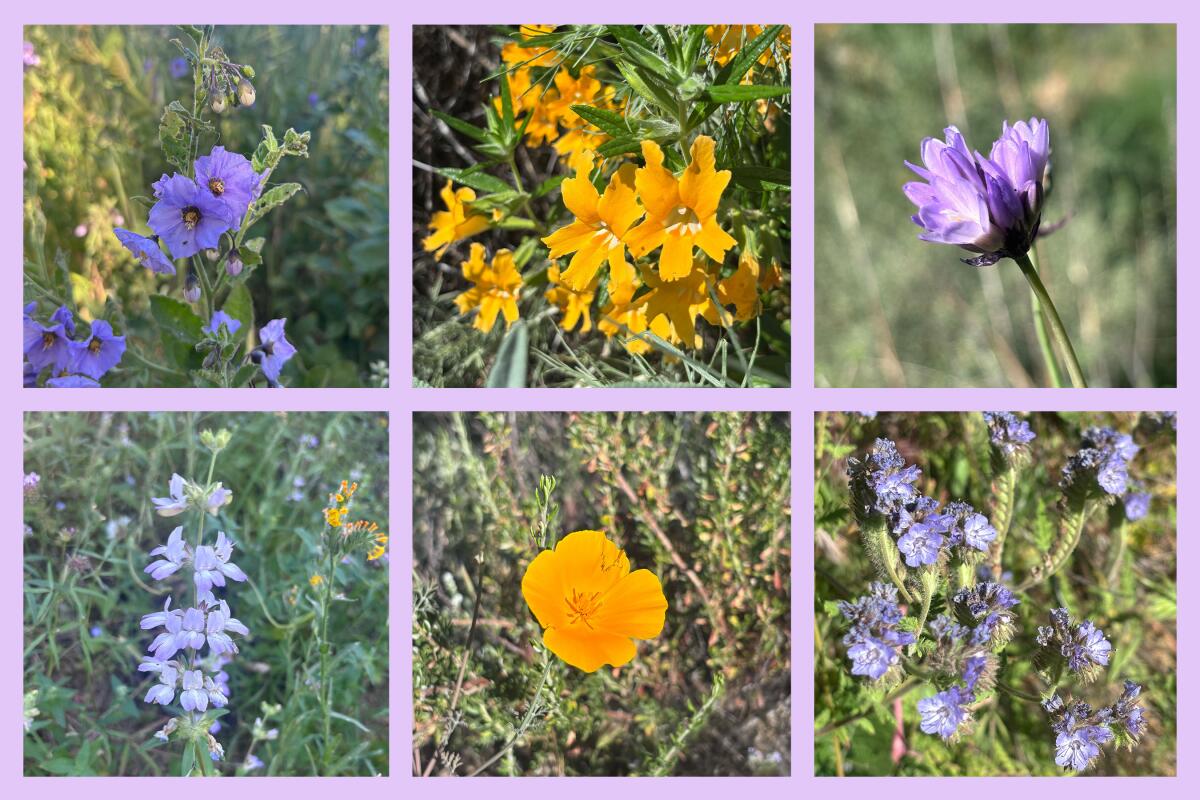
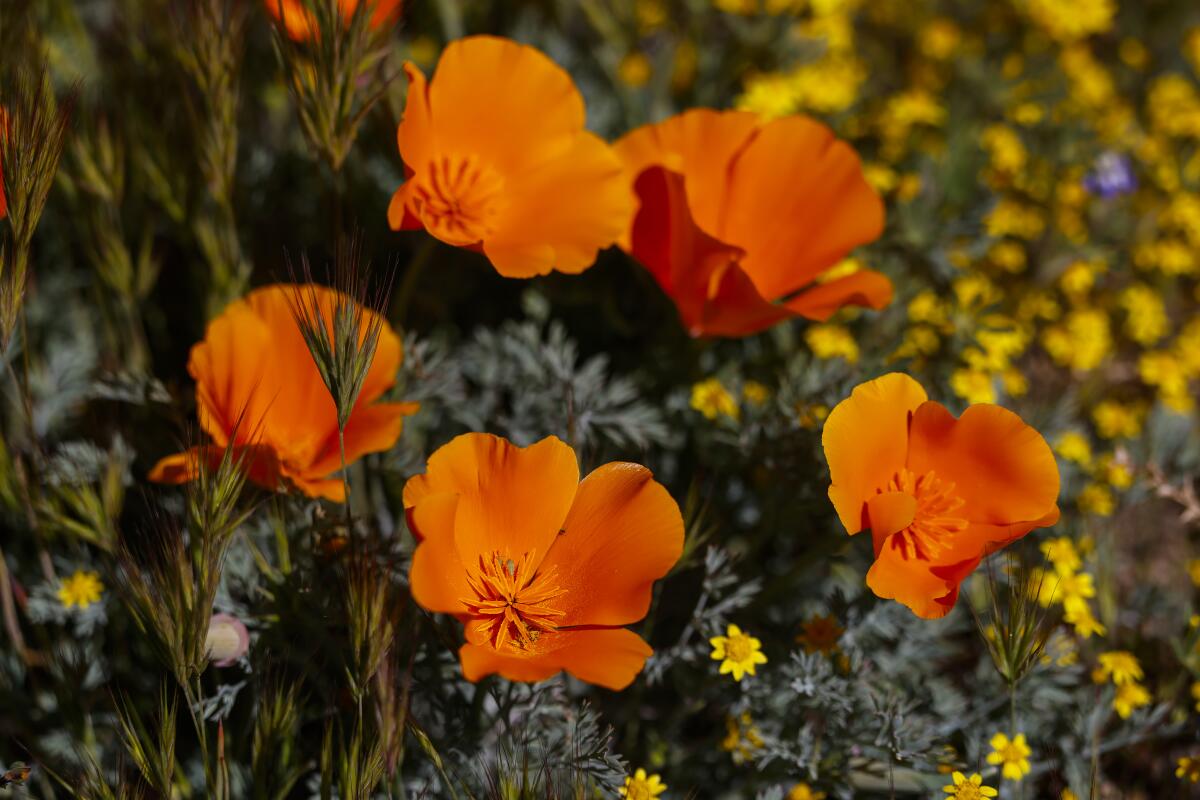
Clockwise, southern bush monkeyflower, blue dicks, phacelia, California poppy, a flower and purple nightshade that appears to be a collinsia heterophylla.
(Jaclyn Cosgrove / Los Angeles Times)
I arrived at Ed Davis Park just after 9 a.m. last week with a plan to take a short hike, given the high temperatures forecast that day. I parked near the entrance in the large dirt free lot. Note: There were no restrooms or portable toilets that this outdoors reporter could find anywhere nearby, so plan accordingly.
From the parking lot, I headed west, quickly turning south onto Wiley Canyon Trail. I was immediately greeted by a lesser goldfinch, perched on a strand of wild rye like a feathered park ranger.
The trail was initially a bit rutted but quickly smoothed out. As I headed into Wiley Canyon, I found myself in a crisp cool landscape shaded by large oak and California black walnut trees. I quickly heard running water. When I checked the thermometer hanging on my backpack, it read 69 degrees.
Clockwise, lesser goldfinch, western whiptail, convergent lady beetle and a lizard.
(Jaclyn Cosgrove / Los Angeles Times)
Although I could hear nearby traffic and a Southwest plane passing overhead, it didn’t block out the dynamic soundtrack of the canyon’s avian residents: the oak titmouse, northern mockingbird, blue-gray gnatcatcher and Hutton’s vireo, which, according to my birding app, were all above and around me.
As you travel along the canyon, you’ll find purple sage bursting out of the ground, and blue dicks starting to bloom. I passed by several ceanothus with white and blue-violet blooms. I really took my time taking in the native plant landscape and was lucky to spot a convergent lady beetle sipping on dew on a blade of grass.
After my short visit to the creek to find frogs, I was looking up to observe a turkey vulture and red-tail hawk circling overhead, seemingly competing for airspace, when I noticed the California dodder nourishing itself atop several plants on the hillside. Although it is a parasitic vine, this orange otherworldly being does indeed serve an important ecological purpose.
California dodder in the Towsley Canyon area around Newhall.
(Jaclyn Cosgrove / Los Angeles Times)
“Dodder will flower during the hot summer months, providing native insects with a valuable meal and drink during the months when many other California native plants are dormant,” Jorge Ochoa, an associate professor of horticulture at Long Beach City College, wrote for the Friends of Griffith Park regarding the plant’s purpose.
I continued south, passing a spotted towhee digging in the dirt for its breakfast. Then, just under half a mile in, I turned northwest onto the Don Mullally Trail. The trail is named after a naturalist who, according to park signage, “traversed every canyon, led countless hikes to unforgettable destinations, and shared the Woodlands’ unparalleled native tree associations and ecological majesty.” May we all be so lucky!
A shady portion of a trail in the Towsley Canyon area around Newhall.
(Jaclyn Cosgrove / Los Angeles Times)
This is where you’ll start to gain some elevation — and sun exposure. But it’s also where you will find the most blooming wildflowers! I quickly spotted phacelia with bright purple blooms, and as I headed west, an increasing number of California poppies and southern bush monkeyflower.
Towsley Peak near Towsley Canyon in Newhall.
(Jaclyn Cosgrove / Los Angeles Times)
Ed Davis Park is home to a robust butterfly population. I found a kaleidoscope of pollinators among the wildflowers and weeds, including a checkered white butterfly who was eagerly drinking from invasive mustard. I chuckled to myself. It didn’t seem to mind feasting on one of the most hated plants in Southern California.
The trail does turn into a narrow single track with thick vegetation, so please take good care as you’re hiking. I was very aware of the likelihood that I would encounter a rattlesnake, and I made sure to stomp my feet and pause from gaping at the flowers to make sure I wasn’t about to step on anyone. Additionally, watch out for poison oak, which I found growing among California black walnut.
Purple sage grows thick along the trails in Towsley and Wiley canyons. You might also spot an outdoors journalist who doesn’t realize their shadow is in the photograph until they get home.
(Jaclyn Cosgrove / Los Angeles Times)
Just over a mile in, I paused to take in the view. Several peaks in the Sierra Pelona Mountains, including Liebre Mountain, Burnt Peak and Jupiter Mountain, were easy to see from the trail, even though they’re about 20 to 25 miles away. I didn’t spend too long there, though, as my thermometer informed me it was 93 degrees in the direct sun. Where did spring go?
I took the Don Mullally Trail down and then the paved Towsley Canyon Road back to where I parked. You’ll notice as you head back that there are at least two paid lots should the free lot be full. You’ll need $7 in cash or a check, which you can deposit in the iron ranger.
The Sierra Pelona Mountains are visible from Towsley Canyon.
(Jaclyn Cosgrove / Los Angeles Times)
A turkey vulture flies low in Towsley Canyon.
(Jaclyn Cosgrove / Los Angeles Times)
Given its astounding beauty, it’s hard to comprehend how this parkland almost became a dump. But around 1989, an intense battle broke out between the Los Angeles County Sanitation Districts, which, at the time, managed wastewater and trash for 78 cities in L.A. County, and the Santa Monica Mountains Conservancy.
In early 1991, the Santa Monica Mountains Conservancy acquired 453 acres of Towsley Canyon, strategically buying a 180-acre parcel at the eastern entrance of the canyon and a 273-acre piece in the heart of it, according to The Times’ archive.
County officials mulled over whether they could still build a smaller dump in Towsley Canyon, but there was a major hiccup. The conservancy’s land was directly across the only two roads into the area, meaning the agency could hinder garbage trucks from using the roads.
“For all practical purposes, the coffin has been nailed on the proposal to turn Towsley Canyon into a landfill,” Joseph T. Edmiston, the conservancy’s executive director, said in a 1991 news article.
At the time, county officials were also considering building a dump at Elsmere Canyon — an effort also successfully fought off by local advocates.
Reflecting on my visit to Towsley and Wiley canyons, I thought about how our trash does indeed end up in someone’s neighborhood, whether that be a canyon wren, a jellyfish or your neighbor in another neighborhood (if we think about humanity and neighbors in a global sense). It’s a further incentive to practice the five Rs: refuse, reduce, reuse, recycle and rot.
I hope your journey through these canyons brings you a similar experience of joy, wonder and deep reflection!
3 things to do
An Egyptian goose in the Sepulveda Basin Wildlife Refuge.
(Amanda Thompson)
1. Better your birding in Pasadena The Sierra Club Angeles Chapter’s Pasadena group will host “Photographing the Sepulveda Basin Wildlife Reserve” from 7 to 9:30 p.m. Wednesday at Pacific Oaks College. Guests will hear from photographer and storyteller Amanda Thompson and visual communicator Joe Doherty about how to better navigate the Sepulveda Basin to observe the flora and fauna that lives there. RSVP at act.sierraclub.org.
2. Cycle on over to Cudahy Nature for All, an L.A. climate justice nonprofit, will host an 8-mile bike ride from 9:30 a.m. to 1 p.m. Saturday starting at Hollydale Regional Park in South Gate. Riders will peddle along the L.A. River before arriving at Cudahy River Park. Participants can reserve a bike by emailing Priscila Papias at priscila@lanatureforall.com. Register at cosechasoftware.com.
3. Frolic under a full moon in L.A. We Explore Earth will host a free full-moon gathering from 5:30 to 8:30 p.m. Wednesday at Elysian Park. Participants will come together for a guided group hike cleanup followed by a sound bath and live music, all under the rising full moon. Register at eventbrite.com.
The must-read
Manatees rest at Blue Spring State Park in Orange City, Fla.
(Explore.org)
As I glided my kayak along the aptly named Crystal River in late March 2019, I couldn’t believe just how close the 1,000-pound manatees came to me and my friends. Nearby, my best friend Jenny squealed as a massive sea cow poked its whiskered snout out of the water next to her kayak. Whenever I’m stuck working indoors, I often turn on the live feed of the manatees at Explore.org. Apparently I’m very much not alone! Times staff writer Lila Seidman wrote that the number of nature-themed 24/7 livestreams created per year swelled by about 3,000% between 2019 and 2025. This genre of entertainment has been dubbed “Slow TV,” as it’s unedited and can be quite calming (although there are grisly moments that remind us of nature’s brutality too).
Regardless, during this heat wave, I’d highly recommend checking out some Slow TV, including local livestreams such as Big Bear’s celebrity eagle couple Jackie and Shadow.
Happy adventuring,
P.S.
For Wild readers who’ve felt like there’s been a real lack of turtle news featured as of late, this one’s for you: During a recent trip, a visitor at Joshua Tree National Park reported to rangers about multiple Mojave Desert tortoises stuck inside a historic dig site in the northern part of the park. Rangers and the visitor ventured into the park and located three trapped male tortoises. “It’s unknown how long the tortoises were stuck in the hole, so biologists immediately began assessing and rehydrating them,” a staffer wrote on Joshua Tree National Park’s Instagram page. As a quick aside, is anyone else rethinking their life’s choices and wondering why they didn’t consider rehydrating tortoises as a profession? Does it include carrying a tiny water bottle? I digress. The park workers built a ramp out of natural materials to ensure any tortoise who scrambled by the dig site didn’t find themselves stuck inside. After the tortoises experienced the world’s cutest rehydration experience, the biologists discerned they were healthy and strong enough to keep trundling along. Shout out to this thoughtful visitor and our hardworking and earnest park workers for being great stewards to our natural world!
For more insider tips on Southern California’s beaches, trails and parks, check out past editions of The Wild. And to view this newsletter in your browser, click here.
Blackpool’s Sandcastle Waterpark has nearly completed it’s renovationCredit: AlamyThe changing rooms have been fully upgradedThe slides are also being repaintedCredit: Sandcastle Waterpark
The main upgrades will include some basic improvements, such as a new changing room village.
Images show a much more modern look for the cubicles, with the waterpark now 40 years old.
The slides are also being repainted, while new sound systems are being installed.
The waterpark, which opened in 1986, will be ready to show off the new look by the Easter holidays.
General manager Kyle Woodcock said: “This is a landmark year for us, and we wanted to mark our 40th birthday with improvements that our guests will really feel.”
In the mean time, there are 18 slides to choose from, as well as wave pools and river rapids.
One of the most popular slides is the Master Blaster which is also the longest indoor watercoaster in the UK.
Another record-breaker is Sidewinder, which is the first indoor half-pipe waterslide in the world.
Kids will love splashing their mates with the country’s biggest water cannon too.
It’s the perfect time to visit the waterpark too – the tropical climate means it is 30C all year round.
Splash out on a private Tiki Cabana, and you get unlimited alcohol and lunch for around £60 each.
The waterpark also has an adult only spa with saunas and steam rooms, which costs an extra £7 on top of a standard ticket.
There are two cafes for food and drink, as well as a shop for anything you’ve forgotten.
THIS valley might look like your average spot in Switzerland with towering mountains and pretty chalet adorned villages – but it has a whopping 72 waterfalls.
It’s called Lauterbrunnen which literally translates to ‘loud springs’ after the crashing sound of falling water.
Sign up for the Travel newsletter
Thank you!
The little-known valley in Switzerland has 72 waterfallsCredit: AlamyThe Staubbachfall Waterfall is almost as tall as the Shard in LondonCredit: Alamy
It’s known for its car-free mountain villages filled with pretty chalets and shops – but what draws visitors to it is the sheer amount of cascading waterfalls, of which there are over 70.
One of the largest and most well-known is the Staubbachfall Waterfall, which sits in the village of Lauterbrunnen – named after the valley.
It’s 297metres tall and is the highest free-falling waterfall in Switzerland.
In perspective, this is almost as high as London’s Shard, which stands at 309metres tall.
There are lots of viewpoints to see the Staubbachfall Waterfall, and those who want to get up close and personal can take the small path to the foot of the falls.
During the summertime, the falls are illuminated in the evenings.
Another waterfall is called Mürrenbachfall, which is even taller, and the water falls from a height of 417 metres.
There’s also the Trümmelbach Falls which a series of 10 unique underground waterfalls – and the largest of their kind Europe.
These impressive waterfalls have made their way through a mountain valley over thousands of years.
Visitors can see them on man-made paths, which are ticketed and cost around £15.
Thanks to its position at the base of the Swiss Alps, Lauterbrunnen is also a sought out ski destination.
As part of the Jungfrau Ski Region, it’s a great place to hit the slopes with 275km of runs and 40 ski lifts.
The best time to visit depends on whether you want to see the waterfalls in all their spring glory, or explore the village in time for ski season.
For those who want to take advantage of hiking, visit between June and September.
Or for a winter wonderland experience, go between January and February.
The Lauterbrunnen Valley sits at the bottom of the Swiss AlpsCredit: Alamy
Unsurprisingly, visitors have described it as “breathtaking” and like “stepping into a storybook”.
The valley has also been compared to J.R.R. Tolkien’s Middle Earth.
And it could have been the inspiration for the author, who visited in 1911.
Not only can you explore the village of Lauterbrunnen by foot, you can also see it and its neighbouring villages by cableway.
Just opposite the main train station is a 100 person cableway that runs from Lauterbrunnen to Mürren.
In just four minutes it climbs 686 metres and has been said to have “breathtaking views.”
Other nearby mountain villages are Wengen, Mürren, Gimmelwald and Stechelberg.
Delays are expected at check-in, baggage handling and other services affecting UK holidaymakers
Robert Rowlands Deputy editor, money and lifestyle, content hub and Maria Ortega
15:11, 26 Mar 2026Updated 15:12, 26 Mar 2026
An EasyJet Airbus 320 NEO landing at Lanzarote airport – file image(Image: Getty)
Major UK tourist hotspots are set to face disruption within days due to widespread strike action. The Canary Islands in Spain is getting ready as unions prepare to go on strike this and next month.
Airports across the Canary Islands are bracing themselves for industrial action by ground handling staff over the Easter period. Trade unions representing workers at Menzies and Groundforce have announced walkouts.
More than 1,500 employees throughout the islands are expected to take part, according to Spanish website Canarias7. Aviation hubs in the Canary Islands are making preparations for the ground handling strike announced for Easter week, which forms part of a nationwide protest.
Three major spots used by Brits are set to be affected, according to the website. Gran Canaria, Lanzarote, and Fuerteventura are all set for disruption.
The industrial action has been organised by staff at Menzies and Groundforce. Reports say the action will almost certainly lead to hold-ups in ground operations – including check-in, baggage processing and collection.
Menzies has a workforce over 600 and handles operations for carriers including Norwegian, British Airways, and EasyJet, among others. It operates at Gran Canaria, Tenerife North, and Tenerife South airports, as well as on the mainland at major airports such as Barcelona, Palma de Mallorca, Málaga and Alicante.
The UGT union-coordinated action will kick off this weekend (28th and 29th March), with further stoppages planned for 2nd, 3rd, 4th, 5th, and 6th April, during the peak travel period for Easter week. Groundforce is a Globalia group firm providing services to Air Europa. We reported earlier this week that the action is taking place over rights and working conditions for staff.
Unions say they are taking strike action over the implementation of pay scales among other things. Close to 900 employees across the Canary Islands – encompassing Gran Canaria, Lanzarote, and Fuerteventura – face disruption. The Groundforce industrial action is set to begin tomorrow, 27th March, with walkouts planned for Mondays, Wednesdays, and Fridays across staggered time slots: 5:00-7:00am; 11:00am-5:00pm; and 10:00pm-midnight.
On the Menzies action, Spanish media reports say that should no agreement be reached, the strikes will continue every Saturday and Sunday until 31 December, following the same timetable. That could lead to months of disruption.
The new Harry Potter series is being filmed in locations across the UK, including at a pretty market town that has been named ‘one of the happiest places to live’
This charming town has been used as a filming location for the new Harry Potter series(Image: Getty Images)
The trailer for the new Harry Potter TV series has been released, prompting excitement among wizards and muggles. The HBO series is being filmed in locations across the UK, including in a picturesque market town that has been ranked as ‘one of the happiest places to live’ in Great Britain.
The highly anticipated Harry Potter series, based on the beloved books by J.K Rowling, will launch onto our screens in Christmas 2026, with the first trailer released this week. Ahead of its arrival, film crews have been spotted in various locations around the UK, as we get ready to welcome a new cast in the hugely popular Harry Potter franchise and watch the magic unfold all over again.
Among the UK destinations set to be featured in the HBO series are London, Hertfordshire, Devon, and Cornwall. However, it came as a surprise to the residents of Skipton, in North Yorkshire, when Harry Potter film crews were spotted in the charming market town.
Skipton has often been dubbed the ‘Gateway to the Dales’, thanks to its position as the southern entrance to the Yorkshire Dales National Park, with its lush valleys and heather moorlands that stretch across more than 2,100 square kilometres. The market town is steeped in rich heritage, with a preserved 900-year-old medieval castle, so it’s no wonder it’s been used as a filming location for Harry Potter.
At the end of last year, Harry Potter film crews were spotted in Skipton, as an actor performed a spell with his wand on top of a rooftop along a terraced street. While various areas in Yorkshire have previously been used as filming locations, residents were thrilled that the Harry Potter production had arrived in the small town of Skipton.
One resident told the BBC: “We’ve had bits of filming before, but I was surprised that they’ve picked it for something as colossal as this, so I’ll be very excited to see the end result.”
The filming reportedly took place on Westmoreland Street in Skipton, but it’s unclear if any further filming was done in the area. Another local told the publication: “It’s always exciting to have film crews hanging around and maybe put Skipton a little bit more on the map than what it already is.”
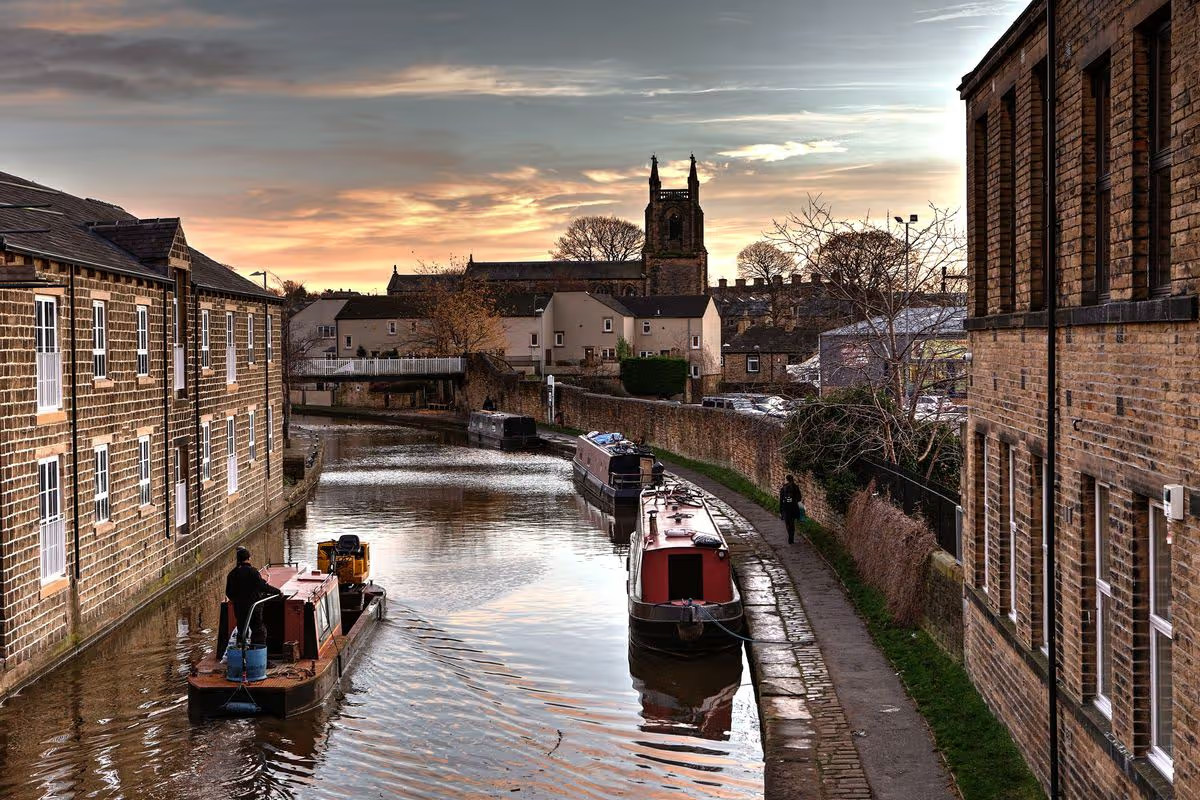
While we’ll have to wait a little longer to see just how much of Skipton is featured in the series, with producers remaining tight-lipped about locations, the town is certainly worth a visit in its own right. The high street is packed with independent retailers and delightful cafés, while the town’s location along the Leeds and Liverpool canal provides picturesque walks for an idyllic day out.
The cobbled high street leads up to the historic Skipton Castle, and there are numerous eateries in the town, including Phoebe’s restaurant, The Cock & Bottle pub, and The Clubhouse café. But one of the town’s highlights is the award-winning Skipton Market, which is believed to be one of the oldest in the country.
The outdoor market has been running since medieval times and has earned considerable recognition as the ‘best small outdoor market’ in the national Great British Market Awards. Found on the High Street, Skipton Market takes place every Monday, Wednesday, Friday and Saturday from 10am to 4pm, selling everything from food and produce to fashion and arts and crafts from local traders.
Yet it’s the residents who truly benefit from the charming town, as Skipton was named the ‘happiest place to live in Great Britain’ by Rightmove in their annual Happy at Home Index at the end of last year. Its convenient access to nature and green spaces was ranked as the top factor by Skipton residents, and there’s no shortage of landscapes to explore.
Beyond the nearby Yorkshire Dales National Park, there’s Aireville Park, a nature reserve, Castle Woods, and breathtaking Skipton Moor. With its undeniable charm and status as a film set, Skipton is well worth a visit, whether that’s for a weekend break or a day out, and is conveniently located just an hour’s drive from Leeds.
Do you have a travel story to share? Email webtravel@reachplc.com
Providing extra comfort for their economy passengers, a major airline that flies from the UK to more than 340 destinations, is set to launch seats that turn into a ‘flat bed’
14:37, 26 Mar 2026Updated 14:39, 26 Mar 2026
The new seats from the airline will allow economy passengers to stretch out and sleep comfortably (Image: Getty Images)
A major airline flying to popular holiday destinations from the UK is introducing economy seats that transform into a ‘flat bed’.
United Airlines, which flies from the UK to more than 340 destinations worldwide, will launch a new dedicated row of three economy seats that can transform into a “lie-flat mattress-like space”. It will give passengers more room on long-haul flights while flying in economy.
The new seats will be individually adjustable with leg rests that fold up to a 90-degree angle, so travellers can either stretch out while watching a movie or use it as a bed to catch a restful night’s sleep. Passengers will be treated to a “custom-fitted mattress pad, specially sized blankets, extra pillows” as the seats adjust into a flat bed after takeoff.
Children in the dedicated row will also receive a plush toy and a family travel kit as part of the additional amenities. The airline noted that the launch of the ‘United Relax Row’ will be ideal for families with young children, couples and solo travellers who would like more space.
After United Airlines shared the news on X, formerly Twitter, it was met with enthusiasm from travellers. One commented: “This is brilliant and I bet everyone is going to copy it.”
“Much needed. United is innovating faster than anyone”, a second said. A third added: “This is a brilliant and thoughtful idea to make customers feel more comfortable. Well done!”
“Gamechanger for travelling with small kids”, another traveller noted. “Brilliant, you have hooked me for many years but with this may be I am now double hooked. This is super helpful especially on those night European routes,” one more said.
Once launched, the initiative will be a first for a North American airline offering this type of seat and comfort for economy passengers. United Airlines flies from the UK to popular holiday destinations such as New York, LA, Chicago and Orlando.
The United Relax Row is expected to launch in 2027, with plans to offer the extra space on more than 200 of its Boeing 787 and 777 widebody aircraft by 2030. There will be up to 12 United Relax Row sections on each plane, located between United Economy and United Premium Plus.
United’s Executive Vice President and Chief Commercial Officer, Andrew Nocella, said: “As a leading premium airline, we’re committed to delivering new, industry-leading experiences for all of our customers – and the United Relax Row is the perfect example of that. Customers travelling in United Economy on long-haul flights deserve an option for more space and comfort, and this is one way we can deliver that for them.
“United is the only North American airline offering a product like the United Relax Row and is one of the many reasons why we’re continuing to win brand loyal customers.”
For more information or to check flights with United Airlines, you can visit their website.
Do you have a travel story to share? Email webtravel@reachplc.com
A BEAUTIFUL resort on a lesser-visited Spanish island has been named the best in the country.
The luxury hotel, Paradisus Melia, which sits on the southern coast of Fuerteventura, has just named the ‘Best Resort in Spain for 2026′.
Sign up for the Travel newsletter
Thank you!
The newly renovated Paradisus Melia has been named the ‘Best Resort in Spain’Credit: Jet2It has four swimming pools and adult-only areas that look over the beachCredit: Jet2
The luxury resort was awarded the title last week by Forbes just a few months after rebranding and reopening in October 2025.
While it’s on the luxe side of a holiday you can book it with the likes of Jet2, TUI and On the Beach from £136 per person per night.
In the summer months, Fuerteventura has average highs of 26C and at the Paradisus Melia, you can cool off in one of its four swimming pools.
Three are freshwater, one saltwater and there’s a children’s section with a slide too.
There’s also a chance to upgrade to the ‘Reserve Pool‘ which is adult-only.
It comes with other perks too like use of the pretty cabanas, access to the exclusive lounge and concierge service along with premium drinks.
All the pools are surrounded by sunloungers, straw woven umbrellas and palm trees.
When it comes to eating and drinking, which you can take advantage of with an all-inclusive package, the hotel has multiple bars and restaurants.
Grab a drink at the cocktail bar, lounge bar or snack bar.
And for food, you can take your pick from one of the eight restaurants.
These include one which is buffet-style, two that are adults-only, and all have dishes that are traditionally Spanish, local, Italian and international.
When it comes to activities, guests can take advantage of the air-conditioned gym.
Or have a go at aqua aerobics, Pilates, table tennis and yoga.
There’s entertainment too and during the evening there’s live music and professional shows.
It’s a luxury stay on an all-inclusive basisCredit: Jet2
Here’s another hotel in Fuerteventura – and it’s set out like a small village…
*If you click on a link in this box, we will earn affiliate revenue
Hotel Club Jandia Princess, Fuerteventura This resort is set up like a small village, with low-rise buildings set among palm trees and six different swimming pools. Entertainment spans from DJ nights to bingo and live sports screenings, plus sports on offer include water polo, rifle shooting and shuffleboard.
When it comes to rooms, each has been newly made over and kept in a minimalist style with relaxing neutral colours and balconies for enjoying the evening sun.
The only board package guests can book is ‘All Inclusive Plus’ which includes buffet-style breakfast and dinner as well as lunch, snacks and drinks.
One holidaymaker said: “We had such a fabulous holiday at this resort. It has definitely raised our bar for all-inclusive holidays.”
With Jet2, two adults can head to Paradisus Melia on May 13, 2026 for a seven-night all inclusive break with transfers and return flights to London Gatwick from £953 per person.
The hotel is fairly isolated, but is minutes from incredible island beaches.
It has beautiful views across Plaża Sotavento and it takes just a minute to get onto the golden sands.
Also nearby is Playa de Sotavento de Jandía which one visitor said is “undoubtedly one of the most beautiful beaches on the island.”
For those who want to head further afield, the nearest town is Costa Calma – you’ll need to take a transfer or taxi here which will take around six-minutes.
While it’s not as vibrant as other Spanish towns, it does have shopping centres, restaurants and beach bars.
These locations are perfect for anyone looking for an affordable getaway
Isobel Pankhurst Audience Writer
13:57, 26 Mar 2026
Enjoy a deliciously chilled glass of white wine in a beautiful country(Image: Catherine Falls Commercial via Getty Images)
After arriving at your holiday destination, many travellers fancy unwinding with a simple glass of vino. While the price of wine might not be top of your list when arranging a getaway, you could find yourself gobsmacked by the costs once you land.
To help avoid this, Holiday Pirates have shared on Instagram the most budget-friendly wine destinations across Europe, where you can grab a glass for well below £5. Leading their rankings were Hungary and Portugal, where a typical glass will set you back between £1.70 and £3.40.
Plus, Portugal is only a two-to-three-hour flight away from the UK. And timing it right, Skyscanner shows return flights to Portugal starting at £26, and to Hungary from £35. This means you’ll savour some quality wine without having to empty your wallet just getting there.
It’s not only individual glasses that work out cheaper overseas, with Drink Merchants having previously disclosed that in Portugal, a bottle averages merely £3.91.
Content cannot be displayed without consent
Both Portugal and Hungary boast their own wine-producing regions, and with numerous vineyards scattered throughout, you can sample the nation’s wines at bargain prices during your stay.
Alternative choices for those seeking somewhere to purchase a glass of wine for less than £4 included Bulgaria and Spain, where you’ll be spending between £2 and £3.80.
These destinations can prove economical in other respects too, with Skyscanner showing return flights to Bulgaria from £32 and to Spain from only £24.
A YouTuber who visited Riga, Latvia, was stunned by the four-star hotel prices in the city voted one of Europe’s cheapest by Post Office Travel
13:41, 26 Mar 2026Updated 13:41, 26 Mar 2026
Ed Chapman travelled to Riga in Latvia(Image: YouTube/@EdChapman23)
A YouTuber who toured Europe‘s most affordable city was taken aback by the cost of one item he purchased during his journey.
Ed Chapman, who shares his adventures on his eponymous YouTube channel, visited Riga, the capital of Latvia, and filmed a video about his experiences in the city after it was named one of Europe’s cheapest in a survey by Post Office Travel.
His primary reason for visiting Riga was to compare it with one of the priciest cities in Europe, Oslo, Norway. According to Skyscanner, flights to Riga can be purchased for as little as £28 from Leeds Bradford Airport.
One of the most striking differences between the two, Ed pointed out, was the disparity in hotel prices.
In Oslo, he stayed at a three-star hotel for one night, while in Riga, he lodged at a four-star hotel, but the price difference was significant, reports the Express.
After exploring and commenting on his hotel room, he remarked: “We’re in the heart of the city centre, literally one street away from the main stuff. Four-star hotel. £62 a night. Now that’s tasty. For a capital city, for the middle of the city centre that’s a bit mad isn’t it?
“Bearing in mind in Oslo I stayed in a three-star hotel, also bang in the city centre and that was £140 for a night there. Less than half price that’s crazy.”
Ed isn’t alone in highlighting Riga’s charm. The city, home to approximately 600,000 residents, is located at the centre of the Gulf of Riga where the Daugava River flows into the Baltic Sea.
Additionally, the city’s historic centre has been designated a UNESCO World Heritage Site, with its Jugendstil and Art Nouveau architecture standing out as two of its main attractions.
Among Riga’s most distinctive landmarks is the Riga Central Market. Built using repurposed German Zeppelin hangars, these structures rank amongst the city’s most recognisable buildings, spanning 778,000 square feet and housing approximately 3,000 trading stalls.
Furthermore, Riga offers convenient access to nearby coastal areas such as Jurmala. The Mirror previously reported that one visitor was impressed not just by the affordability, but by the amenities available.
They commented in a review: “Changing pods are available on the beach and the sand is soft and flat. We paid €5 each for a sun lounger for the day, although in the afternoon people could help themselves to ones that were left or that people had finished with.
“Well worth the journey from Riga which is about 25 mins by train from central Riga and very cheap. We booked the day before online and it cost us about €6 return for both of us – amazing value.”
INSTEAD of spending loads on heading to the French Riviera, Brits could venture to a dupe for a fraction of the cost.
The French Riviera is known for its glamour but often comes with eye-watering prices.
Sign up for the Travel newsletter
Thank you!
Hammamet is dubbed the Tunisian St TropezCredit: AlamyAnd holidays to the destination cost a fraction of the price of heading to St TropezCredit: Alamy
Though, heading to Hammamet on the ‘Tunisian Riviera’ is just 35 per cent of the cost of a holiday to the French Riviera.
And bookings have also increased by 50 per cent following Brits ditching holidays to Turkey and Egypt following the Iran crisis.
With First Choice, Brits could pay just £516 for a week’s all-inclusive holiday to Hammamet, whereas the same holiday in St Tropez would be likely to set you back almost three times that – £1,500.
Hammamet – which is also affectionately known as the Tunisian St Tropez – is often associated with artists and actors as well as a vibrant beach-club culture.
Visitors can head to the Yasmine district, where they will find a palm-lined promenade, waterfront cafés and Tunisia’s largest marina with many superyachts.
Beach lovers can enjoy the long stretch of golden sand, with water sports and the Carthage Land theme park.
A spokesperson for First Choice said: “[The theme park] offers kids and adult-sized rollercoasters, large-scale water slides, museum-style educational exhibits and a 5D cinema.”
Tickets cost between £6 and £8 for the day.
Or for something more active, have a go at the quad bike tours, which take you on and around the hills surrounding Hammamet.
Local recommendations from the First Choice team also include heading to Bel Canto restaurant, which is Italian-Mediterranean.
Inside, the interiors are modern, and the restaurant serves a vast array of dishes including pizza and seafood, with prices ranging from around £5 to £15 per dish.
Another option is Yuman which serves a more European range of dishes and is open from breakfast to dinner.
The cafe also has great views of the beach and the city walls.
A week’s all-inclusive holiday to Hammamet costs as little as £516Credit: Alamy
Breakfast ranges between £4 and £8, dinner ranges between £10 and £18 and cocktails don’t cost more than £9.
If you are looking for a bar, then head to the Beer Garden Brasserie in Yasmine.
The beach-view bar is open until 4am on Wednesdays and Saturdays, and there are always live music events and karaoke nights.
Compared to the French Riviera, Hammamet has more all-inclusive accommodation, with daily costs working out at around £73.
But on the French Riviera you will have to fork out cash for meals out.
For example, a mid-range dinner is likely to set you back up to £80 per person. Local beers cost between £4.50 and £7 and a glass of rosé can even be as much as £20.
And if you wanted to soak up the sunshine, even this will set you back as much as £130 in the peak season.
As a result, a daily spend is over £200 more for the French Riviera compared to Hammamet.
In the Yasmine district, there are palm trees, waterfront cafés and Tunisia’s largest marina with many superyachtsCredit: Alamy
If you want to travel to Hammamet you could book seven-nights all-inclusive at the Sentido Marillia Resort & Spa with flights from Newcastle Airport on May 11 (hand luggage only) for £516 per person.
The resort sits right by the beach and features 10 bars and restaurants including a wood-fired pizzeria.
Inside the hotel, families will find 352 rooms, including family options, twin rooms, and suites.
The hotel even has its own nightclub, and a cocktail party once a week, although there is also a kids’ club too, which is open until midnight.
Outside, there are two pools, including one that is Olympic-sized, and there is also an additional kids’ pool.
Kevin Nelson, Managing Director for First Choice, said: “Brits are tired of saving destinations for ‘someday’.
“They want experiences that feel bucket-list-worthy but actually fit into their budgets and availability.
“Hammamet is a great example of a budget friendly luxury swap, all the French‑Riviera perks, without the French‑Riviera price tag.”
Flights to Hammamet cost from £83 return in April, with the flight taking just over three hours.
Our favourite loveholidays deals
*If you click on a link in this box, we will earn affiliate revenue.
Belpoint Beach Hotel, Antalya, Turkey
This hotel is surrounded by the forests of the Toros Mountains, giving your outdoor swim a pretty impressive backdrop. With a pool decorated with colourful parasols and a waterslide, this pretty resort also has plenty to do indoors, including a sauna and a Turkish bath to unwind in.
The huge resort has 363 rooms, each with a balcony or terrace overlooking the sea or gardens. All-inclusive food includes three daily meals in the main buffet restaurant, as well as drinks and snacks such as pizza, hot dogs and burgers at the pizzeria snack bar. If you fancy getting out and exploring, the town centre is a 10 minute drive away.
Terramar Calella puts you right in the thick of the action, with the sea on one side and the buzzing promenade on the other. Here, days start with sea swims and end with sunset drinks. Platja Gran Calella is the area’s largest beach, and here it’s right on your doorstep.
This Corfu resort was built for families, buzzing with entertainment and activities. With four adult pools, three kids pools, a mini waterpark and a beach on your doorstep, there’s plenty of spots for you to stretch out on a sun lounger and for the kids to splash around. And as the day winds down to a close, the party starts with mini discos, Greek dancing, lively quiz nights and karaoke.
THE must-visit destinations across the UK have been revealed and North Yorkshire has made the list.
With sweeping beaches, beautiful towns and movie backdrops – it’s no wonder Condé Nast Traveller as one of the ‘Best Places to Go in the UK in 2026’ – and here are some of our favourite spots to go in the county.
Sign up for the Travel newsletter
Thank you!
Robin Hood’s Bay is a must-visit for anyone heading to North YorkshireCredit: AlamyScarborough is considered a cheap seaside breakCredit: Alamy
Knaresborough
Along the River Nidd is this beautiful town which is often described as being ‘postcard perfect’, or looking like a ‘fairytale’.
It’s a few miles away from Harrogate and is known for having a huge viaduct as well as pretty riverside restaurants and cafes.
“There are a lot of pubs in Knaresborough – so many, I always lose count. I found 15 online, but I’m sure there’s more. There are traditional pubs with rich history, such as Blind Jack’s in the market square.
“One of my favourite pubs is Carriages, with its cosy atmosphere and tasty food. The outdoor area is great in summer, with views of pretty Knaresborough train station.”
Some of her other favourite things to do is heading up to Knaresborough Castle which is where you’ll get the best view of the viaduct.
Get onto the river itself in a row boat and get a bite to eat from Marigolds and an ice cream.
One popular attraction is Mother Shipton’s Cave which is named after the Yorkshire prophetess.
Whitby
The charming seaside town of Whitby has red-roofed houses, winding streets as well as huge cliffs.
Of course the nearby Gothic Whitby Abbey was Bram Stoker’s inspiration for his book, Dracula.
If you want to feel like you’re in the novel, walk up the 199 steps from the Old Town to St Mary’s Church and the Abbey ruins.
Travel Reporter Jenna Stevens who visited Whitby said: “In my trip to the North Yorkshire town, I ticked off all the staple activities. A Mr Whippy enjoyed by the harbour, spare change spent in Funland’s Amusements, and fish and chips for tea.
“Plus my stroll along the sands, backed by spectacular moss-green cliffs, was an ideal way to soak up those breath-taking views of the rugged Yorkshire coast.
One of the things that makes Whitby stand out amongst other seaside spots is its connection to a famous explorer, Captain Cook and the ‘House on the Harbour’ museum is a must-visit.”
Another must-visit in Whitby is Trenchers – which is the best fish and chip shop in the UK.
A takeaway cod and chips will set you back £13.50.
Here’s where to stay in Whitby…
*If you click on a link in this box, we will earn affiliate revenue
Whitby, North Yorkshire
With a history of sailors and vampires, a dramatic coastal path, and the very best in pints and scampi, it takes a lot to beat Whitby. Pop in the amusements, eat award-winning fish and chips, and board the all-singing Captain Cook boat tour on the harbour. The Royal Hotel overlooks the harbour with stays from just £68 per room.
She continued: “In summer, you’ll find dogs sprinting along the sands, while owners tuck into fresh crab sandwiches from the beachside hut and little ones fish for treasures in the rock pools.
“I prefer the village in winter, though, when visitors can stroll the rows of higgledy-piggledy boutiques and cafes dishing up wedges of homemade cakes piled high with buttercream.
“What’s more, there’s a restriction on visitor vehicles and cars are even banned from the harbour area, making it a great place for a car-free
Scarborough
Scarborough, which is known as England‘s first seaside resort, is split into two bays – the South and North Bay.
Each is worth exploring with the South Bay having most of the shops, restaurants and amusement arcades.
Meanwhile, the North Bay is much quieter and is a great place to simply enjoy the beach or go for a surf.
She described it as the “perfect family day out” where you spend “hardly any money.”
You can rent out a beach chalet from £50 a day and have a go on the cliff-railway for £2.50.
If you’re lucky enough, and bring a pair of binoculars you might spot bottlenose dolphins, porpoises and minke whales.
There is plenty of entertainment too and Alex explored the South Cliff Gardens, a hillside adventure playground and the arcades at Olympia Leisure.
Yorkshire Dales National Park
The Dales are known for glorious views and dramatic scenery and it is seeing a boom in popularity thanks to its appearance in Wuthering Heights.
The new film starring Margot Robbie and Jacob Elordi certainly had Brits talking when it came to cinemas last month.
Travel Writer Tracey Davies explored the gothic region and said: “Heathcliff is not the only mysterious, brooding beast in Yorkshire. The scenery provides just as much drama as the Wuthering Heights character.”
She added: “Largely shot on location in the Yorkshire Dales National Park — amid the landcapes of Swaledale and Arkengarthdale valleys and the peaceful village of Low Row — the movie shines a well-deserved spotlight on this glorious corner of England.
“With its scarred limestone hills, scattered with rocks, and rolling green pastures, criss-crossed with drystone walls and peppered with honeyed-stone villages, this region is the picture of a period drama.”
The sweeping Yorkshire Moors appeared in Wuthering HeightsCredit: AP
The Best Places to Go in the UK in 2026
Here are ‘The Best Places to Go in the UK in 2026’ according to CondéNast Traveller…
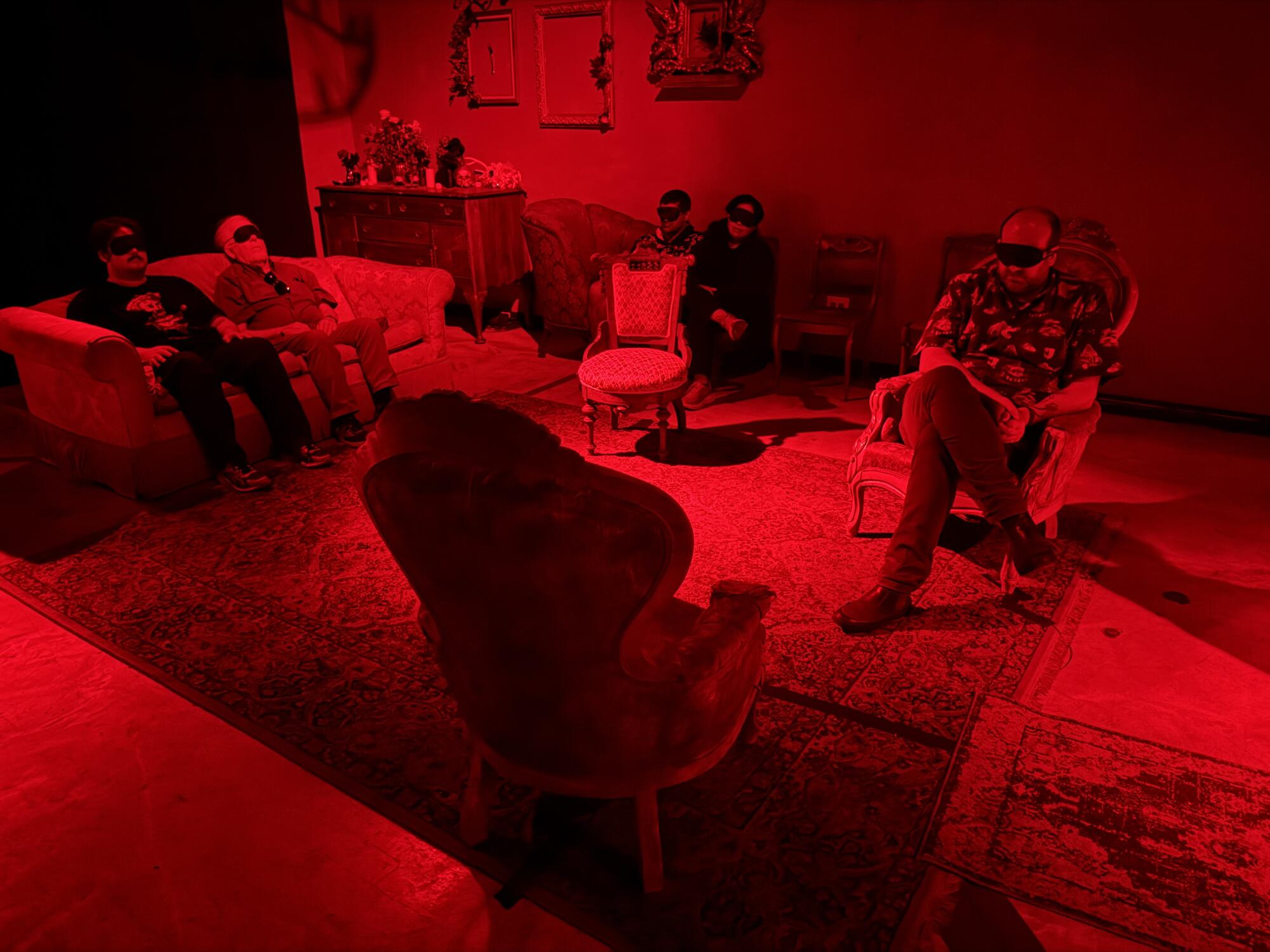
I am blindfolded and seated in a vintage armchair set in the center of a darkened, red-lit room with Gothic accents. An actor is performing nearby. I hear their voice, but cannot, of course, see them. I suddenly spring upward in my seat, alarmed at the touch of some sort of cloth — or perhaps a feather? — across my ankles.
I’ll never be entirely sure. For wearing the small veil across my eyes was a requirement to participate in “Poe: Pulse & Pendulum,” the debut offering from new troupe Theatre Obscura L.A. The company’s initial performance contains two one-act plays, modern interpretations of Edgar Allan Poe’s “The Pit and the Pendulum” and “The Tell-Tale Heart.”
While the stories are familiar to many, Theatre Obscura increases the levels of discomfort. In this room, I am at times unsettled, at once tracking the movements of the actors while attempting to remain hyper aware of any sudden touch or scent. “The Pit and the Pendulum,” the first half of the program, translates especially well to this setting, its dark sense of demented confinement keeping my nerves on high alert.
Conjuring such a state of anxiety was the point.
“If you take the visual away, it’s going to make you feel uneasy,” says Paul Millet, who devised the concept.
There are jump scares. Downtown event space the Count’s Den has been outfitted with about 50 speakers for the Obscura shows, which run through April 12. Some are visible before one puts on the blindfold. Many, though, are hidden under seats or couches, as the audio will trail the actors around the room, or perhaps a sudden crash or door opening will have me jolting my attention elsewhere.
“The Pit and the Pendulum” is a story of torture, and as the narrator, here played by Melissa Lugo, desperately speaks of a blade swinging above, actors will fan us, timing their waves with each swoosh of the audio. I was prepared for that one, as a fellow theatergoer nearby let out a soft yelp when the unseen gestures first arrived above their head.
For many, sight is the most coveted sense. “If you take that away, you’re already naturally uncomfortable,” Millet says. “So we lean into that. We know you’re going to be uncomfortable. We know this is not the norm. But get on that ride with us. Be willing to be uncomfortable. Discomfort, I think, helps to heighten the experience, and ideally allow it to trigger the emotional reactions that the story does.”
“Poe: Pulse & Pendulum” is two one-act, audio-focused performances of Edgar Allan Poe stories.
(Joe Camareno / Theatre Obscura)
Still, touch is limited in the show. Occasionally a rattling of a chair, but little more. The fluttering I felt near my ankles was to mimic the sensation of a running critter. The troupe will ask for audience consent, and participants can opt out. While I went in wondering if “Poe: Pulse & Pendulum” would seek to recall more extreme haunt experiences with lengthy waivers, Millet wanted to keep it light — an audio play, primarily, with just a few in-the-flesh signals.
“We want people to feel unease, but I don’t want anyone taken out of the story because a boundary or line was crossed,” Millet says.
Scent, too, is used with restraint. There are moments when guests will get a whiff of a fragrance that pairs with the storyline. Millet considers the first run of Theatre Obscure to be an experiment in how much touch and scent audiences may want to endure. Smell, he says, is tricky, as the aroma may linger and become a distraction.
Millet has been honing the concept since 2023. Previously, he was part of the team behind Wicked Lit, which ended in 2019 after running for a number of years at unique locations such as Altadena’s Mountain View Mausoleum. Those immersive performances would feature casts and guests walking the venue. Theatre Obscura, however, is fully seated.
“Poe: Pulse & Pendulum” focuses on the fear that something may happen to us when stripped of sight.
(Joe Camareno / Theatre Obscura)
And while the stories of Poe lend themselves to the Halloween season, spooky events increasingly occur year round. Long-running production “The Willows” is set to wrap in early April, and “Monster Party,” a period piece that takes guests to a devilishly extravagant cocktail party, is re-launching in mid-April. Millet, a longtime theater producer who has a day job in television editing, is hoping to stand out by avoiding “the glut” of horror events that occur each September and October.
Theatre Obscura may face challenges, namely persuading potential guests that “The Pit and the Pendulum” is more than simply a live reading with audio effects.
“You can feel the movement of the characters around you,” Millet says. “You’re in the environment with the story as it unfolds. You can experience it on a more visceral level.”
Blindfolded, I felt Theatre Obscura was mostly playing off our fears rather than giving in to them, largely keying in on our anticipation that something may happen to us when stripped of sight. Lugo in much of “The Pit and the Pendulum” circles guests, who are seated sporadically around the room, allowing each of us to imagine how close or far we may be from the hole we are told is at its center. Each show deals with claustrophobia in some way, either of a space, or of a mind.
“The Tell-Tale Heart” is louder, more crowded. The sounds of crashing glass and creaky floorboards had my head working overtime to draw a floorplan, only to then have it distorted when actors would unexpectedly whisper in both of my ears to bring forth the protagonist’s nightmares. While I expected Theatre Obscura to be slightly more aggressive in its uses of touch and scent, it’s a show that asks us to live in our heads, and to sit in our own feeling of trepidation.
“I was intrigued,” Millet says, “with really trying to engage the audience’s imagination.”
Imagine waking up early, eager to peep dazzling carpets of brilliant orange flowers at the Antelope Valley California Poppy Reserve. Instagram posts promised a spectacle.
You drive to the reserve north of Los Angeles, but the rolling hills aren’t alive with color.
Bummer. The bloom is over.
Thanks to AI, and a local scientist, such disappointment may soon be a thing of the past.
This year, Steve Klosterman, a biologist who works on natural climate solutions, launched a “wildflower forecast,” powered by a deep-learning model, satellite imagery and weather data.
In a sense, Klosterman, of Santa Monica, developed the tool to meet his own need.
Last spring, the Midwest transplant was hankering to see some wildflowers. He assumed there was some online resource that offered predictions or leveraged satellite images.
“Surely, there must be something,” he recalled thinking. “But there was nothing.”
There are tools. The state reserve operates a live cam trained on one swath of land. Theodore Payne, a California native plant nursery and education center, runs a wildflower hotline, where people can call in and hear weekly recorded reports on hot spots.
“These are all essential resources,” Klosterman said. “At the same time, they’re limited.”
Klosterman isn’t green when it comes to plants. His PhD, at Harvard, focused on the timing of new leaves on trees in the spring and color change in the fall.
For a class project, a team he was part of built a website that predicted those leaf changes in the Boston area. It was a hit.
California poppies bloom in Lancaster, near the state natural reserve, in mid-March.
(Kayla Bartkowski / Los Angeles Times)
To create the poppy bloom predictor, Klosterman turned to AI initially developed for medical imaging. He has harnessed it to instead analyze satellite images of the Antelope Valley.
The model scans 10-by-10-meter squares of land to determine whether poppies are present by their telltale orange color. (It also identifies tiny yellow flowers called goldfields.)
The model is trained on satellite images — which go back nine years — along with past weather data.
It then uses the current forecast, and recent flower status, to peer into the future.
If the mercury is going to hit 100 degrees and wind is picking up — and in previous years that led to withering flowers — that will guide the prediction.
Right now, the model can forecast five days out and is, as Klosterman puts it, “very much a work in progress.” It would be better, more powerful, if it had 100 years to learn from.
As more data are collected, it might someday be able to forecast a week or two out.
Right now, poppies are popping at the reserve in the western Mojave Desert.
It rained throughout the fall and into winter, and poppies need at least seven inches of rain to make a good showing, said Lori Wear, an interpreter at the reserve.
Snowfall in January seems to push them to another level, but that didn’t happen this season. So it’s a good bloom, but not extraordinary, she said.
Still, poppies — California’s state flower — blanket swaths of the protected land.
“It almost looks like Cheeto dust,” she said, “like somebody had Cheetos on their fingers and just smeared it on the landscape.”
Poppies here have typically peaked around mid-April, but variable weather in recent years has made it hard to predict, she said. Klosterman believes right now is likely the zenith.
Also blooming now: goldfields, purple grape soda lupine and owl’s clover. Wear described the latter, also purple, as looking like a “short owl with little eyes looking at you and a little beak.”
An SUV drives through blooms near the reserve. “It almost looks like … somebody had Cheetos on their fingers and just smeared it on the landscape,” said Lori Wear, an interpreter at the reserve.
(Kayla Bartkowski / Los Angeles Times)
On Sunday, Klosterman experienced the blooms for himself, using his technology as a guide.
It offers predictions in two forms. The first is the amount of the valley — shown in a satellite image — covered in poppies and goldfields, expressed as a percentage. The other is an overlay of orange and yellow splotches on the land.
The map showed a fairly high concentration of poppies near a stretch of Highway 138. He went there and, lo and behold, vibrant flowers awaited him. He sent proof: a smiling selfie in front of a sea of blossoms.
Klosterman’s tool may help answer arguably more complex questions than poppy or no poppy, such as a more precise understanding of the conditions the flowers need to thrive.
Experts know rain is key, but it’s more complicated than that.
Steve Klosterman takes a selfie in a field of California poppies.
(Steve Klosterman)
Heavy rain can supercharge invasive grasses, crowding out the blooms. Natives actually tend to do better after several years of drought, once invasives not adapted to the arid climate die out. That’s what led to an epic superbloom in 2017, Joan Dudney, an assistant professor of forest ecology at UC Santa Barbara, told The Times in 2024.
Klosterman wondered if the recent heatwave would desiccate them. But his model didn’t show that, and neither did his trip. So it’s possible other factors play a significant role in their persistence, such as length of day.
The model could also shed light on what could happen to the flowers as the climate warms. Will they migrate to the north? Will there be fewer blooms?
To game that out, Klosterman said you could invent and plug in a weather forecast with higher temperatures.
For now, Klosterman’s forecast is limited to the Antelope Valley. But if it expands to other areas, and other flower types, it could help people like Karina Silva.
Silva woke up at 5 a.m. last Wednesday to travel from her Las Vegas home to Death Valley National Park, hoping to beat the heat and the crowds to the superbloom.
But several hours later, she and her husband, David, were still trying to find it.
The hillside behind her was sprinkled with desert golds, but the display fell short of the riotous eruption of flowers posted on social media. The superbloom ended in early March, according to park officials.
“I was just thinking it was going to be this explosion of different colors,” Silva said by the side of the road overlooking Badwater Basin.
Over the past few weeks, I’ve been driving all over Los Angeles doing something I haven’t done in a long time: playing pretend.
I pretended I was in a medieval castle at a French cafe in Miracle Mile and that I was looking for trolls on a fern-filled hike in Griffith Park. I imagined that Tolkien’s elves built the creekside restaurant where I met a friend for brunch in Topanga and that I was eating alongside real witches in a forest-themed dining room in North Hollywood.
In a Whittier tea room, I poured a glittering potion that said “Drink Me” into a glass of Champagne and in Beverly Hills, I stared awestruck at the platonic ideal of a witch’s house, half expecting a bent old lady with a wart on her nose to come out and turn me into a toad.
It’s been a rough start to 2026 and these brief moments of make-believe have served as a joyful balm in sad and scary times. I’m not looking to bypass reality, but taking a break from it every once in a while can be a welcome reprieve. Fortunately, Los Angeles is especially good at creating transporting experiences that drip with fairy-tale ambience. This is the home of Hollywood after all, the land of artifice, the spot where Walt Disney dreamed up the Happiest Place on Earth. Seeking and finding moments of happily ever after, even if they last just a few minutes, is part of the city’s collective DNA.
So grab your broom and make sure to leave a trail of bread crumbs behind you. L.A. has plenty of magic to share. All you need to do is open your mind and explore.
About This Guide
Our journalists independently visited every spot recommended in this guide. We do not accept free meals or experiences. What should we check out next? Send ideas to guides@latimes.com.