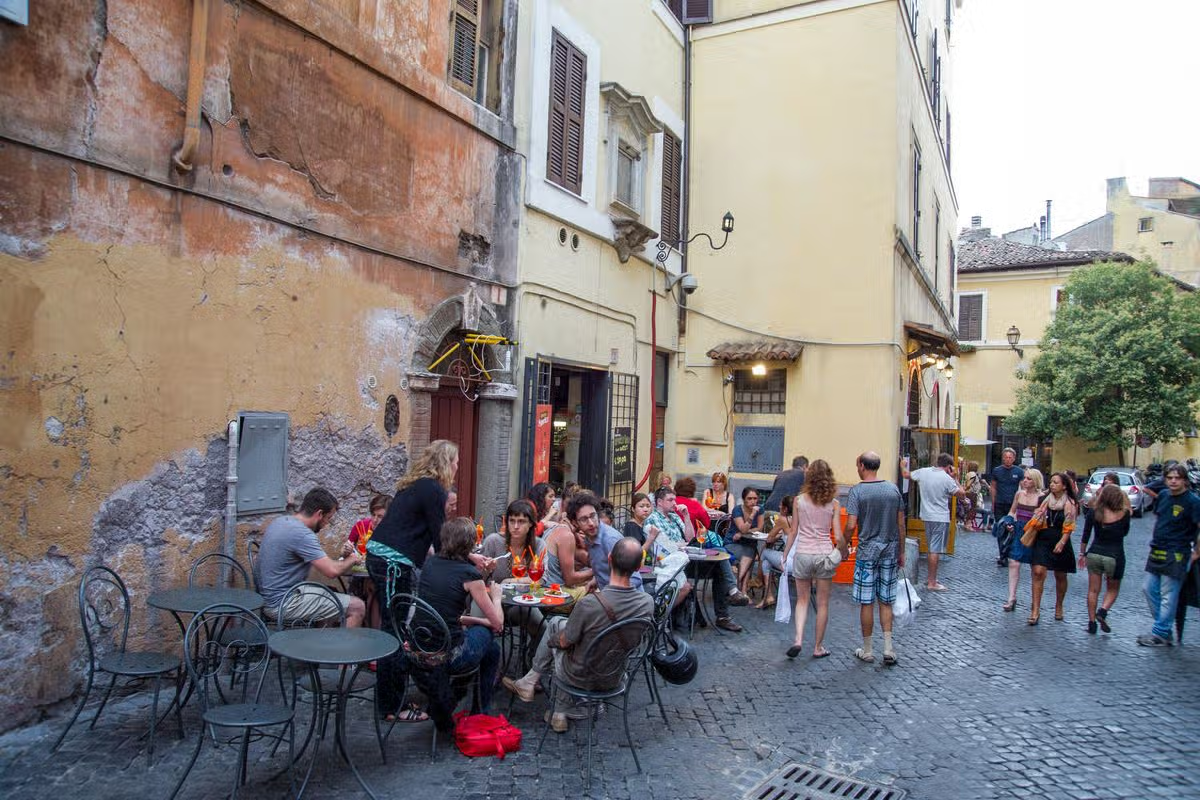
Locals in Rome’s Trastevere district complain that tourists have been making noise in the early hours, leading one frustrated 74-year-old to resort to extreme measures
Trastevere neighbourhood in Rome
A frustrated Italian local has admitted to dousing rowdy, “drunk” British tourists with buckets of water after they disturbed her in the night. Locals in Rome’s Trastevere district complain that UK and US tourists have been making noise beneath apartments in the early hours, leading one 74-year-old to resort to extreme measures.
Rome has long been a popular holiday destination, drawing in millions of visitors each year. Tourists flock to the Italian capital to soak up the city’s Roman history and art, and enjoy its nightlife and world-famous cuisine.
With the swathes of tourists comes a downside, though: some allegedly get “extremely drunk” and cause a nuisance in the middle of the night. Local Simonetta Marcellini told The i Paper that she keeps buckets of water by her window.
She said: “At first I’m polite, and I point out to them that it is the early hours of the morning and that people will be sleeping. The moment they start arguing back and insulting me, I pour water on them.”
Simonetta, a former radiographer born in the area, has grown frustrated with the changes she’s witnessed. She claims there has been a marked decline in the quality of restaurants, and businesses have been replaced by bars and sandwich shops.
Meanwhile, Rome was inundated with 22.9 million visitors last year, a figure said to be more than seven times the local population. Simonetta decided she’d had enough when she spotted tourists urinating against her building.
She claims that life has “gotten much worse” in relation to tourism since the Covid pandemic. “Regulations are fewer and our complaints from years ago were underestimated.
“So a phenomenon that could have been controlled was practically left unchecked and we’ve arrived today with all the reckless partying.”
It comes after British holidaymakers were warned they could face a 500 euro fine in “some Italian towns”. The Foreign, Commonwealth and Development Office (FCDO) plays a crucial role in keeping Brits informed when travelling.
In its travel advice section for Italy, the FCDO warns that “some Italian towns and cities have specific laws, and you could be fined for breaking them”.
Some of the acts include eating and drinking near certain churches, historic monuments and public buildings. It’s also important to remember that entering or bathing in many public fountains is prohibited – including in Rome.
On the sun-kissed island of Capri (situated off Italy’s Amalfi Coast), a rule is in place regardingdisposable plastic. Visitors are banned from bringing items such as plastic bags, cutlery, cups, trays, or straws onto the island.
Further FCDO guidance reads: “Illegal traders operate on the streets of all major Italian cities. It is illegal to buy items from unlicensed street traders. If you do, you could be stopped by the local police and fined.
“It’s illegal to remove sand, shells or pebbles from coastal areas in Italy. You could face a large fine for doing so. It’s also illegal to collect various species of flowers, plants and herbs from mountain and wooded areas.
“For more information, check with the regional authorities of the area you’re visiting.”
NEW rules for Brits travelling from the UK to Ireland via the ferry have come into force today.
For the first time in over 100 years, passengers are required to carry a valid passport or risk being denied boarding.
Anyone travelling between the UK and Ireland will need to carry a valid passportCredit: AlamyPreviously travellers could take the crossing with a drivers license or bus passCredit: Alamy
Prior to today, passengers were not required to show a passport when taking the crossing.
Instead, they were asked to have another form of photo ID with a photograph like a driving licence or a bus pass.
Sign up for the Travel newsletter
Thank you!
Now, travellers have been told to carry a valid passport due to the UK Border Forceis tightening rules on “accuracy and integrity of passenger data before boarding”.
Routes affected will be between Britain and the the Republic of Ireland of which Irish Ferries operates two routes.
These go between Holyhead and Dublin, and Pembroke and Rosslare.
Another ferry enforcing these rules is Stena Line which has crossings between Holyhead and Dublin as well as Fishguard and Rosslare.
Irish Ferries explained: “This is a change to the current ID accepted and means that from 28 September, no other forms of photo ID will be accepted by Irish Ferries for any passengers, including Irish and UK citizens
“This is to ensure compliance with UKBorder Forcerequirements relating to the accuracy and integrity of passenger data before boarding.“
Previously, passengers didn’t have to carry their passports with them because of what’s known as The Common Travel Area (CTA).
The CTA is a passport-free zone involving the UK, Ireland, the Isle of Man and the Channel Islands dating back to 1923.
Operators have warned that no other form of ID will be accepted on the crossingsCredit: Alamy
British and Irish citizens don’t legally need a passport to travel between the two destinations.
But carrying passports has since became a requirement by airlines like Ryanair and Aer Lingus for passengers flying between the two destinations.
SOME hotels give you a quiet pool, a basic buffet and a slightly battered table tennis table in the corner.
Others serve up 81 water slides, life-size dinosaurs, hypercoasters, wave machines and entire fairytale kingdoms.
There are some bonkers waterparks out there which are the perfect holiday spotsCredit: On the Beach
Variety is the spice of life, after all.
These are the resorts where the accommodation isn’t just somewhere to sleep – it is the holiday.
You could venture outside, obviously, but when there’s a full-scale waterpark or theme park right outside your bedroom door, convincing the children to leave the grounds would require a serious family negotiation.
I’ve hunted down eight of the wildest, most action-packed family resorts available this autumn and winter.
We’re talking theme park stays from £353pp and all-inclusive waterpark breaks from £405pp, with prices based on a family of four.
Every deal includes return flights and access to the hotel’s headline attractions too – so here are my eight picks guaranteed to ruin basic swimming pools for your children forever.
Aqua Mirage features a massive on-site waterpark packed with free-fall tower slidesCredit: On the Beach
Aqua Mirage Club & Aqua Parc, Morocco – from £573pp
You know a resort takes entertainment seriously when its grounds cover 20 full hectares beneath the Atlas Mountains.
Aqua Mirage features a massive on-site waterpark packed with free-fall tower slides, a sprawling wave pool and an interactive splash castle for preschoolers.
Away from the water, you get six tennis courts, football pitches, evening shows and several pool areas – including a dedicated adults-only pool and spa for parents trying to remember what silence feels like.
It also gives you two holidays in one: a high-energy waterpark resort and easy access to Marrakech’s historic souks and main square.
That means you can swap the post-Christmas slump for slides, sunshine and unlimited food and drink – without having to wrestle another turkey into the oven.
My insider tip at this hotel is to take advantage of its free shuttle into central Marrakech, saving your family a fortune on taxis when you do fancy a break from the slides.
PortAventura Hotel El Paso & Theme Park, Spain – from £353pp
Theme park tickets are included with your stay when you stay at PortAventura Hotel El PasoCredit: On the Beach
First things first: this isn’t just a hotel with a couple of slides attached – it’s a property built inside one of Europe’s largest theme park resorts.
Designed like a colourful Mexican hacienda, Hotel El Paso sits right on the edge of PortAventura Park, giving you easy access to six themed worlds packed with massive rollercoasters such as Shambhala and, my personal favourite, Furius Baco.
Right next door is Ferrari Land, home to Red Force – the 112-metre-high vertical accelerator that launches riders from 0 to 112mph in five seconds flat. I’m not speaking from experience this time. No, thank you.
The best bit is that PortAventura theme park tickets are included with your stay.
I found a five-night room-only package from £353pp, flying direct from Manchester on 24 October 2026 – right in the school half-term window.
When you consider how much standard admission to the park can cost on its own, getting your hotel, flights and multi-day park entry for £353pp in the school holidays is an absolute steal.
HL Paradise Island, Lanzarote – from £405pp
Guests staying at HL Paradise Island get free entry to Dino AquaparkCredit: On the Beach
There are waterpark hotels, and then there are waterpark hotels with giant prehistoric creatures towering over the slides.
Guests staying at HL Paradise Island get free entry to Dino Aquapark, where multi-lane racing chutes and enclosed tubes twist around massive, life-size dinosaurs.
The main resort features several swimming pools, sports courts, live evening entertainment and full all-inclusive dining.
Lanzarote stays pleasantly warm right through autumn and winter, making it a brilliant option for some sunshine when the UK enters full freezer mode.
As those dates fall over the February half-term period for many families, that’s excellent value for a school-holiday escape with food, drink and waterpark entry covered.
My tip here is to book an apartment. Having a separate living space and kitchenette means parents get somewhere to relax once the children crash out after a day of chasing dinosaurs.
LIVVO Costa Taurito & Waterpark, Gran Canaria – from £495pp
Lago Oasis Waterpark is a massive saltwater park packed with kamikaze chutes, racing slides and a giant pirate-ship splash fortressCredit: On the Beach
Taurito looks like someone has built an enormous holiday resort inside a canyon beside the coast.
At the heart of it is Lago Oasis Waterpark – a massive saltwater park packed with kamikaze chutes, racing slides and a giant pirate-ship splash fortress.
Guests at LIVVO Costa Taurito get access to the park, putting all the water-slide madness just steps from their room.
Southern Gran Canaria is one of Europe’s most reliable winter-sun destinations, and the hotel offers all-inclusive dining to keep the holiday food admin nice and simple.
It’s a compact half-term hit of winter sunshine, with flights, meals, drinks and waterpark access all rolled into one price.
I also love the natural volcanic-sand beach just 200 metres from the hotel, giving you somewhere quieter to escape whenever you need a breather from the slides.
Sol Dunas Family Fun, Cape Verde – from £430pp
Sol Dunas has multiple swimming pools, water slides, splash parks, playgrounds and sports courts, forming part of the wider Melia Dunas mega-complexCredit: On the Beach
Sol Dunas is less of a standard hotel and more of a self-contained holiday town.
This sprawling resort features multiple swimming pools, water slides, splash parks, playgrounds and sports courts, forming part of the wider Melia Dunas mega-complex.
Cape Verde is the closest thing to a long-haul winter-sun holiday on this list, serving up temperatures around 25C, plenty of blue skies and broad golden beaches on the island of Sal.
Being in the autumn half-term, this deal gives families almost a full week of reliable warmth without the faff of a connecting flight.
It costs slightly more than some of the Spanish options, but a full week of reliable warmth, direct flights and comprehensive all-inclusive dining at a resort of this size still represents excellent value.
Pickalbatros Aqua Blu Sharm, Egypt – from £638pp
Aqua Park City complex in Sharm El Sheikh, is a themed resort boasts high-speed racing chutes, wave pools, raft rides and towers of twisting tubesCredit: On the Beach
Aqua Blu features enough slides to make your local UK “waterpark” look like a damp garden shed.
Part of the enormous Aqua Park City complex in Sharm El Sheikh, this brightly themed resort boasts high-speed racing chutes, wave pools, raft rides and towers of twisting tubes.
The resort is fully all-inclusive and includes access to a private beach via a quick, free shuttle.
Sharm El Sheikh delivers reliable warmth throughout the year, making it a strong choice for autumn or winter sun.
It’s the most expensive deal on this list, but you’re getting more than a week of winter sun, all your food and drink, luggage and unlimited access to an enormous waterpark during a peak family-travel period.
The real insider perk, though, is the dedicated children’s buffet, built at a lower level so little ones can grab their own meals without endless parental manoeuvring. Genius.
Pickalbatros Jungle Aqua Park Resort – Neverland, Hurghada Egypt – from £565pp
Neverland has 81 slides and VR gaming arenasCredit: On the Beach
That includes giant family raft rides, multi-lane racers, wave pools and massive themed splash fortresses spread across a complex that feels as though it was designed by a child given an unlimited construction budget.
Beyond the waterpark, Neverland packs in VR gaming arenas, ice skating, huge live productions and an enormous selection of speciality restaurants.
Despite the ridiculous scale of the property, Egypt’s competitive resort market keeps prices shockingly low.
I found a six-night all-inclusive break from £565pp, flying indirectly from Manchester on 16 February 2027, with hold luggage included.
That gives you six nights of all-inclusive dining, luggage and non-stop access to 81 slides during the February half-term period for less than £600pp.
It’s also well worth using the hotel’s internal land train, which runs constantly around the complex, so tired little legs don’t have to walk miles between the slides and your room.
Named among the world’s five coolest neighbourhoods, it packs cafés, international food and welcoming pubs into a small pocket of a major city.
The neighbourhood is jam-packed full of coffee shops, pubs and restaurants(Image: Nicola Roy)
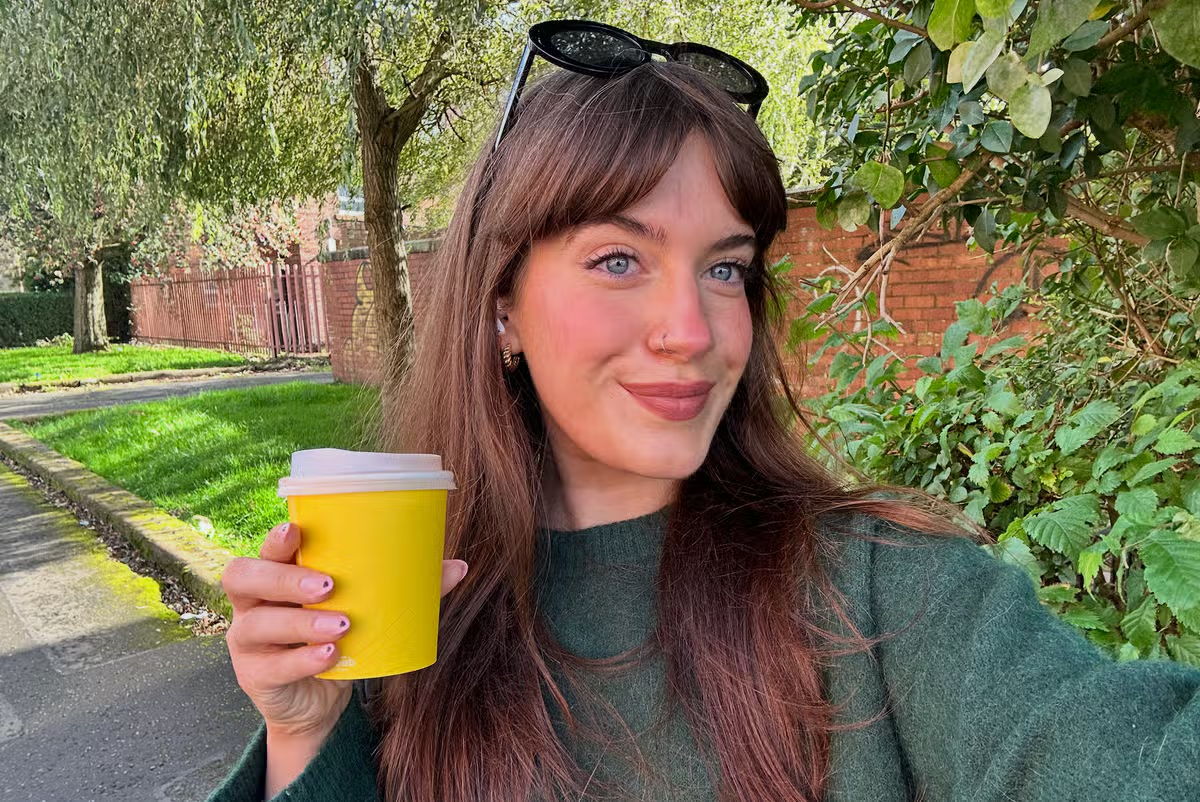
A £4.60 oat milk mocha might not be everyone’s idea of a bargain. But at Zennor in Govanhill, I’d argue it’s worth every penny – and the surrounding streets offer plenty of reasons to stay after the last sip.
The neighbourhood on Glasgow’s south side earned a place among the world’s five coolest neighbourhoods in Time Out’s annual list. Its appeal goes well beyond fashionable coffee shops, with a diverse mix of people, cultures and businesses shaping the area.
From Turkish börek to Pakistani street food, independent cafés to a pub named after a footballing legend, there’s plenty to explore. Some may say it’s all new coffee shops and no substance, but they couldn’t be more wrong.
A neighbourhood best explored on foot
Victoria Road is a natural starting point. Busy with dog walkers, friends catching up and people carrying takeaway coffees, it leads towards the green space of Queen’s Park.
Govanhill is one of Scotland’s most diverse neighbourhoods, reflected in its cafés, bakeries, takeaways and gift shops. You could easily spend hours browsing and stopping for something to eat.
Options include a flat white from a Transylvanian coffee shop or traditional Turkish börek from Pistachio. For me though, Zennor was the destination of choice.
On the corner of Langside Road and Dixon Avenue, Zennor’s second Glasgow location combines Scandi-inspired light wood and stainless steel décor with paper lanterns and the smell of freshly ground coffee.
Zennor’s seasonal specials are really where they excel, but I didn’t spot anything on there that caught my eye on this occasion, so I opted for a mocha. And you can’t pop in here without grabbing a sweet treat, such as their dark chocolate and sea salt cookie – utter bliss.
With oat milk, my coffee order totalled £4.60. It pains me to admit, but I don’t think that’s too steep these days, particularly when it’s this good. And it’s worth every penny in my opinion.
Where to head for a pint or a plate of pasta
Directly opposite Zennor is the Rose Reilly, my favourite pub in Govanhill. Named after the legendary footballer, it offers a welcoming atmosphere, a good choice of drinks and plenty of outdoor seating for sunny days.
For something more substantial, I recommend Pakistani Street Food for a samosa, Bar Vini for a generous serving of pasta and Errol’s Hot Pizza for the best pizza you’ll ever eat.
Together, these venues offer plenty of scope to turn a quick coffee visit into a longer afternoon or weekend exploring the neighbourhood.
More than a ‘coolest neighbourhood’ label
Govanhill’s fashionable reputation is only part of its story. The area faces challenges, and residents hold differing views about how it has changed, with gentrification a particularly contentious issue.
My view, however, is that its mix of people and cultures is what makes it such a lively and fascinating place to discover. The coffee may provide a reason to stop, but it is far from the only attraction.
There’s also libraries, craft spaces, workshops, community projects and events, and with great public transports links too, you’re never too far from other parts of the city. Other nearby neighbourhoods in Glasgow’s south side, like Pollokshields, Strathbungo and Mount Florida, are also full of fun things to do.
CATANIA Airport in Sicily has been forced to cancel all its flights again today after yet another eruption on Mount Etna.
Volcanic ash in the airspace has resulted in the suspension of inbound flights until at least midnight tonight.
Mount Etna has erupted again resulting in cancelled flights from CataniaCredit: GettyCancelled and delayed flights has been a nightmare for passengersCredit: EPA
The airport first stopped incoming flights on Saturday due to ash in the airspace and limitations have since been placed on departures too.
This morning, a warning on the airport’s website explained that due to “volcanic activity and weather conditions” cancellations and delays are expected until “23:59pm today, Monday, September 28.”
Sign up for the Travel newsletter
Thank you!
Flights to and from London Gatwick and London Luton remain on the schedule – but are likely to be cancelled due to the flight limitations.
Some passengers took to social media over the weekend explaining they had travelled across to Palermo to get a flight home from there instead.
Some UK flights were affected then too, either being cancelled or diverted to Palermo on the northwestern coast of the island.
In August, ongoing eruptions from Mount Etna forced the airport to shut for five days in a row resulting in hundreds of cancelled flights.
Families who had their flights cancelled were left stranded with videos on social media showing holidaymakers sleeping on the airport floor and even luggage belts.
Last time Mount Etna erupted, nearby Malta International Airport had to cancel 19 flights due to volcanic ash.
Catania is Sicily’s busiest airport handling around 12.4million every year – which works out to around 40,000 passengers each day.
Ash from the volcano has disrupted the airspace in SicilyCredit: Splash
What does the disruption due to Mount Etna mean for passengers?
Anton Radchenko, air passenger rights expert and founder and CEO of AirAdvisor, explainedwhat the disruption means for customers…
“When volcanic ash closes airspace, airlines will usually class it as an extraordinary circumstance, which means fixed cash compensation is unlikely.
“However, I would urge passengers not to confuse ‘no compensation’ with ‘no rights’.
“The airline must still offer a refund or rerouting and provide reasonable meals, accommodation and transport while passengers wait.
“If you still need to get home, do not automatically accept a refund.
“Once you accept it, the airline’s rerouting and care obligations will normally end.
“Ask for the earliest reasonable alternative and, if another airline can get you back significantly sooner, ask to be transferred to that service.
“If you have to pay for reasonable essentials because the airline fails to provide them, keep every itemised receipt so you can seek reimbursement.”
This is supported by the UK Civil Aviation Authority’s current cancellation guidance which you can findhere.
A woman has been left with no feeling in her face after shattering her jaw in an accident while on holiday..
Tia Lockey was at the start of a dream trip through Asia when she was involved in a motorbike accident. The 22-year-old waved goodbye to her friends after volunteering to go first down to a remote beach.
Tia can now only remember the first few minutes of the journey before waking up on the jungle floor, concussed and in agonising pain. “My dream trip I had been planning for years had been stripped away from me because of a lift to the beach,” said Tia from Durham.
“I opened my eyes and I was on the floor in the jungle of Koh Tao, in the middle of nowhere covered in blood. I didn’t and still don’t remember the crash at all; it’s completely wiped from my memory. I definitely mourn the life I used to have.”
The marketing worker had organised a trip down to the beach in Koh Tao, Thailand in the early hours of the morning of March 14. A fellow traveller offered to take them down one by one as the ride would only take 10 minutes – and thinking nothing of it, Tia went first.
However, shortly after they had set off, they were involved in a horrific crash. Tia said: “My friend thought something must’ve been up and she had a bad feeling since the driver was meant to go back for her next but he still hadn’t come.
“Luckily I had shared my live location with her that night so she followed it and found me with all of my injuries. An ambulance came and the hospital told me I had shattered my jaw in two places, knocked two teeth out, and had very deep wounds on my face. I needed to be emergency speed-boated to a hospital in Koh Samui which was around three hours away.”
Tia was rushed to the hospital with her face completely bandaged up due to the gaping wounds on her upper lip, forehead, left eye, chin and scalp. For the next two weeks she was bedridden in hospital with her mouth wired shut following her jaw surgery.
The 22-year-old then returned back home to the UK as another jaw surgery was required. She said: “I needed to have another jaw surgery in May. I couldn’t chew for four months and because my jaw was so severely broken, they described it as cornflake bits, when I woke up from the eight hour surgery my teeth and bite were completely different.
“They no longer touched at the front, so I was left with an open bite and they said that this will just be my teeth from now on and there’s not a lot they can do to fix them. So now I struggle to eat anything with my front teeth.”
The crash completely changed Tia’s life, leaving her with crippling insecurities that stopped her from leaving the house. On top of the scars and teeth damage, nerve damage to her bottom lip and chin left them completely numb
.
Tia said: “I struggled a lot with going out and about with friends and family because I was so insecure about my teeth and scars. If I’m eating or brushing my teeth for example and I was to get toothpaste or food on my chin I would have no idea.
“My sisters have to give me a heads up when we’re out. I’m still being seen by the hospital for regular appointments and I still have missing teeth. I am hoping to finally have them fixed by the end of the year.
“My confidence and mood plummeted massively, there didn’t seem to be an end to my recovery.” S ix months on from the crash Tia has finally started to adjust to the changes.
Documenting her recovery journey has given her a new found purpose. Tia said: “It has also made me realise just how precious life is and never to take a single day for granted.
“I thought posting about it on TikTok would give me a purpose during recovery and it turned it into something more positive. The response I’ve received is just so overwhelming in the best way and I massively appreciate all the support and love I’ve been getting from everyone.
“I just hope it reminds people to stay safe, even when you feel invincible, because you never think it will happen to you until it does, and unfortunately I’m still paying the price for it.”
Lego fans can explore the original Legoland and Lego House less than two hours from the UK – here’s my review of the underrated family holiday
This article contains affiliate links, we will receive a commission on any sales we generate from it. Learn more
(Image: Lego)
As you wander around the picture-perfect Danish town of Billund, you could almost kid yourself you’ve stepped into the real-life version of the Lego City range – it feels as if someone planned the entire town, piece by piece. And in a way, they did.
Dedicated Lego fans may have heard of Billund as the home of Lego – the toy was created here in 1958. To this day the vast majority of Lego sets, themes, and bricks are designed at the headquarters here, with Lego employing the majority of local residents, and contributing hugely to the town’s development. Visitors come in their tens of thousands to enjoy the original Legoland – but we found the true star of Billund to be the unique Lego House, which rightly bills itself as the ‘ultimate interactive Lego experience’.
My seven year old and I took advantage of a mild, if a little rainy, early September weekend for a three-night stay in the Legoland Holiday Village’s Pirate Motel, booking a cheerful pirate-themed room complete with treasure chest, and combining a day at Lego House with a two-day Legoland pass.
While my Lego fanatic son and I have a soft spot for Legoland Windsor, we found the spotlessly clean Danish Legoland way less crowded. Indeed throughout our Friday/ Saturday visit even the most popular rides never more than a 15 minutes wait – and at times we were able to stay on for a second go.
Yet despite the tried and tested joys of a day at Legoland it was Lego House that was the absolute highlight of our visit. If at Legoland your child enjoys free play in the Lego pits as much as the thrill of the rides, then Lego House is for them.
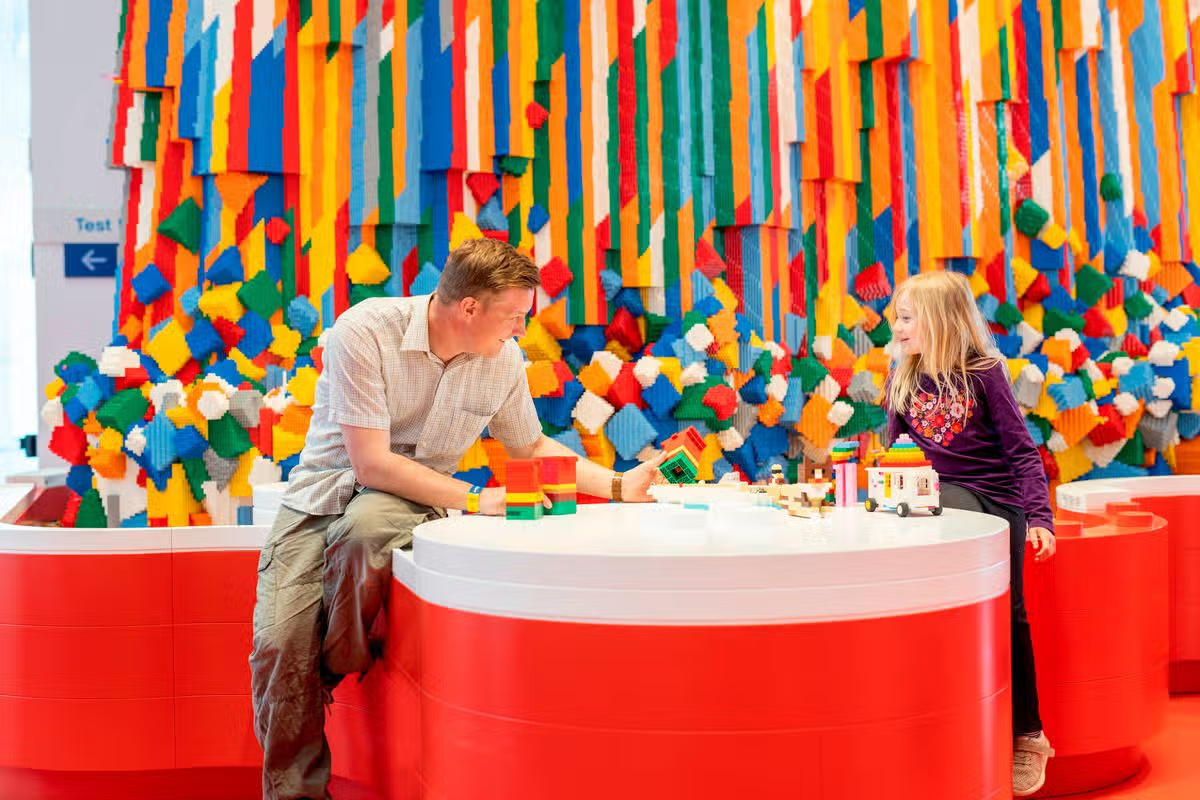
Designed like a giant stack of 21 overlapping blocks, scaled up precisely from standard Lego bricks, the sprawling building feels like a living playground. The website describes four ‘interactive experience zones’, but this undersells what is on offer. There are endless activities which are carefully designed to be just as enjoyable for adult fans of Lego (afol as they call them here), as they are for children.
In just one section of an experience zone, we built our own Minifigures, photographed them for magazine covers, then used them to create stop-motion films in dedicated recording booths. These were then sent to us to view later via our wristbands.
Elsewhere, our highlights included racing our custom-built cars down speed tracks, creating Lego fish that were then scanned and joined a huge aquarium, and exploring a huge Lego world far more detailed than any Miniland we’ve seen, featuring everything from miner-filled mountains and underground train sets to volcanoes, fairgrounds, and cities.
There are innovative building challenges throughout, sitting alongside breathtaking installations like a cascading multi-coloured Lego waterfall and the jaw-dropping, 15-metre-tall Tree of Creativity built from over 6.3 million bricks which grows right up through the centre of the building.
My son loved watching Lego bricks being created from start to finish in the mini-factory on the ground floor before picking up our own complimentary bag of six freshly molded bricks to take home. Scanning your wristband creates a personalised card showing a unique combination to build.
Down in the basement vault, a history museum displays early prototypes and sets from across the years – I really enjoyed finding the ones my brother and I used to own in the 80s and 90s, and showing them to my son.
Up on the primary-coloured terraced roofs, which cascade down like giant red green and yellow steps, my son took a breather from crafting his creations. As I soaked up the panoramic views over Billund’s forests he played in a huge submarine, climbed a skyscraper and enjoyed an impromptu game of hide and seek with children speaking four different languages.
One of the best bits was trying out the Lego Masters Academy, which costs an extra fee on top of the Lego House entrance. We also loved visiting the Mini Chef restaurant, where we built our orders using physical Lego bricks and had our meals delivered by robots in giant Lego containers.
All in all, we thought Lego House was absolutely unmissable.
Everything you should know before you visit Lego House Billund
Standard Lego House general admission starts around around £28 per person with some discounts for booking online. It is often fully booked and is not open every day, especially out of season, so check availability before booking a trip.
The Lego Masters activity is an extra fee on top of Lego House, costing from £14 to £17 per person depending on the option booked. You can do this activity without entering the experience zones inside the Lego House, or on the same day you do these. Make sure you heck opening days, book ahead as slots fill up fast, and choose English language (if applicable).
Likewise Mini Chef reservations fill up well in advance and are rarely available on the day – it’s worth planning ahead. Meals when we visited cost £15 for a child meal which included a Minifigure surprise, and £27 for adults.
The Lego Shop on the ground floor opens an hour before the Lego House and stays open an hour later. We arrived early and did our shopping first thing, which was an unhurried pleasant experience compared to the packed store at the end of the day. You can leave purchases in a free secure locker on the ground floor, using your Lego House wristband.
Along with unique Lego House Lego sets, in the shop you can buy personalised custom printed Minifigures for £11.50, which make brilliant gifts.
If you are staying at LegoLand Holiday Village, as we were, or the neighbouring Lalandia, the walk to Lego House is a pleasant 20 minute stroll through Billund Sculpture Park.
Book the holiday
Norwegian Air offers direct flights from London Gatwick to Billund with return fares from £120 on norwegian.com.
LEGO House tickets start from £29 when booked in advance on legohouse.com.
Lizzie and family enjoyed a two-day Legoland pass, starting from £57 for a 2-day pass when booked online, or £40 for a 1-day pass. You can find out more at legoland.dk/en.
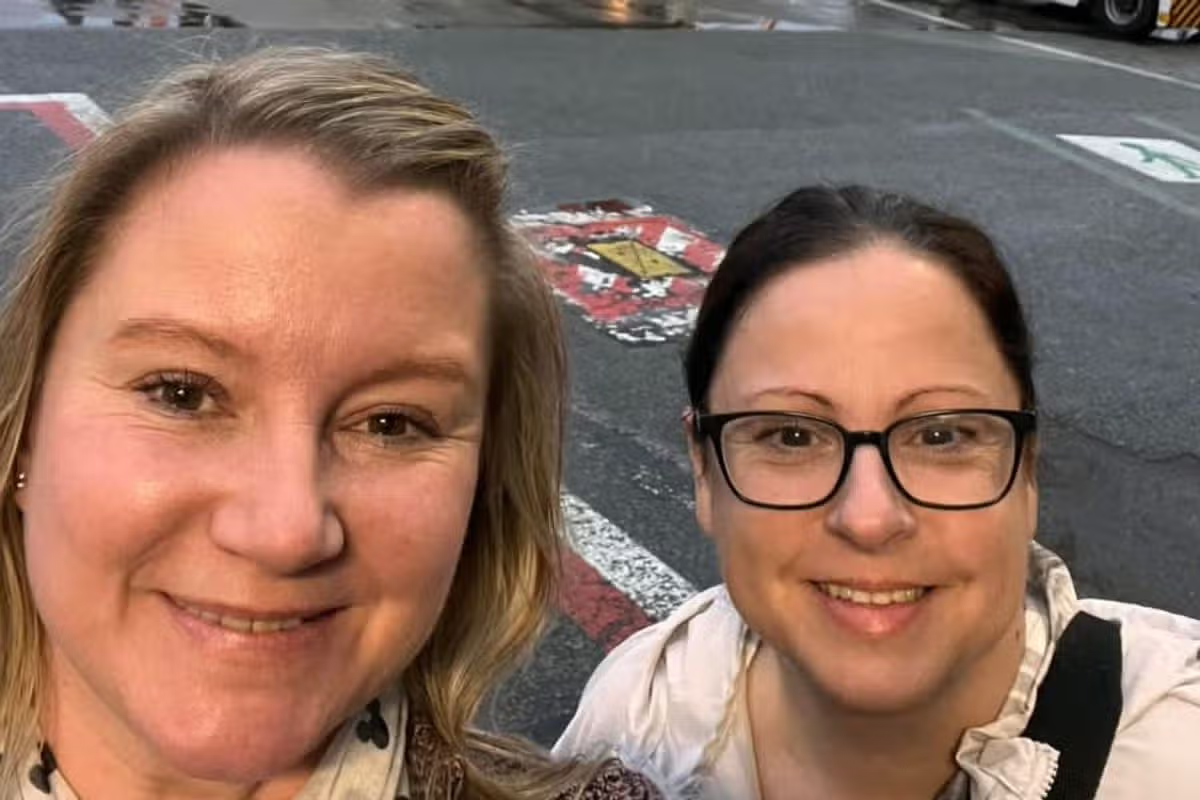
A pair of best friends nipped to France for lunch and came home the same night, spending less than £75 on the whole trip. Mel Evans travelled to Beauvais with her friend and work colleague, Joanne Howard.
Mel managed to snap up return flights from Birmingham for just £48. The retail workers took an 8.45am Ryanair flight and landed at Beauvais Airport at 10.55am local time before taking an 85p bus into the town centre.
“We had seven hours to explore before we needed to get the bus back to the airport,” said Mel, from Chesterfield, Derbyshire. “The itinerary was to visit the cathedral and wander around the pretty streets and shops, look around the local markets and have some lunch and a drink.
“I love architecture and got lost looking at the cathedral, chateau and old houses. I was in my element. When we got there, we headed straight to the market and had a walk around. They had fish, meat, clothing, bags, purses and all sorts.
“We then headed to the cathedral. There was a lovely street nearby where I took pictures. We walked around the cathedral, then went inside and watched the astronomical clock.
“There was a craft fair, so we bought a few souvenirs for £5. We then headed to the Oise museum, which looked like a château from the outside. It had beautiful grounds.
“We then headed for lunch in the main square. After lunch, we walked around the town some more, stopping in shops and churches. We had a £2.50 ice cream, and found a street with old buildings. Then we looked around a second market and headed back to the main square for a £2.15 coffee until it was time to head for the bus.”
Their two main meals and two drinks cost £38 before they caught the bus back to the airport and boarded their 10:50 pm flight home. They landed back in the UK at 11 pm and, after travelling home, Mel was finally in bed by 12:30 am.
Mel and Joanne have been friends for 12 years and have already been on four day trips abroad together to Milan, Bergamo, Alicante and Oslo. Mel says everything went according to plan – and she would happily do it all over again.
Mel said: “I’m the planner, and Jo turns up; she’s very happy to go with the flow and my itinerary. It works well. There were no hiccups at all.”
Mel and Joanne’s trip began on 19 Sept with a £9.50 parking fee at Birmingham International train station, where they left their car for 24 hours before taking the free shuttle to departures. Their flight took around one hour and 10 minutes. After paying 85p each for the bus into Beauvais, they began exploring the town.
Mel then enjoyed a burger while Joanne had an omelette in the main square alongside two Coke Zeros. With no delays or other problems, the pair had plenty of time to enjoy their whistle-stop visit before catching the 85p bus back to Beauvais Airport.
The whole trip cost less than £75 each. Mel said: “At the end of the day, before flopping into bed, I felt very grateful I’d been able to travel. The next day is when I feel tired. I like that you can explore other countries in a day without having to book annual leave. You can explore the world one day at a time.”
Mel and Joanne have more day trips planned for the rest of the year, with France, Italy and Spain all on their travel radar.
Mel added: “We love day trips. It gives us something to look forward to, and we have a few more booked for this year. Friends and family think it’s great how we nip to France, Italy or Spain just for a day.
“My family call me Judith Chalmers because I’m always away. Day trips aren’t for everyone, as they are long days, but for how nice it feels to sit in a local cafe or park in another country makes it all worthwhile.
“I definitely recommend it to anyone. My biggest tip is to use a site such as Skyscanner to search for flights. Midweek tends to be cheaper than the weekend, and it’s best to book around 12 weeks in advance.”
There’s a saying in Cologne, repeated with the mild smugness of people who know they’re right: kölsch is the only culture you can drink. It sounds like a line lifted straight from the tourist board’s brochure. Then you spend a day working your way around the city’s traditional brewhouses and realise it’s a statement of fact.
Since 1997, kölsch has held a protected geographical indication within the EU, guaranteeing that any beer bearing the name is brewed within 50km of the city and made strictly to the Kölsch-Konvention. That agreement, signed in 1986, defined the style as “a light, highly attenuated, hop-accentuated, clear, top-fermenting ‘vollbier’ [full-beer]”, restricting production exclusively to the local area. It is, in effect, the champagne of pale ales: locally adored and tied to a city that has always insisted on doing things its own way.
The delivery is as ritualised as the brewing itself. You sit. A köbes – the traditionally deadpan, blue-aproned brewhouse waiter – arrives carrying a kranz (a circular tray) holding a ring of stangen, narrow 200ml glasses designed to keep the beer cold and effervescent long enough for you to drain one before the next takes its place. You drink. He marks a tally on your beer mat with a stub of pencil. You never order a second; you never need to. The conveyor belt only stops when you place your beer mat on top of your glass.
Ten hours, seven brewhouses and an inadvisable number of tally marks later, I had formed some very firm opinions about Cologne’s legendary liquid culture.
Photograph: Scott Antcliffe
The twin spires of Cologne cathedral are visible from the doorway of this brewhouse. So, unfortunately, is the gift shop and a tour group from Ohio. Früh am Dom, arguably the most internationally recognisable kölsch brand, is housed in a sprawling warren of vaulted dining rooms, cellars and long oak bars. It is enormous and boisterous, yet the kölsch, poured at speed to a rotating cast of daytrippers, lacks the crisp clarity found elsewhere. Being on the cathedral’s doorstep makes this prime real estate, but the footfall turns the room into something closer to a transit lounge, where most visitors drop in for a quick photo with their stange before rushing off. 4.5/10, €2.50
Photograph: Scott Antcliffe
Founded in 1912 and heavily renovated since, Sion merges a contemporary interior with old-world charm. The result is the slickest room on this list: warm mood lighting, clean lines and a menu that reaches beyond the usual brewhouse staples of fried pork and potatoes. The kölsch itself is technically flawless and refreshing, though it lacks the rustic bite of the city’s smaller producers. It’s a fine spot for a proper sit-down dinner rather than a session – and even the köbes here shows genuine warmth, a demeanour that feels either refreshing or faintly suspicious depending on how strictly you hold to Rhenish brusqueness. 6/10,€2.60
Photograph: Mauritius Images /Alamy
Beyond the tourist centre, in the lively and historic Friesenviertel district, is the hallowed Päffgen. Operating on Friesenstraße since 1883, this is one of the last hausbrauereien(brew pubs) that refuses to bottle for supermarket shelves; if you want Päffgen, you come here or haul a wooden keg home yourself. The beer is tapped straight from wooden barrels on the counter, giving a pour with a floral, grassy hop aroma, a hint of stone fruit and a crisp bitter finish. The room feels untouched by time – look out for the old wooden beichtstuhl (“confessional”), the elevated booth where the innkeeper once oversaw the floor and counted the day’s takings. One of the köbesse, sliding a fresh stange across the counter without breaking stride, put it more bluntly than any brochure could: “Kölsch is not a drink, it is a religion. And this is the church.” With its gruff, lightning-fast staff and a leafy beer garden out the back, Päffgen is the gold standard of kölsch culture. 9.5/10, €2.60
Photograph: Alan Kolnik/Alamy
Tucked into the historic old town, Peters is what the cathedral-adjacent halls wish they were. It strikes the finest balance in central Cologne, fiercely popular with local people while remaining welcoming to passing travellers. The interior is gorgeous – stained-glass skylights throwing amber light across scrubbed, decades-old wooden tables, dark wainscoting framing the chatter of the room. The kölsch is beautifully balanced: smooth, clean and poured properly cold. We might have come at a bad time, though, as it wasn’t particularly busy and lacked atmosphere. 7/10, €2.50
Sitting on the edge of the historic Heumarkt, Malzmühle is the second-oldest brewery in Cologne, operating on this spot since 1858. Destroyed almost entirely in the second world war, only the stone portal survived; you now pass through that same archway into a sprawling hall of rustic brickwork and heavy oak benches. Malzmühle brews Mühlen Kölsch, a pour favoured by the former US president Bill Clinton, who declared “Ich bin ein Kölsch” on a visit in 1999. It is slightly darker and maltier than its peers, with a gentle honey note against a solid bitter backbone. The atmosphere is unapologetically noisy and authentic – a meeting ground where workers in hi-vis vests share benches with executives in suits. We spoke to one of the köbesse, Carl, who told us he’d worked here for 38 years: “This is the place to be. These walls have seen so much and heard so many conversations. I wouldn’t work anywhere else.” 8.5/10, €2.50
Photograph: Scott Antcliffe
Gaffel is a heavy hitter among local people, distributed widely across the city’s bars and football stadiums. Its flagship hall, opposite the central station, is handsome and impeccably run, with high ceilings and sweeping arches giving it real metropolitan energy. The kölsch is consistently good – bright, sharply carbonated and noticeably hop-forward, exactly as the Konvention prescribes. Knowing this same beer is sold at the gate in Cologne Bonn airport slightly undercuts the local romance, though; it’s reliable in a high-volume, commercial way. The kitchen redeems it somewhat with a stellar himmel un ääd – crispy black pudding with smooth mash and stewed apples – comfort food good enough to justify the visit alone. 6.5/10, €2.50
Photograph: Scott Antcliffe
Down a cobbled alley in the old town, Sünner im Walfisch is pure historical theatre. Housed in a striking 17th-century step-gabled building, dismantled and rebuilt brick by brick on its current site, it serves as the old town outpost for Sünner, Cologne’s oldest operating kölsch brewery. Inside, narrow timber-framed rooms and low ceilings transport you back to medieval Rhineland. The beer is fantastic – crisp and dry with a peppery hop finish that makes it dangerously easy to drink – and it’s quieter and more intimate than the echoing halls near the station, its köbesse still delivering drinks with a wink of humour. A favourite for decor and character, if not quite for atmosphere. 8/10, €2.50
Scott Antcliffe’stravel to Cologne was provided byViking as part of its 8-dayRhine Getaway, from £1,695
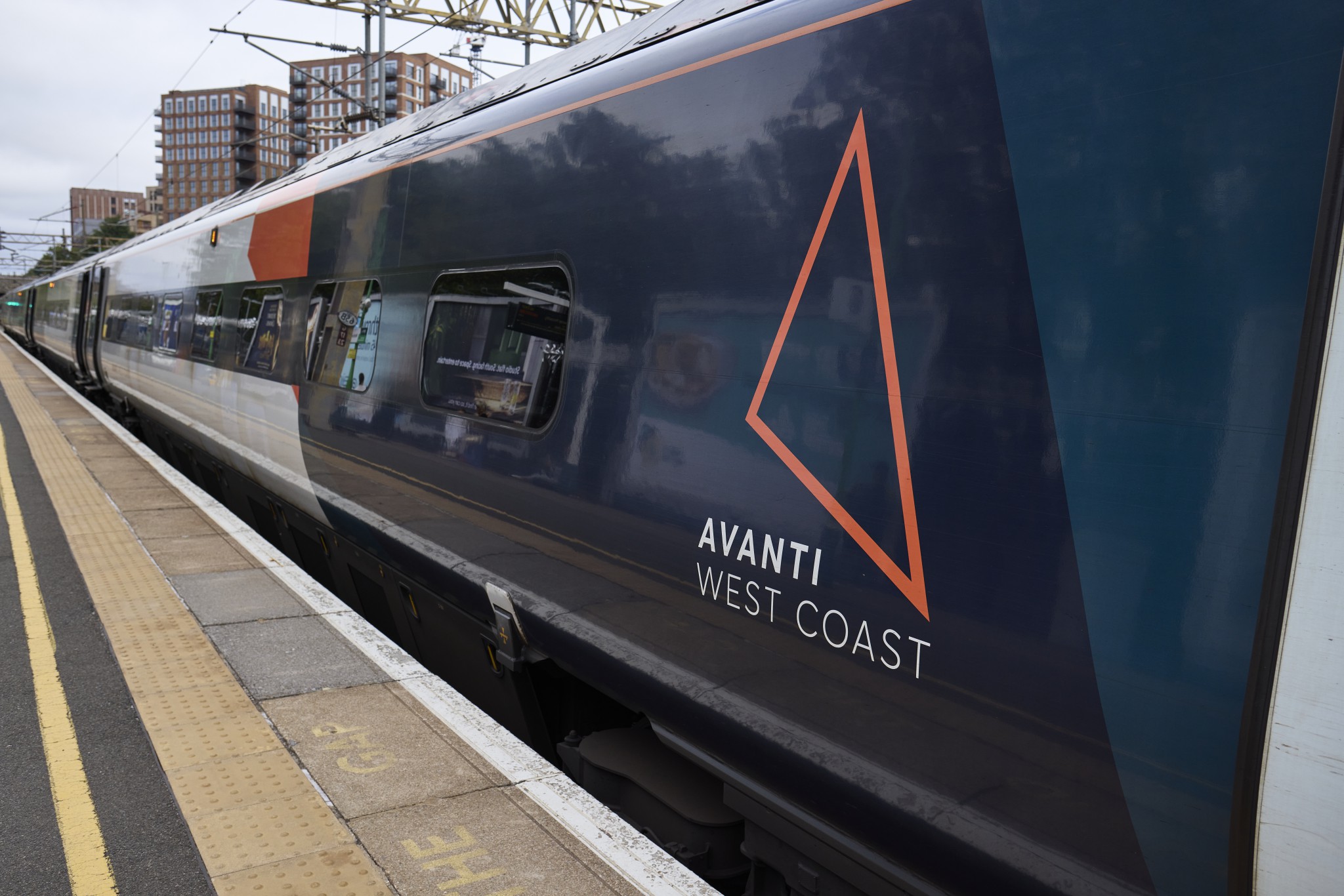
ANDY Burnham is set to nationalise Avanti West Coast next year as Labour pledges to start “delivering for passengers”.
The Government will take control of the private operator from March 7 as the PM said passengers had been failed “time and time again”.
Avanti West Coast is set to be nationalised from next year, the government has announcedCredit: Getty
An extra £10million is set to be invested in power and signalling maintenance in addition to £840million earmarked for infrastructure on the West Coast Main Line, reports ITV.
The government hopes timetable changes will also improve services for passengers as well as boosted WiFi connectivity.
Sign up for the Travel newsletter
Thank you!
It was also announced that Euston station in London will receive a £50million upgrade.
Transport Secretary, Heidi Alexander said: “For years, we’ve heard stories of Avanti underperforming, with passengers left paying the price. Enough is enough.
“That is why we will bring Avanti into public ownership at the earliest opportunity, in March next year.
“This Labour Government is committed to putting essential services back in public hands, connecting people to opportunity and delivering growth in every postcode and this move reflects that commitment.
“We will also introduce a comprehensive improvement plan, focused on delivering for passengers, not shareholders.”
Avanti West Coast’s contract is due to come to an end on March 7, 2027.
That will leave East Midlands Railway and Cross Country as the only train operators yet to be nationalised.
Prime Minister Andy Burnham blasted Avanti, saying they had failed passengers “time and time again”.
In a post on X he said: “We’re putting essential services back in public hands and building a railway that actually works for the people who use it.”
It comes as Avanti West Coast recorded the highest number of cancellations in the UK this summer, according to analysis by The Times.
That is double the national average as they made 1.4million delay repay claims in the year to March – around a million more than in 2019, according to the outlet.
Andy Mellors, managing director at Avanti West Coast, said: “We’re proud of what we’ve achieved over the last six years – from refurbishing our Pendolino fleet and introducing our new Evero trains to running more services than ever before.
“Together, these improvements have given customers greater choice, more capacity and better connectivity, while we’ve continued to innovate to shape the future of the West Coast and wider rail industry.
“Over the coming months, we’ll work closely with the government to ensure a seamless transition into public ownership while remaining focused on delivering for our customers and communities.”
A reduced timetable will also continue between Christmas and the new year due to engineering works, with the scheduled change aiming to “save taxpayers money“.
If you are looking for somewhere to stay on the island, you’ll want to head to Caleta de Sebo as this is where you’ll find most of the accommodation such as guest houses, apartments and campsites.
And thanks to many of the buildings in the towns being whitewash with low roofs, visitors have previously compared La Graciosa to Mykonos.
Despite being just north of Lanzarote and separated from the holiday hotspot by a narrow strait called El Rio, La Graciosa is far less crowded.
The island only has a population of 700 and thanks its small size – 11.2-square-miles to be exact – it doesn’t take too long to explore.
There are two main villages on the island – with no roads or carsCredit: Getty
The most popular way of exploring the island is by bike, with numerous trails heading to different corners of the island.
ONE minute I’m having my morning coffee, the next I’m handed a long stick to fish fresh mangos from the trees for my breakfast.
As I cut into the ripe green fruit, sticky juice seeps down my arm and I frantically try to eat it before it reaches my elbow.
Soft sandy beaches, coconut trees lining the roads and year-round 30C weather. All the boxes tickedCredit: Getty ImagesPop into the Bazar de Grand Baie, a huge indoor market with everything from clothes and shoes to carved wooden dodos and coconut bowlsCredit: Alamy
After days of rich prawn curries and French chocolate lava cakes, this health hit is a welcome change.
The mix of Indian and French culture is what makes a holiday to the African island of Mauritius unique.
Sign up for the Travel newsletter
Thank you!
Its history is complex. Being uninhabited until 1598, it swapped hands from the Dutch, to the French, and finally the British before its independence in 1968.
Now predominantly Indo-Mauritian, the island is the definition of paradise.
Soft sandy beaches, coconut trees lining the roads and year-round 30C weather. All the boxes ticked.
And your time in paradise is best spent at Veranda Paul et Virginie Hotel in the north of the island.
The adult-only resort, which underwent a huge renovation in 2024, is named after the tragic French love story of Virginie and Paul. Spoiler: They both die.
I’ve never felt more alive, however, as I enter the hotel to be greeted by Bora Bora-style thatched lobbies, Maldives-esque, over-water restaurants and a Dubai-like infinity pool.
Red sky at night is The Sun’s Kara’s delightCredit: UnknownInfinity pool at the Veranda HotelCredit: Supplied
Thankfully, it comes without the high price tag of those destinations, as Mauritius is the affordable luxury alternative.
My out-of-office relaxation is only interrupted by my hourly break into the water to escape the heat. There’s the bright turquoise ocean with snorkelling, paddle boarding and glass-bottom boat tours — all included for guests.
Otherwise, days are spent hopping between the main hotel pool and the infinity pool overlooking the sea.
The latter is where I spend every evening in awe of the view when the sun goes down.
As the clouds clear, a vivid pink sunset rips across the sky like a paint splatter, lighting up the water in the same hue.
And the views don’t stop from either of the hotel restaurants.
The main dining spot is Saint Geran, which juts out over the water with 360-degree ocean views.
The menu includes octopus salads, Mauritian arancini and decadent French desserts. I quickly became obsessed with napolitaine, a tiny shortbread biscuit covered in pink icing that I had alongside nearly every cup of coffee.
Make sure to stay put at the resort on Thursdays for the Sunset Vibes nights, with steel drums, cocktails and canapes.
Another big selling point of this gorgeous hotel is that all the bedrooms have either pool or sea views.
My Superior room — the middle option — was spacious and stylish. Think rattan chairs on the balcony, king-size beds and dark walnut furniture, accented with blues and oranges.
Any woes I still had in me were eased at the hotel’s spa, where a 90-minute massage from Aurora left me feeling like a new woman.
If you come to Mauritius with the kids, try the Veranda Grand Baie hotel down the road. This resort has volleyball courts, table tennis and a rotating menu of activities, such as archery and kayaking.
I tested my skills with some Creole lessons, Ravanne drum classes and cooking demonstrations, sweating over an outdoor stove.
Adults wanting some time to themselves also have more choice in the village of Grand Baie (after which the hotel is named).
A short walk or boat ride away, Banana Beach Club is the place to be, with £3 local beers and live music all through the week.
Pop into the Bazar de Grand Baie, a huge indoor market with everything from clothes and shoes to carved wooden dodos and coconut bowls. Just be prepared to haggle hard. If you can pull yourself away, the rest of the north of the island has a lot more to offer outside of the resorts.
The history of Mauritius is best explained at L’Aventure du Sucre, an interactive museum exploring the last 400 years — with sugar and rum tastings to finish off, of course.
Join the locals at Cap Malheureux beach, where heady smells of BBQ-ed meat carry across the shore.
It’s also where you’ll find the famous red-roofed church that features on all the postcards out here.
BBQ lobster at the Grand BaieCredit: Supplied
GO: MAURITIUS
GETTING THERE: Return flights from London Gatwick to Mauritius start from £658 with Air Mauritius. See airmauritius.com.
STAYING THERE: Veranda Grand Baie on a B&B basis is from £195 a night based on two people sharing (£243 half-board, £338 all-inclusive). Veranda Paul et Virginie on a B&B basis is from £168 a night based on two people sharing (£189 half-board, £286 all inclusive). See veranda-resorts.com.
Or grab a bike and explore the fishing village of Grand Gaube.
Our guide, “King Julian”, showed us around, greeting nearly every person like a local celeb, high-fiving them over the football or holding doors for the elderly churchgoers.
“We don’t have a big life, but it’s a millionaire life,” he tells us as we watch the fishing boats come in underneath another pink sunset.
Despite spending a fraction of that to be there, I certainly felt a million dollars by the end.
IT’S 10pm on a Sunday and I’m dancing alongside 50 strangers, an Aperol spritz in one hand and a skewered olive in the other.
I’m at La Ciclatera Sotto Il Mare, a bar tucked into the medieval walls of Bari in southern Italy.
Bari’s stunning seafront at duskCredit: GettyPolignano a Mare beach in cliffsCredit: Getty
This historic port city is the capital of Puglia, sitting in the heel of Italy’s boot on the Adriatic coast.
And it’s that same coastline I’m now gazing at, swaying to Italian tunes the locals know every word to as they dig into shared pizza boxes.
Sign up for the Travel newsletter
Thank you!
It’s a moment that really captures the city’s vibe, and is just one of many reasons to see it for yourself.
This summer, easyJet started flying to Bari from Manchester, joining its existing routes from Gatwick and Bristol. With a flight time of just under three hours, it’s a fresh alternative to the usual long weekend in Barcelona or Lisbon.
Until now, Bari has largely been known to Brits as a stepping stone to the more famous corners of Puglia — but it deserves better..
Bari’s real charm lies in its old town, Bari Vecchia, where you can easily lose a whole day.
Its alleys twist between pale stone houses strung with washing lines, past tiny churches and crumbling shopfronts, before opening on to squares packed with restaurants, bars and trendy gelato spots.
Despite being on the coast, Bari isn’t brimming with beaches but there are still sunbathing spots — Pane e Pomodoro is a 30-minute stroll from the centre.
This small stretch of sand is easy to swim from and dotted with bars. It gets very busy at weekends though, so arrive early.
Those after a bit of culture should check out the Basilica di San Nicola, an 11th-century church built to house the remains of Saint Nicholas, the man who inspired Santa Claus.
A few streets away, there’s the 12th-century Castello Svevo, which has a museum and art exhibitions, as well as panoramic vistas from its ramparts.
But the biggest attraction in Bari is the food. It is the birthplace of orecchiette — the “little ears” pasta shape Puglia is famous for — and you’ll find it on most menus.
The best I had was at La Beuat, a modern seafood spot on a tiny square in the Carbonara district.
Every table was full of locals tucking into dishes such as grilled octopus and fiery spaghetti all’assassina — Bari’s signature pasta cooked in a scorching pan until the edges char.
Three courses for two with wine came to around €60 (£50), which is fairly standard for a good quality meal in the old town.
For more traditional vibes, La Cantina dello Zio is a family-run trattoria famous for its orecchiette with turnip tops.
The huts of heritage site AlberobelloCredit: AlamyBari’s famous ‘little ears’ pasta, orecchiette, with turnip greensCredit: Alamy
Another favourite was Osteria del Borgo on Piazza Mercantile, one of the old town’s most atmospheric squares.
As I ended every evening with a stomach full of pasta, I was grateful for the short walk back to my hotel, the 4* Movenpick Bari.
Rooms are contemporary and comfortable and breakfast is served on the eighth floor, which has sweeping views of the city and harbour.
Bari is a great base for exploring the Puglia region and Ionian coast, where powder-white sands have earned it the nickname “the Maldives of Italy”.
Hire a car from around £30 per day to reach the more remote areas or let the train take the strain.
Polignano a Mare, the clifftop town famed for its beach carved into the cliffs, is fewer than 30 minutes away from Bari by rail.
Monopoli, with its whitewashed old town and string of turquoise coves, is also well worth an afternoon visit for a swim and plate of pasta by the harbour.
A little further afield is Alberobello, a UNESCO World Heritage Site that is renowned for its trulli (traditional cone-roofed stone huts).
That said, you don’t have to go far. Bari has more than enough charm, food and character to fill a long weekend — especially if you plan your days around what’s on the menu.
GO: BARI
GETTING THERE: easyJet runs direct flights from Manchester, Gatwick and Bristol to Bari from May to October, from £32.99 each way.
OUR Spotlight On column gives you the lowdown on what to see and do in your favourite holiday hotspots – as well as lesser known gems.
This week we shine a light on a Florida favourite perfect for an autumn or winter break – Boca Raton.
Most Brits won’t have heard of Boca RatonCredit: SuppliedBut the beautifully laid-back beaches make it a secret paradiseCredit: Alamy
Close to the bright lights of Miami, it offers a more relaxed experience in a stunning coastal setting.
As the Head of Travel at the Sun, I recently visited Florida’s secret paradise, with with pristine beaches, surprisingly lush parks and Japanese gardens and a laid back vibe.
Sign up for the Travel newsletter
Thank you!
But with the new Brightline that speeds holidaymakers from Orlando to Miami on Eurostar-style trains stopping off in Boca, it’s easier than ever for us Brits to discover the delights of this upscale city that offers all the best of Miami without the crowds and frenetic city pace.
With jetlag waking me early, I took a stroll on the beachfront near Spanish River Park where the sun breaks over the water painting the sky in vibrant amber and violet tones.
Settling onto the sands, I had the beach almost to myself as pelicans flew low over the gentle surf and watched as the sun rose high.
So here are some of my other tips on exploring the lesser known US city.
MUST SEE / DO
A beloved local institution, Gumbo Limbo Nature Center invites visitors to explore Boca Raton’s coastal ecosystem through nature trails, butterfly gardens and marine conservation exhibits.
It is famous for its sea turtle rehabilitation facility, where visitors can see rescued loggerhead and green sea turtles getting nursed back to health.
Visit during turtle nesting season from March through October, when the centre hosts guided night-time turtle walks and seasonal hatchling releases.
HIDDEN GEM
The Morikami Museum and Japanese Gardens offer a serene escape that feels worlds away from the buzz of the coastline.
It is easy to get to thanks to a new Eurostar-like fast trainCredit: AlamyIf you want a quieter place to explore in Florida, this is the placeCredit: Alamy
Spanning 16 acres, the gardens celebrate centuries of Japanese design through tranquil ponds, bonsai collections and carefully curated pathways.
BEST VIEW
Set between the Atlantic Ocean and the Intracoastal Waterway, the Blue Flag designated Spanish River Park offers spectacular sunrise views over the beach and equally beautiful sunset scenes along its shaded walking trails and waterfront areas.
RATED RESTAURANT
Mizner Park, an open-air shopping and dining complex, is all pink-stucco Mediterranean Revival architecture and towering palm trees.
Here, Tryst blends classic French bistro charm with an inventive American menu under Chef Daniel Dore, featuring dishes from steak frites to a vegan mushroom lasagna topped with oat milk béchamel.
For more relaxed, value dining, Tomasso’s Pizza and Subs is a neighbourhood institution, serving up New York-style slices and massive sandwiches for decades.
A couple of slices or hot sub is from £7.33.
BEST BAR
American Social in Mizner Park is a fun sports bar bringing Modern American cuisine with a twist.
It is the perfect place not only if you want to catch a game, but also for an intimate dinner or a night with friends.
Beer lovers should head to Biergarten Boca Raton.
Tucked into Royal Palm Place, this indoor/outdoor spot stocks more than 24 beers on taps and has dozens of craft bottles as well.
With live music and generous happy hour deals, it’s a relaxed place to kick back.
HOTEL PICK
Fresh from a £5.4million renovation, the Boca Raton Marriott at Boca Center is close to Mizner Park in the city centre and an ideal base for discovering the area.
There’s a gorgeous outdoor pool with plenty of shade from towering palms and you can pick up a cocktail or two at the outdoor Drift bar.
End the day at Sonrisa, with its bold Caribbean-American flavours.
Rooms feature floor-to-ceiling windows to make the most of the views and a calm, neutral palette with splashes of marine blue.
ONE in five early holiday bookers have been left out of pocket after seeing prices for their trip plummet as the departure date approaches.
Researchers explored whether travellers are more likely to identify with a traditional, take-charge Type A personality (54 per cent), or a laid-back Type B approach (31 per cent), when booking and enjoying a holiday.
Millions of travellers admit to cramming their holiday preparation into just a few daysCredit: SWNSPrices for a trip plummet close to departure timeCredit: Tom Maddick / SWNS
Type A travellers prefer to meticulously plan every detail of their trip well before setting off, while Type Bs would rather go with the flow and embrace the unexpected when away.
However, the study of 2,000 adults who have travelled abroad in the last three years found 20 per cent of Type As later spotted the exact flight or hotel they had spent weeks researching available for significantly less.
Sign up for the Travel newsletter
Thank you!
Another 10 per cent of these travellers have lost money trying to amend or cancel rigid bookings when their plans changed.
Yet 73 per cent of Type As believe booking a holiday just a week before departure feels too risky.
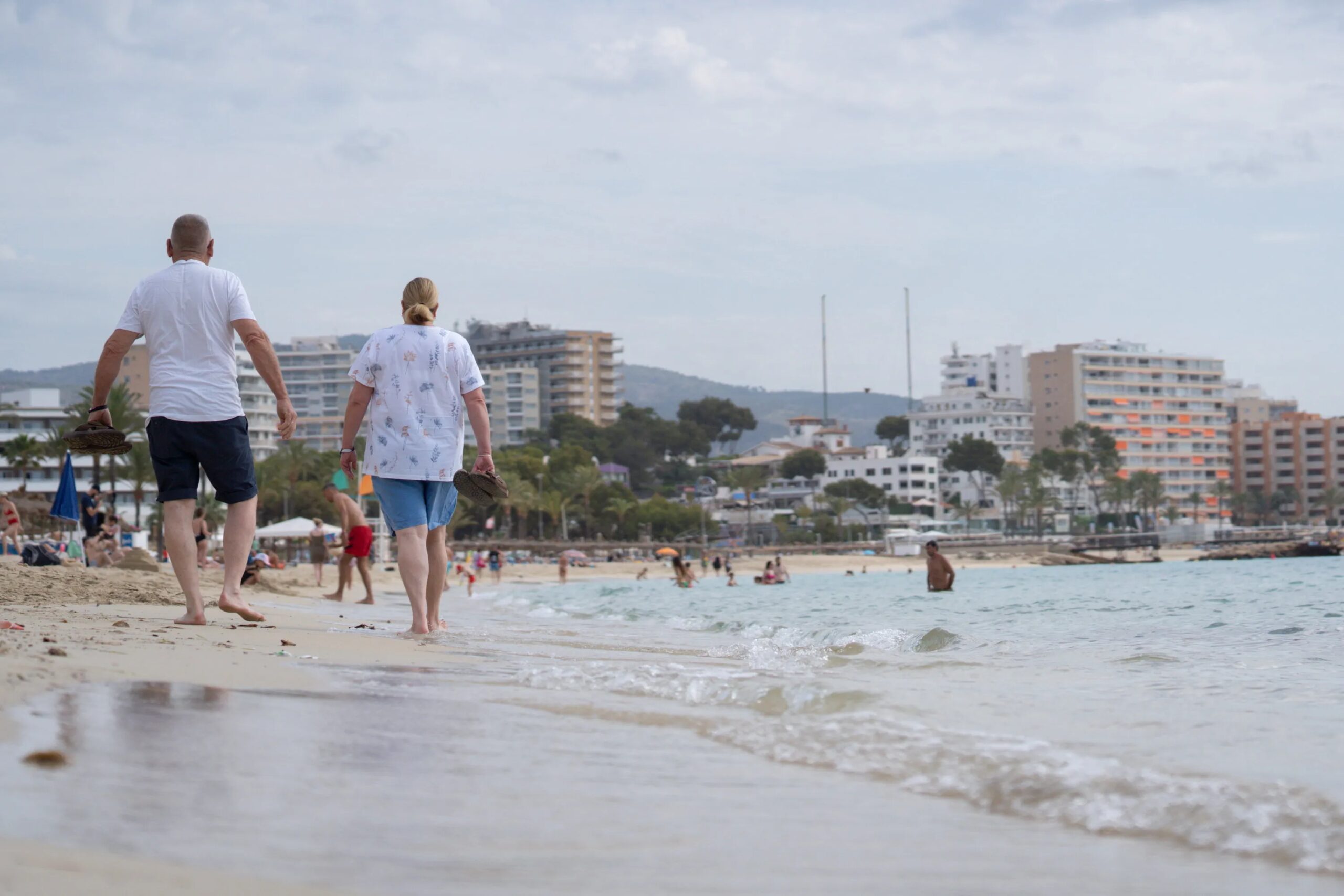
Beachgoers at Magaluf relax on the shoreCredit: SWNSSunseekers take a stroll in MallorcaCredit: SWNS
But 36 per cent of their Type B counterparts feel confident there is little risk of missing out on their dream destination, even without planning months in advance.
The research was commissioned by lastminute.com to mark the launch of its ‘Travel Bgents’ platform, a hub that rewards Type B bookers with extra discounts.
Zoë Fidler, from the holiday firm, said: “There’s a common misconception that Type B travellers are just unstructured non-planners who leave things to chance. In reality, they are the savviest bookers in the game.
“Type B travellers have simply realised that holding off on pressing ‘book’ is the smartest move you can make, knowing they can get what they want and at a great price.”
Yet a quarter (25 per cent) admitted they wish they could embrace this more spontaneous approach and have the confidence to book a trip without overthinking.
With 30 per cent of Type B travellers assured that they could change plans on a whim when leaving it late to lock in their trip.
It’s not just saving money and planning time as 42 per cent of Type B travellers agreed that spontaneous adventures while on holiday create lasting memories, whereas this was true for just 20 per cent of Type A travellers.
With Type B travellers revealed to be more likely to stumble across hidden gems (36 per cent v 28 per cent) or enjoy unexpected moments (42 per cent v 20 per cent).
Zoe Fidler, from lastminute.com, added: “By holding out for the right moment, Type B’s unlock premium trips at a fraction of the cost, without the over-planning.
“Leaving it to the last minute isn’t about compromising or settling for leftovers; it’s an intentional, high-reward strategy.”
One in five holidaymakers who book trips well in advance later discover the same flight or hotel has dropped in price as the departure date nears, according to new research.
Booking too early has its downsides (Image: Getty Images)
Researchers explored whether travellers are more likely to identify with a traditional, take-charge Type A personality (54%) or a more laid-back Type B approach (31%) when booking and enjoying a holiday.
Type A travellers prefer to meticulously plan every detail of their trip well before setting off, while Type Bs are more likely to go with the flow and embrace the unexpected when they’re away.
But the study of 2,000 adults who have travelled abroad in the last three years found 20% of Type A travellers later spotted the exact flight or hotel they had spent weeks researching available for significantly less .
Another 10% said they had lost money trying to amend or cancel rigid bookings when their plans changed. Despite that, almost three quarters (73%) of Type As said booking a holiday just a week before departure feels too risky .
However, 36% of Type B travellers said they feel confident there is little risk of missing out on their dream destination, even without planning months in advance.
The research was commissioned bylastminute.com to mark the launch of its ‘Travel Bgents’ platform, a hub that rewards Type B bookers with extra discounts.
Zoë Fidler, from the holiday firm, said: “There’s a common misconception that Type B travellers are just unstructured non-planners who leave things to chance. In reality, they are the savviest bookers in the game.
“Type B travellers have simply realised that holding off on pressing ‘book’ is the smartest move you can make, knowing they can get what they want and at a great price.”
Even so, a quarter (25%) admitted they wish they could embrace a more spontaneous approach and have the confidence to book a trip without overthinking.
Around 30% of Type B travellers said they feel reassured they could change plans on a whim when leaving it late to lock in their trip.
And it’s not just about saving money and planning time. Some 42% of Type B travellers said spontaneous adventures while on holiday create lasting memories — compared with 20% of Type A travellers .
Type B travellers were also more likely to say they stumble across hidden gems (36% vs 28%) or enjoy unexpected moments (42% vs 20%).
Zoe Fidler added: “By holding out for the right moment, Type B’s unlock premium trips at a fraction of the cost, without the over-planning.
“Leaving it to the last minute isn’t about compromising or settling for leftovers; it’s an intentional, high-reward strategy.”
As close to the sea as you can get without setting sail, this newly renovated cottage is moored up between a little shingle beach and the village of Moelfre, with its lifeboat station, pub, fish and chip shop, cafe and parlour serving locally made ice-cream. A former fisher’s cottage, it’s decorated in nautical blues and whites, their cool tones warmed by antique chests and an inglenook fireplace once used for smoking herring. An unusual circular garden spins out towards the sea; hop over its low stone wall and you’re right on the Anglesey Coastal Path, soaking up cinematic views of Puffin Island, and Eryri beyond. Sleeps eight, two nights from £746, boltholesandhideaways.co.uk
Heronden Lodge
Eastry, Kent
Photograph: Nathan Shepherd
This doll’s house-like, red-brick cottage sits sheltered by trees in a quiet corner of the Kent countryside, 10 minutes’ drive from Sandwich and 20 from Deal. Newly spruced up, it’s restfully low-key, with buttermilk walls and wooden floors. Upstairs are two bedrooms (one a king, the other a twin) and a bathroom with a tub: perfect for dunking mud-splattered children after days at the beach or trailing along footpaths. Downstairs, there’s a simple country kitchen, a double-windowed dining room and a sitting room with an open fireplace. Walks lead straight into the surrounding farmland and to the village pub, 20 minutes’ away. There are also two farm shops within 10 minutes’ drive. Sleeps four, two nights from £472, keeperscottages.co.uk
Ty Bach
Beulah, Powys
Photograph: Kayleigh Doyle
Mid Wales is at its moody best in the autumn, the hillsides glowing auburn beneath squally skies. If your walking boots are calling, this recently launched holiday cottage just north of Llanwrtyd Wells is a good base for exploring the trails of the Cambrian Mountains or the Bannau Brycheiniog (Brecon Beacons). The smaller of two cottages on a site that was once a busy village school, it had been empty for more than three decades when the current owners took it on. It took them eight years to restore it, and now it’s a vision of flagstone-floored, putty-walled, slate-roofed comfort, cosied up with a plush raspberry sofa and copper kitchen appliances. This is a place for being rather than doing. Add-ons range from gourmet grazing boards to massage treatments. Sleeps four, two nights from £260, tosholidayhomes.co.uk
Basecamp North Lakes
Troutbeck, Lake District
Photograph: Ruth Burgess
A few miles west of Penrith, this farm shop, cafe, community garden and wetland restoration site juggles more plates than a Barcelona tapas bar on a Saturday night. It’s also home to a charitable enterprise, Alpacaly Ever After, which rescues llamas and alpacas and offers meets, walks and even camping experiences with them, accessible to all. This summer it added one more item to the menu, launching seven smart new cabins beside the site’s lake. Kitted out with glossy green-tiled shower rooms, galley kitchens, wood-burning stoves and private outdoor baths, they each have one bedroom but can sleep two more on a sofa bed in the lounge. Sleeps four, two nights from £300, basecampnorthlakes.co.uk
Peatlands Retreat
Ballybogey, County Antrim
Photograph: Gareth Andrews
Sitting in the countryside between Ballymoney and Portrush, the two restful shepherds’ huts here come with en suite shower rooms and king-size beds. You’re within easy reach of Old Bushmills Distillery, the Giant’s Causeway, Dunluce Castle and a string of some of the most stunning sandy beaches in the UK, but many guests don’t venture beyond the site’s gardens, meadow and woodland, staying to spot resident hares and light wood-burning stoves. The owners also run an artisan micro-bakery on site; Saturday sourdough workshops can be booked (£90pp), bakery breakfasts can be delivered to your door (£16pp) and twice a week there’s a hyper-local pizza-to-hut delivery service (£15 each). Sleeps two, two nights from £320 (discounts for solo stays), peatlandscausewaycoast.com
Pippin Cottage
Bude, Cornwall
Run by a former Vogue producer, her chef partner and their farming family, Pippin is one of three cottages set on a working orchard outside Bude. Mixing heirloom pieces with Studio Ore taps and Hay lighting, it’s a lesson in understated, soulful style. Works by local artists cheer the walls (many are for sale) and in the kitchen you’ll find apple juice pressed straight from the orchard’s trees. This autumn, the site has opened a new custom-built sauna and cold plunge, and guests can book add-on wellness experiences such as yoga and sauna sessions that end with hot cocoa around a fire pit. Sleeps four, two nights from £256, cannorchard.com
Montagu Cottage
Drumlanrig, Dumfries and Galloway
Photograph: Alix McIntosh Photography
Built in the 19th-century as the laundry for the Queensberry estate, Montagu Cottage has been scrubbed up for modern-day guests. A peppermint cream colour scheme cosies up its lofty living area and three bedrooms, there’s a clawfoot bath for post-hike soaks and a double-aspect wood burner blazes in the cottage’s heart. Drumlanrig Castle is easily reached on foot (guests get free access to the gardens and adventure playground until the end of October); spectacular woodland and valley walks lead out from the door; and you’re close to the village of Thornhill for pubs, bakeries, shops, cafes and, if you time it right, a live gig or film screening at the Old School. Sleeps six, three nights from £750, drumlanrigcastle.co.uk
Molly’s Cabin
Sutton Bonington, Nottinghamshire
Tucked into the field-woven gap between Nottingham and Leicester, beneath the approach to East Midlands airport, Bonington Farm’s four distinctive holiday cottages include a blackened timber cabin with sociable, dorm-style bedrooms, a circular grain store, a pretty brick farmhouse and a corrugated former hay barn. The latter, Molly’s Cabin, is a gallery-walled, salvage-speckled hideaway that’s about to undergo a gentle refurb. Single-night Sunday stays include a private movie night in the farm’s cute grain silo cinema. Or, stay for the whole weekend and go leaf-crunching along the trails of The Outwoods, a 110-acre woodland around 20 minutes’ drive away. Sleeps two, one nightfrom £200, boningtonfarm.com
Fjord
Ullapool, the Highlands
Photograph: Lukas Rambousek
A minimalist counterpoint to the rugged maximalist scenery beyond, Fjord is one half of Corylus Retreats, the twin self-catering apartments opened just outside Ullapool in May. Conceived and run by the team behind nearby Ecotone Cabins, it was designed sustainably with stripped-back timber walls, and floor-to-ceiling windows maximise natural light and have views of neighbouring Loch Broom. On clement days, the pretty harbour and restaurants of Ullapool are easily reached, and there are craggy hikes around Assynt, Coigach and the Summer Isles. If it rains, hunker down inside, enjoying the luxury of underfloor heating or curling up on the covered deck to watch scudding clouds. Sleeps four, three nights from £661, premiercottages.co.uk
Hafod Gwyllt
Cwmystwyth, Ceredigion
Photograph: Lou Archell
Its name translates as “wild summer dwelling” but this renovated cottage deep in the Cambrian mountains is equally good for an autumn escape. On the Hafod Estate, deep in the Ystwyth valley, it has no neighbours besides ponies, and has easy access to hiking and wild swimming. Newly available as a holiday rental, it’s stylishly understated inside, with whitewashed walls, slate and wood floors and a collection of ruffled lampshades, tapestry blankets and old pine dressers in soothingly subdued shades. Outside, there’s a wood-fired hot tub with rugged mountain views and the owners can arrange dark skies photography sessions or visits to local potters. Sleeps four, three nights from £690, sandandstoneescapes.com
Cae’n y Bwlch
Talsarnau, Eryri (Snowdonia)
Photograph: Polly Lovegrove
Getting away from it all is a given at this newly launched cottage in a secluded mountain setting north-east of Harlech. Owned by a ceramicist and an artist, its slate floors and limewashed walls are warmed by glowing fires and a colourful collection of antique dressers, jaunty art, textiles and carved wooden love spoons. While you could drive down the hillside for a windswept walk along the beach at Black Rock Sands, or to explore the legacy of Clough Williams-Ellis at Portmeirion and Plas Brondanw, it would also be tempting to arrive fully supplied and squirrel yourselves away, soaking up the views or hiking straight out into the rugged wilds of Eryri national park. Sleeps six, three nights from £509, underthethatch.co.uk
Riders Lodge
Ballycastle, County Antrim
Stay Lagom is a small estate set around a Georgian rectory on the fringes of Ballycastle. With bike hire on site and a new programme of add-on wellness experiences (think yoga and seaside saunas), it’s popular with visitors coming to hike, surf or cycle the Causeway Coast. Hotel-style bedrooms and boutique dorms can be booked and there are two self-catering cottages, including Riders Lodge, where a sofa-bed stretches capacity to six. Popular with families and small groups of friends, it’s a sociable space with surfboards and bikes suspended on the walls, its own courtyard hot tub and a stash of board games for evenings around the wood burner. Sleeps six, two nights from £524, staylagom.com
Hoolet Bothy
Beauly, the Highlands
If Mrs Tiggy-Winkle retrained as an architect, she might come up with something like Hoolet Bothy. A remote, off-grid farm cottage in the hills above Beauly, 12 miles west of Inverness, it’s the epitome of cosy, with timber-panelled walls, a log-burning stove, a double bed tucked into the eaves and a wood-fired Rayburn for cooking and supplying hot water to a small cast iron bath. Guests have access to a fridge and a charging point down at the farm, three minutes’ walk away, and a cool box is supplied for essentials, but there’s no electricity on site so hunker down for days of walking among deer-speckled hills and red kite-dotted skies, and evenings spent storytelling by candlelight. Sleeps two, three nights from £477, airbnb.co.uk
Labour in Vain Cottage
West Bexington, Dorset
Photograph: National Trust
Set back from the 18-mile swoosh of shingle along Chesil Beach, this semi-detached rental (there’s another next door for holidaying apart together) has been newly renovated by the National Trust. Its name, like the lane beside it, is thought to refer to a year of crop failures in the middle ages – but there won’t be much labouring, in vain or otherwise, while staying here. Hike a stretch of the South West Coast Path, go swimming or fossil-hunting, watch the skies for migratory brent geese and head into nearby Bridport for shops, cafes and pubs. As well as a snug ground-floor lounge, the attic has been converted into a games room with a TV, telescope and space to spread out jigsaws or toys. Sleeps four, two nights from £561, nationaltrust.org.uk
Thornfalcon Winery
Taunton, Somerset
Photograph: Felicity Millward
One of two wooden cabins on a working vineyard (there’s also a more spacious barn conversion suitable for families), the Vine Hut blends rustic timber walls with apple green paintwork and a red gingham sofa to give a cheery, gingerbread cottage feel. It comes with its own outdoor copper bathtub and firepit, plus access to the neighbouring swimming lake and Finnish sauna (pictured). Earlier this year the owners of Thornfalcon renovated a barn on site and have launched a wine school there, plus a series of monthly supper clubs, pairing the vineyard’s wines and juices with seasonal menus; October’s is a culinary caper through the hedgerows, fields and waves via pheasant, hake, mussels, squash, radicchio, puntarelle and quince (from £65pp). Sleeps two, two nights from £340, thornfalcon.com
Prices are for October-November and were correct at time of publication
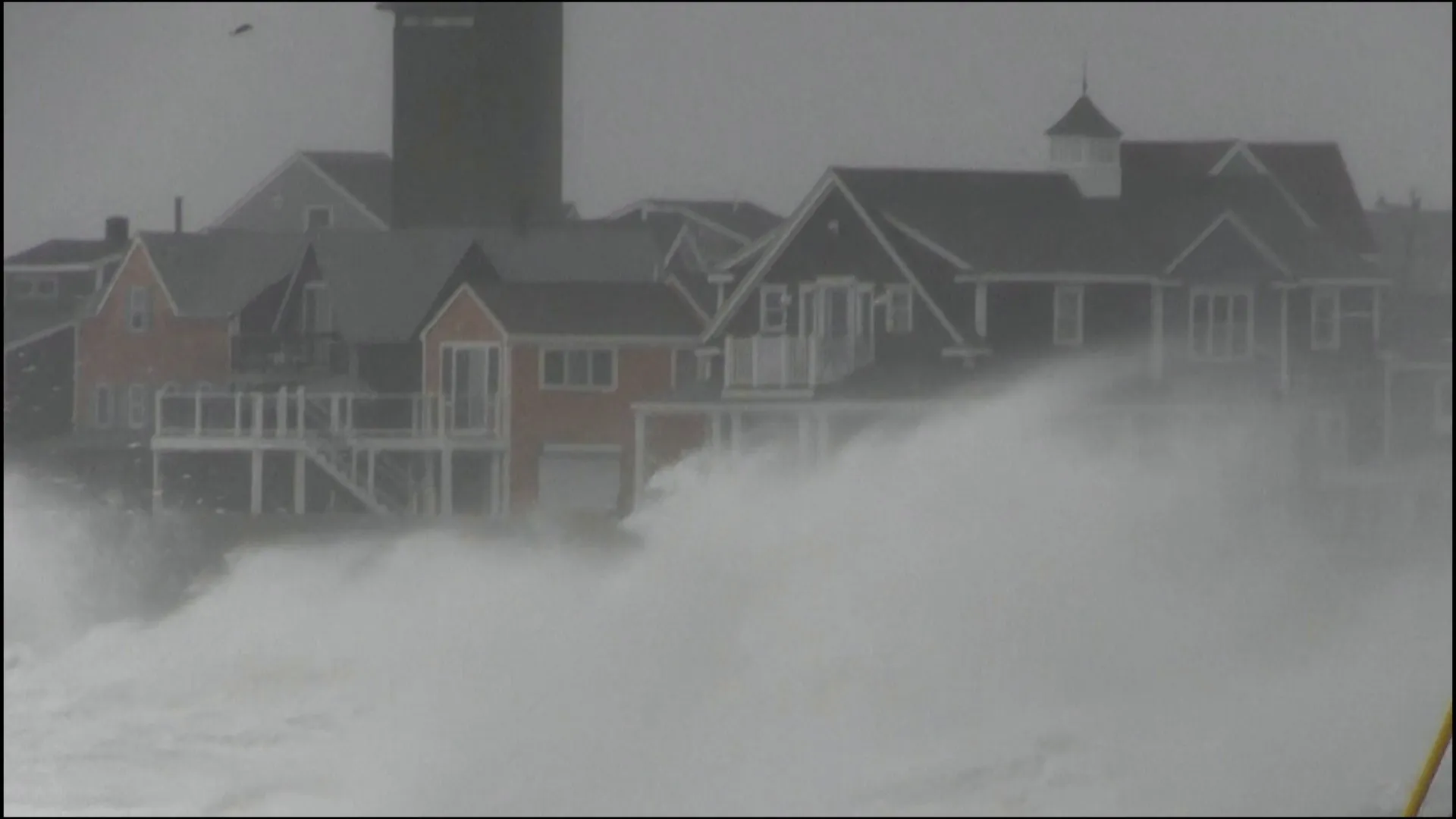
Powerful winds and towering waves are battering the US Northeast, causing flight chaos and blackouts. Flooding has already hit areas like Atlantic City and the Jersey Shore, with officials warning of more rain to come.
AZERBAIJAN is nicknamed the Land of Fire and is a fascinating mix of Eastern and Western culture.
Antoinette Cumberbatch shares her account of discovering the country’s delicacies, hot weather, rich history, plus a party scene reminiscent of Miami.
Azerbaijan’s capital city Baku is also famous for hosting a Formula 1 raceCredit: Getty ImagesThe Sea Breeze Resort on Azerbaijan’s golden coast is perfectly located for sports activities and beach clubsCredit: Supplied by PR
Watching US rapper Busta Rhymes work the screaming crowd in the balmy 32ºC heat, I feel like I’m in Miami.
In fact, I’m actually dancing the night away beside the Caspian Sea at Azerbaijan’s lively Dream Fest, held each July.
Sign up for the Travel newsletter
Thank you!
It takes place 35 minutes’ drive from the enthralling capital, Baku, at Sea Breeze Resort on the golden coast, also home to a huge array of sports activities and buzzing beach clubs.
Fish Box serves up excellent sushi, from £13.50 a platter, and with my spacious one-bed pad at White Villas, I get a private garden. Villas sleeping two start from £110 a night (Seabreeze.az).
Hours earlier, I’d explored another side of Azerbaijan, which straddles Europe and Asia, discovering why it’s nicknamed the Land of Fire.
On the outskirts of Baku, the Ateshgah Fire Temple vividly brings this to life.
Here, history isn’t tucked behind glass – instead, fire flashes red-hot between ancient stones from an altar in the middle, and I duck through low doorways to learn how merchants stopped here while travelling along the Silk Road. Entry costs £6.50 (Ateshgahtemple.az).
Another eternal flame is Yanar Dagh, a hillside of natural gas where fire burns continuously at a scorching 1,000ºC.
Succulent grilled beef saj is a delicacy at the traditional Novbahar restaurantCredit: Novbahar/InstagramOn the outskirts of Baku, the Ateshgah Fire Temple vividly brings the country’s nickname to lifeCredit: Getty Images
I finish my fiery sightseeing with a visit to Baku’s Bar19 at Flame Towers, an imposing structure by day and a dazzling sight at night, serving up city views alongside Flame cocktails – a sweet mix of Bacardi, Passoã, amaretto and lime juice, £13 (Fairmont.com).
Come morning, I stroll along the city’s waterfront, Baku Boulevard, to take in more futuristic landmarks, such as Deniz Mall and indoor arena Crystal Hall, plus the world’s largest flying flag in State Flag Square.
Then I explore Icherisherer, the official name for the Old City and a UNESCO World Heritage site since 2000.
I wander the labyrinth of passageways, where cats sleep in doorways and locals sell goods including carpets and pillbox sheepskin hats, haggling to nab one of the latter for £12. In other corners, I find locals offering home-made Turkish delight and playing draughts.
Partying at Azerbaijan’s lively Dream Fest made Antoinette feel like she was in MiamiCredit: Supplied by PRA stroll around Highland Park provided an ideal location to see the panoramic view of BakuCredit: Supplied by Antoinette Cumberbatch
A few minutes’ walk from Icherisherer and an array of designer shops, is Art Gallery Hotel, set in a grand Art Deco building with walls adorned with striking pieces.
Luxurious rooms feature quirky headboards, gold lamps and large showers, and stays start from £85 per night (Arthotelbaku.com).
Dumpling Day
Sitting among retro ornaments and mismatched furniture at restaurant Ryumochnaya By Beerbasha, I feast on delicious pasztet – a chicken pâté with jam – £2.20, and moreish chicken Kyiv, £5.65.
The most surprising but incredible dish is a sweet tomato salad with cherry sauce, £5.25 (@Ryumochnaya_beerbasha).
At the more traditional Novbahar, I fill up on dushbara – tiny dumplings in a savoury broth, £2.60 – gutab flatbread filled with pumpkin, £1.30, and succulent grilled beef saj, £17.50. The local pinot grigio pairs nicely, too (Novbahar.az).
As my trip draws to a close, I climb the 12th-century Maiden Tower – 28m high and one of Baku’s most recognisable landmarks – for the sea views.
Entry costs £6.50. But for vistas of the entire city, I find Highland Park unbeatable.
The funicular up to its beautiful gardens costs less than 50p and, as I soak up the panoramic view of Baku, it leaves me awestruck. Just like Azerbaijan itself.
BTW
Direct flights to Azerbaijan start from £466 return.
Find out more about Dream Fest at Dream musicfest.com.
HEATHROW Airport bosses have warned plans for a third runway could be delayed by four years due to major planning rows.
The Government’s ambition had been to see flights take off from a new runway in London by 2035.
Heathrow Airport bosses have warned plans for a third runway could be delayed by four yearsCredit: Alamy Stock Photo
But airport bosses are believed to have told ministers that the deadline is not possible and won’t be ready until 2039, reports The Times.
The initial target had been set by then-Chancellor Rachel Reeves in January 2025 – but it was considered an ambitious goal at the time.
Sign up for the Travel newsletter
Thank you!
Ms Reeves used a major speech on infrastructure to announce the Government would be supporting the third runway project as a means of growing the economy, and also said it would create 100,000 jobs.
But London Heathrow has said they aim to “secure planning permission” by 2029 and “once achieved, the runway will be open within a decade”.
Its bosses believe it could be delivered more quickly, but that this may require further regulatory red tape to be removed beyond reforms that the Government has already made to planning law.
A spokesperson said: “It’s right that ambitious targets were set; the sooner expansion begins, the sooner the whole UK will benefit. Our focus has always been to secure planning permission by 2029.
“Once achieved, the runway will be open within a decade – and the benefits of expansion can be felt from today. At least 108,000 new jobs and billions invested in supply chains in every part of the country.
“This is a national project, 100% privately financed, which will support growth today and secure the UK’s position in the global economy once the runway opens.”
Meanwhile, the Department for Transport said the timeline for the plans “has always been ambitious”.
Gary Smith, General Secretary of GMB, said: “This is a deliverable, workable and practical timeline for Heathrow expansion that unlocks over 100,000 jobs.
“We need to put an end to decades of talk and lost benefits for working people across the country and get cracking.”
Transport Secretary Heidi Alexander insisted the project could go ahead in a way that would not fall foul of climate change commitments.
The Climate Change Committee, the expert panel that advises the Government, said earlier this month the expansion of Heathrow airport cannot go ahead unless the aviation industry is forced to clean up its emissions.
The cost of international flights might have to increase by hundreds of pounds by 2050 to pay for measures that will help the airline sector cut its carbon pollution to zero overall, known as net zero, the committee said.
Ms Alexander told the Daily Telegraph the committee had set out “one view” but there was “more than one pathway to meeting our climate mate change obligations”.
“We do remain committed to net zero, and we’re updating some of our wider decarbonisation plans in transport as well,” she said.
“But the UK’s climate change targets are ultimately economy-wide targets, and we really need to look holistically at how emissions are reduced across the economy as a whole.”
She said an expanded Heathrow could be “the country’s front door” to tourists from China and India.
The Heathrow proposals involve building a 3,500-metre runway and requires a new M25 tunnel and bridges to be built 130 metres west of the existing motorway.
It is estimated to cost £33 billion, including £1.5 billion on re-routing the motorway which would also see nearby villages demolished.
The Arora plan had proposed a shorter, 2,800-metre runway that would not require diverting the M25.
The new 3,500 metre runway will be in the northwest of the airport, and will eventually welcome up to 276,000 new flights a year.
This takes the annual flights from 480,000 to 756,000, with as many as 30 new flight routes a day.
A Department for Transport spokesperson said: “There is currently no live planning application for a third runway, and we cannot comment on ongoing consultation processes or prejudice them in a way that will only delay progress.
“The timeline has always been ambitious.
“We’ll continue to work with promoters, including Heathrow, and all other stakeholders at pace to ensure the right framework is in place for which a planning application for a third runway could be considered.”
The park has also revealed what to expect from the new Minecraft World Hotel.
Inside will be 69 rooms spread across four floors, ranging from standard to premium.
Guests can expect the famous Minecraft blocks and items within the rooms, while the ‘Nether Portal’ themed lifts and mine tunnel corridors will add more to the immersive experience.
Also inside will be a Woodland Mansion themed ‘potion’ bar as well as an underwater-themed restaurant.
This is alongside other retail and dining attractions in the land as well.
An official opening date for the new land is yet to be confirmed with it being sometime in 2027.
It will be the first hotel of its kind dedicated to MinecraftCredit: ChessingtonIt will open as part of the new Chessington land next yearCredit: Chessington
Daisy Mercedes, Creative Producer at Merlin Entertainments, said: “We promised something truly special when we announced Minecraft World earlier this year, and with Minecraft World Hotel we are offering even more.
“Not only will fans be able to experience the game imagined for real life, but they’ll be also able to sleep inside it, ensuring fans respawn exactly where they want to be.
“Seeing the Minecraft World Hotel take shape alongside the attractions we are building at Chessington World of Adventures theme park is a Minecraft fans biggest dream.
“Every room, corridor and detail has been crafted with immense love for this game, the stories made within it and its community.
Trains from London to Chessington take around 35 minutes. Tickets start from £34 each.