top news

An extra 229,000 deaths: Is that the cost of US-UK drugs deal? | Health News

Research published in the British Medical Journal (BMJ) has found that a United Kingdom-United States pharmaceutical deal could cause 229,000 excess deaths as a result of the diversion of billions of pounds away from Britain’s National Health Service (NHS).

In December, the UK and US signed a pharmaceutical trade deal, under which the US government agreed not to impose tariffs on UK pharmaceutical and medical technology exports for the next three years.

Recommended Stories

list of 3 itemsend of list

In return, the British government committed to increasing NHS spending on new US medicines from 0.3 percent in 2026 to at least 0.6 percent of its gross domestic product (GDP) by 2036. This means that medicine spending overall should increase from 10 percent to 12 percent of the NHS budget.

UK politicians defended the deal with Science Minister Patrick Vallance saying in April that the arrangement gives patients across the NHS access to “life-changing new medicines that they previously would have been denied”.

“Not only this, but as the first country in the world to benefit from a zero percent tariff on pharmaceuticals to the US, Britain’s life sciences sector will be further boosted,” Vallance argued.

But the research published in the BMJ found that the commitment to spend so much more on new branded medicines over the next decade without any increase in NHS funding will “create substantial opportunity costs elsewhere, having a direct effect on population health”.

Samuel Cross, a professor in the department of pharmacology and therapeutics at the University of Liverpool, who coauthored the report, said the agreement “benefits pharmaceutical companies and comes at a cost of NHS patients”.

“There’s really no way to sugar-coat that. The numbers speak for themselves,” Cross told Al Jazeera.

Here’s what we know about the report:

What is in the US-UK deal?

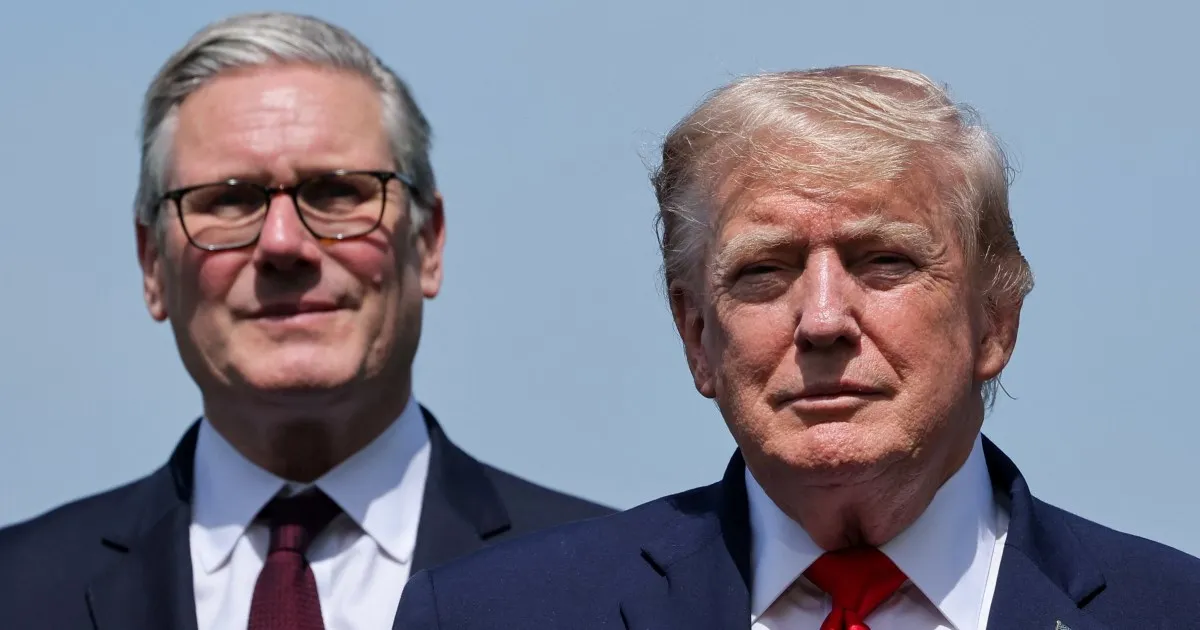
The agreement signed on December 1 was hailed as a landmark deal between British Prime Minister Keir Starmer and US President Donald Trump on pharmaceutical trade and pricing.

The US agreed not to impose tariffs on UK pharmaceutical and medical exports for the following three years – until January 19, 2029.

According to a policy paper published by the British government, the preliminary understanding of the agreement recognised that the US and UK shared a “mutual interest in developing a global medicines system that supports development and commercialisation of new innovations”.

 What did the research find?

In February, Vallance disclosed that funding for the increased spending on medicines would come from the Department of Health and Social Care, which funds the NHS in England, rather than the Treasury.

The study in the BMJ forecast that if spending targets are met and the economy grows as forecast by the Office for Budget Responsibility, the NHS would need to spend an extra 1.3 billion pounds ($1.73bn) a year by 2028 – about 25 million pounds ($33.4m) a week. By 2036, this would rise to an extra 8.8 billion pounds ($11.74bn) a year – about 170 million pounds ($227m) a week). Over the course of the agreement, that would add up to about 44.7 billion pounds ($59.7bn) by the end of 2036.

“Costs are even higher if the impact on publicly funded adult social care is also considered – modelling of English local authority data indicates that every £1bn [$1.33bn] the NHS must find to fund this deal will increase the costs of adult social care by £118m [$157.5m] because of increases in morbidity and mortality,” the report found.

Ultimately, the study predicted, excess deaths are likely as a result.

“Even if we restrict attention to the direct effect of reductions in available NHS expenditure, by 2036 this deal is likely to result in roughly 229,000 excess deaths – more than during the COVID-19 pandemic between March 2020 and June 2022 (137,000). If the indirect effect on adult social care is also included, the increase in excess deaths is even greater (291,000),” the report stated.

The report added that the findings are “unsurprising” given the existing pressures on the NHS and the “large burden of unmet need in highly cost-effective areas of care”.

It also referred to shortfalls in NHS funding and pharmaceutical pricing as “opportunity costs”.

Cross said that in health economics, opportunity costs are the “key to all of this”.

“In the NHS, we have a finite budget – we’re not made of money – and if you take money away to pay for, in this case, more medicines. then that comes at an opportunity cost of the places that the money has been diverted away from,” he explained.

Which health sectors will be worst affected?

The research predicted that the greatest number of deaths would occur in cardiovascular, respiratory, gastrointestinal and cancer patients.

It added that there will also be broader harm caused to quality of life for patients in those sectors as well as “neurological, endocrine, musculoskeletal, and mental health problems”.

“Despite this evidence and reassurances that ‘frontline services’ will be protected, the NHS will need to fund this deal from allocations made six months before the deal was agreed. The evidence suggests that if additional public expenditure was available, it could be more effectively deployed within the NHS itself,” it added.

The report also called the government’s claims that the US-UK agreement would encourage pharmaceutical innovation in the country “uncertain”.

“Pharmaceutical research and development operate within a global market, of which the UK represents a relatively small share. As such, there is limited evidence that UK domestic pricing materially influences global investment decisions,” the report stated.

“Even so, evidence suggests in most cases the UK is already paying more than 100 percent of the long-term value of new medicines; incentivising production of new medicines under this deal will do long-term harm to the public health objective of the NHS,” it added.

Cross added that because money has in effect been diverted away from the NHS, there is no way for the government to offset the impact on the service.

“If the funds are used to pay for new medicines, we will lose positive health outcomes elsewhere, and that is as simple as that,” he said.

He called for the government to release an impact assessment to trigger a public discussion about how good the US-UK deal really is for Britain.

Source link

Ronaldo fever hits Toronto ahead of Portugal vs Croatia World Cup clash | World Cup 2026

Toronto, Canada – The year was 2009, and a sculpted, spiky-haired, 24-year-old Ronaldo was greeted by hundreds of adoring fans in Toronto dying to catch a glimpse of the newly signed Real Madrid superstar as he graced the city with his presence for the first time.

Fast forward 17 years, and the visuals are almost identical, give or take a few differences.

Recommended Stories

list of 4 itemsend of list

Hundreds of Toronto residents took to the streets on Wednesday, lining highways, thronging downtown intersections, climbing onto each other’s shoulders and peeking out of high-rise buildings, all to get a 10-second glimpse of Ronaldo passing by, as Portugal arrived in the city ahead of their World Cup round of 32 clash with Croatia.

The last time the football icon was in Toronto was August 2009 when Real Madrid played a friendly against Toronto FC, coincidentally at the same stadium where Portugal will take on Croatia on Thursday evening.

Wednesday being a public holiday increased the chances of fans catching a glimpse of the 41-year-old football legend at what is likely to be his last ever World Cup, and potentially last World Cup match if Portugal are knocked out of the tournament.

The city was buzzing with Ronaldo fever right from the minute Portugal landed at Pearson airport early Wednesday afternoon.

Biker groups lined Gardiner Expressway to escort the Portuguese team bus to the Delta Hotel, where hundreds of fans gathered to get a glimpse of Ronaldo as he exited the bus, and then again when the team headed to Centennial Park for their training session.

Even at the grounds in Etobicoke, dozens of starstruck fans sporting red #7 jerseys stood outside the field as Ronaldo and the Portugal team warmed up on what was supposedly the hottest day of the year in Canada.

The fan frenzy was valid; for most Portugal fans in the city, this was the closest they would get to seeing the one and only Cristiano Ronaldo in person.

Sky-high ticket prices for the match, some as ludicrous as $30,000 Canadian dollars ($21,000), were unaffordable to the average football fan.

Tickets to the sold-out game have averaged $2,500-3,500 Canadian dollars over the past week on resale platforms, even though Ontario laws forbid third-party sales above face value.

“I’m a dad and a husband, and I couldn’t justify spending that kind of money on a ticket no matter how much I want to see Portugal play in Toronto,” Joey, 33, told Al Jazeera, as he closed out his shift at Bairrada Churrasqueira on the fringe of Little Portugal in Toronto.

“But it still feels surreal that Portugal is playing here in Toronto, who would have ever thought that,” the restaurant worker beamed, as he flipped chairs onto the tables before mopping the floor.

Worlds collide

Joey, who declined to share his surname, was one of tens of thousands of Portuguese-Canadians who have called Toronto home for several decades now.

The first wave of immigrants arrived in the 1950s seeking better opportunities for themselves and their families. Just last year, the city inaugurated the Azores Parkette in the heart of Little Portugal to honour the 18 “pioneering men” who departed Sao Miguel, Azores, and landed on the shores of Halifax to build a new life.

So when Portugal take the field in Toronto Stadium on Thursday, it’ll be more than just a game for generations of hyphenated Canadians in the city; for them, it’s two worlds colliding in a once-in-a-lifetime moment.

For Shannon Medeiros, 46, the match holds even more significance. The football fanatic fell in love with the sport aged six, inspired by her father, who attended every game and coached her as she delved into the sport.

The game has been a crucial part of her life, and her family’s, since her father and his family arrived in Canada when he was 16 years old, in the 1950s.

Like many immigrants at the time, schooling had to be abandoned in favour of a job to help make ends meet for the family, which, in his case, arrived in Montreal with a single suitcase and lived in another family’s basement until they could afford a place of their own.

Football was the only non-negotiable, axiomatic staple in the Portuguese community that grew from a few hundred to more than 300,000 people.

“It’s something we do as a family now; that’s how much the game means to us,” said Medeiros, who now coaches her two sons in the sport the way her father did for her.

The storyline is almost identical to that of Stephen Eustaquio, Canada’s wonder boy who scored against South Africa to send his team to the World Cup round of 16 for the first time in history.

Canada's midfielder #07 Stephen Eustaquio celebrates after winning the 2026 World Cup round of 32 football match between South Africa and Canada at the Los Angeles Stadium in Inglewood on June 28, 2026.
Canada’s Stephen Eustaquio celebrates after winning the 2026 World Cup round of 32 match against South Africa at the Los Angeles Stadium in Inglewood on June 28, 2026 [AFP]

The Ontario-born, partially Portuguese-raised football star was guided into the sport by his father and his Portuguese background for a love of football. The sport was a way for the community to come together and enjoy a shared sense of identity, as Canada welcomed dozens of ethnicities decade after decade.

“The one thing you’ll see in the Portuguese community is how proud we are – of our heritage, our culture, to wear the jersey, put a flag up,” Medeiros told Al Jazeera.

A walk through Little Portugal during the World Cup would show you just that; flags split diagonally with Canada and Portugal in each half, fluttering on porches or glued to bedroom windows, an omnipresent CN Tower needle peeking above the neighbourhood anywhere you stand.

Match predictions

Medeiros admitted that while the team has not been playing to their full potential at the tournament, they have a strong chance of winning against Croatia. She’ll see whether her prediction comes true or not as she watches the game with her father at his house.

Elsewhere in the city, fans without match tickets are heading to sports bars, match screenings and fan festivals to see whether Ronaldo will score his first knockout-round goal at a World Cup that saw an unimpressive start for the Portuguese captain.

“I think Portugal will win 2-1, or maybe 3-1. But don’t tell my girlfriend I said that,” Josh Madeiros grinned, as he waited for his drink at Garrafeira. The Portuguese-Canadian 35-year-old will be supporting his side away from his girlfriend, who is Croatian.

He thought long and hard before admitting that Portugal’s team has had a shaky run so far, and that there’s only so much Ronaldo can do as a player in his forties.

“But he’s still my guy, and he’s still the GOAT [greatest of all time].”

Source link

Search underway for missing Navy aircrewman in Arabian Sea

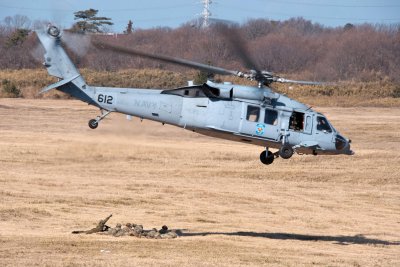
A U.S. Navy MH-60 helicopter, like the one seen here, made a water landing in the Arabian Sea on Wednesday. A search has been launched for one aircrewman aboard the helicopter was has since reported missing. File Photo by Keizo Mori/UPI | License Photo

July 2 (UPI) — A search is ongoing for an aircrewman who went missing after the Navy helicopter they were aboard performed an emergency landing in the Arabian Sea, the U.S. military said.

U.S. Naval Forces Central Command said in a brief statement that the MH-60S Sea Hawk helicopter with four people on board made the emergency landing at 3:30 a.m. EDT Wednesday.

Three of the helicopter’s crew were recovered and were listed in stable condition, while the fourth member remained missing.

U.S. Navy assets in the region are searching for the missing aircrewman, it said.

Little information about the incident has been made public. U.S. Naval Forces Central Command said there was no indication that hostile activity prompted the emergency landing.

“The cause of the incident is under investigation,” it said.

The helicopter was assigned to the aircraft carrier USS George H.W. Bush, which departed Norfolk, Va., on March 31, according to U.S. Fleet Forces Command. The aircraft carrier has been in the Arabian Sea since at least May 3, according to a statement from U.S. Central Command, which said it was deployed to the U.S. 5th Fleet area of operations to support maritime security and stability in the Middle East.

The United States has been at war with Iran since Feb. 28. The two sides are negotiating an end to the war amid a cease-fire.

This is a developing story.

Source link

FBI says some Nancy Guthrie ransom notes not legitimate

Authorities have been investigating the disappearance of Nancy Guthrie, who was reported missing Feb. 1, as a kidnapping and ransom case. File Photo courtesy Pima County Sheriff’s Department/UPI

July 2 (UPI) — Federal authorities said that some of the ransom notes they have received over the course of their investigation into the kidnapping of Today host Savannah Guthrie‘s mother were not legitimate.

The FBI has received several purported ransom notes during its five-month investigation into the disappearance of 84-year-old Nancy Guthrie, who was reported missing from her Arizona home on Feb. 1.

In a statement Wednesday, the FBI’s Phoenix field office revealed that some of those notes “have been deemed to be extortion attempts without legitimacy” while others “may potentially be legitimate and are still being investigated as such.”

The statement seemed to be in response to recent reporting stating authorities believe notes from the purported kidnappers in February that claimed Nancy Guthrie had died and that they didn’t mean to kill her were authentic.

The reports referenced a note sent to local media on Feb. 2 demanding millions in ransom, and a second note from Feb. 6 that stated Nancy Guthrie had died.

On Feb. 7, Savannah Guthrie, appearing alongside her siblings in a video posted to Instagram, said to the kidnappers that “We received your message, and we understand.”

The FBI did not mention any specific notes.

The Pima County Sheriff’s Department, the lead investigating agency in the case, also issued a statement Wednesday, confirming that it has also received information regarding potential ransom notes without commenting further.

“Every tip and lead is taken seriously and is forwarded directly to our detectives, who continue to work in coordination with the FBI,” it said, directing further questions about ransom notes to the federal law enforcement agency.

The FBI said the investigation is ongoing.

“This case continues to be investigated as a kidnapping for ransom case,” it said.

Source link

Taiwan needs to become a ‘hornet’s nest’ of drones, US diplomat says | Weapons News

The de ​facto US ambassador Raymond Greene says drones represent a ‘game-changing opportunity’ to enhance Taiwan’s security.

Taiwan needs a “hornet’s nest” of drones to help deter conflict and provide security, says the top United States ⁠diplomat to the self-governing island that China claims as part of its territory.

Speaking at a forum on drones in the central city of Taichung, Raymond Greene, director of the American Institute in ‌Taiwan and the de facto US ambassador, said on Thursday that drones represented a “game-changing opportunity” to enhance Taiwan’s security and reinforce peace in the broader region.

Recommended Stories

list of 3 itemsend of list

The US, Taiwan’s most important international backer and arms supplier despite their lack of formal diplomatic ties, has strongly supported the government’s military ⁠modernisation plan and increased defence spending.

Taiwan has said it needs to bolster its defences in the face of a stepped-up threat from China.

China regards Taiwan as part of its territory and opposes Washington’s continued, though informal, backing of Taipei.

The US and Taiwan can anchor “democratic” drone production and strengthen the collective deterrence posture of the free world, Greene said.

“Fortunately for Taiwan, drones have significantly boosted defenders, even when facing overwhelming odds,” he added, referring to the war in Ukraine.

“Nothing will deter conflict more effectively than turning Taiwan into a hornet’s nest ⁠of air, surface and subsurface drones.”

While Taiwan’s government has prioritised drones ⁠and other asymmetric military systems, in May, the opposition-dominated parliament passed only two-thirds of the $40bn in extra defence spending that President William Lai Ching-te had asked for, earmarking funds only for US arms.

The government has now proposed a new 210 ⁠billion Taiwan dollars (US$6.59bn) package to pay for surveillance, coastal attack and small unmanned surface drones through the end of 2031.

However, in May, a senior US military official said Washington was putting a $14bn arms sale to Taiwan on hold to preserve munitions for the US-Israel war against Iran.

The Kuomintang (KMT), Taiwan’s main opposition party, this ⁠week proposed its own drone legislation with a spending cap ⁠set at 240 billion Taiwan dollars (US$7.5bn) over six years and annual spending capped at 40 billion Taiwan dollars (US$1.25bn).

Its plan would fund drones from the main budget rather than a special budget, which is what the government wants.

On Wednesday, Lai ‌called the need for drones pressing.

“Facing changes in the geopolitical situation and the evolution of modern warfare, building asymmetric combat capabilities is a national defence project that is a race against ‌time,” ‌he said at a meeting of his Democratic Progressive Party.

Lai rejects Beijing’s sovereignty claims, saying only the island’s people can decide their future.

Source link

Oil prices fall to levels not seen since start of US-Israel war on Iran | US-Israel war on Iran News

Brent falls below $71 a barrel amid reports of progress in talks to end the war.

Oil prices have fallen to levels not seen since the start of the US-Israel war on Iran amid rising hopes for a breakthrough in negotiations aimed at sealing a permanent peace deal.

Brent crude fell more than 1 percent on Thursday to below $71 a barrel, returning the international benchmark to pre-war prices.

Recommended Stories

list of 4 itemsend of list

Brent futures for August delivery stood at $70.82 per barrel as of 04:30 GMT, lower than at any point since February 27.

Following the latest drop, Brent prices are down more than 38 percent from their post-war peak of more than $126 a barrel on April 30.

The slide came after Qatar, a key mediator between Washington and Tehran, said that US and Iranian officials had made “positive progress” in indirect talks aimed at resolving issues related to their memorandum of understanding (MoU) on ending the war.

US President Donald Trump also cast a positive light on the talks on Wednesday, saying the “denuclearisation of Iran is moving along well”.

Vandana Hari, the founder of the Singapore-based oil market analysis provider Vanda Insights, said a steady uptick in oil flows out of the Gulf and “cautiously optimistic geopolitical sentiment” had driven prices lower.

“Several key issues in the MoU remain unresolved, but the two sides appear to have backed off confrontation on the issue of the interim Hormuz transit regime, at least for the time being,” Hari told Al Jazeera.

“I expect crude to continue grinding lower until the backlog of stranded barrels has cleared, and prices could even swing into oversold territory,” she said.

“The real test of normalisation of Persian Gulf supply will come after that, necessitating fresh supply-demand balance recalibration.”

Shipping in the Strait of Hormuz, a conduit for one-fifth of the global trade in oil and liquefied natural gas in peacetime, has shown tentative signs of recovery in recent days after a sharp decline following attacks on two commercial vessels in the waterway on Thursday and Saturday.

At least 40 vessels transited the strait on Tuesday, according to data from MarineTraffic, up from 27 crossings on Monday and 22 on Sunday.

Maritime traffic nonetheless remains far below its pre-war level of roughly 130 daily crossings amid persistent concerns about safety in the waterway.

While Iran agreed to make its “best efforts” to arrange the safe passage of vessels in the MoU it signed with the US on June 17, Tehran has since repeatedly claimed the sole right to control movement through the strait.

At least 49 attacks on commercial vessels have been recorded in the strait since the start of the war, according to MarineTraffic, most of which were claimed by Tehran or blamed on its forces.

Source link

German prosecutors charge Ukrainian suspect over Nord Stream explosions | Russia-Ukraine war News

Prosecutors allege a yacht was used in the sabotage of pipelines, with the suspect leading the operation.

German federal prosecutors ⁠have filed charges ⁠against a 50-year-old Ukrainian national over a series of explosions that destroyed two Nord Stream underwater gas pipelines linking Russia to Europe in 2022.

The federal prosecutor’s office declined to comment on the specifics of the indictment on Wednesday against the accused, who is identified only as Serhii K in court documents under German privacy rules.

Recommended Stories

list of 4 itemsend of list

Serhii K is accused of attacking civilian energy infrastructure, causing an explosion, and destroying structures, according to the German public broadcaster ARD.

The underwater explosions damaged both the Nord Stream 1 and Nord Stream 2 pipelines so severely that no gas could be transported through them, knocking out the key routes for Russian gas ⁠to Europe for months after Moscow’s full-scale invasion of Ukraine in February 2022.

In a December 2025 detention filing by the Federal Court of Justice, prosecutors allege that Serhii K helped coordinate a team that used a sailing yacht, the Andromeda, to place explosive devices on the pipelines near Denmark’s ⁠Bornholm Island in September 2022.

According to those documents, Serhii K is suspected of acting as the on-board coordinator and team leader, not as a diver or bomb expert.

The Berlin law firm Menaker, which is representing the accused Ukrainian, has not provided any details on the indictment.

Federal prosecutors confirmed to the AFP news agency that Serhii K was the same suspect who was arrested in August 2025 in Italy and extradited to Germany the following November, and who was named at the time as Serhii Kuznietsov.

At the time of his arrest, German prosecutors said Kuznietsov had used forged identity documents to charter a yacht, which departed from the German city of Rostock to carry out the attacks.

Kuznietsov has denied being part of the sabotage operation. He said he was a member of the Ukrainian armed forces and in Ukraine at the time of the incident, a claim his defence team has said would give him “functional immunity” under international law.

Answering a question from Germany’s Der Spiegel magazine during a news conference in Dublin on Wednesday, Ukrainian President Volodymyr Zelenskyy said it was too soon to comment on the charges against Serhii K in detail.

“We have not officially received any details; at least I have not seen them”, Zelenskyy said. “It is too early to say yet,” he added.

Ukraine’s government has previously denied any involvement in the sabotage or knowledge of the plot to bomb the Nord Stream 1 and Nord Stream 2 pipelines.

Source link

EU border rules causing travel chaos ahead of summer peak, industry warns | Aviation News

European airlines and airports call for flexibility to suspend digital border system amid severe delays.

The European Union’s new digital border check system is causing severe disruption to travel, with passengers facing five-hour queues and departure gates closing with planes only half-full, industry representatives have warned.

In an open letter published online on Wednesday, the top representative bodies for Europe’s airports and airlines said that delays caused by the bloc’s recently-implemented Entry/Exit System (EES) had reached a “critical point”.

Recommended Stories

list of 4 itemsend of list

“The current implementation of the EES is creating severe operational consequences, disrupting passengers and putting border authorities, airports and airlines under unsustainable pressure,” Airports Council International Europe, Airlines for Europe, and the International Air Transport Association said in a joint letter addressed to European Commission President Ursula von der Leyen.

“We therefore urge your immediate intervention before the situation deteriorates further during the peak summer travel season.”

With European airports expected to handle 40 million more passengers in July and August than the previous two months, EU leaders “must take stock of the reality of the current situation and of what our air transport system will face over the coming weeks”, the lobby groups said.

“Without additional flexibility, existing challenges will inevitably intensify,” they said.

“As representatives of Europe’s aviation sector, we have a responsibility to warn that this would result in a significant worsening of an already very difficult situation for passengers.”

Warning that the travel disruption was undermining the reputation of the EU and European tourism, the industry groups said it was crucial that the continent continued to be an “efficient, welcoming and competitive” destination.

“Reports already suggest that some international travellers are reconsidering trips to Europe because of the prospect of excessive border delays,” they said.

EU
A police officer scans a passport during a presentation of an automated terminal for registration to the Entry/Exit System (EES) at the Vaclav Havel airport in Prague, Czech Republic, on October 14, 2025 [David W Cerny/Reuters]

Until the stability of the EES is ensured and adequate staffing levels are in place, EU member states should be immediately granted the flexibility to “completely suspend” the new system whenever passenger numbers exceed the “operational capacity” of border facilities, the lobby groups said.

The World Travel and Tourism Council, the world’s largest representative body for tourism-related businesses, said on Wednesday that it endorsed the letter’s calls, warning that the delays could put up to 41 million arrivals and $45.4bn in visitor spending at risk.

“If lengthy delays become accepted practice, travellers will look elsewhere,” WTTC President and CEO Gloria Guevara said in a statement.

“Europe cannot afford to compromise its competitiveness or the experience it offers millions of visitors.”

The European Commission did not immediately respond to a request for comment sent by Al Jazeera outside of regular business hours.

The EU began rolling out the EES in October as a replacement for passport stamping.

The system records each traveller’s name, passport information, fingerprints and facial images, and his or her date and place of entry and exit.

The European Commission announced that the ESS was “fully operational” across the Schengen Area in April, but the system has been blamed for lengthy delays since its introduction, including cases of flights leaving before many of their passengers were able to board.

Source link

Judge blocks Pentagon from enforcing reporter escort policy

July 1 (UPI) — A federal judge has temporarily blocked the Defense Department from enforcing its escort policy, at least for reporters with The New York Times, dealing another blow to the Trump administration’s attempt to restrict media access at the Pentagon.

It was not entirely clear whether the order applied to all credentialed reporters or just those associated with The New York Times.

U.S. District Judge Paul Friedman in D.C. issued his preliminary injunction Tuesday, finding the plaintiffs were likely to succeed on their claims that the escort policy was retaliatory and infringed on their First Amendment rights.

“This Court has spoken at several points about the critical importance of protecting the freedoms enshrined in the First Amendment, and that evergreen principle bears repeating: ‘Those who drafted the First Amendment believed that the nation’s security requires a free press and an informed people and that such security is endangered by government suppression of political speech,'” Friedman said in his Tuesday opinion, quoting from one of his previous opinions in the case.

“‘That principle has preserved the nation’s security for almost 250 years.'”

The ruling comes in a protracted case that began when the Defense Department announced a new policy in October permitting the revocation of Pentagon credentials for collecting and reporting information it deemed unauthorized.

After Friedman ruled in March that the policy was unconstitutional, the Department of Defense came back with a new policy that, among other restrictions, mandated reporters be escorted by Defense Department personnel at all times within the Pentagon.

The Trump administration has argued that the new requirements are for national security purposes. By limiting access and requiring escorts, the Department of Defense said it could prevent the gathering and public disclosure of what it calls classified national security information and controlled unclassified information.

The Times then challenged the revised policy, with the court again siding against the Defense Department, which appealed, seeking only a limited stay pending appeal to allow the implementation of only the escort requirement.

In late April, a divided three-judge appeals panel granted the Trump administration’s emergency request, finding that it was likely to succeed in showing that the escort requirement was not within the scope of the lower court’s original order, without weighing the merits of the case. The Times then filed a new, second lawsuit challenging the Pentagon’s escort policy.

The Pentagon on Wednesday said it “strongly disagrees” with the court and will appeal the decision.

In a statement, Sean Parnell, chief Pentagon spokesperson, argued that the removal of the escort policy will make it easier for “sensitive and classified information to reach our adversaries.”

“Unescorted access to the Pentagon allowed journalists to observe activity patterns and develop relationships that contributed to repeated unauthorized disclosures of operational plans and intelligence,” Parnell said.

“The court’s order effectively restores that risky environment at a time when protecting our military’s secrets is more critical than ever.”

The Times argued that the policy was not only a restriction on its reporters’ First Amendment rights, but also retaliatory, an argument that Friedman said would likely succeed in court, pointing to numerous instances of Trump administration officials, including President Donald Trump and Defense Secretary Pete Hegseth, insulting the newspaper and other news organizations.

UPI has contacted The Times for comment.

The Freedom of the Press Foundation celebrated the ruling online, while calling for punishment if the Trump administration tries to find another workaround to enforce its media-restriction policies.

“The DoD can’t be allowed to punish journalism or evade court orders without consequences,” it said in an online statement.

“If the Pentagon keeps trying to avoid this ruling, the court should respond with sanctions or contempt.”

Source link

‘A war zone’: Venezuela aid workers fear health crisis after earthquakes | Earthquakes News

Medical experts fear the aftermath of Venezuela’s devastating twin earthquakes could trigger a widening health crisis marked by untreated injuries, infectious diseases, and a healthcare system already on the brink of collapse.

Thousands of displaced Venezuelans are sleeping in crowded temporary shelters or outside without access to clean water amid dismal sanitary conditions following the June 24 earthquakes, which officials said on Wednesday killed at least 2,295 people and left more than 11,000 injured.

Recommended Stories

list of 3 itemsend of list

“The issue we foresee just around the corner is the infections that patients who have been exposed to the disaster for the longest time might bring,” said Eugenio Cova, the head of the trauma unit at Hospital Jose Gregorio Hernandez in Caracas.

“We’ve already gone through a period of complex trauma – which will continue to occur – but now, it’s complicated by infections,” Cova said.

Aid workers also warn that the extensive damage to infrastructure could fuel outbreaks of diseases in the hardest-hit communities.

“There’s been lots of reports among the population here with diarrhoea and other diseases,” said Al Jazeera’s correspondent Teresa Bo, reporting from a shelter site in the region of La Guaira.

“They’re asking, for example, for portable toilets, and also help from the government to try to reorganise this place to try to prevent overcrowding, but also the spread of disease,” Bo said.

LA GUAIRA, VENEZUELA - JULY 01: Children play under a tent after the earthquakes that struck Venezuela and other regions in the Caribbean, on July 1, 2026 in La Guaira, Venezuela. According to the U.S. Geological Survey (USGS), the main earthquake on June 24, 2026 was followed by a 7.5-magnitude aftershock less than a minute later. The number of fatal victims increased to 2295, while the number of injured people exceeded 10,000. More than 70,000 people are reported missing. (Photo by Edilzon Gamez/Getty Images)
Children shelter under a tent after the earthquakes in La Guaira, Venezuela [Edilzon Gamez/Getty Images]

US military deploys 900 personnel to aid Venezuela

The United States has deployed some 900 military personnel on the ground in Venezuela to support relief and rescue operations as of Wednesday, Steven McLoud, a spokesperson for the US military’s Southern Command (SOUTHCOM), told The Associated Press news agency.

According to McLoud, the US military has repaired an earthquake-damaged runway at Venezuela’s main international airport, which serves Caracas, to allow for the arrival of humanitarian assistance, and has stationed naval vessels off the country’s coast to assist in the aid operation.

An additional 100 people from the US Department of State have been sent to support the efforts, McLoud said.

So far, the administration of US President Donald Trump has offered Venezuela $300m in assistance channelled through aid groups and the United Nations.

That contribution is just a fraction of the post-earthquake aid the country needs, with material damage from the devastating quakes estimated at more than $6.7bn, according to satellite analysis by the UN Development Programme.

Vietnamese rescuers searches a building that collapsed during back-to-back earthquakes in Catia La Mar, Venezuela, Wednesday, July 1, 2026. (AP Photo/Fernando Vergara)
A rescue team from Vietnam searches a building that collapsed during back-to-back earthquakes in Catia La Mar, Venezuela [Fernando Vergara/AP]

About 50 other international aid teams have arrived in the country in recent days to help with search-and-rescue operations, including from Ecuador and Israel, which do not have diplomatic relations with Venezuela.

Against the odds, rescuers continue to find a small number of survivors, including on Tuesday, a toddler who had been trapped for six days beneath the rubble.

Kevin Simm, a volunteer aid worker, told Al Jazeera the scale of the destruction was akin to armed conflict.

“This obviously brings to mind the current situations that are going on across Gaza and Ukraine,” Simm said.

“It’s like a scene from a movie or from a war zone… We have never seen this in peacetime.”

Venezuela’s crisis-stricken hospitals dealt another blow

Long before the earthquakes, Venezuela’s public hospitals were strained by shortages of water, energy, critical medical equipment, and highly trained staff, according to reports.

More than 7.7 million Venezuelans have left the country since its economic crisis began in 2013 under then-President Nicolas Maduro, who was abducted by US forces in a military raid, along with his wife, earlier this year.

Many specialised doctors and nurses were among those who departed, with Venezuela’s medical association estimating that about one-third of its 60,000 registered physicians have left the country.

Huniades Urbina, a member of the board of Venezuela’s paediatrics association, said that a 2025 national survey of public hospitals revealed shortages of more than 30 percent of emergency supplies, and more than 70 percent of supplies in operating rooms.

Laboratories are “all practically closed or do the basic things only”, Urbina said.

The earthquakes “once again highlight the Venezuelan government’s inability to provide an adequate healthcare system that meets the needs of the Venezuelan people”, he added.

Source link

South Korea seeks wartime command transfer target this year

Defense Minister Ahn Gyu-back speaks during a ceremony at the Navy’s 2nd Fleet Command in Pyeongtaek, South Korea, 29 June 2026, to mark the 24th anniversary of an inter-Korean naval battle on the seas off South Korea’s northern Yeonpyeong Island. Six South Korean seamen were killed and 19 others injured in the 2002 skirmish, called the Second Battle of Yeonpyeong, which broke out as two North Korean patrol boats violated the inter-Korean maritime border in the Yellow Sea. Photo by YONHAP / EPA

July 1 (Asia Today) — South Korean Defense Minister Ahn Gyu-back urged senior commanders Wednesday to complete a key military capability review and work toward proposing a target year for the transfer of wartime operational control by the end of 2026.

“A military that cannot make its own decisions cannot become a strong military,” Ahn said while presiding over a meeting of senior commanders from across the armed forces at the Defense Ministry in Seoul.

Ahn called on the military to make every effort to present what officials have described as an “X-year” for the command transfer at this year’s South Korea-U.S. Security Consultative Meeting.

“Regaining wartime operational control is a path toward building a stronger Republic of Korea and advancing the South Korea-U.S. alliance to a new level,” Ahn said.

He said the transfer would allow the South Korean military to take the lead in wartime planning, operational preparations and the execution of military operations.

Ahn made similar remarks earlier Wednesday while chairing a quarterly meeting reviewing progress on the command transfer.

“This year, we face the critical task of completing the Full Operational Capability verification and determining the timing of the OPCON transition,” Ahn said. “Let us fulfill the historic mission of regaining wartime operational control.”

The Defense Ministry aims to complete verification of the future Combined Forces Command’s Full Operational Capability at the annual Security Consultative Meeting, or SCM, scheduled for November in Washington.

The ministry then plans to recommend a target year for the transfer to the presidents of South Korea and the United States.

South Korea regained peacetime operational control of its armed forces in 1994. During wartime, designated South Korean and U.S. forces remain under the operational control of the South Korea-U.S. Combined Forces Command, which is led by a U.S. general.

The allies have agreed that wartime command will be transferred after mutually established conditions are met rather than on a predetermined timetable.

The assessment of South Korea’s ability to lead the combined defense is divided into three stages: Initial Operational Capability, Full Operational Capability and Full Mission Capability.

The ministry said the Full Operational Capability assessment has been completed and that finishing its verification would allow the allies to begin specifying a transfer timetable.

U.S. and South Korean defense officials have repeatedly said the transition must be carried out in a stable and systematic manner under their jointly approved conditions-based plan.

Ahn also emphasized cooperation among the Army, Navy and Air Force.

He said each service must maintain its professional expertise but warned that service-specific interests should not create barriers to joint operations.

“Each service should ask itself how much time it allocates to joint training during the year,” Ahn said.

“Jointness must become part of military culture through the process of learning, training and thinking together beginning at the service academies and then be refined and developed in the field.”

The remarks came amid concern that the ministry’s plans to reform and potentially integrate elements of the military academy system could weaken the specialized education provided by each service.

Senior commanders also discussed developing a military based on artificial intelligence and advanced technology and restructuring South Korea’s armed forces by 2040.

They reviewed lessons from Russia’s war in Ukraine and recent fighting in the Middle East, including the growing battlefield use of artificial intelligence, drones and robots as relatively inexpensive and efficient weapons.

The ministry said it would begin pilot programs using newly developed artificial intelligence models during the second half of the year.

It also plans to provide private companies with a catalog of military data that could support defense technology development.

The military will expand the number of units assigned to test commercially developed drones from one to nine to support South Korea’s domestic drone industry, the ministry said.

— Reported by Asia Today; translated by UPI

© Asia Today. Unauthorized reproduction or redistribution prohibited.

Original Korean report: https://www.asiatoday.co.kr/kn/view.php?key=20260701010000411

Source link

US judge sides with NAACP over proposed mail-in ballot restrictions | Elections News

President Donald Trump has sought to limit mail-in voting and has ordered his administration to impose limits on the practice.

A federal judge in the United States has blocked proposed restrictions on mail-in voting that were championed by President Donald Trump.

On Wednesday in Washington, DC, District Judge Emmet Sullivan sided with the NAACP, a civil rights organisation, in its case against the US Postal Service (USPS).

Recommended Stories

list of 3 itemsend of list

Sullivan found that the restrictions would likely violate a 2021 settlement requiring expedited handling for mail-in ballots.

He therefore granted the NAACP’s motion to enforce compliance with the settlement, dealing another setback to the Trump administration’s efforts to reshape the US voting landscape.

“NAACP has plausibly suggested — and the Postal Service has not disputed — that the Proposed Rule is already having a ‘real impact on present day affairs’,” Sullivan wrote in his ruling.

The case revolves around a rule the Postal Service put forward in May that would require states to provide lists of absentee and mail-in voters. Ballots that do not conform to the list would be returned.

The proposed rule would also require a new envelope design for mail-in ballots, governing logos and barcode placements. Failure to comply would result in the Postal Service refusing to deliver the ballots.

The NAACP argued that the proposal would run afoul of a 2021 legal settlement that forces Postal Service officials to take “extraordinary measures” to ensure timely delivery of ballot mail.

The settlement “stipulated that the Postal Service agreed ‘to prioritize monitoring and timely delivery of election mail’”, Sullivan wrote in Wednesday’s ruling.

The decision comes less than five months before the November 3 midterm elections, which will decide whether Trump’s Republican Party retains control over both chambers of Congress.

Trump has expressed fears that he may be subject to a third impeachment if Democrats flip the legislature.

He has also spread unfounded theories that US elections are vulnerable to “vote rigging”, pointing to commonplace election tools like mail-in voting and electronic voting machines.

Elections are administered by state and local election officials, as established in the US Constitution. But the Postal Service’s proposed rule came as the result of efforts under the Trump administration to impose new limits on voting.

In March, Trump issued an executive order called “Preserving and Protecting the Integrity of American Elections”. In it, he directed the Department of Justice to take action against states that “fail to comply” with certain standards for mail-in ballots.

He also accused states that accepted absentee or mail-in ballots after Election Day of violating the law.

But in another blow to Trump, the Supreme Court on Monday upheld a state law that allows mail-in ballots to be counted even if they were received after Election Day, so long as they were postmarked on or before that date. The president’s executive order has also been blocked by lower courts.

Civil rights advocates applauded the court’s Wednesday decision and warned against Trump’s efforts to limit mail-in voting.

“The court today correctly recognized that USPS’s plan to create roadblocks to mail-in voting was inconsistent with its commitment to timely deliver election mail,” said Allison Zieve, director of the Public Citizen Litigation Group, which argued on behalf of the NAACP.

“USPS’s plan was unwise, unlawful, and a threat to the millions of voters who rely on mailed ballots to participate in our democracy.”

Sam Spital, the associate director-counsel of the Legal Defense Fund, which also argued for the NAACP, called the Postal Service’s proposed plan “a blatant attempt” to disenfranchise voters who rely on mailed ballots.

“Today’s decision recognizes that USPS cannot disregard its legal obligation to timely deliver mail-in ballots to all voters,” Spital said.

Source link

Former CIA director Brennan sues Trump administration to protect records

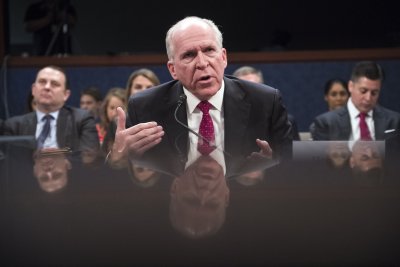
John Brennan, former director of the Central Intelligence Agency, testifies in 2017 on Russian meddling in the 2016 U.S. presidential election during a House Intelligence Committee hearing on Capitol Hill in Washington, D.C. Brennan is suing the Trump administration, asking a judge to preserve all records of a Department of Justice investigation against him. File Photo by Kevin Dietsch/UPI | License Photo

July 1 (UPI) — John Brennan, former director of the CIA and a longtime foe of the Trump administration, filed a lawsuit Wednesday asking a federal court to preserve all records related to the administration’s investigation of him.

The Justice Department has been eyeing Brennan for months, with lawyers interviewing former intelligence officials and issuing subpoenas as part of a conspiracy investigation, The Washington Post reported.

Justice Department officials have alleged that Brennan and others violated President Donald Trump‘s civil rights in a conspiracy back to the Obama administration that included efforts to prosecute Trump and investigate his ties to Russia, The Post said. Rep. Jim Jordan, R-Ohio, also referred Brennan to the Justice Department, alleging that he lied during testimony to Congress.

Brennan’s attorneys requested that a judge order the administration to preserve any internal records and communications from the investigation.

The records could be used as part of defense arguments that the investigation and any prosecution are part of Trump’s attempt to vindictively punish Brennan, the attorneys said, citing an administration policy “of using criminal process and prosecution to punish the president’s perceived adversaries,” The Post said.

“Administration officials from the acting attorney general to the FBI director and the counselor overseeing the Brennan investigations have been publicly declaring Director Brennan a criminal, not only before securing a conviction in court but even before a full investigation and indictment,” the lawyers wrote, CNN reported.

“And, certain officials in the Department of Justice are engaging in demonstrably irregular prosecutorial activity in order to gin up a case that will satisfy the president’s direction,” they wrote.

Brennan has also said the court should preserve any records that could be used in any broader “grand conspiracy” investigation by the Justice Department. He has denied any wrongdoing. The lawsuit names Trump, acting Attorney General Todd Blanche, FBI Director Kash Patel and prosecutors in Florida overseeing the investigation.

Source link

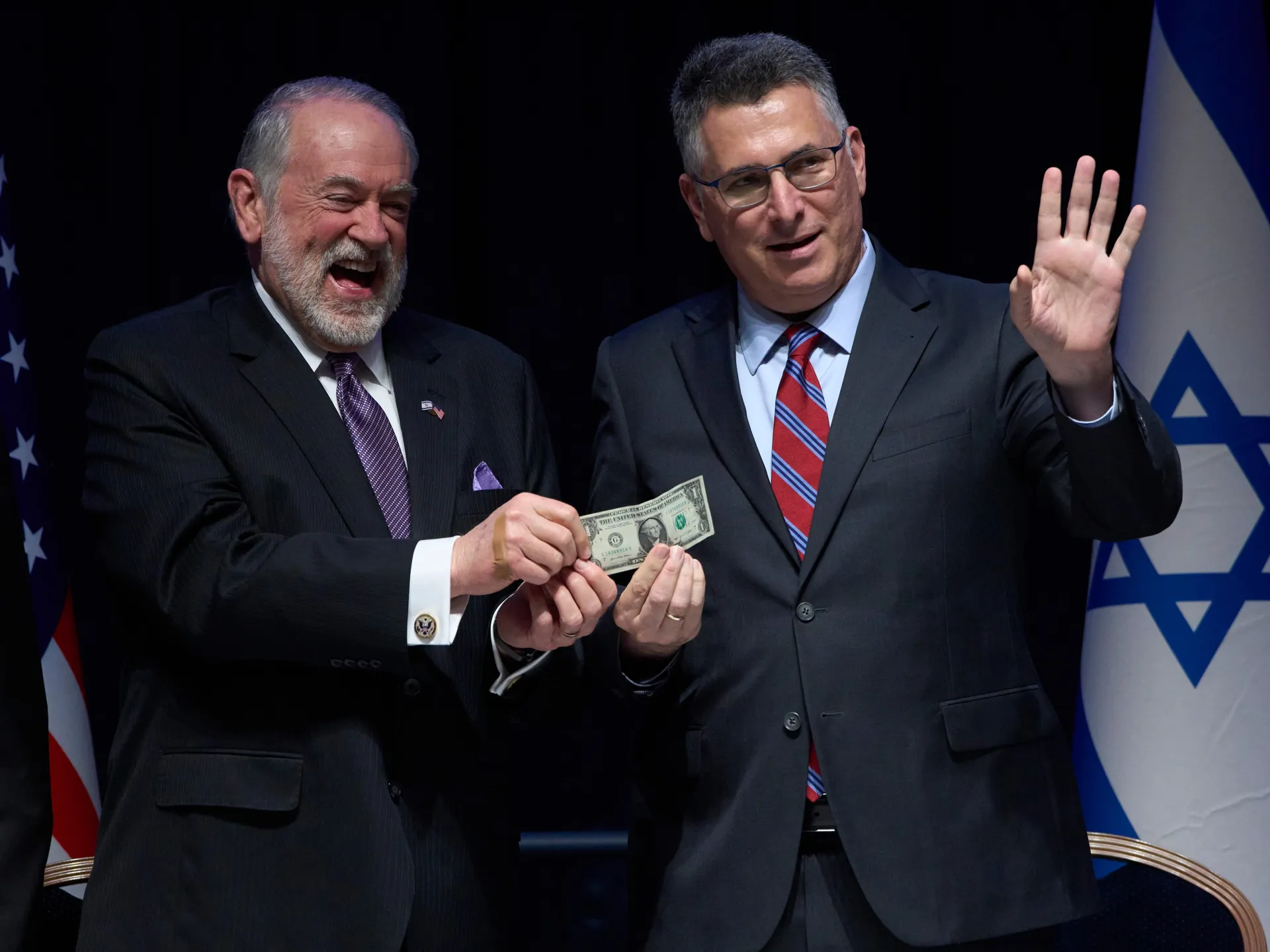
US signs $1 lease with Israel to build permanent embassy in West Jerusalem | Construction News

NewsFeed

The US and Israel have signed a deal allocating land for a permanent US embassy in West Jerusalem, years after a temporary one was established during Trump’s first term in office. The move is yet another blow to the hopes of a future Palestinian capital.

Source link

3 dead in Mexico City World Cup celebrations

Mexican soccer fans react during the Round of 32 match of the 2026 FIFA World Cup between Mexico and Ecuador in Mexico City, Mexico, Tuesday. Three people died by asphyxiation during the celebration. Photo by Sashenka Gutierrez/EPA

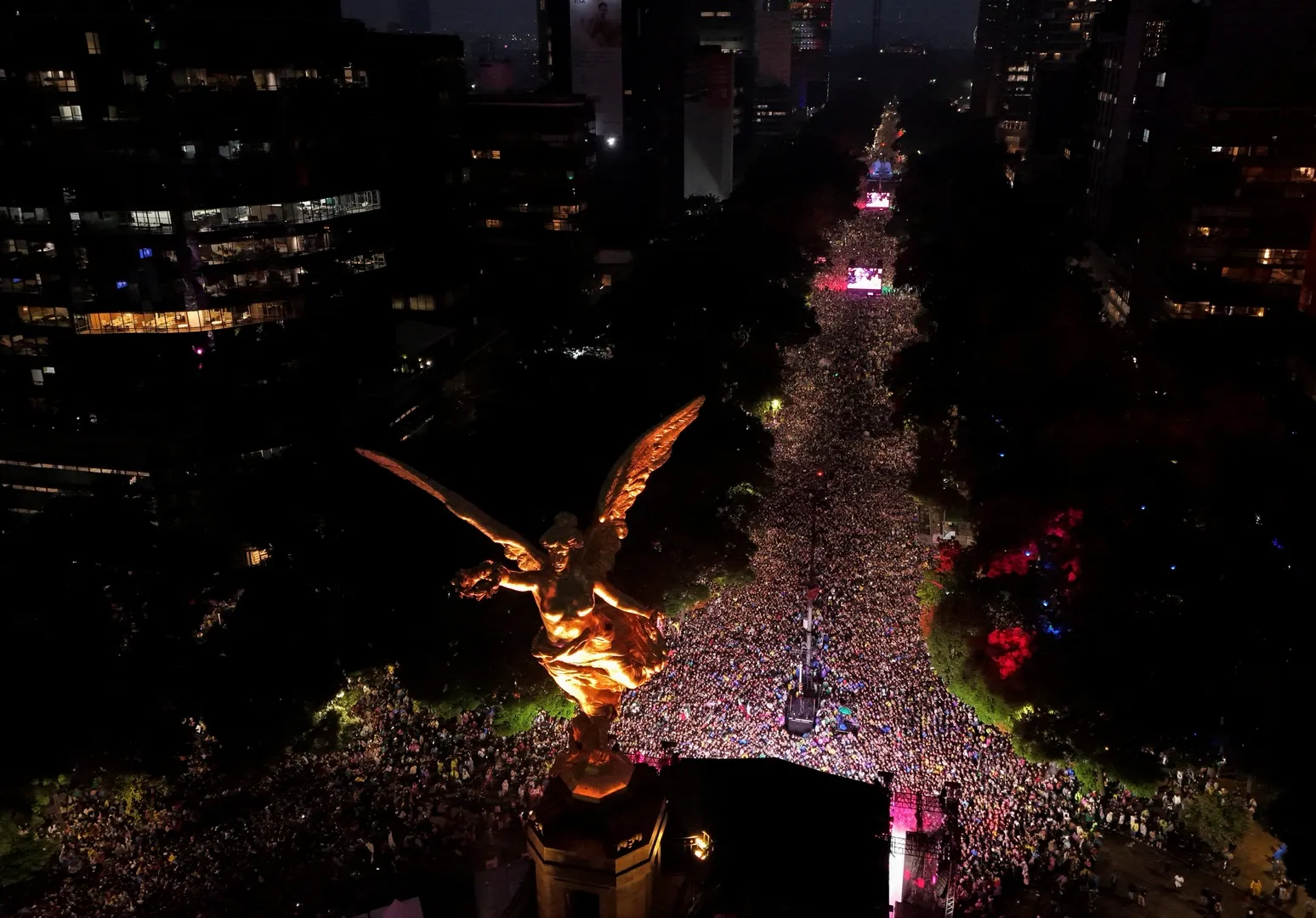
July 1 (UPI) — Three people died of asphyxiation in Mexico City as about a million people flooded the streets to celebrate Mexico’s 2-0 World Cup win over Ecuador in the first knockout round.

A 19-year-old woman, a 48-year-old woman and a 44-year-old man were found unresponsive in the crowd Tuesday night. They were each given emergency resuscitation and taken to a hospital where they died.

The celebrations mostly happened around the Angel of Independence monument in downtown Mexico City. The game ended in the first knockout round win for Mexico since 1986.

Mexico City’s health department confirmed that emergency responders treated the three people at different locations around Paseo de la Reforma before taking them to the hospital.

“After performing first aid and CPR techniques on the patients, they were transferred to a hospital for specialized medical care,” the city’s health authority said.

The hospital confirmed they all had died of suffocation.

Mexico City Mayor Clara Brugada offered her “most sincere condolences” to the victims’ families.

In a post on X, Brugada said: “With my heart in my hand, I send a hug and my most sincere condolences to their loved ones. We reiterate the call to always celebrate with responsibility, care, and empathy.”

Mexico City’s metropolitan area is one of the most densely populated places on Earth. More than 20 million people live there.

Mexico players throw goalkeeper Guillermo Ochoa in the air after defeating Czechia 3-0 in their FIFA World Cup match at Mexico City Stadium in Mexico City on June 24, 2026. Photo by Christian Brunskill/UPI | License Photo

Source link

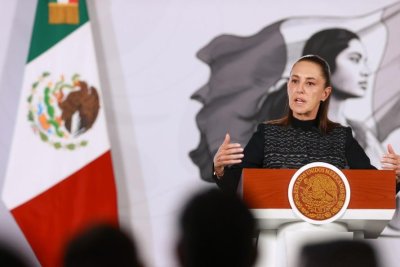
Mexico to open debate on AI, social media regulation

Mexican President Claudia Sheinbaum said at her morning press conference Wednesday that a national debate on regulating artificial intelligence and social media would begin after the World Cup ends July 19. Photo by Mario Gizman/EPA

July 1 (UPI) — Mexico will launch a national debate on artificial intelligence and social media after the 2026 FIFA World Cup concludes in a move aimed at laying the groundwork for future regulatory framework.

President Claudia Sheinbaum said the process will begin after July 19 and will bring together lawmakers, technology experts, academics, media representatives and parents to discuss the impact of digital platforms and artificial intelligence on different areas of society.

Sheinbaum emphasized that the process will be conducted under the government’s stated premise of not infringing on freedom of expression.

Among the issues to be discussed are mental health, protection of children and adolescents, concentration of power among major technology platforms, development of artificial intelligence and the possibility of establishing limits on cellphone use in schools.

“The discussion should be opened on the control of platforms: Who controls them? How many people own these platforms? How is that power concentrated?” the president said during her Tuesday morning news conference.

Sheinbaum also raised the need to examine who controls the development of artificial intelligence, what regulatory frameworks exist in other countries, what benefits they offer and what risks they pose for Mexico.

“It is very important for Mexico to enter this regulatory process without resorting to censorship,” she said.

The announcement prompted immediate reactions on social media, where experts, civil society organizations, academics and users began debating the scope of possible regulation.

While some argued that Mexico’s legal framework needs to be updated to address the challenges posed by digital platforms and artificial intelligence, others expressed concern that poorly drafted legislation could become a tool to limit criticism or restrict freedom of expression.

News outlet Sinaloa Hoy reported that the proposal comes at a time when social media has become the primary source of information and political criticism for young people.

According to opinion polls, including one conducted by consulting firm Enkoll, the president has a 44% disapproval rating among people ages 18 to 24.

Mexican political analyst Juan Ortiz wrote on X that regulation may be necessary, “but a poorly written rule could end up punishing political criticism under the pretext of protecting minors or combating disinformation.”

“In San Luis Potosí, its ‘regulation’ of AI ended with women journalists being detained,” he said.

Mexican attorney Gildo Garza also questioned the announcement, arguing that regulation could become a mechanism to control public discourse.

In a post on X, he warned that previous experiences in Venezuela and Nicaragua show how initial narratives about protection or regulation ultimately resulted in restrictive laws, judicial persecution and punishment of critical voices.

According to a report by the Anáhuac Universities Network, the path toward digital legislation in Mexico has been marked by intense activity in Congress. Since April 2023, lawmakers have introduced 85 legislative initiatives to create laws or amend existing ones to regulate artificial intelligence and the digital environment.

The vast majority of those proposals, 67, have remained stalled or are pending approval. That has been attributed to a lack of consensus, technical complexity and concerns among various sectors that such measures could affect freedom of expression.


Source link

Three dead after massive World Cup celebrations in Mexico City | Health

NewsFeed

Health officials say three people died during massive celebrations in Mexico City after Mexico’s 2-0 World Cup win over Ecuador. The victims — a 19-year-old woman, a 48-year-old woman and a 44-year-old man — died of asphyxiation. Thousands had crowded into the streets to celebrate Mexico’s first World Cup knockout-round win since 1986.

Source link

Warmest June on record for England, second-warmest for UK, says Met Office | Climate Crisis News

A punishing heatwave affected many parts of the country during the last week of the month.

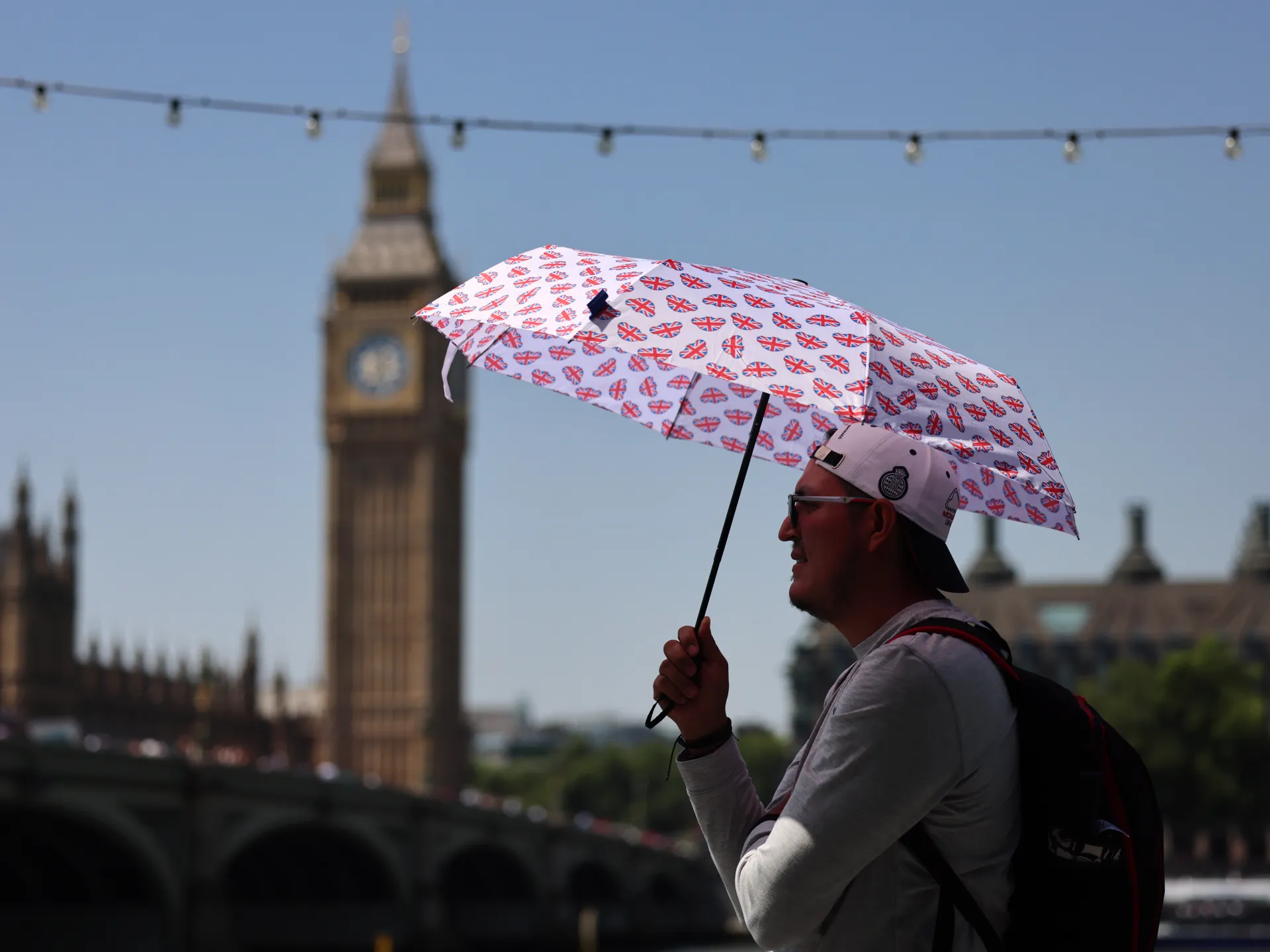
Last month was provisionally the warmest June in England since records began, as well as the second-warmest for the United Kingdom, according to figures published by the country’s Met Office.

Rare extreme heat warnings were issued for several days last month, with “exceptionally warm overnight temperatures”, the weather agency said on Wednesday.

Recommended Stories

list of 4 itemsend of list

England registered an average temperature of 17.1C (62.78 degrees Fahrenheit) last month – the highest since records began in 1884.

“The exceptional warmth was driven by an intense and record-breaking heatwave at the end of the month,” the Met Office said in a statement.

The previous record of 16.9C (62.4F) was set in June 2025, nearly 3C (5.4F) above the long-term average. It means England’s top three warmest Junes since data began in 1884 have all occurred this decade, with the third being in 2023.

A punishing heatwave affected many parts of the country during the last week of the month, with temperatures topping 30C (86F) at some places in the UK for seven days in a row from June 21-27.

A peak of 37.7C (99.86F) was provisionally reached at Lingwood in Norfolk on June 26 – the highest maximum temperature ever recorded for the month.

This was more than 2C higher (3.6F) than the previous June record of 35.6C (96.08F), set in 1957 at Camden Square in London and equalled in 1976 at Mayflower Park in Southampton.

Last month also saw a provisional new June record for the highest overnight minimum, with temperatures at Cardiff Bute Park dropping no lower than 23.5C (74.3F) on June 25.

More than 1,000 schools and nurseries were closed during the heatwave, and there was disruption to public transport with overhead wires and signalling strained because of the heat.

Critics felt the country was ill-prepared to deal with the sweltering heat. Climate experts have urged the UK government to adapt its infrastructure to warming summers, with a surge in demand for fans and air conditioners, which remain rare in British homes.

The heatwave has also affected many countries in Europe, including France, Germany, Slovakia, Serbia, Croatia, Italy, Austria and western Ukraine, with more than 1,000 deaths linked to the scorching heat reported in France alone.

A group of scientists blamed climate change for the dangerous weather blazing across Europe. In a report by the World Weather Attribution, experts warned that the phasing out of fossil fuels is essential to reverse the extreme weather trend.

Source link

What is a heat dome? The US heatwave explained | Weather News

An intense heatwave is set to blanket much of the central and eastern United States this week as a “heat dome” settles over the region, bringing days of oppressively high temperatures and humidity ahead of the Fourth of July weekend and FIFA World Cup matches in several US cities.

Forecasters say in some places it could feel as hot as 46 degrees Celsius (115 degrees Fahrenheit). Dozens of temperature records could be broken, according to the National Weather Service (NWS), which called the conditions “dangerous”. More than 60 million people are currently under heat alerts.

Recommended Stories

list of 4 itemsend of list

At the centre of this week’s forecast is a weather phenomenon known as a heat dome. What is it, and why does it make heatwaves even more intense and unbearable?

What is a heat dome?

A heat dome is a large area of high pressure, formed when warm air flows northward, that acts like a lid over the atmosphere, trapping hot air close to the ground.

As the air sinks, it compresses and warms even more. At the same time, the pressure system helps prevent cooler air and storms from moving in, allowing heat to build at the surface and remain trapped there. With few clouds and little wind, the sun has more direct access to the ground, creating a heat feedback loop.

Heat domes are linked to prolonged heatwaves that can last for days.

How long will it last?

The heat dome is already building and is expected to strengthen over the coming days, spreading from the central US towards the east coast, with dangerous heat lasting several days into early July.

The hottest conditions are expected Thursday and Friday, according to the NWS, and are set to continue through the Fourth of July weekend, which marks the 250th anniversary year of the US, and forecasters say some areas across the Great Plains, the southeast, and the mid-Atlantic are likely to remain unusually hot into next weekend.

What will the highest temperatures be?

Many places are expected to see daytime temperatures in the high 30s Celsius (low 100s Fahrenheit), but humidity will make it feel much hotter. In parts of the central and eastern US, the heat index – a measure of how hot it feels when humidity is factored in – could climb between 40C and 46C (100F and 115F).

“That’s heat that’s impactful to anyone,” said NWS meteorologist Bryan Putnam. “It’s not just older adults or younger children or people who are spending a ton of time outdoors, maybe straining themselves a little more than normal. This is heat that really could impact everyone, especially with people outdoors going into the holiday weekend.”

The nights won’t bring much relief either, with temperatures expected to stay in the 20s Celsius (70s Fahrenheit) overnight, creating potentially miserable sleep conditions for those without air conditioning and making it harder for people to cool down.

“Even after the sun goes down, it’s still going to be very hot,” said AccuWeather senior meteorologist Alan Reppert. “We’re at a pattern that’s really going to be hot during the good portion of the afternoon and even into the evening hours.”

Which parts of the US will be hit the hardest?

The most dangerous conditions are expected in a broad corridor stretching from the Great Lakes to the East Coast, where several cities could experience their hottest day of the year so far. New York City, Philadelphia, Washington, Baltimore, Chicago, Indianapolis, Detroit and St Louis are all expected to be affected, with temperatures also soaring farther south in Dallas, Little Rock and Memphis.

Several of those cities are also hosting FIFA World Cup events. In Philadelphia, organisers have already changed Fan Festival hours to start later in the day.

Cities across the US are rolling out emergency measures as temperatures climb.

Chicago said it would open cooling centres and send city workers to check on vulnerable residents.

In New York City, Mayor Zohran Mamdani’s office announced what it called an “unprecedented” response to the heat, including hydration vans and pop-up cooling stations equipped with misting fans and cooling towels.

Washington, DC, where temperatures are expected to exceed 38C (100F) from Thursday through Saturday, the heat will coincide with Fourth of July celebrations, including what organisers say will be the largest fireworks display ever held on the National Mall.

What are some ways to stay cool?

The NWS says people should stay hydrated, avoid strenuous outdoor activity during the hottest part of the day and seek air conditioning or cooling centres where possible. If you’re spending time outside, wear loose, lightweight clothing and stay near shady areas.

Experts say one of the biggest risks during a prolonged heatwave is that the body doesn’t have time to cool down overnight, which can make the effects of the heat build up from one day to the next. They also recommend drinking water before you feel thirsty and limiting alcohol, which can increase the risk of dehydration.

“If somebody realises that they’re hot, but they’re not sweating, or if they begin to feel a little bit dizzy, those are some signs that they really need to take a break, get inside, find some cooling, and drink plenty of water,”  said Geoff Cornish, assistant chief video meteorologist for the weather forecasting company AccuWeather. “And if they really begin to experience significant symptoms, they need to seek medical attention right away.”

Source link

First Syrian parliament since al-Assad’s ousting begins legislative duties | Syria’s War News

The new 210-member parliament takes shape, marking a historic shift after decades of Assad family rule.

The first parliament in Syria’s post-Assad era has taken shape with the release of a list of 70 legislators picked by President Ahmed al-Sharaa.

The inauguration of the new parliament on Wednesday shows the country is moving ahead with drafting laws as the nation works on recovering from decades of iron-fist rule under longtime ruler Bashar al-Assad, who was ousted in December 2024 after more than 13 years of civil war, which killed about half a million people.

Recommended Stories

list of 4 itemsend of list

The head of Syria’s electoral committee, Mohammed Taha al-Ahmad, told reporters that the new 210-member legislature will hold its first meeting on Monday, when the new members will be sworn in, and the parliament’s presidential council will be elected.

Interim President al-Sharaa directly appoints one third of the 210 seats. His list of 70 legislators includes 15 women, raising the number of female members in the legislature to 22.

Portraits of former speakers of parliament, including former Egyptian president Anwar Sadat (4th R), who served as Chairman of the Council of Nation under the United Arab Republic (UAR) era, are displayed at the parliament in Damascus on July 1, 2026.
Portraits of the former speakers of Syrian parliament, including former Egyptian President Anwar Sadat (fourth from right), who served as chair of the Council of Nations under the United Arab Republic era, are displayed at the parliament in Damascus [AFP]

Syria held the first phase of its parliamentary elections in October last year while excluding the southern province of Suwayda, a predominantly Druze governorate and where no date has been set yet for a vote due to security concerns.

The October vote also excluded northeast Syria, which was under Kurdish control. A vote in that region was held in May after government forces took control of the area during deadly clashes earlier this year.

The new parliament also includes representatives of the Alawite community and two legislators from Suwayda.

“Initially, there was a very small portion of the elected members that were from some of the minority groups, such as the Kurdish community,” said Al Jazeera’s Obaida Hitto, reporting from the capital Damascus.

“The appointees by the president remedied that by adding several more Kurdish members from the Hasakah governorate,” Hitto added.

The new parliament will have a 30-month term and work on a new elections law while preparing the ground for a popular vote in the next elections, according to al-Ahmad, as a test for the country’s transition.

Source link

U.S., Iran to continue negotiations on Day 2 of talks in Qatar

Iran and U.S. negotiators will meet with intermediaries Wednesday to discuss the cease-fire agreement. Photo by Abedin Taherkenareh/EPA

July 1 (UPI) — Envoys Steve Witkoff and Jared Kushner and their Iranian counterparts are planning to meet with Qatari negotiators Wednesday for ongoing peace talks.

On Tuesday, Witkoff and Kushner met with the prime minister of Qatar, Sheikh Mohammed bin Abdulrahman al-Thani. They are scheduled to meet with him again today.

Iran and Qatar have said that there will be no direct, high-level meetings between United States and Iranian officials and that all discussions will be through Qatari intermediaries, The New York Times reported. Today’s negotiations will be about the cease-fire agreement and getting it implemented, a spokesperson told The Times.

Iran’s negotiator Mohammad Bagher Ghalibaf, in an interview with Iran’s state media Tuesday, laid out the most important provisions of the memorandum of understanding signed on June 17.

Ghalibaf said the most important prerequisite provisions to Iranian negotiators were Articles 1, 4, 5, 10 and 11, CNN reported.

Article 1 demands an end to all fighting, including in Lebanon. Israel and Lebanon signed a cease-fire agreement on Saturday, but Hezbollah hasn’t agreed to it.

Article 4 says that the United States must lift its naval blockade and Iran must allow shipping traffic through the Strait of Hormuz. The U.S. Navy is no longer blocking the strait but it still has a presence there. Article 5 says that Iran will allow passage through the strait with no tolls for 60 days.

The next two articles are about Iranian money and oil sales. Article 10 says the U.S. will allow waivers for Iran to sell its oil, which has happened – at least for 60 days. And Article 11 says that the United States will make frozen Iranian assets available, which is unclear. The United States has said that Iran must fulfill its commitments first.

Traffic through the strait is picking up, with 34 ships passing through on Tuesday, CNN said, though that’s far from pre-war levels, which saw about 100 per day.

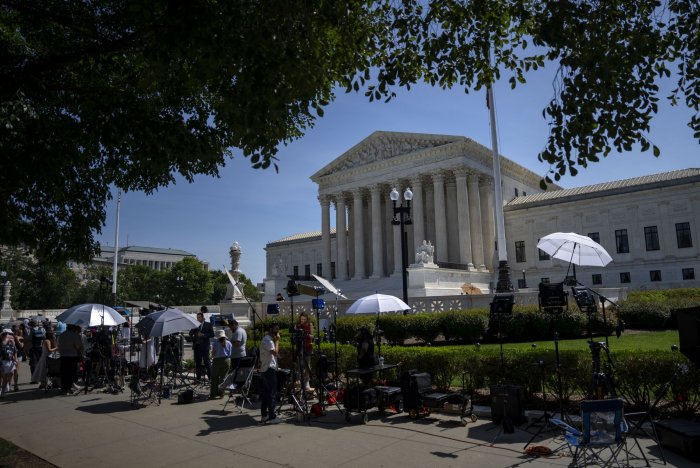
News anchors are seen outside the Supreme Court of the United States as the court releases their final opinions before summer recess on Tuesday. The court upheld birthright citizenship and also state laws banning transgender women and girls from playing on school athletic teams. Photo by Bonnie Cash/UPI | License Photo

Source link