July 10 (UPI) — President Donald Trump has reportedly fired the three remaining members of an independent, bipartisan commission that helps states administer elections, intensifying Democratic concerns that he is trying to interfere in November’s midterm elections.
Trump fired the Election Assistance Commission’s two Democrats, Benjamin Hovland and Thomas Hicks, while allowing its Republican commissioner, Christy McCormick, to resign on Thursday, according to The New York Times, NPR and ProPublica, which was the first to report on the development.
With the exit of the three commissioners, the commission has no sitting members. Republican Commissioner Donald Palmer resigned in late April.
The EAC was established by the Help America Vote Act of 2002 in response to issues surrounding the 2000 election. Its mission is to improve the administration of elections and help Americans participate in the voting process, according to the Congressional Research Service.
The midterm elections have loomed large over Trump’s second term. He has repeatedly warned that Democratic impeachment proceedings and investigations would follow Republicans losing the House, which they hold by a narrow 218-212 majority.
Trump has sought to influence the outcome by pushing Republican-led states to conduct unorthodox mid-decade redistricting to create additional GOP-favored seats, setting off a redistricting fight with Democrats. The president, who wrongly maintains that the 2020 election was stolen from him, has also repeatedly voiced skepticism over the integrity of U.S. elections, pushing legislation to impose stringent voting restrictions that critics say would disenfranchise voters.
Democrats and critics have been warning that Trump is trying to undermine the upcoming midterm elections and create a pretext for his administration to intervene. They say the hollowing out of the EAC removes election expertise and oversight from the process.
“Firing every remaining member of the bipartisan Election Assistance Commission months before the midterms is a brazen attempt to seize control of our elections before a single vote is cast,” Senate Minority Leader Chuck Schumer, D-N.Y., said in a statement.
“He is gutting the independent agency that certifies voting systems and helps election officials run secure elections.”
Sen. Alex Padilla, D-Calif., ranking member of the Senate Rules Committee, and Rep. Joe Morelle, D-N.Y., ranking member of the Committee on House Administration, called the firings illegal.
“Trump continues to double down on his efforts to erode trust in our elections, undermine independent oversight and further his administration’s attempt to ‘take over’ elections,” the Democratic pair said in a statement, referencing Trump’s repeated calls for Republicans to “take over” the election process.
“Americans deserve elections that are safe, secure and run free from political interference — not overseen by partisan loyalists and election deniers beholden to Trump.”
Michael Waldman, president and CEO of the Brennan Center for Justice at NYU Law, described the ousting as “deeply concerning” given “Trump’s relentless efforts to interfere in elections.”
“Until bipartisan replacements are confirmed, the agency cannot lawfully make any decisions that affect how Americans vote,” he warned in a statement.
1 of 8 | Photograph shows William Jennings Bryan (seated, left, with fan) and Clarence Darrow (standing, center, with arms folded) at an outdoor courtroom during the Scopes Trial (Tennessee v. Scopes) in Dayton, Tenn., in July 1925. UPI File Photo
July 10 (UPI) — On this date in history:
In 1925, the so-called Monkey Trial, in which John Scopes was accused of teaching evolution in school, a violation of state law, began in Dayton, Tenn., featuring a classic confrontation between William Jennings Bryan, the three-time presidential candidate and fundamentalist hero, and legendary defense attorney Clarence Darrow.
In 1962, the United States launched the first telecommunications satellite, Telstar, into orbit, which relayed TV pictures between the United States and Europe.
In 1985, Coca-Cola, besieged by consumers dissatisfied with the new Coke introduced in April, dusted off the old formula and dubbed it “Coca-Cola Classic.”
File Photo by Stephen Shaver/UPI
In 1989, Mel Blanc, the voice of Bugs Bunny, Daffy Duck and countless other Warner Bros. cartoon characters and radio and TV comic creations, died from complications of heart disease. He was 81.
In 1991, Boris Yeltsin was inaugurated as the first freely elected president of the Russian republic.
In 2009, General Motors completed its race through bankruptcy with the signing of a contract with the U.S. government, which got 61 percent of the company. The recovery plan included considerable shrinkage, including the closing of factories and layoffs of 21,000 union workers.
Then-General Motors CEO Fritz Henderson attends a press conference in New York City on June 1, 2009. File Photo by John Angelillo/UPI
In 2011, media mogul Rupert Murdoch’s News of the World, Britain’s best-selling weekly newspaper, abruptly ceased publication amid allegations that its reporters and investigators had hacked into telephones of royalty, politicians, celebrities, homicide victims, families of fallen soldiers and others to illegally gain material for stories.
In 2012, an Israeli court acquitted former Prime Minister Ehud Olmert of corruption but found him guilty of breach of trust. The charges stemmed from a period before he was PM.
In 2018, divers rescued the last of the 12 boys and their soccer coach from a flooded cave in Thailand, where they’d been trapped for more than two weeks.
In 2024, the original Hermes Birkin bag — designed by Jean-Louis Dumas specifically for actor and singer Jane Birkin in 1985 — sold for $10 million at auction in Paris. A Japanese business executive, Shinsuke Sakimoto, won the bidding, making it the most expensive handbag ever sold.
A trial showed that human-operated robots can successfully complete at least some surgeries. File Photo by Wael Hamzeh/EPA
July 9 (UPI) — A humanoid robot successfully assisted during a laparoscopic surgery for a gall bladder removal, suggesting that robots may serve a purpose in some health care scenarios.
The operation, which involved surgery on non-human primates, could pave the way toward robots assisting with surgeries on human beings, the University of California San Diego said in a news release.
In a study published in the journal Nature, UCSD researchers outlined two surgeries that were performed with the assistance of non-human robotic humanoids on non-primate mammals.
“Remotely operated and autonomous humanoid robots have real potential for amplifying access to critical surgeries to which patients would otherwise not have access,” Michael Yip, UC San Diego Department of Electrical and Computer Engineering, said.
“Our goal is an operating theater of the future, where humanoid robots and humans work side by side as an integrated team to deliver procedures to those in need, both in traditional hospital settings, as well as in non-traditional, field medicine scenarios,” Yip said.
The benefit, Shanglei Liu, assistant professor of surgery at UCSD in its School of Medicine, said that using robots for some surgeries could help to curtail costs and staff needed for surgical procedures.
“It’s easy to deploy,” she said, “anywhere from rural areas, to the battlefield, and even to space,” Liu said.
Liu said that one of the research team’s goals is to develop autonomous surgical assistants in order to treat people in areas that are difficult to get to.
“One of our goals is to develop the autonomous surgical assistant,” Yip said, adding that using robots in places where there are not enough doctors could solve the problem of patients not being treated.
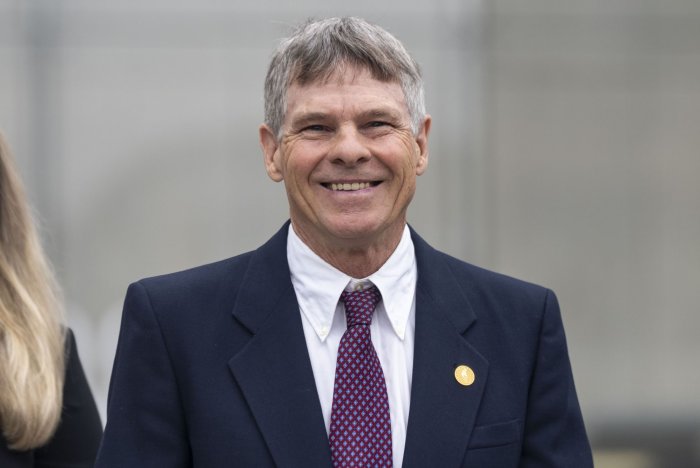
Olympic canoeist David Hearn departs the Moultrie Courthouse after pleading not guilty to damaging the Lincoln Memorial Reflecting Pool on Thursday. Hearn was indicted on July 2 on one count of destruction of property of more than $1,000 for allegedly damaging the Reflecting Pool, carrying a maximum penalty of 10 years in prison if convicted. Photo by Bonnie Cash/UPI | License Photo
July 10 (UPI) — The Justice Department filed a lawsuit against Maryland on Thursday challenging the state’s laws that limit local law enforcement’s cooperation with immigration agents, the latest legal salvo in the Trump administration’s crackdown on immigration.
Federal lawyers with the Justice Department’s Civil Division have filed about 20 lawsuits against so-called sanctuary policies that the Trump administration argues violate the Constitution’s Supremacy Clause, under which federal law supersedes state policies.
“Federal immigration officers merely enforce the laws that our nation’s elected representatives in Congress passed, reflecting the will of ‘We the People,'” Associate Attorney General Stanley Woodward said in a statement.
“When sanctuary jurisdictions enact laws to shield illegal aliens from federal law enforcement, it is not merely federal law that is violated, but the voices of everyday American voters silenced.”
The Community Trust Act, passed by Maryland’s General Assembly, took effect immediately on May 31, 2026, limiting local cooperation with federal immigration authorities amid the Trump administration’s aggressive crackdown.
Opponents criticize the law as permitting the harboring of undocumented migrants, while advocates argue such policies are needed to create safe communities by reducing barriers that hinder immigrants from communicating with law enforcement.
In the lawsuit, the Justice Department argues that by enforcing the Community Trust Act, Maryland was unlawfully interfering with the federal government’s enforcement of federal law, in violation of the Supremacy Clause.
“Maryland has no lawful interest in assisting removable aliens to evade federal law enforcement. The state’s prohibitions on cooperation with federal immigration agencies have endangered public safety, resulting in criminals being released into Maryland rather than turned over to immigration authorities for removal from the United States, as required by Congress,” the federal lawyers said in the complaint.
“The challenged laws are not a mere passive effort to avoid providing state or local resources to federal officials but rather are an active and deliberate effort to obstruct federal immigration enforcement.”
The Maryland Freedom Caucus, a group of Republican state delegates, celebrated the lawsuit’s announcement in a Thursday statement, saying it is challenging “Maryland’s dangerous penchant for favoring noncitizens over lawful Marylanders.”
From targeting sanctuary laws to seeking to end humanitarian protections for migrants from crisis-hit countries, the Trump administration has sought to remove obstacles to its mass deportation campaign, drawing staunch opposition from civil and human rights advocates.
Under a Trump executive order, the Justice Department has identified dozens of states, counties and cities, mostly Democratic-led, that have sanctuary laws.
Olympic canoeist David Hearn departs the Moultrie Courthouse after pleading not guilty to damaging the Lincoln Memorial Reflecting Pool on Thursday. Hearn was indicted on July 2 on one count of destruction of property of more than $1,000 for allegedly damaging the Reflecting Pool, carrying a maximum penalty of 10 years in prison if convicted. Photo by Bonnie Cash/UPI | License Photo
Democratic Party lawmakers Kim Seung-won, Kim Han-kyu, Park Sang-hyuk and Lee Hae-sik, members of the party’s Criminal Procedure Act revision task force, submit a partial revision bill at the National Assembly on Thursday. Photo by Asia Today
July 9 (Asia Today) — South Korea’s ruling Democratic Party introduced a revision to the Criminal Procedure Act on Thursday that would abolish prosecutors’ supplementary investigation power.
The bill would remove prosecutors as investigative agents while strengthening their authority to request supplementary investigations from police. The party said the measures are intended to reduce investigative gaps.
The Democratic Party’s task force on revising the Criminal Procedure Act submitted the bill to the National Assembly’s bill office. The proposal would completely separate investigation and indictment. It would abolish prosecutors’ supplementary investigation power while strengthening their authority to request further investigations and introducing the power to request the replacement of investigators, increasing oversight of investigative agencies.
Kim Han-kyu, the party’s senior deputy floor leader for policy, told reporters after submitting the bill that the revision is designed to adjust investigative authority, strengthen checks and supervision over investigative agencies and enhance protections for victims and complainants ahead of the planned Oct. 2 launch of new investigation and prosecution agencies.
The Democratic Party removed the legal basis for prosecutors’ direct investigations from the bill. But it added a one-month deadline for police to complete supplementary investigations requested by prosecutors. In cases in which the statute of limitations is about to expire, prosecutors would be allowed to set a shorter deadline. The bill also allows one extension.
If a judicial police officer assigned to a supplementary investigation is deemed inappropriate to handle the case, the head of the prosecution office would be allowed to request the replacement of the investigator. The bill also allows supplementary investigations to be assigned to another investigative agency.
Prosecutors’ authority to demand corrective measures would also be strengthened. Even before a case is referred to prosecutors, if a prosecutor confirms that an investigative agency conducted an improper investigation, the prosecutor would be allowed to receive the case from judicial police and transfer it to another investigative agency.
Police would also be required to submit investigative records and lists of materials to prosecutors in cases they decide not to refer for prosecution.
The bill strengthens victim protection provisions. If an improper investigation is suspected, suspects as well as complainants, victims and legal representatives would be allowed to file reports about the case. Prosecutors receiving such reports would be allowed to demand corrective measures from the investigative agency or transfer the case to another agency.
The Democratic Party plans to review the bill Friday at the National Assembly Legislation and Judiciary Committee together with previously submitted bills.
Rep. Kim Seung-won said the committee’s first bill review subcommittee plans to meet once or more than twice a week to conduct an intensive and swift review.
July 9 (UPI) — A federal Washington, D.C., planning agency advanced plans Thursday night for President Donald Trump‘s 250-foot triumphal arch, clearing a key procedural hurdle toward construction despite staunch opposition from historic preservation groups.
The National Capital Planning Commission approved preliminary site and building plans in an 8-1 vote, with three members voting present, during a meeting at its Washington headquarters.
The sole objector, Evan Cash, representing D.C. Council Chair Phil Mendelson on the panel, said he would not vote in its favor. He said the plans would “have the effect of upending decades of NCPC practice and thee century-old height framework.”
According to the proposed plans, the arch would be constructed across the Potomac River in Virginia. At 250 feet tall and 166 feet wide, it would be twice the height of the Lincoln Memorial.
Rob Nieweg, senior vice president of the National Trust for Historic Preservation, also objected to the project.
Nieweg told the commission that the arch would “overwhelm” nearby historic landmarks, including the Lincoln Memorial, Arlington House and Memorial Bridge, while being inconsistent with “the solemn character of Arlington National Cemetery.”
“Each new rendering submitted for this proposal is totally inappropriate in its scale and location,” he said.
“The new images clearly show that the arch blocks the view of the Lincoln Memorial from vantage points on the Virginia side. It looms larger on the skyline than everything other than the Washington Monument. From the District side, placing the arch in the foreground completely overpowers the sacred rolling wooded hills and rows of white grave markers at Arlington National Cemetery.”
The vote comes after the U.S. Commission of Fine Arts approved a modified design of the arch in May. A final vote on the plan will take place at the September commission meeting, NCPC Chair Will Scharf said.
“It’s disappointing that the NCPC approved the preliminary site and building plans for the Monumental Arch today, and we remain strongly opposed to its scale and locations,” the National Trust for Historic Preservation told UPI in an emailed statement.
Trump proposed the arch as he has sought to remake the capital in his own image, including plans for a new White House ballroom and renaming the John F. Kennedy Center for the Performing Arts to include his name, among others. Several of those efforts have been met with lawsuits.
Olympic canoeist David Hearn departs the Moultrie Courthouse after pleading not guilty to damaging the Lincoln Memorial Reflecting Pool on Thursday. Hearn was indicted on July 2 on one count of destruction of property of more than $1,000 for allegedly damaging the Reflecting Pool, carrying a maximum penalty of 10 years in prison if convicted. Photo by Bonnie Cash/UPI | License Photo
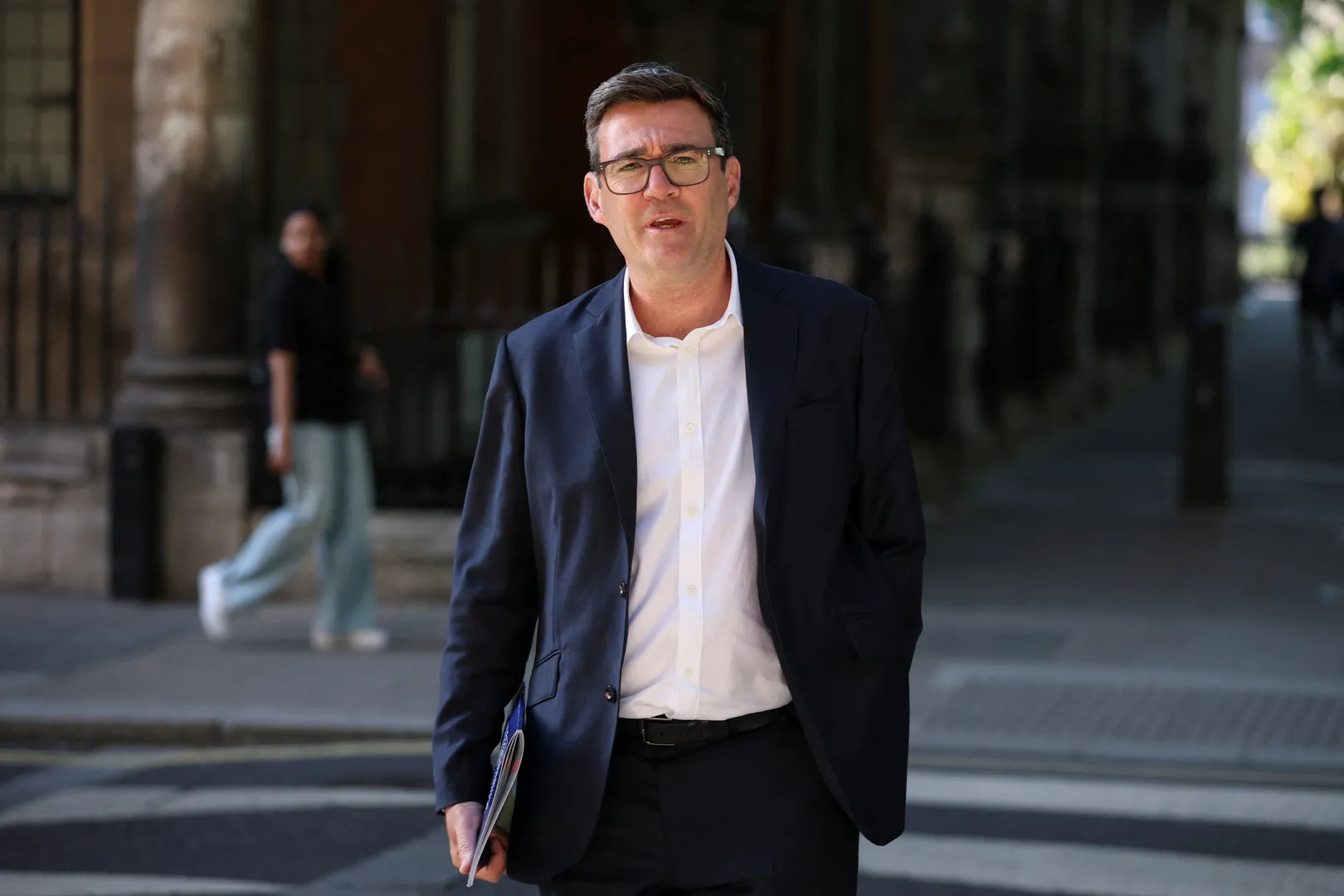
Andy Burnham, who is expected to become the next Prime Minister of the United Kingdom, took to social media to apologise for the Labour Party’s initial stance on Israeli attacks in Gaza. He’s now calling for accountability of the Netanyahu government.
July 9 (UPI) — The Trump administration on Thursday proposed to roll back a Biden-era rule on emissions from heavy duty diesel trucks because it is “unworkable.”
The Environmental Protection Agency proposed lowering requirements for heavy truck emissions systems because of issues with the technology for new trucks and penalties for older vehicles that do not measure up, the agency said in a press release.
The change is expected by the administration to save up to $6,000 per new truck and could help save truckers roughly $12 billion, Fox News and The Hill reported.
The change will shorten government requirements for engine warranties to 100,000 miles, from 450,000 miles, and will delay a requirement that trucks meet emissions standards for their first 650,000 miles — an increase from the first 435,000 miles — for three years.
“This proposal to eliminate engine deratements and reform the Biden-era … requirements will lower costs, increase safety and keep our nation’s food supply moving,” Secretary of Agriculture Brooke Rollins said in the release.
The Biden administration rule was aimed at strengthening rules about nitrogen oxide emissions by improving maintenance and repair requirements over a longer period of time.
Critics have said that the new rule will weaken clean air protections and potentially affect Americans’ health, but the administration has countered that lowering business and consumer costs are an essential focus and that environmental concerns are overblown.
July 9 (UPI) — The Food and Drug Administration on Thursday recalled more than 2.5 million bottles of eye drops because they may contain a “foreign substance.”
The nationwide recall was initiated by Lupin Pharmaceuticals on June 4 because of some type of foreign substance, though the company and the FDA have not identified it or how it got into the eye drops, MassLive and NJ.com reported.
The class II recall of the prednisolone acetate eye drops — used to reduce inflammation after eye surgery or for allergic and other conditions — is the second-highest risk recall for the agency because it may cause adverse consequences if used.
In a recall notice posted on its website on Thursday, the FDA said that the recall of more than 2.5 million bottles of Lupin’s prednisolone eye drops was because of the “presence of foreign substance.”
The affected bottles come in 5 mL, 10 mL and 15 mL quantities, and were produced by the India-based Lupin, which specializes in manufacturing generic pharmaceutical medications.
The FDA also cautions against simply pausing the use of these medications, suggesting that people who need to use them contact their eye doctor or pharmacist in order to properly react for their own conditions.
Olympic canoeist David Hearn departs the Moultrie Courthouse after pleading not guilty to damaging the Lincoln Memorial Reflecting Pool on Thursday. Hearn was indicted on July 2 on one count of destruction of property of more than $1,000 for allegedly damaging the Reflecting Pool, carrying a maximum penalty of 10 years in prison if convicted. Photo by Bonnie Cash/UPI | License Photo
Palm Beach International Airport has officially been renamed President Donald J. Trump International Airport, with new signage installed throughout the terminal. The move has prompted mixed reactions, with supporters welcoming the tribute while critics argued it was ‘in poor taste.’
A woman visits the a makeshift tribute made with flags and notes to the 44 crew members of the missing submarine ARA San Juan at the Argentina Navy base at Mar del Plata in November 2017. File Photo by Mauricio Arduin/EPA
July 9 (UPI) — An Argentine court convicted former Navy Capt. Claudio Villamide and sentenced him to three years of suspended prison time for his role in the 2017 sinking of the submarine ARA San Juan, the country’s deadliest peacetime naval disaster.
The sinking killed all 44 crew members. The submarine was located in late 2018 at a depth of roughly 3,000 feet in the South Atlantic. It has not been recovered.
According to Argentine media reports, the court in Río Gallegos found Villamide guilty Wednesday of aggravated negligence and failing to fulfill the duties of a public official. In addition to the suspended sentence, he was barred from holding public office for six years.
Prosecutors argued that Villamide, who commanded the Argentine Navy’s Submarine Force at the time of the disaster, authorized the patrol mission despite knowing the vessel had serious maintenance deficiencies. The submarine had pending post-repair tests and was subject to a technical diving restriction that was ignored, prosecutors said.
Villamide maintained his innocence throughout the trial, arguing the submarine met operational requirements, and that investigators had not conclusively determined the physical cause of the disaster.
Because the sentence was suspended, Villamide will not serve time in prison.
In a unanimous decision, the court acquitted three other former naval officers charged in the case: former Rear Adm. Luis Enrique López Mazzeo, former Capt. Héctor Aníbal Alonso and former Capt. Hugo Miguel Correa.
Relatives of the victims expressed outrage over the ruling and what they described as the leniency of the only conviction.
According to Argentine newspaper Página/12, many family members believe the verdict fell short of delivering justice because it did not hold the Navy’s top commanders or senior government officials from the time accountable.
Lawyers representing the victims’ families said they will appeal the ruling before Argentina’s Federal Court of Cassation beginning Aug. 21, seeking to overturn the acquittals and increase Villamide’s sentence. At the same time, they described the decision as an unprecedented institutional milestone, according to La Nación.
For the first time, an Argentine court ruled that the loss of a military vessel during peacetime was not solely the result of weather conditions, but also of serious human failures and omissions.
Villamide’s defense also rejected the verdict.
His attorneys called the conviction “unusual and unjust,” arguing the trial established there was no direct causal link between the orders issued by naval command and the submarine’s final collapse in the South Atlantic, according to La Opinión Austral.
The defense said it also plans to appeal in an effort to obtain a full acquittal.
The ARA San Juan reported flooding and an electrical fire caused by seawater entering its battery compartment on Nov. 15, 2017. After contact with the submarine was lost, its wreckage, crushed by an implosion, was found about a year later nearly 3,000 feet below the surface of the South Atlantic.
A group of 17 news organizations that are suing OpenAI for its use of their content to train artificial intelligence models asked a federal court for sanctions because they allege the company lied about its ability to search its own datasets. File Photo by Adam Vaughan/EPA
July 9 (UPI) — More than a dozen news organizations asked a court to sanction OpenAI for withholding evidence in lawsuits filed against the company for copyright infringement.
The New York Times, New York Daily News, The Intercept and 14 other news organizations asked a federal court on Thursday for sanctions against the artificial intelligence company for lying about its ability to provide data showing how it has used copyrighted material to train its models.
The companies had sued OpenAI for violating copyright law by using their content to create a secondary product — its AI models — without paying for it, The New York Times and Variety reported.
In court, the AI company had said it could not search training datasets and output data, but earlier this year one of the company’s employees said during a deposition that the data could be accessed.
“The evidence is in OpenAI’s training data sets and ChatGPT output logs,” the organizations said in the court filing.
“But instead of just producing that evidence at the start of the case and focusing on the merits of its fair use defense, OpenAI chose obstruction,” they said.
In addition to accusing OpenAI of lying about searching for the organizations’ content in its data, they allege that the company deleted data logs, which would violate a court order to preserve relevant evidence.
An attorney for the organizations said in a statement that OpenAI had claimed that searching its ChatGPT outputs was “infeasible, burdensome and invasive of users’ privacy” but then lied about having already done searches.
OpenAI called the news organizations’ allegations in the filing “blatantly false,” and said that its use of their content falls under “the long-established principles of fair use.”
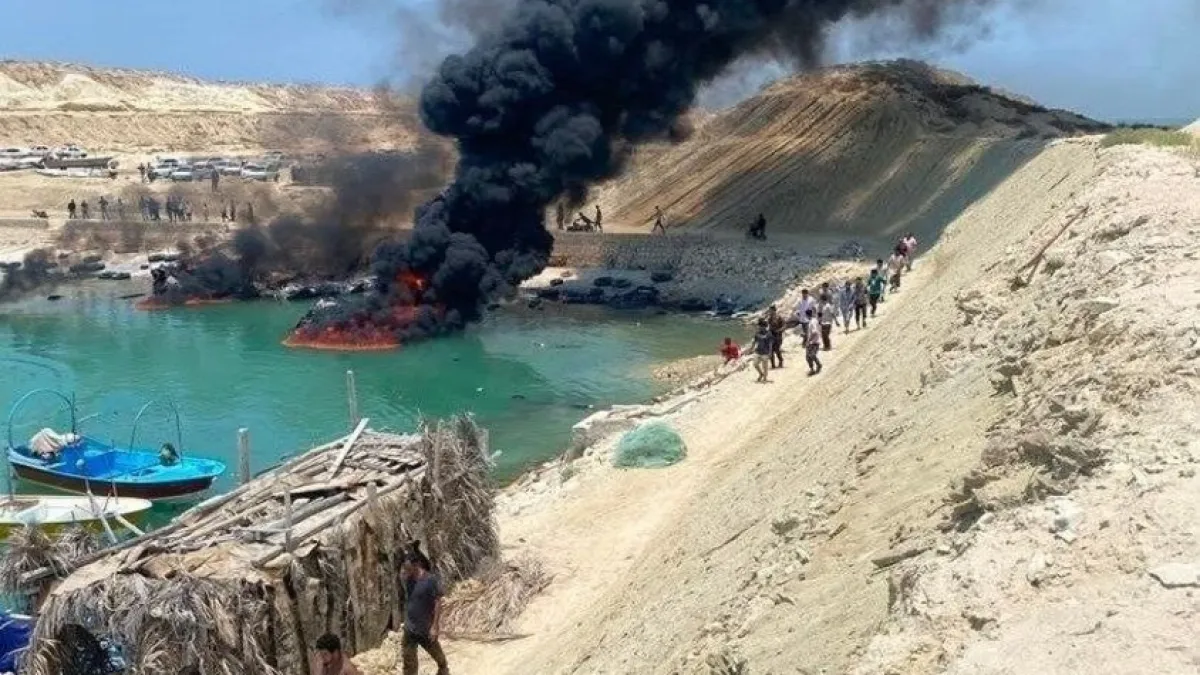
Iranian officials say US strikes across Bushehr province damaged civilian infrastructure, including areas near the Bushehr nuclear power plant, airports, logistical facilities and fishing wharfs where several fishing boats caught fire. The US says strikes were aimed at military targets.
Venezuelan interim President Delcy Rodriguez said Wednesday she had begun direct international efforts to recover frozen Venezuelan assets and use them to respond to the disaster. Photo by Ivan Cardenas/EPA
July 9 (UPI) — Venezuelan interim President Delcy Rodríguez said she will send a formal letter to King Charles III, seeking release of the country’s gold reserves at the Bank of England, asserting the assets are needed to finance recovery efforts after the deadly June 24 earthquakes.
During a videoconference Wednesday with officials overseeing 87 temporary camps established for earthquake survivors, Rodríguez said she had begun direct international efforts to recover frozen Venezuelan assets and use them to respond to the disaster.
“That gold belongs to our people and should be used to address the terrible, tragic consequences of these twin earthquakes,” Rodríguez said, according to TeleSur.
She also renewed calls for an end to sanctions against Venezuela, arguing the country has financial resources frozen abroad that could be used to fund reconstruction after the disaster, which has killed 3,800 people.
In addition to appealing directly to the British monarch, Rodríguez said she is also in talks with International Monetary Fund Managing Director Kristalina Georgieva.
She said the goal is to unlock about $3.568 billion in Special Drawing Rights held by Venezuela at the IMF.
Venezuela’s gold reserves remain in custody at the Bank of England. According to Deutsche Welle, U.K. courts previously rejected transferring control of the assets to Nicolás Maduro’s administration after determining it was not the country’s legitimate government.
Rodríguez became interim president in January after Maduro was captured by U.S. military forces.
Separately, Venezuelan Foreign Minister Iván Gil called Wednesday for the release of Venezuelan state assets frozen abroad during a virtual meeting with the United Nations Office for the Coordination of Humanitarian Affairs.
“We have accounts belonging to the Venezuelan state in different parts of the world that have been frozen as a result of illegal sanctions,” Gil said, according to NTV24.
U.N. Under-Secretary-General for Humanitarian Affairs and Emergency Relief Coordinator Tom Fletcher, who is in Venezuela, said the scale of the disaster prompted the United Nations to launch an urgent appeal for $296 million to support relief operations after the earthquakes.
According to multiple media reports, tracked international financial assistance pledged or delivered to Venezuela has exceeded $600 million through multiple donors and aid channels.
The U.S. State Department said it has committed more than $386 million in direct humanitarian assistance. The aid includes more than 400 metric tons of supplies, including hygiene kits, emergency shelter materials and food.
The assistance is being distributed through the Red Cross, UNICEF and the U.N. World Food Program rather than through Venezuela’s central government.
Despite those contributions, the financial challenge remains immense. U.N. estimates place total physical damage to homes, schools, hospitals and other infrastructure at about $37 billion, meaning the international aid received so far covers only the initial emergency response, including medical care and temporary shelter for displaced residents.
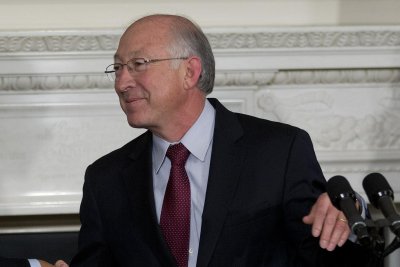
July 9 (UPI) — Mexico’s Attorney General’s Office formally accused former U.S. Ambassador Ken Salazar of violating his diplomatic duties by allegedly misleading Mexican authorities about the 2024 capture of alleged Sinaloa cartel co-founder Ismael “El Mayo” Zambada.
The accusation alleges that Salazar knowingly made false statements when he said U.S. agencies had not participated in the operation that led to Zambada’s capture and transfer in July 2024.
The complaint followed reports by Mexican media outlets Milenio and Azteca Noticias that the FBI recently displayed the aircraft used in the operation at the War Eagles Air Museum in Santa Teresa, N.M., describing it as an FBI success.
Mexican President Claudia Sheinbaum backed the Attorney General’s Office on Thursday, saying the former ambassador misled the Mexican government by insisting that U.S. agencies had no role in the operation.
Sheinbaum said Mexico’s consulate in New Mexico directly verified that the aircraft was on display at the museum.
“On Aug. 9, 2024, then-U.S. Ambassador to Mexico Ken Salazar said his government did not participate in this operation, that it was not a U.S. aircraft, nor its pilot, nor its agents or personnel in Mexico, but rather an operation between cartels,” Attorney General Ernestina Godoy said.
The Attorney General’s Office also said it had identified the pilot who flew the aircraft that transported Zambada. Although authorities did not identify the person, Mexican media reported the pilot may be Mauro Núñez, also known as “El Jando,” who is described as a trusted pilot for Los Chapitos, the faction of the Sinaloa cartel led by the sons of Joaquín “El Chapo” Guzmán.
Mexican media reported that “El Jando” is facing proceedings in federal court in Washington.
The Attorney General’s Office also pointed to what it described as a causal link based on the close timing between judicial benefits granted in the United States to Ovidio Guzmán López, one of Guzmán’s sons, and Zambada’s alleged kidnapping on Mexican territory.
Mexican authorities contended the events were not coincidental, but rather part of a coordinated strategy and an unlawful agreement between Los Chapitos and U.S. agencies, primarily the FBI.
The formal accusations further strain relations between Mexico and the United States by directly accusing a U.S. federal law enforcement agency of violating Mexico’s sovereignty and alleging that Salazar misled the Mexican government.
However, officials from the Attorney General’s Office said that while they could establish Salazar’s responsibility for withholding information, he would not face criminal consequences because he is protected by diplomatic immunity.
Salazar rejected the allegations in a statement posted on social media, reiterating the position he maintained while serving as ambassador.
“It was not our plane, not our pilot and not our operation,” Salazar wrote.
Statement by Former Secretary of the Interior Ken Salazar
President Claudia Sheinbaum has asked a question: who told the truth? Let me answer it plainly:
Attorney General Merrick Garland and I communicated to the Mexican government in our public statements and to the Mexican…— Ken Salazar (@KenSalazar) July 8, 2026
The dispute comes as excerpts from Salazar’s forthcoming memoir, The Borders: My Fight for an Inclusive United States, have begun circulating, prompting additional friction with the Mexican government.
NATO’s leaders left the Ankara summit with guns and live ammunition gifted to them by Turkiye’s President Recep Tayyip Erdogan. But not everybody could take their present home.
The fire broke out at noon local time Thursday in Janjiang,, a city in Fujian Province. By 5 p.m., it was mostly extinguished. Local fire teams sent 183 people and 35 vehicles to the scene, the Ministry of Emergency Management said in a statement.
Video on the state news showed flames coming from the top floor windows, The New York Times reported. At least a dozen people appeared to be stuck on the roof.
Xi told local authorities to do all they could to search for and rescue survivors, treat the injured, find the cause of the fire and “hold those responsible accountable,” according to China’s state broadcaster, CCTV.
In a statement, the emergency management officials said there were casualties but didn’t give details.
The factory was owned by Fujian Huiteng Shoes, which employed at least 155 people, The Times reported.
Ninety-six games in the books, just eight more matches to come. FIFA World Cup 2026 has lived up to its billing as the biggest of all time, and may yet end up in the conversation as the best tournament, too.
We’re down to the final eight nations with hopes of winning the trophy – four of them for the first time – while the other four are aiming to write a new glorious chapter in their football history.
Recommended Stories
list of 4 itemsend of list
But now the last 16 and the first rest day of the competition are out of the way, who has the best chance of being crowned champions in New York/New Jersey on July 19?
Al Jazeera ranks the contenders for the title:
Switzerland’s Johan Manzambi has been one of the breakout start of World Cup 2026 [Alex Grimm/Getty Images via AFP]
8. Switzerland
It feels like a place in the last eight for the first time in 72 years is already a win for the Swiss, and don’t expect them to make further history.
Murat Yakin’s men benefitted from a kind draw which pitted them against the cohosts Canada, Bosnia and Qatar, and they only managed to ensure top-spot in that group by withstanding late pressure from the Maple Leafs after being held to a 1-1 draw by Qatar in their opening match.
They overcame Algeria without too much alarm in the last 32 but needed penalties to eliminate an off-form Colombia in the last round, with the Swiss failing to register a shot on target after the 32nd minute of normal time.
The potential loss of speedy 20-year-old Johan Manzambi, one of the tournament’s breakout stars, to a knee injury in training will diminish their hopes against Argentina, and even if they did manage to shock the world and send Messi and co home early, the chances are they would struggle in a semifinal against either England or Norway, let alone a final against France or Spain.
Star Morocco midfielder Brahim Diaz (#10) will clash with Real Madrid teammate Kylian Mbappe of France in the quarterfinal [Ronaldo Schemidt/AFP]
7. Morocco
When Morocco flew out of the blocks in the opening 45 minutes of their Group C game with Brazil, the world thought this was a new and improved version of the Atlas Lions which had made a shock run to the last-four in Qatar, however they failed to put that game to bed, despite their dominance.
A 1-0 win over Scotland followed in their second match before twice having to come from behind to see-off Haiti in the final gropup match day.
They then played the Netherlands in the last 32, and although they recovered from falling behind in the final 20 minutes to force extra-time with a goal in stoppage-time, they needed penalties to progress from another game they might well have won.
In the last 16, the played their best match of the tournament against Canada. The North African side was clinical, scoring three second-half goals to set up a France quarterfinal meeting.
They will need all that and more to avoid a one-sided defeat against France, who knocked them out in the last-four in 2022.
While only a handful of the XI beaten four years ago are likely to feature, the loss of leading scorer Ismael Saibari will also not help their cause against a nation where six of their squad were born. Indeed teenage midfielder Ayyoub Bouaddi captained the French under-21 side in a European Championship qualifier just 101 days before he is set to face Les Bleus in Boston, but switched allegiance on the eve of the tournament.
If Morocco are able to rediscover their form and spring an almighty surprise to see-off their old foes then all bets are off. They already know what it takes to beat Spain or Belgium, they did so in Qatar, while a potential final would not only make history as the first African and Arab country to take part in the showpiece, it might provide the wave of momentum which takes them all the way to the trophy itself.
Youri Tielemans (#8) and Belgium have been one of the surprise teams of the tournament but will face a huge test against unbeaten Spain in the quarterfinal [Alex Grimm/Getty Images via AFP]
6. Belgium
Belgium would have been at the No 8 ranking a few days ago but they had a reshuffle against the US and looked far better than they did in any of the group stage games or the first 75-minutes or so against Senegal in the Round of 32.
Inspired by the attacking play of Leandro Trossard, coach Rudi Garcia might have stumbled across a formula which works, leaving Kevin De Bruyne on the sidelines for the first time in 38 Belgium games and having Jeremy Doku and Romelo Lukaku as other potential game-changers off the bench.
The Red Devils certainly began slowly and only a 5-1 thumping of New Zealand in their final group game saw them through as group winners on goals scored, after failing to beat Egypt or Iran.
They made even harder work against Senegal, who should have been out of sight long before the comeback, when Lukaku and Youri Tielemans capitalised on some slack defending to score in the final four minutes of normal time before the latter dispatched a penalty five minutes from the end of extra-time to complete the unlikely turnaround.
It feels like the end of the road, and an era, for Belgium’s ageing golden generation, and if they did somehow get past Spain, then France would surely represent an insurmountable hurdle in the last four anyway.
Norway’s star forward Erling Haaland is equal-second in the Golden Boot race heading into the quarterfinal tie against England [AFP]
5. Norway
We’re officially in uncharted territory for these dark horses. They came into the tournament never having won a knockout match at the World Cup – now they are eyeing a third straight.
Ruthlessly efficient is one way to describe Norway’s passage to the last eight. They arrived at their first World Cup in 28 years with a plan, and they have they stuck to it.
After an opening group game victory against Iraq, the pivotal match of their summer was always likely to be the second group game against Senegal. They won it 3-2. It ensured their passage to the knockout stages as runners-up and allowed Stale Solbakken to rest 10 players for the group finale against France.
Much was made of the decision not to try and match-up to Les Bleus for a potential top-spot in Group I, but despite the 4-1 defeat, it still looks like a great call.
Norway left it late before seeing-off Ivory Coast in the round of 32. Against Brazil in the last 16, they also left it late but finished strong with two goals in the final 11 minutes from Erling Haaland.
The 25-year-old has scored seven goals from just 18 shots across four games in this tournament, though the game management of midfielder Martin Odegaard, particularly against Brazil, has gone under the radar. The Arsenal player has three assists already, the same as left-sided super-sub Andreas Schjelderup, while corner taker Patrick Berg has two more.
Quarterfinal opponents England will have to figure out a way to deal with crosses into the middle better than they have done in their previous games and their management of Odegaard, and their own fitness levels, could be key to determining which European nation goes through to the semifinals to face, in all likelihood, Argentina.
However for all their attacking efficiency, Norway have kept one clean sheet in their past dozen matches and, were it not for the heroics of keeper Orjan Nyland, they might already be on their way home.
Harry Kane and Jude Bellingham will fancy their chances against defenders Kristoffer Ajer and Torbjorn Heggem and we could be in for another ding-dong battle with goals galore in sapping conditions, rather than any cagey defensive battles.
Lionel Messi and Argentina needed to rally to defeat Egypt in the round of 16 [Paul Childs/Reuters]
4. Argentina
Algeria, Austria, Jordan, Cape Verde, Egypt, Switzerland. It’s not a bad run for a defending champion, is it?
However it has been far from plain sailing for the Albiceleste, who have had to lean heavily on the 39-year-old legs and ageless football brain of Lionel Messi just to make it to the quarterfinals.
Messi leads the Golden Boot race with eight goals – though it should be double figures already with two penalty misses to his name.
Staring at the end of his World Cup career and trailing Egypt 2-0 with 11 minutes remaining, Messi put the nation on his back and registered his first assist of the tournament as Cristian Romero halved the deficit before thumping the equaliser himself four minutes later before the turnaround was completed in controversial fashion in stoppage-time.
The outpouring of emotion from Messi at fulltime showed just how close the two-time winners came to being eliminated, and expect them to try and learn their lesson against Switzerland, who possess less of the counterattacking threat than either of the African teams, especially if Johan Manzambi is ruled-out by the knee injury sustained in training.
Expect a potential semifinal with England to be a massive occasion – it’s a rivalry which runs deep, on and off the pitch. While this Argentina side boast extraordinary experience and clearly demonstrated their hunger, their starting XI against Egypt was the second oldest they have ever fielded in a World Cup, and they continue to look suspect at the back, something that Harry Kane, or even potentially Haaland – should Norway get through – would be sure to test.
If it is to be a rematch against France in the final – as many predicted before and during the competition – then we can look forward to another extraordinary climax, with Les Bleus set on revenge for their penalty shootout heartache in Qatar after a pulsating 3-3 draw.
Who knows what mastery Messi is capable of summoning on any given day, but this France team is older, wiser and extra-motivated to land their third title, and it would take something extraordinary to stop them.
England will rely heavily on stars Jude Bellingham, left, and Harry Kane, to take them to the semifinal [Yuri Cortez/AFP]
3. England
The Three Lions were seeded fourth in this tournament and, as a result, a run to the semifinals should be the minimum expectation for Thomas Tuchel’s men. It also comes with the added bonus of avoiding France or Spain until the final.
England capped off an up and down World Cup in the round of 16, recording one of their most memorable wins of all-time to overcome Mexico in the cauldron of the Azteca, playing out 58 minutes with 10 men and holding on for a 3-2 victory.
Norway will be a very different proposition in the sweltering conditions of Miami, and England have the most potential injury disruption of any side, with fitness issues over the likes of key players Declan Rice, Bukayo Saka and Reece James while stars Harry Kane and Jude Bellingham know a booking in the quarterfinal would rule them out of any potential semifinal.
If they can keep Haaland quiet and prevent Odegaard from dictating the play, they will fancy their chances of reaching the last four for the fourth time.
If they do, and with Kane and Bellingham available, don’t discount them winning it to reach their first World Cup final since 1966.
Switzerland would hold little fear for the now tournament-savvy Three Lions in a potential semifinal, while an ageing Argentina side have been caused issues by the width, trickery and counter attacking threat of both Cape Verde and Egypt in the past two rounds, opening the door of opportunity for the likes of Saka, Anthony Gordon and Marcus Rashford to exploit, should England make it to the last four.
France or Spain in the final might be a different matter, however.
Les Bleus knocked England out in the quarterfinal in Qatar after an epic encounter while Spain bested them in the dramatic Euro 2024 final.
There would be the motivation of revenge, of course, but France’s front four would likely cause England’s makeshift back-line plenty of issues. The Spain game would likely be more equal, though reliant on England to win the midfield battle and for whoever plays full-back to try to keep Lamine Yamal quiet.
Mikel Oyarzabal, left, is Spain’s leading goal scorer at World Cup 2026 [Etienne Laurent/AFP]
2. Spain
It’s not how you start it’s how you finish. Spain did not begin well, having to settle for a goalless draw with Cape Verde – although hindsight makes that result look a lot more respectable.
They made light work of Saudi Arabia in the group stage and then Austria in the round of 32, although they had to grind out victories over Uruguay in their group finale and then Portugal in the last 16 courtesy of a stoppage-time winner.
Their hopes are built on their defence and they have not conceded a goal in the tournament. Spain have six straight World Cup clean sheets dating back to Qatar 2022, the longest streak in history – and they have allowed just five shots on target across their opening five matches.
At the other end, Mikel Oyarzabal has bagged four goals but he’s missed a few chances to truly cement himself in the Golden Boot race and while their defence and midfield look solid enough, the X-factor Lamine Yamal has been visible in flashes only.
The European Champions should have enough to see-off Belgium in the quarters, despite the Red Devils’ improved showing against the USA, but a semifinal against, in all likelihood, France, will be a different matter.
While teenage defender Pau Cubarsi looks at home on the biggest stage of all, he’s yet to face the kind of test that Kylian Mbappe, Michael Olise and Ousmane Dembele will pose, while either Desire Doue or Bradley Barcola would cause problems for Spain’s right-back, whether Luis de la Fuente opts for Pedro Porro or Marcos Llorente.
If they make the final, Spain will be favourites to win it, but ‘if’ remains the biggest two-letter word in all of sports.
France’s Ousmane Dembele, right, celebrates with Kylian Mbappe and other teammates after scoring his side’s third goal during the World Cup Group I soccer match between Norway and France [Martin Meissner/AP]
1. France
France are the class of the field with a fearsome foursome in attack and a defence which, although it hasn’t really been tested yet, has only allowed two goals in five matches.
The most uncomfortable France have looked in any game was the opening half of their opening game against Senegal, when Mbappe looked off the pace and Senegal were guilty of missing good chances.
In every match since, it has been largely plain sailing: seeing off Iraq and Norway’s B-team to top the group, then sweeping Sweden aside and keeping their composure to see-off Paraguay in a feisty round of 16 encounter.
Morocco will be a big step-up, but with Mbappe eyeing both the Golden Boot and all-time World Cup scoring record, and Olise, Dembele, Doue and Barcola all providing a threat across the pitch, they will fancy their chances of extending their unbeaten record against the Atlas Lions to seven matches and will hope Olise avoids another caution which would rule him out of the semifinal after a booking against Paraguay.
Spain, and in particular their defence, would pose a different challenge, but one which Didier Deschamps’ men would back themselves to overcome, while a potential grudge match against Argentina or England in the final would provide the greatest stage of all for some of the greatest players of all to shine.
Don’t be surprised if the all-time World Cup scoring record is broken in the showpiece, a fitting finale to a summer for the ages.
Sirens blared in several cities in Jordan as Iranian missiles were intercepted. Jordanian Armed Forces confirmed at least eight missiles were intercepted.
The US military says it has struck 90 targets across Iran, hitting ports and infrastructure along the Strait of Hormuz. Iran says at least 14 people have been killed in two nights of attacks, and that it has responded with drone strikes on US-linked sites in the Gulf region.
A UN Fact-Finding Mission found that the paramilitary’s systematic campaign of violence in Darfur amounted to genocide.
By Al Jazeera Staff and Reuters
Published On 9 Jul 20269 Jul 2026
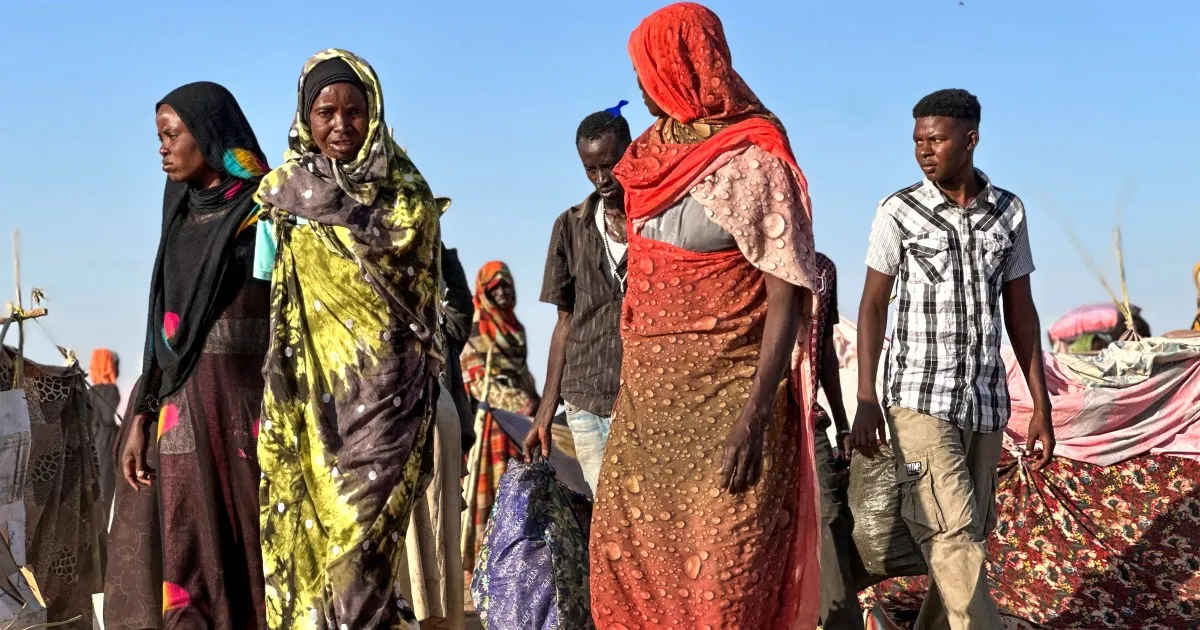
Sudan’s paramilitary Rapid Support Forces (RSF) committed genocide in the western city of el-Fasher, carrying out mass killings, gang rapes and deliberate starvation as part of an intentional policy, a United Nations investigation has found.
The UN Fact-Finding Mission for Sudan released its findings on Wednesday, concluding that the RSF’s systematic campaign of violence against civilians during and after its siege of the capital of North Darfur state amounted to genocide, building on a February report that had already identified hallmarks of the crime.
Recommended Stories
list of 4 itemsend of list
The mission’s chairman warned that the findings have urgent lessons for el-Obeid, another major city now ringed by RSF forces, where the UN human rights chief has warned a “catastrophe” is unfolding.
In Wednesday’s report, survivors in el-Fasher described being raped in rooms where bodies of recently killed civilians, including their own family members, were still lying on the ground.
The report found that the RSF and its allies committed the war crime of starvation by imposing a prolonged siege on the city, impeding relief supplies and shelling food production systems.
The RSF has denied such abuses in more than three years of war with the Sudanese military, saying the accounts have been manufactured by its enemies and making counteraccusations against them.
UN High Commissioner for Human Rights Volker Turk warned last week that a “catastrophe” was unfolding around el-Obeid, the capital of North Kordofan state in south-central Sudan, and his office had documented patterns of summary executions, abductions, torture and sexual violence in the surrounding region.
For much of Sudan’s civil war, international attention has centred on Khartoum and the Darfur region.
In recent weeks, however, attention has increasingly shifted to el-Obeid as fighting has intensified across the Kordofan region in central Sudan.
Members of the UN Human Rights Council on Monday condemned the violence and set up an urgent inquiry into reported abuses there.
The United Kingdom and other states have warned of a risk of large-scale atrocities as the RSF have massed forces around el-Obeid, now home to about half a million people, including more than 83,000 internally displaced people.
The fact-finding mission had already concluded in its February report that mass killings of non-Arab communities when the RSF captured el-Fasher bore hallmarks of genocide.
Its new report said it found additional evidence that the widespread and systematic pattern of conduct of the RSF, including large-scale killings, mass rapes and deliberate starvation, was part of an intended policy.
“The patterns we documented in el-Fasher – including encirclement, attacks on civilian infrastructure, restrictions on humanitarian access and widespread abuses against civilians – serve as a stark warning,” said Mohamed Chande Othman, the mission’s chairman.
“The international community must heed these lessons and act to prevent further catastrophe,” he added.