Meta has rolled back its ‘Muse Image’ AI feature after widespread backlash over privacy and consent. The tool allowed users to generate AI images of people by simply ‘@ mentioning’ public Instagram accounts. The negative reaction was swift and global – forcing Meta to say it ‘missed the mark’.
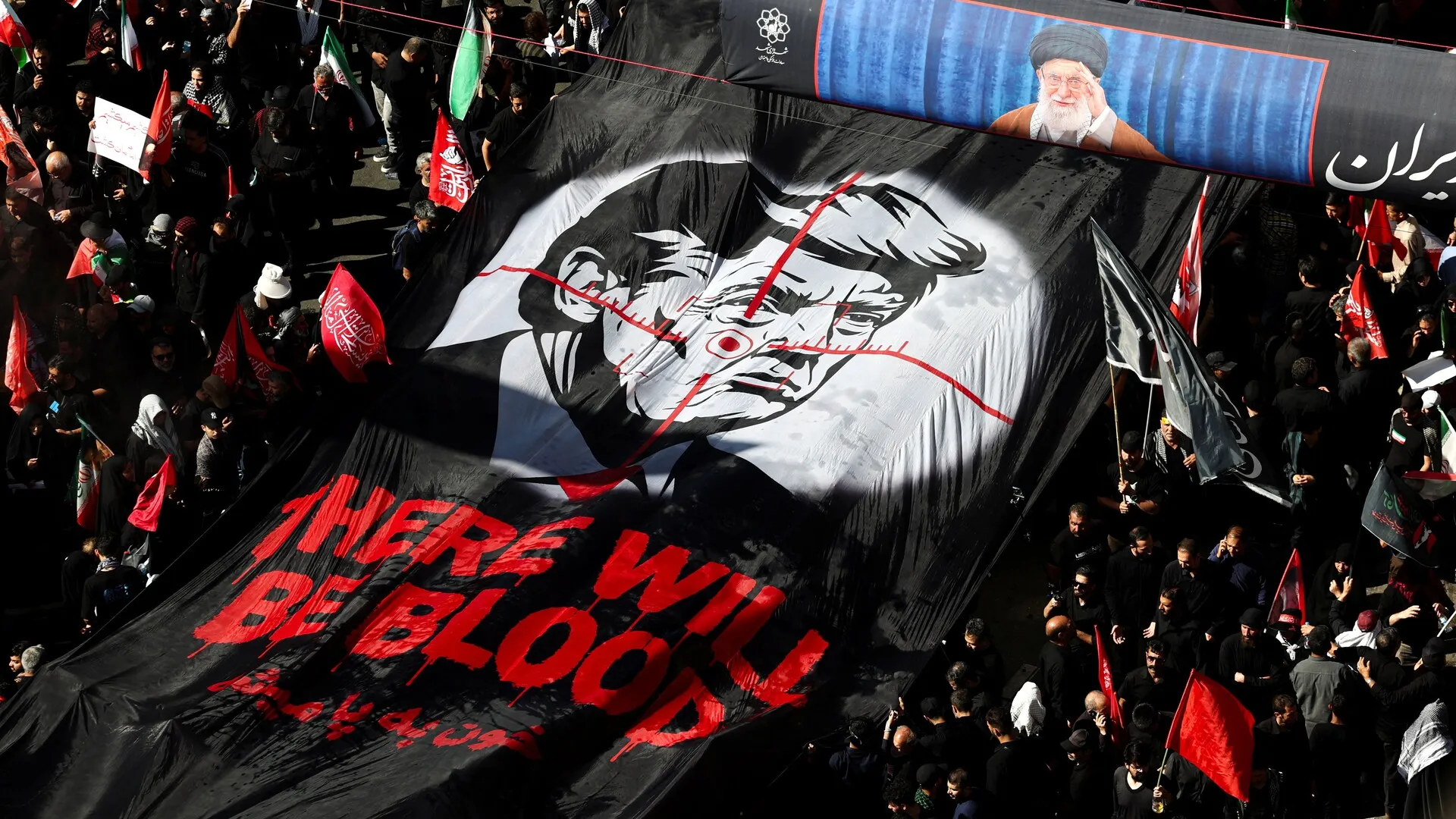
Iranian leaders say they’ll never surrender and US President Donald Trump says the ceasefire between the two sides is ‘over’. Iran and the US are locked in the most serious escalation in almost a month. So is the war back on? Soraya Lennie breaks it down.
England captain Harry Kane has labelled Erling Haaland “a machine” but said he and Norway’s “beast” of a number nine are completely different players as they prepare to face off in the World Cup quarterfinal.
“I think we’re completely different players. I know we’re both strikers, but we’re in almost two different positions,” Kane told his pre-match news conference on Friday.
Haaland has struck seven times in his first four matches ever at a major tournament, including a devastating double to eliminate Brazil, and his goals have carried Norway into the last eight for the first time.
Kane is only one goal behind the Manchester City striker for the tournament and has taken his overall World Cup record to 14 goals.
“Erling is incredible. His goalscoring record, physically, he’s a machine, he’s a beast. His finishing is at the highest level, and his goalscoring record speaks for itself.
“I see myself as a different player, although I score the same goals. I like to maybe touch the ball a little bit more, be involved with the play a little bit more, but also can play as maybe the out-and-out number nine.
“I don’t think it’s one to compare ourselves. I respect him a lot as a player and as a professional. Obviously, I’m hoping he has a quiet day tomorrow, but I think his overall performance is very good. He’s a fantastic player.”
Kane and Haaland will face off in Miami on Saturday [AFP]
‘Amazing World Cup for strikers’
Despite their phenomenal goalscoring record, Haaland and Kane trail Lionel Messi and Kylian Mbappe, who have both netted eight times in the 2026 tournament, in the battle for the Golden Boot.
Kane won the prize for the World Cup’s top goalscorer in 2018, but England fell short of glory as they exited in the semifinals to Croatia.
Ending a 60-year wait for England to win a major tournament remains Kane’s primary aim, but he is hoping to score the goals to carry the Three Lions to glory.
“I think it’s been an amazing World Cup on that front in terms of all the top strikers, all the top goalscorers scoring goals and affecting games. It’s not always the case at these major tournaments,” added the Bayern Munich striker.
“It’s a great competition. It puts me in a mindset to be at my very best level as much as possible.
“My main goal is to win the World Cup more than another Golden Boot, but I also know I’m a goalscorer, I’m the number nine, so if I’m scoring goals, it’s obviously going to help the team.”
Kane issued a rallying cry for a huge final effort to get over the line in what could be three games in eight days to make history.
“Ultimately, until we win that trophy, there’s always going to be that talk around England and the team, but we’re in a good position. We’re in a place that we wanted to be six weeks ago when we met up for prep camp,” he added.
“Now we’re in the final eight days of the final push. We’re going to need everyone to be at the highest level to achieve our dreams.”
Vikings ready for one more historic game
Meanwhile, Norway coach Stale Solbakken said the showdown between Haaland and Kane will go a long way in deciding the match.
“I think it’s Norway versus England, but I don’t think it is a secret that Kane is the match winner number one for England and Haaland is the match winner number one for us,” Solbakken said at his pre-match news conference in Miami.
Norway are in their first major tournament of any kind for 26 years and have exceeded expectations, most notably in their stunning 2-1 win against Brazil thanks to Haaland’s late double in the last 16.
“Every game has been the most important [in history] for Norwegian football, especially in the knockout rounds, so this is the third time it is the most important game,” added Solbakken.
“I think England has more pressure than us, but we also put pressure on our performance. When the game has started, I don’t think the players think so much about the pressure when it’s 11 versus 11.”
Norway’s progress has caught the imagination at home and across the Atlantic in the United States.
Their fans’ Viking row celebration has become one of the iconic images of the tournament, while Haaland’s status as a global star has soared thanks to his goalscoring prowess on the pitch and jovial personality off it.
“I think the whole of Norway is looking forward to tomorrow. We’ve had some great nights in this World Cup before, and it brings the country together,” said Solbakken.
“Maybe this will never come back to Norway because I think we will qualify more. Every time 1783744646 we have a possibility to go through to a European Championship or a World Cup. But now it’s 26 years since we had it last time.”
July 10 (UPI) — Canada and the state of Michigan on Friday announced that a long-planned new bridge linking Ontario and Detroit will open at the end of July, 14 years after construction started.
The $4.4 billion Gordie Howe International Bridge between the two cities is set to open on July 27 and is set to offer improved transit on what leaders from Canada and Michigan called one of the busiest transportation corridors in North America.
The mile-and-a-half-long bridge includes new ports of entry on either side, with Canada and the United States establishing a 15-year economic development fund that has been tied to profits from crossing tolls.
President Donald Trumpearlier this year threatened to prevent the bridge from opening over disagreements with previously existing trade agreements, his administration’s tariff regime and objections to Canada making trade deals with China.
“The Gordie Howe International Bridge has always been a great deal for our state,” Michigan Gov. Gretchen Whitmer said in a statement.
“Thousands of Michigan workers built this critical bridge, which will speed up auto production, lower costs, ease traffic, strengthen agriculture and give people on both sides of the border better-paying jobs and brighter futures,” she said. “This bridge is a testament to the enduring partnership between Michigan and Canada.”
The bridge project originated with the state’s then-Republican Gov. Rick Snyder agreeing to the six-line bridge because it would alleviate congestion accommodate future travel and create new transportation capabilities between U.S. and Canadian manufacturing regions.
Canada’s minister for housing and infrastructure, Gregor Robinson, hailed the completion and impending opening of the bridge as “strengthening one of the world’s most important trade corridors.”
“This nation-building project is a testament to what Canada can accomplish when we come together with a shared vision,” Robinson said in a statement.
“The Gordie Howe International Bridge will create new opportunities, strengthen our economy and bring economic benefits on both sides of the boarder for generations,” he said.
Visitors tour the newly remodeled undercroft beneath the Lincoln Memorial in Washington, D.C., on July 10, 2026. Photo by Bonnie Cash/UPI | License Photo
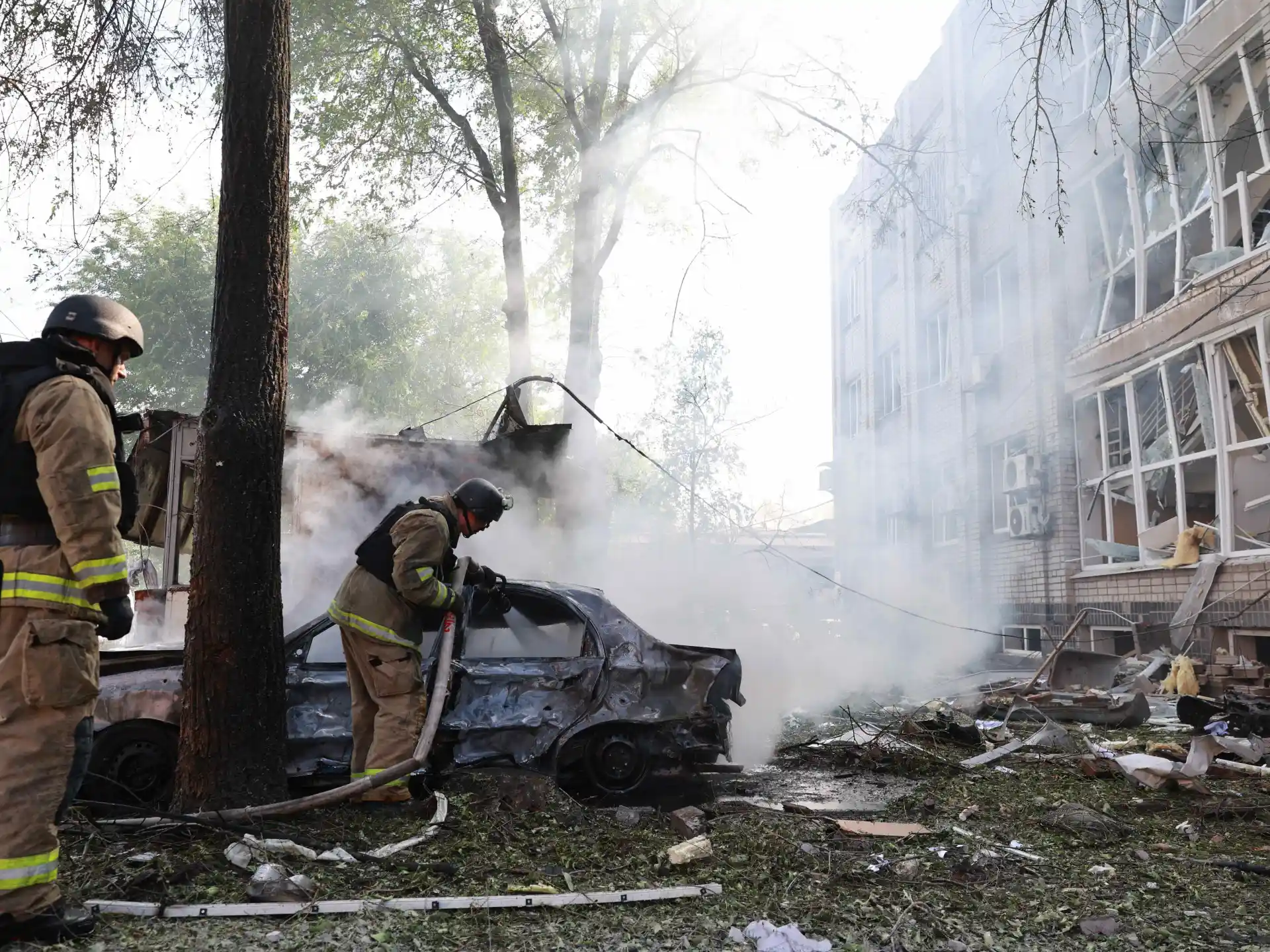
Emergency crews are searching for survivors after a Russian air strike on the Ukrainian city of Zaporizhzhia killed at least one person and injured 29, including two children. The city’s mayor says Russian troops have advanced to just over 20 kilometres away.
July 10 (UPI) — Apple on Friday filed a lawsuit against OpenAI and former Apple employees that work their for stealing confidential product information for the artificial intelligence company’s use.
The lawsuit specifically names two former Apple employees who allegedly handed over information to OpenAI when they joined the company that related to products they worked on at their former employer, The Hill reported.
In its filing, Apple said that OpenAI has been telling employees it hires away from the company to bring design information, prototypes and other information on how it makes its products.
There are, reportedly, more than 400 former Apple employees working for OpenAI, in addition to the company’s partnership with former Apple design chief Jony Ive’s io and his effort to lead the AI company’s hardware development.
“At Apple, our teams are constantly developing breakthrough technologies to create the best products and services in the world, and protecting their work and intellectual property is something we take very seriously,” an Apple spokesperson told 9to5Mac.
“Recently, significant evidence has emerged suggesting individuals employed by OpenAI wrongfully took Apple’s secret and confidential information regarding our unreleased technologies, process and products,” the spokesperson said.
Apple alleged its former vice president of product design, Tang Tan, has told Apple employees that he is interviewing for roles at OpenAI that they should bring things from Apple headquarters for “show and tell” sessions.
OpenAI denied the allegations in a statement, saying that the company remains “focused on building innovative technology that empowers people” and has “no interest in other companies’ trade secrets.”
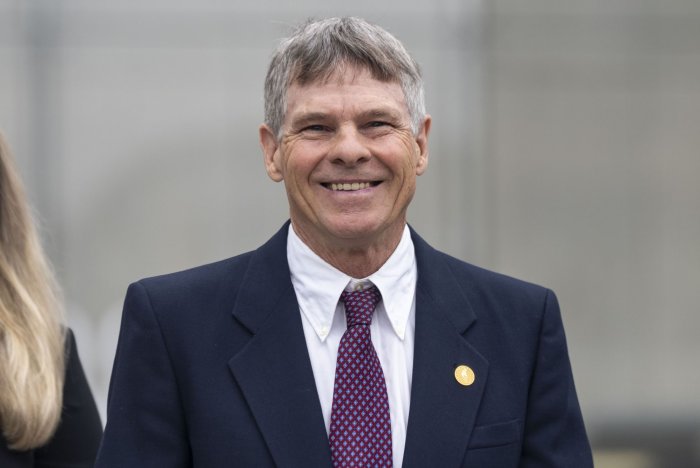
Olympic canoeist David Hearn departs the Moultrie Courthouse after pleading not guilty to damaging the Lincoln Memorial Reflecting Pool on Thursday. Hearn was indicted on July 2 on one count of destruction of property of more than $1,000 for allegedly damaging the Reflecting Pool, carrying a maximum penalty of 10 years in prison if convicted. Photo by Bonnie Cash/UPI | License Photo
July 10 (UPI) — The Trump administration on Friday rescinded a key provision of the Endangered Species Act that protected habitat crucial to imperiled wildlife.
For 50 years, the ESA definition of “harm” included not only specific species, but also their habitat from modification or degradation.
But on Friday, the administration said it was reversing the rule to focus on “actions that directly injure or kill listed wildlife.”
“For years, federal agencies abused the ESA to obstruct lawful land use and burden American families and businesses,” Interior Secretary Doug Burgum said in a statement.
“That approach turned routine activity into a regulatory trap, drove up costs that impacted people’s lives, and expanded federal authority beyond what Congress intended,” Burgum said. “This action restores common sense, respects private property, provides much-needed certainty for landowners and follows the statute Congress actually passed.”
Enacted in 1973, the ESA has played a vital role in maintaining biodiversity.
Conservation experts say the act was key in saving many species from extinction, including the whooping crane, bald eagle and gray wolf.
Environmental advocates have vowed to sue over the rule change.
“For the first time ever, a presidential administration now claims that species protected by the Endangered Species Act shouldn’t be safe from habitat modification that destroys where they live, raise their young, or search for food,” Earthjustice attorney Kristen Boyles said in a statement.
“Let’s be clear: there is no support for the Trump administration’s rule — no scientific support, no legal support, no public support,” Boyles added. “We will see the Trump administration in court.”
Tou Lue Vang being deported from the United States by Immigration and Customs Enforcement after Secretary of State Marco Rubio canceled the convicted child rapist’s legal status to remain in the country. Photo by Department of Homeland Security
July 10 (UPI) — Immigration and Customs Enforcement on Friday deported a man who was convicted of repeatedly sexually assaulting a child and ordered removed from the country in 2006.
Tou Lue Vang, who legally entered the United States in 1994, was convicted in 2006 of first-degree criminal sexual conduct for repeatedly sexually assaulting a 10-year-old girl over the course of two years.
Vang was ordered to be deported to Laos in October 2006 but because of that country’s limits on how many deportees it accepts he, like many ethnic Laotians and Hmong, was permitted to stay, The New York Times reported.
Having been in the country legally ever since, Vang applied for a pardon during the Trump administration’s immigration crackdown last year to prevent himself from being deported — which was granted in June.
“ICE deported Tou Vang, an illegal alien convicted child rapist,” Lauren Bis, acting assistant secretary of homeland security, said in a press release.
“This monster repeatedly sexually assaulted a 10-year-old girl,” Bis said.
Vang was convicted repeatedly sexually assaulting the girl between 2002 and 2004, and justified his actions as being “a cultural thing … to marry and have sex with girls as young as 12,” and also suggested that the girl was just as guilty as he was of a crime, ICE said last week.
The Times reported that Vang has not been charged with serious crimes since his conviction and supervised release while awaiting his 2006 deportation.
ICE arrested Vang in December 2025, with plans to deport him, based on his prior conviction, but a Minnesota judge ordered that he be released from custody in February 2026.
Vang’s pardon request, which the Minnesota Clemency Review Commission granted on June 10, could prevent him from being deported, the federal government and legal experts have said.
The State Department said Friday that it had terminated Vang’s legal status in the United States and deported him immediately.
“Americans should never have to live in fear that foreign sex predators — shielded from deportation by their own elected officials — could endanger them or their children,” Secretary of State Marco Rubio said in a statement.
“That’s why I terminated his legal status in the United States,” Rubio said. “Vang has now been removed from our country and will never pose a threat to any American ever again.”
Olympic canoeist David Hearn departs the Moultrie Courthouse after pleading not guilty to damaging the Lincoln Memorial Reflecting Pool on Thursday. Hearn was indicted on July 2 on one count of destruction of property of more than $1,000 for allegedly damaging the Reflecting Pool, carrying a maximum penalty of 10 years in prison if convicted. Photo by Bonnie Cash/UPI | License Photo
The Centers for Disease Control and Prevention on Friday said that it has confirmed well over 800 infections by the food-borne parasite cyclospora in 31 states and is aware of at least 1,500 more potential cases. File Photo by Erik S. Lesser/EPA-EFE
July 10 (UPI) — The Centers for Disease Control and Prevention on Friday reported that well over 800 cases of a food-borne parasite have been confirmed by 31 states.
CDC officials were working with state and local health agencies to investigate clusters of cyclosporiasis cases in multiple states, some of which the Food and Drug Administration is working to trace and others that have not yet been linked to a common source, the agency said in an update.
Cyclosporiasis is a gastrointestinal disease caused by the parasite cyclospora, which can cause watery diarrhea, loss of appetite and weight loss, and in some cases require hospitalization, according to the CDC.
The parasite can be acquired when people eat or drink contaminated food or water and, although it can be spread year-round, it is considered to be a larger problem during the spring and summer months.
The current series of outbreaks has been tracked since at least mid-June, although the FDA lists its first investigation of cyclospora as staring June 3. With no product linked to the parasite or any other outbreak, the FDA is attempting to trace back to a source.
“Multiple jurisdictions have reported an increase of cases in the last two weeks compared to the same period in 2025,” the CDC said in the update.
“We assume a 6-week reporting lag between illness onset and case reporting to CDC,” the agency said. “Therefore, we anticipate that case counts will continue to rise as data are received.”
The CDC reported that as of July 9, it has confirmed 843 cases of the nationally notifiable disease in 31 states, with 86 hospitalizations, but officials said the agency is aware of at least 1,500 more cases that have not yet been confirmed as domestically acquired in the United States.
Among the states reporting cases and investigations, Michigan on July 4 reported that its confirmed cases increased to 572, a large increase from 170 on June 30.
Cyclospora infects the small intestine after contaminated food or drink is consumed, and symptoms of infection can be seen anywhere from two days to two weeks after exposure.
Overall, the infection is generally not life-threatening, but because of dehydration linked to frequent and sometimes explosive diarrhea — especially in younger or older people, and those with weakened immune systems — it may require hospitalization.
Outbreaks in the United States have previously been linked to bagged salad mixes and kits, fresh cilantro and basil, raspberries, snow peas, and green onions, health officials said.
Typhoon Bavi was moving off the Philippines on Friday after pouring rain caused landslides linked to at least 15 deaths, and now has its sights set on Japan, Taiwan and China. Photo courtesy Joint Typhoon Warning Center/Naval Meteorology and Oceanography Command/U.S. Navy
July 10 (UPI) — Typhoon Bavi weakened as it moved off the Philippines on Friday but was expected to bring heavy rain to Taiwan and parts of Japan before it makes landfall in China.
Bavi, which was called Inday in the Philippines, killed at least 15 people after heavy rains caused flash floods and landslides in several villages and cities, and affected tens of thousands of people there, The BBC and The Philippine Star reported.
The typhoon on Friday brought storm surge and rain to Okinawa, Japan, and was expected Saturday to pound the north and east sides of Taiwan, potentially bringing nearly 40 inches of rain in some areas.
Once past Taiwan, the storm could make two landfalls in China, part of which is still recovering after Typhoon Maysak earlier this week.
Maysak’s havoc is linked to at least 39 deaths, though searches were underway for people reported missing.
Hundreds of flights in Japan, including Okinawa and the Sakishima Islands, were canceled on Friday and Saturday as residents braced for Bavi’s pounding rain.
Forecasters in China warned of two potential landfalls as it moves toward the north, noting that Bavi’s size — at it’s widest point, the typhoon is as wide as France — means that both its remnants and outer rain bands are likely to affect a huge swath of people and property.
The dismissals leave the federal election body vacant as Trump presses for broader changes to US voting rules.
Published On 10 Jul 202610 Jul 2026
President Donald Trump has removed the last remaining members of an independent federal commission that helps support United States elections, leaving the bipartisan body with no sitting commissioners.
The White House confirmed the news on Friday, with only months to spare before November’s midterm elections.
Recommended Stories
list of 3 itemsend of list
“The President, and head of the Executive Branch, reserves the right to remove individuals that may not be totally aligned with the important task of securing America’s elections,” the White House said in a statement.
It added that the administration had been “working across all agencies and local partners to safeguard elections from fraud and abuse” in the run-up to the midterms.
The decision concerns the Election Assistance Commission (ECA), an independence office created by Congress in 2002 to support state and local election officials. Among its duties are creating non-binding election guidelines, certifying voting systems and maintaining the national mail voter registration form.
Four commissioners typically helm the agency. But on Thursday, the two Democratic appointees — Thomas Hicks and Benjamin Hovland — were fired by email, according to the news agency Reuters.
The lone remaining Republican, Christy McCormick, resigned. A fourth commissioner, Republican appointee Donald Palmer, had already left in April.
The commission is required by law to be made up evenly of Democrats and Republicans, and it was put in place to help after the disputed 2000 presidential election.
Trump’s decision to fire the remaining commissioners has further raised concerns that he may seek to intervene in the upcoming midterm elections, which will decide control of Congress for the rest of his term.
Under the US Constitution, election administration is the responsibility of the state, not the federal government.
The Election Assistance Commission had previously declined to implement part of Trump’s March 2025 executive order that called upon it to require proof of citizenship on the national mail voter registration form.
A federal judge later blocked that part of that executive order, ruling the president had exceeded his authority. Trump has appealed the ruling.
Voters are already required to affirm their citizenship before voting, as non-citizen voting is illegal in the US. Instances of non-citizen voting are rare.
The firings are the latest in a broader effort by the president to reshape how elections are conducted.
The Trump administration has pushed to tighten vote-by-mail rules and threatened to withhold some federal funding from states that refuse to adopt new election requirements. Many of those efforts have been challenged in court.
Earlier this week, the administration also sent out letters warning election officials that they could face prosecution if they fail to remove noncitizens from voter rolls.
Trump has defended the actions as necessary to protect election integrity. He has repeatedly claimed that his loss to Democrat Joe Biden in the 2020 election was the result of fraud, a claim not backed by evidence.
The latest firings come after the US Supreme Court last month expanded the president’s power to fire members of independent agencies, even without cause.
The court ruled six to three in Trump’s favour, arguing that “neither Congress nor the courts may saddle” the president with executive-branch leaders he does not approve of.
The president is allowed by law to appoint replacements to the commission. It is not yet clear whether Trump plans to nominate replacements or leave the seats vacant.
July 10 (UPI) — Brazilian labor authorities rescued a 62-year-old woman from conditions they described as analogous to slavery after she spent more than five decades working as an unpaid domestic worker for the same family in the northeastern state of Ceará.
The rescue was carried out by Brazil’s Labor Inspection Office, part of the Ministry of Labor and Employment, after an anonymous complaint came through the government’s hotline for reporting labor abuses.
Labor officials told local media the woman, whose identity was not disclosed, performed household duties and cared for the family’s children. Her daily routine began around 4:30 a.m. as she prepared breakfast and got the children ready for school. She worked for 55 years without receiving a salary.
According to O Globo, the Labor Inspection Office found that the woman began working for the family at age 7 and remained employed continuously across three generations.
Throughout that period, she received no regular wages, had no financial independence and was denied the educational and economic opportunities available to members of the employing family.
Labor inspectors estimated the labor rights owed to the woman exceed 1.5 million Brazilian reais, or about $290,000. The calculation includes unpaid wages, vacation pay, annual bonuses, contributions to Brazil’s severance indemnity fund, overtime and other employment benefits, according to O Dia.
The employers signed a conduct adjustment agreement with the Labor Prosecutor’s Office in an effort to partially compensate the victim. Under the agreement, they committed to paying 50,000 reais, or about $10,000, in severance benefits, purchasing a home worth at least 150,000 reais, or about $29,000, for the worker and covering her social security contributions until retirement., according to Folha de S.Paulo.
The agreement does not fully settle the woman’s labor claims, and she may still seek additional compensation through the courts.
Under a joint decision by oversight agencies and a Brazilian human rights assistance center, the woman will temporarily remain at the family’s home but will no longer perform any work.
Authorities said an immediate separation could cause severe emotional distress because of her long-standing dependency and the abrupt loss of her only source of companionship after more than five decades.
The arrangement is temporary while social workers help her through a gradual process of gaining independence, learning to read and write, rebuilding ties with her biological family and preparing for an autonomous life.
The employers’ legal team challenged the findings authorities issued.
In a statement, the family’s attorneys said there had been no “rescue” and denied any criminal wrongdoing. They argued the decades-long relationship with the woman was based on shared living arrangements, care and mutual affection.
Although forced labor in Brazil has historically been concentrated in rural areas, cases of domestic servitude in urban households highlight what labor authorities describe as a serious structural problem. Labor inspectors reported a 400% increase in inspections involving domestic work in 2025.
The Labor Prosecutor’s Office has found that such cases predominantly involve Black women with limited education who are subjected from childhood to conditions of servitude disguised as “family affection.”
A man was reportedly nearly sucked through an airplane window Friday morning. Four people were injured. File Photo by Stringer/EPA
July 10 (UPI) — A man was nearly sucked out the window of a plane on a Ryanair flight from Greece to Germany on Friday, passengers said.
Not long after takeoff from Thessaloniki, in northern Greece, on Flight FR1879 operated by subsidiary Malta Air, a piece of an engine came off and hit a passenger window, shattering it. A 61-year-old Serbian man was lifted out of his seat and hung headfirst out of the window, and was kept from flying out by his wife, who held his legs, The Guardian reported.
Oxygen masks were deployed on the Boeing 737-800 as a precaution.
Data from FlightRadar24 shows the flight was airborne for just over an hour and reached 16,000 feet before descending back to Thessaloniki airport.
“According to reports, the passenger seated next to the affected window was pulled towards it and hit their head. Oxygen masks deployed and passengers seated in the row were relocated.
“The crew descended below 10,000 feet, burned off fuel and safely landed back in Thessaloniki around 75 minutes after departure,” the post said.
Euro News reported that authorities said there was no crack or breach in the aircraft’s fuselage, despite initial concerns about the damage.
Four passengers went to a hospital as a precaution, and one was kept for observation and tests.
Ryanair sent the rest of the passengers on to Germany with a replacement plane.
The airline sent a statement to media Friday.
“A Ryanair flight from Thessaloniki to Memmingen [Germany] on Friday morning (July 10) returned to Thessaloniki shortly after take-off when a passenger window dislodged inflight. The aircraft landed normally, and passengers returned to the terminal. One passenger requested and received medical assistance on the ground in Thessaloniki. In order to minimize any delay, a replacement aircraft was arranged to bring passengers to Memmingen which departed Thessaloniki at 9:53 local this morning,” the statement said.
The incident is the latest in a pattern of Israeli measures in the occupied territory since the Gaza genocide began.
Published On 10 Jul 202610 Jul 2026
Israel has barred the grand mufti of Jerusalem and Palestine from entering the Al-Aqsa Mosque compound for one week.
The Jerusalem Governorate said in a post on Facebook that Sheikh Muhammad Hussein was detained by Israeli forces after delivering his Friday sermon at Al-Aqsa Mosque. Later, the governorate confirmed that Hussein had been released, but was temporarily banned by Israeli authorities from entering Islam’s third-holiest site in occupied East Jerusalem for one week, with the possibility of the ban being renewed.
Recommended Stories
list of 3 itemsend of list
According to the Quds News Network, Hussein was arrested for the contents of his sermon, during which he prayed for mercy for Palestinians killed by Israel and relief for those held in Israeli prisons.
In a message to Al Jazeera, the Jerusalem Governorate said “the arrest was carried out in order to serve him [Hussein] with an order banning him from entering Al-Aqsa Mosque for one week, with the possibility of renewal. This is not the first time such a measure has been taken against him.”
Israel has not commented on Hussein’s brief arrest or banning.
The incident is the latest in a pattern of escalating Israeli measures in occupied Palestinian territory since the start of the genocide in Gaza in October 2023.
More than 1,100 Palestinians have been killed in the occupied West Bank since then, including at least 243 children, amid what rights groups say is an intensifying campaign of military raids, settler violence and expanding Israeli control.
On Friday, six Palestinians, including children, were reportedly injured during an attack by settlers in Huwara, Nablus.
Local sources said settlers set upon a Palestinian family, including an elderly man, using pepper spray and physically beating them.
The attack took place on land belonging to the family. Israeli forces were reportedly present and protected the settlers during the attack.
Israeli forces then allegedly assaulted residents and arrested three members of the family, including 80-year-old Ibrahim Ismail al-Jabour.
The incident comes amid growing international concern over violence in the occupied West Bank. Last month, Amnesty International released a report accusing the Israeli government of carrying out a campaign of ethnic cleansing in the territory. The report concluded that the campaign was state-led and not the result of rogue settlers or far-right ministers.
Ukraine appeared to have begun large-scale strikes against Russian shadow tankers attempting to supply occupied Crimea with fuel, as an energy crisis on the peninsula worsens.
At the same time, Ukraine has continued to cause fuel shortages in Russia itself, striking refineries deep inside the country, including, for the first time, the Omsk refinery in Siberia, Russia’s largest, 2,500km (1,553 miles) from the Ukrainian border.
Recommended Stories
list of 4 itemsend of list
Ukraine’s Unmanned Systems Forces commander Robert Brovdi said his forces had struck 19 Russian tankers, a cargo ship and a ferry between July 6 and 8, including nine tankers on the night of July 7.
Residents stand near an apartment building hit by a Russian drone strike in Kyiv, Ukraine, July 8, 2026 [ [Reuters]
Ukrainian Navy spokesman Dmytro Pletenchuk told newspaper Suspilne that Russia had rerouted fuel supplies to Crimea after Ukraine deprived it of overland routes.
“They had few options left. It’s either a land corridor or a sea connection,” Pletenchuk said. “As far as we know, they don’t use the Kerch Bridge for such transportation in the necessary volumes,” he said, referring to the bridge connecting Crimea to Russia.
Ukraine detonated a truck on the bridge in 2022, setting alight a fuel train that had been travelling alongside it and demonstrating the risk of using the bridge for large volumes of fuel.
Ukraine pivoted to attacking Crimea in the past few weeks after disabling the oil offloading terminal at Novorossiysk, on the opposite Russian coast, Ukrainian President Volodymyr Zelenskyy told the Financial Times.
“We were slowing down the militarisation of our peninsula occupied by Russia,” he said. “We cut off the logistics and took control of the fuel and energy complex. We showed what it means to operationally control the sky at a specific point, at a specific time.”
The Ukrainian Presidential Office in Crimea said these strikes had caused “a management crisis on the peninsula”.
In Sevastopol, fuel has stopped being sold to civilians, and more than a dozen Crimean regions are suffering from electricity blackouts.
Ukraine continued strikes on the peninsula in the past week, destroying seven Sukhoi aircraft and two sheds containing Shahed aerial drones at the Saky airfield on July 3, the Kerch oil transhipment terminal on July 6 and three hangars at the Guardsman airfield on the same day.
Ukraine also kept up pressure on Russia, launching what mayor Sergei Sobyanin said was its largest strike on Moscow in two years.
More than 400 Ukrainian drones were downed while heading for the city on July 7, which was the first day of a NATO summit in Ankara.
“When our drones weren’t flying to Moscow and St Petersburg, [Russian president Vladimir] Putin didn’t think much about it. He understood that the war was far from the Kremlin,” Zelenskyy told the Financial Times.
“When not a hundred drones, but a thousand would start flying to Moscow, and when he would feel and see this, he would be advised to move somewhere beyond the Urals. This would be a moment like a new page on the path to ending the war.
A rescuer hands a cat named Boniya, found under the rubble of an apartment building damaged by a Russian missile strike a day earlier, to Anastasia Sorokina, a friend of the cat owner in Kyiv, Ukraine, July 7, 2026 [Sergiy Karazy/Reuters]
Ukraine struck several energy targets during the week, furthering its twin goals of starving Russia of petrol and export revenue from oil.
The SBU said it struck and set alight the St Petersburg oil terminal on July 4, which it described as “one of the largest oil product transshipment terminals in the Baltic region”. Zelenskyy posted video purporting to show the terminal in flames.
On Sunday, Ukraine’s General Staff said its forces had struck the Slavneft Yanos refinery in Yaroslavl, 700km (430 miles) from Ukraine, the Ust-Luga refinery on the Baltic Sea, and the Omsk Refinery. Russia’s defence ministry said it had shot down 613 of 625 Ukrainian drones detected in the airspace overnight.
Ukraine’s Air Force said that Russia had lost 42.7 percent of its refining capacity over the past year, and suffered $13.5bn of damage to oil infrastructure.
These strikes have cumulatively caused petrol and diesel shortages in the Russian market, with consumers in urban hubs lining up to fill their cars.
During the week, Ukraine also struck the Kremny EL Group in Bryansk, which it said manufactured microchips, semiconductors and other electronics for the armed forces.
Rescuers working at a site of a Russian missile and drone strike on the previous day, during which a residential building was heavily damaged, amid Russia’s attack on Ukraine, are seen through broken glass, in Kyiv, Ukraine, July 7, 2026 [Alina Smutko/Reuters]
Zelenskyy said the air war would prove “decisive”, because in 2026 Ukraine’s ground troops had effectively stopped Russia’s slow advance of the last two years.
Independent assessments have suggested that Russia gained a total of 97 square kilometres (37 square miles) in the first six months of the year.
“The war is ongoing, but the front line is no longer moving. When the front line is almost not moving, and the enemy cannot invade by sea, the sky remains,” Zelenskyy said.
US President Donald Trump handed Zelenskyy a major victory at the NATO summit in Ankara on Wednesday, saying he would license Ukraine to produce interceptor missiles for anti-air systems.
Zelenskyy has been campaigning for a licence to build Patriot interceptors, which he believes Ukraine can do faster and more cheaply than the US or European manufacturers.
But Zelenskyy said Patriots ultimately are not the answer for European air defence, announcing his intention to develop FREYA, a Ukrainian-designed anti-ballistic system like Patriot “but with a higher production capacity and at a lower cost”.
Is Russia losing?
Zelenskyy’s commander-in-chief warned against dismissing Russia too easily.
“It’s still too early to talk about a qualitative turning point in the war,” Oleksandr Syrskii wrote on his Telegram messaging channel. “The aggressor is showing signs of exhaustion, but retains significant offensive potential,” adding that Russia “plans to extend the front line, which already exceeds 1,250 kilometres (777 miles).”
Putin relaunched the narrative that Moscow will overrun the eastern Ukrainian region of Donetsk, four-fifths of which Russia already controls.
In a televised meeting with his top generals on July 3, Putin was told that Russia has seized 3,000sq km (1,160sq miles) of Ukraine so far this year, and “liberated” 133 settlements. His commander in chief, Valery Gerasimov, also claimed to control the cities of Kupiansk in Kharkiv, and Kostiantynivka in Donetsk.
The Institute for the Study of War, which uses geolocated footage to assess advances, estimated that Russian forces have a presence in 2.4 percent of Kupiansk and 37 percent of Kostiantynivka – and most of that in the form of infiltrations, not firm control.
The Ukrainian military has estimated the number of Russian servicemen in Kostiantynivka at between 100 and 250.
Putin was told that Russian forces seized 636sq km (245sq miles) of Ukraine in June alone. The ISW estimates the real number at 30sq km (11sq miles).
Kostiantynivka is politically important to the Kremlin because it is the first of four heavily fortified cities, including Kramatorsk and Sloviansk, which Moscow must seize to take control of Donetsk – which Putin considers a puppet state and has repeatedly prioritised.
“The capture of Kostyantynovka by the troops of the South battlegroup opens a direct road for further advance to Kramatorsk and Sloviansk, other fortified areas in the Donbas, and is, of course, the key to liberating the entire territory of the Donetsk People’s Republic,” Putin said.
The Donbas includes Donetsk and Luhansk, which Putin mistakenly claimed to have taken in its entirety.
“I understand that we should no longer speak of the Slovyansk-Kramatorsk-Kostyantynovka line, but simply of the Slovyansk-Kramatorsk line,” Putin told the gathering.
July 10 (UPI) — A bipartisan housing bill that swept the House and Senate is set to become law at midnight Friday if President Donald Trump doesn’t veto it, and he said Friday morning on social media that he won’t sign it.
The 21st Century Road to Housing Act was passed on June 29 by a wide margin of Democrats and Republicans in both chambers of Congress, but the president canceled a signing ceremony at the last minute and said he wouldn’t sign it until Congress passed Trump’s pet project, the SAVE America Act, which they don’t have the support to do.
“I will not sign the Housing Bill, which has been fully approved by Congress and sent to the White House, in PROTEST over the fact that the United States Senate is not capable of passing THE SAVE AMERICA ACT, which is polling at 97% with the Republican Party, and very high with the non-politician Dumocrats,” he wrote.
He didn’t mention a veto, but it’s still a possibility.
“The Act states, quite simply, that to Vote a person must show PHOTO VOTER I.D., PROOF OF CITIZENSHIP, AND THAT THERE WILL BE NO MORE CROOKED, CORRUPT, & DESTABILIZING MAIL-IN BALLOTS (EXCEPTIONS for Military, Disabled, Illness, and Travel!). THE SAVE AMERICA ACT’S non-passage is CRAZY, and a serious threat to any politician who votes against it! If the Dumocrats, or any RINO (or worse!) working with them, do not allow a positive Vote on SAVE AMERICA, TERMINATE THE FILIBUSTER, and pass this, and every other Bill that true Republicans have ever dreamt of (In addition to the upcoming Budget BOMB and the 1929 catastrophic style DEBT CEILING BILL!). The Dumocrats will TERMINATE THE FILIBUSTER, if and when they ever get the chance to do so, in their very first hour – And I will no longer be able to call them Dumocrats again! The title of DUMB will revert to the Republicans who allowed this horrible calamity to happen to our Party, and our Nation, itself! MAKE AMERICA GREAT AGAIN!” he wrote.
If the president vetoes the bill, Congress will likely have the votes to override it. It would need a two-thirds majority to pass the override in the House and Senate.
“This is the exact kind of bill they want to point to and say Republicans are working on issues that their voters care about, and Democrats would want the same,” Julian Zelizer, a history and public affairs professor at Princeton University, told The Washington Post. “That’s not the signal that the administration is sending.”
Since the bill passed and Trump refused to sign it, he has called it “a yawn.”
“To me, compared to the SAVE America Act, everything is a big yawn,” he said.
The SAVE Act is an election bill that would require voters to prove they are citizens when registering to vote. Critics argue that it would disenfranchise too many voters because of the types of proof it would require.
The housing bill includes measures that modernize building standards, encourage renovating older homes, encourage communities to build more housing with funding and grant programs, local governments to reform restrictive zoning policies around building housing and effectively ban private equity from buying up single-family homes. Critics of the bill say it doesn’t go far enough, but they acknowledge it’s a good first step.
It’s the first bipartisan measure that’s passed this Congress.
Some Democrats have been publicly pushing the president to sign the bill.
“It’s been sitting on President Trump’s desk long enough. Sign the bill,” Sen. Amy Klobuchar, D-Minn., posted on X.
Sen. Mark Kelly, D-Ariz., said on X, “Republicans and Democrats worked together to pass a bill to build more housing and stop hedge funds from buying up single-family homes, but Trump is holding it hostage. He needs to stop playing games and sign the bill so more Americans can finally afford homes.”
Olympic canoeist David Hearn departs the Moultrie Courthouse after pleading not guilty to damaging the Lincoln Memorial Reflecting Pool on Thursday. Hearn was indicted on July 2 on one count of destruction of property of more than $1,000 for allegedly damaging the Reflecting Pool, carrying a maximum penalty of 10 years in prison if convicted. Photo by Bonnie Cash/UPI | License Photo
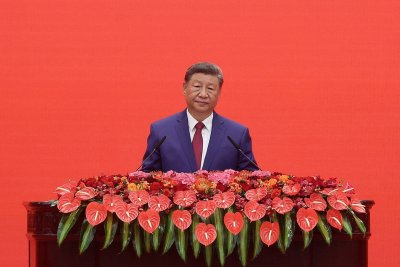
Chinese President Xi Jinping, seen here at a reception in Beijing’s Great Hall of the People in September 2025, met with North Korean Premier Pak Thae Song on Friday, Chinese media reported. File Photo by Kremlin Press Office/UPI | License Photo
Chinese President Xi Jinping met North Korea‘s premier in Beijing on Friday ahead of an event marking the 65th anniversary of the signing of a friendship treaty between the two nations, news footage aired by Chinese state broadcaster CCTV showed.
North Korean Premier Pak Thae-song arrived there earlier in the day for a three-day visit to attend the event commemorating the treaty anniversary at the invitation of China’s Communist Party, according to the report.
The Treaty of Friendship, Cooperation and Mutual Assistance was signed July 11, 1961, by late North Korea founder and former leader Kim Il-sung and then Chinese Premier Zhou Enlai.
The Korean Central News Agency (KCNA), Pyongyang’s state media, reported on Pak’s planned visit to Beijing the previous day, without specifying a detailed schedule.
North Korean leader Kim Jong-un and Chinese President Xi Jinping held summit talks in Pyongyang last month and vowed to strengthen bilateral ties through expanded exchanges across multiple sectors, from economy to culture, as well as more frequent high-level visits.
At that time, Xi stressed the importance of marking the anniversary, fueling speculation that the two countries would hold a large-scale event.
In socialist nations like North Korea and China, anniversaries that fall on five- or 10-year intervals carry particular significance and are typically celebrated with grand events. High-level official visits and exchanges of congratulatory messages had been widely expected.
South Korea’s unification ministry said at a briefing earlier in the day it will “closely monitor” related developments in Beijing.
According to the ministry, this marks the first time in seven years that a North Korean government delegation has been dispatched to Beijing in celebration of the treaty’s anniversary.
The ministry also noted that North Korea has elevated the rank of its chief delegate to premier this year from vice chairman of the Standing Committee of the Supreme People’s Assembly back in 2019.
Copyright (c) Yonhap News Agency prohibits its content from being redistributed or reprinted without consent, and forbids the content from being learned and used by artificial intelligence systems.
A fire-fighting helicopter battles a deadly wildfire early Friday near Los Gallardos in Spain’s southern Almeria region. Photo by Carlos Barba/EPA
July 10 (UPI) — A huge wildfire raging in southern Spain killed at least 11 people with another 19 unaccounted for, authorities said Friday as more than 700 firefighters and troops, nearly 200 firetrucks and 16 aircraft battled the flames.
The Andalusian government said in a post on X that all indications pointed to the main blaze, which had already burned through more than 3,000 acres near Los Gallardos in Almeria province, being sparked by a fallen power pole before spreading to woods nearby.
Warning casualty numbers could increase substantially, Andalusian President Juanma Moreno said eight people were injured, four of them seriously.
“I’m on my way to Almeria. The consequences of Los Gallardos are devastating. Right now, all efforts are focused on controlling the fire and preventing further loss of human life,” he said in an update online.
The fatalities occurred in and around Bedar village, just northwest of Los Gallardos, with Andalusia’s health minister saying he believed four of those killed whose bodies were found in a car were likely Britons.
Health and Emergencies Minister Antonio Sanz said he had reason to believe they were British because the vehicle was right-hand drive whereas European cars are all left-hand drive — with the exception of Ireland, Cyprus and Malta.
The Spanish armed forces’ Military Emergencies Unit said in a post on X that it had 220 soldiers and 70 fire vehicles on the scene “attacking the frontline of the wildfire head-on to contain its advance.”
The provincial government said around 600 area residents remained evacuated.
More than 200 miles away in western Malaga Province, 1,000 people were evacuated from two residential complexes in the mountain village of Benahavis as a precautionary measure due to an “urban wildfire” that broke out on Thursday afternoon, the government said in a statement.
Authorities said more than 230 firefighters and other emergency personnel and 10 firetrucks were continuing to work to bring the fire under control and that the region’s Wildfire Prevention and Suppression Plan had been activated.
Residents forced to leave their homes were accommodated in a sports center, by the Red Cross and with family and friends or in local hotels.
Weeks of unseasonably hot weather across western and southern Europe, including three heatwaves with temperatures topping 40 degrees Celsius, has triggered a series of wildfires that have burnt at least 49,000 acres across Spain, Portugal, Greece and France.
Astronaut Buzz Aldrin walks on the surface of the Moon during the Apollo 11 mission on July 20, 1969. Photo by NASA/UPI | License Photo
This photo, taken Friday, shows the trading room of Hana Bank in Seoul as South Korean stocks closed higher on a semiconductor rally. Photo by Yonhap
South Korean stocks closed higher Friday, extending their winning streak to a second consecutive session, as semiconductor shares rallied following overnight gains on Wall Street. The local currency gained ground against the U.S. dollar.
After choppy trading, the benchmark Korea Composite Stock Price Index (KOSPI) added 184.03 points, or 2.52 percent, to close at 7,475.94.
Trade volume was moderate at 449.53 million shares worth 31.16 trillion won (US$20.73 billion), with gainers far outnumbering losers 799 to 92.
Institutions purchased a net 1.13 trillion won worth of shares, while individuals and foreigners sold a net 772.82 billion won and 322.56 billion won, respectively. Foreign investors turned net sellers after two consecutive sessions of net buying.
After opening more than 3 percent higher, the KOSPI climbed as much as 5.7 percent during the session, triggering a buy-side sidecar that temporarily halted program trading in KOSPI-listed shares for five minutes. It marked the third activation of the trading curb this week.
The KOSPI gave up some of its earlier gains in afternoon trading as investors locked in profits.
Investor sentiment improved after U.S. stocks closed higher overnight, supported by a strong rebound in semiconductor shares and easing oil prices.
The Dow Jones Industrial Average gained 0.27 percent, while the S&P 500 rose 0.81 percent. The tech-heavy Nasdaq Composite climbed 1.3 percent.
In Seoul, large-cap stocks finished broadly higher.
Semiconductor heavyweight Samsung Electronics went up 2.52 percent to 285,000 won.
In contrast, SK hynix edged down 0.27 percent to 2.18 million won after opening higher. The company is set to make its debut on the tech-heavy Nasdaq through the listing of its American depositary receipts (ADRs).
“Investor sentiment toward the semiconductor sector improved as Meta’s capital spending plans and Micron’s investment outlook helped ease concerns about the industry’s prospects,” said Lee Kyung-min, an analyst at Daeshin Securities. “Strong investor demand for SK hynix’s ADR offering also supported sentiment toward semiconductor stocks, adding upward momentum to the broader market.”
Artificial intelligence investment firm SK Square advanced 6.18 percent to 1.41 million won, while chip components maker Samsung Electro-Mechanics gained 6.1 percent to 1.58 million won.
The Korean won was quoted at 1,501.4 won against the U.S. dollar at 3:30 p.m., up 4.7 won from the previous session.
Bond prices, which move inversely to yields, closed higher. The yield on three-year Treasurys went down 1 basis point to 3.768 percent, and the return on the benchmark five-year government bonds lost 0.8 basis point at 4.008 percent.
Copyright (c) Yonhap News Agency prohibits its content from being redistributed or reprinted without consent, and forbids the content from being learned and used by artificial intelligence systems.
There has been unrest on the streets of London where Morocco fans were confronted by police following their team’s 2-0 loss to France and exit from the World Cup. Several arrests were reportedly made late on Thursday night around London’s Edgware road.
July 10 (UPI) — An eighth suspect has been arrested and charged in an alleged plot to attack last month’s Ultimate Fighting Championship event held at the White House, federal prosecutors said.
The suspect was identified as 21-year-old Chandler Scaggs of Chapmanville, W.Va.
The Justice Department said in a statement that he and the other seven suspects were charged in an indictment returned Thursday in Columbus, Ohio, with two conspiracy counts: providing material support to terrorists and conspiring to murder government officials on government grounds. Jail records indicate that Scaggs was arrested Tuesday, with federal prosecutors saying he was taken into custody by the FBI in West Virginia.
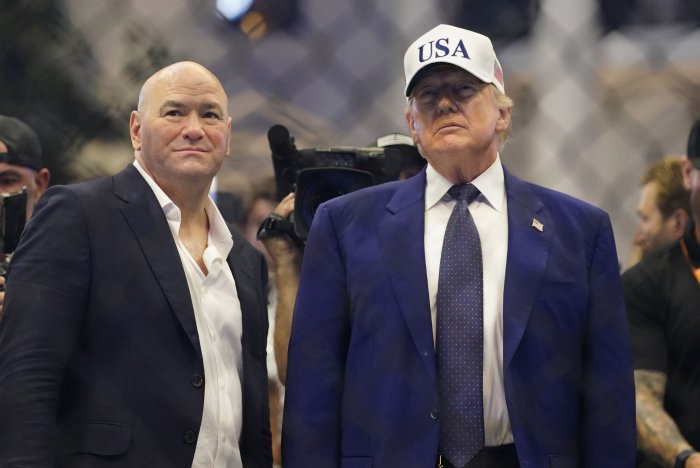
Federal prosecutors allege that the eight suspects, who range in age from 19 to 32, were among nearly two dozen people conspiring to attack the White House’s Freedom 250 UFC event on June 14, staged in celebration of the United States’ 250th anniversary and President Donald Trump‘s 80th birthday.
According to the indictment, the co-conspirators allegedly planned to attack the north side of the event with explosive-laden drones, which would force fight spectators to evacuate to the south, where stationed snipers would open fire on the fleeing crowd.
Prosecutors alleged that Scaggs was to be one of the snipers.
The indictment states that the eight defendants began plotting the alleged attack in May, with the conspiracy to provide material support to terrorists stemming from allegations that they worked together to procure money, firearms, ammunition, body armor, drones and other resources to further the plot. The charge is punishable by up to 15 years’ imprisonment.
They are alleged to have developed plans and encouraged one another in online chat groups and forums on encrypted applications, such as Signal, and on social media platforms, including TikTok and Instagram.
The indictment states that the second charge of conspiracy to murder government officials stems from allegations that the suspects planned to murder Trump, Vice President JD Vance and “other high-value targets” as well as Elon Musk and Israeli Prime Minister Benjamin Netanyahu, whose attendance at the event was not immediately confirmed. If convicted, the charge carries a potential penalty of up to life in prison.
The first five suspects arrested and charged in the scheme were taken into police custody last month after the parents of one of the suspects, 19-year-old Tycen Proper, alerted police to their son’s purchase of weapons and online activities.
Court documents state the group’s alleged grievances appear to be purported government corruption and U.S. lawmakers’ involvement with Israel.
As part of the scheme, Proper was allegedly supposed to pick up Scaggs and drive to Washington, D.C., for the event.
Prosecutors said that after Proper’s arrest, Scaggs allegedly indicated to the rest of his co-conspirators that he was still willing to carry out the attack and made arrangements with a second co-conspirator, who was not named, to pick him up.
The Thursday indictment follows earlier criminal complaints filed against the original seven defendants.
President Donald Trump and UFC CEO Dana White stand in the octagon after the UFC Freedom 250 event on the South Lawn of the White House in Washington, on June 14, 2026. Photo by Bonnie Cash/UPI | License Photo