May 6 (UPI) — The FBI raided the offices of and a cannabis business co-owned by L. Louise Lucas on Wednesday in Portsmouth, Va.
Lucas is a Virginia state senator, president pro tempore of the state Senate and a vocal leader of Virginia redistricting efforts.
Officials told The Washington Post that the investigation has to do with corruption and bribery allegations involving the business. Lucas was not arrested, and an FBI spokesperson said the investigation was ongoing.
Democrats called in question the motivation behind the raid; Lucas has often criticized President Donald Trump and was instrumental in the successful Virginia referendum in April to redraw the state’s congressional maps. However, The Washington Post, NBC News and The New York Times reported that sources familiar with the case claimed the investigation was opened during the Biden administration and has to do with the marijuana dispensary.
Rep. Robert C. “Bobby” Scott, D-Va., said that the raid “occurs in the broader context of President Trump’s repeated abuse of the Department of Justice to target his perceived political opponents.”
Don Scott, speaker of the Virginia House of Delegates, emphasized that Lucas has not been charged with anything.
“I am deeply concerned by today’s raid,” he said, WAVY-TV reported. “Given the politicization of this administration — an FBI led by Kash Patel and a Justice Department led by President Donald Trump’s former personal attorney — I think people should take this with a grain of salt and allow the facts to come out before jumping to conclusions,” he said.
Scott said he spoke with Lucas after the search, The New York Times reported.
“She basically said, ‘They’re not going to find anything there and I didn’t do anything wrong,’ ” he said. “She’s very upset and she’s very angry and she won’t back down.”
Lucas was elected to the Virginia General Assembly in 1991.
Fighters attack ‘Africa’s Alcatraz’, which detains high-value prisoners, and disrupt crucial supply chains to the capital.
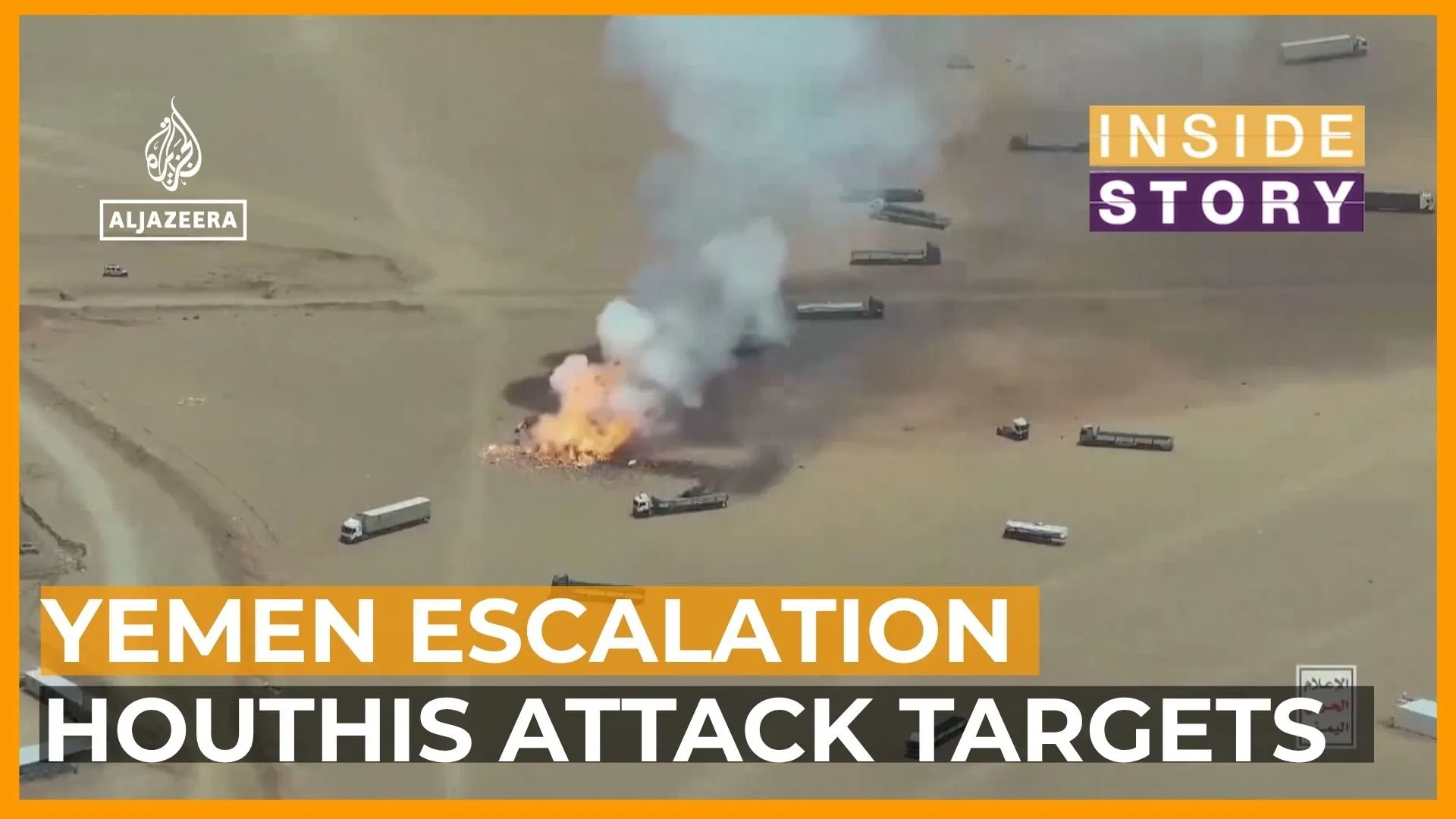
In a new wave of attacks in Mali, an al-Qaeda-linked group has stormed a main prison housing fighters from the armed group and set fire to trucks with food supplies heading to the capital Bamako.
Fighters from the Jama’at Nusrat al-Islam wal-Muslimin (JNIM) group stormed the Kenieroba Central Prison, a recently built complex dubbed “Africa’s Alcatraz”, located about 60km (37 miles) southwest of Bamako, Al Jazeera’s Nicolas Haque reported on Wednesday.
Recommended Stories
list of 4 itemsend of list
The detention centre houses 2,500 prisoners, including at least 72 inmates considered “high value” by the Malian state, Haque said, adding that Malian armed forces were repelling the attack.
Among the prisoners are JNIM fighters and a number of people arrested following large-scale attacks last month by the group’s fighters and Tuareg separatists, the Azawad Liberation Front (FLA).
The fighters attacked several military bases across multiple cities, including areas where senior government officials live, and took control of the northern city of Kidal in a coordinated offensive on April 25 and April 26, which struck at the heart of the West African country’s military government.
One of those attacks killed Malian Defence Minister Sadio Camara and his family in their home in Kati, a garrison town near the capital. On Monday, the leader of the country’s military government, Assimi Goita, took on the role of defence minister. At least 23 others were also killed in the attacks.
Since then, “there has been a wave of arrests of former and current military officers, members of civil society, lawyers, members of the political opposition – all accused of colluding with al-Qaeda fighters,” said Haque, who has been reporting for years on and in Mali. He added that fighters linked to the armed group were also arrested.
Security sources told AFP news agency that opposition figures Mountaga Tall, Youssouf Daba Diawara, and Moussa Djire are among those “abducted”.
According to family members and security sources who spoke to the agency, Tall, a lawyer, was taken on May 2 in Bamako by hooded men on charges of plotting with opposition figures in the Senegalese capital, Dakar, to overthrow the military government. Since his arrest, Tall has been questioned at least once for “attempted destabilisation”.
The security sources said Diawara and Djire were suspected of links with, respectively, the influential imam Mahmoud Dicko and Oumar Mariko, two opposition figures in exile. At least two other civilians who are close to Mariko were also arrested following the attacks, a judicial source told AFP, without giving further details.
The military prosecutor’s office said on May 1 that it had “solid evidence” of the “complicity” of certain military personnel, accusing them of helping with the “planning, coordination and execution” of the attacks.
In a report published on Tuesday, the Office of the United Nations High Commissioner for Human Rights (OHCHR) said there have also been “gravely concerning reports of extrajudicial killings and abductions, allegedly carried out by members of the security forces” following the attacks.
The violence has set off fighting across Mali’s vast desert north, raising the prospect of significant gains by armed groups that have shown an increasing willingness to strike neighbouring countries.
JNIM has called on Malians to rise up against the government and transition to Islamic law. The group has also pledged to besiege Bamako, and on Friday, it had reportedly set up checkpoints around the city of four million.
Haque said the blockade has the potential to cause a humanitarian disaster.
“These are al-Qaeda fighters that have pointed 12.7mm machine guns on their motorbikes, stopping any outgoing or incoming traffic,” the correspondent said. “We have seen on social media these fighters stopping food trucks trying to enter the area. This blockade is not just affecting people living in Bamako; it’s affecting people throughout Mali.”
On May 3, the mayor of Diafarabe village, in the Mopti region, called on the authorities to act before people started dying of hunger, as the village had run out of food.
Latest votes set up key Senate race, underscore Trump’s continued influence over Republican Party.
Published On 6 May 20266 May 2026
Primary elections in Indiana and Ohio have drawn the latest battle lines for the United States midterm elections in November, while underscoring Trump’s continued sway over Republican voters.
In Ohio, voters on Tuesday picked the candidates who will face off in the consequential election, with Democrats picking former Senator Sherrod Brown to take on Republican Jon Husted. Husted replaced Vice President JD Vance when he left his Senate seat for the White House.
Recommended Stories
list of 3 itemsend of list
The race is considered one of the most consequential, as Democrats face an uphill battle to retake control of the Senate, which currently has a 53-47 Republican majority. Brown has long styled himself as an economic populist, able to cut across party lines, while Republican groups have pledged to spend heavily to defend Husted.
Also in the “Buckeye State”, Trump ally Vivek Ramaswamy won the Republican gubernatorial nomination. Ramaswamy, who had a short tenure co-running Trump’s Department of Government Efficiency (DOGE) panel, will face off with Democrat Amy Acton, who led the state’s Department of Health during the COVID-19 pandemic.
In Indiana, meanwhile, Trump’s continued influence over the Republican Party was apparent, even as polls have seen his overall approval rating tank in recent weeks amid economic uncertainty and the US-Israeli war in Iran.
The US president had promised to target Republicans who pushed back on his calls for Indiana to redraw its congressional districts in advance of the midterms. Indiana was one of the few Republican-controlled state legislatures to reject the president’s pressure amid a wider flurry of state redistricting.
Five of the state-level candidates Trump targeted subsequently lost their primary elections on Tuesday. One candidate won, and one race remained too close to call.
State Senator Linda Rogers, one of the ousted Republicans, said Trump’s successful attempt to scuttle her race sent a clear message to others in the party considering opposing the president.
“If someone is going to ask you to take a tough vote, you may think twice about your conscience and what’s best for your community and instead what’s best for you and your career,” she said.
The primary comes shortly before US Representative Thomas Massie in Kentucky and US Senator Bill Cassidy in Louisiana, both Republicans, face punishing primary challenges. Trump is opposing both incumbents.
Massie has been one of the most outspoken critics of the administration, particularly when it comes to the US-Israeli war in Iran and the Department of Justice’s handling of documents related to disgraced financier Jeffrey Epstein.
Cassidy had voted to impeach Trump in 2021 for his role in the January 6, 2021, riot at the US Capitol and remained a critic throughout Trump’s 2024 re-election campaign.
While Trump’s influence remained strong in the Indiana primary, it does not necessarily spell Republican success in the general elections.
Recent polls have shown tanking support for Trump among independents, who are unaffiliated with either party and often serve as key deciding factors in close races.
For example, a recent NPR/PBS News/Marist Poll found that 63 percent of US residents nationally place a “great deal or good amount of blame” on Trump for high petrol prices. That rate was the same – 63 percent – for independents.
Guatemalan Attorney General Consuelo Porras arrives April 9 at the Nominating Commission in Guatemala City, Guatemala, for an interview as part of the selection process for attorney general and head of the Public Prosecutor’s Office from 2026 to 2030. She lacked support for another term. Photo by Alex Cruz/EPA
May 6 (UPI) — Consuelo Porras, Guatemala’s attorney general, will leave office May 17 after years of confrontation with President Bernardo Arévalo.
Porras is ending an eight-year term that began in 2018 under sanctions imposed by the United States, the European Union and more than 40 countries that accused her of corruption and undermining democracy by attempting to interfere with the results of Guatemala’s 2023 presidential election.
The relationship between Porras and Arévalo was marked by open confrontation and institutional hostility since the president’s electoral victory in 2023.
Arévalo repeatedly accused Porras of leading an “attempted coup” through judicial investigations aimed at dismantling Semilla, the political party that brought him to power, and blocking his inauguration. Porras defended her actions as enforcement of the law.
After taking office, Arévalo sought to remove her through legal reforms and public meetings that she refused to attend, deepening a political crisis in which the executive branch and the Public Ministry operated as opposing forces until the end of her tenure.
Arévalo announced Tuesday that he had officially appointed attorney Gabriel García Luna to lead the Public Ministry for the 2026-2030 term.
Este es un momento de grandes decisiones.
Que este sea el inicio de una nueva etapa de justicia. El pueblo lo exige y lo merece. pic.twitter.com/OuZK5FpAMt— Bernardo Arévalo (@BArevalodeLeon) May 6, 2026
While announcing the appointment, Arévalo said the decision was intended to mark the beginning of a “new stage of justice” in response to demands from the Guatemalan people.
The president said the Public Ministry requires leadership capable of “rescuing” the institution and strengthening its independence. He added that the new attorney general would not serve the interests of the government or “particular or spurious political interests,” but instead guarantee impartial justice.
According to reports by Guatemalan newspaper Prensa Libre and Argentine outlet Infobae, Arévalo justified his choice by saying the country needs officials capable of rebuilding judicial institutions after years of crisis.
Porras attempted to seek a third term, but failed to secure enough votes from the nominating commission to reach the final shortlist of six candidates presented to the president.
Before leaving office, she also unsuccessfully sought a seat on Guatemala’s Constitutional Court, a position that would have granted her immunity from possible future legal proceedings.
Among the most serious allegations she could face is a criminal complaint related to her alleged connection to a network of illegal adoptions of Indigenous children during the 1980s. United Nations experts have already called for independent investigations into the case.
Civil society organizations have also documented at least 16 alleged cases involving misuse of the criminal justice system, including political persecution against the Semilla party, journalists and judicial officials.
Although Guatemala’s current Supreme Court blocked several attempts to strip Porras of immunity while she remained in office, her departure could allow the next attorney general to reopen those complaints and launch additional investigations into alleged obstruction of justice and corruption during her administration.
U.S. sanctions mainly involved the revocation of her visa and a permanent ban on entering the country for both her and her husband after she was designated a “corrupt and anti-democratic actor” under the Engel List.
The U.S. Engel List is a State Department-mandated public sanctions list that names foreign individuals from Guatemala, El Salvador, Honduras, and, since 2021, Nicaragua whom the United States determined engaged in significant corruption, undermined democratic institutions or obstructed corruption investigations. Those on the list are barred from entering the United States and have their visas revoked.
That designation later served as the basis for the European Union and Canada to impose harsher sanctions, including the freezing of assets and bank accounts in those jurisdictions, sharply restricting her financial freedom outside Guatemala.
May 6 (UPI) — Dominican journalist Yolaine Díaz, a former fashion and beauty editor for People en Español magazine, and her mother died in a fire at a residential building in New York City that also left a third person dead, 14 injured and more than 100 displaced.
The fire began shortly after 12:30 a.m. Saturday in a six-story building on Dyckman Street near Broadway in the Inwood section of Manhattan, according to the Fire Department of New York and the New York City Police Department.
Díaz, 49, had emigrated from the Dominican Republic to New York City as a teenager and studied journalism at Lehman College in the Bronx. She joined People en Español as an intern and later worked as a fashion and beauty writer and digital editor. During her career, she interviewed celebrities including Eva Longoria, Shakira and Jennifer Lopez.
Family members confirm that two of the victims trapped in the blaze were a mother and daughter, identified as 49-year-old fashion journalist Yolaine Díaz, and her 73-year-old mother, Ana Mirtha Lantiguahttps://t.co/XbaXfD8csq— NBC New York (@NBCNewYork) May 6, 2026
Former editor-in-chief Armando Correa remembered Díaz, who continued to contribute to the magazine, in a statement that read “Yolaine had a unique authenticity and intensity. I want to remember her always camera-ready, with her style and her smile.”
According to People en Español, Díaz and her mother, Ana Mirtha Lantigua, attempted to escape through the building’s interior stairwell, but smoke blocked the exit and both became trapped. The journalist’s stepfather managed to flee through the exterior fire escape.
Authorities said the flames started on the lower levels of the building and quickly spread through the interior stairwell to the roof. More than 200 firefighters were deployed to contain the blaze.
The fire left scenes of chaos among residents, many of them members of Latino families living in the mixed residential and commercial building, which was constructed in 1910.
“I was sleeping and what woke me up was the smell and the alarms,” resident Michael Jimenez told local media. “When I went to open the hallway door, everything was on fire. There wasn’t time to grab the extinguisher or anything.”
Another resident told WNYW-Ch. 5 she had to flee via the fire escape after a neighbor opened the hallway door and found “black smoke as far as the eye could see.”
Marty Mejia, of the New York Fire Foundation, said one of the main mistakes during the evacuation was leaving doors open, which allowed the fire and smoke to spread rapidly throughout the building, according to reports by NBC New York.
Firefighters said apartments whose doors remained closed sustained minimal damage, in line with public safety campaigns begun after another deadly fire in the Bronx days earlier.
The American Red Cross assisted evacuees with blankets and logistical support, while dozens of families remained at hospitals awaiting news about injured relatives, some suffering from burns.
The cause of the fire remains under investigation. According to The New York Times, the city’s housing department database listed more than 100 violations at the building.
A smelter of Korea Zinc in South Korea. The company logged record quarterly sales and profits during the first three months of this year. Photo by Korea Zinc
SEOUL, May 6 (UPI) — World-leading non-ferrous metal maker Korea Zinc said Wednesday it posted record results during the first three months of this year despite a challenging business environment.
The Seoul-based company said its first-quarter sales were $4.2 billion, up 58.4% from a year before, while operating profit nearly tripled to $515 million year-on-year. Both were all-time quarterly highs.
Korea Zinc’s operating margin almost doubled to 12.3% during the January-March period. The company said said its diversified product portfolios and stable production capabilities led to the strong profit.
Robust demand for precious metals and critical minerals, including gold, silver and antimony, supported the company’s stellar performance, Korea Zinc said.
Separately, the company’s board approve Wednesday a first-quarter dividend of $3.46 per share, totaling $71 million, with payouts scheduled for early next month.
“Despite the sudden outbreak of war, rising raw material prices, and supply chain disruptions, we achieved record quarterly results thanks to our diverse product portfolio, stable production capacity, and growth in new business sectors,” Korea Zinc said in a statement.
“Down the road, we will keep putting forth efforts to maintain stable growth and solid profitability despite an uncertain global environment,” it added.
The company also said that it would focus corporate capabilities on the successful execution of Project Crucible, a $7.4 billion initiative to build an integrated smelter in Tennessee in partnership with the U.S. government.
The program aims to roll out 13 types of nonferrous metals, including 11 critical minerals, as well as semiconductor-grade sulfuric acid, beginning in 2029. Last month, Washington designated it under the FAST-41 permitting program for fast-track procedures.
The share price of Korea Zinc jumped 7.24% on the Seoul bourse Wednesday.
May 6 (UPI) — Commerce Secretary Howard Lutnick is scheduled to testify Wednesday before the House Oversight Committee on his ties to Jeffrey Epstein.
The testimony is voluntary and behind closed doors. Lutnick is one of many people called before the committee to explain their ties to the late sex offender and financier.
“The Secretary looks forward to addressing any questions on the record when he testifies voluntarily before the Oversight Committee,” a spokesperson for the Commerce Department told CBS News. “He looks forward to putting to rest the inaccurate and baseless claims in the media designed to distract from his historic work underway at the Commerce Department.”
Lutnick has not been accused of any wrongdoing tied to Epstein.
Lutnick and Epstein were next-door neighbors in New York. He has said his interactions with Epstein were minimal, but earlier this month, he told a congressional committee that he had visited Epstein’s island, Little St. James in the U.S. Virgin Islands, with his family.
“We had lunch on the island, that is true, for an hour,” Lutnick told lawmakers. “Then we left with all of my children, with my nannies and my wife all together. We were on family vacation. We were not apart. To suggest there was anything untoward about that in 2012, I don’t recall why we did it. But we did.”
Epstein was convicted of solicitation involving a minor in 2008.
A photo of Lutnick and Epstein that appears to be on Little St. James with three other men was in the files released earlier this year.
Lutnick and Epstein also invested together in a now-shuttered advertising agency, Adfin, working together as late as 2014.
Lutnick previously claimed that he cut contact with Epstein in 2005
In October, Lutnick said on a podcast that he and his wife, Allison, visited Epstein’s New York townhouse in 2005, NBC News reported.
He said he saw a massage table in the middle of a room filled with candles. Lutnick said Epstein told him he had massages “every day” and got “weirdly close” to say, “The right kind of massage.”
“In the six to eight steps it takes to get from his house to my house, my wife and I decided that I will never be in the room with that disgusting person ever again,” Lutnick said.
“I was never in the room with him socially, for business, or even philanthropy,” he added. “If that guy was there, I wasn’t going, because he’s gross.”
The panel will likely question Lutnick’s credibility, Matt Dallek, a historian and political management professor at George Washington University, told NBC
“It’s risky business for him to go before Congress and testify about Epstein,” Dallek said. “Because lo and behold, he visited the island with his kids.”
Dallek said Trump will pay attention to Lutnick’s performance.
“If Lutnick comes off as wishy-washy or ineffective, Trump could sour on him,” Dallek said. “Especially if he wants a fall guy for the economy.”
President Donald Trump speaks before signing a proclamation inside the Oval Office at The White House on Tuesday. The memorandum is set to restore the Presidential Fitness Test Award, a competitive school-based fitness program last seen under the Obama administration. Photo by Tom Brenner/UPI | License Photo
A gas station in South Africa displays the latest prices for petrol and diesel after they hit a record high on Wednesday despite global oil prices plunging back below $100 a barrel on hopes of a deal to end the war in Iran. Photo by Kim Ludbrook/EPA
May 6 (UPI) — Global oil prices fell sharply and financial markets rallied Wednesday after U.S. President Donald Trump paused a military operation to reopen the Hormuz Strait to commercial shipping to give advanced peace talks with Iran a chance to deliver “a complete and final deal.”
Falls in Brent crude of more than $10 a barrel to $99, American crude by $13 to $92 a barrel and rallies in Asian stock markets overnight that fed into Europe when bourses opened there failed to feed through to U.S. gas prices, which jumped 5 cents a gallon to their highest level of the war.
AAA motor club figures showed a national average of $4.54 for a gallon of petrol and $5.67 for diesel, meaning drivers were paying 53% and 51% more than before the war started on Feb. 28, with the caveat that fuel price adjustments normally lag crude oil price movements by several days.
The White House believes a draft one-page, 14-point memorandum of understanding to end the war and create a structure for more in-depth nuclear talks could succeed in breaking the deadlock, two U.S. officials and two other sources said.
An Iranian foreign ministry spokesman confirmed to CNBC that Iran was in receipt of the U.S. proposal and was “evaluating it.”
The Trump administration anticipates Iran will give its response with regard to the most critical elements of the plan in the next two days and although nothing has been finalized it was being seen as significant because it was the closest the sides had been to a deal since the beginning of the war.
However, Trump also appeared ambivalent, saying Wednesday it was “perhaps” too big of a stretch to believe Iran would take the deal and threatening to order the U.S. military to restart its airborne offensive against the country if it didn’t.
Analysts said investor confidence was boosted mainly by the fact the cease-fire was holding and signs that the economy was nowhere near as badly affected by the war as feared.
“This helped oil prices to come back down again and ease fears about a renewed escalation, with investors a bit more hopeful that an extended stagflationary shock would be avoided,” Deutsche Bank wrote in a note.
It added that investor confidence was also bolstered by new U.S. economic data showing among other positive indicators, that job vacancies declined less than anticipated in March, saying the numbers “cemented the case that the conflict’s wider economic impact was still fairly muted.”
“This helped oil prices to come back down again and ease fears about a renewed escalation, with investors a bit more hopeful that an extended stagflationary shock would be avoided,” they added.
Hopes were also riding on the possibility China would prevail on visiting Iranian foreign minister Abbas Araghchi to persuade Iran to uphold the current truce with the United States, so as not to throw a wrench into Trump’s visit to Beijing on May 14, the first by any U.S. president in almost a decade.
China is one of Iran’s largest customers for its oil exports.
President Donald Trump speaks before signing a proclamation inside the Oval Office at The White House on Tuesday. The memorandum is set to restore the Presidential Fitness Test Award, a competitive school-based fitness program last seen under the Obama administration. Photo by Tom Brenner/UPI | License Photo
Employees take part in a ceremony at the trading room of Woori Bank in Seoul on Wednesday to celebrate the benchmark KOSPI closing at an all-time high of 7,384.56. Photo by Yonhap
South Korean stocks shot up nearly 6.5 percent Wednesday, extending a record-breaking run to top the 7,300-point mark, driven by a semiconductor rally and optimism for a potential peace deal in the Middle East. The local currency also strengthened against the U.S. dollar.
The benchmark Korea Composite Stock Price Index (KOSPI) added 447.57 points, or 6.45 percent, to a fresh record high of 7,384.56.
It marked the second-largest daily gain in terms of points following 490.36 points reached on March 5.
Trade volume was heavy at 984.4 million shares worth 58.2 trillion won (US$40 billion), with losers outnumbering winners 199 to 677.
Foreigners bought 3.1 trillion won worth of local shares, while institutions and individuals dumped a net 2.3 trillion won and 571.2 billion won, respectively.
Overnight, U.S. President Donald Trump said he would pause operations to escort ships through the Strait of Hormuz as part of efforts to reach a final agreement with Iran.
The KOSPI opened 2.25 percent higher to surpass the landmark 7,000-point threshold for the first time and extended the gains throughout the session.
The main index has been on a bullish run in recent months, surpassing the 5,000-point mark in late January and topping another milestone of 6,000 points in February.
After recouping its losses in March following the outbreak of the U.S.-Iran war in late February, the KOSPI breached the 7,000-point level on continued optimism over the artificial intelligence (AI) boom and hopes for the reopening of the key waterway.
“Global tech giants’ strong performances and the strengthened value chain for AI data centers boosted the AI-related shares,” Lee Kyung-min, an analyst at Daishin Securities, said. “In particular, the market’s top-three shares of Samsung Electronics, SK hynix and SK Square led the rally.”
Top-cap Samsung Electronics surged 14.41 percent to close at 266,000 won, pushing its market capitalization above 1.5 quadrillion won and becoming the second Asian company to surpass the $1 trillion milestone after Taiwan Semiconductor Manufacturing Co.
SK hynix soared 10.64 percent to 1.6 million won, and AI investment firm SK Square jumped 9.89 percent to 1.1 million won.
Hanmi Semiconductor, a chip manufacturing company, rose 4.37 percent to 394,500 won, and LG Electronics vaulted 8.17 percent to 154,900 won.
However, shipbuilding and defense shares dropped. Major shipyard HD Hyundai Heavy Industries fell 4.71 percent to 648,000 won, and defense giant Hanwha Aerospace lost 2.18 percent to 1.4 million won.
Leading biotech firm Samsung Biologics declined 0.34 percent to 1.48 million won, and top mobile carrier SK Telecom backtracked 1.95 percent to 95,500 won.
The Korean won was quoted at 1,455.1 won against the U.S. dollar at 3:30 p.m., up 7.7 won from the previous session.
The quotation marks the highest since February 27, when the currency closed at 1,439.7 to the greenback.
Copyright (c) Yonhap News Agency prohibits its content from being redistributed or reprinted without consent, and forbids the content from being learned and used by artificial intelligence systems.
Dutch cruise ship MV Hondius, which has a suspected hantavirus outbreak onboard, was due to set sail from Cape Verde for the Canary Islands on Wednesday after Spain agreed to allow passengers and crew to disembark there. File Photo by Elton Monteiro/EPA
May 6 (UPI) — A cruise ship with a hantavirus outbreak onboard that has killed at least three people and sickened more was due to set sail for the Canary Islands on Wednesday after Spain agreed to allow passengers and crew to disembark there.
The Spanish Health Ministry said in a post on X that it had agreed to “host the MV Hondius in the Canary Islands in compliance with International Law and humanitarian spirit” at the request of the World Health Organization and the European Center for Disease Prevention and Control.
It was believed that 14 Spanish citizens are among the 149 British, American and passengers from 20 other countries stranded aboard the Dutch-flagged vessel which is at anchor off the main Santiago island of Cape Verde which on Monday said it would not allow the Hondius to dock on “public health protection” grounds.
The ministry didn’t say to which port in the islands the Hondius was headed but said it would depart Cape Verde upon completion of “a thorough examination of the ship” by ECDC officials to identify those who needed to be urgently evacuated from the ship for emergency medical care.
The BBC reported two crew members, including the ship’s British doctor, and a passenger were due to be transferred to the Canary Islands by air ambulance.
“The specific port has not yet been determined. Once there, crew and passengers will be properly examined, treated, and transferred to their respective countries. The process will be carried out using a common case and contact management protocol developed by the WHO and the ECDC, and will have all the necessary safety guarantees,” said the Spanish health ministry.
“Both medical care and transfers will be carried out in special spaces and transports specifically set up for this situation, avoiding all contact with the local population and ensuring the safety of healthcare personnel at all times,” it added.
However, it was unclear if the ship would be permitted to dock in the Canaries after the island’s president, Fernando Clavijo, posted on X on Wednesday that he would not allow the Hondius to enter without “sufficient information” to guarantee the safety of residents.
“Today I have requested a meeting with [Spanish] President [Pedro] Sanchez due to the lack of coordination and information regarding the cruise ship affected by a hantavirus outbreak. The Canaries always acts with responsibility, but it cannot accept decisions taken behind the backs of the Canary Islands institutions and without sufficient information to the population,” he wrote.
Two passengers died during the Hondius’ five-week Antarctica-South Atlantic cruise and the wife of one of the deceased died in Johannesburg en route back to her home in the Netherlands. She and a 69-year-old Briton, who is being treated in hospital in South Africa, are confirmed hantavirus infection cases.
World Health Organization officials said Tuesday said there may have been human-to-human transmission of the virus as they had identified it as the South American Andes strain which, while it originates from rodent droppings in common with other Hantavirus variants, can jump between humans through close direct contact.
Prices for the Oceanwide Expeditions cruise, which starts from Ushuaia in Argentina, the world’s southernmost city, taking in the Antarctic Peninsula and the islands of South Georgia, St. Helena and Cape Verde, start from $19,025.
Wreathes are seen amongst the statues at the Korean War Veterans Memorial during Memorial Day weekend in Washington on May 27, 2023. Memorial Day, which honors U.S. military personnel who died while in service, is held on the last Monday of May. Photo by Bonnie Cash/UPI | License Photo
A revised North Korean constitution removes references to reunification with the South, a document shared by Seoul’s Unification Ministry showed Wednesday. Kim Jong Un, seen here at a party congress in February, was officially elevated to head of state. File Photo by KCNA/EPA
SEOUL, May 6 (UPI) — North Korea has revised its constitution to remove all references to reunification with South Korea, a document shared by Seoul’s Unification Ministry showed Wednesday, formalizing leader Kim Jong Un’s push to redefine inter-Korean ties as relations between two separate states.
The document, which was shared at a news conference by the ministry, removes language calling for the “peaceful reunification” of the Korean Peninsula that had been part of the North’s constitution since a 1992 revision.
The new version codifies a policy shift Kim first laid out in 2024, when he abandoned Pyongyang’s long-standing goal of reunification and defined South Korea as an adversary.
At a March meeting of North Korea’s rubber-stamp legislature, where the revision is believed to have been adopted, Kim called for recognizing South Korea as the “most hostile state.”
However, the revised constitution did not define South Korea as a “primary foe” or “hostile state,” despite Kim’s increasingly confrontational rhetoric toward Seoul, Yonhap News Agency reported.
The new constitution also introduces language defining North Korea’s territory as bordering China and Russia to the north and South Korea to the south.
It does not specifically address maritime boundary lines, including the de facto maritime border in the Yellow Sea known as the Northern Limit Line. The NLL, which was drawn unilaterally by the U.S.-led United Nations Command after the Korean War, has long been a source of tension between the two Koreas.
The waters around the boundary, which Pyongyang does not recognize, have been the site of multiple naval clashes since the 1950-53 Korean War ended in an armistice, including the 2010 including the North’s 2010 torpedo attack on a South Korean warship that left 46 dead.
In January 2024, Kim called the line “illegal” and warned that even the slightest violation of the North’s territory would be considered a “war provocation.”
South Korean President Lee Jae Myung has sought to ease inter-Korean tensions since taking office in June, calling for the resumption of dialogue and making conciliatory gestures such as dismantling border propaganda loudspeakers.
Pyongyang has largely ignored those overtures while continuing to expand its military posture. In April, North Korea conducted several weapons tests, including tactical ballistic missiles with cluster bomb warheads and electronic warfare systems.
The revision also elevates Kim’s position as “head of state,” further consolidating his authority over state affairs and the country’s nuclear forces.
National Security Adviser Wi Sung-lac, seen here in April during a visit to Vietnam, said Wednesday that Seoul no longer needed to review whether to participate in the suspended U.S.-led “Project Freedom.” File Photo by Yonhap
The suspension of “Project Freedom,” a U.S. operation to escort ships through the Iran-controlled Strait of Hormuz, has made it unnecessary for Seoul to review whether to participate, National Security Adviser Wi Sung-lac said Wednesday.
The national security adviser made the remarks in a meeting with reporters shortly after U.S. President Donald Trump announced that the project would be paused for a short period of time, just days after it began.
“Because the operation has been halted, (a review of whether to participate) has become not necessarily needed,” he said, adding that Seoul had planned to review the matter.
Wi said no signs have been found so far that the South Korean-operated ship, which suffered a blast and fire in the Strait of Hormuz, had sustained an attack.
A blast and fire were reported aboard the vessel, Namu, operated by major South Korean shipping firm HMM Co. on Monday while it was anchored in waters off the United Arab Emirates.
The possibility of the vessel being attacked had initially been mentioned, and Cheong Wa Dae had once taken the possibility into account, but information so far has not indicated any supporting evidence, he noted.
Copyright (c) Yonhap News Agency prohibits its content from being redistributed or reprinted without consent, and forbids the content from being learned and used by artificial intelligence systems.
May 6 (UPI) — Republican voters in Indiana and Ohio largely backed Trump-aligned candidates Tuesday in primaries seen as tests of President Donald Trump‘s influence within the GOP.
Both states held their party primaries on Tuesday to decide candidates for hundreds of races for November’s midterm elections, but most eyes were on contests for the Indiana state Senate, where incumbent Republicans had rejected Trump’s redistricting push.
Indiana
Though too late to influence Indiana’s congressional map before the midterms, Trump endorsed challengers to incumbents who had opposed his effort to redraw the map to add Republican seats.
Trump’s influence within the GOP in the Hoosier State appeared strong: Of his seven endorsed challengers against Indiana Republican state senators who opposed his gerrymandering push, five appeared poised to win outright, one seemed to have lost and another was in a tight race.
“Big night for MAGA in Indiana,” Sen. Jim Banks, R-Ind., said in a social media statement, referring to the acronym for Trump’s far-right nationalist Make American Great Again movement.
“Proud to have helped elect more conservative Republicans to the Indiana State Senate.”
Nearly 90% of all Indiana precincts were reporting as of early Wednesday, according to the Indiana Election Division, but five of the seven Trump-backed candidates had already declared victory.
Those five are Trevor De Vries, Brian Schmutzler, Blake Fiechter, Tracey Powell and Michelle Davis.
“Thank you to every Hoosier who came out to vote today,” De Vries said in a social media post late Tuesday.
“And special thanks to President @DonaldTrump for his endorsement that helped seal the deal and showed Indianapolis what real Hoosiers wanted.
“We did it, Indiana! Time to get to work.”
De Vries beat incumbent Daniel Dernulc, state senator for District 1, in a landslide. According to the unofficial results, De Vries secured 75.1% of the vote to Dernulc’s 23.3%.
Schmutzler was poised to beat state Sen. Linda Rogers in a 55.8% to 44.2% split, Fiechter over state Sen. Travis Holdman 61.5% to 38.5%, Powell’s 64.7% led state Sen. Jim Buck’s 35.3% and Davis led state Sen. Greg Walker 58.8% to 41.2%.
Trump-endorsed Paula Copenhaver also declared victory in her race against Sen. Spencer Deery despite being in a virtual tie. According to unofficial state results, she was trailing Deery by three ballots.
“After all provisional ballots are counted, we will prevail and be declared the winner of this race,” she said on X.
“I want to thank President Donald Trump for his unwavering support and endorsement. President Trump is the leader of our party, and it showed clearly tonight in his victories across the state.”
The only Trump-endorsed candidate to lose was Brenda Wilson. State Sen. Greg Goode was poised to win with 53.6% of the vote to Wilson’s 36%, according to the unofficial results.
A sixth incumbent who stood against redistricting, Sen. Rich Niemeyer, also appeared poised to lose his seat to challenger Jay Starkey, who was not endorsed by Trump.
Ohio
In Ohio, the race to watch was on the GOP gubernatorial primary.
With incumbent Republican Gov. Mike DeWine barred by term limits from running again, Ohio’s governor’s mansion will have a new occupant.
Amy Acton and her running mate David Pepper ran unopposed in the Democratic primary for governor and lieutenant governor, respectively.
Republican voters in the state nominated Trump ally Vivek Ramaswamy for governor and Robert McColley for lieutenant governor in a landslide.
According to unofficial results from the Office of Ohio Secretary of State, the Ramaswamy-McColley ticket secured 82.47% of the vote compared to the 17.53% that Casey Putsch and Kimberly Georgeton received.
“I speak for Rob and myself here: We are in this because we believe that together — with the complementary skills that we bring to the table — we are the two people in this state who can work together as a team to lead Ohio back to our true potential,” he said Tuesday night during his victory speech.
“To our greatest heights to put more money in your pocket, to bring down those costs and to give your kids the world-class education that is the birthright of every Ohioan.”
Trump had endorsed Ramaswamy for governor.
“I know Vivek well, competed against him and he is something SPECIAL,” Trump said earlier Tuesday.
“Vivek Ramaswamy will be a GREAT Governor of Ohio.”
Ramaswamy gained national attention during the 2024 GOP presidential primary, running against Trump. Instead of attacking the former New York real estate mogul, Ramaswamy aligned himself with Trump’s America First movement, often praising him.
“Thank you, Mr. President!” Ramaswamy said in response to Trump’s endorsement.
Iran’s football chief says the country’s preparations for the World Cup remain on track, but its participation will depend on a guarantee of respect for the Iranian armed forces by tournament cohosts the United States.
The Iranian Football Federation (FFIRI) will seek reassurance from FIFA that the US will not insult the Islamic Revolutionary Guard Corps (IRGC) during the World Cup, FFIRI President Mehdi Taj said on Tuesday.
“[The] Americans, if they guarantee not to insult our military institutions and the IRGC, we’ll go,” Taj told state broadcaster IRIB.
“If they give such a guarantee that an incident like Canada doesn’t happen and they definitely assure it, we will go,” he added.
The delegation members, including Taj, turned back upon arrival at Toronto’s Pearson airport despite holding valid visas, citing what was described as the “unacceptable behaviour of immigration officials”.
“They [delegation] returned to Turkiye on the first available flight due to the unacceptable behaviour of immigration officials at the airport and the insult to one of the most honourable organs of the Iranian nation’s armed forces,” the FFIRI said in a statement following the incident.
In 2024, Canada listed Iran’s IRGC as a terrorist organisation, and statements from the Canadian government indicated that Taj was denied entry due to his alleged ties with the IRGC.
“IRGC officials are inadmissible to Canada and have no place in our country,” the Canadian government said.
The US and Israel launched a war on Iran on February 28.
At least 3,468 people have been killed in US-Israeli attacks, according to Iran’s Ministry of Health. More than 26,500 people have been injured, including at least 4,000 women and 1,621 children.
Iranian forces retaliated, launching attacks on Middle East countries where US troops are deployed, as well as Israel.
‘Our host is FIFA, not Mr Trump’
Taj, who was speaking in Tehran, will meet FIFA President Gianni Infantino and Secretary-General Mattias Grafstrom at the organisation’s headquarters in Zurich this month.
During the meeting, Taj said he will seek guarantees that the Iranian team and accompanying officials would not face entry restrictions or “disrespect”, particularly towards Iran’s state institutions.
“We need a guarantee there, for our trip, that they have no right to insult the symbols of our system – especially the Islamic Revolutionary Guard Corps,” he said.
“This is something they must pay serious attention to. If there is such a guarantee and the responsibility is clearly assumed, then an incident like what happened in Canada will not happen again.”
The Iranian team is going full-speed ahead with its preparations for the World Cup, and football officials have outlined the team’s training and preparations for the tournament, which include camps at home and in neighbouring Turkiye before travelling to the US.
The squad will depart for Turkiye on Monday for their final leg of preparations before travelling to the US in June.
Team Melli will kick off their campaign against New Zealand in Los Angeles on June 15, before taking on Belgium at the same stadium on June 21 and facing Egypt in their final group match in Seattle on June 26.
Taj insisted Iran had earned the right to play in the World Cup as one of the first teams to have qualified for the tournament.
“We are going to the World Cup because we qualified,” the Iranian official said. “Our host is FIFA, not Mr Trump or America.”
Deir el-Balah, Gaza Strip – With a weary expression, Saja arranges her few belongings inside the tent her fiance, Mohammed, has prepared for their wedding in just a few days.
There are two thin mattresses instead of a proper bed, a small cooking corner fashioned from wood and tarpaulin, and a makeshift bathroom that Mohammed also built from scraps of wood and plastic sheets.
Recommended Stories
list of 3 itemsend of list
The couple, Saja al-Masri, 22, and Mohammed Ahliwat, 27, got engaged a year ago while their families were displaced. They are still living in a camp in Deir el-Balah in central Gaza, forced into displacement by Israel’s genocidal war on Gaza.
Saja agreed to a modest dowry, but even that will only be paid by Mohammed in instalments.
Yet even this “simple beginning” has become unbearably expensive for Mohammed and many young men in Gaza, who are expected to shoulder the majority of the costs in Palestinian culture when they get married.
“I bought the tent for 1,500 shekels [about $509], the wood cost me around 2,500 [about $850], the tarpaulins exceeded 2,000 [about $679], and a simple bathroom cost another 3,000 [about $1,019],” Mohammed tells Al Jazeera. Before the war, apartments had previously been available for rent for between $250 and $300 a month.
“It’s not enough that I’m starting my life in a tent under harsh conditions, even this is unbearably expensive,” adds Mohammed, who works odd jobs like selling bread and canned goods or repairing bicycles.
“Everything I earn barely covers food and water. I tried to save a little for the wedding, but prices are so high, as if I were preparing a luxurious event.”
Before the war, Mohammed lived in a large seven-storey house in Bureij in central Gaza, and owned a fully furnished 170-square-metre apartment.
“When I remember my apartment in our home that was destroyed in the war, I feel deep sorrow … My brothers and I each had fully prepared apartments before marriage.”
“We had stability, and we owned poultry farms that supplied several areas in Gaza,” he says bitterly. “Today, I’m getting married in a tent.”
As for the wedding venue, Mohammed rented a small space that had been used as a cafe, unable to afford a wedding hall.
“A friend helped me rent this small place … for 1,500 shekels [$509],” he says. “It’s not a small amount considering how simple the place is. Wedding halls cost more than 8,000 shekels [$2,717].”
Mohammed’s situation is not exceptional in Gaza. Many weddings are now held in tents, with only the most basic preparations, amid soaring prices and a collapse of basic living conditions brought on by the war and the accompanying economic crisis.
Unemployment in Gaza has reached 80 percent, according to the Gaza Ministry of Labour, and poverty rates have risen to 93 percent.
The couple, Mohammad Ahliwat and Saja al-Masri, who are set to get married in a few days, are preparing for their wedding inside a tent in a displacement camp [Al Jazeera]
Incomplete preparations
Saja holds back her tears as she listens to her fiance.
What should have been the happiest moment of her life feels incomplete, and she has nothing to offer to ease Mohammed’s burden.
She understands the situation can’t be helped, and has tried to remain calm. But the difficulty in finding an affordable wedding dress broke her.
Dress shops have quoted her incredibly high prices to rent one – more than 2,000 shekels ($679) for one night.
“Everyone says crossings, goods, and coordination are expensive, so everything is overpriced,” Saja explains.
In an attempt to solve this, Mohammed brought a modest dress from an acquaintance “just to make the wedding happen”, placing her in what she describes as “a painful choice”.
“When I tried the dress yesterday, I felt so sad … I burst into tears. It was worn out, torn at the edges, and outdated,” Saja says, her voice breaking.
“I slept last night with tears on my cheeks … but there’s nothing we can do. This is what’s available.”
She points to the yearlong wait to have the wedding, after postponing it repeatedly because preparations were incomplete.
“The situation doesn’t improve … it only gets worse. Every time we say let’s wait, nothing changes. So we decided to get married next week,” says Saja, who studied graphic design for one year before the war forced her to stop.
Since then, she has been displaced with her family on a long journey that began in Beit Hanoon, in northern Gaza, passed through Gaza City, and ended in Deir el-Balah.
It’s not just the dress that worries her. Beauty salons charge nearly 700 shekels ($238) to prepare a bride.
“They tell us cosmetics are very expensive and unavailable, electricity and generators cost a lot, fuel is expensive … everything is expensive, and people like us are the ones who pay.”
“What did we do to deserve this?” she says.
Saja and her mother, Samira, try to arrange her few belongings inside the tent, in the absence of a wooden wardrobe to store them [ Al Jazeera]
No taste of joy
Saja’s mother, Samira al-Masri, 49, interrupts gently, trying to console her, saying the conditions are the same for everyone in Gaza, where the majority of Palestinians have been displaced from homes destroyed by Israel, and more than 72,000 have been killed since October 2023.
“I married off four of my daughters: Ilham, Doaa, Ameerah, and now Saja, during the war, without joy,” Samira says, her voice trembling.
“Each wedding felt like a tragedy to me.”
“They all started their married lives the same way … in tents, with almost nothing.”
Samira describes her deep sadness at being unable to celebrate her daughters properly or give them the wedding they dreamed of.
“As you can see, there aren’t enough clothes, no proper items for a bride … no suitable dress, not even a wardrobe or a bed,” she says, while helping Saja arrange her few belongings.
Mohammed adds that bedroom furniture now costs between 12,000 and 20,000 shekels ($4,076 and $6,793) – before the war, the sets had cost around 5,000 shekels.
“Unbelievable prices, and there’s barely any goods in the market. We settled for mattresses on the ground.”
No signs of improvement
In Gaza, weddings are no longer joyful occasions; they are painful experiences repeated over and over.
Despite her natural desire as a mother to celebrate her daughter and give her a dignified start, Samira finds herself powerless, unable even to ask more from the groom.
“The situation is not normal … I can’t pressure him or ask what he did or didn’t bring. Everyone knows the situation … we’re all living it.”
Her worries extend beyond her daughters to her 26-year-old son, who is approaching marriage.
“I put myself and my son in the groom’s place: What does he have? Nothing. The same situation. Every time I see the costs, I step back from arranging his marriage.”
Amid this reality, Samira expresses deep sorrow for young men and women trying to marry today.
“I pray God helps them … our days were much easier … even the simplest costs have become unaffordable.
As her marriage shifts from a moment of joy into a heavy confrontation with reality, Saja tries to hold herself together despite having no real options.
She admits it is not easy, but Mohammed’s presence next to her gives her strength.
“Sometimes, I feel it’s a miserable beginning … but when I see Mohammed with me, I overcome my sadness,” she says with a faint smile as she looks at her future husband.
There are few signs that circumstances will improve anytime soon for the couple. Still, they try to achieve a balance between harsh reality and fragile hope.
“I feel things will stay the same, as is written for us,” Saja says, “moving from one tent to another.”
As Israel faces growing international isolation over its regional wars, President Isaac Herzog is set to visit two countries in Central America – Panama and Costa Rica – to boost ties.
“President Herzog’s visit to Panama and Costa Rica reflects the importance of Israel’s ties with countries across Latin America and the renewed momentum in Israel’s relations with Central and South American nations,” a statement from the Israeli Foreign Ministry reads.
Recommended Stories
list of 3 itemsend of list
Israel’s genocidal war on Gaza, which has prompted an International Criminal Court arrest warrant for Prime Minister Benjamin Netanyahu over alleged war crimes, has made it a source of growing opprobrium around the world.
But a handful of countries, most of them led by allies of United States President Donald Trump, have continued to tout their strong ties with Israel, which has sought to maintain those relationships via diplomatic outreach.
What will Herzog’s visit consist of, what will it seek to accomplish, and what can it tell us about Israel’s diplomatic goals in Latin America?
When will the trip take place?
The Israeli Foreign Ministry has said that President Herzog will depart Israel on May 6 for a four-day official visit to Panama and Costa Rica.
Where will Herzog visit, and who will he meet?
The Israeli president will visit Panama first, meeting with President Jose Raul Mulino and government officials before continuing to Costa Rica to attend the inauguration of President-elect Laura Fernandez Delgado.
Herzog was invited to attend the ceremony by the outgoing pro-Israel President Rodrigo Chaves Robles and will also attend a dinner for heads of state. He will also meet with members of the Jewish community in both countries.
What is the significance of a visit by an Israeli president to Panama?
The Israeli Foreign Ministry has said that the Israeli president’s visit to Panama is the “first in history” and will help bolster ties with a country that it calls a “true friend of Israel and a current member of the UN Security Council”.
The meeting between Herzog and Mulino will follow up on discussions on bilateral ties held by the two leaders at the World Economic Forum in Davos in January.
President of Panama Jose Raul Mulino participates in a bilateral meeting with US Homeland Security Secretary Kristi Noem at the Palacio de las Garzas on June 24, 2025, in Panama City, Panama [Anna Moneymaker/Getty Images]
Is the trip connected to Panama’s status at the UN?
As Israel faces growing isolation on the world stage, it has sought dependable allies at international fora such as the United Nations, and the Israeli Foreign Ministry’s statement notes Panama’s current two-year term as a non-permanent member of the UN Security Council.
While votes in the UN General Assembly have often gone overwhelmingly against Israel in recent years, Panama and Costa Rica have been among those who have joined with Israel and the US or abstained from voting.
Panama and Costa Rica both abstained from a 2024 United Nations resolution calling on Israel to end its illegal occupation of Palestinian territory, and Panama was one of just 12 countries to abstain from a September vote in support of a two-state solution.
Herzog’s visit may be an effort to ensure that Panama remains an ally of Israel during its time on the UNSC.
What is Israel’s endgame for this regional tour?
While the United States is, by far, Israel’s most important ally, it has also celebrated partnerships with countries such as the United Arab Emirates in the Middle East and Argentinian President Javier Milei in South America.
Many of Israel’s allies are also close partners of the US, and some countries in Central America — many of them small states that depend on US support and trade — may see a closer partnership with Israel as a means of signalling their alignment with US interests.
Herzog’s visit will seek to strengthen those relationships, with the Foreign Ministry stating that the trip will bolster “strategic partnership between Israel and the countries and peoples of the region” and underscore the status of those countries as important allies.
Israel has celebrated previous steps deepening relations with countries in the region, including a free trade agreement it signed with Costa Rica in December, along with the opening of a trade office in Jerusalem, which Israel claims as its capital but is considered illegally occupied under international law.
The US Department of State expressed support for those agreements, stating that they would “deepen cooperation between Israel and Latin America, grounded in shared interests and real potential for prosperity”.
Is Israel trying to curtail the growing support for the Palestinian cause in Latin America?
Herzog’s trip may also seek to counter outspoken support for Palestine in Latin America, where leaders on the political left, such as Colombian President Gustavo Petro and Brazilian President Luiz Inacio Lula da Silva, have emerged as vocal critics of Israel.
President Lula recently condemned Israel’s seizure and detention of participants in a humanitarian aid flotilla bound for Gaza that included Brazilian national Thiago Avila, calling it an “unjustifiable action” that should be roundly condemned.
“The detention of the flotilla activists in international waters had already represented a serious affront to international law,” Lula said.
US president Donald Trump has said that the US military operation “Project Freedom” guiding ships through the Strait of Hormuz will be paused for a short period. He cited a request from Pakistan and progress towards a final deal with Iran.
A military operation titled “Project Freedom” has been launched by the US Navy to secure a safe passage of commercial vessels through the blocked Strait of Hormuz, a spokesperson for the United States military’s Central Command (CENTCOM) told Al Jazeera on Tuesday.
The Strait of Hormuz has been at the centre of the US-Israeli war on Iran that began on February 28, triggering disruptions that have pushed up commodity prices around the world.
Recommended Stories
list of 4 itemsend of list
Iran has effectively sealed off the strait by threatening to deploy mines, drones, missiles and fast-attack craft. The US has countered by blockading Iranian ports and mounting escorted transits for commercial vessels.
The US military spokesperson said that ship owners and insurance companies have responded positively to the operation, which has “just begun” and is aimed at ensuring commercial ships can pass through the strait safely to benefit global and regional economies.
Later on Tuesday, US Secretary of State Marco Rubio said at a news conference in Washington, DC, that 10 civilian sailors have died due to the ongoing conflict in the Strait of Hormuz, adding that the US Navy has destroyed seven Iranian fast boats in the waterway.
Rubio said the US will continue to clear a passageway through the strait to restore freedom of navigation.
Operation ‘defensive in nature’
US Defense Secretary Pete Hegseth said the operation has the goal of reopening the strait and allowing the passage of thousands of stranded commercial vessels.
“Project Freedom is defensive in nature, focused in scope, temporary in duration [and] with one mission: protecting innocent commercial shipping from Iranian aggression,” Hegseth said during a briefing on Tuesday at the Pentagon.
He said that as part of Project Freedom, US forces would not need to enter Iranian waters or airspace, adding that Iran can no longer be allowed to prevent international commerce.
“Iran … cannot be allowed to block innocent countries and their goods from an international waterway,” Hegseth said, and added that two US commercial vessels, along with the country’s warships, have already traversed the strait.
“They said they control the strait – they do not,” the secretary said.
Iran denied any crossings had taken place, though shipping company Maersk said the Alliance Fairfax, a US-flagged ship, exited the Gulf under a US military escort on Monday.
Several merchant ships in the Gulf reported explosions or fires on Monday, and the United Arab Emirates (UAE) claimed to have come under an Iranian attack, with an oil port targeted on Monday. On Tuesday, Iran’s army denied any attack on the UAE in recent days.
Iran did confirm firing warning shots at a US warship approaching the strait, forcing it to turn back.
Alexandru Hudisteanu, a military and diplomatic analyst, has told Al Jazeera that the US operation to force open the Strait of Hormuz considerably increased the risk of miscalculation from both sides, especially Iran.
After issuing a new map of the Strait of Hormuz with an expanded Iranian area of control, Iran’s Islamic Revolutionary Guard Corps (IRGC) warned vessels on Tuesday to stick to the corridors it had set or face a “decisive response”.
US President Donald Trump said Iran’s military had been reduced to firing “peashooters” and Tehran wanted peace, despite public sabre-rattling.
“They play games, but let me just tell you, they want to make a deal,” the US president told reporters in the Oval Office.
On Tuesday, Air Force General Dan Caine, chairman of the US Joint Chiefs of Staff, said that there are more than 1,500 vessels with about 22,500 crew trapped inside the Gulf, but that Iranian attacks against US forces fell “below the threshold of restarting major combat operations at this point”.
Asked what Iran would need to do to violate the ceasefire, Trump said: “They know what not to do.”
United States President Donald Trump has said that the US military operation to move stranded ships out of the Strait of Hormuz has been paused temporarily.
Trump made the announcement on his Truth Social platform on Tuesday.
Recommended Stories
list of 4 itemsend of list
He said the decision was made “based on the request” of Pakistan and other countries and the “fact that Great Progress has been made toward a Complete and Final Agreement” with representatives of Iran.
“We have mutually agreed that, while the Blockade will remain in full force and effect, Project Freedom (The Movement of Ships through the Strait of Hormuz) will be paused for a short period of time to see whether or not the Agreement can be finalized and signed,” he wrote.
There was no immediate comment from Iran.
Trump’s announcement came as tensions escalated in the Gulf, with the US military saying it destroyed several Iranian boats in the Strait of Hormuz, as well as cruise missiles and drones. The United Arab Emirates said its air defences dealt with missile and drone attacks from Iran for a second day, while another commercial ship in the Strait of Hormuz reported being hit by an “unknown projectile”.
For its part, Iran’s Islamic Revolutionary Guard Corps (IRGC) issued a new map of the strait, with an expanded area of Iranian control, and warned vessels on Tuesday to stick to the corridors it has set or face a “decisive response”.
In Washington, DC, Secretary of State Marco Rubio told reporters that the US has completed its offensive operations against Iran, dubbed “Operation Epic Fury”, and “there’s no shooting unless we’re shot at first”.
But Iran must “pay a price” for its efforts to control the strait, he said.
“The Straits of Hormuz do not belong to Iran. They don’t have a right to shut it down and blow up ships and lay mines,” Rubio said.
“Under no circumstances can we live in a world where we accept, ‘OK, this is normal – you have to coordinate with Iran. You have to pay them a toll in order to go through the Straits of Hormuz’. Not only is that unacceptable in the straits, you’re creating a precedent that could be repeated in multiple other places around the world.”
The maritime chokepoint, through which roughly one-fifth of the world’s energy supplies normally pass, has been effectively sealed by Iran since the US and Israel launched their war on the country on February 28.
Following a ceasefire in April, the US imposed its own blockade on Iranian ports in a bid to compel Tehran to agree to Washington’s terms in peace talks mediated by Pakistan, including reopening the key waterway and halting all nuclear enrichment.
The closure of the strait has disrupted global trade, causing oil and fertiliser prices to soar and prompting fears of a global recession and a food emergency.
Earlier on Tuesday, Trump told reporters at the White House that the US’s military and economic action was forcing Tehran to the negotiating table despite its defiant public stance.
“Iran wants to make a deal. What I don’t like about Iran is they’ll talk to me with such great respect, and then they’ll go on television. They’ll say, ‘We did not speak to the president’,” he said. “So they play games. But let me just tell you, they want to make a deal. And who wouldn’t? When your military is totally gone, we could do anything we want to them.”
Trump, who is facing mounting pressure at home as petrol prices rise ahead of crucial midterm elections, went on to say that Iran’s military had been reduced to firing “peashooters”.
When asked what Iran would need to do to violate the ceasefire, Trump said: “They know what not to do.”
US Secretary of Defense Pete Hegseth, meanwhile, said that the renewed violence in the Strait of Hormuz does not constitute a breach of the four-week-old truce.
“American forces won’t need to enter Iranian waters. It’s not necessary. We’re not looking for a fight. But Iran cannot be allowed to block innocent countries and their goods from international waterways,” he said at the Pentagon.
“Right now, the ceasefire certainly holds, but we’re going to be watching very, very closely,” he added.
May 5 (UPI) — One of 23 people injured in a weekend shooting at a lake party in an Oklahoma City suburb has died, authorities said Tuesday as they continue to search for a suspect.
The shooting occurred at around 9 p.m. CDT Sunday at Lake Arcadia where a group of young people were having an unauthorized party near a campground that had been advertised across social media.
Police initially said 10 people were taken to area hospitals but warned the number would rise as individuals were transported by private vehicles.
The deceased victim was identified by the Edmond Police Department as “an 18-year-old young woman.”
“Our thoughts are with her loved ones, as well as all those affected by this tragic incident,” the Edmond Police Department said in a statement.
“We thank our community and media partners for their patience and understanding as we work to confirm details and release appropriate information. This investigation is being handled with the utmost care and seriousness.”
The announcement came a day after local police announced the casualty toll had increased to 23, with injuries ranging in severity. Some suffered gunshot wounds, authorities said.
Police said they were not releasing suspect information at this time but asked members of the public with information about the shooting to contact authorities.
Edmond Mayor Mark Nash issued a statement Monday explaining that shootings such as the one on Sunday are rare for the city and “will not define us.”
“We are a strong, engaged community. We support one another, we face challenges directly and we move forward together,” he said.
“That is what makes Edmond special, and that is exactly what we will continue to protect.”
Temples in Thailand gathered for the annual ‘Look Noo’ rocket festival, an ancient Mon tradition. Once used in funeral rites for senior monks, the ritual has evolved into a competitive event, keeping the centuries-old practice alive.
1 of 2 | The demolition of the East Wing of the White House is seen in November 2025 in Washington, D.C. While President Donald Trump has touted the construction of a ballroom on the site as privately funded, a bill proposed by Republicans this week calls for $1 billion in taxpayer money for security upgrades. File Photo by Bonnie Cash/UPI | License Photo
May 5 (UPI) — Senate Republicans have released an immigration enforcement package that includes $1 billion in taxpayer money earmarked for President Donald Trump‘s massive ballroom project at the White House — a project the president has widely touted as being fully funded by private donors.
That $1 billion is to be used for security improvements to the 90,000-square-foot space, including “security adjustments and upgrades, including within the perimeter fence of the White House Compound to support enhancements by the United States Secret Service relating to the East Wing ModernizationProject, including above-ground and below-ground security features,” the bill says.
Since a shooting at the White House Correspondents’ Dinner in late April, Republicans have said the ballroom is needed for presidential security. Trump administration court filings on the plan from early April say the project will be able to withstand drone attacks and include a bomb shelter and underground medical facilities, NBC News reported.
“Congress has rightly recognized the need for these funds,” White House spokesperson Davis Ingle said in a prepared statement Tuesday. “Due in part to the recent assassination attempt on President Trump at the White House Correspondents’ Dinner, the proposal would provide the United States Secret Service with the resources they need to fully and completely harden the White House complex, in addition to the many other critical missions for the USSS.”
This $1 billion is part of a reconciliation bill that Congress plans to pass with only Republican votes, CNN reported. The full package contains about $70 billion for U.S. Immigration and Customs Enforcement and border patrol. Democrats have earlier blocked such funding without reforms, including requiring judicial warrants and banning officers from wearing masks.
Trump has long said the ballroom project, which is expected to cost $300 million to $400 million, is a gift to the nation from private donors with “not one penny” of government funds to be used, NBC News reported. The president demolished the White House’s East Wing without congressional approval for the project, a move that’s drawn ongoing legal challenges.
Last week, after the Correspondents’ Dinner incident, the Department of Justice asked a court to dismiss a lawsuit by the National Trust for Historic Preservation that challenged the ballroom plans. DOJ officials said “there is no better example of why this ballroom is necessary.”
Senate Democrats say they’ll try to force a vote to strip the $1 billion in ballroom money from the bill, which is expected to be voted on later in May.