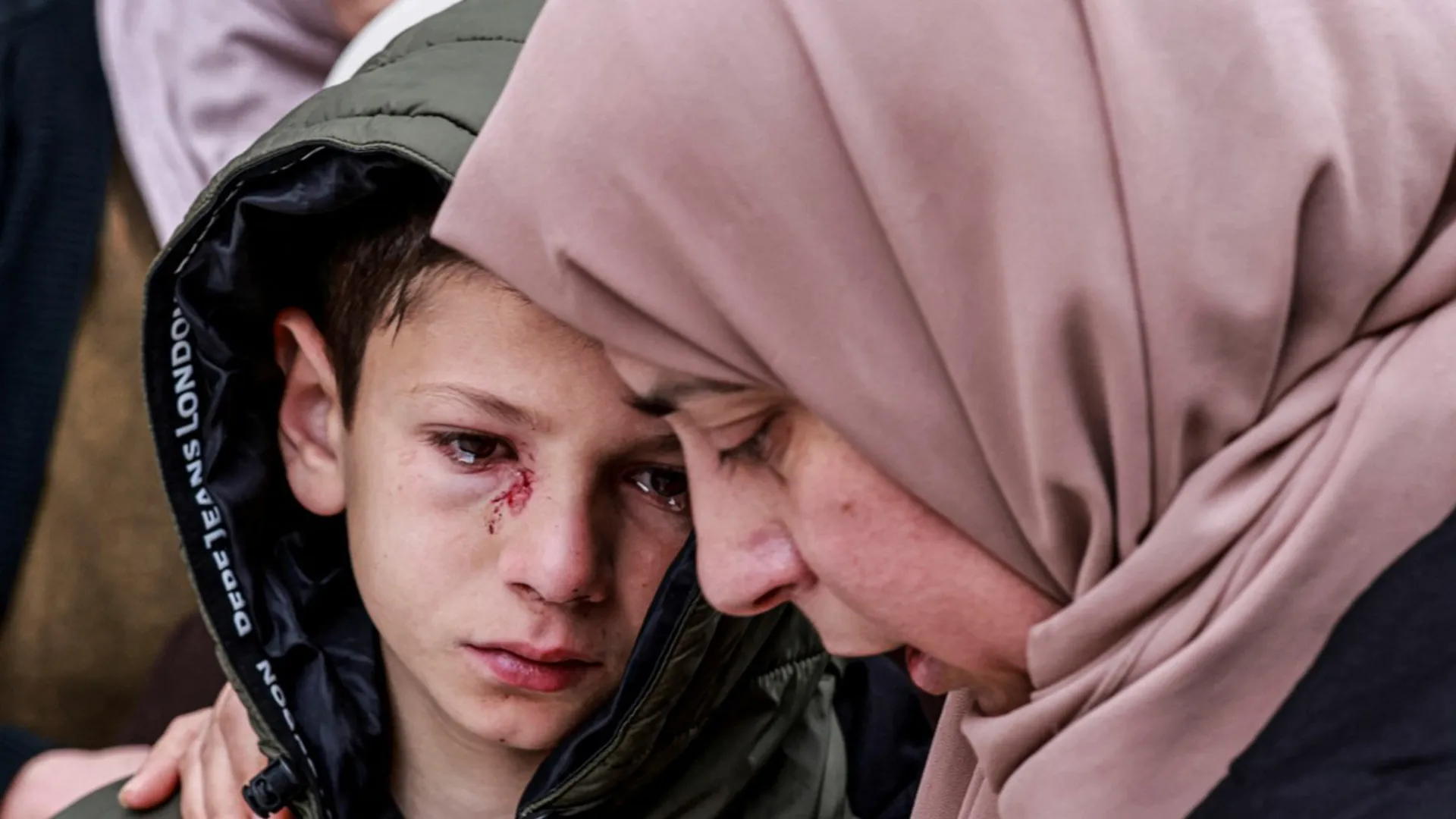
Two Palestinian brothers are the only survivors after Israeli troops killed their parents and two siblings in Tammun in the occupied West Bank, according to Palestinian health authorities. The boys say soldiers opened fire on their family car and beat them after the shooting.
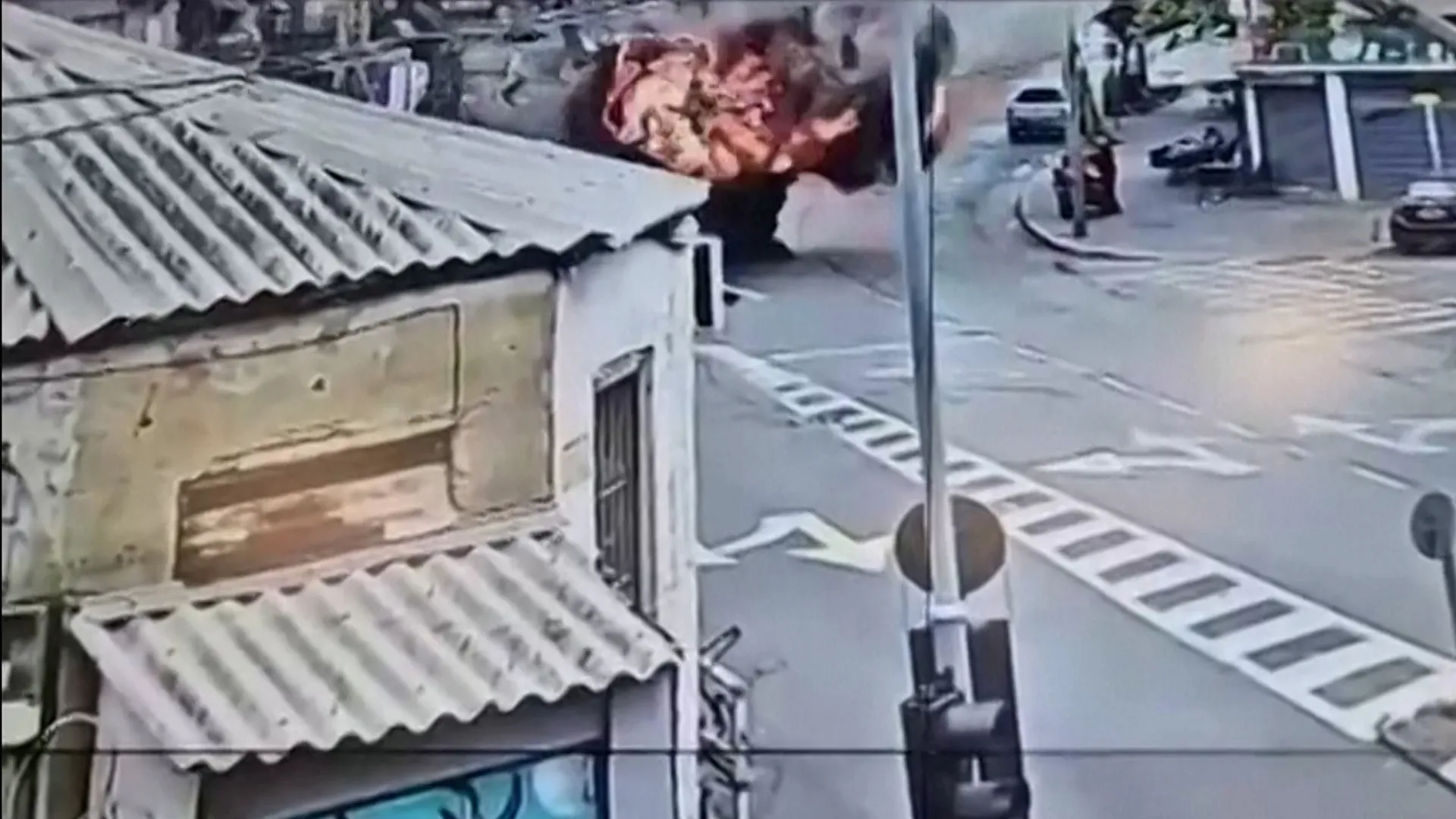
CCTV footage released by Israeli police shows the moment an Iranian missile struck a street in Tel Aviv. Emergency crews say at least three people were injured, and several vehicles were destroyed.
The Palestinian presenter delivered the network’s first-ever bulletin when it went on air in 1996.
Published On 15 Mar 202615 Mar 2026
Share
Al Jazeera Arabic presenter Jamal Rayyan, the first face ever seen on the channel when it launched nearly three decades ago, has died at the age of 73.
Rayyan passed away on Sunday after a broadcasting career spanning more than five decades, during which he covered major global and regional events for the channel – from the United States wars in Afghanistan and Iraq to the Arab Spring.
Recommended Stories
list of 4 itemsend of list
He had been with Al Jazeera since its first day on air on November 1, 1996, when he presented the channel’s opening bulletin at the start of what would become a major broadcaster in the Arab world.
Born in Tulkarem in the occupied West Bank in 1953, the Palestinian presenter began his career at Jordanian Radio and Television in 1974 before working with several broadcasters in the region and beyond, including Emirati television, South Korean public broadcasting, and BBC Arabic.
Rayyan later recalled being sworn to secrecy after being quietly selected for the historic role.
“The vice chairman of the board came and said to me, ‘You have been chosen to be the first face on Al Jazeera, but we want one thing from you: do not tell anyone,’” he told Al Jazeera’s In-Depth Studies, a collection of testimonies from the channel’s founders and early staff.
Measured delivery, distinctive voice
The announcement that Rayyan was presenting the first bulletin was made public half an hour before airtime. He entered the studio deliberately on an empty stomach, he recalled, to ensure he could breathe well and deliver.
“As the broadcast started, my heart began beating rapidly. However, after I appeared on the screen and said, ‘Welcome to the first broadcast of Al Jazeera channel,’ I returned to my natural state and finished the broadcast. As soon as I finished and exited the studio, the entire room erupted in applause,” Rayyan said.
He spent nearly three decades as one of Al Jazeera’s most recognisable presenters, building a following of 2.3 million on X.
Over the years, Rayyan became a familiar presence in homes across the Arab world, his measured delivery and distinctive voice closely associated with Al Jazeera’s news bulletins.
In the Arab world and beyond, his broadcasts and the channel’s editorial approach reached wide audiences and helped shape regional news coverage in the years that followed.
1 of 2 | Iranians stand inside their damaged residential building in southern Tehran, Iran, on Sunday. Photo by Abedin Taherkenareh/EPA
March 15 (UPI) — Israel said it launched a wave of airstrikes on Iran on Sunday as Iran carried out its own attacks on U.S. military sites and against U.S. allies in the Gulf region at large.
The Israeli military said its airstrike hit the Hamedan area of western Iran, hitting multiple military headquarters, The Times of Israel reported. The Israeli military said it plans to expand its attacks on western and central Iran “with the aim of broadly and systematically damaging the regime’s command and control capabilities.”
Israeli officials, meanwhile, said at least five people in the country were injured Sunday by Iranian missiles. Iran’s state-run Mehr news agency reported that the Iranian military has pledged to “pursue and kill” Israeli Prime Minister Benjamin Netanyahu “with force.”
The United Arab Emirates said it has seen a drop in Iranian attacks within its borders. The defense ministry said it intercepted four ballistic missiles and six drones Sunday.
Since the start of the war, it has faced more than 1,900 attacks by Iran.
Bloomberg reported that a key oil port on the UAE’s east coast — Fujairah — was back in operation Sunday after it was targeted by an Iranian drone Saturday. The port is about 70 nautical miles away from the Strait of Hormuz, which Iran closed earlier in the month to put pressure on its enemies’ abilities to transport oil. About one-fifth of the world’s oil passes through the strait.
Fujairah is situated at one end of a pipeline that allows the UAE to bypass use of the Strait of Hormuz entirely. The site exported an average of more than 1.7 million barrels of crude and refined fuels per day in 2025, about 1.7% of the world’s demand, The Guardian reported.
Officials said they intercepted a drone attack near the site, causing a fire there briefly.
British Energy Secretary Ed Miliband said his country was examining ways to reopen the Strait of Hormuz and keep oil flowing. In an appearance on Sky News’ Sunday Morning with Trevor Phillips, Miliband said Britain was in talks with allies.
“There’s different ways in which we can make maritime shipping possible. We are intensively looking with our allies at what can be done, because it’s so important that we get the strait reopened.”
The captain of the Iranian women’s football team has withdrawn her bid for asylum in Australia, Iran’s state media says, making her the fifth member of the delegation to change her mind after her team’s participation in the Asian Cup.
Zahra Ghanbari will fly from Malaysia and travel to Iran within the next few hours, the IRNA news agency said on Sunday.
Three players and one backroom staff member had already withdrawn their bids for asylum and travelled to Malaysia from Australia, where the team participated in the AFC Women’s Asian Cup.
Australia’s Home Affairs Minister Tony Burke said his country had offered asylum to all players and support staff members prior to their departure over fears they might be punished upon their return home after the team refused to sing Iran’s national anthem at the tournament.
Iranian state broadcaster IRIB reported on Saturday that the three had “given up on their asylum application in Australia and are currently heading to Malaysia”, posting a picture of the women allegedly boarding a plane.
The news was confirmed by Burke a few hours later.
“Overnight, three members of the Iranian women’s football team made the decision to join the rest of the team on their journey back to Iran,” Burke said.
“After telling Australian officials they had made this decision, the players were given repeated chances to talk about their options.”
Five players took up the offer and signed immigration papers last week, with one more player and a member of staff joining them a day later. It leaves two Iranian players in Australia, where they have been promised asylum and an opportunity to settle.
Iran played their three group games of the Asian Cup at the Gold Coast Stadium in Queensland on March 2, 5 and 8, after the United States and Israel launched their war on Iran on February 28.
The initial attacks killed Iran’s Supreme Leader Ayatollah Ali Khamenei and other leaders.
Overall, an estimated 1,444 Iranians have been killed since the war began, including more than 170 people, mostly schoolgirls, who were inside a primary school in the city of Minab.
After refusing to sing the Iranian national anthem at their first match, players on the Iranian women’s football team were branded “traitors” by an IRIB presenter.
When Iran played their second game of the tournament against Australia three days later, not only did the players sing the national anthem, but they also saluted it, prompting fears that they may have been forced to change their stance after receiving backlash in Iranian media.
While neither the players nor the team management explained why they refrained from singing before the first match, fans and rights activists speculated that it may have been an act of defiance against the Iranian government.
On the day of the team’s departure from Australia, Burke announced his government had offered all players and staff members the chance to stay back in the country.
On Tuesday, Burke told reporters that five Iranian players had decided to seek asylum in Australia and would be assisted by the government.
“They are welcome to stay in Australia, they are safe here, and they should feel at home here,” he said.
A day later, Burke confirmed that an additional player and a member of the team’s support staff had received humanitarian visas in the hours before their departure.
However, one player, who previously chose to stay behind, changed her mind and decided to return to Iran.
The player, who was later identified as Mohadese Zolfigol, changed her decision on the advice of her teammates, Burke told the Parliament of Australia.
“She had been advised by her teammates and encouraged to contact the Iranian embassy,” he said.
The players who managed to escape with the help of Iranian rights activists were taken away by Australian police officials to a safe house, where they met immigration officials and signed the paperwork.
“Our understanding is that every single member of the squad was interviewed independently by the Australian Federal Police,” Beau Busch, the Asia/Oceania president of players’ welfare body FIFPRO told Al Jazeera last week.
“[The players] were made aware of their rights and the support available to them. They certainly weren’t rushed through that process.”
March 15 (UPI) — The Department of Defense has identified the six U.S. service members killed during a refueling mission as part of the Iran war as three members of an Air Force refueling wing and three from the Ohio Air National Guard.
The six crew members were aboard a Boeing KC-135 Stratotanker — a refueling aircraft — when it crashed Thursday in western Iraq, which was considered friendly airspace.
Among the dead were four airmen assigned to the 6th Refueling Wing at MacDill Air Force Base in Tampa, Fla.: Maj. John A. Klinner, 33, of Auburn, Ga.; Capt. Ariana G. Sabino, 31, of Covington, Wash.; and Tech Sgt. Ashley B. Pruitt, 34, of Bardstown, Ky. The three were part of the 99th Air Refueling Squadron based out of Sumpter Smith Joint National Guard Base in Birmingham, Ala.
Shortly after their identities were made public, Alabama Gov. Kay Ivey offered her condolences on X.
“Three of the service members who lost their lives in duty to our nation were stationed at the 117th in Birmingham,” she posted. “They were not only outstanding Airmen. They were our neighbors — our fellow Alabamians. May their service and that of their families never be forgot.
Three others were assigned to the 121st Refueling Wing at Rickenbacker Air National Guard Base in Columbus, Ohio: Capt. Seth R. Kobal, 38, of Mooresville, Ind.; Capt. Curtis J. Angst, 30, of Wilmington, Ohio; and Tech Sgt. Tyler H. Simmons, 28, of Columbus, Ohio.
Ohio Gov. Mike DeWine and his wife, Fran DeWine, were mourning the loss of the three airmen who operated out of Ohio and were trained to do work that was “critical in long-distance missions in defense of our nation.”
“Every mission they undertook involved risks that they were willing to take and the courage to put the lives of others above their own,” he wrote in a post on X.
“They served with honor.”
The Pentagon said the crash that led to the service members’ deaths was under investigation. A second Boeing Stratotanker involved in the incident declared an emergency before landing in Tel Aviv with no one on board injured.
Thirteen U.S. service members have died in connection to the Iran war, which began in late February.
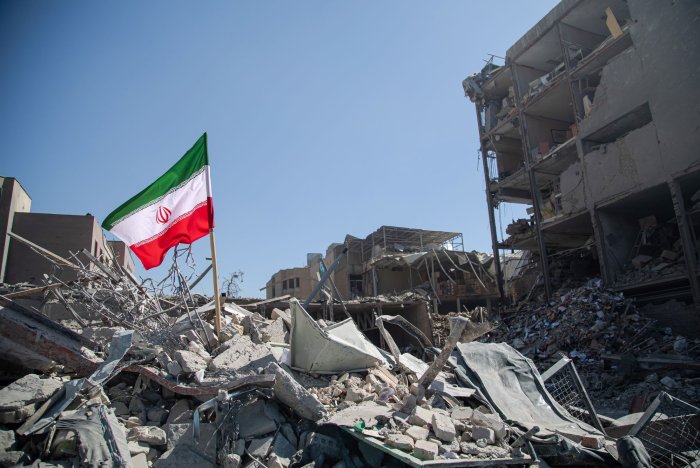
An Iranian flag stands amid the destruction in Enghelab Square following the attacks carried out by the United States and Israel on Tehran, Iran, on March 4, 2026. Photo by Nahal Farzaneh/UPI | License Photo
The decision by United States President Donald Trump to launch a war on Iran has left many international law experts questioning if the world order established after World War II is actually working.
In his second presidential term, Trump seems to be wielding total power without restraint, and the system of checks and balances enshrined in the US Constitution appears to be failing to limit his power.
Recommended Stories
list of 4 itemsend of list
Since Trump was sworn in in January 2025, he has ordered two unprovoked attacks on independent states, Venezuela and Iran; threatened to annex Greenland; strained traditional alliances with Europe; undermined the United Nations; and rattled international trade with his sweeping tariffs.
Previous constraints set by the UN system and international law appear supplanted by what Trump told reporters in January was a vision of power limited only by his “own morality”.
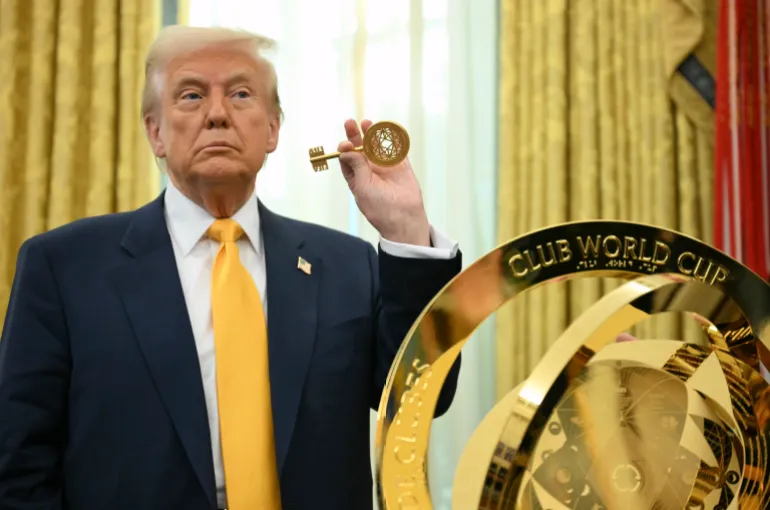
President Donald Trump holds the key to unlock the FIFA Club World Cup trophy, which he said is staying at the White House, requiring a replica to be presented to the tournament’s winners, Chelsea, in July 2025 [File: Pool via AP]
So what checks are there on Trump? Is he really free to attack states, set tariffs at will and, as leader of the world’s most powerful state, essentially dictate global policy? And if so, why are so many observers now saying his war on Iran is faltering?
Has international law put any checks on Trump?
Not so far.
According to analysts, both his attacks on Venezuela and Iran were in clear breach of international law and the UN Charter, principally the prohibition on the use of force under Article 2(4).
Debates about international law, how it has been geared over the decades to underpin the interests of the West and the US specifically, are hardly new. However, experts said, the Trump presidency has seen even the notional restraints of international law trampled underfoot.
Trump himself has brushed aside international law, saying in January that it would be up to him to decide when and how much international law applied to the US and his actions.
“In many respects, international law has historically served US interests, and self-interest should continue to generate US support for a rules-based order organised around the core principles enshrined in the UN Charter,” Michael Becker, a professor of international human rights law at Trinity College in Dublin who previously worked at the International Court of Justice in The Hague, told Al Jazeera, “But finding value in international law often requires adopting a long-term outlook that does not sit easily with short-term political agendas.”
“In the current geopolitical climate, the capacity of international law to provide a meaningful constraint on US action under Donald Trump has proven negligible,” Becker added. “That seems unlikely to change, especially given the failure by other states to strike a united front against Trump’s gangsterism.”
What about the UN?
Not so much.
From its founding, the role of the UN has been to promote dialogue instead of conflict and provide a global response to international challenges. However, Trump’s relationship with the body, like so many of the president’s associations, has rarely been so straightforward. On the one hand, while appearing to try to supplant the body with his members-only Board of Peace as well as sidelining UN aid efforts in Gaza, he has on occasion sought the legitimacy of the UN for a number of his projects, such as his calls in August for the UN to establish a Support Office in Haiti, to help limit migration to the US.
However, while the support of the UN may be helpful, it is clear that Trump has no intention of abiding by its charter, Richard Gowan, the Crisis Group’s UN director from 2019 to 2025, said.
“While other UN members see the US is breaking international law on a regular basis, they often hold back from criticising Washington too loudly in forums like the Security Council because they fear blowback from Trump,” Gowan said. “So Trump is learning he can sidestep the UN when he wants to and get away with it while occasionally using it for instrumental purposes.”
What about other powers?
Up to a point.
Many countries known as “middle powers”, such as Canada, the United Kingdom, France, and other Western and European states, have proven successful so far in pushing back against Trump’s efforts to unilaterally annex Greenland. But European powers have failed to condemn Trump’s unprovoked war on Venezuela and Iran, exposing their double standards in conflicts in the Middle East and the Global South.
Many analysts expect that a withdrawal of investments in the US by Gulf states, which are bearing the brunt of Iran’s retaliation to US and Israeli attacks, may also hasten the war’s end.
“Middle powers can generate friction but not a veto,” HA Hellyer of the Royal United Services Institute for Defence and Security Studies in London said. “Collective action – European governments, Gulf states – can raise costs and extract tactical adjustments. The structural imbalance remains: The US retains decisive military, financial and institutional primacy.”
Smaller states often hedge their bets, follow Washington or look to regional alliances for protection, Hellyer added, continuing that while pressure was strongest in Europe, where the US is no longer seen as a reliable security guarantor, the idea of establishing an alternative continues to be a hurdle. “The logic of an alternative model is accepted; the capacity to execute it quickly is not. A prolonged interregnum follows. The Gulf Arab states are in an analogous position,” he said.
In the meantime, Trump and the US are free to act as they choose. “These are exposure-management strategies, pursued until structural dependence on the US security umbrella can be reduced,” he said.
China and Russia have so far criticised the breaches of international law while avoiding clear escalation, and India and other members of the BRICS bloc have largely stayed silent, suggesting a preference for strategic ambiguity over confronting Washington directly.
Canadian Prime Minister Mark Carney warned Trump of a ‘rupture’ in the Western alliance at the World Economic Forum in Davos, Switzerland, in January 2026 [File: Denis Balibouse/Reuters]
What about domestic restraints?
Not really.
The US Supreme Court was able to block Trump’s use of tariffs to manage large parts of his foreign policy by rewarding allies with lower tariffs and punishing critics with punitive import duties.
But none of the other traditional guardrails – such as Congress; the Department of Justice, which has provided unwavering support to the president; and even the news media – has contained the president’s ambitions. This isn’t entirely new. Previous presidents have ordered wars without congressional approval. However, with Trump, analysts suggested, it has been systematic.
Powerful US institutions have largely failed to hold the Trump administration accountable, analysts, such as Kim Lane Scheppele, a professor of international affairs at Princeton University, said.
“His base of strong supporters are saying that they are willing to experience short-term increases in gasoline prices if it leads to a friendly government in Iran in the long term. His opponents have been his opponents on everything, so he simply ignores and threatens them,” Scheppele told Al Jazeera.
“Trump pays more attention to market performance than to public opinion, so he started saying that he was minimising costs and saying that the Iran war is short term to boost markets again.”
“What the US is spectacularly missing is leadership to oppose Trump. Congress is not doing its constitutional job to constrain him. The Supreme Court is in his pocket because he packed the court in his first term. Lower court judges are heroic and have done amazing work under serious pressures, but they don’t get foreign policy questions, given the difficulty of anyone getting ‘standing’ … in the area of international matters,” she said, referring to the requirement that parties to a lawsuit must show actual or future direct harm to themselves to bring a case to court.
She noted that lower federal courts, although limited on foreign policy, have repeatedly checked executive overreach on immigration, sanctions designations and emergency powers, often under intense political pressure.
A bulk carrier and tanker at anchor in Muscat, Oman, as Iran has essentially closed the Strait of Hormuz by threatening to attack vessels transiting the waterway [File: Benoit Tessier/Reuters]
So why are so many people saying Trump’s war is faltering?
In the eyes of many observers, Trump, with no clear war aims or a defined resolution, is in danger of losing control of a conflict that appears to be both growing and reaching into economic areas apparently unforeseen by his administration, so while traditional restraints don’t apply, market forces, like gravity, always do.
Trump has repeatedly said the war would be over soon despite none of his claimed war aims being achieved.
Oil prices have surged due to his attacks on Iran, Tehran’s counterstrikes and threats to shipping in the Strait of Hormuz, through which about 20 percent of the world’s oil and liquefied natural gas passes.
The International Energy Agency’s decision on Wednesday to release 400 million barrels of oil from international petroleum reserves has failed to tame the prices. Iran has warned that oil could hit $200 a barrel as it continues its stranglehold of the waterway.
“Ultimately, the factors that might be most likely to constrain Donald Trump’s neoimperialist impulses – or his willingness to pursue the policy goals of those who have his ear – are the economic fallout from disrupting global energy markets and a broader disenchantment among US voters with his globe-trotting militarism, his rampant self-dealing and his callous disregard for the human costs of war,” Becker said.
Ebrahim Zolfaghari, spokesperson for Iran’s Khatam al-Anbiya Central Headquarters, accused the US and Israel of orchestrating a ‘diabolical plot’, claiming they copied Iran’s Shahed-136 drone design and repurposed it as a modified ‘Lucas’ drone to falsely blame Tehran for drone attacks across the region.
The 19-year-old converts his pole position into a historic win to consolidate Mercedes’s hold early in the F1 season.
Published On 15 Mar 202615 Mar 2026
Share
An emotional Kimi Antonelli has won a Formula One grand prix for the first time in China ahead of Mercedes teammate George Russell and Lewis Hamilton, who made his maiden podium for Ferrari.
The 19-year-old Antonelli converted being the youngest pole-sitter in Formula One history into victory on Sunday after both McLarens dramatically failed to start the Shanghai race.
Recommended Stories
list of 4 itemsend of list
“Thank you, everyone. Thank you so much. You made me achieve one of my dreams,” Antonelli said over the radio after taking the chequered flag.
“I’m speechless. I’m about to cry to be honest,” he said in his first interview as a winner in front of the Shanghai circuit crowd before doing just that.
It was a nervous finish for the Italian, who locked up and went wide with three laps to go, cutting his lead over Russell to 7.4 seconds and finishing 5.515 clear.
Antonelli wipes away tears before a pit-side interview after winning the Chinese GP [Jade Gao/AFP]
It was Mercedes’s second successive one-two after Russell led Antonelli in the Australian opener last weekend.
“I gave myself a little bit of a heart attack towards the end with the flat spot [on his tyres],” said the first Italian winner since Giancarlo Fisichella for Renault in Malaysia in 2006. “It was a good race.”
Formula One Chief Executive Stefano Domenicali, also Italian, congratulated Antonelli before the podium celebrations and the playing of the Italian national anthem.
Antonelli, centre, celebrates on the podium with second-placed Russell, left, and third-placed Hamilton [Hector Retamal/AFP]
Antonelli briefly lost the lead at the start, but once he got back in front, the teenager controlled the pace to cruise home to the chequered flag. Charles Leclerc was fourth in the second Ferrari.
Hamilton, as he had done in Saturday’s sprint, got a great start and had taken the lead by the time the teams emerged from the first complex of turns.
Leclerc also launched brilliantly and managed to get past Russell, who started second on the grid.
The top four swapped places multiple times before a safety car on lap 11 brought them all into the pits.
Once the dust settled and they were racing again, Antonelli led Hamilton with Leclerc third and Russell fourth.
Mercedes team members celebrate as Antonelli crosses the finish line [Hector Retamal/AFP]
By lap 29, Russell had got past both Ferraris and up to second and set off trying to catch his young teammate, who was by that time more than seven seconds up the road.
Four-time world champion Max Verstappen continued Red Bull’s poor start to the new season when he was told to retire his car on lap 46.
McLaren’s reigning world champion, Lando Norris, and teammate Oscar Piastri both failed to start due to problems with their cars.
Oliver Bearman was fifth for Haas ahead of Alpine’s Pierre Gasly and Racing Bulls’ Liam Lawson.
Isack Hadjar took eighth for Red Bull after teammate Verstappen retired. Carlos Sainz was ninth for Williams, and Franco Colapinto was finally back in the points for Alpine in 10th after failing to score last year.
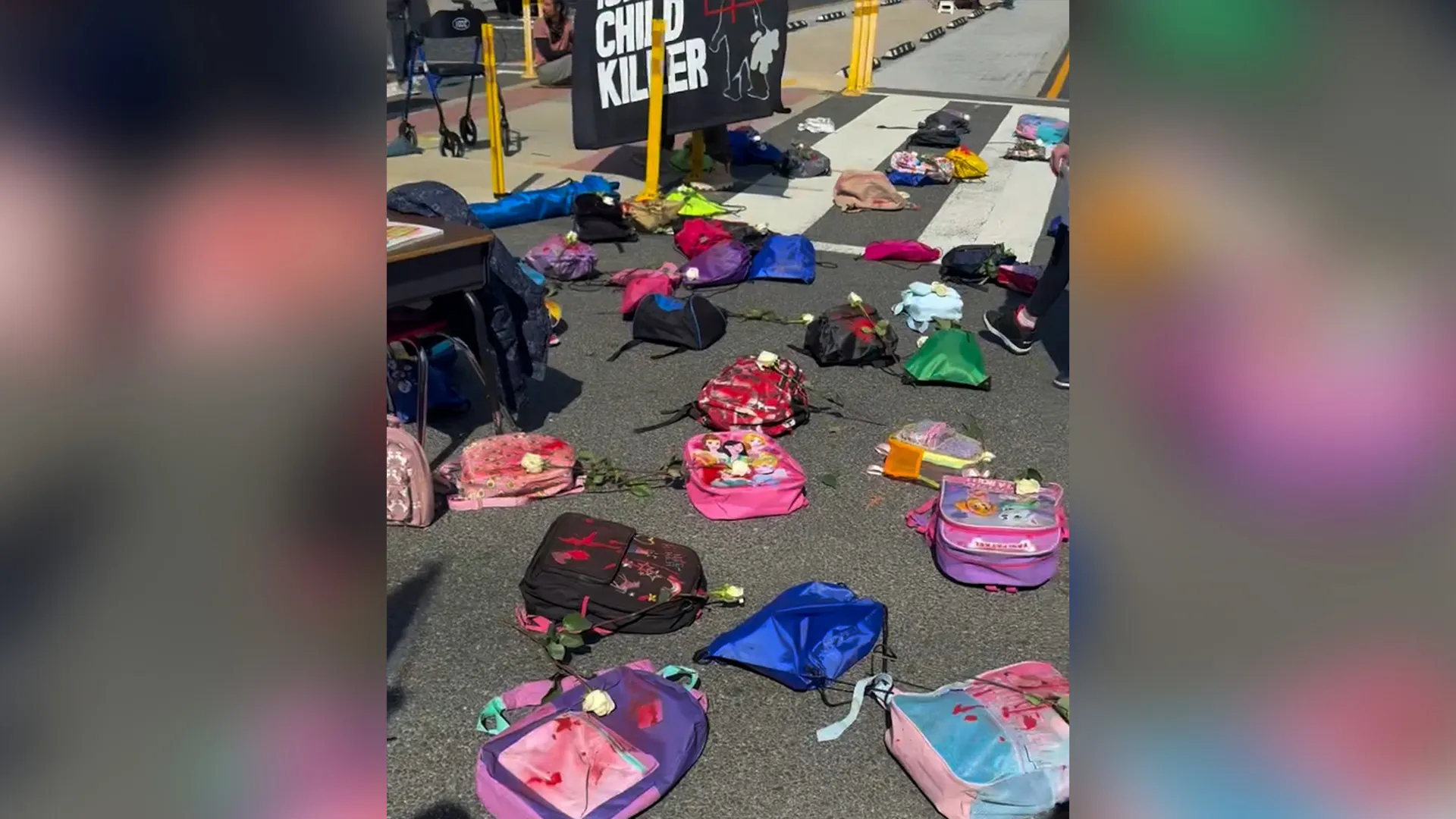
Activists gathered outside the White House to protest the war with Iran, reenacting the Minab school strike, a deadly missile attack on a girl’s school in southern Iran that killed more than 170 people during early US-Israeli operations.
The Qatar GP, scheduled for April 10-12, has been rescheduled for November 8 amid the ongoing US-Israeli war on Iran.
Published On 15 Mar 202615 Mar 2026
Share
The Qatar Grand Prix that was scheduled to be held next month has been postponed due to the ongoing conflict in the Middle East, the sport’s governing body announced.
“MotoGP confirms that the Qatar Grand Prix, originally scheduled for April, has been postponed to November 8 due to the ongoing geopolitical situation in the Middle East,” MotoGP said on Sunday.
The Lusail International Circuit was set to host the fourth round of the 2026 championship from April 10-12 but it has now been rescheduled for November 8, organisers said in a statement.
“Following extensive scenario planning and calendar analysis, the revised date has been chosen to ensure minimal disruption to the wider MotoGP schedule.”
The Portuguese Grand Prix will now take place on November 22 and the season finale in Valencia will move to November 29, organisers added.
Aprilia’s Marco Bezzecchi leads the championship after the first round in Thailand. The next two races will be held in Brazil (March 20-22) and the United States (March 27-29).
Earlier on Sunday, Formula One and its governing body, FIA, said the Grands Prix races in Bahrain and Saudi Arabia will not happen in April due to safety concerns related to the Iran war.
Both countries have been hit during Iran’s retaliatory attacks after the United States and Israel launched a wave of strikes on Iran.
The announcement was made in Shanghai ahead of the Chinese Grand Prix.
“Due to the ongoing situation in the Middle East region, the Bahrain and Saudi Arabian Grands Prix will not take place in April,” F1 said. “While several alternatives were considered, it was ultimately decided that no substitutions will be made in April.”
F1 was due to race in Bahrain on April 12 and in the Saudi Arabian city of Jeddah on April 19.
“While this was a difficult decision to take, it is unfortunately the right one at this stage considering the current situation in the Middle East,” said Stefano Domenicali, president and CEO of F1.
“The FIA will always place the safety and well being of our community and colleagues first. After careful consideration, we have taken this decision with that responsibility firmly in mind,” FIA’s president, Mohammed Ben Sulayem, said.
The FIA did not explicitly rule out rescheduling the races and, along with F1, did not use the words “cancel” or “postpone” in announcing that the series would not be in Bahrain or Saudi Arabia next month.
Vietnamese elect members of parliament from a list of candidates almost exclusively fielded by the governing party.
Published On 15 Mar 202615 Mar 2026
Share
Voters in Vietnam are casting their ballots for members of the National Assembly, the country’s top legislative body, which serves mainly to ratify decisions by the governing Communist Party.
Nearly 93 percent of the 864 parliamentary candidates in Sunday’s election are Communist Party members, while 7.5 percent are independents, according to the national election council, down from 8.5 percent in 2021.
Recommended Stories
list of 4 itemsend of list
The five-yearly elections in the tightly controlled one-party state will see more than 73 million voters elect 500 members of the National Assembly and representatives for local councils.
The Communist Party, which has ruled the Southeast Asian nation of 100 million people unopposed for decades, holds 97 percent of the parliamentary seats.
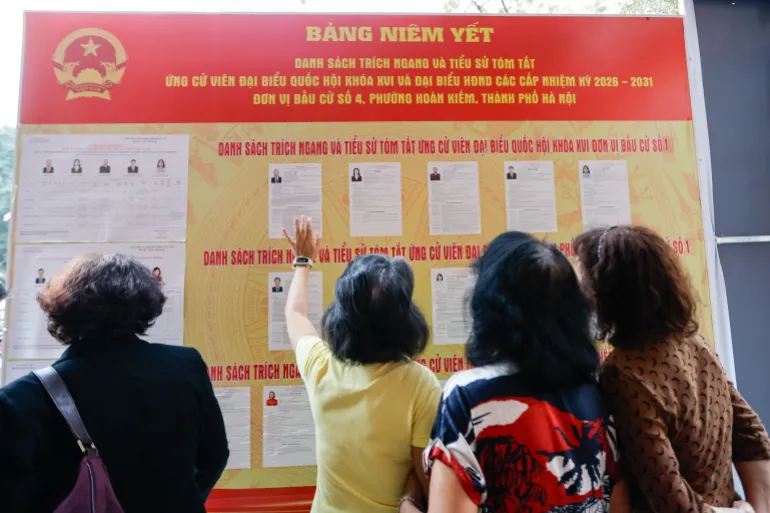
People look at the lists of candidates at a polling station in Hanoi, March 15, 2026 [Luong Thai Linh/EPA]
Voters expressed hope their representatives would continue modernising Vietnam, whose booming economy is undergoing major reforms introduced by top leader To Lam.
Red-and-yellow banners fluttered from lampposts and traffic lights in the capital, Hanoi, where well-dressed senior citizens were some of the first to vote.
“I do expect top leaders after this election will make major changes to make our country better,” Nguyen Thi Kim, 73, told the AFP news agency at a polling station set up in a community room of a high-rise residential block in Hanoi.
But in a country where major policies and projects are decided by senior cadres, many citizens feel lukewarm about elections. “I don’t think who wins will have any impact on my life,” said a woman, who gave her name as Huyen, in Hanoi.
Most polling stations are scheduled to close at 7pm (12:00 GMT), with results expected on March 23, parliament Chairman Tran Thanh Man told local media.
Voters cast ballots in Hanoi, Vietnam, March 15, 2026 [Hau Dinh/AP]
The opening plenary session of the National Assembly is scheduled for early April, when lawmakers are expected to approve the state’s top leaders previously nominated by the party, including the president and the prime minister.
The party confirmed Lam as its general secretary, Vietnam’s most powerful position, during its five-yearly congress in January, when it also selected the 19 members of the Politburo, its top decision-making body.
After voting on Sunday morning in Hanoi, Lam said on live television that the election aimed “to choose the most prestigious people to continue leading the country to more development”.
First-time voter Nguyen Kim Chi, 18, said she cast her ballot in the capital for “all the young” candidates.
“I know top positions are already set,” she added, “but I still hope my votes count.”
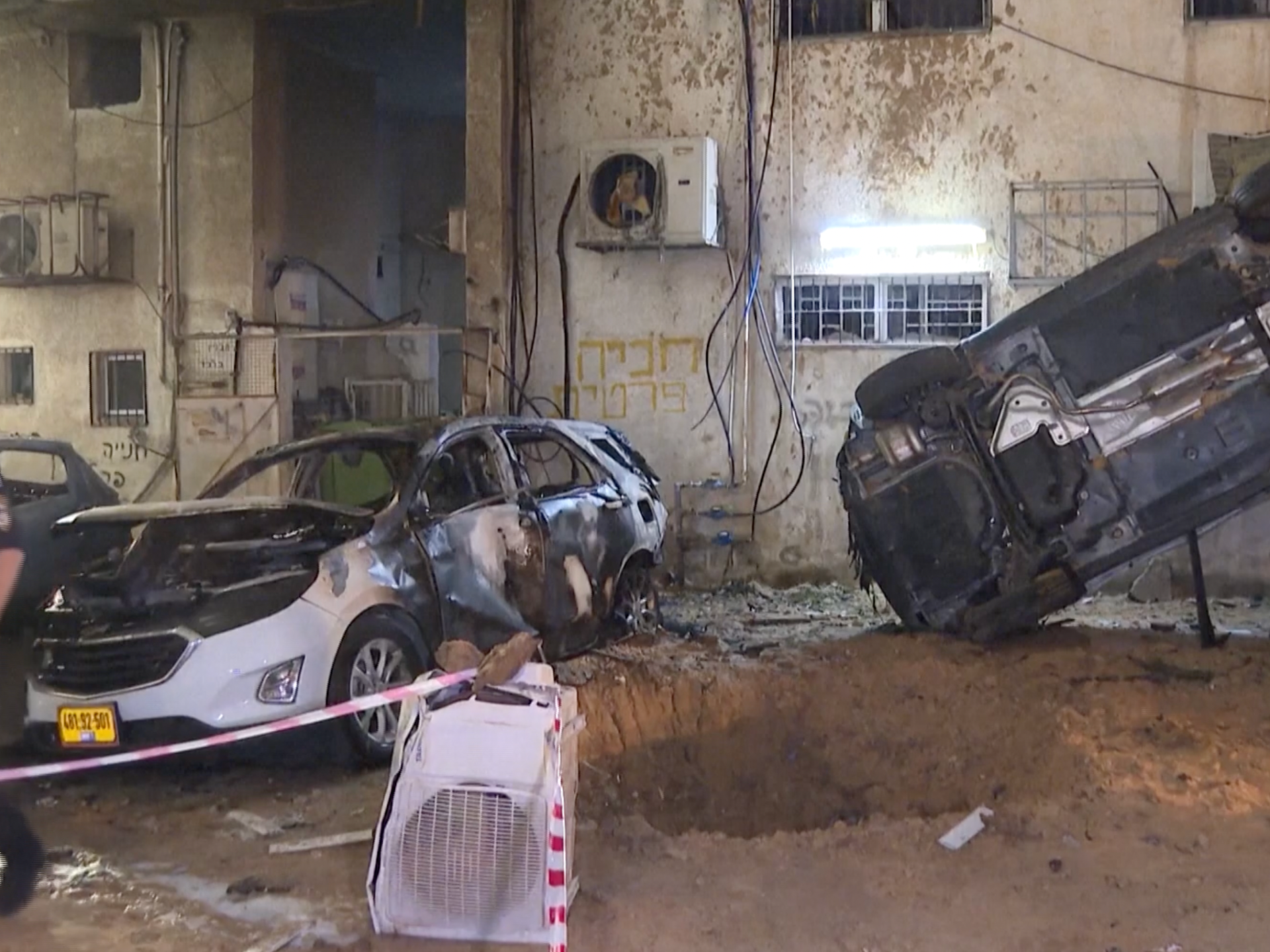
Cars were seen burned and one overturned in a town in Tel Aviv district caused by shrapnel after a wave of Iranian missiles struck central Israel. According to local police, three people were wounded.
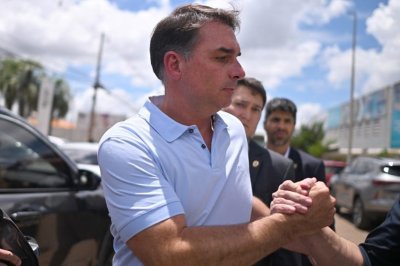
The son of former Brazilian President Jair Bolsonaro, Sen. Flavio Bolsonaro, reacts outside the hospital where his father was taken in Brasilia, Brazil, on Friday. Jair Bolsonaro, has been imprisoned in a Brasilia penitentiary after being sentenced to 27 years in prison for his role in a coup attempt. Photo by Andre Borges/EPA
March 13 (UPI) — Former Brazilian President Jair Bolsonaro was hospitalized Friday in Brasilia after doctors diagnosed a bacterial lung infection, authorities said, marking the latest health episode for the 70-year-old who is currently serving a prison sentence.
Bolsonaro was admitted to the DF Star hospital with fever, vomiting and low oxygen levels. Doctors later confirmed a case of bacterial pneumonia and began treatment with intravenous antibiotics while keeping him under medical observation.
The former president was transferred to the hospital from detention. Since January, he has been held in the officers’ wing of the 19th Military Police Battalion, known as “Papudinha,” in Brasilia, where he is serving a sentence of 27 years, three months in prison for an attempted coup.
Health issues have been a recurring concern for Bolsonaro since a 2018 assassination attempt during a campaign rally in the southeastern city of Juiz de Fora, where he was stabbed in the abdomen.
The attack caused severe internal injuries and required emergency surgery, forcing him to spend weeks recovering in hospital while continuing his presidential campaign.
Since then, Bolsonaro has undergone several abdominal procedures and has been hospitalized numerous times for intestinal obstructions, infections, hernia repairs and other chronic health problems. Doctors said Friday his condition is stable and that doctors continue to monitor the infection.
March 13 (UPI) — An Australian businessman was found guilty Friday of selling information to two people believed to be Chinese spies.
Alexander Csergo, 59, was convicted of reckless foreign interference in a Sydney court after compiling reports for two people he knew as Ken and Evelyn in Shanghai between 2021 and 2023. He faces up to 15 years in prison.
The prosecution alleged that Csergo believed they worked for Chinese intelligence agency the Ministry of State Security and acted recklessly about knowing if it would support Chinese intelligence.
His defense team argued he had only given them information that was publicly available and he included made-up quotes from people he pretended to have interviewed, including former Australian Prime Minister Kevin Rudd.
Csergo ran a business in Shanghai and was first approached by a woman on LinkedIn who said she was working for a think tank. She introduced him to Ken and Evelyn and said they had businesses in Australia, New Zealand and Canada.
Their meetings, in which he exchanged reports for cash, happened in empty cafes and restaurants, prosecutors said.
Ken and Evelyn gave Csergo a “shopping list” of subjects they wanted reports on. After he returned to Australia in 2023, officials searched his Bondi home and found the list, but Csergo said he never used that list.
Ken and Evelyn asked for reports about lithium mining, the German government, the Quadrilateral Security Dialogue and AUKUS, a trilateral security partnership between Australia, Britain and the United States. The Quad alliance is a non-military partnership between the United States, India, Japan and Australia.
Csergo’s defense attorney, Iain Todd, argued that there is no evidence he provided anyone with any national secrets.
The prosecution said the biggest value to Ken and Evelyn were Csergo’s contacts, but Todd said Csergo had no real contacts.
“He never spoke to interviewees. He lied about that,” Todd said. “He never gave access to anyone because there was no one to give access to.”
Some of the information in the report on lithium mining was labeled “gibberish” by experts.
Prosecutors said he exchanged about 2,800 WeChat messages with Ken and developed a collegial relationship with him.
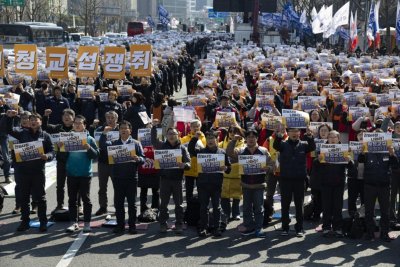
Members of the South Korean Confederation of Trade Unions (KCTU) shout slogans and hold up banners reading ‘Let’s fight for the basic rights of the Workers’ at a rally against the government’s labor policy in Seoul, South Korea, 10 March 2026. Photo by JEON HEON-KYUN / EPA
March 13 (Asia Today) —This commentary is the Asia Today Editor’s Op-Ed.
The atmosphere across industrial workplaces following the implementation of the so-called Yellow Envelope law is far from normal, with growing uncertainty emerging across the labor market.
Within two days of the law taking effect, 453 subcontractor unions representing nearly 98,500 workers filed collective bargaining requests against 248 prime contractor workplaces. With many unions closely watching the situation, the number of bargaining demands is expected to increase sharply once the first successful negotiations occur.
Most companies are struggling to respond effectively to the demands from subcontractor unions. Many firms believe the best course of action is to wait for decisions by the Central Labor Relations Commission and for court precedents to emerge through litigation.
Amid this uncertainty, attention is focusing on the activities of South Korea’s two major labor federations – the Federation of Korean Trade Unions and the Korean Confederation of Trade Unions – which have launched campaigns to expand their influence.
Both organizations view the new law as a major opportunity to increase union membership. With the national unionization rate hovering just above 10%, labor leaders believe the law could help reverse the trend.
The Federation of Korean Trade Unions, which had about 1.2 million members as of 2024, has launched an organizing task force with the goal of expanding its membership to 2 million.
The Korean Confederation of Trade Unions has also set an internal target of reaching 2 million members.
As the two federations compete for leadership within the labor movement, the revised labor law is emerging as a catalyst for organizational expansion. Subcontractor unions with limited bargaining power are increasingly turning to these larger labor groups for support.
The shift is already visible. The labor union at auto parts manufacturer Mando recently voted to rejoin the Korean Confederation of Trade Unions’ Metal Workers’ Union after 14 years.
Union leaders reportedly concluded that joining an industrywide union could help reduce job insecurity, particularly as corporate restructuring has become a potential subject of collective bargaining under the new law.
If even the union at a primary contractor such as Mando has decided to rejoin the federation, the choice for subcontractors, special employment workers and platform laborers with weaker bargaining power appears increasingly clear.
The public sector is also experiencing confusion.
While the government has stated that recognizing employer status in the public sector is generally difficult, President Lee Jae-myung offered a different message, saying the government should serve as a model employer.
As a result, collective bargaining demands are pouring in from outsourced workers and subsidiary employees affiliated with central and local governments as well as public institutions. Many of these public-sector unions are also expected to seek membership in the two major labor federations.
Subcontractor unions backed by the organizational strength and strike guidance of higher-level labor groups are likely to adopt a more aggressive stance in labor disputes.
In particular, the expansion of the Korean Confederation of Trade Unions – often criticized by companies for confrontational labor tactics – could undermine the stability of labor-management relations.
For companies operating in a rapidly changing business environment that demands specialization and efficiency, the situation presents growing challenges.
The competitiveness of government agencies and public institutions could also be affected.
If the government truly seeks to protect the livelihoods of citizens, it must prioritize the competitiveness of businesses and the national economy while taking steps to minimize disruption across industrial workplaces.
Islamabad hits Kandahar facility after Taliban drones strike civilian areas and military sites as conflict intensifies.
Published On 14 Mar 202614 Mar 2026
Share
Pakistan has carried out strikes on an Afghan military facility in Kandahar after Taliban drones targeted civilian areas and military installations across the country.
The strikes on Saturday came after Pakistani President Asif Ali Zardari condemned the overnight drone attacks, warning Kabul it had “crossed a red line by attempting to target our civilians”.
Recommended Stories
list of 3 itemsend of list
Pakistan’s military said the drones, described as locally produced and rudimentary, were intercepted before reaching their targets, though falling debris wounded two children in Quetta and civilians in Kohat and Rawalpindi.
A security source told the AFP news agency that airspace around the capital, Islamabad, had been temporarily closed when the drones were detected.
Islamabad said the Kandahar facility had been used both to launch the drone attacks and as a base for cross-border rebel activity.
The exchange marks the sharpest single escalation yet in a conflict that has been building since late February, when Pakistan launched military operations against what it said were Pakistan Taliban fighters sheltering on Afghan soil.
Islamabad also accuses Kabul of harbouring fighters from the ISIL (ISIS) group’s Khorasan province affiliate.
The Taliban government has denied both charges.
The drone attacks followed Pakistani strikes on Kabul and eastern border provinces in Afghanistan overnight on Thursday into Friday. The Pakistani attacks killed four people in the capital, women and children among them, and two more in the east.
In the Pul-e-Charkhi neighbourhood of Kabul, one resident described being buried under rubble after his home was hit, saying he lay there believing it was his “last breath” before neighbours pulled him free.
A local representative told AFP that those killed were “ordinary people, poor people” with no involvement in the conflict.
Pakistani aircraft also struck a fuel depot belonging to the private airline Kam Air near Kandahar airport, which an airport official said supplied aid organisations, including the United Nations and the International Committee of the Red Cross.
The official added that there were “no military installations” at the site.
Afghanistan’s Ministry of Defence claimed that its forces had captured a Pakistani border post and killed 14 soldiers.
Islamabad dismissed the assertion as baseless, with the prime minister’s spokesman accusing the Taliban of “weaving fantasies” rather than dismantling rebel networks on Afghan territory.
The UN mission in Afghanistan says at least 75 civilians have been killed and 193 injured since hostilities intensified on February 26, a toll that includes 24 children.
According to the UN refugee agency, about 115,000 people have been forced from their homes.
The crisis is unfolding as the wider region remains engulfed by the US-Israeli war with Iran, which began just two days after the Pakistan-Afghanistan clashes escalated.
Chinese Minister of Foreign Affairs Wang Yi has urged both sides to pursue dialogue, warning that further force would only deepen the crisis, though his appeal came as Pakistani jets were already in the air over Kandahar.
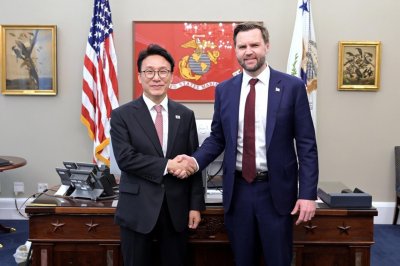
South Korea Prime Minister Kim Min-seok (L) with US Vice President JD Vance ahead of their talks at the White House in Washington DC, USA, 12 March 2026. Courtesy of the Embassy of the Republic of Korea in the United States
March 13 (Asia Today) — South Korean Prime Minister Kim Min-seok met U.S. Vice President J.D. Vance at the White House in Washington on Wednesday to discuss bilateral investment, trade issues and developments on the Korean Peninsula.
The meeting came about 50 days after the two leaders first met during Kim’s visit to Washington in January.
Kim highlighted the passage of a special law supporting South Korean investment in the United States, which cleared the National Assembly earlier this week.
He said the legislation demonstrates Seoul’s commitment to implementing bilateral investment agreements and could contribute to revitalizing U.S. manufacturing and job creation.
Kim added that the measure could also accelerate implementation of agreements outlined in a joint fact sheet between the two countries, including cooperation in areas such as nuclear-powered submarines, nuclear energy and shipbuilding.
Vance welcomed the legislation, saying it provides a legal foundation for implementing investment agreements between the two countries, according to South Korea’s Prime Minister’s Office.
The two sides also discussed cooperation in critical minerals and issues related to non-tariff trade barriers.
Kim explained Seoul’s recent decision to allow U.S. companies to export mapping data from South Korea, describing it as a forward-looking step aimed at strengthening cooperation.
Vance praised the move and said the two countries should continue consultations on non-tariff trade barriers.
Kim also said issues previously raised by Vance during their January meeting – including concerns related to the e-commerce company Coupang and certain religious matters – are now being handled in a stable manner.
Vance said the United States respects South Korea’s domestic legal framework and thanked Seoul for continuing to communicate with Washington on issues of interest to the United States.
The leaders also exchanged views on the Korean Peninsula and reaffirmed that the door remains open for dialogue with North Korea.
They agreed to maintain close coordination on developments related to the peninsula.
South Korea’s Prime Minister’s Office said the meeting helped deepen personal trust between Kim and Vance and is expected to strengthen communication on key bilateral issues.
The office’s statement did not mention whether the two discussed the Section 301 trade investigation launched this week by the Office of the United States Trade Representative targeting several major trading partners, including South Korea.
However, the issue of non-tariff barriers raised during the meeting could be related to that investigation.
North Korea on Saturday staged another of its show-of-force ballistic missile launches — pictured is one launch during a test in December — that sent 10 missiles off its west coast, which traveled more than 200 miles and landed just outside the Japanese exclusive economic zone in the Sea of Japan. Photo by KCNA/EPA
March 14 (UPI) — North Korea launched 10 ballistic missiles into the sea on Saturday — which landed just outside Japan’s economic zone in the East Sea — in a show of force amid a U.S.-South Korea military exercise.
The launch, confirmed by the Japanese and South Korean defense ministries, is one of the largest North Korea shows of force that it has ever launched, The Japan Times and The Independent reported.
The missiles were launched from the west coast of North Korea, flying roughly 211 miles before falling just outside the Sea of Japan.
The Japanese Ministry of Defense in a statement called the launch a continued effort to “threaten the peace and security of Japan, the region and the international community.”
Shinjiro Koizumi, the Japanese defense minister, added that the ministry would remain in close contact with the United States and other allies “to remain fully vigilant and maintain surveillance in preparation for any unforeseen contingencies.”
The launch is the largest since at least November 2022, when Kim Jong Un’s regime launched a volley of 23 missiles that included short-range ballistic missiles and surface-to-air missiles, among others.
Analysts have said that it is unlikely that North Korea would attack U.S. or other nation’s assets in the region while the United States has diverted missile defense systems, among other things, to the Middle East amid the war in Iran.
They say, rather, that the show of force is meant to show that it can defend itself if it is invaded.
North Korea’s launch also comes as the United States and South Korea are about halfway through the annual 11-day Freedom Shield combined joint exercise that includes land, air and sea training events to allow the two nation’s armed forces to integrate seamlessly in combat.
One warship that was involved with the exercise, the USS Tripoli, an amphibious assault ship carrying 2,500 Marines and 2,500 sailors, has been redeployed to the Middle East to bolster U.S. military power there amid the war in Iran.
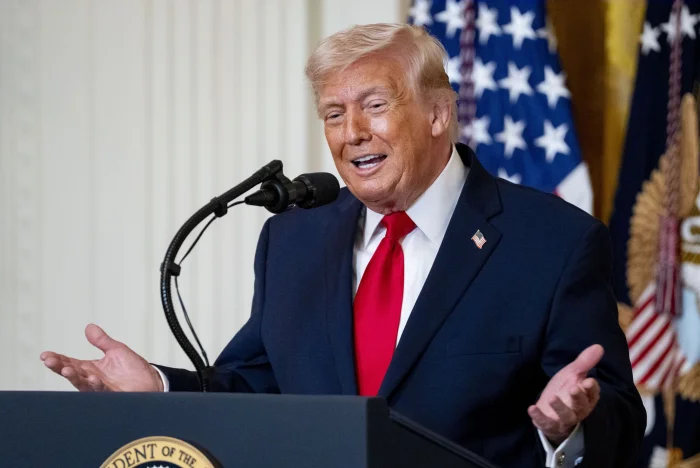
President Donald Trump speaks during an event celebrating Women’s History Month in the East Room of the White House on Thursday. Photo by Bonnie Cash/UPI | License Photo
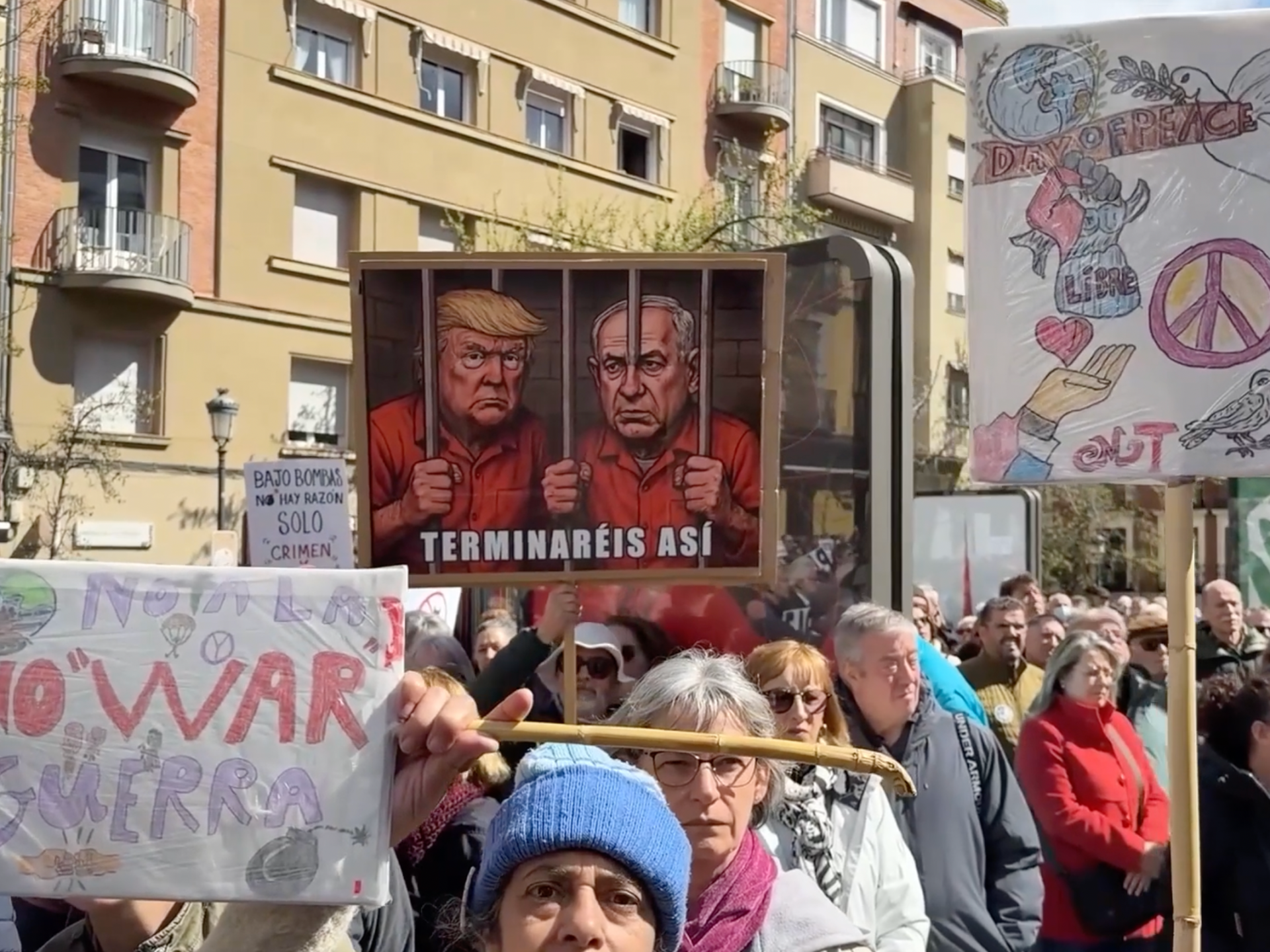
Thousands rallied in central Madrid calling for an end to the war involving the United States, Israel and Iran, with protesters warning the conflict could escalate into a global war.
March 14 (UPI) — President Donald Trump on Saturday said that a coalition of nations affected by Iran choking off the Strait of Hormuz will send warships to open it back up.
Trump said that although the United States and Israel have “destroyed 100% of Iran’s military capability” in its war in Iran, its attempt to close the strait — by attacking ships and possibly laying mines along the shipping route — is affecting global trade.
Iran started to limit traffic in the strait since the war started two weeks ago and on Thursday, Iran’s new supreme leader, Mojaba Khamenei, said it would remain closed as a tactic to pressure the United States and Israel to end their attacks on the country.
The Strait of Hormuz is a significant global trading route, and sees roughly 20% of the global oil and fuel supply pass through it every day.
“Many countries, especially those who are affected by Iran’s attempted closure of the Hormuz Strait, will be sending War Ships, in conjunction with the United States of America, to keep the Strait open and safe,” Trump said in a post on Truth Social, Axios and The Guardian reported.
“Hopefully China, France, Japan, South Korea, the UK, and others, that are affected by this artificial constraint, will send Ships to the area so that the Hormuz Strait will no longer be a threat by a Nation that has been totally decapitated,” Trump said.
On Friday, several news organizations confirmed with the Department of Defense that the USS Tripoli, an amphibious assault ship that was operating in the Philippine Sea, is headed to the Middle East.
The Tripoli brings with it 2,500 Marines of the 31st Marine Expeditionary Group, along with 2,500 more sailors, after U.S. Central Command requested additional military options for the conflict.
The 31st MEU can conduct ground operations, which the Trump administration has not ruled out in Iran, but Joint Chiefs of Staff Chair Gen. Dan Caines told reporters at a press conference that the Pentagon plans to go after Iran’s mine-laying capability and its ability to attack commercial vessels.
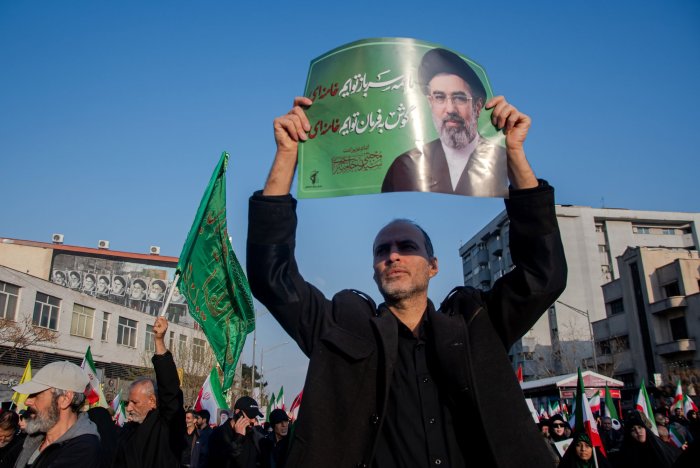
An Iranian man raises a portrait of new supreme leader Mojtaba Khamenei during a rally on Revolution Street in Tehran on March 9, 2026. Photo by Hossein Esmaeili/UPI | License Photo
Arsenal beat Everton 2-0 in a nervy match in the Premier League as they continue their pursuit of the title.
Published On 14 Mar 202614 Mar 2026
Share
Max Dowman, a 16-year-old Arsenal winger, became the Premier League’s youngest goalscorer with a remarkable stoppage-time strike in his team’s 2-0 win over Everton.
Dowman collected the ball midway in his own half, dribbled around two Everton players and raced clear unchallenged from the halfway line to tap into an empty net, with Everton goalkeeper Jordan Pickford stranded upfield having gone forward for a corner.
Recommended Stories
list of 4 itemsend of list
An English football prodigy, Dowman — at 16 years, 73 days — was playing just his third Premier League match after two previous substitute appearances at the start of the season.
He broke the record of former Everton player James Vaughan, who was 16 years, 270 days when he scored against Crystal Palace in 2005.
In November, Dowman became the youngest player in Champions League history at 15 years, 308 days when he entered as a second-half substitute against Slavia Prague.
Dowman is still in school. He was 14 when he was asked by Arsenal manager Mikel Arteta to train with the senior team in December last year, and he starred on the club’s preseason tour of Asia in matches against AC Milan and Newcastle.
To abide by Premier League regulations for players under 18, Dowman has to change into his Arsenal kit for training sessions and matches in a separate locker room from his senior teammates.