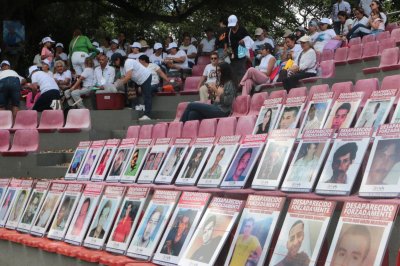
Secretary of Health and Human Services Robert F. Kennedy Jr. listens as Administrator of the Centers for Medicare and Medicaid Services Mehmet Oz whispers to him behind President Donald Trump at an announcement on healthcare affordability on Monday. On Tuesday, Kennedy hosted a symposium on children’s screen time. Photo by Annabelle Gordon/UPI | License Photo
Sept. 1 (UPI) — The U.S. Department of Health and Human Services encouraged families to reduce screen time for their children during a symposium Tuesday in Washington, D.C.
The event, called the Live Real Life Symposium, was held at the Hubert H. Humphrey Building and brought together “leaders from technology, medicine, research, education, government, and advocacy groups to examine the harms of screen use in children and discuss actionable approaches to supporting healthier childhood development,” a press release from HHS said.
The symposium also introduced The Magic Tablet, a children’s book released by HHS meant to communicate the Live Real Life principles in a children’s book format.
“Our children get one childhood, and we cannot allow screens to replace the real-world experiences they need to grow and thrive,” HHS Secretary Robert F. Kennedy Jr. said in a statement. “Through the Office of the Surgeon General’s ‘Live Real Life initiative,’ we are giving families practical tools to put technology in its proper place and get children back to playing, exploring, connecting and experiencing the world around them.”
The event was meant to build on the Surgeon General’s Warning on the Harms of Screen Use issued earlier this year, which outlines how factors such as age, content, design, purpose and duration influence when screen engagement may be beneficial and when it’s harmful.
“The well-being of children is not just important today, but must be an ongoing priority for the public health communities,” said Dr. Stephanie Haridopolos, director of national health communications for the Office of the Surgeon General and principal deputy assistant secretary for health. “Technology has a place in our lives, but it should never come at the expense of our children’s health.
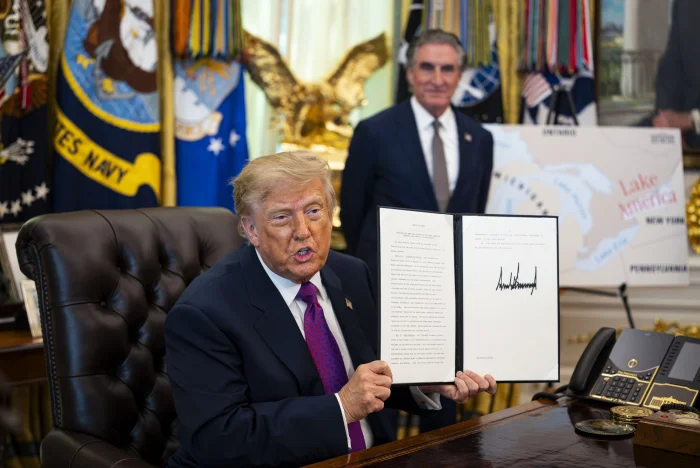
President Donald Trump signs an executive order to rename Lake Ontario as Lake America in the Oval Office of the White House on Thursday. Photo by Al Drago/UPI | License Photo
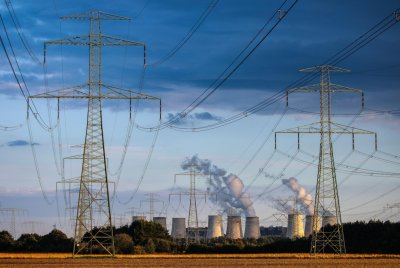
Power lines stand in front of the Janschwalde power plant in Turnow-Preilack, Germany, Tuesday. Several improvised explosive devices were found at a substation, damaging several power lines, according to police and a grid operator. The facility is an important hub in the Lausitz power grid and is connected to the nearby Janschwalde coal-fired power plant. Photo by Clemens Bilan/EPA
Sept. 1 (UPI) — Police in Brandenburg, Germany, said they found several improvised explosive devices at a coal-fired power plant in Tunow-Preilack, some of which hadn’t been detonated.
Power company 50Hertz said there was a “brief interruption of service” but that all power lines were back in operation at the substation. It distributes electricity from the Jänschwalde, Germany, plant.
Brandenburg Police in Potsdam asked the public for information or witnesses who may have seen something on Tuesday morning.
Also on Tuesday, Germany accused Russia of responsibility for a drone attack at Leipzig’s airport last month and announced new measures against Moscow.
While it’s not yet known who placed the IEDs at the power substation, the German interior minister said Germany is, “a daily target of hybrid attacks.”
Clash with Pennsylvania comes as US records highest number of measles cases in decades.
The United States Centers for Disease Control and Prevention (CDC) has removed two measles-associated deaths reported by the US state of Pennsylvania from the federal government’s national tally, in a move directed by the agency’s director, according to US media.
The move comes as the US records its highest number of measles cases in 35 years, and as concerns have grown of the administration of US President Donald Trump’s response to the outbreak.
Recommended Stories
list of 3 itemsend of list
Erica Schwartz, who was sworn in as CDC director in August, ordered the deaths to be excluded from the agency’s weekly measles update, according to current and former officials quoted by several US media organisations, including the New York Times.
The CDC had initially added the two cases to the website tracking national measles deaths, but later removed them, posting a notice saying it was reviewing additional information about the cases.
“At this time, available information does not establish whether measles caused or contributed to the deaths or whether the individuals died from other causes while infected with measles,” the CDC website read on Tuesday.
The Pennsylvania Department of Health announced on August 25 that two unvaccinated Lancaster County residents had died in cases it classified as “measles-associated”. They were the state’s first such deaths in 35 years.
“My deepest sympathies are with the loved ones who are facing this unimaginable loss,” Pennsylvania Health Secretary Debra Bogen said in a statement following the announcement.
“As a physician, I want to make sure that people understand that the MMR vaccine is safe and provides the best protection we have against measles.”
Questions over health policy
The CDC’s change comes after Health and Human Services Secretary Robert F Kennedy Jr, a prominent vaccine sceptic ahead of his appointment to the role, publicly questioned Pennsylvania’s cases last week.
In a post on X, Kennedy said the announcement “may even have been altogether fabricated by one of the Governor’s hopeful staffers”.
During a Fox News town hall on Saturday, Kennedy said he wanted Health and Human Services, a federal agency, to redirect resources to chronic disease and deaths linked to foodborne illness and away from infectious disease.
“Demagogue politicians are constantly trying to scare us about infectious disease, and we take the attention away from the chronic disease that is being caused … by big food companies, by big pharmaceutical companies,” Kennedy said on Fox News.
The CDC’s decision has raised concerns over whether the Trump administration will accelerate second-guessing state public health determinations.
Pennsylvania has disputed the federal account of what information was provided to the CDC, saying the deaths were reported to the agency’s measles response team and that state epidemiologists thoroughly investigated both cases.
Health experts have questioned several of the Trump administration’s health policies since the president took office for his second term in January 2025.
Earlier this month, President Donald Trump signed an executive order aiming to roll back recommended childhood immunizations and split the measles, mumps and rubella (MMR) vaccine into three separate doses, falsely suggesting that the combined vaccine can be lethal.
Several top medical organisations, including the American Academy of Pediatrics (AAP), have said spacing out the doses can create unneeded barriers to vaccines. That can in turn increase the number of unvaccinated children.
US says it is attacking IRGC targets following ‘attempted attacks’ on ships in Strait of Hormuz.
Published On 1 Sep 20261 Sep 2026
The United States military says it is conducting new strikes against Iran as fighting renews between the two countries.
The Middle East-based Central Command (CENTCOM) of the US military said on Tuesday that it was hitting Islamic Revolutionary Guard Corps (IRGC) targets.
Recommended Stories
list of 3 itemsend of list
“The strikes follow recent attempted attacks by the IRGC against commercial shipping in the Strait of Hormuz and against American service members deployed to the region,” CENTCOM said.
Iran has previously responded to similar US attacks, so the strikes risk sparking a new cycle of fighting.
Iranian semiofficial news agency Tasnim reported explosions in the south of the country, including in Konarak, Bandar Abbas and Qeshm Island.
Tuesday’s strikes follow an exchange of attacks on Sunday when the US military struck Larak Island in southern Iran and Tehran retaliated with missile launches against a base housing American troops in Jordan.
The fighting on Sunday saw the first attacks by both countries since July. The administration of US President Donald Trump had said that it was shifting its strategy from military strikes to intense economic pressure on Iran.
The US has imposed a naval siege on Iranian ports while threatening Tehran’s trade partners with secondary sanctions.
But Iran continues to assert its control over Hormuz – a major artery for the global energy trade. However, in recent weeks, Trump and his aides have said that the US is managing to get millions of barrels of oil through the strait daily despite the Iranian blockade.
Still, attacks on ships around the strait have been reported almost daily.
On Monday, the UK Maritime Trade Operations (UKMTO) said an oil tanker was hit by three “unknown projectiles” while transiting through Hormuz.
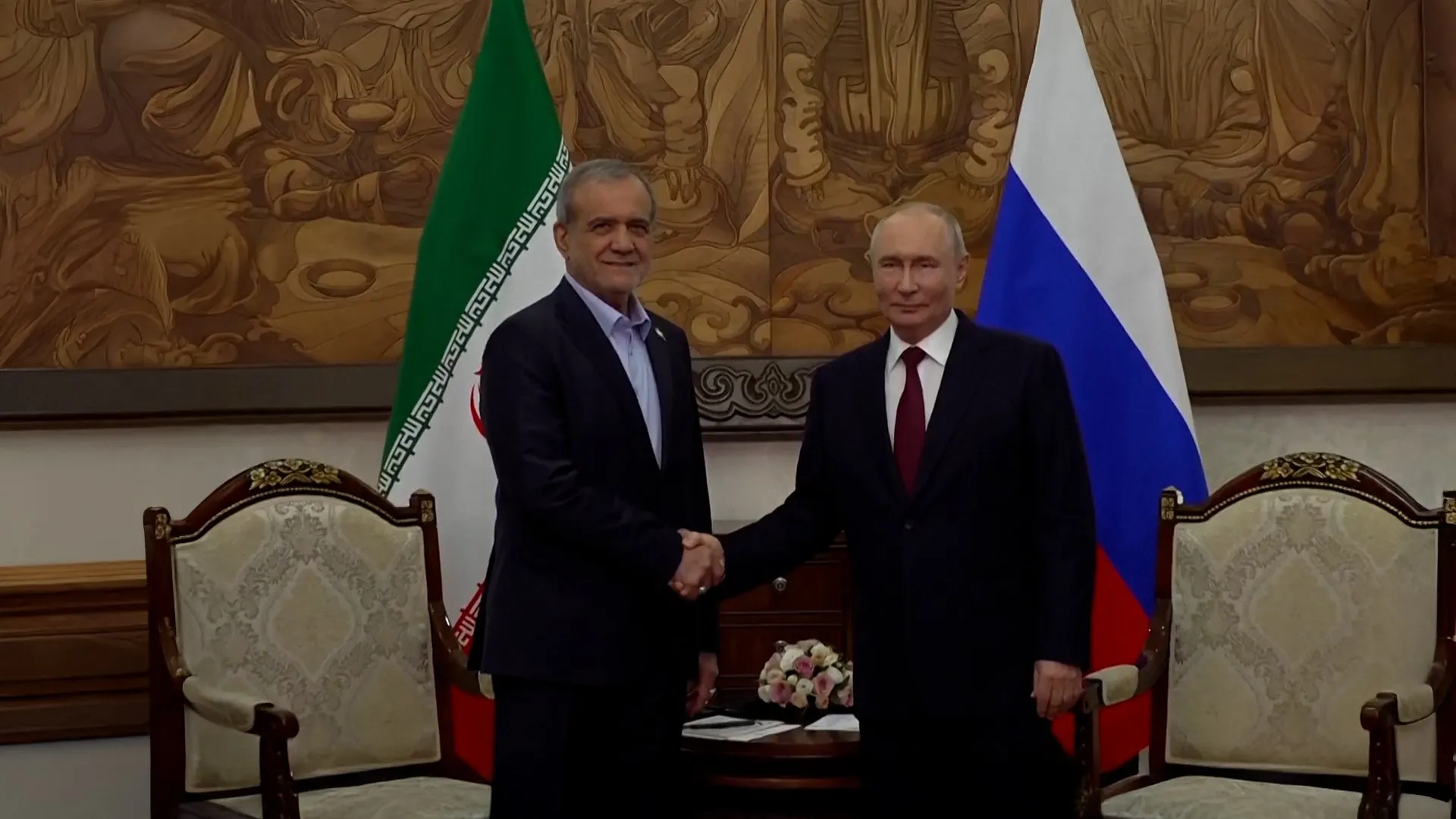
At the Shanghai Cooperation Summit in Kyrgyzstan, Iranian President Masoud Pezeshkian thanked Russian President Vladimir Putin for Moscow’s support during the war, stating that Moscow and Tehran will work together to resist US unilateralism and sanctions.
1 of 3 | Cargo vessels are seen at one end of the Strait of Hormuz near the coast of Dibba Al Fujairah, United Arab Emirates on July 21. File Photo by Stringer/EPA
Sept. 1 (UPI) — Two oil tankers were struck by unknown projectiles on the Strait of Hormuz while the renewed fighting between Iran and the United States sends oil prices on the rise again.
One Saudi Arabian and one South Korean oil tanker were hit by projectiles within minutes of each other on Monday night, the UK Maritime Trade Operations Centre reported. The organization said no casualties or environmental impact have been reported.
The strikes followed President Donald Trump warning of further escalation in the war with Iran.
The United States launched strikes on Iranian troops in Larak Island on Sunday, causing Iran to retaliate with strikes on U.S. bases in Jordan. Trump said in a TV interview on Monday that he planned to respond by hitting Iran “hard.”
Dr. Majid Al-Ansari, spokesman for the Qatari Foreign Ministry, said on Tuesday that the nation will re-up its efforts to bring the United States and Iran back to the table to discuss a peace agreement.
“This escalation will not benefit anyone,” Al-Ansari said. “We are all affected by this escalation. Therefore we urge the parties, first, to exercise wisdom and return to the negotiating track, and we continue and intensify our efforts with our mediation partners to ensure a return to this track.”
Meanwhile, Iranian President Masoud Pezeshkian said Iran would be open to returning to peace talks if the United States moves in that direction.
Oil prices increased by 2% early Tuesday on the back of escalating conflict between the United States and Iran. Brent crude oil, the international benchmark, was up 2% to $92 per barrel while West Texas intermediate, the U.S. benchmark, was trading for $88 per barrel.
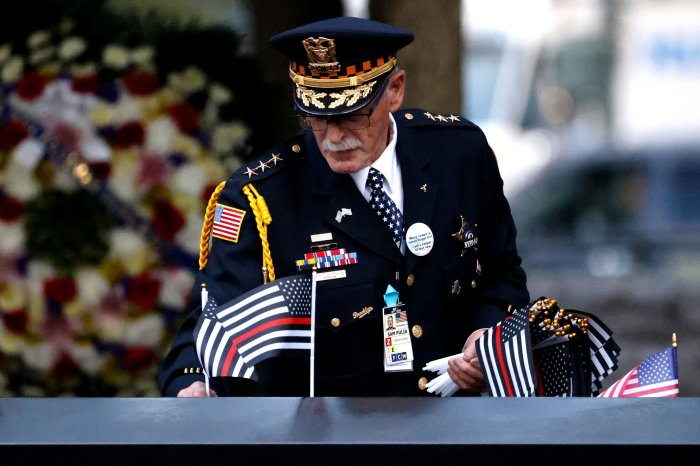
Retired Deputy Police Chief Sam Pulia places American flags at the 9/11 memorial south pool before the start of the 9/11 Commemoration Ceremony at the National September 11th Memorial and Museum in New York City on September 11, 2025. Nearly 3,000 died in the September 11 attacks. Photo by Peter Foley/UPI | License Photo
A 17-year-old girl has been indicted in North Carolina on murder and conspiracy charges over her alleged role in livestreaming and distributing footage of the May attack on a San Diego mosque that killed three people.
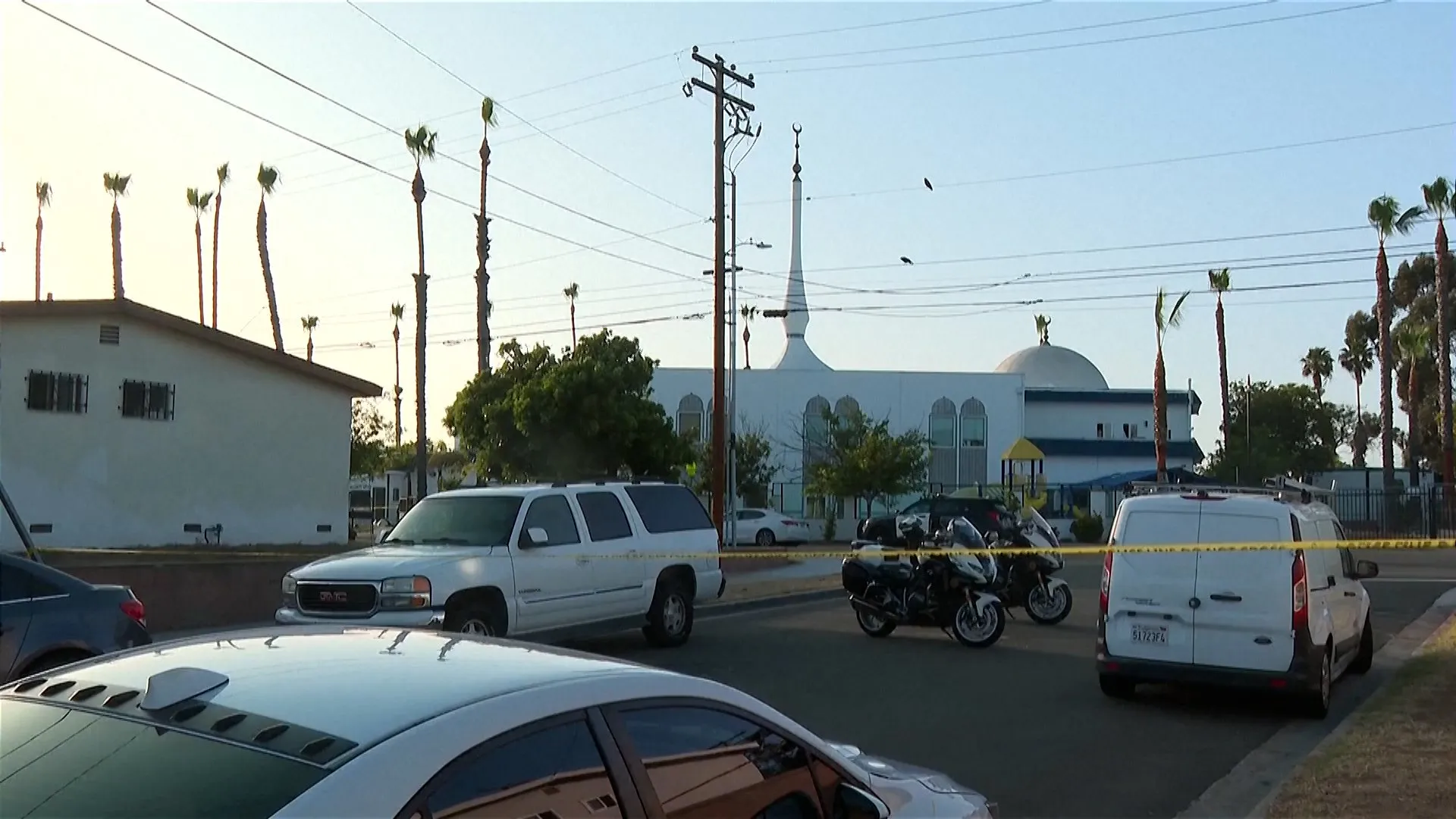
Sept. 1 (UPI) — A North Carolina grand jury has indicted a 17-year-old girl as an adult on charges of murder stemming from allegations that she aided and abetted two other teens who killed three people in a hate-filled attack on a San Diego mosque before taking their own lives.
Caleb Vazquez, 18, and Cain Clark, 17, are alleged to have shot and killed three people, including a security guard, at the Islamic Center of San Diego in California on May 18. Their bodies were found dead from apparent self-inflicted gunshots in a car parked near the scene.
On Monday, Forsyth County District Attorney Jim O’Neil told reporters during a press conference that a 17-year-old girl was arrested last week in North Carolina and that a grand jury indicted her on three counts of first-degree murder and one count of conspiracy to commit first-degree murder, on allegations that she livestreamed the attack, disseminated the recording afterward and released the manifesto the attackers authored to justify their crime.
Court documents identified the suspect as 17-year-old Sarah Lindsey Santiago.
“Today’s indictment sends a clear message: physical distance from an attack does not place someone beyond accountability for the role they allegedly played in making it happen,” Special Agent in Charge Mark Remily of the FBI San Diego Field Office said in a statement.
“In today’s threat environment, individuals may believe they can encourage or facilitate acts of violence from hundreds of miles away without facing consequences. This case demonstrates that law enforcement will aggressively investigate those connections and pursue accountability wherever the evidence leads, including when juveniles are involved.”
According to the indictment, she is also alleged to have purchased a “Sonnenrad” patch for Vazquez, which he wore during the attack. According to the advocacy organization Anti-Defamation League, the Sonnenrad, which translates to “Black Sun,” is a symbol associated with White supremacy and was adopted by the Nazis in the 1930s.
The court document states that the conspiracy charge stems from allegations that she, Clark and Vazquez planned to murder worshipers at the Islamic Center of San Diego but also worshipers at Kehilat Ariel Messianic Synagogue, which is also in San Diego, and Black students at an unnamed public high school.
O’Neil, in the press conference, said that aiding-and-abetting charges in North Carolina come with the same penalties as if the accused had perpetrated the crime.
“So, she didn’t have to be in California. She’s in our jurisdiction. And today, a grand jury indicted her and held her responsible for her actions,” he said.
According to police, the shooting occurred at about 11:42 a.m. on May 18.
Shortly before, at about 9:40 a.m. that morning, San Diego police received a call from Clark’s mother reporting her son was suicidal and that several of her weapons and her vehicle were missing. Her son was with a companion, both dressed in camouflage, she said.
San Diego police were working to locate the teens when the first calls of the shooting at the mosque came in.
The suspects parked in the Islamic Center’s parking lot, ran past security and opened fire, hitting 51-year-old Amin Abdullah, who exchanged gunfire, wounding Clark. Abdullah has been heralded as a hero who saved lives by initiating lockdown protocols before dying from his injuries. O’Neil said there were 140 children on the premises at the time of the shooting.
The two suspects entered the building, but then exited through the back door and into the parking lot, where they encountered Mansour Kazhia, 78, and Nadir Awad, 57, whom they shot and killed.
The suspects fled the scene in their vehicle, from which they shot at a gardener who was uninjured, before dying by suicide.
Searches of residences associated with the suspects uncovered more than 30 guns and a crossbow, including rifles, along with ammunition, tactical gear and electronics.
“There exists in our world an underground subculture. It’s an echo chamber of intense hate against different cultures and religions. Cain and Vasquez, by what is contained in their manifesto, seemed to hate everyone, regardless of skin color, politics, religion or ethnicity,” he said.
“And this underground subculture of hate, they listen to each other, they talk to each other in encoded platforms. It radicalizes one another to the point where they carry out these horrific crimes of violence and murder.”
Russian Finance Minister Anton Siluanov has made a surprise appearance at United States-hosted G20 finance talks in North Carolina, sparking frustration and dismay among European ministers and officials.
Siluanov’s appearance at the talks in Asheville on Monday marks the first time the minister, who was appointed in 2011, has attended a G20 meeting in person since Moscow launched its full-scale invasion of Ukraine in 2022.
Recommended Stories
list of 3 itemsend of list
He held a bilateral meeting with US Treasury Secretary Scott Bessent, with Russia’s Ministry of Finance saying the two men discussed financial cooperation within the G20 framework.
A US official said the meeting focused on US President Donald Trump’s peace plan for Ukraine.
Asked about the invitation to Siluanov, Trump told reporters: “We like getting along with everybody. One of the reasons I’m so successful, I get along with everybody.”
European officials, however, criticised the move.
Polish Finance Minister Andrzej Domanski said he was unhappy to see Moscow represented, although he recognised the right of G20 hosts to invite guests.
“We do not trust Russia. They lie constantly, and you need to be really, really cautious while discussing with them,” he told the Reuters news agency, stressing that Russia was the aggressor in its conflict with Ukraine.
“So for me, it would be very difficult to have any kind of conversation with Russia.”
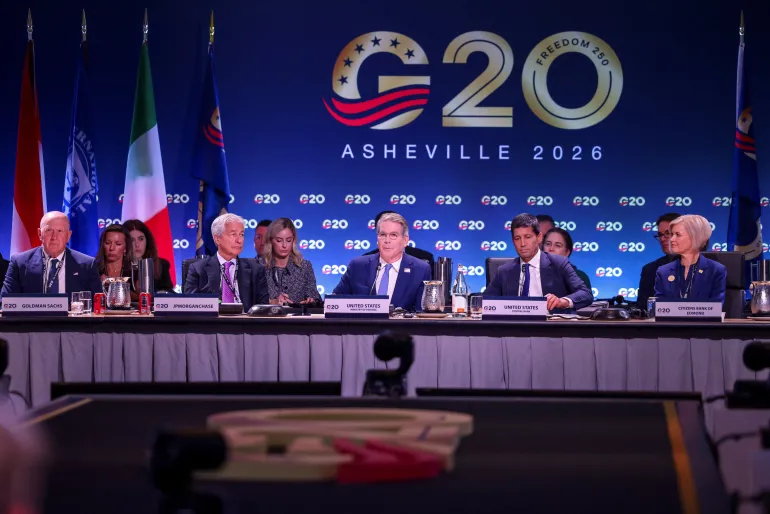
US Treasury Secretary Scott Bessent, Federal Reserve Chair Kevin Warsh, CEO of JPMorgan Chase Jamie Dimon and CEO of Goldman Sachs David M Solomon attend a plenary session as finance ministers and central bank governors from G20 countries meet in Asheville [Sam Wolfe/Reuters]
‘Troubling’ signal
German Finance Minister Lars Klingbeil said the US’s decision to welcome Siluanov sent a “signal I find troubling”.
He said he told Siluanov during a plenary session that Moscow had to end the war and “that we clearly support Ukraine”.
He also said Europe was preparing a further package of sanctions against Russia and hoped for close cooperation with Washington on the measures.
European ministers and central bankers also opposed appearing with Siluanov in the traditional G20 “family photo”, European officials said. The photograph was ultimately taken without the Russian minister.
Klingbeil said European officials, including European Central Bank President Christine Lagarde, had discussed Russia’s involvement on Sunday and agreed that maintaining an avenue for dialogue could allow them to deliver a frank message to Moscow.
“However, the mere fact that the Russian finance minister is back – after, I believe, four G20 meetings without Russian participation – indicates an attempt at normalisation, and that makes it all the more important for us to push back,” he said.
Siluanov’s appearance marked a sharp contrast with the G20 meeting in Washington, DC, in April 2022, when his virtual participation prompted officials from Canada, the United Kingdom, the US, and the European Central Bank to walk out.
White House defends talks with Russia
Asked about Siluanov’s attendance, White House spokesman Kush Desai told the AFP news agency that the Trump administration had been working with Russia to push for a deal that “would stop the endless bloodshed that the president has really condemned”.
“The president and the administration will never shy away from talking with the folks we need to talk to, to further that,” he said. “That’s what we’re working on here at the G20.”
Separately, Reuters and AFP, citing sources familiar with the Washington-Moscow talks, said Bessent had made clear that the US would not provide Russia with economic relief until war in Ukraine was over.
Trump has pushed Moscow and Kyiv to reach a deal to halt the fighting, but an initial 28-point plan that largely adhered to Russia’s demands was criticised by Ukraine and European governments.
The US, which currently holds the rotating G20 presidency, did not invite South Africa, last year’s G20 host, to the gathering. Poland, which is not a permanent G20 member, was invited.
Certain reporters from major US newsrooms, including The New York Times and Bloomberg News, were not granted credentials to cover the gathering.
The decision was condemned by the National Press Club, which said that “no administration should be allowed to handpick the press corps that scrutinizes it”.
The two-day meeting comes as global debt levels have reached a record of nearly $353 trillion and the global economy faces an energy shock triggered by the US-Israel war on Iran. The talks also come amid rising tensions over China’s large trade surplus and uncertainty over the effects of a surge in artificial intelligence investment.
Tunis, Tunisia – More than 15 years after Tunisians rose up to topple longtime President Zine El Abidine Ben Ali, familiar grievances are again being heard on the streets from north to south.
A slogan from the 2011 revolution is being heard again: “employment, freedom and national dignity”.
This time, those demands are being fuelled by water cuts, electricity outages, rising prices, medicine shortages and a struggle to make ends meet, problems increasingly affecting Tunisians across social and economic divides.
But the anger is unfolding in a very different political environment.
The discontent comes as Tunisia marks five years since President Kais Saied suspended parliament, dismissed the government and began ruling by decree, moves he described as necessary to end years of political paralysis and corruption.
Many Tunisians welcomed the move at the time, frustrated with a political system that had failed to address the country’s economic problems after the 2011 revolution.
Five years later, many of those grievances remain while the political space for challenging those in power has narrowed sharply.
Old demands, new anger
The decade that followed Ben Ali’s ouster brought competitive elections and greater space for political parties and civil society, but it also brought frequent government changes, political disputes and little improvement in the lives of many Tunisians.
Unemployment remained high, particularly among young people and in the country’s interior. Public services remained weak while rising prices continued to put pressure on household incomes. By the end of 2020, unemployment stood at 17.4 percent, according to the World Bank.
Tunisia also faced serious security threats, including attacks and political assassinations, adding to economic pressures and hitting sectors such as tourism.
Those frustrations helped Saied build support as an outsider promising to break with the traditional political establishment and what many Tunisians saw as a dysfunctional system.
On July 25, 2021, Saied suspended the Assembly of the Representatives of the People, dismissed Prime Minister Hichem Mechichi and lifted parliamentary immunity. He said he was acting to address a national crisis.
His opponents described the move as a coup.
Saied later dissolved parliament and oversaw the adoption of a new constitution in 2022 that significantly strengthened presidential powers.
Since then, opposition figures, journalists, lawyers and activists have been jailed or prosecuted in cases that rights groups describe as politically motivated. Civil society has faced increasing restrictions while critics have said institutional checks on presidential power have been weakened. Human Rights Watch, for example, has described the “conspiracy case” as part of a broader crackdown on dissent.
What is the “conspiracy case”?
The case centres on allegations by Tunisian authorities that opposition politicians, lawyers, activists and other public figures were involved in a conspiracy against state security and sought to destabilise the country and undermine the government. The defendants included figures from different parts of the political spectrum.
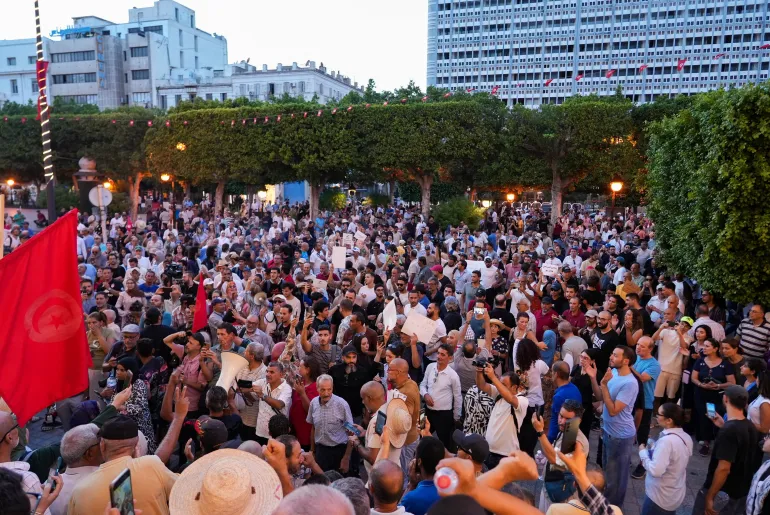
Tunisians protest against President Kais Saied in Tunis, demanding the restoration of democracy and the release of jailed activists and journalists amid growing anger over deteriorating living conditions and an economic crisis [Jihed Abidellaoui/Reuters]
In April 2025, a Tunis court sentenced 37 defendants to prison terms ranging from four to 66 years. Human Rights Watch described the case as politically motivated and criticised the trial for failing to provide adequate due-process protections.
On November 27, 2025, a Tunis appeals court upheld convictions against 34 of the 37 defendants, sentencing them to between five and 45 years in prison, and acquitted three.
Human Rights Watch and other rights groups continued to criticise the proceedings and describe the case as part of a wider crackdown on dissent.
The authorities reject those accusations and maintain that the defendants were prosecuted for serious offences against state security.
But the political transformation has yet to produce the economic turnaround Saied promised.
Unfulfilled promises
Many of Tunisia’s economic problems predate Saied. Years of underinvestment, financial pressures and ageing infrastructure have left public utilities and other state services struggling to meet demand.
But those failures have become harder to separate from Saied’s record because he came to power promising that a stronger state could overcome the weaknesses of the old political system.
Tunisians protest against President Kais Saied in Tunis amid growing frustration over political restrictions, rising living costs and deteriorating public services [Jihed Abidellaoui/Reuters]
This summer, temperatures approached 50 degrees Celsius (122 degrees Fahrenheit) in parts of Tunisia, pushing electricity demand to record levels. Kairouan reached 49.8C (121.6F) on Thursday, according to the Tunisian Observatory for Weather and Climate. The Tunisian Company of Electricity and Gas introduced rotating power cuts in several regions, and the outages affected water-pumping stations in some areas.
Some people reported going days without running water. Bottled water shortages added to the pressure. Long queues formed outside shops and water trucks delivering supplies to some areas.
For Rebh, a 40-year-old cleaner from Tunis, the demands are not about luxuries but about being able to afford and access the basics of everyday life.
“People are tired. They are choosing to cross the sea and die [trying to reach Europe] instead. I hope we can stand together and find a solution now,” she told Al Jazeera. “We are not asking for the impossible. This is about water and electricity. We want to live as humans. We are feeling dead while we’re still alive.”
For many Tunisians, the shortages are part of a broader squeeze on purchasing power that has made it increasingly difficult to afford basic necessities.
The extreme heat has also put pressure on an already strained health system as doctors warned of increased pressure on emergency departments.
The point, however, is not that Saied created Tunisia’s economic problems. He did not.
The question is whether the more centralised system he built has delivered the more effective government he promised.
A shrinking space for dissent
For journalist Manel Derbali, the change has been visible not only in the media but in the wider public space.
After the 2011 revolution, she said, Tunisians gained a new ability to speak openly and access information. Despite the protests and political turmoil of the period, journalists felt they were not alone in challenging those in power.
“After years of censorship and police repression, everything opened up. The journalist felt that the street was with you in one way or another,” Derbali said.
She said journalists also had channels to raise concerns about their working conditions and make proposals to officials, including through parliament and ministries, while access to decision-makers remained possible.
“After July 25, all of these spaces became closed,” she said.
Derbali said journalists now struggle to obtain even basic responses from government institutions with official bodies sometimes leaving requests unanswered for months.
Tunisians take part in a demonstration against President Kais Saied in Tunis, reviving demands for political freedoms and better living conditions that have remained unresolved since the 2011 revolution [Ons Abid/AP]
“Unfortunately, history is repeating itself, and we have returned to relying on citizens’ videos to investigate and verify information,” she said.
Her account reflects a broader concern among critics of Saied that the institutions and public spaces that emerged after the revolution have been steadily weakened.
Could economic anger become political?
The current protests are not limited to Tunisia’s traditional opposition.
The Nafas movement, which has organised recent demonstrations in Tunis, seeks to bring together political parties and independent figures beyond the country’s established opposition to Saied. Its protests have also attracted citizens who had not previously taken part in political demonstrations.
Rabii Qassem, a member of the Nafas collective, said comparisons between the past five years and the decade after the revolution should not be reduced to whether Tunisia was simply better or worse before Saied.
“I’m not saying that Tunisia between 2011 and 2021 was paradise,” he said. “There were very serious crises: unemployment, corruption, economic fragility, political conflicts and a failure to achieve a large part of the revolution’s goals.”
But according to Qassem, that period also brought gains, including greater freedom of expression and protest, a stronger civil society, a more diverse media and elections that allowed for peaceful transfers of power.
“After July 25, the economic and social problems that already existed were not solved,” he said. “They were joined by a decline in political checks and balances, freedoms and the space for civil society.”
For Qassem, many of the demands raised in 2011 remain unresolved.
“Where is employment? Where is the water? Where are the public services? Where is the dignity?” he asked.
He said economic hardship and political repression have been increasingly feeding into each other as people struggling with rising prices and deteriorating services have also found fewer avenues to express their frustration.
That does not mean Tunisia is experiencing another 2011.
Protesters voice anger as shortages and rising living costs increasingly converge with demands for political change under President Kais Saied [Mohamed Messara/EPA] (EPA)
Many Tunisians remain wary of the political parties and politicians who dominated the decade after Ben Ali while Saied continues to have supporters who blame that period for years of economic stagnation and political instability.
Nor does every person angry about a water cut, electricity outage or rising price necessarily oppose the president.
But the protests show how economic and political grievances can increasingly overlap.
Before 2021, Tunisians could blame a democratic political system they saw as ineffective for failing to improve their lives.
After 2021, Saied dismantled much of that system and promised that a stronger presidency would deliver better government.
Five years later, many of the same grievances remain.
The difference is that the avenues for challenging them have become narrower.
“Employment, freedom and national dignity” was a demand of the revolution that ended Ben Ali’s rule.
Fifteen years later, Tunisians are again asking for jobs, basic services and greater freedoms – but now from a president who came to power promising to address the failures of the system that followed the revolution.
Rights groups warn that armed groups are increasingly recruiting children to their ranks through social media.
Published On 31 Aug 202631 Aug 2026
Three minors were among those killed in a Colombian military air strike on cocaine-trafficking rebels last week, authorities said, as President Abelardo de la Espriella intensifies operations against armed groups.
The August 27 bombing in the southern Guaviare department was the deadliest military operation since de la Espriella took office earlier this month. The National Institute of Legal Medicine and Forensic Sciences said that 10 people in total were killed in the operation. The Ministry of National Defence reported that two of the victims were 15 and another was 16.
Recommended Stories
list of 3 itemsend of list
The victims allegedly belonged to a dissident faction of the defunct Revolutionary Armed Forces of Colombia, or FARC, that rejected a 2016 peace agreement with the government.
De la Espriella, a right-wing leader and ally of United States President Donald Trump, said on Monday that another bombing in the same area killed eight members of a FARC dissident group led by commander Ivan Mordisco. It is not known whether any minors were among the dead.
“The bandits, who for decades have recruited minors to turn them into combatants or human shields, must pay for these crimes that violate International Humanitarian Law,” he wrote on X.
The Defence Ministry said on Monday that 24 suspected rebels have been killed in military operations since de la Espriella took office.
The strikes come as child recruitment by armed groups is again rising in Colombia, according to a Human Rights Watch (HRW) report published last week.
At least 1,500 children have been recruited by armed groups since 2021, with 625 cases reported in 2024, according to the report.
The watchdog said that criminal and rebel groups are using social media to recruit children, including to carry out increasingly dangerous tasks, such as operating drones loaded with explosives. They also reported that algorithms on platforms including Meta and TikTok “appear to have actively promoted” content encouraging children to join rebel groups.
“Armed groups in Colombia are recruiting children with impunity,” said Juanita Goebertus, HRW’s Americas director. “Protection systems are failing, and social media platforms have become a more effective recruiting ground.”
Meta and TikTok told HRW that they prohibit content promoting violence and had removed accounts flagged by the organisation.
Construction continues on a new ballroom Aug. 11 on the South Lawn at the White House in Washington, D.C. On Monday, the Supreme Court ruled that ballroom construction could continue. Photo by Bonnie Cash/UPI | License Photo
Aug. 31 (UPI) — The Supreme Court ruled Monday that President Donald Trump‘s massive, $400 million White House ballroom project can continue — over dissent from Chief Justice John Roberts and three other justices.
In the 5-4 ruling, the high court said the National Trust for Historical Preservation likely lacks the legal right to challenge the project and that national security reasons favor its continuation. This could give the Trump administration time to finish the project as lawsuits over it continue.
The court did not say if the project was legal. In a dissent, Roberts said that it likely is not, as the project was not approved by Congress.
“The White House is not just any building,” he wrote. “In failing to appreciate as much, the court misconceives the plaintiff’s injury, allowing the executive’s likely infringement of the legislature’s power of the purse and authority to regulate federal property in the District of Columbia to continue.”
Roberts called Monday’s decision “no victory for the separation of powers.”
The decision replaces a temporary court order from earlier August that allowed construction to continue.
Federal courts said earlier that the ballroom project needed to halt because it had not been approved by Congress. Administration lawyers had argued that Trump has total authority to renovate federal buildings and that the ballroom and connected security features are necessary.
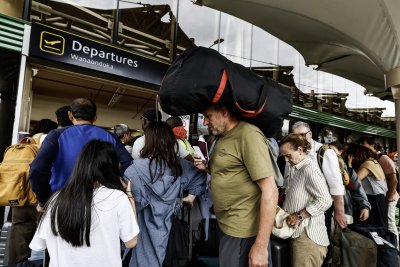
Stranded passengers wait Monday outside Jomo Kenyatta International Airport after operations were paralyzed for the second day by the Kenya Aviation Workers Union strike. International and local flights were disrupted and thousands of passengers were left stranded after KAWU members went on strike over pay and the lack of implementation of previous agreements. Photo by Daniel Irungu/EPA/
Aug. 31 (UPI) — Flight issues continued Monday at Jomo Kenyatta International Airport in Nairobi, Kenya, and other Kenyan airports, in which a workers’ strike has left hundreds of people stranded or delayed.
Kenya’s aviation workers started a “go-slow” strike Sunday, saying the government failed to honor the terms of a memorandum of understanding with the union.
“They have never committed to the negotiations and have failed to cooperate and show effort in resolving our grievances,” said Moss Ndiema, Kenya Aviation Workers Union secretary-general.
This has led to flight delays and cancelations, Kenya Airways said. It advised customers to travel to the airport only if they have been advised to do so or if their flight has been confirmed as operating.
“We sincerely apologize for the inconvenience this situation has caused to travel plans,” the airline said in a statement. “The safety of our customers and crew remains our highest priority. Our teams are working with the relevant aviation stakeholders to ensure safe operations and minimize the inconvenience and disruption to our customers’ travels.”
At times, the airline reported delays of more than 6 hours.
Talks between aviation worker unions and the airport were expected to continue Monday after they ended without resolution Sunday.
Meanwhile, Kenya Railways announced it is adding special Nairobi-Mombasa trains Monday and Tuesday to cope with “increased passenger demand.”
“Passengers are encouraged to make their bookings early and take advantage of the additional train services,” it said in a notice.
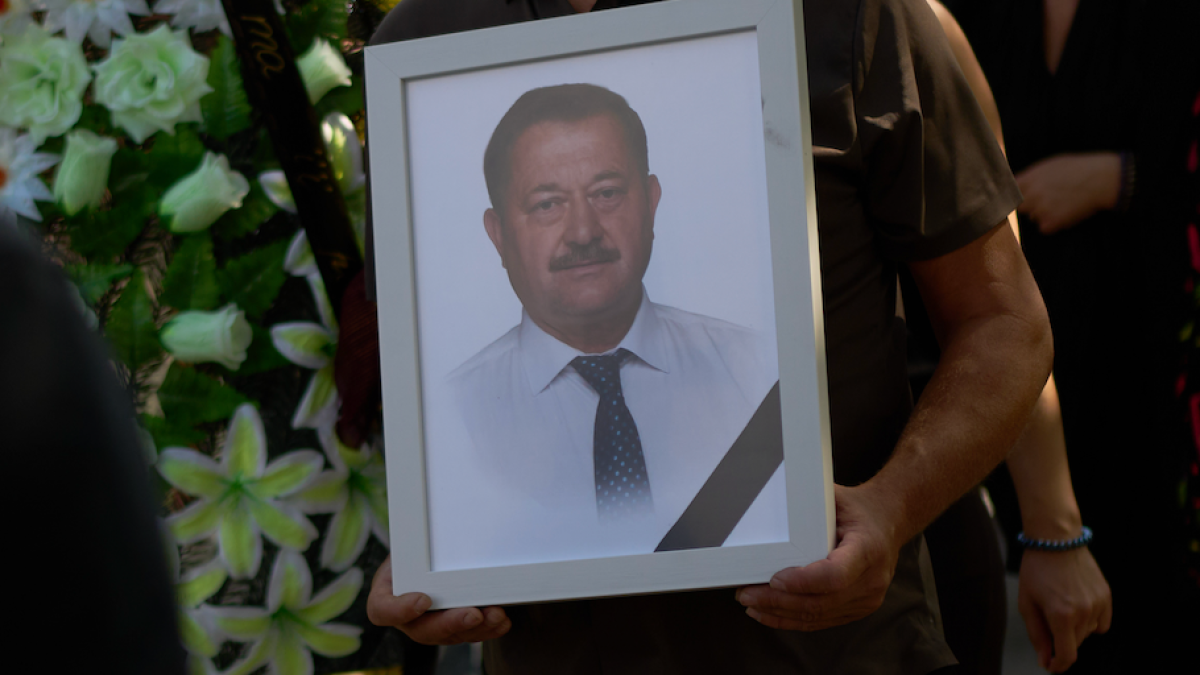
Ukraine’s Dmytrivka community gathered to mourn Taras Didych, who was killed while rushing to help after a Russian strike hit an ammunition warehouse in nearby Myla. The community leader was among 38 killed in the attack.
Aug. 31 (UPI) — Finance ministers and other officials from the Group of 20 nations, as well as many CEOs, met Monday in Asheville, N.C., at a summit in which U.S. leaders intended to focus on growth and Iran — but also drew protests from other leaders for the inclusion of the Russian minister.
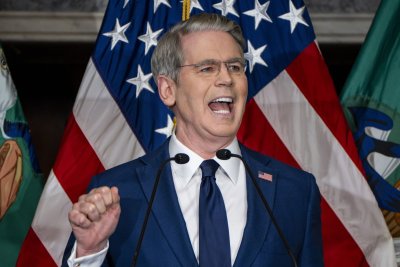
U.S. Treasury Secretary Scott Bessent told officials that the United States wants to focus on the mission of accelerating growth and said the countries need to work together
“The world is awash in debt, and the only way for us to get out of this is to grow our way out of this,” Bessent said, CNBC reported.
He also said a “durable” global economy” cannot rest on “beggar-thy-neighbor acts that stifle fair, market-based competition,” The New York Times said.
In introductory comments, U.S. Federal Reserve Chairman Kevin Warsh also focused on growth, saying the time is one of “secular growth.”
“If I were to try to characterize this moment, it would be one of a global investment surge,” he said.
Bessent said earlier Monday in a CNBC interview that the U.S. plan to pressure and isolate Iran through its economy can work without China, which opposes the sanctions. He is expected to ask the other finance ministers to join in those sanctions.
Russian Finance Minister Anton Siluanov was at the meeting — at the invitation of the Trump administration — for the first time since Russia’s invasion of Ukraine in 2022.
This drew protests from other European ministers, who have issued their own sanctions against Russia for that war. Finance Minister Lars Klingbeil told The Times that he scolded Siluanov over the war and said the European ministers demanded the Russian minister be left out of a traditional group photo. It was eventually taken without Siluanov.
“Receiving the Russian finance minister here sends a signal I find troubling,” he told reporters. “I would have preferred clear positioning from the U.S. side that he not be received like a regular guest.”
Ukraine’s finance minister was not present in person at the meeting.
In addition, European ministers protested that the United States did not invite representatives from South Africa, a G20 country, to the meeting. Trump administration officials also invited many U.S. business executives but denied requests to include business leaders from other G20 countries.
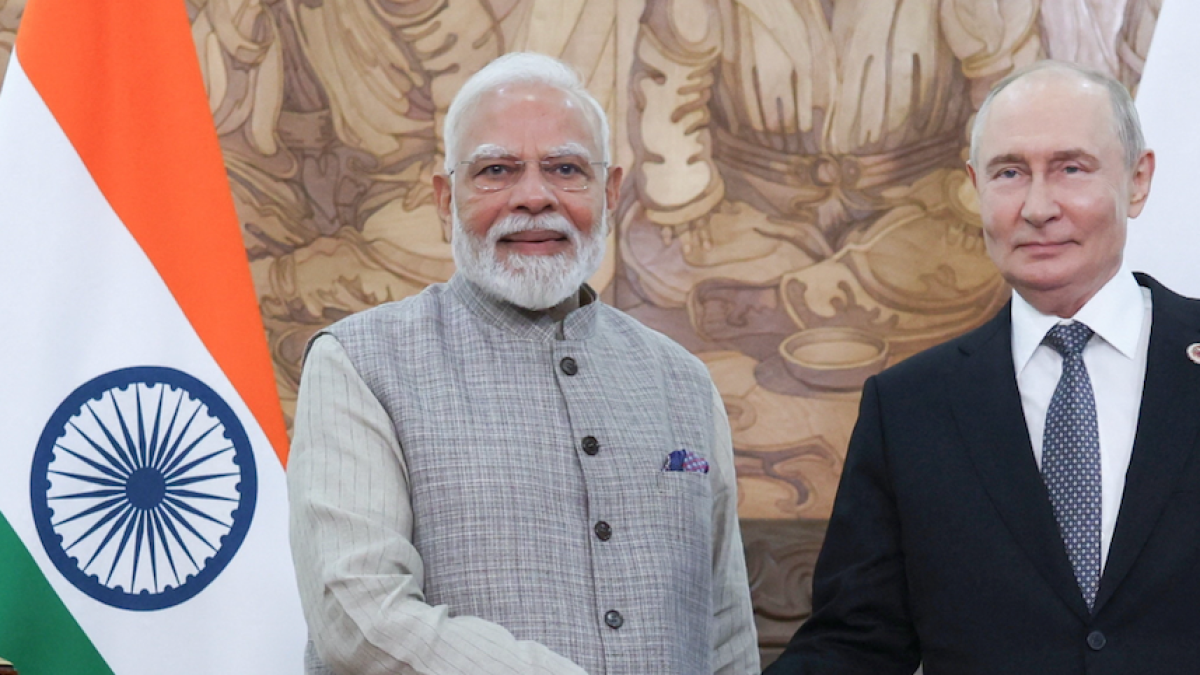
India’s Prime Minister Narendra Modi told Russian President Vladimir Putin that India supports every effort to end the war in Ukraine. The two leaders met in Bishkek at the Shanghai Cooperation Organisation summit.
According to data released by Colombia’s Search Unit for Missing Persons, known by its Spanish acronym UBPD, at least 137,000 people have been reported missing in connection with the country’s armed conflict since 1921. Photo by Mario Caicedo/EPA
Aug. 31 (UPI) — When Tobías Borda Cepeda disappeared in rural Colombia in 1921 amid local land disputes, his family could not have foreseen that his case would mark the beginning of a tragedy that would span a century.
According to data released by Colombia’s Search Unit for Missing Persons, known by its Spanish acronym UBPD, at least 137,000 people have been reported missing in connection with the country’s armed conflict since that year.
Marking the International Day of the Victims of Enforced Disappearances on Sunday, the agency said 48.5% of all cases occurred during the 2000s, with the highest concentration between 2001 and 2003.
Disappearances during the first decade of the 21st century represent a dark chapter in Colombia’s recent history. Between 2000 and 2010, the country experienced an escalation in violence marked by fighting among right-wing paramilitary groups, left-wing guerrillas and state forces in a war waged on multiple fronts.
During that period, armed groups used enforced disappearances to conceal the large number of victims, terrorize local communities and facilitate the illegal seizure of millions of acres of rural land.
Valle del Cauca, Antioquia and Meta have recorded the highest number of cases, according to the UBPD.
The concentration of cases in those regions reflected the broader strategic objectives of armed groups seeking to control key corridors for drug trafficking and arms smuggling, as well as natural resources and rural border areas.
“This is a crucial date to remember that disappearances have not stopped,” Luz Janeth Forero, director general of the UBPD, said in a statement.
Forero said records from the International Committee of the Red Cross show that another 2,659 people have disappeared since the Colombian government and the Revolutionary Armed Forces of Colombia, or FARC, signed a peace agreement in 2016.
The Red Cross warned Friday that at least one person has disappeared every two days this year as a result of Colombia’s armed conflict, with 99 cases recorded between January and July.
The international organization said in a statement that 36 of those reported missing were children and adolescents.
On Saturday, Colombia’s new president, Abelardo de la Espriella, ended negotiations with several illegal armed groups that had been launched by his predecessor, Gustavo Petro. He revoked the appointments of government representatives and withdrew recognition of the opposing delegations involved in talks under the so-called Total Peace plan.
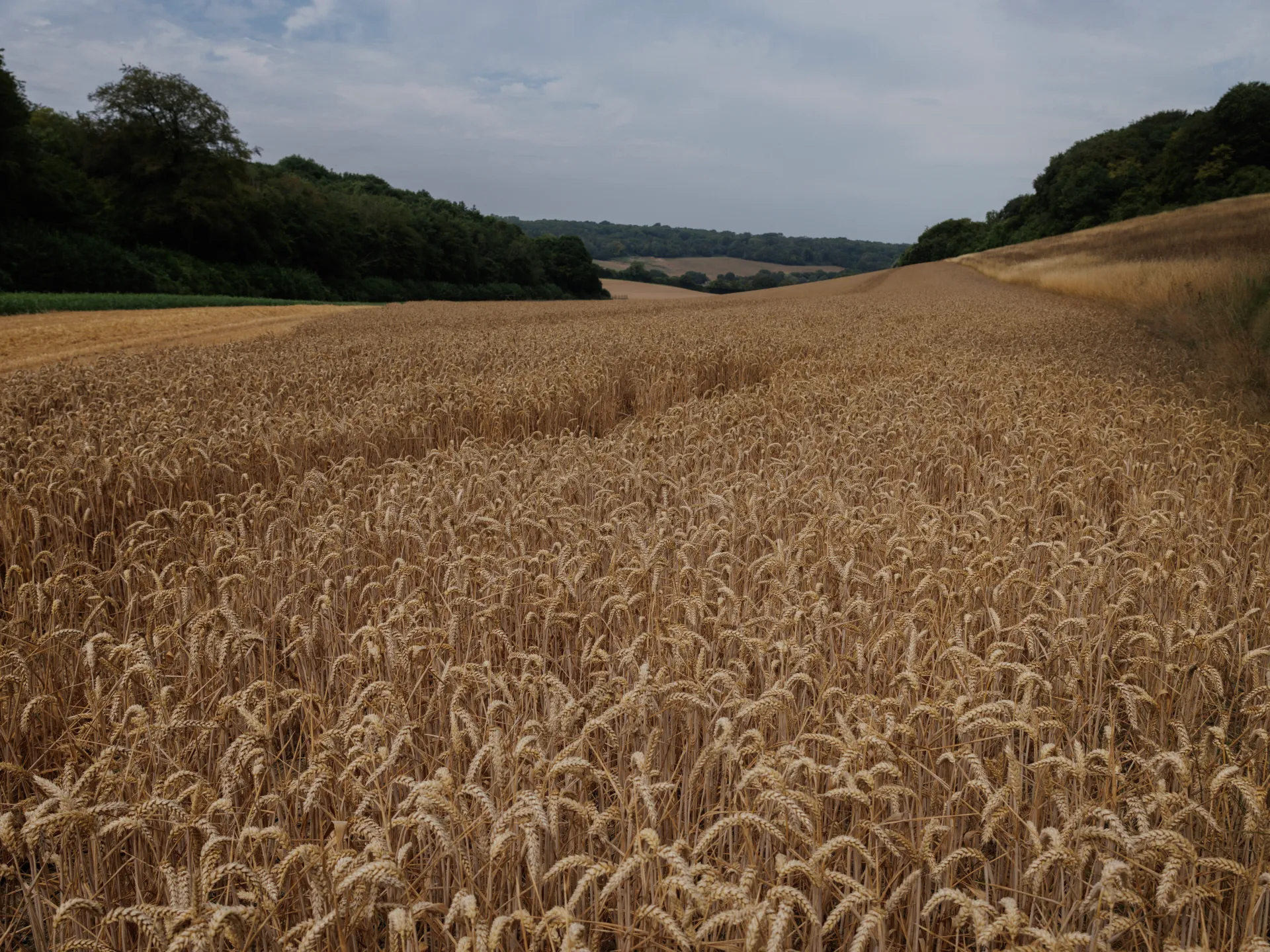
Wheat prices have risen sharply amid disruptions to Black Sea exports as the Russia-Ukraine war continues and as changing weather patterns cause droughts that have sharply reduced production.
Over the past month, Russia and Ukraine have stepped up attacks on each other’s grain terminals on the Black Sea. With Russia the world’s largest wheat exporter, and Ukraine among the top 10 grain-producing countries, these attacks have taken their toll on global wheat and grain supply.
Recommended Stories
list of 3 itemsend of list
Chicago wheat futures, the global benchmark for the grain market, hit a three-year high on Friday, before nudging down 0.54 percent on Monday to $7.79 per bushel by 02:00 GMT. Authorities in Russia’s Rostov region called a state of emergency on Friday after announcing that port closures and navigation disruptions in the Sea of Azov and Black Sea basin have led to a pile-up of agricultural products at farms.
Meanwhile, the rising temperatures and lack of rain have threatened to cut this year’s wheat harvest in South Africa’s Swartland, which produces about 20 percent of the country’s wheat.
Here’s what we know:
What impact is the Russia-Ukraine war having on prices?
Over the past month, strikes on ports, vessels and grain facilities amid the Russia-Ukraine conflict have disrupted grain terminals and forced shippers to delay or cancel cargo loadings during the peak export season.
While Russian missile attacks have impacted Ukraine’s grain exports, Ukraine’s drone attacks in the Sea of Azov have also sharply curtailed Russian shipments of both grain and wheat. At the same time, attacks on Russia’s Novorossiysk and Taman ports have increased shipping costs out of its Black Sea ports.
According to Ukraine’s Ministry of Infrastructure, in July, Ukraine suffered 35 Russian attacks on vessels in port, 22 at sea and 67 on port facilities. By comparison, the total number of vessel strikes for the whole of 2025 was just 14.
On Friday, Kyiv’s agricultural minister said recent Russian air attacks have destroyed around 90 percent of retailers’ food logistics. With transport of wheat curtailed, prices have risen, raising fears of food insecurity around the world.
Joe Glauber, a research fellow emeritus in the director general’s office at the International Food Policy Research Institute, said that the issue, therefore, is less the amount of wheat being produced and more about the cost of getting it to buyers and consumers.
“There’s plenty of wheat in Russia and Ukraine, and ultimately that wheat will make it out on to the market. But right now it can’t, or it comes out with a very high cost, and so wheat prices have reflected that,” he told Al Jazeera.
“There’s a lot of wheat in the world…it’s not a question of availability, it’s a question of affordability,” he added.
Egypt, the world’s largest wheat importer, usually spends around $3bn per year on importing wheat. In the first half of 2026, it sourced more than 82 percent of its stock from Russia and Ukraine.
In Asia, second-largest wheat importer Indonesia bought $361m of wheat from Ukraine and $102m from Russia between 2023 and 2024, according to the Observatory of Economic Complexity. Indonesia usually sources between 15 percent and 20 percent of its wheat from the two countries.
An official at Indonesia’s Flour Millers’ Association told Reuters last week that current stocks can meet immediate food-grade wheat requirements. “But we don’t have abundant or excess supply. We have to look at other origins such as Bulgaria, Australia, Romania and Argentina for cargoes that do not get shipped from Russia and Ukraine,” the official said.
How does climate change fit into this?
Besides the war in Ukraine, droughts and drier weather patterns have taken a toll on wheat production and contributed to rising prices.
According to the United States Department of Agriculture (USDA), as of July 1, the US, also one of the biggest wheat exporters, is forecast to yield “46.7 bushels per acre, down 0.1 bushels from last month and down 8.2 bushels from last year’s average yield of 54.9 bushels per acre”.
“If realised, the United States yield would be the lowest since 2015,” the USDA said.
In a report updated on August 14, the department wrote: “This year’s small crop is a product of long-term decline in US wheat acreage and widespread drought impacts on HRW [Hard Red Winter wheat] production in the Great Plains States. Total wheat supplies are forecast down 13 percent from the previous year, with larger beginning stocks dampening the effect of the smaller crop.”
For Canada, the world’s sixth-largest wheat producer, the USDA’s Foreign Agricultural Service found that for the 2026-2027 production year, total production is forecast to be 34.6 million metric tons (MMT) – also 13 percent lower than the year before – due to reduced planted area and a return to lower-than-average yields.
Amid the heatwaves that have hit European countries over the past three months, wheat production in the bloc has also reduced. According to COCERAL, the European association of trade in cereals, oilseeds, rice, pulses, olive oil, oils and fats, animal feed and agrosupply, the excessive heat is expected to reduce grain crops in 2026 by around 9 million tonnes to 286 million tonnes.
In a report published in July, COCERAL said: “The weather has started to affect corn pollination in the southern half of France and in Hungary. More damage is expected from the forecast heat in other parts of the EU.”
The El Nino weather pattern is also expected to bring drier-than-usual conditions to the Southern Hemisphere this year, with South Africa and Australia expected to experience droughts as a result.
What can be done to mitigate all this?
While the Russia-Ukraine war continues, in July 2022, the year the war started, a Black Sea Grain Initiative was brokered to allow for the safe exports of grain, food and fertiliser from Ukrainian ports to stabilise and lower global food prices.
While that agreement held, more than 1,000 ships full of grain and other foodstuffs left Ukraine, according to the EU. However, Russia ended the agreement in July 2023.
The answer to the current crisis is far from easy, experts say.
Bringing prices down now would necessitate a major shift in war strategy by both Russia and Ukraine, while the impact of climate change could be mitigated by governments implementing policies including improving water management on farms through the use of reservoirs to support drought-affected crops and reduce the loss of production.
Moreover, Glauber explained, while alternative routes exist to ship out grain from Russia and Ukraine, they are costly, adding that a return to a possible Black Sea Grain Initiative “would help calm wheat markets a lot”.
One answer may be for other countries to step in.
According to Glauber, during the 2022 global grain price surge, other wheat producing countries such as India exported more to make up for shortages.
“India, for example, had record exports in 2022. It’s probably less likely this year, just because of El Nino and other other factors affecting them, but they could also provide more wheat. I think the world wheat market proved very resilient in 2022, and I expect we’ll see the same in in 2026,” he said.
Greece signs $3.5bn deal with Israel to acquire its first multi-layered air defence network by 2029.
Published On 31 Aug 202631 Aug 2026
Greece has signed a $3.5bn defence deal with Israel to provide its first integrated “multi-layered” air defence network.
Israel said the agreement, negotiated over three years, is one of the largest in the country’s history..
Recommended Stories
list of 2 itemsend of list
Engineers will set up an aerial defence shield for the Greeks, integrating three Israeli systems, including the SPYDER system, produced by Rafael Advanced Defense Systems, the BARAK MX system, made by Israel Aerospace Industries and David’s Sling air defence technology, an Israeli defence ministry statement said on Monday.
The agreement comes as Israeli weapons’ exports are soaring, despite widespread criticism over its genocidal war against Palestinians in Gaza and other wars in Lebanon and Iran.
Israeli weapons exports reached record highs with more than $19bn last year, a 30 percent increase from 2024, according to official data.
“Modern conflicts have already altered the parameters of military defence and deterrence,” Greece’s Defence Minister, Nikos Dendias, said in a statement after the agreement was signed.
“Technology, ballistic missiles, satellite communications, unmanned systems, cyber threats, hybrid forms of warfare and the interconnection of fields of operations have long rendered pre-existing defence doctrines completely unrealistic,” he said.
Reporting from Athens, Al Jazeera’s John Psaropoulos said the systems could counter a range of aerial threats.
“The SPYDER and David’s Sling are short-to-medium-range air defence missile systems. They fire missiles to intercept incoming aircraft, cruise missiles and large drones. The BARAK can do all these things, but it also intercepts incoming ballistics,” he said.
Separately, Greece signed a $30m deal with Israel for Rafael’s Drone Dome system, “to defend strategic sites against UAVs and drones and to reinforce existing defences”.
Europe’s changing security landscape
Greece is the second European Union member to agree to buy the David’s Sling system, after Finland.
“This is Greece interpreting the lessons from the war in Ukraine, which has changed the nature of armed conflict and realising that it needs much stronger air defences to intercept whatever might come in from the East.” Psaropoulos said.
“Now that the war in the Gulf has reawakened Iranian animosity towards US allies in Europe, there is a perceived threat from there as well as from other countries in the East,” Psaropoulos added.
Greece spends nearly 3.5 percent of its gross domestic product on defence, a higher proportion than many NATO allies due to its long-standing dispute with neighbouring Turkiye.
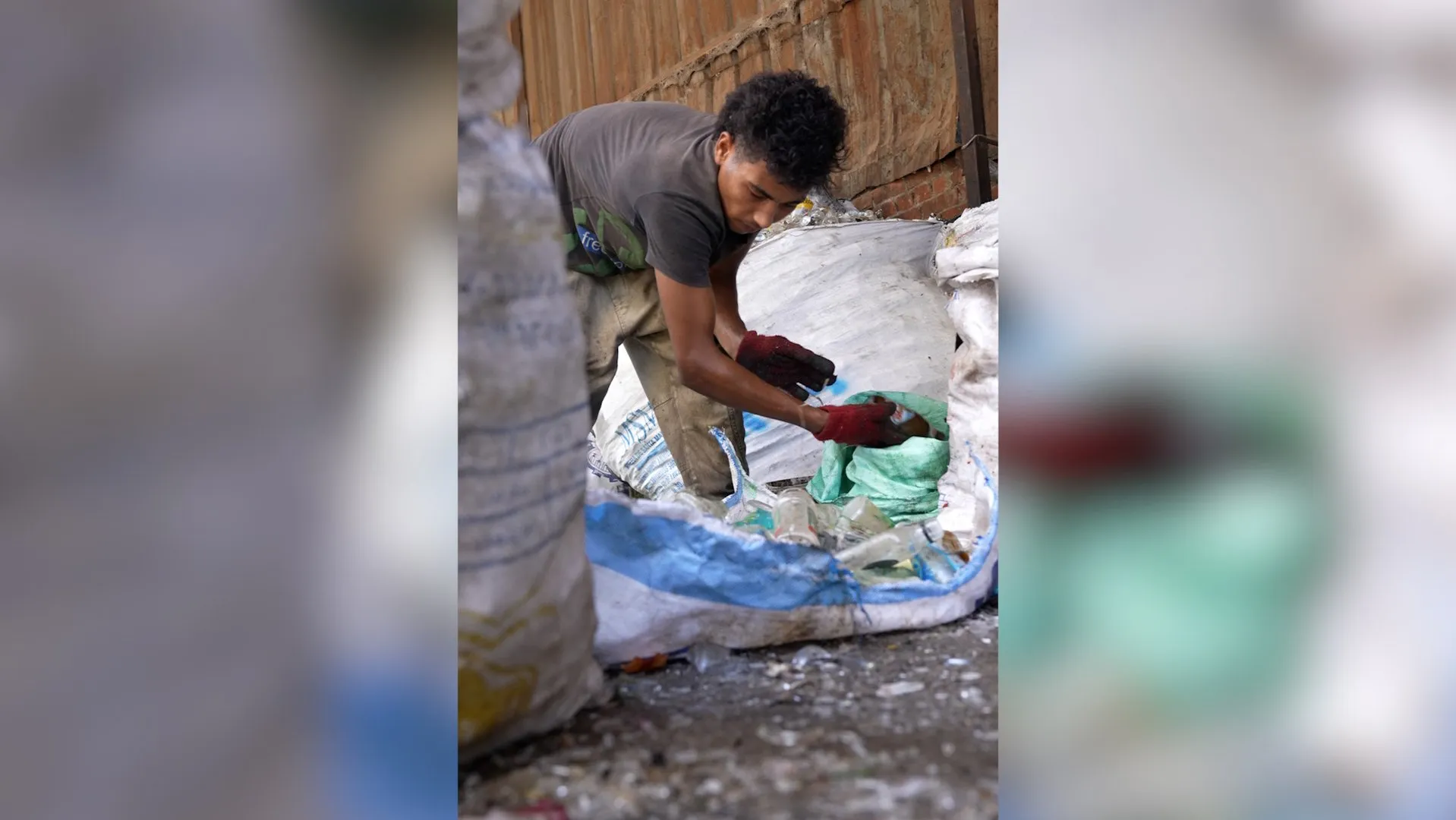
The Zabaleen area, where the waste from Egypt’s capital is sorted, is seeing demand for its recycled materials surge as the war on Iran disrupts imports. But rising costs and new competitors mean the traditional recyclers aren’t necessarily better off.
Aug. 31 (UPI) — Oil prices surged early Monday after fighting flared in the U.S.-Iran conflict for the first time in four weeks since U.S. President Donald Trump announced a “pause” in U.S. military strikes on Aug. 1.
The contract for the benchmark Brent crude for November delivery jumped by 3.4% to $91.09 a barrel and the October contract for American crude saw a similar-sized increase to $86.22 after U.S. forces hit rocket launchers on Larak Island in the Hormuz Strait on Sunday night and Iran’s military retaliated, targeting American bases in Jordan.
The hikes were driven by the renewed hostilities stoking fears ongoing supply disruption caused by a drastic curtailment of tankers traffic transiting the Strait of Hormuz would be made worse and persist for longer, according to experts.
“Supply risk will persist and oil inventories will continue to deplete in the coming weeks and months. The Iranian crisis has likely changed the security status quo in the Middle East,” said PVM Oil Associates’ London-based analyst Tamas Varga.
Investment bank Goldman Sachs, the impact of destructive attacks on refining capacity was responsible for upward pressure on margins.
“Rising strikes on refineries in the Middle East and Russia have further constrained already-stretched global refining capacity, pushing refined products margins to new highs,” the bank said in a note.
Prices at the pump in the United States on Monday remained broadly flat from the previous day, with the average price of a gallon of regular unleaded up 0.2 cents at 4.08 a gallon, and diesel down by a little over 0.3 cents at $5.60 a gallon, according to the American Automobile Association.
The developments came as the United States’ Strategic Petroleum Reserve has fallen to its lowest level since 1982.
President Trump said Sunday he would restock it with oil from his Venezuela deal giving the United States secure a stake in more than 65 billion barrels of oil despite the fact it could to produce take many years to before the agreements yields any significant volumes because the oil is reserves, as yet to be drilled.
The price of oil has seesawed over the past two weeks after rising in response to Trump’s Aug. 19 threat to wage a “crushing economic operation” against Iran that his officials said would cause the regime to collapse, and then retreating again in the hours before the mainly-sanctions package of measures were unveiled on Aug. 24.
President Donald Trump signs an executive order to rename Lake Ontario as Lake America in the Oval Office of the White House on Thursday. Photo by Al Drago/UPI | License Photo
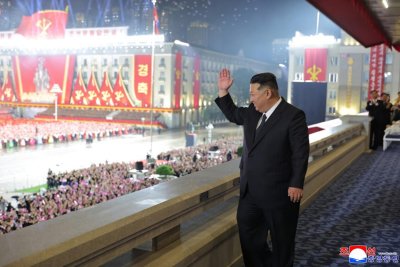
North Korea on Monday condemned the “hostile policy” of the United States and vowed to continue bolstering its nuclear arsenal. In this October 2025 photo, leader Kim Jong Un attends a military parade in Pyongyang. File Photo by KCNA/EPA
SEOUL, Aug. 31 (UPI) — North Korea on Monday condemned what it called the United States’ continued “hostile policy” and vowed to keep bolstering its nuclear arsenal despite U.S. President Donald Trump’s recent overtures to Pyongyang.
In a statement carried by the official Korean Central News Agency, a spokesperson for the Foreign Ministry accused Washington of maintaining a confrontational stance toward North Korea in both “rhetoric and behavior.”
“The Trump administration has thus fully reconfirmed its invariable hostile policy to wantonly violate the sovereignty, political system and security interests of the DPRK through the ‘denuclearization’ racket, ‘human rights’ smear campaign and military threat,” the statement said, using the official acronym for North Korea.
“It is pointless to expect any detente in the region,” it added.
The statement comes amid a push from Trump to restart direct diplomacy with North Korean leader Kim Jong Un, with whom the U.S. president has touted a “very good relationship.”
Earlier this month, Trump ordered Seoul and Washington to curtail their joint Ulchi Freedom Shield military exercise, citing its cost and saying the drills sent an “inappropriate and hostile” signal to Pyongyang. The exercise was subsequently shortened by almost a week.
Despite the move, the U.S. State Department last week reaffirmed its commitment to the “complete denuclearization” of North Korea in a statement to Yonhap News Agency.
The United States, South Korea and Japan also confirmed last week that their annual Freedom Edge trilateral military exercise will be held Sept. 7-11 in international waters east and south of South Korea’s Jeju Island.
The Foreign Ministry spokesperson called the multi-domain exercise a “threat to the DPRK and regional countries.”
North Korea routinely denounces joint military drills as rehearsals for an invasion and has carried out weapons tests around major allied exercises.
The spokesperson said North Korea’s nuclear status, which has been enshrined in its constitution, could not be “weakened nor diluted” by repeated U.S. calls for denuclearization.
“Our nukes serve as an absolute guarantee for defending its sovereignty and the nuclear weapons in possession of the DPRK and their sustained bolstering are the most responsible and correct option for ensuring regional peace and security,” the statement said.
“There is no change in our policy toward the U.S. to respond to its invariable hostile policy with the toughest stand to the last,” it added.






![Tunisians protest against President Kais Saied in Tunis, demanding the restoration of democracy and the release of jailed activists and journalists amid growing anger over deteriorating living conditions and an economic crisis [Jihed Abidellaoui/Reuters]](https://i0.wp.com/occasionaldigest.com/wp-content/uploads/2026/09/reuters_6a958da8-1788186024.jpg?w=640&ssl=1)

![Tunisians take part in a demonstration against President Kais Saied in Tunis, reviving demands for political freedoms and better living conditions that have remained unresolved since the 2011 revolution [Ons Abid/AP]](https://i0.wp.com/occasionaldigest.com/wp-content/uploads/2026/09/ap_6a958ddbcea04-1788186075.jpg?w=640&ssl=1)
![Protesters voice anger as shortages and rising living costs increasingly converge with demands for political change under President Kais Saied [Mohamed Messara/EPA]](https://i0.wp.com/occasionaldigest.com/wp-content/uploads/2026/09/epa_6a958e67f393-1788186216.jpg?w=640&ssl=1)