People walk past rubbish accumulating in the streets of Havana on Wednesday. The Caribbean nation has been experiencing a severe energy crisis with the island nation virtually out of fuel. Photo by Ernesto Mastrascusa/EPA
March 27 (UPI) — A tanker carrying Russian fuel initially headed to Cuba ended up docking in Venezuela after weeks of deviations, while a second oil-carrying vessel remains without a clear destination in the Caribbean amid the island nation’s energy crisis.
The vessel Sea Horse, sailing under the Hong Kong flag, had been closely tracked by maritime analysts since it departed from the eastern Mediterranean carrying between 190,000 and 200,000 barrels of Russian diesel initially destined for Cuba.
During its voyage, the tanker repeatedly changed its declared destination. It went from being listed as en route to Havana to indicating “Caribbean Sea” and later Trinidad and Tobago in a pattern that reflected growing uncertainty about its final destination.
Ultimately, the Sea Horse arrived at Puerto Cabello, in Venezuela, on Wednesday morning after nearly 50 days in transit.
The diversion occurred in a context of increasing pressure from the United States to restrict fuel supplies to Cuba, which is facing a severe energy crisis with recurring blackouts and oil shortages.
The case of the Sea Horse is not isolated. Maritime tracking data show that other vessels have altered their routes or avoided declaring final destinations in recent weeks, amid sanctions that explicitly exclude Cuba from relaxed sanctions for Russian oil trade.
The second vessel, the Russian tanker Anatoly Kolodkin, maintains its uncertainty.
The ship, which is carrying roughly 730,000 barrels of crude, continues in the Caribbean Atlantic without a publicly confirmed final destination.
The maritime tracking website VesselFinder shows the destination of the Anatoly Kolodkin as “Atlantic for order,” a designation used in the industry to indicate that the vessel is sailing without a publicly confirmed final destination.
On Tuesday, maritime intelligence analyst Michelle Wiese Bockmann told Politico that the vessel could arrive in Cuba in “two or three days,” although its trajectory remains without clear confirmation.
The most recent AIS tracking data indicate that the vessel is about 487 miles from Turks and Caicos, with an estimated arrival Monday. However, its current vectors do not point directly toward Cuba, reinforcing uncertainty about true destination.
ACTUALIZACIÓN
⚓️ ANATOLY KOLODKIN (IMO: 9610808)
Tanquero ruso cuyo destino ha sido presentado por el Departamento de Exteriores de Rusia como “ayuda humanitaria”.
Distancia más próxima: 487 millas de Turcos y Caicos.
The behavior of the Kolodkin raises questions in a highly monitored environment.
“There are details that just don’t add up,” said Evan Ellis, a professor at the U.S. Army War College Strategic Studies Institute.
“Given the U.S. naval and air assets in the area, the Russian tanker has to know it won’t get in undetected. The question is whether this is some kind of cat-and-mouse game, or if shifting expectations, possibly tied to developments in Cuba, have changed whether it believes it can enter unopposed,” he said.
“Maybe the deliberate attempt was meant to apply pressure, and then once it got a reaction, it was backing off,” he added.
For Ellis, the key point remains outside the public radar.
“The biggest story is what’s going on behind the scenes that we don’t know about,” he said.
The eventual arrival of the Kolodkin also could force a decision from Washington. Analysts cited by the Miami Herald say the options range from diplomatic pressure to a possible interception by the U.S. Navy or U.S. Coast Guard.
“At the end of the day, what we really have to watch for is what actually happens,” said Jorge Piñón, a senior research collaborator at the University of Texas Energy Institute.
Cuba imports about 60% of its energy and depends on external supplies to sustain its electrical system, making each shipment a critical factor within a scenario of growing geopolitical tension.
Growing opposition within Israel is raising questions about the government’s military strategy in southern Lebanon. As Al Jazeera’s Nida Ibrahim reports, many warn of an open-ended conflict as Hezbollah remains a strong force on the ground.
Ramirez is among the advocates who say children are suffering under the uncertainty and widespread detentions taking place in El Salvador.
In 2025, El Salvador had the highest incarceration rate in the world, with approximately 1.7 percent of its population in prison — roughly twice the rate of the next highest country, Cuba.
According to human rights organisations such as MOVIR, El Salvador’s youth are among the most seriously impacted by the downstream effects of mass incarceration, especially when their caregivers are imprisoned.
“There is a very grave situation with children,” said Ramirez. “There are many children who have been left without their parents, so those who used to provide for their basic needs are not there any more.”
As a result, experts say the affected children are experiencing psychological issues.
“Anxiety issues in these children have increased,” said a psychologist with Azul Originario, a nonprofit youth organisation based in San Salvador.
The psychologist often works with children whose parents have been abducted. She asked to remain anonymous for fear of reprisals, as NGO workers and critical voices have been intimidated, surveilled and, in some cases, arrested under El Salvador’s state of exception.
Rosalina González, 59, protests for the release of her sons Jonathan and Mario, who were arrested under the state of emergency on February 19, 2025 [Euan Wallace/Al Jazeera]
“Sometimes they don’t want to do any physical activity or any studying,” she said.
“They don’t want to spend time with other children or go outside. They’re afraid of authorities, because some of them experienced the authorities taking their parents away.”
At a recent demonstration near San Salvador’s Cuscatlan Park, several families echoed those observations.
Among them was Fatima Gomez, 47, whose adult son was arrested in 2022. He left behind two daughters, ages 10 and three.
With their mother working full-time, Gomez has been taking care of the children. But she has noticed the eldest daughter seems traumatised.
“When she sees soldiers and police, she starts crying and runs inside,” Gomez said of the 10-year-old. “She says they are going to take all of us, too.”
Gomez had gathered with a crowd of men and women to demand the release of their loved ones.
Clutched in Gomez’s hands is a blue printed poster, emblazoned with her son’s face and a single word: “innocent”.
It flutters in a rush of wind from the passing traffic.
Displaced Lebanese families ‘living in constant fear’ under Israeli bombardment, warns UN Refugee Agency official.
Lebanon faces the threat of a “humanitarian catastrophe”, the United Nations Refugee Agency (UNHCR) has warned, as Israel expands its weeks-long bombardment and ground invasion of the country.
UNHCR’s Lebanon representative Karolina Lindholm Billing said on Friday that Israeli strikes and forced displacement orders have affected people living across the country – from southern Lebanon to the Bekaa Valley, the capital Beirut, and further north.
Recommended Stories
list of 3 itemsend of list
More than 1.2 million people have been forced from their homes since Israel’s intensified attacks against its northern neighbour began in early March, according to UN figures.
“The situation remains extremely worrying and the risk of a humanitarian catastrophe … is real,” Lindholm Billing told reporters during a briefing in Geneva.
She noted that, as displacement numbers continue to rise, Lebanon’s already overstretched shelter system is struggling to meet families’ needs.
“Just last week, there were strikes that hit central Beirut, including in densely populated neighbourhoods … where many people had tried to find safety in collective shelters,” Lindholm Billing said.
“The families are … living in constant fear, and the psychological toll, particularly on children, will last far beyond this current escalation.”
Israel launched intensified attacks across Lebanon after Hezbollah fired rockets towards Israeli territory following the February 28 assassination of Iranian Supreme Leader Ayatollah Ali Khamenei in the US-Israel war on Iran.
The Israeli military has carried out aerial and ground attacks across the country while issuing mass forced displacement orders for residents of the country’s south, as well as several suburbs of Beirut.
On Friday afternoon, the Israeli military said it had begun a wave of air strikes on Beirut. It also issued more forced displacement orders for several areas in the city’s southern suburbs, including the neighbourhoods of Haret Hreik and Burj al-Barajneh.
Hezbollah has continued to fire rockets into northern Israel and confront Israeli troops in southern Lebanon, with leader Naim Qassem stressing this week that the group had no plans to stop fighting “an enemy that occupies land and continues daily aggression”.
Israeli Prime Minister Benjamin Netanyahu also announced plans to expand the country’s ground invasion in southern Lebanon, saying the military would create “a larger buffer zone” in Lebanese territory.
Rights groups have condemned the expanded operation and warned that preventing Lebanese civilians from returning to their homes in the south may amount to the war crime of forced displacement.
“Israel’s tactics of mass expulsion in Lebanon raise serious risks of forced displacement,” Human Rights Watch said on Thursday. “Forced displacement and collective punishment are war crimes.”
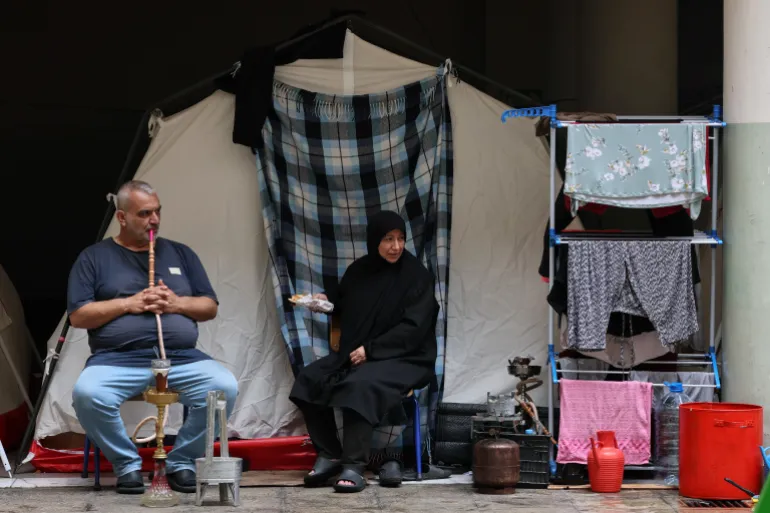
Displaced residents sit outside a tent in a local school in Beirut after fleeing their homes in southern Lebanon, on March 27, 2026 [Wael Hamzeh/EPA]
The Israeli military’s destruction of civilian homes and several bridges linking southern Lebanon to the rest of the country has also fuelled concerns that Israel is trying to isolate the area.
During Friday’s news briefing, UNHCR’s Lindholm Billing noted that the destruction of the bridges has made accessing southern Lebanon “increasingly difficult”.
“The destruction of key bridges in the south has cut off entire districts … isolating over 150,000 people and severely limiting humanitarian access with essential items to reach them,” she said.
Reporting from Tyre in southern Lebanon on Friday afternoon, Al Jazeera’s Obaida Hitto also stressed that Israel’s forced evacuation orders are “causing a lot of panic” among residents.
“Evacuation orders are happening in areas that were previously thought to be safe,” he said, adding that the destruction and damage to bridges over the Litani River in the south has made the prospect of finding safety more difficult.
“This is putting the government in Beirut in a very difficult situation to try and respond to the humanitarian crisis quickly growing in the south of the country,” Hitto said.
Israel’s Chief of Staff Lieutenant General Eyal Zamir issued a stark warning to the country’s cabinet this week: unless urgent measures are taken, the Israeli army is on the brink of collapse.
According to a report by Israel’s Channel 13 on Thursday, Zamir told ministers that he was “raising 10 red flags”, urging the government to move quickly on long-delayed legislation to alleviate the strain on its “exhausted” military.
The army has been overseeing what rights groups and the United Nations have determined is a genocide in Gaza, the de facto annexation of the occupied West Bank and numerous incursions into Lebanon and Syria.
Addressing ministers, Zamir stressed the need for a “conscription law, a reserve duty law, and a law to extend mandatory service”, adding that without these measures, “before long, the [Israeli military] will not be ready for its routine missions and the reserve system will not last”.
Israeli Prime Minister Benjamin Netanyahu has since said that plans will be made to extend mandatory military service. However, this is not the first time the alarm has been raised that the military is straining under the pressure of repeated operations, which have seen it involved in the killings of tens of thousands of civilians across the Middle East.
The first came as early as June 2024, just eight months into the genocidal war on Gaza, when France24 reported on shortfalls in troop numbers, exhaustion and a lack of supplies.
That situation has only worsened since.
So, how large was the army before October 2023, how active has it been and how has the current era of unprecedented regional aggression sapped the military’s reserves? Here is what we know.
Israeli Prime Minister Benjamin Netanyahu visits Israeli soldiers in Rafah, in the southern Gaza Strip, in this handout picture from July 18, 2024 [File: Avi Ohayon/GPO/Handout via Reuters]
How suited is the Israeli army to its country’s forever wars?
Not very.
Launched in 1948, the idea of an Israeli military made up of a relatively small standing army backed by a large reserve corps of mobilised citizenry was the plan from the outset in order to instil a narrative of social cohesion, national identity and shared responsibility within the new country’s populace. Reservists would move between civilian life and military service to achieve this.
Before the war on Gaza began on October 7, 2023, Israel’s standing army numbered just 100,000. This was immediately bolstered by calling up 300,000 reservists, pulling Israel’s “citizen soldiers” from their jobs and families to take part in the bombardment and ground invasion of Gaza in response to the Hamas-led assault on southern Israel.
Ultimately, this means that the majority of troops serving are reservists rather than career soldiers.
Where are Israeli troops now?
On March 1, the day after US-Israeli strikes on Iran began, Israel announced the mobilisation of another 100,000 reserve soldiers.
That was in addition to 50,000 reservists currently on duty as a result of the Gaza war.
At the time, military sources said the additional troops would bolster existing positions along the border with Lebanon, its frontier and occupied positions within Syria, as well as in the Gaza Strip and the occupied West Bank.
Additionally, Israel’s Home Front Command called up 20,000 reservists, primarily for search and rescue operations, with reinforcements also deployed to the Israeli Air Force, Navy and Intelligence Directorate.
Israel has since deployed “thousands” of those troops to take part in its invasion of southern Lebanon, which it resumed in response to rocket fire from Iranian ally Hezbollah on March 3.
Addressing the same security cabinet meeting as Zamir, Central Command chief Major General Avi Bluth told ministers that government policies in the occupied West Bank were also placing increasing pressure on the military’s already stretched manpower.
According to the report, Bluth told ministers that over the past year, the government has approved the construction of multiple illegal settlements in the Jordan Valley and elsewhere in the West Bank as part of a wider operation characterised by rights groups and more than 20 countries as Israel’s “effective annexation” of the occupied Palestinian territory.
Bluth added: “This is your policy, but it requires security and a full protection package, because the reality on the ground has completely changed – and that requires manpower.”
Are Israeli troops exhausted?
According to many of the army’s own members, particularly reservists, they are.
Speaking to the Ynet News outlet, which is typically supportive of Netanyahu and his ruling Likud party, one reservist told the newspaper in December of his decision not to report for duty.
“We have battles to fight at home,” he said, explaining his decision. “There are guys on the team who were fired from their jobs, others whose families are barely staying afloat, or who have been dragging out their studies for a very long time. This is a problem, a complexity that is hard to describe.”
Resentment of the apparent exemption offered to members of Israel’s ultra-religious Haredim community, whose refusal to enlist for service is often overlooked by politicians, is also growing, Israeli media reports.
Responding to Zamir’s comments to the security cabinet, Israel’s opposition leader, Yair Lapid, took to Twitter to address the government directly.
“The government must stop the cowardice, immediately halt all budgets to the Haredi draft dodgers,” he said of the extensive social benefits many in Israel’s ultra religious community rely upon. “Send the military police after the deserters, draft the Haredim without hesitation,” he said.
“The warning has been given. It’s on your heads. It’s in your hands. You cannot continue to abandon Israel’s security, in wartime, for petty politics.”
An air-sea search and rescue operation by Mexican naval vessels and military aircraft was underway Friday after two sailboats in a three-strong charity flotilla bringing aid to Cuba failed to arrive. A third vessel, an 80-foot-long shrimper, completed the journey without incident. Photo by Ernesto Mastrascusa/EPA
March 27 (UPI) — The Mexican Navy was searching the Caribbean and Gulf of Mexico on Friday for two missing aid boats bringing at least two tons of humanitarian aid to Cuba.
The air-sea search and rescue operation involving naval vessels and military aircraft was launched after the catamaran sailboats, Friendship and Tiger Moth, with a multinational crew of at least nine, failed to arrive in Havana on Wednesday, the navy said.
The flotilla, part of Nuestra America Convoy to Cuba, set off on the 250-mile crossing from Isla Mujeres just off Cancun on Mexico’s Yucatan Peninsula on March 20, but there had been communication from the convoy since.
A third vessel in the flotilla, an 80-foot fishing boat, arrived safely in Havana on Tuesday where the crew was personally received by Cuban President Miguel Diaz-Canel.
The navy said it was in contact with the maritime rescue coordination centers of the home nations of the crew, who are from Cuba, Mexico, the United States, France and Poland, while the Mexican government said consular authorities of the respective nations had been notified.
Before departing from Mexico, the coordinator of the mission, Adnaan Stumo, said the boats were bringing food and medical supplies.
The rescue mission comes after hundreds of activists from 33 countries converged on Havana in support of the Nuestra America effort with organizers saying they had delivered more than 20 tons of essential supplies.
The initiative brought together more than 650 participants from 33 countries, including doctors, activists, political figures, artists and digital content creators. Most participants arrived by air.
Organizers claim Cuba is on the verge of an “imminent humanitarian collapse” for which they blame the recent tightening of the United States’ decades-long economic embargo, including sanctions and restrictions on oil imports.
Mexico has already sent two vessels carrying more than 1,200 tons of food, China 60,000 tons of rice and other neighboring countries in the Caribbean are preparing to ship powdered milk, infant formula, nonperishable food, medical supplies and energy equipment, such as solar panels and batteries.
However, ordinary Cubans and dissidents criticized those efforts, particularly the Nuestra America initiative, saying they provided moral and material backing to the communist regime in Havana, which they accused of not passing on the aid to those in need.
“They believe in dictators, that’s why it works like this. None of those donations go to the people, everything goes to the stores — in MLC [a digital currency created by the Cuban government] or dollars,” said activist Yanaisy Curvelo, mother of a political prisoner.
Havana resident Manuel Soria called the Nuestra America Convoy a sham.
“What they came here for is to support the dictatorship of the Castro regime. If it comes under these conditions, then they should not come anymore because we have not seen any help. We have not benefited, what we are is hungrier every day,” he said.
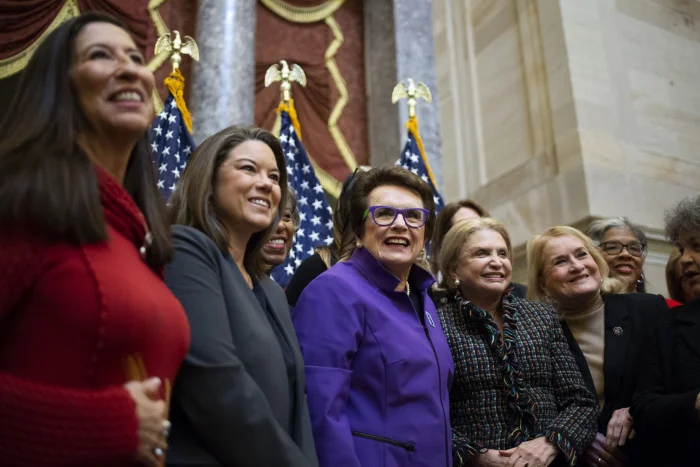
Founder of the Women’s Tennis Association and tennis great Billie Jean King (C) smiles with representatives after speaking during an annual Women’s History Month event in celebration of the 50th anniversary of Title IX in Statuary Hall at the U.S .Capitol in Washington on March 9, 2022. Women’s History Month is celebrated every March. Photo by Bonnie Cash/UPI | License Photo
France’s sports minister has called the International Olympic Committee’s decision to introduce genetic testing for women’s events a “step backwards”, warning it raises major ethical, legal and scientific concerns, while US President Donald Trump praised the IOC’s new policy.
France “takes note” of the decision to require athletes to undergo testing based on the SRY gene, but opposes any broad use of genetic screening, Marina Ferrari said in a statement on Friday.
Recommended Stories
list of 4 itemsend of list
“On behalf of the French government, I wish to express our deep concern regarding this decision,” she said. “We oppose a generalisation of genetic testing that raises numerous ethical, legal and medical questions, particularly in light of French bioethics legislation.”
The IOC said on Thursday that only biological female athletes would be eligible for women’s events from the Los Angeles 2028 Olympics onwards, following a one-time gene test designed to identify male sex development. The move essentially bars transgender athletes from competing in the female category.
The rule is in line with an executive order by Trump from February 2025 that banned transgender athletes from competing in girls’ and women’s sports.
“Congratulations to the International Olympic Committee on their decision to ban Men from Women’s Sports,” Trump said late on Thursday on the Truth Social platform.
“This is only happening because of my powerful Executive Order, standing up for Women and Girls!”
However, Ferrari said that: “These tests, introduced in 1967, were discontinued in 1999 due to strong reservations within the scientific community regarding their relevance. France regrets this step backwards.”
She added that the policy risked undermining equality by specifically targeting women.
“This decision raises major concerns, as it specifically targets women by introducing a distinction that undermines the principle of equality,” she said.
Ferrari also warned that the approach failed to reflect biological diversity, particularly among intersex individuals.
“It defines the female sex without taking into account the biological specificities of intersex individuals, whose sexual characteristics present natural variations, leading to a reductive and potentially stigmatising approach,” she said.
New Zealand’s Olympic Committee said on Friday that the IOC policy would bring greater “clarity” and “fairness” to future Games.
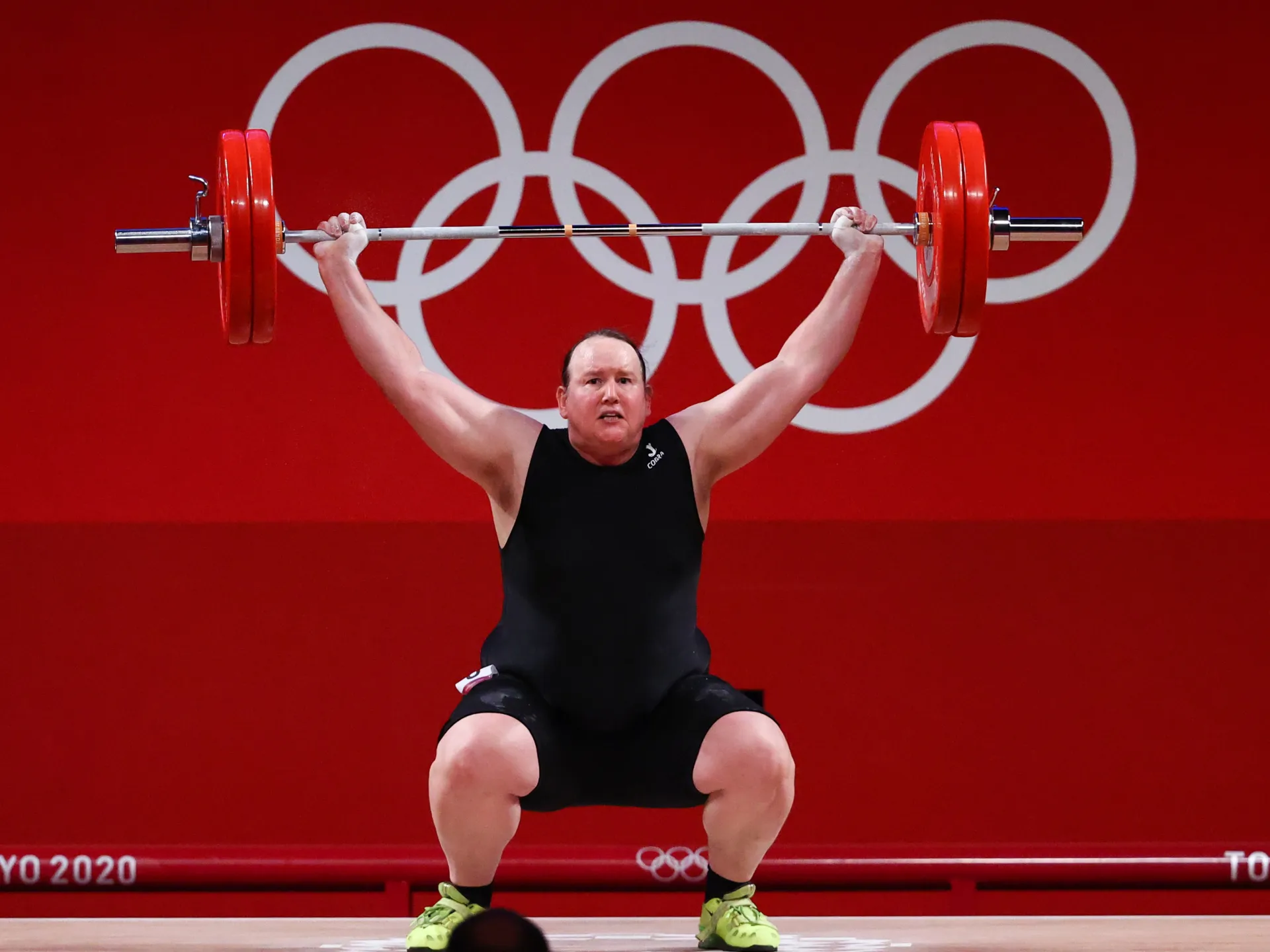
New Zealand weightlifter Laurel Hubbard became the first openly transgender woman to compete in the Olympics at Tokyo in 2021.
NZOC chief executive Nicki Nicol said the organisation recognised the “extensive consultation and expert input that has informed this policy”, particularly from athletes.
She said it would bring “greater clarity, consistency and fairness to eligibility for the female category at the Olympic level”.
“This is a complex and sensitive area that directly affects people, not just policy,” she added.
After competing in 2021, Hubbard, who failed in all of her lifting attempts in Tokyo, said she was aware of the controversy surrounding her participation.
Friday’s NZOC comments did not refer to Hubbard, who has kept a very low profile since her games appearance.
Also reacting to Thursday’s IOC announcement, Australian Olympic Committee president Ian Chesterman said the IOC had comprehensively investigated what he called a “complex issue”.
“Without doubt, this is a challenging and complex subject, and at the AOC we approach it with empathy and understanding.”
He added: “This decision provides clarity for elite female athletes who compete at the highest level and demonstrates a commitment to fairness, safety and integrity in Olympic competition, all of which are fundamental principles of the Olympic Movement.
“As the IOC has stated, at the highest level of sport, the smallest margins can determine outcomes, and clarity around eligibility is critical for female athletes to continue to compete on a level playing field.”
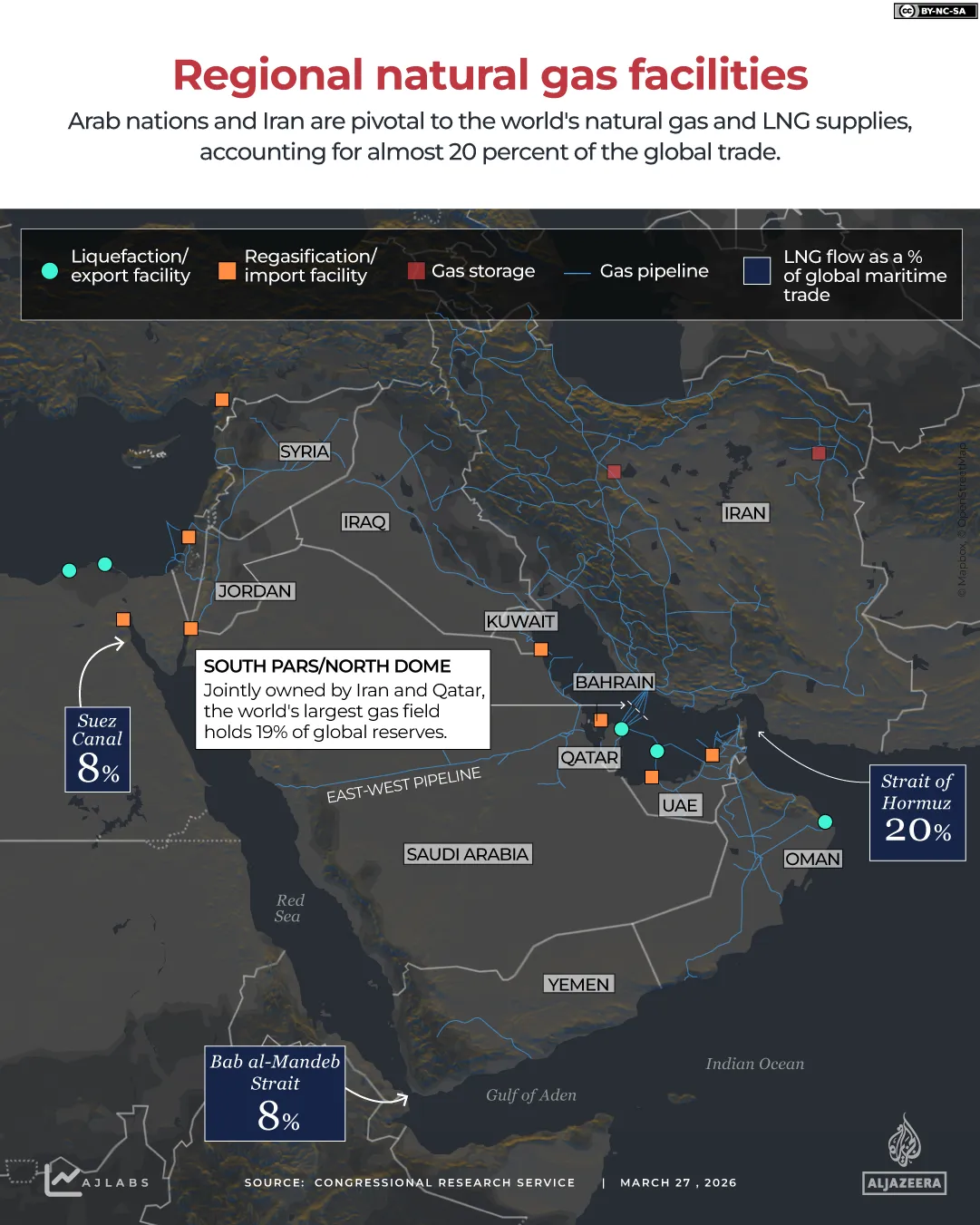
The United States-Israeli war on Iran has hit critical liquified natural gas (LNG) supplies in the Gulf, triggering the most severe disruptions in recent years to the global energy market.
Shipping through the critical Strait of Hormuz, which accounts for 27 percent of the world’s maritime oil trade and 20 percent of LNG, has been brought to a near standstill, with oil-producing nations such as Saudi Arabia rerouting oil through alternative pipelines and Qatar halting LNG production.
Recommended Stories
list of 4 itemsend of list
Natural gas makes up about a quarter of global energy consumption, raising concerns about how much the disruption to LNG will affect those most reliant on gas.
What is LNG?
Natural gas is formed over millions of years from decomposed organic matter subjected to intense heat and pressure beneath the Earth’s surface.
LNG is natural gas cooled to -162 degrees Celsius, known as cryogenic processing, shrinking it to a 600th of its gaseous volume.
In its liquid state, LNG is colourless, odourless and non-flammable, making it safe and efficient to transport across vast distances.
Composition and purification
Before liquefaction, the gas is purified through water-based solvents and molecular sieve beds to remove impurities including carbon dioxide, hydrogen sulphide, water and mercury.
Heavier hydrocarbons are then separated from methane and ethane through fractionation, and stored, used or sold as byproducts. The result is a fuel typically composed of 85 to 95 percent methane, with small amounts of ethane, propane, butane and nitrogen.
Storage and transport
LNG is stored in large insulated tanks without the need for high-pressure infrastructure. It is then pumped onto double-hulled carriers and shipped to terminals around the world.
Regasification
At its destination, LNG is heated using seawater or a warm water bath until it vaporises, a process known as regasification, before being moved through pipelines for consumption. It is sometimes blended with nitrogen or propane to ensure compatibility with local gas networks.
What is it used for?
Once LNG is returned to a gaseous state at import terminals, it is dispersed through pipelines for use in homes, businesses and industries around the world.
Residential uses include cooking, heating and generating electricity. In many parts of the world, LNG also supports hot water systems in homes and heating for commercial buildings.
It is used for power generation broadly, offering a comparatively low-carbon alternative to coal and oil.
In industry, it is used for fertilisers, plastics, paints and medicines. It is also used in transport to fuel heavy-duty vehicles and ships.
A man walks through a mustard field during the spring season on the outskirts of Srinagar, the summer capital of Indian-administered Kashmir, on March 24, 2026 [Farooq Khan/EPA]
Gulf nations export close to half the world’s traded urea – commonly used in fertilisers globally, leaving international agriculture deeply vulnerable to any interruption in the LNG shipping lane through the Strait of Hormuz.
The disruption has already forced fertiliser producers across the region to suspend or reduce operations, since natural gas is both the primary feedstock and the fuel that powers the manufacturing process.
A picture of QatarEnergy’s operating facilities on March 3, 2026, in Ras Laffan Industrial City, Qatar. QatarEnergy announced a complete halt to liquefied natural gas (LNG) production at its Ras Laffan and Mesaieed facilities on March 2, 2026, after Iranian attacks targeted energy facilities [Getty Images]
QatarEnergy’s decision to halt gas production following attacks on its LNG infrastructure brought the world’s single largest urea plant to a standstill. In addition, the Omani port of Salalah on the Arabian Sea has been closed, which holds an ammonia storage terminal. The port was hit in a drone attack on March 11.
What are the by-products?
While LNG is primarily valued as an energy source, the processing and liquefaction of natural gas yield a range of by-products with industrial and medical applications.
The most notable by-product is helium, which is extracted during cryogenic processing at LNG facilities using distillation to separate the concentrations of helium from the gas.
Global helium production is estimated to be about 180 million cubic metres annually. The disruption to LNG facilities in Qatar means some 5.2 million cubic metres of helium is taken out of the market each month, accounting for about a third of global monthly production.
Helium is used primarily as a cooling agent for superconducting magnets in MRI and CT scanners, with the average MRI machine needing about 1,700 litres of liquid helium, and some older MRIs needing replenishment every two to three years.
A brain-scanning MRI machine is seen in Pittsburgh, United States, on November 26, 2014 [File: Keith Srakocic/AP]
Helium is also critical to the data centre industry, where it is used to conduct heat away from silicon, preventing parts of semiconductors from being damaged.
The natural gas value chain generates petrochemical derivatives that also form feedstock for manufactured goods.
For example, ethane and propane are cracked to produce ethylene and propylene, which are materials used in plastics such as IV bags, syringes and other medical-grade plastics.
Which countries supply LNG?
According to the International Gas Union (IGU) 2025 World LNG Report, some 411.24 million tonnes (mt) of LNG were traded in 2024.
The largest exporter of LNG is the United States, which in 2024 exported a total of 88.4mt, followed by Australia (81mt), Qatar (77.2mt), Russia (33.5mt) and Malaysia (27.7mt).
Together, the top five countries account for more than three-quarters of global supply.
Which countries import it?
China was the largest importer of LNG with 78.6mt imported in 2024, followed by Japan (67.7mt), South Korea (47.1mt), India (26.1mt) and Taiwan (21.8mt). The top five importers accounted for nearly 59 percent of all global LNG imports in 2024.
South Asian nations such as Pakistan and Bangladesh are also at high risk from the current conflict.
Motorists queue to refuel their motorcycles at a petrol station amid concerns over supplies amid the United States-Israeli conflict with Iran, in Dhaka, Bangladesh, on March 15, 2026 [Mohammad Ponir Hossain/Reuters]
Pakistan’s primary energy source is natural gas, which accounts for 28 percent of electricity generation for the country of more than 250 million people.
In Bangladesh, with a population of about 176 million, gas accounts for half of all electricity generation.
Qatar and the United Arab Emirates supply about 99 percent of Pakistan’s LNG imports and 72 percent of Bangladesh’s, according to trade intelligence firm Kpler.
Earlier in the month, Pakistan introduced emergency measures to tackle the energy shock, including moving to a four-day workweek for government employees and announcing spring holidays for schools from March 16 to the end of the month.
As a precautionary measure, the Bangladeshi government has also reduced gas supplies. Bangladesh is seeking nearly $2bn in loans from international lenders in a bid to fund energy inputs and keep prices stable.
Some petroleum gas tankers heading to India have managed to pass through the Strait of Hormuz despite the conflict — at least one Pakistani tanker has crossed the strait, too. In India, where 5 percent of electricity generation comes from gas, they are now relying more on coal as LNG disruptions continue. India gets about half of its LNG from the Gulf.
On March 9, an Indian government order redirected natural gas and regasified LNG to priority sectors, with curtailments affecting consumers and the petrochemical industry, according to S&P Global.
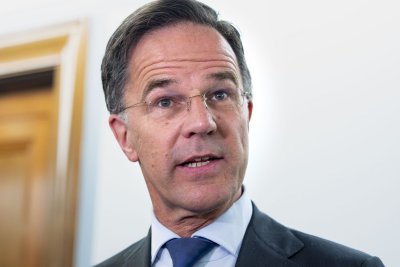
March 27 (UPI) — All 32 NATO nations met or exceeded the alliance’s target for defense spending last year, Secretary-General Mark Rutte said, as Canada and several ally nations increased their investment in defense amid war in Europe and the Middle East.
“We see clearly that our world is constantly changing. And we are adapting to ensure we remain prepared,” he said during a press conference in Brussels, as he released the alliance’s 2025 Annual Report.
“The threat picture across 2025 made clear that we need to do more. And throughout the year, NATO continued to come together to ensure that we are ready and able to respond to any threat, across all domains, both now and in the future.”
The defensive military alliance has called on member states to invest at least 2% of their gross domestic product in defense since at least 2006, with allies in 2014 pledging that those below the guideline would move toward it within a decade — though few nations did so for years.
Amid what he described as a more dangerous security environment — including Russia’s war against Ukraine, the Kremlin’s support from China, Iran, North Korea and Belarus, as well as the broader instability centered on Iran — countries are stepping up, he said, calling 2025 “a landmark year for NATO.”
Amid the protracted war in Europe and uncertainty about the United States’ cooperation with the alliance, defense ministers last year made a commitment to investing 5% of GDP annually in core defense requirements by 2035.
Among nations Rutte highlighted for reaching the 2% benchmark was Canada, which, under the Liberal government of Prime Minister Mark Carney, has sharply increased its defense spending as its once iron-clad relationship with the United States has frayed under the weight of U.S. President Donald Trump‘s incendiary rhetoric, threats of annexation and tariffs.
In the last 10 months of the Carney government, Canada has spent more than $23.8 billion on defense and security, pushing it over the 2% threshold for the first time since the end of the Cold War — and well ahead of the 2032 pledge made by former Defense Minister Bill Blair in 2024.
“As a result of our efforts, this morning, NATO confirmed that Canada has achieved its 2% defense expenditure target — half a decade ahead of the original schedule,” Carney said during a press conference held Thursday aboard a Royal Canadian navy vessel in Halifax Harbor.
“Canadians are responding to our renewed commitment and call to serve.”
The Liberal leader described the 2% target as “the foundation” for further investment in the country’s defense expenditure, as he announced a further $2.1 billion defense package for Atlantic Canada.
“Over the past 11 months, one of our government’s key priorities has been to reinvest in rebuilding and rearming the [Canadian Armed Forces] to provide you with the support you need to achieve mission success,” he said.
“We will continue our efforts with the same speed and determination that we have shown from the very beginning.”
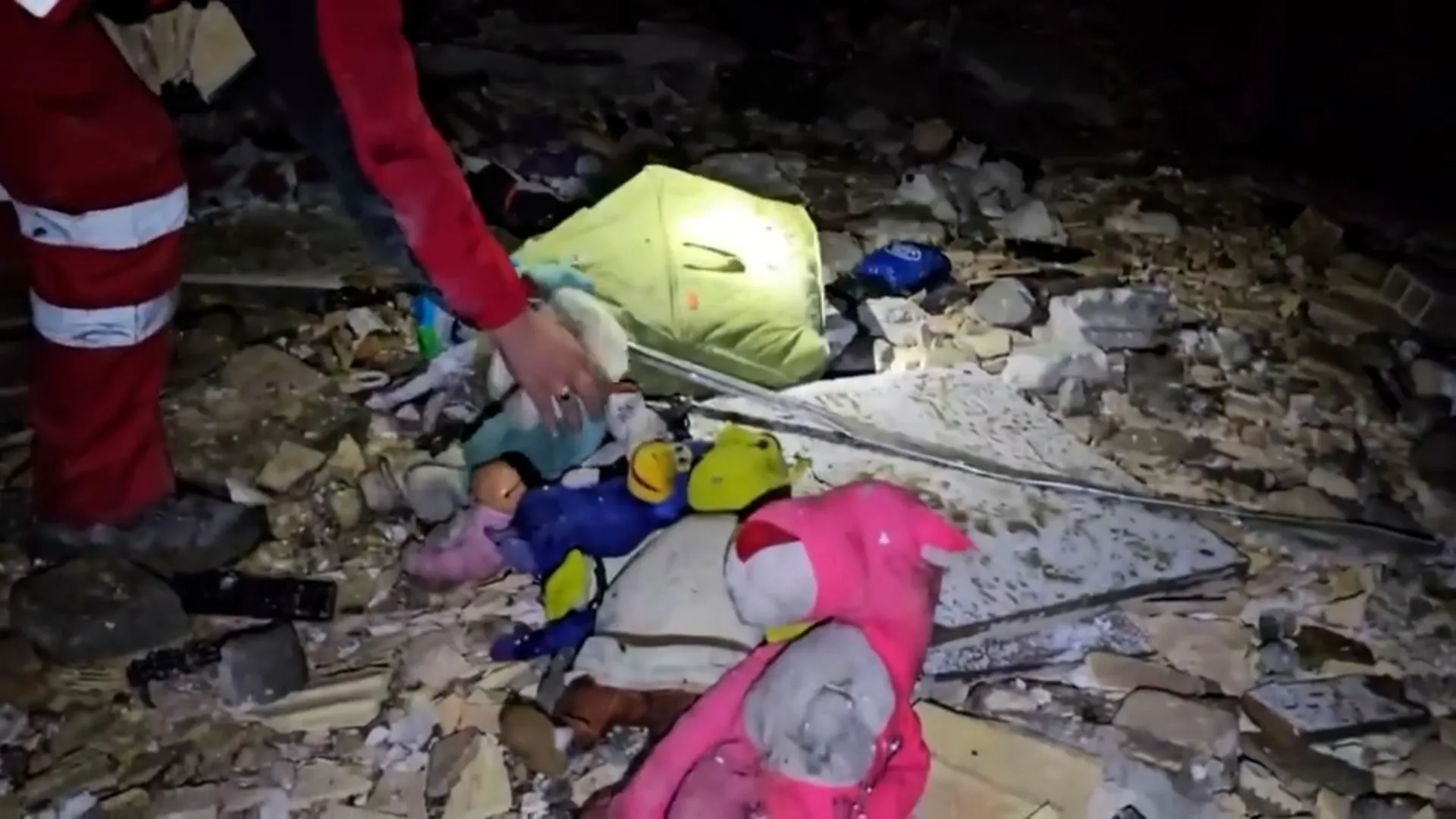
Rescue teams from the Iranian Red Crescent Society have been searching the rubble of residential buildings hit in US-Israeli attacks in Iran, where officials say around 2,000 people have been killed.
For the first 18 years of post-monarchy Nepal, the country had 14 prime ministers — leaders changing almost every year, with some taking office, being forced out, and then returning again a few years later.
On March 5, Nepal appeared to draw a line in the sand. Months after a Gen Z-led uprising ousted the then prime minister, KP Sharma Oli, millions of voters chose rapper-turned politician Balendra Shah — or Balen as he is widely known — and his Rastriya Swatantra Party (RSP) to lead the nation. On Friday, March 27, Shah was sworn in as Nepal’s prime minister.
The RSP is barely four years old, and Shah’s only prior political experience is as mayor of the capital, Kathmandu.
Now, with a landslide win, analysts and voters say that Shah and the RSP have an historic opportunity to build on the popular 2025 revolt and deliver on the aspirations of young Nepalis. But with that opportunity comes risks, they add.
“There is so much excitement with the heavy mandate. This is a historical and unprecedented opportunity for him to execute his agenda because his party is likely to have close to a two-thirds majority,” political analyst Bishnu Sapkota told Al Jazeera. But, he added, “ expectations are enormous. I do not think it is realistic for him to fully meet them.”
Too big a mandate?
In the election, Shah defeated Oli in a constituency that had been the former prime minister’s stronghold for decades. The RSP won 125 of the 165 first-past-the-post seats in parliament. Seats determined through proportional representation — 110 seats are up for grabs — are yet to be divided among parties, but everything points to a two-thirds majority for the RSP.
That’s a larger mandate than even the RSP itself expected.
“We were expecting just over a 50 percent majority, but a two-thirds mandate was beyond our expectations,” RSP leader Shishir Khanal told Al Jazeera. Khanal, who was a lawmaker in the outgoing parliament, won re-election on March 5.
“The challenge is that such a mandate creates very high expectations among people, who want fast results. Given Nepal’s institutional capacity and almost stagnant economic growth, delivering those results will be extremely difficult.”
One immediate test for Shah will be implementing the findings of the Karki Commission, formed by the interim Sushila Karki government that took charge after Oli’s ouster last year. The commission was tasked with investigating the killings and property damage during the Gen Z movement last year. The panel submitted its report to the government last Sunday. This interim government is expected to hand over the investigation to the incoming Shah government to implement.
“There is a popular demand that the report be made public and implemented quickly,” Sapkota, the analyst, said. “If the interim government hands over the report as promised, implementation will have to happen in stages. As soon as he begins doing that, political reactions will follow, and he will have to manage them carefully.” The protests last year were driven by public anger over corruption, poor governance and lack of accountability, issues that voters expect the new government to address urgently. High-profile corruption investigations involving politicians are likely to be among the upcoming government’s first major tasks.
That won’t be an easy challenge to address.
Shah joined the RSP only weeks before the election, and was nominated as its prime ministerial candidate, while Rabi Lamichhane, the television presenter-turned-politician who founded the party, remains its president.
Lamichhane himself remains a controversial figure, facing allegations of fraud, organised crime and money laundering. He has previously served jail sentences and is currently out on bail. Lamichhane is accused of illegally holding two passports, US and Nepali, which is forbidden under Nepali law.
Two power centres?
The relationship between Shah and Lamichhane — and the balance of power between them — will also come under scrutiny, say experts.
Gehendra Lal Malla, professor of political science at Tribhuvan University in Kathmandu, described their alliance as a “marriage of convenience”.
“Balen needed a party to contest the election, and Rabi needed Balen’s popularity,” he said. “But differences could emerge later.”
Malla said Shah will also face a difficult test in dealing with the ongoing charges against Lamichhane. “We have a culture in Nepal where politicians protect each other,” he said. “Shah must uphold the rule of law and not protect anyone from his own party.”
At the same time, Malla noted that Shah’s popularity was the main factor behind the RSP’s success. “Balen’s appeal was the reason the party gained such a huge mandate,” he said. “He could end up having a stronger grip on the party than its president.”
Analyst Sapkota said that the RSP leadership, including Lamichhane, would need to acknowledge that the overwhelming mandate they received was largely because of Shah’s appeal. “They have to recognise that and give Shah absolute freedom to form the cabinet of his choice. Of course, the party can give their inputs and suggestions,” said Sapkota.
Khanal said, based on the conversation and an agreement they had signed, Shah will lead the government and Lamichhane the party. “From that perspective, they have their individual role sorted out, and both will have to face challenges and manage expectations on their own respective front,” Khanal told Al Jazeera. “I have observed them work very closely together within the last election cycle and campaigning. Their decision-making has also been in collaboration. So, with what I have experienced so far, there wouldn’t be any friction between them.”
The first 100 days
For Sapkota, Shah’s political novelty might work in his favour. “He doesn’t have the baggage of party cadres and internal factions,” Sapkota said. “That gives him more freedom compared to previous prime ministers.”
RSP leaders say the government plans to move quickly. “In the first 100 days, the honeymoon period, people will begin to see changes,” Khanal said.
The party has planned to prioritise anticorruption measures, including investigations into the wealth of senior officials and politicians since 1990. “We want to form a commission to investigate the assets of high-level officials and reopen high-profile corruption cases that were paused,” Khanal said.
These steps respond directly to the demands of last year’s Gen Z protests.
For many young activists who drove the protests, the election result represents hope, but also a new government that must be held accountable.
Gen Z activist Yujan Rajbhandari, 23, said the new government must prioritise good governance and protect civic freedoms, or face pushback from the same movement that enabled its rise. “With the RSP’s large majority, parliamentary opposition will be weak,” he said. “So the streets will play a major role as opposition.”
Beyond immediate reforms, Nepal is in the middle of a debate about whether to introduce broader constitutional reforms — with questions about how decentralised power needs to be.
Khanal said the party plans to establish a committee to review whether amendments may be necessary.
Shah’s critics have also questioned his diplomatic skills, citing past social media posts attacking Nepal’s neighbours, including India and China, and important partners such as the US. As Kathmandu mayor, he briefly banned Indian films and displayed a “Greater Nepal” map that showed Indian territory as part of an aspirational larger Nepal.
Sapkota said those concerns were being overblown.
“When he made those remarks, he was a mayor, not a national leader responsible for foreign policy,” he said. Sapkota argued that Shah’s lack of political baggage could allow Nepal to pursue a more independent diplomacy. “This is a clean slate,” he said. “Previous leaders had historical ties and obligations with different countries. Shah does not have that baggage, which could give Nepal greater independence.”
Neighbouring India has already signalled a willingness to work with Nepal’s new leadership.
Indian Prime Minister Narendra Modi congratulated both Shah and Lamichhane after the election and expressed hopes for stronger bilateral relations. Shah responded by emphasising the importance of maintaining the “historical, close and multifaceted relations” between Nepal and India and congratulating India for their recent T20 Cricket World Cup win.
For Malla, another important element to watch would be Shah’s relationship with the media. “Balen should engage more with the press once he becomes prime minister,” he said. “In the past, he has often said he prefers to work more and talk less. But as a national leader, communication and accountability are essential.”
Italy beat Northern Ireland 2-0 to boost their bid to reach a men’s World Cup for the first time since 2014, as Bosnia and Herzegovina, Sweden, Poland, Turkiye, Kosovo, the Czech Republic and Denmark also won their European playoff semifinals.
Four-time champions Italy, who lost out in the playoffs for the 2018 and 2022 editions, travel to Bosnia on Tuesday for the final, knowing a win will send them to June and July’s tournament in Canada, Mexico, and the United States.
Recommended Stories
list of 4 itemsend of list
Sandro Tonali blasted in superbly from the edge of the box in the second half of a nervous one-off semifinal in Bergamo on Thursday before Moise Kean made the game safe.
“We made life a bit difficult for ourselves, but in the second half we found our rhythm,” Italy coach and 2006 champion Gennaro Gattuso said. “Now we’re going to play this final. We know it’s difficult. The tension we feel will be felt by our opponents, too.”
Bosnia overcame Wales on penalties in Cardiff following a 1-1 draw after extra time.
Daniel James used his pace to score early in the second period for the hosts, and Karl Darlow then made a wonder save from an Ermedin Demirovic header. Edin Dzeko, 40, levelled late on in normal time.
Darlow saved again from Demirovic in the shootout, but Brennan Johnson and Neco Williams both missed.
Kosovo have never reached a World Cup, but are through to Tuesday’s playoff final at home to Turkiye after winning a wild game in Slovakia 4-3.
The Kosovans twice wiped out a deficit, and Kreshnik Hajrizi’s goal on 72 minutes proved the difference.
Ferdi Kadioglu’s second-half goal put Turkiye through after a tight 1-0 home win over Romania.
Kadioglu calmly netted on 53 minutes after Arda Guler’s magical assist at Besiktas’s stadium in Istanbul.
Romania’s 80-year-old coach Mircea Lucescu, who counts Turkiye among his former jobs, was left to rue Nicolae Stanciu hitting the post as the Tricolours missed the World Cup for the seventh straight edition.
Turkiye, third in 2002, have not reached a men’s World Cup since.
Viktor Gykeres bagged a hat-trick in Sweden’s 3-1 win over Ukraine in Valencia. Ukraine have not played at home since the Russian full-scale invasion more than four years ago, and miss out on another World Cup.
Graham Potter’s Swedes next take on Poland, who came from behind to defeat Albania 2-1 in Warsaw.
Arbr Hoxha pounced 42 minutes after Jan Bednarek’s mistake as Albania dreamed of moving closer to a first World Cup appearance. But record Poland scorer Robert Lewandowski equalised, and Piotr Zielinski won it in style with a goal from distance.
Gustav Isaksen scored twice in two minutes to help Denmark thump North Macedonia 4-0 and set up a meeting away to the Czech Republic, who needed penalties to get past Ireland in Prague.
Troy Parrott, the hero as the Irish made the playoffs at the end of November’s group stage, netted the opener from the spot, and an own goal summed up the poor Czech defence.
But the hosts pulled one back through Patrik Schick’s penalty and Ladislav Krejci’s late header to make it 2-2, prompted by a cagey extra time, with the Czechs prevailing in a shootout.
This year’s tournament, in North America in June and July, will feature an expanded 48 teams, meaning more nations have a chance to qualify.
Twelve European countries have already gotten through by winning their groups. The playoffs are made up of second-placed teams and sides who did well in the previous Nations League.
Bolivia beat Suriname, Jamaica edge New Caledonia to reach playoff finals
In FIFA’s intercontinental playoff games on Thursday, Bolivia rallied to beat Suriname 2-1 to qualify for the final qualifying playoff against Iraq.
Liam Van Gelderen put Suriname ahead in the 48th minute, but Moises Paniagua tied the score at the 72nd, and Miguel Terceros had the winning goal on a penalty kick in the 79th minute for the Bolivians, who are aiming for their second World Cup appearance.
The Bolivians have only previously played in the 1994 World Cup in the US. Suriname were looking to qualify for the first time.
Bolivia will play Iraq next Tuesday in Monterrey, with the winner qualifying for Group I with France, Norway and Senegal.
Elsewhere on Thursday, a first-half goal by Wrexham striker Bailey Cadamarteri gave Jamaica a 1-0 victory over New Caledonia and a place in the international playoff final against the Democratic Republic of the Congo (DRC).
The Reggae Boyz have only one World Cup appearance, at France in 1998. New Caledonia, from Oceania, saw their chance to advance to a first World Cup end.
Jamaica will face DRC next Tuesday at Akron Stadium in Guadalajara. DRC qualified for the playoff by defeating Nigeria in an African playoff.
The winner in Guadalajara will play in Group K in the tournament along with Colombia, Portugal and Uzbekistan.
Kano, Nigeria – On a bustling day in northern Nigeria, Marian Shammah made her way to the Sabon Gari Market, one of the largest electronics hubs in Kano state.
The 34-year-old cleaner was in need of a refrigerator, but with rising costs and a meagre income, she saw the second-hand appliances sold at the market as a lifeline.
Recommended Stories
list of 3 itemsend of list
After locating the one she wanted, she paid the vendor 50,000 naira ($36) and took it home. But just a month later, the freezer collapsed.
“Only the top half of the refrigerator was working, and the freezer wasn’t working,” said Shammah.
Her food spoiled, her savings disappeared, and she was soon back in the market searching for another appliance.
Although Shammah could have bought a new local appliance for just over 30,000 naira ($30) more, she – like millions of Nigerians – believes second-hand products from America and Europe “last longer” than new products sold in Nigeria.
Observers say this trend is part of a larger crisis. Nigeria has become a major destination for the developed world’s discarded electronics – items often near the end of life, sometimes completely dead, and frequently toxic because they contain hazardous materials. When they break down, they add to landfills, worsening an already dire e-waste crisis on the African continent.
Around 60,000 tonnes of used electronics enter Nigeria through key ports each year, with at least 15,700 tonnes already damaged upon arrival, according to the United Nations.
The trade in used electronic goods is powered largely by foreign exporters. A UN tracking study between 2015 and 2016 showed that more than 85 percent of used electronics imported into Nigeria originated from Germany, the United Kingdom, Belgium, the Netherlands, Spain, China, the United States, and the Republic of Ireland.
Many of these imports violate international restrictions, like the Basel Convention, an environmental treaty regulating the transboundary movement and disposal of hazardous electronic waste to developing countries with weaker environmental laws.
Across West Africa, the Basel Convention’s “E-Waste Africa Programme”, a project focused on strengthening e-waste management systems across the continent, estimates that Benin, Ivory Coast, Ghana, Liberia, and Nigeria collectively generate between 650,000 and 1,000,000 tonnes of e-waste annually – much of it the result of short-lifespan second-hand imports.
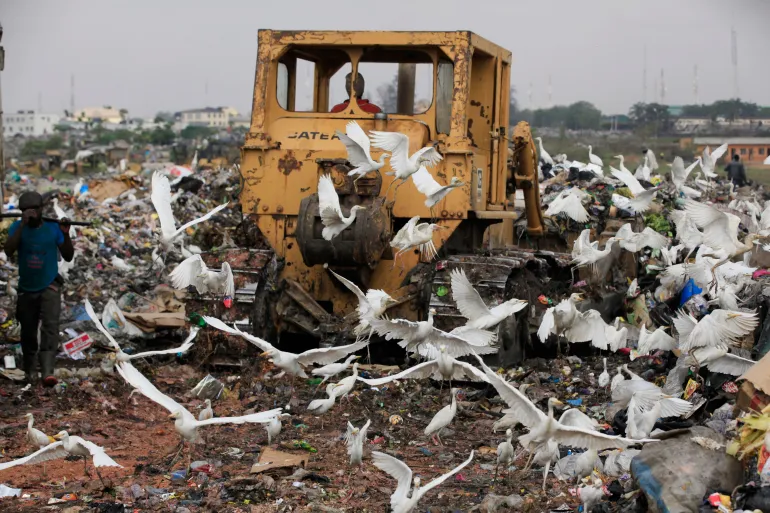
A man sorts out iron and plastic to sell while a bulldozer clears the garbage and birds surround it in a dump site in Lagos, Nigeria [File: Sunday Alamba/AP]
Health risks
The United Nations describes e-waste as any discarded device that uses a battery or plug and contains hazardous substances – like mercury – that can endanger both human health and the environment. Several of the toxic components commonly found in e-waste are included on the list of 10 chemicals of major public health concern maintained by the World Health Organization (WHO).
According to the WHO, used electrical and electronic equipment (EEE) presents a growing public health and environmental threat across Africa, with Nigeria at the centre of the trade.
“Much of the equipment shipped as used electronics is close to becoming waste,” said Rita Idehai, founder of Ecobarter, a Lagos-based environmental NGO, warning that devices imported and sold as affordable second-hand goods often fail shortly after arrival and quickly enter the waste stream.
The consequences are far-reaching. Many imported fridges and air conditioners, for instance, still contain CFC-based and HCFC-based refrigerants such as R-12 and R-22 – chemicals banned in Europe and the US for causing ozone depletion or being linked to cancer, miscarriages, neurological disorders, and long-term soil contamination. These gases live for 12 to 100 years, meaning leaking equipment adds to a multi-generational environmental burden.
After these imported items stop working or fall apart, informal recyclers then dismantle the electronics with their bare hands, Al Jazeera observed. In Kano, the recyclers inhale poisonous fumes and manage the heavy metals without protection. Their work earns them a meagre 3,500–14,000 naira ($2.50-$10) per week, they said, and the after-effects linger – including persistent coughing, chest pain, headaches, eye irritation, and breathing difficulties after long hours of burning cables and dismantling electronic devices.
The health crisis extends into Kano’s communities.
Among casual recyclers and residents who live close to e-waste dumps, many report symptoms that range from chronic headaches and skin irritation to breathing issues, miscarriages and neurological concerns, according to health surveys done by the International Journal of Environmental Research and Public Health. These ailments are consistent with longtime toxic exposure, the researchers said.
Recent field assessments conducted by Nigeria’s Federal University Dutse also stressed that in and around Kano state, where the Sabon Gari Market is located, there are rising levels of heavy metals in soil and drainage channels.
Dr Ushakuma Michael Anenga, a gynaecologist at the Benue State Teaching Hospital and second vice president of the Nigerian Medical Association, warned that toxic exposure from informal e-waste recycling poses grave health risks to communities in Kano.
“Exposure to heavy metals and refrigerant gases in e-waste causes extreme brief and long-term health issues, generally affecting the breathing and renal organs,” he told Al Jazeera.
“Common casual practices like exposed burning and dismantling result in direct, high-level exposure for workers and nearby residents. Children and pregnant girls are particularly inclined due to the fact that those toxicants can disrupt development or even skip from mother to unborn baby, [while] recyclers who work without defensive equipment face repeated, frequently irreversible damage.”
Old computer monitors discarded as electronic waste are pictured at a recycling facility in Lagos, Nigeria [File: Temilade Adelaja/Reuters]
Profits over protection
In Sabon Gari Market, second-hand electronics are advertised as less costly lifelines for households and poor business owners burdened by inflation.
Many customers say foreign-used home equipment appears sturdier and seems like better value for money than new imports from the developing world. Meanwhile, others are just looking for cheap options in difficult economic times.
“I usually go for second-hand or foreign-used electronics because brand-new ones are too expensive for me,” Umar Hussaini, who sells used electronics at the market, told Al Jazeera.
“Sometimes you can get them for half the price of new ones, and they look almost the same, so it feels like a good deal at the time.”
But the last refrigerator he bought stopped cooling after just three months. With no warranty or guarantee, the seller refused responsibility.
“For weeks, we couldn’t store food properly at home, and we ended up buying food daily, which was more expensive,” he said. “However, I have to buy another one again.”
For small business owners like Salisu Saidu, the losses can be even more devastating. He bought a used freezer for his shop, believing it had been serviced. Within weeks, it failed.
“I lost a lot of frozen food, which meant I lost money and customers,” he told Al Jazeera.
Around his neighbourhood, broken electronics are often dumped out in the street, sometimes emitting smoke or sparks.
“There’s also a lot of electronic waste piling up around,” he said, calling for tighter import controls, proper certification, and mandatory warranties to protect buyers from being sold what he described as “damaged goods disguised as fairly used”.
Umar Abdullahi’s second-hand electronics shop in Kano, Nigeria [Abdulwaheed Sofiullahi/Al Jazeera]
Bought as bargains, sold as burdens
At Sabon Gari Market, another vendor, Umar Abdullahi, is surrounded by imported refrigerators, air conditioners and washing machines stacked tightly together.
The products in his shop are advertised as “London use” or “Direct Belgium”, while he negotiates the sale of a double-door fridge for 120,000 naira ($87).
Abdullahi’s store is where Shammah returned after the refrigerator she bought failed. But he admits that much of what he sells to customers arrives unchecked.
“We buy them untested from suppliers in Europe, and we also sell them untested so we can make our profit,” he told Al Jazeera.
This despite the fact that international rules under the Basel Convention, as well as Nigerian environmental regulations, prohibit the shipment of material considered e-waste – with penalties including fines and jail terms.
Nwamaka Ejiofor, a spokesperson for Nigeria’s National Environmental Standards and Regulations Enforcement Agency (NESREA), said the country does not permit the import of e-waste. However, the entry of used electronics is allowed under regulated conditions.
“The importation of used electrical and electronic equipment is regulated and may be allowed only where such equipment meets prescribed conditions, including functionality and compliance requirements,” she told Al Jazeera.
“Nigeria applies a combination of regulatory, administrative and enforcement measures to ensure that imported used electronics comply with national law and the country’s international obligations,” she added, listing out measures including environmental regulations, cargo inspection and verifying that imported equipment is “functional”.
However, despite this, some traders find loopholes in the system, including declaring cargo they plan to sell as personal belongings or second-hand household goods to avoid scrutiny.
Although NESREA says enforcement has improved, critics say the steady flow of mediocre goods continues largely unchecked. Even dealers at Sabon Gari Market acknowledge that most appliances are sold “as is”, without certification or guarantees.
Baban Ladan Issa’s worker washes a second-hand fridge before selling it to a customer [Abdulwaheed Sofiullahi/Al Jazeera]
‘Loopholes’
Behind the second-hand electronics trade is a network of collectors and exporters who source discarded appliances across Europe.
Baban Ladan Issa, who ships used electronics from Ireland to Nigeria, said items are gathered from weekend markets, private homes that are replacing old gadgets, and contractors clearing out equipment from offices, hotels and hospitals.
“Some suppliers mix working and damaged goods together,” he told Al Jazeera, noting that while he tries to avoid faulty items, not all buyers do the same.
Once assembled, shipments worth millions of naira are sent to Lagos through ships then down to sellers in the market in Kano state, sometimes packed in containers or hidden inside vehicles to reduce inspection risks.
Shipping records seen by Al Jazeera showed consignments labelled as “personal effects”, a classification that can limit detailed checks at ports.
Chinwe Okafor, an environmental policy analyst based in Abuja, said the problem is systemic.
“Exporting nations regularly take advantage of loopholes by means of labelling nonfunctional e-waste as ‘second-hand goods’ or ‘for repair,’” she told Al Jazeera. “In some instances, research estimates that over 75 percent of what arrives in developing countries is truly junk.”
“This permits wealthy countries to keep away from highly-priced recycling at home while pushing unsafe materials into nations with weaker safeguards.”
Ibrahim Adamu, a programme officer with the NGO Ecobarter, added that mislabelling, poor inspection technology and corruption at ports make enforcement difficult.
“The highest profits are captured by exporters and brokers who arbitrage the gap between disposal costs in Europe or Asia and the strong demand for ‘tokunbo’ goods in Nigeria,” he said, using the local name for used imported electronics.
To forestall this, he said Nigeria “must reinforce border inspections” and implement a policy whereby producers and manufacturers bear financial responsibility. At the same time, “the international network has to adopt binding bans that [hold] manufacturers and exporters responsible”, Adamu said.
People shop at a market in Nigeria [File: Sodiq Adelakun/Reuters]
Little oversight, mounting risks
Although Nigeria has regulations governing the import of electrical and electronic equipment, enforcement gaps keep exposing markets like Kano’s Sabon Gari to ageing and near-end-of-life appliances, locals say.
Ibrahim Bello, a used electronics importer with a decade in the business, said many shipments that arrive from Europe are in less-than-ideal condition.
“Around 20 to 30 percent of the items we receive have issues when they arrive,” he told Al Jazeera. “Some are already damaged, while others stop working after a short time because they are old.
“That’s just part of the business.”
Retailer Chinedu Peter gave similar estimates. “From what I’ve experienced, maybe 40 percent of the electronics have some fault as they come,” he said, adding that environmental and protection checks don’t happen as they are meant to.
“Such a lot of items enter without special checks.”
Both men feel that clearer rules and certified testing systems will improve trust. But until then, thousands of ageing, unsuitable products will continue to flood Nigeria.
Shammah, back at Sabon Gari Market just weeks after her refrigerator broke, was once again searching through rows of stacked appliances, hoping her next purchase might last longer than the last.
“I don’t really trust these fairly used appliances again, but I still have to buy something because we need it at home,” she told Al Jazeera.
“This time I’m thinking … I can buy a new one from a proper shop, even if it takes longer, because I don’t want to lose my money again.”
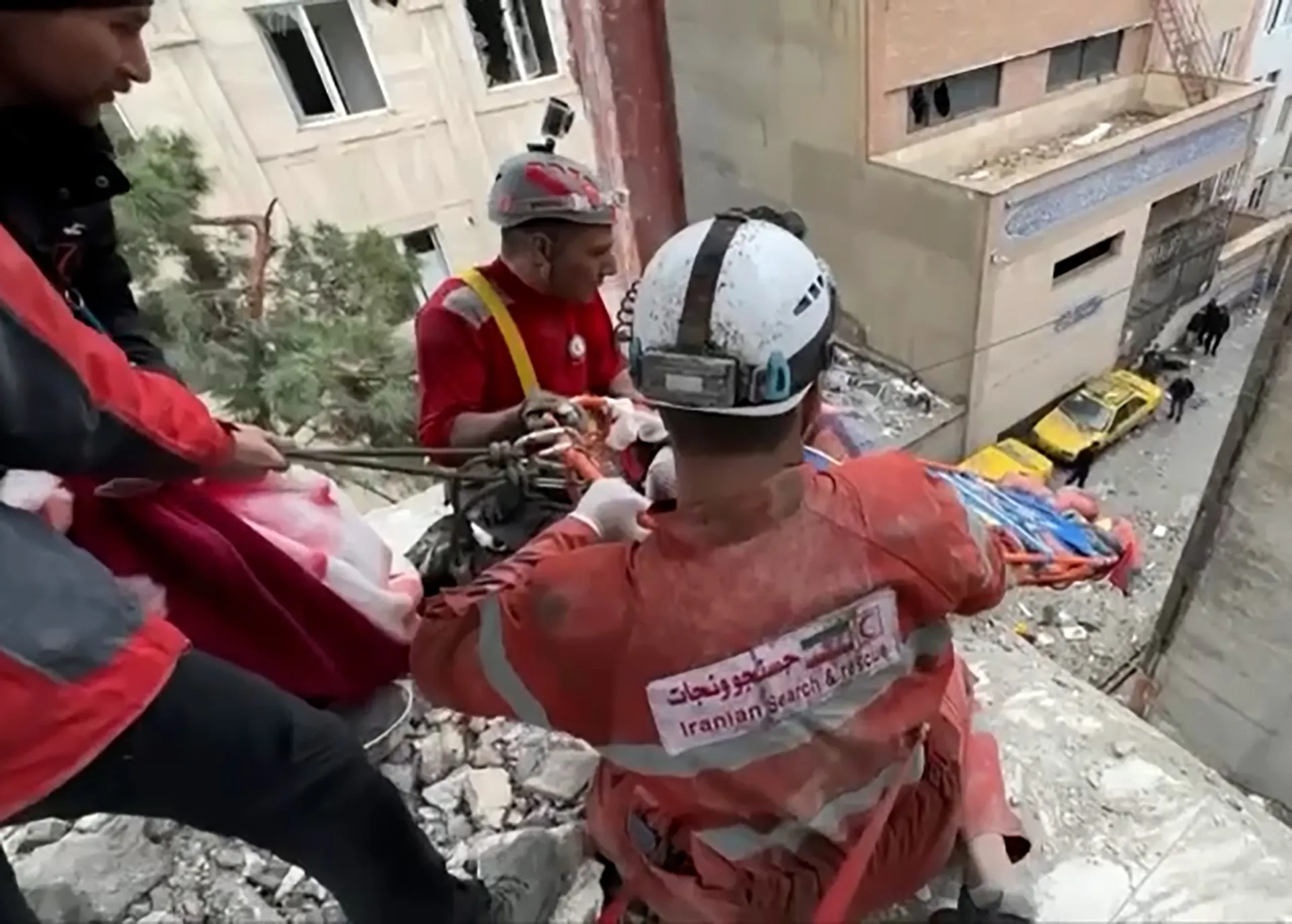
The Iranian Red Crescent Society released video showing rescuers in Tehran lowering a man strapped to a stretcher from the wreckage of a building severely damaged in an airstrike.
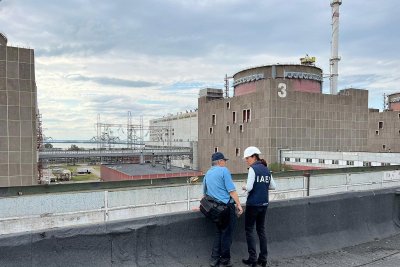
Members of International Atomic Energy Agency inspect the Zaporizhzhia nuclear power plant in Zaporizhzhia Oblast, southeastern Ukraine, on September 1, 2022. On Thursday, the IEAE said it had initiated cease-fire talks in order to conduct repairs at the plant. File Photo by IAEA Press Office/UPI | License Photo
March 27 (UPI) — The United Nations nuclear watchdog said Thursday it has begun discussions for another localized cease-fire for Ukraine‘s Russia-occupied Zaporizhzhia nuclear power plant to allow for urgently needed repairs.
The plant, Europe’s largest, has been occupied by Russian forces since early in the war, which has repeatedly endangered and damaged the site.
The International Atomic Energy Agency has said that the situation at the plant is challenging and has warned about the risk the war poses to it.
The IAEA said Tuesday that the ZNPP lost connection to its sole remaining main power line after it was damaged and was now dependent on a single backup line that had only recently been reconnected to the plant.
On Thursday, the IAEA said in a statement that its director, Rafael Grossi, had begun discussions with Russia and Ukraine to secure a cease-fire so the necessary repairs could be conducted.
Although the timing for the necessary repairs remains uncertain, Grossi has confirmed that they have “proposed a cease-fire window to both parties, allowing for safe assessment and restoration of the damaged infrastructure,” it said.
The IAEA has brokered five localized cease-fires for Zaporizhzhia, the latest initiated late last month that allowed for repairs to the sole backup power line, which was reconnected to the nuclear power plant on March 5.
The plant is located in Zaporizhzhia Oblast in southeastern Ukraine. Russian forces seized the utility on March 4, marking the first time a civilian nuclear facility has been occupied.
On the grim anniversary of the plant’s fourth year of Russian occupation, Ukraine’s state-run nuclear energy enterprise said the facility “remains one of the most acute risks to European energy and nuclear stability.”
“The seizure of a nuclear facility and its use as a tool for political pressure is a violation of the fundamental rules of the industry,” Energoatom CEO Pavlo Kovtonyuk said in a statement.
“Our task is to protect people and be ready at any moment to resume safe operation of the plant.”
Mexico’s monarch butterfly population surged 64 percent this winter, raising hopes for the endangered species’ spring migration to the United States and Canada.
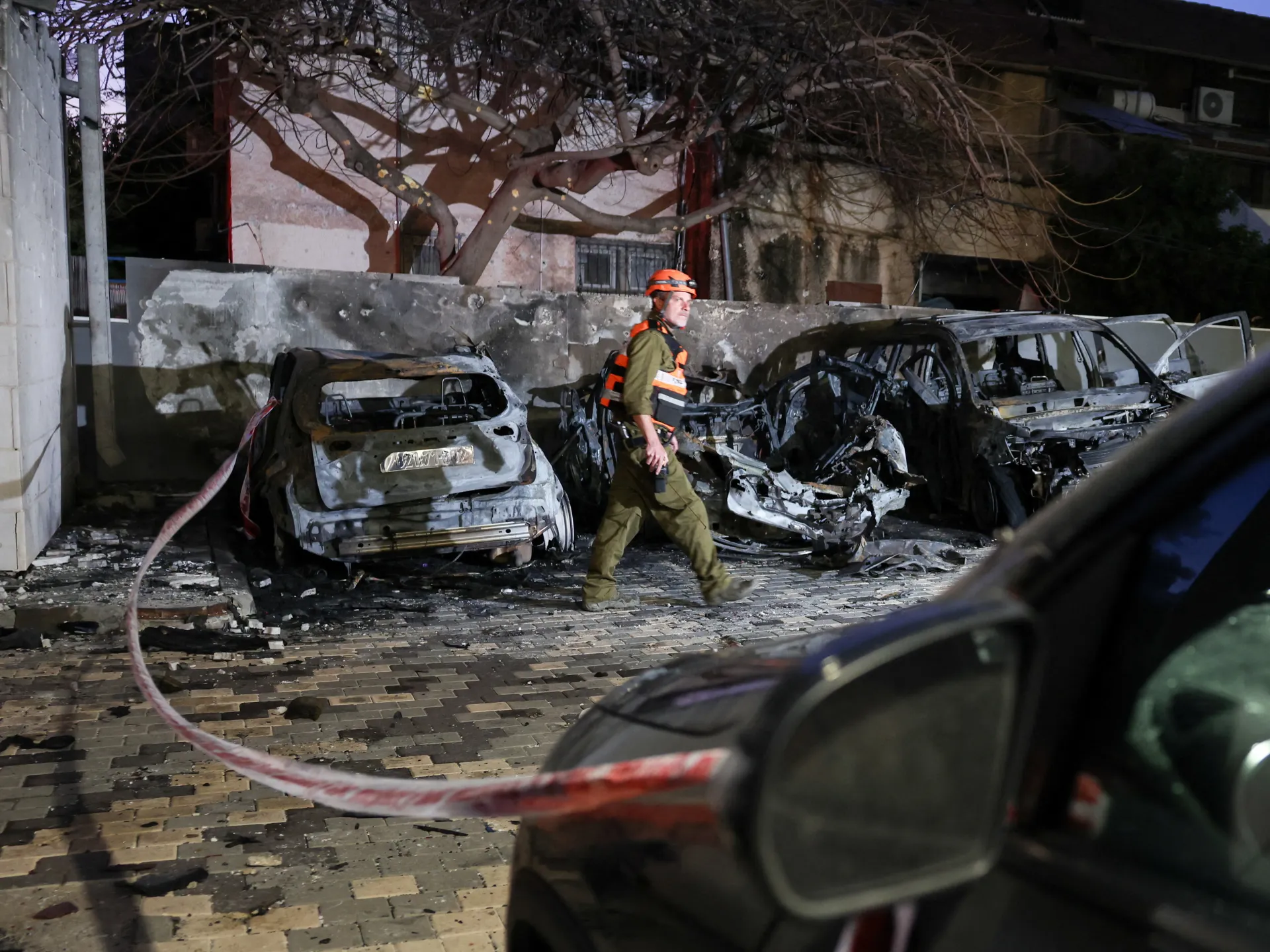
Video captured flames and black smoke where a projectile from Lebanon killed at least one person and injured 13 others in Nahariya, Israel. Burnt vehicles and extensive shrapnel damage could be seen at the site.
March 26 (UPI) — Senate Democrats blocked a funding bill for the Department of Homeland Security after they could not reach terms on a bill 41 days into its shutdown.
A bill to fund all of DHS failed in the Senate for the seventh time, once again along a mostly party line vote, 53 to 47, as the Senate is expected to leave for a two-week recess that includes several members traveling outside the country, The Hill reported.
The is not expected to reconvene until April 13, but the GOP has not ruled out delaying, shortening or canceling the recess.
With the lack of action from Congress, President Donald Trump on Thursday said that he plans to declare a national emergency forcing DHS to pay TSA employees.
“I am going to sign an Order instructing the Secretary of Homeland Security, Markwayne Mullin, to immediately pay our TSA Agents in order to address this Emergency Situation, and to quickly stop the Democrat Chaos at the Airports,” Trump said in a post on Truth Social.
Senate Republican majority leader John Thune, R-S.D., who’d earlier called the GOP’s latest plan “our last and final offer,” told reporters on Thursday night the executive order would temporarily relieve “the immediate pressure” on the Senate to solve the situation.
Senators actively negotiated Thursday on the DHS shutdown ahead of Friday’s deadline, which is the start of a two-week Easter recess.
Thune, also, however, kept a procedural vote open on the Senate floor to prevent requests for unanimous consent to fund only TSA as the rest of the funding bill gets worked out.
“Let’s let the Dems react to what’s out there, and hopefully we can find a pathway to drive this to the finish,” CBS News reported Thune said.
He didn’t share details of the plan, but said it’s close to what they offered earlier this week, which Democrats voted down because it didn’t create reforms for Immigration and Customs Enforcement.
Though recess is scheduled to start this weekend, if the Senate doesn’t agree on a funding bill, Thune said, “I suspect we’ll probably be around here.”
Sen. Andy Kim, D-N.J., said Democrats were looking at the offer, but he doesn’t think it’s enough.
“We’re talking through it right now but it’s not where we want it to be,” Kim said. “We just continue to be stuck here.”
He didn’t give details about the offer, but said, “it’s not good enough for me.”
Thune later walked back his “final offer” statement, saying that the GOP senators are willing to work with Democrats to tweak the bill.
“If there’s something that they think needs to be tweaked, one way or the other, as long as that’s a final thing, then we’ll see if it can get done,” Thune said.
“At some point they got to take yes for an answer,” Thune said.
The department has been shut down since Feb. 14 as Democrats and Republicans battle over a funding bill. Democrats don’t want to fund the department without putting some restrictions on ICE enforcement, and Republicans have agreed to some measures but not the ones on which Democrats insist.
Because of this, Transportation Security Administration workers have been working without pay for more than a month. Some are quitting or taking days off work, creating long lines at airports. Trump has sent ICE agents to some airports to help TSA agents.
Sen. John Hoeven, R-N.D., told reporters this morning that talks have increased.
“We put options in front of the Democrats, and they just need to quit backing up on us and vote to get DHS funded and TSA agents paid,” CBS reported Hoeven said.
“I’m hoping that as we get to the end of this week — you know how it works around here with deadlines — that that’s going to get us to a point where we get it done,” he said. “But we’re still working.”
Thursday morning, President Donald Trump began a Cabinet meeting by saying that Democrats are “really punishing the American people.”
“They need to end the shutdown immediately, or we’ll have to take some very drastic measures,” he said. He didn’t explain what he meant.
The only Democrat who has voted for the Republican bill was Sen. John Fetterman, D-Pa. Some Democrats fear that other centrists will defect and vote for the Republican bill, The Hill reported.
Some who voted to reopen the government last fall met with White House border czar Tom Homan last week, including Sens. Catherine Cortez Masto, D-Nev.; Maggie Hassan, D-N.H.; and Angus King, I-Maine, who caucuses with Democrats. So far, they haven’t broken with the Democrats, but there is anxiety that they will, The Hill reported.
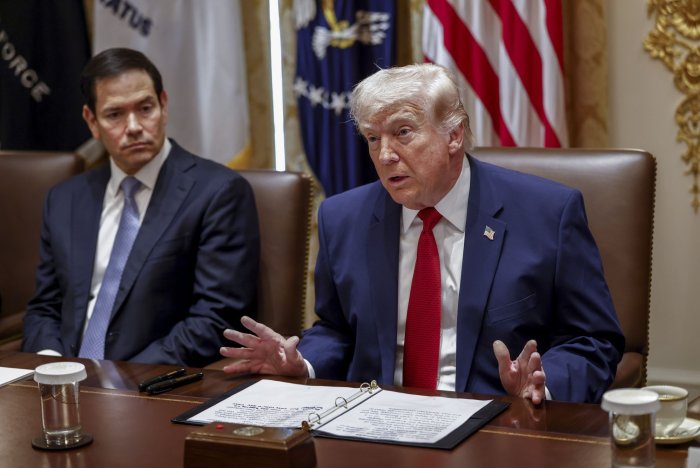
President Donald Trump speaks as Secretary of State Marco Rubio listens during a cabinet meeting at the White House on Thursday. Photo by Will Oliver/UPI | License Photo
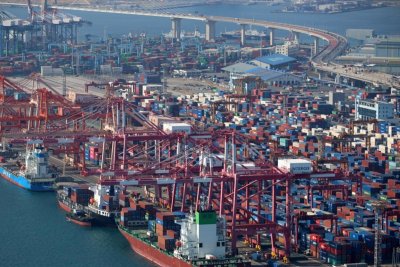
A container pier in South Korea’s southeastern port city of Busan, South Korea. The Organization for Economic Cooperation and Development cut South Korea’s 2026 growth forecast to 1.7% from 2.1%, citing the economic fallout from rising energy prices and supply disruptions linked to the conflict in the Middle East. File. Photo by YONHAP / EPA
March 26 (Asia Today) — The Organization for Economic Cooperation and Development cut South Korea’s 2026 growth forecast to 1.7% from 2.1%, citing the economic fallout from rising energy prices and supply disruptions linked to the conflict in the Middle East.
The OECD released the revised outlook Thursday in its interim economic report, which said the conflict has disrupted shipments through the Strait of Hormuz, pushed up energy costs and added uncertainty to global demand.
South Korea’s downgrade of 0.4 percentage points was one of the largest among Group of 20 economies, according to the report. The OECD kept its 2027 growth forecast for South Korea unchanged at 2.1%.
The OECD also raised its forecast for South Korea’s inflation this year to 2.7%, up 0.9 percentage points from its previous projection. It said inflation is expected to ease to 2.0% next year as energy price pressures fade.
The report said countries that depend heavily on imported energy are especially vulnerable if the Middle East conflict drags on, as higher fuel costs can weigh on output and feed broader price pressures.
Despite the downgrade, the OECD said South Korea’s medium-term outlook remains relatively stable, with growth expected to recover next year if current energy disruptions prove temporary. The organization said its projections assume energy prices begin easing in mid-2026.
South Korea’s Ministry of Economy and Finance said it would maintain emergency readiness, warning that the economic impact could widen if the Middle East war continues longer than expected.
South Dakota Gov. Larry Rhoden on Thursday signed a bill into law requiring people registering in the state for the first time to prove their citizenship. File Photo by Graeme Sloan/EPA
March 26 (UPI) — South Dakota Gov. Larry Rhoden on Thursday signed six election-related bills, including one that requires newly registered voters to prove their citizenship.
The bills, which Rhoden, his administration and the state legislature said are meant to protect the integrity of the state’s elections, also affect campaign finance disclosures, publication of election results, processing of absentee ballots, publication of statewide voter registration files and the submission of nomination petitions.
The voter registration law, called the South Dakota SAVE Act, is one of several that states across the country have been considering as similar legislation has been the subject of heated debate in both the U.S. House and U.S. Senate.
“In South Dakota, we do things right, especially when running out state elections,” Rhoden said in a press release.
“This bill ensures only citizens vote in state elections, keeping our elections safe and secure,” he said.
All six bills that Rhoden signed were named emergencies, which allows them to go into effect immediately, as opposed to July 1, when laws in South Dakota usually go into effect.
This will allow for the requirements to apply to the state’s June 2 primary elections, registration for which has a May 18 deadline, the South Dakota Searchlight reported.
The governor’s office said the state’s SAVE Act applies only to state elections and only to people who are registering to vote in South Dakota for the first time, and will need to show a passport, birth certificate or other document that proves they are a U.S. citizen.
South Dakota residents who are already registered do not need to take any action, and those who need to update their name, address or other information are not required to prove their U.S. citizenship.
“Noncitizens cannot vote in South Dakota — this bill is wholly unnecessary,” South Dakota Democratic state Rep. Erik Muckey said during debate of the bill, The New York Times reported.
Earlier this year, Rhoden also signed into law a bill that would allow voters to challenge the citizenship of other registered voters with a sign, sworn statement and some type of documented evidence.
That law will not take effect before the primary, but it will be effective during the general election in November.
President Donald Trump speaks as Secretary of State Marco Rubio listens during a cabinet meeting at the White House on Thursday. Photo by Will Oliver/UPI | License Photo
March 26 (UPI) — A petition effort to put a repeal of Utah’s anti-gerrymandering law approved by voters eight years ago on the November ballot failed to meet state requirements, an updated tally indicated Thursday.
The Utah state Republican Party has spent months gathering signatures to put Proposition 4 to a vote this fall, and while organizers had enough signatures to qualify, they did not get enough of them from enough parts of the state.
In order to place an amendment on Utah’s ballot, at least 8% of registered voters in the entire state must sign the petition and 8% of registered voters in at least 26 of the state’s 29 Senate districts must sign the petition.
The group pushing for the new amendment, Utahns for Representative Government, initially surpassed the required 141,000 signatures statewide — they’d collected 162,974 — and met the 8% in 26 districts requirement, but an effort to remove signatures deemed inadmissable in Utah’s District 15 nixed the effort, KUTV-TV in Salt Lake City reported.
“We have significant concerns about the practices utilized by the opposition and continue to review the signature validation and removal process,” Rob Axson, chair of the Utah Republican Party, said in a statement to KTVX-TV in Salt Lake City.
“Whether now or in the future, by litigation or initiative, we will Repeal Prop 4,” he said. “This fight is not over but just beginning.”
The 2018 law that was passed by Utah voters created an independent redistricting commission and banned partisan gerrymandering.
For the past year, Republican-controlled state legislatures have looked to redraw congressional districts to make it easier for GOP candidates to win seats in the U.S. House of Representatives and retain control of the chamber in this year’s election.
Generally, congressional districts are redrawn by states once a decade, using data from the latest census.
Utah’s legislature last year approved redrawn districts alleged to favor Republicans, but they were later invalidated by a federal court for violating Prop 4 — leading to the effort to repeal the voter-approved law.
Over the past several months, the groups Better Boundaries and Brave Utahns Rapid Response Network have challenged signatures and the methods used to collect them, successfully dropping the petition effort below the numbers it needed to make the ballot.
“A well-informed voting population leads to better outcomes for everyone,” said Elizabeth Rasmussen, executive director of Better Boundaries. “A majority of Utah voters approved Prop 4 in 2018, and we look forward to the day when Utah voters can finally pick their politicians, not the other way around.”
President Donald Trump speaks as Secretary of State Marco Rubio listens during a cabinet meeting at the White House on Thursday. Photo by Will Oliver/UPI | License Photo
Inclusion in the terrorism registry enables the government to impose “financial sanctions and operational restrictions” aimed at limiting the capacity of criminal organizations and their members, according to the statement from President Javier Milei’s administration.
March 26 (UPI) — Argentina’s government on Thursday formally designated the Jalisco New Generation Cartel, known as CJNG, as a terrorist organization and ordered its inclusion in the country’s public registry of individuals and entities linked to terrorism and its financing.
In an official statement, Argentina’s presidential office said the decision is based on reports documenting the group’s transnational criminal activities and links to other terrorist entities.
The move aligns Argentina with U.S. security policy, which designated the cartel as a terrorist organization in 2025.
Inclusion in the registry enables the government to impose “financial sanctions and operational restrictions aimed at limiting the capacity of these criminal organizations and their members,” according to the statement from President Javier Milei’s administration.
It also “protects Argentina’s financial system from being used for illicit purposes” and strengthens international cooperation in security and justice matters “in close coordination with countries that have already designated the Jalisco Cartel as a terrorist organization.”
The government said CJNG has become one of the world’s most powerful drug trafficking organizations over the past decade, with a presence in Mexico, operations in the United States and expansion into at least 40 countries, including Argentina.
The statement also highlighted the measure’s impact on international cooperation, saying it reinforces security and judicial coordination with countries that have already classified the cartel as a terrorist group.
The Jalisco New Generation Cartel emerged in Mexico in the early 2010s amid the fragmentation of major drug cartels. Its leader and founder, Nemesio Rubén Oseguera Cervantes, known as “El Mencho,” died in February during an operation in Mexico supported by U.S. intelligence. The United States had offered a $15 million reward for information leading to his capture.
Milei’s government has previously designated as terrorist organizations groups already classified as such by the United States, including branches of the Muslim Brotherhood in Egypt, Lebanon and Jordan, the Palestinian militant group Hamas and Iran’s Quds Force.
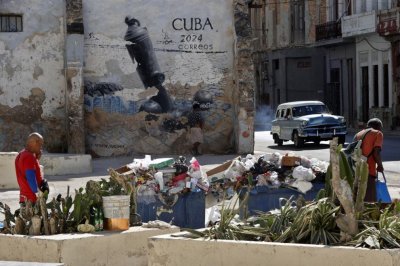

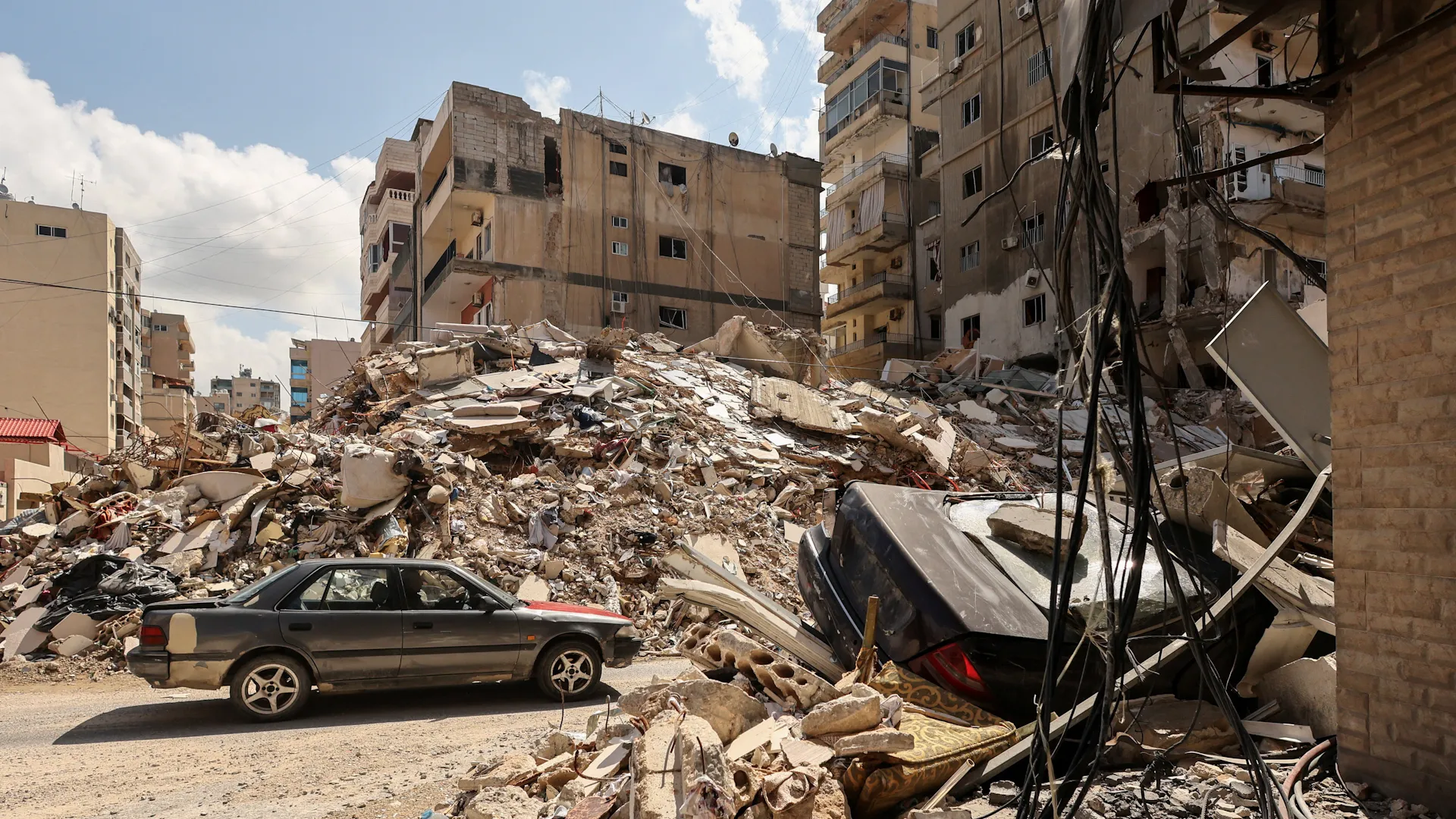
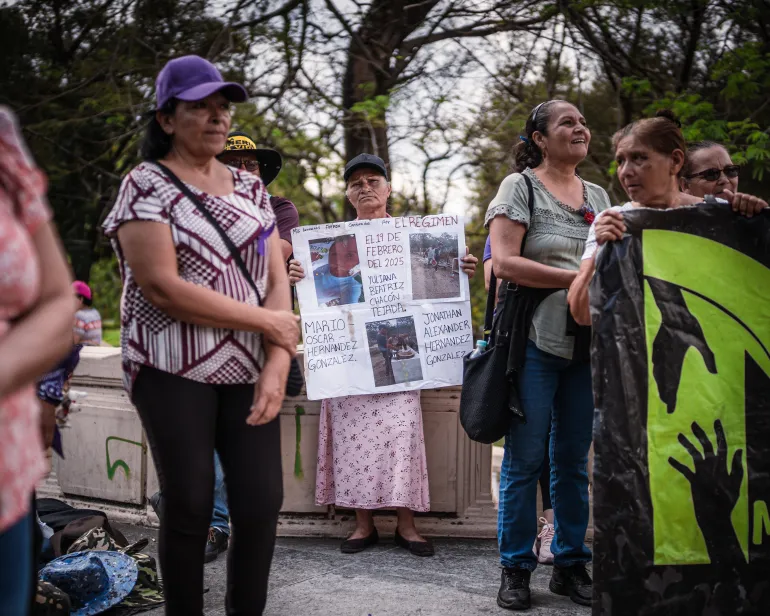
![Rosalina González, 59, mother of Jonathan and Mario, who were detained under the state of exception on February 19, 2025, during ademonstration on March 8 2026 in San Salvador, El Salvador [Euan Wallace/ Al Jazeera]](https://i0.wp.com/occasionaldigest.com/wp-content/uploads/2026/03/DSC00090-3-1774485050.jpg?w=640&ssl=1)