Israeli PM says money he facilitated Qatar in sending to Gaza was recommended by Israeli security agencies for humanitarian purposes.
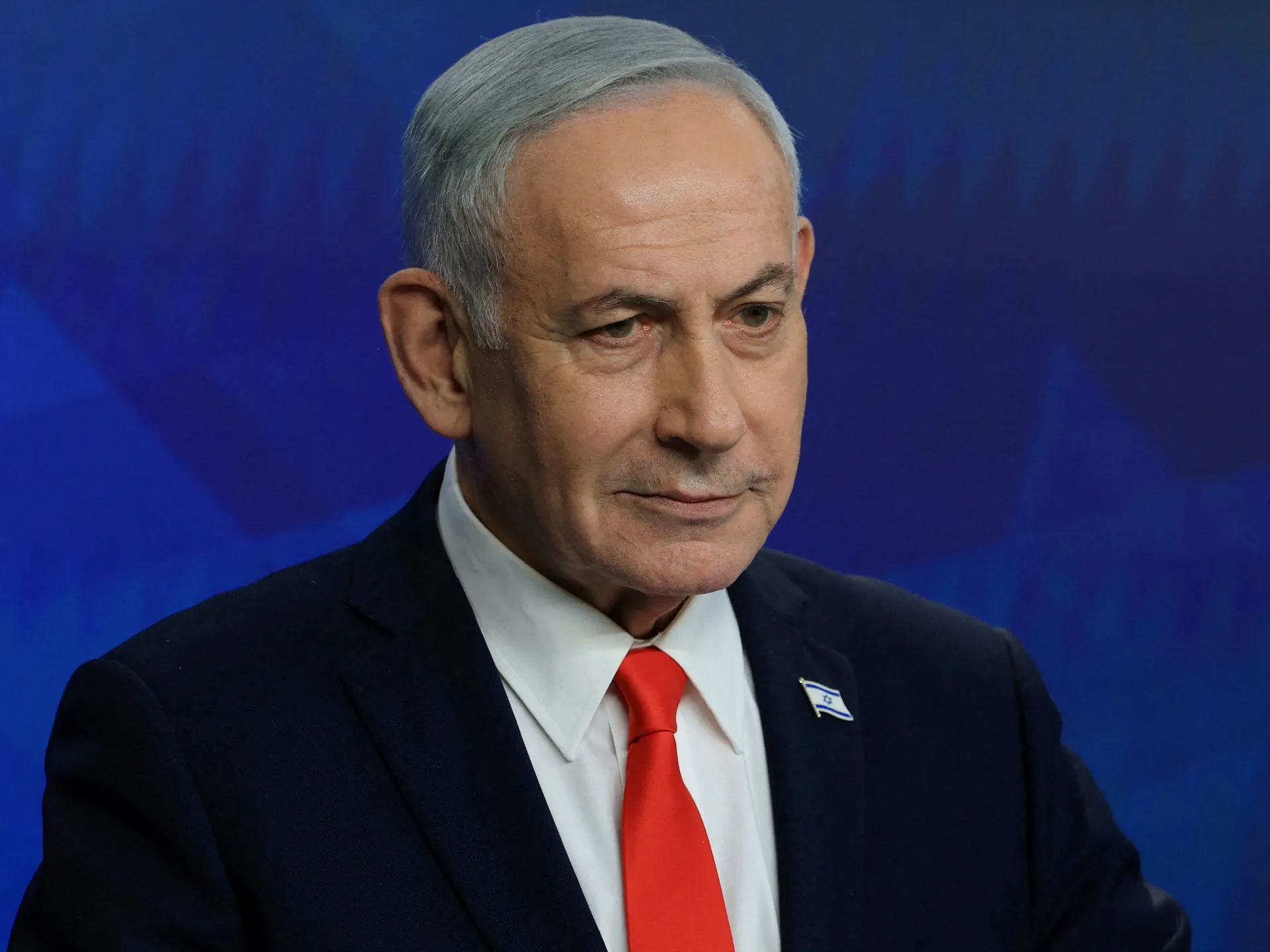
Israeli Prime Minister Benjamin Netanyahu has boasted about bombing Qatar, while dismissing domestic accusations that funds sent to Gaza were used for anything other than aid.
In an interview with Israel’s i24NEWS that he shared on social media on Saturday, Netanyahu said Qatar was a “hostile” state that did not dictate Israeli policy during its genocidal war on Gaza.
Recommended Stories
list of 3 itemsend of list
“I attacked Qatar, I also bombed it and attacked them during the war, and they attacked me,” Netanyahu boasted.
The interview comes just days before the one-year anniversary of Israel’s September 9, 2025, strike on Doha. The bombing killed five Hamas members and a Qatari security officer during a meeting to discuss the United States-backed Gaza ceasefire proposal.
Qatar, which has long served as a mediator in Middle East conflicts and beyond, has hosted Hamas’s political office since 2012, after what it says were requests from the US.
Doha condemned the strike as a “blatant violation of all international laws and norms”, with Qatari Ministry of Foreign Affairs spokesperson Majed al-Ansari calling it a “cowardly” assault.
Several countries in the region, including Iran and Pakistan, also condemned the attack, with leaders from Jordan, the United Arab Emirates and Saudi Arabia visiting Qatar shortly afterwards in a show of solidarity.
United Nations Secretary-General Antonio Guterres called the strikes a “flagrant violation” of Qatar’s sovereignty and territorial integrity.
During a meeting later that month at the White House, Netanyahu and US President Donald Trump called Qatar’s Prime Minister and Minister of Foreign Affairs Sheikh Mohammed bin Abdulrahman bin Jassim Al Thani to apologise for the strike.
During the i24NEWS interview, Netanyahu also defended the transfer of millions of dollars in Qatari funds to Gaza that Israel had facilitated, saying the funds were intended for humanitarian purposes and had been transferred on the recommendation of Israeli security agencies Mossad and Shin Bet.
“All this money is worth 2 percent – 2 percent of all the money that entered the Strip,” the prime minister said.
Some of Netanyahu’s detractors have alleged that the funds were used to help Hamas prepare its October 7, 2023, attack on Israel, which precipitated its genocidal war on Gaza.
Qatar denies such allegations, saying any claims that it funds Hamas are unfounded and pointing to the strict oversight governing its aid transfers.
“Today, when they [Israel] are claiming that this is the financing of Qatar to Hamas, it has no basis,” Sheikh Mohammed said during last year’s Doha Forum.
“All our aid … went to Gaza, went to the people, and was under a very transparent process that the United States is fully aware about.”
Netanyahu made the remarks weeks before Israelis head to the polls on October 27, in the country’s first general election since its war on Gaza began in 2023.
With the October vote approaching, Netanyahu faces mounting pressure at home over his government’s handling of the Gaza war, the economy and the war with Iran — all shaping up as central issues in the campaign.
Critics and analysts have long accused Netanyahu of stoking tensions with foreign states ahead of elections to rally nationalist support.
President Javier Milei says sovereignty over the islands remains a national objective.
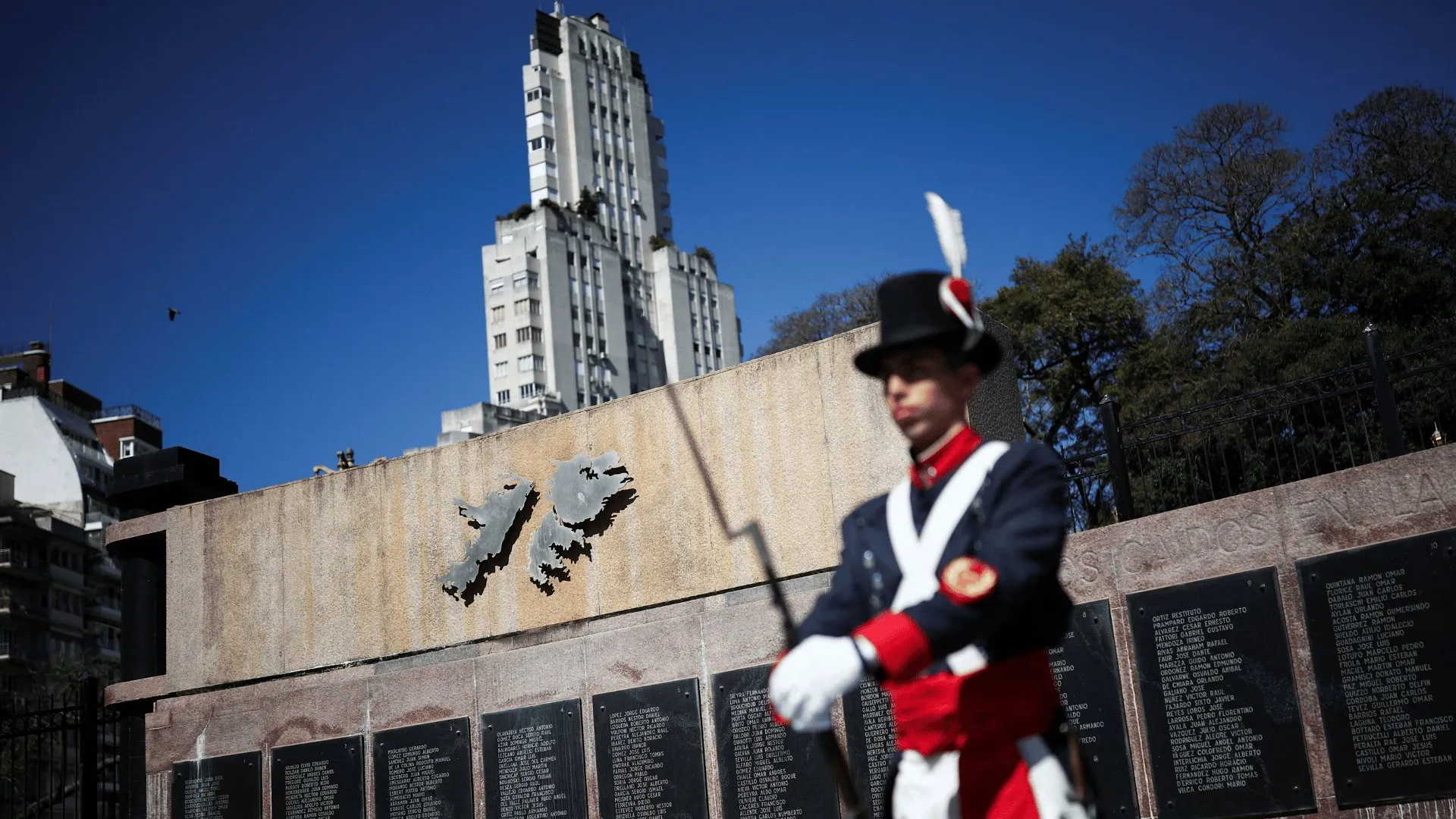
It has been dormant for decades, but the row between Argentina and the United Kingdom over the Falkland Islands has been revived.
It started with a joint British-Israeli oil exploration project off the archipelago’s north coast, to which Buenos Aires vehemently objected.
President Javier Milei has now threatened to sanction companies operating there.
His push to reclaim the islands was bolstered by United States President Donald Trump’s comment that he may reconsider Washington’s position on the territory.
Britain and Argentina went to war over the islands more than four decades ago.
Could the dispute escalate into another armed confrontation?
Presenter: Cyril Vanier
Guests:
Diego Guelar – Former Argentinian ambassador to the US, European Union and China
Christopher Sabatini – Director of the Latin America programme at Chatham House
Javier Farje – Journalist and historian specialising in Latin American affairs
Colombian authorities blame ELN rebel group for attack that reportedly included drones dropping explosives on compound.
Published On 5 Sep 20265 Sep 2026
Colombian authorities have said that at least three soldiers have been killed and several more injured after an attack on a military compound by an armed group that included drones used to drop explosives.
The Colombian army said on Saturday that the attack had been carried out by the rebel National Liberation Army (ELN) the night before in the municipality of Ocana, which is in the area bordering Venezuela. Two soldiers were killed in the clashes, along with a third who died after receiving medical attention. Four were injured.
Recommended Stories
list of 3 itemsend of list
“To the ELN I say with absolute clarity: for every police officer or soldier you kill, I will bring down on you the full weight and legitimate force of the State,” President Abelardo de la Espriella said in a statement on social media condemning the attack.
Authorities said that drones dropped explosives onto the compound in the department of Norte de Santander before fighting took place within the facility. The news service AFP reported that at least 20 drones loaded with explosives were utilised in the attack, citing an unnamed security official.
De la Espriella won office pledging to return Colombia to militarised confrontation with armed groups and criminal organisations that have jostled for influence across the country, despite concerns that it could lead to surging violence and possible rights abuses.
Deadly attacks by armed groups have continued to rattle the country since his inauguration.
The attack on Friday took place in the northeastern Catatumbo region, where the ELN is based and where the government has carried out military raids against armed groups.
De la Espriella has also promised closer ties with the United States, which has sought to expand its military involvement in the region under the so-called “Shield of the Americas” initiative.
US Secretary of State Marco Rubio is set to meet with de la Espriella, a former lawyer who previously represented leaders of paramilitaries, in the Caribbean city of Barranquilla next week.
Humanoid robots have begun serving shoppers at convenience stores in Hong Kong. The robot, known as Xiaogai, can speak Mandarin, Cantonese and English.
India claim seven-wicket win after Pakistan lose 10 wickets for just 28 runs as they are bowled out for 55.
Published On 5 Sep 20265 Sep 2026
India produced a dominant display to defeat Pakistan by seven wickets in the Women’s T20 Asia Cup in Dubai, bowling their rivals out for their lowest total in the format before rattling off their target inside nine overs.
Pakistan, having won the toss and elected to bat at the Dubai International Stadium on Saturday, made a promising start but collapsed spectacularly after an opening partnership of 27.
Recommended Stories
list of 4 itemsend of list
India eventually dismissed them for just 55 in 18.1 overs, with their spinners responsible for much of the damage.
Shree Charani and Prema Rawat were the stars of the bowling attack, taking three wickets apiece. Charani finished with remarkable figures of 3 for 7 from four overs, while Rawat returned 3 for 9. Deepti Sharma added two wickets for only five runs.
Pakistan’s innings initially appeared under control. Muneeba Ali made 13, and Shawaal Zulfiqar scored 14 for the first wicket.
But Shafali Verma broke the partnership by bowling Muneeba, and Charani then struck twice in the sixth over. She dismissed Gull Feroza for a duck before removing Zulfiqar, leaving Pakistan 29 for three.
The collapse continued almost immediately as Pakistan slipped to 32 for four in the eighth over before Rawat and Deepti Sharma intensified the pressure. By the 13th over, Pakistan were 45 for seven, and there was no prospect of recovering to a competitive total.
The final three wickets eventually fell with Pakistan on 55, giving India an exceptionally modest target. The total was Pakistan’s lowest in women’s T20I cricket, surpassing their previous low of 63 against India in the 2012 Women’s Twenty20 Asia Cup.
India survive brief wobble
Despite requiring only 56, India did not have everything their own way at the start of the chase.
Pakistan’s bowlers claimed three wickets, giving their opponents a brief glimpse of an unlikely route back into the contest. Fatima Sana was Pakistan’s most successful bowler, finishing with 3 for 17.
The target, however, was simply too small. India reached 57 for three in 8.4 overs, completing a seven-wicket victory with Harmanpreet Kaur unbeaten on 18. The Indian captain ensured there was no late drama and guided her side across the line with plenty of deliveries to spare.
The victory maintained India’s perfect start to the tournament. They now have six points from three matches and have already secured their place in the semifinals.
For Pakistan, meanwhile, the defeat leaves their qualification hopes dependent on their final group match against Hong Kong. They remain on two points and need a victory to give themselves a chance of progressing.
Erling Haaland score the only goal of Manchester City’s unconvincing home win against newly promoted Coventry City.
Published On 5 Sep 20265 Sep 2026
Manchester City maintained their winning start to the season to move to the top of the Premier League, but Erling Haaland’s solitary strike against newly promoted Coventry City couldn’t hide the nerves in the Etihad Stadium.
The Enzo Maresca era has started with three consecutive Premier League wins, but it was a far from perfect performance on Saturday as the hosts needed a pair of late saves from Gianluigi Donnarumma to deny Coventry a first top-flight point for 25 years.
Haaland’s header midway through the first half proved decisive for his third goal in as many games this season.
Maresca was able to unleash summer signings Enzo Fernandez and Iliman Ndiaye after their arrivals completed a record outlay by any club of £460 million ($622m) in the transfer market to refresh the City squad after Pep Guardiola’s decade in charge.
Fernandez was supposed to start on the bench after completing his £125 million move from Chelsea to match the Premier League transfer record.
However, an injury to Nico O’Reilly in the warm-up meant the Argentine was thrust into the starting line up.
Ndiaye was also handed his City debut by Maresca alongside Haaland, Antoine Semenyo and Rayan Cherki in a fearsome front four.
Coventry had failed to score in three consecutive defeats to mark their return to the top flight after 25 years.
Yet, Frank Lampard’s men could not have come closer to breaking their duck early on thanks to a gift from Donnarumma.
The giant Italian miscontrolled a backpass and recovered to clear off his own line with inches to spare.
Taiwo Awoniyi and Jack Rudoni also missed big chances to give the visitors the lead before City began to find their stride.
Cherki smashed off the post before Fernandez was involved in the opening goal.
His pass fed Semenyo sprinting down the right and his cross was hung up perfectly for Haaland to head home at the back post.
The Norwegian was denied a second by Carl Rushworth before half-time, but City failed to build on their advantage and were left clinging on for the three points.
Donnarumma was needed to produce two huge saves to deny Loum Tchaouna and Ellis Simms an equaliser and a historic moment for Coventry.
Despite another defeat, there was plenty of encouragement for Lampard that Coventry can compete back in the big time.
Maresca will know City will need to be much improved when they travel to local rivals Manchester United next weekend.
But the blue half of the city move to the top of the table ahead of champions Arsenal’s clash against Chelsea on Sunday.
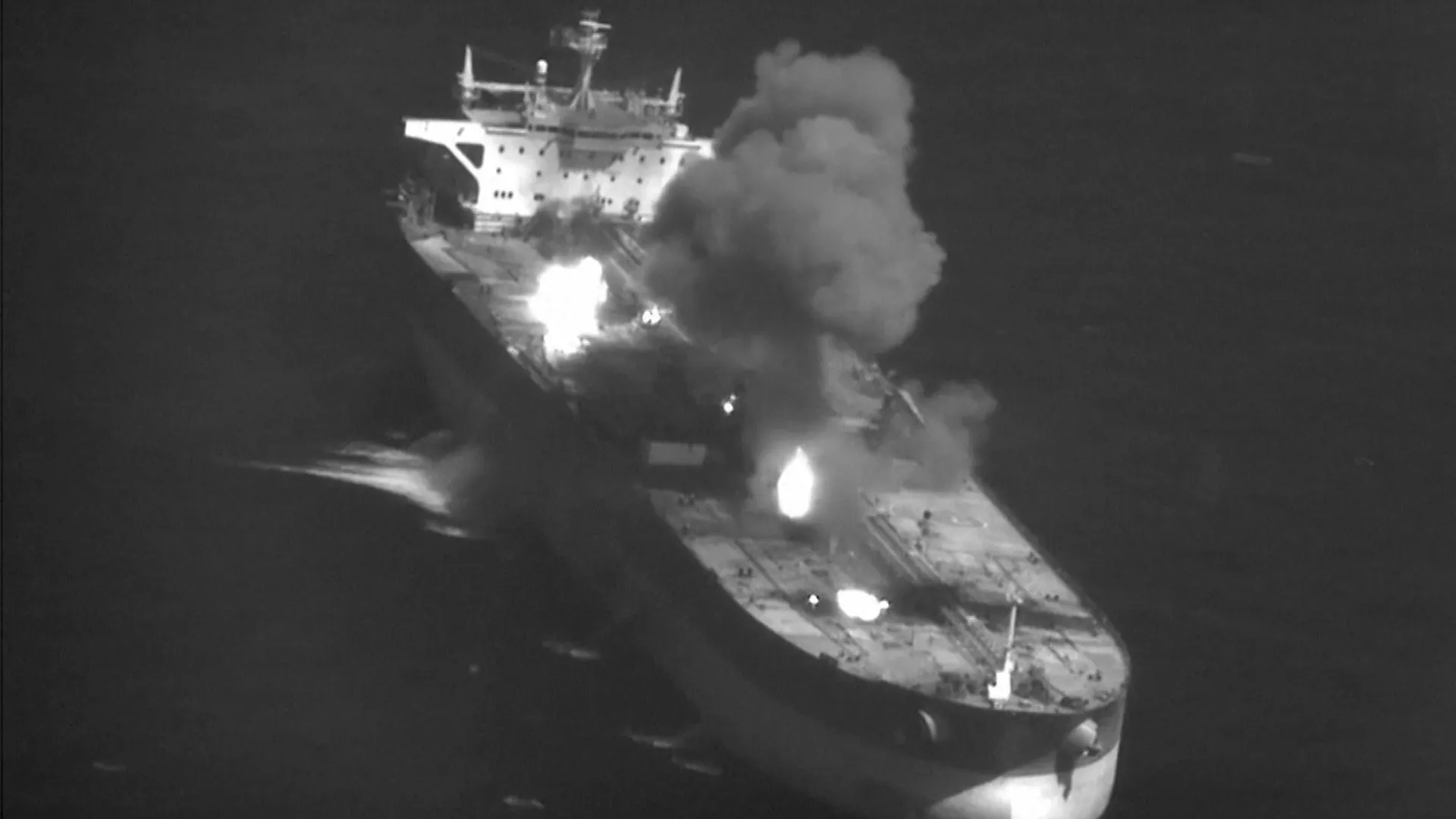
US Central Command says its forces struck three Iranian crude oil carriers on Saturday, in retaliation for Iranian forces firing ballistic missiles towards two US warships ‘patrolling regional waters’.
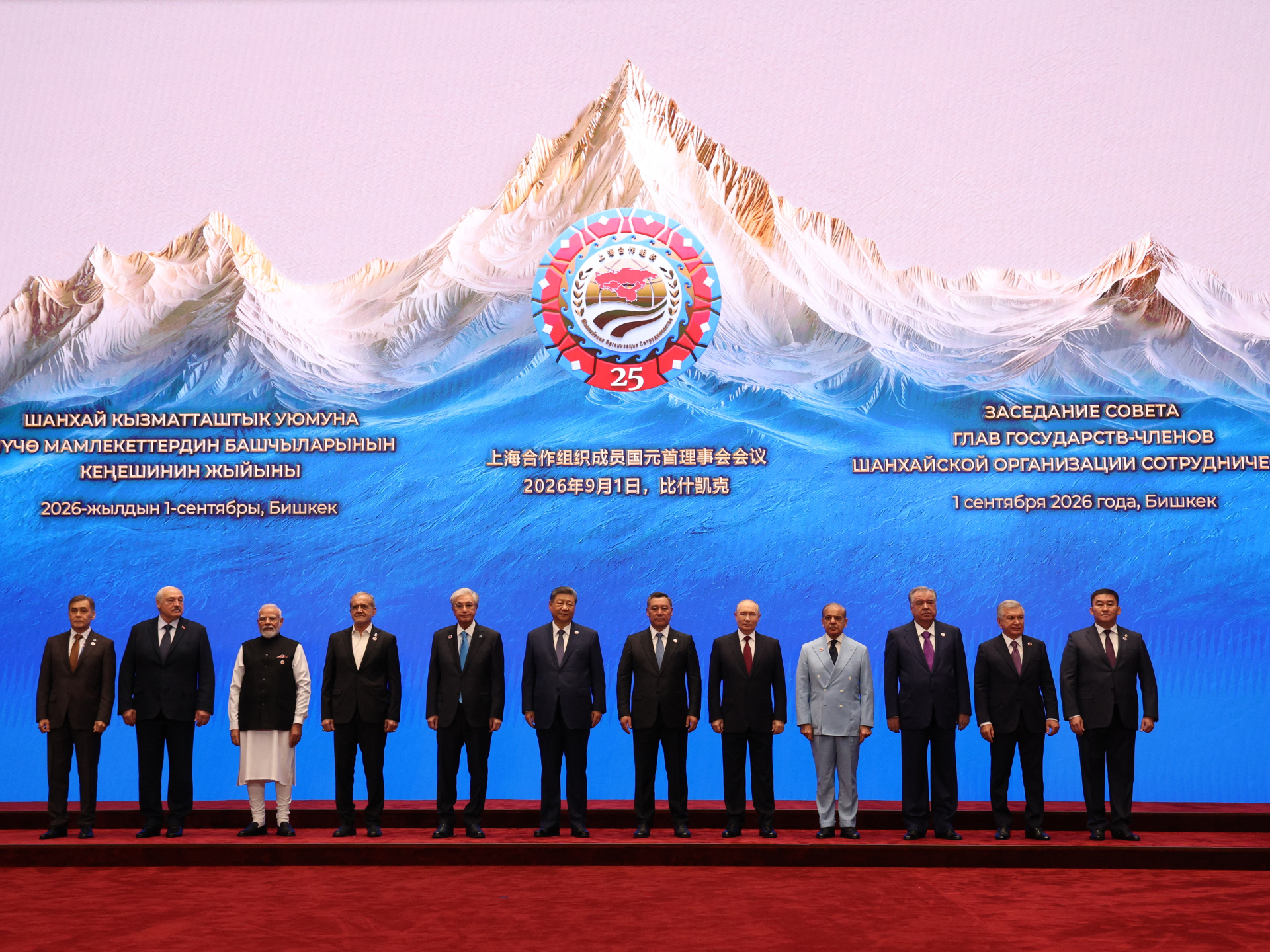
At the Shanghai Cooperation Organisation (SCO) summit in Bishkek this week, Iranian President Masoud Pezeshkian received precisely the kind of political support he had hoped for. The SCO condemned the military attacks against Iran, described them as violations of international law and the UN Charter, reaffirmed Iranian sovereignty and territorial integrity, and called for the conflict to be resolved through political and diplomatic means.
But the organisation did not offer to defend Iran. That distinction between political solidarity and collective defence is important. It tells us something not only about the Iranian experience with the SCO, but about the international order that is emerging around it.
For years, discussions about multipolarity have often suggested that the US-led international system would gradually be challenged by an alternative bloc centred around China, Russia and organisations such as BRICS and the SCO. From the perspective of middle powers, joining both institutions seemed to fit neatly into this transformation. Integration into non-Western organisations was supposed to make them less vulnerable to Western isolation and pressure.
The US-Israeli war on Iran has made clear that none of these alternative relationships can produce a security guarantee comparable to those provided by formal military alliances. The lesson is not that multipolarity has failed middle powers. It is that the emerging multipolar order may work differently from what many expected.
Rather than replacing one alliance system with another, it is producing an increasingly dense network of overlapping partnerships in which states gain diplomatic and economic options without necessarily acquiring new security guarantees.
For middle powers, this may be one of the defining characteristics of the emerging order: more room for manoeuvre, but less certainty about who will stand beside them when their security is threatened.
Turkiye provides a particularly revealing example. It has been a member of NATO for more than seven decades and remains embedded in the Western security architecture. Yet Ankara has increasingly demonstrated that alliance membership does not require automatic political alignment with Washington. Turkiye has maintained relations with Russia despite the war in Ukraine, expanded its engagement with China and participated in the SCO as a dialogue partner. At the same time, its differences with the US and Israel over the future regional order in the Middle East have become increasingly visible.
This does not mean Turkiye is abandoning NATO or moving into a Chinese- or Russian-led bloc. Quite the opposite. Ankara’s strategy depends precisely on avoiding such a binary choice. Its NATO membership provides security benefits that the SCO could not replicate. Its relationships with Russia, China, Iran, the Gulf states and other regional actors, meanwhile, expand its diplomatic and economic options.
Brazil represents another good example. Unlike Turkiye, Brazil is not bound to the US through a formal military alliance. But it has traditionally operated within a US-dominated hemisphere where Washington has expected considerable political alignment from regional governments.
Brazil’s refusal to join the US-led Americas Counter-Cartel Coalition (ACCC), together with its positions on the Iran war and other recent international crises, reflects its reluctance to accept that regional proximity should translate into automatic strategic alignment.
Yet Brazil is not simply switching sides. Its participation in BRICS, its extensive economic relationship with China and its calls for reform of the international system coexist with important political and economic relations with the US and Europe. Brasília’s objective is not to exchange dependence on Washington for dependence on Beijing, but to preserve the ability to cooperate with both, and disagree with either.
This may be one of the most consequential opportunities that multipolarity offers middle powers. The rise of alternative centres of economic and political influence reduces the cost of saying no. For decades, weaker states often confronted a difficult choice when facing pressure from a dominant power: comply, resist and risk isolation, or seek protection from a rival bloc.
The proliferation of partners and institutions complicates that calculation. A government that disagrees with Washington may deepen relations with Beijing without becoming a Chinese ally. A state dependent on China economically may strengthen security ties with the US without fully aligning with Washington. Membership in BRICS does not prevent cooperation with Western institutions, just as membership in a US-led security framework does not necessarily preclude engagement with China or Russia.
India has made this logic almost an organising principle of its foreign policy. New Delhi participates in the Quad with the US, Japan and Australia while simultaneously belonging to both BRICS and the SCO. At Bishkek, India supported the SCO declaration defending Iranian sovereignty while Prime Minister Narendra Modi also stressed to Pezeshkian the importance of preserving freedom of navigation and commerce through the Strait of Hormuz.
The Gulf Cooperation Council member states are pursuing their own version of this diversification. Saudi Arabia, Qatar and the United Arab Emirates, for example, continue to depend heavily on their relationships with the US for security, while simultaneously expanding economic and diplomatic ties with China, India and other Asian powers and participating in new regional and international arrangements.
None appears eager to replace Washington with Beijing. They want relationships with both. This suggests that the most significant consequence of multipolarity for middle and smaller powers may not be the emergence of a new bloc to which they can attach themselves. It may be the declining necessity of attaching themselves exclusively to any bloc at all.
But greater autonomy comes with a cost. The same flexible arrangements that allow states to avoid choosing sides also provide fewer guarantees when crises become existential. BRICS does not have an Article 5. Neither does the SCO, which explicitly defines itself as a non-military organisation.
Strategic partnerships can provide weapons, investment, diplomatic backing and political support without obligating partners to go to war for one another.
The emerging international system is therefore unlikely to resemble a simple transition from a US-led order to a Chinese-led one, or even a confrontation between two clearly defined blocs. The older alliance system is not disappearing.
NATO remains central to European and Turkish security, while US security relationships remain indispensable across much of Asia and the Gulf. What is emerging alongside it is another layer, a more fluid landscape of overlapping institutions, selective partnerships and transactional relationships.
Multipolarity, in other words, may not require states to choose a new camp. That gives middle and smaller powers greater agency. But it also places greater responsibility for their own security upon them. The world they are entering may offer more partners, more bargaining power and more freedom to say no. What it may offer less frequently is certainty about who will say yes when they ask for protection.
The views expressed in this article are the author’s own and do not necessarily reflect Al Jazeera’s editorial stance.
Two points from three matches is their worst start since the 2007-08 season, when PSG came close to relegation.
Published On 5 Sep 20265 Sep 2026
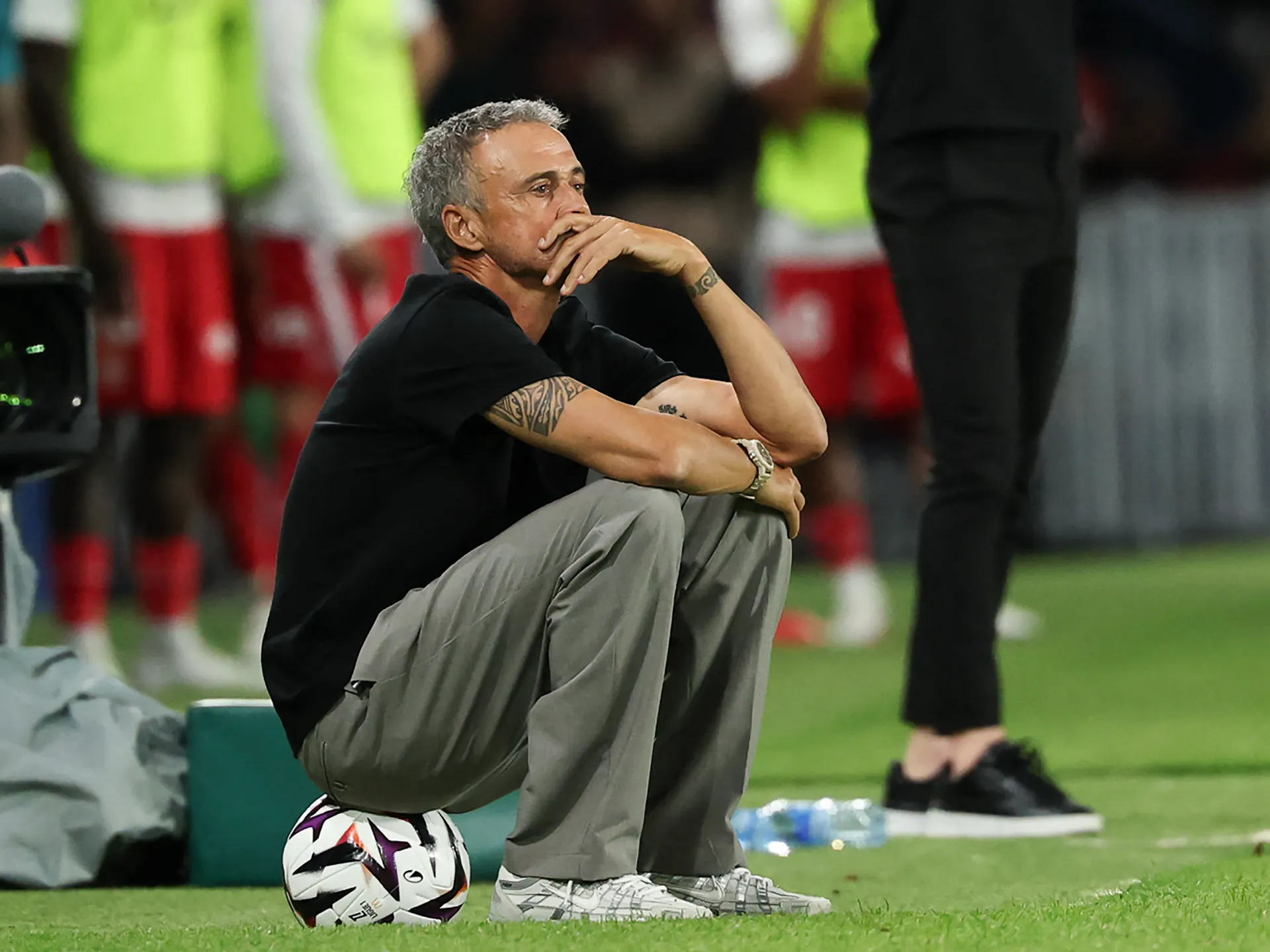
Paris Saint-Germain have not had as poor a start to a league season for 19 years, with Friday’s home loss to Monaco leaving them winless after three matches in the Ligue 1 season.
Days before they begin the defence of their Champions League title, however, the Parisians have handed coach Luis Enrique a contract extension until 2030.
“There is no reason to be concerned. I say that honestly. How many shots on target did Monaco have? Two. How many goals? Two. We’ll see at the end of the season whether things balance out,” he said after Friday’s 2-1 setback in which they were ahead at halftime but conceded twice after the break.
“What I want to get across is that you shouldn’t look only at the result,” Luis Enrique added.
“We pressed sensationally, much better than in many matches when we did not concede a goal. But luck was not on our side.
“Monaco know that if they play against us like this 10 times, we win eight, there’d be one draw and we’d lose once. This was that one defeat,” Luis Enrique insisted as PSG look ahead to hosting Slovan Bratislava on Wednesday in their first Champions League group game, chasing a third successive European title.
Two points from three matches is their worst start since the 2007-08 season, when PSG came close to relegation, finishing 16th. In that campaign, Paul Le Guen’s side had to wait until their sixth league game to record a victory and ended up only three points above the relegation places.
This time round, the Parisians are already seven points off the pace.
“It is incredible motivation for my players, for the team and for the club. If you want to bet on who will be champions at the end of the season, we can place a bet. Seven points? OK, we will try to make up that deficit as quickly as possible,” the coach added.
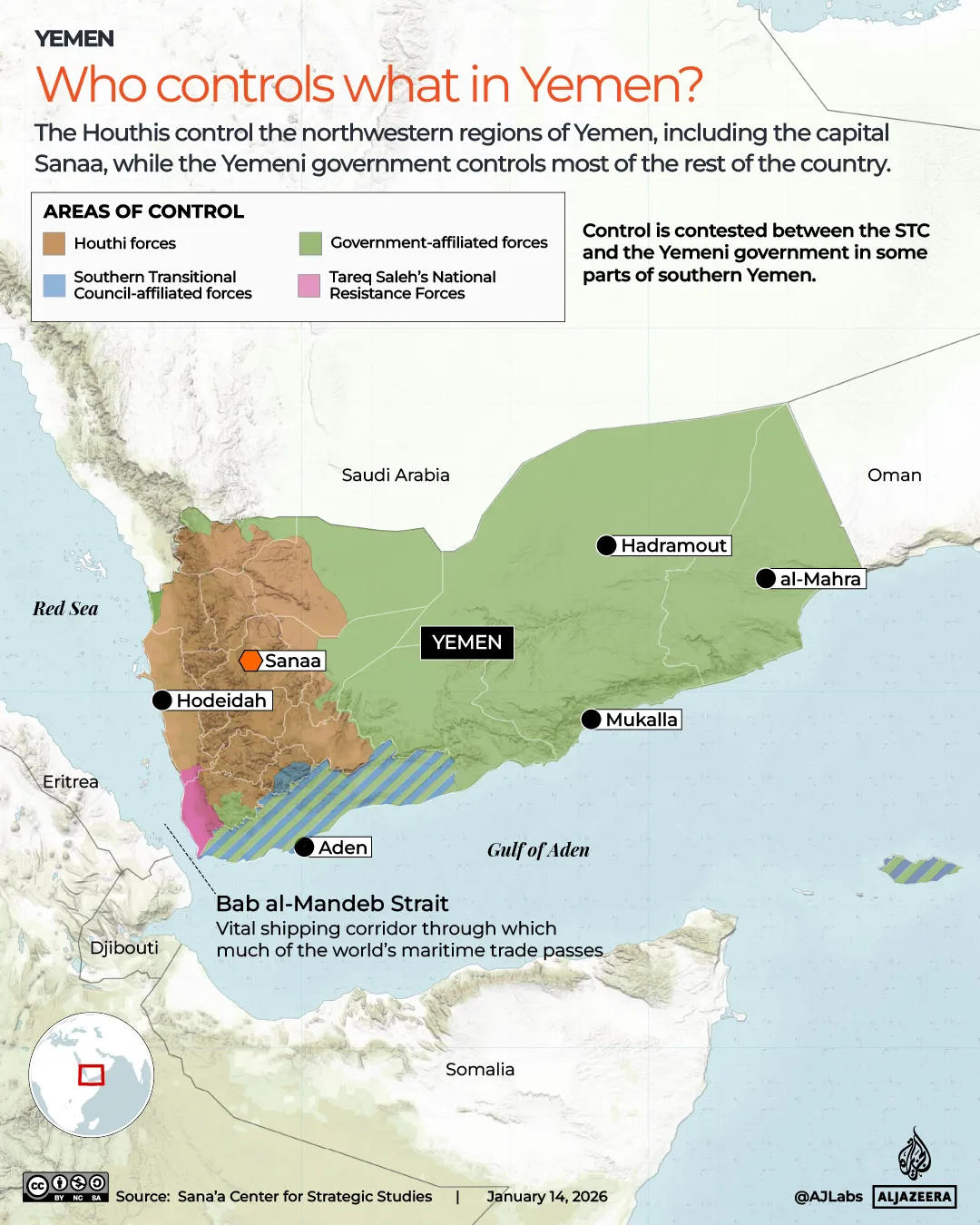
Yemen’s internationally recognised government has launched a series of air attacks against Houthi positions in the country, marking a significant escalation in the conflict, with some of the country’s heaviest fighting since a fragile truce in 2022.
Government warplanes carried out at least 15 strikes on Friday against Houthi positions, gatherings and vehicles in the western provinces of Taiz and Hodeidah, according to the Yemeni military.
Recommended Stories
list of 4 itemsend of list
The air assault against Houthi positions provided support to government forces fighting a major Houthi offensive towards the Red Sea coast and the strategic Bab al-Mandeb Strait, one of the world’s most important shipping routes.
These are not the first air attacks by government aircraft since Yemen’s fragile truce began to unravel in July. On July 25, government aircraft struck Houthi missile and drone launch sites and weapons depots in Marib and al-Jawf, according to Yemeni military officials cited by the Reuters news agency.
And less than two weeks earlier, on July 13, Yemen’s internationally recognised government said its forces had struck the runway at the Houthi-held Sanaa International Airport to prevent an Iranian aircraft from landing.
However, the latest attacks mark a significant step up in the government’s use of its own air power against the Houthis, after Saudi-led coalition aircraft provided much of the aerial firepower supporting anti-Houthi forces during the most intense years of Yemen’s war.
Friday’s air campaign comes as the Iran-backed Houthis, who have been vying for control of Yemen for years, attempt to advance through western Taiz and southern Hodeidah towards al-Makha (Mocha), and territory overlooking the critical Bab al-Mandeb Strait at the opening to the Red Sea.
Control of the area could strengthen the Houthis’ position along the Red Sea, where the group has previously attacked commercial and military vessels, while threatening a key government supply route.
The fighting unfolds against a backdrop of the wider regional conflict, with the Houthis recently declaring a Red Sea maritime blockade against Saudi Arabia, while disruption to shipping through the Strait of Hormuz during the US-Israel war with Iran has raised the strategic importance of alternative routes through the Red Sea. This means any expansion of Houthi influence around Bab al-Mandeb could have consequences for shipping far beyond Yemen.
Here’s what we know.
What has happened?
Fighting erupted on Thursday as Houthi forces launched a major offensive along front lines in western Taiz and southern Hodeidah, using ballistic missiles, drones and artillery as ground forces attempted to advance towards government-held territory along the Red Sea coast.
The fighting has centred on areas west of Taiz and around al-Makha, a government-held port near the Bab al-Mandeb Strait.
A Yemeni official in Aden told the AFP news agency that the Houthis were seeking to capture hills overlooking Bab al-Mandeb and al-Makha before pushing towards the coast.
Al Jazeera’s Yousef Mawry, reporting from Sanaa, said Houthi forces had made gains in western Taiz.
“According to military officials from the internationally recognised government, the Houthis have been able to take some of those territories,” Mawry said. “In western Taiz, they’ve managed to take over a strategic military base, which is settled on top of a strategic mountain and gives the Houthis an overview of the entire area.”
Mawry said there had been particularly heavy fighting around al-Barah and Maqbanah, where a main road is used to resupply government forces stationed in Taiz and al-Makha.
More than 120 fighters have been killed since the Houthi offensive began, according to an AFP tally, making the clashes among Yemen’s deadliest in years.
Several civilians were also reported killed and others injured after a ballistic missile hit a restaurant in the al-Makha area, according to government-run Saba TV.
On Saturday, at least four civilians were killed and nine others injured in a Houthi missile strike on a crowded road in southwestern Yemen, according to Saba news agency.
The attack by the Iran-backed group on Saturday targeted a gathering of civilians along the strategic Heijah al-Abd Road, south of Taiz city, Saba said, citing local and medical sources.
What is behind the latest tensions?
The Houthis seized Yemen’s capital, Sanaa, in September 2014 and subsequently took control of much of northern and western Yemen, prompting a Saudi-led coalition of Arab countries to intervene in support of the internationally recognised government in March 2015.
A United Nations-brokered truce in April 2022 sharply reduced fighting. Although the agreement formally expired six months later, large-scale hostilities between the Houthis and Saudi-backed government forces remained relatively limited and Saudi Arabia pursued negotiations with the group.
No comprehensive peace agreement followed, however, leaving front lines largely frozen rather than ending the conflict.
That fragile status quo came under increasing pressure after the United States and Israel launched their war against Iran on February 28, but tensions escalated further in July with the government air force strike on the Houthi-held Sanaa International Airport, preventing an Iranian aircraft from landing.
(Al Jazeera)
What do we know about Yemen’s air force?
The modern Yemeni Air Force was created after North and South Yemen unified in 1990, bringing together two militaries equipped with both Soviet and Western aircraft.
Its fleet subsequently included MiG-21 and MiG-29 fighters, Su-22 fighter-bombers, US-made F-5 fighters and a range of helicopters and transport aircraft.
But Yemen’s armed forces fractured when the Houthis seized Sanaa and the political crisis descended into war in 2014 and 2015.
When Saudi Arabia intervened soon after, its coalition targeted airbases, air-defence systems and combat aircraft in a bid to prevent the Houthis from making use of Yemen’s air force.
That left the Saudi-led coalition – rather than the Yemeni government’s own depleted air force – providing much of the air power supporting government forces during the subsequent war.
Saudi-led coalition aircraft conducted tens of thousands of air raids between March 2015 and the 2022 truce, striking Houthi military positions and providing air support during major government ground offensives. The campaign also caused extensive civilian casualties and became one of the most controversial aspects of the war.
Between 2014 and 2022, Human Rights Watch documented dozens of apparently unlawful coalition air attacks on homes, markets, hospitals, schools, detention centres and other civilian sites.
In 2024, the US and the United Kingdom launched a new round of air attacks against Houthi positions in Yemen following strikes on Israel-linked shipping in the Red Sea. Earlier this year, the US Pentagon disclosed that US military attacks against Yemen’s Houthis killed 153 civilians in 2025 and wounded another 243. The US had previously denied its attacks had caused civilian deaths.
The conflict in Yemen has caused a huge humanitarian crisis. In 2021, the UN estimated that 377,000 people had died in Yemen since 2014, with 60 percent the result of food shortages and lack of accessible health services.
Why is the Yemeni government using its own air power now?
Previously relying on Saudi-led coalition air force power, the government’s decision to deploy its own warplanes now comes as it tries to blunt a Houthi offensive that initially made gains across several fronts in western Taiz and threatened the main road linking Taiz with the Red Sea port of al-Makha.
Mohammed al-Basha, a Yemeni American analyst and former spokesperson for Yemen’s embassy in Washington, told Al Jazeera that the Houthis had achieved “some initial gains during a surprise, multi-axis offensive across western Taiz” this week, temporarily capturing positions and threatening areas overlooking the Taiz-al-Makha corridor.
But those advances did not produce the wider breakthrough the group appears to have sought, he said.
“The front did not collapse, the Taiz-al-Makha corridor was not severed, and attempts to expand the offensive towards other strategically important positions were stopped,” al-Basha added.
Government and allied forces recovered much of the territory lost during the first day of fighting, according to al-Basha, while Houthi advances on several other axes were contained or repelled.
The government has since sent reinforcements, and the use of aircraft gives those forces another means of attacking Houthi positions and concentrations as they try to retake high ground and prevent the group from cutting the Taiz-al-Makha road.
Why have the Houthis launched this offensive now – and what happens next?
Al-Basha said Jabal Numan, overlooking the Taiz-al-Makha road, is one of the most important remaining contested areas, while a Houthi attempt to capture Jabal Dhu Ba’s, north of Hays, was repelled by National Resistance forces.
Taking such high ground could allow the Houthis to observe and threaten government supply routes, while losing it could make further advances towards al-Makha substantially more difficult.
“The first day therefore ended with a mixed battlefield picture,” he said. “The Houthis gained ground through the initial surprise and speed of their multi-axis assault, but much of that ground was subsequently recovered.”
The arrival of new government-aligned forces, coupled with air support, could make it harder for the Houthis to repeat their initial breakthrough.
“The next phase is likely to be more difficult,” al-Basha said. “Both sides are reinforcing, several positions remain contested, and control of Jabal Numan remains a key immediate objective.
“The coming hours will likely centre on attempts by anti-Houthi forces to recover the mountain, consolidate their lines and prevent another Houthi push towards the Taiz-al-Macha corridor.”
Costa Rican President Laura Fernandez said US ground operations could boost national security, but stressed no plans are currently in place and any deployment would require legislative approval.
A mudslide triggered by days of heavy rain in Jiangxi province, eastern China, has killed one person and left 11 missing. Rescue teams have pulled three people from the rubble as authorities warn of continued flood risks.
Fights between players and coaching staff broke out after the Turkish side won the Champions League playoff second leg.
Published On 5 Sep 20265 Sep 2026
Fenerbahce duo Mason Greenwood and Matteo Guendouzi have been suspended and fined for their part in the chaotic scenes after their club’s Champions League playoff second leg against Lyon.
Last month’s 2-1 victory for Fenerbahce in France meant the Turkish side progressed 3-2 on aggregate, and, after the final whistle, Greenwood and Guendouzi, who both previously played for Lyon’s bitter rivals Marseille, were involved in a brawl with players and coaching staff from both sides.
Former Arsenal midfielder Guendouzi has been suspended “for a total of four UEFA club competition matches for which he would otherwise be eligible, for insulting others present at the match, provoking spectators and for violating the basic rules of decent conduct”, UEFA announced in a decision made public on Friday evening.
Two of the matches are subject to a “one-year probationary period”, European football’s governing body added in the statement.
Guendouzi, who was also fined 50,000 euros ($58,000), was found guilty, among other things, of giving the middle finger to Lyon supporters and of provocations that led to a scuffle after the match.
His English teammate Mason Greenwood, formerly of Manchester United, received a one-match suspended ban and was fined 30,000 euros ($35,000) for “violating the basic rules of decent conduct”.
Niger has blamed France for inciting an attack on a key military airbase by mutinous soldiers last week. Clashes at an airbase in the capital erupted during an attempted mutiny against the military junta that has ruled since 2023.
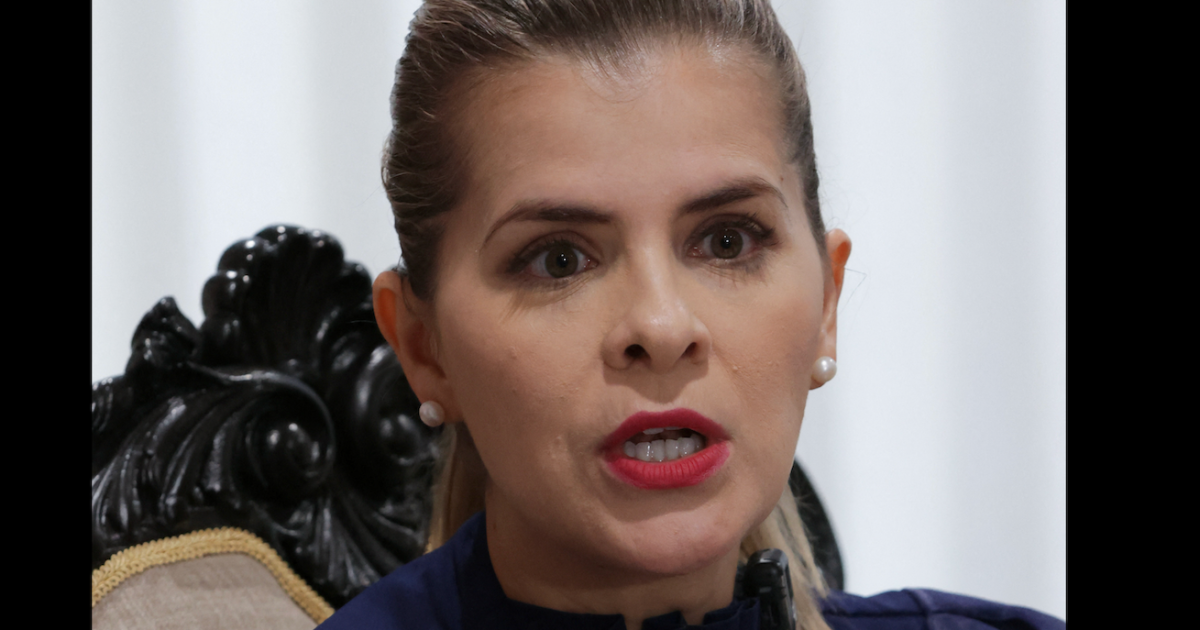
An explosion at a military barracks in Viacha, Bolivia, has killed at least 10 people and injured dozens following a blast at a facility storing fireworks and other pyrotechnics.
The families of eight Ecuadorian fishermen who vanished at sea after reporting US surveillance are demanding answers. They believe the men could be victims of a US drone strike or detention.
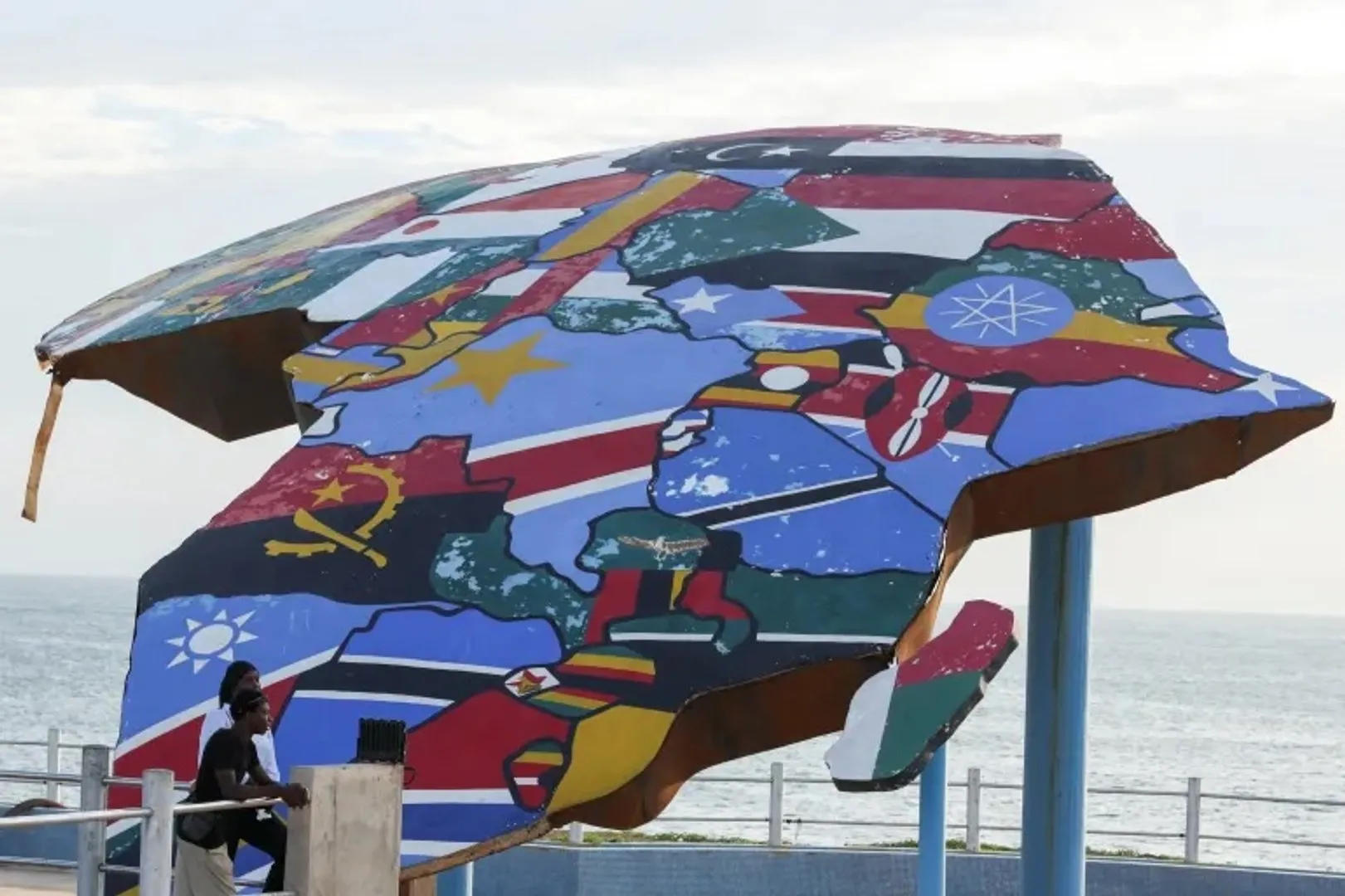
The UN General Assembly has backed a resolution to change to maps that more accurately show the true size of Africa. Supporters of the resolution say the widely used, and centuries-old, Mercator world map distorts the size of countries, thereby changing how they are seen.
Country implements state of emergency in Sarawak’s Serian district after air pollution reaches ‘hazardous’ levels.
Published On 5 Sep 20265 Sep 2026
Malaysia has declared a state of emergency in a district in Sarawak state after haze caused by wildfires in neighbouring Indonesia increased air pollution to “hazardous” levels.
King Sultan Ibrahim “has consented to the declaration of emergency throughout Serian Division, Sarawak, following haze conditions that have reached air pollution levels hazardous to public health and safety”, Prime Minister Anwar Ibrahim’s office said in a statement on Thursday.
Recommended Stories
list of 3 itemsend of list
The declaration followed a formal request from the Sarawak Disaster Management Committee after the region’s Air Pollutant Index reached levels warranting consideration of a local emergency.
Under the order, 647 schools in Serian will close from Monday until at least the end of next week, alongside government and private offices, plantations, construction sites and quarries, with only essential services continuing to operate.
The state’s disaster management authorities said a three-day cloud-seeding operation launched on Thursday would be extended to at least Monday, citing forecasts of “more conducive cloud formations” during that period.
Sarawak State Disaster Management Committee chairman Douglas Uggah Embas, speaking at a news conference in Kuching, stressed that the emergency applied only to Serian, not the entire state, but urged residents there to take the situation seriously.
“Please minimise outdoor activities and avoid strenuous activities outdoors,” he said.
Sarawak, in the northern part of Borneo island, has been heavily affected by haze for weeks, as have the neighbouring states of Sabah and Peninsular Malaysia.
Other Southeast Asian countries like Brunei have also reported smoggy conditions. Singapore announced it would start providing daily haze advisories from Friday evening, after the 24-hour air quality readings entered the unhealthy range, the first since 2023.
It has also hit the Philippines, where President Ferdinand Marcos Jr. ordered the suspension of classes in the capital region, Metro Manila, as well as more than a dozen provinces on Friday.
This year’s transboundary haze, which originates from fires burning across Indonesia, particularly the Kalimantan region and Sumatra island, is part of a wider seasonal wildfire crisis in the archipelago country.
Scientists say temperatures are expected to peak this month, potentially intensifying the fires by bringing hotter and drier conditions across the region.
Sept. 4 (UPI) — President Donald Trump on Friday said the Iran war was “small potatoes” and “not a big thing.”
Trump was responding to questions about comments by Vice President J.D. Vance, who had said a day earlier that the conflict wasn’t a war.
“A lot of people don’t call it a war,” Trump told reporters. “I call it a military conflict because it’s small potatoes for us.
“It’s not a big thing. We did Venezuela, and we did this.”
Trump described the war as intermittent and a flare-up, USA Today reported.
Hours earlier, on his Truth Social platform, Trump explicitly called the conflict “the War in Iran.”
“The Radical Left Lunatics, Dumocrats, and Communists would rather have us LOSE the War in Iran, than have President Donald J. Trump WIN the War for America,” he wrote early Friday afternoon.
A day earlier, Vance told reporters there had been “no active shooting” and downplayed the severity of the war.
“I wouldn’t call it a war,” Vance told reporters at the White House.
Trump agreed with his vice president.
“I would say it’s a military conflict, if you want,” Trump said on Friday. “I don’t think it matters what you call it.
“What matters is the fact that we have had tremendous success.”
Dree Collopy, an immigration lawyer, says the new US visa policy risks turning the legal immigration system into another detention tool. She argues it could make people who lawfully enter the US more vulnerable to arrest and deportation when they later seek asylum.
The Food and Drug Administration on Friday approved a new, targeted breast cancer drug for patients who become resistant to hormone therapy. File Photo by Jim Lo Scalzo/EPA-EFE
Sept. 4 (UPI) — The Food and Drug Administration on Friday approved a new, targeted breast cancer drug for patients who become resistant to hormone therapy.
The drug, camizestrant, was approved under the FDA’s accelerated approval program.
It acts on ESR1 mutations, which are acquired resistances that tumors may develop during treatment for metastatic breast cancer.
“Women living with metastatic breast cancer face an uphill battle as their tumors continuously evolve to escape treatment,” acting FDA Commissioner Kyle Diamantas said in a statement. “We owe them every weapon in our arsenal.”
“Today’s approval delivers a win to these patients by granting them a targeted therapy designed specifically to overcome resistance, giving them more time before their disease progresses.”
Dr. Angelo de Claro, director of the FDA’s Oncology Center of Excellence, said, “I commend both the FDA and the sponsor for their commitment to advancing cancer care and securing this accelerated approval.”
“This marks the first FDA approval of a cancer therapy guided by the detection of a resistance mutation in circulating tumor DNA (ctDNA) before imaging tests show that the disease is progressing,” he added.
“But additional evidence is needed to confirm clinical benefit.”
Sept. 4 (UPI) — President Donald Trump on Friday signed two executive orders aimed at strengthening the country’s ranching industry.
Trump has been facing criticism from beef producers since he waived tariffs on up to 300,000 metric tons of imported beef in an effort to ease rising costs as the nation heads into the midterm elections.
Trump’s first executive order directs the Interior Department to study removing gray wolves from the Endangered Species Act list, allowing ranchers to kill them on their properties. Gray wolves are a major threat to herds in the West.
The second executive order would allow ranchers to process their beef and sell directly to consumers, instead of going through USDA inspections.
“People have been asking for this change for decades, and we’re getting it done,” Trump told reporters at the White House. “This is the largest-ever government effort to change all federal rules and regulations necessary to support our ranchers and our farmers.”
Beef prices have risen this year due to drought and high feeding costs. The United States currently maintains the smallest herd since the 1950s.
The National Cattlemen’s Beef Association said it was “disappointed” by Trump allowing more foreign beef to flow into an industry already under severe stress.
“While America’s cattle producers share the goal of keeping groceries affordable for consumers, flooding the market with government-subsidized, below-market beef is not the way to rebuild the American cattle herd,” the association previously said in a statement.
“Cattle markets have already turned sharply lower this morning, to the detriment of farmers and ranchers.”
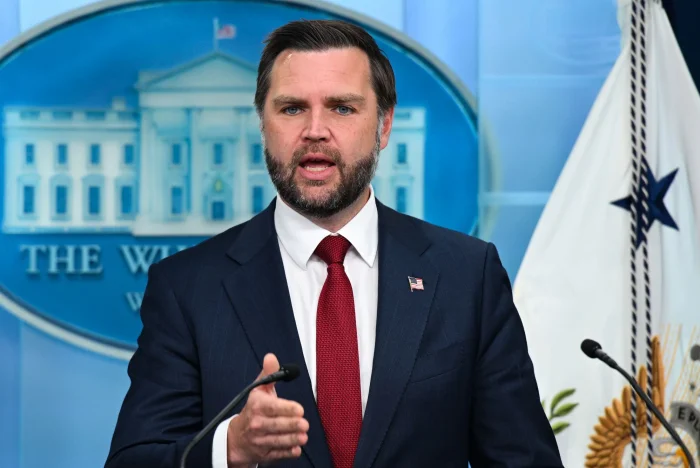
Vice President JD Vance briefs members of the media in the press room of the White House on Thursday. Photo by Annabelle Gordon/UPI | License Photo