Qatar’s state-run energy firm says it has halted liquefied natural gas production after Iranian attacks, sending gas prices soaring in Europe, as Saudi Arabia announced it was temporarily shutting down some units of the Ras Tanura oil refinery located near the country’s eastern region after a fire broke out following a drone attack.
“Due to military attacks on QatarEnergy’s operating facilities in Ras Laffan Industrial City and Mesaieed Industrial City in the State of Qatar, QatarEnergy has ceased production of liquefied natural gas (LNG) and associated products,” the world’s largest LNG producer said in a statement on Monday.
Recommended Stories
list of 3 itemsend of list
Shortly after the announcement, natural gas prices in Europe soared by almost 50 percent.
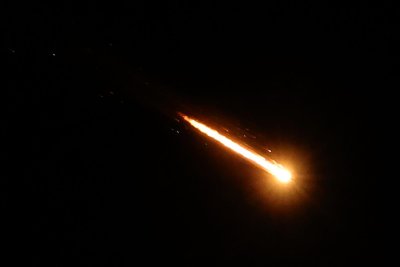
Earlier, Qatar’s Defence Ministry said the country was attacked by two drones launched from Iran. “One drone targeted a water tank belonging to a power plant in Mesaieed, and the other targeted an energy facility in Ras Laffan Industrial City, belonging to QatarEnergy, without reporting any human casualties,” it said in a statement.
“All damages and losses resulting from the attack will be assessed by the relevant authorities, and an official statement will be issued later,” it added.
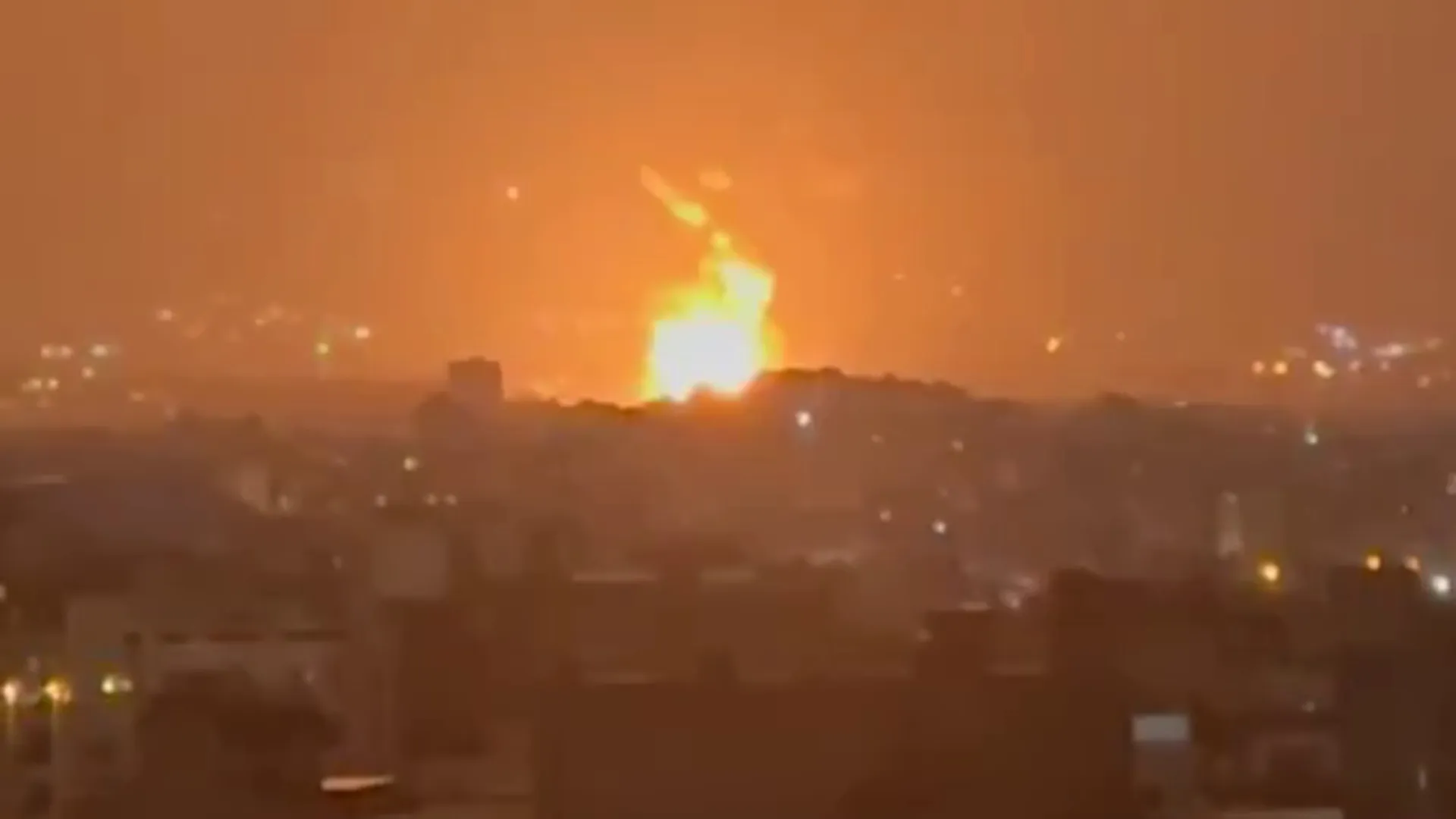
The Saudi Ministry of Defence, in reports carried by the state-run Saudi Press Agency (SPA), said two drones had “attempted to attack” the Ras Tanura refinery on Monday morning, and that a “small” fire had broken out after they were intercepted.
Footage verified by Al Jazeera showed plumes of smoke rising from the oil facility, located on Saudi Arabia’s Gulf coast. The ministry said the refinery “sustained limited damage”, but there were no casualties.
Ras Tanura oil refinery, one of the world’s largest oil processing facilities located near the eastern city of Dammam, has a capacity of 550,000 barrels per day. The facility is home to one of the largest refineries in the Middle East and is considered a cornerstone of the kingdom’s energy sector.
The attacks come as oil tankers have been piling up on either side of the Strait of Hormuz, through which about a fifth of the world’s seaborne oil and the bulk of Qatari gas flows.
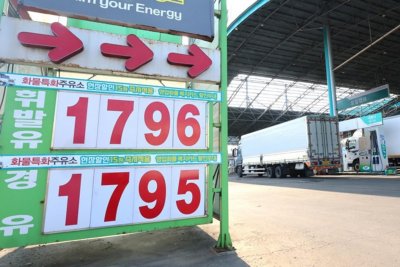
The maritime disruptions and fears of a prolonged conflict have led to a sharp rise in global oil prices, which will have a significant impact on the global economy.
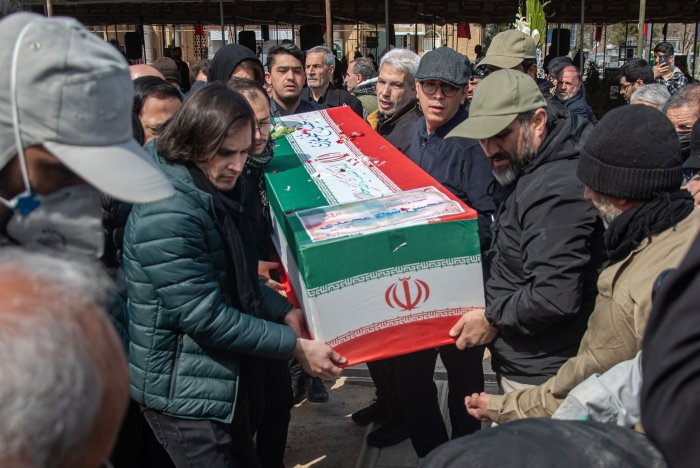
Iran has been launching retaliatory strikes, mainly targeting Israel and military facilities of the United States across the Middle East, after the US and Israel launched massive air strikes on the country.
In a statement published by SPA, the Saudi Ministry of Energy said some operations had been halted as a “precautionary measure” and that it did not foresee “any impact on the supply of petroleum products to local markets”.
Saudi Arabia had earlier said it would “take all necessary measures to defend its security and protect its territory, citizens, and residents, including the option of responding to the aggression” after Iran targeted the capital Riyadh and the country’s eastern region with strikes over the weekend.
The US, Bahrain, Jordan, Kuwait, Qatar, Saudi Arabia and the United Arab Emirates issued a joint statement on Sunday condemning Iranian attacks across the region and affirming their right to self-defence.
Rob Geist Pinfold, lecturer in defence studies at King’s College London, told Al Jazeera that Iran “knows exactly what it’s doing” by attacking the Gulf countries.
“These countries have less of an appetite for a fight because, at the end of the day, this is not their war. So, Iran is banking that they will want a ceasefire as soon as possible, that they will be pressuring the Trump administration. But we have no signs of that whatsoever so far,” he said.
Pinfold added that there seems to be a “show of force” and “of unity” coming from the Gulf states, at least rhetorically.
“They’re trying to get the message across that they are one and that they are united and that they are resilient,” Pinfold said. “But under the surface, there are profound disagreements here about how to engage with Iran and whether to engage with Iran at all.”
March 2 (UPI) — Belgium has seized a Russian oil tanker believed to be part of a shadow fleet of vessels the Kremlin uses to sell its energy products blocked by sanctions, Belgium’s defense minister said.
The armed forces of the European nation, with the support of French navy helicopters, boarded the oil tanker in the North Sea over the weekend, Defense Minister Theo Francken said in a statement.
The vessel was being escorted to the Belgian port city of Zeebrugge where it would be seized by authorities, he said.
French President Emmanuel Macron, who announced that French helicopters were used in Operation Blue Intruder, published a 23-second video online of clips from the night siege edited together, showing soldiers rappelling down ropes from a helicopter to the vessel’s deck.
A major blow to the shadow fleet: in the North Sea, our French Navy helicopters helped last night in the boarding by Belgian forces of an oil tanker under international sanctions.
Europeans are determined to cut off the sources of funding for Russia’s war of aggression… pic.twitter.com/CnoxyND7BB— Emmanuel Macron (@EmmanuelMacron) March 1, 2026
Macron described the mission as having dealt “a major blow to the shadow fleet.”
“Europeans are determined to cut off the sources of funding for Russia’s war of aggression in Ukraine by enforcing sanctions,” he said.
The vessel was identified by Belgian federal prosecutors as the Guinean flag-flying Ethera. The federal prosecutor’s office said it has opened an investigation into potential violations of the Belgian Navigation Code.
The office said an on-board inspection confirmed evidence of a “false flag,” public broadcaster RTBF reported, which said the operation was conducted over Saturday night and into Sunday morning.
The vessel had departed the Moroccan west coast port city of Mohammedia on Feb. 21 and arrived in Zeebrugge on Sunday morning, according to Marinetraffic.com.
British, European and U.S. governments had all previously sanctioned the vessel.
Ukrainian President Volodymyr Zelensky said despite its repeated blacklisting, Ethera continued to illegally transport Russian oil with the use of a false flag and forged documents.
“We welcome this strong action against Moscow’s floating purse and thank France for supporting the operation,” he said in a social media statement.
“We must be resolute. Russia operates like a mafia organization, and the response must match that reality,” he continued, calling for modern European laws permitting tankers carrying Moscow oil to be seized and its oil repurposed for Europe’s security.
“If they reject the rules for the sake of war, the rules must foresee a clear and firm answer.”
The seizure comes as Europe has been targeting Russia’s shadow fleet of vessels to further increase the impact of sanctions.
Western allies have imposed thousands of sanctions on Russia over its four-year invasion of Ukraine. It is now the most blacklisted in the world.
Oil is a significant revenue source for the Kremlin, and Ukraine’s allies are trying to hinder is ability to pay for its war.
This shadow fleet consists of between 600 and 2,500 ships, according to an October 2025 document from the European Union. An S&P Global report from the month before estimated the fleet consisted of 978 tankers alone. Meanwhile, a Brookings report estimated the fleet comprised 343 tankers, though stating its true scope is likely far larger.
With the seizure, Belgium is the second European nation to detain a tanker of Russia’s shadow fleet. France became the first in January when its forces seized the Grinch oil tanker.
March 2 (UPI) — A British airbase on Cyprus was struck by a drone, forcing the evacuation of the facility from where RAF Typhoon warplanes are flying sorties to defend Gulf countries under attack from Iran and as many as 300,000 British nationals visiting or living in the region.
Foreign Secretary Yvette Cooper told Sky News that the runway at RAF Akrotiri was hit in the strike late Sunday and that “all of the precautionary measures are being taken around the base,” which is near Limassol in the southwest of the island.
No casualties were reported and the Ministry of Defense said damage had been “minimal” and that the base remained operational, but that families of service personnel and all non-essential staff had been relocated to safe locations off-base.
“Our armed forces are responding to a suspected drone strike at RAF Akrotiri in Cyprus at midnight local time. Our force protection in the region is at the highest level, and the base has responded to defend our people. This is a live situation and further information will be provided in due course,” the MOD said.
The military was mounting an effort to reassure residents of villages near the base that the threat was to the base and that there was no risk to them or their property.
The attack came around one hour after British Prime Minister Keir Starmer issued a pre-recorded statement posted to social media saying he had given permission to the U.S. military to fly “defensive” missions out of Britain’s base on Diego Garcia in the Indian Ocean and RAF Fairford in England.
Earlier Sunday evening, the MOD said an RAF Typhoon fighter jet patrolling the Persian Gulf successfully deployed an air-to-air missile to downan Iranian drone headed toward Qatar. The aircraft was operating out of Qatar after the RAF’s 12 Squadron deployed to the emirate in January as part of a U.K.-Qatar defense pact.
On Saturday, Starmer said Britain was not and would not participate in the military offensive launched by Israel and the United States, having earlier declined to allow U.S. military aircraft involved in the operation to use British bases either.
In his message, Starmer insisted that it remained the case that the United Kingdom was not involved but that developments over the weekend had changed the situation with attacks on interests of Britain and its partners in the Gulf, who were explicitly asking for back up.
“Over the last two days Iran has launched sustained attacks across the region at countries who did not attack them. They’ve hit airports and hotels where British citizens are staying. This is clearly a dangerous situation. We have at least 200,000 British citizens in the region — residents, families on holiday, and those in transit.
“Our Armed Forces who are located across the region are also being put at risk by Iran’s actions. On Saturday, Iran hit a military base in Bahrain, narrowly missing British personnel,” said Starmer.
He said Britain had made it clear it was staying out of the strikes on Iran because it believed the best way forward for the region and for the world was a negotiated settlement but that Iran had still attacked British interests and put Britons in the region at “huge risk along with our allies.”
Gulf countries had asked Britain to do more to defend them and it was his duty to protect British lives, Stamer said.
He explained that he had decided to grant a U.S. request to use British bases for the “specific and limited defensive purpose” of destroying Iranian missiles in their storage depots and the launchers they are fired from on the basis of “collective self-defence of longstanding friends and allies, and protecting British lives.”
With airspace closed across the region, hundreds of thousands of British nationals in Israel, Bahrain, Kuwait, Qatar and the United Arab Emirates are unable to get out.
Foreign Office sources told the BBC no evacuation was imminent but the government was preparing for potential scenarios if commercial flights remained grounded.
Cooper said she still hoped to be able to work with commercial airlines to bring people home in previous similar situations.
The Liberal Democrats and Green Party vowed they would force Starmer’s Labour government to seek authorization from parliament for the decisions he was making.
“No matter how the Prime Minister tries to redefine offensive as defensive, this is a slippery slope. He must not let Trump drag Britain into another prolonged war in the Middle East. Starmer must come to Parliament on Monday, set out the legal case in full, and give MPs a vote,” the Liberal Democrats’ leader, Ed Davey, said in a post on X.
Israeli Prime Minister Benjamin Netanyahu (C) speaks adjacent to Indian Prime Minister Narendra Modi in the Knesset in Jerusalem on February 25, 2026. Photo by Debbie Hill/UPI | License Photo
March 2 (UPI) — Danise Baird, the wife of Republican Rep. Jim Baird, has died from complications of injuries she sustained in an early January car crash, according to a statement from the Indiana congressman’s office.
Jim and Danise Baird were involved in a car crash on Jan. 5, hospitalizing both of them.
Little information about the incident has been made public. According to a social media statement published by their son Beau Baird in mid-January, they were involved in a hit-and-run on the night of Jan. 5. He added that his mother suffered “nearly 15 breaks and fractures.”
Less than two weeks after the crash, Jim Baird, who is 80, announced that he and his wife had been discharged and were recovering.
On Sunday, his office announced that Danise Baird had died.
“A devoted wife and loving mother of three, she was the foundation of their family and will be deeply missed,” the statement said.
“We ask that you keep the congressman and his family in your prayers during this difficult time.”
Jim and Danise Baird were married for 59 years, according to his office, which said they had built “a life centered on faith, family and service.”
Indiana Gov. Mike Braun offered his condolences online.
“Our thoughts and prayers are with congressman Baird and his family as they grieve this devastating loss,” he said in a statement.
Rep. Elise Stefanik, R-N.Y., recalled seeing Danise Baird by her husband’s side as he worked in Congress.
“They are salt of the earth people and Jim and his family have sacrificed so much for our country,” she said. “Jim and his family are in our hearts and prayers during this difficult time.”
Neil Sedaka
American singer/pianist Neil Sedaka performs at the “BBC Proms In The Park” in Hyde Park in London on September 11, 2010. Photo by Rune Hellestad/UPI | License Photo
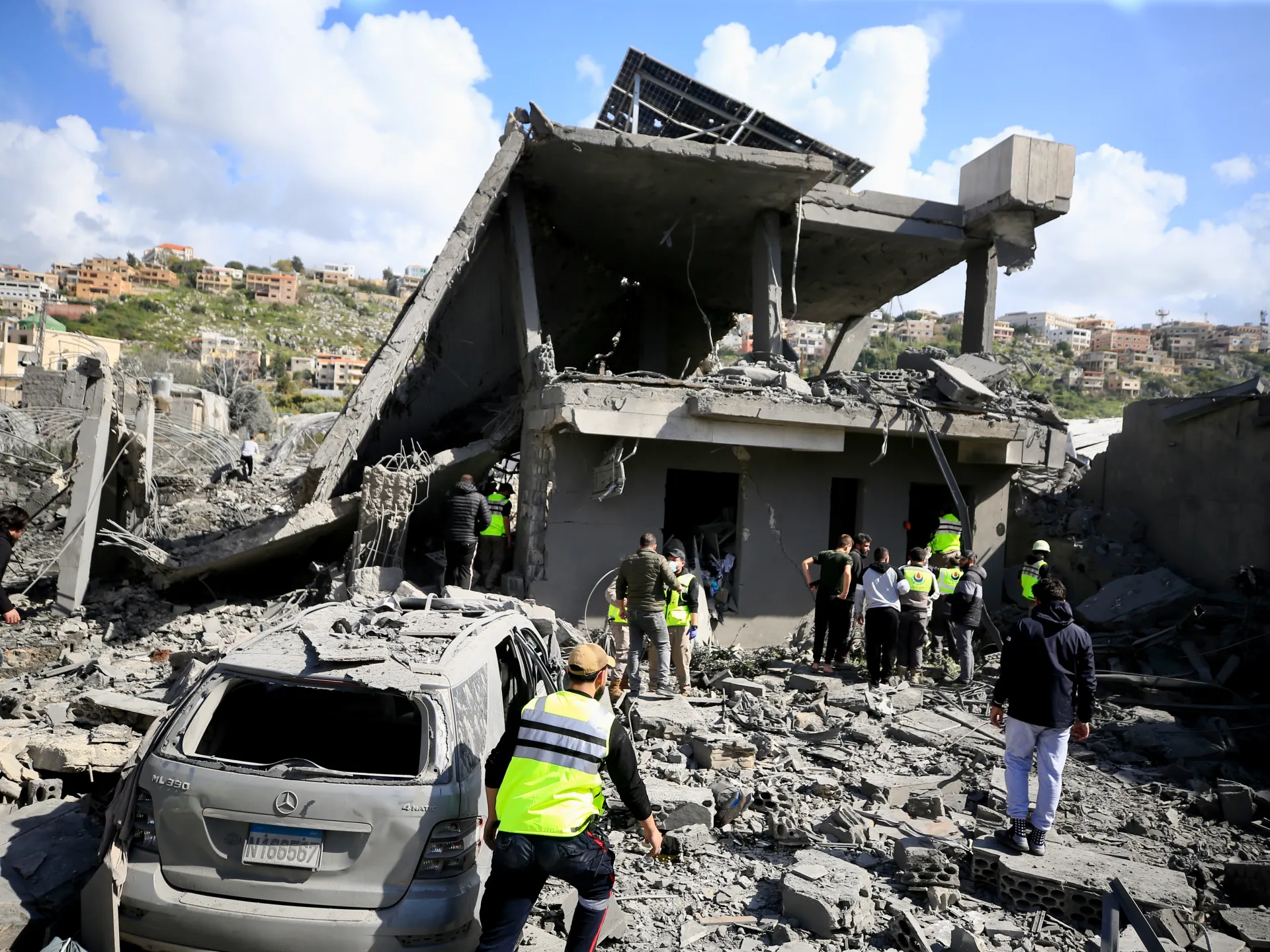
A damaged apartment in a building following an Israeli airstrike in Al Jamous, in Dahieh, southern suburbs of Beirut, Lebanon, on Monday, March 2, 2026. Photo by Wael Hamzeh/EPA
March 1 (UPI) — The Israeli military was attacking Hezbollah targets in neighboring Lebanon, amid worries that its war with the United States against Iran may escalate and spill across the region.
The Israel Defense Forces announced its military offensive hours after sirens triggered by projectiles launched from Lebanon sounded throughout northern Israel.
The Israeli strikes were retaliatory, the IDF said in a statement.
Strikes targeted senior Hezbollah operatives in the capital, Beirut, according to the Israeli Air Force, which said it also struck “a key terrorist” in southern Lebanon.
“Hezbollah opened a campaign against Israel overnight, and is fully responsible for any escalation,” IDF Chief of General Staff Lt. Gen. Eyal Zamir said in a statement.
“Any enemy that threatens our security will pay a heavy price — we will not allow any harm to come to the people of Israel and our northern border.”
In an update, the IDF said targets included command and control centers, launch sites and senior Hezbollah operatives.
In the recorded statement, an IDF spokesperson said they were prepared for a Hezbollah response prior to attacking Iran on Saturday.
The spokesperson said Israeli fighter jets were continuing to strike Iran.
According to Lebanon’s Health Ministry, at least 31 people were killed and 149 wounded in the overnight attacks in the country’s south and Beirut’s Dahiyeh district, the state-run National News Agency reported.
It said 11 were killed and 58 injured in south Lebanon and 20 killed and 91 injured in the southern suburbs.
The strikes come less than 48 hours after the United States and Israel began their military operation to force regime change in Iran. Iran’s spiritual leader, Ayatollah Ali Khamenei, was killed in the strikes, along with other senior officials. Iran will form a three-member interim council until a new leader is chosen, according to the semi-official Tasnim News Agency.
Iran has responded by attacking U.S. bases throughout the Middle East. Tehran’s proxy militias have also launched attacks, including Hezbollah.
Three U.S. service members were killed and five seriously injured in Kuwait. At least nine Israelis were killed in strikes in Beit Shemesh, located about 20 miles west of Jerusalem, Israel’s Magen David Adom emergency service said in a statement. More than 20 were injured in the strike.
In Iran, more than 200 people have been killed, according to state media citing the Red Crescent. The Iran Mission to the United Nations said more than 150 school children were killed in a strike on a school in the southern city of Minab.
Lebanese Prime Minister Nawaf Salam condemned the launching of rockets from southern Lebanon toward Israel.
He described the Hezbollah strikes as “an irresponsible and suspicious act that endangers Lebanon’s security and safety and provides Israel with pretexts to continue its attacks.”
“We will not allow the country to be dragged into new adventures, and we will take all necessary measures to stop the perpetrators and protect the Lebanese.”
Deir el-Balah/Gaza City – When Hani Abu Issa headed to the Deir el-Balah market on Saturday morning, he was not carrying a long shopping list. He had only intended to buy ingredients for his family’s Ramadan iftar meal, nothing more.
But the sight of crowds gathered in front of grocery shops caught him by surprise and prompted him to ask what was happening.
Recommended Stories
list of 4 itemsend of list
A passer-by told him that Israel had struck Iran and war had broken out.
Hani was shocked as he watched people around him leaving one after another, carrying sacks of flour on their shoulders, and buying whatever food supplies and goods they could manage.
That was how the first hours of the military confrontation between Israel, joined by the United States, and Iran unfolded in Gaza.
The scene in the enclave changed completely as people everywhere rushed to the market to buy sugar, flour, cooking oil and yeast.
Shelves began to empty, and the price of essential goods increased.
A father of five children, 51-year-old Hani told Al Jazeera that he believes the Israel-US war with Iran “will not directly affect Gaza”. But he admits that people in Gaza are no longer able to react calmly to any military development in the region.
“People have become afraid of everything. Since the morning, everyone rushed to the markets to stockpile, and that led to shortages of many goods and rising prices,” he said, while standing in front of food stalls in the Deir el-Balah market, in central Gaza.
Anxiety among residents intensified after COGAT, the Israeli body managing the Palestinian territory, released a statement on its Facebook page on Saturday evening announcing the closure of crossings leading to Gaza and the occupied West Bank “until further notice”, in light of security developments related to the war with Iran.
Hani said the possibility of crossings remaining closed deeply worried him.
“Flour, sugar, cooking oil, and yeast… those were the first things to disappear from the market because of the heavy demand,” he said.
“I lived through famine [during Israel’s genocidal war on Gaza] like everyone else. The worst days were when I had to buy a sack of flour for more than 1,000 shekels [$319]. I don’t want to relive that experience.”
He said that stockpiling while the crossings remained closed was not a viable solution.
“Goods run out quickly, and the conditions we live in may spoil whatever we store. All we need is for someone to reassure us that the closure of the crossings will not last.
“For someone to tell us that we will not be affected.”
Crowds filled Gaza’s markets as residents rushed to stockpile food after news of the war with Iran and the closure of Gaza and West Bank crossings [Abdelhakim Abu Riash/ Al Jazeera]
Local sources reported that the crossing closures were linked to the Jewish holiday of Purim, which created confusion over how long they would last.
“We cannot be certain or confirm anything. Israel’s word cannot be relied upon, and no specific duration was given,” Hani added in frustration.
“Gaza has not recovered from two years of war and famine. All I think about now is traveling and leaving with my two daughters to live in another country. That is enough.”
At around the same time last year, during Ramadan last March, Palestinians in Gaza endured one of the harshest phases of the war after crossings were closed and goods were prevented from entering for extended periods, leading to shortages of food supplies and price hikes that resulted in the spread of famine.
Israel’s policy of starvation at the time faced widespread condemnation. Markets turned into empty spaces, flour prices soared to record highs, and people died due to severe malnutrition.
Omar Al-Ghazali sells groceries at his food stall in the Nuseirat market in central Gaza [Abdelhakim Abu Riash/ Al Jazeera]
Justified fear
In the Nuseirat market, where people are still frantically buying groceries, 28-year-old seller Omar Al-Ghazali told Al Jazeera that the famine experience has left a deep psychological impact.
“People’s fear is completely justified. They were shocked and frightened and want to secure themselves. They learned from the previous famine experience and from fears of trader hoarding,” the father of four said.
“Today, although the war is not taking place on Gaza’s land, the fear of repeating the famine scenario appears stronger than any logical analysis of the regional situation,” he added.
“We cannot tell people not to buy. What they went through was extremely difficult. We try to convince ourselves that things are fine and that no one will be affected, but fear is stronger.”
‘Where would we even store it?’
Not everyone can afford to stockpile.
Asmaa Abu Al-Khair, 38, was wandering through the Gaza City market on Sunday, visibly confused. A mother of eight, she wants to stock up, but lacks both the financial ability and the space.
“Where would we store it? And what would I even store? We need everything, and we can barely provide our daily food during Ramadan,” she told Al Jazeera as she walked empty-handed through the market.
“I feel great anxiety. Everyone is talking about it – about Iran’s strike and the closure of the crossings – and I cannot afford to buy what I need, while at the same time, I am afraid of famine returning. I have young children,” she said sorrowfully.
Asmaa said many displaced families living in nearby tents were facing the same reality as they “do not have the money to buy supplies, nor the space to store them inside the tents”.
“We endured so much hardship during the war, and it barely ended with the announcement of a ceasefire. So why close the crossing now? What do we have to do with what is happening? Is what we witnessed not enough? Why play with people’s nerves?”
Until yesterday evening, Asmaa had hoped the crossings would not be closed and that things would continue as they were. Then, the announcement came.
“It felt like a stab in my heart. I went to sleep with deep frustration,” she said bitterly.
Mohammed Daher chose not to stockpile, saying he is exhausted by the repeated Israeli crossing closures, particularly those that coincided with Ramadan last year [Abdelhakim Abu Riash/ Al Jazeera]
Mohammed Daher, 46, from Jabalia, who is now displaced and living in Deir el-Balah, said he had been living the spirit of Ramadan “calmly and peacefully”, without war or gunfire for the first time in two years, until the news of war with Iran.
“I found myself lost again. But I decided not to stockpile anything,” he told Al Jazeera while looking around the market.
“We are exhausted. I reached a point where I have grown used to all scenarios,” he said despairingly. “Israel is looking for any pretext to starve Gaza’s residents again and deepen their humanitarian crisis.”
Daher said he had spent most of his money during the previous famine buying basic food items at inflated prices.
“Everything was priced like gold… if you could even find it. Today, I have no energy left to endure that torment again. Let whatever happens, happen.”
Deepening Gaza’s humanitarian crisis
There were widespread reactions to the Israeli closure decision on social media, as Palestinians questioned whether they were on the brink of an even harsher phase of Israel’s treatment. Many people accused Israel of closing the crossings to push Palestinians towards further starvation and collective suffering.
Some wondered whether Israel was using the moment to create more suffering for Palestinians in Gaza while the world was distracted by the war with Iran.
Ali al-Hayek, a member of the Palestinian Businessmen Association in Gaza, warned that closing the crossings could halt aid distribution to struggling families and put a pause on charitable kitchens. It would also obstruct urgent medical travel abroad, particularly for those who are wounded, in critical condition or living with chronic diseases, such as cancer.
He pointed out that Gaza’s economy has already contracted by more than 85 percent because of Israel’s genocidal war, with the majority of the population pushed below the poverty line, unemployment reaching nearly 80 percent, and more than 97 percent of industrial facilities ceasing operations.
Al-Hayek called on the international community to intervene immediately and pressure the Israeli side to reopen the crossings and restore their normal operations, while ensuring freedom of movement for individuals and goods.
But he also said it is important that traders not use the shortage to increase prices. It’s Ramadan time, he emphasised, and Palestinians should demonstrate solidarity now more than ever.
In 1836, Texas proclaimed independence from Mexico.
In 1899, President William McKinley signed legislation establishing Mount Rainier National Park in Washington. The park received record flooding in November 2006, resulting in more than $36 million in damage.
In 1949, a U.S. Air Force plane piloted by Capt. James Gallagher completed the first non-stop around-the-world flight in just over 94 hours.
In 1962, Philadelphia’s Wilt Chamberlain set the single-game NBA scoring record with 100 points against the New York Knicks.
In 1974, the cost of a U.S. first class postage stamp was increased to 10 cents, up from 8 cents.
In 2007, U.S. Army Secretary Francis J. Harvey announced his resignation amid charges of poor conditions for patients at Walter Reed Army Medical Center in Washington.
In 2008, outgoing Russian President Vladimir Putin’s choice as his successor, Dmitry Medvedev, was elected president in a landslide. Putin remained in power as prime minister.
In 2017, Attorney General Jeff Sessions announced he would not participate in any federal investigation into allegations the Russian government interceded in the 2016 presidential election, sparking the ire of President Donald Trump.
In 2023, Los Angeles Lakers icon LeBron James became the first NBA player to reach 40,000 regular-season points. He broke the previous record — 38,387 by Kareem Abdul-Jabbar — in 2023.
In 2025, Anora won Best Picture at the Academy Awards along with Best Actress for Mikey Madison, Best Director for Sean Baker, Best Original Screenplay and Best Editing.
Best performance by an actor in a leading role Oscar winner Adrien Brody of “The Brutalist” celebrates backstage with best performance by an actress in a leading role winner Mikey Madison of “Anora” and best actress in a supporting role Oscar winner Zoe Saldana of “Emilia Perez” with Kieran Culkin, Oscar winner for best actor in a supporting role (L-R) during the 97th Academy Awards in the Hollywood section of Los Angeles, on March 2, 2025. File Photo by Pat Benic/UPI
A vessel is seen anchoring off the coast of Dubai, United Arab Emirates, 01 March 2026. Following a joint Israel-US military operation targeting multiple locations across Iran in the early hours of 28 February 2026 and Iran’s retaliatory attacks across the region, many ships are anchored as Iran threatened to close the Strait of Hormuz, where hundreds of ships carrying oil pass daily, potentially affecting worldwide trade. Photo by STRINGER / EPA
March 1 (Asia Today) — Japan is closely monitoring the risk of a potential blockade of the Strait of Hormuz as tensions surrounding Iran intensify, with officials and media warning of possible energy supply disruptions similar to those faced by South Korea.
Japan relies on the Middle East for about 90% of its crude oil imports, most of which passes through the narrow waterway connecting the Persian Gulf to global markets. South Korea imports roughly 70% to 90% of its crude from the same region, making both economies vulnerable to prolonged instability.
Japanese newspapers including The Asahi Shimbun and The Yomiuri Shimbun reported Saturday that shipping traffic in the strait has already been affected following recent U.S. and Israeli strikes on Iran. According to Asahi, Iran’s Revolutionary Guard has broadcast warnings to vessels transiting the strait, prompting some tankers to halt operations or reroute. British maritime authorities said several ships reported receiving notifications that the waterway was “blocked,” though the actual status could not be independently confirmed.
About 20 million barrels of crude oil pass through the Strait of Hormuz each day, making it one of the world’s most critical energy chokepoints. The Yomiuri said roughly 80% of tankers bound for Japan transit the strait, raising concerns that a prolonged disruption could lead to supply shortages and sharp price increases.
The Japanese government convened a National Security Council meeting Friday night to assess the situation, focusing on the safety of Japanese nationals and potential economic fallout. The Foreign Ministry issued an advisory urging about 200 Japanese citizens in Iran to consider evacuation while commercial flights remain available.
Japan’s trade ministry said the country holds combined public and private petroleum reserves equivalent to about 254 days of domestic consumption as of the end of December, providing a short-term buffer against supply shocks. However, media outlets warned that stockpiles would not shield consumers from rising fuel costs.
On commodity markets, West Texas Intermediate crude has risen about 17% over the past two months, with the April contract settling at $67.83 on Feb. 27, the highest level in six months. Japanese analysts cited projections that oil could exceed $100 per barrel if Hormuz traffic is severely disrupted, potentially shaving 0.3% to 0.6% off Japan’s gross domestic product.
Analysts note that South Korea shares similar structural exposure, as most of its Middle Eastern oil imports also pass through Hormuz and the Strait of Malacca, underscoring the broader regional economic risks tied to escalating tensions.
Tens of thousands of Lebanese civilians are leaving areas in Beirut following Israeli strikes and forced displacement orders. Earlier Hezbollah launched a retaliatory attack on Israel. Al Jazeera’s Zeina Khodr is amid the heavy traffic.
1 of 2 | Religious leaders, civic activists, overseas Koreans, South Korean youth and North Korean defectors gather in Seoul on March 1, 2026. and hold signs reading “Two Korea No! One Korea Yes!” during the Citizens’ Solidarity for ONE KOREA rally in Seoul. Photo courtesy of Citizens’ Solidarity for ONE KOREA
March 1 (UPI) — Thousands of South Koreans gathered in central Seoul on Sunday to call for peaceful unification of the Korean Peninsula and oppose what they described as a two-state framework between the two Koreas.
The rally, organized by Citizens’ Solidarity for ONE KOREA, was held at Gwanghwamun Square near the Dongwha Duty Free shop to mark the 107th anniversary of the March 1 Independence Movement.
Organizers estimated attendance at more than 4,000. Police did not immediately provide an independent estimate.
Organizers said pre-event cultural performances began at 1 p.m., including traditional percussion and a performance by a North Korean defector-turned-singer. The main program opened at 2 p.m., with speakers emphasizing the legacy of the 1919 independence movement and calling for renewed efforts toward unification.
Participants included civic activists, religious leaders, North Korean defectors, separated family members, overseas Koreans and young people. Many held signs reading “Two Koreas: No, One Korea: Yes.”
North Korea in recent months has characterized inter-Korean relations as those between “two hostile states,” effectively redefining its official stance on unification. In South Korea, the unification minister has said the ministry is proceeding with steps to formalize what he described as a “peaceful two-state” approach as a ministry position.
Kim Hyung-seok, a 105-year-old emeritus professor at Yonsei University, delivered a special message urging citizens to take the lead in pursuing national unity. He said unification should be achieved by the Korean people rather than driven solely by political leaders.
Religious figures from different faiths also addressed the crowd. Buddhist monks Hyein and Eung cheon spoke at the rally, alongside Protestant pastors Kim Jin-hong and Jang Hak-il, who criticized what they described as efforts to institutionalize division on the peninsula. Participants later sang “Our Wish Is Unification,” a song long associated with reunification hopes.
North Korean defector Kang Chol-hwan, head of the North Korea Strategy Center, spoke about human rights conditions in the North and stressed the importance of expanding outside information access to North Korean residents.
Jang Man-soon, head of a civic group representing families separated by the Korean War, announced plans to raise funds for broadcasting initiatives aimed at North Korea and to promote the establishment of a platform tentatively named “Korea Link.”
During a joint declaration, youth representatives from the South and from the defector community pledged to uphold the spirit of the March 1 movement and work toward unification based on freedom, human rights and shared prosperity.
After the rally, participants marched around the Gwanghwamun area, concluding the event at about 5 p.m.
Organizers said they plan to continue nationwide activities promoting what they described as a citizen-led movement for peaceful unification.
March 1 (UPI) — Three members of the U.S. military were killed and five were seriously wounded in the Iranian response to U.S. and Israeli strikes the day before.
President Donald Trump said in a video statement Sunday that the nation grieves “for the true American patriots who have made the ultimate sacrifice for our nation,” while repeating the warning he made Saturday in announcing the strikes that more U.S. troops may die.
“Sadly, there will likely be more before it ends,” he said. “Likely be more.”
The service members killed were part of an Army sustainment unit based in Kuwait, which is one of several American bases in the Middle East that Iran has targeted amid its response to Operation Epic Fury, which started early Saturday morning, NBC News and The New York Times reported.
“America will avenge their deaths and deliver the most punishing blow to the terrorists who have waged war against, basically, civilization,” Trump said.
U.S. Central Command announced in a post on X on Sunday morning that the troops had been killed in action and wounded as the military continued to hit targets, while also receiving counterattacks from Iran.
Several other troops also “sustained minor shrapnel injuries and concussions — and are in the process of being returned to duty,” CENTCOM said in the post. “Major combat operations continue and our response effort is ongoing.”
“The situation is fluid,” the post noted, adding that the names of the deceased troops would be withheld until 24 hours after their next of kin have been notified.
Iran has also targeted other countries nearby, including Cyprus, the United Arab Emirates and Qatar.
The Iranian regime’s reckless use and proliferation of ballistic missiles have been a dangerous threat for decades. Now, at the President’s direction, U.S. forces are eliminating the threat. pic.twitter.com/zTsqjwVCMO— U.S. Central Command (@CENTCOM) March 1, 2026
CENTCOM on Saturday refuted Iranian claims that at least 50 U.S. service members had been killed, as well as other claims that a U.S. Navy ship had been struck by missiles and that severe damage was seen at “multiple U.S. bases.”
Through the first day-and-a-half of Operation Epic Fury, the United States and Israel have said that they hit dozens of military and government sites throughout Iran.
CENTCOM has specifically announced the sinking of Iranian naval vessels, sending B-2 stealth bombers to hit Iran’s ballistic missile facilities and various communication, air defense and command and control centers.
Trump early Saturday announced that Iranian spiritual leader, Ayatollah Ali Khamenei, was dead — along with other high-ranking leaders of Iran — in U.S. and Israeli airstrikes.
U.S. intelligence and military assets had been tracking Khamenei for months and opted for a rare daylight strike on the meeting because of the opportunity to hit multiple targets, including Defense Minister Gen. Aziz Nasirzadeh, Revolutionary Guard Corps head Gen. Mohammad Pakpour and Khamenei’s defense adviser, Ali Shamkhani.
Senate Majority Leader John Thune, R-S.D., speaks during a press conference after the weekly Republican Senate caucus luncheon at the U.S. Capitol on Wednesday. Photo by Bonnie Cash/UPI | License Photo
Israel’s prime minister says strikes on Tehran will increase in the coming days, with US support, to do what Benjamin Netanyahu says he’s ‘hoped to do for 40 years’. Israel and the US killed Iran’s Supreme Leader on Saturday in a renewed war on Iran.
Israelis filmed the moment an Iranian missile broke through Israel’s air defence systems to strike a target in West Jerusalem, in retaliation for Israel’s war on Iran.
Supreme Court Chief Justice John Roberts, Supreme Court Justice Elena Kagan, Supreme Court Justice Brett Kavanaugh, and Supreme Court Justice Amy Coney Barrett listen as President Donald Trump delivers his State of the Union last Tuesday. Photo by Annabelle Gordon/UPI | License Photo
March 1 (UPI) — The Supreme Court will determine whether people who regularly smoke marijuana will be allowed to own guns.
In United States v. Hemani, which goes before the Supreme Court on Monday, the Trump administration will attempt to uphold their prosecution of Ali Danial Hemani, who lives in Texas.
In 2022, FBI officials found that Hemani, who is a dual citizen in the United States and Pakistan, owned a pistol while in possession of marijuana and cocaine.
When Hemani said that he engaged in marijuana use approximately every other day, he was indicted, facing up to 15 years behind bars, but the charge was dismissed.
The 1968 law he allegedly violated was meant to disarm people who used drugs.
An appeals court stated that there was not enough “tradition of gun regulation” to “support disarming a sober person based solely on past substance usage,” USA Today reported.
“I think what the court is being asked to decide, and I would imagine the reason it took the case, is to give some more guidance about what kinds of people can be disarmed without violating the Second Amendment,” said Joseph Blocher, one of the Duke Center for Firearms Law, CBS News reported.
Fundamentally, that’s what this case is about,” Blocher said.
Senate Majority Leader John Thune, R-S.D., speaks during a press conference after the weekly Republican Senate caucus luncheon at the U.S. Capitol on Wednesday. Photo by Bonnie Cash/UPI | License Photo
Footage from near the Strait of Hormuz shows a Palau-flagged oil tanker ablaze after what Oman’s maritime security centre said was a hit from an unidentified projectile. At least three ships have been struck in the area. More than 150 others have dropped anchor to avoid entering the strait.
Footage shows a huge fire reportedly ignited by an Iranian strike on a US naval facility at Bahrain’s Salman Port. The port houses the US Navy’s Central Command and Fifth Fleet.
Plumes of smoke rise above the skyline of Tehran, Iran’s capitol, after explosions in the city on Sunday. Protests have occurred across the Middle East, including one in Pakistan where more than 20 people died. Photo by Hossein Esmaeili/UPI | License Photo
March 1 (UPI) — Some 22 people were killed amid anti-U.S. protests in Pakistan Sunday, following the U.S.-Israeli offensive Saturday that left 200 people dead.
In Karachi, at least 10 people were killed as they attempted to storm the U.S. Consulate, while two were killed in Islamabad and another 10 killed in Gilgit-Baltistan, the New York Times reported.
“When Iran is attacked, we feel our faith, our identity and our very existence are being targeted,” a student protestor in Karachi said, The Times reported.
The country’s supreme leader, Ayatollah Ali Khamenei was among the dead following the U.S. and Israeli attacks.
In response, protests are swelling across the region, including in Iraq and India.
“We must also ensure that those who are mourning in Jammu and Kashmir are allowed to grieve peacefully,” said the area’s chief minister Omar Abdullah, NDTV World reported. “The police and administration should exercise utmost restrain and refrain from using force or restrictive measures.”
Barron’s reported that protests against the U.S. are anticipated in North Africa, South Asia and across the Middle East.
The U.S.-Israeli airstrikes followed indirect negotiations between the United States and Iran regarding nuclear weapons on Thursday.
Iranian officials had said that additional talks were planned.
President Trump had previously increased military presence in the region and threatened escalation if no deal was reached.
Senate Majority Leader John Thune, R-S.D., speaks during a press conference after the weekly Republican Senate caucus luncheon at the U.S. Capitol on Wednesday. Photo by Bonnie Cash/UPI | License Photo
Samson hits 97 not out, West Indian bowling flounders in Kolkata as India set up World Cup semifinal against England.
Published On 1 Mar 20261 Mar 2026
Share
Sanju Samson produced one of the calmest innings under the pressure of a run chase to send India into the semifinals of the T20 World Cup with a five-wicket win over the West Indies in Kolkata.
Samson, who returned to the Indian playing XI in the previous match after being overlooked for the three games prior to it, remained not out on 97 as India pulled off an impressive win in front of a packed Eden Gardens crowd on Sunday.
Recommended Stories
list of 3 itemsend of list
The wicketkeeper-batter was the only Indian player to score more than 30 runs as the defending champions faced the Maroons in a winner-takes-all Super Eight game.
In the process, Samson recorded the highest score by an Indian in a T20 World Cup run chase, going past Virat Kohli’s 82 against Australia in 2016 and Pakistan in 2022.
The cohosts will now face England in the second semifinal in Mumbai on Thursday, while New Zealand and South Africa will meet in the first last-four match on Wednesday in Kolkata.
Samson’s cool demeanour in the face of a high target and an expectant home crowd laid the foundation of India’s chase after they lost star batter Abhishek Sharma in the third over.
The 31-year-old from southern India then took control of the innings, hitting regular boundaries in his 50-ball knock. Samson’s 97 not out came off 12 fours and four sixes.
While he enjoyed brief support from India’s top and middle order batters, none crossed the 20-run mark until Tilak Varma scored 27 off 15 balls in a 42-run partnership with Samson.
India’s captain Suryakumar Yadav (18) and Hardik Pandya (17) were the other contributors to the total, which was sealed with two boundaries off Samson’s bat in the last over.
West Indian pacers Shamar Joseph and Jason Holder picked up two wickets apiece as their teammates struggled to control the flow of runs off Samson’s bat.
Samson remained unbeaten in India’s run chase [Bikas Das/AP]
Earlier, a 68-run opening partnership between captain Shai Hope and Roston Chase gave the West Indies a swift start to their innings.
Chase, who scored 40 off 25 balls, was the more aggressive of the two openers as he made the most of his dropped catch by Abhishek Sharma to take on Axar Patel and Jasprit Bumrah in the first six overs.
Hope was dismissed for 32 after a sluggish innings and replaced by in-form batter Shimron Hetmyer.
The cricket tournament’s fifth-ranked leading run-scorer sped his way to 27 off 12 balls before falling caught behind to Bumrah.
India looked to be in control soon after as the West Indies were reduced to 119-4 in the 15th over. But a strong finish from Rovman Powell and Jason Holder took the 2012 and 2016 champions to 195.
Powell was unbeaten on 34 and Holder on 37 off 22 balls as they looked to put the pre-tournament favourites under pressure in front of a packed Eden Gardens.
Bumrah was the pick of the Indian bowlers with two crucial wickets off his four overs.
Pandya and Varun Chakravarthy picked up the other two West Indian wickets.
West Indies’ players chat with Sanju Samson after the match [Bikas Das/AP]
Secretary of Defense Pete Hegseth, pictured in February at the White House, announced in a memo that the Defense Department is ending its senior officer fellowship programs with 22 institutions — including Ivy League schools — after alleging that they do not measure up the armed forces’ requirements. File Photo by Samuel Corum/UPI | License Photo
March 1 (UPI) — The Defense Department is ending its relationships with several Ivy League universities and think tanks that service members are permitted to attend.
Secretary of Defense Pete Hegseth has ended graduate school fellowships at 22 institutions starting with the 2026-2027 academic years, including the Massachusetts Institute of Technology, Yale, Princeton, the Center for Strategic and International Studies and The Brookings Institution, according to a memo released by the DOD.
The memo follows a Feb. 7 announcement that the DOD would end stop sending officers to Harvard as part of its Senior Service College Fellowship programs, which Hegseth said in the memo is being retooled and offered list of institutions that offer equivalent programs.
Like Harvard, the expanded list of institutions the department is removing from its SSC programs are alleged to be “woke” and no longer meet requirements for officers in the armed forces.
“Our Professional Military Education institutions are among our most sacred and essential means to restore and maintain the warrior ethos within the [DOD],” Hegseth said. “It is imperative that our war fighter education system forges strategic senior leaders who are trained to think critically, free of bias and influence.”
In a press release, Pentagon spokesman Sean Parnell said the “Aligning Senior Service College Opportunities with American Values” memo directs the DOD to focus SSC fellowships away from institutions that “diminish critical thinking, have significant adversary involvement or fail to deliver rigorous education grounded in realism.”
Universities that are replacing the Ivy League schools include three senior military colleges and three DOD or U.S. government programs, as well as 15 other universities, including Liberty, George Mason, Tennessee, Michigan, Iowa State and Hillsdale College.
Currently enrolled DOD personnel will be permitted to finish their courses of study, but the new policy and list of acceptable institutions applies to all personnel starting this fall, Hegseth said.
Senate Majority Leader John Thune, R-S.D., speaks during a press conference after the weekly Republican Senate caucus luncheon at the U.S. Capitol on Wednesday. Photo by Bonnie Cash/UPI | License Photo
Video from Abu Dhabi captured the moment a second Iranian drone struck the Al Salam Naval Base. A fire was already burning from an earlier hit and what appears to be a cruise ship could be seen docked in the background.