top news

Mandelson tried to get Epstein’s ‘goddaughter’ access to 10 Downing Street | Politics News

British politician and peer Peter Mandelson tried to help convicted sex offender Jeffrey Epstein in arranging for a visit by his “goddaughter” to 10 Downing Street at a time when Epstein was in prison for procuring a minor for prostitution, emails released by the US Department of Justice reveal.

Mandelson was serving as business secretary in the government of Prime Minister Gordon Brown and sitting on the House of Lords frontbench at the time. Epstein, meanwhile, was a convicted sex offender and was serving an 18-month sentence in Florida.

Recommended Stories

list of 4 itemsend of list

In an email exchange, Epstein told Glenn Dubin, a hedge fund manager whose child he called his “goddaughter”, that he would “organize a trip to Number !O, and the House of Lords with Peter Mandelson for you guys”.

On the same day, Epstein wrote directly to Mandelson saying that “the most important person to me next to you of course) is my goddaughter that will be in London on Wednesday and Thursday of next week what can we do to make it a very special trip, I would really appreciate it”.

In the exchange, Mandelson asks, “how old?, to which Epstein replied “15”, adding that she will be with her parents. “House of lords, number 10, just for ten minutes, it would mean a lot to me”, he added.

Mandelson responds: “Fine on all”. Epstein responds: “Great”.

Days later, Mandelson replied that he was “trying my best to accommodate” the request and that “we are still on the case… [and] hope something will fall into place”. Epstein subsequently forwarded Mandelson’s response to Dubin.

‘Andrew had tea with the Dubin kids’

These emails are among thousands of messages in the latest tranche of the Epstein files that mention Mandelson – a central figure in modern British politics for decades, long noted for his ability to survive repeated scandals. The exchange offers a glimpse into how Epstein appeared to leverage his relationship with Mandelson while he was in the United Kingdom’s government. In turn, Mandelson appeared willing to open doors for Epstein while he was a convicted sex offender.

Al Jazeera has contacted Downing Street for comment.

Dubin later wrote to Epstein: “Grt time in buck palace…. ….andrew was great. Thx! G”

Fifteen minutes later, Epstein wrote to convicted child sex trafficker and former girlfriend Ghislaine Maxwell: “andrew had tea with the dubin kids and glenn.”

The emails appear to refer to Andrew Mountbatten-Windsor, ex-prince and brother of Britain’s King Charles. Mountbatten-Windsor was accused by Epstein victim Virginia Giuffre of sexual assault, specifically alleging he raped her on three occasions in 2001 when she was 17, as part of a sex-trafficking ring run by Epstein. These allegations led to a 2021 lawsuit for sexual assault and intentional infliction of emotional distress, which was later settled out of court.

Glenn Dubin’s daughter and Epstein’s so-called goddaughter is Celina Dubin. She is the daughter of Eva Andersson-Dubin, a former girlfriend of Epstein.

Email exchanges suggest that following this visit to London, Epstein stayed in contact with Glenn Dubin’s daughter — who the sex offender called his “goddaughter”.

Calls for UK prime minister to resign

The correspondence raises questions about why Peter Mandelson – who was aware of Epstein’s conviction for procuring a minor for prostitution – was prepared to facilitate an arrangement for Epstein and an underage girl while he was a UK government minister.

At the time of the 2009 exchange, Mandelson had returned to government, serving in a senior Labour role from 2008 to 2010. After leaving office, he built a lucrative global consulting career before re-entering public life, when Prime Minister Keir Starmer appointed him ambassador to the United States in 2024.

His relationship with Epstein, who died in prison in 2019 while awaiting trial on sex-trafficking charges, has since become a problem that will not go away for the UK government, and has even led to calls for Starmer to resign.

The release of some Epstein files by the US Department of Justice in September 2025 led to Mandelson stepping down as US ambassador. A second tranche, published on January 30, alleged that he had passed sensitive government information to Epstein on several occasions, according to the files. The claims prompted the British government to refer the matter to police for possible prosecution. Mandelson was briefly arrested in February before being released on bail, while investigations into allegations against him continue.

The political fallout, meanwhile, has since widened, forcing the resignation of two senior government aides. In an attempt to contain the crisis, the prime minister said all documents relating to Mandelson’s appointment would be made public, a move that has instead intensified scrutiny.

The initial release of what have become known as the “Mandelson files” showed that, ahead of his appointment to Washington, UK officials had explicitly warned that his long-standing ties to Epstein posed a “reputational risk” to the country.

Government documents indicate that during the vetting process in late 2024, Mandelson repeatedly denied key aspects of his relationship with Epstein, including whether he had stayed with the sex offender after his 2008 conviction. However, internal correspondence shows officials were aware of the relationship, discussed it as part of due diligence, and raised concerns with the prime minister’s chief of staff. The appointment nonetheless went ahead.

Starmer has since apologised for the decision. Further WhatsApp messages are expected to be released in the coming days, and could prompt fresh calls for Starmer’s resignation, raising questions about how much more damage the UK government can sustain.

‘Like the bad boy you are’

One of Mandelson’s first recorded interactions from the files is with Ghislaine Maxwell.

As far back as June 2002, the emails show him already in direct contact with her, stepping into a world that blurred intimacy and power.

“I love disgusting. That’s why I am wild and dangerous…” Mandelson wrote to Maxwell.

In the same exchange, the tone shifted to potential political and business advisory work in the United States, invoking contacts linked to former US Senator George Mitchell.

In the same exchange, Mandelson appears to have gate-crashed a lunch with Epstein, prompting a rebuke relayed through Maxwell: “You spoiled Jeffrey’s lunch. Pete, I have warned you about that before. Behave or you will be punished like the bad boy you are.”

At the time, Mandelson was in exile from political life. It was 2002, and he had already been forced to resign twice from government — first, after taking a loan of 373,000 pounds ($496,700) from fellow minister Geoffrey Robinson to help purchase a house, then after being accused of intervening in a passport application for the businessman Srichand Hinduja.

It was in this vacuum of political hiatus that Mandelson would cultivate his business and personal connections with Epstein.

These early messages set the pattern for what followed: Long, meandering exchanges between Mandelson and Epstein in which sexual innuendo sits alongside business.

By 2003, messages from Mandelson to Epstein were being preserved in a 50th birthday book compiled for Epstein. Several pages show photographs of the two men together, accompanied by handwritten notes in which Mandelson refers to Epstein as his “best pal”.

The book itself was gifted in 2003, but it remained out of public view until its release two decades later, in September last year.

Financial links also surface from this release of files. Bank statements from 2003 and June 2004 appear to show Epstein making several payments, worth $25,000 each, to accounts associated with Mandelson, as reported by the Financial Times.

Other emails also suggest Mandelson desired a life that domestic politics could not afford. Epstein offered Mandelson access to the seemingly limitless excess of the ultra-wealthy. “When are you going to the island at Xmas? I am having trouble getting air tickets to St Barts and was wondering about going via US, NY or Miami,” asked Mandelson in one exchange in 2005.

Epstein’s reply was characteristically transactional. “I can pay for your tickets if needed.” Whether the offer was accepted remains unclear. Another message from Maxwell to Epstein read: “Asked Mandelson how he is getting to the island – he sd I hope JE is sending the chopper…so I take it you want me to give him a ride on the plane”.

The messages suggest that Mandelson was impressed by the allure of Epstein’s island in the Caribbean – and his mansion in New York that he frequented repeatedly, according to the correspondence released by the Justice Department. Pictures that have since shown Mandelson in a dressing gown laughing with Epstein alongside Mountbatten-Windsor, who was then Prince Andrew — he was stripped of his royal titles in late 2025 because of the revelations of his close relationship with Epstein.

Another released photo shows Mandelson in his underwear speaking with an unidentified woman at what was reportedly Epstein’s residence.

In another email in 2002, Mandelson told Maxwell of a cancelled meeting in Paris and then asked her if he could “stay on for a few days to have complete peace”. It is unclear why he was seeking her permission to stay in Paris — and whether Maxwell and Epstein were covering his costs in the French capital.

Then, in 2008, Epstein was arrested on suspicion of soliciting a minor for prostitution. While many of his former contacts have said that they cut off ties with him around this time, the files reveal that Mandelson positioned himself as a kind of informal counsellor, coaching Epstein through the mounting allegations.

“You are fighting back so you need strategy,” he wrote. He pressed repeatedly for updates, for “developments”, and asked whether everything was being handled.

“Hope you are strategising,” he added, in another message.

Upon finding out about the conviction, Mandelson wrote: “I think the world of you and I feel hopeless and furious about what has happened … Your friends stay with you and love you.”

‘Special unpaid adviser’

Following Epstein’s conviction, the two did not cut off contact. The files suggest that Mandelson and Epstein were in more regular communication even as the financier was serving a prison sentence for soliciting prostitution with an underage girl.

This rate of emails again intensified in June 2009, when Mandelson was appointed first secretary of state, effectively the second most powerful figure in Gordon Brown’s government. Epstein appeared to take pride in the promotion. In one message, Epstein circulated a Guardian article about Mandelson’s new role to Maxwell and alleged sex trafficker and model scout Jean-Luc Brunel. In another email, he congratulated Epstein for his “comeback” and said his appointment made him “proud”. In another, he broadcast the news to his network of powerful associates, including senior figures at JPMorgan such as Jes Staley, writing to him: “For all intents and purposes Peter Mandelson is now deputy prime minister”.

At times, Epstein seemed to act as an intermediary between Mandelson and Staley – who, according to multiple documents in the Epstein files, is alleged to have sexually assaulted a woman, a claim he denies.

The files suggest Epstein passed messages between Mandelson and senior JPMorgan figures, facilitating introductions and discussions around financial and policy matters. Staley, for instance, asked Epstein to arrange meetings with Mandelson, which appeared to take place in December 2009, February 2010, and a call set up by Epstein in March 2010 – and another call with either Mandelson or then-Chancellor Alistair Darling in January 2010.

The tone of the correspondence oscillated between admiration and calculation. In one exchange, Epstein described Mandelson as “devious” after he lobbied a bank to underwrite a mining project backed by their mutual associate Nat Rothschild, as reported by the Guardian.

Epstein also began offering advice. He suggested Mandelson could leverage his new position, “in charge of all universities”, to establish a prize in “cyberwar artificial general intelligence”, an area in which Epstein himself held business interests. Mandelson’s reply was telling: “You can become my special unpaid adviser.”

Other messages reportedly suggest Mandelson may have tipped Epstein off about sensitive political developments, including Brown’s impending resignation in 2010 and a 500-billion-euro ($580bn) European Union bailout designed to stabilise the Greek debt crisis.

In a separate exchange, days after his appointment as first secretary of state, Mandelson forwarded Epstein a private email sent to Brown containing sensitive market information, including discussions of potential government asset sales, tax policy, and business expectations that the Conservatives would win the next election.

The forwarded “interesting note” was from Nick Butler, a special adviser, outlining “business issues” for the prime minister. Epstein, still in prison at the time, responded with policy advice of his own. The government, he wrote, should consider not only physical assets but “INTELLECTUAL assets, that are not being exploited”, effectively advising a sitting cabinet minister on economic strategy.

‘You are the only person that knows everything about me’

The weekend after this correspondence, Mandelson appeared to have stayed at Epstein’s residence. At the same time, the two continued a close personal relationship. In one exchange, Mandelson told Epstein: “Had a long dream about you last night.”

In another exchange, Epstein appeared to act as a confidant. Mandelson, writing from the Lords frontbench while seemingly engaged in parliamentary business, asked whether Epstein had spoken to a contact.

The correspondence then turned to a figure named Simone. “I am worried about Simone who is totally despairing,” Mandelson wrote. “I am not sure what else to do. Any ideas?”

Epstein advised him to travel to New York: “Yes, you should go to New York for a weekend… I have been consistent on this. Do not lose the opportunity. Coming across people you really enjoy is rare – don’t be lazy, get on a plane.”

“You are the only person who knows everything about me,” Mandelson later responded.

Weeks later, however, Epstein appeared to change his position. He wrote: “I’m rethinking the Simone issue with your new profile. I’m afraid it’s asking for serious trouble. It won’t be kept quiet. Rinalado will go ballistic. Fraught with danger.”

Financial links emerge again shortly after. It is widely reported that in September 2009, Mandelson’s husband, Reinaldo Avila da Silva, emailed Epstein requesting financial help to cover the costs of an osteopathy course, including fees, equipment and a laptop. Epstein agreed: “I will wire your loan amount immediately.”

A payment of 10,000 pounds ($13,310) followed. When da Silva sought clarification on whether the amount covered his school fees, Epstein confirmed it did. Mandelson, in turn, emailed Epstein with a note of caution: “Remind him that to avoid a gift-tax filing, it must be a loan.”

Days later, da Silva confirmed receipt of the funds: “Thank you for the money which arrived in my account this morning.”

The contact between Mandelson and Epstein did not end there. According to the files, the two remained in communication until 2016, while the UK government’s own due diligence report says the relationship continued until 2019.

In one of their final exchanges, Mandelson’s fascination with power appeared to endure. “By the way, as political practitioner, Donald is phenomenal,” he wrote, referring to US President Donald Trump. “The craft and tenacity are amazing.”
Source link

‘It all depends on the crop’: Gulf crisis hits South Asia farmers | Agriculture News

Gurdaspur, Punjab, India – Ramesh Kumar, 42, is anxiously doing the calculations for his crops this year.

Standing at the edge of his wheat field in northwest Punjab’s Gurdaspur, he runs through the numbers in his head, totting up fertiliser costs, expected yield, and market prices.

Then he shifts to more personal concerns: School fees, household expenses, loan repayments and the money he has been saving for his daughter Varsha’s wedding.

“I don’t know if we can afford it this year,” he says. “Everything depends on the crop.”

The uncertainty has crept in quietly.

Fertiliser, once a fairly predictable staple in farming, has become more expensive and harder to secure in time. For Kumar, it is not so much a question of cost as it is the difference between stability and strain.

“If prices go up more, we will have to cut somewhere,” he says. “Maybe delay the wedding. If things get worse … even children’s education becomes difficult.”

School fees for his eldest son, Amit, 12, are due in the coming weeks, and Kumar has been setting aside money for his younger daughter Varsha’s future wedding.

It’s never easily affordable, even in good times. “We somehow manage,” Kumar says. “But if the harvest is weak, then we have to think about what to prioritise, what to delay.”

For farmers like him across South Asia, the United States-Israel war on Iran – unfolding thousands of kilometres away – is not just a matter of distant geopolitics.

It is shaping decisions inside their homes.

SA farmers
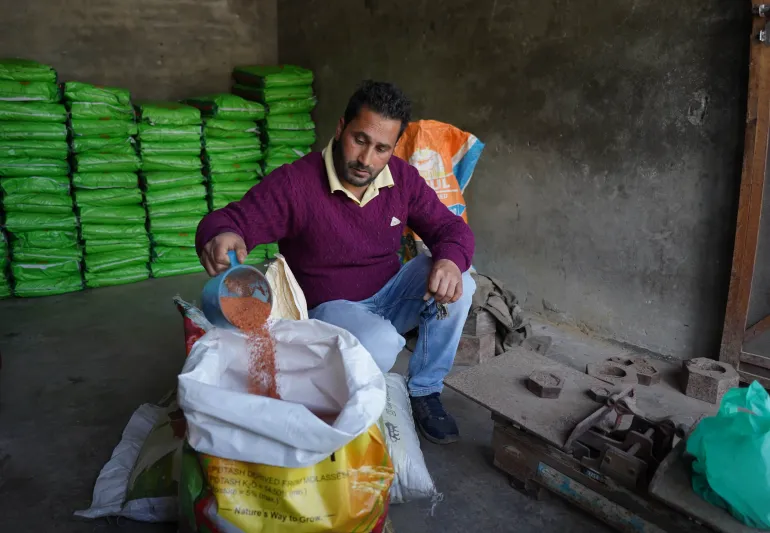
A worker pours fertiliser into a sack at a storage facility in Srinagar, Indian-administered Kashmir [Sajad Hameed/Al Jazeera]

A distant crisis with local consequences

At the centre of the unfolding crisis is the Strait of Hormuz, a narrow shipping lane more than 2,000km (1,240 miles) from India’s northern plains. It lies between Iran and Oman, linking the Gulf and its oil producers to the open ocean and, from there, to global markets.

About one-fifth of the world’s oil and liquefied natural gas (LNG) supplies pass through this body of water, which Iran closed down shortly after the first US-Israeli strikes on Tehran on February 28.

Vast volumes of LNG, essential for manufacturing nitrogen-based fertilisers, are transported from Gulf producers to Asia via this route. Any disruption can delay shipments, push up freight and insurance costs and place a stranglehold on supply.

Interruptions to the supply of fertiliser can ripple quickly, reducing crop yields, increasing costs and raising food prices.

The risks are already being felt thousands of kilometres away.

South Asia, home to nearly two billion people, relies heavily on fertiliser-intensive farming to produce staple crops such as wheat and rice. Over the past few decades, the increasing use of fertilisers – which can hugely boost crop yields – has played a key role in agricultural productivity across the region.

The agriculture sector now employs about 46 percent of the workforce in India, about 38 percent in Pakistan, nearly 40 percent in Bangladesh, and more than 60 percent in Nepal.

SA farmers
A farmer spreads fertiliser around apple trees in an orchard in Baramulla, Indian-administered Kashmir, March 2026 [Sajad Hameed/Al Jazeera]

The degree to which countries in the region depend on the Strait of Hormuz varies, but all rely heavily on the trade in fertilisers that this shipping route facilitates.

In India, the agriculture sector is worth $400bn, according to Indian government and World Bank data, and supports the livelihoods of more than half the population, either directly or indirectly. More than 100 million farming families are directly dependent on the sector.

The country imports a substantial share of its fertiliser requirements and other key raw materials, particularly phosphates and potash, as well as natural gas used to manufacture fertiliser, with about 30–35 percent of these supplies moving through or originating from routes that pass via the Strait of Hormuz.

In Pakistan, the agriculture sector contributes close to 20 percent of gross domestic product (GDP), according to Pakistan government estimates, and employs millions. About 20-25 percent of Pakistan’s fertiliser imports, particularly DAP (diammonium phosphate), pass through the Strait of Hormuz at some point in transit. Additionally, the sector relies on domestic natural gas for the production of urea, a key nitrogen-based fertiliser and, with Gulf natural gas supplies held up in the Strait of Hormuz, the price of natural gas everywhere – even at home – is on the rise.

In Bangladesh, where millions of smallholder farmers rely heavily on imported fertilisers, the agricultural sector accounts for about 12-13 percent of GDP, according to government data. The country’s farming industry relies heavily on imported fertilisers to sustain crops, meaning farmers are highly exposed to international supply shocks and price swings.

Furthermore, roughly 25-30 percent of Bangladesh’s imported fertiliser is shipped via routes passing through the Strait of Hormuz.

Nepal, where agriculture contributes about 24 percent of GDP, imports nearly all of its fertiliser needs, with about 25-30 percent of arriving via India, via the Gulf and the Strait of Hormuz.

SA farmers
A worker handles granular fertiliser at a storage facility in Punjab, northern India, March 2026 [Sajad Hameed/Al Jazeera]

Livelihoods at stake

Overall, even minor disruption in the Gulf – let alone the complete closure of the critical Strait of Hormuz – can have dire consequences for hundreds of millions of people.

The Indian government has sought to reassure farmers that supplies remain secure – for now.

Prime Minister Narendra Modi told Parliament on March 23: “Adequate arrangements have been made for fertiliser supply for the summer sowing season…The government has diversified options for oil, gas and fertiliser imports… Domestic production of urea, DAP and NPK [nitrogen, phosphorus and potassium fertilisers] has been expanded… Farmers now have access to Made in India Nano Urea and are encouraged to adopt natural farming…”

He added: “Under the PM Kusum scheme, more than 22 lakh (2.2 million) solar pumps have been provided, reducing dependence on diesel… I am confident that through joint efforts, India will manage these challenges effectively and continue to support our farmers.”

On the ground, however, confidence is low. Farmers say uncertainty is already influencing decisions.

In Pampore, in the south of Indian-administered Kashmir, 53-year-old mustard farmer Ghulam Rasool says price signals travel faster than supply disruptions.

“We hear about war, about shipping problems,” he tells Al Jazeera. “Even before shortages happen, fertiliser becomes expensive.”

Rasool says farmers often respond early by cutting down on the amount of fertiliser they are using, even before actual shortages emerge.

“If we use less, production will fall,” he says. “But sometimes we have no choice.”

In Pakistan’s South Punjab, wheat farmer Muneer Ahmad, 45, is preparing for the next sowing cycle.

“If fertiliser becomes expensive, it will affect everyone here,” he says.

Government officials have expressed confidence in Pakistan’s fertiliser supply amid the Middle East conflict, and claim the government is fully prepared to ensure adequate supplies during the region’s peak sowing period, which typically begins between April and June, depending on the crop.

According to a statement by Pakistan’s federal secretary for agriculture to Al Jazeera, Federal Minister Rana Tanveer Hussain told a meeting on March 25 that the government has started proactive monitoring, is expanding domestic urea and DAP production and taking steps to ensure fertilisers reach farmers at affordable prices.

However, urea production requires supplies of natural gas, meaning global energy price shocks can still translate into rising production costs.

SA farmers
A farm worker spreads fertiliser across a field as part of routine crop management during the growing season in north India [Sajad Hameed/Al Jazeera]

For farmers, even small increases matter

“We already have loans and expenses,” Ahmad says. “If costs go up, we feel it immediately.”

In Rangpur, northwestern Bangladesh, farmer Mohammad Ibrahim, 41, says fertiliser supplies are already becoming unpredictable.

“Sometimes it is available, sometimes not,” he says. “And when it comes, the price is higher.”

Meanwhile, in Nepal’s Gulmi district, farmer Meghnath Aryal, 38, worries that crops will be reduced if a major supply problem does appear.

“If fertiliser does not arrive on time, the crop suffers,” he says. “If it becomes expensive, we reduce use.”

Bangladesh’s Agriculture Secretary Rafiqul Mohammad told Al Jazeera the government is “closely monitoring the situation” and officials have tried to reassure farmers that fertiliser supplies are sufficient for the coming months.

The government has finalised plans to import about 500,000 tonnes of urea in the near term, while also exploring alternative suppliers such as China and Morocco to secure additional supplies in the longer term.

There is no immediate shortage at present, the Agriculture Ministry says.

Ram Krishna Shrestha, joint secretary at Nepal’s Ministry of Agriculture and Livestock Development, told Al Jazeera that fertiliser distribution within the country remains largely stable for now, with supplies already secured for the upcoming rainy season, particularly for paddy crops such as rice.

However, he warned that there may be delays to contracted shipments as a result of the Middle East crisis.

“We have managed fertilisers for the upcoming season, but there could be challenges in timely supply because of the current situation,” he said, pointing to global price increases and logistical disruptions, including those caused by the closure of the Strait of Hormuz.

Shrestha added that as companies report shortages and rising prices in international markets, the government has asked suppliers to expedite deliveries.

“Authorities are also advising farmers to increase the use of traditional nutrient sources such as farmyard manure, compost, green manuring and azolla [a natural fertiliser] to offset any potential shortfall in chemical fertilisers,” he said.

No immediate new fertiliser subsidies have been announced, he said, though adjustments remain under discussion as the situation evolves.

SA farmers
Mustard farmer Ghulam Rasool scatters fertiliser by hand in a field in Pampore, Kashmir, India [Sajad Hameed/Al Jazeera]

Rising food prices on the horizon

The implications extend beyond individual farmers.

Across South Asia, fertiliser use has been central to maintaining crop yields – and keeping large populations fed. Any reduction in availability or increase in costs can quickly lower production. That, in turn, pushes up food prices, a sensitive issue in a region where households spend a large proportion of their income on food.

For governments, the challenge is complex.

In the past, subsidies have kept fertilisers affordable for farmers, but this becomes a fragile balancing act if global prices rise, placing additional pressure on public finances.

In India, Ramesh Kumar is already making adjustments – but he is walking a tightrope.

He has decided to use less fertiliser this season, even though he knows it could reduce yields.

“It is a risk,” he says. “But what choice do we have?”

Lower production will mean less income and harder decisions at home.

“School fees have to be paid,” he says. “Household expenses cannot stop.” He looks across his field.

“And the wedding… we will see.”

Ultimately, sacrifices will have to be made in his household.

Across borders, the same uncertainty is unfolding.

In Pakistan, Ahmad is worried about rising costs. In Bangladesh, Ibrahim is mostly concerned about the availability of fertiliser and, in Nepal, Aryal fears delays in supply.

For Ramesh Kumar, the stakes are clear.

“For others, this is about war,” he says. “For us, it is about whether we can take care of our family.”

Source link

How long will Artemis II take to reach the moon, and what happens next? | Science and Technology News

NASA has successfully launched the Artemis II mission, marking the first crewed mission to the moon’s vicinity since the Apollo programme ended in 1972.

The 322-foot Space Launch System (SLS) rocket lifted off at 6:35pm ET (22:35 GMT) on Wednesday from Cape Canaveral, Florida, sending the Orion crew capsule on a 10-day journey.

Recommended Stories

list of 3 itemsend of list

While Artemis II will not land on the moon, it will fly a “free-return” trajectory that swings around it to prove the spacecraft can sustain a crew on future missions.

The idea is to descend to the surface of the Earth’s only natural satellite again on Artemis IV in 2028.

“We have a beautiful moonrise,” said Reid Wiseman, the NASA astronaut serving as mission commander, about five minutes after the launch. “We’re heading right at it.”

Here is what we know:

What happened?

The Artemis II mission launched successfully from the Kennedy Space Center in Florida, sending four astronauts on a historic journey around the moon, the first crewed mission beyond low-Earth orbit in more than 50 years.

The launch followed a tense countdown, as engineers worked through several technical issues. Teams closely monitored the rocket during fuelling due to hydrogen leaks that had delayed the mission in the past, but no major leaks were detected on launch day.

Engineers also resolved last-minute problems involving battery sensors and the rocket’s flight termination system, a critical safety system used to destroy the rocket if it goes off course, before clearing the mission for liftoff.

The 32-storey rocket lifted off in the early evening in front of large crowds gathered near the launch site. The crew are now on a mission that will take them around the moon and back to Earth.

The launch had been planned for as early as February 6, and then March 6, until a hydrogen leak prompted NASA to ‌roll the ⁠rocket back to its vehicle assembly building for scrutiny.

It had earlier been scheduled for November 2024, but NASA announced a delay due to technical investigations, particularly into the Orion’s heat shield.

Who is part of the Artemis II mission?

All three NASA astronauts are veterans of Earth-orbit science expeditions to the International Space Station, while the lone Canadian joining them on a voyage around the moon and back is a spaceflight rookie.

  • Reid Wiseman, 50, commander: The NASA veteran and former International Space Station commander is leading the Artemis II mission. A test pilot-turned-astronaut, he has leadership and deep spaceflight experience.
  • Victor Glover, 49, pilot: The US Navy aviator is the first Black astronaut assigned to a lunar mission and flew on SpaceX Crew-1.
  • Christina Koch, 47, mission specialist: The record holder for the longest single spaceflight by a woman at 328 days is a veteran of multiple spacewalks and has scientific and deep-space mission expertise.
  • Jeremy Hansen, 50, mission specialist: The first Canadian set to travel to the moon is a former fighter pilot. His presence represents international collaboration in deep space exploration.
INTERACTIVE - Who is on board Artemis II-1774960222
(Al Jazeera)

When will the mission reach the moon?

If the mission goes as planned, the capsule is expected to reach the moon on about April 6, the sixth day of the mission.

The crewed Orion capsule will then fly around the moon, reaching its closest point before beginning the journey back to Earth, with splashdown expected on April 10, 2026.

Interactive_Artemis2_March30_2026-MISSION_MOON

What is the mission plan for the next 10 days?

The Artemis II mission is expected to last about 10 days and follows this general outline:

Days 1-2 high Earth orbit : The crew will spend their first one to two days in high Earth orbit conducting extensive checks on the spacecraft’s systems.

Once those checks are complete, Orion’s propulsion system will perform a “translunar injection”.

A translunar injection is a critical manoeuvre performed by the Orion spacecraft’s propulsion system. Occurring after the crew completes their initial systems checks in high Earth orbit, this manoeuvre propels the spacecraft out of Earth orbit and sets it onto a direct trajectory towards the moon.

Days 3-4 translunar transit: As they transit to the moon over the next several days, the astronauts will continue monitoring Orion’s systems.

The spacecraft will then pass behind the moon on a “free-return” trajectory, a strategic path that naturally swings the capsule back towards Earth without requiring any additional propulsion.

Day 5 lunar sphere of influence: Orion enters the moon’s gravitational pull, which becomes stronger than Earth’s.

The astronauts will spend the first several hours of the day testing their spacesuits, including practising how quickly they can put them on, pressurising them and strapping into their seats.

Day 6 lunar flyby: This is the day the crew fly by the moon.

The spacecraft reaches its closest approach, approximately 4,000-6,000 miles (6,450-9,650km) above the lunar surface.

Day 7-9 Return journey: Following the flyby, Orion remains on its free-return trajectory. The crew conducts deep-space science, including medical monitoring through programmes like ARCHER.

Day 10 Re-entry and splashdown: Orion separates from the service module and re-enters Earth’s atmosphere at roughly 25,000mph (40,230km/h). The mission concludes with a splashdown in the Pacific Ocean.

What’s NASA’s next mission?

Artemis III is the next mission and is currently planned for 2027.

It will involve the Orion spacecraft docking in Earth orbit with at least one of NASA’s lunar landers, either Blue Origin’s Blue Moon system or SpaceX’s Starship.

The docking manoeuvre is intended to demonstrate how the landers will collect astronauts in orbit before transporting them to the moon’s surface.

Source link

Packaging costs surge as shortages hit small businesses

Song Chi-young, chairman of small business association, left, and Small and Medium Business Minister Han Sung-sook pose for a photo at a meeting on the impact of the Middle East war in Seoul on Tuesday. Photo by Asia Today

April 1 (Asia Today) — South Korean small businesses are facing sharp increases in packaging costs and supply shortages, with some warning they are struggling to operate as disruptions linked to the Middle East conflict ripple into the domestic economy.

At a government meeting held in Seoul on Tuesday, business owners described severe difficulties securing basic materials, including packaging containers and even pay-as-you-throw garbage bags.

“I can’t even find trash bags, let alone packaging materials,” one participant said, describing the situation as a direct impact of global disruptions reaching local businesses.

Officials and industry representatives said prices for key materials have surged in recent days. The cost of plastic egg trays rose from 81 won to 131 won, a 61.7% increase, while plastic capsules for smaller packaging climbed 46.9%. Supplies of plastic wrap and binding materials have also dropped to about half of normal levels, creating what participants described as a “supply shock.”

The impact is spreading across sectors. A business owner operating both a factory and a restaurant said waste disposal has been disrupted due to shortages of garbage bags, raising hygiene concerns. An interior industry official warned that rising raw material costs could lead to monthly losses of about 10 million won (approximately $7,400) once existing contracts expire.

Song Chi-young, head of a small business group, said plastic bag prices have doubled within a week and called for stronger government action against hoarding and broader support measures.

In response, Small and Medium Business Minister Han Sung-sook said the government would strengthen emergency response systems and expand support for small businesses. Plans include prioritizing liquidity assistance in a supplementary budget and launching a nationwide consumption campaign beginning April 11.

Delivery platform companies were also urged to share the burden. Representatives from major food delivery firms said they are reviewing additional support measures, including expanding eco-friendly packaging initiatives and exploring ways to reduce plastic use.

Han said the crisis requires coordinated action across the economy, stressing that businesses and platforms must work together alongside the government to mitigate the impact of rising costs and supply disruptions.

The developments highlight how global geopolitical tensions are increasingly affecting everyday business operations, particularly for smaller firms with limited capacity to absorb sudden cost increases.

— Reported by Asia Today; translated by UPI

© Asia Today. Unauthorized reproduction or redistribution prohibited.

Original Korean report: https://www.asiatoday.co.kr/kn/view.php?key=20260129010013458

Source link

White House address: Trump says Iran war goals nearing completion

April 1 (UPI) — President Donald Trump told the nation Wednesday night that the U.S. military was close to achieving its goals in the war against Iran and would bomb the nation “back to the stone ages where they belong” over the next two weeks to finish the job.

In the nearly 20-minute, prime-time address to the nation, Trump repeated claims of military successes in the war, while offering little new information about the progress of Operation Epic Fury.

He said U.S. forces “have delivered swift, decisive, overwhelming victories on the battlefield” and “never in the history of warfare has an enemy suffered such clear and devastating large-scale losses in a matter of weeks.”

“Our enemies are losing and America, as it has been for the five years under my presidency, is winning and now winning bigger than ever before,” he said.

Trump offered no specifics on how or precisely when the war will end, while claiming the military objectives he announced shortly after the war began in late February were “nearing completion.”

“We’re going to finish the job. And we’re going to finish it very fast. We’re getting very close,” he said.

In his early Feb. 28 address, he said the military goals were to defend the American people by eliminating threats posed by Iran; ensure its proxy militias no longer destabilize the region and attack U.S. forces; destroy its missile capabilities, missile industry and navy; and ensure the Iranian regime does not obtain a nuclear weapon.

His first address notably encouraged regime change, urging Iranians to “take over your government.”

In his address Wednesday night, Trump claimed regime change had occurred, though there has been no clear indication Iran is under fundamentally different leadership.

Democrats were quick to criticize Trump over what they called shifting military objectives and for failing to lay out an exit plan.

“This war of impulse & illusion is plagued by confused, chaotic & contradictory objectives — none seem to have been achieved,” Sen. Richard Blumenthal of Connecticut said in a statement.

Trump also said the U.S. military was fighting the war to help its allies, while calling on those who receive oil that transits through the important Strait of Hormuz chokepoint to “take care of that passage.”

Iran has been maintaining a blockade of the important trade route through which 20% of global oil and liquefied natural gas flow by attacking tankers that attempt passage.

The near halt in energy deliveries through the route has drive up gas prices at pumps in the United States and across the world but also the price of oil on the markets to $106.05 a barrel for Brent crude, compared to about $72 before the war.

He instructed those nations reliant on the Hormuz Strait to seize it from Iran.

“They must cherish it. They must grab it and cherish it,” he said. “They can do it easily. We will be helpful, but they should take the lead in protecting the oil that they so desperately depend on.”

But even if they do not act, “when this conflict is over, the strait will open up naturally,” he said. “It’ll just open up naturally.”

While briefly touching on the economic effects of the war on Americans, he blamed Iran for attacking tankers and Persian Gulf countries while assuring them that the economic situation would have been worse if they hadn’t attacked Iran and allowed it to secure a nuclear weapon.

“This is yet more proof that Iran can never be trusted with nuclear weapons. They will use them and they will use them quickly,” he said. “It would lead to decades of extortion, economic pain and instability worse than you can ever imagine.”

Threats against Iran were also made. Despite ssaying the U.S. military will “hit them extremely hard over the next two weeks,” American forces will attack key oil and electric generating plants if Iran does not reach an agreement with the United States, seemingly to end the war.

Trump late last month offered Iran an ultimatum to reach an agreement with the United States to reopen the Strait of Hormuz or have its energy facilities obliterated. He gave them an April 6 deadline.

On Tuesday, the president told reporters that a deal with Iran was unnecessary.

In concluding his address Wednesday night, he referred to the war as “a true investment in your children and grandchildren’s future.”

“Tonight, every American can look forward to a day when we are finally free from the wickedness of Iranian aggression and the specter of nuclear blackmail,” he said.

Source link

Shoppers rush for half-price deals amid high inflation

1 of 2 | Shoppers crowd the cooking oil section at an E-Mart store in Seoul as daily necessities are sold at half price during the 2026 Landers Shopping Festa. Photo by Asia Today

April 1 (Asia Today) — Large crowds gathered at discount stores across Seoul on Tuesday as consumers rushed to take advantage of steep price cuts, highlighting growing pressure from persistent inflation.

At an E-Mart store in Seoul’s Yongsan district, shoppers lined up before opening, with many heading straight to discounted meat and fresh produce sections as doors opened.

“Prices are so high these days. If not for chances like this, when else would I buy?” said a woman in her 60s, who said she arrived 30 minutes early to secure discounted items.

E-Mart launched its largest discount event of the first half of the year, running through April 12, offering up to 50% discounts on groceries and household essentials. The campaign involves affiliates across Shinsegae Group, including department stores, online platforms and shopping malls.

Fresh food items drew the biggest crowds. Pork belly and pork shoulder were sold at 1,490 won ($1.10) per 100 grams with membership discounts, while whole watermelons were priced at 11,900 won (about $8.80) for the day. Discounted Korean beef also attracted heavy demand, with some shoppers buying multiple packages.

Store employees said traffic during promotional events can be more than triple normal levels, as customers stock up on essentials.

In contrast, snack aisles were relatively quiet, reflecting a shift in consumer behavior toward necessities such as eggs, cooking oil and other basic goods. Analysts say prolonged inflation has led households to prioritize essential spending over discretionary purchases.

The retailer said it prepared its largest-ever promotion focused on everyday items, including discounts on detergents, diapers, batteries and processed foods when purchased in bulk. A special promotion also offers select products for 1,000 won (about $0.70).

The event, first launched in 2021, has grown rapidly, surpassing 1.3 trillion won (about $960 million) in sales last year. Shinsegae Group aims to expand it into a major national shopping festival comparable to global events such as Black Friday in the United States and Singles’ Day in China.

Company officials said this year’s extended promotion period and expanded product lineup are expected to drive record sales.

The surge in turnout underscores how rising prices are reshaping consumer behavior, with discount events becoming key opportunities for households to manage everyday expenses.

— Reported by Asia Today; translated by UPI

© Asia Today. Unauthorized reproduction or redistribution prohibited.

Original Korean report: https://www.asiatoday.co.kr/kn/view.php?key=20260401010000280

Source link

Artemis II lifts off for first crewed journey to moon in more than 50 years

April 1 (UPI) — NASA launched its most powerful rocket yet, the Space Launch System, on Wednesday to send the crewed Artemis II mission to the moon, the first in more than five decades.

The mission had liftoff around 6:35 p.m. EDT from the Kennedy Space Center in Florida.

Within minutes of liftoff, Artemis II commander Reid Wiseman told operators on the ground, “we have a beautiful moonrise, we’re headed right at it.”

The four-person crew — which also includes NASA’s Victor Glover and Christina Koch, and Canadian Space Agency’s Jeremy Hansen — is expected to enter the moon’s orbit in about six days. The spacecraft won’t land on the moon, but will orbit around it before returning to Earth.

The 2-hour launch window for Artemis II began around 6:24 p.m., and most of the pre-flight checks were successfully.

Shortly after the crew members boarded the craft, though, NASA officials had to address a pair of issues.

Derrol Nail, of NASA, said officials fixed a problem with the Space Launch System rocket’s flight termination system.

Later, there was a problem with the battery on the launch abort system on Orion. This system ejects the capsule away from the rocket in case there’s a problem with the rocket during flight. NASA detected issues with temperature readings on the battery but had resolved the issue before schedule launch.

The 10-day trip will be the first crewed flight to the moon in more than 50 years and the farthest distance from Earth traveled by humans.

About 9 minutes after the launch, the Artemis crew entered orbit, traveling about 15,000 mph. During Earth orbit, the crew has a series of tasks to complete before they’re able to make their way to the moon.

The Artemis I mission in 2022 flew around the moon but didn’t have a crew aboard.

Children race to push colored eggs across the grass during the annual Easter Egg Roll event on the South Lawn of the White House in Washington on April 21, 2025. Easter this year takes place on April 5. Photo by Samuel Corum/UPI | License Photo

Source link

NASA’s Artemis II lifts off to the moon | Science and Technology News

DEVELOPING STORY,

The mission is a major step in NASA’s plan to return humans to the moon and eventually send astronauts to Mars.

The Artemis II space mission has blasted off from the US state of Florida, sending four astronauts on a historic journey around the moon and marking the first time humans have travelled beyond low-Earth orbit in more than 50 years.

The mission, which launched on Wednesday, is a major step in the US space agency NASA’s plan to return humans to the moon and eventually send astronauts to Mars.

Recommended Stories

list of 1 itemend of list

The 32-story rocket rose from NASA’s Kennedy Space Center where tens of thousands gathered to witness the lift-off.

The Artemis II crew – NASA astronauts Reid Wiseman, Victor Glover and Christina Koch, and Canadian Space Agency astronaut Jeremy Hansen – are set for a nearly 10-day journey around the moon and back, taking them farther into space than humans have travelled in decades.

“On this historic mission, you take with you the heart of this Artemis team, the daring spirit of the American people and our partners across the globe, and the hopes and dreams of a new generation,” said Charlie Blackwell-Thompson, the launch director. “Good luck, Godspeed Artemis II. Let’s go.”

Five minutes into the flight, Wiseman, the commander, saw the team’s target: “We have a beautiful moonrise, we’re headed right at it,” he said from the capsule.

Source link

Samsung joins U.S. Navy project as Korean shipbuilders expand

The christening ceremony of South Korea’s 500th liquid natural gas carrier for export at Samsung Heavy Industries Co. on the southeastern Geoje Island, South Korea. File. Photo by YONHAP / EPA

April 1 (Asia Today) — Samsung Heavy Industries has joined a U.S. Navy vessel development project, marking another step forward for South Korea’s shipbuilding industry in the American defense market following similar moves by Hanwha.

Samsung Heavy Industries said Wednesday it has begun conceptual design work for the Navy’s Next-Generation Logistics Support Ship program in partnership with U.S. shipbuilder General Dynamics NASSCO and Korean engineering firm DSEC. The project is scheduled to run through March 2027.

The program involves developing small, highly maneuverable vessels to support the Navy’s distributed maritime operations strategy, which emphasizes dispersed forces and flexible logistics. More than 13 ships are expected to be built under the initiative.

Samsung Heavy Industries will focus on hull design and technical support, using a 400-meter test tank at its research facility to improve efficiency and performance.

The announcement follows a move by Hanwha’s shipbuilding unit, which recently confirmed its participation in a separate U.S. Navy program. Industry analysts say a broader Korea-U.S. shipbuilding cooperation framework is beginning to take shape as major South Korean companies expand their presence in U.S. defense projects.

A company official said the NGLS program will serve as a foundation for expanding cooperation with the U.S. partner shipyard and accelerating efforts to secure tangible results in the American market.

In parallel with the design project, Samsung Heavy Industries is preparing to bid jointly with a U.S. shipyard for maintenance, repair and overhaul contracts. The company is also pursuing certification under the Navy’s ship repair agreement program, which would allow it to compete for future maintenance work.

The company is further strengthening collaboration in advanced manufacturing technologies, including artificial intelligence-based automation and robotics, through a research center established with San Diego State University. Plans include expanding cooperation to build a shipbuilding supply chain in the United States and train skilled workers.

The latest developments suggest South Korea’s shipbuilders are moving beyond commercial vessels into defense-related projects in the United States, broadening their global footprint and deepening bilateral industrial ties.

— Reported by Asia Today; translated by UPI

© Asia Today. Unauthorized reproduction or redistribution prohibited.

Original Korean report: https://www.asiatoday.co.kr/kn/view.php?key=20260401010000142

Source link

Judge rules Trump not immune for Jan. 6 actions, Georgia phone call

April 1 (UPI) — A federal judge ruled that a civil suit against President Donald Trump for his actions on Jan. 6, 2021, can continue.

District Court Judge Amit Mehta ruled Tuesday that Trump’s speech on the Ellipse in Washington, D.C., on Jan. 6 was not covered by the Supreme Court‘s immunity ruling, meaning it could not be considered a core presidential act.

The suit was brought by several Democratic lawmakers and Oakland, Calif., Mayor Barbara J. Lee. The American Civil Liberties Union is also helping with the case.

“President Trump has not shown that the Speech reasonably can be understood as falling within the outer perimeter of his Presidential duties,” Mehta wrote in his decision. “The content of the Ellipse Speech confirms that it is not covered by official-acts immunity.”

Trump has tried to get the case thrown out by claiming presidential immunity for his actions on that day and in the weeks before it.

But Mehta said, “Nearly all the individuals who ran the nuts and bolts of the operation [the Jan. 6 rally] were former Campaign officials, paid staff or consultants, who had concluded their formal work for the Campaign within the 60 days prior to January 6. In fact, on January 4, the President met with [Katrina] Pierson, still a senior campaign advisor only four days prior, in the White House to discuss the Rally’s production elements and speaker list. She — not White House officials — communicated the President’s wishes back to Rally organizers.”

Mehta also declared that Trump’s phone call to Georgia Secretary of State Brad Raffensperger asking him to “find” more votes “can only reasonably be viewed as the act of an office-seeker” and was an effort “to alter the outcome of Georgia’s election, not those of an incumbent President acting in his official capacity.”

Joseph Sellers, an attorney for the plaintiffs, said he welcomed the ruling.

“We’re very pleased that the court recognized that President Trump cannot avoid accountability for his conduct on Jan. 6, 2021,” Sellers said in an interview with Politico. “This decision, if it holds up, is going to pave the way to a trial in federal district court on these claims.”

In a statement, Trump’s legal team disputed the judge’s conclusion.

“The facts show that on January 6, 2021, President Trump was acting on behalf of the American people, carrying out his official duties as President of the United States,” Politico reported the statement said. “President Trump will continue to fight back against the Democrat Witch Hoaxes and keep delivering historic results for the American People.”

“Donald Trump thinks he can get away with murder,” Rep. Eric Swalwell, D-Calif., one of the plaintiffs, said in a statement.

“This lawsuit is long overdue for his hand in the destruction of our Capitol and the attack on our democracy on January 6. This case is for my colleagues, the brave Capitol Police officers, Americans everywhere, and the future of our nation. Those who incited and fueled the violence must be held responsible. I’m thankful that we will get some accountability and some measure of closure from that dark day. And that finally, the truth will come to light. We deserve it,” Swalwell said.

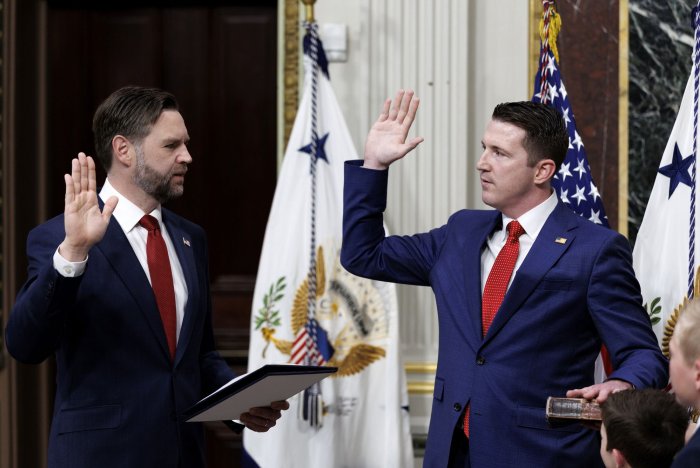
Vice President JD Vance swears in Colin McDonald as assistant attorney general for national fraud enforcement in the Eisenhower Executive Office Building on Wednesday. Pool Photo by Will Oliver/UPI | License Photo

Source link

April’s first full moon, the ‘pink moon’ to be visible

April 1 (UPI) — April’s full pink moon, the first full moon of spring, will be visible Wednesday night.

Peak viewing will be around 10:11 p.m. Wednesday.

Despite the colorful name, the moon will appear in its normal gray cast. It’s hued name is a tribute to the early bloom of Phlox subulata, a wildflower species native to eastern North America. It’s also known as the Paschal Moon because it happens after the spring equinox, according to the Old Farmer’s Almanac. It’s also known as the Breaking Ice Moon and the Budding Moon of Plants and Shrubs.

The next full moon will be on May 1 and is known as the Flower Moon. There will be two full moons in May, a phenomenon commonly known as a “blue moon.”

The moon may still appear full on Thursday, Noah Petro, chief of NASA’s planetary geology, geophysics and geochemistry laboratory at Goddard Space Flight Center in Greenbelt, Md., told CNN. He suggests finding a place to view the moon away from trees and buildings. The darker the environment, the more you can enjoy the event, he said.

Indigenous peoples call April’s full moon different names, including “kawohni,” meaning flower moon to the Cherokee; “kwiyamuyaw,” meaning moon of windbreak to the Hopi; and “tabehatawi,” meaning frog moon to the Assiniboine, CNN reported.

NASA’s Artemis II launch could also happen Wednesday evening, giving the astronauts a special view of the pink moon.

“When you look at this full moon, the crew may be on their way. They may have just launched,” Petro told CNN. “This will be the last full moon in the pre-Artemis II era, and it will look different not only to the four crew members but to all of us who journey along with them.”

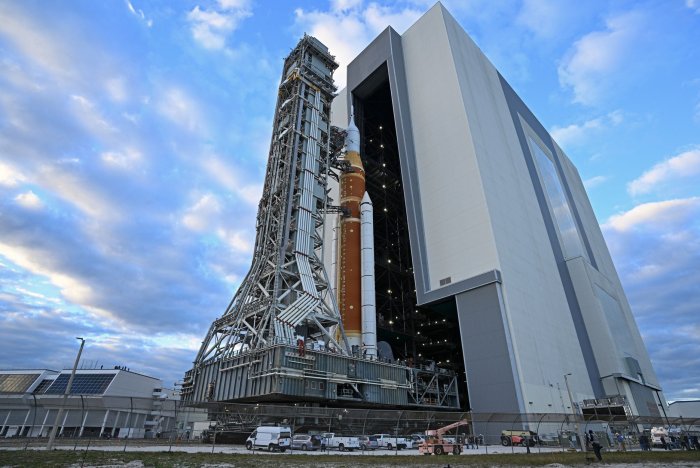
NASA’s Space Launch System rocket emerges on Saturday morning from the Vehicle Assembly Building to start its journey to Launch Complex 39B at the Kennedy Space Center in Florida. Photo by Joe Marino/UPI | License Photo

Source link

Bolivia alleges fuel sabotage tied to international criminal network

Bilivan consumers have felt the impact of contaminated gasoline. More than 10,000 vehicle owners, including long-distance transport operators and private drivers, have reported severe engine damage. File Photo by Luis Gandarilas/EPA

April 1 (UPI) — Bolivia’s government, led by President Rodrigo Paz, said it has uncovered an international criminal network responsible for sabotaging and adulterating imported fuel shipments that entered the country over the past five months.

Interior Minister Marco Antonio Oviedo told a news conference Tuesday that at least 150 million liters of gasoline and diesel were tampered with, citing an official investigation that identified a scheme involving fuel theft and contamination with water and oil in Chilean territory.

Authorities said the operation targeted tanker trucks transporting fuel to Bolivia, particularly in northern Chilean cities. In those locations, part of the fuel was allegedly siphoned off and replaced with a mixture of water and oil, according to local broadcaster Unitel.

President Paz said the adulteration began around October.

Investigators believe the network operated mainly in Chile, with additional links and operational hubs in Paraguay and Argentina. The direct economic loss to the Bolivian state is estimated at $150 million, excluding indirect costs linked to transport disruptions.

Consumers also have felt the impact. More than 10,000 vehicle owners, including long-distance transport operators and private drivers, have reported severe engine damage.

“We are facing an attack against the assets of Bolivian families,” Paz said, adding that the government will pursue legal mechanisms to compensate those affected, according to local newspaper El Deber.

Bolivia’s landlocked status makes transporting fuel from Chile critical to its energy supply chain. The country relies on Chilean ports such as Arica, Iquique and Mejillones to receive international shipments of crude oil and refined products.

After a virtual meeting Tuesday, Paz and Chilean President José Antonio Kast agreed on a joint roadmap to dismantle the transnational organized crime network behind the fuel adulteration, according to Bolivia’s state-run broadcaster BTV.

As an immediate response, Bolivia announced tighter controls at facilities operated by state energy company Yacimientos Petrolíferos Fiscales Bolivianos, known as YPFB, and the National Hydrocarbons Agency. Authorities will implement mandatory laboratory testing at production sites and border checkpoints.

Civil society groups have called for accountability as the investigation continues, urging authorities to prosecute those responsible abroad and to address potential internal failures that allowed the sabotage to go undetected for months.

The crisis comes as Bolivia faces a severe fuel supply shortage. After a structural decline in domestic hydrocarbon production, which fell about 44% between 2014 and 2024, the country shifted from a net exporter to a heavily import-dependent market. Bolivia now imports about 90% of the diesel and 50% of the gasoline it consumes.

The situation has worsened since 2023 due to a shortage of foreign currency, particularly U.S. dollars, complicating payments to international suppliers and contributing to intermittent shortages and partial disruptions in transport and productive sectors.

Source link

Several companies bid for Home Plus Express grocery chain

A store run by Mega MGC Coffee, which reportedly bid for Home Plus Express. Photo by MGC Global

SEOUL, April 1 (UPI) — South Korean discount chain Home Plus said Tuesday that a court has begun to review the sale of its neighborhood grocery store chain, Home Plus Express.

Home Plus, which is under receivership, said the court started the procedure of selecting a preferred bidder after receiving reports from its sales adviser, Samil PricewaterhouseCoopers.

“Prior to the March 31 deadline, multiple companies were confirmed to have participated in the bidding process to acquire Home Plus Express,” the firm said in a statement.

Home Plus did not disclose further details, including the number of bidders and their identities.

However, Mega MGC Coffee has reportedly presented a bid for Home Plus Express. The budget coffee chain, which is owned by MGC Global, operates nearly 4,000 stores across South Korea.

Both MGC Global and Home Plus declined to confirm the reports.

Following unsuccessful attempts to sell Home Plus as a single entity, the divestment of Home Plus Express has emerged as a key pillar of its rehabilitation plan. The unit generated $730 million in revenue in 2024.

The Express division has a network of almost 300 stores and most of them are located in high-density urban areas. Home Plus also runs more than 100 large-format outlets.

In 2015, South Korea’s leading private equity fund, MBK Partners, purchased Home Plus from Tesco in a landmark $5 billion deal. In recent years, the retailer has struggled amid pandemic-related disruptions and the rise of e-commerce giants.

Since early last year, MBK Partners has tried to dispose of Home Plus to little avail. As a result, the company has shifted its focus to the sale of Home Plus Express.

Source link

Can Russia help fill the global energy gap? | US-Israel war on Iran

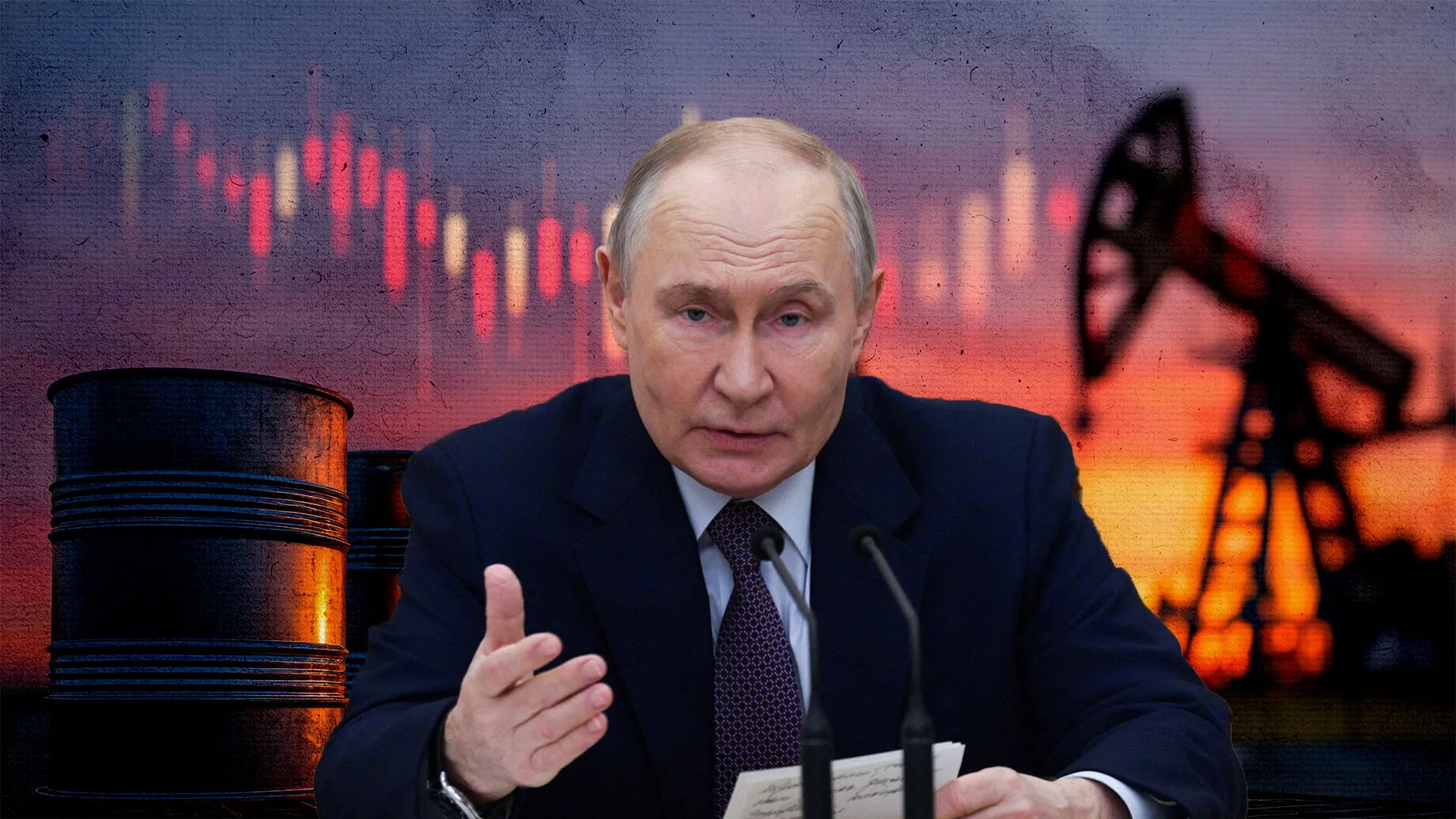
Higher crude prices due to the disruption in the Strait of Hormuz have helped Russia earn more from energy exports.

One nation that’s hoping to gain from the United States-Israel war on Iran is Russia, the world’s third largest oil producer. Higher crude prices due to the disruption in the Strait of Hormuz have allowed Russia to earn more from its oil and gas exports. A sanctions waiver announced by the US is also helping Moscow.
But its revised budget plans are at risk after repeated Ukrainian attacks on its ports and oil refineries. Russia has banned petrol exports to protect against domestic fuel shortages. So can Russia help fill the global energy gap, or is its capacity already under threat?

Source link

Supreme Court to hear arguments in birthright citzenship case

April 1 (UPI) — The U.S. Supreme Court is hearing oral arguments in a case on Wednesday that could reshape what it means to be a U.S. citizen.

The case, Trump vs. Barbara, is over President Donald Trump‘s Jan. 20, 2025, executive order “Protecting the meaning and value of American citizenship,” which seeks to change the application of the Citizenship Clause, ending birthright citizenship.

In his executive order, Trump argued that the 14th Amendment of the U.S. Constitution “has never been interpreted to extend citizenship universally to everyone born within the United States.”

The law of the land, as it has been recognized since the ratification of the 14th Amendment in 1868, has been that “all persons born or naturalized in the United States, and subject to the jurisdiction thereof, are citizens of the United States and of the State wherein they reside.”

Trump’s executive order remains blocked from taking effect, with lower courts affirming that his attempt to end birthright citizenship is unconstitutional. In December, the Supreme Court agreed to take up the case, beginning with oral arguments starting on Wednesday.

U.S. Solicitor General John Sauer will argue on behalf of the Trump administration.

“If the Trump executive order is upheld, it would mark an enormous change in how the United States understands who is a citizen and who is not,” Kate Masur, John D. MacArthur Professor of History at Northwestern University, told UPI.

Masur filed an amicus brief supporting a challenge to Trump’s executive order.

“There’s certainly never been a president who issued an executive order trying to undermine birthright citizenship in this way,” Masur said. “Congress has repeatedly, through legislation, affirmed birthright citizenship and the Supreme Court has also affirmed birthright citizenship.”

The Trump administration’s argument against birthright citizenship hinges on its interpretation of the term “jurisdiction” in the context of the clause “subject to the jurisdiction thereof.”

In an amicus brief by Sen. Ted Cruz, R-Texas, Sen. Lindsey Graham, R-S.C., and other Republican lawmakers, they contest that the authors of the 14th Amendment could have written “subject to the laws.” Instead, the use of the term “jurisdiction” requires “allegiance” to the United States.

“Allegiance is also a reciprocal relationship. The person must be present with the consent of the sovereign, a factor on which this Court extensively relied in United States v. Wong Kim Ark,” the Republican lawmakers argue. “But illegal aliens and their children are present in the United States without consent, i.e., only by defying its laws.”

The lawmakers also argue that their interpretation of total allegiance looks to “early English caselaw.”

The challenges to birthright citizenship by Republicans are not new, Masur said.

The Wong Kim Ark case that the Republican lawmakers referred to affirmed birthright citizenship under the 14th Amendment. The case was brought on when the U.S. government denied the son of Chinese Immigrants, Wong Kim Ark, re-entry into the United States.

Ark, who was born in San Francisco, had taken a trip to China and was detained upon his return to the United States. The case took place in 1898, more than a decade after the passage of the Chinese Exclusion Act, which prohibited Chinese workers from seeking citizenship in the United States.

Since Wong Kim Ark, there have continued to be opponents of birthright citizenship, though the immigrant groups their movements targeted have changed. Since the 1990s, immigrants from Spanish-speaking countries have largely been the central focus of those seeking to end birthright citizenship.

Former Sen. Steve King, R-Iowa, repeatedly introduced legislation on Capitol Hill trying to end birthright citizenship. His most recent effort was in 2015. In 2019, King was removed from all committee assignments after defending white supremacy and white nationalism, following years of racist comments throughout his 17-year career.

“The thing that these movements have in common over time is their desire to limit who among people born in the United States gets to be a citizen,” Masur said. “Usually it is driven by various anti-immigrant sentiments.”

Daisy Hernandez, author of Citizenship: Notes on an American Myth, told UPI that there are modern examples of what happens when birthright citizenship is taken away.

The Dominican Republic amended its constitution in 2010 to remove birthright citizenship for Haitians in the country. In 2013, it made the law retroactive to 1929, removing the citizenship of an estimated 200,000 people overnight.

“That is an example of what would happen in the United States. However, for us it would happen in terms of millions of people,” Hernandez said.

Children of immigrants who have their citizenship revoked become stateless, Hernandez explained. With no country to call home, they are left adrift without the right to exist anywhere.

“Statelessness means that you have no government which you can turn to in any way,” she said. “It means you do not have any documentation of any kind. You don’t have documentation that you have a right to be anywhere. The philosopher Hannah Arendt said ‘citizenship is the right to have rights.’ You need a government to recognize that you have rights.”

There are more than 4 million children in the United States who have parents who are undocumented immigrants.

If Trump’s executive order is allowed to stand by the Supreme Court, Hernandez and Masur said the United States could return to an era of the 19th century when citizenship varied from state to state.

“It is really jarring to remember once upon a time certain states within the United States recognized the citizenship and humanity of Black Americans and we had other states that did not,” Hernandez said. “So are we going to end up in a situation where a child born to an undocumented parent is recognized as a citizen as long as they stay within the state of New York or of Massachusetts but would then become stateless if they crossed into Connecticut or further south or further west?”

Most countries in the Western Hemisphere recognize birthright citizenship. The Dominican Republic and Colombia are rare exceptions.

“We have always understood being American as being very closely tied with birthright citizenship,” Hernandez said. “It would be a collapse of how we understand American identity in the United States.”

President Donald Trump stands with U.S. Secretary of Agriculture Brooke Rollins during an event celebrating farmers on the South Lawn of the White House on Friday. Photo by Aaron Schwartz/UPI | License Photo

Source link

Which teams are in the FIFA World Cup 2026? | World Cup 2026 News

A breakdown of the teams and groups of the FIFA World Cup in Canada, Mexico and the US after the final playoffs.

Iraq’s qualification for the FIFA World Cup 2026 has completed the lineup of 48 nations for the tournament hosted by Canada, Mexico and the United States.

The Lions of Mesopotamia edged Bolivia 2-1 on Tuesday to win the second final of the FIFA Playoff tournament in Mexico. In the first final earlier, Democratic Republic of the Congo beat Jamaica 1-0.

Recommended Stories

list of 4 itemsend of list

In the other games, Turkiye, Bosnia and Herzegovina, Sweden and Czechia were the final four teams to complete the European quota of World Cup qualification.

Widely considered the most famous sporting event in the world, the 2026 FIFA World Cup will be its biggest ever. Forty-eight nations will play instead of the usual 32, with 104 matches in 16 venues across the three host nations.

Argentina will look to defend the trophy lifted by iconic captain, Lionel Messi at Qatar 2022. Cape Verde, Curacao, Jordan and Uzbekistan will make their debut.

The World Cup’s first game will be a throwback to 2010 when Mexico take on South Africa on June 11 in Mexico City in a replay of the tournament opener then. Football fans will hope the opening goal this year matches the screamer scored by Lawrence Tshabalala from the South African hosts then.

Mexico in group A – which includes South Korea and Czechia – will be one of the toughest of the 12 groups.

Team USA are alongside Australia, Paraguay and Turkiye.

Canada, too, face the challenging task of making it out of a group comprising Switzerland, Qatar and Bosnia.

Here’s a breakdown of the 48 teams in the 12 groups:

Group A:

  • Mexico
  • South Korea
  • South Africa
  • Czechia

Group B:

  • Canada
  • Switzerland
  • Qatar
  • Bosnia and Herzegovina

Group C:

  • Brazil
  • Morocco
  • Scotland
  • Haiti

Group D:

  • USA
  • Australia
  • Paraguay
  • Turkiye

Group E:

  • Germany
  • Ecuador
  • Ivory Coast
  • Curacao

Group F:

  • Netherlands
  • Japan
  • Tunisia
  • Sweden

Group G:

  • Belgium
  • Iran
  • Egypt
  • New Zealand

Group H:

  • Spain
  • Uruguay
  • Saudi Arabia
  • Cape Verde

Group I:

  • France
  • Senegal
  • Norway
  • Iraq

Group J:

  • Argentina
  • Austria
  • Algeria
  • Jordan

Group K:

  • Portugal
  • Colombia
  • Uzbekistan
  • DRC

Group L:

  • England
  • Croatia
  • Panama
  • Ghana

Source link

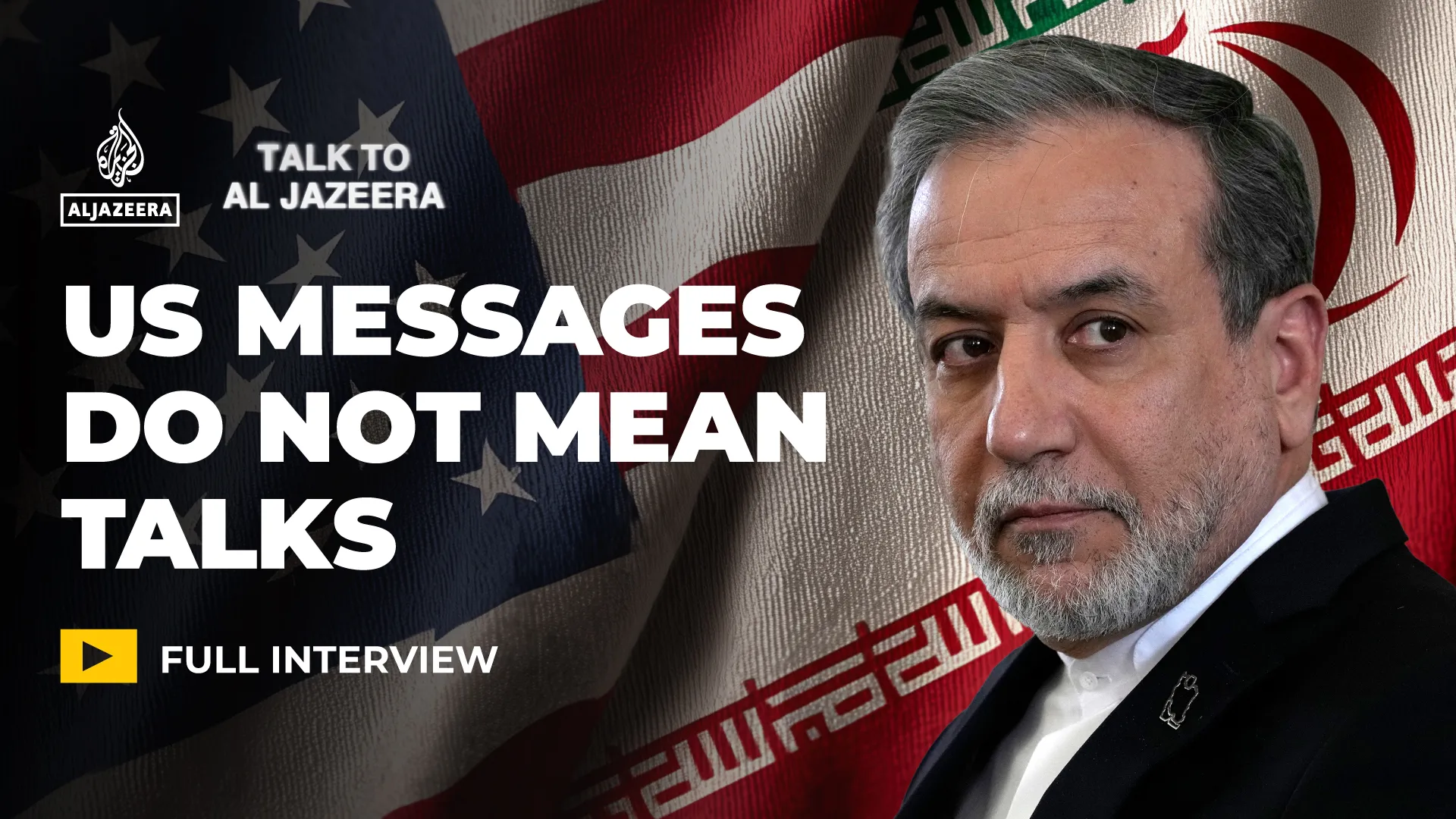
US messages via Witkoff and intermediaries are not negotiations: Araghchi | US-Israel war on Iran

Iran’s foreign minister says message exchanges continue with Washington, but insists there are no negotiations, and no trust.

Iran’s Foreign Minister Abbas Araghchi tells Talk to Al Jazeera that Iran is not negotiating with the United States, despite ongoing exchanges of messages, including direct communication from US envoy Steve Witkoff.

Araghchi says talks lack trust, adding that no response has been given to US proposals, and that there is no basis for negotiations. Araghchi outlines Iran’s conditions for ending the war, warns against threats and deadlines, and signals a readiness to continue defending the country as regional tensions escalate.

Source link

Iran attacks cause fire in Kuwait, Bahrain; kill man in UAE | US-Israel war on Iran News

Shrapnel from an Iranian drone interception kills a Bangladeshi national in the UAE’s Fujairah city.

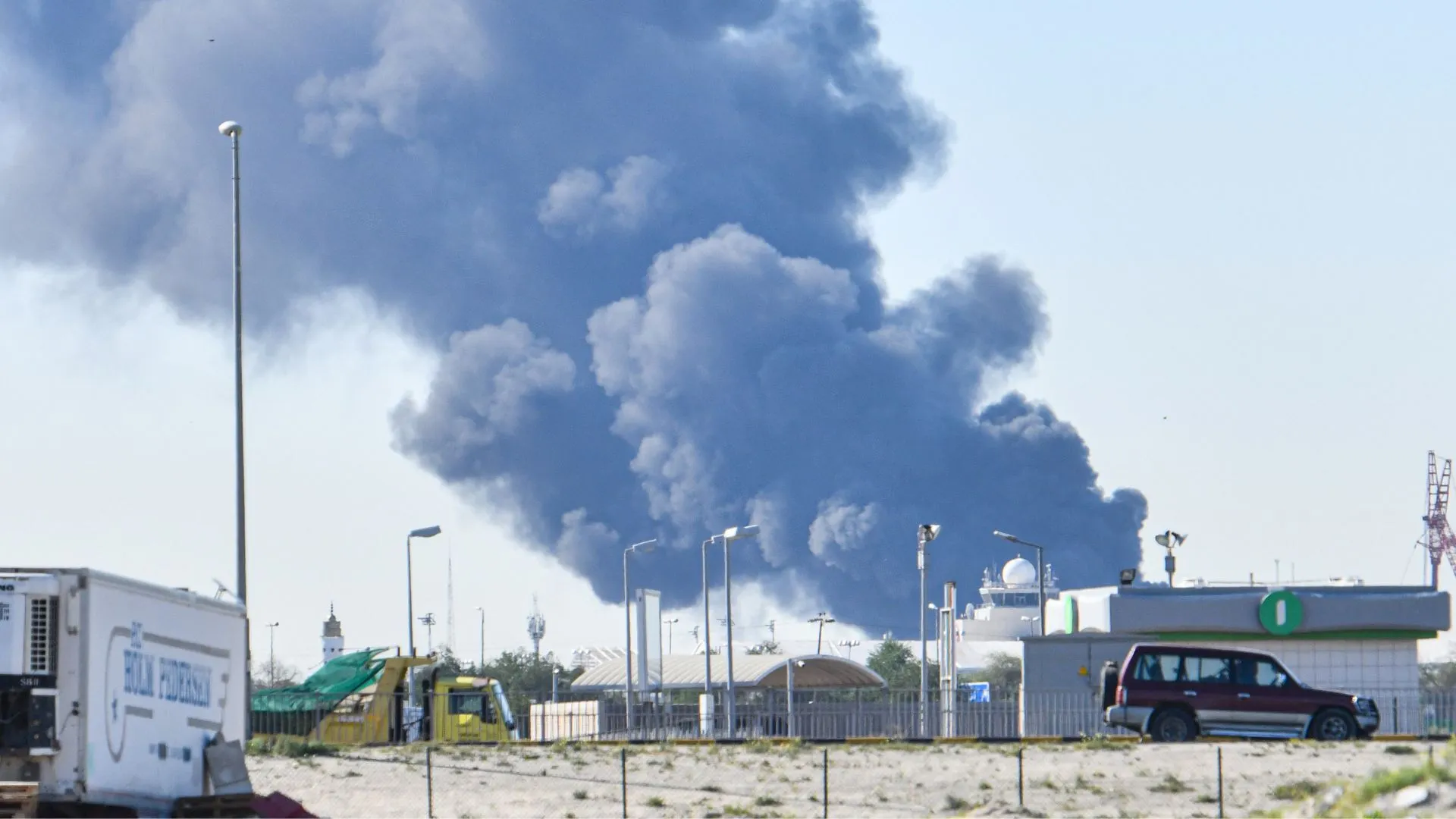
Iran’s drones have hit fuel tanks at Kuwait’s international airport, causing a large blaze, and authorities in Bahrain have reported a fire at an undisclosed company facility, as the United States-Israel war on Iran continues for a fifth ⁠week.

Abdullah al-Rajhi, a spokesman for the General Directorate of Civil Aviation in Kuwait, on Wednesday said the airport had been subjected to “brazen attacks by drones from Iran and the armed factions it supports”.

Recommended Stories

list of 3 itemsend of list

The raids targeted fuel tanks at the airport, “leading to a large fire breaking out at the site”, al-Rajhi was quoted as saying by the official Kuwait News Agency (KUNA).

Emergency teams were on site, and “the damage is material with no human injuries,” he said.

Bahrain’s Ministry of Interior said civil defence crews were “extinguishing a fire in a facility of a company as a result of the Iranian aggression”.

“Relevant authorities are taking their measures at the site,” it added, without naming the company.

Vessel hit

A tanker was ‌hit by an unknown projectile near the Qatari capital Doha, causing damage to the hull at the waterline, the United Kingdom Maritime Trade Operations said, adding the crew were safe.

The vessel was struck about 17 nautical miles (equivalent to about 32km) north of Qatar’s Ras Laffan industrial hub, the country’s main gas production facility, which was hit by Iranian missiles last month, causing significant damage.

Confirming the incident, Qatar’s Ministry of Defence said the country was targeted by three cruise missiles launched from Iran, one of which struck an oil tanker.

In a post on X, the ministry said it intercepted two of the missiles, while the third hit a tanker leased to QatarEnergy. The tanker’s 21-person crew was evacuated, the ministry said. No injuries were reported.

In the United Arab Emirates (UAE), the official WAM news agency said shrapnel from a drone interception fell on a farm in the al-Rifaa area of Fujairah city and killed a Bangladeshi national. It said authorities were dealing with the incident.

Saudi Arabia’s Ministry of Defense said several drones were “intercepted and destroyed”, without reporting any injuries.

The oil-rich Gulf has borne the brunt of Iran’s attacks in response to the US-Israeli air strikes on the country.

Iran has claimed to be attacking US assets in the region, but Gulf nations say Tehran has targeted civilian infrastructure.

On Tuesday, a United Nations Development Programme (UNDP) report said gross domestic product (GDP) in the Arab world was estimated to decline by approximately 3.7 to 6 percent after a month of war, equivalent to a contraction of $120bn to $194bn.

Meanwhile, US President Donald Trump and his administration have sent contradictory statements about how and when the war might end.

“We’ll be leaving very soon,” Trump told reporters at the White House on Tuesday, saying the exit could take place “within two weeks, maybe two weeks, maybe three”.

Washington had previously threatened to intensify operations if Tehran did not accept a 15-point US ceasefire ⁠framework that had, among its core demands, commitments by Iran not to pursue nuclear weapons, halt all uranium enrichment and fully reopen the Strait of Hormuz.

Tehran dismissed the proposal as “maximalist” and “unreasonable”, stressing it is not seeking war and wants a permanent end to the conflict. It also demanded compensation for the destruction caused by US-Israeli attacks against the country.

Source link

On This Day, April 1: Hitler imprisoned for Beer Hall Putsch

1 of 5 | The defendants in the Beer Hall Putsch trial pose for a photo in Munich, Germany, on the last day of the trial, April 1, 1924. From left are Heinz Pernet, Friedrich Weber, Wilhelm Frick, Hermann Kriebel, Erich Ludendorff, Adolf Hitler, Wilhelm Brückner, Ernst Röhm and Robert Wagner. File Photo courtesy of the U.S. Holocaust Memorial Museum

April 1 (UPI) — On this date in history:

In 1826, Samuel Morey was granted a patent on the internal combustion engine.

In 1891, the Wrigley Company is founded in Chicago by William Wrigley, Jr., originally selling goods such as soap and baking powder. A year later Wrigley would start packaging packets of gum with each tin of baking powder. The rest is history.

In 1918, toward the end of World War I, the British founded the Royal Air Force. Two months later it began bombing industrial targets in Germany from bases in France.

File Photo by Stephen Shaver/UPI

In 1924, Adolf Hitler was sent to prison for five years after failing to take over Germany by force in the unsuccessful “Beer Hall Putsch.”

In 1945, U.S. forces swarmed ashore on the Japanese island of Okinawa to begin what would be one of the longest battles of World War II.

In 1946, a massive earthquake near Alaska’s Aleutian Islands created a tsunami that raced south across the Pacific Ocean, slamming into the Hawaiian Islands causing widespread destruction. The two events resulted in more than 165 casualties across three states.

In 1970, President Richard Nixon signed legislation calling for mandatory health warnings on tobacco product packaging and banning cigarette ads on TV and radio, effective January 1, 1971.

In 1976, Apple Inc. was founded by Steve Jobs and Steve Wozniak.

UPI File Photo

In 1979, the overthrow of the shah becomes official as Iran votes to become an Islamic republic.

In 1984, Marvin Gaye, whose rhythm and blues hits over nearly 25 years included “I Heard it Through the Grapevine” and “Sexual Healing,” was shot and killed by his preacher father.

In 1992, U.S. President George H.W. Bush announced a $24 billion aid package for the former Soviet republics.

In 1996, an outbreak of “mad cow” disease forced Britain to plan the mass slaughter of cows.

In 1999, Canada created a new territory, Nunavut, as a means of providing autonomy for the Inuit people.

In 2003, U.S. Marines rescued Pfc. Jessica Lynch, 19, who had been held prisoner in Iraq since an ambush on March 23.

In 2012, Aung San Suu Kyi, Nobel peace laureate and voice of the political opposition in Myanmar, won a seat in Parliament less than two years after being freed from nearly two decades of house arrest.

In 2019, Japan announced the name of its new imperial era would be “Reiwa,” when Crown Prince Naruhito becomes emperor, which would happen one month later.

In 2024, an Israeli strike in central Gaza killed seven aid workers with U.S. non-profit World Central Kitchen.

File Photo by Ismael Mohamad/UPI

Source link

Federal judge orders halt to White House ballroom project

April 1 (UPI) — A federal judge has blocked construction of President Donald Trump‘s $400 million White House ballroom, ruling the New York real estate developer does not have congressional authorization to continue the project.

“The President of the United States is the steward of the White House for future generations of First Families. He is not, however, the owner!” U.S. District Judge Richard Leon for the District of Columbia wrote in the ruling.

Trump has said building a White House ballroom had been a dream of his since before he was president. Construction of the 90,000-square-foot building began with the demolition of the East Wing of the White House in October. Initially said to cost $200 million, the ballroom’s price tag has since doubled. Trump has said it will be financed by private donors.

In December, the National Trust for Historic Preservation sued the Trump administration to halt construction, arguing the project has not been authorized by Congress as required by U.S. law.

In response, the Trump administration has claimed Congress has already given him authority to construct the project, pointing to a statute that Leon, a President George W. Bush appointee, said only permits the president “to conduct ordinary maintenance and repair of the White House.”

Leon said the Trump administration’s understanding of the law assumes Congress has granted “nearly unlimited power to the President to construct anything, anywhere on federal land in the District of Columbia, regardless of the source of funds.”

“This clearly is not how Congress and former Presidents have managed the White House for centuries, and this Court will not be the first to hold that Congress has ceded its powers in such a significant fashion,” he said in the 35-page ruling.

For Trump to continue with the project, he can ask Congress to either appropriate the funds or approve of another funding scheme, he said.

“Unfortunately for Defendants, unless and until Congress blesses this project through statutory authorization, construction has to stop!”

In awarding the National Trust for Historic Preservation an injunction, Leon delayed its enforcement for 14 days in acknowledgment that the Trump administration intends to appeal his decision and that stopping an ongoing construction project may raise logistical issues.

“We are pleased with Judge Leon’s ruling today to order a halt to any further ballroom construction until the Administration complies with the law and obtains express authorization to go forward,” Carol Quillen, president and CEO of the nonprofit organization, said in a statement.

“This is a win for the American people on a project that forever impacts one of the most beloved and iconic places in our nation.”

Trump lambasted the decision on his Truth Social platform.

“He is WRONG! Congressional approval has never been given on anything in these circumstances, big or small, having to do with construction at the White House,” he said in a statement.

In an earlier statement issued after the ruling was made, Trump insulted the National Trust for Historic Preservation as “a Radical Left Group of Lunatics.”

According to the White House Historical Association, Congress has long been responsible for appropriating funds for the care, repair, refurnishing and maintenance of the White House, and Congress approved the Truman-era reconstruction project from 1948 to 1952.

Demolition equipment continues to break up the East Wing of the White House in Washington on October 22, 2025. Photo by Pat Benic/UPI | License Photo

Source link