SACRAMENTO — The UCLA women’s basketball team hasn’t lost a game in 120 days. In that time, the Bruins have outscored opponents by a total of 806 points and just one other school — UConn — has gone without a loss during the same stretch.
Yet somehow, the No. 1 seed in the Sacramento 2 region of the NCAA tournament hasn’t captured the same momentum and praise as the other three top seeds who have muscled their way into the Sweet 16.
UCLA (33-1) will play No. 4 Minnesota (24-8) at 4:30 p.m. PDT Friday in Sacramento. The game will air on ESPN. Entering the matchup, is UCLA’s less dominant NCAA tournament run a cause for concern? Or is a win a win when it comes to March?
“Each game is going to present different adversity points,” UCLA coach Cori Close said. “And I think that we don’t look at it as getting back to something. We look at it as everything is a learning opportunity. ‘What does that teach us? How does that make us better? What kinds of things do we need to tighten up?’”
UCLA forwards Angela Dugalic and Gabriela Jaquez double team California Baptist guard Filipa Barros during the first round of the NCAA tournament at Pauley Pavilion on March 21.
(Gina Ferazzi/Los Angeles Times)
As the No. 2 overall seed in the tournament, UCLA is on a projected collision course with the top overall seed, undefeated UConn, on the other side of the bracket.
But the Bruins, who have lost just once this year, also might have to hit another gear to get to to beat formidable teams still in the tournament field.
UCLA punched its ticket to the NCAA tournament with a Big Ten title game win over Iowa by 51 points. Since then, the Bruins haven’t achieved that kind of dominance even against lesser opponents.
Iowa, which flamed out to No. 10 seed Virginia in the second round last week, could have simply been less prepared than other NCAA tournament teams. But the Bruins do acknowledge they also have room to improve.
“I think we’re a really steady team, and obviously we’re gonna do whatever we can to win, and it changes every game, because of different teams,” said graduate forward Angela Dugalic. “But at the same time, I do feel like I have more to give, and that’s not a bad thing.”
UCLA defeated No. 16 seed California Baptist 96-43 before an 87-68 win against No. 8 seed Oklahoma State, leading the Cowgirls wire-to-wire but getitng outscored in the second half. The Bruins led the Lancers by just 10 points at the half of the first-round contest.
A 19-point win is a dominant showing for any team, but with the rest of the No. 1 seeds winning by at least 40 points, has UCLA shown that it is at the same level?
“I don’t really look at it that way from those two games,” Close said. “I just think everything is measuring ourselves against the championship standards that we’ve set, and those are process standards. And so if we fall short in an area, it’s how we get back to what we know how to do and what’s under our control.”
UCLA guard Kiki Rice points across the court while talking with coach Cori Close during an NCAA tournament game against California Baptist on March 21 at Pauley Pavilion.
(Gina Ferazzi/Los Angeles Times)
UCLA has the second-largest spread among the No. 1 seeds entering the Sweet 16 round, with oddsmakers favoring the Bruins to beat Minnesota by 18.5 points. UConn leads all teams as a 27.5-point favorite to beat No. 4 seed North Carolina. The Bruins haven’t won a game by fewer than 10 points since a 69-66 overtime victory over Ohio State on Feb. 8.
Minnesota has the ninth-best NET of remaining teams, which is better than the other teams matched up against No. 1 seeds (North Carolina is 19th, Oklahoma is 13th and Kentucky is 16th).
During UCLA’s 76-58 win over Minnesota in January, Kiki Rice scored a season-high 25 points. Since then, the Gophers have gone 12-4 while winning games by an average just under nine points while UCLA has gone 17-0 with an average margin of victory of 26.9.
“No team is perfect ever,” UCLA guard Gianna Kneepkens said. “So I think [we’re] just making sure that we know what to do, and we know what it takes to be our best. So just making sure we can do that 40 minutes every game is going to be the thing we take away [from the first and second rounds.]”
Since UCLA beat Minnesota, the Gophers took down No. 5 seed Ole Miss, a team that many picked as a tournament sleeper and shot 46.2% from the field during the season.
“They’ve gotten better, but so have we and once the postseason comes, the best teams, the most successful teams, they find ways to just continue to get better,” Rice said. “To stay true to that process, but to take it up to a next level. Because at this time of the year, it’s do or die, and you gotta compete really hard.”
UCLA’s 28.6 average margin of victory is fifth in the country behind the tournament’s other No. 1 seeds and No. 2 seed LSU, a team the Bruins might face Sunday in the Elite Eight.
LSU, the highest-scoring team in the nation, faces No. 3 Duke on Friday night. If UCLA and LSU win, it would set up the third consecutive season they have met in the NCAA tournament. UCLA won the matchup last season 72-65 to get to the Final Four, while the Tigers upset the Bruins in the 2024 Sweet 16 en route to a national title.
But March tests are far more challenging that anything the Bruins have faced to date. The veteran UCLA team is confident it can keep evolving as it chases a national title.
“I think [improving] just requires us to take things to a different place and be more aggressive and dictate in all aspects,” Dugalic said. “That’s the beauty of it, we can get there.”
PHOENIX — By the time Dodgers right-hander Roki Sasaki reached the blue backdrop set up in the Surprise Stadium interview room, he’d diagnosed the issue.
“I think it’s because of the two-seamer,” Sasaki said through an interpreter. “It kind of caused my forearm to pronate a little more. Also my arm slot was a little down.”
Those arm-side misses had, after three straight walks, prompted manager Dave Roberts to temporarily pull Sasaki from his most recent spring training appearance. But even though that start, marred by a wild third inning, brought Sasaki’s Cactus League ERA to 13.50, he’ll enter his Freeway Series start Monday with a spot in the regular-season rotation already secured.
Roberts has repeatedly made that point clear.
However, when asked directly if Sasaki was one of the Dodgers’ 13 best pitchers right now, Roberts gave an indirect answer: “He is going to start the season in the rotation.”
Answering why the organization has been so bullish on the decision requires zooming out.
“As we look out two, three, four, five, six years, it is imperative for us to integrate talented young players under our roster,” president of baseball operations Andrew Friedman said during an interview with The Times last week. “And that requires patience. And we have to have that even with the insanely high expectations we have.
“We have to be able to balance those two things, or there are a lot of cautionary tales of large-revenue teams who have had a run of success, and then they fall off the cliff.”
Sasaki, 24, is one of those young players the Dodgers are counting on to bridge the gap.
When Sasaki was posted by Nippon Professional Baseball’s Chiba Lotte Marines before last season, upward of 20 teams expressed their interest in the young phenom who was coming to the United States through amateur international free agency.
In his debut season, he produced a 4.72 ERA through eight starts — before an injury the Dodgers described as a right shoulder impingement sidelined him for much of the rest of the season. When Sasaki returned, it was as a reliever, a role he thrived in through the postseason.
Sasaki enters Year 2 with just 47 major-league innings under his belt, including the regular season and playoffs.
“On top of all those other things that you’re adapting to and learning, you’re also learning a new ball,” Friedman said. “Roki could really command his fastball in Japan, and right now it hasn’t been as good. So how much of that is the ball, how much of it is mindset, how much of it is delivery just getting out of whack? All of those are fair questions, but I think it speaks to, we have to have a level of grace with this and work with him to continue his development.
“Because we’ve seen it at an extremely high level, and now it’s on all of us to help him get back to that.”
NPB baseballs are slightly smaller, tackier and have higher seams than MLB baseballs. Players making the transition to MLB also have to adjust to a different strike zone, style of play and the off-the-field challenges of living in a foreign country.
The season before Sasaki signed with the Dodgers, his future teammate Yoshinobu Yamamoto and the Cubs’ Shota Imanaga set the bar high with relatively smooth transitions. But they were also coming over at later stages in their careers.
“We’re very mindful that this guy is essentially two years, three years behind Yamamoto,” Roberts said, “as far as on the progression side, the development side.”
Sasaki has shown he can be effective out of the bullpen, but pigeonholing him in a relief role at this stage of his career would be a disservice to him and the organization.
The Dodgers have identified the addition of the two-seamer as a development that could help Sasaki stick as a major-league starter.
“It’s our job as coaches to get a player to understand the value of having a ball bear in and get in on right-hand hitters to keep them off the outside part of the plate,” Roberts said. “There’s a little bit of trying to pronate too much — trying to make the ball move, versus trusting his grip and his throw. But that’s a coach’s responsibility to [figure out,] how do we get him there, along with him feeling comfortable.”
The Dodgers have decided that, at least for now, the best setting for that growth is the major leagues. Across the industry, there’s an understanding that the gap between Triple-A and the big leagues is bigger than ever. That makes evaluating players in Triple-A all the more difficult.
“He’s not close to a finished product,” Roberts said. “But he’s 24. … You could look at a team that would potentially sign a veteran, turnkey starter, but we’ve got to get him to cut his teeth and deal with some things. That’s part of the growth.”
Like the mythical city of Brigadoon, Lisa Kudrow’s “The Comeback” has returned to television after many years away, with the difference that time has not stood still for its inhabitants, older in a changing world that values them less and which they navigate with less assurance.
Kudrow, who created and writes the series with Michael Patrick King, was in her youth a player in the twilight of network-dominated television, cast in a smart, influential show with wide, multigenerational appeal; in a quantitative sense, at least, everything would be downhill from there, as the medium transformed and transformed again. “The Comeback” premiered in 2005, just a year after the end of “Friends”; the first season addressed the rise of reality TV, and the next season, in 2014, riffed on dark, streaming “prestige” television.
The new (and final) season, which is both timely and speculative, addresses the impact of artificial intelligence on the medium and the industry, hinting at a dystopian future; this gives it a moral, even political component, not to say a sense of urgency. Not surprisingly, “The Comeback,” as a thing made by humans, comes down firmly on their side — it’s a manifesto at times — even as it acknowledges, uncomfortably, that computer-produced content might be “good enough.”
Once again, Kudrow plays Valerie Cherish, who, at 60 — the phrase “of a certain age” repeats throughout the series — still qualifies as a working actor. But she’s been pushed into the further reaches of the profession: Her two-season cozy mystery series, “Mrs. Hatt” (“part-time gardener, solves crime, husband is an ex-police chief”), is on no one’s radar but her own, having shown on Epix. A day’s work on a “no-budget” film is even less rewarding than she had imagined; she lasted all of two episodes on “The Traitors.” Paddling hard to stay current, to improve her brand, she bumbles through a podcast, “Cherish the Time,” without any idea what to do with that time; employs a social media person, Patience (Ella Stiller), with no discernible impact; and posts pictures of herself holding products in hopes of “future collabs.”
Still, she is not poor. Valerie and husband Mark (Damian Young), have moved from Brentwood to a condominium with a view in the (real life) Sierra Towers, overlooking the Sunset Strip, opening the latest “new chapter” in their lives, though just what that chapter for them is hard to say. Mark has lost his job in finance — “You told a joke at work at a time when jokes were illegal,” Valerie says, trying to cheer him, “no one cares now” — but left on a golden parachute; now he builds his day around pickleball. A potential role in a reality show, “Finance Dudes,” isn’t working out to anyone’s satisfaction. He’s on the verge of a three-quarter-life crisis.
When her self-promoting manager/publicist Billy (Dan Bucatinsky) comes to her waving an offer for a new series, for a new network, in which she’ll star, Valerie is more than intrigued, if taken aback when he tells her that it’s being written by AI. (He isn’t supposed to know.) Network head Brandon (Andrew Scott, as blandly discomfiting as his Moriarty on “Sherlock”) assures her that it is “within the Writers Guild agreement,” but that it is also a secret — which will account for a lot of comedy going forward, secrets and lies being the very stuff of the form. “AI is really extraordinary,” he tells Valerie. “After all, it picked you.”
It’s also created a wholly generic multicamera sitcom, “How’s That?,” in which Valerie’s character, Beth, as she describes it, “runs a cute, charming old New England B&B with the help of her hunk nephew, Bo — so Beth and Bo, B&B.” (“Viewers want a break from the complicated confusing storylines of all these dark streaming shows,” says a network exec.) Her eager supporting cast has no idea that the series is being written by anything other than its human faces, unhappily married couple Josh (John Early) and Mary (Abbi Jacobson). Josh, who thinks of himself as “the voice of women of a certain age,” is precious about the jokes he manages to get into the script; Mary couldn’t care less. Untalented writing assistant Marco (Tony Macht) only wants “to get, like, a really nice house.” The AI, meanwhile, is personified to the cast and crew, who know nothing about it, as someone named “Al,” who “works remotely.”
One by one, the old company is introduced into the new season, Valerie finds Jane (Laura Silverman), her former documentarian, working as a cashier at Trader Joe’s, having tired of scuffling as a filmmaker, “begging people to care about the things that I cared about.” When Valerie lets it slip that her new series is AI-generated — “but don’t tell anyone ‘cause that’s a secret” — Jane is inspired to pick up her camera again. Lance Barber will eventually rejoin as screenwriter Paulie G., Valerie’s old nemesis. Robert Michael Morris, who played Mickey, Valerie’s hairdresser and best friend, in earlier seasons, passed away in 2017; Jack O’Brien, as Tommy, occupies a version of that space here.
Valerie may be only moderately successful, but she isn’t a hack. She has an Emmy for “Seeing Red,” the drama at the center of Season 2. She pushes back against the costumer (Benito Skinner) who wants to put her in a caftan. She knows her craft and is nominally proud of belonging to a union. She’s not a diva, but she has her pride. And that she is loyal, even when it does her no good, makes her easy to like. Thrust half-wittingly onto this cutting edge — being the first in an AI comedy, Mark tells her, “is like saying, ‘I was the first one to eat an arm in the Donner Party’” — she is wholly sympathetic, and, eventually, as things bend toward horror in a last-act revelation, a hero.
Though the subject is serious, the approach this time is light and farcical. Partially abandoning the documentary aesthetic of its predecessors — the first season had the look of amateur video, and the second of guerrilla filmmaking — much of this season is shot as a conventional, non-meta television show, allowing us access to private conversations and meetings without having to account for Jane and her crew, or requiring the players to act as if they’re being watched. Paradoxically, without pretending to reality, it makes some things more real.
Playing himself, director James Burrows, whom Valerie convinces to helm her pilot, notes that the jokes AI writes might come fast but are never better than obvious. “Surprising only comes from a group of writers huddled in a corner beating themselves up to beat out a better show,” he says. And just as Valerie is not a character an algorithm could produce, Kudrow is not an actor a machine could ever imagine. She’s no Tilly Norwood, or Tilly Norwood at 60, or Tilly Norwood with quirks applied. There’s no one like her— other than her — for the learning machines to scrape.
You should never settle for “good enough” when better, or best, is available. But that choice is on you.
Lakers star LeBron James played in his 1,612th NBA regular-season game against the Orlando Magic on Saturday, surpassing Robert Parish’s mark of 1,611 games.
ORLANDO — Appearing in his 1,612th NBA regular-season game Saturday, LeBron James claimed the league’s all-time record for games played, passing Hall of Famer Robert Parish.
The 41-year-old James started for the Lakers against the Orlando Magic on Thursday with the Lakers currently on a season-best eight-game winning streak. James is averaging 21.3 points and 6.9 assists per game this season.
With the Lakers (45-25) surging up the Western Conference standings to third place during this winning streak, James has averaged 20.4 points, 7.6 rebounds and 5.8 assists on 64.6% shooting from the field during the last five games.
Already playing his record 23rd NBA season, the NBA’s all-time leading scorer has also moved up to first in all-time field goals made, passing Kareem Abdul-Jabbar this month.
“He’s got to be insane,” Lakers guard Austin Reaves said when James tied Parish’s record Thursday against the Miami Heat. “Can’t be normal. Things going on in his brain to do it so well at such a high level, there’s nothing left to prove, but he finds something to continue to motivate him.
“It’s a beautiful thing, and it’s a beautiful thing to have him as one of the leaders of this team, because if there’s anybody in the world that could take games off, mentally not be there in a film session, practice, whatever it might be, it couldn’t be him, and that’s not how he’s wired.”
Phoenix — A sparse crowd braved the heat, which was approaching 100 degrees when Dodgers right-hander Shohei Ohtani walked off the mound at Camelback Ranch. But those who did were treated to a dominant pitching performance from the four-time MVP in his first start of spring training.
They repaid the favor with a standing ovation.
Ohtani limited the San Francisco Giants to one hit and overshot the innings goal manager Dave Roberts laid out Wednesday morning by pitching to one batter in the fifth inning. Ohtani didn’t give up a run in those 4 ⅓ innings, and the only other blemishes on the performance were a pair of walks and a hit batter.
“I was pretty happy with the pitch count today,” Ohtani said through interpreter Will Ireton. “In terms of the next outing, I do want to be better at executing in two-strike counts. I just didn’t finish off hitters as much as I wanted to.”
Ohtani is scheduled to make a start in the Freeway Series against the Angels before his first start of the season. If the rest of spring training goes smoothly, Roberts said he expects Ohtani to be ready to throw about five innings in his first regular-season start.
At that length, the Dodgers won’t need to designate long relievers to piggyback Ohtani’s starts. But Roberts stressed the importance of still carrying relievers who can throw multiple innings as the starters continue to build up early in the season.
“Once the season starts you’ve got to see how he’s feeling, how his stuff looks, how he’s throwing the baseball,” Roberts said after the Dodgers’ 5-1 win that was stopped after the eighth inning due to the heat.
Most of Ohtani’s build-up has taken place outside of competition, as he balanced playing in the World Baseball Classic for Team Japan as a position player, and addressing pitching on the side. By last week, he’d ramped up to a four-inning live batting practice session against his teammates on the national team in Miami.
“It actually didn’t feel like it was my first spring training outing,” Ohtani said. “I do see this as more of an extension of a live BP situation. So it didn’t feel too bad going into this game.”
Ohtani didn’t hit on Wednesday. With the heat and his unique spring, the team wanted to let him focus on pitching. He’s expected to be the designated hitter in Cactus League play Friday.
“In terms of the hitting, it did help that I played in an atmosphere that was pretty intense and competitive,” Ohtani said. “So the fact that I had to get things going earlier in the offseason maybe was the only thing that really affected my preparation. But I think it helped me more so than it hurt me, as I played through these meaningful games in the World Baseball Classic.”
Ohtani used a wide range of his arsenal Friday, landing an especially effective curveball for a called third strike against Heliot Ramos in the fourth inning.
“Never really surprised with him,” catcher Dalton Rushing said. “Everyone knows what he’s capable of. Everyone knows his main goal when he goes out there. He expects perfection every single time. And I think he was very, very close to it today.”
“I had a neck lift last week because I’m tired of looking like a melting candle,” McLendon-Covey wrote in an Instagram post Sunday. “So I had to skip the Academy Awards. No drama. Everything is fine.”
The caption — complete with a winking emoji blowing a kiss — accompanied a photo of the “St. Denis Medical” star wearing a bandage around her face and neck.
McLendon-Covey indicated she had received some messaging asking why she did not take part in the reunion, which saw her “Bridesmaids” co-stars Kristen Wiig, Melissa McCarthy, Rose Byrne, Maya Rudolph and Ellie Kemper share the Oscars stage to present the Academy Awards for original score and sound.
Directed by Paul Feig, the 2011 comedy followed the misadventures of a group of bridesmaids led by the maid of honor, Annie, played by Wiig (who also co-wrote the film). McLendon-Covey portrayed the bride’s (Rudolph) cousin, Rita.
“Bridesmaids” stars Melissa McCarthy, left, Rose Byrne, Kristen Wiig, Maya Rudolph and Ellie Kemper reunited on stage at the 98th Academy Awards.
(Robert Gauthier / Los Angeles Times)
“I cannot believe it’s been 15 years,” Wiig said when the cast took the stage Sunday. “Now, we are not good with numbers, but we figured out backstage that means we shot this movie in 1883.”
The cast then proceeded with a bit that involved each of them reading notes supposedly written by their fellow actors in the audience, with the name-dropped A-listers playing along.
“First of all, you ladies look extremely beautiful tonight,” said Rudolph, reading the first note. “You’re all aging well.”
McCarthy later followed up with another letter commenting on the “Bridesmaid” cast’s looks.
“I also agree you ladies look radiant,” McCarthy read. “All the things you’ve done to your faces are very tasteful. Yours truly, Elle Fanning. … Just kidding, it’s me again, Stellan Skarsgård.”
Wiig and Kemper rounded things out by reading notes addressing the length of their bit and the length of the show, respectively.
Ohtani began the World Baseball Classic in Tokyo for Team Japan with a double on the first pitch he saw and then, one inning later, a grand slam … of course he did.
It continued with an espresso shot …
The hitters of lovable Team Italy celebrated home runs with shots of Italian espresso in a dugout dripping with cheek kisses and caffeine.
After hitting three homers against Mexico, Italy’s Vinnie Pasquantino told Fox that he was, “beaned up.”
Truly, this blip of a tournament has been beaned up, a glorious 10 days of deafening cheers and eye-blacked tears, fans dressed like discount popes and bald eagles, TV ratings through the roof, baseball at its October best … in the middle of spring training?
Italy’s Jac Caglianone takes a shot of espresso as he celebrates with teammate Vinnie Pasquantino after hitting a solo home run against the U.S. during the World Baseball Classic on Tuesday in Houston.
(Kenneth Richmond / Getty Images)
What a thing! What a treat!
All hail the WBC, 20 years old and all grown up, its sixth incarnation stealing the stage in a sweet spot during NBA doldrums and before March Madness.
Have you watched any of it? Have you been energized by all of it? It’s been like two weeks of All-Star games, only the players are serious. It’s been like when baseball was part of the Olympics, only the players are all truly the best in the world.
In the middle of the most boring part of the Cactus and Grapefruit Leagues, it’s like a Superhero League. Two weeks before opening day, it’s like the final week of a pennant race.
It’s competitive, and it’s crazy, and Friday’s quarterfinals were filled with both.
There was giant Vladimir Guerrero Jr. going airborne to score a run for the Dominican Republic against Korea, and then leaping up and pumping his fist as if he had just won the World Series.
There was Juan Soto flying home to score an inning later, his head-first dive celebrated by Soto doing a swim move in the dugout.
Then there was Team USA’s David Bednar, screaming along with the chanting crowd as he worked out of a seventh-inning jam in a win over Canada.
In a tournament filled with equal parts emotion and edginess, Team USA now plays the Dominican Republic Sunday in Miami in a semifinal that could be the most-watched game of this season before the season starts.
Paul Skenes versus a lineup so deep Julio Rodriguez bats seventh? A team led by Aaron Judge and Bryce Harper versus a team featuring Manny Machado and Fernando Tatis Jr?
Dominican Republic’s Vladimir Guerrero Jr. dives past South Korea catcher Park Dong-won to score on a double by Junior Caminero during the World Baseball Classic on Friday in Miami.
(Lynne Sladky / Associated Press)
“I expect it to be one of the best games of all time,” said Team USA Manager Mark DeRosa.
No, the WBC isn’t as big as the World Series. One notable player said it’s even bigger.
“The Classic kind of feels above the World Series,” Kiké Hernández told reporters earlier this spring. “Maybe it’s because of what we have on the chest,”
Hernández, who didn’t play for his home country Puerto Rico because he is recovering from elbow surgery, nonetheless showed up in San Juan for the pool-play games.
He was so excited when Puerto Rico beat Panama on a walk-off home run, he texted Dodgers baseball president Andrew Friedman and asked if he could accompany the team to Houston for the knockout round. Friedman of course said yes.
Yes, yes, yes, more, more, more.
Before this spring, I had watched exactly one WBC at-bat. The entire deal felt cheesy and contrived. American players didn’t appear to care. American players would rather lounge through the final days of spring training in occasional games and on countless golf courses
Other countries loved it. Other countries caused a ruckus. The fan experience was highlighted by a memorable and deafening 2009 final at Dodger Stadium featured a Japan victory over South Korea in a game that many observers said was the loudest they ever attended.
Not me. Didn’t care. I pretty much ignored the whole thing until stumbling upon that one at-bat, the final out in the 2023 title game, that stunning dramatic strikeout of Mike Trout by then-Angel teammate Ohtani to give Japan the title.
Ohtani threw his cap and glove in a rare show of emotion, setting off a wild and sincere celebration as my ignorant self finally realized, “Hey, this is a thing.”
Three years later, the American players have agreed, stacking the roster with stars like Judge and Harper, kids like Pete Crow-Armstrong, vets like Kyle Schwarber and Big Dumpers named Cal Raleigh, all transforming this occasional baseball oddity into must-see TV.
You know how one can tell it’s real American baseball? The team spent its first week mired in social media drama and a second-guessing controversy.
American right fielder Aaron Judge celebrates his team’s win over Canada during a World Baseball Classic quarterfinal game on Friday in Houston.
(David J. Phillip / Associated Press)
Tarik Skubal, the game’s best pitcher, found himself defending his patriotism after leaving the tournament early to better prepare for his opening day start with the Detroit Tigers.
First, he admitted he was surprised at how bad he felt about abandoning Team USA. That seemed to be a theme in a clubhouse that has been stunned at how much this matters.
“I totally misread how I would feel,” he said.
Then, he seemed genuinely hurt that people think he is turning his back on the flag.
“It’s just not fair,” he told the Athletic, later adding, “If they know me, though, and they know me on a personal level and they know what my peers think of me, I don’t think it’s fair to say those things.”
Also finding himself in hot water was USA manager Mark DeRosa, who nearly allowed his team to be eliminated in pool play because he didn’t know the rules.
When Team USA played Italy on Tuesday night, DeRosa rested most of his starters, nearly used retired Clayton Kershaw and basically managed the game as if he thought they didn’t need to win to guarantee advancement to the next round.
Guess what? They needed to win. But they didn’t win, losing 8-6 in a shocking upset. So they were forced to sweat out the Italy-Mexico game on Wednesday, where another Italian upset allowed them to back into the quarterfinals.
DeRosa claimed he knew the rules all along, which he clearly did not.
Before the game against Italy, in an interview on the MLB Network, he said, “Our ticket’s punched to the quarterfinals.”
After the game, DeRosa claimed he just, “misspoke”
And then Thursday he told the media, “I was well aware that we had to win the game.”
The 16-year journeyman clearly messed up, and then tried to cover up, and here’s guessing even if Team USA wins this tournament, he won’t be managing them in the 2028 Olympics or in any future WBC events.
Meanwhile, one American player had a dissenting view about the status of this tournament, Harper offering a tired argument.
“Obviously, the WBC has been great, but it’s not the Olympics, right?” he told reporters. “That’s no disrespect to the WBC or anything, but everybody knows that when the Olympics are on, everybody’s watching. It doesn’t matter what sport it is; it could be the most random sport, and it’s got all the fans watching it.”
Wrong. Here’s guessing more fans will be watching Sunday night in a matchup for the ages. Then, imagine if Team USA wins and plays Japan on Tuesday night for the championship?
With the sport headed toward a seemingly inevitable work stoppage this winter, this could be the sweet beginnings of a long farewell. Soak it in. Enjoy the buzz. Get all beaned up. March madness indeed.
The 10th season of “Love Is Blind” ventured to Ohio, yielded a record seven engaged couples and made structured cape blazers and the idea of daily Pilates classes feel like rage bait.
With the season over, and just two couples saying “I do,” the cast of the popular Netflix dating series came together for this week’s reunion special to share updates on their lives since the cameras went down — and to unpack the twists, turns and lies that played out over the season. The result was a reunion that finally provided (mostly) satisfying questions and answers about participants’ pasts and presents instead of dancing around topics.
You are reading Screen Gab newsletter
Sign up to get recommendations for the TV shows and streaming movies you can’t miss, plus exclusive interviews with the talent behind your favorite titles, in your inbox every Friday
Unable to budget the time for a trip to Cabo — or even Malibu — to process it all, TV editor Maira Garcia and I have brought our running “LIB” thread out of our Slack DMs to unpack our thoughts in this safe place.
Also in this week’s Screen Gab, our streaming recommendations include a spray-tan crime comedy and a Morgan Freeman-narrated mind trip about the rise and fall of dinosaurs. Plus, we tell you where you can stream the slate of best picture nominees ahead of this Sunday’s Academy Awards ceremony.
This is your cue to block off some “couch time” in your calendar this weekend.
— Yvonne Villarreal
Turn on
Recommendations from the film and TV experts at The Times
Will Forte as Martin and D’Arcy Carden as Vicki in a scene from “Sunny Nights.”
(Lisa Tomasetti / Hulu)
“Sunny Nights” (Hulu)
D’Arcy Carden fans, and I can’t imagine anyone who’s ever seen her work isn’t one, will be elated to find her at full force starring in this dark, sometimes violent Australian crime comedy alongside Will Forte, who, yes, has fans of his own. They play brother Martin (cautious) and sister Vicki (impulsive), who have traveled to Sydney to flog a tanning spray at a lifestyle convention, though Martin has an ulterior motive, to win back his wife, Joyce (Ra Chapman). What with one thing and another, they find themselves repeatedly in need of cash and mixed up with a panoply of criminals, some fairly sympathetic (former rugby star Willie Mason, excellent as former rugby star Terry; Jessica De Gouw as Susi), and others not at all (Rachel House as kingpin Mony, just out of the jug). All are trying to change their lives, or at least their business plan, including Joyce, a journalist stuck writing clickbait articles for an editor who doesn’t want to know, and Megan Wilding as Nova, an animal control worker who knows something important about an exploding crocodile. — Robert Lloyd
A still from “The Dinosaurs.”
(Netflix)
“The Dinosaurs” (Netflix)
This four-part series will have you mentioning the Carnian pluvial episode in every conversation. Aptly narrated by Morgan Freeman and executive produced by Steven Spielberg, the sweeping CGI-enhanced nature documentary traces the evolutionary history of dinosaurs, from their origins in the Triassic period to their extinction 66 million years ago. And it’s more proof that attention spans, no matter a person’s age, will always lock in for dinosaurs. Before morning, your Google search history will include terms like “Marasuchus,” “Vulcanodon,” “Heterodontosaurus” and that Carnian pluvial episode (a.k.a. the longest downpour in history, which lasted more than a million years). Prepare to have your perception of time forever altered. Still, it’s a surefire way to give your mental health a break from current events — though, for a certain generation, it may also unlock those “Land Before Time” memories. — Y.V.
Catch up
Everything you need to know about the film or TV series everyone’s talking about
Scenes from “One Battle After Another,” left, “Hamnet” and “Sinners.”
(Warner Bros. Pictures; Focus Features)
The 98th Academy Awards will broadcast Sunday at 4 p.m. Pacific. How many of the best picture nominees have you seen? Is it less than the number of think pieces you’ve read on Timothée Chalamet’s comments on ballet and opera? We’re here to help. If you’re feeling inspired to be a studious viewer ahead of film’s big night, here’s where you can stream the best picture nominees:
“Bugonia” (Peacock): Directed by Yorgos Lanthimos, the surreal comedy thriller follows a paranoid bee keeper (Jesse Plemons) who kidnaps a pharmaceutical CEO (Emma Stone), convinced she is an alien responsible for destroying humanity. The film received four Oscar nominations.
“F1” (Apple TV): From “Top Gun: Maverick” director Joseph Kosinski, the sports drama stars Brad Pitt as retired F1 driver Sonny Hayes, who agrees to compete in the globe’s most prestigious racing event to salvage his reputation and the failing team of his buddy. The film received four Oscar nominations.
“Frankenstein” (Netflix): Guillermo del Toro’s adaptation of the classic horror tale transforms Jacob Elordi into the tragic monster, known here as The Creature, and features Oscar Isaac as its titular mad maker. The film received nine Oscar nominations.
“Hamnet” (Peacock): Based on Maggie O’Farrell’s novel, Chloé Zhao’s historical drama explores the grief, love and strained marriage of William Shakespeare (Paul Mescal) and his wife, Agnes (Jessie Buckley). The film received eight Oscar nominations.
“Marty Supreme” (Available to rent or buy on platforms like Prime Video and Apple TV): Directed and co-written by Josh Safdie, the film is loosely based on the life of American table tennis player Marty Reisman, here called Marty Mauser and played by Timothée Chalamet. It is expected to be released on HBO Max later this spring. The film received nine Oscar nominations.
“One Battle After Another” (HBO Max): Paul Thomas Anderson’s satirical political thriller, a loose adaptation of Thomas Pynchon’s “Vineland,” follows a paranoid ex-revolutionary (Leonardo DiCaprio) trying to save his daughter when an old enemy (Sean Penn) resurfaces. The film received 13 Oscar nominations.
“Sentimental Value” (Available to rent or buy on platforms like Prime Video and Apple TV): Joachim Trier’s Norwegian drama follows two sisters (played by Renate Reinsve and Inga Ibsdotter Lilleaas) as they reunite with their estranged filmmaker father (Stellan Skarsgard). The film received nine Oscar nominations. It is expected to be released on Hulu later this month.
“Sinners” (HBO Max): Ryan Coogler’s gothic horror drama is set in 1932 Mississippi and follows twin brothers (played by Michael B. Jordan) who, trying to leave their troubled past behind them, return to their hometown to start anew — only to face new horrors. It became the most-nominated film in Academy Awards history with 16 total nominations.
“The Secret Agent” (Hulu, Disney+): Directed by Kleber Mendonça Filho, the Brazilian historical political thriller stars Wagner Moura as a former professor fleeing persecution during the 1970s military dictatorship while trying to protect his son. The film received four Oscar nominations.
“Train Dreams” (Netflix): Based on Denis Johnson’s 2011 novella of the same name, the film is an intimate birth-to-death portrait of a quiet railway laborer (Joel Edgerton) as he watches the world change around him. The film received four Oscar nominations.
Break down
Times staffers chew on the pop culture of the moment — love it, hate it or somewhere in between
It’s crazy to think that about six years ago, golden goblets, pods and “the experiment” were disparate ideas and objects that were on the precipice of infiltrating the culture. Now, you can’t think of one without the others. “Love Is Blind,” the reality dating show that tests the premise of whether singles can find love sight unseen and marry at the end, marked a milestone this year with its 10th season, filmed in Ohio.
While the series has produced a number of marriages and engagements, some have ended in breakups and divorce, as we saw on Wednesday’s Season 10 reunion. So while the answer to the question “Is love blind?” seems to be no, the series has nonetheless made for entertaining television for viewers who have made dissecting the people, fights and makeups a sport. Why are we so invested? Because it’s a reflection of where we are as a society when it comes to relationships and what we expect from partners emotionally, politically, physically and financially. With that in mind, Yvonne and I sat down with our golden goblets to unpack the Season 10 reunion. Here are five moments that stood out. — M.G.
Jordan and Amber are now divorced
Jordan Faeth and Amber Morrison were one of two couples to say “I do” at the altar. Morrison, a single mom, discussed with Faeth over the course of the show if he was ready to be a stepparent and where they would live, given that Morrison owned a home and her daughter was happy at her school. At the reunion, the couple revealed that they never moved in together and that they divorced after four months. Morrison talked about how her daughter was distraught after the breakup, leading to an emotional moment where Morrison ran offstage in tears. It raised an important question that fans have debated closely: Should parents be on the show? Seasons 6 and 9 also featured single parents, neither of whom made it to the altar. Given the compressed timeline of when people meet, become engaged and head to the altar, deciding whether marriage should include parenthood at the start adds another layer of complexity, not to mention how it could affect a child, who suddenly has a stranger in their life. The outcome wasn’t necessarily surprising, but it was sad.
Vic and Christine: boring but perfect. More, please
The other couple to make it down the aisle was Vic St. John and Christine Hamilton, who hit it off from the get-go and seemed to exist in their own blissful bubble. According to Netflix production, the show only budgets for six couples to go on a trip after the reveal and engagement. But they continued to track them, with St. John and Hamilton spending time in Malibu instead, taping dispatches together and getting to know each other without the rest of the cast in proximity. Throughout the course of the show, you see their connection grow. Their mature and thoughtful conversations about being an interracial couple and potentially raising biracial children were exactly the type of discussions you would hope they’d have before proceeding down the aisle. It may not make for dramatic TV, but it was genuinely thrilling to see a couple so well-suited for each other continuing to thrive. And in an effort to make up for not getting to go to Cabo, Mexico, with everyone else, the show offered them a trip paid by … Turbo Tax? It was an odd product placement, but if they want to foot the bill for their honeymoon, no one’s complaining. As long as it’s somewhere tropical on a beach — and not Lake Erie.
Who took accountability?
Despite not making it to the altar on screen after the blazer cape breakup, Connor Spies and Bri McNees are still together. But the bigger record-scratch moment arrived later, when it was revealed that Devonta Anderson broke up with Brittany Wicker a few days after what he told her was a work trip but was actually a getaway to Austin, Texas, to attend a concert with McNees, Ashley Carpenter and Priyanka Grandhi. Wicker didn’t seem thrilled that she had to find out about the trip from Amber (who found out from Jordan, who can’t remember that he even knew about it). McNees didn’t like the implication that she may have broken “girl code” with the whole fiasco — but if all the women are as close as they say they are, why wouldn’t you check in about such an arrangement regardless of the relationship status? (It was weird, too, that Connor thought it was a girls’ trip.) And the fact that it was the same three women who listened to Chris Fusco talk poorly about his former fiancée Jess Barrett — giant sigh. During the reunion, after Barrett voiced her disappointment in her friends about that incident, Carpenter apologized for not doing more to defend her in the moment.
Meanwhile, Nick unleashed his best attempt to channel Andy Cohen and grilled Fusco about his highly questionable behavior and the backlash over his comments to Barrett about her body, specifically stating he usually dates women who do Pilates or workout daily, and for trying to make the moves on McNees. Fusco, mostly quiet and stone-faced (could it be the shame?), acknowledged he was not proud of the moments he watched back and apologized to Barrett. His seat mate, goalkeeper Alex Henderson, was also on the defense. The self-proclaimed nomad never fully seem to vibe with his fiancée, Carpenter. He admitted she’s not his usual type. She still maintained he wasn’t telling the whole truth about his job or dating history, and overall lifestyle. Throughout his segment, Henderson was noticeably irritated by the insinuation that his stories didn’t add up. But he did seem to enjoy being asked to describe his relationship with Carpenter as if it was a soccer match, prompting him to cite a Liverpool game that ended in a tie. Are you laughing too?
Can this be a TikTok?
To commemorate the milestone season, the audience for the reunion special consisted of 150 former participants of the series. And while the time spent getting life updates with some of them throughout the show felt less forced and time-consuming than reunions past, it still felt like an add-on better suited to live in a separate (shorter) special or as social media content. If we wanted an update on these people’s lives, we can find them on social media. A gender reveal courtesy of someone’s dead grandmother, as sweet and touching and lovely as that may for an expectant couple, is not the sort of jaw-dropping moment a show like this needs. And maybe the money saved — assuming production footed the bill for those flights — could have sent every couple to Cabo.
Did you hear? Nick Lachey is from Ohio, guys.
His constant mention of his hometown roots was unquestionably the biggest declaration of love in the 90-minute special. Sorry, Vanessa.
Just in time for the Oscars, Tilly Norwood, and by extension her creator, Eline van der Velden, gave actors at every level an unexpected gift — the chance to breathe a little easier.
AI will not be replacing you any time soon.
On Tuesday, the AI phenomenon known as Tilly debuted a single and music video titled “Take the Lead.” In it, Tilly sings a self-celebratory, pro-AI anthem with the big-eyed feisty longing of an algorithm marked “Disney princess: Big song” while she wanders through increasingly fantastic self-affirming scenarios that scream “Plus ‘Barbie.’”
Van der Velden was clearly trying to persuade actors to embrace the possibilities of AI but like Timothée Chalamet, who managed to prove that opera and ballet have many devoted fans by publicly suggesting the opposite, her attempt will likely backfire. The underlying message of the video, at least to performers, appears to be: Relax — AI hasn’t figured out how to lip sync properly, much less act.
It’s a bit of good news in a time of AI anxiety, some of which was Tilly-induced. Last year, Van der Velden, a Dutch actor and founder of the production company Particle6, debuted Tilly, via Instagram, as the “world’s first AI actress.” Around the time the account hit 50,000 followers, Van der Velden announced that several talent agents were interested in representing Tilly. Not Van der Velden, but Tilly Norwood, a “performer” who did not exist.
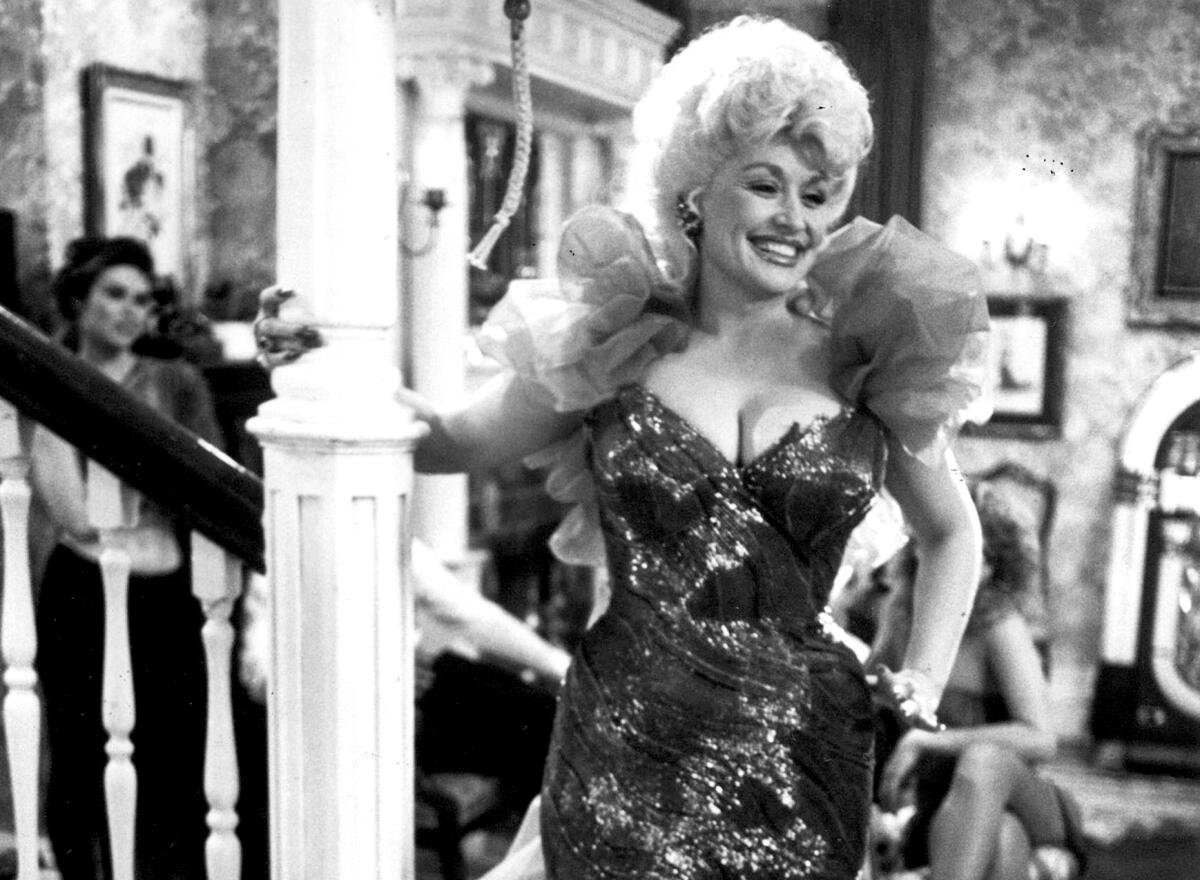
For a few minutes, Hollywood lost its collective mind. Not only were creators and performers facing a future in which their work, bodies and faces could be scanned and fed into an algorithm capable of imitating writing styles or creating images of actors doing things they never did (in a recent AI video, Tom Cruise and Brad Pitt duke it out on a war-torn rooftop), now some feared they would be competing for jobs with “actors” who could work 24 hours a day, required no health benefits and would never demand bowls of M&Ms with the green ones removed.
SAG-AFTRA, which had just ended a strike caused in part by concerns about AI, protested Tilly and the use of “stolen performances to put actors out of work.” Various actors were outraged and some called for the interested talent agencies to be identified. Even Emily Blunt was publicly disconcerted, begging Hollywood agencies to “please stop taking away our human connection.”
Van der Velden quickly responded, insisting that Tilly was “not a replacement for a human being, but a creative work — a piece of art … a new tool — a new paintbrush.”
Then, on Tuesday, “Tilly” released a music video that seems to argue the exact opposite.
In the video, which appears over the message “Can’t wait to go to the Oscars,” the computer-generated young woman trips through a montage of “famous person moments,” as Tilly insists that she is not a puppet but a star; she encourages all actors to embrace and use AI, to own their creativity and “be free.”
A note prefacing the video states that “18 real humans” were involved in its production (including Van der Velden who is the basis of the performance), who provide the subtext for Tilly warbling: “They say it’s not real, that it’s fake, but I’m a human, make no mistake.”
Whatever Van der Velden and her team hoped to achieve, one thing is very clear: Emily Blunt has nothing to fear from Tilly Norwood.
The questionable merits of the song, performance and production value aside, the video is the best argument yet for why AI “performers” are a limited threat. As Tilly walks the streets of London, poses for selfies, signs autographs, appears on talk shows, performs live in front of enormous audiences, interacts with photographers, we are reminded that Tilly could never do any of this. AI performances are, by their very nature, limited to a screen.
Instagram fame is a real thing and can be monetarily beneficial, just as animated and digitally enhanced characters can connect deeply with audiences. But beyond her ability to raise the spectre of wholly coded “performers” constructed from borrowed bits of humans (which, as anyone who has read or seen “Frankenstein” knows, never ends well), Tilly doesn’t appear to have anything like star power.
And to consider her as existing separate from her creators is like imagining that the ventriloquist dummy Charlie McCarthy could have a career, and an agent, separate from the real performer Edgar Bergen.
Though Charlie did have the advantage of being able to be seen live and in person.
Watching Tilly, one is reminded that the magic of actors is that they are human. Audiences are, after all, human too and whether facing a stage or a screen, we are captivated by certain performers’ ability to bring all manner of characters and stories alive, while also being, as Us Weekly says, “just like us.”
People with bodies that age and change, people who fall in love, get messy, say dumb things, say smart things, fall prey to illness and accidents, shop at Trader Joe’s, end up in court or trip when about to receive an Oscar.
Their faulty, glorious humanity allows them to connect to their art, but it also connects them to us. We may never get an Oscar or be able to masterfully deliver a Shakespeare soliloquy on a chat show, but we know what it’s like to trip or say something dumb or experience aging, illness or accident.
You can’t replace actors with algorithms, even if/when someone comes up with something more convincing than Tilly, because actors are not just about performances. They are people who are alive in the world and no amount of coding can replicate that.
There’s a hidden door in Downtown Disney. Only this one isn’t meant to be walked through.
Flanking a stage near the monorail station, you’ll find a glistening white tower, the work of artist and activist Nikkolas Smith, who has adopted the term “artivist.” At first glance, the tower — one of Downtown Disney’s most striking works — appears to be a nod to Disneyland’s Midcentury art, for its curved lines and space-age optimism wouldn’t be out of place in Tomorrowland.
That’s there, says Smith, but there are also a number of more subtle inspirations.
The tower is a nod to five Black architects, trailblazers whose creations sometimes went unnoticed or overlooked. And that’s why at the base of the structure is a looping opening meant to signify a half-open doorway.
Downtown Disney’s Legacy Tower touches on the styles of different Black architects as it rises into the sky.
(Gary Coronado / For The Times)
Smith shares a distressing anecdote. “They had to learn how to read drawings upside down, because they weren’t allowed to sit next to the white clients,” Smith says, adding they also had to endure unequal pay. “So I was incorporating things like the half doorway to symbolize their struggle.”
Officially designated as the Legacy Tower, Smith himself fixates on that word — “legacy.” The term, he says, represents a thematic constant across his work. A regular collaborator on a number of Walt Disney Co. projects and a former architect with Walt Disney Imagineering, the division of the company focused on theme park experiences, Smith is something of a connector. His canvas art, full of fast-moving brush work, is often rooted in the past while urgently seeking to draw links to the present.
Artist Nikkolas Smith went viral for his portrait of Martin Luther King Jr. in a hoodie, a tribute to slain teenager Trayvon Martin.
(Nikkolas Smith)
His 2025 children’s book, “The History of We,” tells the story of how humanity can trace its roots to Africa. And one of his best-known pieces is of Martin Luther King Jr. in a hoodie, meant to evoke the image of Trayvon Martin, the slain 17-year-old whose death inspired a social justice movement. The work went viral in 2013 while Smith was still working for Imagineering. It altered his career trajectory.
“It was like, ‘I cannot just make art about churros and rides right now,’” Smith says. “There’s a time for that, and there’s also a time to talk about this.” He references his portraits related to the killings of Black men, many at the hands of police officers, such as Philando Castile and Michael Brown.
“At the end of the day, Disney understood that,” Smith adds. “They understood that I needed to make art that was extremely important at the moment, about justice or the lack of justice.”
Smith left Disney in 2019 after 11 years but has maintained a close relationship with the company, so much so that Imagineering called upon Smith to design the tower, which opened in 2023.
Artist Nikkolas Smith, left, chats with guests Ricky Yost and Martina Yost of Aubrey, Texas, who recognized Smith from a recent Disney cruise excursion.
(Gary Coronado / For The Times)
As the Legacy Tower spirals toward the sky, its patterns and and lattice work nod to the likes of James H. Garrott, Robert A. Kennard, Roy A. Sealey, Ralph A. Vaughn and Paul Revere Williams. All were active in Los Angeles — Williams, for instance, was a pivotal designer on the LAX Theme Building — and Smith interlaces decorative flourishes in varying styles that twist around one another to work up the Legacy Tower’s pointed spheres.
The door of the Legacy Tower symbolizes perseverance, Smith says. “They made it through, despite all of the obstacles they had to go through.”
Smith had studied the architects while a student at Hampton University, and has documented on his Instagram their various stylings, which range from restrained to whimsical to ornate. A section referencing Vaughn is modern minimalism, whereas an area dedicated to Sealey is full of jagged, pointed linework. All of it is held together via a coiling design that feels full of movement.
The patterns of the Legacy Tower are nods to the likes of James H. Garrott, Robert A. Kennard, Roy A. Sealey, Ralph A. Vaughn and Paul Revere Williams.
(Gary Coronado / For The Times)
“How can I show humanity’s interconnected future? That’s the idea,” Smith says. “There’s this African theme of Sankofa. If we look toward our future, we have to look at the past and value and appreciate the past. I thought it would be great if I could really commemorate some Black designers and architects as the foundation and backstory of the tower. And I was also thinking about these breezeway block patterns that you see in Leimert Park.”
And yet it also feels like something that belongs in the park. Smith says he looked at some Tomorrowland designs.
“A Midcentury Modern vibe was Walt,” Smith says, referring to park patriarch Walt Disney. “That was Walt’s thing. It all connects. I love that people can hopefully now connect both things. You can connect Tomorrowland and Walt with Paul Revere Williams.”
It’s clearly Smith’s favorite design of his for Disney, although it’s not the only space at the resort that features his artistry. During his decade-plus with Imagineering he regularly worked on teams that focused on projects at Disney California Adventure, which this year is celebrating its 25th anniversary. He was heavily involved, he says, in the evolution of Avengers Campus, contributed to a small promenade stage in Pixar Pier and helped envision the facade of Guardians of the Galaxy — Mission: Breakout!, which transformed the former Tower of Terror into a sci-fi structure.
Nikkolas Smith says elements of Downtown Disney’s Legacy Tower symbolize perseverance.
(Gary Coronado / For The Times)
Smith looks back fondly at his years at Imagineering, specifically calling out his time on the Guardians project. The former fake hotel is now full of glistening bronze pipes, a retro futurist look that former Imagineer Joe Rohde, who led the design, has said takes influence from the high-tech aesthetic of architect Renzo Piano, who worked on France’s Pompidou Centre.
“How much can we add to it? How much can we get away with gluing onto this thing?” Smith says of the Guardians facade. “What is the right amount of ‘Guardians of the Galaxy,’ without being too much? Without scaring people on the freeway?”
Today, Smith continues to focus on social justice work, and has also collaborated with filmmaker Ryan Coogler, such as completing concept designs for his Oscar-nominated film “Sinners.” Smith’s 2023 children’s book “The Artivist” documents the importance of creating art that’s in conversation with the world, believing it’s not only a source for education but for empathy. Smith’s weekly paintings speak out often against the current administration, and Smith has been particularly vocal on the ICE raids.
A selection from “The Artivist,” an illustrated book from Nikkolas Smith.
(Nikkolas Smith)
“Some people say that all art is activism, but I feel that some of the best art that is created is art that has a message,” Smith says. “And hopefully that message has to do with the humanity of all people, and for me, I like to focus on marginalized communities, and how we can value the humanity of everybody. That’s why I make picture books about the origins of humanity and the origins of this country.”
The Leimert Park resident says his wife and young son regularly visit the Disneyland Resort. And when he does, Smith says, he always takes a moment to stop by the Pixar Pier stage that he contributed to, which is often used for character meet and greets.
“They were team projects, and I do go up to them with so much pride,” he says. “I go up to the Pixar Pier promenade stage, and I just go up to it and touch it. … The beautiful thing about Disney is these creations are usually around for a lifetime.”
It turns out you can take the artivist out of Disney, but you can’t fully take the Disney out of the artivist.
Author Diana Gabaldon knew readers had been mentally casting the timeless main couple at the center of her “Outlander” book saga since the first novel’s release in the early ‘90s — particularly its leading man, a tall and burly Scottish Highlander with striking red hair. She recalls a 50-year-old German actor who, she says, “always looked like he’d been dipped in cooking oil” among the imaginary candidates. Another was a 5-foot-4-inch race car driver. She quickly learned not to weigh in.
“They would keep asking me who I’d like to play Jamie — ‘Nobody,’ I kept saying because on the rare occasion when I mentioned some possibility, the immediate response would be shrieks of dismissive outrage and heapings of scorn that went on for days (online),” she says over email. Besides, she felt the whole notion of considering prospects was pointless because, as she puts it, it’s not like Hollywood would want to adapt a 300,000-word book anyway.
However, Ronald D. Moore and Maril Davis, longtime collaborators through their Tall Ship Productions banner under Sony Pictures Television, did. And Gabaldon was thrust back into the casting debacle, watching test videos and learning not to judge a book by its cover — or actors (in this case, Sam Heughan and Caitriona Balfe) by the photos that pop up in a Google search: “Sam doesn’t look like Jamie, and Caitriona doesn’t look like Claire, but both of them can be those people, and that’s all that matters,” she says. And they were those people.
In 2014, the duo brought to the screen the epic story of Claire Randall, a British combat nurse who is mysteriously transported back to 1743 Scotland and marries Scottish warrior Jamie Fraser to survive. Together, they ignite a passionate romance that traverses decades and endures brutal separations, wars and time travel. After spinning its own sweeping narrative for more than a decade, the Starz series is launching its eighth and final season on Friday.
In “Outlander,” Claire Randall (Caitriona Balfe) is a British combat nurse who is mysteriously transported back to 1743 Scotland and marries Scottish warrior Jamie Fraser (Sam Heughan) to survive.
(Ed Miller / Starz)
And it won’t exactly be a by-the-book ending. The final season pulls from the remaining material in Book 8, as well as Book 9 — Gabaldon is working on a 10th installment, “A Blessing for a Warrior Going Out” — leaving Matthew B. Roberts, the showrunner, and the writing team to craft an original ending for television. In a signal of how much pressure there was to do right by the beloved fictional couple, four endings were written and filmed.
“Diana’s been involved since Day 1 — she reads everything, she sees everything,” Roberts said by video conference. “I told all the endings that were going to be written. She briefed me a little bit of where she might be going, not the ending of the books, but just where the book might be going. I wanted to at least incorporate some of that in some of the endings that were written.”
Can it be anything other than a happy ending? Maybe the clue is in “I Love Lucy.” Lucy and Ricky Ricardo‘s love story was often a reference point for Roberts throughout his time on “Outlander.”
“No matter what trouble Lucy got in, no matter what she was doing, never did you think they were ever going to break up,” he says. “That’s Jamie and Claire, no matter what happens, no matter what he goes through or what she goes through, no matter what trouble or what they tell each other sometimes, we’ll never think they break up. And the audience knows that too, and we knew, if you just stayed true to that, then that love story would be successful.”
Ahead of the show’s final season premiere, The Times spoke with Balfe and Heughan to get their thoughts on bringing the historical romance to life and the journey to reach the final chapter.
In the spirit of the Season 8 premiere, which has a moment where Claire and Jamie reflect on the early days of their story, let’s travel back in time. Do you remember how this series was first presented to you and what went through your mind?
Balfe: I think the logline I saw was “nurse goes back to Scotland and then goes back 200 years in time and meets a Highlander.” I think I had two lines. That was all I had.
Heughan: It sounded like it was never gonna work. I found out it was a book series, and I think we both read it, didn’t we?
Balfe: Yeah, I read the book in four days before we tested. You’d already been cast at that point … I was living in L.A. I had tiny bit parts in a few films, and I was definitely struggling. I had booked to go on a trip to India, sent my passport into the Indian embassy. Of course, that’s exactly when I found out that maybe I had to travel to London for this test.
Heughan: At the time, I had failed attempts at pilot season, and I was back in London working in a bar and thinking, “I can’t afford to do this and I’m 34 years old. I should probably think about giving up.” Because there was no way I could support myself. I wasn’t loving it.
Balfe: You were 33, by the way.
Heughan: Oh, yes. I was younger. Then this thing came through. And actually, to be honest, the logline and perhaps the dialogue, when I read it, I just thought, “I know this guy.” There just was something very familiar.
“At the time, I had failed attempts at pilot season, and I was back in London working in a bar and thinking, ‘I can’t afford to do this and I’m 34 years old. I should probably think about giving up,’” says Heughan.(Sophia Spring / For The Times)
Tell me about the decision to say goodbye to this show and these characters. Does it feel like the right time?
Balfe: By the time we got to Season 7, that was our last season that we were contracted for, and there were conversations going around that they — the writers — felt that they had eight seasons [for this story]; that that was sort of an organic finish to it. But we were more than halfway through Season 7 before anyone came to talk to us. Actually, we had all scripts, bar the last two. And it wasn’t ending. Before they came to us, it was like, “How is this gonna happen? Are they going to wrap it up in two episodes or are they coming to us?” It was a lot of pressure in a very short amount of time to decide, “OK, do we just wrap this up in two episodes or do we try and give it a season to properly say goodbye?” There’s a lot of people’s jobs, and there’s a lot of people’s livelihoods, and there’s a whole ecosystem around it. We felt that it needed that kind of time.
Heughan: A lot of thought went into it. I think we were ready to move on or do something else. But also, there was this itch, like we hadn’t finished it and it didn’t feel satisfying for us and for the fans. We wanted to come back and really tie it up properly.
The final season focuses on Claire and Jamie’s struggles during the Revolutionary War, with the war having followed them home. What intrigued you about this final onscreen chapter of their story?
Heughan: Jamie’s concerned about himself in the foremost because he has this information that he’s going to die. But they’ve fought for eight seasons to stay together and to protect everyone they love and the greater community and I think that continues, but there’s so many more distractions or more challenges along the way in this season from the inside.
Balfe: And the Revolutionary War has been circling them for a very long time. It was time for the culmination —
Heughan: [Laughs] Instead of saying “War is coming,” it’s “War is here.’
“There’s a lot of people’s jobs, and there’s a lot of people’s livelihoods, and there’s a whole ecosystem around it. We felt that it needed that kind of time,” says Caitriona Balfe, right, with Sam Heughan, about finishing the “Outlander” story with an eighth season.
(Sophia Spring / For The Times)
The fandom around this property is active and devoted. There’s good that can come from that — the engagement, the creativity — but some bad too, like when things get toxic. What was the learning curve of playing this beloved fictional couple and navigating the fandom?
Balfe: It was a bit of a baptism of fire.
Heughan: We were both quite green when we were thrust into it and engaged wholeheartedly.
Balfe: The landscape is very different. Twitter was Twitter before it was death pit, Instagram was far more innocent as well. In the beginning, it was really nice. I wasn’t a mom. I had loads of time on my hands — well, not really, because we were shooting all the time — but anytime I did, it used to be nice and we would do these quick Q and As. That one-on-one connection with the fans was really, really lovely. I do think there was a moment where … the tide shifted, and this sort of shipper-dom got very intense. I was getting married, and that was having an impact on the people in my life and and I think I had to then step away because I was like, “OK, this doesn’t feel good for everyone in my life.”
Heughan: Look, I think it’s still there. It is a strange one to get your head around. People, in one way, are uber fans of the show, but in other ways, they’re overtly intrusive in your life. But it is a small minority. I think … perhaps we’ve done our job that well? It’s not just about Jamie and Claire, it’s about that person behind it and their life behind it, and their family behind it, that people want to get invested in. I don’t know if it’s a great thing for actors, to be honest, but in this current environment, we’re always asked to give more of ourselves to engage with fans, but it’s been something we’ve had to learn on the job.
Balfe: And I think there are times in your life when you have more capacity to be more open, and there’s times in your life where you need to shut off a little bit more. The overall reception from the fans have been so positive and so supportive of things that we’ve done in our lives, and that is the thing that I choose to focus on with it.
“Outlander” isn’t strictly a romance, but that’s what gives it power. You’ve spent more than a decade in this space. What have you learned about how that romance space functions and what the fans seek from these stories?
Balfe: I was sort of unaware of the need and the appetite that people have for it. Nowadays it’s served an awful lot better, but I think it was an underserved demographic. Or it was not given the due that people needed. It’s sometimes looked on as the second-class citizen of storytelling, in many ways, but I think it’s a genre that allows you to really look at the beauty of humanity and … the core things that we care about, which is love and family and connection.
Heughan: And comfort. It’s comforting. This show proves that there’s a real appetite.
Balfe: There’s many more shows now. Everybody’s talking about “Heated Rivalry.” There’s “Bridgerton.” Maybe it’s the emancipation of women in the last 50 years. It’s like they are finally like, “Well, we want our TV that speaks to us as sexual beings and as mothers and as matriarchs and as professionals and whole round of people.” Our show did that a lot.
“There’s many more shows now,” Balfe says of series that serve up romance. “Everybody’s talking about ‘Heated Rivalry.’ There’s ‘Bridgerton.’ It’s like they are finally like, ‘Well, we want our TV that speaks to us as sexual beings and as mothers and as matriarchs and as professionals and whole round of people.’ Our show did that a lot.”(Sophia Spring / For The Times)
Have you taken stock of just how much Claire and Jamie have gone through as a couple?
Balfe: How many near-death experiences?
Heughan: Yeah, how many times they’ve nearly died or been attacked or assaulted.
Balfe: How many people they’ve killed. Claire, she’s like a serial killer.
I was wondering, because it’s the last season, you can’t get in trouble now, where would Caitriona or Sam have called it quits in this relationship? Like, this is too much, I need to move on.
Balfe: I don’t know if Caitriona would have gone back 200 years in time.
Heughan: When she fixes his shoulder — that’s pretty painful. She gets him in a lot of trouble and he puts himself in a lot of trouble. I wouldn’t have gone past Episode 1 [he mumbles].
Balfe: See! I would have gone to Season 3.
Heughan: No, I think when he sends her through the stones and is like, “That’s it. She’s gone.” But she keeps coming back. I thought I got rid of her, finally!
Caitriona, you make your directorial debut on the show this season with Episode 2. Tell me about that experience.
Balfe: It was so fun. They gave me Episode 2, which allowed me to do my prep before we started. I was so lucky that Jan Matthys, who is the director of Episode 1, was an incredible mentor to me throughout the process. I just got to work with these guys in a totally new way, which was so amazing. I was buzzing. The whole first 10 weeks [of this season] felt like the very first 10 weeks again because you’re learning all these new skills and you’re just in such high operating point; you have to make decisions on the fly, I was also in scenes. It was just mad, but brilliant.
Heughan: You were also probably happy to take the corset off.
Balfe: To be able to walk around in proper wet weather gear and trousers and be able to go to the bathroom — not to be TMI, but it was so good.
They did not give me the easiest episode. Every day had its thing — obviously, the bear attack sequence. Three days before we were filming that, that was a cougar; we were going to have a live cougar. There was a whole thing planned. And a cougar attacks in a very different way than a bear does. So my whole shot list had to go out of the window and I had to rethink the whole thing. But that was kind of fun.
The final season of “Outlander” focuses on Claire (Balfe) and Jamie’s (Heughan) struggles during the Revolutionary War, with the war having followed them home.
(Robert Wilson / Starz)
Finales can be tough, given how viewers chime in on social media. You can’t please everyone. But what was your vision for the ending of “Outlander”?
Balfe: I didn’t really have one. I would not want to have had Matt’s job because that’s a really heavy load to bear, trying to finish this out. But I would say the season was unusual. Normally, we would get an overview of the season before we start. This season, we went into it blind so we weren’t getting sort of any info about what was going to happen. Through the whole season, it was like finding out as the scripts came what was happening. And to be honest, we still don’t really know the ending. We know bits that were filmed, but [not] how he’s going to edit it.
Heughan: I definitely had a firm belief about a certain element of it. I spoke to a few people — few other execs and producers — and there was a common consensus, and I think that might be one of the directions, but it’s going to be a surprise for us when we watch it. I don’t know when we are going to watch it.
Multiple endings were filmed.
Balfe: There was a few different things filmed.
Heughan: Hard to know what’s [going to make it] — it’s all in a same direction. But what direction that is …
Would you call it a happy ending?
Heughan: I don’t know. It was such a secret on the call sheets and stuff.
Balfe: There was different versions of scripts that went out.
Heughan: There were fake people put in. There was a reduced crew.
In its second week of release, the sophomore season of “Paradise” is already at its midpoint. And it just delivered one of the season’s shocking twists with the death of — don’t worry, we won’t spoil it for you.
The post-apocalyptic drama, which dropped its fourth episode this week, has ventured outside bunker life this season as our Secret Service protagonist Xavier (Sterling K. Brown) continues his journey through Atlanta to find his wife — and now, he’s got a baby to keep safe in the process. Meanwhile, back inside the idyllic simulated town in the depths of Colorado, which anchored the first season, things have started to unravel and the fight for control intensifies. And the mastermind behind it all — Samantha “Sinatra” Redmond (Julianne Nicholson), the tech billionaire who set up the bunker town after a massive catastrophe threatened the extinction of the human race — isn’t MIA anymore. Last seen unconscious in a hospital bed after being shot, she’s awake and ready to regain order and control. Nicholson stopped by Guest Spot to talk about what she finds intriguing about her character’s motivations.
You are reading Screen Gab newsletter
Sign up to get recommendations for the TV shows and streaming movies you can’t miss, plus exclusive interviews with the talent behind your favorite titles, in your inbox every Friday
Also in this week’s Screen Gab, our recommendations include an ever timely reminder from Anthony Bourdain on the gift and privilege of discovering a new culture and engaging it without judgment, as well as a suburban noir starring a trio of TV heavyweights that spins middle-age malaise, swinging and murder into an addictive tale.
Read on. Then press play and give your thumb a break from all the fast-forwarding you did while watching the wedding episode of this season’s “Love is Blind.” See you next week.
— Yvonne Villarreal
Turn on
Recommendations from the film and TV experts at The Times
Anthony Bourdain visits Havana in 2015 for an episode of “Anthony Bourdain: Parts Unknown.”
(David Scott Holloway / CNN / Turner Entertainment)
“Anthony Bourdain: Parts Unknown” (HBO Max)
It was Bourdain’s masterpiece, the last and best of his several series, and arguably the greatest travel show ever. Bourdain will occasionally fetch up at some fancy eatery, but the heart of any cuisine is formed on the street, or in the country, or along the sea. As a story of how people live, with a good bit of historical context thrown in, the series is explicitly and implicitly political, philosophical and autobiographical; Bourdain has no time for bigots, fascists or bullies — or, one would imagine, McDonald’s cheeseburgers — but he revels in complexity and contradiction. (See Season 4, Episode 6, “Iran.”) The episode on Massachusetts encompasses clambakes and heroin. “I visited and learned to love many places not my own,” says the host, “cultures and beliefs very different from the Upper East Side of Manhattan.” They include, among many other places, Cuba, Ethiopia, Beirut, Buenos Aires, Hanoi, Sri Lanka, Puerto Rico, Scotland, Borneo, Los Angeles and Hanoi, where he sits down with then-president Barack Obama in a family-run noodle shop. Gorgeously filmed, the series can be heartbreakingly beautiful, and sometimes plain heartbreaking. There are 12 seasons running from 2014 to Bourdain’s death in 2018, and I can’t help but believe that anyone who watches them attentively will come out a better person. — Robert Lloyd
Jason Bateman, Linda Cardellini and David Harbour in “DTF St. Louis.”
(Tina Rowden / HBO)
“DTF St. Louis” (HBO Max)
The true-ish crime series about a deadly love triangle is so wonderfully twisted and unexpectedly deep, it’d be criminal to miss this dark comedy starring David Harbour, Jason Bateman and Linda Cardellini. Initially inspired by a real scandal (covered in the 2017 New Yorker article “My Dentist’s Murder Trial: Adultery, False Identities, and a Lethal Sedation”), it evolved into something else. Set in the suburbs of St. Louis, the seven-part series follows fastidious local news weatherman Clark (Bateman), the TV station’s guileless sign language interpreter Floyd (Harbour) and Floyd’s calculating wife, Carol (Cardellini), as each grapples with a middle-age identity crisis. Seeking to spice up their sex life, the men join the discreet, eponymous hook-up app, and one of them ends up dead. Solving this peculiar whodunit is anything but predictable, and the case consumes seasoned detective Homer (Richard Jenkins) as well as young crimes officer Jodie (Joy Sunday). But it’s the quest for connection among all these misfit characters, including Floyd and Carol’s troubled son Richard (Arlan Ruf ) and an unlikely hookup (Peter Sarsgaard), that makes this series so powerful. — Lorraine Ali
Guest spot
A weekly chat with actors, writers, directors and more about what they’re working on — and what they’re watching
Julianne Nicholson as Sinatra in a scene from Season 2 of “Paradise.”
(Ser Baffo / Disney)
If you see Nicholson on screen, you know things are about to get good. She consistently and compellingly delivers strong performances in some of your favorite films and TV shows, whether she’s expressing both quiet strength and palpable desperation as a mother in “Mare of Easttown” or bringing comedic pizzazz as a social media star in “Hacks.” Her latest captivating performance, in Hulu’s “Paradise,” brings power to a complicated character. She plays Samantha “Sinatra” Redmond, a deeply emotional and eerily ruthless billionaire mastermind responsible for the underground bunker city that grounds the series. Driven by the intense grief of losing a son and a desire to control her environment to protect her family, the character is faced with trying to regain order of the simulated utopia after tension and chaos erupts. Over email, Nicholson shared her thoughts on the morally ambiguous character and the Dustin Hoffman film that brings her comfort. — Yvonne Villarreal
Sinatra is not the usual “villain” in a post-apocalyptic story. Despite her approach, there is an altruistic motive, at least initially, that drives her actions. Which version of her fascinates you the most: pre-global disaster Samantha, who is trying to figure out a way to protect her remaining family, or post-apocalyptic Sinatra, who is closer to facing a reckoning in the aftermath of what she’s created?
I am especially interested in Sinatra after she wakes from the coma. Finding the balance between vulnerability and control. Taking back her power while also recognizing no amount of it or money will necessarily keep herself/her family safe. And then the idea that the bigger picture she’s been working towards the whole time may actually be coming true with the introduction of Link [Thomas Doherty], and who he may be to her, cracks her wide open.
There have been real-life assessments of the power billionaires wield and their influence in the White House — those figures are primarily men. How have those conversations shaped your performance or how you think about the power dynamics of “Paradise’s” fictional world?
I love that Dan Fogelman wrote the most powerful person in the room as a woman. Normalizing women in power can only be a good thing. Even if we don’t necessarily agree with her tactics, she sure is fun to play. I love her take no prisoners/no apologies attitude.
This season Sinatra wakes from her coma and faces a new obstacle in Jane (Nicole Brydon Bloom). What intrigues you about how they play off each other and how Sinatra is navigating the threat Jane may pose?
One of the most fun scenes to play in Season 2 was when Jane is trying to find out what Sinatra remembers of the shooting. The wonderful director, Ken Olin, really encouraged us to make a cat and mouse game of it with neither giving anything away. And I love we don’t ever find out what Sinatra remembers. I think it’s a real case of keep your friend close here. Sinatra realizes Jane is much more valuable as an ally than an adversary.
In “Paradise,” Sinatra (Julianne Nicholson), left, was last seen in a coma after being shot.
(Ser Baffo / Disney)
You delivered a brilliant performance in Season 4 of “Hacks” as TikTok sensation “Dance Mom.” What’s a memory that stands out from filming those scenes? And did you find yourself giving a dance lesson on the set of “Paradise”?
I loved every moment of working on “Hacks.” I loved having dance/choreography sessions with Cory Baker in the run up to filming and the utter absurdity of the “boofing” scene. I also almost lost it when DM was passed out on the stoop on Wisteria Lane and Jimmy [Paul W. Downs] and Kayla [Megan Stalter] come driving around in the golf cart looking for her and shouting, “Dance Mom!” That name alone is so funny to me. Alas, there were no dance lessons in “Paradise.”
What have you watched recently that you are recommending to everyone you know?
I was blown away this year by the film “Sirât.” I recommend but also warn as it is a deeply affecting, intense film and not for the faint of heart. I love its exploration of a world I know nothing about (a traveling rave culture set in Morocco), the humanity in it and the real faces and performances of the actors. [And] its originality and bravery.
What’s your go-to “comfort watch,” the movie or TV show you go back to again and again?
“Tootsie” is one of my favorite films and I can watch that any time. It’s partially nostalgic as I remember watching it in the theater when it came out and I was so taken with NYC at that time. The tall buildings, yellow cabs and hustle and bustle. It’s such a smart comedy with brilliant performances across the board, starting with Dustin Hoffman but each actor is as perfect as the next! So much heart and depth without ever taking itself too seriously. And just very, very funny.
As a child in Newark, N.J., Narciso Rodriguez was often transported back to Cuba by the stories from his family and their friends. He walked the halls of El Encanto, a Havana department store and fashion mecca on the island — one that drew in celebrity clientele and featured haute-couture designs and fragrances from the far-flung fashion capitals of Paris and Milan.
“I don’t know that they could have afforded any of those things when they were in Cuba,” he tells De Los. “But they certainly filled my imagination with beautiful stories and laid the foundation for my work.”
It was the women in his life — the “amazing, powerful, loud, colorful dynamos,” as he describes them — who inspired him to pursue a career in fashion.
“Their stories, their lives, their power, their curves, it all influenced me,” he says. “They’re the reason I wanted to create things.”
Over the last three decades, the renowned designer has earned a reputation for sleek, flattering lines and effortless shapes, most famously seen on the career-launching dress he designed for his friend Carolyn Bessette-Kennedy to wear on her wedding day. The bias-cut silk slip has remained a source of inspiration for generations of brides since, and has been making waves again thanks to the FX series “Love Story: John F. Kennedy Jr. and Carolyn Bessette.”
Omari K. Chancellor as Gordon Henderson, from left, Sarah Pidgeon as Carolyn Bessette, Tonatiuh as Narciso Rodriguez in FX’s “Love Story: John F. Kennedy Jr. & Carolyn Bessette”
(Eric Liebowitz / FX)
“Love Story” will follow the couple’s wedding in the latest episode, out March 5. (Rodriguez is portrayed by Tonatiuh on the show.)
After designing Bessette-Kennedy’s dress, Rodriguez launched his own label and a fragrance line, and has continued to create designs that are woven into the fabric of American history — Michelle Obama wore his dress on election night in 2008.
De Los spoke with Rodriguez about his career, upbringing and memories of designing Bessette-Kennedy’s dress.
You’ve spoken about how inspired you were by the women in your life growing up. Are there any “fashion icons” from your family or neighborhood that you could point to from your childhood?
You know, I’m so lucky because I was raised in a very Cuban household in a very culturally rich community in Newark. I mean, it was Italian, Spanish, Cuban, Puerto Rican, Black. It was everything. But I always think back to when I was very, very young, there was a kind of matriarch here in the neighborhood. Her name was Concha and she was kind of this lightning rod. My dad’s sister was married to her son, so when my parents came to the U.S., she gave them a place to stay. She would teach all of the young women how to cook and gave everyone a place to stay until they got on their feet. She was larger than life, she was like “Auntie Mame.” She had these great ‘60s beehive wigs in amazing wig boxes, she made these beautiful Chanel suits for herself, and had all these gold bangles, great lipstick and stilettos. When she came into the room, she just radiated power, joy and style. I always think of her as being my first signpost on the road.
They were all beautiful, you know? My aunts and my mom were the most beautiful, glamorous women. None of them were wearing designer clothes, but they took great pride and great care in how they looked, and that really made an impression on me.
How did that impression translate into a concrete passion? How did you go about actually pursuing a career in fashion?
I loved architecture. I loved building things, so I was always drawing, sketching and sculpting. Then I would see my mom take a piece of fabric and the way she could take something flat and shapeless and turn it into a garment was fascinating. By the time I was 13, I was doing fashion illustration, and I got a job in a tailor shop. Later, I enrolled myself in Saturday courses at Parsons [School of Design], and I kind of had to hide it from my parents at first. I felt like I couldn’t be a fashion designer, you know, because of the whole “macho” idea, but I just kept going. I was lucky that I was someone who always knew what they wanted to do, and that Parsons recognized I had talent for it at a young age.
I was exposed to really great people there, too. Donna Karan was a critic, Calvin Klein was a critic, Oscar de la Renta too. I got to do projects with all of them, and then I was hired after school by Donna Karan while she was still at Anne Klein. It was an amazing experience, and then I got poached by Calvin Klein, which was a very different experience.
How so?
It was incredible, but just very different. Whereas Anne Klein was this melting pot of creativity, Calvin was much more image-driven and precision-driven. He brought in great talents to collaborate with, so on any given day, you’d be working with the most amazing photographers, stylists and art directors. It was a really great finishing school as a young person.
You arrived at Calvin Klein during a period of reinvention for the brand. This was in the era of Kate Moss, and the famous “Marky Mark” print ads. We see a version of it in “Love Story,” but what was it like to actually be there?
When I got there, I think around 1989, it hadn’t really started to change yet. And I thought, “Wow, I made a really big mistake. This is not my aesthetic, not my thing.” But it changed very quickly, and it was very exciting. [Calvin] worked very hard. He was very focused, and he appreciated that I could keep up. Like everybody, there was a rough initiation period, but afterward, he gave me the opportunity to work on some tailored pieces that sold really well at retail, so I was rewarded with more opportunities.
But it was the ‘90s, and it was New York, and it was brilliant. It felt like the whole city was reinventing itself, and Calvin was a leader in that. All the best photographers, the most brilliant artists were there. Jacky Marshall, Zack Carr, Carolyn — the talent was endless. I was really fortunate to experience it and build friendships that were lifelong.
I’m curious if you remember your first impressions of Carolyn. How did you two connect?
We were quite friendly immediately, and then we became the best of friends. We lived in the same building, so the rest was history. You know, she’s an incredible person, and she had great style. She was bigger than life.
Carolyn has been regarded as a fashion icon, and especially now, everyone is trying to re–create her look. There was something more subtle and interesting going on than just “minimalist” fashion, so how would you describe what made her style so special?
Carolyn was so authentic in so many ways, and I think that she was very pragmatic about her choices. She had a great eye. She knew what worked for her, and she knew how to present herself. She never wanted to be uncomfortable. She was very connected to herself. I think so many people have this relationship to fashion and what they think they should look like based on the ideas they see in a magazine or being sold to you by the industry, and Carolyn never fell into that trap.
I have this conversation often with young designers, with people, with journalists. Today, everything that we see is inauthentic. Celebrities are paid to wear designer clothes. They’re styled by a stylist, and nothing is innate. That is the opposite of Carolyn. She was 100% real.
Narciso Rodriguez in 1997.
(Paolo Roversi)
We have to talk about her wedding dress. If you’re a bride, it’s impossible to look for inspiration without coming across her dress. What was it like to have a friend ask you to create something for such a special, important moment?
You know, until my children were born, Carolyn was the love of my life. We were very close, and she asked me, as you said, to make the dress that she would marry the love of her life in. It was very personal for me. It wasn’t a press event, it was a conversation between two people who were very close. I knew what looked good on her, she knew what looked good on her. I knew that she would never want to be bogged down with trains and lace. It wouldn’t be her.
What was the actual design process like?
It was an effortless collaboration. She came to fittings in Paris, we pulled the neckline down a bit lower, and the dress was born. I added the gloves, the veil and the shoe. It was just magical, and exactly the way it should be. It really made her the focus. You know, she was the one who pointed that out to me about my work. She always said, “You create a frame for a woman’s beauty and personality to shine through.” I’ve always thought that was a really beautiful thing that she gave me, because it’s true. I never want my work to be what you see first. I think the success of that dress is that you see her and her happiness and the purity of it all.
Everything about the wedding, including the dress, had to be kept a secret. Was it a challenge to make sure that no one knew what you were working on?
I was working in Paris, and I got approval from the owner of [Cerruti]. He was discreet about it. I worked with one pattern maker. I had a fit model who was lovely. Nobody knew who it was for. They always asked. But because I was working in Paris, they didn’t really connect me to her. I was also quite cautious when the dress was in work, I remember I had become quite friendly with Azzedine Alaïa. I asked, “Can I take this dress over to you and have you check it out to see what I’m doing?” I went over and he looked at the prototype, and said, “Why don’t you move this seam over the bum by a centimeter. I think it’ll be more flattering.” And I did, because he was the master, and he tortured me to know who it was for, but I never told him. Later, when it was all over the press, he would call and pretend he was a fancy lady looking for a wedding dress for her daughter. [Laughs] He tricked me a few times into believing some of his gags, but he was an amazing person.
It was just a magical time in all of our lives. And then I flew to America with the dress and went to the wedding, and it was that simple. You know, I’ve heard all these amazing stories about how the dress didn’t fit, and I had to sew her into it, and that she was hours late because of it, and none of this is true. But I love that people have made up all these stories.
Maybe the dress on her seems so effortless that people want to invent a way to complicate it.
[Laughs] I really have heard so many crazy stories, but when you look at the pictures, it certainly doesn’t look like it didn’t fit. That’s for sure.
As you mentioned, the dress was all over the press later. How did that moment impact your career?
Well, I went from Paris to my best friend’s wedding, and then I flew home to New York to do a pit stop at my apartment. When I arrived, there was a huge crowd outside the building with news trucks. I kind of walked through the crowd and into the building, and I said to the doorman, “What’s all that about?” And he looked at me, and he said, “They’re here to see you.”
Oh, wow.
It was a very big, kind of scary, unexpected change in my life. I remember going up to my apartment and trying to navigate that when Anna Wintour’s office called and said, “Anna would like for you to come to the Princess [Diana] benefit in Washington.” And I said I couldn’t go, I needed to be back in Paris, I didn’t even have a white shirt. And they said, “It’s Princess Di and Anna Wintour. You’re going. We’ll send you a shirt.” So I went, and I met Princess Diana, and it was really strange to be at such a big event and have so many eyes on me, because I didn’t expect that, and everyone was curious. I remember they were shady journalists trying to sit next to me and get information about where [John and Carolyn] went on their honeymoon. Life changed dramatically, but it brought great attention to the work that I was doing in Paris, and I was able to then go off and start my own business and do my own thing.
I’m sure you had an understanding through Carolyn about what it felt like to be hounded or followed by photographers and press, but did that firsthand experience in New York give you another layer of understanding for what she was going through?
It’s so funny because society today will do anything for that. But it was a very different time, and she was a very private person. I was a very private person. It’s very invasive, and I was kind of stuck in the middle, because while I needed to promote my work and my shows, and sort of be in the press, it wasn’t something that I was very comfortable with. I mean, I love doing the work more than I like the things attached to it. It can be debilitating, and it was difficult for me, but I adjusted, because I could hide behind my work, but as a private citizen, it was more difficult for her.
Narciso Rodriguez.
(Sølve Sundsbø)
You’ve been a part of fashion history on numerous occasions. Michelle Obama frequently wore your designs, but most famously, on election night in 2008, and then during her final appearance as first lady. How does it feel to have been a part of those moments?
It’s hard to put into words. You know, you spend so much time in it, and you have these amazing moments, like designing a dress that became legendary for brides, or getting to dress the first lady, and it wasn’t until COVID that I took a step back. I think about my mother and father coming here to give their son a chance to live out his dreams. And to have been able to sit with my friends on election night and watch her appear in my dress on such a historic moment — the first African American elected president of the United States — words fail. [Michelle Obama] is such an incredible human being who I admire so much, and to have been a part of that night, I feel so lucky.
I don’t talk about my work with my children, but the other day, when they were on the bus headed to school, they told one of their friends, “My dad went to the Obama White House.” They were proud of me. My parents’ dreams came true, and now I get to share that with my children. It’s very special.
It’s really powerful to hear you frame it that way — that these moments mean so much because of your experience being the child of immigrants. How does it feel to be in the midst of a revival right now?
It makes me want to create more. It means a lot to me that people remember these pieces, and that they’re still part of the conversation. But it also means a really great deal to me because I think it’s an important story to tell today. I think it’s important that young people hear that this kind of thing can happen to the children of immigrants, especially as I’m watching all of the horrible things happening to immigrants now.
I could never do what my parents did. When I think about it now, my parents were so much more successful than I could ever be, because they left behind their home for a cold climate, in a place where they couldn’t speak the language, and they really struggled for a long time before I was born. And now, the idea that we’re trying to take that opportunity away from people? It just blows my mind.
My parents faced so many hardships, their life wasn’t easy, but I can’t imagine if they had been put through what immigrants are put through today. I am the “American Dream,” right? I got the chance I got to do the work that I love and succeed because of them. I want that for everyone. I want that to be the world we live in.
The day after he saved the Dodgers’ season, Will Klein was hungry. He ordered from Mod Pizza.
He drove over to pick up his order. The guy that handed him the pizza told him he looked just like Will Klein.
“You should just look at the name on the order,” Klein told him.
Chaos ensued.
“He actually started screaming,” Klein said. “He just started flipping out, which was funny.”
Thing is, if it were two days earlier, the guy would have had no idea what Klein looked like. Neither would you.
On Oct. 26, Klein was the last man in the Dodgers’ bullpen, a wild thing on his fourth organization in two years, a last-minute addition to the World Series roster.
On Oct. 27, the Dodgers played 18 innings, and the last man in the Dodgers’ bullpen delivered the game of his life: four shutout innings, holding the Toronto Blue Jays at bay until Freddie Freeman hit a walk-off home run.
Dodgers pitcher Will Klein celebrates during the 16th inning of Game 3 of the World Series against the Toronto Blue Jays at Dodger Stadium on Oct. 27.
(Mark J. Terrill / Associated Press)
When Klein returned to the clubhouse, Sandy Koufax walked over to shake hands and congratulate him.
That was Game 3 of the World Series. The Dodgers, the significantly older team, slogged through the next two games, batting .164 and losing both.
If not for Klein, that would have been the end. The Blue Jays would have won the series in five games, and there would have been no Kiké Hernández launching a game-ending double play on the run in Game 6, no Miguel Rojas tying home run and game-saving throw in Game 7, no Andy Pages game-saving catch and Will Smith winning home run in Game 7, no Yoshinobu Yamamoto winning Game 6 as a starter and Game 7 as a reliever.
When Klein rescued the Dodgers, he had pitched one inning in the previous 30 days.
“You can never take your mind out of it,” he said. “You’ve got to stay prepared. Something might come up, and you don’t want to be the guy that gets thrown in the fire and just burns.”
The Dodgers are not shy about grabbing a minor league pitcher, telling him what he can do better and what he should stop doing, and seeing what sticks. If nothing sticks, the Dodgers are also not shy about spitting out the pitcher and designating him for assignment.
In his minor league career, Klein struck out 13 batters every nine innings, which is tremendous. He walked seven batters every nine innings, which is hideous.
The Dodgers scrapped his slider, mixed in a sweeper, and told him his arm was so good that he should stop trying to make perfect pitches and just let fly.
“A lot of times, pitchers are guilty of giving hitters too much credit, and hitters are guilty of giving pitchers too much credit,” said Andrew Friedman, the Dodgers’ president of baseball operations.
“Part of our job is to show them information that helps instill some confidence. I think that really landed with Will.”
In his four September appearances with the Dodgers — after a minor-league stint to apply the team’s advice — he faced 17 batters, walked one, and did not give up a run. That’s why he isn’t buying the suggestion that something suddenly clicked in the World Series.
“Things were incrementally getting better,” he said, “and then you add that to the atmosphere. It amplifies it to 100. All the prep work and mental stuff that I had been doing, I finally got a chance to shine.”
Said Dodgers manager Dave Roberts: “He’s done it in the highest of leverage. You can’t manufacture that. You’ve got to live it and do it. So, since he’s done it, I think he’s got a real confidence.”
Dodgers pitcher Will Klein speaks during DodgerFest at Dodger Stadium on Jan. 31.
(John McCoy / Getty Images)
Klein last started a game three years ago, at triple A. After making 72 pitches in those four innings of Game 3, did he entertain the thought that maybe, just maybe, he was meant to be a starter after all?
“No,” he said abruptly. “I hate waiting four or five days to pitch and knowing exactly when I’m going to pitch.
“When I did, the anxiety just built. I want to go pitch. I hate sitting there and waiting. That kind of eats at you. I like being able to go out to the bullpen and have a chance to pitch every day.”
The Dodgers are so deep that Klein might not make the team out of spring training. Whatever happens, he’ll always have Game 3.
In the wake of that game, a fan wanted to buy a Klein jersey but could not find one. So the fan made one himself before Game 4, using white electrical tape on the back of a Dodger blue jersey. I showed Klein a picture.
“That’s cool,” Klein said. “That’s pretty funny.”
Dave Wong, a Dodgers fan living in San Francisco Giants territory, also wanted to buy a Klein jersey.
“They didn’t have a jersey for him,” Wong said.
He settled for the Dodger blue T-shirt he found online and wore it to last Friday’s Cactus League game against the Giants, with these words in white letters: “Will Klein Appreciation Shirt.”
This, then, would be a Will Klein Appreciation Column.
If you buy books linked on our site, The Times may earn a commission from Bookshop.org, whose fees support independent bookstores.
Gina Gershon considers herself a storyteller, first and foremost. When we connect via video call, Gershon admits this is the first interview she’s done since submitting the manuscript for her latest book, “AlphaPussy: How I Survived the Valley and Learned to Love My Boobs.”
“I don’t have my spiel yet!” she warns, inquiring for the first of a few times what I thought of it and whether I enjoyed it. Despite the many decades Gershon has been treading the boards, starring in indie films and Hollywood star vehicles, and stalking the stage as a singer-guitarist, she still really cares about what you think, even if it won’t change her own mind. Perhaps that’s the key to her professional longevity.
“AlphaPussy” is neither a memoir nor a guide to self-betterment, but elements of both feed into Gershon’s stories. Each wittily titled chapter plunges readers into Gershon’s freewheeling 1970s childhood, defiant adolescence, burgeoning performance career and collaborations with some of the biggest names in film (including Sharon Stone, Paul Verhoeven and Tom Cruise). Most of the stories take place in the San Fernando Valley, where young Gershon was discovering weed, mushrooms and rock ‘n’ roll. This is not a titillating tell-all, and all the better for it.
“AlphaPussy” by Gina Gershon
(Akashic Books)
“This book realistically started during COVID,” Gershon explains from her New York home. “I’d told my book agent, a friend, some stories one day when we were drunk, and he kept prodding me to write a book. I was hesitant, though. I’m not a tell-all gal, that’s not my MO.”
She adds, “It was during lockdowns, and I think his mother was sick and he was having a hard time, so when he said, ‘Just write me stories to keep me cheered up,’ I started to write stories in no particular order, whatever bubbled up, because otherwise I figured I’d forget them one day.”
At the same time, Gershon had observed that young women weren’t feeling empowered to advocate for themselves in their personal relationships and workplaces.
“I noticed that especially with younger women friends of mine, they’d tell me about things they were going through on set or with their bosses, and I don’t know if it’s a millennial thing, but I said, ‘Why don’t you just look him in the eye and tell him to stop?’ and there was this sense [for me] of ‘Why can’t you do that? Because if you don’t, you’ll always be prey to these guys.’ ”
She clarifies that she means “annoying” men rather than abusive men.
“I’m not that tough,” admits Gershon. “But I’d learned how to maneuver a lot just from growing up in the Valley, and it was a crazy time to be living there. So I thought about the stories that led me to be able to steer myself through toxicity.”
In her new book, Gina Gershon recalls the industry vitriol toward her 1995 erotic film “Showgirls.”
(Evelyn Freja / For The Times)
And also to steer herself through well-intended advice, both personal and professional, to follow her instincts.
“Listen, it’s not like I’ve had the most normal career. I’ve done most of my projects despite warnings from other people and from my agents saying, ‘You can’t do this, you’ll ruin your career.’ I’m like, ‘Why? I like this project!’ ”
One of those projects, most infamously, was “Showgirls,” which gets plenty of mentions in the book.
As Gershon recalled, it was 1994, and an astrologer had predicted her major breakout role would arrive in October that year, testing the young actor and her ability to cope with notoriety. Great, thought Gershon, bring it on.
Months later, Gershon was hanging from the ceiling, dressed in bondage gear, reflecting upon her early acting goals to perform Chekhov, portray Medea and stun audiences into silence.
She was on the set of “Showgirls” (or “Survival of the Titties,” as she nicknames it), dressed in one of the many glittering, spangled, flimsy outfits that her character Cristal Connors parades about wearing as a veteran of Vegas striptease. That role, and the vitriol from within the industry toward the movie (a flop turned cult favorite), still stings.
“I was super excited going into ‘Showgirls.’ As I talk about in one of the chapters, it was just very different when I got there. It was a completely different show than I thought I was going to be doing. … I thought it was gonna be one of [director Paul Verhoeven’s] dark Dutch films.”
Realizing that it was something else, to say the least, Gershon pivoted.
“I learned how to deal with an insane environment while keeping focused on what it is that I was trying to achieve with the part, without getting swallowed up by the insanity, which is a valuable lesson, you know? I mean, it’s a good lesson to learn no matter what you’re doing.”
Last year, Gershon watched the movie for the first time in decades.
“I hadn’t seen it in a zillion years, and when I saw it, I understood it a little bit more. It made me feel tense, but I also thought, ‘Oh, interesting.’ Some scenes that I thought shouldn’t have been there and others that absolutely have to be there. I saw it with a different lens.”
She says, “Weirdly, I feel like I’m not supposed to be talking about ‘Showgirls,’ although I think I have five chapters about ‘Showgirls’ [in the book]. I did the ones that I thought were kind of funny and fun and had some sort of growth in it for me.”
Having recently wrapped filming on “an independent film, a trans love story” in Palm Springs, penned a script and midway through writing another, Gershon doesn’t intend on writing another book anytime soon. Still, “there’s so many stories I left out,” she concedes.
“I could write three more books with things, but I really wanted to stay on point with the themes of manipulation, survival, and moving around and being able to stand on your own two feet and know who you are and to have agency over your life, especially as a woman, especially as an actress, especially in this world.”
“I’m not that tough,” says Gina Gershon. “But I’d learned how to maneuver a lot just from growing up in the Valley, and it was a crazy time to be living there. So I thought about the stories that led me to be able to steer myself through toxicity.”
BERKELEY — University of California President James B. Milliken, in his first extensive interview since taking the helm of the nation’s premier public higher education system, defended UC’s diplomatic approach to President Trump’s fusillade of actions against the institution — contrasting it with the more aggressive fight Harvard is waging with the government.
UC has not repeatedly sued the federal government or publicly criticized Trump, while Harvard battles the administration in and outside court amid billions in White House funding freezes.
Share via
“We could have said, ‘We’re going to sue tomorrow.’ We saw that movie with Harvard,” Milliken said of his first seven months on the job dominated by federal attacks. “Harvard is still in negotiations to settle the federal government’s actions, but they have had a series of devastating enforcement actions taken … Given our responsibility to the university and to the state of California, the better course for us was to engage.”
Yet days after the interview, the U.S. Department of Justice leveled another strike against UC in a lawsuit alleging UCLA “routinely ignored” and “failed to report” employee complaints of antisemitism since 2023.
In a statement after the interview, Milliken said UC has already committed to combating anti-Jewish hatred without court interference.
“Antisemitism has no place at UC and we have taken important actions to protect our Jewish students, faculty and staff … We will always have work to do, and our commitment to our community is unwavering,” the statement said. “In light of this — and our oft-cited willingness to work with the government in good faith — the new lawsuit is unfortunate and, in our view, unnecessary.”
In a wide-ranging interview at UC Berkeley’s Grimes Engineering Center, Milliken, 68, offered his assessment of Trump’s actions to overhaul higher education and declined to say whether UC would pay an amount smaller than the $1.2-billion proposed fine over UCLA’s alleged campus antisemitism.
On federal talks, Milliken said UC would “never compromise” on its independence, governance, values and academic freedom.
James B. Milliken.
(Christina House / Los Angeles Times)
He touted UC’s accomplishments despite the challenges: Four faculty members received Nobel prizes last year — the largest ever number from one institution — and UC secured more patents for inventions last year than any university in the world.
Aside from Trump, UC faces internal pressures: multiple campuses, including UCLA, are in deficit. Labor unions are demanding better job conditions. Members of the UAW 4811 academic workers union have authorized a potential strike.
Milliken spoke in favor of diversity, celebrated immigrants and said he wanted to expand student access to the university. He said UC should lead on artificial intelligence.
Milliken started in August after more than six years as chancellor of the University of Texas system. He previously held top roles at the City University of New York, the University of Nebraska and the University of North Carolina. A news and history buff and former Wall Street lawyer who prefers reading paper over pixels, he often cites his study of “The Gold and the Blue,” a two-volume chronicle of UC’s ascent in the 1950s and struggles during the political turmoil of 1960s written by former UC Berkeley Chancellor turned UC President Clark Kerr.
He said his job is “to do everything we can to demonstrate the value that’s delivered by these amazing places … I don’t want to underestimate the difficulty in the current political environment,” but, he added, universities have been a national boon “over generations.”
Trump and higher education
Adjusting to the possibility of further retrenchment of Washington’s university research funding is among Milliken’s top concerns.
UC relies on $17.5 billion annually in federal monies, including research grants, Pell grants and hospital payments for Medicare and Medicaid. Last year, the government suspended $584 million in UCLA federal medical, science and energy research grants before a UC faculty-led lawsuit restored the money. But roughly $170 million in grants is still on hold systemwide.
Another independent faculty- and union-led federal suit has temporarily halted the $1.2-billion UCLA settlement demand seeking rightward ideological change on campus. But UC remains open to talks to quash federal probes on its own terms.
James B. Milliken.
(Christina House / Los Angeles Times)
Milliken was vague on the status of negotiations and whether UC would pay a fine — such as the $200 million Columbia University signed off on last year — to settle federal investigations.
“It would be foolhardy of me to speculate on what ultimately might be proposed to the University of California or what we might find acceptable,” he said.
He declined to specify how he would uphold his promises to protect UC’s independence, governance, values and academic freedom.
“I’m not going to go into detail on those because it gets pretty close to the line of what could be a discussion with the federal government,” Milliken said.
Educational access
Milliken was more verbose on the role of higher education and his big-picture visions for UC.
College “helps make sure that we have an educated citizenry that is prepared to actively participate in a democracy that understands our civic traditions, that understands our political system, that understands how our economic system works,” Milliken said.
“Talent is universal,” he said, “but opportunity often isn’t.” Universities “match this talent with the opportunity.”
But federal moves have threatened to change access to education. The Trump administration has sued California’s public universities and community colleges for allowing undocumented immigrants to pay in-state tuition. A Trump travel ban on dozens of countries has stalled student and faculty applications from Asian, African and South American nations, while a $100,000 fee for new H-1B visas for highly skilled foreign hires could hurt university and hospital recruitment.
Share via
Milliken pledged to protect immigrants.
“I think we need to take a step back and recognize how fundamental the country’s embrace of people from around the world has been,” Milliken said. “It has been an enormous boon in terms of talent and culture and the kinds of things that make this country what it is today. I know people are worried, they’re anxious. In some cases, they’re afraid … One of the things that our university presidents and chancellors think about every day is keeping these communities safe.”
Lifelong learning
UC — home to several of the most selective and prestigious campuses in the nation — continues to grow in size and popularity. The system set a record enrollment of about 301,000 students in 2025. And 252,000 high school and transfer students have submitted applications for the coming fall, another record high. Yet, vast numbers of academically qualified students do not get in, especially to UCLA and UC Berkeley.
Campuses, including UCLA, have upped professional certificate programs and extension school offerings in recent years. Milliken said universities should further embrace learning programs outside of the undergraduate experience. UCLA is developing a plan called “UCLA for Life” to reimagine the Westwood campus’ role for professionals.
“A four-year baccalaureate experience is not enough to prepare you for 40 years or 50 years of a career. You’re going to need to retool, going to need to re-skill. And I look at universities. Students ought to turn to their alma maters. There’s a relationship that you ought to have for life,” Milliken said.
The university’s future and evolution
Milliken wants UC to take on a lead role in AI.
“The continued adaptation of AI is inevitable, and there are good things and not so good things about that. But UC is the most important, impactful university in the world, and it should not be following others in developing what is the ethical and responsible,” Milliken said. “… We’re in a place where I think leadership, whether we wanted it or not, is a responsibility.”
Share via
More Californians should take stock of UC’s role outside of undergraduate education, he said.
“Two-thirds of our students are undergraduates. It’s a hugely important thing. But so is the research we do. So is the healthcare that we do across the state. So is the work we do at national laboratories which support incredible innovation and national security,” he said.
Milliken said he hoped the cuts to university research were a short-term “aberration.”
New research funding state bond bill
UC has put its weight behind a $23-billion bond proposal that will be on the November ballot to create a California Foundation for Science and Health Research, which would fund university and private institutions in ways similar to the National Institutes of Health.
If voters pass it, Milliken said the measure would “go an enormous way” toward making up for federal losses but that it was “impossible to speculate” on the extent as federal research funding, priorities and procedures fluctuate.
“I hope we never get to the question of whether California can replace federal funding,” he said. “Would I like to see it supplement, ensure that disruptions — even if shorter term — don’t derail the important science that’s going on here and the preparation of the next generation of scientists? Yes, I think that’s an incredibly worthwhile endeavor for the state.”
He wanted to get back into the “Scream” franchise. Of course his character, Stu Macher, could survive a television being dropped on his head (though it’s said that he was electrocuted). Lillard even thought about dropping an actual TV on his head to prove that it was possible. Luckily, he didn’t go through with it, becausea lot of TV figuratively dropped on his head anyway.
The “Scooby-Doo” actor has been cast in several high-profile projects. He’s on “Cross,” the Amazon Prime show starring Aldis Hodge as a homicide detective and forensic psychologist. He will be in the eight-episode “Carrie” miniseries — yes, that Carrie — developed by filmmaker Mike Flanagan for Amazon MGM Studios. He’s dipping his toes in the Marvel cinematic pond with a role in Netflix’s “Daredevil: Born Again.”
On the big screen, he’s prepping for a third “Five Nights at Freddy’s.”
All of this from an actor whom Quentin Tarantino (speaking on “The Bret Easton Ellis Podcast”) “doesn’t care for.” Lillard has answered questions about and commented on Tarantino’s viral comments often in the last few months. An actor for almost four decades, Lillard says he has built up a thick skin, but the comments were hurtful.
He talks about those comments, along with his recent projects, working with friends and his constant desire to say “F— ICE.”
So. Tarantino said some things about your (and Paul Dano’s) acting prowess …
Look, candidly, it was a weird moment. It was a bummer. It was a drag at the beginning. But I’ll say this — I have never felt so seen by this industry. My entire career, I felt like a blue-collar working-class actor trying to be in the best movies and do the best work I possibly can. In that moment, along comes an industry that I’ve served now for 35 years, rising up and saying really lovely things. I said, in the past, it felt like I was living through my own wake. You don’t normally see that outpouring of love until after somebody passes. At the end of the day, it ends up being a really beautiful moment for me.
It’s not like I’m this fragile little thing. I’ve been around a long time. Did it suck? Sure.
This Quentin Tarantino thing … I’m good. I love his films. It also sucked because I was like, “Oh, I would love to get in there and kick ass for him.” But whatever. It is not about the box office wins that week. It’s about a body of work, a community of friends, and longevity that really defines. Which is the goal, and it defines a life well spent.
You mentioned longevity, and a quick IMDb search shows that Shaggy is your world! There’s so much “Scooby–Doo.” Straight-to-video. Live-action. Video games.
Yeah. Isn’t that crazy?
Looking back, how did you approach doing the voice work and being in the movies, and what was your thought process when that first came to you?
My first thought process was, “I’m getting that job.” I’m like, “I will kill that.” The way I got into the voice was that I would have to scream myself hoarse. I’ll never forget coming down and being in the car, an empty Warner Bros. lot, screaming to prepare my voice for the audition, and having Chuck Roven, the producer, walk by and knock on the window and be like, “Dude, are you OK?”
The first movie was so successful that I felt like I was launched. James Gunn and I went in and pitched “Plastic Man” at Warner Bros. I felt like, “Oh, I’m now an option to be No. 1 on a call sheet.” Then “Scooby-Doo 2” came out, didn’t do great, and started a reset of my career that took a couple of years.
I look back now at 56 years old and think, without that, I wouldn’t be in this career. I don’t know if I would have been around long enough to get this comeback that I’m in the middle of and enjoying.
“Scream 7” revisits one of the most successful horror franchises ever. How did you feel about being approached to come back? Can you say much about your role?
Ghostface in Paramount Pictures and Spyglass Media Group’s “Scream.”
(Brownie Harris / Paramount Pictures / Spyglass Media Group)
I’m not going to lie, I was over the moon. At some point, right before I got the offer, probably three or four months before I got the offer, [“Scream” franchise creator] Kevin Williamson put it out in the world that the “Scream” franchise does not need Matthew Lillard. I remember reading that and thinking to myself, “Why don’t you just leave me alone? I’m planning on getting back in.”
[Film producers] Radio Silence had set up in [the fifth and sixth films] the potential or the whisperings that Stu was still alive. So I was like, “We’re trending in the right direction here. Why is Kevin Williamson kicking me in the teeth?” And the funny thing is, he called me in the middle of the afternoon and he’s like, “Are you interested in coming back?” I was super excited. And … there’s not a lot I can say about the movie, for obvious reasons. But I think that people are going to be really excited.
You’re continuing in the horror field with “Carrie.” No release date yet, but what can you say about it?
I had a small scene [in “Life of Chuck”], but the scene’s great and the movie’s beautiful. I saw Kevin Williamson at [“Life of Chuck” and “Carrie” producer] Mike Flanagan’s house because we were playing a game of “Mafia.” I was doing “Five Nights at Freddy’s” and I was sitting talking to Mike and he was talking about doing “Carrie” and everything he’s got coming up. After he and I did “Life of Chuck,” he’s like, “Well, congratulations. You’re now in the Flanafam.” He works a lot with the same actors.
I finally got up the courage to say, “Hey, listen, what is that? I mean, if I’m in the Flanafam, what does that mean? How does that work? Am I supposed to tell you my schedule?” He’s like, “Oh, no, no, no. I have a part for you in ‘Carrie.’ I want you to come and do ‘Carrie’ if you’re interested.”
Everyone knows the story. Carrie, pig blood, all that. But that De Palma version only uses certain specific aspects of the book. The thing I’m excited about is that Mike Flanagan pulls in elements of the book that are not necessarily in the first film, and then adds headlines ripped from today’s day and age in terms of bullying and things we’re seeing in social media and all of that. So he’s giving it a new lens to look at what bullying looks like for kids today. I saw the first three episodes — the entire cast gathered at a screening room — and it blew me away.
Summer Howell plays Carrie, and she’s incredible, and Sam Sloyan plays her mother. There’s three basic parties. There’s the kids, there’s the parents, and then there’s the faculty. I play the principal at the school, watching the entire thing fall apart around them.
You’re also dipping your toes in the world of Marvel with “Daredevil: Born Again.”
I can talk about “Daredevil” a little. I played Dungeon & Dragons with three incredible showrunners. Dario Scardapane, who runs “Daredevil,” Matt Nix, who’s doing the new “Baywatch,” and then Elwood Reid, who does “Tracker.” I’m their dungeon master. We play with Abraham Benrubi, this beautiful actor (“ER,” “Buffy the Vampire Slayer”), a dear friend of mine. … Dario brought me in to play Mr. Charles [on “Daredevil: Born Again”], who’s like a CIA spook. He’s a guy that controls power from afar. He helps nations rise and fall, but he’s very clandestine. He is not impressed by the powers of [Vincent] D’Onofrio’s character [Kingpin] at all. He and I get into this really delicious struggle over power. It’s good. It’s fun.
Matthew Lillard taps “Scream” vibes with Ghost Face Vodka, whose release will coincide with the seventh installment of the film franchise.
(Andreas Branch)
You’ve combined storytellingwith alcohol for your lines of whiskey, vodkas and the like. How did you decide to mix the two?
I started a Dungeons & Dragons company six years ago now called Beadle & Grimm’s. Somebody approached me about building a spirits company around Dungeons & Dragons.For me, what I heard in that was like, “Hey, build a luxury item for niche communities that people don’t always respect and know and understand.” My experience with Beadle & Grimm’s was very clear. They will come out and support it.
So we created Quest’s End Whiskey. Quest’s End is a 16-bottle drop over four years. Each bottle is a different character class, but each bottle delivers a new chapter of an ongoing saga. We sold out in the first two weeks. In a week, we had 25,000 people on the waiting list to purchase that first bottle.
I know the impact that “Scream” [has] had on the horror community. I realized that if we could license the [intellectual property] of [film villain] Ghostface that we could make something super badass that fans would go crazy for. It took us a while to secure those rights. But once we did, we built Ghost Face Vodka.Our hope was to sell 2,000 units of a collector’s edition. We had 40,000 people sign up for early access in the first 72 hours.
Ghost Face Vodka has a game on the back, a QR code. When you sit down, all your people can hit that QR code with their smartphones and load an automated game of “Mafia.” It’s a communal game. It’s like two or three of you are Mafia members, and you have to figure out who that is. And it’s super fun. Again, trying to build community. Our hope is that, launching around “Scream 7,” it’s going to catch the zeitgeist and blow up.
Lastly, we have “Cross,” your most current TV project.
Matthew Lillard in “Cross.”
(Ian Watson / Amazon MGM Studios Prime Video)
I’m in love with that creative team and Aldis Hodge and everything he represents. I don’t think people understand that that show did 40 million views in the first 20 days for Amazon. It is unapologetically a Black show that … it feels like it’s being ripped from the headlines. I think Aldis Hodge and the creative team do an incredible job representing a man who is a Black man as a detective in this world. The relationships, the friendships, the bonds he has with his community — just being around that creative team has been really inspiring, and [show creator] Ben Watkins is an incredible storyteller.
I think the thing about “Cross” is that it really challenges you, especially given what we’re living through in this moment. I have to say it — politically speaking, we’re in a s— storm. I went viral a month ago about saying, ‘F— ICE.’ But … f— ICE.
Could you describe your character?
Another dubious character. He’s a billionaire named Lance Durand, and he’s out to solve world hunger. Sometimes, a billionaire has very questionable scruples as to the best ways to go about things. Solve world hunger, kill all the people. That’s how you do it.
The whole series opens up with a bunch of middle-aged white men on an island doing horrible things to girls. So when I say “ripped from the freaking headlines” … It’s, like, crazy.