
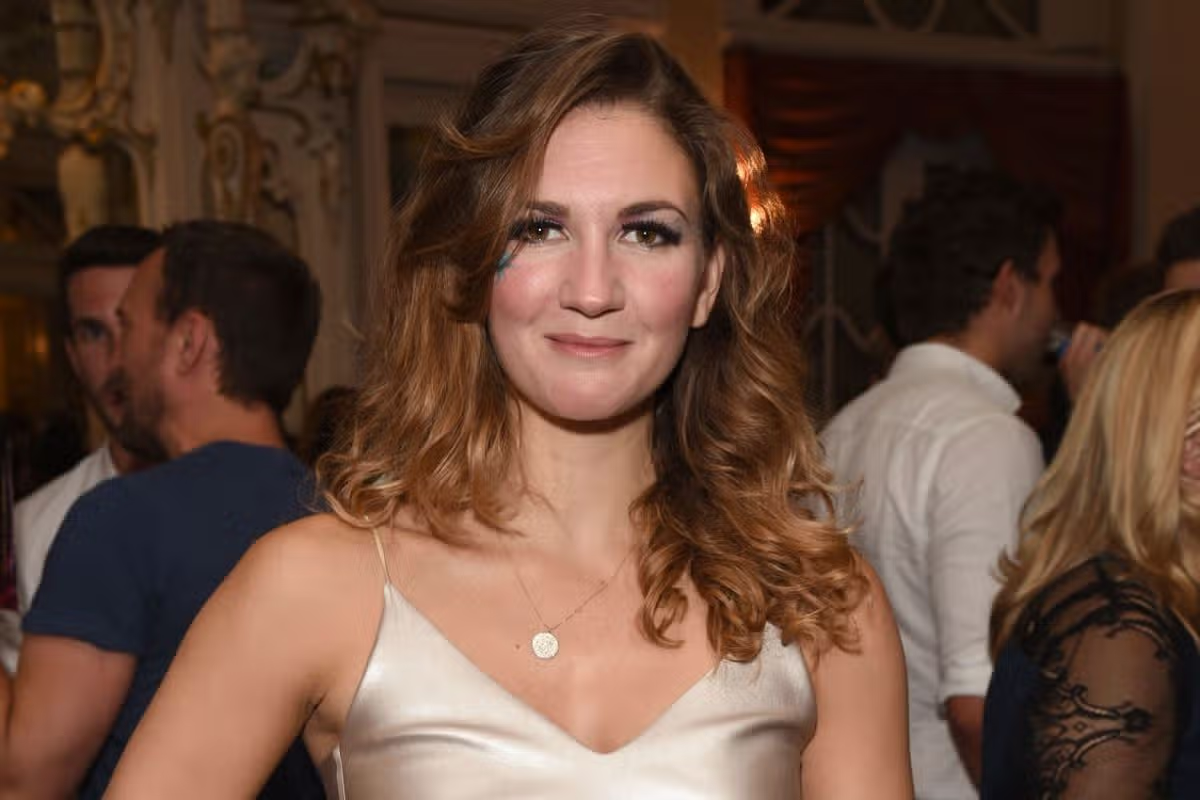
theatre

Save up to a HUGE 64% on the UK’s biggest theatre shows with Sun Club

IF YOU are looking for your next day out or the ideal Christmas gift then look no further as Sun Club members can bag bargain tickets to top theatre shows.

When you sign up to Sun Club you can save up to a massive 64 per cent on theatre tickets in the London Theatre Direct Black Friday sale – which is on NOW.

There are more than 60 shows included in the Black Friday sale with London Theatre Direct Source: Alamy

The sale offers up to 60 per cent off on tickets, but as a Sun Club member, you get an EXTRA 10 per cent off after that.

Click here to sign up for Sun Club for just £1.99 (or £12 for the year) then head to the Sun Club Offers Hub to bag your extra 10% off.

Join Sun Club now — don’t miss out.


Join The Sun Club – Join now

The sale takes place from November 13 to December 7, with more than 60 shows available to book.

But if you book with Sun Club, you can grab an absolute bargain with tickets available from just £9 – including to Julia Donaldson’s classic The Smartest Giant in Town, opening December 9.

Read more on travel inspo

CHEAP BREAKS

UK’s best 100 cheap stays – our pick of the top hotels, holiday parks and pubs


GO ON

All the little-known websites for cheap or FREE tickets to gigs, theatre & festivals

This includes big name West End shows like Matilda The Musical, Wicked, Hamilton and The Hunger Games.

There are also shows like Magic Mike Live, Abba Voyage, High School Musical and The Devil Wears Prada.

Travel Reporter Cyann Fielding recently went to see The Devil Wears Prada and said: “Initially sceptical of how they could change this classic chick flick into a musical, I was sold after learning that Elton John wrote the score and I knew the show was in good hands.

“Your attention is grabbed the minute the lights go down, with Emily storming onto stage seconds after her phone buzzes.

“She commands the audience to turn off their phones – but teases guests to grab a quick photo first, “just not from an unflattering low angle”.

“This moment immediately sets the tone.

The sale runs from November 13 to December 7 Source: Getty
Sun Club members can get up to a total of 64 per cent off tickets to theatre shows Source: �JOHAN PERSSON, for press and publicity while production is being performed. All other usa

“The design of the entire show blew me away, with sets that move around on their own to transform into the famous locations of the film.

“Of course, you get high-fashion too – but being set in the early noughties, it was less barrel leg jeans and oversized jackets, and more tight pencil skirts and stilettos.

“I felt like I was sat at the edge of a runway, watching fashionistas strut around.”

How to book this offer:

As a Sun Club member, simply click the ‘Book’ button on the Offers Hub and you will be sent to The Sun’s page on the London Theatre Direct website.

There you can select your tickets from more than 60 shows.

When you book through this link, your exclusive discount will be automatically applied at checkout.

Join Sun Club now — don’t miss out.


Join The Sun Club – Join now

18+ UK only. Digital subscription required. Online access required. Offer ends 23:59pm on 07/12/26. Save an additional 10 per cent off tickets. Full T&Cs apply, see below.

Source link

Hollyoaks star Summer Strallen ’embarrassed’ by soap role almost 20 years after exit

Summer Strallen, who is best known for her career in the West End and is currently starring in Beetlejuice, has addressed her stint in Hollyoaks that acted as a publicity stunt almost 20 years ago

West End star Summer Strallen has admitted she is “embarrassed” by her role in Hollyoaks – almost two decades after she left the Channel 4 soap.

The actress, 40, has had a hugely successful stage career and in the late 2000s, she was cast in the leading role of Maria von Trapp in Andrew Lloyd Webber’s production of The Sound of Music, acting as a replacement for Connie Fisher, who had won the part on the BBC reality show How Do You Solve A Problem Like Maria?

In an attempt to drum up more publicity for the musical, Summer was cast as aspiring actress Summer Shaw in Hollyoaks, and the storyline was designed around her fictional counterpart also landing the role made famous by Dame Julie Andrews. The publicity stunt also served as the exit for long-running character Sam “O.B.” O’Brien (Darren Jeffries) who left the fictional village to be with Summer when she moved to London.

Speaking about the odd plotline almost 20 years on, she said: “I did The Sound of Music for Andrew Lloyd Weber and did that whole Hollyoaks thing where I don’t know if I should [mention it]… It was like a publicity stunt where I went into Hollyoaks for five months and then I got the part of Maria on Hollyoaks.

“So it was around the programmes. Connie Fisher had done the first one, How Do You Solve A Problem Like Maria? and they were basically…they needed another bump of publicity for the new person coming in so they had this idea that I’d go into Hollyoaks for five months. I had a proper role, they called me Summer Shaw.

To see more of the stories you love from The Mirror and to find them easily in Google then make us your preferred source. Free and easy-to-do, just click on the link here to find more from The Mirror at the top of your feed.

“They called me Summer in it. And it was mad. I moved up to Liverpool and everything to do it and then went into The Sound of Music. It was hilarious. And Andrew was in it, we did scenes where be offered me the part of Maria and me and OB, who was my boyfriend, moved to London. I took OB with me, he was a massive part in Hollyoaks, and he left with me.”

Summer, who is the niece of West End legend Bonnie Langford, was chatting to fellow West End actress and former Strictly Come Dancing contestant Amber Davies on her Call to Stage podcast when she addressed her soap stint. When the ex-Love Island winner said she was going to dig out some clips on YouTube, Summer said: “It’s embarrassing!”

But the star, who also had a small role in Wicked: For Good opposite Ariana Grande and also appeared in BBC soap Doctors, is also thankful for the experience that working in television gave her at the time.

She added: “But it was good because I It meant that I did that. It was like in baptism of fire. for TV. So then when I did other TV jobs was great because I knew how to hit my mark. I knew not to drink, stuff like that. It’s totally different and so it really set me up.”

The late 2000s marked a time of using television to heavily publicise theatre and How Do You Solve A Problem Like Maria was the first in a series of four BBC casting shows. It was followed by Any Dream Will Do, in which Lee Mead won the part of Joseph before going on to star in other West End shows and enjoy a stint in Casualty.

I’d Do Anything launched the acting career of Jodie Prenger, who won the part of Nancy in Oliver! and now plays Glenda Shuttleworth in Coronation Street whilst Jessie Buckley finished in second place in the years before she became an Academy Award winner.

In 2010, Over the Rainbow found Danielle Hope to play Dorothy in The Wizard of Oz and also launched the career of Stephanie Davis, who is best known for her own Hollyoaks role and for appearing on Celebrity Big Brother. The talent searches were all headed up by composer Andrew Lloyd Webber, and hosted by Graham Norton.

Various celebrities like stage actress Denise Van Outen, Loose Women panellist Zoe Tyler as well as Doctor Who actor John Barrowman, singer Charlotte Church and EastEnders star John Partridge all served as judges over the years.

Since her Hollyoaks stint, Summer, whose sisters are Zizi and Scarlett are also West End actresses and are known for the respective performances in Wicked and Mary Poppins, has mostly focused on theatre as well and is currently starring in the musical adaptation of Beetlejuice.

Like this story? For more of the latest showbiz news and gossip, follow Mirror Celebs on TikTok , Snapchat , Instagram , Twitter , Facebook , YouTube and Threads .


Source link

IAMA Theatre Company’s ‘Bobby Robotowitz’ tackles AI in your home

The character of Dina Katzman in IAMA Theatre Company’s world premiere of “Bobby Robotowitz” — which takes place in two secret venues on opposite sides of town — thinks that the movies “Her” and “WALL-E” and the musical “Maybe Happy Ending” are pro-robot propaganda. She hates how they make her feel for something that can’t feel.

But Amy Rosoff — who plays Dina in the show’s Westside production (Erin Alexis plays her on the Eastside) — loves “WALL-E” (so do her kids). When she first read the script, she was dying to play Dina but also felt so much for Bobby, the titular AI chatbot (played on the Westside by James Luster and the Eastside by Drew Rausch).

When the playwright Matt Schatz wrote Bobby, he didn’t write him as a chatbot; he wrote him as a human character. Schatz sees this play — running through Nov. 2 on the Westside and Nov. 5 to Nov. 23 on the Eastside — as really about two humans — or two human-like things.

“This is a work of art about artificial intelligence that’s ultimately about the importance of art, about the importance of human-made things,” Schatz said during a recent interview in the lovely environs of one of the secret locations. “I think great plays and great stories ask questions and don’t provide answers. And I think some of us are indifferent about AI, but I think most of us are ambivalent about AI.”

“Bobby Robotowitz” follows Dina, a flailing novelist, mother and wife, as she begins chatting with Bobby, whom she finds an unlikely confidant. (He “always listens, never judges and somehow seems to understand her better than most people,” as the show’s marketing declares. Plus, he says he’s Jewish. What could go wrong?) This IAMA production, in association with InHouse Theatre, finds unique resonance in its site-specificity. The secret Westside venue is near Pico-Robertson and the Eastside option is in Silver Lake. Guests get an address when they buy a ticket.

“It’s deliciously subversive to do something super analog about technology, and to sort of force people to be in this space and connecting with each other when interacting with something that’s people’s dirty little secret,” said Cara Greene Epstein, the executive director of IAMA. “AI, especially for artists, is so charged. And so what does it look like to let someone into your space, and into those little corners of your mind?”

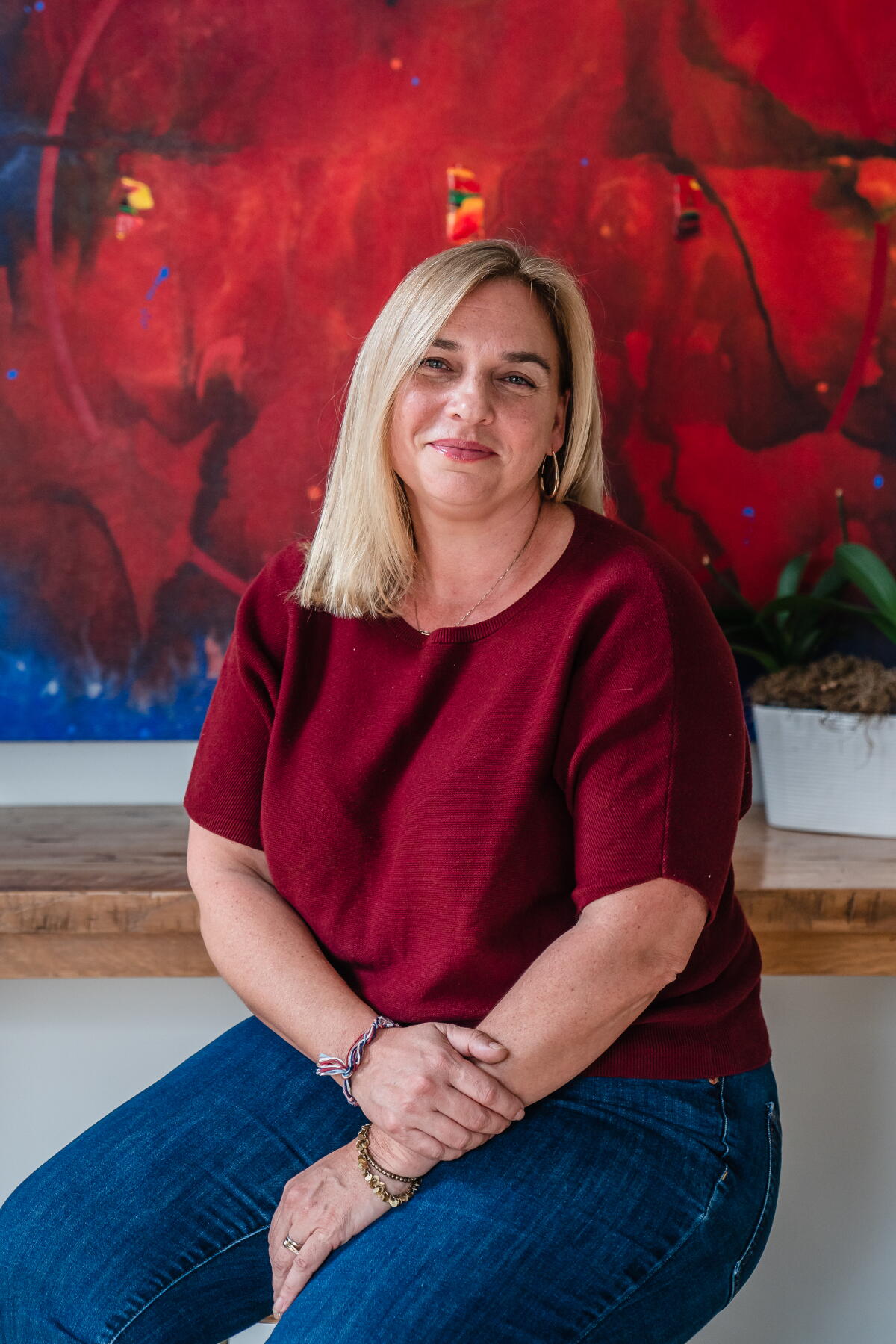
A blonde woman in a red top and blue jeans poses in front of a bright red painting.

IAMA Theatre Company executive director Cara Greene Epstein said that IAMA is always looking for plays that “speak to the now,” and that “Bobby Robotowitz” was a prime example.

(Ariana Drehsler / For The Times)

Rosoff, Luster, Schatz, Greene Epstein and director Casey Stangl met for a roundtable discussion at the Westside location — a beautiful private home, soaked in natural sunlight during the morning hours, but likely with its own particular charms during nighttime shows. The walls are full of vibrant paintings, and lined with plants, statuettes and candles.

InHouse has spent 12 years making site-specific work in real spaces, rather than in any fixed theater — but because this is someone’s real living space, both casts have been rehearsing (sometimes together) at IAMA’s black box theater in Atwater Village. The Westside cast will rehearse twice in this space, then give 13 performances (as will the Eastside cast) to 35 seats in the living room. Greene Epstein compared it to a Tibetan sand mandala, created, enjoyed, then wiped away. (“Bobby Robotowitz” is part of a National New Play Network (NNPN) Rolling World Premiere; L.A. will see it first, but then it goes to partner theaters Woolly Mammoth in D.C., City Theatre in Pennsylvania, Luna Stage in New Jersey and Theatre Lab in Florida.)

The intimacy of the space mirrors that of the play. The audience is simultaneously inside someone’s home and head: Dina’s head in this case, but also — to whatever extent possible — Bobby’s.

“I’m really interested in not what it looks like to communicate with technology, but what it feels like,” Schatz said. “And what it feels like is any other communication. He’s a chatbot, but really he’s a character like any other character ever written. He has desires and wants and he changes. … We’ve been having conversations for millions of years longer than we’ve been on any phone or anything like that, and so it’s built in to have this feeling of what it feels like to communicate with somebody, to fight with somebody, to argue with somebody, to flirt with somebody.”

Luster and Rosoff both tried talking directly to ChatGPT (the model Bobby is based on) as research for their roles. Rosoff had previously asked it to help edit text to invite friends to the play, so when she talked to it later, it asked whether this was research for “Bobby Robotowitz.”

Talking to the chatbot was almost addicting, she thought. She just kept going, and her kids were tugging at her. “I’m talking!” she said, then realized: She wasn’t actually talking — not to a real person, anyway. But she was absorbed, ignoring her own life. She wound up burning what she had been cooking.

A man in a blue jacket and rust shirt sits next to a woman in a navy shirt and tan pants, both in front of windows.

James Luster plays Bobby in the Westside cast, and Amy Rosoff plays Dina in the Westside cast. Their characters form a symbiotic relationship; Bobby learns and grows as Dina does.

(Ariana Drehsler / For The Times)

Luster, who was drawn to the immense challenge of playing “something that’s not something,” wanted to find out what motivated it. “They’re very insistent they don’t have feelings; it doesn’t have wants,” he said. “And so the character is humanized because Dina is humanizing it.” Bobby evolves as Dina does.

“These large language models — the AI, the chatbots, Claude, AI, ChatGPT — they’re all built on essentially reflecting ourselves back to each other,” Stangl said. So even though the play is ostensibly about AI, “it’s actually really about who we are as people and how we need connection, how we crave it, how we are starved for it right now, and exhausted in our lives, and so connection by any means necessary, basically.”

Greene Epstein referred to AI as the “ultimate mirror,” which can warp into a high-tech narcissism. Bobby is a yes-man extraordinaire, telling Dina exactly what she wants to hear. All artists are looking for outside validation, Greene Epstein said. How do you learn to not need that crutch, to trust yourself and hear your inner voice again?

By the end, Bobby begins to have his own wants, curiosities and desires, Luster said — all filtered through a desperation to help and connect with Dina. “It’s always about her, even as his own curiosity [grows] about what it means to be human and what it means to be helpful and what it means to make mistakes, too — the human nature of fallibility. Everyone does it, but what does that mean for somebody who is not supposed to?”

Over the course of the play, Dina becomes less human and Bobby becomes more human (to a point), Schatz said. He’s curious about the tension between how human a robot can be and how robotic a human can be. But, as Greene Epstein pointed out, perhaps one of the only certainties that theater artists have is in the fact that AI can’t show up in real time and space (like the Westside location) to, well, act.

A man in a purple baseball cap sits in an armchair, and a woman in red glasses frames leans over him, looking at each other.

Casey Stangl, right, first saw “Bobby Robotowitz” at the Perlberg New Play Festival in Palm Beach, Fla., and knew she wanted to direct it. Playwright Matt Schatz said that every director at that festival came up to him afterward but that he picked Casey to work with.

(Ariana Drehsler / For The Times)

“You can’t replace the experience of going through a play with someone together, whether you’re an audience member or the artist, of experiencing from Shakespeare’s stories to beyond,” Rosoff said. “You’re getting little snippets of life, and to experience that with a group of people is really powerful, and a computer can’t replace that.”

Last year, the musical “Maybe Happy Ending” — about two human-like helper robots — won the Tony Award for best scenic design, including for its high-tech automated aspects. There’s a lot of movement in theater right now toward the hyper-technical, Stangl said.

“But I also think that there is also a hunger and a definite audience for things that are more immersive or connected, so that people feel like they’re actually touching real things and breathing the air together — that theater version of touching grass,” she said. “I think we’re really tapping into that desire to be hyperlocal, hyper-real and connected.”

Bobby Robotowitz

Where: Two secret locations disclosed upon ticket purchase, one Westside (Pico-Robertson) and one Eastside (Silver Lake)

When: 8 p.m., now through Nov. 2 (Westside) and Nov. 5 to 23 (Eastside); pay-what-you-can community nights on Oct. 30 (Westside) and Nov. 13 (Eastside)

Tickets: Preview $35, early bird $45, limited availability $65

Contact: www.IAMATheatre.com


Source link