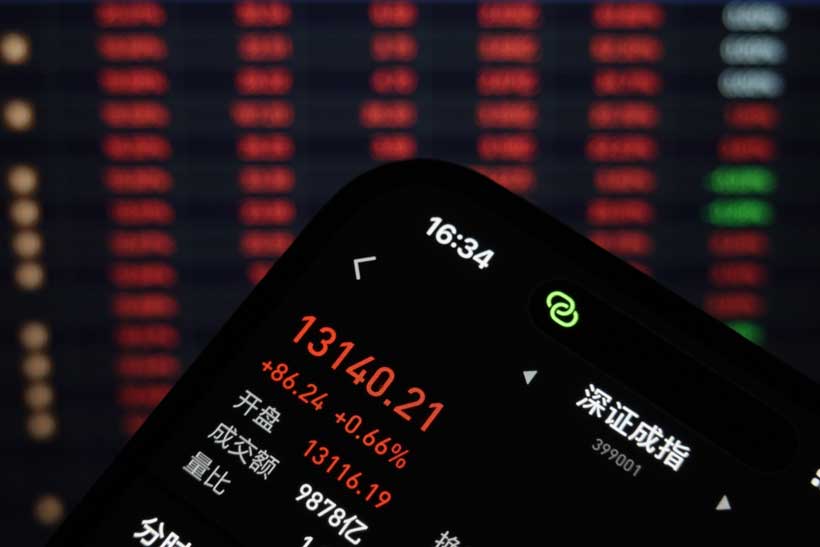
Technology stocks led a broad market rally across China and Hong Kong on Tuesday as investors poured into artificial intelligence related companies despite continuing uncertainty surrounding developments in the Middle East.
The strongest gains came from major technology firms including Tencent and Meituan, helping push Hong Kong’s technology index to one of its biggest daily advances in months. The rally reflected growing investor confidence in China’s technology sector, particularly in artificial intelligence, even as markets monitored fragile diplomatic efforts and ceasefire discussions involving regional conflicts.
The performance highlights an increasingly important theme in global markets: investors are weighing geopolitical risks against the powerful growth narrative surrounding artificial intelligence and technology innovation.
Background
Chinese technology stocks have experienced a volatile few years marked by regulatory scrutiny, slowing economic growth, property market challenges, and shifting investor sentiment.
However, the global artificial intelligence boom has provided a fresh catalyst for the sector.
As major technology companies race to develop AI models, digital assistants, and enterprise applications, investors have increasingly focused on firms capable of benefiting from the next phase of technological transformation.
At the same time, geopolitical developments continue to influence market sentiment. Escalating tensions in the Middle East, concerns about energy prices, and broader uncertainty in global financial markets have periodically weighed on risk assets.
Against this backdrop, Tuesday’s rally suggests that technology driven growth expectations remain a dominant force in investor decision making.
What Happened?
Major Chinese and Hong Kong equity indices posted strong gains:
- Hong Kong’s Hang Seng Index rose 2.5 percent.
- The Hang Seng Tech Index surged 4.7 percent.
- China’s STAR 50 Index gained 1.6 percent.
- The ChiNext Index climbed 2.7 percent.
- The CSI300 advanced 1.5 percent.
- The Shanghai Composite Index increased 0.4 percent.
Technology stocks were the primary drivers of the rally.
Tencent shares jumped more than 10 percent following reports that the company is moving closer to launching an artificial intelligence agent integrated into WeChat, China’s largest social media and messaging platform.
Meituan also gained strongly after investors reacted positively to signs that intense competition in China’s food delivery industry may be beginning to ease.
The rally extended beyond technology, with artificial intelligence related shares and non ferrous metal companies also recording significant gains.
Tencent’s AI Push Captures Investor Attention
Why Tencent’s Move Matters
The strongest market reaction centered on Tencent.
Reports suggesting that the company is nearing the launch of an AI agent for WeChat generated excitement because of the platform’s enormous user base of approximately 1.4 billion people.
If successfully deployed, such an AI assistant could become one of the largest consumer facing artificial intelligence applications in the world.
The development is significant because AI competition is increasingly shifting from standalone chatbots toward integration within existing digital ecosystems.
Companies that already possess massive user networks may have advantages in scaling AI services rapidly.
The Strategic Importance of WeChat
WeChat occupies a unique position within China’s digital economy.
The platform combines messaging, payments, shopping, business services, entertainment, and social networking into a single ecosystem.
Integrating AI directly into this environment could significantly enhance user engagement while creating new revenue opportunities through advertising, commerce, and premium services.
Investors appear to be viewing Tencent’s AI ambitions as a potentially transformative growth driver.
Why Meituan’s Gains Matter
Signs of Competitive Stabilization
Meituan’s rise may appear surprising given its latest quarterly loss.
However, investors focused less on earnings and more on indications that subsidy driven competition in China’s rapid delivery sector is beginning to moderate.
For much of the past year, food delivery companies have engaged in aggressive pricing battles designed to capture market share.
While beneficial for consumers, these strategies have pressured corporate profitability.
Evidence that the competitive environment is stabilizing could improve future earnings prospects across the sector.
Shift Toward Profitability
Investors often reward companies when they believe industry conditions are becoming more rational.
For Meituan, expectations of reduced subsidy spending may be viewed as a pathway toward stronger margins and improved financial performance.
The AI Investment Narrative Continues
Artificial Intelligence Remains a Global Theme
One of the most important lessons from Tuesday’s rally is that artificial intelligence continues to dominate market thinking.
Despite geopolitical uncertainty, investors remain eager to identify companies positioned to benefit from AI adoption.
This trend is not limited to the United States.
Chinese technology firms are increasingly being evaluated based on their ability to develop competitive AI products, infrastructure, and services.
Zhipu AI’s Listing Plans
Another development attracting attention was the announcement that Zhipu AI intends to pursue a domestic stock market listing in Shanghai.
The move highlights growing confidence among Chinese AI firms and demonstrates the sector’s increasing importance within China’s capital markets.
A successful listing could further strengthen investor interest in domestic AI development.
The Middle East Factor
Why Investors Remain Cautious
Although technology optimism drove markets higher, geopolitical developments remain a significant source of uncertainty.
Investors continue monitoring negotiations involving the United States, Iran, Israel, and regional actors.
Potential disruptions to energy markets remain a key concern because rising oil prices can increase inflation pressures and slow economic growth globally.
Markets Are Balancing Two Competing Forces
Current market behavior reflects a balancing act.
On one side are geopolitical risks, including conflict, energy market volatility, and diplomatic uncertainty.
On the other side is enthusiasm surrounding technological innovation and artificial intelligence.
Tuesday’s rally suggests that, at least for now, investors believe technology driven growth opportunities outweigh immediate geopolitical concerns.
Analysis: Why China’s Technology Sector Is Regaining Momentum
The significance of Tuesday’s rally extends beyond a single trading session.
It reflects a broader reassessment of China’s technology sector.
For several years, investors viewed Chinese technology companies primarily through the lens of regulatory risk, slowing growth, and geopolitical tensions.
Today, artificial intelligence is changing that narrative.
Investors increasingly see Chinese firms as participants in a global technological transformation rather than merely domestic internet companies.
Tencent’s gains illustrate this shift particularly well.
The market reaction was not driven by short term earnings or cost cutting measures. Instead, it was driven by expectations regarding future technological capabilities and growth potential.
Another important factor is capital flows.
China remains one of the few major emerging markets attracting investment across equities, bonds, and currencies simultaneously. This provides a supportive backdrop for asset prices even when external risks remain elevated.
At the same time, investors should not ignore underlying challenges.
China’s economy continues to face pressures from weak consumer demand, property sector difficulties, and slower growth compared with previous decades.
Artificial intelligence enthusiasm may boost valuations, but sustained market strength will ultimately require broader economic improvement.
Nevertheless, Tuesday’s performance suggests that global investors increasingly view China’s technology sector as a key participant in the AI revolution rather than merely a recovery story.
Future Scenarios
Scenario One: AI Momentum Continues
Technology companies successfully launch new AI products and attract additional investment.
This could drive further gains across China’s technology sector and strengthen market sentiment.
Scenario Two: Economic Weakness Limits Gains
Artificial intelligence enthusiasm remains strong, but broader economic challenges constrain corporate earnings and consumer spending.
Technology stocks continue rising, though at a slower pace.
Scenario Three: Geopolitical Risks Reemerge
Escalating tensions in the Middle East or worsening global economic conditions trigger risk aversion.
Investors shift away from growth assets, leading to increased market volatility.
What’s Next?
Investors will closely watch Tencent’s progress in launching AI features for WeChat and monitor adoption rates if the product is introduced.
Attention will also focus on upcoming earnings reports, AI related announcements, and developments surrounding Zhipu AI’s planned listing.
Beyond technology, markets will continue evaluating geopolitical developments in the Middle East and their potential impact on energy prices and global investor sentiment.
The interaction between technological optimism and geopolitical uncertainty is likely to remain one of the defining themes for financial markets throughout the coming months.
Conclusion
Tuesday’s rally demonstrates that artificial intelligence remains one of the most powerful forces shaping global investment decisions. Strong gains in Tencent, Meituan, and other technology companies highlight growing confidence in China’s ability to participate in the next phase of AI driven innovation.
While geopolitical risks continue to create uncertainty, investors appear increasingly willing to look beyond short term tensions and focus on long term technological opportunities. Whether this momentum can be sustained will depend not only on AI breakthroughs but also on the broader health of China’s economy and the stability of the global geopolitical environment.
With information from Reuters.