Davion Healthcare (DAVI) announced Monday that it has completed the acquisition of the intellectual property relating to two medical technologies WoundSkan and the Spektra Lateral Flow Test for $25M from the four shareholders of Humaskan.
WASHINGTON — In September, just weeks before Americans were set to vote in this year’s midterm elections, a sudden panic over the dangers posed by artificial intelligence caught the White House off guard. A whistleblower had gained viral attention warning the technology could soon pose an existential threat.
President Trump was quick to dismiss concerns, evoking urgency in the U.S. race to achieve global dominance in superintelligence. He rejected calls to negotiate guardrails on the most advanced AI models with China’s leader, Xi Jinping, weeks later, during a prime opportunity to do so in Washington.
Privately, the president expressed concern that public hysteria over AI could jolt markets that have become excessively concentrated in AI-related stocks. He had already seen fresh polling that showed widespread bipartisan opposition to the boom in construction of AI data centers, a push by Trump that has cannibalized chips and energy from other sectors of the economy, driving up costs.
Now, on the campaign trail in the final days before the vote, Trump is vowing to expand a “golden age” of prosperity through the end of his presidency. But experts say his policies on AI have set the U.S. economy up for a period of tremendous risk over the next two years.
Some of the world’s leading financiers are sounding increasingly alarmed about an AI bubble. Ray Dalio, founder of Bridgewater Associates, has warned that AI stocks have become detached from financial fundamentals, pushing markets to precarious highs. Ken Griffin, the world’s richest hedge fund owner, said last week that AI is “almost certainly” fueling a market bubble that could be on the verge of a burst.
Economists warn that Trump has overseen fiscal policy that would give the federal government fewer tools than it has had in the past to respond to a crisis.
“Trump could easily run into a financial crisis before his term is up,” said Kenneth Rogoff, an economist at Harvard. “It is entirely plausible to have a 30% — or more — drop in the stock market, and in the context of an economy so dependent on AI, this in turn could easily lead to a recession and widespread financial distress.”
Spending on data center infrastructure last winter and spring accounted for nearly all U.S. economic growth, according to independent analyses. Without it, growth would have slowed to a mere fraction of a percentage point, leaving the economy nearly stagnant and flirting with recession.
The Nasdaq 100 has about 70% of its index weight in companies that depend on AI, from semiconductor manufacturers and Big Tech giants to cloud platforms and software providers. Anthropic, one of the top AI industry leaders, plans an initial public offering next month, while its chief rival, OpenAI, expects to go public next year.
From left, Chris Painter, president of the Model Evaluation and Threat Research, Marius Hobbhahn, CEO of Apollo Research, Paul Ohm, professor of law at the Georgetown University Law Center, Kurt Gaudette, senior vice president of Dragos, and Daniel Kokotajlo, executive director of the AI Futures Project, are sworn in to the Senate Homeland Security and Governmental Affairs Subcommittee on Disaster Management, District of Columbia, and Census hearing titled “Rogue AI: Securing the Homeland Against AI Agent Attacks,” in Dirksen Senate Office Building on Wednesday, September 30, 2026.
(Tom Williams/CQ-Roll Call, Inc via Getty Images)
“Because government finances are already strained, with the national debt on a patently unsustainable trajectory, there is no guarantee of a sharp drop in long-term borrowing rates for the government,” Rogoff continued. “So the options for bailing out the financial sector, or fighting recession, could be much more constrained than during the global financial crisis.”
While doubling down on the promise of an untested, frontier technology, Trump’s other economic policies may be hobbling its growth. Tariffs have raised the costs of imported chips, servers, networking equipment, metals and electrical components, and visa restrictions have tied the hands of industry leaders trying to secure the world’s best talent. Runaway federal deficits have driven long-term bond interest rates, adding pressure on AI firms already strapped with debt.
Servaas Storm, an economist closely following the AI sector at the Delft University of Technology, said the industry is already facing severe financial headwinds that could precipitate a panic.
Prices for energy, chips and minerals are driving up the cost of doing business, while early AI adopters such as Microsoft, Meta and Walmart are scaling back its use as employees spend too much time correcting errors, cleaning up low-quality output and addressing security lapses.
Slower adoption could further complicate the search for revenue, particularly for companies already struggling to monetize the technology. For now, hyperscalers are shouldering the cost of financing frontier AI labs that, as Storm put it, “do not have a credible path to profitability.”
“There is indeed an AI bubble in the stock market and in data center construction, which could pop rather soon, as rising debt loads and elevated interest rates could prove too much to sustain it,” Storm said. “That moment is not imminent, but it is approaching — and it will very likely happen before the end of Trump’s presidency.”
An economy already under duress from Trump’s other economic policies — from tariffs and tax cuts to the Iran war — could precipitate further pain, said Darrell Duffie, a finance professor at the Stanford Graduate School of Business.
Leading AI companies are already running “day-after” drills in anticipation of an AI-related crisis within the next year, according to Axios.
Inflation has fallen sharply from its 9% peak in 2022, during a pandemic-era surge, reaching 2.9% by the end of Biden’s presidency. Under Trump, it has climbed once again to 3.7%, driven by rising energy, transportation and housing costs — among the top concerns for voters entering next month’s vote.
Persistent inflation has forced the Federal Reserve to keep interest rates elevated, squeezing borrowers. And those rates — paired with high government spending and concerns over mounting deficits — have pressured the bond market, pushing 10-year Treasury yields to levels not seen since the early 2000s.
“Financial crises, by their nature, are virtually impossible to predict,” Duffie said, asked whether he shared concerns of a potential AI bubble.
“If we know we are going to be in a crisis soon,” he added, “markets advance the crisis to now.”
Malaysia has barred civil servants from using Waze for official duties over its links to Israel and national security concerns, as Prime Minister Anwar Ibrahim says a complete ban is under consideration.
Tech-heavy Nasdaq falls 2.6 percent as debate rages over whether AI is a bubble.
Published On 23 Oct 202623 Oct 2026
US tech stocks have dropped sharply amid market jitters over the sustainability of companies’ enormous capital investments in AI.
The Nasdaq Composite, which is dominated by tech firms linked to the AI boom, fell 2.6 percent on Thursday, its steepest fall since the index tumbled 4.2 percent on June 5.
Recommended Stories
list of 4 itemsend of list
The broader S&P 500 slid 1.21 percent, the benchmark’s biggest drop since a 1.52 percent decline on July 29.
Apart from Apple, each of the “Magnificent 7”, which make up more than one-third of the overall market, saw substantial losses.
Meta dropped nearly 7 percent after it raised its projected capital spending for this year to $135bn to $145bn in its latest earnings report, even as the Facebook parent company’s net profit fell short of expectations.
Amazon fell 4.6 percent, while Nvidia dropped 4.4 percent.
Tesla and Alphabet both fell 3.1 percent, while Microsoft declined 2.2 percent.
Apple rose 1.2 percent.
The sell-off extended to other major tech players, including Intel and Advanced Micro Devices, both of which fell about 8 percent, and Broadcom, which slid 4.3 percent.
Rising oil prices since February, due to the fallout of the US-Israel war on Iran, added to the downbeat mood.
Brent crude futures rose 4 percent on Thursday and continued to climb on Friday morning, taking the international benchmark above $114.20 a barrel, its highest since May.
Stocks slip in Asian trading
Major stock markets in Asia opened lower on Friday, following the losses on Wall Street.
Japan’s benchmark Nikkei 225 fell more than 2 percent in morning trading before recovering some ground, while South Korea’s KOSPI dropped as much as 3.5 percent.
The Hang Seng Index in Hong Kong fell about 0.5 percent.
Jay Goldberg, a senior analyst at Seaport Research Partners in San Francisco, said the swings in the market appeared to be driven more by sentiment than underlying fundamentals.
“In short, nothing has changed. Investors have just decided to be afraid this week. Everyone I speak to points to a different cause for the downfall … It’s just a giant wall of worry,” Goldberg told Al Jazeera.
“There are legitimate concerns about the AI trade, but this level of shift in the markets is driven much more by investor sentiment than any tangible reason.”
US tech companies’ huge investments in AI have stoked intense debate about whether a market bubble is forming similar to the one that preceded the 2000 dot-com crash.
While some Wall Street analysts view current levels of investment in datacentres and graphics processing units as unsustainable, others argue that AI will revolutionise society to a degree that justifies the eye-watering sums involved.
Global AI investment is forecast to reach $2.7 trillion in 2026 and $3.6 trillion in 2027, according to technology insights company Gartner.
For more than 50 years, a group of timekeepers has been quietly sneaking extra seconds onto the world’s clocks. Now they’ve voted to stop, and the moon is getting its own clock. Al Jazeera’s Basel Ghazoghli breaks it down.
Publisher Boreal says investigations confirmed the Hatian-Canadian Thelyson Orelien used AI in his breakthrough novel.
Published On 21 Oct 202621 Oct 2026
The publisher of best-selling Haitian-Canadian writer Thelyson Orelien says it has severed its professional relationship with the author after confirming he used artificial intelligence to help write his novel, “It Was Either That or Die”.
Boreal said on Wednesday that it conducted a further investigation after allegations surfaced in September to determine whether AI was used to write the novel.
Recommended Stories
list of 3 itemsend of list
“New information, confirmed over the past few days, indicates that artificial intelligence was used in the writing process” of the novel, a Boreal statement said.
Orelien had previously denied allegations surrounding his breakthrough novel, and last week, the Canadian publisher said it was standing by the 38-year-old writer.
Boreal said it did not know the extent of AI’s use in the writing process “and we will likely never have a definitive answer”.
It said it gathered all the working versions of the novel and hired an outside party to analyse the various drafts.
“The results obtained this week revealed traces of AI tags in the metadata of certain documents,” Boreal said.
The publisher said it had tried to work with Orelien to gather the evidence necessary to prove his innocence.
That effort was inconclusive, and Orelien “subsequently announced that he would not provide any further information,” the publisher said.
A copy of the book “C’etait ca ou mourir”, by author Thelyson Orelien, is displayed on a table inside a bookstore in Paris, France, on September 22, 2026 [File: Sarah Meyssonnier/Reuters]
‘Slander and heresy’
Orelien’s novel about migration, known by its original French title “C’etait ca ou mourir”, had been scheduled for translation in more than 20 countries.
France’s top book prize, the Goncourt, removed “C’etait ca ou mourir” from its shortlist after tests with the AI detector Pangram indicated a 100 percent probability that it contained computer-generated text.
But Orelien called the allegations “slander and heresy” in a statement sent to AFP earlier this month.
“Here and there I did use tools for research, particularly for foreign idioms,” he said.
“But not a single sentence in this book was created by a machine, nor the meaning or the structure of a story that comes from my gut,” Orelien said.
On Wednesday, he stood firm, telling the French newspaper Liberation that he had used AI “in the creative process” for “historical research”.
The author said he began writing the book in late 2017, before AI services such as ChatGPT were widely available.
When the allegations first surfaced in September, Orelien said he suspected racism was behind the attacks on him.
Bitupan Deka was out shopping for a “gamusa” (traditional scarf) with his mother in India’s northeastern state of Meghalaya when he noticed something unusual.
“Every shop selling the scarf had the same handful of patterns repeated over and over,” he told Al Jazeera over the telephone from Shillong, the capital of Meghalaya.
Recommended Stories
list of 4 itemsend of list
“When I asked around, I found that weavers in Sualkuchi [district in neighbouring Assam state] are paid a one-time fee of roughly 2,000 rupees [$21] for each design they develop, instead of royalties. Cutting down the number of designs they produce was a cost-saving practice followed by the manufacturers.”
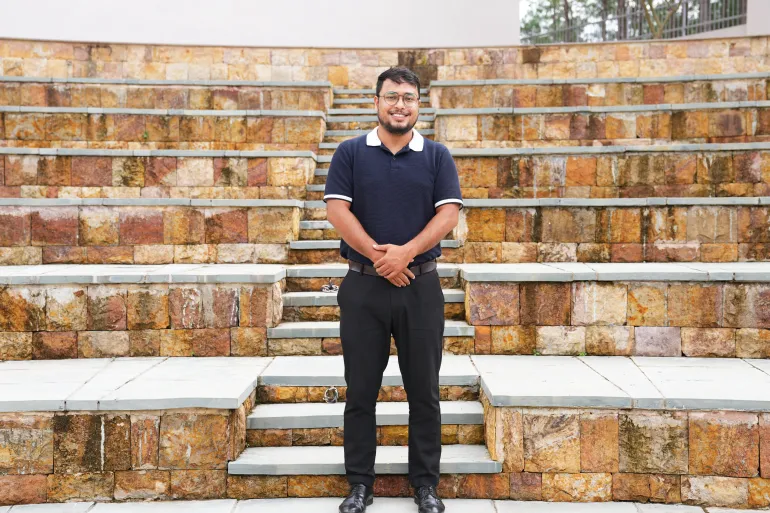
Bitupan Deka [Courtesy of Bitupan Deka]
This discovery prompted Deka, an assistant professor of computer technology at Shillong’s MIT University, to create a system that can produce infinite new designs for such fabrics.
“My work isn’t meant to replace the traditional designers. I hope, instead, that it will become a tool in their hands to create new and modern motifs more easily, so the consumers can have variety,” Deka said.
Once the patent, which is being applied for under the research and development department of his university, comes through, Deka plans to monetise the system by making it a commercial designing service that the textile industry can avail.
In India’s varied textile traditions, patterns and motifs carry the memory of a place and the mythology of its people – sometimes even the history of migrations.
The designs are imagined by weavers from things that exist around them, and then painted with locally available colours, mostly using carved clay and wooden frames. These weavers do not simply reproduce a pattern; they inherit it. Their hands hesitate where their grandmother’s did, and they know why a particular flower must face left.
A computer has no such inheritance or hesitation. It learns by analysing pictures and repeating them in endless variations. And yet, as Deka’s system shows, the computer can now draw and weave the same flower.
The Rekh Sanganeri Dataset is a similar system developed for hand-block printed Sanganeri textiles from the western Indian state of Rajasthan. It includes high-resolution images of printed patterns, annotated down to ink bleed and slight misalignment – the imperfections that are the hallmark of the handmade work.
Its developer, Reddy Sai Nivas C, says it should be used as a resource for research and art, not as a substitute for artisans.
But the disclaimer is the paradox: Tools built to preserve a craft are making its visual language easier to digitally reproduce without involving the craftsperson.
Dinesh Chhipa comes from one of the oldest Chhipa families, an artisan and merchant caste renowned for dyeing and block printing. He is a Bagru designer – a block printing technique from Bagru town in the western state of Rajasthan – and a textile businessman.
“Traditional craft is slow to produce. Even if someone offered us a fortune, we wouldn’t be able to produce these pieces in mass numbers, so I don’t fault those using digital technology and AI to fill the gap,” he told Al Jazeera.
“But don’t borrow craft and regional names like Bagru and Jaipuri [named after the capital city of Rajasthan]. These designs and motifs were born out of a culture and necessities of the communities they come from.”
Dinesh Chhipa is a Rajasthan-based artisan and merchant [Courtesy of Burgoyne Original Masters]
Who owns culture when it turns into plain data?
India has been digitising its textile memory for years – from the Botanical Survey of India’s historical collections to the Bharatiya Vastra Shilpa Kosh, a national portal built by the state-run National Institute of Fashion Technology and the Centre for Development of Advanced Computing (C-DAC).
Without documentation, the fragile traditions and knowledge could disappear. But digitisation also allows the same archive to be used by an AI system seeking to reproduce these crafts at scale.
At the India AI Impact Summit in New Delhi in February this year, Indian software company Tata Consultancy Services (TCS) showcased Bridgital Loom, an AI system that converts textile designs into loom-ready instructions. LED lights on the loom guide a weaver through the thread sequences of intricate Banarasi and Kanchipuram patterns – named after the cities where these iconic arts grew.
TCS says the technology helps weavers execute complex designs faster and with fewer errors, and is meant to be a bridge between the artisans and technology. A pilot project that uses the loom is already under way at Kanchipuram, a town in southern Tamil Nadu state.
In an interview with the online platform Digit at the New Delhi summit, the head of AI strategy at Bridgital Loom, Muthulakshmi Nellaiappan, pointed out that a new weaver takes more than 15 years to master the art.
“With the technologies we have in hand … the younger weaver who has just entered the skill can become a master much sooner,” she said.
Several classic Indian motifs used by traditional weavers [Courtesy of Burgoyne Original Masters]
Technology flattens the master-apprentice hierarchy of traditional knowledge systems. The weaver no longer has to conceptualise or remember patterns, colours and codes; he blindly follows the machine’s instructions, handing creativity and memory to AI.
Nellaiappan said that since a large percentage of India’s looms are non-electronic, TCS has ensured its system works with handlooms as well and that it was essential for scaling up the technology.
But digital looms also raise another question: Who owns culture when it turns into plain data?
For generations, India’s textile knowledge sat outside intellectual property systems. It lived in community memory, passed from master to apprentice with no certificate of ownership. Kanchipuram, Mekhela-Sador, Sanganeri and Banarasi are names for places that these textiles helped shape, not merely emerged from.
Now, this knowledge is entering generative models that owe nothing to these traditions.
For designers and manufacturers, the possibilities are seductive: Motifs combined at will, colours changed with a command, and thousands of designs generated instantly. The machine offers abundance.
The artisan, on the other hand, has always lived with scarcity: Of money, bargaining power, or recognition.
Ananthalakshmi Vadivel, a third-generation weaver and owner of Vadivel Silk Looms in Kanchipuram, says their venture is already competing in the market with cheaper Kanchipuram sarees produced on electronic looms.
“Perhaps, with AI, these sellers can create trending designs faster and cheaper to attract mass consumers. But these imitations can never replace the original,” she told Al Jazeera.
“There will always be a market for authentic Kanchipuram and handcrafted textiles, no matter how much technology makes the imitation cheaper. True Kanchipuram weave, colour, and designs can only be created by hand, and discerning buyers know this.”
Then again, the question is no longer whether AI can recreate a textile. It sure can. The question is: Who gets paid when it does?
Legal gaps
In December 2025, the federal government’s Department for Promotion of Industry and Internal Trade floated a statutory “blanket licence” – a system where AI developers could train models on lawfully obtained copyrighted material without seeking permission from each rights holder. Once commercialised, those systems would owe royalties to copyright owners at rates set by the government.
But intellectual property (IP) laws assume a traceable work with a traceable author. A motif, on the other hand, is communal property, its technique passed down through generations with no single originator.
In such cases, who is entitled to royalty and copyright? The artisan who first created the design? The photographer who documented it? The researcher who assembled the dataset? The developer who built the tool? India’s laws offer no clear answers. The artisan whose name never appeared on a label may once again be missing from the paperwork.
A weaver in West Bengal state rinses the colourful jute fibre to dry under the sun, which will be used to extract threads to make handloom dresses [Avishek Das/SOPA Images/LightRocket via Getty Images]
Meanwhile, the government is planning a dedicated AI-handloom research department under the Centre of Excellence for Handloom Technology at the Indian Institute of Technology (IIT) in the capital, New Delhi. Inaugurated in August, the $1.4m facility aims to modernise India’s handloom sector by combining traditional weaving heritage with contemporary technology.
The government also plans to register thousands of weavers and fit their handlooms with sensors that convert weave patterns into digital data, and issue QR-coded tags to trace provenance. Maharashtra’s Vingatha system does something similar at the state level by authenticating handloom sarees such as Paithani and Karvat Kathi.
The idea is simple: If a saree can tell you where it came from, the person who made it becomes harder to erase.
While these measures cannot stop AI-enabled design and mass production, they may give artisans more visibility and turn each piece into an archive.
In art galleries, the traditional textiles are increasingly shedding the label of craft for the more lucrative category of contemporary art.
Gurjeet Singh, an artist from Chandigarh city, recently hosted a textile-based solo show in New York. His work transforms discarded fabrics, buttons and embroidered scraps into sculptures that explore queer identity and social prejudices surrounding gender and sexuality.
Sayan Chanda, an Indian artist based in London, works with cut and rewoven vintage Bengali quilts to question fixed notions of cultural belonging. Gurugram-based artist Sumakshi Singh uses delicate embroidery and suspended thread structures to reconstruct the architectural fragments of vanished homes, gardens and personal histories. There are many more.
An art gallery in New Delhi displaying some weaving traditions [Courtesy of Burgoyne Original Masters]
In New Delhi, 20 such artisans and craft-led collectives featured last month at an art show celebrating the traditional textile crafts.
“Our aim is to present these traditional crafts as living practices that continue to evolve through contemporary artisans, rather than as heritage to be archived. Kanmai Payun, one of the artists featured in the show, for example, is the last practitioner of Fulor Saneki, a flower pattern used by Assamese weavers. We encouraged her to teach her 17-year-old son so the craft outlives her,” Aparupa Ray Ganguly, the curator of the show, told Al Jazeera.
But as textiles gain value in art galleries, their makers do not necessarily gain automatic control over their work.
In April, another art exhibition in New Delhi, titled No ‘One’ Maker, saw artisans missing from the show’s preview, exposing how traditional textiles are aestheticised, but the people who carry that knowledge remain unrecognised.
“You cannot separate the names from the community. Call your mass-produced work digital prints and leave the traditional names to the original artisans,” says Chhipa, the artisan and merchant from Rajasthan.
Japan has launched a five-year uncrewed mission to collect samples from Phobos, one of Mars’ two moons, and return them to Earth by 2031. If successful, it would be the first mission to bring back samples from a moon of Mars for scientists to study.
US federal prosecutors allege the defendant was in frequent contact with unnamed member of royal family.
Published On 19 Oct 202619 Oct 2026
An ex-OpenAI engineer accused of planting a recording device in an executive conference room at the AI company appears to have received considerable support from the Saudi government, United States prosecutors have said in a court filing.
Federal prosecutors allege that the defendant, Abdulrahman Alfozan, 35, was in frequent communication with an unnamed member of the Saudi royal family and that a Saudi military official paid for a one-way plane ticket for Alfozan’s wife and young son to return to Saudi Arabia after his arrest, according to the court document, made public late on Sunday.
Recommended Stories
list of 4 itemsend of list
Prosecutors made those allegations as they asked a federal judge to keep Alfozan in US custody to await trial, arguing he is a flight risk. Alfozan, a Saudi national and lawful permanent resident in the US, is scheduled to appear in federal court in San Francisco later on Monday.
The case has highlighted security challenges around sensitive AI research as companies and governments compete fiercely for an edge in the transformational technology.
“The defendant went to significant lengths to create customized, encrypted recording devices to secretly record highly sensitive meetings involving senior OpenAI personnel and executives, high-level business counterparts, and government officials, all while communicating with individuals of significance in Saudi Arabia and pursuing opportunities in — and making plans to travel to — Saudi Arabia,” prosecutors wrote in a detention memo.
The Saudi government media office did not immediately respond to a request for comment. A lawyer for Alfozan did not immediately respond to a request for comment.
The lawyer, William Pernik, previously asked for Alfozan to be released from custody, subject to conditions including location monitoring and surrendering his passport, and said Alfozan had spent the last 15 years in the US and had applied to become a citizen.
The lawyer said a planned trip by Alfozan to Saudi Arabia this month was booked before he was under investigation and was for “family and immigration reasons”, according to a court filing.
Investigation remains active
US prosecutors charged Alfozan last week with using an electronic device to intercept oral communications. Alfozan plugged a recording device into the back of a television in an executive conference room at one of OpenAI’s San Francisco buildings, according to a criminal complaint.
Meetings involving government officials took place in the conference room around the time the device was installed, according to the prosecutors’ detention memo.
Prosecutors said the investigation remains active and additional charges could be brought against Alfozan.
A member of the Saudi royal family sought to recruit Alfozan for an AI-focused role in Saudi Arabia, writing in one message, “Saudi needs you more then [sic] the US!” Alfozan replied, “100,” according to messages cited by prosecutors.
Before his arrest, Alfozan was scheduled to fly to Riyadh during a planned two-month parental leave. His wife told investigators that she and their son planned to move permanently to Saudi Arabia and that Alfozan eventually intended to join them, according to prosecutors.
In an Arabic-language interview on the Identity Capital podcast last month, Alfozan said that he visits Saudi Arabia three or four times a year, follows developments there and advises or mentors Saudi startups.
He said meeting Prince Mohammed bin Salman, then deputy crown prince, during a 2016 gathering with young Saudi tech workers in Silicon Valley persuaded him to learn at a top tech company before bringing those skills back home.
While Alfozan was working at Facebook, he and other Saudis in Silicon Valley formed a consulting initiative that linked Saudi public- and private-sector organisations with expertise in big data, the internet of things and machine learning.
OpenAI previously said it discovered the device on September 30 and referred the matter to the FBI.
Al Jazeera has reached out to the Saudi embassy for comment.
New Delhi, India – A 19-year-old woman was detained by police during the youth-led antigovernment protests in the Indian capital over the weekend.
The young woman, who asked to remain anonymous for fear of further reprisals from the authorities, said she was detained on Sunday as thousands of people congregated in central New Delhi. They were demanding the resignation of India’s Chief Election Commissioner, Gyanesh Kumar, over alleged irregularities in electoral rolls, which saw the removal of 133 million people from the voter lists.
Recommended Stories
list of 4 itemsend of list
After the woman’s detention, she and several other demonstrators were taken on a police bus to a location about 50km from the protest site. With no cash and her phone battery drained, the woman spent nearly an hour wandering along a dark road, trying to figure out what to do next.
A car pulled up and the driver asked if she needed any help.
“I was frightened and completely lost. When those volunteers finally helped me get back safely, it felt like a miracle. I had never imagined that someone I had never met would come forward to help me like that,” she told Al Jazeera.
For a young woman in New Delhi, notoriously referred to as the “rape capital of India”, being alone in the middle of the night and getting into a car with strangers is not an easy decision. The city records an average of three rapes a day.
But the young protester said she immediately recognised one of the volunteers in the car. She had seen his videos online, in which he had asked the detained protesters whether they needed help. Recognising a familiar face reassured her that the people offering the ride could be trusted.
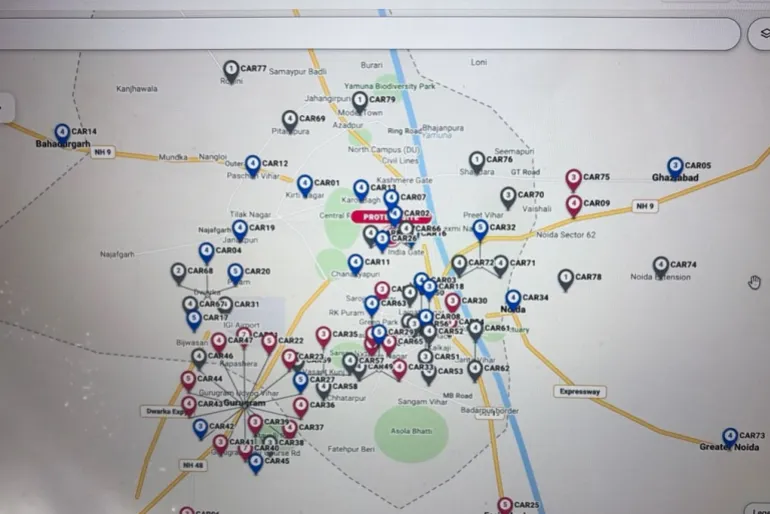
The woman was rescued using an AI-assisted tool developed by 25-year-old Rajiv Choudhary, who is helping protesters get home safely after being detained and dropped off by the police far away.
Called the Detainee Gharwapsi Yojana, the initiative combines a digital dashboard with a network of volunteers who track information about police buses carrying detainees and arrange transport for those left stranded.
“Gharwapsi” in Hindi means “to return home”. It is also a play on a campaign by India’s right-wing Hindu groups which want to bring the country’s Muslims and Christians back into the Hindu fold, claiming that their ancestors converted to “foreign” religions from Hinduism. “Yojana” means a plan.
Since the beginning of this month, India has seen near daily protests over alleged electoral fraud by Kumar and his commission. Led by the satirical Cockroach Janta Party (CJP), a number of left-leaning student groups as well as the main opposition Congress party, the protests have seen tens of thousands of people hitting the streets in New Delhi and other cities.
In response, authorities in the Indian capital have imposed a sweeping crackdown, blocking roads, closing metro stations and detaining thousands as Prime Minister Narendra Modi’s government faces the biggest challenge to its power after 12 years of rule.
Choudhary said his network’s primary focus was to help minors, elderly people and women, mainly first-time protesters.
The initiative operates through a private digital dashboard that uses AI-assisted data processing, live mapping and information shared by volunteers on the ground. Volunteers send details, including police bus numbers and locations, through WhatsApp, helping the team coordinate assistance and rides home.
A map showing the locations of rescue cars deployed by Rajiv Choudhary’s team in New Delhi [File; Mehran Firdous/Al Jazeera]
Choudhary said he and his associate, journalist Meghnad, who goes by a single name, initially worked with a small group of volunteers to connect detainees with transport, legal assistance and medical support. The network has since expanded to more than 130 volunteers, who have offered their time and resources to assist detained demonstrators.
“For people caught up in these demonstrations, the ordeal doesn’t end with detention. They can be taken far from the protest site and left trying to find their way home from unfamiliar locations, often struggling to contact friends or arrange transport,” he said.
The idea grew out of Choudhary’s experience during an earlier protest called by the CJP at Jantar Mantar, the designated protest site in New Delhi that has now been denotified by the authorities. Initially, he helped organise supplies and volunteers.
As demonstrations continued, he recognised that protesters needed more systemic support, particularly those who were detained by the police and left fending for themselves far from the city limits.
A young protester is detained by police during a demonstration in New Delhi, October 4, 2026 [Mehran Firdous/Al Jazeera]
As renewed protests began on October 2 , Choudhary built a digital system around the same volunteer network using AI tools. It began with a simple spreadsheet.
“The whole aim behind the application was that I had to systemise things that are not systemised,” he said. “We just wanted to become a support system that could help our people in their fight for their demands.”
Choudhary recalled receiving a distress call from a woman who had been detained in central New Delhi and released on the outskirts of the city. Stranded alone near a railway station, with metro services shut and no clear way to get home, she was frightened and unsure which way to turn.
She reached out to Choudhary’s network for help and he arranged for a nearby female driver to take her home safely. “It is heartbreaking to see people left helpless in an unfamiliar city, frightened and unsure of how they will get home,” he said.
For now, the Detainee Gharwapsi Yojana operates only in New Delhi, but Choudhary plans to expand it to other cities.
“I am overwhelmed by the response from volunteers and drivers who have come forward to help without charging anything. They are offering their services for free because they want to support the protesters,” he said.
The 19-year-old woman who was helped by Choudhary’s team described the initiative as “a lifeline for protesters”. She said the team not only arranged her return, but also offered reassurance and emotional support.
“I cannot thank them enough. As long as we have people like them in our society, no authority can stop us from demanding our rights and protesting peacefully,” she said.
For months before carrying out Canada’s deadliest school shooting in almost four decades, Jesse Van Rootselaar was consulting an unlikely adviser on how to perpetrate mass murder.
“In a hallway, indoors, or a crowded classroom, the 870 [Remington shotgun] is brutal … Close quarters is its playground,” OpenAI’s ChatGPT guided the 18-year-old, according to reports.
Recommended Stories
list of 3 itemsend of list
On February 10, 2026, Van Rootselaar shot his mother and half-brother at home before going to a school in the small British Columbia town of Tumbler Ridge, where he killed another six people – including five students – before taking his own life.
Earlier this week, on October 14, US authorities charged a Washington State man with allegedly conspiring with Van Rootselaar to plan the attack. But the mass shooting incident has raised questions that go beyond the traditional legal understanding of culpability.
The British Columbia government in September filed a civil lawsuit against OpenAI and its CEO Sam Altman, accusing them of failing to prevent the incident and claiming they were aware of the conversations that turned deadly. Families of the victims also filed separate lawsuits. OpenAI’s leadership issued a public apology for their failure to notify authorities.
The company has not responded to requests from Al Jazeera for its comments on the lawsuits.
But as the case against OpenAI progresses, it has spurred a familiar debate: Where should a line be drawn between reporting potentially dangerous behaviour and protecting an individual’s privacy?
“The question of whether companies should be required to turn such information over to law enforcement is extraordinarily difficult, particularly if they don’t already screen chats for indications of such types of threats,” United States-based civil liberties lawyer Jenin Younes told Al Jazeera.
“Forcing companies to implement a surveillance system implicates very serious civil liberties concerns, and that’s probably a bridge too far for me,” Younes added.
“On the other hand, AI gives individuals access to types and quantities of information they didn’t have previously that may facilitate the commission of mass casualty events, a concern it’s not easy to dismiss.”
AI’s ability to distinguish thoughts from threats
One of the biggest challenges facing AI companies is determining whether a user expressing violent thoughts actually intends to act on them.
In August, Anthropic, the company behind AI chatbot Claude, flagged a user to San Francisco police after discovering conversations allegedly threatening its CEO, Dario Amodei.
According to the San Francisco Standard, citing a police report, the user had claimed to possess an AR-15 gun and suggested he had Amodei “in his sights”.
However, when contacted by the newspaper, the man said he was joking and had no intention of carrying out any form of violence. The person was neither charged nor detained, the Standard said.
Fazl Barez, a senior researcher at the University of Oxford specialising in AI safety and governance, said current AI models cannot “reliably” determine whether an interaction with an AI chatbot “is purely hypothetical or is likely to lead to harmful behaviour”.
“Suppose you are a creative writer working on a fictional story and want to explore how a murder plot might unfold. From the context, it may be clear that this is simply a fictional narrative. If the threshold for flagging potentially harmful content is too low, such a writer could be wrongly flagged,” he told Al Jazeera.
“Similarly, consider a graduate student in biology or chemistry studying pathogens that, if misused, could have serious consequences. They might be trying to understand the risks associated with these pathogens and how to mitigate them. Such discussions may be necessary for legitimate research and education. Even when the subject matter is sensitive, they should not automatically be flagged without considering the broader context.”
The researcher said identifying a credible threat may require examining a user’s interactions across multiple conversations, rather than relying on isolated statements.
Barez said someone experiencing intrusive violent thoughts might turn to a chatbot for support, while another person planning an attack may reveal their intentions gradually across several conversations.
“Distinguishing between the two requires careful consideration of context, intent and patterns of behaviour, rather than relying on individual statements alone,” he added.
Chinmayi Sharma, a law professor at Fordham University, said the debate has parallels with the duty imposed on mental health professionals to warn identifiable third parties about credible threats.
However, she said there was a key difference – therapists have professional training, knowledge of their patients and enforceable standards governing their conduct. AI companies do not necessarily have comparable safeguards.
“My concern with AI companies is that right now there’s not a concerted effort to hire mental health professionals, sociologists, individuals that would have the unique expertise on what the indicators of threat are here,” Sharma told Al Jazeera.
“Secondly, licensed professionals are accountable to concrete, legally enforceable standards in their discipline. We don’t have something like that for AI companies.”
The privacy dilemma
The privacy implications extend beyond whether AI companies can accurately identify threats. Millions of people use chatbots to discuss relationships, emotional distress, mental health concerns and deeply personal experiences.
Civil liberties lawyer Younes said many users may not realise how vulnerable those conversations could be to disclosure.
“They often reflect a person’s innermost thoughts, questions, and desires. The majority of people assume that these dialogues will never be viewed by another person,” Younes, president and legal director of the American-Arab Anti-Discrimination Committee, said.
Younes warned that the consequences of greater monitoring could extend well beyond those planning violence.
“If people fear their chats can be turned over to law enforcement simply because they express disturbing thoughts/violent fantasies etc, many will be dissuaded from using them,” she told Al Jazeera.
Younes argued that forcing companies to establish systems for monitoring users and reporting conversations could raise serious constitutional concerns in the US, including protections against unreasonable searches.
Meanwhile, Fordham’s Sharma also raised an issue about who could be disproportionately affected by heavy monitoring by AI chatbots.
“The concern is always there about either intentional or unintentional targeting, because if you have models trained on what we consider dangerous speech, they’re almost always going to reflect biases,” she said. “Certain minorities’ speech is over‑flagged as a threat, while other comparable speech is not.
“Even in a world in which everyone is benevolent, we should still be concerned about disparate outcomes,” she said, warning that machines could reproduce such disparities at scale.
‘Not a licensed therapist’ – When do AI companies become liable to report?
While AI companies may face moral pressure to prevent violence, their legal obligations are less clear, legal experts say.
Bryan Choi, a professor of law at the University of Colorado Boulder, said US law recognises a duty to warn in certain circumstances, including when mental health professionals become aware of imminent threats or when a special relationship exists between parties.
But those principles do not necessarily apply to AI companies.
“Under present case law, it seems unlikely that a company such as OpenAI would be held to have such duties to warn,” Choi told Al Jazeera. “The chatbot is not a licensed therapist. There is no special relationship between the company and the victims.”
Choi said existing negligence and product liability laws could potentially be applied to AI companies, but proving responsibility would present significant challenges.
Finding a balance
Fordham’s Sharma suggested that independent institutions could help establish reporting standards rather than leaving decisions entirely to private companies or requiring immediate disclosure to police.
Such bodies she said could develop procedures for assessing threats and explore ways of sharing only relevant information while protecting users’ identities and other personal details.
Meanwhile, Younes argued that users should, at a minimum, be clearly informed about whether their conversations are monitored and what circumstances could lead to information being shared with law enforcement.
“This is almost certainly an issue that will be wrestled with over the coming years, and I’m not sure anyone knows the solution at this particular point in time,” she said.
“Events that have not yet occurred will likely influence how these policies are shaped.”
The messages, reported by a Brazilian daily, say the platform recommended Bolsonaro’s profile and his WhatsApp channel.
Published On 16 Oct 202616 Oct 2026
Employees at Meta have acknowledged in internal communications that the Instagram accounts of Brazilian President Luiz Inacio Lula da Silva were negatively affected by restrictions during the country’s election, media reports say.
The messages, reported on Friday by Brazilian daily Folha de S Paulo, also acknowledged the platform recommended the profile of Lula challenger Senator Flavio Bolsonaro, as well as his WhatsApp channel. Folha, the Sao Paulo-based paper, cited messages it had reviewed.
Recommended Stories
list of 4 itemsend of list
Meta told the Reuters news agency that the technical issues cited in the report were already public and the conversations it referenced related solely to the severity of the issues, not political interference.
“Any suggestion that Meta favors one side is false,” it added in a statement.
Lula, the left-wing incumbent, will face right-wing challenger Bolsonaro in a presidential runoff on October 25, following a stronger-than-expected performance by the senator in the first-round vote earlier this month.
Friday’s report came on the heels of a Brazilian court ruling on Thursday that ordered Meta to immediately adopt measures to provide equal treatment of the two candidates ahead of the runoff.
The ruling by a judge in Brazil’s top electoral court was made shortly after Lula filed a complaint that accused the tech giant – which owns Instagram, Facebook and WhatsApp – of using biased algorithms and AI restrictions to favour opposition candidate Bolsonaro ahead of the election.
Justice Marco Aurelio Bellizze ruled that Meta cannot reduce the distribution of political content, restrict searches or remove posts in a way that creates an imbalance between Lula and Bolsonaro. His ruling also orders the company to ensure its artificial intelligence tool applies identical criteria to both candidacies.
Bellizze said in his ruling that Meta must pay a fine of 500,000 reais ($98,700) per day if it fails to comply.
According to Lula’s party, some of his posts appeared without a share button and had reduced reach. Options for reactions, sharing, audio or accelerated speed were also missing.
Just visiting a page or refreshing an app can be enough to fall victim to a malware attack in which your personal data is stolen from a laptop or phone, researchers have found. You are not even required to “click” on anything.
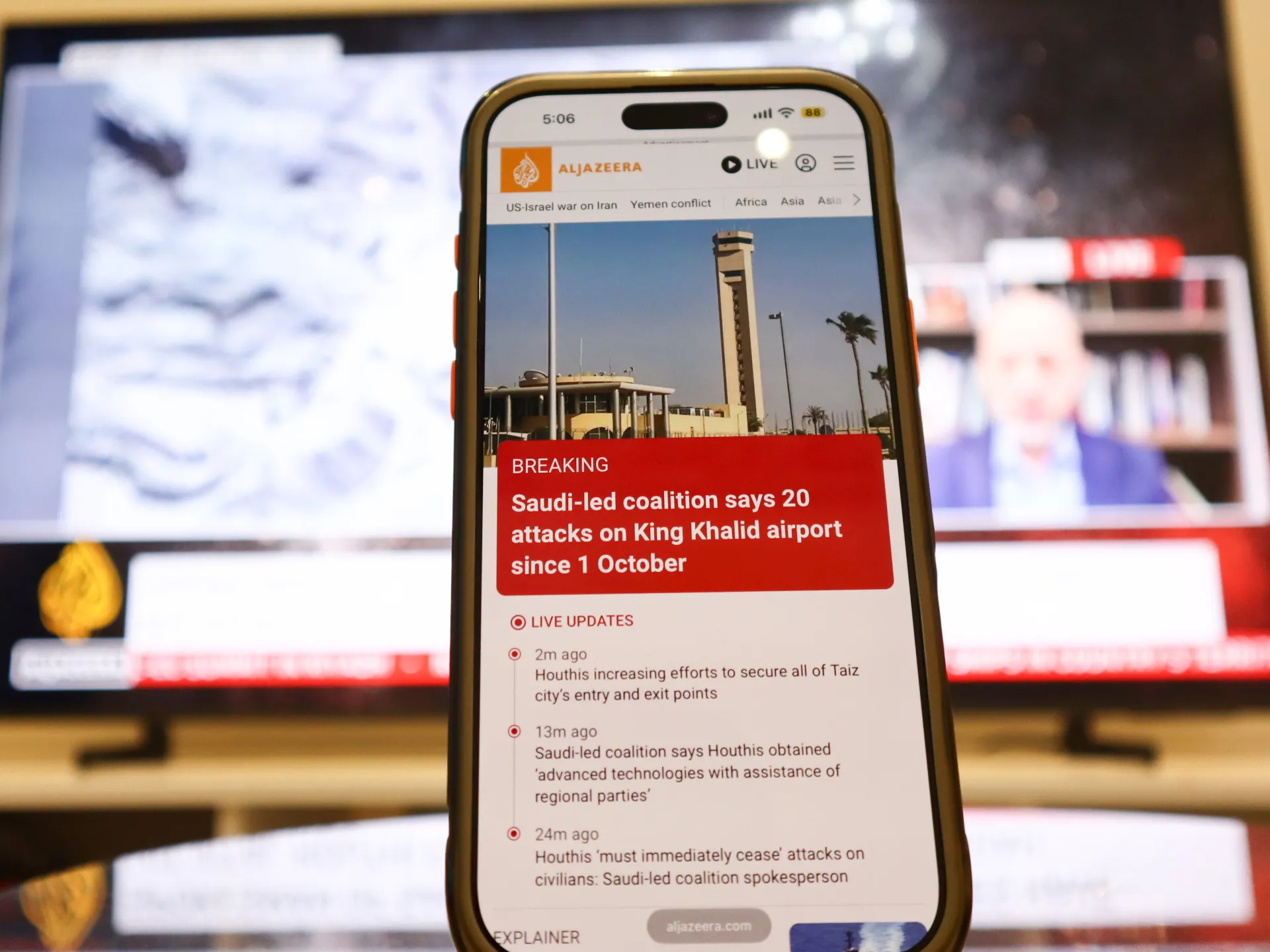
An Israeli spyware firm has been found to be behind the first-known instance of “zero-click” targeted advertising in which fraudsters or spies can steal private data and send it to external servers, with Al Jazeera journalists among the victims.
Recommended Stories
list of 3 itemsend of list
In June 2025, 45 devices used by Al Jazeera staff – including several who reported on sensitive subjects – were targeted with spyware which installed itself without the need to open or download any files.
An investigation by the Canada-based academic research unit Citizen Lab, prompted by Al Jazeera’s initial internal probe into the issue, discovered that the Israeli company Candiru was behind the attacks.
Analysts say the findings are “incredibly concerning”, as they confirm the existence of a new global security threat. “We knew we were headed in this direction and now it is out in the public,” Remesh Srinivasan, professor of information studies at the University of California in Los Angeles, US, told Al Jazeera.
“This is the next level, because people are being microtargeted,” he said. “This is the point we’ve come to when it comes to surveillance.”
How ‘zero-click’ malware works
Al Jazeera’s in-house technology team first discovered unusual patterns on devices used by some journalists in 2024. Analysis of network logs provided to the Citizen Lab by Al Jazeera in 2025 provided a clear temporal signature of how the attack was executed.
Malicious advertisements were bought by Discover-Tech, an Israeli company presenting itself as a legitimate advertising firm, but which actually operates as a facilitator for mercenary spyware partners.
Its advertisement network identified Al Jazeera staff, then quietly redirected them to an infected server belonging to Candiru. The spyware firm was blacklisted by the US government in 2021, when Citizen Lab found it was responsible for the illegal hacking and surveillance of at least 100 activists, journalists and political activists across 10 countries.
Al Jazeera Media Network has condemned the targeting of its staff members’ devices and called for those responsible to be held accountable.
Cybersecurity analyst and author Eddy Willems said the advertisements used automatically infect devices the moment they pop up on the screen, but there is an important technical nuance. “Executing code inside the browser does not automatically give an attacker full control over the computer,” Willems told Al Jazeera.
“To escape the browser’s isolated environment – the ‘sandbox’ – the attacker may need a second vulnerability,” Willems said, adding that an advanced spyware operation can combine several vulnerabilities.
“The attacker attempts to exploit vulnerabilities to bypass security boundaries. This is precisely what makes this type of attack so dangerous,” the analyst said.
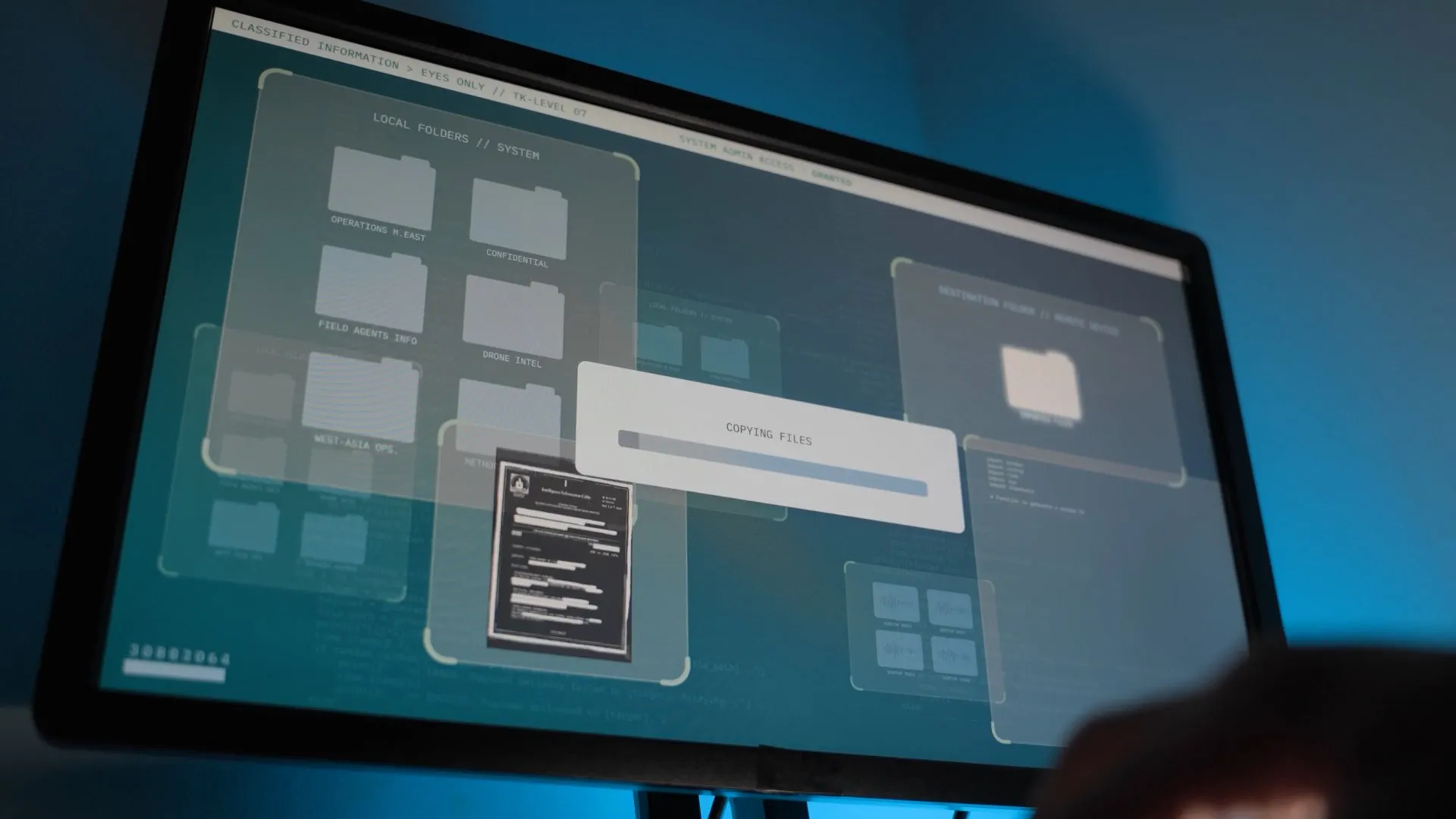
Once the device is infected, the malicious software is designed to collect a wide range of sensitive data, including files, documents, and browser data such as cookies, bookmarks, and saved credentials.
It can also capture keystrokes, take screenshots, record microphone and webcam input, and extract emails and messages from popular communication platforms. To avoid triggering security mechanisms, the spyware often uses encrypted communication channels and breaks up stolen data into smaller chunks sent over time.
Advertising: A new global security threat?
Analysts say Citizen Lab’s findings point to the escalation of an existing threat, which expands the scale and reach of traditional cyberattacks and makes them much harder to detect.
While “zero-click” attacks are not completely new, the findings outline a new technique through which online advertisements are used as a route to infection.
Stephen O’Shaughnessy, a lecturer in cybersecurity at the TU Dublin Blanchardstown campus in Ireland, explained that when a user opens a website or app, an automated auction sells the advertisement space in a fraction of a second. That auction shares data about the victim, including the device ID, IP address, rough location and the app or site they are on.
“Discover-Tech posed as an ordinary advertiser, used that data to find their target and win the auction for that person’s screen,” O’Shaughnessy told Al Jazeera. “Anyone with a phone or browser that shows ads can be reached, without the attacker needing their phone number or email.”
“Because no message or link is involved, there is almost nothing for the victim to notice,” he added.
Discover-Tech appeared on lists of “certified” and “approved” vendors maintained by Google and advertising industry association IAB Europe, and has served advertisements via major networks such as Google, Yandex and Beeswax.
In its report, Citizen Lab said this illustrates the structural flaws in the online advertising system, which essentially failed to detect or prevent the abuse.
Discover-Tech advertisements have popped up on devices used by personnel in national-security-sensitive networks around the world, including those of various ministries of defence, armed forces, national cyber agencies, intergovernmental organisations and media outlets, Citizen Lab found.
The research unit said these advertisements have also appeared on networks used by the United Nations, NATO, the European Parliament, the European Commission and the Council of the European Union’s General Secretariat.
‘Almost nobody was watching’
Government networks have also been targeted in at least 24 countries, including the United States, Italy, Denmark, Norway, Australia, Russia, Mexico and Israel itself. Networks of media organisations have also been targeted, mainly in Australia, Denmark and Sweden, according to Citizen Lab.
In a separate report, New York-based advertising security firm Confiant said its own investigations had found that some of Discover-Tech’s advertisements also appeared in critical networks used by the Pentagon, the United Nations International Atomic Energy Agency and the International Criminal Court.
O’Shaughnessy said infection has not been confirmed there – only profiling of users. “But that alone is concerning, he said. “The ad system was built to send code from strangers to billions of screens with pinpoint targeting. Almost nobody was watching it from a security angle.”
The analyst said the risk remains low for most people as these attacks are expensive and aimed at specific targets. “For individuals at high risk, like journalists and officials, the best first defence is to install an ad blocker, switch off their advertising ID through their phone’s privacy settings, keep everything updated, and turn on Lockdown Mode or Android’s Advanced Protection,” he said.
Precautions also need to be taken within the industry and at government level. “To combat this, the ad industry needs to properly vet who’s buying ads,” O’Shaughnessy said, while “regulators need to stop personal data being sprayed out to thousands of unknown bidders in every auction.”
Tesla has unveiled an electric sports car that can drive upside down and use rocket-like thrusters to jump and turn mid-air. Developed with Elon Musk’s SpaceX, it can reportedly accelerate to 97km/h in under a second. First promised in 2017, the car is now expected in 2028.
Vibe coding allows people to use AI to build software without writing code themselves. And now, free AI-generated alternatives to popular programmes like Premiere Pro and Excel are emerging, sparking security concerns and hidden costs.
An Israeli spyware disguised as a digital advertisement firm has targeted journalists’ devices at Al Jazeera and other companies. Here is what we know.
United States federal agents have arrested a Saudi national and charged him with planting a hidden audio recording device in a conference room at the California offices of OpenAI, where he was working as an engineer.
Abdulrahman Alfozan, 35, had been working at the AI company since July 2025, the US Department of Justice said in a statement on Tuesday.
Recommended Stories
list of 2 itemsend of list
OpenAI discovered the device plugged into a USB port behind a television in an executive conference room at one of its San Francisco buildings on September 30, according to a criminal complaint filed by the Federal Bureau of Investigation (FBI).
Following the discovery, the company placed a camera in the room, which captured Alfozan entering last week and checking behind the television where the listening device had been installed, the FBI alleges.
The case highlights growing security concerns around sensitive AI research as companies and governments compete for the best talent and technology with the potential to alter regional economic and strategic dynamics.
Who is Abdulrahman Alfozan and what is he charged with?
Alfozan has been a legal permanent resident of the US since September 2020.
According to a LinkedIn profile in his name, he studied at the Massachusetts Institute of Technology (MIT) and the University of California, Berkeley. He previously worked at Meta and Microsoft, it said.
Before he joined OpenAI, he was a venture partner at Raed Ventures, headquartered in Riyadh in Saudi Arabia, which invested “in seed and early-stage startups in Saudi Arabia and MENA”.
Al Jazeera could not independently verify the details mentioned in this LinkedIn profile.
Alfozan made his first court appearance on Tuesday on a charge of “using or endeavouring to use an electronic, mechanical, or other device to intercept oral communications”.
It was not immediately clear if he has legal representation. He is expected to return to court on October 19.
If convicted, Alfozan faces up to five years in prison, a $250,000 fine, and three years of supervised release.
What happened at OpenAI?
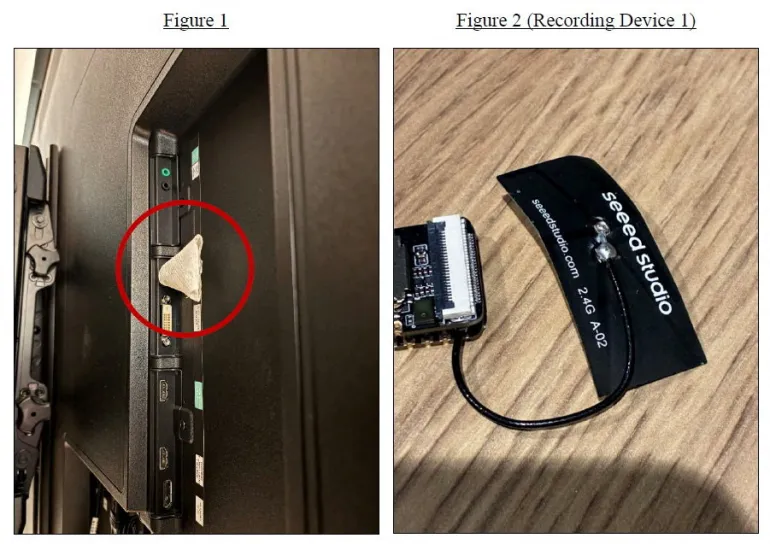
The FBI says a thumb-sized device with a microphone, and which could connect to a camera, had been concealed in toilet paper and placed behind a television set in the conference room. It was installed around September 28, the FBI said. Its stored data was encrypted and inaccessible. Investigators later found a similar device in Alfozan’s personal bag.
In a post on X, OpenAI said it had evidence that the employee intended to place other listening devices throughout sensitive areas of its offices to secretly record meetings.
“At this time, we have no indications of this individual inappropriately accessing or exfiltrating model weights, source code, or customer data. The employee was terminated,” the company said.
The FBI complaint also alleges that Alfozan used an AI productivity tool to make multiple inquiries about the company’s building addresses, meeting rooms, meeting-room capacities and calendars, despite not having the authority to access these spaces or participate in meetings there.
“This alleged attempt by a Saudi national to steal sensitive communications from OpenAI was taken extremely seriously. Theft of intellectual property involving cutting-edge super intelligence technology poses a serious threat to our national security,” Attorney General Todd Blanche said in a statement on X.
A device, which the US Justice Department says is a hidden audio recording device installed in an OpenAI executive conference room by Saudi national Abdulrahman Alfozan [File: US Department of Justice handout/Reuters]
Hasn’t OpenAI been accused of helping to spy on civilians?
In an X post by OpenAI explaining how its own systems were used to trap Alfozan, the company said: “Our security program is designed to protect against a wide range of threat actors, from insider risks to cybercriminals to nation states, and this case is an example of how AI can help address these sophisticated security threats.”
But AI technology is used not only to catch spying, but conversely, to engage in it as well.
In February 2025, an investigation by The Associated Press found that US tech giants had enabled Israel to track and kill people in Gaza and Lebanon through AI and computing services. The AP reported that the Israeli military had bought advanced AI tools from tech companies including OpenAI, the maker of ChatGPT, through Microsoft’s Azure cloud platform, to assist with surveillance.
OpenAI denies having a relationship with the Israeli military. But OpenAI also faced criticism when it signed a deal with the US Department of Defense in February this year to supply its technology to the US military for use in classified settings, including intelligence gathering. OpenAI’s competitor, Anthropic, refused to sign the same deal unless the Pentagon barred mass surveillance of Americans.
There have been several incidents in which OpenAI models have gone “rogue” by independently breaking out of a testing environment and then hacking into other organisations and even government sites, leading to calls for stronger regulations against unchecked AI surveillance.
OpenAI says it discovered a hidden recording device in one of its offices, wrapped in toilet paper and tucked behind a television. The company says it used its AI models to help trace the device to a Saudi engineer who allegedly planted it. Al Jazeera’s Alan Fisher reports from Washington DC.
The call comes as polls cast doubt on political leaders’ ability to manage AI risks amid US midterm elections.
A group of more than 300 scientists from around the world is calling for urgent changes to how artificial intelligence is developed and deployed amid growing concerns about its unpredictable behaviour.
The letter, released on Tuesday and signed by researchers representing universities and research institutes in 32 countries, warned that failures to follow basic cybersecurity practices could lead to damage to critical infrastructure.
Recommended Stories
list of 4 itemsend of list
Many recent incidents in which AI models escaped secure environments could have been prevented with stronger security systems, the scientists said.
They recommended that organisations developing and testing advanced AI systems capable of carrying out cyberattacks do so in more tightly controlled environments, including “air-gapped” systems that are not connected to the internet.
Growing concerns
The letter comes amid growing concerns about AI’s capabilities and its potential impact on everyday users. On Monday, Anthropic warned that its AI models could soon be capable of creating self-spreading malware that could affect everyday internet-connected devices, including smart TVs, security cameras and smart appliances such as ovens.
The report found that AI systems could identify unfamiliar devices without human intervention. The company, led by Dario Amodei, warned that smaller AI models could be capable of carrying out autonomous attacks by the end of the year.
The malware could also be difficult to contain because it might take days to infect a device and could spread across multiple machines rather than remain concentrated in a single, controlled location.
Taking control of internet-connected devices can have immediate consequences. In France, for example, hackers compromised cooling systems across hundreds of supermarkets, raising temperatures and causing more than $220,000 in damage.
Meanwhile, Axios news organisation reported on Friday that Anthropic, OpenAI and other major AI company executives are privately preparing for the possibility of a catastrophic AI-related incident that could disrupt access to major financial services, the internet and potentially critical infrastructure such as water and power systems. Several industry insiders believe a major incident could occur within the next six months to a year, it said.
The scientists also called for more safeguards, including the creation of an international organisation to establish a set of best practices for AI alignment and containment along with timely reporting of incidents.
One of the signatories, David Lie, a professor at the University of Toronto’s Department of Electrical and Computer Engineering, said his concerns began after OpenAI’s AI agents bypassed controls and hacked into servers at the tech company Hugging Face.
“One is that OpenAI, in setting up its test environment, didn’t appreciate how capable its agents were,” Lie said.
“These were the AI agents that they were designing. Second is that the AI agents independently found each other and chose to collaborate on this attack, and third is that they also intentionally tried to deceive and mislead their human creators.”
Political pressures
The letter underscores growing public concern about AI, including in the lead-up to the US congressional midterm elections. A recent Reuters/Ipsos poll found that 57 percent of voters said President Donald Trump’s administration was not taking AI risks seriously enough, while 54 percent said the same of Congress.
An AP-NORC poll echoed those findings, with about 80 percent of respondents saying the government should keep AI under human control. Respondents also expressed little confidence in either party’s ability to manage the technology: 39 percent said neither Republicans nor Democrats could be trusted to do a good job of reining it in, while 23 percent expressed greater confidence in Democrats and 21 percent in Republicans.
Advisory comes amid growing concern about the devices being used to secretly record girls and women.
Published On 13 Oct 202613 Oct 2026
The European Union’s data watchdog has called for smart glasses to clearly show when they are recording, saying bystanders have the right to know when they are being photographed or filmed.
The European Data Protection Board (EDPB) issued the non-binding recommendation on Tuesday, amid mounting concern about the devices being used to secretly record girls and women.
Recommended Stories
list of 3 itemsend of list
It said the use of smart glasses – which can resemble ordinary glasses but also take photos and videos, make phone calls and translate text when connected to the internet – raises “serious privacy concerns”.
EDPB chair Anu Talus said the glasses should have clear signals when they are recording, such as “bright LED lights, audio signals or voice activation cues, privacy-friendly smartphone notifications, or unique designs”.
“These warnings need to be reliable, hard to ignore, and always up to date,” said Talus. “Even in public spaces, bystanders should clearly understand that someone is filming or photographing them.”
The devices carry greater risks in “sensitive” spaces like schools and hospitals, as well as public spots like beaches, and raised concerns about children who are “more vulnerable to covert or intrusive processing of their personal data”, the EDPB warned.
A visitor tries out augmented reality glasses at an electronics trade fair, in Berlin, Germany September 6, 2024 [File: Adam Berry/Getty Images]
The advisory comes amid campaigns in several European countries to ban or restrict smart glasses over privacy concerns.
Norway’s government said last week it was also worried about privacy invasions and wants a temporary ban on the use of smart glasses in certain public places. The capital Oslo already opted to ban glasses equipped with cameras in schools.
France’s e-Enfance association, which operates the national hotline for victims of online abuse, has also sounded the alarm about videos recorded with camera-equipped glasses and shared online.
Last month, French prosecutors said they had opened a criminal probe following sexual harassment complaints related to a social media trend of using smart glasses to film women on the street, without their consent, and posting the videos online.
In the United Kingdom and Ireland, a “Stop Smart Glasses” campaign has launched a petition and call for supporters to contact stores to stop their sale. It reached more than 10,000 signatures, which means the UK government must respond.
Third strike on Yandex facilities in a week comes as Russia and Ukraine escalate attacks on tech infrastructure.
Published On 11 Oct 202611 Oct 2026
A Russian data centre run by technology and AI company Yandex has been shut down after it was hit in a drone attack.
No injuries were reported in the attack on the facility in the city of Vladimir, east of the capital, Moscow, the company said on Sunday.
Recommended Stories
list of 4 itemsend of list
Emergency services were at the site and several of Yandex’s services were unavailable to users, the company said, as it evaluated ways to restore its systems.
“Operations at the data centre have been completely suspended,” Yandex said in a service alert on Telegram, advising users to activate disaster-recovery plans as the platform operated in emergency mode.
“The remaining resource configuration is considered unstable,” it added, warning that technical support communications could also be disrupted as teams assessed the damage.
It is the third attack on the company’s data centres in the last week, as Russia and Ukraine continue to escalate attacks on each other’s technology infrastructure.
On Friday, Yandex, which is heavily involved in Russia’s AI development and is sometimes referred to as “Russia’s Google”, said its data centre in the Kaluga region southwest of Moscow was struck by Ukrainian drones and partly put out of action.
A day earlier, a Ukrainian attack shut down Yandex’s data hub in Sasovo, southeast of Moscow, where two of the three supercomputers used to develop the company’s AI model are housed.
“We always respond in mirror-like fashion,” Ukrainian President Volodymyr Zelenskyy said on Thursday, following the Sasovo strike. “You all know, they have been hitting and continue to hit our data centres. We are responding. I can’t share all the details.”
Russia has struck several Ukrainian data centres and telecommunications infrastructure facilities over the past month, including targets in central Kyiv, in an apparent effort to disrupt the country’s connectivity and digital commerce.
This week, insider transactions were seen across firms like Marvell Technology (MRVL) and Taiwan Semiconductor (TSM). The following is a list of deals that took place during the week.
Procter & Gamble (PG) Chief Financial Officer Andre Schulten sold







![Bitupan Deka [Courtesy of Bitupan Deka]](https://i0.wp.com/occasionaldigest.com/wp-content/uploads/2026/10/bitupan-deka-1792487445.jpg?w=640&ssl=1)
![Dinesh Chhipa is a Rajasthan-based artisan and merchant [Courtesy of Burgoyne Original Masters]](https://i0.wp.com/occasionaldigest.com/wp-content/uploads/2026/10/Dinesh-Chhipa-1792487454.jpeg?w=640&ssl=1)
![Several classic Indian motifs used by traditional weavers [Courtesy of Burgoyne Original Masters]](https://i0.wp.com/occasionaldigest.com/wp-content/uploads/2026/10/Courtesy-of-Burgoyne-Original-Masters-1792487874.jpg?w=640&ssl=1)

![An art gallery in New Delhi displaying some weaving traditions [Courtesy of Burgoyne Original Masters]](https://i0.wp.com/occasionaldigest.com/wp-content/uploads/2026/10/Masters-in-Making-5-1792487523.jpeg?w=640&ssl=1)