Syria's War

President Ahmed al-Sharaa: Syria seeking security deal with Israel | Israel-Palestine conflict News

In an exclusive interview with Al Jazeera, Ahmed al-Sharaa discusses regional security, Lebanon’s crisis and domestic challenges.

Syrian President Ahmed al-Sharaa has revealed that Damascus is actively working to reach a security agreement with Israel with the participation of several countries.

Speaking in an exclusive interview on Al Jazeera’s Al Muqabala programme, the full interview, to be broadcast at 19:00 GMT, al-Sharaa said he hopes the deal with Israel could serve as a gateway to a comprehensive peace.

He also assured that such an agreement would not compromise Syria’s right to the occupied Golan Heights, which Israel has illegally occupied since 1973.

He said Syria is avoiding any clashes with Israel, and that a security arrangement could pave the way for a broader and more comprehensive resolution to the crisis.

It comes after repeated Israeli incursions and strikes in southern Syria, since al-Sharaa came to power in December 2024 following the collapse of Bashar al-Assad’s government.

Lebanon’s crisis and regional fears

Al-Sharaa also confirmed that Syria has no intention of launching any military intervention into neighbouring Lebanon, despite repeated rumours on the issue.

Instead, his government is currently discussing ways for Lebanese authorities to help the country overcome its current crisis and steer it towards safety.

Southern Lebanon is currently being occupied by Israel, amid months of fighting between Hezbollah and Israeli forces. The Lebanese state is seeking to reclaim these occupied territories and have a monopoly on all weapons in the country.

Furthermore, he declared Damascus’s firm support for restricting weapons and containing decisions of war and peace exclusively to the Lebanese state.

Al-Sharaa said that Syria has no intention of intervening in Lebanon
Al-Sharaa said that Syria has no intention of intervening in Lebanon [Screengrab/Al Jazeera]

Al-Sharaa stressed that addressing the Lebanese crisis requires more than just a security approach but a comprehensive solution tackling a range of issues.

Any descent into chaos in Lebanon would have direct and immediate repercussions on Syria, and the potential expansion of the US-Israel war on Iran in the region would lead to a severe regional fall-out, he warned.

Sanctions, the SDF and missing persons

On domestic and economic fronts, al-Sharaa argued that merely lifting the economic sanctions imposed on his country by the US and other countries would not be effective unless Syria was also removed from the list of state sponsors of terrorism.

Addressing the internal agreement with the Kurdish-led Syrian Democratic Forces (SDF), an alliance of Kurdish and Arab armed groups that controls parts of northern and eastern Syria, the president acknowledged a delay in its implementation.

However, he affirmed that the government remains fully committed to the agreement and continues to bet on its ultimate success.

Al-Sharaa also announced that Syrian authorities have established a special committee to manage the issue of people missing during Syria’s war, between 2011 and 2024.

The UN estimates that around 100,000 people were forcibly disappeared during the war, while Syria’s National Commission on Missing Persons believes as many as 300,000 Syrians could be missing.

Al-Sharaa said the committee will operate strictly according to international standards, working in close cooperation with countries that possess specialised expertise in this field.

Source link

In Syria’s Jobar, locals struggle to rebuild their destroyed homes | Syria’s War

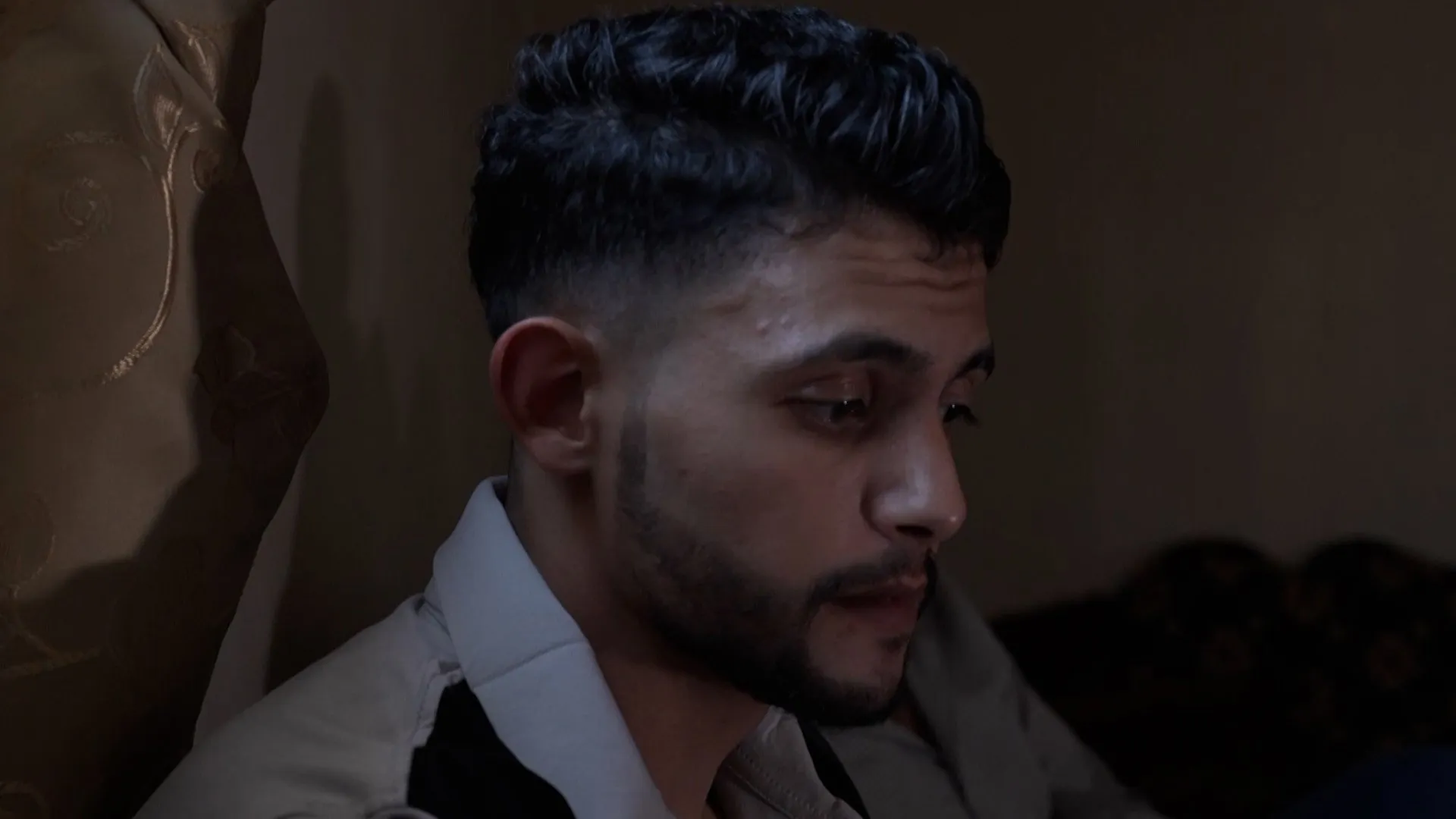
Jobar, Syria – Ahmad, a Syrian man in his mid-30s, walks down an unpaved road in Jobar, in East Damascus, and points to a small home. It was damaged sometime during Syria’s 13-year war and is now dilapidated after years of neglect.

“That was my grandfather’s house,” Ahmad, who asked to use just his first name due to his sensitive position, told Al Jazeera. Nearby is his mother’s home and a small shop where she sold clothes.

Before Syria’s war broke out in 2011, following the violent suppression of anti-government protests, Jobar was a neighbourhood brimming with life. It was home to a historic mosque and synagogue but today stands as a ghost town after years of shelling, air strikes and chemical gas attacks.

Between 2012 and 2018, when much of Jobar was held by rebels, it became one of the frontlines of Syria’s war. It was repeatedly bombed and shelled by government forces, resulting in around 95 percent of buildings being destroyed. When the government recaptured the Damascus suburbs from the rebels in 2018, Jobar was emptied of most of its citizens.

Today, it stands as a major post-war problem for both Syria’s new government and its citizens, as they try to navigate reconstruction and the return of its former residents.

The Bermuda Triangle

Opposition groups built a labyrinth of tunnels to avoid attacks by the regime and its allies, with daily air raids and shelling.

Locals said the tunnel network meant the area gained the nickname ‘the Bermuda Triangle’, because of how people would get lost there.

In 2018, the regime cut a deal with opposition groups – fighters, their families and other locals could leave the area. Most left for rebel-held Idlib and the regime banned any civilians from entering the area. Shortly after the rebels took Damascus in December 2024 and forced President Bashar al-Assad to flee to Russia, some of Jobar’s residents returned to visit their homes for the first time in eight years.


One former resident, Salem Sawan, 59, a former medic, also known as Abu Yehya, rents an apartment in a nearby suburb. He wants to return to his home but, like other locals, said residents have been blocked from rebuilding.

On a walk around a part of Jobar, Ahmad points to a large tunnel opening that was recently filled with dirt and rubble. “The government must have closed this recently,” he said.

Ahmad said some people had possibly got lost in the complex tunnel network. There have also been reports of buildings collapsing due to the hollowed-out ground below them. Between the tunnels, the lack of infrastructure and an ongoing mine clearance operation in the area, Jobar is a prime example of the struggle Syria faces in rebuilding.

Rebuilding challenges

One of the major issues for reconstruction has been finding financing. Assad left the country in ruins, materially but also economically, along with crippling international sanctions, which the new government has successfully worked to remove.

The World Bank estimated that the total cost of reconstruction in Syria is around $216bn, while almost 90 percent of the Syrian population lives below the poverty line.

“The need for reconstruction is really big and if a specific neighbourhood has no infrastructure at all [the question is] how to channel money into reconstruction,” Cao Yue, the author of a recent report on Syria’s reconstruction for ODI Global, a UK-based thinktank, told Al Jazeera. “We know the government has a limited public budget, so they have targeted international capital, and especially international private capital, and that’s why [there’s been an effort] to cut agreements with international investors, especially from neighbouring countries.”

On a tour of Jobar, Ahmad, the former fighter, points to a building with a missing facade. It was once a few storeys high, but the floors are missing because the iron rods that ran through them were stolen, he said.

A little over a decade earlier, Mohammad Hamsho, the former business partner of Bashar’s younger brother, Maher al-Assad, had come under US and EU sanctions for war profiteering and connections to the former regime. One of his companies has repeatedly been accused of extracting iron from destroyed areas for steel production. In January 2026, Hamsho allegedly came to a financial settlement with the new Syrian government, led by President Ahmed al-Sharaa.

Locals like Ahmad and Abu Yehya told Al Jazeera that officials told them they couldn’t rebuild their homes, even on their own initiative. When asked why, they were told there was a plan for the area, but they were not provided with any other information.

There are now reports that the government and private developers are looking to invest in areas like Jobar, and its geographic proximity to central Damascus means that land there is highly valuable.

Media reports say that local officials have proposed that a foreign-backed project for the area could finance a $21bn project that could create up to 200,000 jobs. But the project has a downside. It states that locals in the area will receive only 50 percent of their former homes and 30 percent of areas classified as “agricultural”. When that plan was presented to local councils and activists, it was met with anger.

This struggle between the government and locals is at the core of the struggle over Syria’s future.

“People need housing, but also need basic services like education, sanitation, water, electricity and governance,” Mauricio Vazquez, Head of Policy at ODI’s Global Risks and Resilience programme, and another of the report’s authors, told Al Jazeera. Vazquez added that the struggle is not only a “block of brick and mortar” but about finding ways to build back societies that are “better for Syria”.

As for people such as Abu Yehya, he said he is ready to start figuring out how to rebuild his home. During the war, he regularly had to pick up wounded people or bodies whilst fighting raged around him. He now has back problems, two slipped discs and can barely lift a kilo, let alone a body. “If a body is 70 kg (154 pounds) alive, it’s 140 (308) dead.”

That means he now can’t work.

“Anyone who doesn’t have a child outside [Syria] will die,” he said, sitting across from the local cemetery, filled with the bodies of his former neighbours and friends. Still, he wants to find a way to rebuild his home in Jobar.

Standing nearby was Mahmoud al-Ajouz, a 60-something-year-old gravedigger, who never left the area, even when his children were killed here and when the regime and its allies ordered all civilians out.

When asked about reconstruction, he was adamant that Jobar will thrive again. “We will rebuild with our own hands,” he said, “us and the state together”.

Source link

France returns Syrian artefacts it’s held since civil war | Syria’s War

NewsFeed

France has returned 23 Syrian antique artefacts it’s held since the outbreak of the 2011 civil war. The collection, spanning from prehistory to the Abbasid era, has been restored to the National Museum in Damascus after French President Emmanuel Macron’s visit.

Source link

First Syrian parliament since al-Assad’s ousting begins legislative duties | Syria’s War News

The new 210-member parliament takes shape, marking a historic shift after decades of Assad family rule.

The first parliament in Syria’s post-Assad era has taken shape with the release of a list of 70 legislators picked by President Ahmed al-Sharaa.

The inauguration of the new parliament on Wednesday shows the country is moving ahead with drafting laws as the nation works on recovering from decades of iron-fist rule under longtime ruler Bashar al-Assad, who was ousted in December 2024 after more than 13 years of civil war, which killed about half a million people.

Recommended Stories

list of 4 itemsend of list

The head of Syria’s electoral committee, Mohammed Taha al-Ahmad, told reporters that the new 210-member legislature will hold its first meeting on Monday, when the new members will be sworn in, and the parliament’s presidential council will be elected.

Interim President al-Sharaa directly appoints one third of the 210 seats. His list of 70 legislators includes 15 women, raising the number of female members in the legislature to 22.

Portraits of former speakers of parliament, including former Egyptian president Anwar Sadat (4th R), who served as Chairman of the Council of Nation under the United Arab Republic (UAR) era, are displayed at the parliament in Damascus on July 1, 2026.
Portraits of the former speakers of Syrian parliament, including former Egyptian President Anwar Sadat (fourth from right), who served as chair of the Council of Nations under the United Arab Republic era, are displayed at the parliament in Damascus [AFP]

Syria held the first phase of its parliamentary elections in October last year while excluding the southern province of Suwayda, a predominantly Druze governorate and where no date has been set yet for a vote due to security concerns.

The October vote also excluded northeast Syria, which was under Kurdish control. A vote in that region was held in May after government forces took control of the area during deadly clashes earlier this year.

The new parliament also includes representatives of the Alawite community and two legislators from Suwayda.

“Initially, there was a very small portion of the elected members that were from some of the minority groups, such as the Kurdish community,” said Al Jazeera’s Obaida Hitto, reporting from the capital Damascus.

“The appointees by the president remedied that by adding several more Kurdish members from the Hasakah governorate,” Hitto added.

The new parliament will have a 30-month term and work on a new elections law while preparing the ground for a popular vote in the next elections, according to al-Ahmad, as a test for the country’s transition.

Source link

Group of women and children with alleged ISIL ties returns to Australia | ISIL/ISIS News

Australian Federal Police have not made any arrests but say inquiries are ongoing.

A group of 19 women and children with alleged links to ISIL (ISIS) has returned to Australia, with the government warning that anyone found to have engaged in criminal activity will be prosecuted.

The six women and 13 children arrived from a Syrian refugee camp on Tuesday, with one group landing in Sydney and the other in Melbourne.

Recommended Stories

list of 3 itemsend of list

It is the second cohort of Australian women and children to return from Syria this month. Responding to criticism over their arrival, the Australian government said it had not assisted them in any capacity.

“These are people who have made the horrific choice to join a dangerous terrorist organisation and to place their children in an unspeakable situation,” Minister for Home Affairs Tony Burke said.

Australian women began travelling to Syria to marry members of ISIL in 2012, with some allegedly taken against their will.

At the height of its power in 2015, ISIL controlled territory across Syria and Iraq roughly equivalent in size to the United Kingdom.

Australian Federal Police did not arrest any members of the group upon their arrival but said that investigations were ongoing.

The group’s return has sparked anger in some sections of Australian society.

According to local media, a large police presence was deployed at Melbourne airport, where a scuffle reportedly broke out as the group of women and children was escorted out through a side entrance.

Australia is one of several Western countries that have shown reluctance to repatriate citizens who travelled to the Middle East to join ISIL about a decade ago.

Both France and the UK have expressed opposition to allowing former ISIL members to return.

In 2022, the UN Committee on the Rights of the Child said that France’s failure to repatriate children born to French nationals in Syria violated their right to life and exposed them to inhumane treatment.

Meanwhile, the UK stripped British national Shamima Begum of her citizenship in 2019 on national security grounds.

In February, the Australian government issued a temporary exclusion order against a woman in Syria, preventing her from returning home.

Her child, who was not barred from returning, chose to stay with her.

The order prevents the woman from returning to Australia until February 2028, and her family is currently challenging the decision.

Afzal Ashraf, a visiting fellow at Loughborough University specialising in international relations and security, said the risk posed by people returning from countries including Syria needs to be viewed proportionately.

“There will be some security challenges, because people like this are likely to suffer from issues such as PTSD,” Ashraf told Al Jazeera.

“The fact of the matter is that there are security challenges in Australia and other countries, but statistically speaking, the return of these nationals doesn’t increase that risk very much, while the threat to life from terrorism is far lower than the threat posed by road accidents, for example.”

“That said, these threats can be reduced by providing comprehensive mental health support for returnees and ensuring they are reintegrated into society in a positive way, with follow-up programmes to address any dangerous ideas they may have adopted,” Ashraf said.

“It’s worth remembering that ISIL has killed far more Muslims than Westerners.”

Earlier this month, four women and 13 children arrived in Australia from Syria. Three of the women were arrested upon arrival.

Source link