support

Khloe Kardashian joins sister Kim in Monaco to support boyfriend Lewis Hamilton at Grand Prix

KHLOE Kardashian has joined her sister Kim in Monaco as she supports her boyfriend Lewis Hamilton at the Grand Prix.

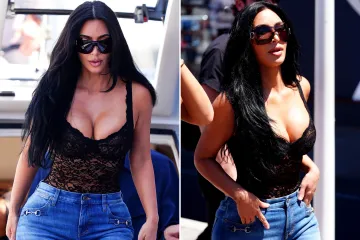
The A-list sisters looked effortlessly glam as they were spotted walking through the crowds in the South of France.

Khloe Kardashian was spotted in Monaco with her sister Kim Credit: Getty
The sisters are in the South of France to support Kim’s boyfriend Lewis Hamilton, who is racing in the Grand Prix Credit: Getty

Both Khloe, 40, and Kim, 45, went for plunging black tops.

The younger sister paired her outfit with comfy black capri pants, which showed off her very slender legs.

While big sis Kim revealed her tiny waist and toned pins in blue jeans.

Both siblings wore dark shades and were flanked by their entourage.

Read more on the Kardahsians

PHWOAR-MULA ONE

Kim turns heads in revealing top as she arrives on yacht to support Lewis


WAIST NOT

Kim K flogs rare items from wardrobe for huge sums – but you’ll need TINY waist

The sisters chatted as they got ready to board a boat on the French Riviera Credit: Getty
Kim is hoping to see Hamilton win his first race of the season in Monaco Credit: Alamy

The pair were seen chatting happily as they headed towards a waiting boat.

Tomorrow, they will watch Kim’s boyfriend Lewis race in Monaco‘s Grand Prix.

The Sun revealed the couple were dating in February after they were spotted enjoying a romantic getaway in the UK.

The mum-of-four then went public with Lewis in April, when they were spotted kissing in Malibu, California.

Kim and Hamilton started dating this year Credit: Shutterstock
The pair have since gone Instagram official as their relationship continues to blossom Credit: Instagram/kimkardashian

They were seen splashing around together at the beach, looking every inch the smitten pair.

Kim and Lewis then went Instagram official as they filmed themselves taking a bike ride.

Kim, who was married to Kanye West, 48, from 2014 to 2022, said last October she could not imagine herself dating another famous man.

She told a podcast that the person “would have to be someone super- special” for her to start another relationship.

Kim explained: “I don’t know if I have the energy or whether I’ve met the right person that I would want to blend my family with.”

On whether she might date another musician or athlete, she added: “Neither. We’re going, like, lawyers and longevity scientists who would give me all their secrets.”

After splitting from Kanye, she dated comedian Pete Davidson and then NFL player Odell Beckham Jr until things fizzled out in April 2024.

While Lewis has not had a serious relationship since he split from Pussycat Dolls singer Nicole Scherzinger in 2015 after almost eight years.

Source link

Becerra advances to November, moves closer to becoming California’s first elected Latino governor

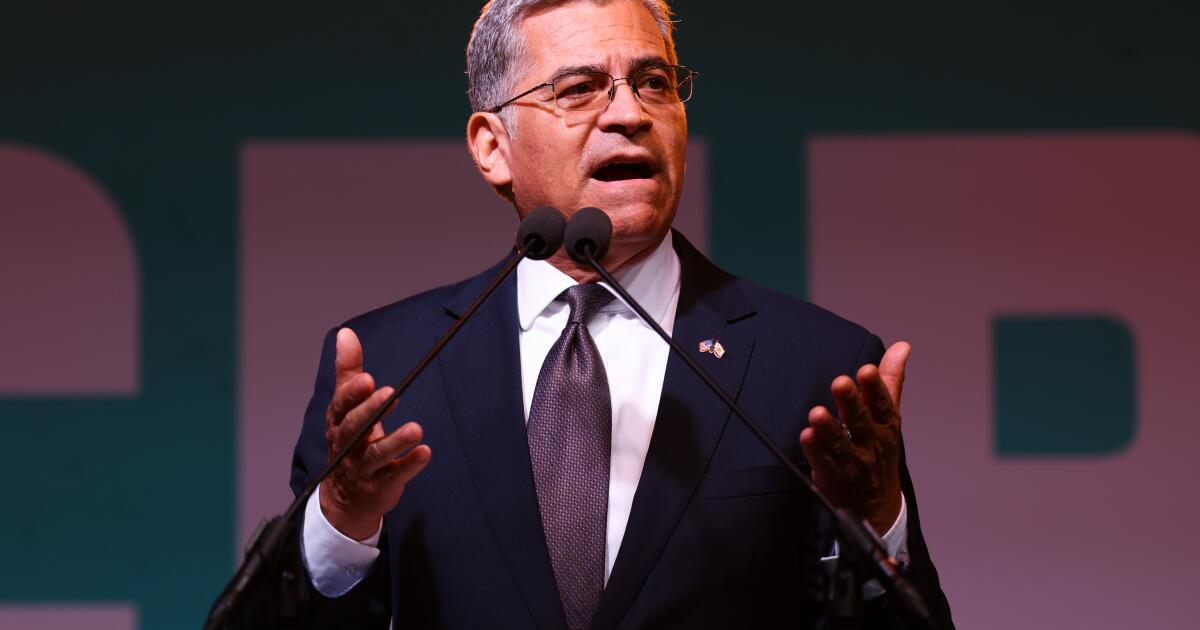
Veteran Democratic politician Xavier Becerra won one of the top two spots in California’s primary election for governor, according to the Associated Press, a finish that puts him in a prime position to win in November and make history as California’s first elected Latino governor.

“The people of the great state of California, in the greatest nation on earth, have spoken — loudly and proudly,” Xavier Becerra said in a statement Friday. “We will not be bought. We will not be bullied. And we are never backing down. November, here we come.”

Former Fox News host Steve Hilton, a Republican, remains in a close second and appears on the cusp of securing the right to face off with Becerra in the November general election.

Tom Steyer, a hedge fund manager turned climate change activist, may be destined to finish in third place — which would be a disappointing end to a campaign that saturated California’s television screens, social media scrolls and mailboxes thanks to the progressive Democrat spending $216 million of his own wealth.

Becerra’s victory was declared by the Associated Press on Friday evening, three days after the June 2 election — an indication of the competitive race to replace termed-out Gov. Gavin Newsom and California’s lengthy process of counting ballots. Still, Becerra and Hilton were within a percentage point of each other, though that could change as the vote tally continues. While his fate is not sealed, Steyer faces long odds to finish in the top two.

Under California’s primary system, only the two candidates who receive the most votes in the primary advance to the November general election, regardless of their party affiliation.

Becerra would enter the general election campaign with a significant edge over Hilton since Democratic voters in California outnumber Republicans by almost a 2-to-1 margin, a telltale reason why no GOP candidate has won a statewide race since 2006.

President Trump’s endorsement of Hilton helped consolidate support from Republican voters, which was pivotal to his success in the primary, but would likely hurt him in a face-off against Becerra. Nearly two-thirds of voters in the state want a governor who will fight Trump’s policies, according to the survey by UC Berkeley’s Institute of Governmental Studies that was co-sponsored by the Los Angeles Times.

Becerra could make history by becoming the first Latino to be elected governor — and the first to lead the state in more than 150 years. The last time a Latino held the office was in 1875, when then-Lt. Gov. Romualdo Pacheco was elevated to fill a vacancy and served for 10 months.

“California has made history. Xavier Becerra’s advancement to the general election is a defining moment both for the state, and for the millions of Latino families who have been instrumental in shaping the state’s future. … As home to the nation’s largest Latino population, California will once again demonstrate the decisive power of Latino voters,” said Voto Latino Executive Director Beatriz Lopez.

Though Latinos make up about 40% of the state’s population and are California’s largest ethnic group, they historically have lower turnout in elections and are underrepresented in government. Though Becerra often cites his upbringing as a child of working-class Mexican immigrants, he will still need to demonstrate he can deliver for those communities, said Christian Arana, vice president of civic power and policy at the California-based Latino Community Foundation.

“There’s a lot of excitement about the representation side,” Arana said. “You can have Latino representation, but whether or not that will actually lead to tangible outcomes for Latino communities, that’s what people want to know.”

Once stuck in the single-digits in public opinion polls with a handful of other Democratic candidates, Becerra rose quickly and unexpectedly following the political demise of former Rep. Eric Swalwell.

Becerra’s rise began days after Swalwell dropped out in April following allegations of sexual assault and misconduct, which he denies. Becerra quickly consolidated support from elected officials including Assembly Speaker Robert Rivas and influential groups like Planned Parenthood Affiliates of California and the California Medical Assn.

But both supporters and critics of Becerra struggle to explain exactly how or why he became the main beneficiary of Swalwell’s downfall.

Becerra’s campaign credits the timing of a major television and digital advertising push. The political ads began running just before the allegations against Swalwell came out and depicted Becerra as a calm, experienced leader with a record pushing back against Trump and support from Young Democrat groups.

Steyer’s campaign hired an intelligence firm to look into the online surge favoring Becerra and found thousands of bot accounts had amplified Becerra on various social media platforms. Becerra’s campaign denied any involvement and dismissed the influence of the fake accounts.

Political experts describe it as the stars aligning for the longtime Democratic politician. In the aftermath of the scandal, voters were apparently drawn to Becerra’s long resume and calm, thoughtful demeanor.

“He just never overreacted. Even when attacked [during debates], he was calm,” said Fernando Guerra, professor of Chicano Studies at Loyola Marymount University. That “gave the sense of being a moderate, while he’s really a liberal, so he was able to appeal not only to Latinos, but to liberals and to moderates.”

After Swalwell’s campaign crumbled, members of the political brain trust — many with ties to Newsom — that had been advising the former congressman began working for Becerra, including digital strategist Alf LaMont and veteran consultants Courtni Pugh and Lindsey Cobia.

“There was nothing going for him for a long, long time,” said Jason McDaniel, associate professor of political science at San Francisco State University. “I do think it was just people looking for someone who had a lot of experience who could win.”

Becerra’s first election victory was to the state Assembly in 1990. He served one term before successfully running for a Los Angeles congressional seat, which he held for 24 years.

Then-Gov. Jerry Brown appointed Becerra as state attorney general in 2017, a post he used to challenge Trump administration policies in the courts more than a 100 times — with great success. Becerra helped craft the Affordable Care Act in Congress and defended it as attorney general, and Joe Biden nominated him to serve as Health and Human Services secretary.

The 68-year-old veteran elected official has faced criticism on the campaign trail for his record leading the massive federal agency, particularly over a New York Times investigation that found thousands of unaccompanied migrant children ended up working in dangerous jobs after they were released to sponsors.

Some former Biden administration officials, many of them anonymous, have also criticized Becerra’s leadership of the agency.

Still, Becerra’s supporters said the candidate’s experience, particularly when it comes to fighting the Trump administration, qualifies him for California’s top job.

“He’s had some very important positions in government,” labor leader Dolores Huerta said at Becerra’s election night party in downtown Los Angeles. “He is qualified. He doesn’t have to go into a learning mode.”

“He’s a legal scholar,” said David Dixon, a political science professor at Cal State Dominguez Hills and brother to a longtime Becerra aide. “When our Constitution is threatened, we need people like him to be in positions of power to reclaim things we are losing now.”

Times staff writers Seema Mehta, Dakota Smith and Andrew Khouri contributed to this report.
Source link

Kathy Hilton out as WeHo Pride grand marshal after backlash

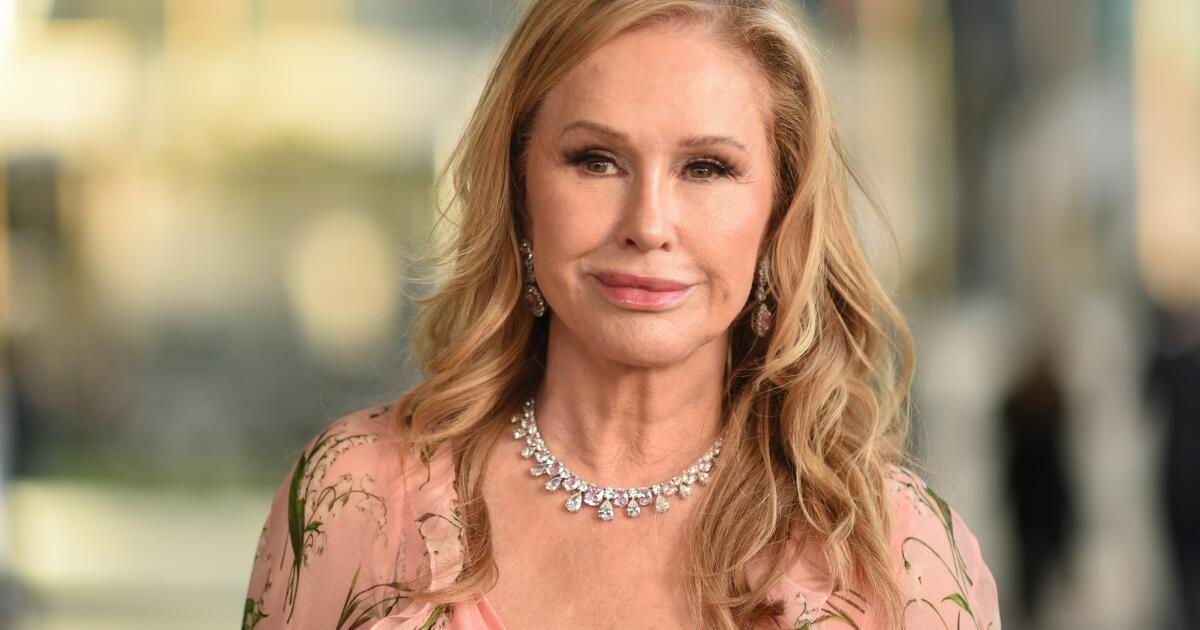
Kathy Hilton will no longer be the grand marshal of West Hollywood’s pride parade.

The city and WeHo Pride on Wednesday released a joint statement, announcing that “The Real Housewives of Beverly Hills” star would no longer serve as the Grand Marshal Icon for the 2026 WeHo Pride Parade. The event is scheduled for Sunday.

“After thoughtful discussions, the City of West Hollywood, the WeHo Pride production team, and Kathy Hilton have determined that the 2026 WeHo Pride Parade will not designate a Grand Marshal Icon honoree,” read the statement.

The decision comes less than a week after Hilton was announced. That May 28 announcement was met with swift backlash from the LGBTQ+ community and allies, who called out Hilton’s ties to President Trump and alleged MAGA-leaning politics. Critics also cited accusations that the socialite had used a homophobic slur while on a trip with other cast members of “The Real Housewives of Beverly Hills,” an action she has previously denied.

In their joint statement, West Hollywood and the WeHo Pride team expressed their appreciation for “the respectful and sincere dialogue” around both the event and the “role and significance” of Pride honorees.

“The City of West Hollywood has always believed that Pride belongs to the community,” the joint statement said. “Since its earliest days, Pride has served as both a celebration and a platform for activism, visibility, resilience, and the ongoing pursuit of equality, dignity, and justice for LGBTQ+ people. … These conversations reflect the passion people have for WeHo Pride and underscore the importance of ensuring that WeHo Pride continues to honor the history, values, and diverse voices of the LGBTQ+ community.”

In a statement, Hilton expressed gratitude for being considered for grand marshal and reaffirmed her commitment to the LGBTQ+ community and causes.

“My reason for wanting to be involved in this year’s WeHo Pride weekend was simple: to celebrate, support, and share in the joy of a community that means a great deal to so many people,” Hilton said. “Pride is, and always will be, about celebrating and uplifting LGBTQ+ voices, experiences, and achievements. … My support for the community and WeHo Pride is unwavering.”

She also mentioned several queer advocacy organizations and events she has supported over the years, including GLAAD, the Elton John AIDS Foundation, the Elizabeth Taylor AIDS Foundation, Dr. Mathilde Krim, God’s Love We Deliver and Project Angel Food.

The latest Pride-related dust-up follows the abrupt cancellation of the Long Beach Pride Festival in May. The city’s Pride Parade took place as planned.

Both snafus have occurred as conservative politicians and advocates continue to attack LGBTQ+ rights and visibility nationwide. Some Republican governors have even pushed for conservative alternatives to Pride month festivities. A recent Gallup poll has found that after years of steady gains, support for marriage equality and same-sex relationships has slipped, particularly among Republicans.


Source link

Poll: U.S. support for LGBTQ+ issues still lower than one-time peak

June 3 (UPI) — People in the United States have pulled back from support of LGBTQ+ issues over the past few years, with 65% percent showing support for same-sex marriage now as opposed to 71% in 2022-2023, a Gallup poll released Wednesday shows.

The percentage of U.S. residents saying that gay or lesbian relations are “morally acceptable” also fell to 62%, the lowest that percentage has been since 2016.

This comes after a surge in acceptance in the late 2010s and early 2020s. Gallup said that between 1996 and 2022, the percentage of those in favor of legal same-sex marriage increased from 27% to 71%. However, that percentage has declined since.

The poll (Gallup’s annual Values and Beliefs survey) first asked about same-sex relationships and morality in 2001. Then, 40% percent said they were “morally acceptable.” That percentage grew to 71% by 2022, dropping to 64% in 2023.

The Gallup release noted that Republicans are largely responsible for the decline in acceptance. In 2021 and 2022, it said, 55% of Republicans expressed acceptance for same-sex marriage, but that has now dropped to 37%. Democrat views, however, are the same today as in 2022, with 87% in favor. Independents dropped from 73% to 67%.

There is a similar trend in opinion on the overall morality of same-sex relationships. In 2022, a high of 56% of Republicans said same-sex relationships were morally acceptable, but that percentage has now fallen 21 points to 35%. Democrats remain at 81% for that measure, while Independents have fallen eight points to 64%.

Gallup noted that Republican views on that measure are now where they were between 2005 and 2014.

The poll also asked about the perceived morality of changing one’s gender. The percentage of those in support has decreased from 46% over five years to 38 percent. Among Republicans, 22% expressed support in 2021, the first year the question was asked, compared to 5% today. Among Independents, the percentage decreased from 48% to 42%, and among Democrats, it decreased from 67% to 60%.

“The change has come as conservative leaders have pushed back against diversity, equity and inclusion programs that were intended to foster greater acceptance of LGBTQ+ people and other historically disadvantaged groups,” a Gallup release said.

The Trump administration has worked against protections for LGBTQ+ people in both terms, including ending civil rights settlements with college and school districts intending to prevent discrimination against transgender students.

Gallup surveyed 1,001 adults between May 1-17 with a 4% margin of error.

Source link

Two of music’s most powerful executives maxed out donations to Spencer Pratt

Los Angeles’ music industry, in recent years, has generally supported progressive causes. But as the primaries for the city’s mayoral race and California‘s governorship wrapped up Tuesday, some music executives and performers have supported and donated large amounts to Spencer Pratt, the right-leaning activist and reality TV star running for mayor.

According to data from the Los Angeles City Ethics Commission, Pratt’s supporters include two members of the record industry’s most powerful family who donated the maximum amount allowed by law.

Pratt is a registered Republican whose heated rhetoric about homeless “zombies” and AI-created advertisements have rankled progressives and delighted conservatives. He has received support from President Trump, who told reporters that “I’d like to see him do well. He’s a character. I don’t know him, I assume he probably supports me… I heard he’s a big MAGA person.”

In response, Pratt told TMZ that “Everybody wants me to succeed because L.A. is the most important city in the country. The only support I need is from moms that wanna feel safe in Los Angeles. I’m laser-focused on that.”

Universal Music Group is home to some of music’s most outspoken progressives, including Olivia Rodrigo and Billie Eilish, whose brother and collaborator Finneas O’Connell donated $250 to the progressive mayoral candidate Nithya Raman on May 6.

Earlier this year, UMG’s chairman and chief executive Lucian Grainge presented Rodrigo with the company’s Universal Music Group x REVERB Amplifier Award, which advocates for “social and environmental nonprofit campaigns through the cultural power of music,” according to a release.

On May 9, Grainge (listed as a resident of Pacific Palisades, where Pratt lost his home in the 2025 fires) maxed out with an $1,800 donation to Pratt’s campaign, as previously reported in The Times. A representative for UMG did not immediately return a request for comment on Grainge’s donation.

He’s not the only Pratt donor in the family.

Grainge’s son Elliot ascended through the record industry with his 10k Projects label, and now heads UMG’s competitor Atlantic Records. Vocal progressives like Cardi B, the Marías and Charli XCX are some of the label’s most high-profile acts.

On May 8, Elliot Grainge also gave $1,800 to Pratt‘s campaign. A representative for Atlantic did not immediately return a request for comment.

Last month, the record producer and composing titan David Foster and his wife, singer Katharine McPhee, performed at a fundraiser for Pratt where they crooned a version of Tina Turner’s hit “The Best” to the mayoral hopeful. “Spencer, you’re simply the best. Better than all the rest. Better than Karen Bass and Nithya Raman,” McPhee sang.

At Warner Music, Gabz Landman, the senior vice president for A&R at Warner Chappell, its powerful music publishing wing, who has worked with Dua Lipa, Laufey and Amy Allen, gave $105.24 to Pratt on Feb. 4. Through a Warner Music representative, Landman said the donation was for merchandise given to a friend, and was not intended as support for Pratt’s campaign.

The superstar EDM producer and DJ Kaskade has left supportive messages on Pratt’s social media, commenting on one of the candidate’s posts that “At this point, who is buying in to Bass’s fairytale narrative?! I am still shocked she hasn’t resigned!” The DJ and producer Diplo also left a supportive comment — a prayer-hands emoji and “please” — on one of Pratt’s social media posts. Records do not show any personal donations to Pratt’s campaign from either artist.

Public records do not show any donations to Pratt’s campaign from live-industry executives atop firms like Live Nation, AEG or Goldenvoice.

Source link

Early returns show L.A. County voter doubts about healthcare sales tax

Los Angeles County’s half-cent sales tax to fund healthcare services was trailing Tuesday, with early returns showing a majority of voters rejecting the measure.

The tax — a half-penny of every dollar spent in the county — is meant to prop up local hospitals and clinics that are hemorrhaging funding after recent federal cuts.

The sales tax, which needs a simple majority to pass, would take effect Oct. 1 and last five years. Officials say it would pull in $1 billion annually to help plug the budget holes hitting local hospitals and clinics.

L.A. County health officials anticipate the One Big Beautiful Bill Act, signed into law by President Trump last summer, will slash more than $2 billion from the county’s health services budget within the next three years. Due to eligibility changes, the county will no longer be able to get reimbursements for many Californians who have lost Medi-Cal.

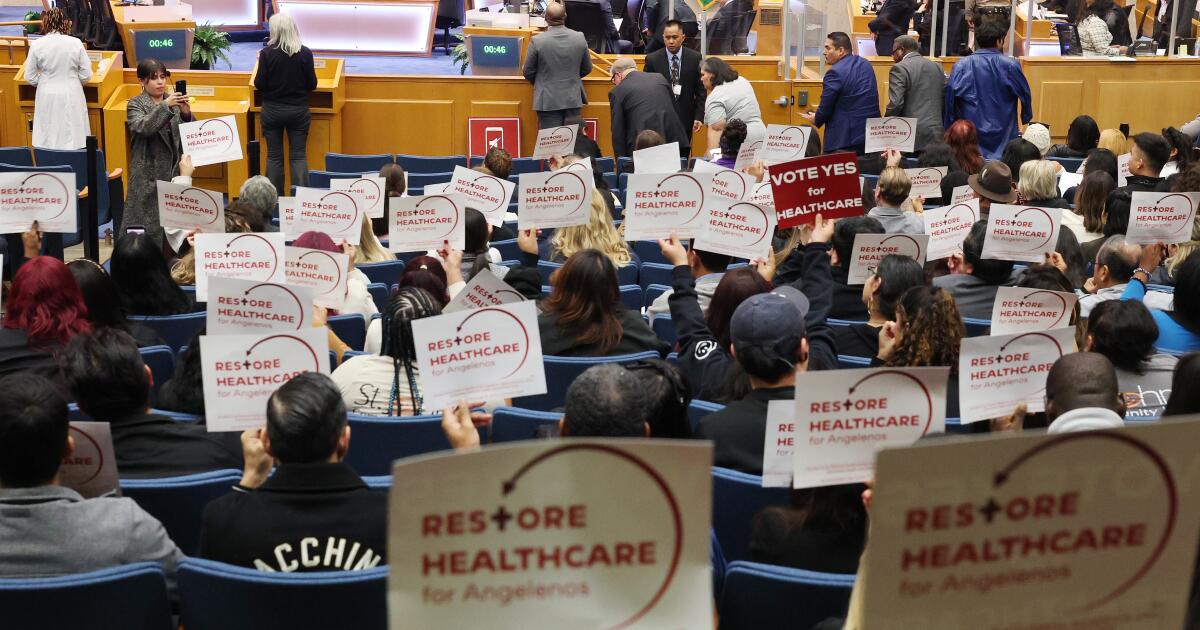
The measure was championed by a coalition of healthcare advocates called Restore Healthcare for Angelenos who warned that mass layoffs and emergency room closures could be imminent if new funding didn’t come fast. The Department of Public Health recently closed seven clinics — a grim sign, supporters said, of service cuts to come.

Voters haven’t rejected a sales tax hike since 2012, when a transportation measure fell just short with 66.1% support. It needed 66.7% to pass.

A majority of county supervisors had supported the new tax proposal, voting 4 to 1 this February to put it on the ballot. But the measure faced significant opposition from local cities, with opponents arguing the sales tax hike would unfairly burden the poorest county residents and encourage people to spend their dollars across the county line.

Supervisor Kathryn Barger, the board’s lone opponent of the tax, said she was concerned it was a “general” tax, meaning the money wouldn’t be earmarked for healthcare costs. Instead, she argued, politicians would have final say over how the money gets spent.

The supervisors have created a plan for spending the tax money, with the largest chunk of the money meant to cover the costs for patients without insurance. The measure also asked voters to sign off on a nine-member oversight committee.

The county currently has a base sales tax rate of 9.75%, and cities impose local taxes on top of that.

Source link

California Dems wait to cast ballots amid fears of governor lockout

In a typical midterm year, Donna Layne casts her ballot long before election day.

But this time around was different for the 75-year-old Democrat. Late-cycle controversies and fear of a “wasted vote” leading to a lockout for Democrats in the race for California governor meant she didn’t make her final decision until Friday.

California Democrats have been wringing their hands for weeks about who would emerge as front-runners in the crowded race to replace termed-out Gov. Gavin Newsom. The sudden departure of high-profile candidate Eric Swalwell amid sexual assault allegations and California’s jungle primary system, which sends the top two vote-getters to the November general election regardless of their party affiliation, added pressure for Democrats to coalesce around candidates who had the best chance of advancing.

“I was concerned,” Layne said as she slid her ballot into a drop box. “I wanted to make my ballot count and I was afraid that there might be two Republicans because they had been polling pretty high, so I wanted to be strategic about it.”

On Friday morning, voters — predominately Democrats like Layne — trickled into the Orange County Registrar of Voters in Santa Ana to turn in their ballots. A few told The Times they frequently wait to vote until the days leading up to the election so they can watch all the debates and get the most up-to-date information about the candidates.

But most said they hung onto their ballots this year for far longer than usual.

As of Friday, 19% of California Republicans had already cast their ballot, compared with roughly 16% by the same time in the 2022 primary cycle, according to data from Political Data Inc.

An election worker separates ballots from vote by mail envelopes to be tallied at a Ballot Processing Center

An election worker separates ballots from vote by mail envelopes to be tallied at the Los Angeles County Registrar-Recorder/County Clerk Ballot Processing Center on Thursday in City of Industry.

(Gary Coronado/For The Times)

Meanwhile, only 14% of the state’s far-more-numerous registered Democrats have returned their ballots, down from 17% at this point in 2022. Only 29% of Democrats age 65 years and older — generally enthusiastic voters — had returned their ballots, down from 33% in 2022, data show.

But that doesn’t mean that Democrats will stay on the sidelines. Data show Democrats have started returning their ballots in earnest over the past several days, a trend that’s likely to continue through election day, said Paul Mitchell, the vice president of Political Data Inc.

“It’s the predominance of this fear that they’ve heard in the media — and that’s largely abated — that a Democrat won’t make it to the runoff,” Mitchell said. “In fact, there’s a growing sense that we could have two Democrats make the runoff, so that fear has — for the political class — gone away, but voters are still clinging to it.”

Democrat Xavier Becerra, the former Health and Human Services secretary, has risen steadily in recent polls, positioning him well to potentially advance to November. He was the leading candidate in a poll released Thursday by UC Berkeley’s Institute of Governmental Studies that was co-sponsored by the Los Angeles Times, garnering support from 25% of likely California voters.

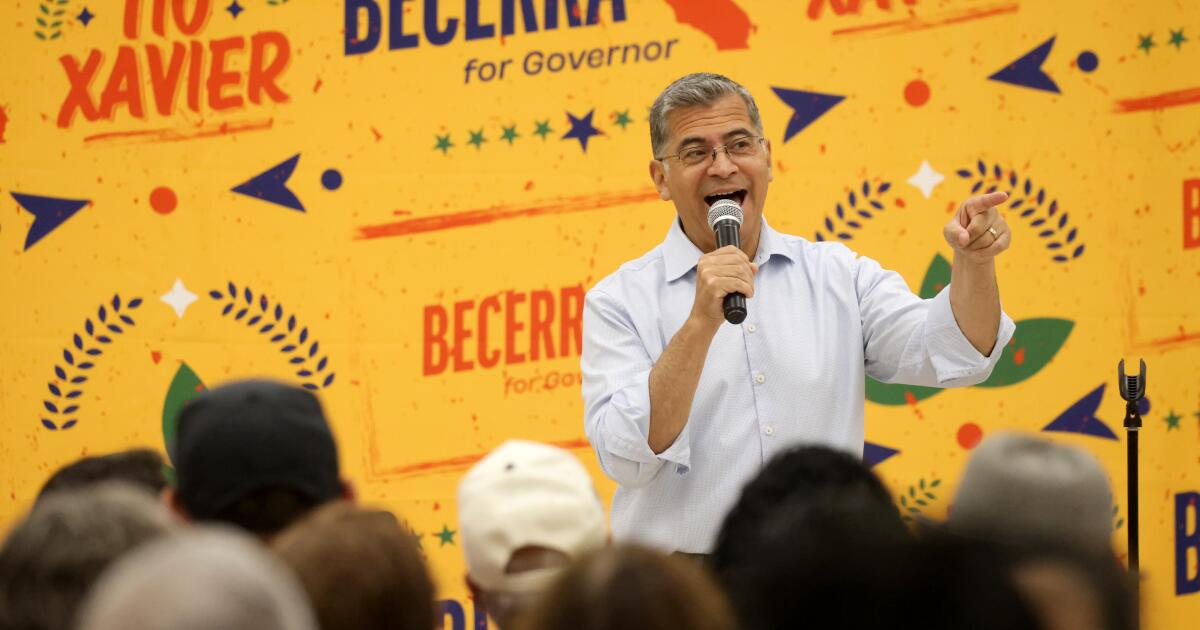
Xavier Becerra shares a light moment with supporters at the UFCW Local 1167 Union Hall

Former U.S. Secretary of Health and Human Services and California Atty. Gen. Xavier Becerra, a front-runner in the race for governor, shares a light moment with supporters at the UFCW Local 1167 Union Hall in Bloomington, on Friday.

(Genaro Molina/Los Angeles Times)

Slightly behind with support from 21% of likely state voters was Republican Steve Hilton, a former Fox News commentator whom President Trump has endorsed. In third place with 19% support was another Democrat: Tom Steyer, a hedge fund founder and environmental activist.

With support increasing for Becerra, Hilton and Steyer since the last Berkeley IGS/Times poll in March, the survey provided the clearest indication yet that those candidates have separated themselves from the rest of the field.

Support for Riverside County Sheriff Chad Bianco, the only other major Republican candidate in the race, dropped 5 percentage points from the March poll to last week’s, putting him in a distant fourth at 11%. Former Democratic Rep. Katie Porter saw her support drop by almost half to 7%. Other prominent Democrats — San José Mayor Matt Mahan, former Los Angeles Mayor Antonio Villaraigosa and state Supt. of Public Instruction Tony Thurmond — were all in the low single digits, the poll found.

Republican candidate Steve Hilton speaking at a news conference

Republican candidate Steve Hilton speaks at a news conference outside the CIF State Track Championship in Clovis, where transgender athlete AB Hernandez will be was to compete Friday.

(Tomas Ovalle/For The Times)

Roughly a dozen registered Democrats interviewed by The Times said they cast their ballots last week for the person they thought would have the best chance of making it through the state’s jungle primary, even if it wasn’t their ideal candidate.

“I love Katie Porter,” said Connie Wadsley, 78. “I really do, but I just didn’t see her as being able to pull it off. I just don’t think society is ready for a woman governor as much as that pains me to say.”

In the end, Wadsley and her husband, Victor, cast their ballots for Steyer. Becerra, she said, is too much of a career politician for her liking, but Steyer impressed her with his promise not to take corporate money and his position on social justice issues.

“I think we need to shake things up in this state — in this nation,” she said. “Yeah, [Steyer] is a billionaire and I’m not really excited about that, but he truly seems to be spending his money on things that I feel are important.”

For some voters, the sheer volume of gubernatorial candidates — 61 in all — was off-putting. Some even organized gatherings with politically like-minded friends to discuss the best course of action.

“I think it was really overwhelming for a lot of people, especially when they got their ballot and saw all of those names,” said Linda Verraster, co-president of the Democratic Women of South Orange County. “There was this fear of making a mistake — air quotes — that would lead to two Republicans in the runoff.”

Arnold Schwarzenegger, left, and Gray Davis joke with each other in the governor's private office

Gov.-elect Arnold Schwarzenegger, left, and Gov. Gray Davis joke with each other as Davis shows Schwarzenegger the governor’s private office at the Capitol in Sacramento on Oct. 23, 2003.

(Rich Pedroncelli / Associated Press )

The race seems somewhat reminiscent of the 2003 recall election when 135 candidates vied to replace then-Gov. Gray Davis amid the state’s energy crisis. Actor Arnold Schwarzenegger, a Republican, won decisively with roughly 48% of the vote.

But this race differs in a few key ways, experts say.

Mainly, while all of the top candidates have impressive resumes, there’s a lack of star power that could help propel someone to the forefront. Instead, Democrats “have an option of like moderate Dem to slightly less-moderate Dem,” said Matt Lesenyie, an assistant professor of political science at Cal State Long Beach.

“There’s a lot of people, but they occupy a very similar lane and I think that’s been a lot of the problem,” he said. “They’re loathe to really critique some of the foundational problems like a real ideological opponent would.”

Verraster put it even more simply: “There’s no unicorn.”

Still, she’ll be happy if either of the two Democratic front-runners — or both — make the ballot.

Source link

Trump enters perilous polling territory, raising questions over base support

Mired in a persistent cost of living crisis and an unpopular war with Iran, President Trump reached a perilous milestone last week, registering an approval rating of 34% in a top-tier poll — a record low less than halfway through his second term.

The results mark one of the sharpest polling collapses of any modern president. The data, from the Economist and YouGov, brings Trump back down to his political nadir, matching a number he hasn’t seen since the immediate aftermath of the Jan. 6 attack five years ago.

It follows on several other surveys published in recent days showing the president entering precarious political territory roughly six months ahead of the midterm elections, raising alarm bells in Republican campaign offices across the country over the party’s prospects in the fall.

It has also led pollsters to question long-standing assumptions about the president’s floor of support, wondering whether it is at risk of giving way.

“It’s harder to get lower, but it’s possible depending on what he does,” said Christopher Wlezien, a political scientist at the University of Texas at Austin. “To get that number down, you are going to have to eat into his core.”

Trump’s base of support remains strong, reinforcing a long-standing theory among pollsters that partisanship now serves as a direct proxy for presidential approval. But softening Republican support on specific policy matters — including top voter priorities, such as the economy — have begun raising questions among experts whether further erosion is possible.

A New York Times poll found his approval at 38%, and a Politico poll recorded a similar erosion, driven by a majority of Americans — including 18% of Trump supporters — stating they are financially worse off than they were before he resumed office.

Roughly 2 out of 3 Americans oppose the war Trump started with Iran. And the coalition that swept him back into office — including a surge in support from Latino, independent and young voters — has effectively disappeared.

While the downward trend looks like a story of a presidency in perpetual trouble, political scientists see a more complicated picture.

“Polarization has raised the floor and lowered the ceiling for approval ratings,” said Brandon Rottinghaus, a professor of political science at the University of Houston. “Dramatic swings are less common because approval ratings are now fixed to partisanship.”

The comparison to George W. Bush, whose numbers famously soared after the Sept. 11, 2001, attacks and cratered into the mid-20s after Hurricane Katrina and the Iraq war, is instructive of how polarization has changed in the Trump era.

Bush governed in a country capable of moving together, in favor or against a president, in response to major events. Americans are no longer swayed in that way when it comes to their views of the president, Rottinghaus argues.

“Approval ratings today are increasingly a measure of who the president is rather than what the president does,” he said.

Trump, in his own way, has seemed to nod at this dynamic. When challenged on his standing with the public, or when a Republican lawmaker breaks with him over a policy issue, he has made the argument that he and the MAGA movement are inseparable. In other words, that opposition to any decision he makes is opposition to the movement itself.

“MAGA is me. MAGA loves everything I do, and I love everything I do,” Trump said in a January interview with NBC News when asked if his base supports long-term military interventions abroad.

Rottinghaus compared the questions about presidential approval as the “same as asking whether you’re Republican or not.”

“So why ask it,” he said.

Gallup, the organization that had tracked presidential approval for eight decades, announced earlier this year that it would stop publishing approval ratings of individual political figures, a shift that underscores how the traditional measure of a politician’s popularity has evolved.

When asked about the change, a Gallup spokesperson told the Washington Post at the time that “the context around these measures has changed.”

“They are now widely produced, aggregated and interpreted, and no longer represent an area where Gallup can make its most distinctive contribution,” the spokesperson added.

Source link

Pleas and political attacks fill the home stretch of California governor’s race

The top candidates for California governor crisscrossed the state Friday, all venturing to friendly political territory to woo voters and undermine their rivals as the June 2 primary election fast approaches.

The top Republican in the race, former Fox News host Steve Hilton, spent the day railing against transgender athletes before a high school track event in the Central Valley, an event sure to appeal to his base of President Trump supporters.

The front-running Democrats, former Biden administration Cabinet member Xavier Becerra and billionaire environmentalist Tom Steyer, rallied one of their party’s most influential constituencies: union members.

While both stuck with mostly an upbeat message and reiterated promises to lift up Californians struggling to make ends meet, Steyer afterward accused Becerra of being “a corporate Democrat who’s taking money from all these big corporations” who “doesn’t want to change things.”

Steyer’s had good reason to go after Becerra.

A new poll from the UC Berkeley Institute of Governmental Studies and co-sponsored by the Los Angeles Times showed Becerra leading the race with 25% support from likely voters, followed by Hilton at 21% and Steyer within striking distance at 19%. The two candidates who finish in first and second place in the primary will advance to the November general election, leaving the third-place finisher on the sideline.

Though he told reporters Friday morning that “I don’t pay attention to polls,” Steyer was energetic at a Northern California campaign event, where he held a private meeting with leaders of a union representing long-term caregivers. In brief remarks at the offices of SEIU Local 2015, Steyer described the race as a choice between a billionaire champion of working people and the corporate-backed Becerra.

“Does California work for Californians or does California work for corporations? The corporations think it works for them. They want it to continue to work for them and they’re putting up tens of millions of dollars to make sure they continue to make record profits,” he told dozens of home-care workers, teachers, construction workers and nurses at the West Sacramento gathering.

Groups including PG&E, the California Assn. of Realtors and the California Chamber of Commerce have spent more than $34 million opposing Steyer’s candidacy. The former hedge fund manager has pledged to lower energy bills by breaking up large electric utility monopolies.

As a billionaire who has so far poured $216 million of his own money into his gubernatorial campaign, Steyer has faced skepticism from some left-wing and working-class voters. But he is endorsed by progressives, including Rep. Ro Khanna (D-San Jose), and unions including the California Nurses Assn. and both major teachers unions.

“I voted for Tom. I was looking for a change,” said Alvenia Scott, a union board member who works as an in-home caregiver to her disabled sister.

“He really has some good ideas,” she said, adding that she had more qualms about Steyer’s lack of government experience than his wealth. “He made his way in life, more power to him.”

Hundreds of miles south in the Inland Empire, Becerra pledged to be on the side of unions if he is elected governor and urged voters to turn in their ballots in what has so far been a remarkably low-turnout election.

“I am with you. When I become governor and I sit behind that desk, you’ll have a union man sitting at that desk,” Becerra told about 500 people at the United Food and Commercial Workers hall in Bloomington.

He asked the crowd if they had cast their ballots and noted that not everyone raised their hand.

“Less than one in five Californians have actually cast their vote so far. We got to get that number way, way up,” he said, arguing that the election is about “sending a message all across the country that California will be counted, that California cannot be neglected, and that California will not take a knee to anyone in Washington, D.C.”

Only 12% of the state’s registered voters have cast ballots as of Thursday evening, according to the election tracking firm Political Data Inc.

Community college counselor Diego Rodriguez, 32, said he decided to vote for Becerra in recent weeks after seeing the former U.S. Health and Human Services secretary’s momentum in the race and researching his record.

“Also just his story. As someone who works in higher education, and seeing how Xavier, being first-generation, has benefited from higher education, and how he advocates for higher education,” the Rialto resident said. “Additionally, today, him being here at a labor union and advocating for the working class and labor, I think, is very important.”

Rodriguez said he first started looking into Becerra after he was among the candidates excluded from a USC debate that was ultimately canceled.

“I think that people became aware of him more because of that,” Rodriguez said. “There was a lot of conversation online regarding that, but I think it allowed the spotlight to be brought onto him and it made people aware of his record.”

At a campaign stop in Clovis in the central part of the state, Hilton marveled that his campaign had spent only about $2 million in campaign advertising but was still polling above Steyer, according to the latest Berkeley IGS survey.

“We’re feeling confident,” said Hilton, standing in a suburban stretch of the city. Still, he warned that voters need to get out to support him and avoid a “complete disaster for California” of two Democrats advancing to the November election.

Hilton, who was endorsed by Trump in April, joined other politicians and leaders in Clovis in opposing trans athletes from competing at the 2026 CIF State Track & Field Championships.

The group met near where the championship events were scheduled to take place this weekend.

Asked why he was focusing on sports and gender in the final days of the race, Hilton said it’s “one of the main issues” that come up at town halls. If elected, he said he would seek to overturn the state’s 13-year-old law that allows students to participate in school activities and use facilities such as bathrooms based on their gender identity.

Hilton argues the law violates the state Constitution and will “suspend” it while he initiates legal proceedings to overturn it.

He also praised Spencer Pratt, a Republican and former reality TV star who is running for Los Angeles mayor, saying his candidacy has brought “excitement and energy” to the state’s primary election.

“For a long time in California, there’s been this sense that it’s all inevitable — there’s nothing you can do, Democrats run this place, just the way it is,” Hilton said. “I think that that’s changing. I think there’s this sense that something’s happening.”

Source link