suicide

Why a trio of experts alleges Jeffrey Epstein did not die by suicide | Crime News

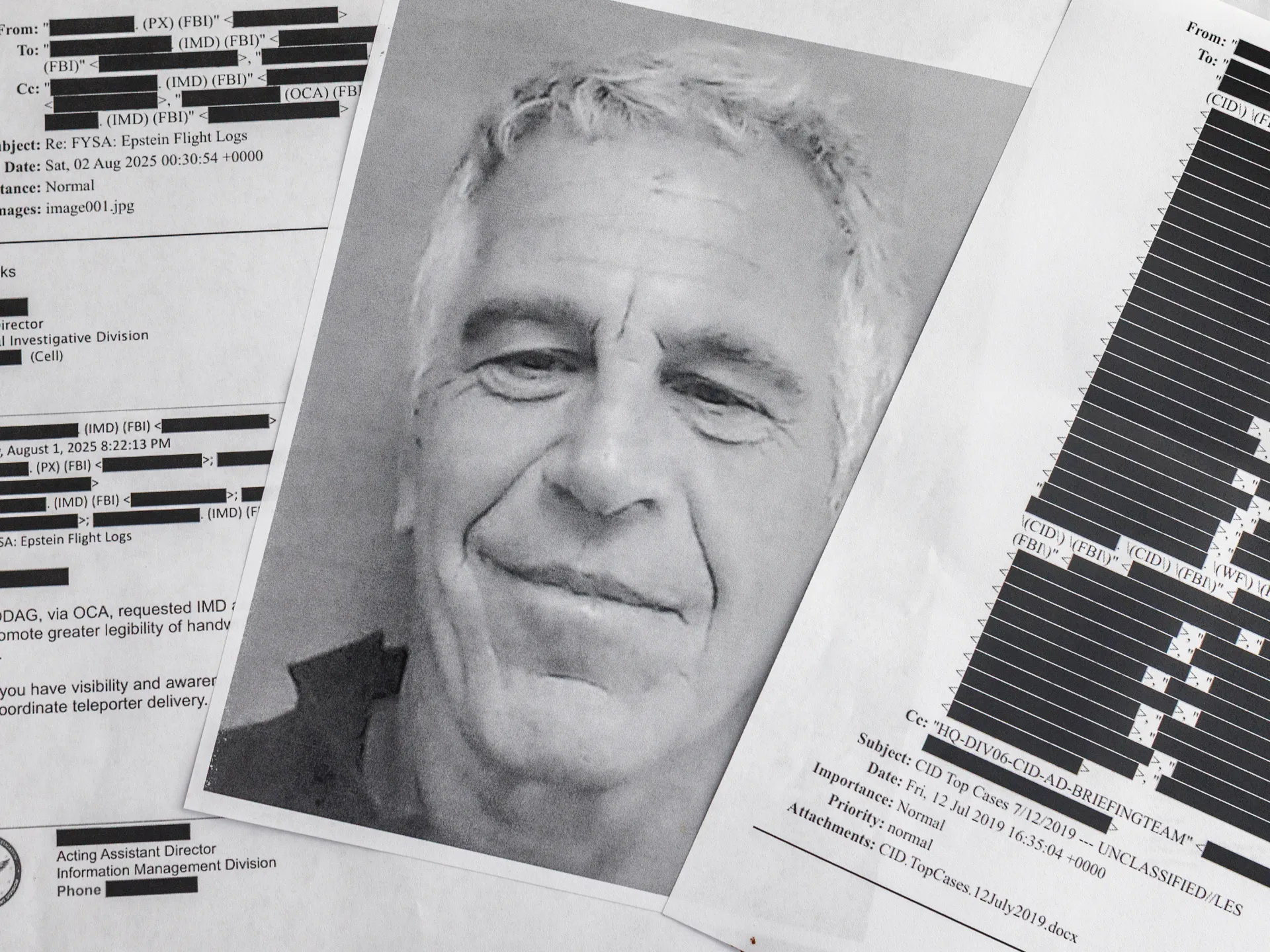
A trio of experts has released a report casting doubt on whether convicted sex offender Jeffrey Epstein died by suicide in his jail cell in 2019, as a medical examiner in the United States previously ruled.

In documents obtained by Al Jazeera and other media outlets, Michael Freeman, Anders Eriksson and Itiel Dror – a forensic scientist, a forensic pathologist and a cognitive scientist – said the injuries on Epstein’s body were “most consistent with homicidal strangulation”, not suicide.

Recommended Stories

list of 3 itemsend of list

“The pattern, distribution, and multitude of injuries are not explained by a suicidal hanging,” their report reads.

Instead, they suggest Epstein was first assaulted and then strangled, providing an alternative narrative to the medical examiner’s 2019 report.

The cause of Epstein’s death has long been a source of controversy and conspiracy theories.

A wealthy businessman, Epstein cultivated a range of high-profile relationships with leaders in politics, industry, academia and the arts. His network of contacts included US presidents Bill Clinton and Donald Trump.

Those connections have raised questions about whether there was a cover-up of Epstein’s crimes – or whether some of his associates knowingly turned a blind eye.

In 2008, Epstein pleaded guilty to the solicitation of a minor for sex as part of a plea deal that saw him serve 13 months behind bars. Later, in 2019, he was arrested on federal charges of sex trafficking, with prosecutors accusing him of having “sexually exploited and abused dozens of underage girls”.

He died in a New York City jail while awaiting trial.

A controversy over cause of death

Medical examiner Kristin Roman performed the autopsy on Epstein’s body. She and New York City’s Chief Medical Examiner Barbara Sampson ultimately ruled that the evidence pointed to a suicide by hanging.

Other experts have sided with their ruling, pointing out that, while the circumstances of Epstein’s death were unusual, they are not necessarily inconsistent with suicide.

But Epstein’s brother, Mark, has long doubted the medical examiner’s findings. He gave Freeman, an Oregon-based forensic scientist, access to the death records.

Freeman has consulted in trials where families have questioned the narratives put forward by law enforcement about how someone died, including in high-profile cases like the murder of George Floyd.

Eriksson, meanwhile, is a Sweden-based forensic pathologist who has researched issues like shaken baby syndrome, a controversial diagnosis used to prosecute some adults for abuse of young children.

He and Freeman worked alongside Dror, a cognitive scientist who studies biases in forensic science.

At the time of his death, Epstein was a well-known figure, and Dror said the investigators handling his case would have been subject to significant political pressure.

“It’s so obvious this played a critical role in the examination of the body,” Dror told Al Jazeera.

“There was at stake a lot of emotion, a lot of people involved, a lot of politics involved, so many factors. You can list them for an hour, and all of those interfered and biased and influenced what should be a scientific decision.”

Dror explained that he and his colleagues pored over photos and records related to Epstein’s death and concluded that the medical examiner had wrongly ruled it a suicide.

Points of concern raised

In their report, the trio noted a number of issues with the initial investigation.

The prison personnel who found Epstein’s body did not take any photos before moving it, for instance. Investigators also failed to identify the ligature, the object that was actually around Epstein’s neck, they said.

They allege that some avenues of investigation went unexplored. The prison guard who first came across Epstein’s body initially refused to be interviewed, according to the report, and the medical examiner who determined the case was a suicide was not allowed to visit the prison.

The report also disagrees with the medical examiner’s assessment of Epstein’s injuries.

Marks left by the ligature on Epstein’s neck, the researchers said, were not slanted in the way that would be expected if his body had been hanging from the bedpost in his cell.

They observed bruising on Epstein’s back, shoulder and neck that they said was not acknowledged in the medical examiner’s original statements.

Those injuries, their report said, are “most consistent with homicidal strangulation from behind, most likely using a narrow knotted fabric ligature”.

Freeman, Eriksson and Dror believe either that the prison guard who found Epstein was lying about finding his body hanging in the cell, or that the body was deliberately put into that position to make it seem like a suicide had taken place.

Source link

To Catch A Predator’s Chris Hansen nailed paedos on TV before shock suicide ended show… now film paints HIM as ‘villain’

WHEN crusading journalist Chris Hansen told his guests to “have a seat” they really did need to sit down – because they were men who’d been caught discussing having sex with children.

His hit US TV show To Catch a Predator spawned hundreds of copycats across the globe, where online vigilante groups snare alleged paedophiles in similar stings.

Robert Pattinson as Chris Hansen in Primetime Credit: PA
Chris Hansen confronting a man who stripped naked thinking he was meeting a 13-year-old Credit: FX Channel

Now Hansen is considering suing Robert Pattinson for the way the British actor has portrayed him in a controversial new movie called Primetime.

That’s because the Batman star’s Oscar-tipped film makes the reporter, who confronted potential child sex offenders in front of the cameras, the bad guy rather than the abusers his ground-breaking program exposed.

In the mid-2000s Hansen’s show To Catch a Predator worked with law enforcement and an online vigilante group to reveal the depraved men thinking of having sex with under 16s.

Nearly 200 men were arrested, including an agent for the Department of Homeland Security, a teacher and a firefighter.

‘She understands’

Michael Douglas hopes Catherine accepts confessions about affairs


SAFE WORD

Ali G’s new MeJulie reveals secrets of film woke campaign tried to ban

The NBC show ended in 2007 after a district attorney with an interest in teenage boys shot himself before Hansen could quiz him.

To many predator hunters Hansen is a hero.

But Batman star Pattinson depicts the 67-year-old journalist as an ego driven prima donna chiefly interested in ratings and getting To Catch a Predator onto prime time telly.

Emmy award winner Hansen, who is still bringing alleged child abusers to book on a different show, is angry about Primetime, which is in UK cinemas now.

He raged: “I think it’s an insult to the thousands of men and women who work hard every day to protect children from predators. 

“They turn something that is very positive, very challenging and not without risk into what is essentially a horror film.

“I guess it’s not surprising that a Hollywood studio would act in such an exploitative or predatory manner. 

“We’re talking about an industry that was led by perhaps one of the biggest predators to walk the planet, Harvey Weinstein.”

In 2004 when To Catch a Predator set its first trap, Hansen didn’t even know if any child abusers would fall into it.

Back then social media was still in its infancy, with Facebook only available to university students.

But an US online vigilante group called Perverted Justice realised that depraved men were using chat rooms on sites such as AOL and Yahoo to contact minors.

Hansen decided to link up with them to expose this danger. 

Perverted Justice used adult males and females who looked like children to set up profiles as under 15s in the chat rooms.

They then waited for the men to make the first move, with many of the digital deviants quickly sending explicit questions.

Chris Hansen in the documentary Predators Credit: Paramount +
Chris Hansen with his first wife Mary Joan in 2007 Credit: Getty

Perverted Justice’s decoys strung them along, hoping they would ask to visit them.

Rather than going to the ‘children’s’ homes, though, they were turning up at a suburban house filled with hidden cameras.

The decoy greeted them at the door, led them to the kitchen and made an excuse to leave the room.

At that point Hansen would walk in and ask them to “have a seat.”

He recalled: “In the first investigation, we didn’t know what was going to happen. We had partnered with Perverted Justice and I didn’t know if we were going to get anybody showing up. 

“Yet, there we were over two and a half days in Long Island and 17 guys surfaced, including a New York City firefighter.”

Even more potential sex offenders turned up for the next sting in the capital Washington DC.

One of them was rabbi David Kaye, who was later jailed for six and a half years for trying to solicit sex from a 13-year-old boy over the internet.

Chris made his name by hunting down potential paedophiles Credit: Getty
He would then film the police sting Credit: Paramount +

Wishing to make sure more of these men were brought to book, the NBC show teamed up with the police.

Cops in Harris County, Texas were waiting to arrest the men after Hansen confronted them in 2006.

This was dangerous work for all involved, because two of the alleged offenders were serving soldiers.

When one of the men did a runner he was tasered.

Hansen was praised in Congress for his work, with the show leading the House of Representatives to investigate the threat of online predators.

As To Catch a Predator’s ratings climbed and climbed, human rights lawyers started to question its ethics.

In many parts of the US it was an offence to attempt to entice a minor to have sex, but there were suggestions of entrapment. 

There were calls for catching criminals to be left to the professionals.

That’s exactly what Hansen’s show appeared to do when Perverted Justice realised that Texan prosecutor Bill Conradt was the man messaging someone pretending to be aged 13.

When Conradt wouldn’t go to the To Catch a Predator house in Murphy, Texas in November 2006 the police chief decided to go to him.

District Attorney Bill Conradt shot himself as cops and host Chris Hansen raided his home Credit: Paramount +
Armed police about to enter Conradt’s home in 2006 Credit: Paramount +

With Hansen’s TV crew following them, the armed officers smashed their way into his home.

But when they arrived Conradt shot himself dead.

The prosecutor’s relatives sued NBC, winning a £75million out of court settlement.

Charges against 23 other men in Murphy, Texas were dropped because the online chats had not taken place in the county.

To Catch a Predator was scrapped.

It is the build up to Conradt’s death that forms the tense finale to Primetime, which has been a hit at the US box office.

It depicts Hansen as desperate to snare the powerful district attorney at all costs.

Pattinson’s version of the veteran journalist sneers, snarls and shouts at his team.

Variety magazine described the actor’s portrait of Hansen “as a horror villain” and Hansen thinks it is “unhinged.”

Primetime shows little interest in the sex offenders and focuses more on the journalist’s alleged affair with a younger woman.

In 2011 the paparazzi caught the married father-of-two meeting TV news reporter Kristyn Caddell, who was 21 years his junior.

Hansen denied cheating on his wife Mary Joan, who divorced him seven years later.

He has talked about suing the film’s producers, which include Pattinson, but isn’t keen to get caught up in a legal case.

The actor defended his movie, commenting: “The fact that people are still discussing the ethics of it, of a 20-year-old TV show, it’s absolutely insane.” 

Robert Pattinson in Primetime Credit: Alamy
Academic Mark de Rond joined UK vigilantes trying to catch child sex offenders Credit: Damien McFadden

The reason the ethics of To Catch a Predator are being discussed so keenly is that predator hunting is even more relevant today than it was two decades ago.

According to the children’s charity the NSPCC over 9,000 child sex abuse offences in the UK a year “involved an online element.” 

Hansen continues to name and shame such offenders on an online TV channel called TruBlu.

It is estimated that 140 vigilante groups in the UK are also trying to snare paedophiles online.

Cambridge University academic Mark de Rond, who last year appeared in a documentary titled Predators about the impact of Hansen’s show, spent time working with these secretive organisations.

He questions the way that To Catch a Predator “commercialised” the “public humiliation” of the men the show caught.

But he defends the groups which are trying to expose online sexual offenders, telling The Sun: “Paedophilia is a crime, it’s kind of the lowest of the low and it’s the kind of crime that really almost any means can justify when you are trying to stop it.

”Because what can be more important to keep a kid safe?”

That, though, is not the perspective of Primetime.

Near the end of the film, Pattinson says to one of his doubters “your definition of bad and my definition of bad are vastly different.”

Many cinemagoers watching the movie are likely to think the same thing, but for different reasons.

Source link