A beloved Coronation Street star has candidly opened up about their struggle with alcohol
Coronation Street legend reveals alcoholism struggle and says bosses saved their life(Image: ITV/REX/Shutterstock)
A Coronation Street actor has opened up about their alcoholism, and revealed that soap bosses sent them to rehab.
Kevin Kennedy joined the ITV soap in 1983 as Curly Watts, renowned for his hapless romantic endeavours and succession of peculiar employment roles. Throughout his tenure on the enduring show, he featured in numerous major storylines.
From his passion for astronomy to his turbulent love life, his years in Weatherfield were packed with drama. Nevertheless, he was last spotted in 2003 when he departed alongside wife Emma (Angela Lonsdale) for a fresh start in Newcastle.
Following his departure, Kevin has remained active, featuring in programmes including BBC’s Doctors, Mrs Browns’ Boys and Holby City.
And on Wednesday (October 14), he turned up on Good Morning Britain to discuss his latest musical, The Picture of Dorian Gray. Kevin also opened up about his battle with alcoholism, disclosing that he has remained sober for 28 years.
He said: “Well, ITV and Coronation Street, effectively saved my life, sending me into rehab. And I was very, very, I still am very grateful for that. You know, I was in there 4 weeks and came out slightly different.”
When questioned about whether his addiction had been impacting his work on the soap opera, he revealed: “Well, that’s the thing about addicts. They’re very resourceful, intelligent people. They have to be. This is why for the charity [Kennedy Street Foundation] that we do, we promote visual recovery.”
Regarding what guidance he would offer those concerned that alcohol or drugs may be becoming an issue, Kevin said: “Well, the rule of thumb with alcohol or any drug or addiction is if it’s costing you more than money, then maybe it’s time to look at it.
“What I would say to you is, we do recover. We do recover. It’s not all doom and gloom. It’s going to take a lot of hard work and a lot of commitment, and you have to go to various health centres; there’s enough out there.
“And if you do, as you’re told, and if you do, as is suggested, then you will recover. I can guarantee you if you put down that drink and that drug, do what’s suggested, your life will get better.”
While on GMB, Kevin spoke fondly about his time on Corrie, saying: “Oh, I mean, all of it is my favourite, actually. I’m very proud of that body of work, yeah, poor boy [Curly], he went through it!”
Kevin continued: “Even now when people come up and they do and they say, ‘oh, I remember when you did that’. I think that’s really humbling experience and I really love it. So it’s great.”
Good Morning Britain airs Monday to Friday at 6am on ITV1.
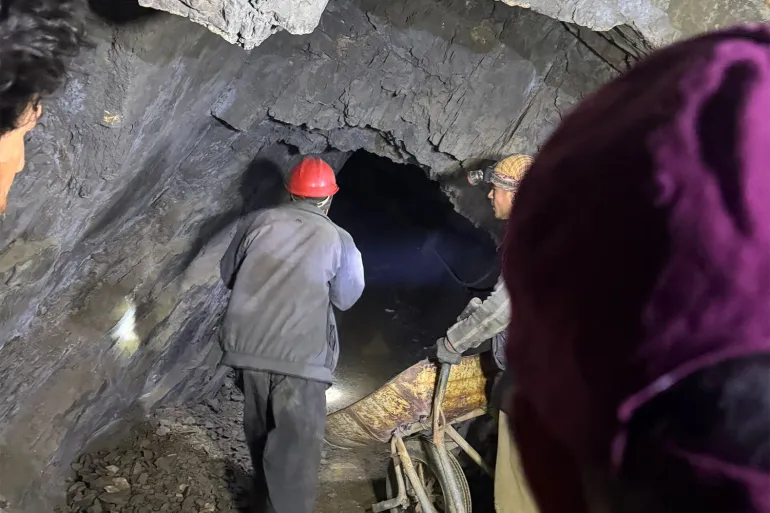
Afghan miners endure harsh conditions, relying on basic tools to extract precious emeralds in Panjshir’s steep valleys.
Panjshir, Afghanistan — At a packed hall in the offices of the Panjshir provincial government, an auction is under way and the bidding is brisk.
The buyers, many from Kabul and some from overseas, have already closely examined the small piles of roughly cut green stones, shining their phone flashlights through them to check their quality.
Recommended Stories
list of 4 itemsend of list
Bidding for the best stones is competitive.
“Panjshir emeralds have many buyers around the world because of their very high quality,” gem merchant Ghulam Mustafa Habibi told Al Jazeera. “This is why their price is higher compared with other emeralds around the world.”
Mining for gemstones in Afghanistan’s Panjshir valley [Mohsin Khan Momand/Al Jazeera]
By the end of the auction, nearly 3,000 carats of the precious stones were sold – the 23rd sale of its kind so far this year. The value of emeralds sold to date in Afghanistan is estimated to be nearly 400m Afghanis ($6.12m), a steep rise compared with last year.
For a country impoverished by years of war and burdened by international sanctions, the trade in precious minerals is a valuable resource, especially in the remote corner of northeastern Afghanistan.
“Thankfully, more than 15,000 people are currently employed in Panjshir’s mining sector,” says Muhammad Aman Rezaii, a mining official responsible for overseeing the operation of many small artisanal mining operations dotting the Panjshir valley.
On the valley’s steep hillsides, miners toil for hours underground to make a living. In the otherwise barren and rocky landscape, which yields little, the precious stones are a lifeline.
“There are hardly any companies or manufacturing factories here. The main source of employment is the mining sector,” said Rezaii, adding that they have identified more than 2,000 other mining sites which could be developed.
Afghan workers and Taliban officials near a mine [Mohsin Khan Momand/Al Jazeera]
Since taking power in 2021, the Taliban say they have signed deals with dozens of investors, mainly Chinese, Russian and Iranian, to mine gemstones and other valuable minerals.
According to the World Bank, state revenues rose 22 percent year-on-year in April and May, boosted by the auction of mines and other resources such as oil and precious minerals.
But Afghanistan’s gemstone mining sector is still lacking in international investment and expertise.
“There have been various proposals to establish an international market for Afghanistan’s precious minerals, particularly in Kabul,” Hafiz Muhammad Agha Hakim, the Governor of Panjshir province, told Al Jazeera.
“Processing machinery could be brought in so that these minerals can be processed and standardised here before being exported to markets around the world. At the moment, there is no standardised centre or proper processing facility.”
The steep valleys of Afghanistan’s Panjshir valley [Mohsin Khan Momand/Al Jazeera]
Back in the dusty confines of his mine, working in near-total darkness, miner Mahdi wields a crowbar while his friend beside him hits the surface with a hammer. He bemoans their lack of modern equipment.
“There are many challenges because we don’t have advanced equipment,” he says, taking a break from the digging. “We work only with basic tools such as shovels, pickaxes, drills and similar equipment.”
Rezaii said the miners need proper equipment that can make their work easier and safer, while also allowing the minerals to be extracted in a more professional manner. This would benefit the people of Afghanistan and particularly the miners,” he said.
“The area is vulnerable to landslides, avalanches, flooding and falling rocks. People here are working under extremely difficult and demanding conditions.”
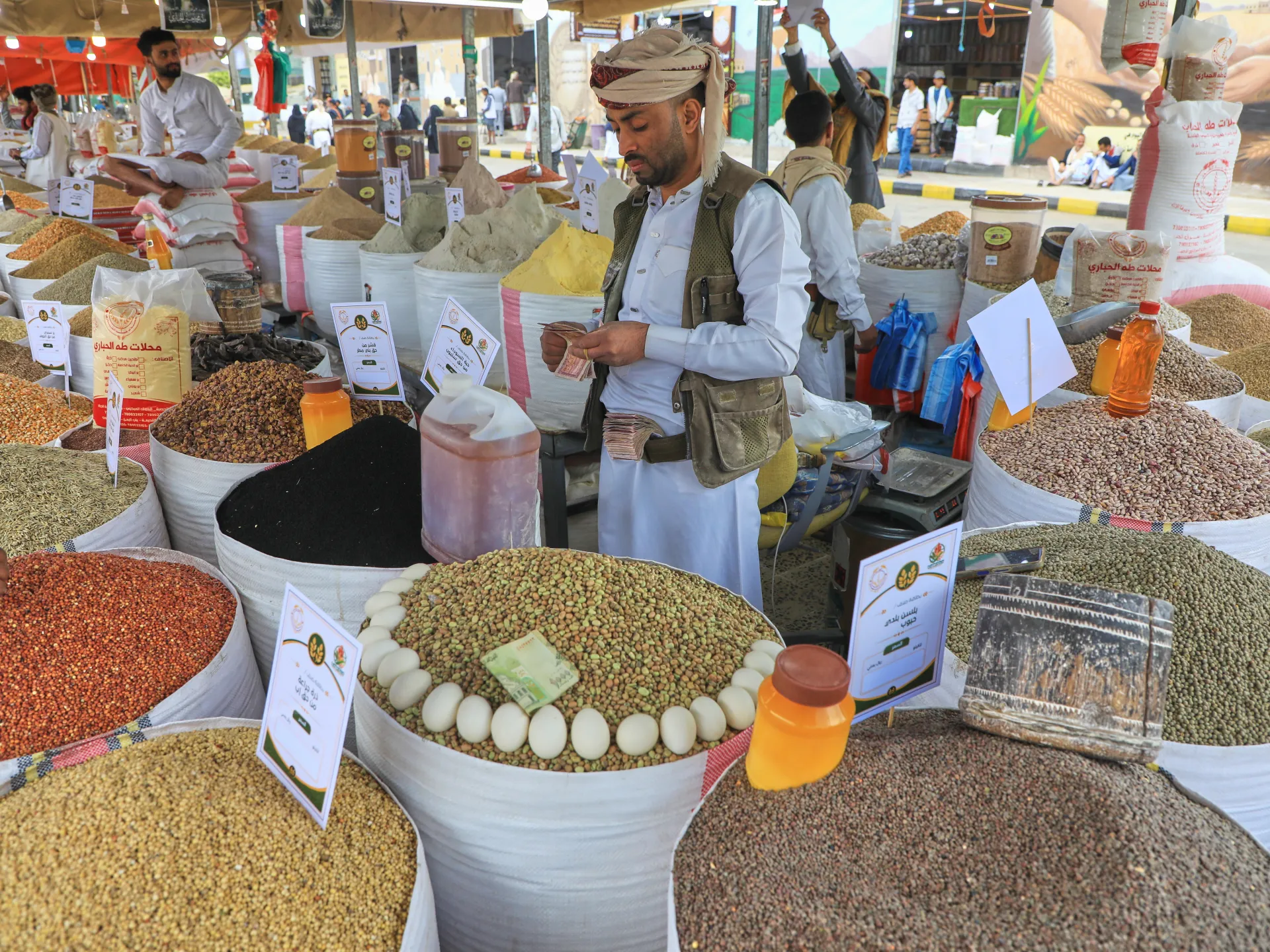
Sanaa, Aden and Marib, Yemen – As fighting intensifies across Yemen between the government and the Houthis, millions of people are confronting another battle far from the front lines: the deteriorating living and economic conditions in the country.
With salaries for large segments of the workforce either unpaid or irregularly disbursed – and the prices of goods and services rising – Yemen’s economic struggles have been compounded by a divided banking system that has made moving money between different parts of the country increasingly complicated.
Recommended Stories
list of 3 itemsend of list
From Aden’s struggling shoppers to displaced families in Marib and unpaid public-sector workers in Sanaa, Yemenis are being forced to make difficult choices about what they can afford, and what they must go without.
Aden: Food costs swallow salaries
In Aden, the internationally recognised Yemeni government’s interim capital in the south, the problem is not so much a shortage of goods in markets as people’s inability to afford them.
Salaries have failed to keep pace with the rising costs of food, rent, healthcare and transport, leaving workers with little money left over at the end of the month.
The consequences are evident in the smaller quantities and cheaper products that now make up shoppers’ baskets, and the decisions they are forced to make about what to cut back on.
Bushra Abdullah Abdulwarith is a government employee in Aden. She earns 78,000 Yemeni riyals ($50) a month at the black market exchange rate while typical household food costs in government-held areas run about 130,366 riyals ($83), according to estimates by the Yemen Economic Tracking Initiative. And that’s before she factors in the cost of rent, transport, healthcare and other household expenses.
The economic difficulties facing Yemenis like Bushra illustrate how more than a decade of war has devastated the economy. According to the World Bank, real GDP per capita has fallen by approximately 58 percent since 2015.
The fragmentation of Yemen’s monetary institutions between the government and the Houthis – who have operated their own institutions since seizing the capital, Sanaa, in 2014 – along with the disruption of oil exports, and declining international assistance have all contributed to the economic decline.
Bushra told Al Jazeera that rising prices have forced many households to give up almost all non-essential purchases and cut back on some expensive basics, particularly meat. Other families, she said, have resorted to buying food in smaller quantities, sometimes on credit or loans.
Reduced demand
The impact of rising prices is reflected not only in economic figures but also in the way people shop.
Ayman al-Maqtari, who works at a shopping centre in Aden’s Mansoura district, said that his customers now rarely buy non-essential items.
When it comes to the essentials such as rice, sugar, flour, and cooking oil, he has noticed that customers size up the price of each item before putting it in their baskets. They are also buying smaller quantities, for example, opting for a 5kg (11 pound) over a 40kg (90 pound) bag of rice.
“Many people have come to live day by day, or week by week,” Ayman told Al Jazeera, adding that more families are buying on credit when they run out of money before the end of the month.
The decline in purchasing power is also affecting commercial activity.
Across several streets and shopping centres in Aden, advertisements for discounts and special offers have become increasingly visible in shop windows and on retailers’ social media pages, as businesses attempt to attract customers and boost sales.
Weak demand, retailers say, is particularly evident for items that households can put off buying, such as clothing and household goods. A growing share of family income is spent on food, rent, healthcare and transport.
Limited pay increase
The Yemeni government approved a 20 percent cost-of-living allowance in May for public-sector employees in an attempt to ease the pressure of rising prices. But the amount is calculated based on each employee’s base salary, rather than their total pay, meaning the actual increase is relatively small for many workers.
Bushra, the government employee in Aden, said the increase has done little to improve her family’s financial circumstances. She described the allowance as “a temporary painkiller that does not reflect the scale of the actual pressure on people’s living standards”.
Her experience is far from isolated. In early October, the World Food Programme said its latest monitoring in accessible government-controlled areas showed that 74 percent of households were unable to meet their basic food needs.
One of the places where the crisis is evident is Marib, a government-controlled city east of Sanaa that is home to hundreds of thousands of displaced people. The sharp increase in the population over the war years, in what was previously a provincial backwater, has led to pressure on the city’s housing, employment and public services.
Government employees in Marib see their salaries disappear within the first few days after being paid, labourers struggle to find more than a few days of work and displaced families are forced to choose between buying water and milk.
Salah al-Zuhaifi works for a government institution in Marib. He said the war has separated him from his parents, who live in Houthi-controlled territory.
Alone in Marib, al-Zuhaifi said that inflation had eroded much of his salary’s purchasing power.
“No matter how much you earn, it will not be enough to meet your needs,” he said.
Abu Mohammed Nasser al-Asbahi, another government employee, described a similar struggle.
He told Al Jazeera that he earns 400,000 riyals ($250) a month, but more than half of that goes towards his rent, leaving little for his other expenses.
“We don’t even get to the first one-third of the month before the salary is gone,” he said, explaining that his family spends the rest of the month relying on loans and credit from local shops.
The healthcare sector in Marib has also been affected by widespread household spending cuts.
Pharmacist Khaled Mohsen told Al Jazeera that the rising price of medicines has prompted many patients to decline parts of their prescribed treatment and purchase only what they consider most essential.
People with chronic illnesses, meanwhile, have increasingly begun reducing their medication doses to make their supplies last longer before having to buy more, which creates serious health risks.
Houthi areas
Residents of Sanaa and other areas of Yemen’s populous northwest, controlled by the Houthis – an armed group also known as Ansar Allah (Arabic for Supporters of God) – since 2014, are also facing a worsening economic and cost-of-living crisis similar to that affecting Yemenis elsewhere in the country.
Several factors are driving the crisis, particularly unpaid public-sector salaries, declining purchasing power, rising prices for goods and services, and the continuing consequences of the division of Yemen’s currency and banking systems in the early years of the war.
Many public-sector employees in Houthi-controlled areas have gone years without receiving regular salaries, with some sectors only receiving limited payments or half-salaries at irregular intervals.
Even when payments are made, they cannot cover families’ basic needs amid the rising cost of living.
Meanwhile, private-sector workers and business owners face growing pressures as a result of declining economic activity, multiple fees and levies, and a shortage of employment opportunities. The conditions have undermined incomes and job security.
The Yemeni riyal’s exchange rate in Houthi-controlled Sanaa is more stable than in areas controlled by the government. The Houthis have imposed strict monetary controls, banning the circulation of newer banknotes printed by the Yemeni government, and have also enforced a largely fixed exchange rate.
However, that does not necessarily translate into stronger purchasing power. Markets face difficulties caused by cash shortages and the division between monetary and banking systems operating in different parts of the country, including increased costs for moving funds.
That directly affects the many households relying on domestic and international remittances.
For residents in Houthi-controlled areas, the result is an economy in which the currency may be relatively stable, but livelihoods are precarious. Years of unpaid salaries and limited employment opportunities have left many families struggling to afford basic necessities, with few options beyond borrowing, cutting spending or relying on support from relatives.
The documentary is now available to stream on BBC iPlayer, but there is a strong viewer warning
The BBC documentary has been dubbed a hard watch as it hears from family and friends including Tunde Taylor (Image: BBC/Optomen TV)
BBC viewers have struggled to watch a heartbreaking documentary that they say “cuts deep” as a strong warning has been issued.
Just last night (Monday, October 5), BBC Two took viewers back to 2000 in a cast that shocked the UK. Damilola Taylor was just 10 years old when he was stabbed and killed in what became one of the country’s most high profile killings.
He was stabbed in the leg just metres from his home whilst leaving an after school club. For the first time for some, Damilola’s friends and family speak out about that tragic event, sharing previously unheard testimony, including that from Star Wars actor John Boyega.
Damilola: The Untold Story revisits the young boy’s killing, 26 years on as it premiered on BBC Two last night (October 5). However, for those that missed it, it can be streamed on BBC iPlayer, but viewers have warned it is a hard watch.
Taking to X, one person wrote: “I watched the documentary on bbc (yes bbc) on the senseless murder of Damilola Taylor, Rip poor little lad, heart breaking, although the documentary was focal on Damilola and the those immediately impacted, it also drew the lens back to show the amount of kids murdered.”
Another said: “I’m not sure I have it in me emotionally to watch this Damilola Taylor documentary”, as a third admitted: “That Damilola Taylor documentary is so heart wrenching.”
A fourth added: “This Damilola Taylor documentary cut deep. Imagine stabbing a 10 year old innocent boy and leaving him to bleed to death. Those two brothers are evil with so much hate in their hearts.”
A fifth replied: “It was a very hard watch. I had to pause a few times. RIP Damilola, Mr Richard and Mrs Grace Taylor.” Another penned: “The ending of the Damilola Taylor documentary, I can count my family members and school friends in that montage of lost souls. I started watching the doc as a mother, ended it as a child, if that doesn’t speak to the cycle… and its longevity then idk what does.”
Taking to TikTok to share the recommendation, one true crime fan admitted it was a “heartbreaking watch”, adding: “Be warned because it’s quite shocking.”
One person replied: “Just watched this last night… so sad.” Another commented: “Absolutely heartbreaking you’re right, so incredibly sad.” A third wrote: “This will be a hard watch.”
Taking viewers back to the final 24 hours of his life, the documentary also explores the years it took to bring a conviction. Two brothers, who were themselves aged 12 and 13 at the time, were convicted of manslaughter.
An official synopsis reads: “Made 26 years after the murder of 10-year-old Damilola Taylor shocked Britain, this documentary returns to his story with new testimony that sheds fresh light on what happened to him.
“Actor John Boyega, who was eight when Damilola died and was one of the last people to see him alive, joins Damilola’s childhood friends to return to his final months and the years of youth violence that followed his death.”
Damilola: The Untold Story can be streamed on BBC iPlayer
Aden, Yemen – In this coastal city long accustomed to sweltering, humid summers, the absence of electricity can reshape an entire day.
When the power cuts out, fans and air conditioners fall silent. Sleep becomes difficult. Students race to finish their homework before darkness arrives. Children spill onto the streets while young men drift towards the sea in search of moving air and cooler waters.
Inside hospitals, where treatment cannot be postponed until the lights come back on, electricity carries a different weight altogether.
Yemen’s power crisis predates the current war. Even before the conflict, only about 55 percent of the population had access to electricity from all sources, which is among the lowest rates in the Middle East and North Africa.
Since 2015, damage to infrastructure, fuel shortages and ageing generation and distribution systems have left supplies even more fragile.
In Aden, power stations continue to face repeated shutdowns, leaving residents without electricity for long periods. Insurance premium increases on tankers carrying fuel to Aden have also reportedly made the crisis worse.
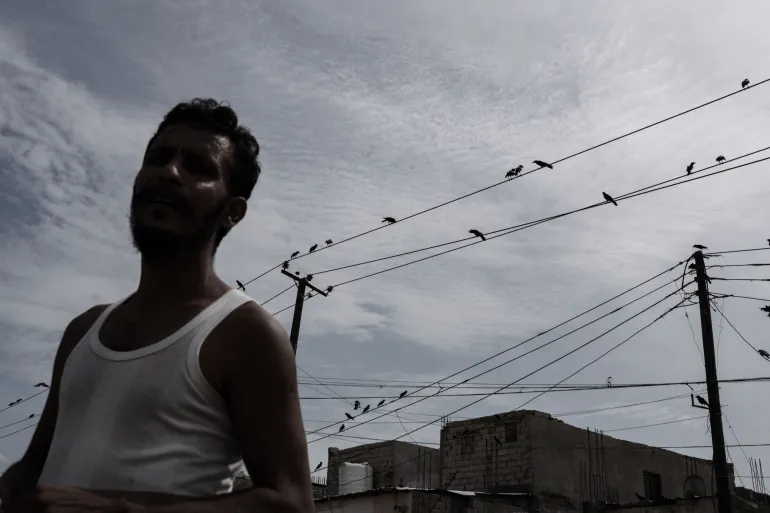
A man walks beneath a web of power lines in a neighbourhood in Aden, where long and frequent power cuts have become part of daily life. [Belal Khaled/Al Jazeera]
An assessment by the International Monetary Fund (IMF) published this year said Aden was receiving just two to six hours of electricity a day as structural weaknesses and fuel shortages caused frequent outages.
As the sun sets over the city, a second part of the day begins. Homes and businesses slip into darkness, punctuated only by small lights powered by batteries and solar systems. Residents often do not know how long the latest blackout will last, or how long the power will stay on once it comes back.
During the summer, when temperatures in Aden climb towards 40 degrees Celsius (104 degrees Fahrenheit), the consequences are hard to escape. Residents in the city interviewed in the middle of the year said their homes had become almost unbearable during the prolonged power cuts that plague the city. The heat does not always disappear when the sun goes down.
After the sun sets in Aden, most of the city falls into darkness with only scattered lights coming from devices powered by batteries or alternative energy systems. [Belal Khaled/Al Jazeera]
“Sometimes the power comes back while we are asleep, so we wake up to use it. Our lives have become tied to when electricity comes and goes,” one resident said. For her family, an outage is measured not just in hours but in problems. Children are unable to sleep, food spoils in warm refrigerators and housework must wait.
When the heat inside becomes too much, Youssef heads for the coast. The sea, he said, is no longer just a place of recreation but a refuge from the unbearable heat of the city.
“When the electricity is off for hours, it is very difficult to stay inside,” he said. “There is no fan and no air conditioning, and the humidity makes the heat worse, so we come to the sea.”
Towards the end of the day, young men and families gather along the waterfront. Some swim. Others simply sit beside the water and wait for the city to cool. But the sea cannot solve Aden’s electricity crisis. Hours later, Youssef returns home and sometimes finds the house exactly as he left it.
“Sometimes we get back and the power is still out, and we start waiting all over again,” he said.
For children like Mohammed, Saeed and Abdullah, blackouts have changed where childhood takes place. When their homes become too hot, they move into the street, running between houses or sitting with other children until late.
A child walks through a neighbourhood in Aden, where a generation has grown up knowing electricity as something that comes and goes rather than being a constant part of daily life. [Belal Khaled/Al Jazeera]
“It gets hot inside the house, so we come down and play in the street,” one of the boys said. “We play football or sit with our friends. Outside is better when the electricity is off.”
For them, a blackout is not an extraordinary event. It is part of the life they have grown up with.
The effects follow them into the classroom. In Aden, the United Nations Development Programme documented more than 7,000 students and teachers struggling in dark, stifling classrooms during power cuts. The installation of solar systems at eight schools and an education office has helped. One teacher reported that some students had fainted due to the heat.
At home, preparing for exams can depend on a rechargeable lamp or a small solar system if they have one.
In hospitals, there is no option but to simply wait out the darkness. Operating theatres, intensive care units, laboratories, medical refrigerators and dialysis machines all depend on continuous power.
The World Health Organization (WHO) says recurring power cuts disrupt lifesaving health services across Yemen, forcing facilities to rely on combinations of grid electricity, generators and solar systems.
In 2025, the WHO supplied about 4.33 million litres (1.14 million gallons) of fuel to 177 health facilities across the country to keep generators and essential equipment running.
An incubator inside a hospital in Aden. At health facilities, power cuts disrupt operating rooms, intensive care units, incubators, laboratories and vital equipment that depend on continuous electricity. [Belal Khaled/Al Jazeera]
Zeina Ahmed, a kidney patient, watches tubes carry her blood to a dialysis machine.
“For people at home, a power cut means heat and darkness. For us here, the first thing we think about is whether we will be able to have our dialysis or not,” she said.
“I come to the hospital knowing that I need this session. If it is delayed, I keep thinking about when I will get it and whether the machines will continue to work.”
After years of unreliable grid supply, solar panels, batteries and generators have become familiar parts of Yemen’s landscape.
They sit on rooftops, providing power to the homes, businesses and schools that can afford them.
More than half of Yemen’s homes now rely on solar power in some form, according to the WHO, while hospitals and other health facilities are increasingly adopting solar systems to keep essential services running.
Families who can afford to buy larger panels and batteries can power more appliances. Others might have just enough electricity for a light, a fan or a phone charger – a fragile shield against the dark and the heat.
Mutare, Zimbabwe – Samantha Chimbuya had built a life in South Africa after leaving Zimbabwe in 2019 in search of better opportunities.
She found work, could afford food and believed her two children had access to better education. She also had access to healthcare.
Then, she no longer felt safe.
As June 30 approached, a deadline set by anti-immigrant activists for undocumented migrants to leave South Africa, the 30-year-old packed her belongings and returned to Zimbabwe.
“It was not safe any more. They were raiding our homes, warning us to leave. It was scary,” Chimbuya told Al Jazeera.
Chimbuya was living in KwaZulu-Natal when anti-immigrant protests intensified. March and March, one of the groups behind the June 30 deadline, accused undocumented migrants of taking jobs and putting pressure on public services.
The deadline was not imposed by the South African government, which said June 30 would be a normal day and warned against intimidation and violence. But thousands of migrants left amid fears of unrest.
Some governments organised transport for citizens returning home. Chimbuya paid for her own journey to Hurungwe, in northern Zimbabwe.
By July 28, 116,670 Zimbabweans had returned from South Africa, according to Information Minister Zhemu Soda. Of those, 36,940 were assisted by the government, while 79,730 returned independently. A further 38,057 had registered for employment, Soda said.
Hard times in Zimbabwe
For Chimbuya, coming home meant confronting many of the economic difficulties that had pushed her to leave in the first place.
She has struggled to find work and now relies on family and friends for help. Her husband remains in South Africa, where she says he is also struggling.
She had hoped to receive a grant to start a small business but said she had not received one.
Reverend Useni Sibanda, executive director of the Zimbabwe Christian Alliance, said many returnees had spent years abroad and were coming home without jobs or adequate support.
Some had not invested in homes or property in Zimbabwe while they were away, he said, leaving them with little to fall back on.
“They are coming back to a country where there are no jobs and where the social support systems may not be enough to accommodate them,” Sibanda said.
The government says it is trying to help.
Local government Minister Daniel Garwe said authorities were screening and profiling returnees to identify their skills and needs. Reintegration centres were being established, while the Ministry of Primary and Secondary Schools was considering recruiting qualified teachers among those who had returned.
Garwe also said companies were being encouraged to employ skilled returnees and that vocational training and support for people wanting to start businesses were being considered.
For some, however, the skills they acquired in South Africa have offered a more immediate route to earning a living.
Rebuilding from scratch
Sidney Bunya, from Zvimba, northeast of Harare, left Zimbabwe in March 2020 because of economic hardship.
He moved first to Johannesburg, where he took various jobs, before settling in Port Elizabeth. There, a cousin introduced him to professional carpenters.
Bunya honed his skills and eventually secured large projects, specialising in roof trusses.
But in 2026, groups demanding permits began raiding his workplace. Bunya had only his passport, and employers became reluctant to hire him because of the harassment.
He bought carpentry tools, shipped them to Zimbabwe and left South Africa before the June 30 deadline.
Using his savings, he started a business at home. It now supports his family and employs five people.
“It was difficult to set up the business. But I am getting more jobs now,” Bunya said.
Motsi said churches had also partnered with local businesses to provide training in welding, carpentry and computer science.
Calls for longer-term support
Churches have been helping returnees with shelter, food and transport, but Ray Motsi, president of the Theological College of Zimbabwe, said the needs were overwhelming.
He criticised the government for not doing enough to support people returning after years abroad.
“We need a deliberate programme to reintegrate these people,” Motsi said, arguing that returnees needed more than transport home.
Rashweat Mukundu, a human rights activist in Harare, said the government should provide longer-term assistance, including small grants, agricultural inputs and machinery, to help people establish livelihoods.
The challenge, he said, was not simply getting Zimbabweans across the border but helping them remain economically secure once they arrived.
“I plan to open a grocery store, but funding is a challenge.”
MOLLY-MAE Hague has opened up about her “horrendous” nursery drop-offs with daughter Bambi, three, revealing the struggle has lasted six months.
The mum-of-two shared a snap of their hands with matching hearts drawn on them as she tried to make saying goodbye easier.
The mum revealed Bambi’s nursery drop-offs have been difficult for six monthsCredit: YouTube / MollyMaeMolly-Mae shared a snap of their matching hearts as she tried to make nursery goodbyes easierCredit: mollymae/Instagram
Posting on Instagram, Molly-Mae, 27, admitted the change had come after a year and a half of Bambi happily heading into nursery.
The former Love Island star wrote: “Anything to try and make the nursery drop offs less traumatic. 1.5 years of her hop, skipping and jumping into nursery and suddenly it completely changed, 6 months deep of horrendous drop offs!”
Sign up for the Showbiz newsletter
Thank you!
The sweet accompanying picture showed the pair holding hands, with a little red heart drawn on each.
Molly-Mae admitted she was struggling to imagine Bambi starting school next year with their current progress having stalled.
Molly-Mae admitted she struggled to imagine her daughter starting school next yearCredit: SplashMolly-Mae shares daughter Bambi and son Midas with Tommy FuryCredit: mollymae/Instagram
She added: “Feels like there’s no end in sight. The idea of this time next year being school… I don’t see in any world that happening!”
It comes after Molly-Mae revealed Bambi had a “full blown tantrum” during a trip to the hairdressers, leaving her considering abandoning the haircut.
She described the visit as “a really traumatic experience”, acknowledging that unfamiliar people and surroundings can feel overwhelming for children.
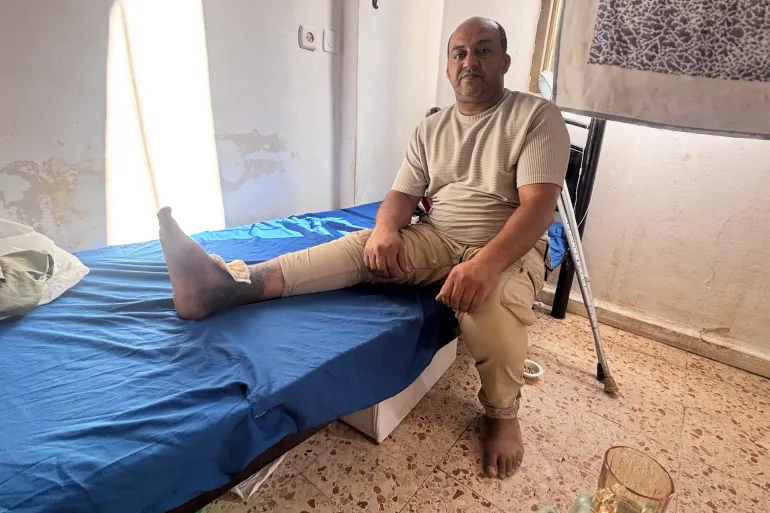
Tulkarem, occupied West Bank – Hakim Mar’i spends his days lying on a single bed, his disfigured leg raised. The windows of Mar’i’s dilapidated apartment, his latest temporary shelter, are covered with old blankets. Unable to work, Mar’i has no money for electricity, so the blankets have to do. At night, his family lives in near darkness.
The apartment is just around the corner from mounds of rubble and gnarled iron structures that mark one entrance to the now-emptied Tulkarem refugee camp. For Mar’i and other Palestinians, the camp was a home once considered temporary. But now, even the physical structure – their home – that tied those generations together is gone.
Recommended Stories
list of 4 itemsend of list
The apartment is just around the corner from mounds of rubble and gnarled iron structures that mark one entrance to the now-emptied Tulkarem refugee camp. For Mar’i and other Palestinians, the camp was a home once considered temporary. But generations lived there, and now, the physical structure – their home – that tied his family together over the years is gone.
Impoverished, Hakim’s family is in disarray. With its debts mounting and its members facing another eviction, he said he has considered taking his life several times over the past year and a half.
Mar’i cannot afford treatment for his debilitating leg injury, which has developed severe infections. He said he sustained it while working as a labourer inside Israel in 2019. The wound worsened after Israeli soldiers severely beat him when they forced his family from the Tulkarem camp. Diabetes and other untreated conditions have piled on, but he is unable to pay for the needed medical care.
“This joint here is completely gone,” he said, gesturing at the swollen, blackened lower leg that prevents him from working.
“The medicine – by God, the medicine, I haven’t been able to get. My wife and kids tell me: get out travel. Go to America, Turkey – so I can the medical treatment I need… I’m a sick man.”
His mother, Salwa, sat beside him, less than a kilometre (0.6 miles) from their former four-storey home. She wept when asked about the family home that was built floor by floor after they were first displaced in 1948 from al-Khudayra, the Arabic name for Hadera, a city in Israel. “We really put a lot into that house,” she said.
After their removal, the Israeli military razed the Mar’i home so a road traversing the now-emptied camp could be built. “Seeing it destroyed was really painful for us – all of us,” she said.
It has been more than 20 months since Israeli forces emptied the Jenin, Tulkarem and Nur Shams refugee camps in a sweeping military operation in the northern West Bank, displacing tens of thousands of Palestinians whose families had already been refugees for three generations. Constantly renewed orders for a closed military zone now prevent their return.
Since January 2025, Hakim’s family has been forced to move four times. First, they fled to a converted youth centre before landing in a cramped apartment with their four children, all under 15.
Unable to pay rent, the family could see the landlord’s generosity run its course as this once-temporary housing arrangement now has no end in sight. Hakim owes money at the local shops for food he bought on credit. Some nights, the children eat at neighbours’ houses.
“I have children. I have food. I have drink,” he said. “My hands are empty. Nobody is with me. Nobody is standing beside me.”
Hakim Mar’i in his family’s apartment with his injured leg, which prevents him from working [Al Jazeera]
‘We’re already at the brink’
The Mar’i family is among more than 33,000 Palestinians forcibly removed from the Jenin, Nur Shams and Tulkarem camps by Israeli forces in early 2025. This is the largest single episode of forced displacement in the West Bank since Israel’s occupation began in 1967, according to the United Nations agency for Palestinian refugees (UNRWA).
UN satellite imagery shows that 20 percent of all buildings across the three camps have been destroyed and another 28 percent are damaged.
“The level of destruction we are seeing is severe and unprecedented,” said Roland Friedrich, director of West Bank affairs for the UN agency for Palestinian refugees, UNRWA.
According to Friedrich, 85 percent of those displaced have no regular income after many lost jobs when the camps were emptied. More than 80 percent of residents are renting, an unfamiliar expense for families who never paid for housing or utilities inside the camps.
The closed military zone covering the camps is renewed every two months, Friedrich said, with no indication of when – or whether – residents will be allowed to return. “What we saw there is forced displacement,” Friedrich said. “The UN’s position is very clear: People have to be allowed to return. The camps must be rebuilt.”
Unlike after the 2000-2005 second Intifada when the Jenin camp was rebuilt, displaced families and UNRWA staff fear there is no return plan this time.
The Israeli military stated the camps were emptied for “operational security” in its effort to root out fighters from the camps. Friedrich worried the aim of the military operations is to “change the geographical expression of the Palestinian refugee issue”.
Now more than 20 months into what was meant to be an emergency response, funding shortages have left UNRWA unable to cover the vast needs of the displaced population. It has moved some operations to keep schools and basic health clinics functioning. With funds dwindling, the agency has shifted to a “targeted approach”, leaving thousands without support.
Friedrich pointed to a rise in gender-based violence linked to the economic strain on families and to growing depression and anxiety among displaced children observed by UNRWA’s psychosocial teams. “We’re already at the brink now,” he declared.
Members of the Zbeidat family sit on couches outside. The room they stay in is on the left [Al Jazeera]
‘Everyone went their own way’
While Hakim’s displacement plays out in the shadow of the camp, the family of Khadija Zbeidat face their own imminent eviction on the outskirts of Tulkarem. They live in the neighbourhood of Dhinnaba, where sparse houses are interspersed with greenhouses. They are unable to afford a residence closer to the city centre.
As Khadija sat on a couch in the middle of the yard, her many children and grandchildren ran past a small patch of plants she has planted – one of her few remaining joys. “I love plants,” she said. “We had many flowers in our home in the camp. Having the plants here is all I have to feel like myself,” she told Al Jazeera.
Khadija, a widow, shares a tiny spartan room with nine family members, nearly all children, along with a small bathroom and a kitchen barely big enough for one person to cook in. A worn couch takes up one corner. The ceiling is peeling above it.
The room was given to them rent free by a relative of Khadija’s brother-in-law after they spent four months crammed into her daughter’s house with nine other people. “It got really cramped, the pressure on each other,” Zbeidat said. “And we became a burden too.”
Khadija’s family was displaced in January 2025 from the Tulkarem camp’s Haret al-Nadi section, a significant part of which has been destroyed, she said.
“The camp was excellent,” she said of their life before. “I swear, I wish they’d take us back. Everything was close to us, dear – … the closeness, that sense of belonging and the warmth, the company and the neighbours.”
The memories that she cherishes most dearly and that bring her to tears are of food: the stuffed grape leaves and the maamoul cookies made as a neighbourhood together for Eid. This year, there was none of it.
“Nothing. No cookies,” she said. “Nobody even had it in them to do anything any more. Everyone went their own way – scattered.”
Like the Mar’i family and others, they were not allowed to bring their belongings during their abrupt displacement. Some residents have since been allowed to retrieve belongings once or twice from their homes in the camps, but much of what they own remains left behind. Khadija’s daughter-in-law at one point returned to the ruins of the camp – at the risk of being shot – to retrieve a doll left behind that Khadija’s granddaughter Sandy would not stop crying about.
In Tulkarem, displaced families live either in the poorest areas closest to the camp, like the Mar’is, or on the cheaper outskirts, like the Zbeidats, remaining close enough to the health and schooling services that UNRWA still provides. But even a simple trip to buy groceries requires Khadija, who has no car, to travel 2km (1.2 miles).
At night, the family sits outside rather than in the stifling heat of the poorly ventilated room, watching Israeli military drones pass low overhead. “What to do? We’re used to seeing them, to having them around, to them raiding houses,” Khadija said. “It doesn’t matter any more.”
The military raids that always haunted life in the refugee camps have now come to wherever the displaced refugees have fled to. “We don’t feel safe,” Khadija said. “Nor the kids. It’s dangerous. When they want to go out somewhere, my heart stays busy until they come back.”
The kitchen and bathroom the Zbeidats have are in the same room they sleep in [Al Jazeera]
Waiting to be kicked out again
For months after the displacement, landlords, relatives and shopkeepers absorbed much of the shock, allowing families to stay for free or buy food on credit. But as the emergency stretches to almost two years now, that informal safety net is fraying. The pressure is felt particularly in economically moribund Tulkarem, where many families had relied on jobs inside Israel before Palestinian work permits were revoked after the Hamas-led attacks in southern Israel and the start of Israel’s genocidal war in Gaza in October 2023.
The owner of the property where Khadija’s family is staying recently sent his sister to tell Khadija’s family to leave. “They think it’s been too long,” Khadija explained. “They want the land, to benefit from the land and the room. … But where can we get money, where to pay from? The rent is very high, and we can’t afford it. We don’t know what to do if she comes again and kicks us out.”
Hakim’s family is on the brink of eviction too. Like others, he received from UNRWA a one-time rental subsidy of 3,000 shekels ($985) and a separate 1,700-shekel ($560) multipurpose cash payment for short-term assistance. “Every minute, I am waiting for the landlord to kick us out,” he said.
Khadija’s family survives on credit from shopkeepers who know their situation and, for now, still extend it – but patience is wearing thin.
Hakim said this goodwill is collapsing: “You tell them: ‘Give me a day, two days. Be patient with me.’ They won’t bear it.”
As distant as a return to her family’s lands in 1948 feels now, Khadija still hopes to return to the camp one day. But she worries that her children may inherit an even more precarious existence than the one that preceded this latest dispossession – refugees for generations displaced yet again. “Only God knows what tomorrow will bring us,” Khadija said.
If you or someone you know is at risk of suicide, theseorganisations may be able to help.


![Afghanistan's Taliban government has identified hundreds of new sites to mine gemstones [Mohsin Khan Momand/Al Jazeera]](https://i0.wp.com/occasionaldigest.com/wp-content/uploads/2026/10/6af0b991-fcb0-4aa6-928f-f9b31ad0a7c6-1790670633.jpg?w=640&ssl=1)
![Afghanistan's Taliban government has identified hundreds of new sites to mine gemstones [Mohsin Khan Momand/Al Jazeera]](https://i0.wp.com/occasionaldigest.com/wp-content/uploads/2026/10/be8b8562-a1e2-4e96-aaa5-eecd1e2e7d1b-1790670636.jpg?w=640&ssl=1)
![Afghanistan's Taliban government has identified hundreds of new sites to mine gemstones [Mohsin Khan Momand/Al Jazeera]](https://i0.wp.com/occasionaldigest.com/wp-content/uploads/2026/10/6af124e6-e19c-4c9e-ab0f-833eeba78cf0-1790670623.jpg?w=640&ssl=1)







![Hakim Mar’i in his family’s apartment with his injured leg, which prevents him from working [Al Jazeera]](https://i0.wp.com/occasionaldigest.com/wp-content/uploads/2026/09/d9-1790406476.jpg?w=640&ssl=1)
![Members of the Zbeidat family sit on couches outside. The room they stay in is on the left [Al Jazeera]](https://i0.wp.com/occasionaldigest.com/wp-content/uploads/2026/09/s2-1790406485.jpg?w=640&ssl=1)
![The kitchen and bathroom the Zbeidats have are in the same room they sleep in [Al Jazeera]](https://i0.wp.com/occasionaldigest.com/wp-content/uploads/2026/09/s4-1790406489.jpg?w=640&ssl=1)