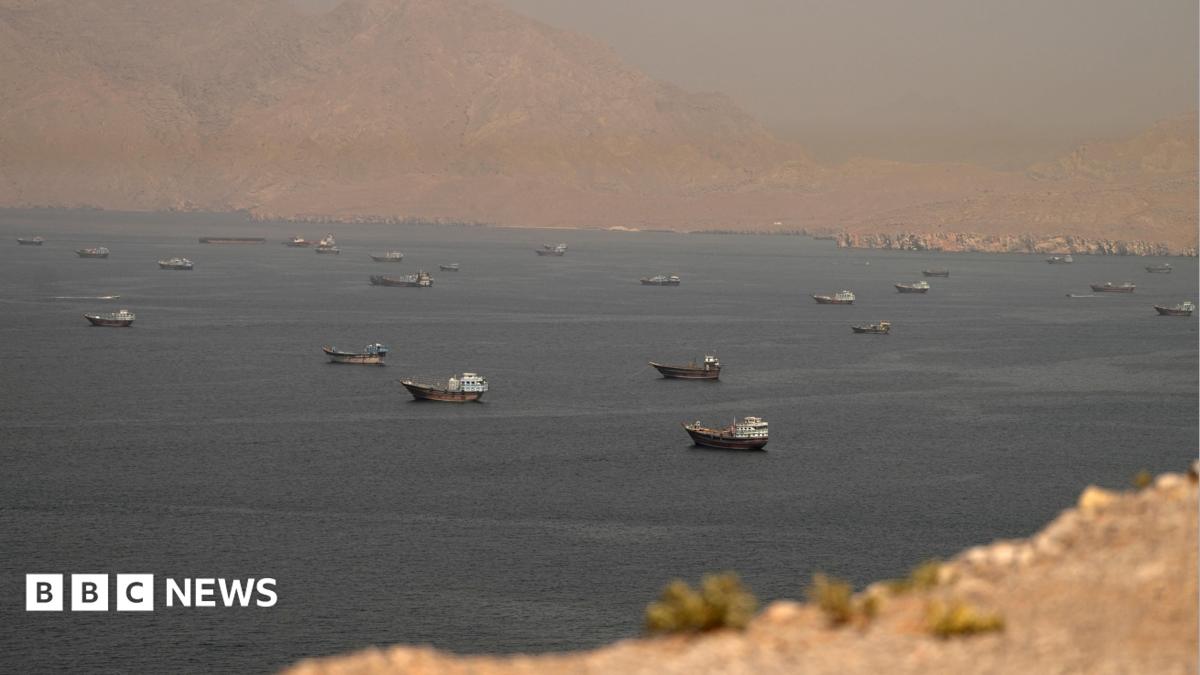
Strikes

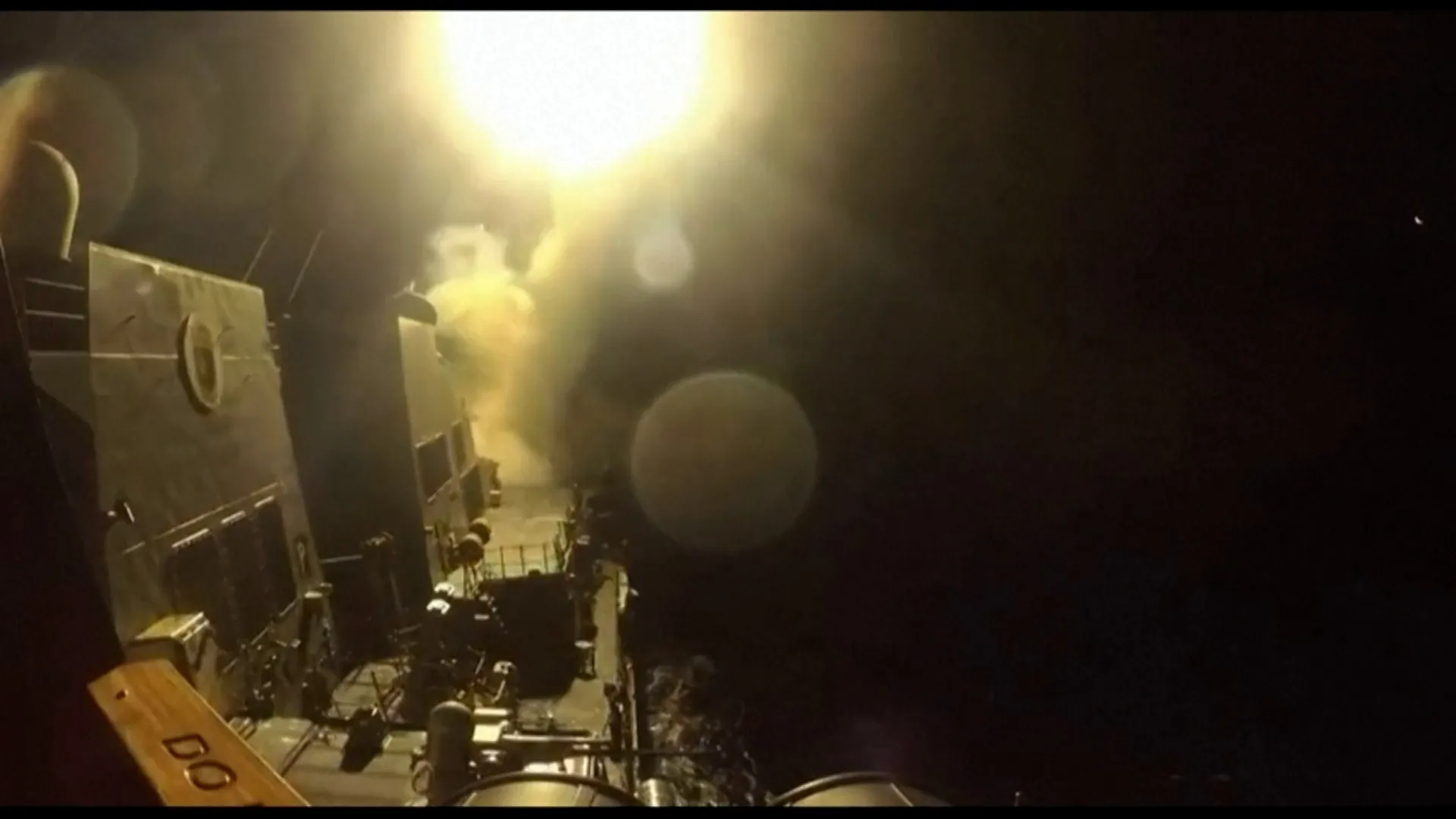
US releases video of warship firing missiles in strikes on Iran | Weapons

NewsFeed

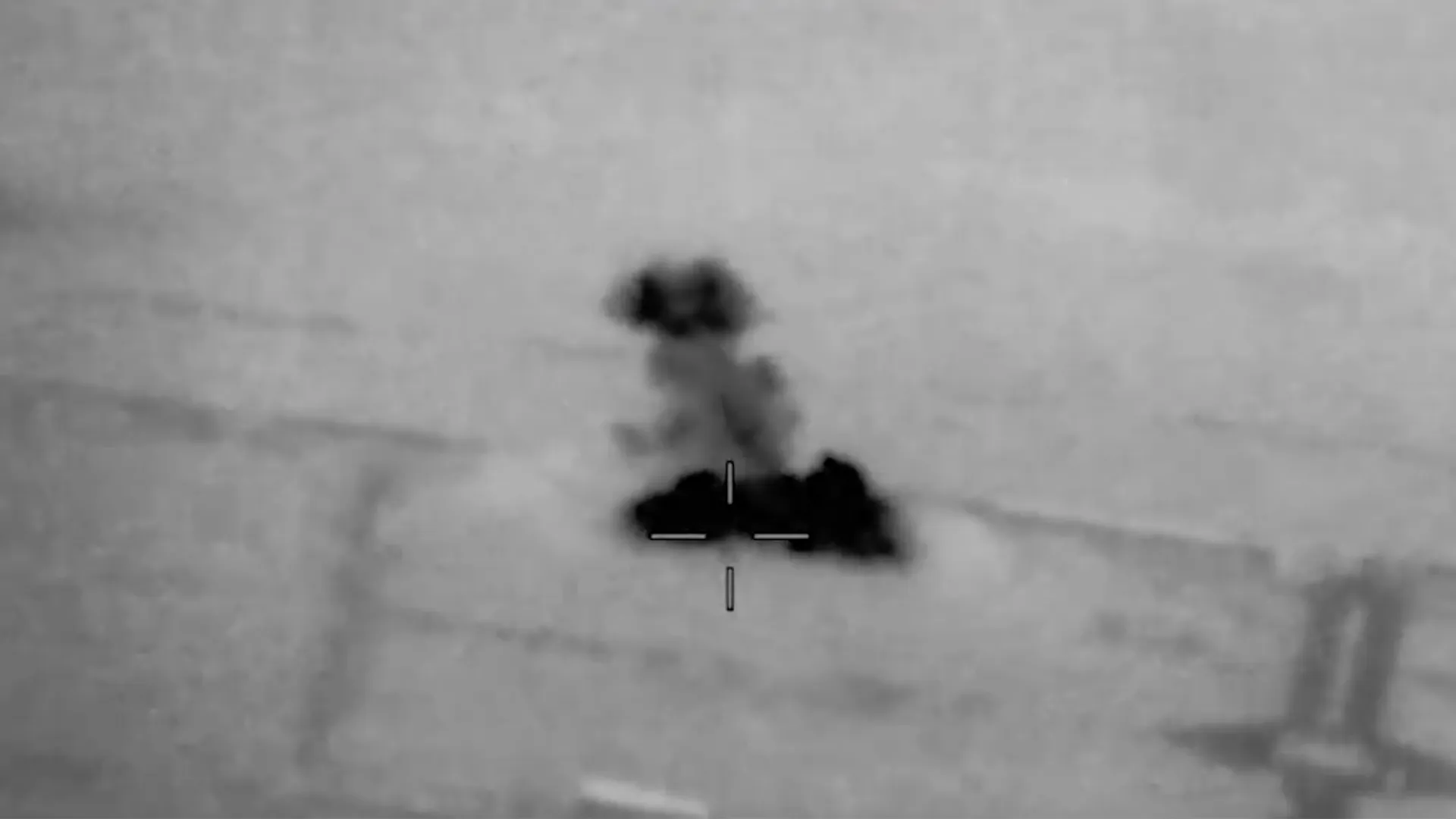
Video released by US Central Command shows what the military says are ‘self-defence’ strikes on Iranian military surveillance capabilities, communications systems and air defence sites. The footage accompanied a statement that US forces had completed the latest wave of attacks.

Source link

Fresh strikes, surging inflation signal new phase of Iran war

U.S. retaliatory strikes against Iran will continue after its forces shot down an American helicopter, President Trump said Wednesday, accusing the Islamic Republic of stringing him along over months of negotiations to end the war.

The prospect of a renewed U.S. air campaign cast fresh doubt on the viability of a ceasefire between the United States and Iran that has largely held since April, when the two sides reached a tenuous truce, pausing weeks of fighting. Trump’s decision to resume attacks comes after an exchange of fire between Israel and Iran threatened to spiral into open war over the weekend.

The administration has presented Trump with options to expand U.S. targets beyond the immediate area around the Strait of Hormuz to Iranian power plants across the country, an escalation that will open the president up to accusations he is targeting civilian infrastructure, according to a defense official familiar with the matter.

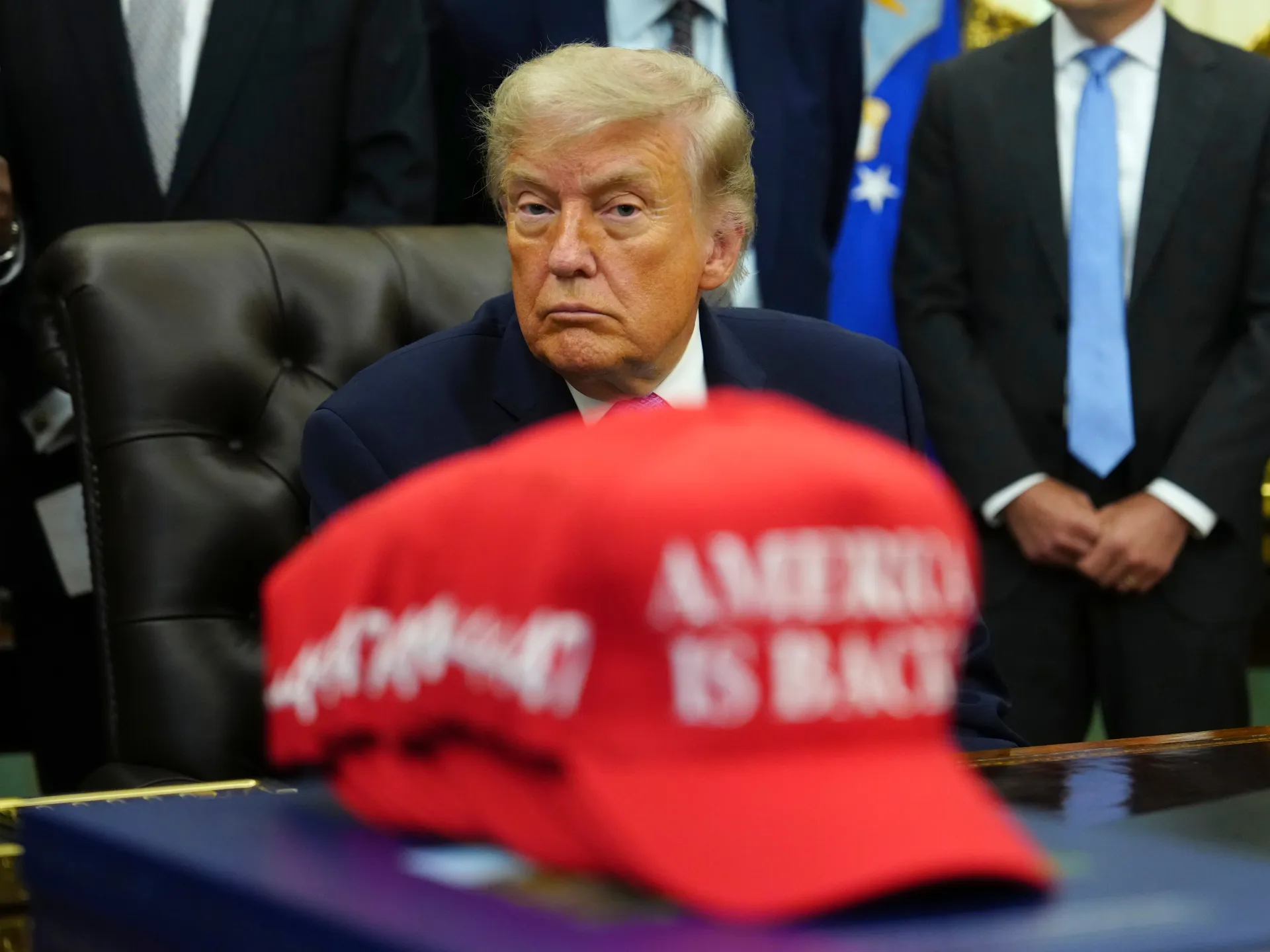
Speaking with reporters in the Oval Office, Trump encouraged the Iranians to accept a framework agreement negotiated between the two sides, and suggested that additional military action might compel Tehran to accept a final truce.

“We hit them hard yesterday, and we’re gonna hit ‘em again hard today,” Trump said. “And we’ll see what happens with the deal. We were really close to a deal, but they keep tapping us along — they keep playing us for suckers.”

The president’s remarks came a few hours after Trump posted on his social media website that Iran “will have to pay the price” for taking too long in negotiating a peace deal.

When pressed by reporters to elaborate, Trump said he meant that bombing would resume but declined to say whether that would include strikes on Iranian power plants and bridges, a threat he has repeatedly issued during the war.

The ongoing conflict, which is in its fourth month, has left a mark on the global and domestic economy. The U.S. Bureau of Labor Statistics reported Wednesday that inflation accelerated in May, driven by a surge in energy prices linked to the war with Iran.

The consumer price index rose 0.5% on a seasonally adjusted basis — the largest monthly increase in three years — pushing the annual inflation rate to 4.2%.

Asked whether he was concerned about the inflation numbers, Trump told reporters that the “numbers were great.”

“You know what I really love? I love the inflation. You know why? Because as soon as this war is over…,” Trump said, without finishing the thought.

The remark prompted near instantaneous news releases from Democratic operatives, as well as the party war room, which sent out a statement accusing Trump of mishandling a reckless war that has devastated the economy in the process.

“Donald Trump’s disastrous economic agenda and deadly and costly war with Iran have made life unbearable for millions of Americans,” Kendall Witmer, the Democratic National Committee’s rapid response director, said in a statement.

“Working families are shouldering skyrocketing costs for basic goods, with their wages being eaten up by Trump’s soaring inflation,” she added. “On the campaign trail, Trump promised to ‘defeat inflation,’ and to lower costs on ‘Day One,’ but two years later, Trump can’t get a handle on his war of choice with Iran as he tanks the economy back home.”

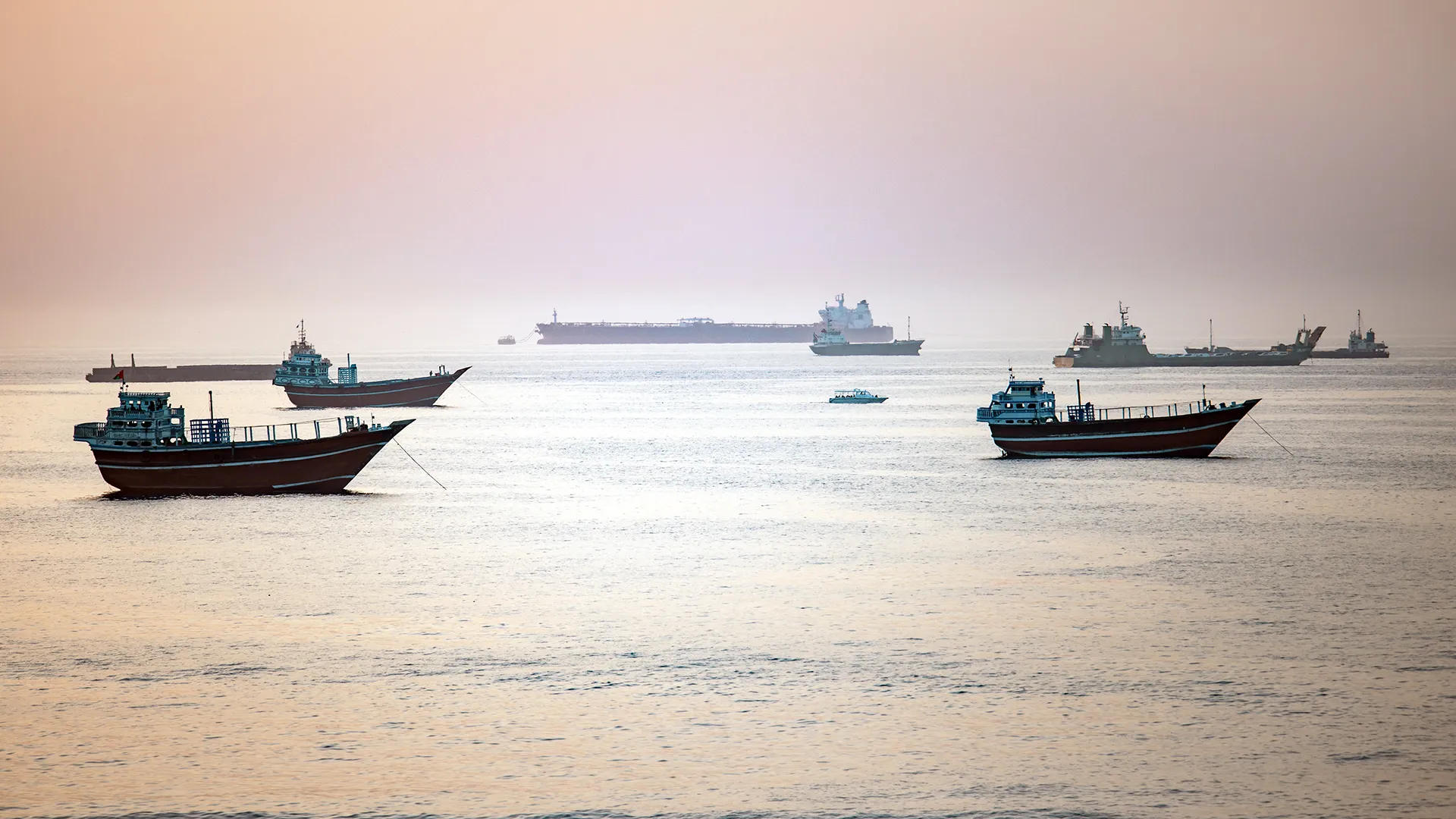
Trump then told reporters about a secret military mission to ensure safe passage for oil tankers through the Strait of Hormuz, one of the world’s most important commercial waterways. He said the operation had secured the passage of more than 100 million barrels of oil through the strait since it began.

“We took out, the other night, 22 ships late at night with no lights because they don’t have any radar because we blasted the crap out of it,” Trump said.

A couple of hours later, Trump wrote in another post that the military operation had been “wildly successful,” and that it proved the United States — not Iran — was in control of the Strait of Hormuz.

“Their military is defeated, and their economy is lost,” he wrote. “It’s over for Iran!”

Over months of diplomacy with Iran, Trump has sought to avoid a return to conflict, often seeking de-escalation when fighting has flared — and repeatedly pressuring Israel to minimize its attacks in Lebanon, where it continues to battle the militant group Hezbollah, a proxy of Iran.

Israeli strikes continued Wednesday, according to local news reports, while Hezbollah said it carried out attacks on Israeli troops stationed in southern Lebanon.

Speaking to journalists in the Oval Office, the president implied he was losing patience with Iranian tactics at the negotiating table.

“I gave them a break, at the request of Pakistan,” he said. “They still are working on trying them to do what’s right. But we want a deal that’s meaningful. We want a deal that works.”

“It was just tap, tap, tap,” the president added. “I don’t know what they’re doing.”

Source link

Eurostar forced to cancel trains as travel strikes hit TWO popular European countries

A 48-HOUR strike in Europe has already seen Eurostar trains cancelled – and more could follow.

Strikes across Italy and France today and tomorrow are impacting rail services including Eurostar trains to and from the UK.

A Eurostar passenger train speeds towards the Channel Tunnel.
Eurostar services are being cancelled today and tomorrow due to strikes Credit: AFP

Cancelled Eurostar trains include the 7:12am service from Paris to London and then the 3:31pm service from London to Paris, both today.

Tomorrow, the 7:12am service from Paris to London will also be cancelled.

A number of other Eurostar trains are facing delays as well including between Paris and Brussels, which will impact Brits changing trains at Paris.

According to the Eurostar website, the cancellations are due to “strike action on the French network” and that “local and national traffic in France will be heavily disrupted”.

Read more on travel inspo

TRAVEL TIP

The £2.99 SIM hack that can save Brits HUNDREDS abroad


CHEAP BREAKS

UK’s best 100 cheap stays – our pick of the top hotels, holiday parks and pubs

Passengers are being advised to keep an eye on Eurostar’s website and app for updates.

The Eurostar delays and cancellations aren’t the only trains impacted.

Across France and Italy there are nationwide strikes over the next 48 hours on rail services.

In France, strike action today is causing disruption across the entire country’s network including trains heading to Normandy, Brittany and Provence.

Two modern red Eurostar high-speed trains at Gare du Nord railway station, with passengers walking on the platform.
Trains across Italy and France are also impacted by nationwide strikes Credit: Getty

The action started at 7pm yesterday and will continue until 6am tomorrow.

According to Rail Europe, delays of between one-and-a-half hours and three hours can be expected on trains being run by TGV INOUI, OUIGO, and Eurostar.

On the other hand, in Italy, workers at state-owned rail companies such as Trenitalia, Trenord, and Trenitalia Tper will strike tomorrow from 3am until 2am on Friday.

Delays and cancellations are expected across the country including services to destinations such as Rome, Milan, Florence, Venice and Naples.

Though due to Italian laws, there will be services at peak times which include between 6am and 9am and between 6pm and 9pm.

According to RTL Today, train connections to Luxembourg are also being impacted.

For Brits on holiday in either Italy or France, if you are due to get on a train within the country or even on a Eurostar service, expect delays and cancellations, as well as busier train stations.

Sun Travel has contacted Eurostar for comment.


Source link

U.S. says it has launched strikes against Iran following crash of Army Apache helicopter

The U.S. military said Tuesday it has begun strikes against Iran following the crash of a U.S. Army Apache helicopter off the coast of Oman that President Trump blamed on the Islamic Republic.

In a statement posted to social media, U.S. Central Command said the strikes would be “a proportional response to unjustified Iranian aggression.” It comes after Trump blamed Iran for downing the helicopter and vowed that the U.S. would respond.

Iranian state media reported that explosions were heard on an Iranian island in the Strait of Hormuz.

Trump had blamed Iran for shooting down a helicopter close to the Strait of Hormuz and said the United States must respond. Iran’s top diplomat said foreign military forces near the country’s territory “are at constant risk.”

The Apache helicopter that crashed went down after colliding with an Iranian drone, according to a U.S. official, who spoke on condition of anonymity to discuss an ongoing investigation.

It wasn’t clear whether the collision was intentional, and official statements only said the crash is under investigation. CNN, CBS News and other outlets earlier reported the Iranian drone collision.

Trump said Iran shot down the aircraft while it was on patrol over the Strait of Hormuz and declared that the U.S. “must, of necessity, respond to this attack,” in a post to social media.

The U.S. military later announced that it had begun strikes against Iran.

In the first known operation of its kind by the American military, a drone boat rescued the two aviators who were aboard the Apache attack helicopter when it went down near the critical shipping lane that Iran has effectively closed during its war with the U.S. and Israel.

Trump said in a social media post that military officials told him “the Iranians shot down one of our highly sophisticated Apache Helicopters.” Both service members “are safe and uninjured,” he added.

“Nevertheless, the United States must, of necessity, respond to this attack,” Trump wrote.

A woman walks past a mural depicting a U.S. aircraft carrier under missile attack

A woman walks past a mural depicting a U.S. aircraft carrier under missile attack in downtown Tehran, Iran on Monday.

(Vahid Salemi / Associated Press)

Soon after Trump made his accusation, Iranian Foreign Minister Seyed Abbas Araghchi said in a social media post that the strait is “thousands of miles away from U.S. shores.”

“Foreign forces in proximity to our territory are at constant risk on account of their own human errors, plain accidents, or potentially being caught in crossfire,” Araghchi wrote. “To reduce risk, best solution is for them to leave.”

The downing of the helicopter further strained a two-month ceasefire a day after Iran and Israel exchanged fire for the first time since the fragile truce took effect. Iranian state television said Tuesday that the Israeli attacks killed at least two members of the country’s air-defense units.

Since the U.S. and Israel began striking Iran on Feb. 28, the war has shaken the global economy, driven up energy prices around the world and made many basics, including food, more expensive.

Officials have been unable to turn the April ceasefire into a deal to permanently end the conflict, particularly as Israel intensifies and expands its military campaign in Lebanon against the Iranian-backed militia Hezbollah.

Army crew members picked up by drone boat

The Army aviators were rescued at 3:30 a.m. local time Tuesday, about two hours after their helicopter went down during a patrol off the coast of Oman, U.S. Central Command said.

The U.S. service members were spotted and picked up by a drone boat that took them to another location on the water, where they were picked up by a helicopter, said Capt. Tim Hawkins, a spokesman for U.S. Central Command. Hawkins initially said the drone took the two to shore, and he did not elaborate on the updated timeline.

It was the first known drone rescue at sea by the U.S. military, Hawkins said.

AH-64 Apache helicopters have been a key asset for the American military as it enforces a blockade on Iranian crude oil shipments and tankers, seeking to pressure Tehran into a deal. The helicopters have also been used by the United Arab Emirates to shoot down Iranian drones.

The drone used to perform the rescue was a 24-foot vessel called a Corsair, Hawkins said. It’s manufactured by Saronic Technologies.

The drone was assigned to the Navy’s Task Force 59, established in 2021 as the Navy’s first uncrewed and artificial intelligence unit that focuses on maritime security in the Middle East, including the Strait of Hormuz and the Suez Canal.

Trump insists an Iran deal is coming

Before he accused Iran of downing the U.S. helicopter, Trump had expressed renewed optimism over negotiations with Iran.

“We have a good chance” of signing a deal in “two or three days,” Trump said late Monday. But he did not provide any details on why there was reason for new optimism. In the two months since the U.S. and Iran agreed to an initial ceasefire, Trump has repeatedly predicted that a deal is near.

“We’re very close to having a very, very good, strong, powerful deal,” the president said.

Mediators, led predominantly by Pakistan, have been trying for weeks to get a deal across the line. However, both Iran and the U.S. have taken hard-line positions.

The U.S. wants to see Iran give up its stockpile of highly enriched uranium, which is believed to be entombed in the aftermath of American airstrikes that happened during the 12-day war in 2025. But Iran is refusing that and demanding relief from sanctions. It also wants the release of frozen assets even before a final agreement is in place, something rejected by Trump.

Before Trump’s comments on negotiations, Qalibaf said Monday that Trump’s remarks so far on a possible deal “contradicted the agreed-upon sections,” showing that the U.S. is “neither seeking a ceasefire nor dialogue.”

The continued fighting between Israel and Hezbollah is still a top Iranian priority as well. Lebanon’s army chief, Gen. Rodolphe Haykal, traveled to Pakistan on Tuesday. There, he met Pakistan’s army chief, Field Marshal Asim Munir, who has been a key figure in the Iran-U.S. talks.

Haykal’s visit comes as Lebanon’s government takes an increasingly hard line on Hezbollah but remains unable to disarm the powerful militia. Hezbollah thanked Iran on Tuesday for attacking Israel “in defense of our Lebanese people,” suggesting that Lebanon’s government should take this opportunity to improve relations with Tehran.

Israel issues a warning for Tyre, Lebanon

Meanwhile, the Israeli military issued an evacuation warning for Lebanon’s southern port city of Tyre, including the Christian quarter, which has so far been spared from airstrikes on the city.

Last week, Israel warned the Christian neighborhoods in Tyre that it believed Hezbollah members were among them. Many Lebanese Shiite Muslims fled to those areas as Israeli strikes hammered the Mediterranean coastal area over the past two weeks.

After last week’s warning, the Lebanese army deployed to the Christian district of Tyre in an effort to prevent Israeli attacks there and to show that Hezbollah has no armed presence in the area. But Avichay Adraee, the Israeli military’s Arabic-language spokesperson, posted on X on Monday that the Israeli military “will have to act against their terrorist activities in the neighborhood soon.”

Gambrell, Superville and Toropin write for the Associated Press. Superville and Toropin reported from Washington. AP writers Michelle L. Price in New York, Will Weissert in Washington, Bassem Mroue in Beirut, Munir Ahmed in Islamabad and Russ Bynum in Savannah, Ga., contributed to this report.

Source link

Federal judge strikes down Trump’s $100,000 fee on new H-1B visas

A federal judge on Monday struck down the Trump administration’s $100,000 fee on new H-1B visas, contradicting an earlier federal court ruling upholding the fee hike.

The administration announced the much-higher fee as a way of preventing foreign workers from taking American jobs.

But U.S. District Judge Leo Sorokin in Boston sided with 20 states and struck down the visa policy, concluding that the executive branch exceeded its authority and violated the Administrative Procedure Act, which governs how federal agencies develop and issue regulations.

“The Court finds that the Policy imposes a tax on H-1B petitions without the requisite delegation by Congress,” Sorokin wrote.

H-1B visas are meant for high-skill jobs that are difficult to find American workers to fill. Deep-pocketed technology companies are the biggest users, with nearly three-quarters of approvals going to workers from India. The states argued that using the H-1B program to fill vacancies for much-needed doctors and teachers was already difficult before the higher fee.

Most H-1B visa applications cost several thousand dollars before the announced increase set off a wave of panic among confused employers, students and workers in the United States and abroad and led to several lawsuits, including in Boston.

The U.S. Chamber of Commerce also sued, in federal court in Washington, D.C., and has appealed a denial of a summary judgment against the fee hike. That left the higher fee in effect, at least until September, when it is scheduled to expire. Monday’s ruling is also a summary judgment, to the opposite effect. Still another lawsuit was filed in federal court in San Francisco, by religious groups and labor organizations, setting up the possibility of divided rulings in three appellate court circuits.

The states argued that the policy impedes their ability to hire primary and secondary school educators and to staff public colleges and universities, will stymie academic research and will lead to a decline in medical workers.

“The Proclamation makes various overtures to domestic economic policy goals to justify the unprecedented $100,000 fee,” plaintiffs wrote in their complaint. “But the Proclamation gives no indication that the President gave any consideration to how the fee would affect Plaintiff States and their ability to provide their residents access to education, healthcare, and other basic human needs.”

A Department of Homeland Security statement said the agency disagrees with “this blatant judicial activism dismantling President Trump’s historic efforts for immigration reform.”

“Under President Trump and Secretary [Markwayne] Mullin, our immigration system is being reformed to serve American citizens, American workers, and American families and to preserve our national identity — not to rapidly import foreigners who take American jobs, commit crimes, burden our welfare system, and erode our cultural and social fabric.”

Casey writes for the Associated Press.

Source link

‘We basically lost’: Tel Aviv residents react after Israel-Iran strikes | US-Israel war on Iran News

Residents in Tel Aviv voiced mixed reactions after Israel and Iran said they would halt strikes following a day of missile exchanges. While some wanted a stronger response against Iran, others said Israelis were ‘losing’, citing disruptions to daily life, schools and tourism.

Source link

New Iran and Israel strikes threaten ceasefire; Trump tells both sides to stop ‘shooting’

Israel and Iran traded fire on Monday, all but derailing a brittle two-month ceasefire that had largely stopped the fighting in the U.S and Israel’s assault on Iran.

The tit-for-tat attacks between the two sides threaten to widen the scope of a conflict that has already killed and wounded thousands, displaced more than a million people and rattled economies across the globe — even while embroiling the U.S. in a war with no clear off-ramp.

“Israel and Iran must immediately stop ‘shooting.’ ” wrote President Trump early Monday on his social media platform, Truth Social.

Later, he wrote, “Both sides, Israel and Iran, are looking to do an immediate CEASEFIRE!”

“Final negotiations on ‘Peace’ are proceeding, subject to ignorance or stupidity getting in its way. The Blockade will remain in place, and in full force and effect, until a ‘Final Deal’ is reached. Things should move quickly.”

The latest escalation came after Israel attacked the suburbs of Lebanon’s capital Beirut on Sunday in what it said was a targeted strike against Hezbollah, an Iran-supported paramilitary faction and political party.

In recent days, Iran conditioned a ceasefire agreement with Israel and the U.S. on a cessation of hostilities across all fronts, including Lebanon, threatening it would respond to any Israeli action on the Lebanese capital. Israel rejects linking both battlefields, and insists on having a free hand to attack Hezbollah.

A number of U.S.-brokered ceasefires between the Lebanese and Israeli governments — but without Hezbollah involvement — failed to stop most of the fighting, with Israeli warplanes pounding wide swaths of Lebanon’s south while Hezbollah launched drones and missiles on northern Israel. Nevertheless, the Lebanese government has rejected being included in Iran’s negotiations with the U.S.

By Sunday night, Iran’s threats came to pass with several waves of Iranian ballistic missiles, which caused no injuries and were the first Tehran had fired at Israel since a ceasefire took hold in April. Iran’s military said the fusillade was a warning. But Israel said it would retaliate.

President Trump initially downplayed the Iranian attack on Sunday, saying in an interview with the Financial Times Iran’s barrage was “not going to have any impact on the deal.”

“We’ll see how it ends up. But they [the Iranian strikes on Israel] were attacks that did not kick at all,” he said.

“The deal may make it on its own merit, or not, but this will not have any effect on it.”

Trump also told the Axios news site he would talk to Israeli Prime Minister Benjamin Netanyahu to stop him retaliating against Iran’s barrage.

He also told the Financial Times that Netanyahu “won’t have any choice” but to accept the deal Trump negotiates with Iran.

“I call the shots. I call all the shots. He [Netanyahu] doesn’t call the shots,” Trump said.

Yet by the early morning on Monday, dozens of Israeli warplanes were striking western and central Iran. They hit a petrochemical complex in Mahshahr in southwestern Iran, and waged extensive strikes on “strategic defense systems,” according to Israeli military statements, in what observers said was a prelude to a wider offensive. Residents in Tehran, Isfahan, Tabriz and Shiraz reported powerful explosions.

The Israeli military said in a statement it expected several days of fighting with Iran but was prepared for a prolonged campaign. It said the strikes on Iran were conducted by Israel on its own, but that they had been done in “full coordination” with U.S. Central Command, which also helped in intercepting Iranian missiles launched at Israel.

But that distinction appeared to matter little to Iran’s foreign ministry spokesperson, Esmail Baghaei, who said in a press conference on Monday that the U.S held direct responsibility for recent ceasefire violations and Israel’s action “cannot be looked at in isolation from the U.S.”

“No one believes the Israeli regime would take any action without coordination with the United States,” he said.

“The U.S. bears responsibility for the Israeli regime’s aggression, and it will also be responsible for the consequences of any escalation in tensions.”

Iran launched additional barrages throughout Monday, targeting Israeli airbases in Nevatim and Tel Nof and a petrochemical plant in Haifa, according to a statement from Iran’s Revolutionary Guard Corps. It added Israel was engaging in “a dangerous game by targeting civilian and oil infrastructure — a game that will now encompass all regional energy targets, with global economic consequences resting on America.”

The renewed hostilities also saw Yemen’s Houthis — who receive support from Iran and Hezbollah, and are part of a regional network of Iran-backed factions — enter the fray with a pair of ballistic missiles lobbed at Israel. The Israeli military said one of the missiles was intercepted; the second fell short of Israel.

Houthi spokesman Brig. Gen. Yahya Sarea confirmed the attack in a televised statement on Monday, and said Israeli maritime navigation in the Red Sea would be targeted.

During the Gaza war, the Houthis attacked commercial shipping in the Red Sea — including ships with no link to Israel — to pressure Israel into lifting its blockade on the enclave.

But, unlike Hezbollah, which attacked Israel on March 2, three days after the U.S. and Israeli campaign on Iran, the Houthis had refrained from helping their ally, until Monday.

Their involvement now raises the specter of another squeeze on energy markets already beleaguered by closures on the Strait of Hormuz. Since the U.S.-Israeli assault, the Red Sea has acted as the main alternative conduit for energy supplies, especially for those from Saudi Arabia. If the Houthis closed the Bab Al-Mandab Strait, it would all but paralyze commercial flows.

Oil prices spiked in the wake of the exchanges, with Brent Crude rising 5% to hit $98 a barrel.

Source link

Israel strikes southern suburbs of Lebanon’s capital Beirut | Israel attacks Lebanon

NewsFeed

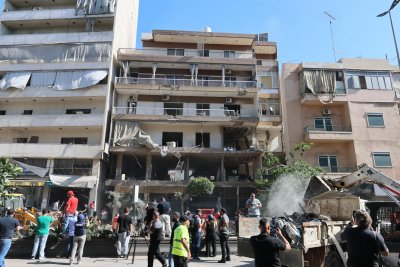
Videos show the aftermath of an Israeli attack on Beirut’s southern suburbs, with multiple explosions reported. Israel says it targeted Hezbollah headquarters, while Lebanese media says residential apartments were hit. The attack comes just days after US President Donald Trump told Benjamin Netanyahu that Beirut was off limits as Washington pursues a deal with Iran.

Source link

Ukraine hits St. Petersburg in overnight strikes

Saturday is the last day of Russian President Vladimir Putin’s St. Petersburt International Economic Forum. Ukraine struck military targets near the city overnight Friday. Photo by Anatoly Maltsev/EPA

June 6 (UPI) — A drone attack launched by Ukraine hit St. Petersburg, Russia, overnight as Russian President Vladimir Putin wraps up an economic forum there.

Ukrainian President Volodymyr Zelinsky had asked Putin to meet face to face and discuss peace talks, but Putin responded that there was no point.

“It is time to end this war. But Russia’s ruler wants to keep fighting,” Zelensky wrote on X early Saturday. “That is why Ukrainian sanctions against this aggression are working. Last night, our drones covered a distance of about 1,000 kilometers to the St. Petersburg region — to the enemy navy’s arsenals and a base in Kronstadt. Our long-range sanctions also reached about 500 kilometers into the Krasnodar region — and hit an oil depot.”

Kronstadt is home to a naval academy and is the main base, repair and supply hub for the Russian navy in the Eastern Baltic.

Leningrad Governor Aleksandr Drozdenko said more than 140 drones were shot down in his region. St. Petersburg Governor Alexander Beglov told residents to stay indoors, CNN reported. He also said three people were injured.

Drozdenko said more than 600 people were evacuated from Bolshaya Izhora, a village on the Gulf of Finland near St. Petersburg, as efforts continued to put out a fire. The area is also home to a Russian naval arsenal, CNN reported.

St. Petersburg is Russia’s second-largest city, behind Moscow.

The New York Times reported that St. Petersburg’s main airport, Pulkovo, suspended operations for almost five hours, according to Rosaviatsia, the Russian aviation authority. Residents reported smoke in the sky and roaring noises and bangs, according to Fontanka, a local news website.

Ukrainian Foreign Minister Andrii Sybiha said on X Saturday that “Things will only get worse for Russia. Battlefield losses will continue to grow. Failures will get more humiliating. … “The international pressure will not ease. It will only get stronger. Including the use of frozen assets, travel bans and inevitable accountability for crimes,” Sybiha said.

Zelensky is scheduled to meet with leaders of France, Germany and Great Britain in London Sunday to discuss support for Ukraine and peace talks, Politico reported.

President Donald Trump discusses renovations to the Lincoln Reflecting Pool and makes an announcement on coal in the Oval Office at the White House on Thursday. Photo by Samuel Corum/UPI | License Photo


Source link

A federal judge strikes down Trump administration immigration policy affecting 39 countries

A federal judge on Friday struck down a Trump administration policy enacted after the shooting of two National Guard members that made it harder for immigrants from dozens of countries to stay and enter the U.S.

In a ruling harshly criticizing the administration, U.S. District Chief Judge John McConnell Jr. said the policy “threw the lives of countless immigrants living in the United States into indeterminate legal limbo,” and he accused the U.S. Citizenship and Immigration Services of ignoring the law.

“In enacting its latest immigration policies, USCIS: claims statutory and regulatory authority that it does not possess; makes decisions without the reasoned explanations that it must provide; acts without regard for the reliance interests of applicants that it must consider; and justifies its actions with pretextual concerns of ‘national security’ that mask anti-immigrant sentiments that it is forbidden from letting influence its decision-making,” he wrote. “In legal terms that means USCIS’s actions are contrary to law and arbitrary and capricious.”

A spokesperson for the Department of Homeland Security did not immediately respond to a request for comment.

The policies enacted after the National Guard shooting last year meant that immigrants from 39 African, Asian, Latin American and Middle Eastern countries have been “categorically barred” from receiving final decisions on, among other things, their asylum, work permit, green card and citizenship applications.

“This ruling reaffirms a basic principle: the federal government cannot shut down lawful immigration pathways or discriminate against people based on where they come from,” said Skye Perryman, president and CEO of Democracy Forward, which represented the plaintiffs in the case. “These unlawful policies caused enormous harm to families, workers, asylum-seekers, and communities across the country who were left in limbo, unable to work, access protections, or move forward with their lives.”

The policies apply to U.S. Citizenship and Immigration Services, which approves applications for immigrants to work and become citizens. The agency, which is within the Homeland Security Department, often grants asylum, but only for those already in the United States when they apply. Immigration judges grant asylum to those who are stopped at the border; the ruling does not affect them, and neither do the policies that sparked the lawsuit.

It is part of an ongoing effort by the administration to tighten U.S. entry standards for travel and immigration, in what critics say unfairly prevents travel for people from a broad range of countries. The administration suggested it would expand the restrictions after the arrest of an Afghan national suspect in the shooting of two National Guard troops over Thanksgiving weekend.

In its motion to dismiss, which the court denied, the government argued that Congress gave the executive branch broad authority over immigration policy, including “the entry of aliens into the United States as well as discretion within the statutory scheme to confer as well as withdraw various discretionary benefits.”

“This case rests on a remarkable premise: that a federal court should prevent an agency from issuing the very policy guidance that provides government personnel with the guardrails necessary to ensure consistent, non-arbitrary, and individualized decisionmaking consistent with federal law,” the government wrote in its brief.

Immigration groups celebrated the ruling.

“This ruling sets a powerful precedent that the administration cannot ignore the law as laid down by Congress and cannot arbitrarily bar immigration benefits on the basis of national origin by fiat,” said Jamal Abdi, president at the National Iranian American Council. “Fortunately, this is still a nation of laws, and those who uphold America’s values have recourse to challenge and push back on such discriminatory, arbitrary policies.”

Shawn VanDiver, a Navy veteran who heads a coalition that supports Afghan resettlement efforts called #AfghanEvac, said the ruling was a “significant victory for the rule of law and for thousands of Afghan allies and other immigrants who followed every requirement asked of them.”

“Just this week in Dallas and Fort Worth, we met people who feared losing jobs because delayed work permit renewals threatened their livelihoods, families who postponed education, travel, and homeownership because they did not know when their cases would be resolved, and future Americans who had expected to become citizens only to see their applications stall without explanation,” VanDiver said.

Casey writes for the Associated Press.

Source link

Gaza, Iran, Lebanon: If ceasefires are in place, why do strikes continue? | US-Israel war on Iran News

On Wednesday, Israel and Lebanon announced yet another ceasefire – after they had seemingly already agreed to a truce on April 16.

Iran and the United States have formally had a ceasefire in place since April 8. And Israel and Hamas, the Palestinian group, have had a ceasefire in Gaza since October 10, 2025.

Yet Israel’s attacks on Lebanon continue unchecked, with strikes on the Naqoura and Nabatieh districts of southern Lebanon on Friday, resulting in at least one death. Iran and the US have continued to trade periodic attacks that have picked up in intensity in recent days. The Iranian military has also fired missiles and drones at Gulf nations such as the United Arab Emirates, Kuwait and Bahrain, which it accuses of enabling US attacks on Iran during the ceasefire.

And in Gaza, Israel continues to carry out bombings, including one that killed nine people in a residential building this week, despite a supposed truce aimed at ending its genocidal war on the Palestinian territory.

So what does it mean for a ceasefire to be in place when fighting continues? What does international law say? And why do violations so rarely lead to consequences?

We speak to legal experts to understand:

What is a ceasefire?

Simply put, it’s a pause in fighting designed to create space for negotiations, explained Mark Kersten, assistant professor of criminal justice and criminology at the University of the Fraser Valley.

“A ceasefire is effectively a cessation of hostilities, but typically not understood to be a permanent one,” he told Al Jazeera.

It is also often fundamentally a political agreement rather than a strongly enforceable legal instrument, said Michael Lynk, an emeritus professor at Western University in Canada.

Unlike peace treaties, which often have guarantors responsible for oversight and enforcement, ceasefires can be breached with few immediate legal consequences, Lynk told Al Jazeera.

This is especially true in Gaza and Lebanon, where the United States has acted as the principal broker and overseer. While some countries have criticised Israeli strikes in Lebanon, Lynk says there has been little pressure on Washington for allowing repeated violations.

“A number of Global North countries have criticised the continuing Israeli attacks on Lebanon despite the ceasefire, but they have not called out the US for allowing Israel to repeatedly breach the ceasefires in Gaza and Lebanon.”

So are ceasefires legally binding – or not?

Yes, they are, argues Toby Cadman, a British international human rights lawyer and cofounder of Guernica 37 Chambers.

But, like Kersten and Lynk, Cadman said that ceasefires – which he described as the “temporary, military and diplomatic suspension of military operations” – are inherently fragile. Unlike peace treaties, ceasefires do not resolve the underlying conflict or end the legal state of war.

“It suspends the fighting; it does not end the state of armed conflict,” he said.

Where there is a broader peace agreement, such as in Gaza, the ceasefire too stands – at least in theory – on a stronger footing, said Lynk. The Gaza peace plan that accompanied the ceasefire was endorsed by the UN Security Council through Resolution 2803, which calls for the agreement to be implemented “in its entirety, in good faith and without delay”.

In theory, states could ask the Security Council to sanction parties violating the Gaza agreement. In practice, Lynk explained, the US veto on the body means that neither Israel, nor the US itself, can realistically be censured.

“This is why ceasefires and peace treaties are ultimately political documents because it requires political will to enforce them,” Lynk said.

Who decides when a ceasefire has been violated?

Palestinians have repeatedly pointed to the violation of the Gaza ceasefire by Israel. The US and Iran routinely accuse each other of breaching their truce. And Israel and Lebanon do the same when it comes to their ceasefire.

So who decides whether a ceasefire has been violated – and by whom?

The answer, according to Cadman, is that “there is no neutral arbiter empowered to determine, with binding effect, who has breached.”

Monitoring mechanisms do exist, but they are largely political bodies overseen by the same states that brokered and guaranteed the agreements. In the case of Gaza and Lebanon, that is the United States. But Washington occupies the unusual position of mediator, guarantor and Israel’s closest military and diplomatic ally.

That means allegations of violations are often filtered through political calculations rather than assessed by an independent legal authority, say experts.

What about international law?

For Kersten, Gaza and Lebanon expose a fundamental contradiction within the international legal system. On paper, international law has succeeded in establishing a broad consensus about the legality of what is taking place.

“The vast majority of the world recognises that what is happening in both contexts is not just wrong, but illegal – thanks to international law.”

Yet recognition has done little to halt the violence. “Little is being done to save lives and stop the carnage,” he said.

The result is a widening gap between legal findings and political action. Courts can investigate, collect evidence and issue rulings as the International Criminal Court and the International Court of Justice have both done against Israel, but that does not stop bombs from falling or guarantee compliance on the ground.

For Kersten and Lynk, the problem is not a lack of legal standards; it is the persistent failure of states to enforce them, particularly when powerful actors are involved.

“The lack of effective accountability is the hole in the heart of international law and our modern international political system,” Lynk said.

But Kersten said what was clear was that international humanitarian law, human rights law and international criminal law remain fully applicable during a ceasefire.

“Ceasefire provides no legal cover to commit atrocities against civilians.”

That means allegations of war crimes can still be investigated and prosecuted even while a ceasefire is in effect.

Is ‘self-defence’ a justification for attacks during a ceasefire?

Cadman highlights the legal argument most frequently used to justify continued strikes by Israel on Gaza and Lebanon, and by the US against Iran: self-defence.

These arguments rest on Article 51 of the UN Charter, which carves out the right for states to launch unilateral military action against other nations if they are acting in self-defence.

But Cadman said the interpretation of that clause is heavily contested.

“Article 51 answers an armed attack that has happened or is genuinely imminent; it is not a standing licence for preventive strikes.”

So why do countries feel they can get away with attacks during a ceasefire?

Asked by reporters on Wednesday how he defined a ceasefire, given the continuing – though sporadic – attacks that the US and Iran have exchanged in recent weeks, US President Donald Trump said: “It’s a different part of the world, you know. I’d say in that part of a ceasefire is when you’re shooting in a more moderate manner.”

Trump’s comments underscore what legal experts say is at the heart of the persisting violence in Gaza, Lebanon and the Gulf: The lack of any meaningful enforcement mechanism.

The Security Council is constrained by veto powers. The ICJ can issue binding orders but cannot enforce them. The ICC can issue arrest warrants, but depends on states to carry them out.

“The unifying theme is an enforcement deficit,” Cadman said.

Cadman argued that the problem is not that international law lacks rules. Rather, those rules are often applied selectively. “The law is not formally different for Israel or the US; its application is selective.”

Source link

How the world failed a mother’s children, killed in Israeli strikes on Gaza | Child Rights News

NewsFeed

Palestinian journalist and mother Aya Shamaa wrote about how an Israeli strike killed her children, newborn Ryan and seven-year-old Yaman. Like countless mothers in Gaza, she saw her children as gleams of hope amid a fragile ceasefire. Narrated by Al Jazeera’s Al Anoud Al Aqeedi.

Source link

Iranian strikes shut Kuwait Airport as U.S.-Iran fighting intensifies

All flights in and out of Kuwait Airport were suspended until further notice Wednesday after it was hit by Iranian missiles and drones, injuring several people and causing extensive damage amid an escalation in the U.S.-Iran war after the flared up again at the weekend. File photo by Stringer/EPA

June 3 (UPI) — Kuwait closed its main airport in Kuwait City on Wednesday after Iranian missile and drone strikes injured several people and caused “significant damage” to its main terminal building as renewed hostilities between the Iran and the United States escalated.

The airport activated its emergency plan, suspending all flights indefinitely after its Terminal 1 building was the target of “Iranian aggression, resulting in significant damage to several airport facilities, in addition to recording human injuries,” the Directorate General of Civil Aviation said in an update on X.

DGCA spokesman Abdullah Al-Rajhi said it has been decided to suspend air traffic and divert flights to alternative airports until further notice pending the completion of repair work to enable the airport to resume operations, saying that inspection and comprehensive assessment by technical and specialized teams was already underway.

Kuwait International Airport only fully reopened on Monday after being closed on and off since the start of the war on Feb. 28.

The attack came hours after Iran and the United States and Iran exchanged fire across the region Tuesday with Iranian forces attacking its Gulf neighbors and the American military striking a vessel attempting to evade its naval blockade and launching “self-defense” strikes on Iran’s Qeshm Island.

The airport was hit in the early hours, shortly after U.S. Central Command said a series of Iranian missiles and drones directed at its regional neighbors had either failed to reach their targets or been repelled by U.S. forces, including two Iranian missiles fired at Kuwait that “fell short or broke apart enroute,” and three others launched at Bahrain that were intercepted by U.S. and Bahrain air defense forces.

CENTCOM said later that an additional wave of Iranian drones targeting U.S. forces in Kuwait was downed by air defenses with no American personnel or assets harmed and dismissed as fake Islamic Revolutionary Guard Corps claims they struck U.S. 5th Fleet headquarters in Bahrain and a U.S. air base in the region with missiles and drones.

No U.S. personnel were harmed. CENTCOM forces remain vigilant and ready to defend against unwarranted Iranian aggression during the ongoing ceasefire.

Moments earlier, U.S. Central Command (CENTCOM) forces shot down three one-way attack drones launched by Iran toward civilian mariners that were rightfully transiting regional waters. American forces also conducted self-defense strikes on an Iranian military ground control station on Qeshm Island.

The American military also downed three attack drones launched by Iran toward civilian mariners that CENTCOM said were sailing legitimately in regional waters and struck on an Iranian military ground control station on Qeshm Island.

“No U.S. personnel were harmed. CENTCOM forces remain vigilant and ready to defend against unwarranted Iranian aggression during the ongoing cease-fire,” it said.

CENTCOM also released footage of a U.S. warplane firing a Hellcat missile at an empty Iran-bound oil tanker in the Strait of Hormuz that it said ignored warnings to stop.

“U.S. Central Command enforced blockade measures against Botswana-flagged M/T Lexie as it transited international waters toward Kharg Island. The ship’s crew ignored repeated warnings, failing to comply with directions from U.S. forces multiple times over a 24-hour period. A U.S. aircraft ultimately disabled the vessel by firing a Hellfire missile into the ship’s engine room, preventing the tanker from reaching Iran,” CENTCOM said.

Wreathes are seen amongst the statues at the Korean War Veterans Memorial during Memorial Day weekend in Washington on May 27, 2023. Memorial Day, which honors U.S. military personnel who died while in service, is held on the last Monday of May. Photo by Bonnie Cash/UPI | License Photo

Source link

Thousands of passengers hit by flight cancellations across European country as nationwide strike starts TODAY

Aircraft lined up outside the main passenger terminal of Lisbon Airport, Portugal.

A NATIONWIDE strike across a European country today has already resulted in hundreds of flights being cancelled.

The walkout has affected public transport workers including train staff and cabin crew across Portugal.

A nationwide strike has started across Portugal today Credit: AP
Airports in Lisbon, Porto and Faro have been affected by flight cancellations (stock image) Credit: Alamy

The strikes follow a proposed labour legislation change, which they claim are an  “assault on workers’ rights”.

Airlines have been forced to cancel flights already, with TAP Portugal warning earlier this week that 500 flights would be cancelled and only 79 flights would be running.

Nearly 100 flights have been cancelled to and from Lisbon Airport already.

This includes a number of UK arrivals and departures including:

GROUNDED

Major strike action to affect entire European country TOMORROW including flights


GROUNDED

Two European airports cancel ALL flights at short notice due to unexpected strike

  • 7:20am Lisbon to London Heathrow with British Airways
  • 10:05am London Heathrow to Lisbon with British Airways
  • 11am Lisbon to London Heathrow with British Airways
  • 2:30pm London Heathrow to Lisbon with British Airways
  • 3:15pm Lisbon to London Heathrow with British Airways
  • 4:25pm Lisbon to London Heathrow with British Airways
  • 11pm London Heathrow to Lisbon with British Airways

EasyJet and Ryanair flights are yet to be affected, but more may be cancelled throughout the day.

Nearly 60 flights to and from Porto Airport have been cancelled, including Ryanair flights, although no UK routes have been affected yet.

Faro Airport is also seeing cancellations , affecting around 40 arrivals and departures.

These include:

  • 6:50pm London Gatwick to Faro with British Aiways
  • 7pm Leeds to Faro with Ryanair
  • 7:35pm Faro to Leeds with Ryanair
  • 7:40pm Faro to London Gatwick with British Airways
More than 200 flights have already been cancelled Credit: Alamy
Cancelled flights from the UK include Ryanair and British Airways Credit: Alamy

Along with cancellations, there are lots of delays as well.

easyJet warned passengers that passengers should expect “some disruption” throughout the day.

They told Sun Travel: “Due to a national strike in Portugal on 3 June, like all airlines operating to and from the country we can expect some disruption to our flying programme. 

“We will be doing all we can to minimise the impact of the strike action and will contact customers directly with their options if their flights are affected.

“While this is outside of our control we are sorry for any inconvenience this strike action may cause.”

Other public transport services are also being affected in the country.

Lisbon Metro said no train services will run at all today, wile the Porto Metro will have “limited services”

The strike could also cause problems in the coming days due to a knock on effect.

Source link