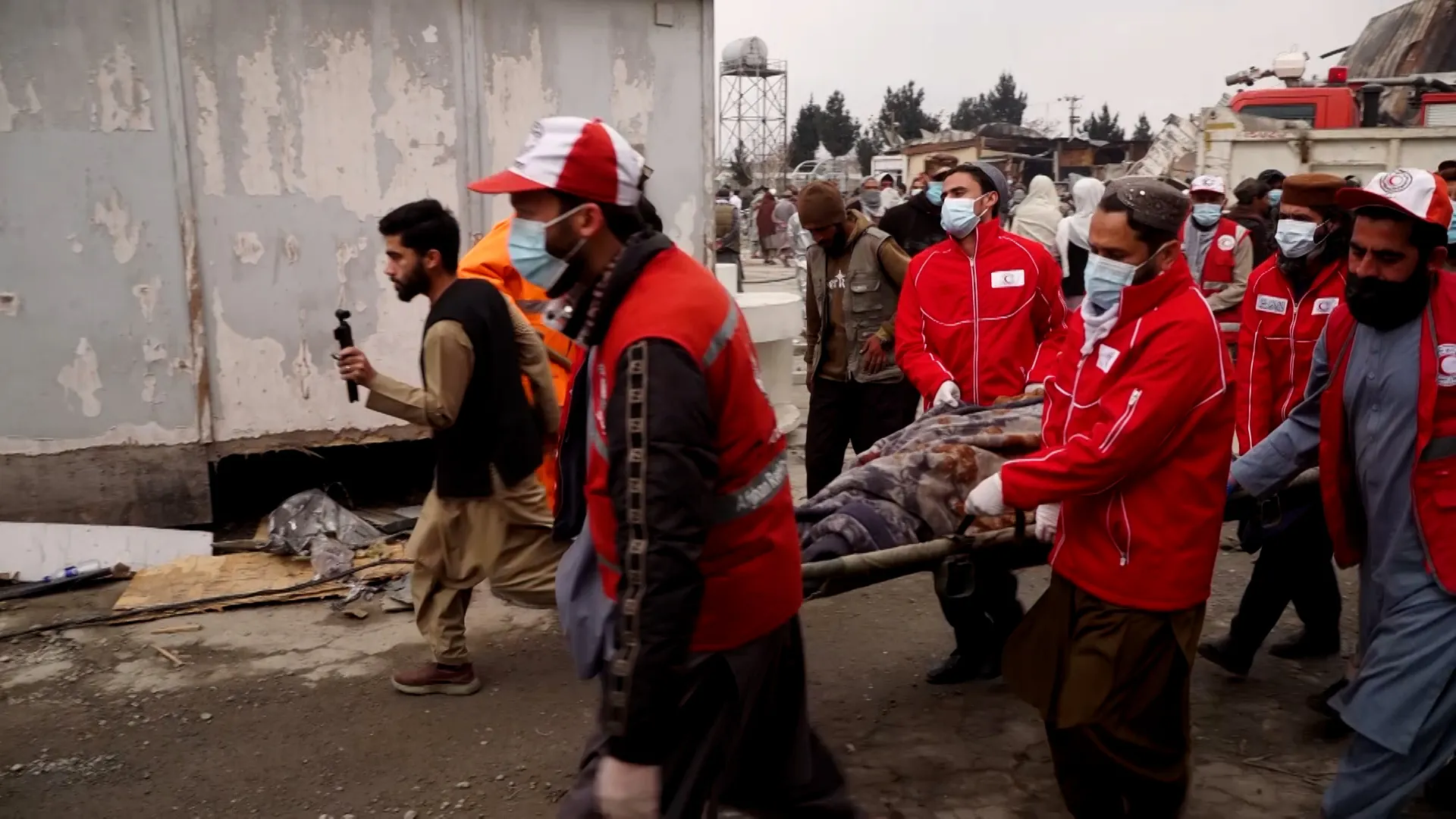
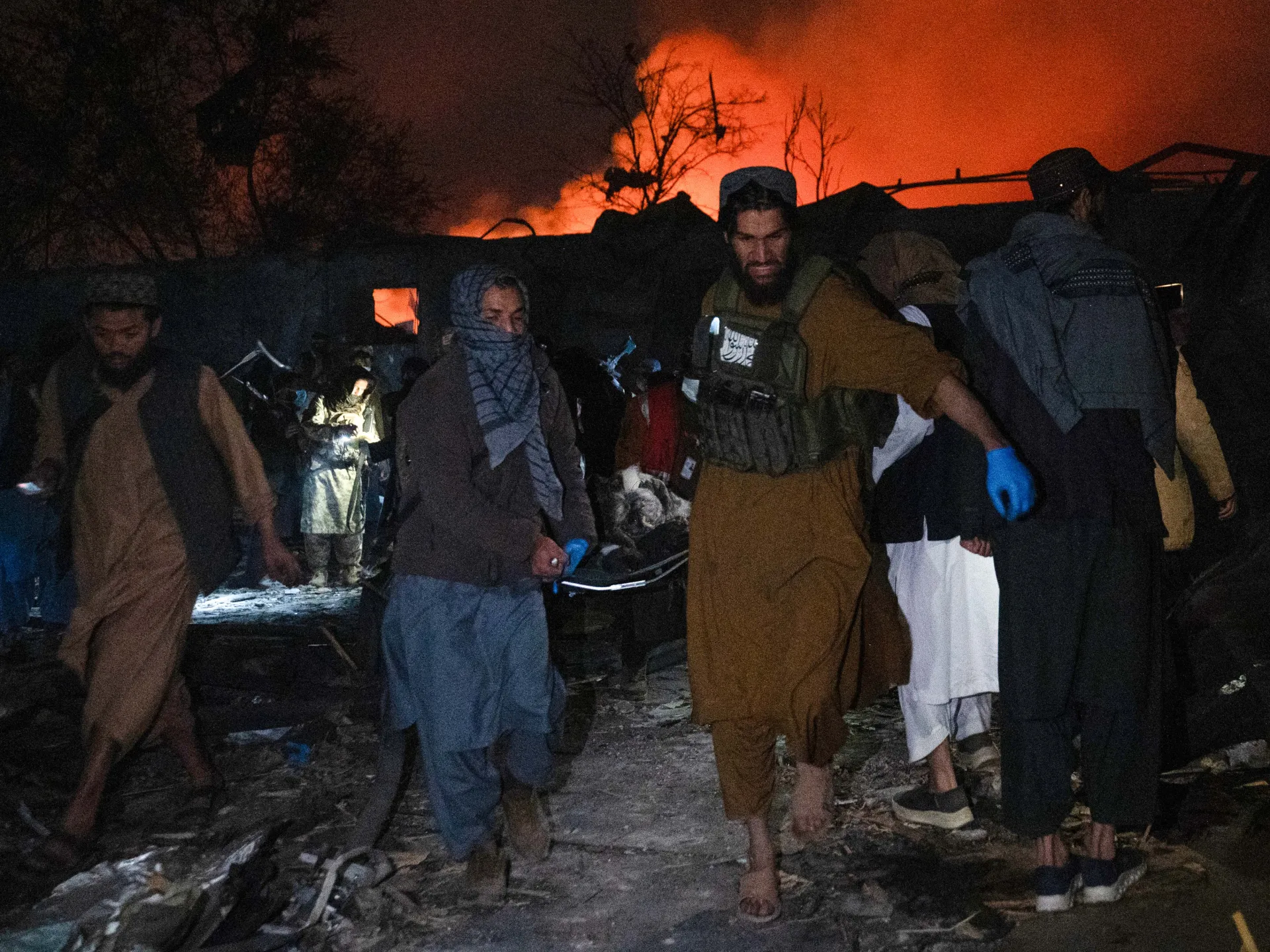
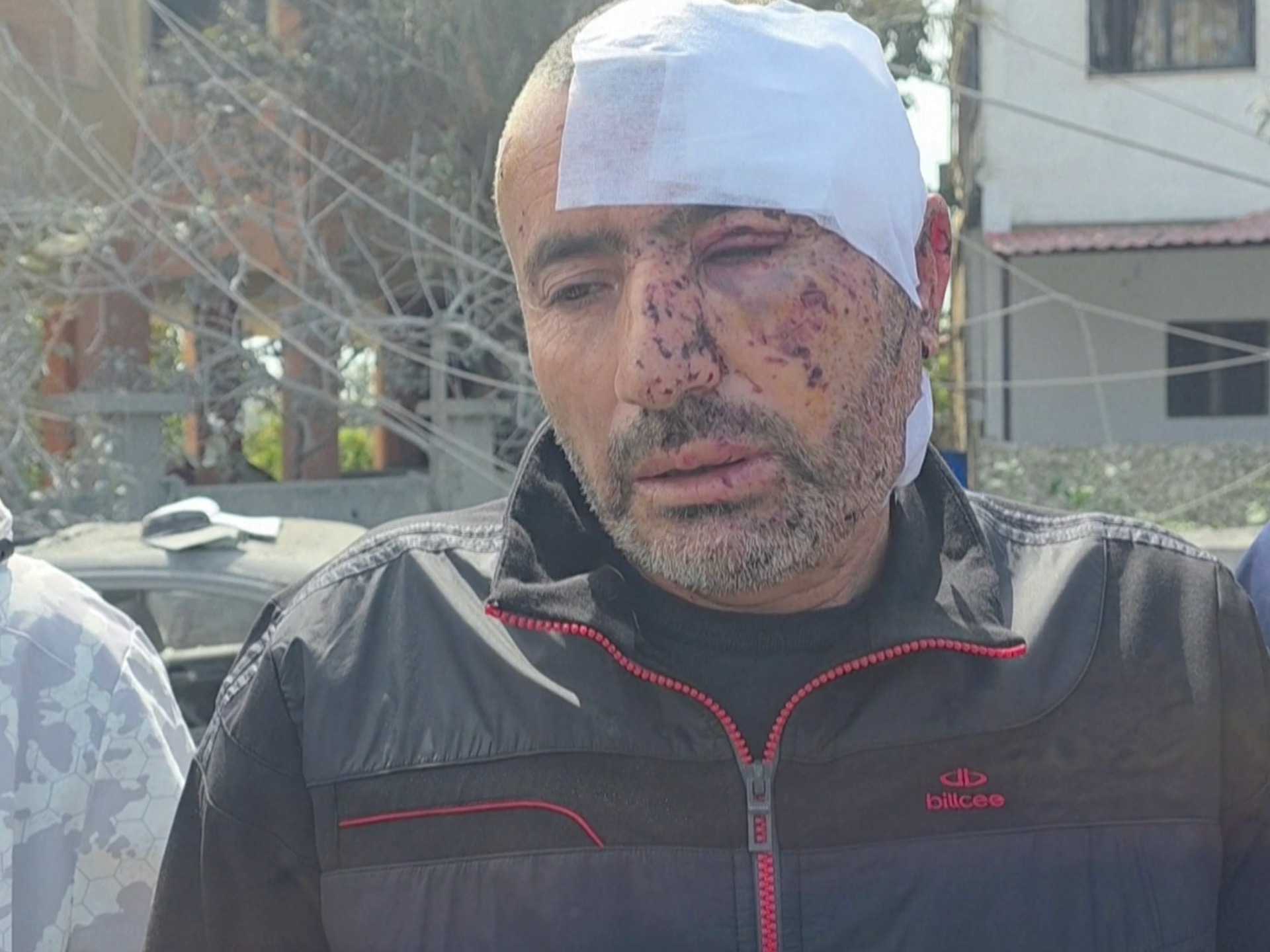
Afghan officials say a suspected Pakistani air strike hit a drug rehabilitation centre in Kabul, killing hundreds of patients and staff and leaving the facility in ruins. Pakistan denies targeting civilians, as tensions escalate between Islamabad and Afghanistan’s Taliban-led government.
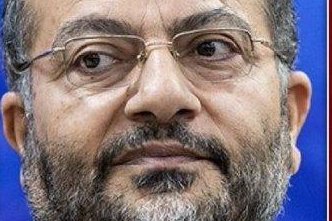
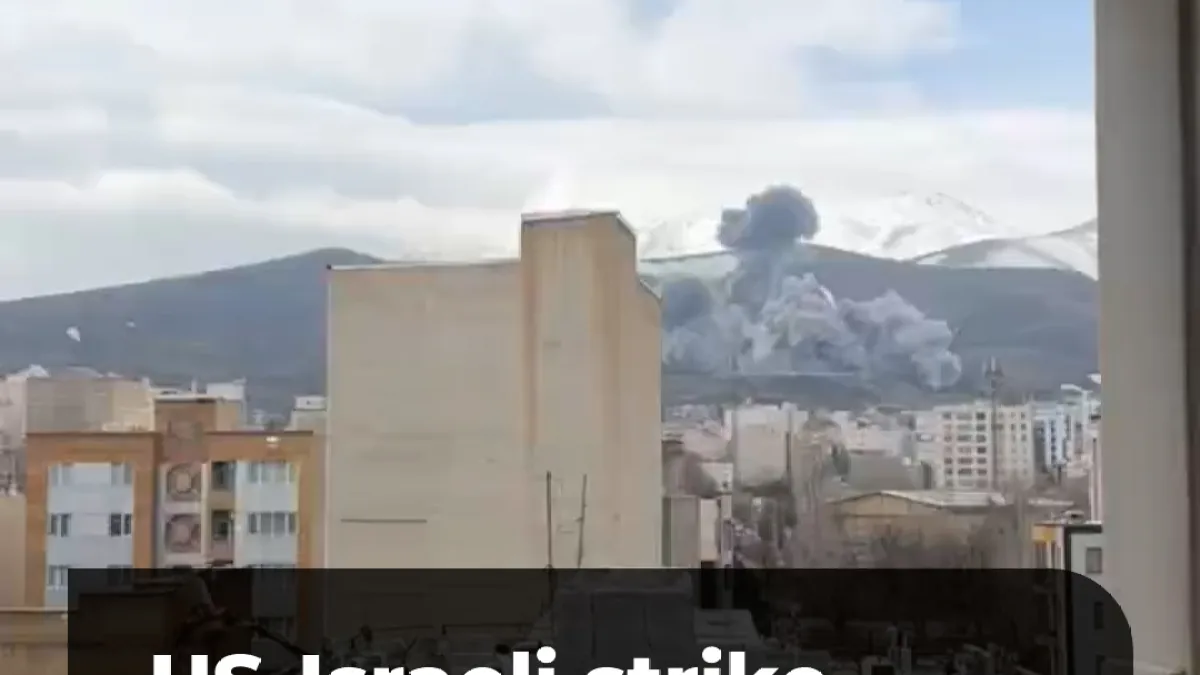
March 17 (UPI) — Israel said Tuesday it killed Basij paramilitary force commander Gholamreza Soleimani in an overnight airstrike in Tehran.
Specifics on the strike were scant, but The Times of Israel reported the Israel Defense Forces targeted Soleimani at a camp he had recently established in Tehran after the paramilitary’s headquarters were destroyed.
Established in 1980, the Basij is a volunteer paramilitary reserve force under Iran’s influential Islamic Revolutionary Guard Corps, according to the U.S. Defense Intelligence Agency. The force — which the website for Iran’s supreme leader says consists of millions of members — was sanctioned by the United States for human rights abuses in 2011 and designated as a Specially Designated Global Terrorist in 2018.
Soleimani was appointed in 2019 to lead the Basij, which has been accused of helping suppress protests inside Iran through violence, mass arrests and force against demonstrators.
“The elimination of Soleimani adds to that of dozens of senior commanders from the armed forces of the Iranian regime who have been eliminated during the operation, and constitutes an additional significant blow to the regime’s security command-and-control structures,” the IDF said in a statement on Telegram.
“The IDF will continue to operate with determination against commanders of the Iranian terror regime.”
Iran has yet to respond to the report as of Tuesday morning.
COMMANDER OF THE BASIJ UNIT ELIMINATED
Yesterday, the IDF targeted & eliminated Gholamreza Soleimani, who operated as commander of the Basij unit for the past 6 years.
Under Soleimani, the Basij unit led the main repression operations in Iran, employing severe violence,… pic.twitter.com/aJ0dNtCFz0— Israel Defense Forces (@IDF) March 17, 2026
The IDF said it conducted a wave of strikes Monday targeting military infrastructure in the Iranian cities of Tehran, Shiraz and Tabriz.
Its warplanes dropped dozens of munitions on security force command centers in Tehran, including those belonging to the Basij, the IDF said in an earlier Tuesday statement.
“The completed strikes are part of an ongoing effort focused on deepening the damage to the Iranian terror regime’s core systems and weakening its capacity to threaten the State of Israel,” it said.
Later Tuesday, Prime Minister Benjamin Netanyahu‘s office published a photo on social media showing him on the phone, accompanied by a caption saying he was “ordering the elimination of senior regime officials.”
Rescuers are combing through the wreckage of a drug rehabilitation centre in Kabul where Afghan officials say a Pakistani strike has killed at least 400 people.
Iran stepped up its targeting of Gulf neighbors, attacking and setting on fire a fuel tank close to Dubai International Airport, forcing flights to be suspended, and the key Fujairah oil export hub on the UAE’s east coast, on the supposed “safe” side of the Strait of Hormuz. Photo by Stringer/EPA
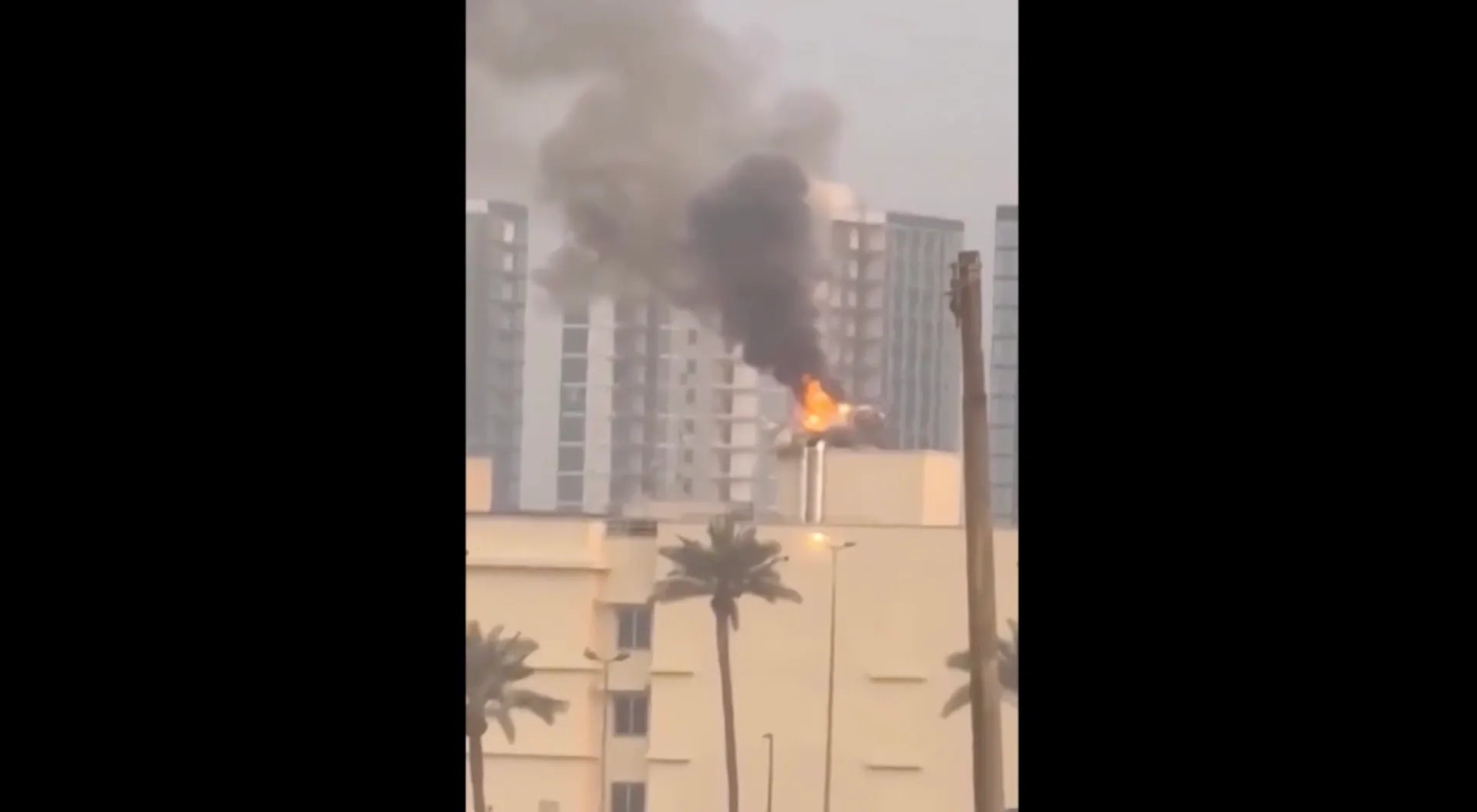
March 16 (UPI) — Emergency services in the United Arab Emirates were battling a major blaze at the country’s strategically key Fujairah oil export hub on Monday morning after the second drone strike on the facility in two days.
Emirate of Fujairah authorities said in a post on X that no one had been hurt in the attack on the Fujairah Industrial Petroleum Zone and that efforts were ongoing to bring the fire under control. They appealed to people to refrain from spreading misinformation.
“Civil defense teams in the Emirate immediately responded to the incident and are continuing their efforts to control it. The competent authorities call on the public not to circulate rumours and to obtain information only from official sources,” wrote the Fujairah Media Office.
The facility is strategically important because it is the only oil export terminal on the UAE’s eastern coast, located on the Gulf of Oman, the “good” end of the Strait of Hormuz.
Critically, it means oil tankers servicing the port do not need to run the gauntlet of the 21-mile-wide sea lane that Iran has effectively closed.
An approximately 250-mile-long cross-country oil pipeline from Habshan, a key onshore field 80 miles southwest of Abu Dhabi, feeds as much as 1.8 million barrels per day of crude into Fujairah.
However, Iran’s Islamic Revolutionary Guard Corps threatened ports, docks, military facilities and other “legitimate”U.S. targets in the UAE while the state media uged workers and residents in and around Fujairah, Jebel Ali and Khalifa ports to evacuate due to the presence of U.S. military forces.
Monday’s incident, following on from a separate strike and fire on Saturday, highlighted how exposed Fujairah — one of the world’s key crude oil and fuel storage hubs — was to Iranian threats.
The UAE has been repeatedly targeted by Iranian drones and missiles since the United States launched its airborne offensive against Iran on Feb. 28.
A drone attack earlier Monday that forced the temporary grounding of all flights at Dubai International Airport after a fire erupted in a fuel tank close by and an announcement by Israel that it was nowhere near done with hitting Iran indicated the war was likely headed into a third week.
Israel also announced plans for an expansion of its ground offensive in Lebanon against Hezbollah operatives and strongholds after the Iranian proxy group attacked Israel with rockets and missiles on March 2, two days into the war.
An Israeli bombing campaign and targeted actions by ground forces has already forced hundreds of thousands of civilians in the country to flee their homes and killed more than 850, more than 170 of them women and children, according to the Lebanon Health Ministry.
European Union foreign ministers were set to meet on Monday in Brussels to discuss the situation in the region as oil prices continued their upward trajectory with the benchmark Brent crude futures briefly hitting $106 per barrel during trade on Monday.
Shipping of oil, gas and all cargo through the Strait of Hormuz remains stalled despite calls by U.S. President Donald Trump at the weekend for countries that get their oil from Gulf producers to step up and help restart movement of ships in and out of the Persian Gulf.
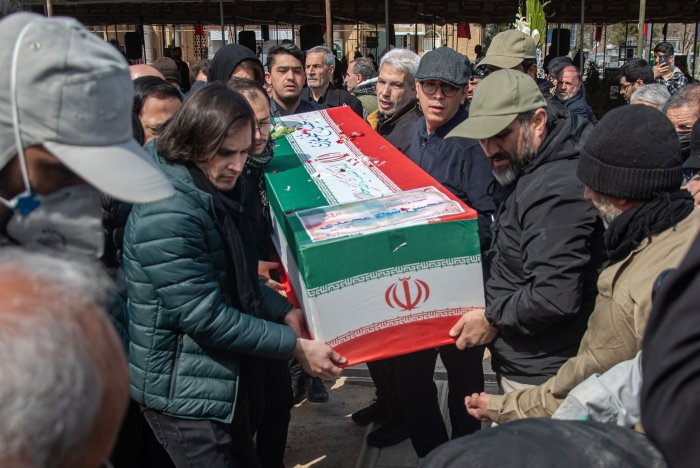
Iranians attend a funeral for a person killed in recent U.S.-Israel airstrikes at Behesht-e Zahra cemetery on the southern outskirts of Tehran in Iran on March 9, 2026. Photo by Hossein Esmaeili/UPI | License Photo
A relative tells BBC those killed were civilians and not Hezbollah operatives, but the Israel Defence Forces says it was targeting “terrorist infrastructure”.
Iranian media report the deaths in central Iran as Tehran launches new missile salvoes at Israeli targets.
Published On 14 Mar 202614 Mar 2026
Share
A missile strike on an industrial area of the central Iranian city of Isfahan has killed at least 15 people, with workers having been inside a factory at the time of the attack, Iranian media reports.
The strike hit a factory producing heating and cooling equipment on Saturday, a working day in Iran, according to the semi-official Fars news agency, which attributed the attack to US and Israeli forces.
Recommended Stories
list of 3 itemsend of list
It came on the 15th day of a conflict that Iran’s Ministry of Health says has now killed at least 1,444 people and wounded more than 18,500 since the US-Israeli attacks began on February 28.
Cities across Iran have been repeatedly targeted following the onset of hostilities.
On March 8, shelling damaged Russia’s consulate in Isfahan, injuring staff, with Moscow calling the strike a “blatant violation” of international conventions.
Iran’s Ministry of Culture said on Saturday that 56 museums and historic sites had been damaged, including Naqsh-e Jahan Square, a 17th-century centrepiece of Isfahan, and the UNESCO-listed Golestan Palace in Tehran.
UNESCO said it was “deeply concerned,” noting that four of Iran’s 29 World Heritage Sites had been affected.
Separately on Saturday, Iran’s army confirmed that Brigadier General Abdullah Jalali-Nasab had been killed in an Israeli attack, saying he was “martyred while defending the country”.
Earlier, US forces also struck Kharg Island, which handles roughly 90 percent of Iran’s crude exports, though a regional official said operations were continuing normally, and there were no casualties.
US President Donald Trump had previously threatened to target the island’s oil infrastructure if Tehran continued to disrupt the Strait of Hormuz.
Any prospect of negotiations appears remote. The Trump administration has rebuffed regional efforts to broker a ceasefire, with a senior White House official telling the Reuters news agency the president is focused on pressing ahead.
“He’s not interested in that right now, and we’re going to continue with the mission unabated,” the official said.
Iran has equally ruled out talks while the attacks continue, Reuters reported, citing an anonymous Iranian official.
Iranian Minister of Foreign Affairs Abbas Araghchi struck a defiant tone on Saturday, saying the US security framework in the region had “proven to be full of holes” and calling on neighbours to “expel foreign aggressors”.
Israeli Minister of Defence Israel Katz said the war was entering a “decisive phase”, which would “continue as long as necessary”.
Iran launched new missile salvoes at Israel on Saturday, with explosions heard over Jerusalem, according to reporters from the AFP news agency.
Six waves of missiles, some carrying cluster bomb warheads, struck wide areas of the country, the Israeli army said. In Eilat, a cluster munition impact injured three people, including a 12-year-old boy, according to The Times of Israel.
A strike on the heavily fortified United States embassy compound in Baghdad caused a fire and damage to the complex. It is the second attack on the embassy since the United States and Israel launched strikes on Iran on February 28.
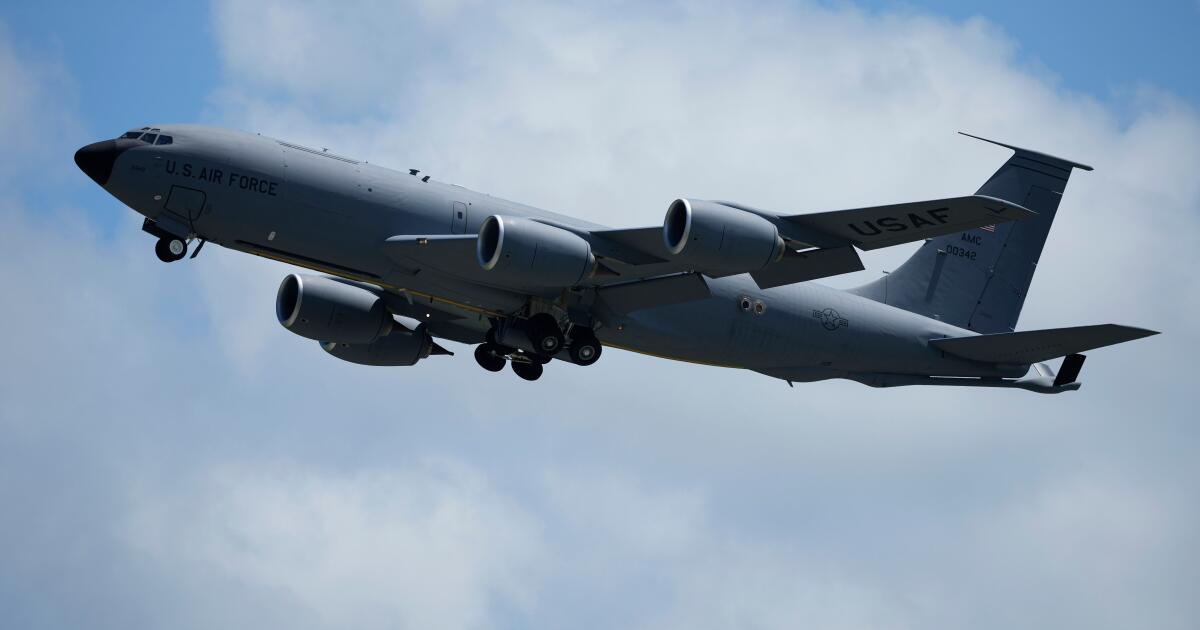
WASHINGTON — Six American airmen deployed to operations against Iran were killed after their refueling aircraft crashed in western Iraq, U.S. Central Command said Friday, bringing the U.S. death toll in the war to 13, as Defense Secretary Pete Hegseth announced the heaviest day of strikes yet.
The crash involved two aircraft in “friendly airspace,” the Pentagon said, adding that the other plane landed safely. The downed KC-135 refueling tanker is the fourth U.S. aircraft to crash during the war against Iran.
“American heroes, all of them,” Hegseth said at the Pentagon on Friday. “We will greet those heroes at Dover and their sacrifice will only recommit us to the resolve of this mission.”
Central Command said the incident is under investigation but was “not due to hostile or friendly fire.”
During the briefing, Hegseth described the Iranian leaders as “desperate” and “cowering” underground like rats. He said Iran’s Supreme Leader Ayatollah Mojtaba Khamenei “is wounded and likely disfigured,” but gave no intelligence to support the claim.
Khamenei has not been seen in public since he rose to leadership, but issued his first public statement Thursday vowing retaliation against U.S. and Israeli attacks, promising that Tehran will continue to choke off the world’s most crucial oil route — the Strait of Hormuz.
“Our revenge will be never ending, not only for the late supreme leader, but also for the blood of all of our martyrs,” he said.
The defense secretary said Friday would see Iran hammered with the heaviest round of air strikes yet seen in the two-week U.S.-Israeli operation that has razed buildings, complexes and factory lines all across Iran, killing at least 1,348 civilians, according to Iranian officials.
“No quarter, no mercy for our enemies,” Hegseth said.
And while Hegseth insisted that fighting will cease when the U.S. defeats Iran’s naval, missile, and nuclear weapons capabilities, President Trump’s public statements continue to sow doubt that the White House and Pentagon are aligned on the objectives of the mission.
Asked Friday by Fox News when the war might end, Trump said, “When I feel it — feel it in my bones.”
Iran’s blockade of the strait remains Tehran’s foremost leverage against its Western adversaries, and a serious political bane for Trump. The International Energy Agency warned Thursday that conflict has created “the largest supply disruption in the history of the global oil market,” which has sent oil prices surging 40% to $95 a barrel since Feb. 28.
Some 1,000 ships remain stranded in the Persian Gulf, many of them energy tankers that have been unable to carry oil and gas shipments from the Middle East to importers across the globe. Vessels that have attempted to traverse the embattled channel have been destroyed in Iranian attacks. Hegseth described Tehran’s strategy as “an act of desperation.”
The United Kingdom Maritime Trade Operations on Friday reported 20 incidents affecting vessels operating in and around the Arabian Gulf, Strait of Hormuz and Gulf of Oman in March.
Drone and missile attacks continue to assail gulf states, threatening to draw more players into the conflict. Thick black smoke was seen rising over Dubai’s skyline Friday after debris from an intercepted Iranian drone strike caused a fire and minor damage to a building within the Dubai International Financial Centre, according to the Dubai Media Office.
Europe has become increasingly involved, too. U.S. long-range bombers have begun flying offensive missions from British airbases, even as U.K. Prime Minister Keir Starmer explicitly permitted U.S. forces to use the bases “for defensive purposes only.” Starmer initially refused to cooperate in American hostilities in any capacity, but changed his approach after he drew criticism from Trump, who said, “He’s no Winston Churchill.”
The U.K., France, and Italy each deployed naval assets to the Eastern Mediterranean island of Cyprus, situated just 125 miles from Lebanon, after Iranian drone strikes hit U.K. bases. The island has emerged as a strategic — and exposed — nerve center in the U.S. offensive against Iran.
Meanwhile, Israel said Friday its strikes are “continuing and intensifying” in Lebanon and Iran. The Israel Defense Forces issued new evacuation orders in southern Lebanon on Thursday after overnight airstrikes in Beirut triggered retaliatory missile and drone attacks by the Iran-backed militant group Hezbollah.
Eight civilians were killed and nine others were wounded in attacks on the Lebanese city of Sidon on Friday, according to Lebanon’s Health Ministry. More than 100 children have been killed in the Israeli assault, the ministry said.
A Lebanese father mourned the death of his four daughters, mother, father, brother-in-law and nephew, after they were killed in an Israeli attack. Israel has killed at least 770 people in Lebanon since last Monday. Around 750,000 have been forcibly displaced.
WASHINGTON — Iran’s new supreme leader, Mojtaba Khamenei, vowed retaliation Thursday against the United States and Israel and signaled that Tehran will continue to choke off the world’s most critical oil route, as the war strained global energy markets and raised new security concerns in the United States.
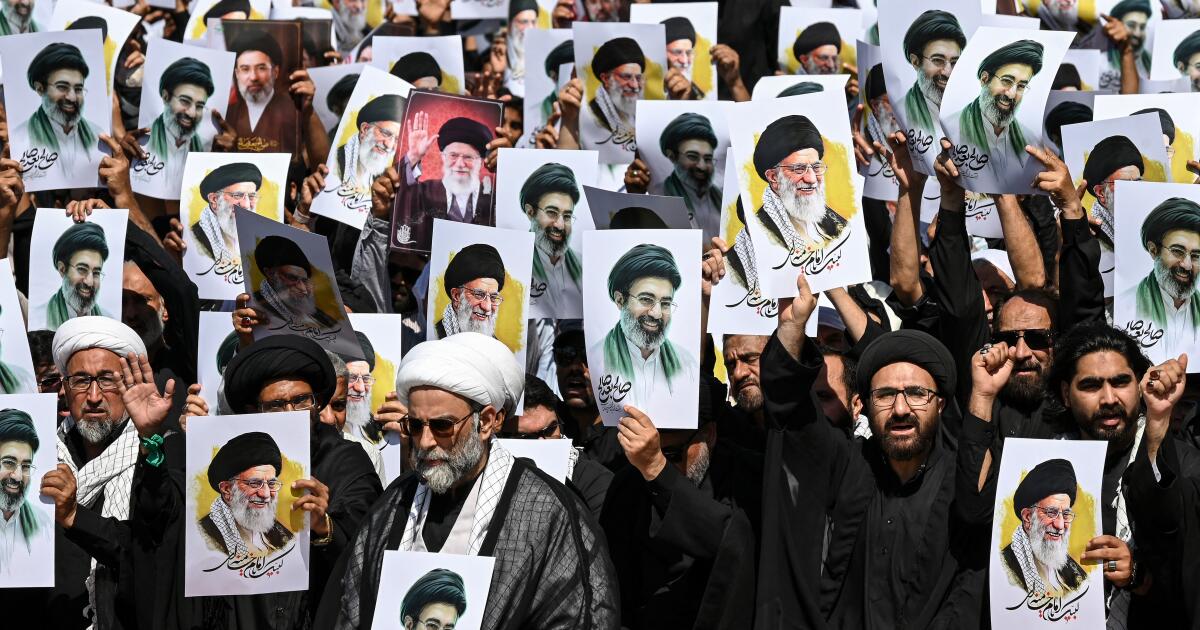
In his first public remarks since U.S.–Israeli strikes killed his father, former Supreme Leader Ayatollah Ali Khamenei, Mojtaba Khamenei swore revenge. The new leader, notably, did not appear in person for the televised statement. Instead, his written words were read aloud on Iranian state media.
“We will never retreat and vow to avenge the blood of our martyrs,” he said. “Our revenge will be never ending, not only for the late supreme leader, but also for the blood of all of our martyrs. … Those who killed our children will pay the price.”
The new leader expressed condolences to families who lost children in a strike on a girls school in Minab that killed more than 165 people, many of them children. He also warned that the war could expand, declaring that the continuation of the conflict “depends on the interests of the parties.”
The Associated Press, citing two sources, reported that outdated intelligence likely led to the United States carrying out the deadly missile strike on the elementary school. U.S. Central Command relied on target coordinates for the strike using outdated data provided by the Defense Intelligence Agency, according to a person familiar with the preliminary finding.
Khamenei indicated that Tehran would maintain its blockade in the Strait of Hormuz, a key choke point through which 20% of the world’s oil supply is shipped. He also said he believes in friendship with his country’s neighbors, but that attacks on U.S. military installations in the region will continue. He described maintaining pressure on the passage as a necessary part of Iran’s war strategy.
His remarks came as attacks continued to disrupt shipping and energy infrastructure across the Persian Gulf. The war sent oil up 10% Thursday as hostilities in Iran drag on.
Reports from the region said Iranian forces have intensified strikes on vessels attempting to pass through the Strait of Hormuz, leaving hundreds of ships stranded at its entrances and rattling global oil markets.
Two oil tankers were struck by explosives in Iraqi waters near the port of Basra. The Islamic Revolutionary Guard Corps claimed responsibility for the attacks, which killed at least one crew member and set both vessels ablaze, according to the Associated Press. A third unnamed vessel was reported to have been struck by an “unknown projectile” near Dubai and Jebel Ali, causing a small fire, the United Kingdom Maritime Trade Operations reported.
The latest incidents come after drone strikes targeted fuel storage facilities across the Gulf, including at energy sites in Bahrain and at the port of Salalah in Oman, an important hub for tankers seeking to bypass the Strait.
“They will pay the price. We will destroy their facilities,” Khamenei said. “It is necessary to continue our defensive activity, including continuing to close the Strait of Hormuz.”
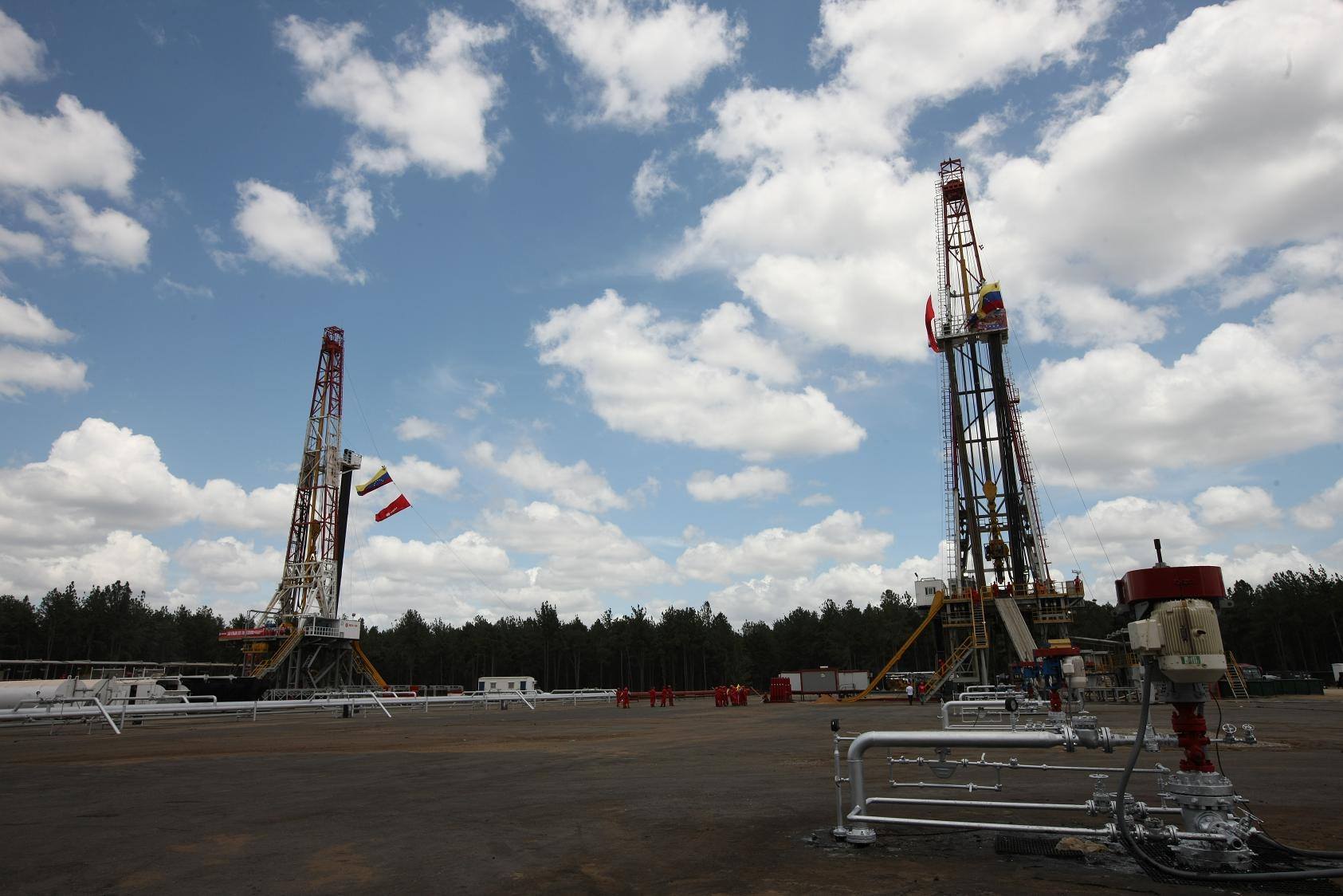
The Punta de Mata division produced over 400,000 bpd in the 2000s. (PDVSA)
Caracas, March 11, 2026 (venezuelanalysis.com) – Energy conglomerates Chevron and Shell are reportedly securing major oil deals in Venezuela following the recent pro-business reform of the country’s Hydrocarbon Law.
According to Reuters, joint venture Petropiar, where Chevron holds a minority stake, will expand its operations into the Ayacucho 8 bloc of Venezuela’s Orinoco Oil Belt.
Venezuelan state oil company PDVSA completed exploration and appraisal of the 510 square-kilometer area located south of Petropiar’s current operations, but its development has been limited. Under the agreement, Chevron looks to significantly expand its extra-heavy crude output from the Orinoco Oil Belt, which holds three-quarters of Venezuela’s oil reserves.
Chevron is reportedly looking to secure reduced royalties and taxes under the recently reformed Hydrocarbon Law in order to launch operations in the new area. Petropiar currently produces 90,000 barrels per day (bpd) of upgraded Hamaca crude. PDVSA’s joint ventures with Chevron have a total present output of around 250,000 bpd.
In January, Venezuela’s National Assembly approved a legislative overhaul that significantly improved conditions and benefits for private corporations in the oil and natural gas sector. Royalty and income tax levies, previously set at 30 and 50 percent, respectively, can now be slashed at the Venezuelan executive’s discretion.
In addition, joint venture minority partners can directly manage crude operations and sales, while legal disputes can be taken to international arbitration instances. Furthermore, PDVSA can also lease out projects to private operators in exchange for a percentage of the oil output.
Under the latter model, Shell is reportedly set to take over operations in PDVSA’s Punta de Mata division in eastern Monagas state, one of the most historically productive and profitable regions for Venezuela’s oil industry. The division produced over 400,000 bpd of light and medium crude grades in the 2000s but recent production was around 90,000 bpd.
The London-based multinational, which had a strong presence in the Venezuelan energy sector throughout the twentieth century, is likewise interested in capturing and processing natural gas that is currently flared in oil extraction processes.
Shell is additionally set to lead the Dragon offshore natural gas project alongside Trinidad and Tobago’s National Gas Corporation (NGC) in Venezuelan waters. The Nicolás Maduro government had suspended all joint initiatives with Trinidad due to its administration’s support for Washington’s Caribbean military buildup and threats against Venezuela last year.
Since the January 3 US military strikes and kidnapping of President Maduro, the acting Venezuelan authorities led by Delcy Rodríguez have fast-tracked a diplomatic rapprochement with the Trump administration while also vowing to “adapt” legislation to attract foreign investment. Following the hydrocarbon reform, a new mining law has also been preliminarily approved by the Venezuelan parliament.
US Energy Secretary Chris Wright and Interior Secretary Doug Burgum have visited Venezuela in recent weeks and hailed the investment opportunities in oil and minerals for US conglomerates.
Since January, the Trump administration has taken control of Venezuelan oil exports, with crude shipments handled by commodity traders Vitol and Trafigura and proceeds deposited in accounts run by the US Treasury. US authorities so far have only returned US $500 million, out of a reported $2 billion agreement, to the Caribbean nation.
The White House has also issued a number of licenses in an effort to boost US involvement in the Venezuelan energy sector, including limited waivers to export inputs and technology. In addition, Washington has allowed several corporations to negotiate agreements with Caracas while mandating that contracts be subject to US jurisdiction and that all royalty, tax and dividend payments be made to US Treasury-run accounts.
Alongside Chevron and Shell, the other companies with early access to the Venezuelan energy sector are BP, Eni, Maurel & Prom, and Repsol. The latter two held meetings with Rodríguez in February to discuss investment opportunities, while ExxonMobil has announced plans to send a delegation to the country in the coming weeks.
Venezuela’s oil production rebounded in February, with OPEC secondary sources registering an output of 903,000 bpd, up from 823,000 bpd in January. A US naval blockade since December had forced PDVSA to cut back production before exports began to flow again under Washington’s control. The oil sector remains under US financial sanctions.
For its part, PDVSA reported a February output of 1.02 million bpd, up from 924,000 bpd the prior month. The direct and secondary measurements have differed over time due to disagreements over the inclusion of natural gas liquids and condensates.
WASHINGTON — Some 140 American service members have been wounded since start of the Iran war, with eight of them “severely injured” and receiving medical care, the Pentagon said Tuesday.
“The vast majority of these injuries have been minor, and 108 service members have already returned to duty,” Pentagon spokesperson Sean Parnell said in a statement.
The casualty toll adds to the seven American troops killed so far in the war, which entered its 11th day with no clear sign of slowing down as U.S. officials indicated that the military campaign was likely to intensify.
Iran, too, took new actions that could escalate the conflict, reportedly laying mines in the Strait of Hormuz, a potentially devastating development for the global energy market.
President Trump said that if Iran put mines in the strait and did not remove them immediately, the U.S. military would hit Iran “at a level never seen before.”
“If, on the other hand, they remove what may have been placed, it will be a giant step in the right direction!” Trump wrote on Truth Social.
The warning was yet another escalation that came after Defense Secretary Pete Hegseth said Tuesday would bring the “most intense day of strikes” inside Iran, a fighting tempo that is at odds with Trump’s own assessment that the war is “very complete” and could end “very soon.”
At a Pentagon news conference, Hegseth said “the most fighters, the most bombers, the most strikes” would be deployed, but declined to say how much longer U.S. forces would be expected to fight in the region. He instead said the president will be the one to “control the throttle.”
“It’s not for me to say whether this is the beginning, the middle, or the end. He will continue to communicate that,” Hegseth told reporters.
That deference places the focus squarely on Trump, who a day earlier delivered mixed signals about the duration of the war, telling reporters at one point that the war is “very much complete” and a later time that it is “the beginning of building a new country.”
At a briefing on Tuesday, White House Press Secretary Karoline Leavitt said the U.S. military was “way ahead of schedule” on reaching its objectives in Iran, but reiterated that the president alone will decide what victory looks like.
“President Trump will determine when Iran is in a place of unconditional surrender and when they no longer pose a credible and direct threat to the United States of America and our allies,” Leavitt said.
The president’s shifting positions on the war’s conclusion have played out as Trump threatens to hit Iran “twenty times harder” if it attempts to halt the flow of oil in the Strait of Hormuz, a key channel for the world’s oil supply — and as Democrats in Congress says they are growing concerned about the possibility of Trump sending U.S. ground troops inside Iran.
“We seem to be on a path toward deploying American troops on the ground in Iran to accomplish any of the potential objectives here,” Sen. Richard Blumenthal (D-Conn.) told reporters after being briefed on the Iran war.
When asked about Democrats’ concerns, Leavitt said Trump “wisely … does not rule options out as commander-in-chief.”
“I would hesitate to confirm anything that a Democrat says right now about the president’s thinking,” she added.
U.S. says Iran’s fire power is diminishing
As Washington plans out its next steps, the war has shown little signs of slowing. U.S. military officials say Iran’s military capabilities are eroding under sustained strikes that have targeted “deeply buried missile launchers” and made “substantial progress toward destroying” Iran’s navy.
Hegseth said “the last 24 hours have seen Iran fire the lowest amount of missiles they have fired yet.”
Gen. Dan Caine, chairman of the Joint Chiefs of Staff, told reporters that Iran’s ballistic missile attacks “continue to trend downward 90%” since the start of the war, and that drone attacks have decreased by 83%.
U.S. forces are also targeting Iran’s “industrial base in order to prevent the regime from being able attack Americans, our interests and our partners for years to come,” Caine said.
Caine said the Iranian military is adapting to the U.S. strategy, but remains confident in Washington’s ability to overpower Tehran. “They are adapting, as are we, of course. We have very entrepreneurial war fighters out there,” he said. “We are watching what they are doing, and we are adapting faster than they are.”
Asked whether Iran had proved to be a stronger adversary than anticipated, Caine said: “They are fighting, and I respect that, but I don’t think they are more formidable than what we thought.”
Iran, meanwhile, has refused to bow down to Trump’s demands and has issued warnings of its own.
Ali Larijani, Iran’s top national security official, called Trump’s threat against their targets on the Strait of Hormuz “hollow” and told him that he should instead focus on taking care of himself so that he is not “eliminated.”
Iran’s parliament speaker, Mohammed Bagher Qalibaf, however, said Iran was determined to keep fighting and was “definitely not looking for a ceasefire.”
“We believe that the aggressor should be punched in the mouth so that he learns a lesson so that he will never think of attacking our beloved Iran again,” Qalibaf said.
New attacks on neighbors
Meanwhile, Iran launched new attacks at Israel and gulf Arab countries. In Bahrain, authorities said an Iranian attack hit a residential building in the capital, Manama, killing a 29-year-old woman and wounding eight people.
Saudi Arabia said it destroyed two drones over its oil-rich eastern region and Kuwait’s National Guard said it shot down six drones. In the United Arab Emirates, firefighters battled a blaze in the industrial city of Ruwais — home to petrochemical plants — after an Iranian drone strike. No injuries were reported.
In Tel Aviv, explosions could be heard as Israel’s defense systems worked to intercept barrages from Iran.
Along with firing missiles and drones at Israel and at American bases in the region, Iran has also targeted energy infrastructure and traffic through the Strait of Hormuz, a vital waterway for traded oil, sending oil prices soaring. The attacks appear aimed at generating enough global economic pain to pressure the U.S. and Israel to end their strikes.
Brent crude, the international standard, spiked to nearly $120 on Monday before falling back but was still at around $90 a barrel Tuesday, nearly 24% higher than when the war started on Feb. 28.
“The president and his energy team are closely watching the markets, speaking with industry leaders and the U.S. military is drawing up additional options, following the president’s directive to continue keeping the Strait of Hormuz open,” Leavitt said. “I will not broadcast what those options look like but just know the president is not afraid to use them.”
So far, the president has offered to have the U.S. Navy escort oil tankers.
The White House has insisted that soaring gas prices are temporary, but the shock in the energy markets has already prompted the Trump administration to lift oil-related sanctions on some countries, including Russia.
“We are going to take those sanctions off until this straightens out,” Trump said Monday. “And then who knows, maybe we won’t have to put them on because there will be so much peace.”
The war has created an opportunity for Russia to make gains in Ukraine, as hostilities draw the global spotlight away from Kyiv and its struggle to hold back the bigger Russian army. U.S.-brokered talks between the two adversaries have been sidelined as Washington shifts focus to its war in Iran.
As Russia enjoys economic gains from the war-fueled energy crisis in the Middle East, Russian President Vladimir Putin has been gathering forces for a renewed offensive in eastern Ukraine.
Key air defense systems have already been diverted from Ukraine to the Persian Gulf, and Ukrainian President Volodymyr Zelensky has dispatched drone interceptors to the region and ordered anti-drone experts to pivot from their war with Russia to help Western allies help intercept Iranian attacks.
“At the moment, the partners’ priority and all attention are focused on the situation around Iran,” Zelensky said on X. “We see that the Russians are now trying to manipulate the situation in the Middle East and the gulf region to the benefit of their aggression.”
Times staff writers Gavin J. Quinton and Michael Wilner, in Washington, D.C., contributed to this report, which also includes reporting from the Associated Press.
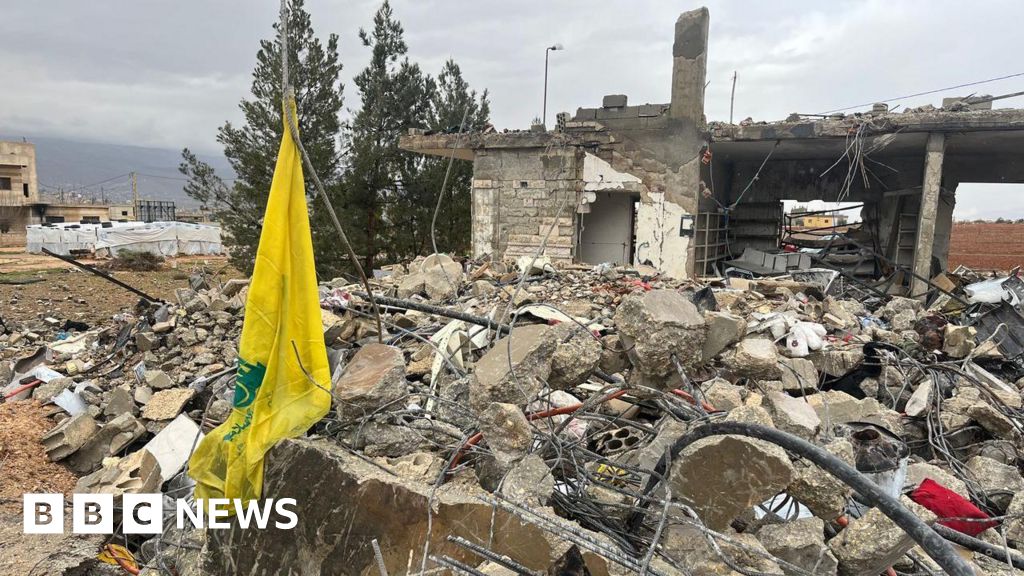
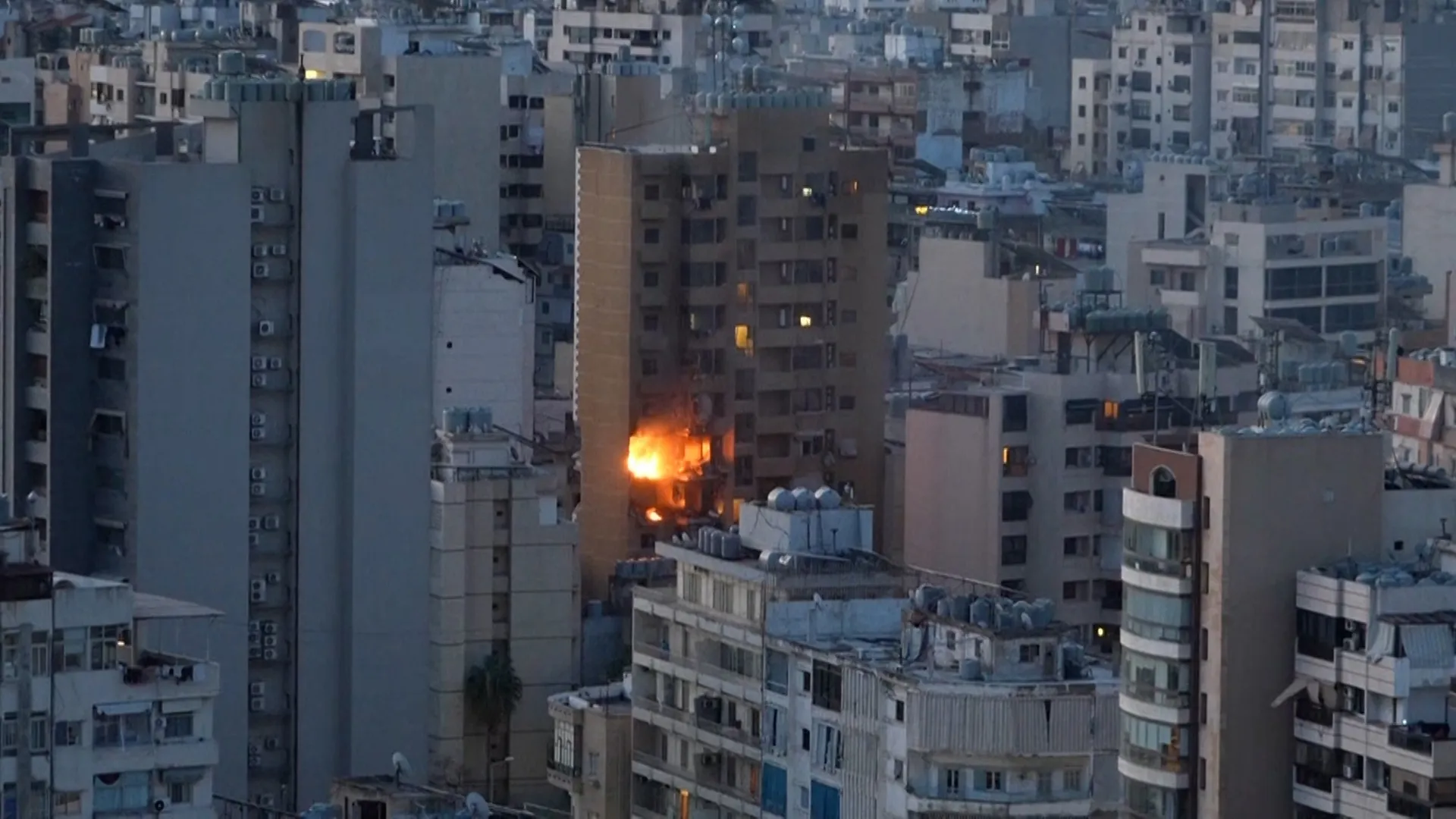
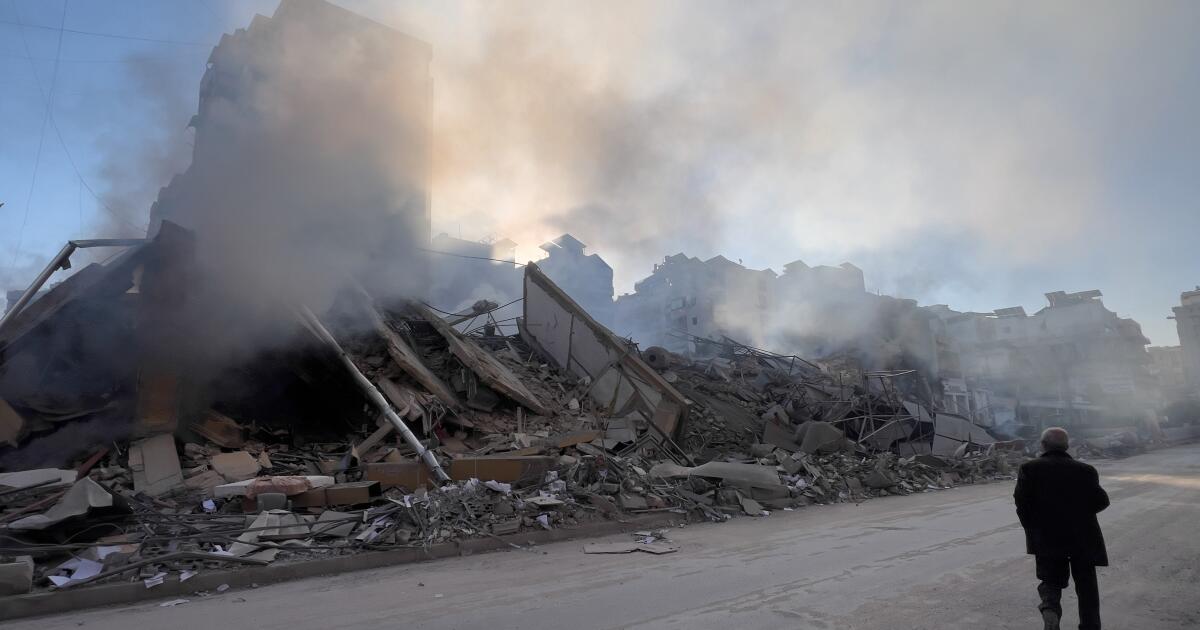
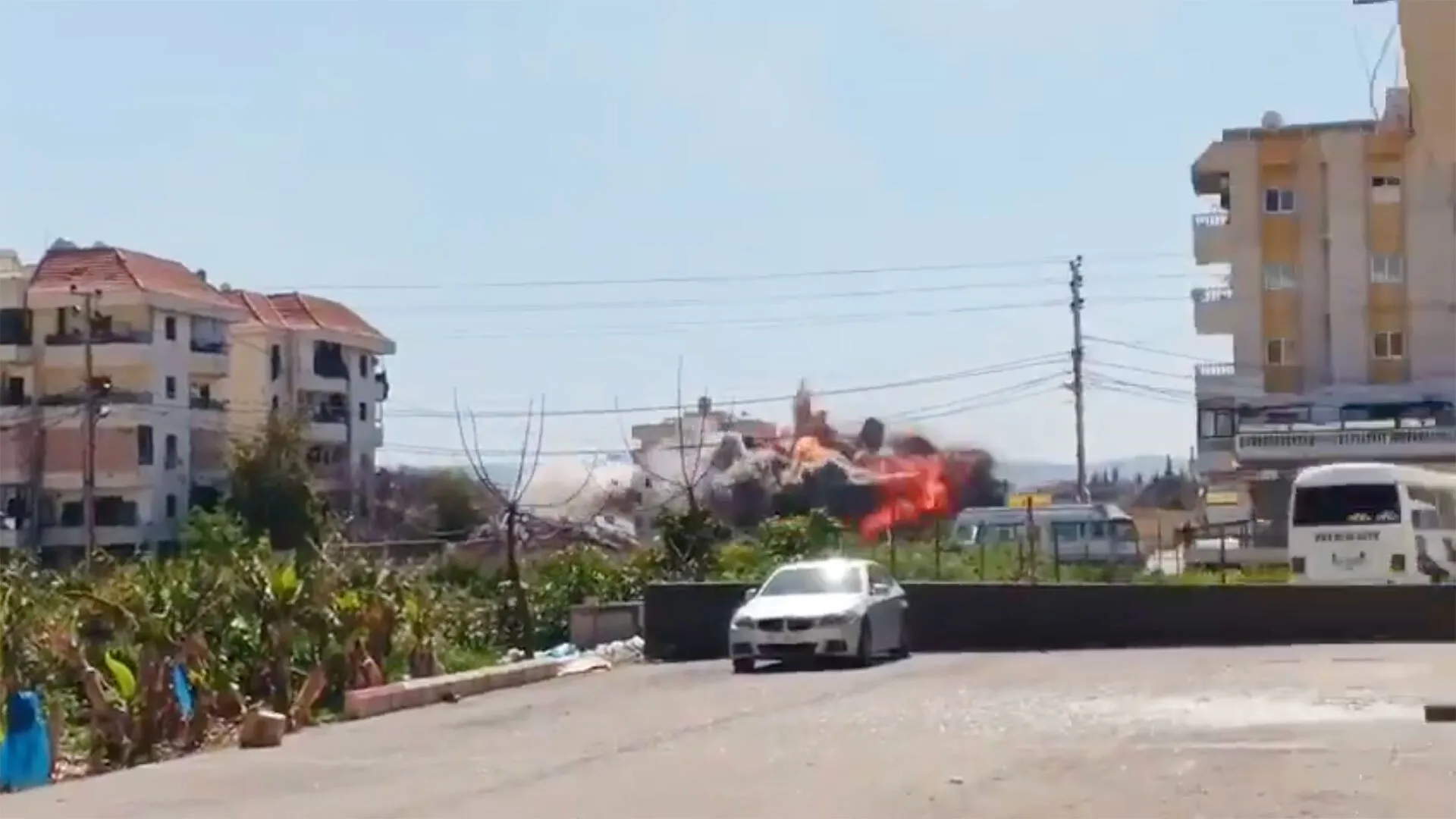
An Israeli air strike has heavily damaged a building in southern Lebanon’s Tyre district.
An Israeli air strike has heavily damaged a building in southern Lebanon’s Tyre district as Israeli forces continue to attack across the area. The army says it is targeting Hezbollah military infrastructure and has warned residents south of the Litani river to leave.
A suspected Iranian attack on a high-rise residential building in Bahrain’s capital of Manama has killed a 29-year-old Bahraini woman and injured several others.
Dozens of civilians, including children, wounded by an Iranian drone strike in Bahrain. France deploying warships to secure shipping commerce in the Strait of Hormuz. Australia taking heat from President Trump over its handling of the Iranian women’s soccer team. Markets across Asia plunging as the price of oil surged.
Lebanon reporting half a million people displaced by fighting between Israel and Hezbollah. The U.S. State Department telling nonessential staff to get out of Saudi Arabia after attacks there killed workers from India and Bangladesh. Ukrainian anti-drone experts turning their attention from their war with Russia to help intercept Iranian attacks. The defense minister of ever-neutral Switzerland saying his country believes the U.S.-Israeli war violates international law.
In less than two weeks, the Trump administration has instigated a truly global conflict — and with no quick and clear path to resolution, despite Trump insisting to congressional Republicans gathered at his Miami resort Monday that it would be a “short term excursion.”
“Short term! Short term!” Trump said in a bullish speech about the conflict, in which he said “the world respects us right now more than they have ever respected us before.”
“We’re counting down the minutes until they will be gone,” he said of Iran’s remaining leadership, while adding that the U.S. “will not relent” until Iran is “totally and decisively defeated.”
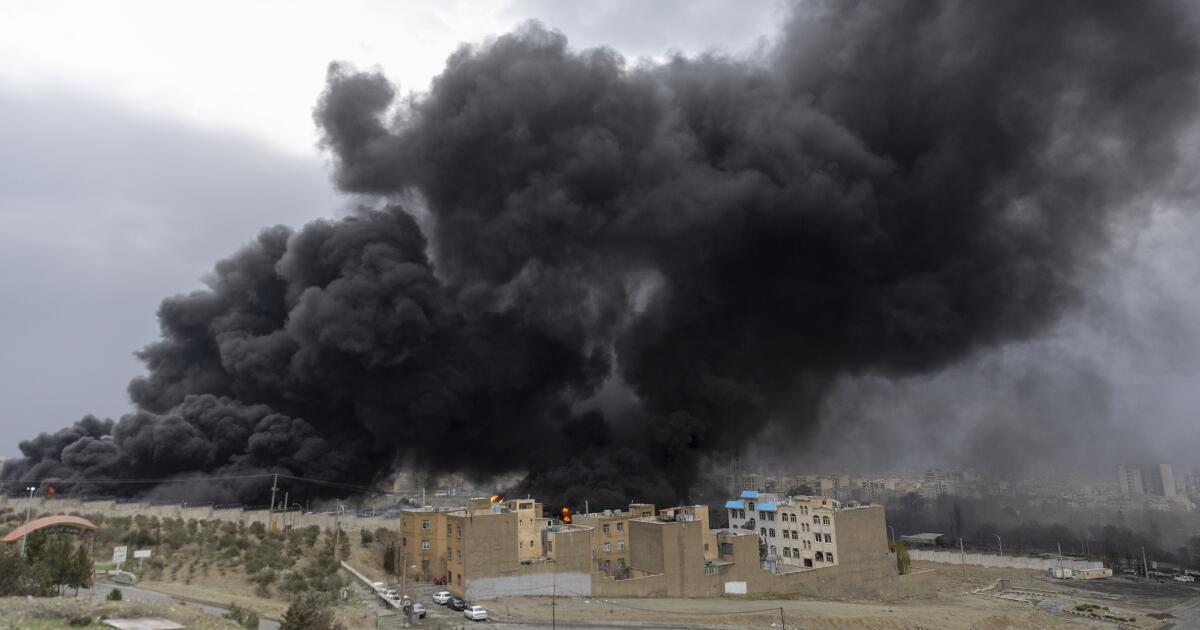
The war is not isolated to Iran, though it has certainly caused devastation there — with more than 1,300 deaths reported and toxic clouds from strikes on fuel depots hovering over Tehran, a city of some 10 million people.
The war’s effects also are not limited to the Middle East, though they are widespread there — as Israel has pushed into Lebanon and Iran has launched a wave of retaliatory strikes on U.S. allies across the Persian Gulf. The fighting has grounded regional air traffic, threatened desalination facilities that provide drinking water to millions and undermined the safe reputation of modern metropolises such as Dubai and Abu Dhabi.
Unlike the recent U.S. incursion into Venezuela to capture and oust President Nicolás Maduro, the U.S. war on Iran has been met with stiff resistance militarily, drawn in a slew of allies, reignited proxy battles, drastically destabilized the oil trade and shifted dynamics between the U.S. and other major powers such as China and Russia.
China, which gets upward of 50% of its crude oil imports through the Strait of Hormuz, has largely stayed out of the conflict, though China’s Foreign Minister Wang Yi said Sunday that the war “should never have happened” and “benefited no one.”
Trump said Monday that the U.S. is less harmed by strait disruptions, and was “really helping China” by securing the strait.
Russia, meanwhile, has emerged the lone winner of energy disruptions in the region, said Robert David English, a UCLA international policy analyst — as the Trump administration considers reducing oil sanctions on Russia to take pressure off of Mideast sources.
Trump said he had a “good talk” with Russian President Vladimir Putin about Iran on Monday. He also said the U.S. was going to suspend sanctions against other countries in order to alleviate strain on oil markets while the Iran conflict persists, but did not provide specifics.
The scope of the war has been dictated in part by Iran, which has historically limited its responses to U.S. strikes but warned after the U.S. bombed its nuclear sites last summer that it would treat any new attacks — large or small — as an act of war, and respond in kind.
Its strikes on U.S. facilities and allies throughout the region reflect that strategy, and are aimed in part at making the war more politically costly for the U.S. by straining global markets and its regional allies, experts said.
However, “you can’t attribute the increasingly global characteristics of the conflict solely to an Iranian strategy, because wars in this region tend to spill over the longer they last, with unintended consequences” including “bringing in all kinds of actors that don’t want to be involved,” said Kevan Harris, an associate professor of sociology who teaches courses on Iran and Middle East politics at the UCLA International Institute.
That can serve as a deterrent to starting wars in the region, he said, but “also makes them more difficult to wind down.”
The surge in oil prices to nearly $120 a barrel Monday — before a remarkable reversal to below $90 by the time U.S. stocks closed — is one of the furthest-reaching effects of the war, and one that clearly had Trump’s attention.
“Short term oil prices, which will drop rapidly when the destruction of the Iran nuclear threat is over, is a very small price to pay for U.S.A., and World, Safety and Peace. ONLY FOOLS WOULD THINK DIFFERENTLY!” Trump wrote on social media Sunday.
How long prices will remain elevated or volatile is a matter of debate, but Trump’s “short term” projections have been undercut by increasing strikes on oil and gas facilities in the region.
“If you can tolerate oil at more than $200 per barrel, continue this game,” Ebrahim Zolfaghari, a spokesperson for Iran’s Islamic Revolutionary Guard Corps, said Sunday.
Prices at the pump have surged for average Americans, some of whom were attracted to Trump’s candidacy because of his promises to avoid foreign wars and focus on driving down the cost of living for U.S. citizens.
Now, Trump and other administration officials are facing questions about their own role in putting the world at war, and offering various different justifications. They’ve asserted without proof that the U.S. faced an imminent threat of attack from Iran. Trump has repeatedly hinted that his goal was removing the government.
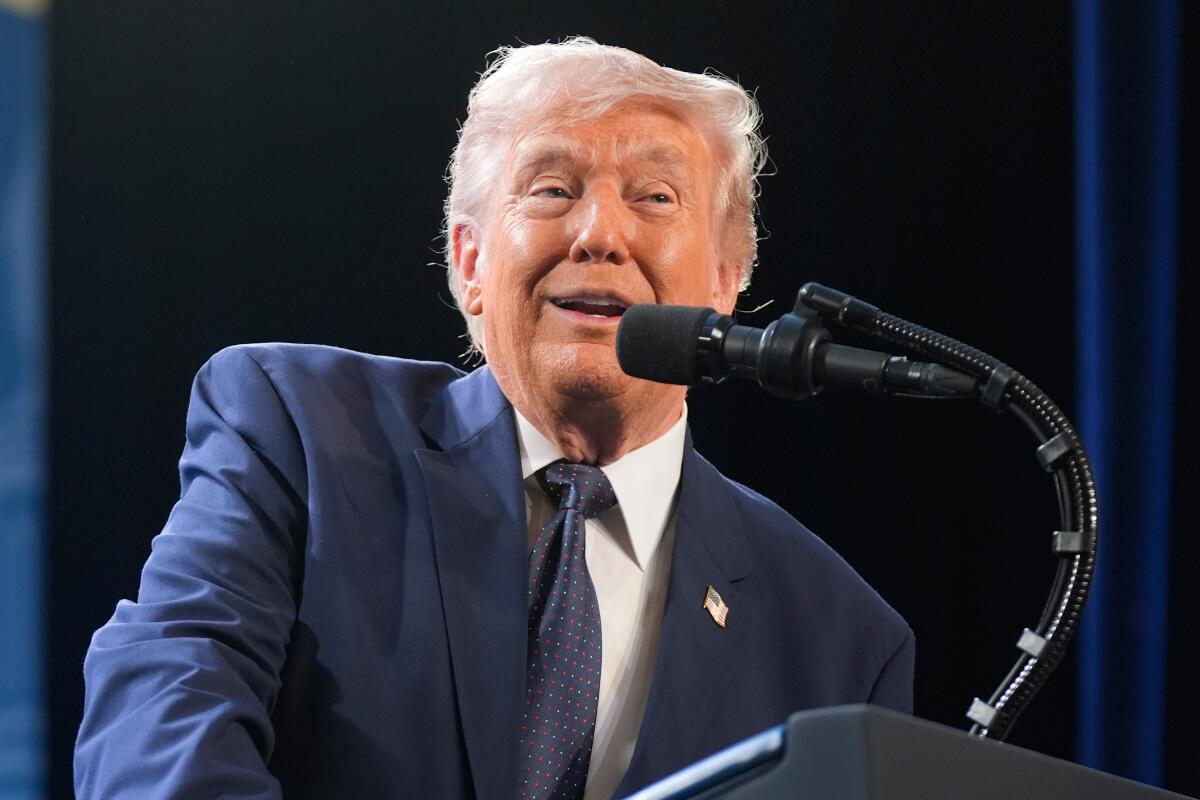
President Trump speaks at the Republican Members Issues Conference on Monday at Trump National Doral Miami in Doral, Fla.
(Mark Schiefelbein / Associated Press)
In the meantime, Iran has shown no signs of bowing to Trump, rejecting his calls for “surrender” and for him to have a say in naming their next leader. Iran installed Mojtaba Khamenei after Trump said the hard-liner son of the late Ayatollah Ali Khamenei would be “unacceptable.”
The choice was hailed by the president of Azerbaijan and the leader of Yemen’s Houthi rebels, among other allies.
To date, seven U.S. service members have been killed in the conflict, according to U.S. officials. Every day, U.S. taxpayers are on the hook for nearly $1 billion in war costs, according to one estimate. Democrats have slammed Trump for both.
“This war is coming from the same President that is building a $400 million ballroom in the White House. The same President that says $100 for a barrel for oil is worth it. The same President that doubled healthcare premiums for millions of Americans. But we have money for another endless war?” Sen. Alex Padilla (D-Calif.) wrote Monday on X.
Other world leaders focused on the global economic impact.
Traffic through the Strait of Hormuz, which transports about 20% of the world’s oil, has nearly halted, while producers in Saudi Arabia, Iraq, Kuwait and the United Arab Emirates ceased oil operations without open routes for export.
In response, French President Emmanuel Macron suggested French and other allied naval assets could escort oil tankers in the strait, shifting the security burden there from Washington onto Europe, leaving European vessels vulnerable to hostilities and potentially drawing the European Union deeper into the conflict.
Already, they’ve agreed to allow the U.S. to use bases in their territories, though the U.S. and Spain got into a spat after Spain rejected U.S. use of its bases and Trump threatened U.S. trade with the country.
Macron on Monday also threw additional military support behind Cyprus, following a meeting with Cypriot President Nikos Christodoulides and Greek Prime Minister Kyriakos Mitsotakis at a Cyprus air base.
France will dispatch an additional 11 warships to operate across the eastern Mediterranean, the Red Sea and the Strait of Hormuz, Macron said, after an Iranian drone struck a British military base on Cyprus on Monday.
“When Cyprus is attacked, it is Europe that is attacked,” Macron said.
Located just 150 miles from Israel in the eastern Mediterranean, the island of Cyprus has emerged as a strategic — and exposed — nerve center in the U.S. offensive against Iran. It hosts vital British military bases and acts as an intelligence, surveillance, and logistics hub in countering Iranian influence and proxy attacks.
Britain’s Defense Secretary John Healey said Monday that the United Kingdom was conducting air defense to support the UAE, and that Typhoon jets had taken out two drones — one over Jordan and the other headed to Bahrain.
Trump suggested Monday that the U.S. was on the path toward victory, but acknowledged it had not accomplished all of its goals.
“We’ve already won in many ways, but we haven’t won enough,” he said — adding the conflict will end “pretty quickly.”
He said Iran had been “very foolish, very stupid” when it attacked its neighbors, hurting its own chances of success in resisting the U.S.
“Their neighbors were largely neutral, or at least weren’t gonna be involved, and they got attacked,” Trump said. “And it had the reverse effect. The neighbors came onto our side, and started attacking them.”
Iran may still attempt to widen the conflict’s economic and geopolitical impact to keep up pressure and push for a ceasefire in its favor, but that could also backfire, said Benjamin Radd, a political scientist and senior fellow at the UCLA Burkle Center for International Relations.
“Iran’s becoming increasingly like North Korea in this sense,” he said, “isolating itself further.”
Ron Mesh was a tour manager for Guns N’ Roses and hard rock acts for decades — he knows how a well-appointed club can make or break a band. He just opened Dune Room, an independent venue in Indio that aims to keep the desert’s edgier music scenes thriving for the non-festival-saturated months of the year.
“I put in everything I would have wanted playing clubs — bus parking, a great green room and amazing sound system,” Mesh said. “In L.A., I wouldn’t have come close to getting this. But Indio’s very exciting — a lot of young metal bands are thriving, and now you don’t even have to go to the high desert to find them.”
Mesh is well known in the desert’s music scene (he also opened Studio B, a high-end mix studio). The venue — formerly the Little Street Music Hall — had a knotty opening after some early ownership disputes with former partners. But for salty desert rockers and hungry young punks who can’t afford Coachella tickets, it’s a welcome addition to the scene. “Pappy’s has a vibe where you go to the club just knowing there’ll be something cool there,” Mesh said, “Indio is getting that too.”
WASHINGTON — The war between the United States and Iran entered its ninth day Sunday with no clear path toward deescalation, as President Trump said deploying American ground troops to the Middle East remains under consideration and Iran’s foreign minister rejected calls for a ceasefire.
Speaking to reporters on Air Force One on Saturday, Trump declined to rule out the possibility of sending U.S. forces inside Iran, saying it could “possibly happen” as the conflict intensifies.
“There would have to be a very good reason,” Trump said. “I would say if we ever did that they would be so decimated that they wouldn’t be able to fight at the ground level.”
As Trump weighs sending ground troops into the widening conflict, Iran has signaled it is not prepared to halt fighting and said it would be ready to fight American soldiers if they descend into the country.
“We have very brave soldiers, who are waiting for any enemy who enters into our soil to fight with them, and to kill them and destroy them,” Iran’s foreign minister, Abbas Araghchi, said in an interview with NBC’s “Meet the Press” on Sunday.
Araghchi added that Iran is not considering a ceasefire at this time. He said the United States and Israel would first need to explain “why they started this aggression and then guarantee there would be a permanent end of the war.”
“Unless we get to that, I think we need to continue fighting for the sake of our people and our security,” he said.
“We allow nobody to interfere in our domestic affairs. This is up to the Iranian people to elect their new leader,” Araghchi said. “It’s only the business of the Iranian people, and nobody else’s business.”
As of Sunday, it remained unclear who would succeed Iran’s former leader Ayatollah Ali Khamenei, 86, who was killed by American and Israeli strikes on the first day of the war. But the clerical body that will choose Iran’s next supreme leader appeared to be close to reaching a majority consensus on its pick, according to several news reports.
Trump said last week that Mojtaba Khamenei — the son of the former leader — would be an “unacceptable” choice.
As the war’s end remains nebulous, the battlefield actions continue to have an economic impact domestically, particularly on oil prices.
“If the war continues like this, there will be neither a way to sell oil nor have the ability to produce it,” Iran’s parliament speaker Mohammad Bagher Ghalibaf said in a social media post Sunday. He added the war would affect not just the U.S., but also the rest of the world “due to [Benjamin] Netanyahu’s delusions,” referring to the Israeli prime minister.
Israeli strikes on Sunday hit an oil storage facility in Tehran, marking what appears to be the first time a civil industrial facility has been targeted in the war.
U.S. Energy Secretary Chris Wright said Sunday that there’s currently a “fear premium in the marketplace” and sought to assure Americans that the soaring oil prices are a short-term problem.
“We never know exactly the timeframe of this,” Wright said in an interview with CNN’s “State of the Union.” “But in the worst case, this is a weeks, this is not a months thing.”
White House Press Secretary Karoline Leavitt echoed the same assurances in an interview with Fox News‘ “Sunday Morning Futures,” calling the rising gas prices a “short-term disruption.”
“Ultimately taking out the rogue Iranian regime is going to be a good thing for the oil industry,” Leavitt said. “Those prices are going to come back down just like they have over the course of the past year, because of President Trump’s American energy dominance agenda.”
The strike on the oil storage facility came as Netanyahu promised “many surprises” for the next phase of the conflict.
Iran also hit a desalination plant in Bahrain, and according to Araghchi, a U.S. airstrike damaged an Iranian desalination plan on Qeshm Island that is a critical drinking water supply in the parched deserts of the gulf.
“Attacking Iran’s infrastructure is a dangerous move with grave consequences. The U.S. set this precedent, not Iran,” Araghchi wrote in a post on X.
The United States has also come under scrutiny after evidence suggested that an American strike was likely responsible for an explosion at an Iranian elementary school that killed more than 165 people, most of them children.
Trump administration officials have said the matter is under investigation and that no determination has been made as to who was responsible for the strike. But on Saturday, Trump said Iran was to blame for the explosion.
“It was done by Iran,” Trump told reporters. “They’re very inaccurate as you know with their munitions. They have no accuracy whatsoever. It was done by Iran.”
Asked Sunday if Iran had any evidence that the strike was conducted by the Americans, Araghchi said it had to have been either the U.S. or Israeli military and said that Trump’s suggestion that Iran was responsible for the attack was “funny.”
“It is our school, these are our students and our girls and they are attacked by an American fighter, a jet fighter and they have been killed. Why [is] Iran responsible?” Araghchi said.
WASHINGTON — The Defense Department last week outlined a concise set of military objectives in President Trump’s war against Iran, claiming its ultimate goal is to dismantle Tehran’s ability to project power beyond its borders. Yet it may be targets the Pentagon has largely left unacknowledged that offer the clearest insight yet into Trump’s true intentions.
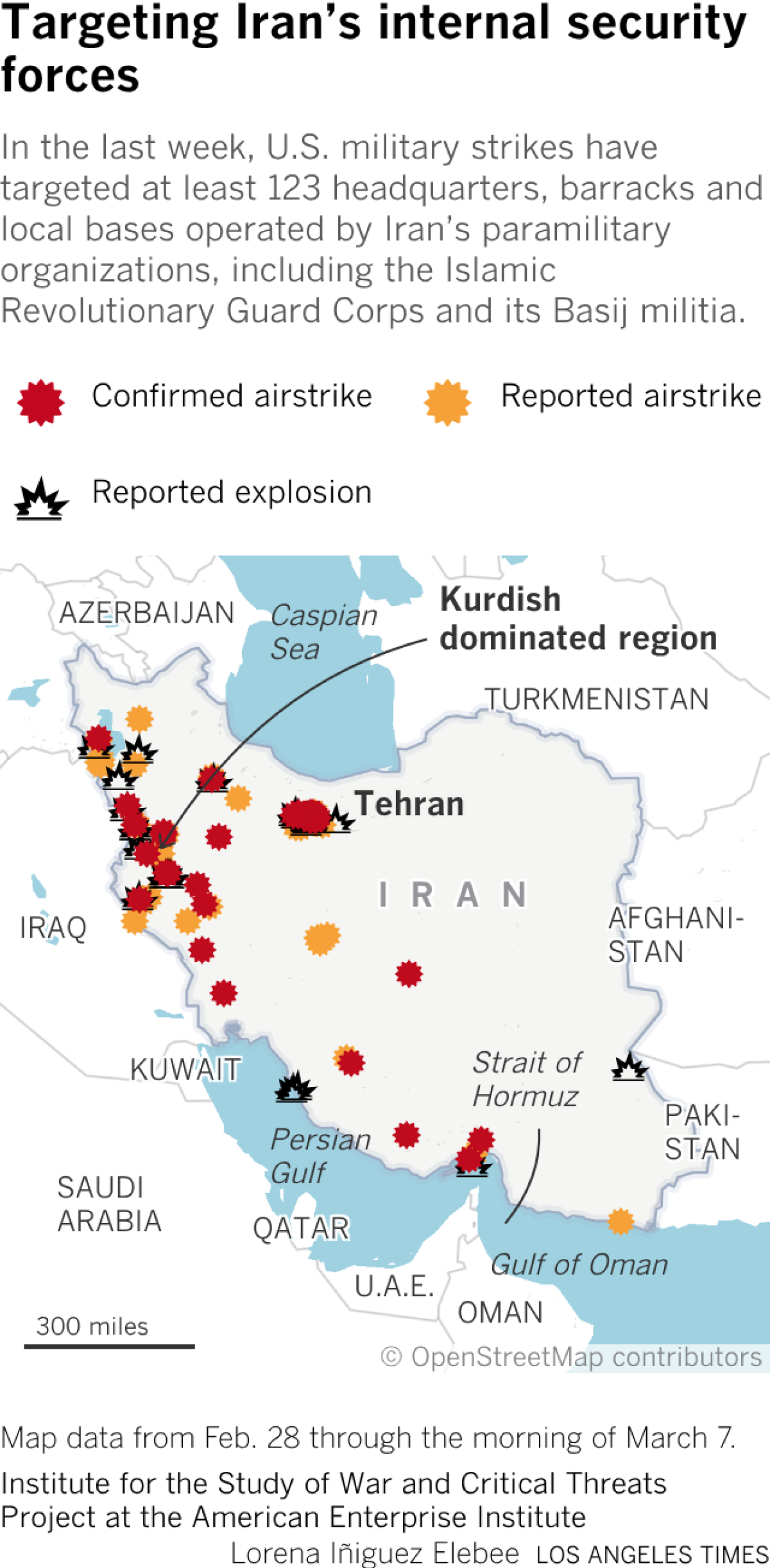
U.S. military strikes have focused on Iran’s ballistic missile, drone and nuclear programs, as well as its naval assets, according to U.S. Central Command. But strikes have also increasingly targeted Iran’s internal security forces, used by the Islamic Republic to suppress public dissent, according to an analysis from the Institute for the Study of War and the Critical Threats Project shared with The Times.
The strikes have targeted at least 123 headquarters, barracks and local bases operated by Iran’s paramilitary organizations, including the Islamic Revolutionary Guard Corps and its Basij militia. Regional police forces, primarily in the capital region around Tehran and in western Iran, near areas dominated by Kurdish groups hostile to the Iranian government, have also been targeted.
Some of those groups are being armed and supported by the U.S. intelligence community, a U.S. official said, speaking on the condition of anonymity to speak candidly.
Nicholas Carl, with the Critical Threats Project, said the pattern indicates the campaign is already underway to set the conditions for a revolution.
“As we are going after these repressive institutions, we are degrading the ability of the regime to monitor its population, to repress its population,” Carl said. “And so it looks as though the strike campaign may be organized around trying to erode the ability of the regime to repress in those areas.”
Analysts said that strikes against internal forces could be greater than they have measured thus far, noting the difficulty of tracking targets in the war based on publicly available data due to an internet blackout strictly enforced by the Iranian government.
An explosion erupts after strikes near Azadi Tower close to Mehrabad International Airport in Tehran on Saturday.
(Atta Kenare / AFP / Getty Images)
The quieter side of the U.S. campaign suggests a political strategy by the Trump administration that goes beyond simply containing the Iranian government, and may instead aim to lay the groundwork for its overthrow.
Trump and his top aides have been inconsistent in their messaging on their goals for the war, vacillating between calls for regime change and far shorter ambitions, such as an Islamic Republic that remains in power under leadership more acquiescent to the United States.
Before the war began, Trump was presented with an intelligence assessment that large-scale military action was unlikely to topple the Iranian government, two sources familiar with the assessment said. The assessment led analysts at the CIA, the State Department and the Pentagon all to advise the White House against proceeding with the operation. The intelligence analysis was first reported by the Washington Post.
Share via
Greasing the wheels for domestic unrest, for insurgency or revolution could serve other strategic purposes for the Trump administration beyond effecting regime change, adding new sources of pressure on an Islamic Republic that, if still intact by war’s end, would face renewed internal pressures at a moment of historic weakness.
Rob Malley, lead negotiator on the 2015 Iran nuclear deal and special U.S. envoy for Iran under President Biden, said that a sustained U.S. campaign that cripples Iran’s ability to maintain domestic control could mean “the regime collapses, in the sense that it can no longer, genuinely and effectively, govern the entirety of the country.”
“Right now, what Trump is saying suggests an extremely ambitious, extremely long-term, extremely perilous campaign that will only end with Iran’s surrender, and it’s very hard to see Iran surrendering,” Malley said. But the campaign may already be working. “Their communications have certainly been penetrated — they cannot meet without being targeted by Israel or the United States,” he added.
A woman holds a portrait of the late Ayatollah Ali Khamenei at a protest Saturday by medical professionals outside Gandhi Hospital in Tehran, which was damaged in an airstrike earlier this week.
(Majid Saeedi / Getty Images)
“Either the regime stays in place weakened, bloodied, finding it harder to govern a more fragmented, chaotic country,” Malley continued, “or the regime no longer can govern.”
An Israeli official did not deny that internal security forces were being targeted, although the official said that Israel was focused on assassinating Iran’s political and security leadership — “tiers one, two and three,” the official said. The vast majority of the strikes against internal security services thus far have been conducted by the United States.
“Our goal is to weaken the ayatollah regime, to a point where the Iranian people can choose their fate,” the official told The Times. “It’s still not at the point where they can do that, but there is work still to be done.”
By all accounts, the campaign against Iran’s military assets has achieved success. Iranian ballistic missile attacks against Israel and U.S. forces and allies in the region have decreased by 90% after just a week of combat, Defense officials said. Drone strikes have decreased by 83%. Over 30 Iranian vessels, including those used as launching pads for drones and aircraft, have been destroyed — a significant number for Iran’s aged and ill-funded naval fleet.
Trump could simply declare victory based on these results alone, said Elliott Abrams, who served as Trump’s special representative for Iran in 2020.
“They will get weaker as they use up resources and we bomb more and more relevant sites. Already air traffic is starting up again,” Abrams said, noting that commercial flights in the region began resuming this weekend. “So I doubt that the president will need a protracted campaign.”
But that would leave the regime in place, leaving open the possibility of a revanchist Islamic Republic that could reconstitute its military and crack down further on democratic protesters — an outcome that could create political backlash for Trump, Abrams said, after losing U.S. service members in combat.
A woman jogs amid closed shops in south Tel Aviv on Saturday.
(Olympia de Maismont / AFP / Getty Images)
“The outcome remains entirely in doubt — regime collapse after a wave of protests, civil war, a deal that leaves the regime in place behind a new face,” Abrams added. “A real test for Trump would arise if there is a wave of protests as in January, and the regime again starts shooting. Can he do nothing? Unlikely.”
In his initial speech announcing the start of the campaign, Trump addressed the people of Iran, telling them to shelter in their homes until the U.S. bombing campaign concludes.
“When we are finished, take over your government. It will be yours to take. This will be probably your only chance for generations,” the president said. “For many years, you have asked for America’s help. But you never got it. No president was willing to do what I am willing to do tonight. Now you have a president who is giving you what you want. So let’s see how you respond.”
But the president’s message grew muddled over the course of the last week, after he offered conflicting goals in a series of interviews with reporters.
He at once said he was expecting to hand-select the next ayatollah, after assassinating Iran’s longtime supreme leader, Ali Khamenei, in the opening salvo of the war. In other interviews, he said that the joint U.S.-Israeli campaign had killed many of the potential leaders that Washington could have worked with.
On Friday, Trump called for Iran’s “unconditional surrender.” He did not specify whether he was referring to a surrender of Iran’s nuclear program, its ballistic missile program, or on control over the country itself, and in a subsequent interview, said it could simply mean “when Iran no longer has the ability to fight.”
Over the last week, Kurdish leaders have shared accounts of Trump and his top aides reaching out to them and encouraging their involvement in the war, including a ground incursion in western Iran from Iraqi Kurdistan. But the president seems to have placed that effort on hold for the time being. “The war is complicated enough without having — getting the Kurds involved,” he told reporters Saturday aboard Air Force One.
At Central Command headquarters on Thursday, Defense Secretary Pete Hegseth told reporters that Trump maintains his promise to the Iranian people at the outset of the war, that a time will come for an uprising.
Defense Secretary Pete Hegseth addresses the audience as President Trump listens during “The Shield of the Americas Summit“ on Saturday, a gathering with heads of state and government officials from 12 countries in the Americas at the Trump National Doral Golf Club in Doral, Fla.
(Roberto Schmidt / Getty Images)
“No one’s done more than President Trump to reopen the opportunity for those who want a free Iran to do so,” Hegseth said. “Ultimately, it’s common sense, as he said up front, don’t go out and protest while bombs are dropping inside Tehran and elsewhere. There will come a moment where he determines, or they determine, that it’s time to seize that advantage.”
Suzanne Maloney, vice president and director of the foreign policy program at the Brookings Institution and an expert on Iran, said she expects the government to survive the U.S. assault, “still easily able to outgun and outmaneuver any challenges from the streets.”
But a concerted, prolonged campaign could change that assessment.
“Of course, months of full-scale war certainly could also break the system,” Maloney said, adding: “I don’t think the short-term result would be a stable transition to a more liberal system — but rather a collapse of the state itself, and at least for some period of time, a dangerous vacuum of power and order in the heart of the Middle East.”
WASHINGTON — Signs of division emerged in Iran’s leadership Saturday as U.S. and Israeli strikes continued battering targets throughout the country, with Tehran sending mixed signals on whether it would keep attacking Washington’s Arab allies entering the war’s second week.
Iranian President Masoud Pezeshkian began the day offering an apology “on behalf of Iran to the neighboring countries affected,” promising to halt the attacks that have affected nearly every nation in the Middle East. But strikes continued within hours, hitting Qatar, Bahrain and the United Arab Emirates, and Pezeshkian quickly issued a statement walking back his remarks.
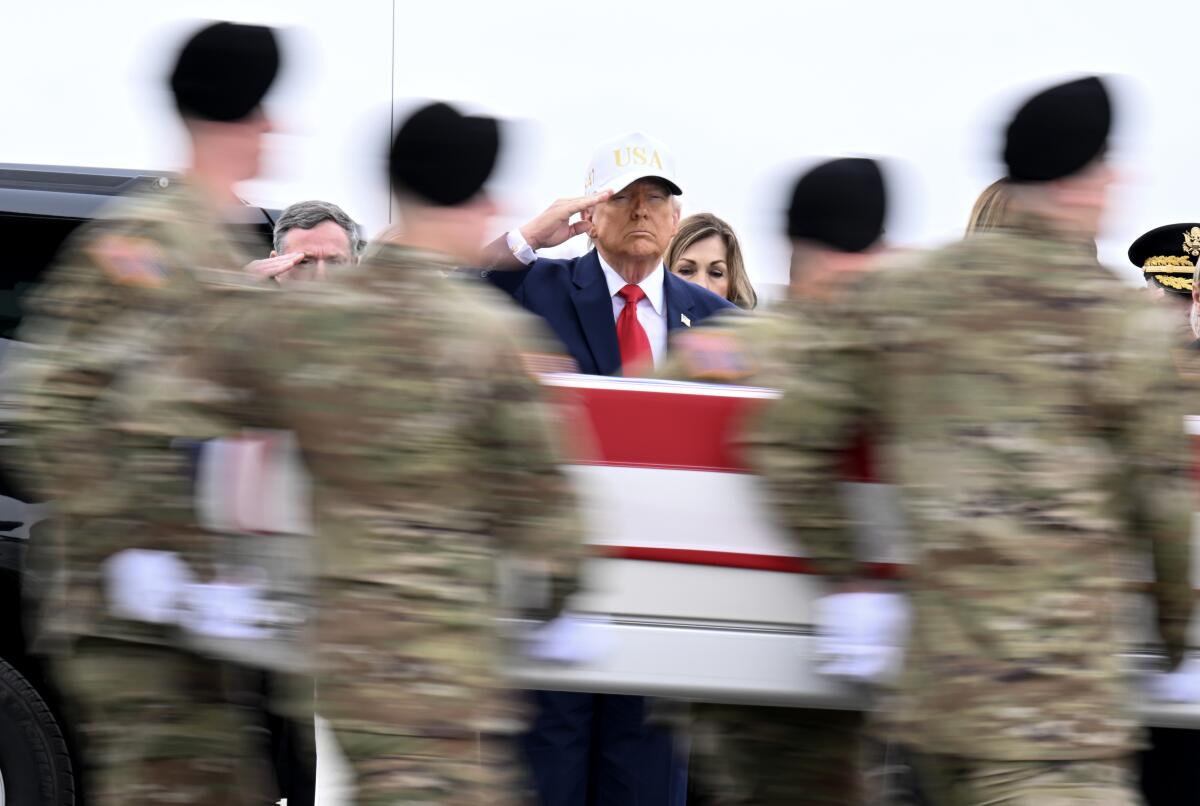
President Trump vowed on social media to “hit Iran very hard” on Saturday, shortly before flying to Dover Air Force Base in Delaware for the dignified transfer of six service members killed in the war.
Speaking at a summit of Latin American leaders in Miami before his trip to Delaware, the president said the fallen service members were heroes “coming home in a different manner than they thought they’d be coming home.” He said it was “a very sad situation,” and he pledged to keep American war deaths “to a minimum.”
And Israel launched its own wave of fresh attacks against Iran while taking incoming fire from Hezbollah, Iran’s allied force in Lebanon, that set off sirens in Tel Aviv. Reports of a fire at a major oil refinery outside Tehran sparked fears the conflict was only escalating, marking the first attack on Iran’s energy infrastructure, if confirmed.
The burst of activity over the weekend underscored that Trump’s unexpected war with Iran, launched alongside Israel just a week ago, is continuing at full force with no sign of slowing.
Missile and drone strikes by Iran against Arab nations, targeting U.S. military assets in the region as well as civilian targets, including hotels and airports, have been an effort by Iran’s Islamic Revolutionary Guard Corps to pressure regional governments to in turn press Trump to end the U.S. air campaign. The strikes have jolted markets worldwide and sent the price of oil soaring.
President Trump salutes Saturday as soldiers carry the coffin of Sgt. Declan Coady, 20, of West Des Moines, Iowa. Coady and five others were killed in a drone strike in Kuwait.
(Roberto Schmidt / Getty Images)
While the attacks have decreased substantially over the course of the week, with U.S. Central Command recording a 90% decrease in ballistic missile launches and an 83% drop in drone attacks as of Friday, Iranian strikes are still penetrating regional air defenses. One drone hit the world’s busiest airport, in Dubai, on Saturday, dashing hopes that flights could resume from the regional hub.
Hours after Pezeshkian’s apology, Iran’s Foreign Ministry issued a statement vowing to continue strikes on territories that host U.S. offensive forces. Iran’s Defense Ministry said that its strategic stockpile of munitions was sufficient to sustain a protracted campaign. And a Revolutionary Guard spokesperson issued a statement addressing Trump, calling him “the corrupted island man,” referring to his former friendship with Jeffrey Epstein, the late sex offender who allegedly trafficked girls to his private island.
“The ground and the map of the war is in our hands,” the Revolutionary Guard official said. “This will continue.”
In his videotaped remarks, Pezeshkian also rejected Trump’s call for Tehran’s “unconditional surrender.” Trump later said he would be satisfied reaching a point at which Iran is no longer capable of fighting back.
“The idea of Iran surrendering unconditionally is a dream they will take to their graves,” Pezeshkian said.
A member of Iran’s Assembly of Experts, a council of 88 clerics responsible for naming the country’s supreme leader, was quoted in local state media vowing to select a new ayatollah within the next day, more than a week after U.S. and Israeli forces assassinated Ayatollah Ali Khamenei in the opening salvo of the war.
Trump has said he expects a say in that decision, preemptively rejecting the late supreme leader’s son, Mojtaba Khamenei, who is seen as the most likely successor.
Mojtaba Khamenei is seen as even more ideological than his father, with deep ties throughout Iran’s security apparatus — and with a potential vendetta against Trump, on the heels of U.S. forces killing much of his family.
Ali Larijani, secretary of Iran’s Supreme National Security Council who formerly served as the late Khamenei’s top advisor, said in his first remarks since the ayatollah’s killing that his assassination was unprecedented. “The price for this is not small,” Larijani said.
“They shouldn’t think we’ll let America quickly sweep this under the rug and say, ‘We hit, now let’s move on,’” Larijani continued. “Things will only resolve when they understand they no longer have the right to violate Iran, and when they compensate the Iranian people for their losses.”
More that 1,200 people have been killed in Iran since the war began, according to Iranian officials.
“He killed and martyred our leader,” Larijani added. “We’re not letting it go.”
Pentagon asserts US forces are tracking Russian-Iranian operations amid escalating conflict in the region.
Published On 7 Mar 20267 Mar 2026
Share
Washington has downplayed reports that Russia is sharing intelligence with Iran about United States targets across the Middle East amid the burgeoning US-Israel war on Iran, first reported by The Washington Post.
Defense Secretary Pete Hegseth, in a CBS 60 Minutes interview on Friday, said the US is “tracking everything” and factoring it into battle plans when asked about the reports Moscow was aiding Tehran.
Recommended Stories
list of 4 itemsend of list
Since the war began on February 28, Russia has passed Iran the locations of US military assets, including warships and aircraft, three officials, who spoke on the condition of anonymity, told The Washington Post.
“It does seem like it’s a pretty comprehensive effort,” one of the sources told the newspaper.
Meanwhile, anonymous officials told The Associated Press news agency that US intelligence has not uncovered that Russia is directing Iran on what to do with the information, as the US and Israel continue their bombardment and Iran fires retaliatory salvoes at US assets and allies in the Gulf.
Hegseth said the United States is “not concerned” about the reports, also downplaying the possibility that Russia’s assistance could be putting US citizens in harm’s way.
“The American people can rest assured their commander-in-chief is well aware of who’s talking to who,” Hegseth said.
“And anything that shouldn’t be happening, whether it’s in public or back-channelled, is being confronted and confronted strongly.”
He continued: “We’re putting the other guys in danger, and that’s our job. So we’re not concerned about that. But the only ones that need to be worried right now are Iranians that think they’re gonna live.”
White House Press Secretary Karoline Leavitt on Friday also claimed to reporters that “[the report] clearly is not making any difference with respect to the military operations in Iran because we are completely decimating them.”
Leavitt declined to say if Trump had spoken to Russian President Vladimir Putin about the reported intelligence sharing or whether he believed Russia should face repercussions, saying she would let the president speak to that himself.
First signs of Moscow’s involvement
Trump, for his part, on Friday evening berated a reporter for raising the matter of the report when he opened the floor to questions from the media at the end of a White House meeting about how paying student-athletes has recalibrated college sports.
“I have a lot of respect for you, you’ve always been very nice to me,” the US president said to Peter Doocy, the Fox News reporter.
“What a stupid question that is to be asking at this time. We’re talking about something else.”
The intelligence is the first indication that Moscow has sought to get involved in the war that the US and Israel launched on Iran a week ago.
Asked whether Russia would go beyond political support and offer military assistance to Iran, Kremlin spokesman Dmitry Peskov said there has been no such request from Tehran.
“We are in dialogue with the Iranian side, with representatives of the Iranian leadership, and will certainly continue this dialogue,” he said on Friday.
Pushed on whether Moscow has provided any military or intelligence assistance to Tehran since the Iran war’s start, he refrained from comment.
Russia has tightened its relationship with Iran as it looked for badly needed missiles and drones to use in its four-year war against Ukraine. But the pair have long maintained friendly relations, even while Tehran has faced years of isolation from the West over its nuclear programme and its support of proxy groups in the Middle East.