starts

Air traffic control strike starts TODAY with flights cancelled across Europe

IF YOU are due to head to or from Italy today you might want to check your flight as strikes across the country have seen huge cancellations.

Strike action is set to take place across Italy today between 1pm and 5pm with ENAV – the company that runs Italian air traffic control – walking out at all 33 Italian airports.

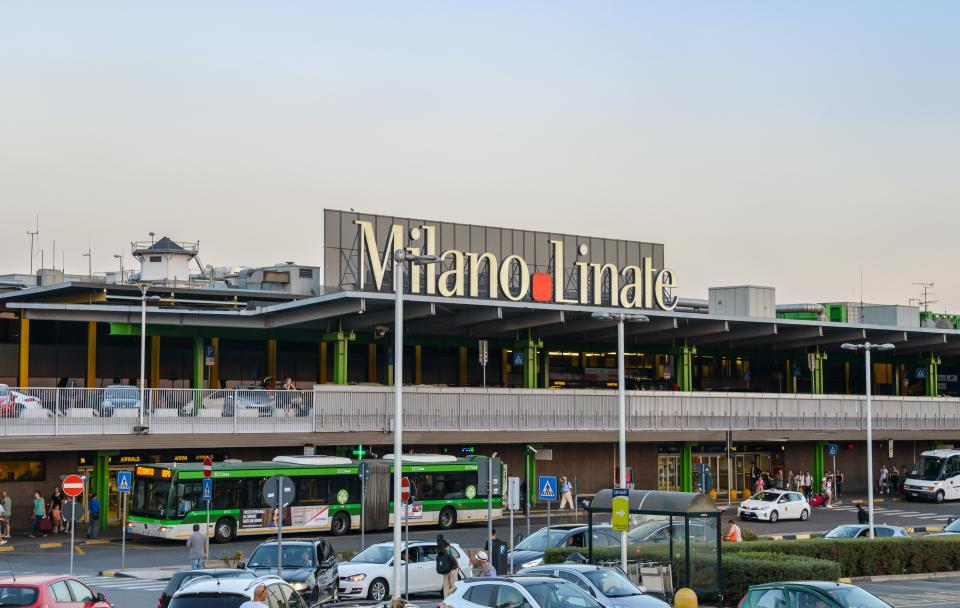
Exterior view of Milan Linate Airport in Italy, showing the terminal building, parking area, and ground transportation.
A number of major Italian airports including Milan are set to be impacted Credit: Alamy

The main airports expected to be affected include Rome, Naples, Milan and Venice.

Flights cancelled today already include:

  • 10:15am British Airways flight to Milan from London Heathrow
  • 3:25pm British Airways flight to London Heathrow from Milan
  • 11:50am British Airways flight to Venice from London Heathrow
  • 5:20pm British Airways flight to London Heathrow from Venice
  • 1:25pm British Airways flight to Milan from London City
  • 2:25pm British Airways flight to London City from Florence
  • 5:50pm British Airways flight to London City from Milan
  • 3:50pm Ryanair flight to Bologna from London Luton

Currently, flights to Italy from London Heathrow and London Gatwick state they are scheduled as planned, though this may change.

Read more on travel inspo

CHEAP BREAKS

UK’s best 100 cheap stays – our pick of the top hotels, holiday parks and pubs


ALL IN

I found the best value all inclusive London hotel… just £55pp with free food & booze

ITA Airways has already warned that 29 per cent of its scheduled flights are cancelled today.

Passengers are being advised to check their flight status with their airline and airport before travelling.

If you are due to fly this morning between 7am and 10am or this evening between 6pm and 9pm then your flight is guaranteed to go ahead as normal, under Italian law.

All connections to Italian islands also remain guaranteed.

If you are able to move your flight, then it might be worth doing this to avoid disruption.

Collage of travel items including a plane, sunscreen, passport, suitcase, and plane tickets, advertising The Sun's travel Instagram account.
An airport departure board displaying multiple cancelled flights.
Airlines are advising passengers to check their flight status ahead of travelling to the airport Credit: Alamy

Unfortunately though, if your flight is delayed or cancelled you won’t get any compensation as a strike is deemed to be outside of the airline’s control.

But airlines do have a duty of care so should provide you with food and water and if necessary, accommodation overnight.

There is also set to be a strike on October 16 in Italy, lasting 24 hours – but this time it will be easyJet flight crew walking out.


Source link

Trump starts campaigning in deep red states, not midterm battlegrounds

Jill Colvin and Kim Chandler

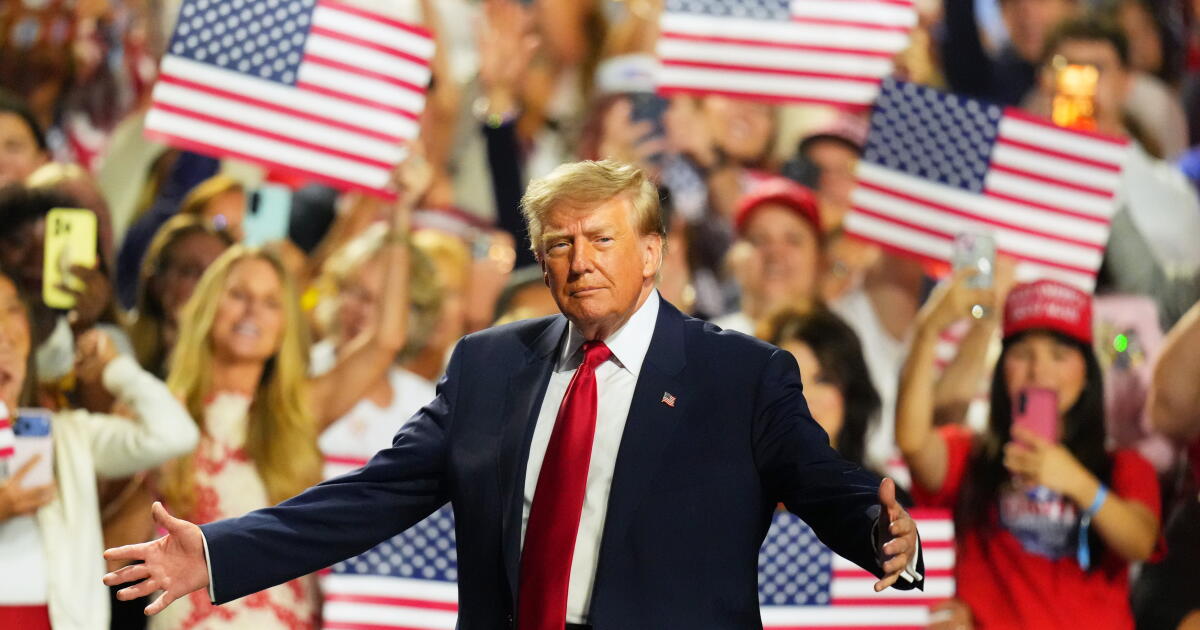
President Trump vowed to campaign in 35 of the most competitive battleground districts in the final sprint to November’s midterm elections.

Instead, he will begin October by stumping in Alabama and Oklahoma, two of the most Republican states in the nation. His events are sure to draw enthusiastic crowds of fans, but his choice of destinations is a reminder of his deep unpopularity in much of the country during a campaign season he’s sought to make all about himself.

Trump will hold rallies Thursday in Durant, Okla., and Friday in Mobile, Ala., where he is sure to draw crowds, but also has raised eyebrows.

While organizers insist the rallies are in locations with media markets that span state lines and they will help bolster broader turnout, Trump’s itinerary is yet another sign of the uphill fight that his party faces. Republicans already have been pouring money into red states once considered safe as they try to shore up candidates facing an unhappy electorate that has soured on Trump and his polices.

Some Republicans also have been distancing themselves from the president in recent weeks as they try to appeal to voters beyond Trump’s “Make America Great Again” base. They’ve removed or downplayed references to the president on their websites and increasingly voiced opposition to his unpopular war with Iran.

But Trump’s events next week are likely to deliver something he craves: adoring crowds. He is almost guaranteed to fill the venues with the kind of die-hard supporters who fueled his political rise, projecting excitement as he tries to bolster enthusiasm and rally Republicans.

“The President’s ability to engage with and activate low-propensity voters is unmatched. That’s why he’ll be barnstorming the country to activate the voters we need to win in November,” Republican National Committee spokesperson Natalie Baldassarre said, promising more October rallies.

Democrats, meanwhile, celebrated the announcement. “The political floor is falling out from underneath Trump and Congressional Republicans, forcing them to scramble to spend and campaign in deep red territory in the final weeks,” said Viet Shelton, spokesperson for the Democratic Congressional Campaign Committee.

The RNC noted that Durant is on the Texas border and next to the Dallas-Fort Worth media market and will draw Republicans in Texas, which has emerged as one of the most critical states on the map. Scandal-plagued Atty. Gen. Ken Paxton, whom Trump backed over incumbent Sen. John Cornyn, is locked in a tight race against Democrat James Talarico. Gov. Greg Abbott also is facing a stronger-than-expected challenger in Democrat Gina Hinojosa.

Mobile is next to Florida’s panhandle, a Republican stronghold where high turnout can help bolster Trump-backed candidates running for Senate and governor. However, Florida Republican Sen. Ashley Moody is not expected to attend.

In Oklahoma, Trump will be stumping for Mike Mazzei, whom he backed as the Republican nominee for governor during a competitive primary. Mazzei is running against Oklahoma’s Democratic House Minority Leader Cyndi Munson.

“This race continues to get more competitive — and national Republicans are right to be worried about Mazzei,” Democratic Governors Assn. spokesperson Kevin Donohoe said in a statement.

Alabama, meanwhile, holds deep nostalgia for Trump and his early supporters. He held his first mega-rally in Mobile more a decade ago, drawing some 30,000 people to a college football stadium. The crowd made clear to skeptics of his campaign that he was more than a celebrity novelty.

“It’s very natural that he would host a rally here as he is gearing up for the midterm elections,” said John Wahl, the Republican candidate for lieutenant governor and former chair of the Alabama Republican Party.

Although Republicans remain the heavy favorites in Alabama’s statewide campaigns, they face a more challenging political landscape.

Former Democratic Sen. Doug Jones is mounting a vigorous campaign for Alabama governor against one of Trump’s most vocal allies, Republican Sen. Tommy Tuberville, who welcomed the president’s visit.

Republican Rep. Barry Moore, running to replace Tuberville in the Senate with Trump’s backing, said the president’s rally “will be the jet fuel we need to win big in Alabama.”

Mobile is also near Alabama’s 2nd Congressional District, which leans red after its lines were redrawn but is not a slam dunk for Republicans as they try to dislodge Democratic Rep. Shomari Figures.

Figures has been criticizing the president’s plan to lower import tariffs on foreign beef in an appeal to cattle ranchers as he tries to fend off a challenge from his Trump-backed opponent, State Rep. Rhett Marques.

Trump has promised to ramp up his campaigning in the election’s final stretch and had said he would visit all of the most competitive districts .

“It’s all about 35 races,” he said at a recent Rose Garden dinner attended by Republican lawmakers. “I’m going to go to every one of those 35 places and we’re going to see if we can get everyone elected.”

Colvin and Chandler write for the Associated Press. Colvin reported from New York. AP reporter Bill Barrow in Atlanta contributed to this report.
Source link

United Rugby Championship: Ulster hand starts to five summer signings for Edinburgh opener

Ulster have handed starts to five of their summer signings for Friday’s United Rugby Championship opener against Edinburgh at the Affidea Stadium (19:45 BST).

They form part of a total of eight players in the matchday squad who are set to make their competitive debuts for the Irish province.

New forward additions Eduardo Bello, Eli Snyman, Ben Donnell and Martin Moloney are named in the starting team, with another new recruit, Jamie Benson, chosen among the backs.

Ireland wing Robert Baloucoune is back in the starting line-up, while last season’s top try-scorer Zac Ward is among the replacements, both players having been involved in Ireland camp over the summer.

Full-back Michael Lowry is named as captain.

After missing all of last season because of a knee injury, James McNabney makes his competitive return, starting at number eight.

Argentine debutant Bello joins Eric O’Sullivan and James McCormick in the front row, with Snyman and Donnell forming the second row.

In the back row, there is a debut for former Exeter Chiefs forward Moloney at open-side flanker, with McCann starting at blind-side.

Conor McKee and Jack Murphy make up the half-back combination, while ex-Harlequins back Benson and Ben Carson team up in midfield.

Baloucoune is selected on the right wing and Development back Aitzol Arenzana-King on the left.

Arenzana-King crossed for four tries in Ulster’s pre-season games against Edinburgh and Ospreys.

Development hooker Henry Walker, prop Keynan Knox and scrum-half Matthew Devine are named in a youthful bench.

Forwards Walker, Tom McAllister, Knox, Harry Sheridan and James McKillop, and backs Devine, Jake Flannery and Zac Ward are chosen as replacements.

Ulster: Lowry (capt), Baloucoune, Carson, Benson, Arenzana-King, Murphy, McKee, O’Sullivan, McCormick, Bello, Snyman, Donnell, McCann, Moloney, McNabney.

Replacements: Walker, McAllister, Knox, Sheridan, McKillop, Devine, Flannery, Z Ward

Source link

Bush Starts Off by Defying the the Constitution

Alan M. Dershowitz is a professor at Harvard Law School

The very first act of the new Bush administration was to have a Protestant Evangelist minister officially dedicate the inauguration to Jesus Christ, who he declared to be “our savior.” Invoking “the Father, the Son, the Lord Jesus Christ” and “the Holy Spirit,” Billy Graham’s son, the man selected by President George W. Bush to bless his presidency, excluded the tens of millions of Americans who are Muslims, Jews, Buddhists, Shintoists, Unitarians, agnostics and atheists from his blessing by his particularistic and parochial language.

The plain message conveyed by the new administration is that George W. Bush’s America is a Christian nation, and that non-Christians are welcome into the tent so long as they agree to accept their status as a tolerated minority rather than as fully equal citizens. In effect, Bush is saying: “This is our home, and in our home we pray to Jesus as our savior. If you want to be a guest in our home, you must accept the way we pray.”

But the United States is neither a Christian nation nor the exclusive home of any particular religious group. Non-Christians are not guests. We are as much hosts as any Mayflower-descendant Protestant. It is our home as well as theirs. And in a home with so many owners, there can be no official sectarian prayer. That is what the 1st Amendment is all about, and the first act by the new administration was in defiance of our Constitution.

This was surely not the first time in our long history that Jesus has been invoked at an official governmental assembly. But we are a different and more religiously diverse nation than we were in years past. There are now many more Muslims, Jews, Buddhists and others who do not accept Jesus as their savior. It is permissible in the U.S. to reject any particular theology. Indeed, that is part of our glorious diversity. What is not acceptable is for a presidential inauguration to exclude millions of citizens from its opening ceremony by dedicating it to a particular religious “savior.”

Our first president, George Washington, wrote to the tiny Jewish community in Rhode Island that in this new nation, we will no longer speak of mere “toleration,” because toleration implies that minorities enjoy their inherent rights “by the indulgence” of the majority. President Bush should read that letter and show it to the Rev. Franklin Graham, who told the media on the day before the inauguration that his prayer “will be for unity”; instead, it was for the Trinity. Uniting for Jesus may be Graham’s definition of unity, but it is as un-American as if a rabbi giving the official prayer had prayed for the arrival of the “true Messiah,” thus insulting the millions of Christians who believe Jesus is the true Messiah.

Inaugurations are not the appropriate setting for theological proclamations of who is, and who is not, the true Messiah. Perhaps at Bob Jones University it is appropriate for an honorary degree recipient to declare Jesus to be the only king of the United States, but the steps of the Capitol should not be confused with the lectern of a denominational church.

The inauguration ended with another Protestant minister inviting all who agree that Jesus is “the Christ” to say, “Amen” (ironically, a word that originated in Jewish prayer or, alternatively, originally a Jewish acronym for “God, the King, forever.”) Sen. Joseph Lieberman (D-Conn.), along with many others who do not believe that Jesus is the Messiah, was put in the position of either denying his own faith or remaining silent while others around him all said, “Amen.” This is precisely the position in which young public school students are placed when “voluntary” prayer is conducted at school events. If they join in prayer that is inconsistent with their religious beliefs, they have been coerced into violating their conscience. If they leave or refuse to join, they stand out as different among their peers. No student should be put in that position by their public schools at an assembly, just as no public official should be placed in that situation by their government at an inauguration.

If George W. Bush wants all Americans to accept him as their president, he made an inauspicious beginning by sandwiching his unity speech between two divisive, sectarian and inappropriate prayers.

Source link