spending

Bush Breaks Campaign Vow, Says New Taxes Are Necessary : Budget: He declares revenue hikes, spending cuts are needed to keep the economy healthy. GOP conservatives are angered.

President Bush, formally abandoning the central pledge of his 1988 presidential campaign, declared Tuesday that preserving a healthy economy will require new taxes.

“It is clear to me that both the size of the deficit problem and the need for a package that can be enacted require” a series of measures including “tax revenue increases” as well as spending cuts, Bush said in a written statement issued after a breakfast meeting with congressional leaders of both parties.

He specifically mentioned the possibility of trimming “entitlement and mandatory” spending programs, a reference to Social Security, Medicare, Medicaid and other benefit programs. He did not specify the type of tax increase he had in mind.

With his statement, Bush abandoned his campaign pledge–”Read my lips, no new taxes”–and opened the door to a “grand compromise” with Congress that could narrow or even close the federal deficit. Richard G. Darman, Bush’s budget director, has been advocating such a compromise almost since the day Bush took office.

At the same time, however, Bush may have sparked a full-scale revolt among conservatives in his party, many of whom believe that higher taxes are far worse for the country than continued deficits. He may also have given up what many Republican strategists see as the party’s most important issue–low taxes.

Rep. Robert K. Dornan (R-Garaden Grove) said the President’s announcement that he would consider raising tax revenues set off a “firestorm” among conservative Republicans.

“I signed a letter today . . . that said, ‘Mr. President, we hope that (tax) rates are untouchable, that they are absolutely radioactive.’ ”

Rep. William E. Dannemeyer (R-Fullerton), one of the most fiscally conservative members of Congress, said, “The Democrat game plan all along in this Congress has been to break George Bush of his promise not to raise taxes and so to lay the foundation of a campaign against him by saying he broke his promise and he can’t be trusted.

“And frankly, I’d disappointed in Mr. Bush. I thought he was smarter than falling for that.”

Democratic leaders, by contrast, welcomed Bush’s new stance, which was prepared, word by word, during the breakfast meeting.

Administration and congressional negotiators, who have been meeting since May 9 to try to craft a deficit-reduction package acceptable to all parties, have discussed a host of potential tax increases.

Some proposals, such as increased “user fees” and hikes in tobacco and alcohol taxes, might be relatively easy for Bush to embrace. The Administration has already proposed roughly $20 billion in new user fees and other minor revenue increases.

But Tuesday’s statement was made necessary because Democratic leaders said that package was unacceptable. And while White House spokesman Marlin Fitzwater said it was up to the negotiators to decide what to do next, he pointedly refused to rule out broader tax increases.

Republicans, however, may find it difficult to accept Democratic demands to increase income taxes for the wealthiest Americans. “I can’t see Democrats agreeing unless there are (income tax) rate changes that ensure that (the final package) is not unfair to the poor and middle class,” said House Ways and Means Committee Chairman Dan Rostenkowski (D-Ill.).

Budget negotiators hope to work out a final package before Congress leaves Washington for its August recess.

Before Tuesday’s developments, said Senate Budget Committee Chairman Jim Sasser (D-Tenn.), the budget talks “were stalemated, going nowhere. The President broke an impasse.”

Bush himself told reporters at the White House Rose Garden Tuesday afternoon: “It is essential that these talks get moving and get moving faster. I want to see this economy grow. I want jobs. I want to see the deficit down.”

Democratic leaders had insisted when the talks began that they would not get involved in specific negotiations unless Bush publicly admitted that a tax increase would be needed.

At the time, the White House insisted that all issues were “on the table” and that Bush would impose “no preconditions” on the talks. But Democrats had insisted on a more explicit statement.

After Bush gave them what they had sought, Democratic leaders appeared solemn and reserved as they struggled to avoid seeming to take political advantage of Bush’s retreat.

“We hope this is not going to be the subject of a political campaign effort,” said House Speaker Thomas S. Foley (D-Wash.) “Someone who wants to complain about taxes being raised will have to complain against both parties.”

When the negotiations began, Democrats feared that Republicans would maneuver them into a corner–forcing them to call for a tax increase and then campaigning against them as “tax-and-spend” liberals.

Many Republican candidates for the Senate this fall already have been doing just that, much as Bush had done in 1988. In that year, Bush’s favorite line–”Read my lips, no new taxes”–formed the centerpiece of his standard stump speech.

Tuesday’s statement not only abandoned that pledge but also gave up on a central tenet of the Republican political philosophy for the past decade–that the deficit is caused by too much spending, not by too little revenue.

Fitzwater, explaining Bush’s decision, said that closing the deficit without new taxes would require spending cuts so large that they “would be unacceptable to all parties.”

The White House estimates that the federal deficit will be roughly $160 billion in fiscal 1991, which begins on Oct. 1. The Gramm-Rudman deficit reduction law would require about $100 billion in across-the-board spending cuts unless the President and Congress agree on a new budget plan.

To mollify conservatives, Bush aides spent much of the day circulating word that the White House was not agreeing to anything beyond the approximately $20 billion in new user fees and related taxes that Bush has already advocated.

“I’m not changing my mind at all” on taxes, Bush insisted during a 45-minute session with 15 Latino reporters from around the country.

Vice President Dan Quayle echoed the theme. “It should not be viewed as a change of policy,” he said in an interview in Los Angeles, where he was raising money for GOP candidates. “This is a deficit reduction summit, not a tax increase summit.”

Asked if he would now admit that Bush was breaking his campaign pledge against new taxes, Fitzwater responded with a laugh: “Are you crazy? . . . Everything we said was true then, and it’s true now. We feel he said the right thing then; he’s saying the right thing now.”

Democratic leaders reacted with some anger to the White House damage control efforts.

“The President’s statement is clear and unambiguous,” said Senate Majority Leader George J. Mitchell (D-Me.). “He said that it is clear to him that tax increases are required. This is a new statement by the President. Any attempt by White House officials or other Republicans to describe the statement otherwise are totally inconsistent with what occurred today.”

Even Fitzwater conceded as much as he listed a series of factors that had forced Bush to change his mind.

The most important was the weakening of the economy since Bush took office. Fitzwater noted that economic statistics continue to show interest rates higher and growth rates lower than the White House had hoped. Bush advisers and most Democratic economists hold deficits at least partly responsible, a point conservatives dispute.

Moreover, the mounting cost of the savings and loan bailout has swelled the deficit, Fitzwater said.

Not all members of Bush’s party, however, were willing to abandon their belief that new taxes are worse than continued deficits.

“Any tax rate increase now threatens recession,” Rep. C. Christopher Cox (R-Newport Beach) said in a statement. “Just the prospect of a tax increase is like a dagger pointed at the jugular vein of the American economy.”

Within hours of Bush’s statement, 90 Republican members of Congress signed a letter to Bush declaring “we were stunned by your announcement that you would be willing to accept tax revenue increases as a part of a budget summit package.”

Rep. Ron Packard (R-Carlsbad), who represents southern Orange County, said he was “a little bit disappointed and a little bit surprised, because I think it was in a way caving in on the issue.”

“A tax increase is unacceptable,” the GOP congressmen wrote. “We will not vote for a budget package that increases tax rates for the American people.”

Sen. Phil Gramm (R-Tex.), one of the authors of the Gramm-Rudman law, said that an agreement may not be worth having if it means a tax increase.

Times staff writers George Ramos and Robert W. Stewart in Washington and Cathleen Decker in Los Angeles contributed to this story.

GEORGE BUSH ON TAXES Oct. 12, 1987: “There are those who say we must balance the budget on the back of the workers–raise taxes again. . . . I am not going to raise taxes again.” Announcement of candidacy in Houston. Jan. 16, 1988: “I want to be the President who finally whips the budget into shape by holding the line on taxes.” Televised debate with five Republican rivals in Manchester, N.H. May 31, 1988: “I’m not going to propose a tax increase.” After meeting with campaign economic advisers at summer home in Kennebunkport, Me. June 14, 1988: “That’s the difference–as plain as day–between us. Tax cuts vs. tax hikes. I will not raise your taxes, period.” At Cincinnati rally, comparing his position with that of Democratic front-runner Michael S. Dukakis. June 24, 1988: “I’ve ruled them all out.” At a Cincinnati news conference, when asked if Bush included excise taxes or other “revenue enhancers” in his rejection of new taxes. July 9, 1988: “If you go to Yosemite Park with your trailer . . . you may have to pay a little more.” At Atlanta news conference, conceding that costs of some programs might rise for users but asserting that voters understood the difference between user fees and tax hikes. Aug. 18, 1988: “My opponent won’t rule out raising taxes, but I will, and the Congress will push me to raise taxes, and I’ll say no, and they’ll push again, and I’ll say to them ‘Read my lips: no new taxes.’ ” Acceptance speech, Republican National Convention, New Orleans. Jan. 31, 1990: “That budget brings federal spending under control. It meets the Gramm-Rudman target. It brings that deficit down further and balances the budget by 1993 with no new taxes.” State of the Union address, discussing budget he proposed to Congress. March 13, 1990: “You know my position and I have no intention of changing that position.” At White House news conference, when asked if he could promise no new taxes this year. May 24, 1990: “Things are complicated out there on this subject. . . . I’d like to do it exactly the way I propose. I’m now enough of a realist to realize that it might not be done exactly that way.” At White House news conference, when asked if he could fulfill his campaign promise. June 26, 1990: “It is clear to me that both the size of the deficit problem and the need for a package that can be enacted require . . . tax revenue increases.” Written statement after meeting with congressional leaders. PROJECTED IMPACT OF VARIOUS TAX INCREASES

Revenue Impac Proposal Next Year Fossil Fuels Tax fuels linked to global $23 warming Social Security Raise tax on benefits to 12 high earners Energy Impose 5% tax on wide range 14 of energy sources Gasoline Raise tax to 21 cents per 12 gallon from 9 cents Stock Market 0.5% tax on stock and bond 8 transactions Cigarettes, Raise 32 cents per pack and 10 Alcohol 25 cents per ounce Income Increase top income tax 4 rate to 33% Acid Rain Tax sources of air 3 pollution Estate Tax capital gains held 2 until death

t (in billions) Proposal Five Years Fossil Fuels $163 Social Security 100 Energy 80 Gasoline 59 Stock Market 58 Cigarettes, 51 Alcohol Income 42 Acid Rain 22 Estate 10

Source: Congressional Budget Office

PERSPECTIVE ON CHANGE–White House feared that Democrats would quit budget talks and blame Bush. A15

OTHER COVERAGE: A14

Source link

The five best ways to score yourself a flight upgrade without spending a fortune

ALWAYS dreamed of turning left as you board the aeroplane, but don’t have the cash to splash on business class flights?

Airlines will rarely dish out a swish upgrade for birthdays or weddings nowadays, but there are some clever ways of bagging one without spending a penny.

These hacks will save you buckets of cash and hopefully see you bumped up to the luxe seats Credit: Getty
Travel reporter Sophie uses a shopping trick to bag cheap deals Credit: Supplied

Or if you do have a little cash to spare, there are more affordable ways of doing it.

The below hacks have been tried and tested by regular travellers, including myself – and anyone can give them a go.

Here are the five best ways to score yourself a flight upgrade WITHOUT spending thousands.

1. START COLLECTING POINTS

Most people think airline points are just for frequent flyers, but this couldn’t be further from the truth.

And if you accumulate enough points, you’ll be able to upgrade yourself essentially for free.

I’ve been collecting Avios for a couple of years now and I’ve accumulated enough points to upgrade on every one of my upcoming flights to both short and long haul destinations.

They can be spent on a fair few mega airlines, including British Airways, Qatar Airways and Iberia.

There’s truly no big secret, or catch, you can just collect points by doing your weekly shop, catching the train or filling up with petrol.

Start by reading my comprehensive guide on how to maximise your points.

Once you start incorporating points collection into your daily routine, you’ll be raking them in in a matter of months.

When it comes to Avios upgrades, you can only bump yourself up one cabin class (so if you’re flying economy, you can move up to premium) and not all flights can be upgraded.

There has to be availability, too. So if the flight is looking chocka block, you may not get the chance.

You won’t have to pay any cash for the actual upgrade, but you will have to pay the difference in taxes as it costs the airline more in mandatory charges to fly passengers in upper class cabins.

Birthdays and weddings rarely get you far these days, says Sophie Credit: Getty

2. ALWAYS BOOK PREMIUM ECONOMY

If you have the money to book a premium economy seat, this massively boosts your chances of moving up. 

According to a cabin crew member: “It’s the smallest cabin and the most likely to get oversold. 

“And if you hold airline status or a credit card linked to the airline then you are typically the one that gets the operational bump up.”

The leap in price from premium economy to business can be pretty hefty if you’re paying for it outright at the beginning of the booking.

But by comparison, the price jump from economy up to premium economy is much smaller, so it’s certainly a more affordable way of doing it if you can spare that extra cash.

Get yourself an airline credit card, especially if you tend to fly with one specific airline (I have the British Airways AMEX), and climb the status ladder.

If you’re travelling solo, this only boosts your chances for logistical reasons. Airlines won’t just upgrade one member of a party.

If the flight is overbooked and there is only one seat left in business, the person travelling on their own is most likely to get the bump if several travellers have status.

It’s the easiest and most simple solution for the airline.

Spending a little bit more on premium can pay off Credit: Getty

3. PLAY UPGRADE CHICKEN

Sometimes it pays to play the risk game, but it is a gamble.

If you’ve got a bit of spare cash and the flight is relatively empty, it might be worth leaving your upgrade until the last possible moment.

Regular traveller and boss of PR firm Florence & Fable, Florence Bate tried this hack when flying from Bermuda to London Gatwick with British Airways – and it paid off.

She said: “It was about four or five years ago. I asked to upgrade at the check-in desk when I first arrived at the airport.

“I think I remember it being around £200 at that time.

“Then I waited until the gate, just before boarding the plane, and it was £60. I upgraded there and then to premium economy, nothing fancy. 

“I just think if you never ask, you’ll never know. Ask at all check-in points and hope for the best!”

Avios upgrades can be a very easy way to do it Credit: Supplied

4. FLY AT QUIET TIMES OR BE FLEXIBLE

Having some movement to your travel plans, or intentionally selecting a less popular time to fly or month to visit that destination can sometimes pay off.

If your flight is overbooked and you volunteer to take a later flight, the airline and ground staff will be extremely grateful – because you’ve put yourself out, they’ll be more likely to put you at the top of the list for a space available upgrade, or at the very least give you a free glass of champers on board.

If there’s plenty of space, then your chances are higher, too.

Skyscanner’s travel expert Laura Lindsay said:  “There’s no hard or fast rule and it will all depend on the airline operator and availability.

“Travelling at quieter times, arriving early, or maintaining airline loyalty may help your chances.”

5. KINDNESS IS KEY

Although it’s far rarer these days to see spontaneous upgrades, it still pays to be kind. You never know how your generosity may be rewarded.

Frequent flyer Sally Jones is a regular at this hack and claims she’s benefited from it every time she’s flown.

She said: “Bringing chocolate, sweets or a gift for the cabin crew always does the trick.

“It might not necessarily get you the full upgrade but it does regularly get you perks. 

“My family does this a lot and we often get a free glass of bubbly or special treatment.”

One Sun reader reports to have actually bagged the upgrade, but only after doing some extensive digging.

They said: “I found out which crew were on board the plane and had gotten some advice from a friend.

“This friend does work at the airline I was flying with, so I’d had a tip off that one particular staff member liked those Tony’s chocolate bars.

“I asked for them my name when I stepped on board and handed them the chocolate, next thing I know I was being whisked to the front of the plane. It was only a very short flight, but it still felt glam.”

Source link

World Cup High Rollers: Bank of America Shows Record Fan Spending

As World Cup spending surges, BofA’s year-long merchant preparation is paying off.

Exorbitant ticket prices be damned. Die-hard soccer fans are flocking to host cities across the U.S., Canada, and Mexico for the first tri-nation tournament in FIFA history. And they are proving to be exceptionally big spenders.

The Bank of America Institute — the firm’s research arm — mined its credit and debit card data and learned that the 2026 FIFA World Cup is delivering a massive economic win for host cities, driven overwhelmingly by these hefty-spending, out-of-town visitors.

During the tournament’s opening days from June 10–21, overall consumer spending in host markets jumped 6.3% year over year. “Non-local” cardholders — a category tracking both international tourists and U.S. residents traveling out of state for matches — fueled the lift. Their spending, according to data shared with Global Finance, climbed 16.7% year over year.

Bank of America’s data also highlighted a lucrative trend for local merchants: visiting fans are out-purchasing non-fans by a nearly 3-to-1 margin.

Bank of America Institute data on FIFA World Cuphost cities and the spending lift from credit and debit card point-of-sale spending.

Pre-Tournament Warmup

“We’re really only halfway through, as you know, so no surprise that the majority of that spend has been driven from non-local residents coming in,” said Sara Walsh, a Bank of America managing director who oversees the bank’s relationships with vendors and networks in payments and has spent more than a year preparing merchants for the tournament. “Restaurants, bars, hotels, of course, make up the majority of that.”

The data tracks with results from last year’s FIFA Club World Cup, a smaller-scale tournament that Bank of America Institute found drove a 7% year-over-year rise in consumer spending in host zip codes. Walsh told Global Finance in a phone interview that the event effectively served as a dry run for the numbers the bank is now seeing at scale.

“The Club World Cup gave us a nice little pilot into what the stats would look like, and they were very consistent with what we’re seeing here,” Walsh said.

Soccer fans, meanwhile, are proving to be especially heavy spenders. A study Bank of America conducted with Visa found that soccer fans spend on average 2.8 times more than non-fans, according to the Institute. Walsh said the bank analyzed customers making purchases tied to FIFA and MLS tickets to reach that conclusion.

The scale of the opportunity is significant. The tournament’s 16 U.S., Mexican and Canadian host cities together represent:

  • $11 trillion in gross domestic product (GDP)
  • Roughly 130 million people, and
  • An expected draw of 33 million international visitors annually.

Historically, host nations have seen an average 0.4 percentage-point lift in GDP growth in the year following the tournament, the Institute found.

A Year of Preparation

Sara Walsh,
Bank of America

Bank of America began preparing merchants for the World Cup surge more than a year ago. It drew on its position spanning treasury, card-issuing and merchant-services clients. The prep work centered on three areas: building tools for merchants to capture customer data and loyalty even after fans leave the U.S.; speeding up checkout through contactless and pay-at-table technology; and ensuring cards from international networks, such as Japan’s JCB, are accepted without triggering declines.

“Merchants can either survive the World Cup or prosper from the World Cup,” Walsh said, citing a colleague’s framing of the stakes.

Restaurants and bars needed the most hand-holding, Walsh said, particularly around pay-at-table functionality that’s common internationally but was slower to catch on in the U.S. The bank also coached retailers on when to use 3D Secure authentication — the phone-based verification step common in Europe — given the risk of transaction friction in crowded, high-traffic settings with spotty connectivity.

“We did not want to have customers who are standing in line, they’ve come all this way, get ready to purchase, and have their cards decline,” Walsh said. So far, she said, cross-border approval rates have held up as fans travel from city to city.

Spillover Into Other Events

One surprise for the bank has been spending spillover into unrelated events and sectors. Walsh said Bank of America has seen international visitors attending Major League Baseball games and concerts during their trips, alongside a pickup in merchandise sales tied to breakout national teams.

“You’re going to have people who are purchasing things from some of these teams that maybe a month ago no one had ever even heard of these countries, and all of a sudden they’re winning,” Walsh said, adding that merchandise sales represent a “fun kickback” opportunity for merchants tied to Cinderella-story squads.

Cape Verde’s inspiring World Cup run, for example, captivated fans. The team, representing an island nation of just 535,000, reached the knockout stage unbeaten and pushed Argentina, the reigning champs, to a hard-fought 3-2 extra-time loss.

Bank of America worked with Visa and FIFA, along with industry forums including Money20/20, the Electronic Transactions Association, and the Merchant Advisory Group, to prepare merchants of all sizes through its Merchant Engagement Program, Walsh said.

Looking ahead, Walsh said that the bank plans to apply lessons from the World Cup to future events on U.S. soil. That includes the 2028 Summer Olympics in Los Angeles and the 2031 FIFA Women’s World Cup, which the U.S. will jointly host with Mexico, Costa Rica, and Jamaica.

“We will definitely continue to use these events for learning opportunities to improve where we need to and get ready for those events as well,” she added.

Anthony Noto covers corporate finance and private credit. Contact him at anoto@gfmag.com

Source link

Bazoumana Toure transfer news: Why Newcastle are spending £43m on forward

Toure’s positivity translates on to the field.

The rapid winger certainly tried to make things happen at Hoffenheim, who narrowly missed out on qualifying for the Champions League last season.

Of the forwards playing in the Bundesliga in 2025-26, Toure ranked first for successful crosses (39), joint-second for assists (nine), joint-third for dribbles completed (48) and fourth for chances created (45) and big chances created (11).

However, he is far from a maverick.

“You see his qualities with the ball, his speed and his hard work,” Besara said. “But the thing that amazed me was he could take directions from the coaches and the players, and do it directly on the pitch.

“I remember previously he had scored some goals for Hammarby, but he had not scored a header at the time.

“The day before a game, our coach [Kim Hellberg] said, ‘Bazou, I want you to go to the first post and head the ball’. He went on to score two headers in that game.

“He’s really adaptable at taking tactical advice.”

Toure’s ability to quickly process information has been key to the improvements he has made out of possession, too.

Toure came out on top in 152 duels and won the ball back 127 times in his final league campaign at Hoffenheim.

The Premier League is another step up, though.

Toure is still raw and needs to work on various areas of his game, including his finishing.

He will also need time to adjust to the league’s physicality and intensity, and the system Newcastle head coach Eddie Howe uses.

But the winger will be able to fall back on recent experience after repeatedly adapting to new environments over the years.

“I know he will be really successful,” Besara said. “Mark my words.”

Source link

Germany’s Merz defends NATO spending after Trump calls it ‘ridiculous’ | Donald Trump News

Back and forth over defence spending comes as NATO leaders set to meet in Ankara next week.

German Chancellor Friedrich Merz has defended his country’s NATO defence spending, shortly after US President Donald Trump re-upped his criticism of alliance members.

The statement on Friday came as NATO leaders were set to meet next week in Ankara. Trump has decried defence spending by members of the bloc throughout his political career, calling the balance of spending “ridiculous” and “one-sided” in his latest Truth Social posts on the issue earlier this week.

Recommended Stories

list of 3 itemsend of list

In one post, Trump said Germany’s spending was “MUCH ⁠LOWER” between 2014 and 2025 than the US or other NATO allies, which he again called “Ridiculous!”

When asked about the comment, Merz said Germany would double its defence budget within four years.

“This is the greatest effort we have ever made to strengthen our defence capabilities. In this respect, we have ‌no reason to shy away from anyone,” Merz said.

“We will state this, with all due modesty, and we are doing so as the European Union’s largest member state, bearing a responsibility within Europe,” he said.

US and European ties have been strained throughout Trump’s first term from 2017 to 2021 and his current term, which began in January 2025.

However, while largely dismissive of the president during his first four years in office, several European leaders have sought a more amenable approach to the president this time around.

At the behest of the US, NATO leaders agreed to spend 3.5 percent of their countries’ GDP on core defence items, such as weapons and troops, ⁠by 2035, an increase of the previous goal set by the bloc of 2 percent of its GDP.

However, relations have since frayed over several issues, including Trump’s pledges to take control of the autonomous Danish territory of Greenland. Denmark is a member of NATO.

The US-Israeli war in Iran has also proven to be a major wedge, with Trump launching the conflict without consulting European allies who have dealt with the fallout of the closure of the Strait of Hormuz.

Trump had repeatedly condemned European allies for not joining the war effort.

Merz, meanwhile, roiled the president by saying in April the US had been “humiliated” by Iran. Trump, in turn, said the US would withdraw 5,000 troops currently stationed in Germany.

Speaking on Friday, Merz said Germany was ahead of schedule to reach its NATO commitments.

“We will reach the 3.5 percent benchmark set in The Hague as early as 2029,” he told reporters, “well ahead of the agreed deadline”.

Source link

Supreme Court strikes down US campaign spending limits in landmark ruling | Courts News

The high court strikes down campaign spending limits, citing First Amendment protections in a 6-3 decision

On the final day of rulings for the Supreme Court’s current term, the top US court overruled a case that would limit campaign spending by rejecting restrictions on coordinated spending efforts between political parties and their candidates on free speech grounds.

The court handed down the ruling on Tuesday in a 6-3 split, with the six conservative judges in the majority, citing free speech grounds, and the three liberal judges dissenting.

Recommended Stories

list of 4 itemsend of list

The Supreme Court ruled that a spending cap on campaign spending, with input from candidates, violates the United States Constitution’s First Amendment after a lower court upheld the limits.

The decision, stemming from a Republican-led lawsuit, strikes down a provision of a more than 50-year-old federal election law limiting coordinated party spending. Among the Republican candidates at the centre of the lawsuit is now Vice President JD Vance. Vance was running for the US Senate in Ohio when the lawsuit challenging the restrictions was filed in 2022.

The Federal Election Campaign Act of 1971 regulates fundraising and spending in US elections by limiting the amount that can be spent on a candidate, aiming to prevent corruption.

Under that law, spending by a political party to advocate for or against a candidate that is not coordinated with a candidate’s campaign is considered an “independent expenditure” – and not subject to a cap.

Spending that is coordinated between a party and a campaign, however, has been restricted.

Tuesday’s decision overruled a 2001 decision in which the Colorado Republican Federal Campaign Committee challenged the rule against the Federal Election Commission, but the high court had upheld the limits on a vote of 5-4.

In 2024, the US 6th Circuit Court of Appeals had also upheld the limits.

On appeal, the plaintiffs said that developments in campaign finance over the intervening decades, including shifts in the Supreme Court’s jurisprudence, had eroded the rationale for that 2001 ruling and urged the justices to overrule it.

Then, when Donald Trump took office, the Federal Election Commission declined to defend the provision of federal law challenged by Vance and the other plaintiffs. The Supreme Court appointed lawyer Roman Martinez to do so. It also granted a request by the Democratic National Committee, Democratic Senatorial Campaign Committee, and Democratic Congressional Campaign Committee to intervene to defend the spending limits.

These spending limits have varied by state, being lower in states with smaller populations and higher in those with larger populations. In 2025, restrictions ranged from about $127,000 to $3.9m for Senate candidates and from approximately $63,000 to $127,000 for House of Representatives candidates.

The Supreme Court issued its campaign finance ruling with the November midterm elections looming, as President Donald Trump’s fellow Republicans seek to retain control of Congress.

The three major Republican committees – the Republican National Committee, the National Republican Congressional Committee, and the National Republican Senatorial Committee — ended May with $256m in cash and no debt. That was more than double the roughly $126m held by their Democratic counterparts, who also carried more than $18m in debt.

Election implications

The Supreme Court has issued multiple rulings during its current term that have election implications.

The justices on Monday backed state laws that allow mail-in ballots received after Election Day to be counted, rejecting a Republican-led challenge to a five-day grace period in Mississippi and dealing a setback to Trump.

The court in April gutted a key provision of the 1965 Voting Rights Act, opening the door for Republican-led Southern states to dismantle Democratic-held majority-Black and majority-Latino districts ahead of the midterms. Black and Latino voters tend to support Democratic candidates.

That decision prompted several Republican-led states to pursue redrawn electoral maps ahead of the midterms in an effort to threaten US House seats long considered safely Democratic.

Source link

What you should know about the $351.7 billion state budget Newsom just signed

Gov. Gavin Newsom on Monday signed his final state budget as governor, a $351.7-billion spending plan that seeks to uplift the poorest Californians through a tax system reliant on the stock market gains of the wealthy.

In a video message, Newsom extolled free school meals, universal transitional kindergarten, 130,000 subsidized childcare slots and other accomplishments in his tenure at the state Capitol, a period in state history marked by a dramatic expansion of state government and over $100 billion in increased spending.

“Over the past eight years, we built great things for the people of California — some of the boldest actions any government in this country has taken in a generation,” Newsom said. “And we did this without breaking the bank. We did this by design.”

The agreement ends weeks of lobbying by outside interests and negotiations among lawmakers and the governor at the state Capitol about how to handle a surge of income tax collected on stock market gains related to artificial intelligence.

Economists have warned that the revenue bump is potentially temporary and analysts say the growth in state spending could leave California in a challenging position if the economy declines.

Assemblymember David Tangipa (R-Fresno) agreed with Democrats that the budget is “compassionate.”

“My fear is that it’s not too much of a competent budget, and the budget continues a pattern that Californians know all too well: Spend now, justify it later, and hope somebody else pays the bill,” he said during a floor debate Monday.

Here’s what you need to know about the spending plan, which takes effect July 1.

Who decides the state budget?

The simplest answer is: Democrats. California voters have elected Democrats to represent 30 of the 40 seats in the Senate and 60 seats of the 80 seats in the Assembly. The budget was passed through a majority vote in each house of the Legislature and signed by Gov. Gavin Newsom, also a Democrat.

A more complex answer is that the budget is a product of dozens of legislative hearings, millions of dollars spent on lobbying by outside interests, talks among lawmakers and the governor and ultimately subject to the same political dynamics that rule the Democratic party.

Senate President Pro Tem Monique Limón (D-Goleta) and Assembly Speaker Robert Rivas (D-Hollister), in consultation with the chairs of the budget committees, represent their Democratic caucuses and reach a final agreement on the details of the spending plan with Newsom. In reality, staff members for the three parties handle most, if not all, of the back of forth negotiations to get there.

Union leaders seeking better pay, working conditions, benefits for workers and opportunities to expand their ranks are often brought in to consult or hammer out thorny deals as business groups try to fight off more regulations, taxes and costs, and support policies that increase their financial performance.

Democrats are spending more than ever before. How is that possible?

The Legislative Analyst’s Office, the nonpartisan fiscal advisor for lawmakers, recently examined the increase in state spending since 2019-20, Newsom’s first full year in office.

Between the budget approved that year and the spending proposal Newsom unveiled in January, spending from the state’s main operating fund had grown by over $100 billion, or 70%. That was largely by a 60% increase in revenue during that time. California typically operates with a spending deficit because Democrats spend more money than the state brings in.

The LAO found that the increase in spending stemmed from the growing cost of sustaining programs and services that were already in place when Newsom took office. About 30% of the remaining spending growth was categorized as new, either by newly created programs or the expansion of existing services.

Among the report’s conclusions: California could not afford the programs that predated Newsom and the ones he and the Legislature adopted.

To balance the budget over the last few years, Newsom and lawmakers have dipped into the state’s reserves at a time when California is experiencing strong revenue growth, which the LAO has cautioned against. Democrats have also increased taxes on businesses, paid for programs out of other funds and suspended reserve deposits among other solutions.

This year, the state budget places $6.4 billion in higher than expected revenue into a temporary holding account to knock down a deficit and balance the budget through 2027-28.

Democrats are pursuing a change to the state constitution on the November ballot that would allow them to set aside more money in years of good revenue growth to prevent cuts in future downturns.

Where is the money going?

Education and Medi-Cal are the two largest costs for the state.

Medi-Cal is the state’s version of subsidized health insurance for low-income Californians and provides medical, dental and vision care for an estimated 14.5 million people, or about one-third of the state population.

The federal government pays for more than half of the cost of the program. California is expected to spend about $50 billion from the general fund next year out of a total estimated at more than $220 billion in costs shared between the state and federal government, according to the LAO. State taxes and fees on providers also help fund Medi-Cal.

Overall, Medi-Cal costs more than any other state program and takes up about 40% of total spending, including federal funds the state receives, according to the LAO.

Spending on Medi-Cal has more than doubled over the last 10 years, which the LAO attributes to an increase in costs per enrollee, more enrollees and a greater share of seniors seeking care, among other factors.

Under Newsom, California has expanded Medi-Cal, including offering coverage to include all immigrants regardless of their immigration status, which the governor said has dropped the state’s uninsured rate down to 5.9%

The cost of Medi-Cal has grown beyond what Democrats expected and resulted in Newsom suggesting spending cuts.

The final budget agreement rejects a call by Newsom to lower the asset limit to $2,000 now and instead lowers it to $21,000 in 2027-28 to be eligible for Medi-Cal. The Legislature also delayed the governor’s proposal to reduce dental coverage and shift asylum seekers and other immigrants to restricted scope Medi-Cal, according to Jason Sisney, the lead budget advisor for the Assembly who posts about the budget on Substack.

The budget includes Newsom’s proposal to shift enrollees with unsatisfactory immigration status, a term that includes undocumented immigrants and others, from managed care to fee-for-service to save costs.

Under Proposition 98, approved by voters in 1988, California has a minimum funding guarantee for schools and community colleges and dedicates roughly 40% of general fund revenue to education.

Sisney said the budget increases the Local Control Funding Formula by $2.2 billion and provides historic general fund per pupil spending of $21,148. Support for special education also grew by $1.8 billion.

The California Community Schools Partnership Program received a $1-billion boost and Democrats directed $2.8 million in additional funding to the program that provides free meals for school children.

The budget also establishes 22,770 new slots for free or reduced childcare, which Newsom had proposed decreasing.

Source link

Josh Duggar abruptly transferred to new prison closer to wife Anna and family after spending weeks in medical facility

JOSH Duggar has been moved to a new federal prison more than 100 miles closer to his wife and family after leaving a medical facility, The U.S. Sun can exclusively reveal.

The disgraced TLC reality star, 38, is currently serving more than 12 years after being convicted of receiving and possessing child sexual abuse material following his arrest in April 2021.

A federal judge sentenced reality Duggar to about 12 1/2 years in prison for his conviction on one count of receiving child pornography Credit: AP
Anna is pictured picking the couple’s children up in 2024 while Duggar was behind bars Credit: The U.S. Sun
Josh and Anna Duggar have been married for almost 18 years after tying the knot in 2008 Credit: Alamy
Josh Duggar previously served time at FCI Seagoville, Texas after being convicted Credit: John Chapple for The U.S. Sun

Official records show he has been transferred to the Federal Transfer Center in Oklahoma City after a short stay at the Federal Medical Center in Fort Worth, Texas.

A Bureau of Prisons spokesperson previously said inmates may be transferred for a variety of reasons, including medical concerns, or other measures designed to maintain institutional safety and inmate protection.

Duggar is now about 218 miles from the family’s home in Tontitown, Arkansas — compared to the roughly 350-mile journey to FCI Seagoville in Texas, where he had been incarcerated since 2022.

The new facility serves as a temporary processing hub for federal inmates being moved between prisons, which means Duggar could be transferred again before serving out the remainder of his sentence.

The U.S. Sun has reached out to the bureau and Duggar’s lawyers comment.

He has been incarcerated since his conviction on federal child pornography charges stemming from downloads made at the used car dealership he operated in Springdale, Arkansas.

In December 2021, a federal jury found him guilty of receiving and possessing child sexual abuse material after investigators traced illegal downloads to a password-protected computer at his business.

Prosecutors argued Duggar was the only person with the knowledge and access needed to download the files.

Most read in Entertainment

In May 2022, he was sentenced to 151 months — more than 12 years — in federal prison, followed by 20 years of supervised release.

He was also ordered to pay a $10,000 fine.

Ever since, Duggar has unsuccessfully fought to overturn his conviction, arguing that errors were made during his trial and that evidence should not have been admitted.

Federal appeals courts have rejected the arguments, leaving his conviction and sentence intact.

His wife Anna has remained publicly loyal to her husband throughout his imprisonment despite the scandal that ended the Duggar family’s reality TV empire.

She has regularly visited him in prison and attended court hearings during his legal battle, while continuing to raise the couple’s seven children in Arkansas.

They have been married since September 2008 and have seven children together.

The Bureau of Prisons has not disclosed why Duggar was transferred or where he will ultimately be sent next.

Federal inmates are commonly moved because of security classifications, institutional needs, programming opportunities, medical reasons or other administrative decisions.

For now, Duggar remains in Oklahoma City as officials determine his permanent placement.

His projected release date remains October 2, 2032, according to Bureau of Prisons records.

Meanwhile, his racy messages to his wife Anna while he was in custody in Arkansas were revealed in a report by PEOPLE.

“[I] miss you my lover. i miss being in the shower with you scrubbing, i miss watching you try on clothes, I miss watching you being sexy,” Josh wrote.

He also congratulated his wife for “making the scale numbers lower than expected” and suggested she buy herself “something low cut” to wear in the shocking text.

He continued, “[O]r you can try on clothes and send me a pic of you in your bra and panties 😉 or try on ‘go to the private pool for sun’ swimsuit? btw you should order you a 2-piece swimsuit since summer is coming on soon, get something hot and fun.”

Josh then signed off, telling her he would love her forever and calling her “sexy.”

He wrote a similar sign-off in a message sent to Anna, 38, days later, and added, “p.s. – send pics asap as requested, imlied (sic), inferred or otherwise stated lol. nice one(s) with your twos in it! (OvO).”

Source link

Democrats want more spending flexibility from California voters

Gov. Gavin Newsom and Democratic leaders of the California Legislature plan to approve a proposed constitutional amendment this week that would ask voters to give them more flexibility over state spending and allow them to save money that could otherwise go back to taxpayers.

The proposal seeks to exempt deposits into state savings accounts from a spending limit that voters adopted through a series of ballot measures dating back to the late 1970s and to increase the share of tax revenue that can be put into the rainy day fund.

“Putting money aside to protect ourselves from future uncertainties isn’t just good government; it’s common sense,” Newsom said in a statement. “California is strong and resilient, but we’re not immune to economic headwinds. At a time when our essential services are under pressure, we have a responsibility to safeguard the programs and investments that Californians rely on.”

Assembly Constitutional Amendment 20, which Democrats are calling the “Save for California’s Future Act,” could receive push back from taxpayer advocates.

Under an existing state appropriations restraint, also known as the Gann limit, lawmakers cannot spend more than an amount determined by a formula that takes into consideration annual tax proceeds and changes to the population and cost of living. Tax revenue above the limit must be divided between schools and refunds to taxpayers.

With few exceptions, the limit applies to most appropriations of tax revenue, including money that lawmakers tuck away into the rainy day fund and other reserves. California voters have also capped the amount of money lawmakers can set aside in the rainy day fund to 10% of general fund proceeds in a given year.

Since taking office, Newsom has argued that it doesn’t make sense for savings to count as spending under state law.

State budget revenue is subject to dramatic swings from year to year based on stock market activity. The law, Newsom has said, prevents the state from saving more money in good years to stave off cuts to programs in bad years.

The proposed changes would exempt deposits into the rainy day fund and a short term reserve, called the “Projected Surplus Temporary Holding Account,” from the state appropriations limit. The cap on the rainy day fund would grow from 10% of general fund tax revenue to 20%.

“Californians live by a simple, bipartisan truth: set money aside when times are good so you’re ready when they’re not,” Assembly Speaker Robert Rivas (D-Hollister) said in a statement. “The Save For California’s Future Act is what responsible leadership looks like — and future taxpayers will thank us for it.”

The measure could incentivize Democrats to save more money because funds tucked away in the rainy day fund would no longer be considered expenditures counted toward the spending limit. By allowing lawmakers to set aside more money that is not subjected to state spending limits, it could also allow them to hold onto money that would be returned to taxpayers under current law.

The measure is slated for a vote Thursday. If approved by two-thirds of lawmakers, voters will consider the proposal on the November ballot.

Source link

UK defense secretary resigns in protest over military spending

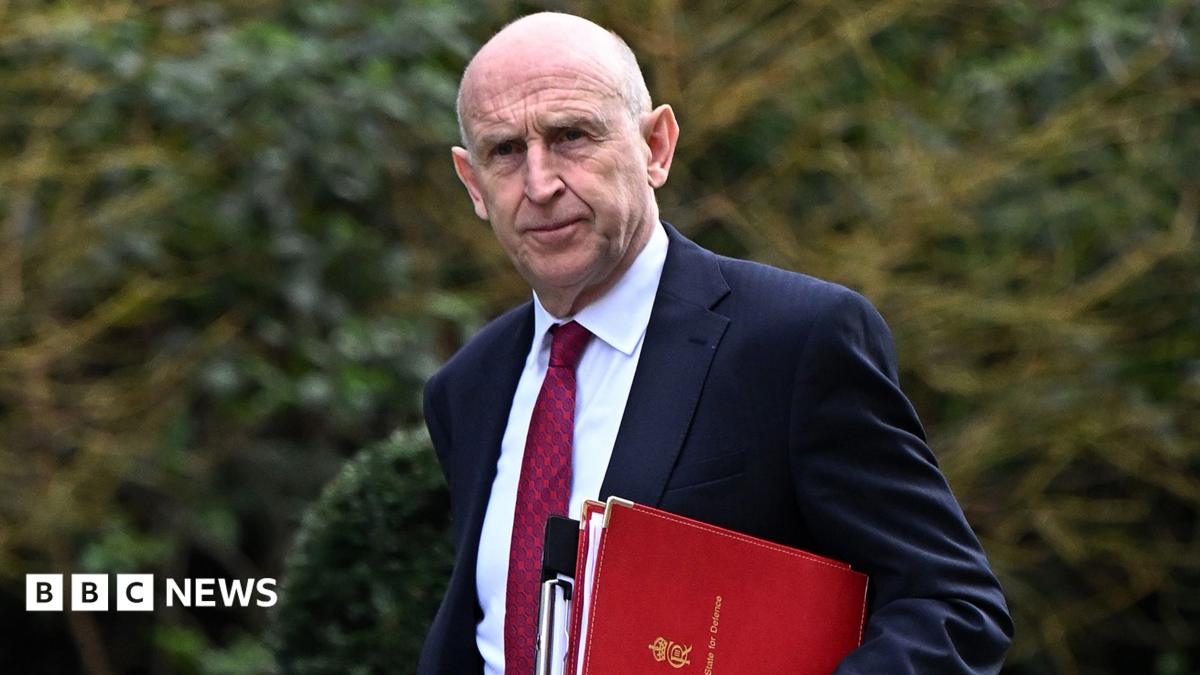
British Defense Secretary John Healey, pictured leaving 10 Downing Street in London in March, on Thursday resigned from his position after a proposed military budget settlement was half the requested funding, which he said could pose future danger to the United Kingdom. File Photo by David Cliff/EPA

June 11 (UPI) — U.K. Defense Secretary John Healey resigned on Thursday after criticizing his government for spending “well short” of what it should on the military.

Healey resigned from the position in a letter addressed to British Prime Minister Keir Starmer, which was posted on X, because the country’s Defense Investment Plan does not meet requirements and could “reduce the readiness of our forces.”

Hours after Healey’s resignation, junior defense minister Al Carns also resigned from his post because of his own concerns about the “level of investment I know to be inadequate to the task,” NBC News reported.

Starmer said after Healey quit that he is “proud of our record on funding” and that he believes the funding plan that has been agreed to between the Parliament and Defense ministry “will provide the resources our military needs to keep us safe,” The BBC reported.

The prime minister has in recent weeks been called on to resign after less than great election results last month, and Healey is the second member of his cabinet to resign recently after former health secretary Wes Streeting quit because he’d “lost confidence” in Starmer.

In addition to Healey and Carns, Starmer’s parliamentary assistant to the Defense Ministry also left her role over “delays and difficulties” to fund the United Kingdom’s military readiness goals.

“We came into government recognizing Britain faced a new era of threat which demanded a new era for defense,” Healey wrote in the letter.

“Since then, you have been unable, and the Treasury has been unwilling, to commit the resources that the nations needs to defend the country at this time of rising threats,” he wrote.

Starmer on Thursday named former security minister Dan Jarvis to be the secretary of defense, whose job it will be to finalize the new defense funding plan, which is reportedly expected to be about half of the $37 million the ministry had requested.

Among the goals that had been set out in the most recent U.K. strategic defense review were increases in ammunition stockpiles, next-generation warplanes, drones and updated submarines.

The Ultimate Fighting Championship (UFC) arena is seen as preparations continue for the UFC Freedom 250 event on the South Lawn of the White House on Thursday. Photo by Bonnie Cash/UPI | License Photo

Source link

Britain’s defence ⁠minister Healey quits over defence spending | News

BREAKING,

PM Starmer is ‘unable to ⁠commit resources ⁠the nation needs’, John Healey ⁠says in letter.

⁠Britain’s defence ⁠minister ⁠says he has resigned over ‌a disagreement with the prime minister about defence spending.

In a letter addressed to Keir Starmer and posted on X on Thursday, Defence Secretary John Healey accused the prime minister of failing to commit the government resources that ⁠are needed to defend the country.

Britain’s’s defence and finance ministries have been locked in talks for months over ‌how to meet rising demands to expand military spending, delaying Britain’s Defence Investment Plan since last year.

“You have been unable, and the Treasury has been unwilling, to ⁠commit the resources that ⁠the nation needs to defend the country at this time of rising threats,” Healey ⁠said in his letter to Starmer.

The delay has ⁠infuriated Britain’s defence ⁠industry which says it cannot invest in long-term programmes for the country’s security at a time ‌of huge geopolitical volatility and as the United States pivots away ‌from ‌protecting Europe.

This is a breaking story. More to come…

Source link

Hegseth Warns of China Threat, Urges Allies to Ramp Up Defense Spending

U. S. Defence Secretary Pete Hegseth called on Asian allies to increase military spending to counter China’s rising influence during his speech at the Shangri-La Dialogue in Singapore. He expressed concern over China’s military buildup and its potential to disrupt the regional balance of power. Hegseth emphasized the need for a robust network of allies that can deter aggression and maintain stability. The U. S. expects allies to raise defense spending to 3.5% of GDP, while the U. S. itself is investing $1.5 trillion in its military.

Hegseth addressed the need for action over discussions, suggesting that the region requires more military resources, such as ships and submarines, rather than just conferences. He underlined that partners want stability and that the U. S. must exhibit strength and disciplined leadership. He also noted improvements in U. S.-China relations, citing increased military communication to help manage tensions, while acknowledging that the relationship remains complicated.

Zhou Bo, a Chinese delegate, recognized a better tone in Hegseth’s remarks compared to the previous year, attributing this change to previous diplomatic engagements. He stated that both nations have communication channels open and that the situation might not be as severe as perceived. Hegseth reiterated President Trump’s call for allies to take more responsibility for their defense costs, proclaiming an end to U. S. defense subsidies for wealthy nations, emphasizing the need for allies to contribute actively.

Hegseth praised contributions from various allies and highlighted Japan’s efforts to enhance its defenses alongside the U. S. Regarding the Middle East, he stated the U. S. is prepared to resume strikes on Iran if diplomatic efforts fail and emphasized the ability to focus on both Asian and Middle Eastern interests simultaneously.

On the topic of arms sales to Taiwan, Hegseth avoided directly addressing concerns but affirmed that decisions about such sales are ultimately up to President Trump. The U. S. is reportedly considering a substantial arms package for Taiwan, which China views as its territory. Hegseth assured that there has been no change in U. S. policy towards Taiwan despite the ongoing dynamics in U. S.-China relations.

With information from Reuters

Source link

PG&E goes after gubernatorial candidate Tom Steyer. He welcomes the fight

The state’s biggest energy utility has made the unusual move to attack candidate Tom Steyer in the California governor’s race.

State campaign filings show that Pacific Gas & Electric has plowed at least $13.5 million into efforts to oppose Steyer. Other major utilities in the state have also donated to another committee backing the anti-Steyer effort.

Steyer, a billionaire and former hedge fund founder who became a high-profile environmental advocate, accuses the big three California utility companies — PG&E, San Diego Gas & Electric Co. and Southern California Edison — of “raking in” record profits at the expense of their customers. He blames the utilities for high consumer bills and causing deadly wildfires with their faulty utility equipment.

Though other candidates in the race are also criticizing the utilities, Steyer is the most aggressive.

“Big energy companies really piss me off,” Steyer said in one of his own campaign ads earlier this year.

In another attack, Steyer called PG&E less of an electric company and more of a “sophisticated Sacramento lobbying and influence operation that also happens to sell electricity. California needs a governor who will stand up to these monopolies, hold them accountable, and break them up.”

Lynsey Paulo, a spokesperson for PG&E, declined to answer questions about the utility’s spending, referring The Times to the committee running anti-Steyer ads.

“Tom Steyer has spent over $200 million trying to buy the Governor’s office,” the committee said in a statement.

Steyer, a Democrat who is relying on his vast fortune in the race, is seeking to advance past the June 2 primary to the November general election. Recent polls put him behind Republican Steve Hilton, a former Fox News commentator, and onetime Health and Human Services Secretary Xavier Becerra.

The utility-funded advertisements against Steyer don’t mention his position on energy policies, focusing instead on his onetime hedge fund’s investments in coal and for-profit detention centers. One ad compares him to President Trump.

“When Steyer sells himself as a different kind of billionaire, tell him where to stick it,” a voiceover says.

Another advertisement from the anti-Steyer group California is Not for Sale highlights its support for Becerra. The California Assn. of Realtors and the California Building Industry Assn. are also supporting the group.

Steyer’s campaign last week embraced the spending from PG&E and others.

“When you’re opposed by the people responsible for devastating wildfires and outrageous rate hikes, you’re doing something right,” Steyer spokesperson Sepi Esfahlani said.

Steyer has used his criticism of the California utilities and the oil industry as a shield against attacks that he made billions of dollars from fossil fuels when he ran his hedge fund, and to elevate himself as an advocate for working-class Californians.

When Democratic rival Katie Porter ripped into Steyer at a recent debate for using his riches to support his gubernatorial campaign, Steyer pointed to the attacks by PG&E and others as evidence that he’ll take on Sacramento’s powerful special interests.

“There is one person that the corporations are going after, including Big Oil, who is spending millions of dollars to stop me,” Steyer responded during the April debate at Pomona College in Claremont.

“The electric monopolies, PG&E, millions of dollars to stop me, because I’m the person on this stage who’s the change agent,” he said. “I’m the person who’s going to drive down costs for the people of California by taking on the special interests.”

PG&E CEO Patti Poppe and Steyer lauded one another in social media posts after appearing together at various conferences last year, the California Post reported.

“Loved sitting down to talk the future of energy with Tom Steyer at the Galvanize Solutions Summit,” Poppe wrote on LinkedIn in December. Steyer co-founded Galvanize, an asset management firm.

The California Chamber of Commerce’s political action committee this year collected at least $2 million each from PG&E, Sempra — the parent company of SoCalGas and San Diego Gas & Electric — and Edison. The chamber’s committee in turn has donated $9.75 million toward the anti-Steyer committee.

John Myers, a representative for the Chamber of Commerce, said the committee’s leadership, not donors, make spending decisions.

California electric rates are the nation’s second highest after Hawaii, contributing to the state’s high cost of living — one of the biggest concerns of voters.

PG&E serves Northern and Central California, while Southern California Edison is available in Central, coastal and Southern California. San Diego Gas & Electric services Southern California.

The California Public Utilities Commission sets the rate of return that the companies can make. Steyer has argued that “perverse” structure allows utilities to disregard cheaper cost-effective solutions in favor of more expensive options, such as undergrounding power lines.

Despite Steyer’s talk of “breaking up” utilities, he doesn’t propose dismantling them. Instead, he vows to put reform-focused appointees on the regulatory agency and reduce utility rates. He also wants more battery storage for renewal energy, as well as additional rooftop and community solar.

The three utilities recently opposed a bill to require that wildfire safety spending by Southern California Edison, PG&E and San Diego Gas & Electric be audited by an independent accounting firm.

The bill by Assemblywoman Tasha Boerner, an Encinitas Democrat, stalled out earlier this month. It would have required the state’s regulatory agency to consider the audits’ findings before agreeing to raise customer rates to cover even more wildfire prevention spending.

Audits of the three companies’ wildfire spending from 2019 to 2020 found that $2.5 billion could not be accounted for.

Matt Abularach-Macias, political director of Environmental Voters, said the utilities probably consider Steyer as a threat to their business. The companies plan infrastructure projects five or 10 years ahead and don’t want disruptions, he said.

Environmental Voters has endorsed Steyer and former Orange County Rep. Katie Porter. The group’s educational arm received a $500,000 donation from a Steyer-backed entity in 2013.

Leah Stokes, associate professor of political science at UC Santa Barbara, called PG&E’s outlay in the governor’s race part of a “corrupt system.”

“These are monopoly companies, you can’t choose to buy from anybody else,” Stokes said. “They take your money, turn it into profits because they are poorly regulated, and then undermine political candidates who would actually hold them accountable.”

Stokes has publicly endorsed Steyer.

A spokesperson for Southern California Edison said the company funds its political contributions from “shareholder dollars.”

“No customer dollars, or any part of the rates paid by Southern California Edison customers, are used to support political candidates,” he said.

Times staff writer Melody Petersen contributed to this report.

Source link

Massie race breaks spending record as pro-Israel groups target Trump critic | US Midterm Elections 2026 News

The race pitting a candidate endorsed by President Donald Trump against Congressman Thomas Massie, a rare Republican critic of Israel, has become the most expensive House of Representatives primary contest in the history of the United States.

The avalanche of spending, totalling more than $34m by Monday, according to official records, highlights the significance of the elections that could oust one of the few Republican opponents to the war with Iran.

Recommended Stories

list of 3 itemsend of list

In the final stretch of the campaign ahead of Tuesday’s vote, Massie has sought to highlight the oversized role of pro-Israel groups – including the American Israel Public Affairs Committee (AIPAC) – in the race.

He said the election will be a “referendum on foreign policy” and whether pro-Israel lobby groups will be able to “bully” members of Congress.

“You can tell that I’m ahead in the polls, and they’re desperate,” Massie told ABC News on Sunday.

“That’s why they’re sending the secretary of war to my district tomorrow. That’s why the president’s losing sleep and tweeting about this. That’s why AIPAC has dumped another $3m into my race this weekend.”

Trump has been incessantly bashing Massie on social media, and in an unusual move, Pentagon chief Pete Hegseth has travelled to Kentucky to campaign for Ed Gallrein, the Navy SEAL veteran challenging the congressman.

Massie has been critical of the unconditional US military aid to Israel and of the country’s abuses in Gaza and Lebanon. He has also helped spearhead the push for the release of government files related to the late sex offender Jeffrey Epstein.

The money

Despite the intensity of the race, the candidates have not raised record amounts of money themselves.

The bulk of the spending, more than $25.8m, has come from outside groups, known as super political action committees (super PACs).

Super PACs are usually used by special interest groups to spend heavily to oppose or support a candidate without the constraints of legal limits on direct campaign contributions.

Pro-Israel groups and donors have played a central role in the flood of funds and ads directed against Massie, with three groups linked to them spending more than $15.5m in the race, Federal Election Commission (FEC) data shows.

United Democracy Project (UDP), AIPAC’s election arm, has spent more than $4.1m.

The RJC Victory Fund, which is affiliated with the Republican Jewish Coalition, came in with around $3.9m.

MAGA KY has been the largest spender, at $7.5m.

The PAC’s finances have not been made fully public. But available records show that one of the group’s top funders is Paul Singer, a pro-Israel billionaire investor who has also made the largest individual donation to UDP over the past year – $2.5m.

MAGA KY also received funds from Preserve America PAC, a group linked to Israeli-American megadonor Miriam Adelson.

Details of the finances of Preserve America PAC remain unclear for this election cycle. But Adelson donated $106m to the PAC in 2024 to help elect Trump as president.

Trump has openly admitted that Adelson and her late husband Sheldon Adelson have influenced his Middle East policies.

Before the race in Kentucky’s Fourth Congressional District, the most expensive House primary was the 2024 election that ousted then-Democratic Congressman Jamaal Bowman, in which pro-Israel groups, including AIPAC, were also the largest spenders.

The third most expensive primary also involved AIPAC and its pro-Israel allies, who succeeded in helping defeat progressive Congresswoman Cori Bush in 2024.

The Trump factor

Beyond the millions of dollars in pro-Israel spending, Massie needs to survive another potent force in Republican politics – Trump’s wrath.

The US president has all but purged the party of lawmakers who have disagreed with him on major issues.

Most recently, Senator Bill Cassidy – who voted to convict Trump after the January 6, 2021, US Capitol riot – lost his primary to a challenger backed by the US president.

Trump is actively campaigning against Massie. In less than 24 hours between Sunday and Monday, the US president fired off three social media posts berating the congressman, calling him “weak”, “pathetic” and a “bum”.

“The worst Congressman in the long and storied history of the Republican Party is Thomas Massie,” Trump wrote on his Truth Social platform on Monday. “He is an obstructionist and a fool. Vote him out of office tomorrow, Tuesday. It will be a great day for America!”

However, Massie appears to have a few advantages that other Republican dissidents lacked.

Over the years, the congressman has built a reputation as a combative, principled libertarian and has gained popularity among right-wing commentators.

His campaign directly raised $5.5m, significantly more than Gallrein’s $3.1m, while also receiving outside support from pro-gun rights and libertarian PACs.

Massie has also been endorsed by some of his Republican colleagues, including Congresswoman Lauren Boebert, an outspoken right-wing lawmaker.

And due to the involvement of pro-Israel groups, Massie’s supporters are arguing that the race is not all about Trump, who remains popular amongst Republican voters.

“Why does Trump hate Massie? Is the congressman a secret liberal? Not at all,” right-wing commentator Tucker Carlson said in his newsletter on Monday.

“Unlike nearly everyone else in the Republican Party, Massie has refused to go along with the White House’s abandonment of the America First principles that got the president elected. He is one of the few honest people in politics. Everyone who cares about our country should root for him.”

Source link

Martin Lewis explains how to get ‘near-perfect rate’ on your holiday spending

Martin Lewis set out some of his top picks

Consumer expert Martin Lewis has shared some tips for your holiday spending while you are abroad. He shared the key advice during his BBC podcast.

During a question and answer edition of the podcast, a query came in from a mum whose 18-year-old son is heading off on a lads’ holiday. She asked what the best spending card would be for him to take along, or whether she should simply give him cash instead. She explained that she was reluctant to give him a credit card as she wasn’t confident he would use it responsibly. However, the accommodation where he was staying required a £300 credit card deposit.

Top recommendation

In response, Mr Lewis said his top recommendation for cards she could consider was Chase. He explained: “Technically you have to open a bank account to get it, but you don’t need to switch bank account.

State Pensioners to face major tax change

“The Chase bank account is available for anyone aged 18 or older. It’s openable via an app. So effectively you can open this up, you put money in it that you want to spend and it gives you the same near-perfect rate that the bank gets when you spend, because it doesn’t add a non-sterling exchange rate fee.

“So I think that’s a really simple option. It’s a debit card, it doesn’t have an overdraft facility. It doesn’t do a hard credit check, it just does an ID check and it doesn’t affect his credit-worthiness.”

Another card he recommended was the Revolut pre-payment card, where you load the card with the amount you wish to spend. Regarding the credit card deposit for accommodation, Mr Lewis said this is a common requirement, frequently being necessary when hiring a car abroad too.

He explained that if a deposit needs to be paid on a credit card, this could prove tricky for an 18 year old as they may not pass the credit check. Mr Lewis suggested that perhaps the mum could contact the company and pay the deposit on her son’s behalf.

Big danger

Mr Lewis issued an additional warning for young holidaymakers. He said: “One of the biggest dangers for finances and young people is drinking. The problem when we drink is we lose all our sense of control.

“So it’s very difficult what you advise young people. Do you tell them take cash out so you’ve only got the amount you can spend on that day. That keeps you to a budget.

“But then it does wrong, they haven’t got any money left and they can’t get back to where they need to go, which can be dangerous.

“Or do you have a card that has an unlimited spending facility on it. It’s quite a difficult one at that age. The best thing is to be sensible and not drink too much.”

Source link

Simon Cowell admits spending £3m on a ‘dancing vaginas’ birthday party and £2k to have a bath

SIMON Cowell has admitted spending a whopping £3M on a “dancing vaginas” birthday party and shelling out £2K to have a bath.

The Britain’s Got Talent judge, 66, has opened up about some of the wild ways he has splashed his cash over the years.

Simon Cowell has admitted to spending £3M on a ‘dancing vaginas’ party Credit: Getty
The star has made a huge amount of cash from his TV shows and bands Credit: Getty

Simon, who has made a fortune from TV talent shows and also through bands like One Direction, has been candidly opening up about how he’s spent his enormous wealth over the years.

To launch his brand new podcast Tales from the Celebrity Trenches, Holy Moly founder Jamie East invited The X Factor creator onto his very first episode.

As the two got talking Simon didn’t hold back with his answers, and when asked if he once spent £3M on a birthday party featuring burlesque dancing vaginas, he coolly replied: “Absolutely correct. Those days are over., by the way.

“I didn’t know it was going to cost that much, I really didn’t.

READ MORE ON SIMON COWELL

sin-waita

I’m A Celeb’s Sinitta breaks silence on Simon Cowell ’40 year on and off romance’


SPECIAL ACT

Simon Cowell left emotional on BGT as he reunites with X Factor star 9 years on

Simon also admitted to spending £2K so he could have bath Credit: Getty
The mogul says he he ‘p***ed away’ some of his money Credit: Getty

“I think I’m still paying for it now. I honestly couldn’t believe it”

It was then revealed that the party was for his 50th birthday, which turned out to be quite the wild bash.

“I wish I could remember it. I honestly can’t. I remember taking, I think, half a Xanax before that because I was so anxious,” Simon revealed.

Jamie then asked him about the time he once paid £2,000 to check into the London Mandarin Oriental to take a bath because his was broken.

“I might have done that. Do you know, what I p***ed away so much money in hindsight. I do think about that, because my God, two grand on a bath?” Simon said.

It comes after The Sun revealed Simon’s ex Carmen Electra is set to tell all about their brief romance Credit: Getty – Contributor
Simon’s fellow American Idol judge Paula Abdul is also set to spill the beans about their relationship Credit: Splash News

“I’m a bit more cautious now, I think because I didn’t have a lot of money to start with.

“So when I started to make a lot of money, I’m like, ‘wow, this is fantastic’.

“And now I’m like, ‘God, why did I spend all that money?’ You know, all those lists, I’m not worth anywhere near that.”

Meanwhile, these days Simon is loved-up with long-term partner Lauren Silverman, 48, who he shares son Eric, 10, with.

But before her, he was known for having a string of famous beauties on his arm.

Just last month, The Sun revealed that his ex, Baywatch model Carmen Electra, and his fellow American Idol judge Paula Abdul are both working on memoirs AND are set to feature their relationships with the music mogul.

A Los Angeles literary agent said: “Paula and Carmen are strong women and they won’t hold back when it comes to their memoirs.

“Carmen dated Simon, so knows what he is like when the cameras stop rolling.

“Rumours have swirled for years about Paula and Simon.

“They had undeniable chemistry on American Idol and now Paula has the chance to put the record straight.”

Carmen and Simon were first linked in 2012 when she briefly starred as a guest judge on ITV show Britain’s Got Talent.

The pair were spotted on a series of dinner dates.

Speaking about Carmen in December 2012, Simon said: “She’s not my girlfriend. We’re people who date. She’s adorable, isn’t she?”

Paula had starred on American Idol with Simon for eight seasons between 2002 and 2009.

The pair, who also appear­ed together on The X Factor USA, were known for their chemistry on the shows.

Source link