An alternative approach is to ensure that everyone who is eligible, based on their needs, should get state-funded personal care that is free at the point of use.
This would be provided free regardless of an individual’s means and whether it was received by an elderly person in their own house or a residential care home.
Scotland has implemented such a system.
However, it’s important to note that personal care takes in things like helping frail elderly people wash and dress and go to the toilet.
But it does not include accommodation, food and everyday living costs which are subject to means testing.
The Health Foundation think tank estimates that implementing a Scottish-style system in England would cost £7.5bn a year by 2036.
Like Scotland, Japan and Germany have systems which base entitlement to personal social care mainly on people’s care needs rather than their ability to pay.
Japan and Germany though have a mandatory long-term care insurance system which is funded through contributions from workers and employers.
Both countries also do not usually cover the full cost of personal care so individuals are responsible for some of the expenses.
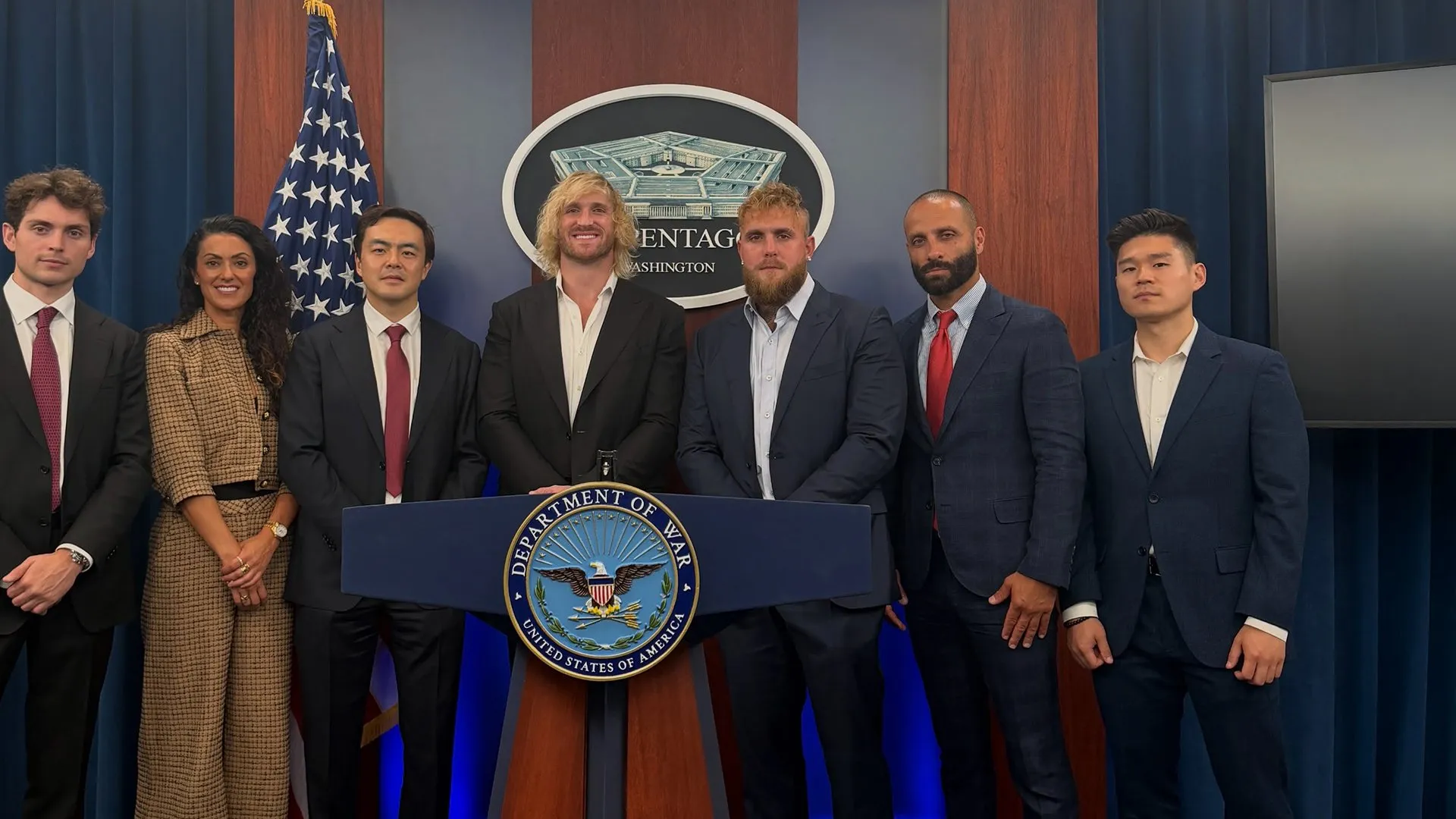
Influencers Jake and Logan Paul visited the Pentagon and addressed US troops last week, praising them for serving the country. It isn’t clear who invited them, but they met Defense Secretary Pete Hegseth, whose department said they came ‘to meet with our warriors’.
A mysterious object filmed hovering over Tehran has sparked online speculation, with theories ranging from a children’s kite to advanced military surveillance equipment, while Iranian authorities have not identified it.
Paris: The French government submitted a reworked proposal to ban social media for children, after its previous ban was struck down by the country’s top constitutional authority, President Emmanuel Macron said on Monday.
“After rigorous technical work the government today is notifying” the European Commission of the new draft, Macron wrote on X. The notification is a key step, as it ensures that the legislation is in line with European Union laws.
California, home to the world’s largest tech companies, is placing more guardrails around social media and artificial intelligence as child safety concerns escalate.
On Thursday, California Gov. Gavin Newsom signed more than 10 bills aimed at keeping young people safe online.
From suicides to sextortion, parents and their children are wrestling with how social media and AI chatbots could be harming people’s mental and physical health. The anxiety comes as technology becomes more powerful, playing a bigger role in classrooms, offices and homes.
California lawmakers have tried to tackle online safety concerns for years and they’ve faced intense lobbying from tech companies with deep pockets. The state’s laws have a disproportionate impact on the global tech industry because so many of the field’s titans are based here.
“We cannot hand children technology engineered by some of the most sophisticated companies in the world, and then place the burden on kids to defend themselves against it,” said California First Partner Jennifer Siebel Newsom in a news conference Thursday in the San Francisco Bay Area.
The California governor, who has tried to strike a balance between safety concerns and supporting innovation, has rejected online safety bills in the past that he thought were too restrictive or premature.
The batch of new legislation includes Senate Bill 1119, which would require companion chatbot operators to assess risks, notify parents in certain cases if their child threatened to harm themselves, and take other safety steps.
Lawmakers named the bill Adam’s Law, after Adam Raine, a California teen who died by suicide in 2025 after conversing with OpenAI’s ChatGPT. The teen’s parents sued OpenAI, alleging in the lawsuit that ChatGPT provided information about suicide methods that the teen used. OpenAI and Pinterest publicly expressed support for the bill on Thursday.
Adam Raine’s mom, Maria, said in the news conference that the new law will help save lives and hopes that other states will enact similar legislation.
“Powerful AI companionship chatbots were unleashed on our kids with vastly inadequate protections. Adam was an early adopter of AI, and so many of us parents did not understand the dangers back then,” said Maria Raine, who came to the event with a photo of her son.
Suicide prevention and crisis counseling resources
If you or someone you know is struggling with suicidal thoughts, seek help from a professional or call 988. The nationwide three-digit mental health crisis hotline will connect callers with trained mental health counselors. Or text “HOME” to 741741 in the U.S. and Canada to reach the Crisis Text Line.
At the event, Democratic and Republican politicians shared their experiences as parents who have seen firsthand how technology affects children.
Assemblyman Josh Lowenthal (D-Long Beach) said parents are seeing anxiety and depression among children who grew up in front of screens.
“That anxiety is because the pace of technology is moving faster than government can put guardrails in, and that’s left families across the state struggling to figure out how to keep their kids safe,” Lowenthal said.
Lowenthal introduced Assembly Bill 1709, which Newsom also signed. It would bar certain online platforms from providing an “addictive feature” such as autoplay and feeds that display recommended content to users under 16 years old.
Tech industry groups opposed the bill, raising concerns that it could cut off access to social media’s benefits, such as people’s ability to connect with family and friends. Tech industry groups such as TechNet say that lawmakers should enforce current laws to strengthen parental controls rather than pass new ones.
NetChoice, which has sued California and other states to block the enforcement of new online safety laws, said in a statement that the group has First Amendment concerns about the new bills Newsom signed.
“The state cannot simply describe speech as addictive and then claim a right to regulate access to it,” said Zach Lilly, Director of Government Affairs at NetChoice. “Whether the governor and legislature choose to respect it, Californians have a right to express themselves, and NetChoice will continue to fight for that right.”
The new safety restrictions come as tech companies, including Meta, Google and others, face more scrutiny over how they design products. The companies have suffered several legal blows in courtrooms in California this year.
Meta, which owns Facebook and Instagram, agreed in August to pay up to $17 billion and make child-safety changes to resolve a multistate lawsuit. The lawsuit accused the tech company of designing and deploying harmful features while misleading the public about them.
As part of the settlement, Meta said it would impose time limits and mute notifications during certain hours for teens. Young people would also have the option to choose to view a non-algorithmic social media feed that isn’t personalized and disable autoplay.
Earlier this year, Meta and YouTube also lost a social media addiction lawsuit in Los Angeles.
While new legislation goes further than the settlements, some countries have passed stricter restrictions on social media. Last year, Australia started banning social media for children under 16, though enforcement has posed a challenge because teens are finding ways to get around the restriction.
Newsom, who pushed for federal regulation, said that he thinks California’s approach to social media is “better” than Australia’s because children are “all figuring out a way to game that system.”
“This is about the features themselves. This is about actually addressing the problem, the scrolling, the algorithms,” he said.
Safety concerns around technology have also heightened as companies double down on advancing artificial intelligence.
This week, a researcher for AI company Anthropic said he left the company over concerns that AI companies, including OpenAI, are “gambling with our lives” as they race ahead to improve AI that could surpass human intelligence.
The researcher, Jacob Coxon, shared a viral social media post that said: “People building AI earnestly believe that it could kill us all by the end of the decade.”
Newsom signaled the work to protect children isn’t over.
“We need to move, but one thing we’re not doing is we’re not sitting back and we’re not letting it rip,” he said.
SAN DIEGO — As dusk approached San Diego’s seaside enclave of Ocean Beach, its Sunset Cliffs bustled on a recent Friday evening.
Two engaged couples posed for wedding photos in between joggers, dog walkers and sightseers who clamored around Osprey Street to enjoy the day’s majestic sunset.
It was a deceptively idyllic setting for what authorities say is continued lawbreaking and peril, which authorities just can’t seem to quash.
Share via
The lawbreakers were gathered this day on a cliff and a nearby arch, a crowd of around 50 young people — 14- to 20-year-olds, mostly males. Buoyed by a youthful sense of invincibility, they dared one another to leap, waiting for another to move, like emperor penguin chicks before a first arctic plunge.
After a few minutes, there was a dive off the arch, followed by a cannonball from the next person, a backflip from a third and then other more spectacular and daring stunts from the flock.
No one was injured that day, but that hasn’t always been the case.
People jump into the water at Sunset Cliffs. San Diego officials urge visitors to avoid jumping, but that doesn’t stop tourists and thrill-seekers.
At least three individuals were rescued after suffering injuries this summer at Sunset Cliffs, leading police to ramp up enforcement as locals debate the need for safety versus the merits of youthful rites of passage.
California dreaming
Back home in Iowa, Marcus English said he’d probably be hosting bonfires or hitting up local pools in mid- to late August. Instead, the 17-year-old was at the cliffs enjoying his last few days off before beginning his senior year of high school.
“There are some places to jump, some lakes in Iowa,” he said, “but nothing like this.”
English wangled a stop during a weeklong family trip to California that included national park visits to stop by Sunset Cliffs, which he saw on social media.
The vistas and cool breezes represented quintessential California to the Midwesterner, equal parts “what I saw on Instagram and a movie.”
English spread out his arms, squatted and then leaped before taking a roughly 15-foot plunge from the arch into the shallow waters. He jumped multiple times on consecutive days.
“It’s just so freeing,” he said of his leaps. “There’s nothing like it.”
‘Hopefully I can walk again’
Jumping happens at several places throughout the cliffs.
The most common launch point is from the arch, with drops ranging from 15 to 20 feet depending on the water level, said a San Diego Police Department spokesperson.
The more exotic and dangerous plunges happen from the adjacent cliffs, with youngsters jumping from 20 to 40 feet, and some as much as 50 feet.
What makes the latter leap more treacherous is a rock ledge that juts out about 10 to 15 feet from the cliffs. Jumpers have little room to run and gain momentum (unlike at the arch) and must clear that formation before hitting the water.
This summer’s safety debate reached a fever pitch in late July. A 17-year-old jumper, according to social media footage, struck the ledge with his backside and crashed into the water.
For his part, the unnamed 17-year-old said in a since-deleted social media post that he suffered six fractured vertebrae and a badly bruised tailbone and needed nine stitches in his foot. The Times could not independently reach him.
Spectators watch people jump into the water from the arch at Sunset Cliffs.
“For everyone who wants to tell me I’m an idiot for doing that, trust me, I’m aware,” he said. “Hopefully I can walk again, but I’m just trying to take it slow.”
Sunset Cliffs have attracted visitors and tragedies
Injuries and deaths from jumping at the cliffs date to the 19th century, San Diego Reader noted earlier this year.
A schoolboy named Waldham slipped off the cliffs after a scrum with friends and broke his arm in 1881. One of the earliest deaths came in 1926, when a 3-year-old wandered from his home on Narragansett Avenue and fell to his demise.
Police and lifeguards were unsure as to the most recent jumping fatality, with one official pointing to the 2019 death of 15-year-old Anthony Womack, a National City resident.
Brook Hjelm, the mother of 23-year-old Brian Wilson, who died swimming at Sunset Cliffs in 2015, told the local CBS station she would like to see photos of those who had died posted along with danger signs in the area. “Put signs up of our young men and women that we lost,” Hjelm said. “Let them see the face of something that associates them with what truly is at stake.”
Tracking the action
Attention surrounding Sunset Cliffs injuries ebbs and flows much like the current, according to Frank Gormlie, a longtime San Diego County resident who tracked incidents more than a decade ago.
Gormlie, the founder and editor of Ocean Beach’s online newspaper, OB Rag, scoured media archives and spoke with residents.
“It had gotten so bad that I wanted to chronicle what was going on,” Gormlie said.
His research documented 11 deaths and dozens of injuries during that time span. Those statistics came from jumps, along with vehicular, climbing and health incidents.
Some incidents had little to do with jumping, such a surfer smashing into the rocks. But a 43-year-old woman slipped and fell to her death in 2015, while two jumpers needed crane-assisted rescues after suffering serious injuries, according to Gormlie.
The Sunset Cliffs siren’s song
“People have been visiting the Sunset Cliffs for years because it has a beauty that shocks,” Gormlie said. “But I think social media has found its way to the next generation of adventure seekers who don’t know about the dangers.”
The Sunset Cliffs area is Instagram-ready, and social media has drawn some visitors looking to brave the leap.
Gormlie said swimming and diving are local rites of passage. He noted that Ocean Beach residents commonly “shoot the OB pier” — surfing under that the town’s pier — a risky stunt that Gormlie did as an 18-year-old before shipping off for college.
Gormlie jumped from the cliffs in 2014, shortly after turning 65.
He wrote about his experience through an anonymous post, saying he “did it for all those guys and women my age who drive by every day and secretly wish they could jump off too.”
All rescues involved San Diego Fire-Rescue Department lifeguards and personnel. The department shares jurisdiction of Sunset Cliffs with the San Diego Police Department and rangers with the city Department of Parks and Recreation, said Candace Hadley, Fire-Rescue public information officer.
Hadley wanted to remind potential jumpers that the act of leaping from the cliffs violates a San Diego municipal code and could result in fines of $100 or more. Frequent fliers could be smacked with $1,000 fines.
“Cliff jumping isn’t just illegal in San Diego, it’s extremely dangerous,” Hadley said. “One misstep could lead to a life-altering injury or worse.”
Her office tends to offer education on the dangers of jumping, she said, while San Diego police dealout penalties.
The problem of jumpers at Sunset Cliffs has been part of achallenging summer for the lifeguards, who have made 5,480 rescues across the 17 miles of San Diego coastline they patrol from June 1 to Sept. 1. Extreme heat has driven more people to the beach, and high surf fueled by Pacific tropical storms has added to the dangers.
The rescues have mostly been of swimmers not properly judging the strong currents. In a normal year, Hadley said, the lifeguards make about 7,500 to 8,000 rescues.
Sgt. Saum Poorsaleh, San Diego police public information officer, said his department had issued more than 50 citations at Sunset Cliffs and dispensed about 350 warnings, written and oral, since mid-June.
But he said the department is short-handed, and increasing enforcement permanently is not feasible.
“There are warning signs all over the cliffs noting the dangers, but people still jump,” Poorsaleh said. “Mix in social media — which is drawing in tourists from all over the country — and a young person’s feeling of invincibility and there’s a chance for trouble.”
Visitors have been jumping at the Ocean Beach location for decades. One local said he jumped after turning 65, calling it “irresistible.”
San Diego City Councilmember Jennifer Campbell, who represents Ocean Beach, recently issued a statement reminding visitors “to prioritize safety and not jump from the cliffs.”
“The cliffs can be unpredictable,” she said, “and changing tides, strong currents, rough surf, and hidden rocks can quickly create life-threatening conditions.”
A longtime local tradition
Lyne Miller has lived all her life in Ocean Beach, where saltwater runs in locals’ veins and it’s not uncommon to see residents toting surfboard as they ride a bike or golf cart to the beach.
From a young age, Miller, 80, said she promised her mom that she “would never jump.”
Miller says the number of teens arriving at the beach, likely driven by social media, “is more than ever.”
But she acknowledged that locals had been jumping at Sunset Cliffs since at least the 1950s in surf-centric Ocean Beach.
“This is a playground for those who love the water, who love the ocean,” she said. “I hope if there’s a crackdown on jumping, it’s not harsh.
“I don’t necessarily feel negative about the jumpers,” she added. “I just wish they would be smarter and jump from safer spots at better times.”
RIYADH: Al Rajhi Bank has completed a $600 million Tier 2 social sukuk offering, with the 10.5-year certificates carrying an annual return of 6.23 percent.
Settlement is scheduled for Sept. 10, according to the bank’s Saudi Exchange filing.
The latest offering comprises 3,000 trust certificates, each with a par value of $200,000. The instruments are callable after 5.25 years.
The transaction marks the Saudi lender’s second international Tier 2 social sukuk issuance, following a $1 billion offering completed in September 2025.
The issuance comes as Saudi banks increasingly tap international debt markets to diversify their funding sources and bolster regulatory capital, while strong credit growth and the kingdom’s economic transformation continue to drive demand for financing.
“The Trust Certificates may be redeemed in certain cases as detailed in the offering circular in relation to the Trust Certificates,” the statement said.
The certificates will be listed on the London Stock Exchange’s International Securities Market and may be sold in reliance on Regulation S under the US Securities Act of 1933.
The offering was directed at eligible investors in Saudi Arabia and international markets. Al Rajhi Bank announced its intention to issue the certificates and commenced the offering on Sept. 3.
Al Rajhi Capital, Arqaam Capital, Banco Bilbao Vizcaya Argentaria and Citigroup were among the joint lead managers and bookrunners for the offering. Intesa Sanpaolo’s London branch, Morgan Stanley, SMBC Bank International, Standard Chartered and Warba Bank also held the role.
Previous issuance
Al Rajhi Bank’s $1 billion Tier 2 social sukuk issued in September 2025 marked its first Tier 2 transaction in international debt markets, according to the lender’s 2026 allocation and impact report.
That issuance carried a 5.65 percent annual return, had a 10.5-year maturity and was callable after five years. It was also listed on the London Stock Exchange’s International Securities Market.
The bank said the earlier instrument was issued under its sustainable finance framework and structured to support capital adequacy while advancing social objectives.
The latest transaction follows a 14.2 percent annual increase in Al Rajhi Bank’s first-half net profit to SR13.76 billion ($3.67 billion), according to a separate Saudi Exchange disclosure.
The lender reported assets of SR1.05 trillion at the end of June, while its financing portfolio reached SR762.1 billion and customer deposits stood at SR688.4 billion.
SACRAMENTO — Long the epicenter of the global tech industry, California is taking more action to shield its children, communities and workers from the threats posed by the very industry that’s become central to the state’s identity and enviable economy.
State lawmakers on Monday passed new safeguards around social media and artificial intelligence — and are poised to approve restrictions on data centers — at a time when technology has become intertwined with people’s daily lives.
Efforts to rein in the power of Big Tech extend beyond concerns that TikTok, Instagram and other social media platforms are harming young children.
Unions and workers worry that AI will take their jobs, and lawmakers are trying to tackle privacy and safety issues as AI features get added into smart glasses and toys. Californians are concerned that the proliferation of data centers will increase their electricity bills and strain water supplies.
“There’s a heightened level of tech anxiety right now, and that manifests itself from social media to data centers to AI taking jobs,” said Assemblyman Josh Lowenthal (D-Long Beach). “People are coalescing and they’re demanding that policymakers make change.”
The Democratic governor has acknowledged the challenge of adopting regulations that protect the public without going too far and potentially stifling the technology industry’s growth, which brings critical revenue to the state budget.
“I think that’s the constant tension,” Newsom said in an interview earlier this summer. “We’re constantly sort of fighting that balance.”
The governor, who has close relationships in the technology industry from his time in San Francisco, said only a couple other states have attempted to regulate artificial intelligence like California. The state, he said, leads on regulation of social media.
“We’re not rolling over, certainly,” Newsom said. “We’re leaning forward, and we’re iterating. We will push the boundaries and litigate.”
The looming restrictions on social media follow a landmark Meta Platforms legal settlement aimed at making social media safer for young people. Parents, politicians and child advocacy groups are worried that social media is contributing to depression, anxiety, eating disorders and other issues.
The actions being pushed in the California legislature are more sweeping than that settlement, however. One of the bills passed by lawmakers on Monday, Assembly Bill 1709, would bar certain online platforms from providing an “addictive feature” to users under 16 years old and add ways to verify users’ ages.
Under the bill, prohibited addictive features include autoplay and feeds that display recommended content.
The addictive nature of autoplay and other features is “harmful, full stop, and that they’re not appropriate for the developing brain,” said Lowenthal, who authored the bill.
After watching technology “run free” in California for years, legislators are now seeking to “pump the brakes a little bit,” said Samantha Vigil, a UC Davis researcher who built a registry tracking social media legislation in states across the country.
“They want to reevaluate what is working,” said Vigil. “What is healthy and beneficial, and what is progress just for the sake of having a new iteration of something?”
All 50 states have introduced or passed some type of digital media or technology-related legislation, tackling smartphone use in schools, social media and chatbots, Vigil said.
Other countries have taken more stringent steps to limit social media use among young people. Australia banned social media use for those under 16, but enforcing the law has been challenging because young people have tried to get around the restrictions.
California isn’t trying to ban social media; instead, it’s trying to limit how platforms design their features.
Parents and state attorneys general have not waited for policy makers to act. They have sued Meta, Google and other tech companies over the alleged harms their products have done to young people.
In late August, Meta, which owns Facebook and Instagram, agreed to pay up to $17 billion and make child-safety changes to resolve a multi-state lawsuit alleging the tech company designed and deployed harmful features while misleading the public about potential harms. Meta and YouTube also lost a social media addiction lawsuit earlier this year in Los Angeles.
Assembly Bill 1709 goes further. For example, Meta’s settlement gives teens the option to pick a non-algorithmic feed and turn off autoplay but, unlike in the legislation, it’s not mandatory. The bill would also apply to other platforms outside of Meta. Meta declined to comment.
Tech industry and business group opposing the bill say it is too blunt and could cut off access to social media’s benefits, according to the bill’s analysis.
“The durable path is to enforce the targeted laws California already has and to strengthen parental tools rather than an overlapping framework whose scope can be redrawn by regulation,” said Robert Boykin, TechNet’s Executive Director for California and the Southwest.
California lawmakers passed another Lowenthal bill aimed at holding social media liable for harm caused to children. Under Assembly Bill 2, social media companies could face fines of up to $1 million per child for negligent harm.
California lawmakers this year also attempted to tackle two other perils of the technological world — the rapid development and implementation of artificial intelligence and the proliferation of the massive data centers that are essential to sustaining the AI universe.
National and state union leaders have urged California legislators and Newsom to protect workers from the threats of AI to replace workers, saying it posed an existential threat to the foundation of a healthy, productive democracy.
“AI must remain a tool controlled by humans, not the other way around,” said Sen. Jerry McNerney (D-Pleasanton).
The state Legislature on Monday approved McNerney’s bill, Senate Bill 947, which would bar employers from “solely” using automated decision-making systems to discipline or fire employees. If an employer primarily relies upon this system, a human must verify the decision.
Lawmakers also approved Senate Bill 951, introduced by Sen. Eloise Gomez Reyes (D-Colton), which would require employers to provide a 60-day advance notice to workers and local and state governments before AI-related layoffs. Lawmakers also approved Assembly Bill 1609, which requires large private businesses that serve customers to provide access to human customer service representatives and to disclose to use of chatbots.
They passed another bill by Sen. Steve Padilla (D-Chula Vista) that enacts a four-year moratorium on the sale and manufacturing of AI-chatbot powered toys over concerns that the technology can harm children.
On Friday, lawmakers agreed on a compromise on proposed legislation to regulate energy use by California’s growing data center industry, measures prompted by community fears about the massive complexes. Lawmakers say the legislation would help protect consumers from growing electricity costs driven upward by the sprawling facilities and to track the centers’ immense energy and water consumption.
At a June hearing on Senate Bill 886 to regulate data centers’ energy use, Assemblymember Pilar Schiavo (D-Chatsworth) said it’s just “a handful of companies that are gonna make trillions of dollars” from AI. They should pay for related utility infrastructure upgrades, she added.
“People, I would argue, are not even begging to use AI,” she said. “They’re struggling to figure it out to keep up with the times, but don’t even really want it.”
The California legislature is expected to vote on two of the bills to regulate the controversial industry within the next day.
Whether Newsom will embrace the legislature’s efforts to corral big Tech in California — in part of in whole — remains unclear.
Newsom last year vetoed a similar AI bill from McNerney to ban automated decision-making systems to discipline employees over worries that it could restrict companies’ ability to use customer ratings. That element was dropped in this year’s legislation.
Newsom last year signed Assembly Bill 56 that required social media platforms to display mental health warning labels to users under 18 starting in January 2027. But he also vetoed Senate Bill 771 that aimed to hold social media platforms liable if they amplified content that contributed to hate crimes and other violent acts, saying that the legislation was “premature” and current civil rights laws might be adequate.
Lowenthal said he’s heard from California families who are anxious about social media and seeking “relief” from their concerns about how the platforms are affecting their children.
“This is a kitchen-table topic,” he said. “I’ve yet to find a family with school-age children in the state of California, any corner of the state, that is not going through this right now.”
Times staff writer Taryn Luna contributed to this report.