Social Media

Anti-South Asian ‘hate speech’ has exploded online in US, report finds | Racism News

Hate speech against Indians, Bangladeshis and Pakistanis in the United States has risen sharply online, according to a report that traces the surge to US President Donald Trump’s immigration crackdown and rhetoric, economic anxiety, and the South Asian community’s growing visibility in US life.

The report, titled “The Rising Tide of Anti-South Asian Hate in the United States”, by the Center for the Study of Organized Hate (CSOH), published on Sunday, found that the monthly volume of hate towards South Asians in the US on the social media platform X rose 240 percent between January 2024 and June 2026, from 12,904 posts to 43,843.

Recommended Stories

list of 4 itemsend of list

Researchers identified more than 542,000 hateful posts on the platform between January 2025 and June 2026 alone towards people from South Asia living in the US, with five of the six highest-volume months falling at the end of that period.

The researchers used the United Nations definition of hate speech. They tracked recurring anti-South Asian slurs and narratives online, reviewing posts to exclude criticism that did not meet the UN threshold.

They found that nearly half of the hate posts on X accused South Asians of invading the US, stealing jobs or threatening the country demographically, while the derogatory slur “pajeet” and its variants showed up in 30 percent of hateful posts on X and 45 percent on fringe platforms.

Posts depicting South Asians as dirty or unhygienic grew by 171 percent on X, “the fastest of all narratives”.

The hate frequently collapsed South Asian ethnic and religious groups into one, with Indians, Pakistanis and Bangladeshis conflated with one another, and Hindus, Muslims, Sikhs and Christians also treated as a monolith.

So why now?

Racism against Indians, Bangladeshis and Pakistanis has a long history in the US, but researchers argue the current surge reflects a confluence of longstanding prejudices and new political and economic pressures.

The report points to the H-1B visa programme, which allows US employers to hire skilled foreign workers, as a major flashpoint. Indians account for more than 70 percent of H-1B visa holders, and researchers linked several spikes in anti-South Asian hate to political fights over the programme, such as when Trump imposed a $100,000 payment requirement on certain new H-1B petitions in September 2025.

“Such actions serve a powerful symbolic function, in the bargain reinforcing the hostility of Trump’s base toward South Asians,” said the report.

The report makes the same argument about the administration’s rhetoric, highlighting Trump’s speech at an AI summit in July 2025, in which he criticised US technology companies for outsourcing jobs to India, after which researchers saw a sharp spike in anti-South Asian rhetoric online.

As more recent examples, the report points to a since-deleted September 2026 Department of Homeland Security post titled “Transformers: Age of Deportations”, featuring a Sikh man identified as “Mr Singh” and telling him to “get off our roads”.

Days later, the Department of Education posted “Make College Football Great Again”, after Texas Republican Bo French had complained about the presence of South Asians at a University of Texas football game.

The report argues that such rhetoric reinforces the idea of South Asians as outsiders who “can never truly belong in the country”.

From ‘model minority’ to job thieves

Economic resentment is another factor, researchers wrote, with the success of some South Asians increasingly being weaponised against them.

Indian Americans once stereotyped as a “model minority” are now portrayed as “opportunists and cheats”, and South Asians are used more broadly as a scapegoat for anger over jobs and the economy.

This comes as South Asians have become increasingly visible in US politics, from former Vice President Kamala Harris and New York Mayor Zohran Mamdani to Vice President JD Vance’s wife, Usha Vance, and politician Vivek Ramaswamy. The report documents racist attacks against figures across party lines and highlights how, for example, Mamdani’s primary and mayoral victories triggered spikes in anti-South Asian and Islamophobic abuse.

Researchers say both trends are now also tied up with “anxieties on the part of the majority about loss of status”, and feed the “Great Replacement Theory”, a conspiracy about the white population in Western countries being replaced by an orchestrated takeover.

Social media has also turned those narratives into targeted harassment.

Researchers found X accounts doxxing South Asians accused of taking jobs or committing visa fraud, while influencers have confronted people at their homes and workplaces and posted the encounters online. Doxxing refers to exposing a person’s private details, such as their home address, online.

In one example, right-wing influencer Sara Gonzalez posted a video to more than half a million followers in which the report says she harassed a South Asian person she accused of exploiting the H-1B programme.

Meanwhile, generative AI has made that content even easier to produce, researchers say, depicting South Asians as  “filthy and unclean, sexually predatory, culturally backward, or a demographic threat”.

While the report tracks hate largely through what is happening online, researchers write that online hate “does not exist in isolation from offline forms of hostility”. It cites a July incident in which an Indian Muslim mall employee in Utah was repeatedly stabbed in an attack that federal prosecutors charged as a hate crime. In September, a Sikh truck driver was stabbed 17 times at a Wyoming truck stop.

“Online and offline hate can reinforce one another”, the researchers wrote, “as narratives, stereotypes, and forms of demonization move between digital platforms, political discourse, media, and everyday life”.
Source link

Influencers Jake and Logan Paul visit the Pentagon | Social Media

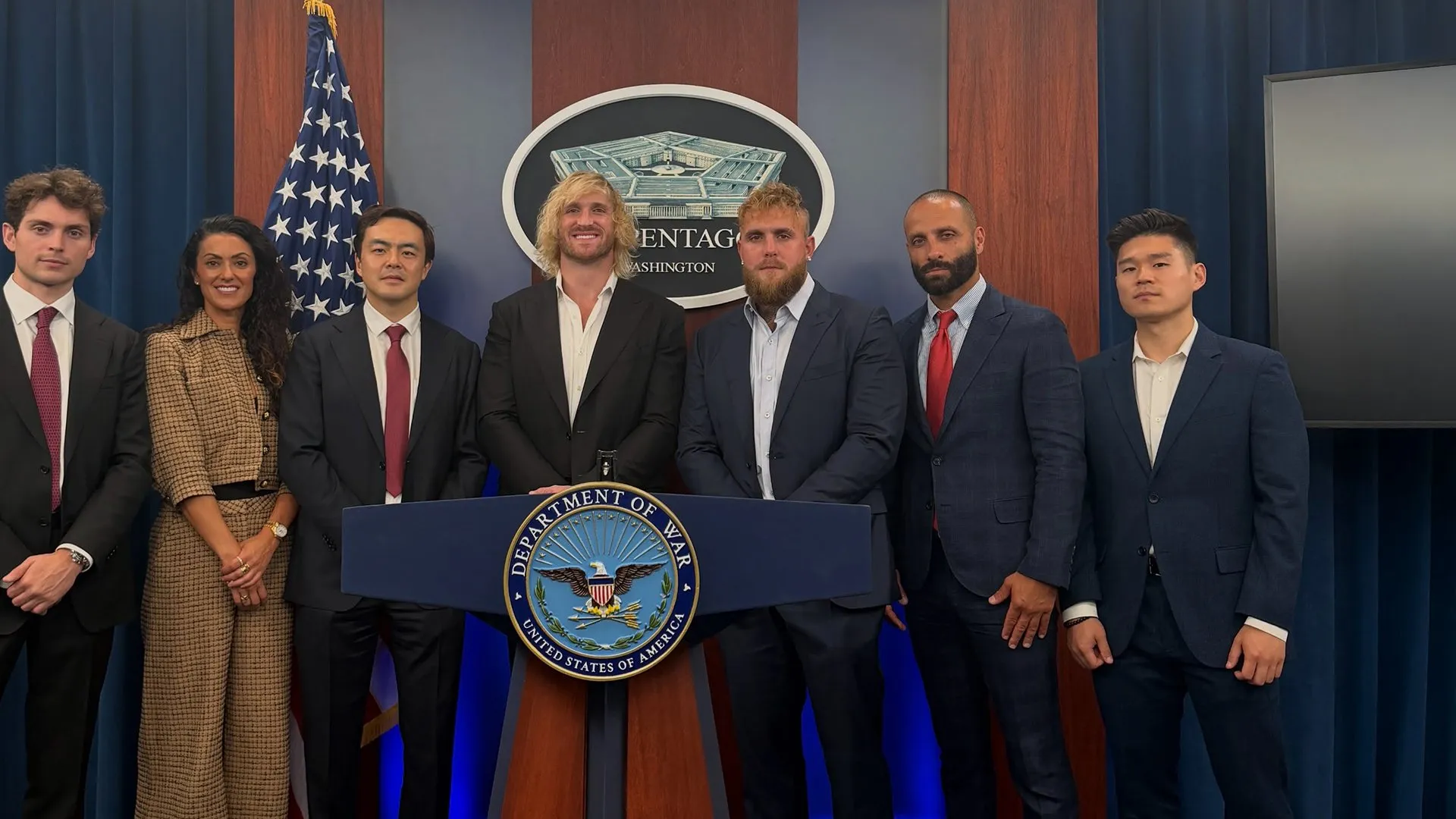
Influencers Jake and Logan Paul visited the Pentagon and addressed US troops last week, praising them for serving the country. It isn’t clear who invited them, but they met Defense Secretary Pete Hegseth, whose department said they came ‘to meet with our warriors’.

Source link

Australia seeks big tech support for internet safety, AI regulation | Child Rights News

PM Anthony Albanese asks Apple CEO Tim Cook to back Canberra’s online safety laws to ‘keep Australians safe’.

The Australian government is seeking support from global tech giants as it works to strengthen the country’s online safety laws and artificial intelligence (AI) regulations.

Prime Minister Anthony Albanese, who met Apple CEO Tim Cook at the tech company’s headquarters in Cupertino, California, on Saturday, said that “Australia can’t do it alone” when it came to protecting children from the dangers of the internet.

Recommended Stories

list of 3 itemsend of list

“We spoke about what we’re doing to protect children from online harm and the work ahead,” Albanese wrote on social media.

“We’re putting stronger rules in place to keep Australians safe online,” he said. “And now, big tech companies like Apple are stepping up too.”

Albanese, who is also in the United States for the United Nations General Assembly, used his trip to call for stronger AI regulation after dire safety warnings from industry leaders.

Australia will introduce new standards for AI by the end of the year, he said.

In a video posted to his X account, Albanese said his Labor government is “making sure technology works for Australians”, and not the other way around.

In a post on X, Cook also said he shared with Albanese new “strong and intuitive controls to help keep kids safe online”.

New Australian legislation unveiled this month would place a “duty of care” requirement on the firms behind popular platforms, such as Facebook, TikTok and Instagram, and allow users to turn off their algorithms.

The draft laws will be introduced to parliament later this year after consultation with social media companies, industry bodies and civil society groups.

The opposition Liberal-National Coalition opposes the bill “in its current form”, according to a statement published on September 10, saying that it “contains inadequate safeguards for free speech and journalism, and leaves too much power in the hands of the Communications Minister”.

Australia implemented legislation barring children under 16 from social media platforms last year as part of a world-first crackdown designed to protect children from online bullying and “predatory algorithms”.

However, data last month found that Australians under 16 continued using social media apps such as Instagram and TikTok despite the ban.

Source link

Russia labels Cannes-winning director Andrey Zvyagintsev a ‘foreign agent’ | Russia-Ukraine war News

Acclaimed Russian film director who won 2026 Grand Prix award at Cannes, ⁠has been critical of the war in Ukraine.

The winner of a prestigious Cannes Film Festival award has been declared a foreign agent by Russian authorities for his criticism of Moscow’s war in Ukraine.

Acclaimed Russian film director ⁠Andrey Zvyagintsev was designated a “foreign agent” by the Kremlin on Friday, according to state news agency ⁠TASS.

Recommended Stories

list of 3 itemsend of list

Zvyagintsev won the 2026 Grand Prix at the Cannes Film Festival for, Minotaur, a film depicting a Russian businessman who is forced to ‌decide which of his employees should be mobilised to go and fight in Ukraine.

“Millions of people on both sides of the front line dream of only one thing: for the massacres to stop,” Zvyagintsev said in his acceptance speech, adding that Russian President Vladimir Putin was the ⁠only person capable of ending the ⁠war.

Moscow has kept casualty numbers from the fighting in Ukraine heavily restricted and has not provided timely or complete public updates, but estimates of Russian soldiers killed in the four-year war range from anywhere from 200,000 to half a million.

Russia’s Ministry of Justice on Friday accused Zvyagintsev of disseminating “false information about decisions taken by the public authorities of the Russian Federation and the policies they pursue”.

“He interacted with foreign agents and resides outside the Russian Federation,” it said.

The 62-year-old director, who has lived outside Russia since the COVID pandemic, ⁠is known for a series of other films including, The Return, The Banishment, and, Leviathan, a bleak ⁠portrayal of life in rural Russia.

People listed ⁠as foreign agents are subjected to onerous bureaucratic requirements and restrictions on their income in Russia.

They are barred from holding public office and forced to register their activities with the authorities.

They also have to add warnings on everything they publish, including ‌on social media, that the content was produced by a foreign agent.

The label adds connotations of espionage to numerous people, including public figures, whom it deems ⁠to be engaging in anti-Russian activity with support from abroad.

Previously, writer Boris Akunin and rock musician Boris Grebenshchikov have been labelled as foreign agents by Moscow.

Source link

Arab News | France submits new proposal to ban social media for under-15s: Macron

Paris: The French government submitted a reworked proposal to ban social media for children, after its previous ban was struck down by the country’s top constitutional authority, President Emmanuel Macron said on Monday.

“After rigorous technical work the government today is notifying” the European Commission of the new draft, Macron wrote on X. The notification is a key step, as it ensures that the legislation is in line with European Union laws.


Source link

Montana Brown baffles fans AGAIN as she fumes over being unable to get son an EpiPen

MONTANA Brown has left her fans baffled AGAIN after she fumed over being unable to get her son an EpiPen – despite having no diagnosis for him.

The Love Island star, 31, often ruffles the feathers of fellow parents with her social media videos, and today was no different.

Montana Brown has baffled fans again when it comes to her parenting Credit: TikTok
The star revealed she wanted an EpiPen for her son Jude – despite him not being diagnosed with an allergy Credit: Instagram

Speaking in her latest TikTok video, Montana began: “Guys, I’m about to have a rant, so beware.

“I went to the GP last week because basically Jude had this really random skin reaction, it was an allergic reaction, but we hadn’t actually given him any food.

“So I was like, This is weird,’ like his eyes were like swelling out of his head. I was like, He’s definitely allergic to something, but not sure what it is because we haven’t given him any food?

“So I went to the GP to basically say, ‘Look, I’ve got a nut allergy. You can see that on my records. I have anaphylaxis, so I’m worried that he’s now developed an allergy to something that I’m not quite sure what it is yet.

MONTANA’S JOURNEY

Montana Brown reveals devastating health diagnosis


WEIGH TO GO

Montana Brown shows off before and after weight loss transformation

“I’d like to get two kids’ EpiPens so that I can be prepared if he does have a worse reaction to whatever it is. Like in the meantime, like before we figure out, you know, get him allergy tested.”

Continuing her story, the reality star said: “Guess what they said? ‘No’.

Montana often ruffles feathers with her social media posts Credit: Instagram
Montana shares two children with her partner Mark O’Connor Credit: Instagram

“I was like, ‘Why? It’s just so painful.’ Like, I understand that there is a process to these things. But to me, I’m like, what am I going to do with an EpiPen apart from be safe with it?’

“Like, what are the dangers of me having an EpiPen? And I’m like, am I going to have to try and get an EpiPen off the deep dark web?

“Is that what this is coming to? I’m trying to safely protect my child in case he has an anaphylactic shock in my care to buy him enough time to get him to hospital. Like, is it me? Is it me?”

However, fans couldn’t believe what they were hearing, with one said: “They can’t just give you a medication without a diagnosis.”

A second shared: “Are you actually for real?”

A third added: “She’s is honestly on another planet!”

This isn’t the first time Montana has ruffled the feathers of fans.

The mum-of-two recently left her fans fuming after revealing the “privileged” reason why she didn’t plan to send her son to school.

And earlier this year a comment she made about food pouches in stores being “c***” for children left busy mothers who saw them as a convenient option feeling patronised.

Source link

20 million children a year face online sexual abuse, UNICEF says | Child Rights News

As many as 20 million children in 21 countries have experienced online sexual abuse or exploitation each year, according to new findings from the United Nations children’s agency, UNICEF.

More than one in five children aged 12 to 17 in countries in Africa, Asia, Latin America and the Caribbean, and Eastern Europe have been targeted on digital platforms, according to the UNICEF report released on Thursday.

Recommended Stories

list of 4 itemsend of list

Researchers surveyed 21,000 children aged 12 to 17 who used the internet across 21 countries between 2020 and 2021, and then again between 2024 and 2025. They also conducted in-depth interviews with 100 young people who have experienced childhood abuse.

Social media facilitated more than half of the abuse cases, according to UNICEF, which cautioned that figures could be inaccurate due to underreporting by children. Less than 1 per cent of all abusive incidents were reported to authorities, the researchers found.

Last week, US social media giant Meta agreed to a landmark $18bn settlement in a major US federal case accusing the company of endangering children. Meta has faced an avalanche of legal cases this year, most arguing that it has deliberately designed its platforms to be addictive and that they have harmed children. The company has now agreed to make major changes to the features of its social media platforms.

What are the key findings of the UNICEF report?

The report estimated that in the periods studied, more than 15 million children were exposed to unwanted sexual content, nine million were asked to engage in sexual conversations or share sexual images against their will, and four million children had sexual images of themselves shared without their consent.

UNICEF said the issue is compounded by the fact that children often don’t recognise abuse or know who to report it to, and fear repercussions if they do. Formal systems can feel distant, complex or intimidating, the report noted.

“The report reveals a painful reality. More than 20 million children across the countries studied were subjected to unwanted explicit sexual content or exploitation online, often in the digital spaces where they learn, play, and connect with friends,” said UNICEF Executive Director Catherine Russell. “These experiences cause profound emotional and mental distress. Many children suffer in silence, unsure where to turn for help. We cannot look away.”

Where was data collected?

Information for the report was based on nationally representative survey data collected between 2020 and 2025 from approximately 21,000 internet-using children from the following countries:

  • Eastern and South Africa: Ethiopia, Kenya, Mozambique, Namibia, Tanzania and Uganda 
  • Southeast Asia: Cambodia, Indonesia, Malaysia, the Philippines, Thailand and Vietnam
  • Latin America and the Caribbean: Brazil, Colombia, the Dominican Republic and Mexico 
  • Eastern Europe: Armenia, Montenegro, North Macedonia and Serbia
  • South Asia: Pakistan

Where are children being abused?

Abuse often begins in public spaces, such as in schools or local neighbourhoods, before moving to digital spaces which can further facilitate harm.

Social media and messaging platforms enable different stages of abuse, “including initial contact, relationship-building, sexual solicitation, image-sharing, coercion, blackmail and the continued circulation of sexual content”, the report said.

Sometimes abuse takes place solely online.

According to the report’s findings, more than 60 percent of cases occurred on social media platforms, with the majority on Facebook (50 percent), WhatsApp (29 percent), Instagram (24 percent), SnapChat (13 percent) and TikTok (12 percent).

Do children report abuse?

Most children do not seek help if they are being abused. Less than one percent of cases are reported to the police, a social worker or a helpline, while more than four in 10 cases not being disclosed to anyone at all.

“Children are not failing to report; they have correctly worked out that there is nowhere to report to,” Nighat Dad, executive director of the Pakistan-based Digital Rights Foundation, told Al Jazeera.

Dad, whose NGO works to provide safe online spaces in Pakistan, noted that incidents repeatedly occur online because of a “design problem – the message request, the move to a private chat, the reshare, the ability to return after being blocked”.

Many children minimise their experiences or do not recognise when they’ve been abused, she said.

Even when children do speak out, to a close friend, sibling, or parent, doing so may not necessarily stop the abuse or bring perpetrators to account.

UNICEF emphasised that its research interviews were the first time many of the children it interviewed had spoken to someone about the abuse they were subjected to.

Dad also cautioned that Pakistan, for example, is a “low-disclosure country” where notions of family “honour” and other cultural barriers prevent children from disclosing the harm they’ve experienced.

“A girl who speaks risks her phone, her schooling and sometimes her safety, and a boy is expected to cope in silence,” Dad said.

How does gender factor into online abuse?

Perpetrators often play on gender norms when exploiting children. Stigma and blame are used against girls to keep them silent, while boys are expected to cope alone, or threatened by perpetrators.

“Peer cultures and harmful norms around gender or masculinity can further normalise behaviours that cause significant harm, making abuse harder to recognise and address,” UNICEF noted.

What kind of impact does online sexual abuse have on children?

The repercussions are severe, UNICEF said: Children exposed to technology-facilitated sexual abuse and exploitation are four times more likely to have suicidal thoughts and to self-harm, along with higher levels of anxiety.

In Mexico or North Macedonia, for example, the risk of suicidal thoughts or behaviours was more than eight times higher among children who experienced abuse, while in Pakistan the risk of self-harm was more than seven times higher than average, the report found.

Abuse extends well beyond the digital sphere, seeping into children’s everyday lives, schooling and relationships.

What should be done about this?

UNICEF said the onus to protect children online must be placed on governments and technology companies, which must change how online spaces are designed and regulated.

It also highlighted that while children often take steps to protect each other, societies, schools and families must work to shift the burden of protection away from children.

Citing Meta’s recent settlement, Dad acknowledged that design changes, such as better age verification and parental controls, can and should happen.

“For years those of us working outside the US were told these defaults would break the product. Meta has now shown the product can change.”

A spokesperson for Meta told Al Jazeera, “This report is based on surveys from as far back as 2020, before we introduced the protections UNICEF recommends, like automatically defaulting teens into private accounts and preventing adults from messaging teens they’re not connected to.

“While the report doesn’t provide any specific evidence of abuse, we’ll continue to fight child exploitation aggressively across our apps and support law enforcement in prosecuting the criminals behind it.”

The spokesperson also pointed out that Meta-owned WhatsApp is a private messaging service rather than a social media platform. “We don’t have algorithms that make a piece of content more or less likely to be viewed, and you need someone’s phone number or exact username to connect with them for the first time.”

Snapchat and TikTok have not responded to requests for comment for Al Jazeera.

Source link

Maya Jama cheekily vows to ‘shake her money maker’ as she stuns in racy red dress at Notting Hill Carnival

MAYA Jama cheekily vowed to ‘shake her money maker’ as she stunned in a racy red dress at Notting Hill Carnival on Sunday.

The Love Island presenter, 32, shared what she got up to at the world-famous street party on her social media.

Maya Jama vowed to ‘shake her money maker’ at Notting Hill Carnival Credit: hiwetze//Instagram
The radio star was all smiles with pals as she watched on from a platform Credit: @fardawizdom/Instagram

Maya headed out to the streets of Notting Hill in west London in a taxi with her pals before busting some moves on an elevated platform.

She was captured holding a sign that said ‘shake my money maker’ by a fan and she reposted the picture to her Instagram story.

The star was in high spirits showing off her moves in a red and black striped dress and sunglasses.

In another repost, Maya was all smiles as she waved to a fan on the ground and made a love heart sign with her fingers.

MAYA’S MIAMI MR NICE

‘Flirty’ Maya Jama ‘comforted’ by ‘playboy’ financier during World Cup


SNEAK PEEK

First look at Celebrity Traitors as Maya Jama and Ross Kemp attend sad FUNERAL

The star was all smiles as she partied the afternoon away Credit: @fardawizdom/Instagram
Maya waved at fans who also attended the party Credit: @fardawizdom/Instagram

Before the party, Maya told her 3.3 million followers: “Merry carnival to those who celebrate.”

Notting Hill Carnival takes place every year from the 29th to 31st of August after it first took place in 1966.

It is one of the largest festival celebrations of its kind in Europe, celebrating Caribbean culture.

It comes after Maya stripped down to a bikini and let off steam on a wild holiday with pals.

She took to Instagram on Wednesday evening to share a series of pictures from her fun holiday.

In one snap, the ITV favourite showed off her sexy body in a blue two piece.

Source link