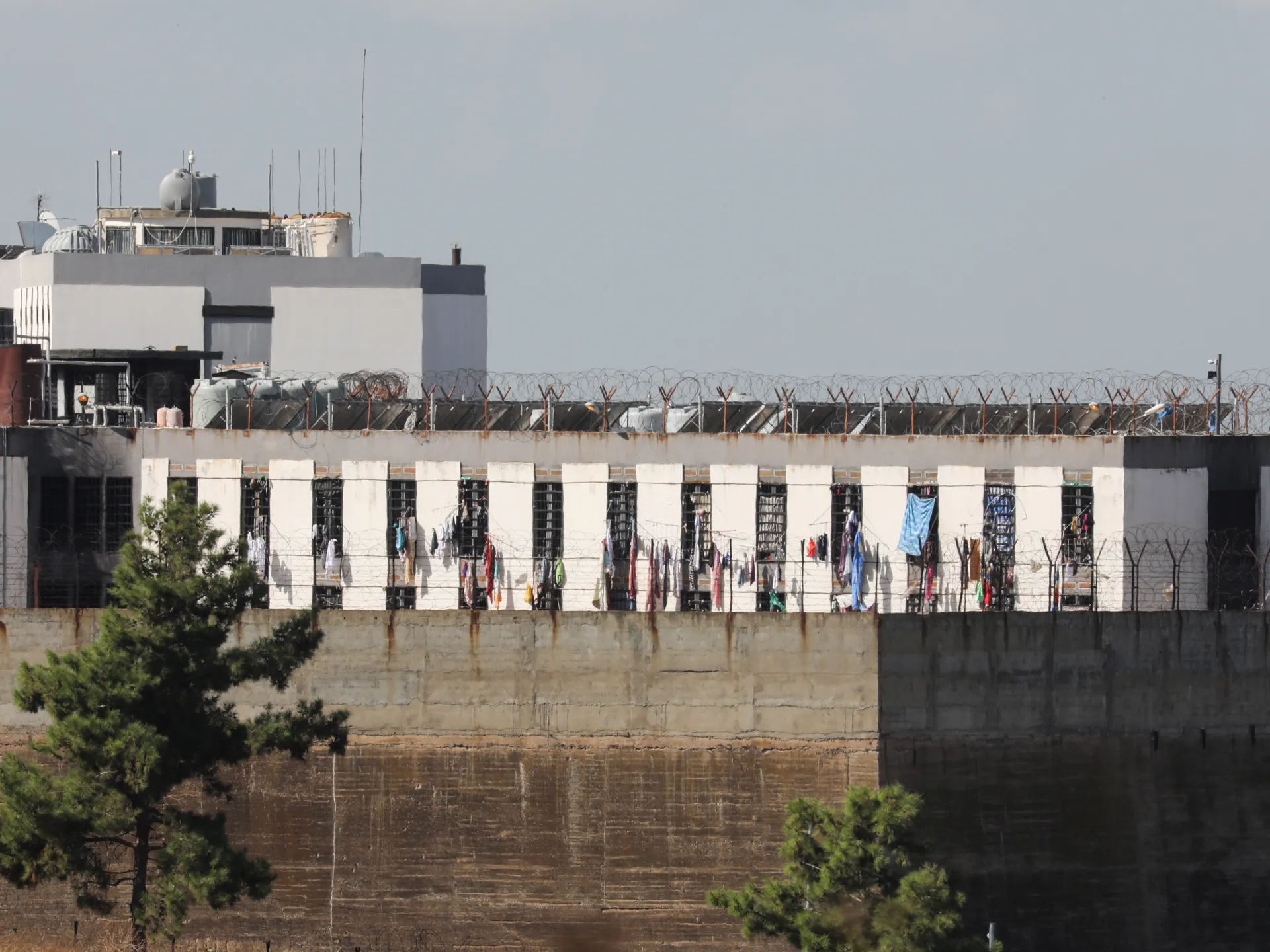
The human rights situation in Myanmar has “plummeted to a new low”, the United Nations has said, citing the “ever-worsening brutal abuse” of the Rohingya minority and the devastating impact of illicit economies, including illegal mining for rare earths.
In a new report, published on Tuesday, the UN’s human rights office said the quest for control and legitimacy by Myanmar’s military – which seized power in a coup in 2021 – has only deepened the suffering of civilians in the country.
Recommended Stories
list of 3 itemsend of list
The military has deployed tactics such as “airstrikes, arson attacks, displacement and denial of assistance” against civilians as it battles ethnic armed groups and militias for control of the vast resource-rich country, the report said.
An estimated 8,075 civilians, including 1,074 children, have been killed since the coup, with at least 1,241 of them occurring in the past year, it said.
The toll is likely higher, the report cautioned, noting that open sources indicate that as many as 15,731 civilians may have been killed since the coup and 3,102 in the last year.
The violence has also resulted in the number of internally displaced people rising to 3.6 million, it said. Some 12.4 million people were facing acute hunger, while 400,000 young children and mothers were suffering from acute malnutrition.
In western Rakhine State, the military and the Arakan Army – a powerful ethnic armed group they are fighting against – have continued to commit widespread and systematic violations and abuses against the mostly Muslim Rohingya minority, it said.
The continuing violence, which comes nine years after a brutal crackdown that forced some 700,000 Rohingya to flee into Bangladesh, has caused renewed displacement, it said.
The report went on to accuse the Arakan Army of carrying out arbitrary arrests, torture, sexual and gender-based violence, forced labour and recruitment, and destruction of villages and religious sites.
When Rohingya try to escape forced recruitment, they are detained and “routinely subjected to ill-treatment”, with former detainees describing beatings, the removal of fingernails, and chilli being applied to genitals.
The UN human rights office said the absence of the rule of law in Myanmar has resulted in a booming illicit economy, with illegal rare earth mining in northern Kachin and northeastern Shan state strengthening the expansion of transnational criminal networks.
Satellite imagery confirmed Kachin state as the primary rare-earth mining area, with 302 new sites since 2021 – a 149 percent increase.
Mining runoff, meanwhile, has caused environmental contamination, which, in turn, has affected maternal and reproductive health, it said, citing sharp surges in miscarriages and other pregnancy complications tied to heavy metal and chemical exposure.
UN High Commissioner for Human Rights Volker Turk called the findings deeply troubling.
“This report depicts a picture of suffering, misery, and cruelty on multiple levels and across the country that is heartbreaking,” Turk said.
The high commissioner urged states, companies and investors to reconsider their involvement with the state.
“I call on all states, companies and investors to undertake serious soul-searching with respect to their actions – or inaction; to ask: is this fair and just for the people of Myanmar?”
Weekly insights and analysis on the latest developments in military technology, strategy, and foreign policy.
Ukrainian drone attacks on targets deep inside Russia have spurred President Vladimir Putin to allow the government to temporarily seize what it deems commercial critical infrastructure that is not sufficiently protection against such strikes. This follows Russia’s move earlier this year to allow private companies to purchase their own air defense systems to protect their own facilities. Beyond calling for increased defenses, the decree signed by Putin also warns that the government will take over facilities that don’t make needed repairs quickly enough once they have been hit.
Russian President Vladimir Putin signed a decree allowing the government to temporarily take control of critical infrastructure if private owners fail to protect it from Ukrainian drone attacks or rebuild it after strikes.
Given the threat to vital economic infrastructure, “we must take measures, we must ensure our own safety,” he added.
Putin’s decree does not specify what actions these facilities are required to take to provide better protection against Ukrainian drone attacks. As we have written about frequently, due to the demands of the battlefield and repeated Ukrainian attacks across a growing portion of Russia, the Russian military already has a shortage of air defense systems. So it’s not clear how much equipment, and of what capabilities, is even available for private firms to purchase. However, the civilian counter-drone industry in Russia is flourishing. Back in May, Russian authorities authorized private companies “to purchase heavy weaponry to defend industrial facilities against drone attacks,” the RBC news website reported at the time, citing sources linked to the Defense Ministry.
“The new system will allow companies to procure anti-aircraft artillery systems, turrets, radar equipment, specialized vehicles and electronic warfare systems,” the outlet added. “In order to promptly provide newly formed mobile fire groups with everything they need, the relevant decisions were recently adopted at the state level.”
In addition, some refineries have already built metal cages around their facilities to help protect against drone attacks.
Russia Puts Cope Cages on Oil Storage Tanks
The Ukrainian drone attacks on Russia’s oil refineries and Black Sea ports are having a dramatic effect on the Russian economy.
“In the four weeks through Aug. 23, overseas crude flows fell to 3.46 million barrels a day,” Bloomberg news reported, citing tanker-movements data it compiled. “Shipments had previously risen as the strikes on Russia’s refineries left more crude available for export, but that increase is now unwinding, after drone hits on oil tankers cut shipments from the Black Sea.”
“Meanwhile, strikes on Russian oil and gas processing plants continue to be an almost nightly occurrence, sending crude processing rates tumbling and creating domestic gasoline supply issues,” Bloomberg explained. “Falling Russian crude shipments come on top of Kremlin-imposed bans on overseas shipments of key refined products, including most gasoline, diesel and jet fuel supplies, which are further reducing inflows to Moscow’s war chest.”
Ukraine’s two-pronged drone strikes on Russia’s refineries and Black Sea shipping hamper Moscow’s oil flows, while refinery crude processing tumbles, writes @JLeeEnergyhttps://t.co/BI3OVPrkJ4
Ukraine, as we noted earlier, has also targeted Russian logistics infrastructure belonging to major online retailers, such as Amazon-style retail giant Wildberries, to increase the financial pain on other sectors of the Russian economy.
“Ozon, Russia’s second-largest online retailer, is now next in Ukraine’s crosshairs,” CNBC reported. “Shares of the company plunged nearly 30% on the Moscow Exchange on Monday after it reported drone strikes in southern Russia, which brought the number of facilities targeted in the last three days to six.”
❗️Ukrainian attack drones struck an Ozon logistics center near Tyube in Russia’s Dagestan overnight, extending the wave of strikes on logistics infrastructure into the North Caucasus. The facility handles large volumes of goods for Ozon across the region. Footage from the attack… pic.twitter.com/vL3Cv7vmtd
Overnight on Monday, Ukraine continued striking inside Russia, attacking the Afipsky Refinery and Gas Separation Units at the Astrakhan Gas Processing Plant, according to the Ukrainian Armed Forces General Staff. The extent of the damage is still being clarified.
“Afipsky Refinery is one of the large oil refining facilities in the Krasnodar region,” the general staff noted. “The project capacity is 6.25 million tons of oil per year. The plant produces, among other things, diesel, gasoline components, and is involved in supplying the Russian occupation army.”
The governor of the Krasnodar region, Veniamin Kondratiev, acknowledged the attack.
“Debris from a drone fell on the territory of the Afipskaya railway station,” he stated on Telegram. “Sadly, two people were killed. I express my deepest condolences to the families. Two more people were injured, and I wish them a speedy recovery. In addition, at least 10 private homes were damaged in the village of Afipsky. A fire broke out in one of them. A fire also occurred on the territory of a refinery. Firefighters and emergency services are currently working at the scene.”
❗️Ukrainian attack drones struck Russia’s Afipsky oil refinery in Krasnodar region overnight, setting the facility on fire. The refinery has an annual crude processing capacity of 9.1 million tons. Debris from the attack also reportedly damaged a railway station. The Afipsky… pic.twitter.com/ao6TWgmR8y
Russia isn’t alone in worrying about Ukrainian drone strikes. Financial Times reporter Christopher Miller noted on X that the Trump administration asked Kyiv not to strike Moscow, St. Petersburg or northern regions of Russia Monday, Tuesday and Wednesday, “when the U.S. would send a plane carrying a senior-level official to the Russian capital.”
On Tuesday, a U.S. Air Force C-17 Globemaster III strategic airlifter arrived in Moscow, reportedly ferrying CIA Director John Ratcliffe. You can read more about that in our initial story here.
Scoop @FT: Trump administration officials last week requested that Kyiv not strike Moscow, St Petersburg and nothern regions of Russia with its long range missiles and drones on Monday, Tuesday and Wednesday when the US would send a plane carrying a senior-level official to the…
Ratcliffe was visiting as the U.S. struggles to end Russia’s full-on invasion of Ukraine and the Iran war, though “the reason for the visit wasn’t immediately clear,” The Wall Street Journal noted. “The U.S. has collected intelligence showing Russia’s early preparations for a possible military mobilization in Ukraine and plans for testing the North Atlantic Treaty Organization’s resolve.”
Analysts said Ratcliffe could meet with Putin to deliver a warning, the newspaper noted.
“It could be to say, ‘We know what you are thinking about doing, and you better not,’” Beth Sanner, a former U.S. deputy director of national intelligence for mission integration, told the Journal. “It could also be about the Iran ceasefire and putting someone else in the discussion,” she said, adding Ratcliffe might also touch upon the Kremlin’s support for Iran following a new U.S. sanctions campaign against the regime.
CIA Director John Ratcliffe made a surprise visit to Moscow, U.S. officials said, his first publicly known trip to the Russian capital. https://t.co/F664tBiV8h
Ukraine is making some small advances in the southern section of the front while Russia continues to put heavy pressure on the Donetsk region in the east. Here are some key takeaways from the latest Institute for the Study of War assessment.
Sumy: Russian forces continued offensive operations in northern Sumy Oblast on August 23 and 24 but did not make confirmed advances.
Kharkiv: Russian forces continued offensive operations in northern Kharkiv Oblast, near Borova, Kupiansk and in the Velykyi Burluk direction on August 23 and 24 but did not advance as Ukrainian forces counterattacked.
Donetsk: Ukrainian forces recently advanced in the Slovyansk direction. Russian forces continued attempts to isolate Ukrainian forces in Mykolaivka (east of Slovyansk), and attacked in the Dobropillya tactical area, the Kostyantynivka-Druzhkivka tactical area, Pokrovsk, Novopavlivka, and Oleksandrivka on August 23 and 24 but did not advance.
Zaporizhia: Ukrainian forces recently advanced in the Hulyaipole direction and in western Zaporizhia Oblast.
Kherson: Neither Russian nor Ukrainian forces reported ground activity in the Kherson direction on August 24.
NEW: Ukrainian forces appear to be conducting a concerted suppression and destruction of enemy air defenses (SEAD/DEAD) campaign against Russian air defense assets in Russian border regions as part of their broader campaign targeting Russian economic and military assets within… pic.twitter.com/JDDH5iUoUn
— Institute for the Study of War (@TheStudyofWar) August 25, 2026
Ukrainian President Volodymyr Zelensky offered some positive news Tuesday about badly needed air defense systems and interceptors.
“We received confirmation regarding several Crotale air defense systems and missiles for them. And AIM missiles, which we use to shoot down enemy missiles. And a little more Patriot missiles have arrived,” Zelensky told reporters. He did not offer specific figures.
Zelensky added that Ukraine had received confirmation from the United Kingdom regarding the production of SCALP long-range missiles.
“We will act. I believe this is a strong positive and a strong decision,” Zelensky said.
Zelensky also said Ukraine expects to receive a schedule for the Freya domestic air defense interceptor initiative within seven to 10 days, including information on meetings and areas where cooperation with defense companies is currently blocked.
Zelensky says Ukraine received some Patriot missiles, AIM missiles and confirmation of several Crotale air-defense systems with missiles. He called the AIM missiles “very important” and said the Patriot delivery remains small: “We need more.” #Ukrainepic.twitter.com/beDn71SLlM
Earlier this month, we told you about two drone-related incidents at Leipzig/Halle Airport in Germany that represented the most serious threats yet in the wave of small drone incursions that have plagued Europe for the past few years. German police said an explosive-laden drone was located on the ground near a Ukrainian Antonov An-124 Condor cargo jet and that there was a midair collision between an object and another cargo aircraft.
More news about that situation emerged today.
German investigators uncovered a third drone and suspected military explosives thought to be connected to the attempted attack on Leipzig airport, the Guardian reported, citing local media.
“The drone was discovered in Kabelsketal, just to the west of the airport, along with about 50g (1.8oz) of a suspected military explosive on 14 August, 10 days after the unsuccessful sabotage,” the publication stated. The office of the prosecutor general, which is leading the investigation, declined to comment on Tuesday. But the German chancellor, Friedrich Merz, said the government would soon provide information about who it believed was behind the drone attacks.
“They will pay for this,” Merz said, stopping short of naming a suspect, before a cabinet meeting in Brandenburg. He added that the government was “working intensively on this together with the security authorities and we will present our findings and comment on them shortly.”
“Intelligence sources cited by the broadcasters NDR and WDR and the newspaper Süddeutsche Zeitung said they suspected the involvement of Russian intelligence in the attempted attack,” the Guardian added. Moscow has denied involvement.
Leipzig airport is a cargo and military logistics hub used by NATO and Ukraine’s Antonov Airlines for transporting military supplies. As we noted in our initial piece, the Condor, in particular, represents an unsurprising target for Russia. Ukraine’s An-124s are a source of national pride and a big flying symbol of the country’s defiance and survival. They also provide much-needed revenue to Ukraine and strategic airlift to support the conflict. Ukraine’s An-124s have long provided charter cargo services for western militaries, companies and NGOs. Since the war began, Antonov Airlines An-124s have been used to deliver war materiel bound for Ukraine.
🚨 🇩🇪 LEIPZIG: ES WAR OFFENBAR NICHT NUR EINE DROHNE
Der Fall am Flughafen Leipzig/Halle wird immer brisanter.
Nach gemeinsamen Recherchen von NDR, WDR und Süddeutscher Zeitung gibt es inzwischen Hinweise darauf, dass rund um den Flughafen mehrere Drohnen, Sprengstoff und… pic.twitter.com/G76gKMwfJw
Britain has signed a partnership with Ukraine to jointly develop artificial intelligence tools for defense and security, ”giving British researchers access to a Ukrainian battlefield data platform used to train military AI systems,” Reuters reported.
Prime Minister Andy Burnham and Zelensky signed the agreement in Kyiv, making Britain the first international partner to access Ukraine’s Avengers AI Labs, a government statement said.
Avengers Labs “was built around an annotated dataset of 5 million battlefield images, Ukraine’s Defense Ministry said earlier in August, largely drawn from the military’s DELTA combat system – a domestically developed battlefield management and situational-awareness system,” the outlet added. “The platform uses data collected from cameras and sensors across Ukraine’s battlefield, including information on tanks, artillery systems, drones and other military targets.”
The Ukrainian ministry said “AI models trained on the data were already being used in an automated target-detection system that analyses more than 100,000 drone video feeds each month and can identify about 70% of enemy targets in real time,” Reuters noted.
The UK became the first foreign nation to gain access to Ukraine’s vast trove of battlefield data in a deal designed to train artificial intelligence models and develop fresh military capabilities https://t.co/qXzTu4UMWA
Fast forward to today and many of those tanks that survived combat “now mostly sit idle, hidden in forests and collecting cobwebs,” according to a New York Times report. “The $10 million machines, procured with great fanfare, proved no match for cheap drones that now dominate the battlefield. Yet Ukraine still maintains them and trains soldiers to use them, while trying to imagine new ways to deploy them.”
“We’re making virtually no use of armored vehicles,” Oleksandr Syrskyi, who until last month was Ukraine’s top general, said recently, the newspaper noted. “This raises the question: How can we neutralize this advantage enjoyed by drones and give our armor a new lease on life?”
The situation has changed so drastically that tanks are being used largely as tractors to tow damaged equipment, the Times proffered. Some of the troops are now more involved with drones than tanks. Newer recruits to a unit that was among the first to receive donated armor “have never even touched a tank. Among them was Korzhyk, 33, who joined the brigade in 2025 and spends his days repairing ground drones in a dark workshop,” the publication added.
❗️Western tanks once coveted by Ukraine now mostly sit idle as cheap drones dominate the battlefield, NYT reports. The 33rd Mechanized Brigade keeps its German-made Leopards hidden, maintained and ready, but combat orders have largely stopped. Tanks are sometimes used to tow… pic.twitter.com/lGaIWnxSv8
❗️Ukrainian MiG-29MU1 fighter using American guided aerial bombs GBU-39 destroys positions of Russian UAV operators in the Belgorod region. pic.twitter.com/y5up0Oyb2m
Ukraine’s mid-range drone attacks against Russian logistics have proven quite successful; however, the following picture shows not every that not every strike resulted in complete destruction. As you can see, a Hornet one-way attack drone got stuck in the windshield of a truck in occupied Crimea.
❗️Ukrainian kamikaze drone “Hornet” failed to detonate and got stuck in the windshield of a Russian truck on the highway to occupied Crimea. pic.twitter.com/ybhakjWpBg
Weekly insights and analysis on the latest developments in military technology, strategy, and foreign policy.
In another effort to advance robotic warfare, Ukraine is working to turn Soviet-era BRDM-2 armored reconnaissance vehicles into remotely controlled systems. The move comes as uncrewed ground vehicles (UGVs) are playing an increasing role on both sides of the conflict as movement along the front lines has been highly contested by the ubiquity of aerial drones.
This is one of the latest efforts by the Central Innovation Activities Directorate of the Ukrainian Armed Forces to help provide weaponry that will keep troops out of harm’s way, the head of that unit told the Ukrainian Ukrinform news outlet on Friday. Ukraine is using UGVs mainly for logistics and casualty evacuation, but they are also increasingly engaging in ground combat as well air defense.
Col. Vladyslav Voloshyn said work is currently underway “to enable remote control of the vehicle from a distance of up to 1,000 km. In addition, the BRDM-2 is planned to be fitted with a powerful foreign-made diesel engine, with General Motors and Mercedes engines among those being considered, replacing the Soviet-made GAZ gasoline engine. An automatic transmission is also planned.”
Ukraine is converting Soviet-era BRDM-2 armored reconnaissance vehicles into remotely controlled robotic platforms for future frontline use. The modernization is being developed for control at distances up to 1,000 km and includes day and night cameras, protected data links,… pic.twitter.com/84XObDW2QJ
“The platform will have expanded capabilities for integrating a remotely controlled combat module equipped with an automatic weapon of at least 12.7 mm caliber,” Voloshyn explained. “This is expected to enhance the capabilities of Ukrainian units and their effectiveness in carrying out combat missions while helping preserve the lives of service members.”
The directorate is also installing additional mine protection for the vehicle’s hull bottom, tubeless high-mobility tires, a backup remote-control system inside the hull, and anti-fragmentation protection, the colonel added. Equipped this way, the vehicles would likely be used to assault front line Russian positions where troops can’t go on foot or as a remote option to provide fire control and support Ukraine’s often porous front line defenses. Uncrewed ground vehicles have also been used heavily in medical evacuations and general logistics to the front lines.
Unlike having to build a totally new vehicle, this project aims to take advantage of the large supply of BRDM-2s Ukraine has in storage, Voloshyn added.
Ukrainian BRDM-2 Armored Vehicle Conducts Indirect Fire #warinukraine
The vehicles will be equipped with day/night cameras to assist with guidance and will be remotely controlled from beyond line-of-sight. A vehicle this size would be able to more easily accommodate robust satellite links for that kind of operation. Beyond these features, the colonel provided few details about how the vehicles would be operated.
The head of Ukraine’s Brave1 defense technology hub previously provided some insights about how this works for purpose-built UGVs.
“I can tell you that combat UGVs without artificial intelligence do not work at appropriate effectiveness,” Brave1 CEO Andrii Hrytseniuk told us in May in a discussion about Ukraine’s burgeoning UGV industry. “All combat turrets that we are using have elements of artificial intelligence, and it allows them to be as effective as they are.”
The UGVs use machine vision for “object recognition, identification, classification, tracking and providing recommendations for the operator on what to do,” he added.
Without the Delta system, “all these advanced technologies on the battlefield will not be working,” Hrytseniuk suggested. “The Delta command and control system, which is number one in the world, is absolutely crucial. And this is for all our drones, multi-domain operations, everything.”
War in Ukraine: An advanced digital map. The Delta system #shorts #warinukraine #united24media
The Ukrainian company ArmSpetsTekhnolohiya unveiled the BRDM-2M in June during the Defense Builder Accelerator Demo Day. Now the directorate is preparing this system for deployment to the front lines, Voloshyn stated without providing timelines. If it does turn out to be a viable option, it will join tens of thousands of other Ukrainian UGVs on the battlefield.
The Latest
On the battlefield, both sides are making small advances, however, the front lines are largely static. Here are some key takeaways from the latest Institute for the Study of War analysis.
Sumy: Russian forces recently advanced in northern Sumy Oblast.
Kharkiv: Russian forces continued offensive operations in northern Kharkiv Oblast on August 19 and 20 but did not advance as Ukrainian forces counterattacked. However, Russian forces are reportedly intensifying strikes in the Kupyansk direction, likely in preparation for future ground attacks.
Donetsk: Russian forces continued offensive operations in the Kostyantynivka-Druzhkivka tactical area on August 19 and 20 but did not make confirmed advances. Ukrainian forces recently advanced south of Dobropillya while Russian forces recently advanced southwest of Pokrovsk.
Zaporizhzhia: Russian forces continued offensive operations in the Hulyaipole direction and western Zaporizhzhia Oblast on August 19 and 20 but did not advance.
Kherson: Neither Russian nor Ukrainian sources reported ground activity in the Kherson direction on August 20.
“Ukraine’s Main Military Intelligence Directorate (GUR) confirmed on August 20 that North Korea transferred around 50 KN-23, KN-24, and KN-30 (Hwasong-11C) ballistic missiles to Russia as of July 2026,” the Institute for the Study of War reported on Thursday, citing Ukrainian media.
The KN-30 is an enlarged derivative of the original Hwasong-11 and designed to carry larger warheads. North Korea has previously said it has tested subvariants of the Da/C type with 2.5-ton and 4.5-ton conventional high-explosive warheads, and that it can also be fitted with a nuclear warhead.
ISW says Russia deployed six KN-30 heavy North Korean missile launchers near Ukraine’s border, enough for up to 120 launches. From Voronezh region, they could potentially reach Kyiv and the Sumy, Kharkiv, Chernihiv, Poltava, Dnipropetrovsk and Zaporizhzhia regions.… pic.twitter.com/im4b3bRWPn
North Korea has also sent a new wave of about 8,500 North Korean troops to Russia, CNN reported. This includes “a drone unit that could attack targets inside Ukraine,” the network stated, citing Major General Vadym Skibitskyi, Deputy Head of Defence Intelligence of Ukraine (GUR).
Thousands of North Korean engineers and bomb disposal experts are mostly dispersed across Kursk Oblast, Skibitskyi stated. The North Korean forces deployed in Russia also include 400 drone operators. Many gained previous experience fighting against Ukraine. Their drones are likely to be used both for reconnaissance and attacks on Ukraine, CNN noted.
Around 25,000 North Koreans have so far either been part of the forces deployed in Russia or passed through the Russian armed forces, the GUR leader added. He said that Russia could request up to 50,000 more troops during a meeting between Kremlin leader Vladimir Putin and North Korean leader Kim Jong Un in September.
BREAKING:
North Korea has deployed 8,500 more troops to Russia, including 400 drone operators, according to Ukrainian intelligence.
The drone unit is expected to conduct reconnaissance and strikes against targets in Ukraine, while 1,000 engineers and sappers will reinforce… pic.twitter.com/qr2qlsvLlc
“Ukraine is seeking approval to use Starlink-equipped drones against ballistic missile launchers up to 200km inside Russia,” the publication reported on Friday, citing people familiar with the matter.
Such a move, if approved, would provide Ukrainian drones with beyond line-of-sight connectivity and resistance to jamming, increasing their ability to strike deeper into Russia against dynamic targets, giving them the ability to hunt for missiles deep inside Russia and strike them when they are found. This use of Starlink helped Ukraine with its mid-range strikes against Russian logistics.
The introduction of Starlink to the battlefield in Ukraine has revolutionized how war is waged, giving users high bandwidth, relatively secure communications basically anywhere, all in a small, off-the-shelf package. This has impacted everything from high-level command and control, to basic communications and data exchange between troops across the entire battlespace. The antennas have also been reduced in size enough so that they can now fit onto relatively small one way-attack drones.
There is a major catch, however, in any bid to use Starlink in offensive weapons beyond how it is currently employed. While he wouldn’t sign off on similar requests in the past, Musk is now allowing Ukraine to use Starlink to hit targets deep behind enemy lines and, apparently, ships in the the Sea of Azov as well, though we don’t know for sure.
Musk would need to sign off on the kinds of strikes deep into Russia that Ukraine is currently seeking. While his Starlink service is helping Ukraine now, he also shut it off earlier in the war during Ukrainian attacks on Crimea, fearing there could be a nuclear response from Moscow.
Complicating matters, Ukrainian President Volodymyr Zelensky recently fired defense minister Mykhailo Fedorov, who was Ukraine’s most direct connection to Musk.
TWZ cannot independently confirm FT’s reporting. We’ve reached out to SpaceX, Musk’s company providing Starlink service, for clarification.
Russia attacked a shopping mall in Ukrainian President Volodymyr Zelensky’s hometown of Kryvyi Rih. The attack killed at least 14 and wounded more than 100 others, the Ukrainian president stated on X.
A rescue operation is currently underway in Kryvyi Rih following a strike on a shopping mall. There are many casualties. As of now, 14 people have been reported killed. My condolences to their families and loved ones. More than 100 people have been injured, among them 11… pic.twitter.com/gX2kL1LZnd
— Volodymyr Zelenskyy / Володимир Зеленський (@ZelenskyyUa) August 21, 2026
“The attack drones struck in two waves – half an hour after the first hit and the fire, there was a second strike targeting the emergency responders,” Zelensky stated on earlier on X. “Attacks like these are nothing less than terrorist acts. And the world must respond to them accordingly – with real pressure on the aggressor. For peace to be possible, Russia must face real accountability.”
Rescue workers tend to a building fire in the aftermath of the attack on Kryvyi Rih. (Volodymyr Zelensky)
This Friday afternoon, Russian forces bombed a busy shopping mall in the Ukrainian city of Kryvyi Rih.
The initial drone strike and a follow-up double tap targeting first responders killed at least 14 Ukrainians and wounded over 100, including 11 children. pic.twitter.com/apT6hFHMUV
Russia also struck the Tabaky crossing at the Ukraine-Moldova border.
“The attack damaged buildings and structures at the crossing, and fires broke out at the site,” according to Ukrainian border guards. “Traffic through the Tabaky crossing is currently suspended. Vehicles are being redirected to other border crossing points.”
Last night, Russian forces carried out drone strikes on the “Tabaky” international border crossing linking Ukraine’s Odesa Oblast with Moldova.
As a result of the attack, the buildings and structures of the checkpoint were damaged. The traffic through the checkpoint has been… pic.twitter.com/BBBMO6HFBG
— Status-6 (War & Military News) (@Archer83Able) August 21, 2026
For its part, Ukraine is continuing its long-range strike campaign against Russian energy and military targets. This campaign has severely crippled Russia’s oil infrastructure in particular, causing widespread domestic gasoline shortages and a drastic reduction in oil exports.
“Last night, our deep strikes hit an oil refinery in Perm, more than 1,600 kilometers from the border, and the Marinovka military air base in the Volgograd region,” Zelensky claimed. “There are also results in the Black Sea.”
“We also have confirmed results from previous strikes: a Russian Su-34 aircraft was damaged at the Akhtubinsk air base, about 600 kilometers from the front line,” the Ukrainian leader added. “And in Primorsko-Akhtarsk, nearly 180 kilometers away, a facility used for storing, preparing, and launching attack drones that the Russians use to strike our people was hit.”
TWZ cannot independently verify these claims.
We continue, through our long-range sanctions, to bring the consequences of the war back to where it came from.
Last night, our deep strikes hit an oil refinery in Perm, more than 1,600 kilometers from the border, and the Marinovka military air base in the Volgograd region.… pic.twitter.com/EhQ518kUZp
— Volodymyr Zelenskyy / Володимир Зеленський (@ZelenskyyUa) August 21, 2026
Ukraine’s campaign against Russian air defenses continues as well.
A Russian S-300 surface-to-air missile system (SAM) was located and destroyed, Ukraine’s Defense Ministry (MoD) claimed on X.
Russian air defense keeps going up in flames.
The 15th Brigade “Black Forest” found and destroyed an S-300 transporter-loader loaded with missiles. The missiles detonated, completely burning out the launcher. pic.twitter.com/TQl3t8BsYl
Video emerged on social media showing a Ukrainian MiG-29 chasing a Russian Shahed drone, which eventually crashed apparently without being fired on. Based on the quality of the video and the distance from which it was shot, it is hard to say exactly what caused the drone to crash.
Russia has introduced a new method of attack. It involves using a drone that lies in wait until a microphone picks up the sound of a passing vehicle and activates the weapon.
Ukraine’s mid-range strike drone campaign against Russian logistics, especially fuel trucks, has relied heavily on AI for terminal guidance and target recognition. Now Russia is supposedly testing a new method of trying to defend against those strikes.
Russian forces have reportedly fitted a UAZ-452 “Bukhanka” vehicle with mirrored panels as a potential countermeasure against drones using optical or AI-assisted guidance.
The improvised modification, which makes the van look like a rolling disco, appears intended to interfere with the drone’s ability to visually identify and track the vehicle by altering its appearance and creating reflections. However, whether this works is not known.
Russian forces have reportedly fitted a UAZ-452 “Bukhanka” vehicle with mirrored panels as a potential countermeasure against drones using optical or AI-assisted guidance.
The improvised modification appears intended to interfere with the drone’s ability to visually identify and… pic.twitter.com/hbAafR5ZJb
Earlier in this piece, we touched on Ukraine’s Delta battle management system. It turns out the country’s SBU state security service arrested a commander of a National Guard special purpose group for giving Russia access to his Delta account in return for $1,000 in cryptocurrency, a serious security breach.
The SBU arrested an officer who was serving as a commander of a special purpose group in Ukraine’s National Guard for serving as an agent of Russia’s GRU since July. According to law enforcement, for $1,000 in cryptocurrency, he gave the GRU access to his personal account on… pic.twitter.com/YJkhykn234
DENVER — The imaging Dodgers closer Edwin Díaz underwent in Los Angeles on Wednesday morning revealed a “best-case scenario,” manager Dave Roberts said before the series finale against the Rockies.
“There were no findings, so that was good,” Roberts said. “MRI was clean. It doesn’t change the fact that he had this sensation in his neck. But I think to keep working on it, give it some rest as far as throwing the baseball.”
Díaz officially went on the IL for “neck inflammation,” but early theories on the injury, before he went to a specialist on Wednesday, suggested the issue could be related to the area around the trapezius, according to a person with knowledge of the situation.
Roberts said Wednesday that the results suggested the injury was more muscular, rather than nerve related.
“I think he’d been feeling the tightness in his neck,” Roberts said. “But I think where it went to the other night, he hadn’t felt that sensation. So that’s what really checked him up.”
Roberts said he didn’t know exactly how long Díaz would be shut down from throwing, but he estimated that it probably would be only a couple of days.
The bullpen shuffle continued Wednesday, when the Dodgers activated right-hander Brock Stewart (right shoulder discomfort) from the 15-day IL. In a corresponding move, they designated right-hander Jonathan Hernández for assignment.
Spanish authorities issued a new alert on Tuesday morning
08:38, 18 Aug 2026Updated 09:34, 18 Aug 2026
Warning issued to Spain holidaymakers and residents alike(Image: Daniel Garrido via Getty Images)
Officials in Spain have issued a ‘caution’ warning as temperatures are set to soar again from today (Tuesday). The European nation, which is a firm favourite with Brits heading abroad, has endured a number of devastating wildfires this year so far, amid a number of heatwaves.
In a new update issued on Tuesday, Spain’s national weather agency AEMET warned: “Fire danger increases this Tuesday due to the rise in temperatures.”
The social media post, which has been translated from Spanish, continues: “Wednesday will be very high or extreme in much of the Peninsula and Balearic Islands, especially in the Mediterranean area due to the arrival of very dry and overheated westerly winds. Caution!”
The UK’s Foreign, Commonwealth and Development Office (FCDO) urges Brits who are in or who will soon be heading to Spain to visit Spain’s Civil Protection website for information on what to do in the event of a wildfire.
Content cannot be displayed without consent
FCDO guidance adds: “Immediately report any fire you see to the emergency services on 112. In the case of wildfires, the situation can change quickly, so you should stay up to date with official advice.”
Predicted fire hazard levels are “very high” across much of mainland Spain and the Balearic islands today and tomorrow – Tuesday, August 18 and Wednesday, August 19. NHS advice for staying safe during hot weather, which the FCDO signposts those heading to Spain to, suggests that individuals follow a four hour rule.
Holidaymakers are advised to reduce heat exposure and remain indoors where possible – particularly for the four hours between 11am and 3pm – typically the warmest period of the day. You should also use sunscreen, wear a hat and light clothing, and seek out shade where feasible.
The Kennedy Center Board of Trustees on Thursday voted to move forward with President Trump’s plan to close the building for renovations for two years, according to the Associated Press. During the same meeting, the board, which is filled with the president’s allies, also voted to inscribe Trump’s name on the building.
The votes came after a federal judge in May ordered a halt to Trump’s plan to close the center, and also that Trump’s name be removed from the building, where it had been added to the venue’s official name. The new inscription will read, “Restored and Renovated by President Donald J. Trump,” according to the New York Times. Rep. Joyce Beatty confirmed the news to the AP. The move appears to be an attempt to sidestep U.S. District Judge Christopher R. Cooper’s ruling that the law “makes crystal clear that the Center is to be named for President Kennedy.”
Cooper wrote in that same ruling that the board’s original vote in March to close the venue beginning July 5 was “ill-informed and seemingly preordained.” But he left open the possibility of a closure if — after a more thorough investigation by the board into the plan — the decision was again made. The board’s recent vote came after it reviewed information about the repercussions and costs of a closure. This included three scenarios: a full closure, a partial closure over a period of five years and a limited series of phased closures, sources close to the situation told the AP, asking to remain anonymous.
It is unclear if the recent vote will again face legal pushback.
The Kennedy Center has been in crisis for more than a year, beginning in February 2025 when Trump fired its board and appointed himself chairman. He swiftly selected Richard Grenell, a former ambassador to Germany and a staunch ally, as acting director of the center. Under Trump and Grenell, the venue ruptured audiences and lost a slew of high-profile shows and artists including “Hamilton,” Shonda Rhimes and Ben Folds. The Washington National Opera also left the venue, which it had occupied for decades.
The situation worsened late last year after the board voted to rename the venue the Donald J. Trump and the John F. Kennedy Memorial Center for the Performing Arts. Performers, including jazz musician Chuck Redd, canceled a variety of holiday shows. The Kennedy Center threatened to sue Redd, creating a legal drama that continued until this week when a superior court judge in Washington, D.C., ordered the center to pay more than $250,000 to Redd to cover attorneys’ fees and other legal costs.
Travelling on a sleeper bus might not be a comfortable journey, but one woman was pleasantly surprised by her entire experience when she went from Amsterdam to Zurich
Sleeper buses are a good way to travel across Europe(Image: Getty Images)
Claire’s Footsteps is known for her travel content where she shares low-budget alternatives for holidays. And after she trekked from London to Malaga without stepping foot on a flight, she decided to take things to another level by boarding Europe’s first sleeper bus. Now we know what you’re thinking – a sleeper bus surely can’t be that comfortable, well you’ll be surprised. Claire rode the bus from the Netherlands to Switzerland where she enjoyed complimentary Wi-Fi and a full reclined sleep for a decent snooze.
The traveller recently posted a video on her Instagram and TikTok pages to give viewers a genuine insight into what the trip is really like.
Inside Europe’s First Lie-Flat Sleeper Bus Experience
Travelling from Amsterdam to Zurich overnight can set you back between €29 and €160+ (roughly £25 to £136) per person one-way, depending on your chosen level of comfort.
The direct ÖBB Nightjet (train NJ402/NJ403) leaves Amsterdam Central at around 20:30 and pulls into Zurich HB the following morning at 08:20.
In the clip, she began: “I’m about to take this business class lie flat sleeper bus from Amsterdam to Zurich. This is the Twilighter Europe’s first sleeper bus with seats that you can fully recline and get a good night’s sleep on.”
Describing the journey in detail, Claire continued: “I boarded the coach and we headed south through to Netherlands, I was given a bag with my bedding and had a look at the seat functions which had tray tables and charging facilities.
“Downstairs there’s a toilet and a separate changing room with atmosphere lighting and luxury soap, plus a snack bar with free tea and coffee.
“There is also complimentary Wi-Fi which stayed strong throughout my whole journey. I headed back to my seat to make my bed up for the night, all you need to do here is press two buttons to fully recline.”
Claire finally settled in and stretched out flat on the bus, ready to enjoy a decent night’s sleep. She said your seatbelts must remain fastened through your entire sleep and there’s a bag specifically for your feet to stay secured.
Content cannot be displayed without consent
Affordable Eco-Friendly Travel: The Final Verdict
Then after catching up on some sleep, Claire woke up to find herself in Switzerland.
She continued: “I woke up in Switzerland and headed back downstairs to refresh and grab a coffee and all too soon we arrived in Zurich and it was time to disembark.”
Concluding her post, Claire issued an honest verdict about the trip and scored it a 9.5 out of 10.
In the comments section, people rushed to ask her for the guide on the adventure, while others said it was “amazing” and “looked great”.
Someone was intrigued by the bathroom situation as a person queried: “Was the toilet clean and do you have to queue up?” To the person’s surprise, Claire said the loo was spotless with “no queues”.
In terms of the sleeping situation, Claire “slept well throughout”.
Cameron Brink said she’d appreciate some grace. She really would.
Sparks fans should give her some, because where else is she going to get it?
Certainly not from WNBA refs. Not from opponents with more to play for than ever. Certainly not from the game itself; basketball moves fast, and a bummer can become a bust in a blink.
But Brink, 24, is not on the brink of bust territory, no. Block that thought. Technically, it’s Year 3, but after a torn ACL derailed her as a rookie two summers ago, it’s practically like Year 2 for the former Stanford star. And by design, the WNBA is testing her confidence, her decision-making and her patience as she tries to reestablish herself as one of the WNBA’s best young players.
So, grace.
The recognizable 6-foot-4 forward — she’s the long-blond-haired hooper in the New Balance ads — was the No. 2 overall pick in 2024.
Now she’s her team’s No. 3 option in the post. She’s coming off the bench behind Nneka Ogwumike and Dearica Hamby for the Sparks, who are a modest 6-6 after wins this week over the expansion Portland Fire and the struggling Seattle Storm.
Against the Fire, Brink scored two points and picked up four fouls in nine minutes. Then she went to Seattle and had 15 points in 18 minutes but was pulled with more than five minutes left in the fourth quarter after getting her third, fourth and fifth fouls in 86 seconds. (WNBA players get six fouls before being disqualified.)
For the season, Brink has been called for 49 fouls in 208 minutes. A foul about every four minutes!
They’re silly fouls and they’re phantom calls. Egregious and ticky-tack. Costly and common. A real fouled-up buffet. She sets screens that get scrutinized as if by the most vigilant TSA agent. And sometimes, yes, she’s doing the accidental tripping. Other times, the officials are.
Her reputation precedes her, so everyone gets a superstar’s whistle when being defended by Brink. Opponents bake it into their game plans.
That can’t continue.
All that fouling is hindering Brink’s development because it’s robbing her of important in-game reps — which she needs, foremost, to figure out how to stop fouling.
Sparks forward Cameron Brink, left, blocks the shot of the Tempo’s Laura Juskaite during a game last month.
(Jeff Lewis / Associated Press)
“At the pro level,” said Tara VanDerveer, Brink’s coach at Stanford, “every young player always has a lot of work to do. And I saw her make a three. I see her block shots. She rebounds, she can handle the ball, she’s unselfish, she’s a terrific talent. But there’s always things players need to work on.”
We know what Brink’s thing is.
“She has to be disciplined,” VanDerveer said. “And if you want something so badly, if you want to be an All-Star someday or make the Olympic team, you’ve got to be dependable … and I think anyone can change, if it’s behavior they recognize is not in their best interests or not in their team’s best interests. It’s hard, but it’s something I think people can do.
“That’s what Cam is working on.”
And, VanDerveer added, “I’m really so excited that Nneka is there, because she will give her such great guidance and mentorship.”
And grace. Brink is getting that from Ogwumike — also a former Stanford star, the Sparks legend returned to L.A. this season after two seasons in Seattle — and her other teammates.
“I just do my best to lead by example,” Ogwumike, 35, said. “But then also let [Brink] know that she’s very capable, that she’s more than capable, which is exactly why she’s here with us and it’s exactly why we need her on this team.”
Sparks forward Cameron Brink, wearing a facemask, controls the ball while defended by Sun forward Raegan Beers.
(Joe Buglewicz / Getty Images)
But how long will Brink get grace from the Sparks in the what-have-you-done-for-me-lately business of basketball?
The foul trouble tells us why a win-now team wouldn’t trust her, why the Sparks would give meaningful minutes to two veteran post players ahead of her. Why they wouldn’t prioritize Brink’s development alongside winning as they strive to snap a previously unthinkable five-year playoff drought.
And what about fans? How patient will you all be with a player who was drafted immediately after Caitlin Clark and five spots in front of Angel Reese?
These days, that might depend on what the parlay calls for.
Or, preferably, whether you remember Brink’s first 15 WNBA games. All starts, all signs pointing to stardom. She showed up in 2024 throwing lavish block parties. Her 2.3 blocks per game were message-sending spikes, like what Lisa Leslie used to enthrall Sparks crowds with.
From the jump, she had guys coming to games at Crypto.com Arena wearing her No. 22 jersey and little girls arriving in groups with No. 22 painted on their cheeks and “I love Cam Brink” signs in hand.
And then the torn ACL cost her 25 games of her rookie season and another 25 last season, plus her spot on the United States’ Olympic 3×3 women’s basketball team in Paris in 2024.
She had to start over. Lost a lot of ground. But you see that masked woman stuck on the Sparks’ bench for all but 17 minutes per game?
You can’t miss her. She’s looking uncomfortable in protective facial gear that either hinders her breathing or her peripheral vision, her only options to protect the torn septum she suffered in a victory over the Las Vegas Aces last month.
She’s the one with the 6-8 wingspan who’s averaging 9.2 points, 4.3 rebounds and 1.5 blocks while shooting 52.1% from the field in her limited minutes.
She’s still Cameron Brink. Between fouls, she’s fluid and fast and covers more of the court than almost anyone in the WNBA, able to leap from defending guards to centers in a single bound.
“It’s just looking at every day as a new opportunity to learn and grow and not getting too bogged down when things don’t go exactly as you planned,” Brink told me. “Because more times than not, things are not going to go how you want them to. And that’s life. So I just want to be able to put my best effort out there every single night.
She knows what the Sparks need from her: “To perform, just come on the floor and compete.”