settlers

‘Badge of honour’: Israeli settlers shrug off global condemnation | Occupied West Bank News

When the European Union issued its latest tranche of sanctions against Israeli settler groups and their leaders, Regavim, founded in part by the country’s Finance Minister Bezalel Smotrich, these groups welcomed the measures as a “badge of honour.”

Another sanctioned figure, Daniella Weiss, whose movement, Nachala, has held conferences on the Gaza border to discuss plans for settlement expansion into the occupied Palestinian territory, likewise dismissed the European penalties as “ridiculous” and “banal”.

Recommended Stories

list of 4 itemsend of list

In total, the EU sanctioned four entities and three individuals associated with the settler movement, which includes high-profile characters such as Weiss, Regavim and its director, Meir Deutsch, and the Amana cooperative association, which offers logistical and financial support to settlements in the occupied West Bank.

Even government figures have been targeted in recent Western actions. Finance Minister Bezalel Smotrich, a son of the settler movement, was sanctioned by the United Kingdom, Canada and several other countries for his alleged role in supporting or enabling violence in the West Bank, highlighting how the settlement project has the support of the highest echelons of the Israeli state.

Overall, the nonchalant response from the targeted figures and entities suggests that none of the EU measures will do anything to stop settlement expansion or make individuals accountable for the growing wave of violence against Palestinians.

Ironically, the largely toothless measures might instead become a source of domestic prestige for their leaders, analysts say, as few would expect these hardline settler figures to spend their summers in Paris or London and thus be affected by the sanctions. Instead, a wave of terror in the occupied West Bank will likely continue, with the tacit support of the government.


Endemic violence

In the eyes of many activists and observers who spoke to Al Jazeera, the EU’s focus on group and individual “violations” falls far short of articulating the scale of the highly coordinated settler attacks or the extent to which the state and society support them.

Following the Hamas-led attack of October 2023, United Nations and human rights monitors have documented systemic lethal settler attacks in places such as the South Hebron Hills, where residents of villages like Susiya and Umm al-Khair have been killed or seriously injured in collective incursions.

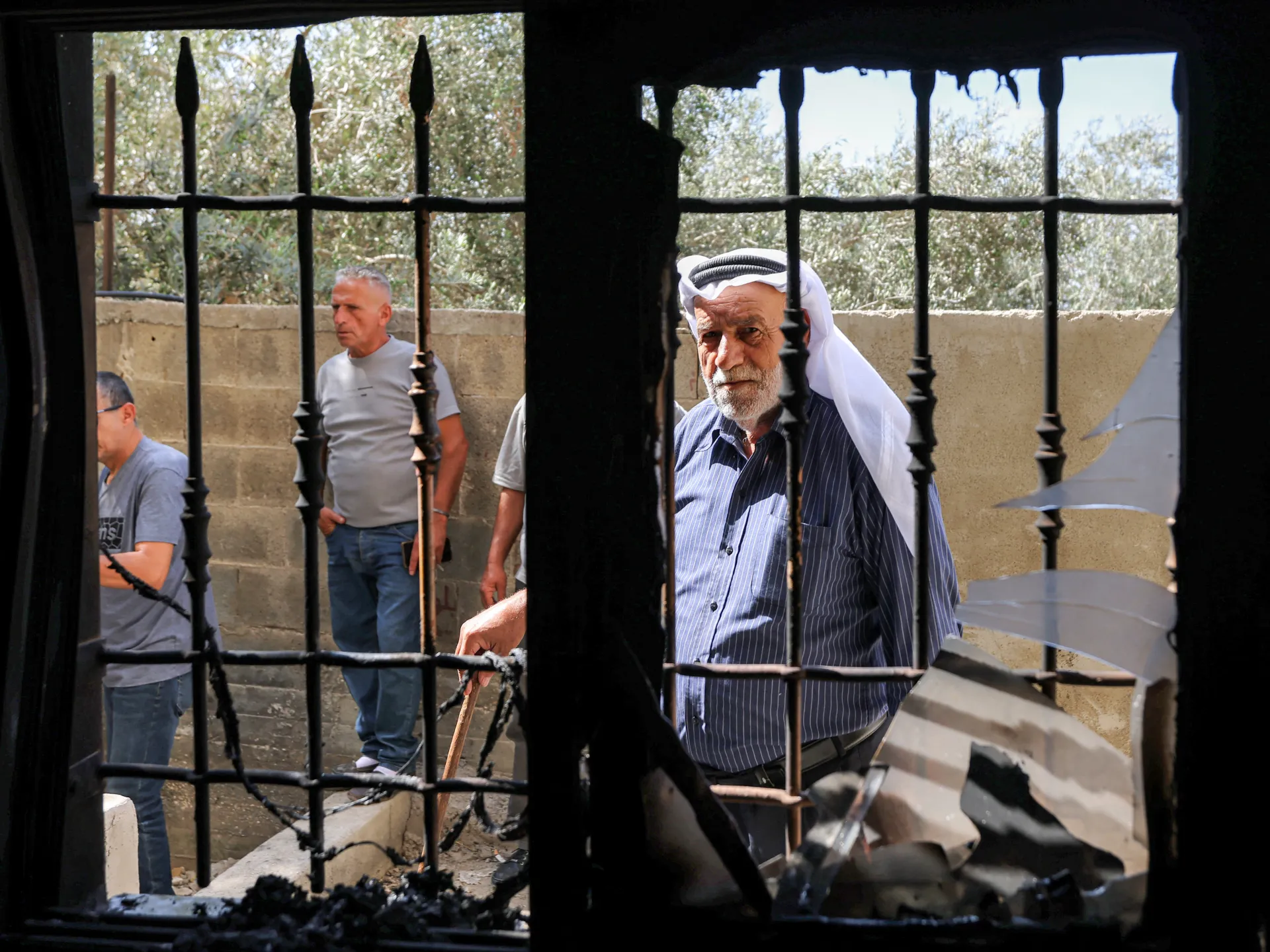
In the northern West Bank, Palestinian residents of villages around Nablus and Ramallah have seen their homes, vehicles and olive groves torched during nighttime settler raids. Entire Bedouin herding communities in the Jordan Valley have also been forcibly displaced following sustained campaigns of intimidation and violence.

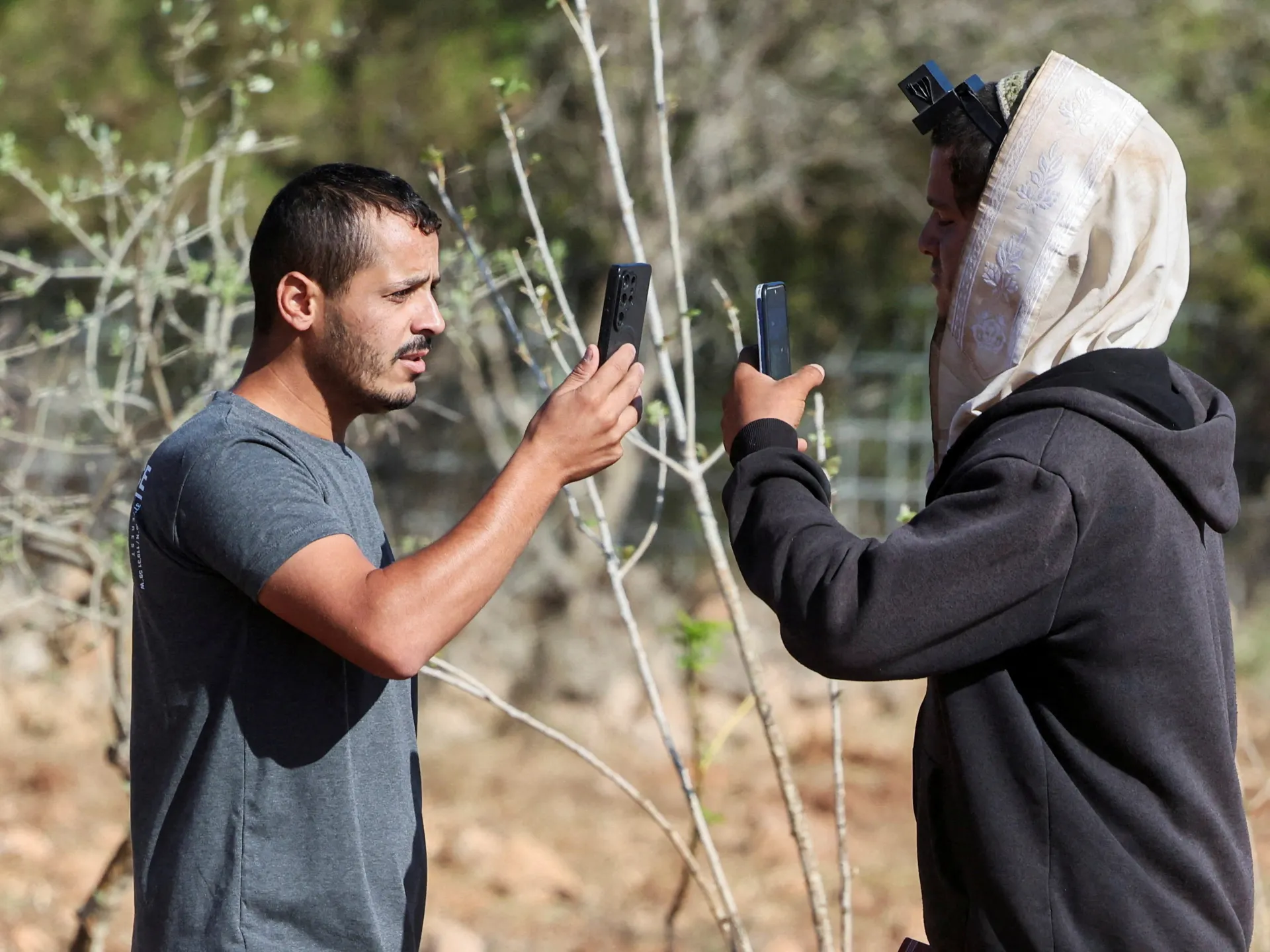
All of this underscores the depth and breadth of settler activity, which, according to people on the ground, has the direct support of the Israeli government.

“It’s gotten much worse since October 2023. They now have the courage to attack into the heart of densely populated Palestinian villages. I see them, they came into the heart of my village outside Ramallah, they feel safe to do so,” Tahseen Alayan, deputy director of Al-Haq, told Al Jazeera.

“If you buy a sheep, they will steal it. If you build a house, they will destroy it. If you buy a car, they will burn it.”

BE'ERI, ISRAEL - OCTOBER 21: Daniella Weiss, founder of the Nachalot Association, attends the Jewish religious holiday of Sukkot (Feast of Tabernacles) activities, where activist Jewish people set up numerous gazebos in the area as a tradition in Be'eri, Israel on October 21, 2024. Israelis and far-right politicians are demonstrating demanding the expulsion of Palestinians from the Gaza Strip and the reopening of settlements there, while others dream of invading many countries in the region in pursuit of “Greater Israel”. ( Enes Canlı - Anadolu Agency )
Daniella Weiss, founder of the Nachalot Association, described the EU sanctions as “ridiculous” and “banal” [Enes Canli/Anadolu Agency]

Examples of Israeli government complicity in these settler raids are not hard to find, and the statistics indicate collective efforts to entrench Israeli control over the West Bank, which has been occupied since 1967.

Israeli forces and settlers are accused of killing an estimated 1,168 people in the occupied West Bank since October 2023 and injuring a further 12,666 Palestinians. Another 33,000 people have been displaced, while Israel has also detained nearly 23,000 Palestinians in the West Bank during this period, many without charge.

“The violence does not happen in a vacuum,” Alayan continued. “This is an extension of the Israeli government; settlement is at the core of their identity. They are protected by the government and by the occupying services, and they freely admit it.”

A tragic incident that comes to mind is settler Yinon Levi, who allegedly shot dead Palestinian activist Awdah Hathaleen in Masafer Yatta last year. Despite the murder being captured on video, Levi nevertheless remains at large.

“Even if they are ever prosecuted, the sentences rarely reflect the severity of the crime,” Alayan said. “These people return to their homes and are seen as heroes.”

‘Entitlement and superiority’

This sense of impunity that settlers appear to be imbued with cannot be detached from the appointment to ministerial positions of leading figures or sympathisers of the settler movement – notably Ben-Gvir and Smotrich, the latter born in an illegal settlement in the occupied Golan Heights.

In a sign of state-settler cooperation to achieve direct control of the West Bank, in contravention of the Oslo Accords, Israel last year announced plans for the establishment of the E1 settlement that would link occupied East Jerusalem with its growing Maale Adumim bloc.

According to plans outlined by Smotrich, when established, this settlement would kill any hopes of the creation of a Palestinian state in the West Bank and Gaza and fulfil a biblical prophecy that many in the movement have been working towards.

Israeli far-right Finance Minister Bezalel Smotrich holds a map of an area near the settlement of Maale Adumim, a land corridor known as E1, outside Jerusalem in the occupied West Bank, on August 14, 2025, after a press conference at the site. [Menahem Kahana/AFP]
Israeli far-right Finance Minister Bezalel Smotrich holds a map of an area near the settlement of Maale Adumim, a land corridor known as E1, outside Jerusalem in the occupied West Bank, on August 14, 2025, after a news conference at the site [Menahem Kahana/AFP]

Daniel Bar-Tal, a professor of social-political psychology from the Department of Education at Tel Aviv University, interpreted the thinking behind the settlers leading this violence across the West Bank.

“It is divine order to settle West Bank. With divine order you do not argue but achieve it in the way Yehoshua carried it 3,000 years ago when he entered the promised land,” he explained. “He achieved it with sword, so we need to do the same.”

Shai Parnes of the Israeli human rights group B’Tselem told Al Jazeera that the absence of international pressure has bolstered the alliance between the state and settler movement.

“The Israeli regime is an apartheid regime based on Jewish supremacy and institutionalised discrimination against Palestinians,” Parnes told Al Jazeera.

“Any Israeli, civilian or soldier, who harms a Palestinian receives full immunity and support from the Israeli systems, and Israel itself receives this from the international community. These facts explain the Israelis’ sense of entitlement and superiority.”

Palestinian Nazem Saleh Shoman stands inside a pen at a sheep farm that was set on fire the previous night by Israeli settlers in the Palestinian village of Abu Falah in the central occupied West Bank on June 2, 2026.
Palestinian Nazem Saleh Shoman stands inside a pen at a sheep farm that was set on fire the previous night by Israeli settlers in the Palestinian village of Khirbet Abu Falah in the central occupied West Bank [AFP]

Yehouda Shenhav-Shahrabani, one of Israel’s leading sociologists, described the channelling of “Jewish supremacy” from the individual to the group, to the state, and back again, as a “closed loop”.

This, he said, fosters a sense of superiority among individuals, and when combined with a militarised society, makes violence against the native Palestinian population, who are in the way of realising this supposed biblical prophecy, almost inevitable.

“Some believe they’re in the West Bank because God said it was theirs. Others are there because they’re too poor to be anywhere else, and have been told they’re superior anyway,” he said.

“Two-thirds of the time, these same people are soldiers. They carry guns all the time. Looking on while they carry out this violence against Palestinians are other soldiers who believe almost exactly the same thing, and behind them politicians. Like I said, it’s a closed loop.”

Source link

EU sanctions ‘extremist’ Israeli settlers in occupied West Bank | Israel-Palestine conflict News

EU says the sanctioned individuals and groups violated a range of rights, from the right to physical and mental integrity, to the right to education.

The European Union has sanctioned four entities and three individuals it says are “extremist Israeli settlers” responsible for “serious” human rights abuses against Palestinians in the occupied West Bank.

The EU said they had violated a range of rights, including the rights to physical and mental integrity, privacy and family life, freedom of religion and education.

Recommended Stories

list of 4 itemsend of list

The announcement on Thursday is part of an EU sanctions package agreed earlier this month to punish Israeli settlers and Hamas leaders.

The sanctions include the Nachala Settlement Movement and its director, Daniella Weiss. The EU says the group “encourages and facilitates coercive acts that lead to the forced displacement of Palestinians”.

Israeli NGO Regavim and its director, Meir Deutsch, are also on the sanctions list for lobbying “for the demolition of Palestinian property” in order to expand Israel’s control over the entirety of the West Bank, plus the demolition of an EU-funded Palestinian primary school.

Also sanctioned is the Hashomer Yosh NGO and its president, Avichai Suissa for supporting “at least 28 violent outposts and settlements”. It also recruits armed volunteers and provides guards who engage in violent attacks, the EU added.

The Amana cooperative association of the settler movement Gush Emunim was also sanctioned, the EU stating it had likewise “played a key role in initiating, financing, and facilitating at least 30 violent outposts and settlements”.

Long-awaited sanctions

With Thursday’s additions, the EU said it now sanctions 136 persons and 41 entities from a range of countries under its Global Human Rights Sanctions Regime.

The regime was created in 2020, and applies to acts such as genocide, crimes against humanity and other serious human rights violations or abuses.

The measures targeting Israeli settlers because of violence against Palestinians were long-awaited, having been blocked by the self-styled illiberal government of Hungary’s former premier Viktor Orban.

However, the appointment of new Prime Minister Peter Magyar saw the veto quickly lifted earlier this month.

Israel earlier condemned the sanctions, asserting that Jews have the right to settle in the occupied West Bank, despite that being in violation of international law.

In 2025, the expansion of Israeli settlements reached its highest level since at least 2017, when the United Nations began tracking data.

Since the start of Israel’s genocidal war on Gaza, the West Bank has been gripped by almost daily violence involving Israeli troops and settlers. More than 1,000 Palestinians have been killed in the territory, according to the UN.

Source link

Israeli settlers set fire to homes and cars in violent West Bank raids | News

Dozens of Israeli settlers stormed various areas of the West Bank, set cars on fire and attacked Palestinians.

Israeli settlers have launched another wave of raids in the occupied West Bank, with houses and cars set on fire and a Palestinian child attacked.

The Palestinian Wafa news agency reported that a man and his child were attacked with “sharp instruments” in the village of Khirbet Shuweika, south of Hebron, on Friday.

Recommended Stories

list of 4 itemsend of list

The father and child were taken to hospital due to head injuries.

Israeli settlers torched a home in the village of al-Lubban Asharqiya, south of Nablus, after which members of the Palestinian Civil Defence arrived to extinguish the blaze.

In Abu Falah, northeast of Ramallah, Wafa cited security sources that the settlers “stormed the outskirts of the village, burned a citizen’s vehicle, and wrote racist slogans on the walls of houses”.

In the village of al-Asa’asa in Jenin, Israeli forces forced residents to exhume a newly buried body and take it elsewhere. They claimed the first site was too close to an illegal Israeli settlement.

Israeli settlers also attacked a Palestinian man in the town of Beit Fajjar, south of Bethlehem, and stole his mobile phone.

A group of Palestinians were picnicking in the Burak Sulayman (Solomon’s Pools) area, south of Bethlehem, but were forced to leave after Israeli forces fired stun grenades at them.

The Palestinian Red Crescent Society treated two people for tear gas inhalation and evacuated five others from the scene after the attack.

‘Tear gas and sound bombs’

In the town of Tuqu, southeast of Bethlehem, the mayor, Taysir Abu Mufreh, told Wafa that Israeli forces fired “tear gas and sound bombs” at a group of worshippers who were leaving a local mosque and locked a number of them inside.

On Friday, Israeli forces arrested four Palestinian men in the town of Battir, west of Bethlehem, while they were hiking near a railway line. The following day, three more Palestinians were arrested during a raid on the city of Nablus.

Settlers attacked the town of Silwad, northeast of Ramallah, leading to clashes when residents confronted them.

Human rights groups say Israeli authorities have allowed the settlers to operate with total impunity in their attacks against Palestinians.

In February, Israel approved a plan to claim large areas of the occupied West Bank as “state property”.

More than 700,000 Israelis live in illegal settlements in the occupied West Bank.

Source link