SACRAMENTO — Gov. Arnold Schwarzenegger’s office in charge of protecting California against terrorism has tracked demonstrations staged by political and antiwar groups, a practice that senior law enforcement officials say is an abuse of civil liberties.
The Times obtained reports prepared for the state Office of Homeland Security in recent months that contain details on the whereabouts and purpose of a number of political demonstrations throughout California.
The source of the information is listed in some cases as federal law enforcement agencies, including the Immigration and Customs Enforcement agency, an investigative arm of the U.S. Homeland Security department.
Political activities cited in the reports include:
* An animal rights rally outside a Canadian consulate office in San Francisco to protest the hunting of seals.
* A demonstration in Walnut Creek at which U.S. Rep. George Miller (D-Martinez) and other officials spoke against the war in Iraq.
* A Women’s International League for Peace and Freedom gathering at a courthouse in Santa Barbara in support of an antiwar protester — a 56-year-old Salinas woman — facing federal trespassing charges.
California Atty. Gen. Bill Lockyer’s office learned of the monitoring activity more than two months ago. On Friday, a spokesman condemned the actions, saying they violated the groups’ constitutional right of free speech.
“When people exercise their 1st Amendment rights to rally, march and protest, they should not have to worry that intelligence officials are watching them or their activities are in any way being painted with the terrorism brush,” Lockyer spokesman Tom Dresslar said in an interview.
“That kind of conduct by anti-terrorism intelligence agencies threatens civil liberties, runs counter to our values and violates this office’s policy regarding criminal intelligence gathering,” Dresslar said.
The Times obtained two of the reports, which were compiled daily. The state homeland security office declined to release others.
The office is a 53-person operation that grew out of the Sept. 11 attacks and is financed primarily by federal money. Officials there said the details about the rallies were reported by SRA International, a company hired to provide counter-terrorism analysis.
The officials said such information made it into only the two reports that The Times obtained, out of 60-some daily intelligence reports produced since March.
No reports were produced before March, said Chris Bertelli, spokesman for the state office. When officials in the agency learned of the practice, he said, they ordered it stopped.
Copies of the reports were shared with the California Highway Patrol and the attorney general’s office. Nothing else was done with the information about the demonstrations, Bertelli said.
The reports are on the letterhead of a California anti-terrorism partnership that includes the homeland security office, the attorney general and the Highway Patrol.
Dresslar said staffers in Lockyer’s office saw the reports and raised concerns with their superiors, who complained to the Office of Homeland Security.
“When we discovered their existence, we informed OHS officials that we had absolutely no use for that kind of information,” Dresslar said. “Collecting information on protests has no legitimate anti-terrorism intelligence function. None. No intelligence agency has any need to maintain this kind of information.”
The reports obtained by The Times contain summaries of news articles about the war in Iraq, animal rights activists and terrorism. One has a section titled “Upcoming California Protests,” followed by summaries of the demonstrations. Each includes an entry for “officer safety issues.” No issues are cited.
One group whose antiwar rally was in the reports criticized the state agency’s practice.
“It seems like a waste of taxpayer dollars and a creeping invasion of our 1st Amendment rights to demonstrate and speak,” said Devlin Donnelly, assistant coordinator for the Chico Peace and Justice Center, which held a rally in Chico in March calling for an end to the war in Iraq.
Schwarzenegger had “no information and no knowledge that this was happening,” said Adam Mendelsohn, the governor’s communications director. “The governor feels that this particular information gathering is totally inappropriate and unacceptable.”
Anti-terrorism ideas from the state homeland security office have stirred qualms before.
Past and present members of the attorney general’s office said they were troubled by a meeting at the security office last September in which federal and state officials discussed ways to prevent Islamic militants from recruiting prison inmates. In attendance were officials from the FBI, the state Department of Corrections and Rehabilitation and various local law enforcement agencies, according to documents obtained by The Times.
One account of the meeting is provided in a whistle-blower complaint filed by a former high-ranking official in the attorney general’s office, Edward Manavian.
The complaint says homeland security information analyst William Hipsley proposed monitoring private conversations in state prisons between inmates and Islamic clergymen and, citing a potential national security threat from Iran, getting a list of Iranians living in California.
State law makes it a felony to eavesdrop on conversations between a person in custody and his attorney, doctor or religious advisor.
Brian Parriott, a spokesman for the state prison system, said it is not the corrections department’s practice to listen in on private conversations between inmates and visitors from the clergy.
And Mark Schlosberg, a policy director for the ACLU’s San Francisco office, said it is discriminatory to compile databases on broad groups of people based on national origin without any specific link to criminal activity.
“It’s contrary to our constitutional protections and our systems, and it’s also ineffective in terms of law enforcement,” Schlosberg said.
The state homeland security office denied Manavian’s version of events and issued rebuttals from Hipsley and a staff member who also attended.
In a written statement, Hipsley said that he never suggested “Muslim clerics offices be ‘bugged’ ” and that the subject of Iran never came up.
George Aradi, an assistant deputy director for information analysis, concurred in a separate statement.
Manavian was demoted in February. In his complaint, he said that happened in part because he refused to cooperate with “attempts to violate the civil rights of citizens in this state.”
He resigned in April. His complaint is pending before the state Personnel Board, and a hearing is scheduled in late July.
Lockyer’s office publicly criticized the monitoring actions after an inquiry from The Times.
But Allen Benitez, assistant chief of the attorney general’s criminal intelligence bureau, had told one of his bosses in a memo April 18 that the security office was gathering information on “political groups” and protests. He voiced concerns that such tracking “may not be allowed under the law.”
Lockyer’s office handled the matter privately with the security office, Dresslar said.
Questions about the office come at a time when assessments by nonpartisan reviewers have concluded the state is unprepared for a terrorist attack or natural disaster.
Schwarzenegger casts himself as being immersed in efforts to prepare California for disaster, making repeated public visits to the state’s emergency command center outside Sacramento, where he has watched over exercises simulating what would happen in a disaster, such as an earthquake or flood.
But a report by the legislative analyst’s office last year said California lacks “a unified strategic approach to homeland security.”
And more recently, the state’s Little Hoover Commission watchdog agency issued a report saying it is unclear who would take charge in the event of an emergency or terrorist attack.
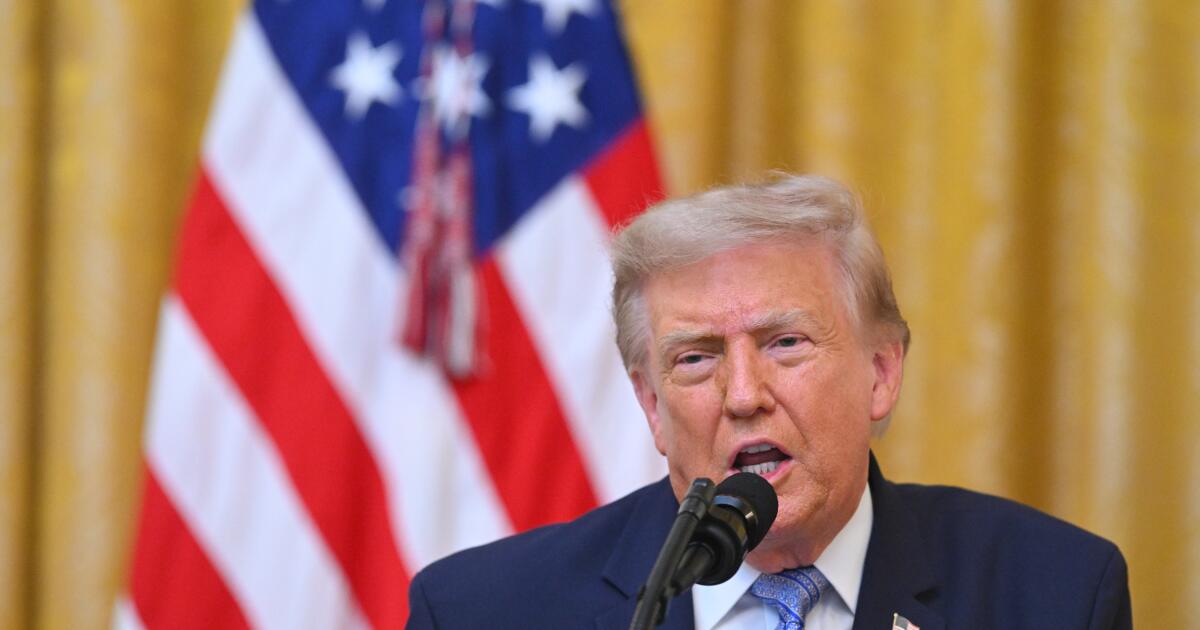
WASHINGTON — President Trump and his allies escalated attacks on U.S. elections on Friday, after the president’s prime-time effort to convince Americans that that the nation’s voting systems are fundamentally flawed, and threatened to punish California and other Democratic states that refuse the administration’s demands for voter data.
Homeland Security Secretary Markwayne Mullin threatened local election officials with fines and prison if they don’t turn over voter rolls to federal officials seeking to root out purported illegal voting by non-citizens.
“Try us,” California Gov. Gavin Newsom wrote on X in response to Mullin’s threats. He added that “California has free, fair, and secure elections” and that the state “will fight for them.”
The administration’s threats — made less than four months before the November midterm elections — are a continuation of an aggressive Trump-led campaign to use the federal government to attempt to overhaul the nation’s voting systems and sow public mistrust in elections.
The administration has tried for months to compel Democrat-led states into handing over sensitive voter data to the federal government, but the efforts have run into resistance in courts, in part out of concern for privacy laws. The courts have also reaffirmed in many cases that the Constitution gives states — not the federal government — primary authority over elections.
On Friday, Mullin said his agency has found “as many as” 190,832 possible non-citizens registered to vote in California, along with more in three other Democratic-led states. He said Homeland Security arrived at those numbers by checking the four states’ public voter records.
He vowed to withhold federal election security grants from states until they agree to the administration’s demands, including having their voter registration lists “scrubbed” and their election security systems updated.
“If these states want a grant and they want to be reimbursed to run federal elections, they are going to have to implement security measures,” Mullin said at a news conference. “We need to make sure that individuals who are legally able to vote are voting.”
Newsom said the state had “no idea” where that claim came from. The administration has not made its methodology public, and the system Mullin’s department has used to check for non-citizens in the past has inaccurately flagged some citizens as non-citizens. Past election reviews have found non-citizen voting is rare.
“There is plenty of reason to be suspicious of the claims from the administration,” said Brendan Fisher, director of strategic investigations at the Campaign Legal Center, “and every reason for voters to have confidence in our elections.”
Mullin’s remarks came the day after Trump delivered a prime-time address about vulnerabilities in the election system, claims that largely were not backed up by the evidence he provided. The White House released a trove of declassified documents that fell short of showing that any American election had been affected by fraud or foreign interference.
The White House dug in on the strategy Friday morning, deploying agency heads to continue amplifying the idea of election vulnerabilities, even after fact-checks showed most of his claims were exaggerated and had been previously known, investigated or debunked.
“SAVE OUR ELECTIONS,” the White House said on X.
Trump also used his address to pressure Congress to pass legislation that would tighten voting restrictions and could make it harder for millions to register to vote and cast ballots. While hardline Republicans applauded him, others in the party have rebuffed his request.
Sen. John Cornyn (R-Texas) said Friday that he did not understand why Trump is focusing on a past election when Republicans should focus on what is ahead.
“I think historically the midterms for the party in power are really tough,” Cornyn said. “So, yeah, I am concerned about it. We ought to be talking about things looking forward that our constituents are most concerned about.”
Sen. Bill Cassidy (R-La.) said the nation’s electoral systems are safe, and while he thinks election officials need to be “vigilant,” he said he is more concerned about economic issues ahead of the midterms..
Discussing the legislation ahead of the speech Thursday, Sen. Thom Tillis (R-N.C.) said it would be “impossible” to carry out changes to the nation’s voting laws in time for the midterms.
“The only thing that will occur is an undermining of the integrity of our elections right now,” Tillis said on the Senate floor.
David Becker, the executive director of the Center for Election Innovation and Research, called Mullin’s threats “laughable.”
“There is no significant pool of federal grant money appropriated, so this threat has no teeth for any state. None of them are expecting any significant federal funds for elections,” Becker said.
Mullin told reporters Friday the federal government plans to use public records requests to try to obtain the voter roll information in order to investigate whether non-citizens have voted. Any member of the public can make a public records request; the move signals that the government has few remaining avenues to force the state to turn over voter data.
But Mullin appeared to acknowledge the limitations, saying: “I obviously can’t force the states.” He later threatened to levy fines, penalties or criminal charges against elections officials in states that don’t comply with the government’s demand.
If their behavior wasn’t criminal, Mullin said he would make sure state and county officials — who do not work for the federal government — would “never work for the federal government again.”
More than a dozen courts have ruled against the Justice Department’s highly unusual demand for state voter rolls. The federal government is not entitled to the data under federal law, Becker said.
He said previous government investigations into non-citizen voting have found that most people flagged against DHS’ database were either citizens or non-citizens who had never registered themselves to vote.
The Trump administration has used a database from an immigration verification system to flag possible non-citizen voters, but election officials have found that method misidentified some voters. Even with citizens mistakenly included in the count, the number of possible ineligible voters was extremely low — in Texas, 0.0001% of voters.
While Trump’s speech prompted warnings from his critics that he could be laying the groundwork to take further steps to interfere with or tighten restrictions on elections, experts said he was running out of moves.
Becker predicted that Trump would not actually attempt to cancel elections or send officers to the polls and that courts would block the president if he declared a national emergency to exert control over elections.
“But I think there are people in the administration, including the president himself, who would like us all to think this is possible,” he said.
Fisher said Trump may be trying to lay the groundwork to dispute the midterm results if he doesn’t like the outcome, but said his powers to do so are limited.
“There’s safeguards and laws in place to protect the freedom to vote,” Fisher said, “and voters should tune out the noise and continue to participate in our democracy.”
July 17 (UPI) — The Department of Homeland Security on Friday ramped up the Trump administration’s efforts to address what the president claims are lapses in election security, threatening state officials with prison time if they don’t comply with federal demands.
DHS Secretary Markwayne Mullin told reporters in Washington he would apply “maximum pressure” against states that refuse to work with his department.
The Trump administration has focused on noncitizens allegedly casting ballots, which experts say is extremely rare, and the possibility that voting machines can be hacked — although they are, by design, never connected to the internet.
“If the election officials, once we gave them the information they need to secure their elections, and they chose not to, then those individuals can also be held accountable by fines, by penalties, and even, depending on how far it goes, prison time,” Mullin told reporters.
Mullin’s remarks come a day after President Donald Trump, in a primetime address, enumerated a series of debunked claims that the U.S. elections are rigged or have been influenced by foreign governments.
“Our elections were left vulnerable to being rigged and stolen, and the trust of the American people was lost,” Trump said Thursday. “This cannot be allowed to continue.”
Mullin said DHS has found more than 250,000 noncitizens registered to vote in four states — California, Nevada, New Jersey and Pennsylvania — and sent letters to their respective secretaries of state seeking answers.
“Before and after the election, we will scrub all election records looking for illegal aliens and those who are ineligible to vote, including those that somehow voted yet they were deceased,” Mullin said. “If you’re illegal and attempted to vote, or you tried to vote illegally for someone else, we will find you and we will charge you.”
In its letters, DHS did not accuse any of the noncitizens of having actually voted.
“We will pursue maximum pressure on this,” Mullin told reporters. “To let you know, we will be proactively looking at early voting, and then after post-election, we will continue to scrub all those that did vote.”
Al Schmidt, the Republican secretary of state in Pennsylvania, said, “All evidence has shown that noncitizen voting is extremely rare across the country,” including in his state.
“In Pennsylvania, every voter must take steps to verify their identity before they cast a ballot, including providing proper identification every time they register to vote, vote by mail, or vote at a new polling place,” Schmidt told The Hill.
In Nevada, Secretary of State Francisco Aguilar, a Democrat, said the administration’s efforts are intended to undermine elections.
“The administration lacks a fundamental understanding of how elections work,” Aguilar said in a statement. “They just want to cause chaos and doubt ahead of the midterms.”
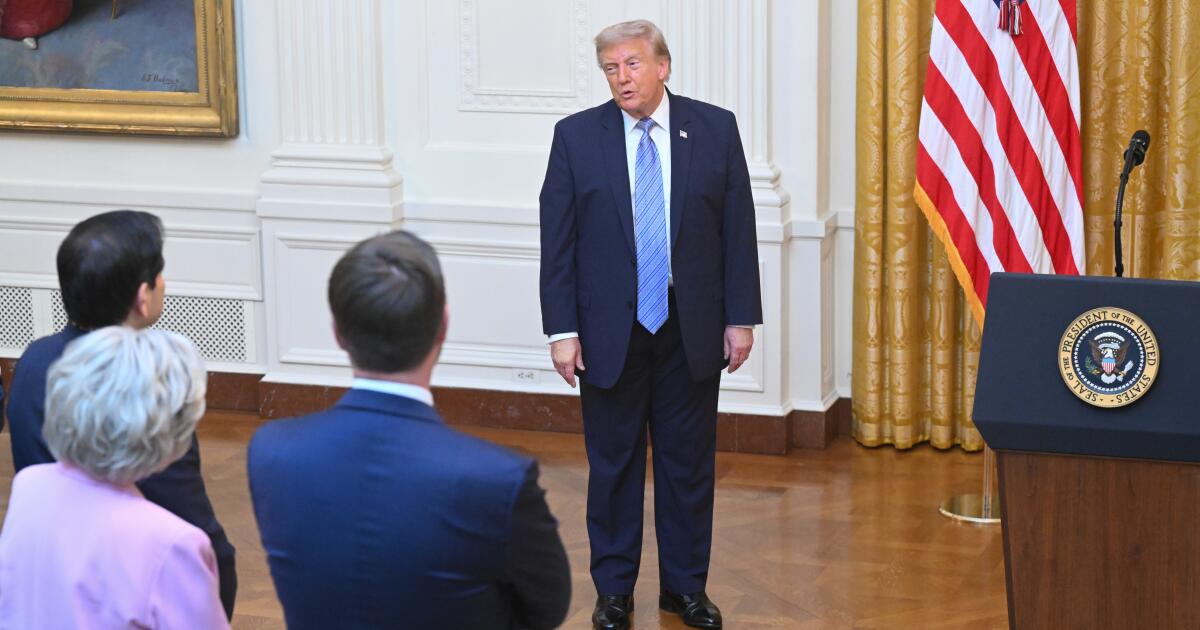
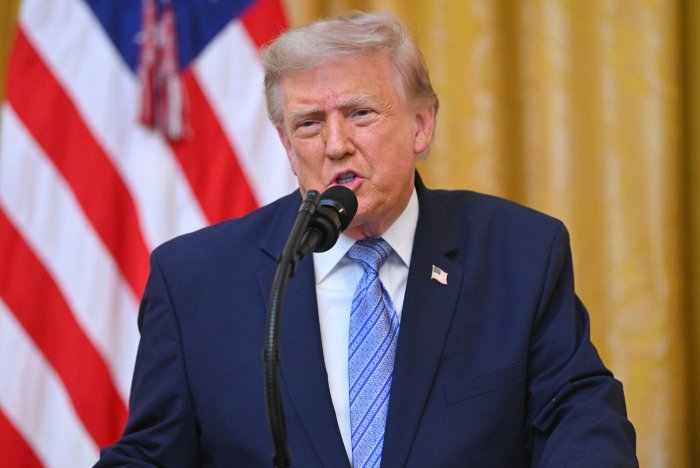
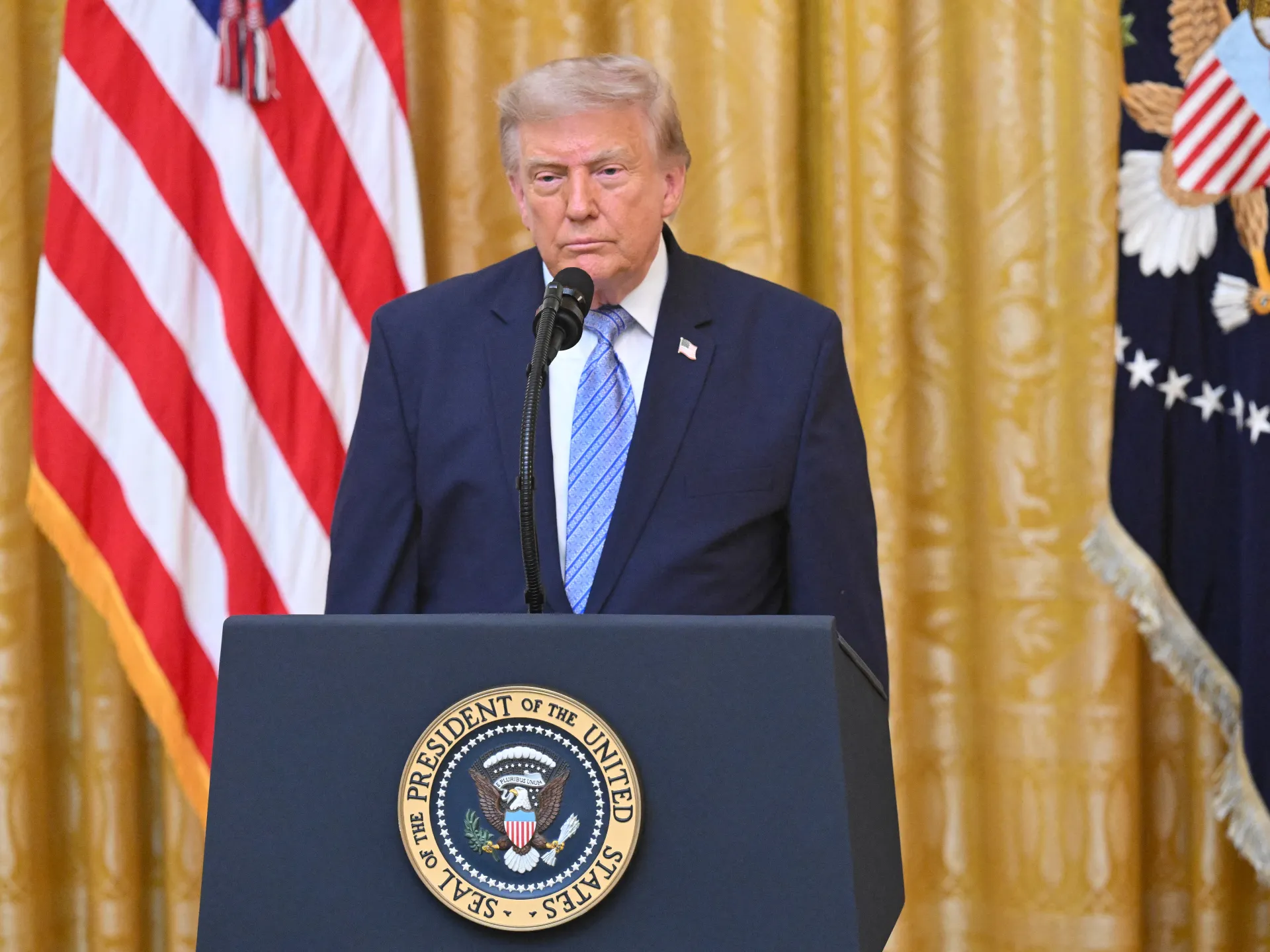
President Donald Trump delivers a prime-time address to the nation from the East Room of the White House on Thursday. Pool photo by Saul Loeb/UPI | License Photo
Customers are being sent emails that explain everything they need to be aware of
Keep your Sky account safe from scammers (stock image)(Image: Getty)
Sky is sending emails out to customers with a message about ‘security’. In the UK, Sky serves more than 25 million people, about 36% of all households. Sky Broadband boasts nearly 5.8 million active users and employs around 20,000 people across the UK.
In a new email delivered to its customers, the connectivity company reminded people about the importance of watching out for scammers. It said: “At Sky, we’re committed to helping you keep your account secure. So, we wanted to give you some tips on how to stay vigilant.”
Urging customers to stay safe and explaining what steps to take, Sky added: “Sometimes, scammers pretend to be trusted brands so that they can try to trick you into sharing your personal information or even placing an order they may ask you to send on to them when it arrives.
“If you’re unsure about a call, text or any other message, end the conversation. Head to the My Sky app or sky.com to see if anything looks wrong — be sure to check your account details and your recent orders.”
For customers who receive calls, texts and WhatsApp messages, Sky advises “stay vigilant”. It says: “Fraudsters can sound convincing, especially if they rush you, pressure you, or offer a deal that seems too good to be true.”
Remembering the following information “will help you stay in control”
Sky will never ask for the password you use to sign into the My Sky app or sky.com
Ask you to place an order on our website while on the phone with you.
Tell you to share your screen on any device.
Ask you to read out your full payment card details (unless you contacted us first).
Pressure you into making decisions.
Sky says it always sends texts “from Sky”, adding: “Be cautious of other senders claiming to be us.” The company also says it will always give you the option to hang up and contact the customer service team if you’re unsure.
It added: “Use our verified Sky UK WhatsApp Business account — look for the blue tick. Remember, if anyone contacts you unexpectedly, sounds urgent, or asks for details, stop and take a moment.”
In terms of deliveries, Sky urges customers to be aware that if someone asks to return items they weren’t expecting to receive, or pressures them to return something using a QR code or courier. It says: “If you ever need to return Sky equipment, always use Sky’s official returns process.”
If you believe you’ve fallen victim to a scam, reach out to your bank right away if you shared any money or personal information. After that, make sure to report the incident to Action Fraud, the UK’s national reporting centre. You can do this by calling 0300 123 2040 or by visiting the Action Fraud website. It’s important to act quickly to protect yourself.
United States President Donald Trump has delivered an extraordinary primetime speech, alleging government “cover-ups” and “vulnerability” in the nation’s electoral system.
But experts were quick to point out that Trump failed to present any conclusive evidence that past presidential elections had been swayed by malfeasance.
Recommended Stories
list of 3 itemsend of list
In many ways, Trump’s speech on Thursday revisited any themes familiar to the Republican leader.
He made broad accusations about a “deep state” conspiracy involving his Democratic predecessors, Barack Obama and Joe Biden, and he lashed out at familiar foes, including the news media and China.
For years, Trump has spread baseless claims that his loss in the 2020 presidential election was “rigged” and “stolen”.
Trump stopped short of repeating his false claim that he had, in fact, won that race. But in his remarks, he sought to raise suspicion about the election’s outcome, pointing to declassified government documents.
Those files, however, painted a more nuanced picture than Trump portrayed, and they failed to substantiate his claims of a conspiracy.
After the speech, Democrats criticised Trump for attempting to mislead the public and reduce confidence in US electoral systems, with months to go until the November midterm election.
Here are the key takeaways from his address:
Trump claims China compromised election data
One of the biggest accusations of the night was levied against China, the US’s geopolitical rival.
“Starting during the 2020 election cycle, the People’s Republic of China carried out what is believed to be the largest compromise of election data in history,” Trump said near the outset of his speech.
He claimed that Beijing, through “illicit” means, had acquired 220 million US voter files, including names, addresses and party preferences.
“Think of that: Tens of millions of voters’ data in 18 states have been bought, stolen or hacked by China,” Trump said.
A spokesperson for China’s embassy denied such claims, saying the country “has never and will never interfere in the presidential elections of the US”.
Trump, however, did not say that the information had been used to influence any election.
But critics pointed out that such voter information is already publicly available. Some states even sell that public data, for prices ranging from $0 to $37,000, as the US Election Assistance Commission explained in a 2020 report.
The documents declassified by the White House also appeared to indicate Beijing was, at least in part, drawing from publicly available data. It did, however, express curiosity at China’s increasing interest in such information.
“While the PRC [People’s Republic of China] government has historically demonstrated interest in US elections, this is a newly-identified interest for this individual actor,” a heavily redacted assessment said.
“The US voter registration information is available for public download, with 2021 voter registration information available for some states.”
Trump claims a ‘deep state’ cover-up, vows retribution
In Thursday’s speech, Trump returned to a conspiracy theory that helped define his first successful bid for public office in 2016: that so-called “deep state” actors had sought to undermine his presidency.
He claimed there was a “shadow government” with “rogue bureaucrats” who attempted to cover up Chinese efforts to influence the 2020 vote.
They even sought to suppress information from his daily presidential brief, Trump alleged.
“ These were briefings I would get almost every day. Everything was kept out that was of importance,” he said.
Experts, however, have noted that presidential briefs are usually heavily curated to contain intelligence perceived to be of high importance.
An intelligence community report compiled in January 2021 assessed with “high confidence” that China had considered launching an influence campaign in 2020 — but that it eventually decided against it.
The report was declassified in March 2021. It contained a minority opinion that indicated China “took at least some steps” to undermine Trump’s re-election chances “primarily through social media and official public statements and media”.
The publication of the report would appear to contradict Trump’s claims of a “cover-up”.
Still, in his speech, Trump said he had instructed his top law enforcement officials to “fire those involved in the cover-up and to file criminal charges, if appropriate, against these people”.
Trump says public ‘blatantly lied to’ about election security
Critics had warned that Trump could use Thursday’s speech to undermine confidence in US elections by spreading falsehoods.
Some television news outlets, including ABC, NBC and CNN, even opted not to air the speech in full on their main broadcast channels.
The timing of the speech is significant, as it comes less four months ahead of the midterm elections, which decide control of Congress.
Trump did indeed spend part of his speech voicing allegations that American voters had been deceived by the same “deep state” actors he accused of targeting him.
“For many years, Americans were blatantly lied to about the security of our election infrastructure, including voting machines and ballot counting systems,” Trump said.
“They’re vulnerable, and they’re easily compromised, and people within our government knew that.”
But the declassified documents released by the White House did not appear to contain any major revelations about such claims. Potential vulnerabilities have long been known, and local and federal officials have sought to address them.
The fact that elections are administered on the state and local level has also been cited as a barrier against any widespread tampering.
Given the decentralised nature of US election administration, the US intelligence community has long assessed that large-scale voting manipulation would be all but impossible.
After Trump’s speech, Democrats dismissed Trump’s remarks as distortions designed to disincentivise voters from participating in elections.
“President Donald Trump continues to lie, distort the truth to try to sow doubt and suppress the 2026 election,” US Representative Jason Crow said in a video statement. “He doesn’t want Americans to vote. He doesn’t want their voice to be heard.”
Trump rehashes Michigan investigation
Trump made a gesture at unity in Thursday’s speech, arguing that election security should not be a “partisan issue”.
“It should cause to unite us, not to divide us,” he said at one point.
But the Republican leader fired off dubious claims against targets big and small.
He called for broadcasters that did not air his speech to lose their licenses. He berated California as “worse than any third world country”. And he rehashed a incident in the swing state of Michigan that took place well before the 2020 election.
The case involved allegations of fake voter registration forms. But the forms were not processed and did not have any bearing on that year’s election; they were flagged months before the vote took place.
The state Attorney General’s Office probed the incident, as did the Federal Bureau of Investigation.
Neither found evidence that fraud had been successfully committed. It is believed that the forms were not part of an election scam but rather an attempt to meet workplace quotas.
Still, Trump portrayed the incident as a significant breach in Thursday’s speech.
“It was pay, play, and cheat,” he alleged, proceeding to blame former President Biden for failing to pursue the case. “The Biden Department of Justice slow-walked the investigation and killed it.”
He added that he had instructed the FBI to re-open its investigation, although the declassified documents the White House released did not appear to provide new evidence in the case.
Speech sought to cast doubt, but contained few revelations
Trump’s speech had been hyped as a major moment in the president’s second term.
On Tuesday, when the primetime address was first announced, Trump said it would contain “really big news”. His press secretary, Karoline Leavitt, warned reporters earlier in the day that the speech would “shock”.
But Democrats and election experts have argued that the speech was underwhelming — and would mostly serve to fire up Trump’s Republican base.
Indeed, Trump opened his remarks on Thursday with a resume of his second-term accomplishments, from border security to efforts to combat crime.
And he closed his speech with an appeal to pass the SAVE America Act, a piece of legislation he has repeatedly championed to heighten voter requirements.
The bill would increase voter identification standards, requiring proof of citizenship in the form of documents like birth certificates and passports that some US citizens may not have.
Rights groups have argued the requirements could disenfranchise some citizens.
Speaking to Al Jazeera, political analyst Eric Ham said the speech was yet another push in Trump’s effort to bring elections under federal control.
“This is something that the president has had an ambition of doing for quite some time, and I think what we saw tonight was another shot across the bow at trying to fundamentally change elections,” Ham said.
Hakeem Jeffries, the top Democrat in the House of Representatives, also decried the speech as a distraction from Trump’s political woes ahead of the midterms.
“Donald Trump is a feeble, unhinged conspiracy-peddling 80-year old failed President,” Jeffries wrote on social media. “The economy is a disaster under this guy and the American people know it.”
WASHINGTON — President Trump used a rare prime-time address Thursday night to renew his attacks on the security of U.S. elections, telling Americans that the nation’s voting system is “so broken” that “no one can possibly defend it,” an unprecedented effort by a sitting president to undermine public confidence in domestic elections.
Many of the claims he made, which echo those he made after he lost the 2020 election, have been debunked by investigations, audits and court proceedings. Trump did not claim that vote counts were changed or election systems were hacked, and his warnings that the nation’s elections could be vulnerable to foreign influence have long been made by members of both parties.
But the president amplified those claims and others in an effort to cast fresh doubt over what he said was a “stolen” and “rigged” election and renew calls to pass a federal voting law ahead of the November election.
“Addressing this crisis of elections security demands that Congress will pass the SAVE America Act,” Trump said. “How easy is that to do? Unless you want to cheat.”
Trump said he directed the White House to release a tranche of heavily redacted documents that purport to show “vulnerabilities” in the nation’s voting system, with the goal of “correcting them very, very quickly.”
The 26-minute address to the nation — a platform traditionally reserved for rare moments of national importance — was the latest effort by Trump to attempt to assert more federal control over state elections.
Major broadcast networks declined to air Trump’s speech in full, instead reporting on it. Trump complained about NBC and ABC as he spoke, saying they should lose their broadcasting licenses. He falsely claimed that “they and others in the media are part of a plot” to “continue this fraud.”
In his remarks, Trump alleged China carried out what is believed to be the “largest compromise of election data history” starting during the 2020 election cycle and claimed that “members of the deep state” in the American intelligence community covered it up.
He directed the FBI, the director of national intelligence and other agencies led by some of his loyalists to investigate and prosecute the people responsible for the cover up.
Democrats swiftly condemned Trump’s claims as baseless and rehashed ideas that have little to do with actual election administration.
“Donald Trump is releasing unverified, meaningless documents to appease his own delusions about an election he lost resoundingly, all while continuing to withhold 3 million pages of the Epstein files,” Senate Minority Leader Chuck Schumer said on X.
Multiple reviews of the 2020 election have concluded that Democrat Joe Biden won legitimately, and election experts say there is no evidence that widespread fraud affected the outcome of the election.
“It’s been more than half a decade, with numerous audits, recounts, and more than 60 court cases, each finding no evidence of widespread voter fraud,” Sen. Alex Padilla (D-Calif.) said in a statement. “Clearly, this is no longer about an election Donald Trump lost six years ago. It’s about him laying the groundwork to try to ‘take over the voting’ in the upcoming midterm elections.”
Ahead of the speech, elections and democracy experts had cautioned that the president may attempt to sow doubt in the security of the nation’s election system or bolster debunked fraud claims.
Trump has taken a series of steps since retaking office aimed at exerting control over elections. Some experts said Thursday’s address could be interpreted as a sign that Trump is running out of moves in the lead up to the midterm elections, where Republican control of the House is at stake.
“The fact that they’re throwing everything up on the walls at this point demonstrates panic,” said David Becker, executive director of the nonpartisan Center for Election Innovation and Research. “They are not operating from strength right now. They are operating from weakness.”
Trump delivered the address with his approval rating stagnating at 37%, according to a Washington Post-Ipsos poll released Thursday, with weakening enthusiasm among Republicans.
This is a breaking news story and will be updated.
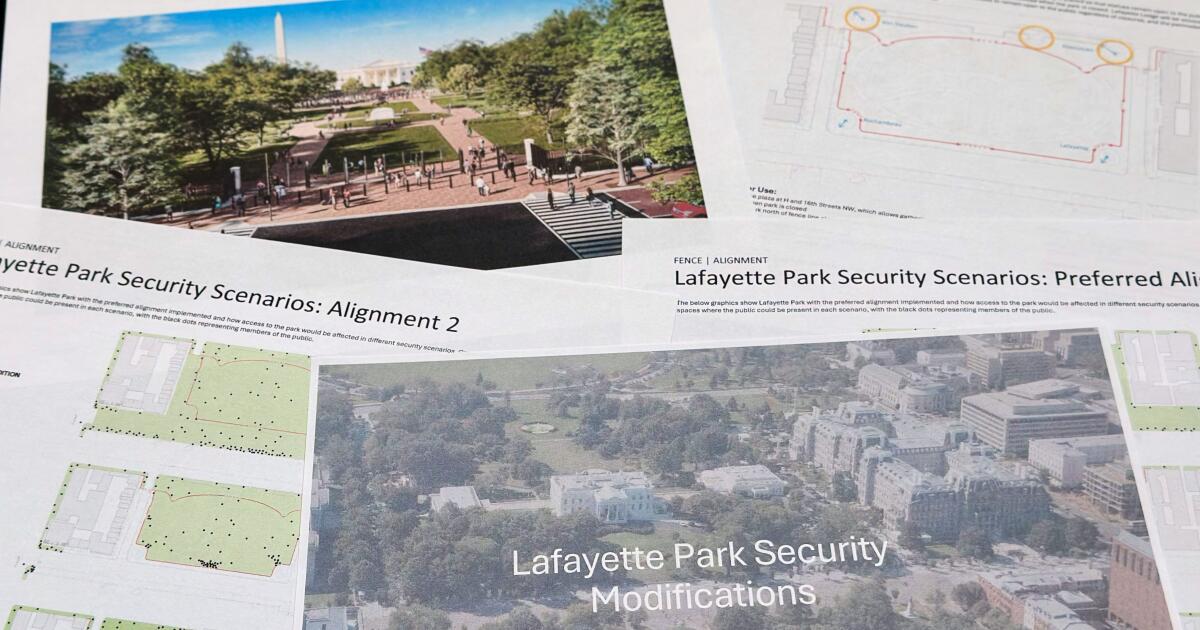
WASHINGTON — The Trump administration is proposing to improve security around the White House by putting up a fence around nearby Lafayette Park to help limit public access when law enforcement authorities determine doing so is necessary.
The proposal is scheduled for consideration on Thursday by the U.S. Commission of Fine Arts, according to a meeting agenda and the plans posted on the agency’s website. The agency has oversight over the design of construction on federal land in Washington.
The commissioners are also set to take another look at the design for an underground facility to screen the thousands of tourists and others who visit or work at the White House. All seven commissioners were appointed by the Republican president.
The proposals are being considered at a time when security for the president has become a top concern. President Trump has been the target of multiple assassination attempts, including two during the 2024 campaign and a third this past April as he attended a dinner in Washington with White House journalists.
Those concerns were heightened the following month after U.S. Secret Service officers fatally shot a man who opened fire near a White House security checkpoint.
The administration says the projects will be an improvement over temporary structures that have long been used to aid perimeter security, like barriers fashioned out of bicycle racks, and for screening the many guests who access the White House and its grounds.
A look at both projects:
Lafayette Park last had a permanent fence in the late 1800s
Trump was accompanied by Interior Secretary Doug Burgum on a recent tour of the park to see updates being made at his direction. The president has worked with the Interior Department and one of its agencies, the National Park Service, to restart dormant park fountains.
“We’re really doing a job at Lafayette Park, which is really the entrance to the White House, and that’s going to be completed very shortly and it’ll be incredible,” Trump said in June.
The administration’s 79-page proposal for the 8-acre (3-hectare) park calls for fencing it all the way around with gates at the north and south entrances to control public access. Options call for either including or excluding four monuments located at each of the park’s four corners.
The proposal, which is backed by the Secret Service and the Executive Office of the President, in coordination with the Interior Department and National Park Service, notes that leaving out the monuments would expose them to vandalism.
The report says the goal of the plan is to “enhance long-term safety,” preserve the Lafayette Park’s identity as a significant National Park Service landscape and “maintain public access to this nationally symbolic space.” Throngs flock to the park to protest or celebrate major events.
Lafayette Park has not had a permanent fence around it since the 19th century. The Secret Service anticipates the fence would start going up sometime next year.
The administration wants similar fencing along Pennsylvania Avenue on the north side of the White House complex, from the Treasury Department building at 15th Street to the Eisenhower Executive Office Building at 17th Street. The report said that will be treated as a separate proposal and submitted to the commission at a later date.
White House visitor screening facility could replace currently used tents
The commission is set to review a revised design for the facility, which would be built beneath Sherman Park, federal land southeast of the White House, to support screening for public tour participants, guests attending large events, White House staff and contractors.
The original design called for locating the facility’s entrance at the southern end of the park, but meetings and consultations led to a revised proposal that shifted the entrance to the western edge of the park to avoid conflicts with infrastructure and minimize the impact on the surrounding views, according to the report submitted for the commission’s review on Thursday.
The administration said the permanent facility will eliminate the need for a series of temporary screening tents currently used for events, improve security on the White House complex and enhance the experience for visitors.
The Secret Service, Interior Department, National Park Service and Executive Office of the President want to start construction in August on the 33,000-square-foot (3,066-square-meter) underground facility. They have set a July 2028 date for it to be operating.
White House visitors would face an initial ID check before they enter the facility through a pavilion located above ground, then head down to a lower level and a second checkpoint. After they are cleared, visitors will ride escalators that will take them up to the White House grounds.
U.S. Vice President JD Vance has accused some members of the Israeli government of attempting to influence American public opinion to undermine Washington’s agreement with Iran, highlighting growing public differences between the two allies over Middle East policy.
Speaking on a podcast with Joe Rogan released on Wednesday, Vance defended the U.S.-brokered deal that ended last month’s conflict with Iran, despite criticism from Israeli officials and some U.S. lawmakers who argue the agreement leaves Tehran’s missile and nuclear capabilities largely intact.
Vance accuses Israeli officials of influence campaign
Vance said he was certain that some figures within the Israeli government sought to steer U.S. policy toward continuing military operations against Iran.
“I know beyond a shadow of a doubt that there have been people within the Israeli government who are trying to actually shift us away from that policy because they want to continue the military campaign,” Vance said.
Stay ahead of the geopolitical week.
MD Briefing delivers expert analysis across five global fronts — the Indo-Pacific, energy, geoeconomics, European security, and the Middle East — every Monday morning. Free.
He added that although he maintains good relationships with some Israeli officials, others were trying to shape American public opinion.
“There are some people within their system that we know beyond a shadow of a doubt are manipulating and trying to change American public opinion to keep the war going on indefinitely,” he said.
Defends Iran ceasefire agreement
Vance argued that the agreement reached last month was the right decision, despite criticism that it failed to place sufficient limits on Iran’s ballistic missile programme or provide a clear roadmap for dismantling its nuclear facilities.
The deal has also been criticised in Israel for restricting its military campaign against Iran-backed Hezbollah in Lebanon.
The vice president said attempts by foreign governments to influence U.S. policy are common and not unique to Israel.
“It doesn’t bother me that Israel tries to do this. It frankly doesn’t even bother me that Russia or some of these other countries do it,” Vance said.
“What does bother me is when those operations, those influence campaigns, actually affect American political judgment.”
Growing public differences with Israel
The remarks add to increasingly visible disagreements between the Trump administration and Israeli leaders over how to handle Iran.
In June, Vance sharply criticised Israeli opponents of the Iran agreement, arguing that President Donald Trump remained Israel’s strongest ally despite objections from some members of the Israeli government.
Israeli officials have argued that the agreement does not adequately address Iran’s nuclear ambitions or ballistic missile programme, concerns they say are widely shared across Israel’s political and security establishment.
Would US have entered the conflict?
Asked whether the United States would have become involved in the recent conflict with Iran without Israeli influence, Vance replied, “Yes, yes I do.”
He added that President Trump independently believes Iran should never obtain a nuclear weapon.
“I think the president, separate from any influence from Israel, believes very strongly, and again I agree with this, that Iran should not have a nuclear weapon,” Vance said.
The Israeli Prime Minister’s Office did not immediately respond to requests for comment.
Why it matters
Vance’s comments expose unusually public tensions between senior U.S. and Israeli officials over the future of Middle East policy. They also underscore ongoing debate within Washington over the extent of foreign influence on U.S. decision-making and the long-term strategy toward Iran.
What to watch
The remarks are likely to draw scrutiny from both Israeli officials and members of the U.S. Congress as the Trump administration seeks to preserve the Iran agreement while managing its close security partnership with Israel. Further disagreements over Iran and regional military operations could test the traditionally strong U.S.-Israel alliance in the months ahead.
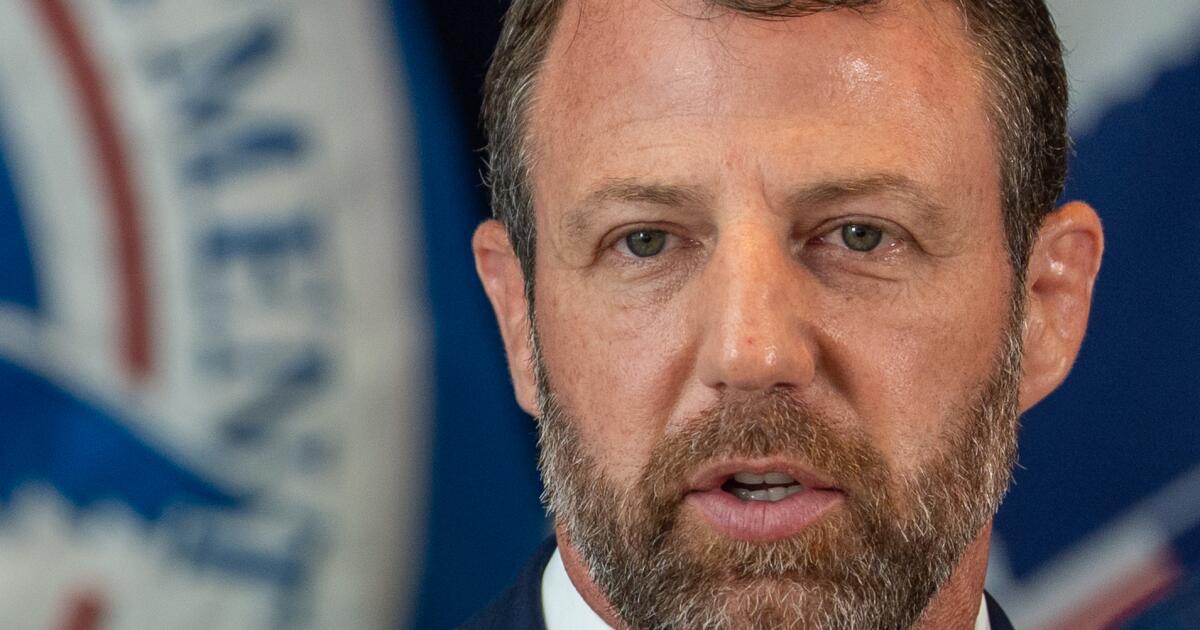
WASHINGTON — When Markwayne Mullin took over as Homeland Security secretary from fired Kristi Noem, he pledged to get the department responsible for carrying out the Trump administration’s mass deportations policy out of the headlines.
But just months into Mullin’s time in office, the department is squarely in the center of controversy again after three people were killed in encounters with Immigration and Customs Enforcement officers in the span of less than a week.
The events are the first major test for Mullin, who promised a steady hand for a department roiled by his predecessor’s conduct and the Trump administration’s immigration crackdown.
As he navigates the uptick in violence, he is being forced into a balancing act that has him juggling pressures from a White House eager to carry out mass deportations and his former colleagues in Congress seeking answers — all while attempting to ease tensions in American cities over the deaths.
“When he took his position, Secretary Mullin said that his goal was to get the department off the front page of the news,” Democratic Rep. Seth Magaziner said on the House floor Tuesday. Then, waving a newspaper, he said: “Well, you’re back on the goddamn front page now.”
Mullin’s approach is a marked change from his predecessor, Kristi Noem
Mullin, a former senator from Oklahoma, was a surprise pick to run the sprawling department after Noem was fired in the wake of two deadly shootings of American protesters at the hands of federal immigration officers in Minneapolis earlier this year.
As the secretary in charge of carrying out the administration’s mass deportations vision, Noem pushed an aggressive style of immigration enforcement where she was front and center, including most famously, a visit to a Salvadoran detention center. She was quick to speak publicly on controversial events, weighing in on both Minneapolis shootings with statements accusing the killed protesters of being agitators.
President Trump, who made mass deportations a central promise of his second administration, ultimately soured on Noem over a $200 million ad campaign and her handling of the Minneapolis operation.
Mullin promised a different approach, while still pledging to deliver on the president’s priorities. His first trip as secretary was not to promote immigration enforcement but to observe hurricane recovery efforts in North Carolina. Noem frequently went out on immigration raids with her officers — Mullin has not.
Since he became secretary and in the aftermath of the Minneapolis violence, the administration has also moved away from high-profile and unpopular immigration operations in American cities to a quieter approach to enforcement that has largely shifted media attention away from the crackdown. Under Mullin, Immigration and Customs Enforcement is also retreating from a plan to use warehouses to detain migrants.
But immigration arrests continue under Mullin and often with little fanfare: ICE arrested 10,000 people over a five-day period in late June, averaging out to about to 2,000 arrests per day. And legal pathways to immigration have also faced new restrictions.
Trump, during Mullin’s tenure, has hailed the secretary as “so incredible,” and “amazing,” lauding him for giving up his Senate seat to run DHS.
For months, it appeared as though Mullin’s change in approach was taking hold. While advocates and civil rights activists accused the department of mistreating immigrants under his leadership, Mullin’s less confrontational approach seemed to keep the department out of the spotlight.
But the events of the past week have posed a new challenge for Mullin as he walks a tightrope between his softer approach and the president’s demands.
“Trying to deal with competing policy objectives is a challenge for any Cabinet secretary, but Mullin has this worse than most,” said Tom Warrick, a former counterterrorism official at Homeland Security who’s now at the Atlantic Council.
“In the case of Homeland Security, the White House wants both to meet their immigration quotas at the same time that they keep public trust, and how you do that — even with the funding that Mullin has — is a really difficult challenge.”
ICE officers in Houston and Maine shot and killed individuals in their cars during immigration operations. In Florida, a man fleeing ICE officers was killed in a car crash.
Mullin has not spoken publicly about the deaths while the department’s public affairs office has released only brief statements following each.
Behind the scenes, Mullin, who frequently talks about how he shares his cellphone number with members of Congress and encourages them to call him directly, has talked with lawmakers and shared information, including talking with both senators from Maine.
And after the second shooting death in Maine, as criticism surged from both protesters and Mullin’s former colleagues in Congress, ICE was ordered to suspend most vehicle stops.
Trump heaps pressure on Mullin over vehicle stop order
That decision infuriated Trump’s supporters.
Conservative influencer Nick Sorter called it a “TOTAL CAPITULATION to the left,” in a post on X. Conservative activist Mike Davis accused Mullin of heeding the advice of Maine Sen. Susan Collins, who said she’d suggested the vehicle stop pause to the secretary.
A day later, Trump appeared to contradict the guidance to ICE, saying in a social media post “we must be strong, tough and smart and we CANNOT give up one of ICE’s most important and effective Crime Fighting tools, THE TRAFFIC STOP!”
Mullin then reposted Trump’s words, adding that people in the country would be “arrested and deported wherever they are.” He later said on X that he and the president are “on the same page.”
It was not immediately clear whether vehicle stops were back on.
But it showed the friction between Mullin’s attempts to maintain calm and the president’s demands that illegal immigrants, which the administration has in many instances portrayed as criminals, be arrested in large numbers.
Democrats have slammed the new secretary, saying that they see little change at the department.
“Secretary Mullin, if he wants to, and if he has the backing of the White House, he has the ability to get ICE under control and make them follow the law,” said Rep. Joaquin Castro, a Democrat from Texas. “So either he has no interest in doing that, or the White House is not backing him up, or the agents are simply out of control.”
Republican lawmakers have come to Mullin’s defense.
“I think the Secretary has lived up to what he’s wanted to do to try to change the atmosphere over there,” said Rep. Andrew Garbarino of New York, who as chair of the congressional Homeland Security Committee has requested a bipartisan briefing on ICE’s use of force policies from DHS.
“I don’t think anybody is celebrating that ICE is back in the headlines,” Garbarino said.
Santana writes for the Associated Press. AP writer Lisa Mascaro contributed to this report.
Fearne Cotton has revealed she was shouted at by a “burly” Vatican security guard after she broke one of the Sistine Chapel’s strict rules during a freebie trip to Rome.
The telly presenter was caught snapping pics of Michelangelo’s famous ceiling, despite their being a photography ban.
Fearne Cotton revealed she was left fuming after being ‘shouted at by a burley Italian security guard’Credit: Fearne Cotton’s Happy Place/YouTubeThe TV presenter was desperate to take a picture of The Creation of Adam painting by MichelangeloCredit: Getty
Fearne confessed her first reaction was to tell the guard to “f**K off,” after he caught her in the act.
The 44-year-old claimed she’s “not very good at rules” and only follows them when they “make sense.”
Sign up for the Showbiz newsletter
Thank you!
Speaking on her Happy Place podcast, Fearne attempted to defend the rule break, claiming she completely missed the announcement warning visitors that cameras and phones were off-limits inside the chapel.
Fearne’s faux pas unfolded during her recent European getaway, which was a paid partnership with British Airways Holidays.
The mum-of-two said: “When I was in Rome. I went on a short city break, and obviously, when you go to Rome, what do you do? You go to the Vatican, because it’s famed for the Vatican, and it’s a beautiful place to walk around.”
She explained that she was excited to see the ornate ceilings up close, specifically the Michelangelo one.
“I was desperate to see that in real life – and obviously take a photo of it. I got in there, I didn’t realise you’re not allowed to take photos. I’d missed that tannoy announcement, and I went to take a picture,” said Fearne.
“I got massively reprimanded, shouted at by a very burly Italian security guard, which should have freaked me out and made me go, ‘Oh god, I’m so sorry,’ but instead, I wanted to go, ‘F***k off!’”
The podcast host added: “I would never do that in the Sistine Chapel, obvs.”
But, Fearne was left furious after the incident and said it was because she “doesn’t like people telling me what to do.”
She said: “I was so riled. Like, I want to take a picture of it, I’ve got my flash on, why is it a problem?
“I also understand and respect that there are religious reasons, potentially, as to why I shouldn’t be taking the picture – I’m assuming, because I’m not quite sure why else.”
The Vatican Museums rule book states that while visitors may take snaps for personal use in most of the complex, it’s forbidden in the Sistine Chapel.
Photography, flash photography and filming using any electronic equipment is strictly not allowed throughout the museums, and guards have the power to demand visitors delete images taken in breach of the rules.
Phones are also banned inside the chapel, where visitors are asked to remain silent out of respect for the sacred setting.
Machines that scan our luggage could raise an alarm over this packet
The common item could be flagged as suspicious by airport scanners(Image: Getty)
If you have a long flight ahead or fancy some screen-free entertainment, bringing a pack of playing cards can seem like a good idea to beat boredom. But they can cause a security issue at airports, which could mean you’re held up while items are checked.
Many items are banned for being sharp and potentially dangerous, but even innocuous items such as corkscrews could be confiscated. But, some seemingly harmless items could also raise an alarm with security staff and require further checks.
The Transportation Security Administration (TSA), which oversees airport security in America, told Travel and Leisure that any deck of cards, from classic playing cards to games to collectables like Pokémon, could trigger a security red flag if they are picked up by scanners that notice the suspicious look of the otherwise innocent item.
Ian Cava from the TSA explained that the shape of the cards can trigger additional checks and make them appear as if there’s something hidden inside. He said: “When items are stacked tightly together, like decks, binders, or graded slabs, the X-ray image can make it difficult for officers to confirm there are no prohibited items concealed in or around them.”
Even family-friendly games like UNO have a strong chance of triggering alerts. A standard UNO deck has 112 cards, making it twice as thick as a regular 52-card deck. The X-ray operators cannot see through the thick stack, so they must check it for hidden contraband.
Although the advice comes from the TSA, people travelling from UK airports can also follow the guidance, as the security processes are quite similar. For an X-ray scanner, a tightly packed deck appears as an organic solid block that could be flagged as a potential explosive, electronic device, or dense liquid, all of which require further checks.
A standard bag search usually takes up to 15 minutes once your bag reaches the inspection table. However, during peak travel times, the queue of bags waiting to be manually checked can back up, significantly extending your wait.
Many UK airports are currently upgrading to advanced 3D scanners. If your security lane uses these newer machines, you often do not need to take anything out of your bag, drastically reducing false alerts. Because the rollout is not happening all at once across every UK airport, some lanes still use older X-ray machines that strictly require manual checks for dense items like cards and games.
Tips to get through security faster with playing cards:
To avoid delays, treat playing cards like anything else you’d take out of your bag. Place the card box in a tray to be checked rather than waiting for the security alert to be triggered.
People can also avoid issues by not packing cards in metal tins or carry cases – typically provided or bought for collectables. Use a cardboard or plastic case because metal tins are harder to scan.
Putting any of your board games and cards in hold luggage is the safest way to avoid security delays, as they don’t go through manual bag checks that require you to wait. While this completely eliminates the risk of your hand luggage being pulled aside for a card or game check, passengers risk having their items bent, crushed, or lost if the airline misplaces their suitcase.
The Muslim Brotherhood’s failure to penetrate Chinese society, particularly after the Arab Spring uprisings, stems from the Chinese Communist Party’s tight security grip, China’s policies of localizing religions, and the Chinese public’s rejection of transnational political ideologies. Despite the Brotherhood’s historical and organizational attempts to build ties with Muslim minorities in China, the rigid nature of the Chinese system and society has formed an impenetrable barrier to any infiltration. The fundamental contradiction between ideologies in China, such as Chinese communism as the ruling doctrine and political Islam as a totalitarian movement from which the Muslim Brotherhood emerged and China’s strict security policies aimed at integrating minorities, has led to the failure of these political ideological currents. Political Islam and the Muslim Brotherhood have failed to gain a foothold in China for several structural and political reasons. The most prominent of these is the strict nature of the Chinese communist system, which prohibits any political or religious activity outside the state’s control. This is compounded by the Sinicization policies that impose absolute loyalty to Chinese culture and the Communist Party. Furthermore, the internationalist ideology of the Muslim Brotherhood and political Islam clashes with Chinese nationalism. Additionally, there is a lack of popular support for such projects among Muslim minorities who follow religious traditions different from those in Arab and Islamic countries and around the world. Despite the existence of an Islamic religious group in China called Yihewani, whose name literally means brotherhood, it is a reformist movement within the Hanafi school of Islamic jurisprudence. It originated locally in China in the 20th century, specifically in the 1930s, but it is a completely independent, traditional Hanafi school of thought with no organizational or ideological ties to the Muslim Brotherhood in the Middle East.
On the other hand, China harbored apprehensions about the political Islam and Muslim Brotherhood model following the Arab Spring uprisings of 2011. Research centers and decision-making bodies in Beijing closely monitored the outcomes of these uprisings, particularly the Muslim Brotherhood’s rise to power in Egypt and Tunisia. China viewed the Brotherhood’s ascent to power in some countries, such as Egypt and Tunisia, followed by their subsequent failures and the descent of some into civil war, as evidence that political Islam harbors a project to destabilize nations. This understanding led Beijing to adopt a firm, principled stance rejecting this model of political Islam entirely in order to protect its own stable development model. Consequently, China adopted a policy of strategic alliance with Egypt under President Abdel Fattah El-Sisi and other Arab nationalist regimes following the events of the June 30, 2013, revolution in Egypt and the fall of the Muslim Brotherhood and its president, Mohamed Morsi. China strengthened its strategic and economic partnerships with current Arab governments, such as those in Egypt and the Gulf states. Here, China rejects interference in the internal affairs of other countries. Similarly, Arab states support the One China policy and its actions in Xinjiang. This high-level diplomatic coordination between China, Egypt, and other Arab states, following the Muslim Brotherhood’s failed rule, has led to a crackdown on any attempts to finance or subtly infiltrate the banned group through economic or educational channels within China.
Here, the Chinese state pursues a policy of institutional rejection of political Islam and the Muslim Brotherhood. Chinese authorities classify any political activity with a religious basis as a direct threat to national security and territorial integrity. This has led to the banning and dismantling of any cells or attempts to establish branches of the Muslim Brotherhood. Furthermore, Muslim ethnic minorities in regions like Xinjiang (East Turkestan) face strict security and surveillance measures that prevent the formation of any opposing Islamic religious movements within China. Beijing also imposes the forced assimilation of Muslim minorities into Chinese culture and criminalizes any transnational organizational manifestations or affiliations. With an emphasis on the dominance of communist ideology, the ruling Chinese Communist Party rejects any religious or political activity or movements that seek to assert identity above loyalty to the state and the party. This is coupled with strict Chinese security measures to combat foreign infiltration of religions, organizations, movements, and Islamic political currents within China, particularly the Muslim Brotherhood. Beijing maintains one of the world’s most stringent surveillance systems for monitoring religious and political activities. Following the Arab Spring uprisings of 2011, Chinese security agencies raised their alert levels to ensure that the contagion of color revolutions or ideological movements did not spread within its borders. China considers any foreign organization, such as the Muslim Brotherhood, a direct threat to national security and social stability. Therefore, any cells or committees attempting to engage with Chinese Muslims are banned and dismantled.
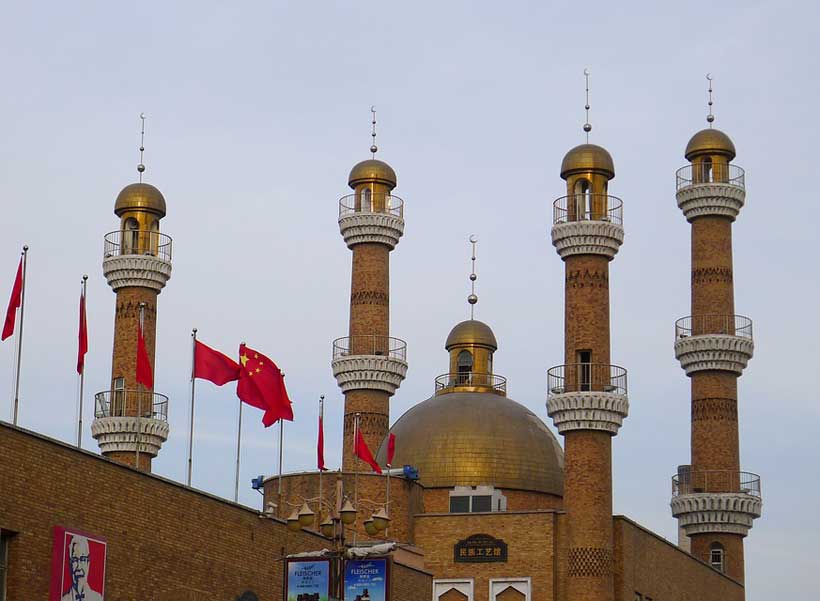
Political Islam movements have failed to penetrate Chinese society and bring about political or social changes as they have in other countries. This is due to several historical, political, cultural, and social factors imposed by the Chinese state. The most prominent of these factors are the tight security and political grip and the nature of the Chinese communist political system. China imposes a highly centralized system in which the state and the Communist Party completely control the public sphere and institutions. No independent political or ideological organization is permitted outside the umbrella of the Communist Party. Chinese authorities impose strict censorship and implement proactive security policies that prevent any political, religious, or opposition organizations or movements from existing or expanding. Furthermore, the primacy of nationalism over religion in China, where Chinese identity is primarily based on belonging to the nation and the nationality, represented by the culture of the majority Han Chinese population, makes loyalty to the state paramount. This renders the transnational ideologies adopted by political Islam movements unacceptable and severely restricted. Here, the government’s policies toward religions in China become clear. China pursues a policy of Sinicization of religions, meaning that the practice of any religious rituals must conform entirely to Chinese culture and socialism. The Chinese state follows policies of Sinicization on religions, with Chinese authorities implementing strict policies to subordinate religions to Chinese socialist culture and values. This has included systematic campaigns to prevent foreign or Middle Eastern influences on mosque style, clothing, and religious practices. China also adopts strict policies to contain any influence of political Islam and subjects religious bodies to state supervision. Beijing aims to Sinicize religions and requires their integration with the culture of the Han majority and the values of the Communist Party, placing loyalty to the nation above all other affiliations.
Stay ahead of the geopolitical week.
MD Briefing delivers expert analysis across five global fronts — the Indo-Pacific, energy, geoeconomics, European security, and the Middle East — every Monday morning. Free.
This occurs while the Chinese state officially manages and oversees Islamic institutions, such as the Islamic Association of China, thus preventing the emergence of independent religious leaders or institutions that could adopt or disseminate the ideas of political Islam. Herein lies the role of cultural and historical diversity within China. Muslim minorities in China, such as the Hui ethnic group, have absorbed traditional Chinese culture and integrated it with their beliefs over centuries, making their communities well-integrated into the broader social fabric and resilient against external influences. Muslims have been historically integrated into China, and Islam has been part of the Chinese social fabric for over 13 centuries. Muslim ethnic groups, such as the Hui, have successfully integrated into Chinese society and adapted to local culture. This integration has made political Islam alien to their environment due to China’s strict security measures. The Chinese government deals harshly with any religious or ethnic movements with a political character, particularly in the predominantly Muslim Xinjiang region of northwest China, under the banner of combating extremism and terrorism. Security policies and measures have been implemented to restrict any religious activity outside the official control of the Chinese state. The state adopts a dual strategy: containing practices acceptable to official state institutions while categorically rejecting any separatist or political tendencies that Beijing considers a threat to the country’s unity and stability.
Beijing manages religious pluralism through the Islamic Association of China and views any ideologies that deviate from loyalty to the state with extreme caution. The relationship between the state and Islam in China is shaped by several pillars, including national diversity. China has 56 officially recognized ethnic, religious, and national groups, with the Han Chinese constituting the vast majority at approximately 92% of the population. Regarding Muslim ethnic groups, there are 10 Muslim-majority groups in China, such as the Hui and Uyghurs, with the total number of Muslims estimated in the tens of millions. China officially adopts a policy of Sinicization, whereby Chinese authorities lead campaigns to eliminate transnational religious expressions, prohibiting religious institutions from having ties with their counterparts abroad. Religious institutions are required to adhere to the Party’s leadership and integrate their doctrines with Chinese cultural traditions. The Chinese government pursues a policy of Sinicization of Islam. The Chinese state adopts a firm strategy based on integrating Islam and its culture into the Chinese national identity (in accordance with socialism with Chinese characteristics). As we mentioned, Muslim affairs are officially managed through the Islamic Association of China, which is under the control of the ruling Communist Party. This closure of the religious sphere has thwarted the Islamic internationalism ideology promoted by the Muslim Brotherhood in Middle Eastern countries, as China confines religious teaching and practice to purely local frameworks, preventing the introduction of the writings of Sayed Qutb or Hassan Al-Banna into Chinese territory.
Therefore, we conclude that attempts by political Islamist movements, particularly the Muslim Brotherhood, to infiltrate China or penetrate its Muslim communities have failed. Here we observe the cultural and ethnic differences between the Muslim minorities in China and the ideas of the Muslim Brotherhood, which is banned in Egypt and the Middle East. The main Muslim population in China is divided into two primary groups that fail to resonate with the Brotherhood’s ideology: the Hui ethnic group, a Chinese Muslim minority. The Hui are Chinese-speaking Muslims fully integrated culturally and socially into the fabric of the Chinese state. Their primary loyalty is to China, and therefore, the Arab political ideology of the Muslim Brotherhood finds no echo among them. The second group is the Uyghur ethnic group. Uyghurs reside in the Xinjiang region (East Turkestan) in northwest China. Despite the presence of nationalist and religious tendencies, Beijing has imposed extremely strict security measures (including re-education camps and biometric surveillance, which are security systems within China that use an individual’s biological characteristics, such as fingerprints, facial features, and iris scans, to verify their identity), effectively isolating the region from any activism emanating from the Middle East, particularly from the Muslim Brotherhood.
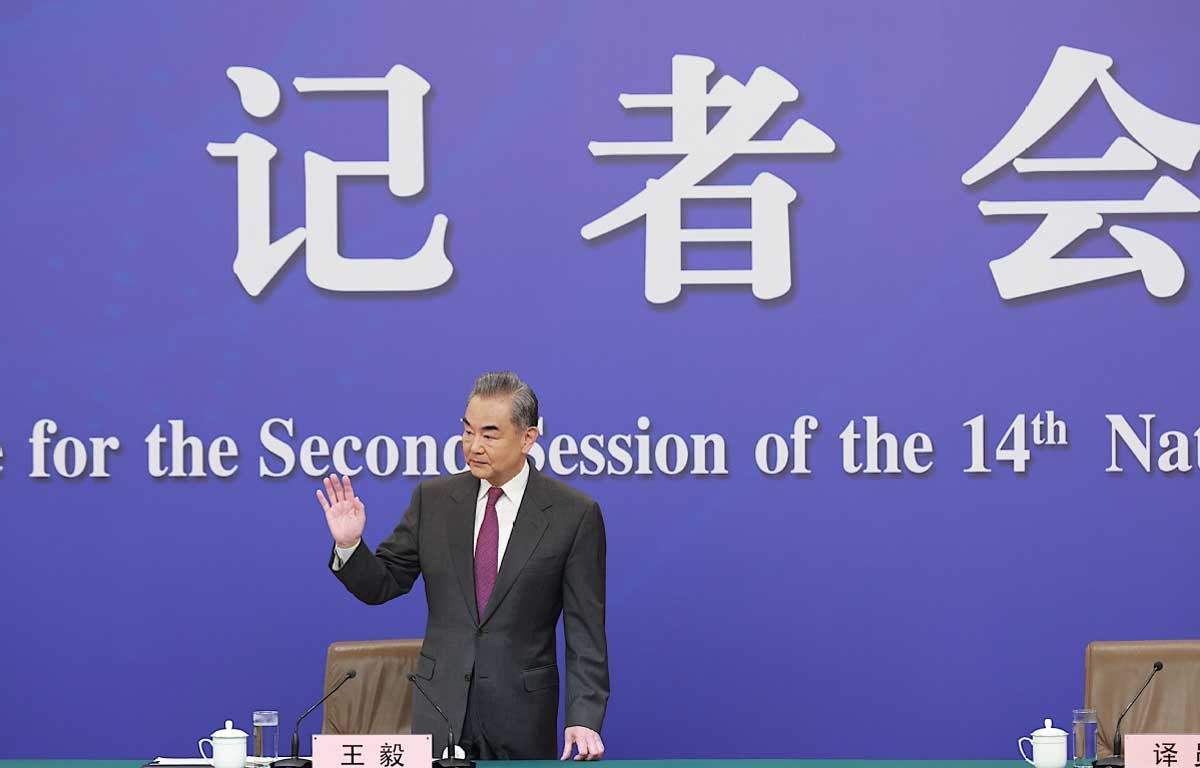
China said on Tuesday it does not seek a “sphere of influence” in the Pacific, as Foreign Minister Wang Yi defended Beijing’s growing engagement with Pacific island nations following criticism over a recent missile test in the South Pacific.
The remarks came during talks in Beijing with Solomon Islands Foreign Minister Rick Houenipwela, as regional tensions continue to intensify amid strategic competition between China and Western allies.
China Rejects Geopolitical Motives
Wang Yi said China’s cooperation with Pacific island nations is based on mutual respect and shared development rather than geopolitical ambitions.
He stressed that Beijing’s partnerships come without political conditions and are not imposed on other countries. Wang also said Pacific island states are independent and sovereign nations that should not be treated as any country’s “backyard” or be subject to outside interference.
Stay ahead of the geopolitical week.
MD Briefing delivers expert analysis across five global fronts — the Indo-Pacific, energy, geoeconomics, European security, and the Middle East — every Monday morning. Free.
China reaffirmed its willingness to expand cooperation with the Solomon Islands in areas including green energy, healthcare, and climate change.
Missile Test Sparks Regional Concerns
The meeting followed China’s recent test launch of a missile carrying a dummy warhead from a nuclear powered submarine into the South Pacific.
The test drew criticism from several regional governments, including the Solomon Islands, which questioned both the timing and the message sent by the launch.
Solomon Islands Prime Minister Matthew Wale described China as “a good friend” but said the missile test was “not something a friend does,” while reaffirming his country’s commitment to strengthening ties with Australia.
The launch also coincided with the signing of a new mutual defense agreement between Fiji and Australia, highlighting growing security cooperation among Pacific nations.
Pacific Becomes Strategic Battleground
The Pacific has become an increasingly important arena for geopolitical competition as China expands its diplomatic, economic, and security engagement across the region.
Meanwhile, Australia, the United States, New Zealand, and other partners have stepped up investment, defense cooperation, and development assistance in an effort to maintain their influence among Pacific island countries.
Many Pacific governments continue to pursue a balanced foreign policy, seeking economic cooperation with multiple partners while avoiding alignment with any single major power.
Why This Matters
China’s latest comments underscore the growing diplomatic contest for influence in the Pacific, where infrastructure investment, security partnerships, and climate cooperation have become central to regional politics. The region’s strategic location and maritime significance make it increasingly important in broader competition between China and Western allies.
Future Outlook
China is expected to continue expanding economic and development cooperation with Pacific island nations, particularly in renewable energy, healthcare, and infrastructure. At the same time, Australia and its partners are likely to deepen security and development initiatives across the region. As strategic competition intensifies, Pacific governments will continue balancing relationships with competing powers while seeking investment and support that align with their national priorities.
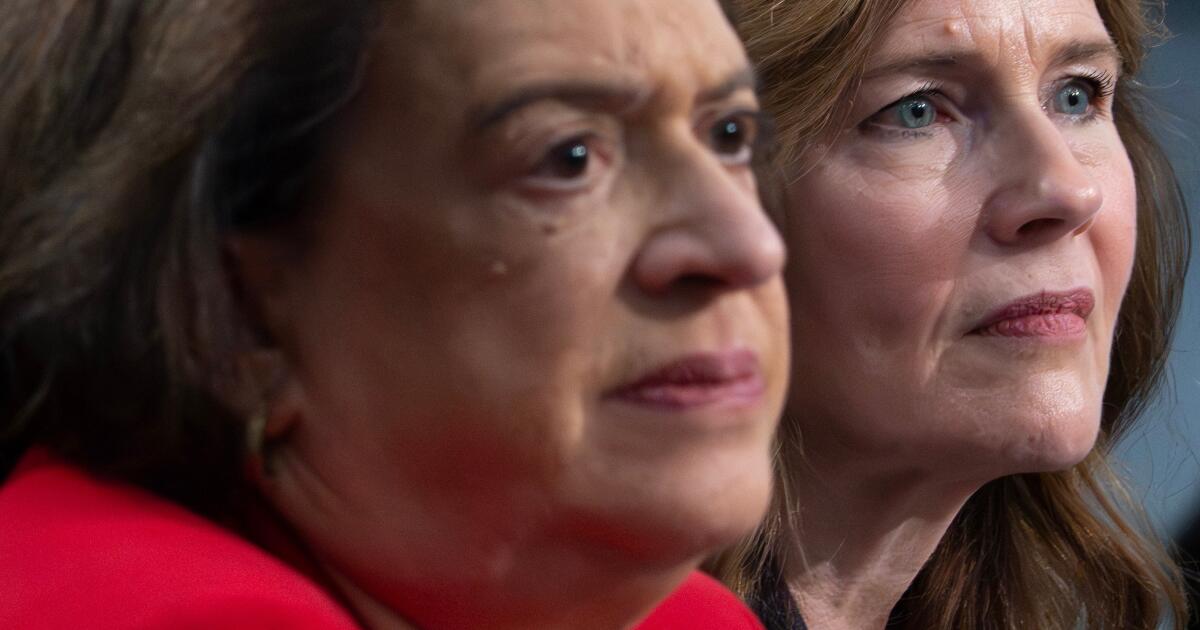
WASHINGTON — Supreme Court Justice Amy Coney Barrett told lawmakers Tuesday that a sharp increase in threats targeting her and other justices is increasingly encroaching on their personal and family lives.
During a rare appearance by justices before Congress, Barrett said she had to wear a bulletproof vest home a few years ago, something she struggled to explain to her 12-year-old son.
“I didn’t expect that performing this service would put me in the position of explaining to my children what a bulletproof vest was, why I had to wear one,” she said.
She and Justice Elena Kagan testified before a House appropriations panel in support of a request to increase security funding for members of the nation’s highest court.
Judges around the country have seen a rise in threats of violence and intimidation. Barrett’s home was also targeted by a swatting call to police in May.
The hearing comes two weeks after the conservative-majority court finished handing down a series of major opinions, including a decision that increased President Trump’s power over federal regulatory agencies and another that rejected his wide-ranging tariffs, sparking harsh personal criticism.
It’s the first time justices have testified before Congress since 2019, and the two justices are facing wide-ranging questions about the court’s work.
Security is central to the Supreme Court’s budget request
The Supreme Court requested a total of $228 million for next fiscal year, a roughly 10% increase over the year before. About $18 million of that is for maintaining the building and grounds.
Much of the requested increase, $14.6 million, would go to expanding personal protection for justices, with six more agents for each.
An additional $2 million would fund an off-site residential security post aimed at making emergency responses faster, as well as increasing the number of Supreme Court police officers.
The U.S. Marshals Service, responsible for protecting judges, reported 564 threats in the government fiscal year that ended in September, an increase from the year before.
That total includes threats to the hundreds of federal judges around the country, though the nine-member Supreme Court has not been immune.
In May, Barrett’s security detail worked with police to quickly deal with the swatting incident, a fake 911 call designed to provoke a police response. Last year, her sister was the victim of a bomb threat in Charleston, S.C., police said. No bomb was found.
In 2022, shortly after the leak of a draft opinion overturning the Roe vs. Wade abortion decision, a would-be assassin was arrested near the home of Justice Brett M. Kavanaugh with weapons and zip ties. Threats to the Supreme Court increased after that leak and have continued to grow, Kagan said.
Chief Justice John G. Roberts Jr. has condemned the threats to all U.S. judges, saying during a speech in March that criticism of judicial opinions is understandable, but personally directed hostility is “dangerous, and it’s got to stop.”
Supreme Court Chief Justices John Roberts, Elena Kagan, Brett Kavanaugh and Amy Coney Barrett listen as President Donald Trump delivers his State of the Union address in February. Kagan and Barrett plan to testify before Congress Tuesday about the need for increased security for justices. File Photo by Annabelle Gordon/UPI | License Photo
July 14 (UPI) — Two Supreme Court Justices are planning to testify before Congress Tuesday about the Court’s budget ask for extra security amid growing threats.
Supreme Court Justices Elena Kagan and Amy Coney Barrettplan to appear before the House Appropriations subcommittee that approves funding for the Court to discuss the request for a $16.6 million budget increase to improve security for the justices at work and home. But questioning could veer toward several recent controversial decisions the Court made in its 2025-2026 term.
The budget increase requested is $20.6 million for fiscal year 2027. It asks for $14.6 million to give each justice six more security agents and 25 extra officers at the Supreme Court building, The Washington Post reported. The request also includes $2 million for a residential security office to coordinate home security.
It will be the first time Court justices have gone before Congress since 2019.
Supreme Court justices regularly face personal attacks from politicians and the public who may be displeased with their decisions.
Barrett’s home was “swatted” in May, when a caller reported gunshots at her home to lure police there. In October, a woman was sentenced to eight years in prison for planning to kill Justice Brett Kavanaugh.
“Personally directed hostility is dangerous and has got to stop,” Roberts said during a speech in Houston.
Sending justices to Congress has become rare. Until 2011, at least one justice had appeared before Congress every year. Since then, there have been only three appearances.
A book for condolences, sticky notes and flowers are seen outside the office of the late Sen. Lindsey Graham, R-S.C., at the Russell Senate Office Building on Monday. Graham died on the evening of July 11 at the age of 71 after what his office described as a brief and sudden illness. He served South Carolina in Congress for 31 years, including eight years in the House of Representatives and 23 years in the Senate. Photo by Bonnie Cash/UPI | License Photo
The death of United States Senator Lindsey Graham has created fresh uncertainty over the future of Washington’s support for Ukraine at a critical stage in the war with Russia. Graham was one of Kyiv’s strongest advocates in Congress and one of the few Republican lawmakers with direct access to President Donald Trump, allowing him to influence White House policy on sanctions, military aid, and strategic cooperation.
While many lawmakers have pledged to continue Graham’s initiatives, analysts say replacing his unique political influence will be difficult. His death comes as Ukraine faces intensified Russian attacks, renewed debates over military assistance, and uncertainty over whether Congress will approve tougher sanctions on Moscow.
Who Was Lindsey Graham for Ukraine?
For more than two decades, Lindsey Graham was one of the Republican Party’s leading foreign policy voices. Since Russia’s full scale invasion of Ukraine in February 2022, he emerged as one of Kyiv’s most consistent supporters in Washington.
Unlike many lawmakers, Graham maintained a close personal relationship with both President Donald Trump and Ukrainian President Volodymyr Zelenskiy.
Stay ahead of the geopolitical week.
MD Briefing delivers expert analysis across five global fronts — the Indo-Pacific, energy, geoeconomics, European security, and the Middle East — every Monday morning. Free.
He visited Ukraine 10 times during the war, regularly met Ukrainian officials, and publicly argued that continued United States support was essential for European security and for deterring authoritarian powers worldwide.
His greatest political advantage was his ability to communicate directly with Trump at times when many other Republican supporters of Ukraine struggled to influence the president.
The Russia Sanctions Bill
One of Graham’s most important priorities was the Sanctioning Russia Act, legislation designed to significantly increase economic pressure on Moscow.
The bill seeks to punish countries that continue purchasing Russian:
Its objective is to reduce Russia’s energy revenues, which remain a key source of funding for its military campaign.
Although the legislation gained 85 bipartisan co sponsors in the Senate, it remained stalled because of resistance from the White House.
Just one day before his death, Graham announced that he had finally secured an agreement with the Trump administration to move the legislation forward.
Many senators now hope Congress will pass the bill both as a strategic measure against Russia and as a tribute to Graham’s legacy.
Military Aid Could Face Greater Challenges
Beyond sanctions, Graham consistently advocated stronger military assistance for Ukraine.
He supported:
Patriot air defense systems
Missile production cooperation
Expanded weapons transfers
Long term security commitments
Intelligence cooperation
His lobbying helped improve relations between Kyiv and Trump during periods of political tension.
Last year he also played a central role in negotiating a critical minerals agreement that gave the United States preferential access to future Ukrainian mineral projects in exchange for investment.
More recently, Trump announced that Ukraine would receive licenses to manufacture Patriot interceptor missiles domestically, an initiative Graham strongly supported.
However, Ukraine continues to emphasize that immediate deliveries of defensive weapons remain more urgent than future production capacity.
Why Graham Was Difficult to Replace
Analysts argue that Graham’s influence extended far beyond committee hearings or public speeches.
He served as an informal bridge between:
Congress and the White House.
Republicans and Democrats.
Kyiv and the Trump administration.
Few Republican lawmakers enjoyed comparable access to Trump.
His ability to persuade the president privately often proved more valuable than public congressional debates.
This influence became especially important as many Republicans adopted a more cautious approach toward supporting Ukraine after Trump’s return to office in January 2025.
Several other senior Republican supporters of Ukraine, including former Senate leader Mitch McConnell, are also preparing to leave Congress, further reducing Kyiv’s network of experienced allies.
Will United States Policy Change?
Despite concerns, Graham’s death does not automatically mean a reversal of United States policy toward Ukraine.
Several factors suggest continued support:
Strong bipartisan backing
The Russia sanctions legislation already enjoys overwhelming bipartisan support in the Senate.
Institutional momentum
Military cooperation between Washington and Kyiv now involves long term industrial partnerships, intelligence sharing, and defense production agreements that extend beyond any single politician.
Trump’s recent policy shift
In recent weeks Trump has adopted a noticeably more supportive tone toward Ukraine.
He has endorsed licensed production of Patriot interceptors and appears increasingly willing to allow Congress to vote on tougher sanctions against Russia.
Nevertheless, uncertainty remains.
Without Graham acting as an intermediary, disagreements between Congress and the White House could become more difficult to resolve.
Political Reactions
President Volodymyr Zelenskiy described Graham’s death as a personal loss, noting they had remained in constant contact and met twice during the senator’s final visit to Ukraine.
Democratic Senator Jeanne Shaheen and several Republican lawmakers have proposed passing the Russia sanctions bill as Graham’s legacy, with some suggesting it should even bear his name.
Senate Majority Leader John Thune also called passage of the legislation an appropriate tribute to Graham’s decades of public service.
Why This Matters
Lindsey Graham represented something increasingly rare in Washington’s polarized political environment: a Republican with both strong pro Ukraine views and significant influence over President Trump.
His death removes one of Kyiv’s most effective advocates at a time when the war is entering another difficult phase. While institutional support for Ukraine remains substantial, personal relationships often play an outsized role in shaping United States foreign policy, particularly under the Trump administration.
Whether Congress can maintain bipartisan momentum without Graham may influence not only future sanctions but also military assistance and broader diplomatic engagement with Ukraine.
Analysis
Graham’s passing is unlikely to produce an immediate shift in United States policy, but it could gradually reshape the political dynamics surrounding Ukraine. His influence was rooted less in his legislative position than in his personal relationship with President Trump, allowing him to bridge the gap between a White House that has often been skeptical of deeper involvement in Ukraine and a bipartisan coalition in Congress seeking stronger action against Russia.
The sanctions bill may still pass because of its broad bipartisan support and the symbolic significance it has acquired following Graham’s death. However, future military assistance could face greater political hurdles. Weapons transfers and funding packages require sustained presidential backing, and without Graham serving as an intermediary, advocates for Ukraine may find it harder to persuade Trump during moments of disagreement.
At the same time, the institutional relationship between Washington and Kyiv is now far more developed than it was in the early years of the war. Joint defense production, intelligence cooperation, and long term industrial partnerships have created strategic ties that extend beyond the influence of any individual lawmaker. These structures provide a degree of continuity even as political leadership changes.
Looking ahead, the direction of United States policy will depend less on finding a direct replacement for Graham and more on whether other Republican leaders choose to embrace his internationalist approach or align more closely with voices advocating reduced American involvement overseas. The outcome will shape not only Ukraine’s military position but also the credibility of Western efforts to sustain long term pressure on Russia.
Iraqi Prime Minister Ali al-Zaidi is travelling to the United States for talks with President Donald Trump, in what will be his first foreign trip since taking office in May.
During this week’s meetings, al-Zaidi is expected to sign agreements in energy and trade while also boosting investment with US companies.
Iraqi government spokesman Haider al-Aboudi told reporters on Sunday the visit to Washington, DC, will mark a shift in the countries’ relations “from a framework of crisis management to a strategic economic partnership”.
The focus, he said, would not be about striking a “temporary” agreement but about establishing “a durable, long-term partnership that serves the shared interests of both countries”.
Al-Aboudi said oil would be “a top priority” during the visit as the Iraqi government seeks to increase production and find alternative export hubs to lessen the consequences of any future closure of the Strait of Hormuz.
Iraq was one of the countries badly hit by the shutting down of the critical waterway in recent months due to the US-Israel war on Iran, as about 90 percent of its 3.4 million barrels per day (bpd) of exports passes through it.
Al-Aboudi said Iraq’s proposal to establish an energy and development fund with the US would be on the table to finance any projects that would be agreed upon, especially in the energy sector.
Al-Zaidi had previously said the fund would initially be structured in oil exports of 500,000 bpd with the goal of increasing to as much as two million bpd.
The prime minister has also said Iraq seeks to increase oil production to seven million bpd over the next three years, up from its current output of about 4.5 million bpd.
“Iraq is in need of such kind of cooperation, especially with a partner like the United States to enhance and strengthen its capacity, particularly in the energy, oil, gas, electricity, and petrochemicals sectors,” said Abdulrahman Almashhadani, an Iraqi economic expert and professor.
“However, the critical question remains whether Iraq can provide a safe and stable environment that would encourage US companies to come to Iraq,” he said. “This issue is sensitive and unresolved; it largely depends on the government’s ability to deliver on its commitments to restrict weapons to state control.”
Large delegation
Sources told Al Jazeera the Iraqi delegation to the US comprises more than 70 people, including key ministers, the head of the central bank, the national security adviser, lawmakers and businessmen.
A well-informed source said meetings with US administration officials and the International Monetary Fund (IMF) have also been planned. According to the source, who asked not to be named, Iraq is seeking to secure an IMF loan of up to $8bn.
A separate well-informed source told Al Jazeera that the disarming of pro-Iran Iraqi armed factions and restricting weapons under state authority, as well as Baghdad’s relationship with Tehran, are expected to be among the issues the US side will raise during the visit.
In his first speech in parliament as prime minister, al-Zaidi had promised that the state would have control over weapons in a country where paramilitary groups, including many supported by Iran, have been powerful since the 2003 US-led war on Iraq.
Some armed factions said they would abide by the prime minister’s declaration, but others – particularly the powerful ones that launched missiles and drones at US facilities during the war on Iran – rejected it.
In a statement released hours before al-Zaidi’s trip to Washington, the Islamic Resistance in Iraq, an umbrella group of Iran-backed armed groups in the region, including Iraq, rejected the prime minister’s visit and its outcomes.
“We will not give a blank cheque for all government policies. We warn against replacing military occupation with an economic occupation that is even more dangerous,” the statement said.
“The option of defending Iraq and its legitimate interests will remain on the table,” it added.
Al-Zaidi has said his government is eager to implement a 2024 deal made with the US-led coalition’s military mission in Iraq to end its presence as combat forces by the end of September.
Some of the factions that rejected the prime minister’s disarmament statement said they would wait to see what happens on September 30 and then act accordingly.
Ehsan al-Shammary, a professor of international studies at Baghdad University, said the economic initiatives and the backing that al-Zaidi is seeking from Trump during Monday’s talks would inevitably be overshadowed by the issue of Iran’s influence in Iraq.
Ultimately, he added, it is the issue that will determine the success or failure of a “very important” visit that could “redefine” bilateral relations and “give it a push”.
“Al-Zaidi has little room for manoeuvre. He should choose either to align with the United States or move closer to Iran,” said al-Shammary. “I do not believe Washington is willing to accept a divided sphere of influence in Iraq alongside Tehran. That is why the prime minister’s task appears to be almost impossible.”
An airport has revealed an easy trick for a shorter wait at airport security
People could save time using the airport-approved tip (stock photo)(Image: Getty)
Holidaymakers can cut down the time they spend waiting at airport security using a little-known trick. The travel hack was shared by Manchester Airport, and it could be perfect for families ahead of the busy summer holidays.
According to Manchester Airport, there’s an easy way to reduce your queue time if you’re allowed to choose which lane to wait in. Posting tips for passengers online, the travel hub shared an ‘Ultimate Airport Guide’ on its website. There are various tips, covering everything from the best shoes to wear and how to decorate suitcases for maximum visibility.
In the ‘at the airport’ section of the guide, there’s a hack that could help passengers fly through security using ‘reverse psychology.’ Manchester Airport said: “If given the choice of security lanes, pick the left. Most passengers are right handed and will subconsciously prefer the right, making the left a little quieter.”
The airport added that customers can also pay to upgrade to FastTrack for a faster experience. “For just a few pounds, you can purchase FastTrack tickets to use the priority lane and avoid the queues before Security on your way out and Passport Control on your way in.” Many airports offer a similar experience, allowing passengers to pay to use FastTrack.
Elsewhere, London Stansted Airport offers the same security advice for passengers. The airport retierates: “If given the choice of security lanes, pick the left.”
The tip could be especially helpful when many passengers are travelling at the same time, such as during the school summer holidays. However, it’s worth noting that passengers don’t always get to choose their lane.
Nonetheless, they can help speed up the process by avoiding accessories that are difficult to remove. This makes the process faster for everyone.
Offering advice online, London Stansted Airport said: “To prepare your outfit for security, wear shoes that you can take off and put on easily. Avoid fiddley belts or fastenings in your clothes and excess jewellery. Try and keep your pockets empty of non-essentials.”
Despite this, passengers might still want to pack a few layers for later in their journey. The airport recommends packing items such as jumpers, which are easy to take on and off when the temperature changes.
The travel advice said: “Temperatures aboard flights can vary so wearing a few removable layers is advised. An extra jumper can always be used as a pillow if nothing else.”
European shares were little changed on Friday but remained on track for their first weekly decline in five weeks as weakness in technology stocks and renewed tensions between the United States and Iran dampened investor sentiment.
The pan-European STOXX 600 index edged 0.1% lower to 640.28 points by 0849 GMT, with losses in technology companies offsetting gains in most other sectors.
The benchmark index is poised to end a four-week winning streak after investors reassessed lofty valuations in artificial intelligence-related stocks while monitoring escalating geopolitical risks in the Middle East.
Technology stocks remain under pressure
The technology sector fell 1.3% on Friday as investors continued taking profits following months of strong gains driven by enthusiasm for artificial intelligence.
Stay ahead of the geopolitical week.
MD Briefing delivers expert analysis across five global fronts — the Indo-Pacific, energy, geoeconomics, European security, and the Middle East — every Monday morning. Free.
The sector also remained focused on the closely watched U.S. stock market debut of South Korean memory chip maker SK Hynix after its $26.5 billion share sale.
Among European chip-related stocks:
Soitec fell 3.3%.
BE Semiconductor Industries declined 1.6%.
ASML dropped 2.3%.
“The large swings we’re seeing in technology stocks suggest investors remain under stress amid elevated valuations,” said Ipek Ozkardeskaya, senior market analyst at Swissquote Bank.
“Attention is now turning to SK Hynix’s U.S. debut, which could help gauge broader appetite for AI-related stocks and influence sentiment across the sector.”
Iran tensions weigh on market sentiment
Investor caution also reflected renewed uncertainty in the Middle East after Iranian forces targeted U.S. military infrastructure in Gulf states following fresh U.S. strikes on Iran.
The latest escalation further weakened the fragile three-week-old ceasefire and renewed concerns over potential disruptions to shipping through the Strait of Hormuz, one of the world’s most important energy trade routes.
Higher oil prices and possible supply disruptions have raised concerns about inflation, particularly in energy-importing Europe, where markets are closely watching the implications for economic growth and European Central Bank policy.
Telecoms and travel outperform
Despite weakness in technology, most sectors in the STOXX 600 traded higher.
Telecommunications stocks led gains, rising 1.4%, after Vodafone surged nearly 11%.
The rally followed an announcement by UAE telecoms group e& that it would sell its stake in Vodafone to the family investment group of French billionaire Xavier Niel.
Travel and leisure stocks gained 0.8%, supported by strength in airline shares.
British budget carrier EasyJet jumped 14% after agreeing in principle to a £5.7 billion ($7.65 billion) takeover approach from Apollo Global.
Steel stocks rally on broker upgrades
European steelmakers outperformed after J.P. Morgan adopted a more positive view of the sector.
The investment bank upgraded ArcelorMittal to “neutral” from “underweight,” lifting its shares 5%.
Austria’s Voestalpine climbed 6%, while Germany’s Salzgitter surged 10.3% after both companies received double upgrades to “overweight.”
Other movers
Wealth manager St. James’s Place was among the session’s biggest losers, falling 8.5% after reports that Sovereign Wealth, one of its largest partner firms, was in talks to join a Swedish wealth management group.
Future outlook
Markets are expected to remain focused on two key drivers in the coming days: whether the renewed U.S.-Iran hostilities escalate further and whether SK Hynix’s U.S. debut reinforces or weakens investor confidence in the AI-driven technology rally.
With geopolitical risks pushing oil prices higher and technology valuations facing increased scrutiny, analysts expect volatility across European equities to remain elevated in the near term.
China’s successful submarine-launched ballistic missile test into the southern Pacific this week was more than a routine military exercise. It provided Beijing with a rare opportunity to validate one of the most sensitive aspects of its nuclear deterrent its ability to command, communicate with and potentially deploy nuclear-armed submarines while remaining undetected.
The test, carried out on Monday, involved a ballistic missile launched from a strategic nuclear-powered submarine and has drawn close scrutiny from regional governments and defence analysts. While Chinese officials described it as a standard military drill conducted in accordance with international law, experts say it marks another step in China’s effort to build a more credible and survivable nuclear force.
Why submarine missile tests matter
Unlike land-based nuclear missiles, submarine-launched ballistic missiles (SLBMs) are designed to ensure a country can retaliate even if its territory comes under nuclear attack. This “second-strike capability” forms one of the central pillars of nuclear deterrence.
Analysts say the test was not solely about assessing missile performance. It also allowed Chinese military leaders to evaluate the complex command-and-control systems needed to operate nuclear submarines while they remain hidden beneath the ocean.
Stay ahead of the geopolitical week.
MD Briefing delivers expert analysis across five global fronts — the Indo-Pacific, energy, geoeconomics, European security, and the Middle East — every Monday morning. Free.
Maintaining secure communications with submarines without revealing their position is among the most technically demanding aspects of any nuclear arsenal.
Collin Koh, a security expert at Singapore’s S. Rajaratnam School of International Studies, said Beijing would likely have been evaluating communications, operational procedures and submarine performance alongside the missile itself.
A key part of China’s nuclear modernization
Regional defence experts believe the missile was launched from one of China’s Type-094 nuclear-powered ballistic missile submarines (SSBNs), although Beijing has not officially identified the vessel.
China has steadily expanded its nuclear capabilities over the past decade, developing what military planners describe as a complete “nuclear triad”—the ability to launch nuclear weapons from land, sea and air.
The submarine component is viewed as increasingly important because it offers a survivable retaliatory force if China’s land-based missile sites were destroyed during a conflict.
According to previous U.S. defence assessments, China has already begun near-continuous deterrence patrols using its SSBN fleet, joining the United States, Russia, Britain and France in maintaining an at-sea nuclear capability.
Challenges remain
Despite the progress, experts note that China’s submarine force still faces significant operational hurdles.
To threaten the continental United States with its most advanced JL-3 submarine-launched missile, Chinese submarines would likely need to leave the relative protection of the South China Sea and enter the wider Pacific Ocean, where they could be tracked by U.S. and allied anti-submarine forces.
Military analysts say American and allied navies closely monitor Chinese submarines using surveillance aircraft, underwater sensor networks and naval patrols.
China is also developing a quieter next-generation ballistic missile submarine that could improve its ability to operate undetected.
Regional reaction
The launch prompted criticism from several regional governments.
The United States said China had provided only limited advance notification before the launch and expressed concern over Beijing’s rapidly expanding nuclear arsenal. Japan, Australia, New Zealand and Taiwan also voiced concern following the test.
China rejected the criticism, insisting the exercise complied with international law and was intended solely to safeguard national security and strategic stability.
Beijing has repeatedly argued that its nuclear modernization remains defensive and consistent with its longstanding policy of not being the first to use nuclear weapons.
Analysis: A signal beyond the missile
The importance of this test extends beyond the missile itself. It demonstrates Beijing’s growing confidence in the sea-based leg of its nuclear deterrent, an area traditionally dominated by the United States and Russia.
The exercise also reflects China’s broader military modernization strategy under President Xi Jinping, which prioritizes survivable nuclear forces capable of guaranteeing retaliation under any scenario. Even if operational challenges remain—particularly the ability of Chinese submarines to evade increasingly sophisticated Western tracking systems—the test suggests China is moving closer to a fully credible second-strike capability.
Strategically, the launch sends multiple messages. Domestically, it showcases advances in China’s military technology. Regionally, it reinforces Beijing’s determination to protect its security interests. Internationally, it signals that China’s nuclear forces are becoming more sophisticated, mobile and resilient, adding another layer of complexity to strategic competition with the United States and its allies in the Indo-Pacific.
There is almost no landscape across the West African Sahel that cannot be accessed from the back of a motorcycle. That is why terrorists operating in the region prize them so highly. In various terror operations, motorcycles are used not only as vehicles, but as weapons, and even as a form of currency.
In April, terrorists abducted five residents from their farms in Anka, Zamfara State, in Nigeria’s North West, and demanded a ₦3.8 million ransom. After the affected families managed to raise the money and paid it, the abductors issued another demand: they were to return with motorcycles before the hostages would be released.
“They told the families that they would kill the victims if they did not bring a motorcycle,” Ciroma Ade* said. He was tasked with travelling to parts of Sokoto, or somewhere else, to buy the motorcycles and deliver them to a location that would be communicated to him later, in his experience, usually around Gurusu Forest between Anka and Gusau.
It was not the first time he had made the run. Over time, he unintentionally became a ‘middleman’ in the motorcycle ransom economy. He was also one of its victims. In 2024, he bought motorcycles to secure the release of many of his relatives. Buying a ransom vehicle is never straightforward because the region is now more conscious of its purchase, and many vendors will no longer sell the vehicle in that part of the country.
Sometimes the terrorists arrange for an anonymous ‘middleman’ to travel far, often to the trading hubs in Kano, to source motorcycles on their behalf. Ciroma has his own networks. He knows which traders to approach in Sokoto or Zuru, in Kebbi State, despite the growing difficulty of buying the machines.
Over the years, he has repeatedly relied on those contacts to secure abducted villagers, including many of his relatives. Once the motorcycles were purchased, the terrorists would arrange a meeting point for delivery. He did the same this time. Most of the time, the hostages returned alive. The terrorists appeared to understand the continuing value of keeping captives alive; they were useful leverage for future negotiations.
This time was different. The victims were killed anyway.
An emerging trend has taken hold across parts of northern Nigeria. Terrorists have created a self-sustaining system in which motorcycles have become a form of ransom. Each abduction helps replenish the very machines used to carry out the next one. The motorcycle has become both the means of violence and its reward.
HumAngle learned that terrorists in the region frequently use commercially available motorcycles, especially Honda models, for their durability, availability, and suitability for rough terrain. They ride them into battle, use them to swarm a target, and conduct large-scale operations like mass abductions.
Ciroma, for one, knows this too. As one of the reluctant middlemen who helped bring ransom motorcycles into the system, he believes his community has become both a source of motorcycles for terrorists and one of the least safe places in the country.
While researching how motorcycles have become inseparable from conflict in the Sahel, I could not find many stories that told the tales of war from the motorcycle’s perspective. Almost every day brings reports of non-state armed groups using motorcycles to attack villages, ambush troops, abduct civilians, or simply move from one place to another. Yet the motorcycle itself rarely occupies the centre of those stories.
Conflict reporting understandably focuses on bloodshed, casualties, military operations, and the growing sophistication of insurgents’ weaponry. Compared with assault rifles, rocket launchers, or improvised explosive devices, motorcycles appear almost mundane. But this overlooks one of the constants of modern insurgency.
Across Nigeria’s conflict theatres, and much of the wider Sahel, the motorcycle is present regardless of the group, geography, or operation. It functions simultaneously as a transport, a logistics platform, an escape vehicle, and a weapon. There should be a literature that treats it as the protagonist rather than merely part of the scenery.
This is what we are attempting to do.
A motorcycle recovered by the Nigerian army after a raid in the Matazu Forest in Katsina State.
Ciroma had just returned from the cemetery, where he and other villagers buried five people killed by the terrorists, when he heard that a journalist wanted to know about the motorcycle ransom economy. He spoke passionately about the suffering of his community.
During his final assignment, he deliberately delayed delivering the motorcycles until every option had been exhausted. After the victims were killed, he sold the motorcycles and distributed the proceeds back to their families.
As he told members of his community, he wanted nothing more to do with the “thieves”, including playing a part in the supply chain that sustained them.
If soldiers were willing to follow the motorcycle tracks into the forests, he said, he would guide them himself. He knew the routes. He knew the delivery points. Together with the local vigilantes, they could reach the camps where he had previously delivered motorcycles. “They could clear the thieves out,” he said.
The rider
Back in Abuja, I needed more perspective if I was going to write this story.
I left my estate and approached a commercial motorcyclist waiting by the roadside. He eyed me suspiciously. He wanted no association with terrorists, even if it meant nothing more than answering a journalist’s questions.
Get our in-depth, creative coverage of conflict and development delivered to you every weekend.
Subscribe now to our newsletter!
Standing nearby was another rider, Musa Abba. He waved me over, introduced himself, and agreed to speak, but only off camera. I asked him what it felt like to ride his bike every day.
“There is no place I cannot reach with this machine,” he said.
Musa trusts his motorcycle more than anything else. He kicked the engine to life and gestured for me to climb on. He had decided the interview would be better conducted while we were moving.
As I settled in behind him, my thoughts drifted, not to motorcycles, but to horses. I found myself thinking about how civilisations across the ancient world discovered the extraordinary power of a mounted rider. Horses became indispensable: first for farming and transport, then, most significantly, for war. They were the all-important multipurpose machines of their age.
They could hardly have imagined that one day a two-wheeled machine would replicate the power of a cavalry many times over. Perhaps they wondered about it. Back then, even with other machines of war, such as the horse-drawn cart, the camel caravan, and eventually some mechanised infantry, the role of the rider in battle remained central.
Motorcycles have inherited that role.
Some recent research has begun to recognise this. Analysts have documented the emergence of a ransom economy in which insurgents increasingly demanded motorcycles instead of cash. Communities are taxed to replace bikes lost during military operations. The most in-depth literature was compiled by the Global Initiative, an international think tank that interviewed people across the West African Sahel and found that motorcycles were stolen and trafficked over the years to sustain transnational criminal operations in Mali, Niger, Burkina Faso, and the Republic of Benin.
Not much was said about Nigeria in the report. However, the Nigerian Army has, in press statements, documented the seizure of thousands of motorcycles in counterinsurgency operations in Nigeria. Beyond those records, evidence also lies along the routes connecting illicit smuggling and trafficking hubs, with networks tracing back to the organised trans-Saharan trade from the 8th to the 16th centuries. Today, those same corridors still carry motorcycles used for smuggling and for slipping along clandestine routes that let riders avoid conventional roads and border checkpoints.
The motorcycle is now so woven into life across West Africa, the Sahel, and the Lake Chad Basin that the mobility it provides sustains entire communities, and many people in the lower and middle classes cannot imagine life without it.
As we continued the ride, Abba said, “When it is time to work, the only road I cannot enter is a place I am not allowed to work.”
File: Civilians across the country, especially in rural areas, also depend on motorcycles for mobility through rough terrain. Photo provided by Huzaifa Shehu, a resident of Magami in Zamfara State,
The war machine
How does a bike measure up to the cavalry? Scottish engineer James Watt coined the term ‘horsepower’ in the late 18th century, defining one horsepower as the daily output of a strong working horse. In reality, a horse sustains only about half that output over the course of a day.
I wondered whether the rider ever feels limited by terrain, and what it must feel like to have such command of the road.
“Surely you cannot climb rocks with it,” I said in Hausa, pointing at a hill we were riding past. “There is no place I cannot reach with this machine,” he repeated over the soft rush of wind. “Wannan karfe ne,” he continued. This is metal.
His Hausa made the argument sound more emphatic.
“It is not like rubber-rubber,” he went on, referring to the flashier plastic-bodied motorcycles. “A bike like this,” he said, gesturing at his motorcycle, “is the most durable of them all. You don’t need to maintain it much, and it doesn’t consume as much fuel as most other brands. You can change the oil just once in a while if you like. It can go anywhere, enter almost anywhere, and its second-hand value is even better than rubber-rubber [brands].”
Abba went on and on about what makes a motorcycle valuable in everyday life, and in doing so, he laid out exactly what makes it valuable to a terrorist across the conflict zones of Nigeria.
Measured by sustained power output, a Honda CG125 delivers roughly the equivalent of about 16 working horses. By that measure, a single terrorist on a motorcycle is riding with the power of about 16 horses at a time.
What we found
Over months of work, we built a database by measuring hundreds of military operations conducted over the past decade, logging every reported incident of motorcycle seizure and the count attached to it. Between February 2015 and November 2025, the Nigerian Army reportedly seized at least 2,607 motorcycles across 300 separate encounters. Taken together, this aggregated press data describes the logistical philosophy of the terror groups that the troops fight.
The seizure records also reveal distinct phases. At various points, different armed groups appear to have dominated motorcycle use, and there were periods when almost every operation reported by the military involved recovering bikes. Yet the headline figure of 2,607 motorcycles over ten years tells only part of the story.
In the early years of military engagement in the insurgency, the totals were driven by a handful of major discoveries, followed by long runs of tens of operations, each yielding only a single vehicle. These recoveries were not sustained by patrol pressure; they came when a campaign stumbled on a cache.
Over time, however, the army evolved its tactics. It pushed deeper into the terror enclaves in the forests, adopting specialised strategies, including the so-called strangulation strategy of the late 2010s, which was designed to starve the groups of the fuel and resources that kept their motorcycles running, and in many ways they set up the clearance operations that produced the few thousand vehicles in the record.
The earliest phase of this campaign against the motorcycle is unclear in the data. In late 2015 and 2016, at the peak of the Boko Haram insurgency, motorcycles were still being treated as secondary characters in the war. At the time, Boko Haram could field a 15-gun-truck convoy against a Forward Operating Base in Borno, sustain multi-wave assaults with machine guns and specialised Type-36 hand grenades in a single engagement, and then publish videos of the attack to showcase its strength and firepower.
Counterinsurgency reports from the period mention motorcycles only in passing. The focus was on weapons recovered, fighters neutralised, and territories retaken. But the bikes grew more prominent as larger caches began to appear in the record around 2017. Most seizure events still involved a single motorcycle, but occasionally the numbers jumped to a few or to a large cache, almost always the product of a one-off encounter or an ambush on a terrorist base.
As the military expanded its operations deeper into the forest to dislodge the groups, recoveries increased, especially in the northeastern region. I designate this as the first of two eras of riders, as the aggregated data reveal the core role of motorcycles in the wars.
The era of riders
On Feb. 17, 2016, soldiers of the 7 Division Garrison, on a clearance mission, entered Gulumba in Bama Local Government Area in Borno State. They found what they described as a small city where they had expected a makeshift camp. Inside were medical supplies stored in a field hospital, a sizable market, two logistics trucks, a grinding machine, and an industrial 100KVA Mikano generator. The most important find, though, was the transport garage of 180 motorcycles and 750 bicycles. In a single operation, at least 930 potential combatants were denied transport that day.
The period between 2016 and 2017 belonged to Boko Haram’s riders. Operation Lafiya Dole, a counterinsurgency operation of the Nigerian government, alone accounts for 57 per cent of all seizures in the dataset, with 1,792 motorcycles across 96 records, almost all recovered during camp-clearance operations in Borno. That works out to an average of 19.7 motorcycles per recorded operation.
Viewed over the full 2015–2025 period, the distribution of motorcycle seizures tells the story of two distinct conflicts. The first peaks in 2016; the second begins to emerge after 2022.
The defining year is 2016. Alone, it accounts for almost half of all motorcycles recorded in the dataset: roughly 1,300 bikes recovered across just 86 records, an average of 17 per record, far above any other year. This was the peak of Operation Lafiya Dole’s deepest push into Boko Haram’s territorial strongholds in Borno, where large-scale camp clearances dismantled the insurgency’s mobile logistics in bulk.
The pattern continued into 2017. Although the database contains only 10 records for that year, it accounts for 331 bikes, carried almost entirely by a single cache of 301 bikes recovered at Njibulwa, an insurgent enclave in Borno State.
After that, the numbers collapsed. Between 2018 and 2022, annual recoveries averaged just 49 motorcycles.
The second era of riders
Then there was another uptick in 2023, but it is a different case from 2016. This time, the centre of gravity shifted westwards. Kaduna led the increase, accounting for 88 recovered motorcycles, mostly linked in military reports to “terrorists”. The change reflected the growing prominence of motorcycle-riding armed groups in north-western Nigeria from around 2020 onwards.
Unlike the Boko Haram years, recoveries were no longer dominated by massive camp clearances. Instead, the database settles into a consistent pattern of around five to eight motorcycles per record, with a steady climb. The groups they were recovered from were labelled by the security forces as “bandits”, not Boko Haram.
After 2022, the number of seizure records rose sharply, even as the number of motorcycles recovered in each operation remained relatively low. Instead of discovering large transport depots, security forces were finding motorcycles in small clusters during repeated engagements. Operation Shaaran Daji became the leading source of recoveries in the northwestern region, signalling that the motorcycle had become embedded not in large insurgent camps but in dispersed, highly mobile armed networks.
The informal motorcycle networks through the Sahel
There are dirt roads in the desert that cross international borders and run through the Sahel’s sands, following routes that have connected communities for centuries. Many trace the arteries of the trans-Saharan trade, linking illicit hubs of smuggling and trafficking through networks first established hundreds of years ago. These pathways did not disappear as modern states emerged across the Sahel. Instead, they evolved alongside them. Most still exist today, at least as part of a broader web of formal and informal routes connecting contemporary roads to historical trading corridors that continue to facilitate cross-border movement.
Consider the recent ruins of Metele, which is comparatively recent than the historical networks, a Borno town brought down to rubble by the Boko Haram insurgency and abandoned for years, and crumbling into building blocks. After a decade of silence, the one thing that has only grown more visible is the roads, and in particular the ones made by motorcycle tracks. These have deepened with continued use, suggesting activities likely by insurgents operating in the area.
Metele and hundreds of villages in northern Borno around it have been abandoned, leaving only insurgent camps and military bases that occasionally clash in the parts where these routes link them. Yet the old roads have only grown deeper, and new paths have opened across the empty ground, as seen in the satellite imagery below.
Satellite imagery showing motorcycle track junctions 2km from the ruins of Metele. At least two of these networks lead through the abandoned community. Imagery: Google Earth Pro.
Let’s follow the Metele tracks eastward and see where it leads. It runs for about eight kilometres of the bike route, crossing onto the shore of an island in Lake Chad, and continuing from there across the flat terrain of the island, with many sub-tracks splitting off toward different corners, while the main track presses on east, along the shore and onto a much larger island with road networks also branching off on every side and onto other islands. We stop here because this island matters for a particular reason. Among its thousands of tracks sits a largely isolated compound in the island’s north.
In May 2026, US forces, working with Nigerian Army intelligence, carried out an airstrike on that compound and killed a senior ISWAP commander, Abu Bilal Al-Minuki. The site was geolocated using video of the strike released by United States Africa Command (AFRICOM).
Al-Minuki served as a liaison between ISWAP’s various commands across the Lake Chad Basin and the wider Islamic State organisation. Different factions of the group operate on multiple fronts, with administrative functions carried out in locations such as this island. Senior commanders often gathered in secluded places like these, whether in forest compounds in Sambisa or in camps scattered across the islands of Lake Chad.
When fighters enter Nigeria, they may arrive by boat from neighbouring islands, or blend in with ordinary travellers using the road network. Once inside the theatre of conflict, however, the motorcycle becomes the preferred means of movement. It allows commanders to visit training camps, inspect fighters on different fronts, and travel rapidly between operational bases.
Imagery: Google Earth Pro.
The compound and the road network on the island were not present in the previously available satellite imagery of the area, which was taken about five years ago. The tracks show significant activity. Imagery: Google Earth Pro
These tracks travel far and wide, meeting at certain points across the Sahel. They run north into Lake Chad, or northwest toward the Niger Republic. Cross-border routes make neighbouring communities, places like Diffa in Niger, feel as close as the other side of the street. The motorcycle gives its riders command at border crossings, and they hardly worry about checkpoints on official roads unless they intend to attack the location and run into state forces on either side.
Here, the border itself counts for far less. This indistinguishable, landlocked frontier has been reshaped by centuries of informal movement, by daily life that transcends the very idea of nationality. These places have long borne the brunt of regional security forces unable to fully command the area, and in a geography this vast, with so many options and pathways, smuggling and trafficking are barely a challenge.
The network of informal motorcycle routes is still more intricate. Some lead into the ruins of the hundreds of villages, like Metele, abandoned across the area. The ruins of Metele is within 50 kilometres of the nearest fringe of communities where people still live. The tracks also connect to minor and major roads leading to inhabited areas, giving the motorcycles access for incursions.
Eventually, these routes connect to every community in the region. Across the flatlands of Metele and Lake Chad through the desert of the border country, the motorcycle is highly effective, and this is why it is such a powerful weapon in the typical insurgent arsenal, despite the secondary attention it tends to receive next to the AK-47s and rocket launchers recovered alongside it in a raid.
The forest route
You will rarely hear about motorcycle–riding terrorists being caught at a military checkpoint, on their way to an operation or simply travelling. For anyone who knows the terrain, there is often no need to cross a major road on most journeys in the region.
The forests of Sambisa, Kyumbana, Mando, and the Mandara Mountains welcome the tyres of the war machine. HumAngle has previously reported on fighters travelling, moving, even migrating to another state through the interconnected, ungoverned forest reserves of the region, which give them multi-state reach and the ability to turn up in almost any part of the country.
Lines illustrating the generic route linkage through ungoverned forest hotspots that motorcycle-riding terrorists use to move across northern Nigeria. Map illustrated by Mansir Muhammed/HumAngle
Once through the forests and the mountain wilderness of the northeastern region, riders reach the other end of the country, though not necessarily in one go. They drop down now and then onto the main road, sometimes to refuel; there are reports of the military intercepting them and warning filling stations not to serve them. They settle for a while in certain towns, or in camps near towns, using the towns as supply bases before picking up the trail back into the wilderness and on toward their destination.
The machines are useful throughout the journey, should they wish to travel from the northeast to the northwest. In 2022, HumAngle reported how fighters from the forests of the northwestern region, such as the Birnin Gwari and Kamuku forests, often travel through towns, stopping at communities where they are repeatedly reported to assault local residents, particularly women, often sexually, before continuing toward an operation elsewhere. The very sight of them on their bikes has already terrified those communities into compliance with whatever they demand. It has become a kind of tradition in Kaduna, in Niger, and even in Kwara State when these riders come into town.
From this end, too, groups like the Lakurawa have been reported riding into Nigeria. Locals often describe them as Arab-looking non-Nigerians entering through the porous borders in the northwest, and a similar pattern is evident along the Lake Chad Basin on the other side of the north. Recent reporting has confirmed the group as a faction of the Islamic State operating in West Africa, and in Nigeria in particular.
They move through the Sahara along a network of ancient routes and illicit hubs where trafficking and underground resources are available to anyone on the road. This underworld of hubs and crossings is what lets riders pass between countries.
The Sahel underworld
When the collapse of Muammar Gaddafi’s regime released Libya’s vast weapons stockpiles into the region, it was this same illicit Sahelian underworld that carried many of those weapons into West Africa, including Nigeria.
Before he was killed, the terrorist kingpin Halilu Sububu was reported to ride with his gang across this terrain, loaded with gold sourced from the artisanal mining pits they controlled, and to return to Nigeria with weapons traded for that gold. Those weapons became the lifeblood of banditry in the country’s northwestern region and made Sububu the chief arms supplier to the various groups there.
His advantage was not simply access to weapons, but access to the routes. He reportedly knew how to travel to the Sahel and return with arms without significant interference. His command of the motorcycle corridors enabled his network to move across borders with relative ease. The same routes connected him to weapons originating from the post-2011 Libyan arms outflow, and even allowed combat vehicles acquired by his organisation to be delivered through the network.
Smuggling routes link arms trafficking networks through illicit hubs and border crossings at the West African end of the trans-Saharan network. Map by Mansir Muhammed/HumAngle
Critical transit and logistics networks span multiple border regions across the Sahel and West Africa, including the Burkina Faso–Côte d’Ivoire border, the Côte d’Ivoire–Mali–Burkina Faso tri-border area, and the Ghana–Burkina Faso frontier, where Hamile, Tumu, and Bawku serve as key crossing points. Further north, Ansongo in Mali, Arlit and Agadez in Niger, and numerous settlements across the Mali–Niger–Burkina Faso tri-border region function as centres for acquiring, consolidating, and redistributing illicit resources.
Perhaps the most famous network that leads into northern Nigeria is the one from Libya. It crosses through illicit hubs and artisanal mining sites, most of which are controlled by armed groups. The network of arms smuggling runs from Libya, usually from the desert oasis of Sabha; the journey flows through Fazzan in southern Libya and crosses the infamous Salvador Pass into the Republic of Niger, where illicit hubs and mining networks link to Sokoto, Borno and Zamfara states, connecting through Niger Republic routes from Agadez, Maradi, Tahoua, following ancient trade routes that continue to shape movement today.
These hubs share a profile of remote geography, thin state presence, weak governance, and established illicit trade networks that move goods and people across borders.
Motorcycles rule in this terrain.
The same network used to bring weapons into West African Sahel states is also used to move gold to Dubai. Map by Mansir Muhammed, based on the following sources: Illicit hub mapping in West Africa 2025 byLyes Tagziria and Lucia Bird, and The West Africa–Sahel Connection by Mangan and Matthias Nowak.
Of middlemen and motorcycle bans
We met another middleman, Abu Dogara*. Unlike Ciroma, he was not interested in sharing his experience, as his job still leaves a bad taste in his mouth. He answered mostly with short replies, with the occasional long clarification about the details of his involvement in the motorcycle ransom economy.
Earlier, we talked about the middlemen: the mostly anonymous intermediaries who know how to secure the motorcycle for victims’ families when all other options are lost. Abu was a middleman, at least until terrorists abducted his sister-in-law. He wanted me to understand that the last time he was on the job, he had not dealt with the terrorists himself. They had taken his younger brother’s wife, so it was his brother who spoke to them. He had played the same role as always, travelling to buy the motorcycles.
As awareness of the terrorists’ reliance on motorcycles has grown, buying one anywhere near the axis has become increasingly difficult. Most of the people we spoke to about sourcing a ransom vehicle named far-off places like Kano, Kebbi, and even Lagos. This is part of what has driven the rise of the anonymous middleman, sometimes known to the kidnappers, and sometimes hired by the victim’s family.
Abu travelled to Sokoto to buy the bikes. He searched and found nothing. An issue he hadn’t faced before. But finally, he met a vendor with a single one in stock, a Honda, exactly the kind the kidnappers wanted. The vendor let him have his last one, but warned that they were getting harder and harder to find in the area.
Across northern Nigeria, state governments have introduced strict motorcycle bans and usage restrictions to counter-terrorism and “banditry”. Niger State went so far as to ban motorcycle sales outright, specifically targeting high-capacity models such as Hondas, which are frequently demanded as ransom. Elsewhere, the measures range from outright commercial bans to localised movement restrictions, all intended to disrupt terrorist logistics. Katsina and Zamfara states have also introduced night-time curfews and complete movement bans in forested areas.
Abu does not like to dwell on the last job. He remembers only that the motorcycle cost more than ₦2 million, and that finding it was painfully difficult. At one point, he even asked his brother to persuade the kidnappers to accept cash instead. They refused. In the end, the Honda he bought in Sokoto secured his sister-in-law’s freedom.
In Kano and Kebbi, the approach moved away from banning sales altogether, focusing instead on restricting how the bikes can be ridden to stop criminals from using them for quick getaways and remote logistics. Many sources we spoke with named Kano, Kebbi (Zuru), and Sokoto as sources for the machines, with Kano and Kebbi most consistently described as the last resort.
The Motorcycle Regulatory Framework in Northern Nigeria.
The machine they cannot beat
To replace the motorcycles seized by the troops, terrorist groups tax the very communities near where those seizures take place. In one incident, terrorists taxed a community that had narrowly escaped a planned terror attack, saved only because soldiers happened to be in the village at the time. In another, one kingpin abducted a district head and party chieftain in a village in Zamfara, saying that his confiscated motorcycles were the reason for his actions, and he must be compensated.
Across much of Nigeria’s North, attacks launched from the back of a motorcycle are becoming more common. The country is still dealing with motorcycle-facilitated crises at both extremes. It is the one insurgent tactic the Nigerian security forces have not been able to beat. Not with trenches on the battle fronts of the northeastern region, nor in the communities across the country where these raids have become a regular part of recent reporting.
The Nigerian Army has itself adopted motorcycles for parts of the same war. Boko Haram deserters recruited to support counterinsurgency operations ride ahead of advancing troops on motorcycles, scouting for ambushes, improvised explosive devices, and landmines. The machine has become indispensable to both sides.
For many survivors, the sound of a motorcycle engine will always bring up the worst of their memories.
The names of the middlemen have been changed to protect their identities.
Turkey emerged as one of the biggest diplomatic winners from the NATO summit in Ankara after President Donald Trump lavished praise on Turkish President Recep Tayyip Erdogan, promised to lift U.S. sanctions and signalled openness to restoring Turkey’s access to the F-35 fighter jet programme.
The public display of warmth contrasted sharply with Trump’s criticism of several NATO allies during the summit and highlighted improving U.S.-Turkey relations after years of tensions.
Turkey rolls out high-profile welcome for Trump
Turkey spared little effort in welcoming Trump to Ankara.
The visit featured a red, white and blue aerial display by Turkish jets, while a newly opened airport terminal was named after the U.S. president. Erdogan personally greeted Trump at the airport before the two leaders walked together, exchanged warm remarks and held talks ahead of the summit.
Stay ahead of the geopolitical week.
MD Briefing delivers expert analysis across five global fronts — the Indo-Pacific, energy, geoeconomics, European security, and the Middle East — every Monday morning. Free.
Trump later described Erdogan as a close friend and repeatedly praised the Turkish leader during the two-day gathering.
Trump says Erdogan convinced him to attend
For Turkish officials, securing Trump’s attendance was itself considered a diplomatic achievement.
Trump, who has frequently criticised NATO and questioned the alliance’s value, said he attended the summit because Erdogan was hosting it.
Erdogan welcomed the remarks after the summit.
“It was valuable that Trump emphasised the importance he places on myself and our friendship,” Erdogan said.
US signals shift on sanctions and F-35 fighter jets
The most significant outcome for Ankara was Trump’s indication that he intends to remove U.S. sanctions imposed after Turkey purchased Russia’s S-400 missile defence system in 2019.
Trump also said he was willing to consider allowing Turkey back into the F-35 stealth fighter programme, although he later clarified that he had not made a final decision.
If implemented, both moves would reverse major elements of U.S. policy that had severely strained bilateral relations during Trump’s first presidency.
U.S. lawmakers have previously insisted Turkey cannot participate in the F-35 programme while retaining the Russian-made S-400 system, making congressional approval uncertain.
Turkey could also face complications with Russia because agreements governing the S-400 purchase include end-user obligations that may limit Ankara’s options.
As a result, the announcements currently represent political commitments rather than guaranteed policy changes.
Erdogan strengthens Turkey’s position inside NATO
The summit reinforced Turkey’s ambition to play a larger role within NATO.
As the alliance’s second-largest military, Turkey has increasingly promoted itself as an indispensable security partner while seeking greater participation in European defence initiatives.
Trump also publicly defended Erdogan against criticism from Israeli Prime Minister Benjamin Netanyahu, who opposed potential U.S. sales of F-35 fighter jets to Turkey.
The episode underscored Ankara’s growing diplomatic influence within the alliance.
Trump overshadows summit with disputes involving allies
While relations with Turkey improved, Trump generated fresh tensions elsewhere during the summit.
He threatened to halt U.S. trade with Spain over defence spending disputes and repeated claims regarding Greenland, drawing criticism from fellow NATO members.
Despite those disagreements, NATO Secretary General Mark Rutte later described the summit as demonstrating alliance unity.
Human rights concerns receive limited attention
The summit also highlighted how Turkey’s strategic importance has reduced public Western criticism over democratic issues.
The gathering took place amid arrests of opposition figures, journalists and a prominent comedian in Turkey, prompting questions about democratic freedoms.
Rutte reiterated that democracy includes freedom of expression, free media and the right to protest.
Opposition figures argued Erdogan’s increasingly close relationship with Washington reflects growing political dependence on the United States, while critics contend Western governments have become less vocal about human rights as Turkey’s military and geopolitical importance has grown.
Future outlook
The NATO summit could mark a turning point in U.S.-Turkey relations if Trump’s pledges on sanctions relief and the F-35 programme translate into policy. However, congressional resistance, Turkey’s continued possession of the Russian S-400 system and wider geopolitical considerations remain significant obstacles. Ankara is also expected to continue pushing for greater influence within NATO and broader participation in European defence initiatives.
Analysis
The NATO summit marked one of the strongest public displays of U.S.-Turkey relations in years, with President Donald Trump using the gathering to signal a willingness to reset ties with Ankara after years of friction over Turkey’s purchase of Russia’s S-400 missile defence system. For President Recep Tayyip Erdogan, simply hosting Trump and receiving repeated public praise from him represented a significant diplomatic victory that reinforced Turkey’s strategic importance within the alliance.
Trump’s promises to lift sanctions and reconsider Turkey’s return to the F-35 fighter jet programme address two of Ankara’s longest-standing demands. However, turning those pledges into reality will be far more difficult. U.S. law and congressional opposition remain major obstacles, particularly while Turkey continues to possess the Russian-made S-400 system. Moscow could also object if Ankara takes steps that undermine agreements linked to the missile purchase.
The summit also highlighted a broader shift in Western priorities. During previous U.S. administrations, especially under Joe Biden, democratic backsliding and human rights concerns were central issues in relations with Turkey. This time, those concerns received relatively little attention as NATO focused on defence spending, military cooperation and regional security, reflecting Turkey’s growing value as a defence producer and a key NATO member on the alliance’s southeastern flank.
Trump’s warm embrace of Erdogan contrasted sharply with his confrontational approach toward several other NATO allies, including Spain and Denmark. That dynamic allowed Turkey to emerge from the summit with enhanced diplomatic standing even as broader alliance tensions persisted.
Whether this diplomatic momentum produces lasting policy changes will depend on decisions in Washington after the summit. If sanctions are eased and progress is made on the F-35 issue, bilateral ties could enter their most constructive phase in years. If congressional or legal barriers prevent those moves, however, the summit may ultimately be remembered more for its symbolism than for delivering concrete strategic gains.