Port Sudan, Sudan – Awad Haroun, 45, a visual artist and theatre director, fled his home in Al-Halfaya, Khartoum North, after war destroyed a life he had worked hard to build in the capital.
He moved to Port Sudan with his wife and son, leaving behind his home, artistic workspace and the tools he needed to work, shortly after fighting erupted between the Sudanese Armed Forces (SAF) and Rapid Support Forces (RSF) paramilitary in April 2023.
Recommended Stories
list of 3 itemsend of list
When he fled, he carried little: Two shirts, two pairs of trousers, two books and a few torn drawing papers, expecting to return soon. Instead, he has been forced to rebuild his life far from home.
He lost not only his home but also the tools and materials he relied on to work and make a living.
In Port Sudan, he looked to use his skills in sculpture, design and decoration for some money. He has since participated in theatrical performances at Wasel Festival, organised by Ahalina Cultural Group in partnership with UNESCO, and led traditional arts workshops with cultural groups.
Awad founded Ahalina cultural group in 2013 with a group of young people, using theatre, visual arts, music and puppetry to engage with young people and promote peace and social cohesion.
Paintings inspired by the war in Sudan between the SAF and RSF [Fatime Edam/Al Jazeera]
Drawing, storytelling, music and play have also given children opportunities to express themselves and connect with others.
“Losing my tools does not mean I have lost my skills, and losing my workspace does not mean I have lost my ability to create,” Awad told Al Jazeera.
Awad and other displaced artists found shelter at an old school in Port Sudan, where they helped clean and prepare the building for families forced from their homes.
“Now, concerns about the possibility of eviction have left us uncertain about where we will go next,” he said.
While art cannot replace a lost home or end the war, Awad believes it can preserve memories, bring communities together and offer children space to play and express themselves.
“From the ashes, we will rise” is the motto of Ahalina cultural group. This is more than a slogan for Awad; it is a reminder to keep creating, despite everything the war has taken from him.
The war has taken a heavy toll on Sudan’s cultural life, damaging heritage sites and disrupting the livelihoods of artists across the country.
In June 2026, UNESCO estimated that Sudan’s cultural sector faced a $30m funding gap. But behind this figure are deeply personal losses: Artists killed by the war or forced to leave behind studios, galleries, artworks and the tools they need to create.
In April 2024, UNESCO reported that the Artists and Writers Union in Port Sudan had provided shelter to more than 112 displaced artists and other cultural professionals.
The challenges remain significant, but cultural initiatives have continued. In April 2026, UNESCO said its initiatives in Port Sudan had benefitted more than 350 artists, women, girls and internally displaced cultural professionals, supporting efforts to sustain Sudan’s cultural life amid the conflict.
Paintings from the displaced in Sudan [Fatime Edam/Al Jazeera]
Asim Abdelaziz, 31, a musician and filmmaker, left El Obeid, the capital of North Kordofan state, amid escalating fighting and repeated drone attacks. He arrived in Port Sudan in November 2023, hoping to find safety and work.
Separated from his family, who are scattered between Omdurman and El Obeid, Asim lives alone in a shelter for displaced artists. The war has uprooted his life and disrupted his career, but he continues to use music to preserve Sudan’s cultural heritage and bring communities together.
In Port Sudan, he has worked with the local Artists and Writers Union, UNESCO and community organisations. He has also collaborated with the Ministry of Culture and Information and other artists on music programmes to address social issues, including hate speech and racism.
Asim said the war has spurred hate speech and deepened divisions between Sudan’s different communities. He believes art can counter these differences by promoting diversity, mutual acceptance and peaceful coexistence.
“I have seen firsthand how hate speech affects people’s lives,” Asim told Al Jazeera. “Through music, I try to remind Sudanese people that we are all brothers and sisters, and that war does not represent who we are.”
Mokhalaya, a project he founded to document and archive traditional music and rhythms from across the country a year ago, is one avenue for this.
“I hope to take the project to international festivals, introducing audiences abroad to [showcase] Sudan’s rich musical traditions and cultural diversity,” he said.
Paintings at a shelter for displaced artists in Port Sudan reflect the cultural diversity of eastern and western Sudan [Fatime Edam/Al Jazeera]
Preserving heritage is not just about safeguarding the past, but also about keeping Sudan’s cultural identity alive during a war that has displaced communities and disrupted lives, he said.
Abdelqader Hashem, secretary of the Red Sea State Writers and Artists Union, told Al Jazeera the union has supported artists and their families who fled fighting in other parts of Sudan since the war began on April 15, 2023.
“We worked to establish a shelter for displaced artists in a school in Port Sudan and sought support from local and international organisations to provide for their basic needs,” he said.
Beyond providing shelter, the union has helped displaced artists take part in the city’s cultural activities, contributing to community awareness programmes that address important societal issues such as the dangers of drug use, a growing concern in Sudan.
“We have also implemented projects in partnership with UNESCO to train children in displacement camps in handicrafts, including concrete crafts,” Hashem said.
“Most of the displaced artists have since returned to their homes in Khartoum following the Sudanese army’s recapture of the capital.”
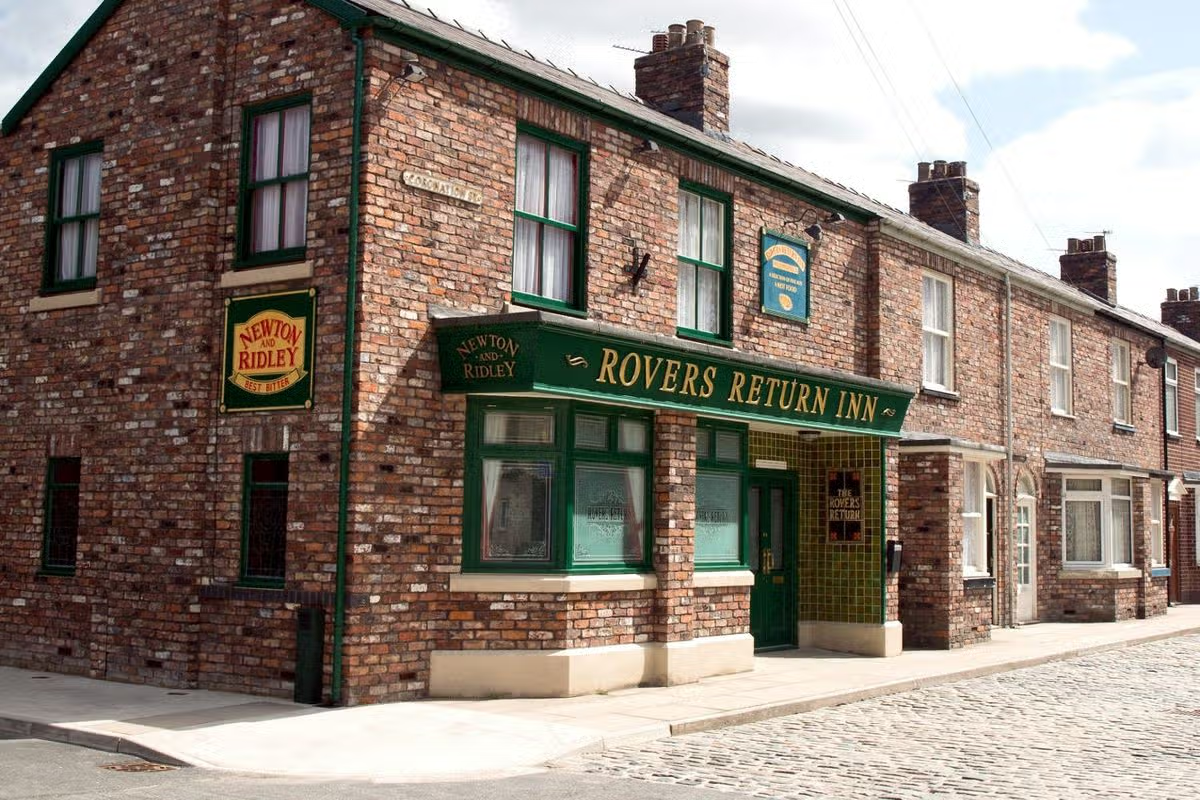
A beloved Coronation Street star has candidly opened up about their struggle with alcohol
Coronation Street legend reveals alcoholism struggle and says bosses saved their life(Image: ITV/REX/Shutterstock)
A Coronation Street actor has opened up about their alcoholism, and revealed that soap bosses sent them to rehab.
Kevin Kennedy joined the ITV soap in 1983 as Curly Watts, renowned for his hapless romantic endeavours and succession of peculiar employment roles. Throughout his tenure on the enduring show, he featured in numerous major storylines.
From his passion for astronomy to his turbulent love life, his years in Weatherfield were packed with drama. Nevertheless, he was last spotted in 2003 when he departed alongside wife Emma (Angela Lonsdale) for a fresh start in Newcastle.
Following his departure, Kevin has remained active, featuring in programmes including BBC’s Doctors, Mrs Browns’ Boys and Holby City.
And on Wednesday (October 14), he turned up on Good Morning Britain to discuss his latest musical, The Picture of Dorian Gray. Kevin also opened up about his battle with alcoholism, disclosing that he has remained sober for 28 years.
He said: “Well, ITV and Coronation Street, effectively saved my life, sending me into rehab. And I was very, very, I still am very grateful for that. You know, I was in there 4 weeks and came out slightly different.”
When questioned about whether his addiction had been impacting his work on the soap opera, he revealed: “Well, that’s the thing about addicts. They’re very resourceful, intelligent people. They have to be. This is why for the charity [Kennedy Street Foundation] that we do, we promote visual recovery.”
Regarding what guidance he would offer those concerned that alcohol or drugs may be becoming an issue, Kevin said: “Well, the rule of thumb with alcohol or any drug or addiction is if it’s costing you more than money, then maybe it’s time to look at it.
“What I would say to you is, we do recover. We do recover. It’s not all doom and gloom. It’s going to take a lot of hard work and a lot of commitment, and you have to go to various health centres; there’s enough out there.
“And if you do, as you’re told, and if you do, as is suggested, then you will recover. I can guarantee you if you put down that drink and that drug, do what’s suggested, your life will get better.”
While on GMB, Kevin spoke fondly about his time on Corrie, saying: “Oh, I mean, all of it is my favourite, actually. I’m very proud of that body of work, yeah, poor boy [Curly], he went through it!”
Kevin continued: “Even now when people come up and they do and they say, ‘oh, I remember when you did that’. I think that’s really humbling experience and I really love it. So it’s great.”
Good Morning Britain airs Monday to Friday at 6am on ITV1.
MANY parents usually spend years saving up for family holidays abroad.
But one savvy couple has managed to swap life in the UK for a full-time travel adventure – all while saving £36,000.
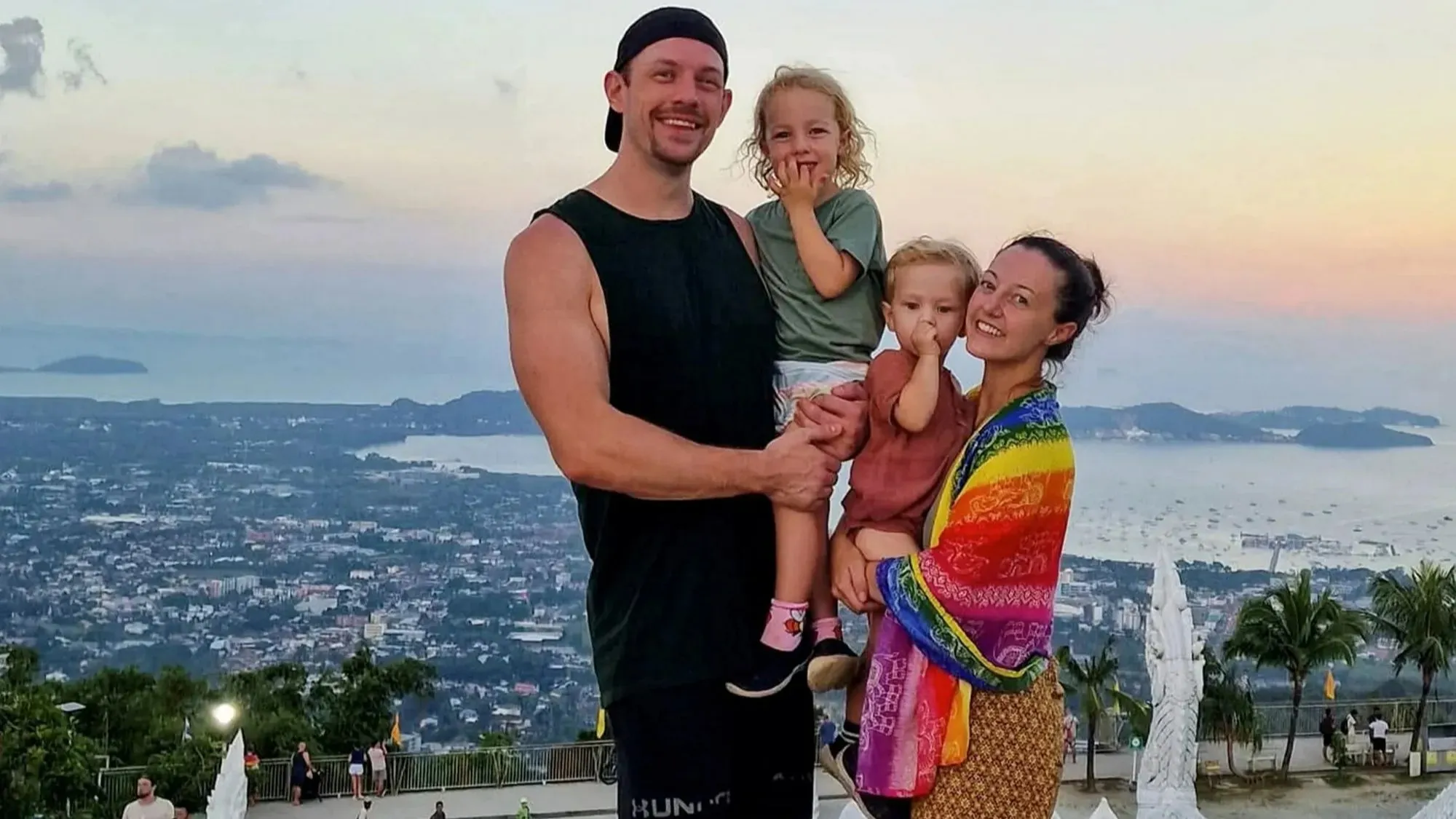
Steven, Aurora, Atlas and Ruth in Phuket, ThailandCredit: SWNSSteven and Ruth enjoying quality time with their kids in Sri LankaCredit: SWNS
Back in 2023, Ruth and Steven Rowe made a decision which shocked a lot of people after “selling everything they owned” and buying a one-way ticket to Sri Lanka.
They have been globe-trotting ever since on a budget of just £30 a day, and have turned the world into a classroom for their two children Aurora, five, and Atlas, four.
Ruth, 35, and Steven, 36, said they had always dreamed of travelling full-time and, as the moment approached to put the children into a nursery, they felt the time was right.
Ruth said: “We knew those early years were precious and we wanted more time together as a family before school routines took over.”
The family-of-four looking over a field Bali – one of the 17 countries they have visitedCredit: SWNSSteven, carrying Aurora, and Ruth with Atlas in her armsCredit: SWNS
They flogged all their belongings on Facebook Marketplace or via car boot sales and set off from the village of Eardisley, Herefordshire, with just two suitcases of clothes and a few toys.
The family has already been to 17 different countries, ticking off bucket-list destinations such as Costa Rica, Guatemala, Ecuador, and Indonesia.
They stay four weeks at a time in Airbnbs and have also visited the likes of Thailand, Malaysia, Cyprus, the USA, Colombia, and Peru – all while saving around £12,000 a year.
They currently have no plans to return and want to continue world-schooling in exotic locations – while spending around £2,000 a month, compared to £3,000 back in the UK, as a result of their rent and outgoings being less.
Ruth and Steven had been renting a barn conversion and had both children during the Covid-19 pandemic.
They had travelled extensively before having kids but couldn’t shake the feeling that there was still so much of the world they wanted the children to experience.
Ruth added: “We wanted more time with them as we know those early years are precious, so we thought, why not just do it? So we did.
“Selling everything was an exhilarating experience.
“Our car, furniture and most of our possessions all went through Facebook Marketplace and car boot sales.
“We kept only a handful of memory boxes filled with special items from the children’s early years and a few clothes.
“We set off at the start with two big suitcases, a medium and a small one – and a stroller.
“And since then we’ve downsized to just two suitcases – it is really surprising how little you really need.
“Possessions don’t make you happy, life experiences do.”
They arrived in Sri Lanka with no return ticket and no real plan beyond seeing where life took them.
Ruth added: “And we’re still travelling now. We’ve been travelling full-time ever since, slow-exploring the world as a family, while my husband runs his coaching business remotely and we embrace world-schooling on the road.
“It’s been beautiful, chaotic, challenging and incredibly freeing.”
Steven, Aurora, Ruth and Atlas pictured together in GuatemalaCredit: SWNSThe family pose in Antigua, GuatemalaCredit: SWNS
The couple also support themselves financially via Steven’s online coaching business – which he can still run wherever they are in the world.
However, Steven revealed the lifestyle isn’t always glamorous.
He added: “We use Airbnbs mainly but I’ve been working out of little cupboards in some places – it has been challenging at times but we’re in a fortunate position.
“We aim to live off around £30 a day and we stay in places for a month at a time so I can work Monday to Friday.
“But it can vary greatly; a two-bed apartment in one country can be £800 but a smaller one in another country £1,300.”
The couple say their children are now educated through “life experiences” – be it picking up Spanish in Latin America or learning about volcanoes while hiking in Peru.
And they say giving the kids no screen time whatsoever on their travels has helped them to become more patient and creative.
Ruth added: “They are also learning counting through things like paying a tuk-tuk driver in different currencies and the first time Aurora ever wrote her name it was in sand on a beach with a stick.
They also visited a waterfall in ColombiaCredit: SWNSChilling out at the Pacific coast of Costa RicaCredit: SWNS
“We give them no screen time at all – which I think has taught them patience on their travels and to be more creative when they are bored sitting on a bus.
“They thought the TV back home was a radio as we’d only use it for Spotify and we think that’s allowed their imagination to flourish.
“I have just seen their confidence grow so much, and of course there’s no way of really telling how they would have been at home, but they are just so open and talk to anyone – young and old.
“I will sit down and teach them some reading and phonics and writing – but we’re not rigid with it and it’s still very much about learning through playing.
“It wasn’t a case of we hated the UK – we just love the world. But I was never a fan of the cold and rain so that is something I don’t miss.
“Also, we’ve found children aren’t treated like nuisances like you find in some restaurants in the UK.
“They are welcomed in and looked after, lots of places have playgrounds too to keep them entertained; that was a big difference to the UK too.
“Sri Lanka is just the most welcoming place we’ve ever been – people would invite us to eat in their homes and absolutely loved the kids.
“Costa Rica is beautiful with all the wildlife and jungle, Guatemala is underrated – it is also an incredible place and one of our favourites.”
Ruth was also not a fan of the cold and wet British weather – but admits she misses British chocolate.
She added: “The only thing I miss is friends and family – and also British chocolate.”
Steven also believes the lifestyle has been transformational for the children.
He said: “These positive environments have brought such positive developments so far in our children. Atlas was swimming independently at two.
“This way they get one-to-one without being part of the larger school system, which we have no issue with, we just see the benefits from doing it this way.
“We make sure the children are at the centre of what we do, we always research kids’ clubs and activities wherever we stay.
“They are loving learning about all the wildlife too – we had iguanas and sloths outside our doors in Costa Rica.
“Aurora had surf lessons in Bali and will be sandboarding in the Peruvian desert; it’s magical for them.
“The children have most enjoyed all the swimming they’ve been able to do and all the wildlife has been a massive enjoyment for them too.”
For decades, the bold, mid-century building at Lincoln and Olympics boulevards in Santa Monica has been the end of the line — the last address on the 2,400-mile westward journey of Route 66. Once home to the Penguin Coffee Shop, today it holds Mel’s Drive-In. But now its future is in doubt.
The owners of the property have filed early paperwork to level the structure and replace it with an eight-story apartment building. Preservationists are pushing for a historic designation that might protect it.
The groups appear headed toward a showdown Dec. 14, when the Santa Monica Landmarks Commission will hold a hearing on the site’s nomination for protected status by the Santa Monica Conservancy and the Los Angeles Conservancy. The allied conservancies contend that the building is “the most significant representation of its style and period in architecture and design in Santa Monica.”
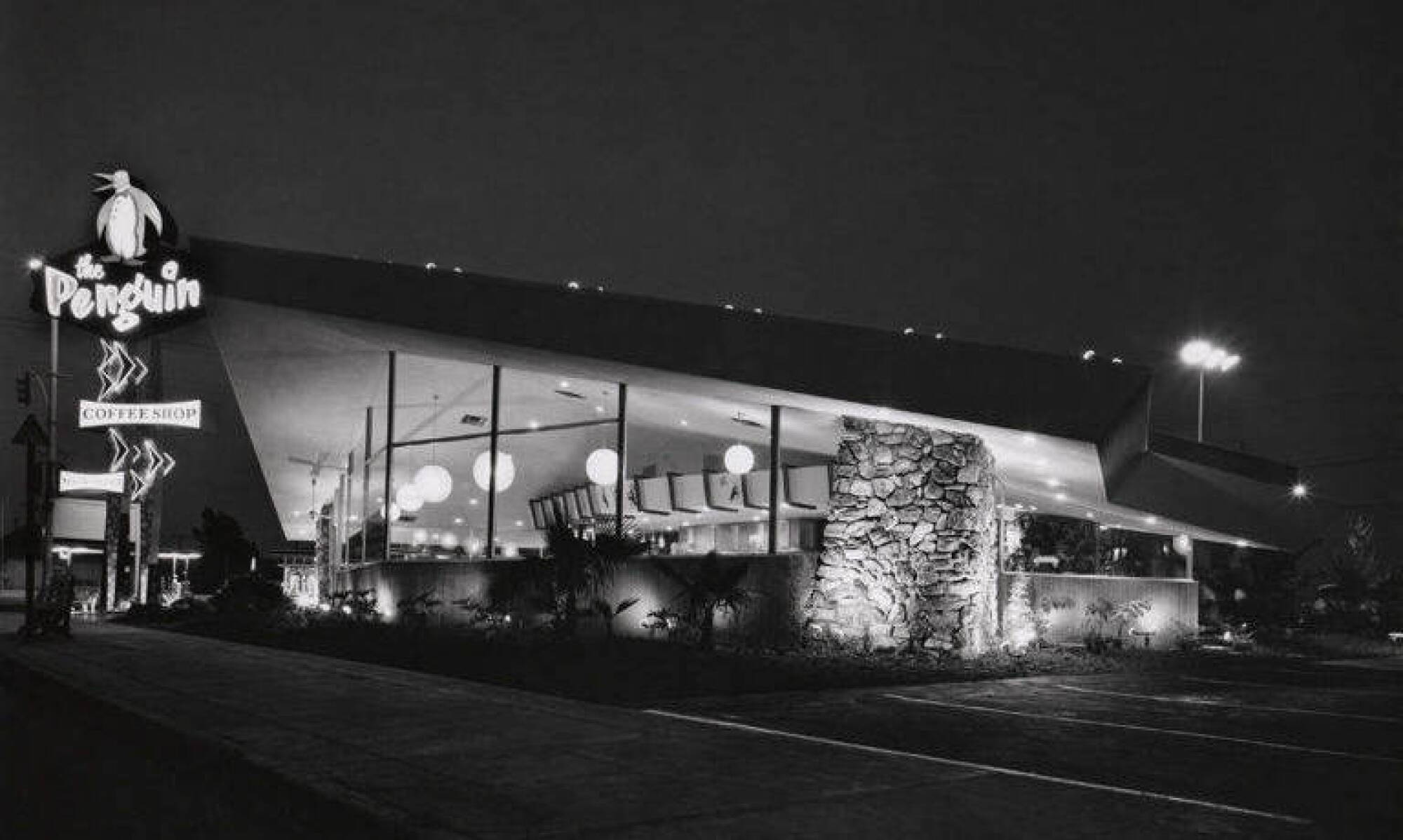
Designed by famed mid-century architects Armet & Davis, the building held the Penguin Coffee Shop from 1959 through 1991.
(Architects Armet Davis / Santa Monica Public Library Image Archives)
“This isn’t about saving a modern restaurant. It’s about preserving some really important Googie architecture,” said Nina Fresco, vice president of Santa Monica Conservancy. She added that “there’s no reason why housing and historic preservation can’t be partners.”
Irvine-based firm ValueRock Realty bought the half-acre Mel’s property for $6.2 million in 2020, and in 2025 began offering the property for sale, asking $26 million through brokers Newmark Pacific.
Soon after learning that the building was for sale, the Santa Monica and L.A. conservancies nominated Mel’s for a landmark designation, which can protect buildings from demolition, Fresco said. As part of the effort, Santa Monica Conservancy leaders raised $6,800, the cost of a Santa Monica landmark nomination, and enlisted the L.A. Conservancy as an ally.
Then on Sept. 18, ValueRock filed a preliminary application with the city (also known as an SB330 application) to replace the 1959 building with an eight-story apartment building, including 138 apartments, 123 parking spaces and first-floor retail space.
The sign of Mel’s Drive-In features a penguin, homage to the coffee shop of yesteryear.
(David Fouts / For The Times)
When it bought the property in 2020, ValueRock announced that it “is considered to be a historical landmark within the community.” But in its September filing for the apartment project, ValueRock management checked a box indicating that no historic or cultural resources are known to exist on the property.
“We didn’t know they would be quite this aggressive, but it’s not a huge surprise,” Fresco said.
Under city law, Fresco said, if a property is more than 40 years old, the owner must wait at least 75 days after seeking a demolition permit before any demolition can happen. “So we’re OK at least until that hearing” in December, Fresco said.
If the Landmark Commission agrees to confer landmark status on the building, Fresco said, it may be shielded from demolition — but the owner can appeal the decision to the City Council.
Management at ValueRock Realty did not immediately respond to requests for comment.
The restaurant remains open, receiving a steady stream of locals and Route 66 travelers. “We’re going to be here until 2029,” said Marilina Borchio, manager of Mel’s, citing a lease that runs through June of that year. As she spoke, the breakfast crowd was trickling in on Sunday morning. Borchio said she’s spending a lot of time reassuring customers who “think we are going to be demolished tomorrow night.”
The Googie-style building, designed by famed mid-century architects Armet & Davis, held the Penguin Coffee Shop from 1959 through 1991, catching the eyes of passing drivers with its dramatically slanted roof, oversize windows and a long counter inside for diners in a hurry. Architectural historians describe Googie style as a bold strain of Mid-Century Modernism, notable for big neon signs and swooping roofs, especially popular among restaurants, bowling alleys and car washes, now increasingly rare. Rae’s Diner, a 1958 building on Pico Boulevard, is another Santa Monica example.
The coffee shop never earned a Michelin star (nor has Mel’s) but its workaday American fare won a following. “The Penguin gets my vote for the best diner around,” wrote Times restaurant critic Charles Perry in 1989.
But two years later, the Penguin was gone. By 1992, the building had been converted into a dentist’s office. Eventually it fell idle, until the San Francisco-based Mel’s chain arrived in 2016 and began a renovation aimed at bringing back the restaurant’s ’50s atmosphere.
Mel’s Drive-In now occupies the old Penguin Coffee Shop building at the official end of Route 66 in Santa Monica.
(Christopher Reynolds / Los Angeles Times)
The renewed restaurant opened in 2018, with a penguin atop its sign, in homage to years gone by.
“A lot of the neon elements are gone, but the main elements are still there,” said the Santa Monica Conservancy’s Fresco, who is also a Santa Monica planning commissioner and former landmarks commissioner.
The renovation and restoration effort included removing layers of paint and tile that had been added over decades, revealing interior stone cladding that had been covered and replicating the counter and stools, vinyl cushioned booths, tables of plastic and metal, terrazzo floor, and light fixtures. The work was “to the letter of the Secretary of the Interior’s standards” for the treatment of historic properties, Fresco said.
The building is not mentioned in “An Architectural Guidebook to Los Angeles,” by David Gebhard and Robert Winter, which is a prime source for many preservationists. But Mel’s won a $10,000 grant from the National Trust for Historic Preservation in 2025 to pay for Route 66 centennial signage project.
Route 66 memorabilia at Mel’s Drive-in.
(David Fouts / For The Times)
“This site, like Route 66 itself, represents something greater than itself,” said Rhys Martin, manager of the National Trust’s Preserve Route 66 initiative, in an email. “It’s a connection to a journey through time and space that will be forever lost if this remarkable Googie structure is demolished.”
Fresco said she’d love to see the building continue to operate as Mel’s, but in the big picture, “we can’t stop them from building housing.” Still, Fresco said, she is hoping that the owner can come up with a project that retains the existing building while adding housing around it, as several other developers in Santa Monica have done. At 829 Broadway, developers agreed to preserve a World War II era Quonset hut while building a five-story apartment building around it. (The Quonset hut was occupied by Pono Burger from 2013 to 2025.) And the old Rapp Saloon — an 1875 brick building at 1436 2nd Street — was reborn in the late 1980s as a meeting space within a four-story hostel, now known as Hostelling International’s HI Los Angeles Santa Monica Hostel. The Santa Monica Conservancy begins its walking tours there.
If the allied conservancies win landmark status for the Penguin/Mel’s building, Fresco said, the owners “will be able to do exactly what they want to do now. They will just have to do it differently.”
Route 66, which was born and officially named U.S. Highway 66 on Nov. 11, 1926, was extended to Santa Monica in 1935. Though many travelers think of the Santa Monica Pier as the end of the route, its official terminus from 1935 on was at the intersection of Lincoln and Olympic boulevards, where Mel’s now stands.
Though Route 66 was decommissioned in the 1980s, its popularity as an Americana-rich driving route has grown in recent years, especially during this year’s centennial celebration of the road.
By the time the coffee shop building was going up at the end of the route in 1959, Fresco said, interstate freeways were already beginning to usurp Route 66’s role and the Santa Monica route of Interstate 10 had been plotted. By putting their eye-catching building on a spot along Route 66 and next to the path of the freeway, Fresco said, the people behind the Penguin were catering to motorists on roads rooted in two different eras.
“The Catholic Church shaped Rome. Commerce shaped Manhattan. It is popular culture that has shaped L.A.,” architecture critic Alan Hess told a Times reporter in 1993. “We should see these buildings in that context and take them seriously.”
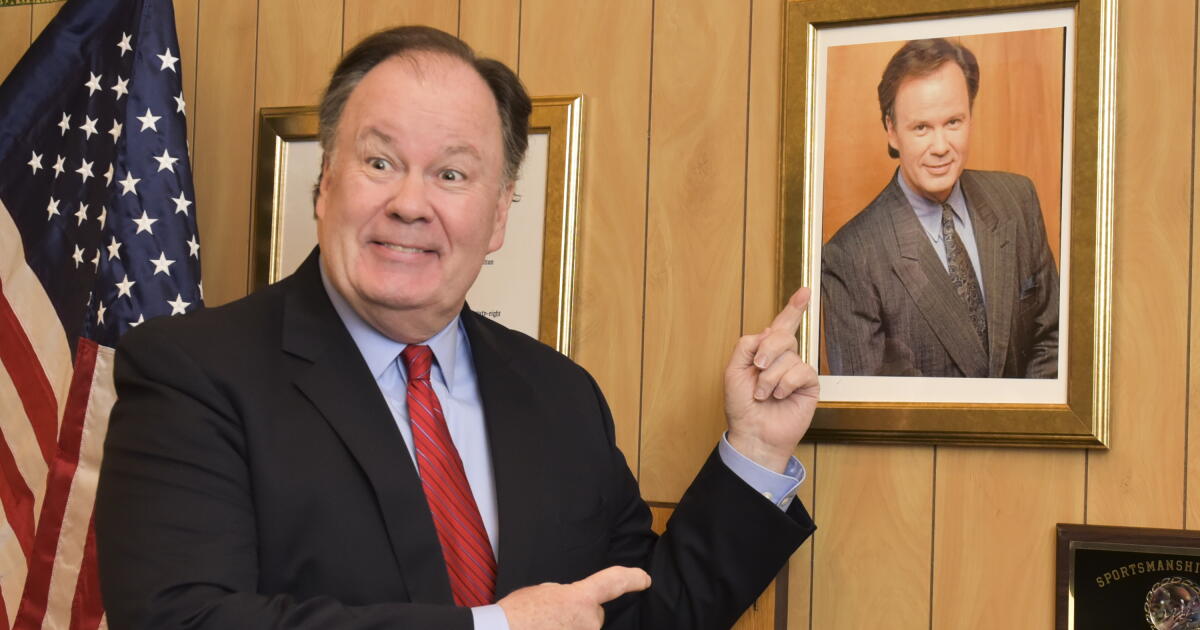
The cause of death for Dennis Haskins, an actor best known for playing Principal Richard Belding across the “Saved by the Bell” franchises, has been revealed.
Haskins’ friend and longtime caretaker, Kimberly Snow, confirmed the actor’s Sept. 27 death and told The Times that Haskins had quietly battled Parkinson’s disease and was candid about other health issues. The actor died at Providence Saint Joseph Medical Center in Burbank.
The Los Angeles County Department of Public Health cited Parkinson’s disease as the actor’s immediate cause of death, according to his death certificate obtained by TMZ. Irritable bowel syndrome, depression, hypertension and benign prostatic hyperplasia were also listed as health conditions Haskins battled.
Snow, a former manager of Burbank’s since-shuttered Dimples Karaoke, shared the news of the actor’s death on Instagram, writing that Haskins was a staple at the joint, so much so that many of the patrons thought he owned it.
“A lot of people thought he owned it, but he didn’t,” the tribute read. “He just loved the place and its people. He enjoyed singing for people, meeting them, and taking selfies with his fans. Dimples closed down about 11 years ago, and people still associate him with his beloved ‘second home.’ He was known to most as Mr. Belding from Saved by the Bell, but to us, he was much more than that.
“About eight years ago, he became ill,” the post continued. “He had been silent about his fight with Parkinson’s, among other health concerns, because he did not want the attention. He did not want to have to tell people. He would say, ‘What do I even say?’ So I respected his wishes and stayed quiet, and I helped him through his journey into the next chapter of his life.
“Late last night, that journey ended for him.”
The actor played Mr. Belding across seven different series, including “Good Morning, Miss Bliss,” “Saved by the Bell,” “Saved by the Bell: The College Years,” “Saved by the Bell: The New Class,” “The Rerun Show,” “Robot Chicken” and “Victorious.”
SAVED by the Bell star Dennis Haskins’ cause of death has been revealed after the much-loved actor died aged 75.
His death certificate shows Dennis died on September 27 at Providence Saint Joseph Medical Center in Burbank, California.
Dennis Haskins died from Parkinson’s Disease, his death certificate indicatesCredit: Shutterstock EditorialDennis (top left) as the lovable but stern Mr Belding in Saved by the BellCredit: Getty Images – Getty
The certificate, from the Los Angeles County Department of Public Health, lists Parkinson’s disease at the immediate cause of death.
It was not publicly known that Dennis had Parkinson’s before he died and his former wife Sarah Quinones told TMZ he had even cut off communication with close pals to hide his diagnosis.
In his final years Dennis lived in an assisted-living facility and stopped returning calls and texts from Sarah and other close friends because he didn’t want anyone to know he was suffering from the illness.
His role as Mr Belding earned him the nickname ‘America’s Favourite Principal’Credit: GettyDennis kept his diagnosis hidden from close palsCredit: Shutterstock Editorial
Dennis found widespread fame playing Principal Belding on the hit show Saved by the Bell, as well as numerous spin-offs.
Dennis, from Chattanooga, Tennessee, initially played the role of Principal Belding on the show Good Morning, Miss Bliss from 1988-1989.
The series then became Saved by the Bell, which aired on NBC until 1993, followed by Saved by the Bell: The New Class from 1993-2000.
Dennis earned the nickname “America’s Favourite Principal” for his performance.
His character’s exasperated ‘Hey, hey, hey, what is going on here?’ as he struggled to control his students became one of the show’s most iconic lines.
Dennis also reprised his role in the spin-off specials Saved by the Bell: The College Years in 1993 and Saved by the Bell: Wedding in Las Vegas in 1994.
Before launching his TV career, Haskins attended the University of Tennessee at Chattanooga, where the school said he was deeply involved in campus life.
He worked as a music manager, agent and concert promoter, reportedly counting Tom Jones among his clients.
Dennis then made his network TV debut on the 1979 pilot episode of The Dukes of Hazzard.
Aside from his defining role as Mr Belding, Dennis racked up more than 100 acting credits over his decades-long career.
Dennis’ agent Jay Schachter told TMZ: “It’s a tragic loss. Everyone loved Mr. Belding and those of us who got to know Dennis, loved him even more.
“He was a great person, and he loved, I mean absolutely LOVED his fans.”