The Houthi declaration that they intend to block Saudi shipping and vessels bound for Saudi ports in the Red Sea is not another act of revolutionary theatre. It is Iran’s latest attempt to test Saudi Arabia’s strategic patience through one of its most capable regional proxies. That is a dangerous gamble because Riyadh has spent nearly a decade avoiding the wider regional war that Tehran increasingly appears determined to provoke.
Saudi restraint has never reflected military weakness. It has been a deliberate strategic choice intended to preserve regional stability while enabling the kingdom to focus on its historic economic transformation. Unable to compete with Saudi Arabia’s regional trajectory through conventional means, Iran has increasingly turned to proxy warfare, maritime coercion, and economic intimidation.

The Houthis have become the principal instrument of that strategy.
By threatening shipping in both the Strait of Hormuz and Bab al-Mandeb, Tehran seeks to pressure Saudi Arabia from its eastern and western maritime gateways while raising the cost of regional stability. The objective is not military victory but economic disruption: undermining investor confidence, threatening energy exports, and projecting instability onto the Middle East’s largest economy.
That strategy carries consequences far beyond the region. Saudi Arabia remains the world’s largest crude oil exporter, OPEC’s leading producer, and the only country with sufficient spare production capacity to stabilise global energy markets during periods of crisis – as it did during the first phase of the Iran war through its 7 million barrels per day East West Pipeline. Sustained disruption of Saudi exports would ripple through international shipping, insurance markets, inflation, and the global economy.
Iran tried to prepare for the present escalation by attempting to restore the Tehran-Sana’a air bridge. The flights were never simply about reconnecting two capitals. They would have provided a direct logistical corridor through which operational planning advisers, missile specialists, drone technicians, and intelligence officers could rotate into Houthi-controlled territory. Such an air corridor would have allowed Tehran to transfer not only equipment but also operational expertise and command capability.
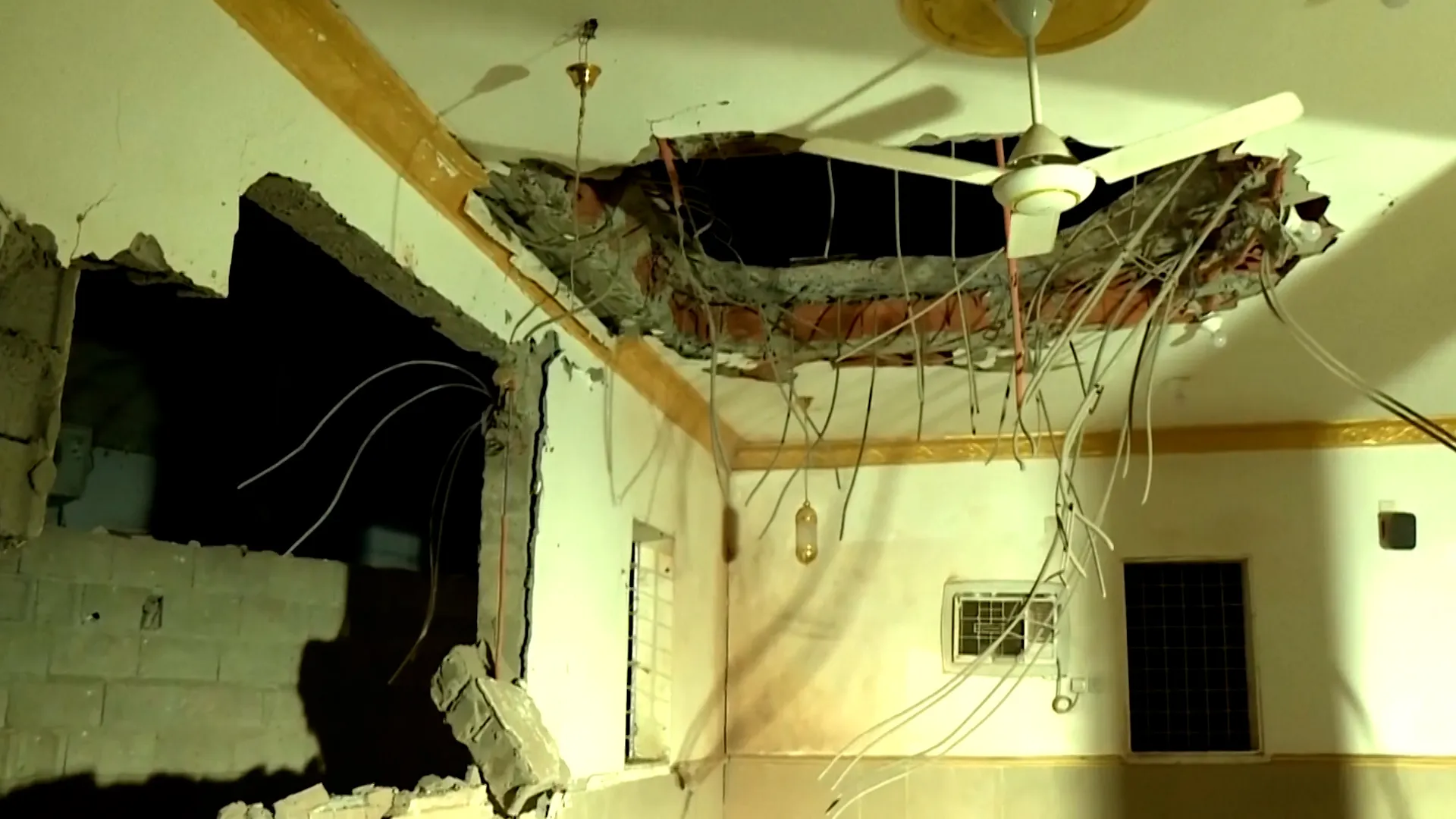
This explains why the Royal Saudi Air Force (RSAF) strike on Sana’a International Airport carried significance beyond denying a specific aircraft permission to land. The objective was to prevent Iran from establishing a permanent logistical architecture capable of sustaining a more sophisticated proxy campaign against Saudi Arabia’s maritime and economic interests.
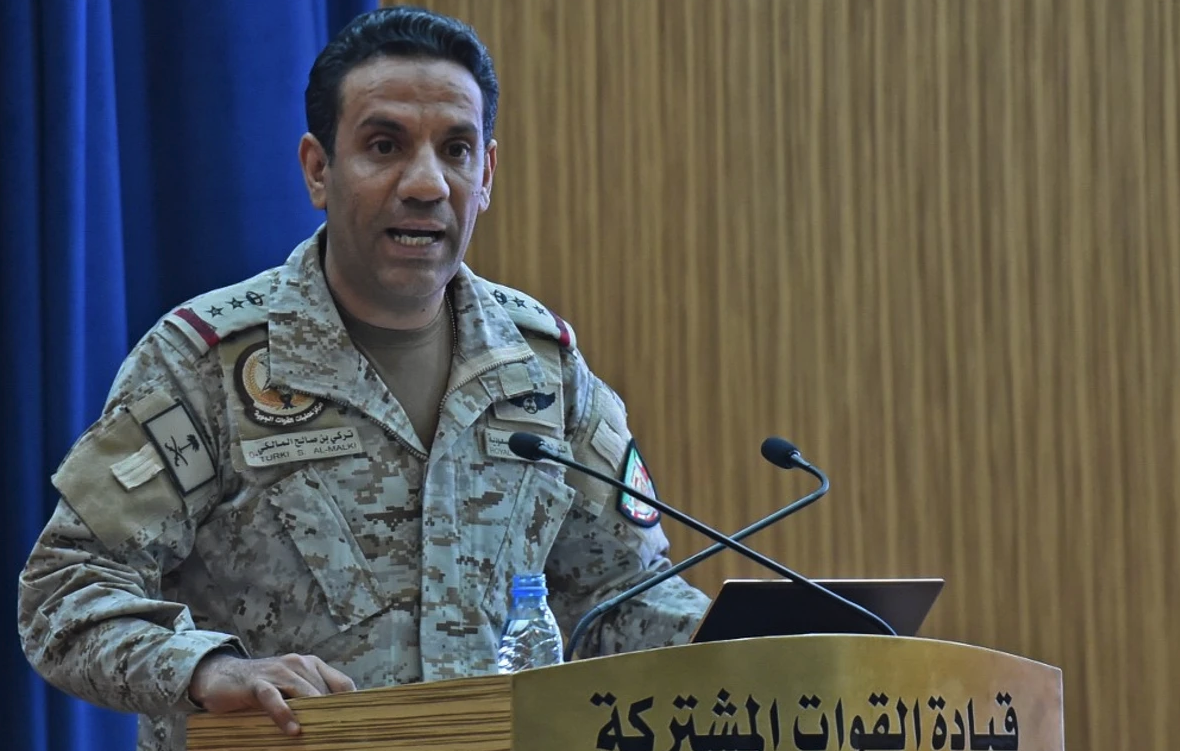
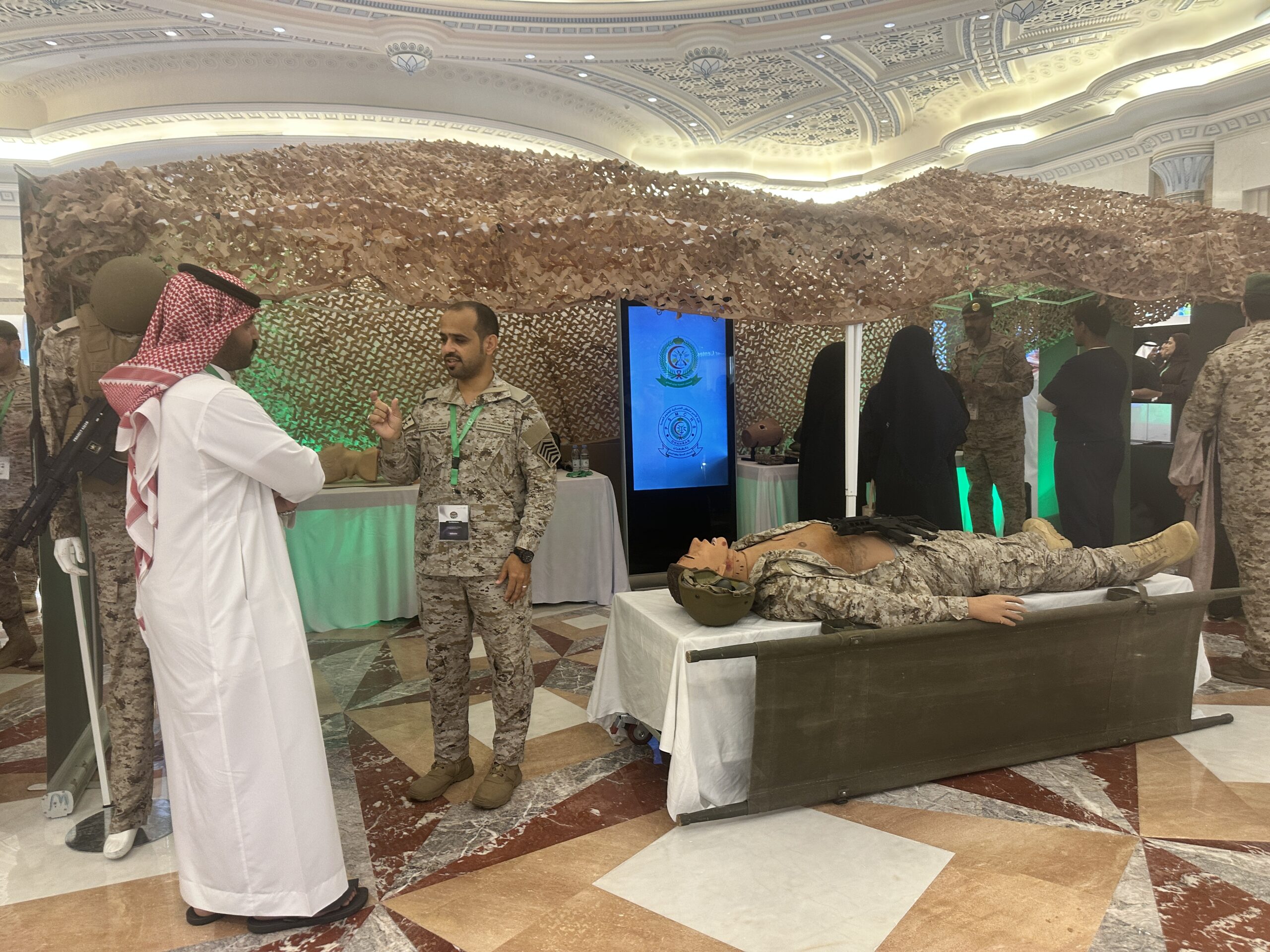
It is clear Tehran’s calculations increasingly rely on outdated assumptions about Saudi military capability. The Saudi-led Joint Forces Command (JFC) bears little resemblance to the force that first entered Yemen a decade ago. Years of hard learnt lessons from past mistakes and operational experience have transformed it into an integrated coalition built around persistent intelligence, fused command-and-control, precision strikes, air missile defence, and cyber operations.
Rather than functioning as separate military combatant commands, these capabilities now operate as a single decision-making architecture capable of compressing the time between intelligence collection and operational execution.
That transformation extends beyond the Saudi armed forces alone. The Saudi-led JFC now includes more than 650,000 personnel drawn from Saudi Arabia and allied Yemeni, Pakistani, Sudanese, and limited but symbolic GCC formations operating within a unified operational framework. Its principal advantage lies not simply in numbers but in its ability to synchronise military effects across multiple domains while maintaining operational tempo and centralised escalation control.
The JFC maturity became unmistakable during RSAF’s campaign that restored control over southern Yemen in less than a week in January. Built upon an advanced command and control (C2) fused architecture that supports persistent intelligence, electronic warfare, precision targeting, and synchronised manoeuvre, has demonstrated a level of operational sequencing and command integration unseen in earlier phases of the war.
The same C2 maturity was evident during Iran’s coordinated missile and drone attacks launched from Iranian territory and allied formations in Iraq, when RSAF executed synchronised precision strikes across multiple theatres while maintaining centralised escalation control.
The broader consequences extended beyond the battlefield. Saudi operational performance helped create the conditions under which Pakistan was able to broker an unofficial ceasefire between the Saudis and Iranians while reinforcing a new deterrence equation in which further direct Iranian military pressure carried significantly greater operational and political risk. Tehran’s subsequent caution reflected not diplomacy alone but recognition that the kingdom had entered a fundamentally different stage of military maturity.
None of this means the Houthis cannot impose costs. Their missiles, drones, maritime attacks, and psychological operations remain capable of generating disruption disproportionate to their size. But disruption is fundamentally different from sustaining a prolonged confrontation against an opponent possessing overwhelming advantages in intelligence, air power, maritime control, and operational endurance.
Every escalation therefore increases the likelihood of a comprehensive Saudi response. Such a campaign would not simply target missile launchers or drone facilities. It would seek to dismantle the command-and-control networks, logistics infrastructure, communications systems, intelligence apparatus, and operational support that enable Houthi military operations.
This is why the current trajectory is so dangerous.
Saudi Arabia has consistently demonstrated that it prefers stability to confrontation because its overriding strategic priority remains economic transformation and long-term national development. But no state can indefinitely tolerate an Iranian-backed proxy threatening its economy, energy infrastructure, and maritime lifelines.
Ultimately, the Houthis are not testing Saudi military capability. Years of operational adaptation have already answered that question. They are testing Saudi Arabia’s strategic patience.
History suggests that even the greatest strategic patience has limits. If Tehran continues using the Houthis as an instrument of coercion against the kingdom, Riyadh may conclude that the costs of restraint have exceeded the costs of decisive action. If that moment arrives, the campaign that follows will bear little resemblance to the Yemen war of a decade ago. It will reflect years of coalition integration through an elaborate C6ISR architecture to be strategically prepared for such a war. Iran, and the Houthis, may then regret testing the limits of Saudi Arabia’s strategic patience.
The views expressed in this article are the author’s own and do not necessarily reflect Al Jazeera’s editorial stance.
Weekly insights and analysis on the latest developments in military technology, strategy, and foreign policy.
As renewed hostilities between Iran and the U.S. and its allies enter a 10th day, the Houthi rebels of Yemen say they are imposing an embargo on Saudi oil shipments passing through the Bab el-Mandeb (BAM) Strait. The move threatens to add further pressure on oil exports from the Middle East, already drastically affected by the Iranian closure of the Strait of Hormuz and the resumption of the U.S. blockade on Iranian ports. Saudi Arabia has diverted millions of barrels of oil per day through pipelines to its Yanbu port on the Red Sea in an effort to minimize the energy shortages due to the hostilities in the Persian Gulf. This also raises the specter of the U.S. having to get as involved as it did during the previous Houthi campaign against shipping that ended last September, which could pull resources away from Iranian-focused operations.
BREAKING: Houthis of Yemen announce a a “maritime embargo” against Saudi Arabia, “effective immediately.”
Saudi Arabia has until now exported ~4.5m b/d from Yanbu in the Red Sea, most of it heading South throughout the Bab al-Mandab Strait between Yemen and Djibouti-Eritrea pic.twitter.com/c96Apzh9As
On Monday, Kuwait said it came under Iranian fire again.
“Kuwaiti air defenses are currently engaging hostile missile and drone attacks following the heinous Iranian aggression,” the Kuwaiti Defense Ministry stated on X. “The General Staff of the Army notes that any sounds of explosions heard are a result of air defense systems intercepting hostile attacks. Everyone is urged to adhere to the security and safety instructions issued by the relevant authorities.”
Hours earlier, Bahrain said it too had come under a new wave of Iranian attacks.
“The General Command of the Bahrain Defense Force (BDF) announces that Iran is continuing its systematic hostility approach through its sinister attacks targeting civilians in the Kingdom of Bahrain,” BDF posted on X. “The General Command clarifies that, with strong will and high combat readiness, the air defense systems attacked, intercepted and destroyed a number of treacherous Iranian air strikes today, Monday, July 20, 2026.”
The extent of the damage in either Kuwait or Bahrain is unclear at the moment. These most recent attacks came after U.S. Central Command on Sunday night said it wrapped up a ninth straight day of strikes on Iranian assets, targeting “military command centers, air defense and coastal surveillance sites, maritime capabilities, missile and drone launch sites, and communications networks to further diminish Iran’s ability to attack commercial vessels and civilian mariners transiting the Strait of Hormuz,” the command stated on X.
Amid this kinetic activity, as we noted earlier in this story, the Iranian-backed Houthis say they will no longer permit Saudi Arabian ships passage through from the Red Sea into the Bab el-Mandeb Strait.
“The Yemeni Armed Forces declare a maritime embargo against the criminal Saudi enemy, based on the equation of an ‘eye for an eye,’ effective immediately upon the issuance of this statement,” the Houthis stated on Monday, according to the official Houthi SABA media outlet. The move follows increased tensions between the Houthis and Saudi Arabia as well as a request by Iran “to stand ready to close the Red Sea oil route if the United States strikes Iranian power infrastructure,” Reuters reported last week. “The idea has been discussed within the Islamic Republic’s leadership, and the message has been conveyed to Iran’s Houthi allies.”
⚡️BREAKING: Yemen’s Houthis have announced a Naval Blockade on Saudi Arabia from the Red Sea
This move essentially Cuts OFF Saudi oil exports through the Bab al-Mandeb Strait pic.twitter.com/gqV8E5hfq1
Houthi forces on Monday reportedly began issuing warnings on open maritime frequencies near Yemen that the BAM is closed to Saudi shipping and its vessels are subject to attack.
Houthi forces are reportedly issuing warnings on open maritime frequencies near Yemen that the Bab al-Mandab Strait is closed to Saudi shipping. pic.twitter.com/MD0KhmTmJ5
A Houthi shut down of the Bab el-Mandeb (BAM) Strait, a narrow stretch of water between Yemen and Djibouti, would choke off the flow of oil exports from Saudi Arabia, exacerbating the above-mentioned impingement on the flow of oil from the closed Strait of Hormuz.
Having both straits closed at once is something of a ‘sum of all fears’ scenario for the global energy marketplace.
“The full closure of the BAM would cut global oil supply by 7% as it would leave most Saudi oil exports unable to leave the region,” Reuters noted on Monday. “The disruption would add to the massive cut to global oil flows from the war in the Gulf, which has already reduced shipments by 10% of global supply.”
You can read more about the effects of both straits being closed at once in our story about that here.
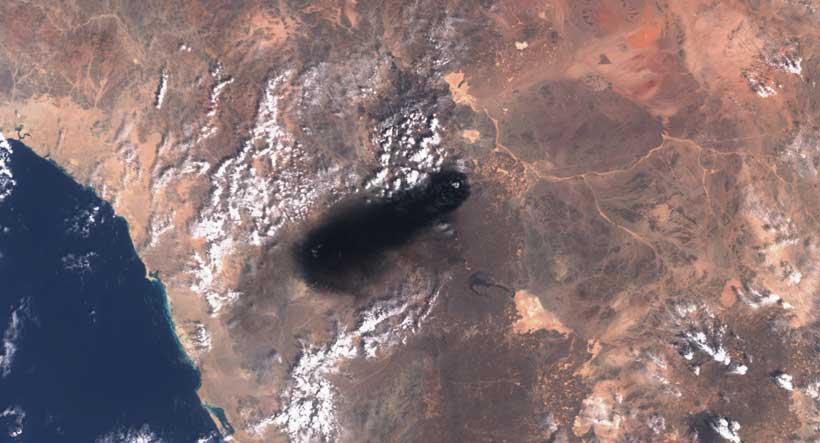
The Bab el-Mandeb Strait is a strategic chokepoint where the Houthis declared they have imposed an embargo on Saudi shipping. (Google Earth) The Bab al-Mandab Strait between Yemen and Djibouti has become a dangerous chokepoint of Houthi attacks. (Google Earth image)
Beyond affecting the flow of oil, a Houthi blockade on the BAM threatens to open a new front in this conflict.
The Houthis carried out a campaign against shipping in November 2023 in solidarity with Palestinians over the latest war between Israel and Gaza. However, while it was ostensibly aimed at only Israeli connected ships, numerous commercial vessels with no clear Israeli ties were attacked as were several U.S. and allied warships. The campaign stretched into the summer of 2025, forcing some vessels to avoid the Suez Canal for a far longer route around Africa, boosting shipping costs by nearly $200 billion at the time.
The Houthi attacks also forced the U.S. and allies to deploy many warships, including the Eisenhower and Truman Carrier Strike Groups (CSG) to both defend against Houthi attacks and strike targets in Yemen. These operations resulted in a large expenditure of air defense and strike munitions.
You can see video of some of those encounters below.
WATCH: CENTCOM releases footage as US HAMMERS Iran
The possibility exists that a new wave of Houthi attacks — especially if non-Saudi ships are targeted — could drag in U.S. forces already in heavy use in the Persian Gulf region battling the Iranians. This sets up a major showdown as Saudi oil is a lifeline to Asian supplies hobbled by conflict in the Persian Gulf. We reached out to CENTCOM for comment and will update this story with any pertinent details shared.
Earlier on Monday, the head of the European-led task force providing maritime security in the Red Sea region told us the Houthis remain a threat to navigation despite not having attacked any merchant vessels since September 2025.
“The security situation in the Bab el-Mandeb remains fragile and is highly sensitive to regional escalation,” Rear Admiral Vasileios Gryparis, Commander of EUNAVFOR ASPIDES, told TWZ. “On the rhetorical level, the Houthis’ leadership reiterated several times their alignment with the broader Axis of Resistance.”
Gryparis’s comments, in response to a query from last week about Iran’s outreach to the Houthis, came before the Yemeni group’s embargo declaration.
“From an operational standpoint, we assess that the Houthis pose a threat and are capable of rapidly escalating,” the ASPIDES commander told us. “We maintain a frequent presence at sea, monitor the situation, and adjust our actions when needed. In the event of a resumption of Houthi attacks on merchant vessels, which remains a possibility, we are present and ready to implement our mandate, within our means and capabilities. ASPIDES remains ready, within its defensive mandate, to adapt to evolving operational requirements.”
A French destroyer operating under EUNAVFOR ASPIDES provided support to a commercial vessel transiting the Red Sea region. (ASPIDES)
Being drawn into defending against a new Houthi campaign on shipping in the Red Sea region would exacerbate the strain on U.S. forces already under tremendous pressure from Iran. In addition to defending against ongoing barrages, the U.S. has committed about 20 U.S. warships, along with hundreds of aircraft dispersed across various bases, vessels, and forward arming and refueling points in the Middle East, to maintaining the newly reimposed blockade on Iranian ports. Moving these assets to another prologned shooting match in the Red Sea would degrade those capabilities and the ability to support a war effort should it fully erupt. It’s a capacity issue.
Expanding the fight against Iran is already in discussion by the Trump administration.
“The U.S. is planning for a wider war,” a U.S. official familiar with internal administration discussions told The Washington Post.
But the official cautioned that “the expansion of U.S. operations will be limited by dwindling stockpiles of air defense and long-range munitions and constraints on the ability to surge more troops and aircraft into the area because of battle damage,” the newspaper continued.
“We do not have enough to safely sustain operations, and I don’t think the White House is aware of that,” the Post said the official added.
One notable detail from The Washington Post’s reporting: even as the Pentagon prepares for the possibility of a broader conflict with Iran, one U.S. official warned that the campaign could be constrained by dwindling stocks of air defense interceptors and long-range munitions,… https://t.co/Xo9A6yNFnppic.twitter.com/dKEN3IGNUr
All this comes as there are increasing signs of damage at U.S. facilities in the Middle East from Iranian barrages. Though largely spared in the initial phases of Epic Fury due to robust air defenses, the airfield at Muwaffaq Salti Air Base in Jordan has taken the brunt of recent attacks, while several other installations have been hit as well.
The air base has long been a major regional hub for U.S. operations, and is being very actively utilized in the current conflict. It hosts the greatest concentration of U.S. tactical aircraft in the region, and thus is an extremely important target, where, as we pointed out, even one ballistic missile landing on an apron could destroy multiple prized aircraft and take the lives of U.S. service members or cause injuries.
Satellite imagery has emerged on social media purporting to show the extent of the damage at MSAB. The following shows what is claimed to be before and after views of strikes on aircraft hangars and containerized housing units. The imagery is provided by Iran and, because U.S. satellite firms do not collect over American facilities, we cannot independently confirm what is being depicted.
Before-and-after imagery shows at least two dozen containerized living units housing U.S. troops completely destroyed by Iranian strikes at 31°49′57″N, 36°47′47″E.
Two U.S. service members were killed at this site, while a third remains missing. pic.twitter.com/sqPOxhGTLr
Beyond damage, the number of troops killed and injured in Iranian attacks is rising. On Monday, the Pentagon identified two soldiers killed in action.
“1st Lt. Tyler James Feehan, 25, of Ewa Beach, Hawaii, was killed in action on July 18, 2026, and Pvt. Isabella Gonzales, 19, of Carrollton, Texas, was killed in action on July 17, 2026, during an enemy attack on July 17, 2026, at Muwaffaq Salti Air Base, Jordan,” the Pentagon said in a statement. “The incident is under investigation.”
Both soldiers worked for air defense units. Feehan was assigned to 2nd Battalion, 55th Air Defense Artillery Regiment, 32nd Army Air Missile Defense Command, Fort Bragg, North Carolina. Gonzales was assigned to 1st Battalion, 57th Air Defense Artillery Regiment, 52nd Air Defense Artillery Brigade, 10th Army Air Missile Defense Command, Ansbach, Germany.
BREAKING: The Pentagon has identified the soldiers killed in action from Iranian attacks in Jordan as 19-year-old Pvt. Isabella Gonzales and 25-year-old 1st Lt. Tyler James Feehan.
1st Lt. Feehan was assigned to 2nd Battalion, 55th Air Defense Artillery Regiment, 32nd Army Air… pic.twitter.com/3PFpnMcOVZ
Today’s identifications came after CENTCOM on Saturday reported that two U.S. service members in Jordan were killed in action on July 17. Additionally, the command said one service member was currently missing, but later said unidentified remains were found.
CENTCOM also reported on Sunday that “a U.S. service member in northern Iraq was killed in action July 18 during a controlled detonation of unexploded ordnance from a downed Iranian one-way attack drone. A second service member was wounded and continues to receive medical treatment for a minor injury.”
We have asked CENTCOM and the Army to confirm that Feehan was the soldier killed in Iraq during the controlled detonation or if he was killed in another incident.
It should be noted that in announcing the identities of Feehan and Gonzales, the Pentagon said they died in support of Operation Inherent Resolve (OIR), which is the fight against ISIS in Iraq and Syria. We asked the Pentagon for clarity and they deferred us to CENTCOM, which has yet to respond.
“In the week leading up to the Iranian attack on Friday that killed two U.S. soldiers and left one service member missing in Jordan, Iran carried out three other strikes against U.S. forces in the country,” the paper explained. “Those attacks injured dozens of U.S. service members and damaged several helicopters, according to several U.S. officials, who spoke on the condition of anonymity to discuss operational matters. But the Pentagon did not disclose the earlier strikes, nor the casualties and damage they inflicted.”
The episode “is the latest example during the Iran conflict of the tension between what the Pentagon says is the need for operational security and the government’s obligation to inform the public about the conduct of the war,” the Times proffered.
The Pentagon pushed back on that claim, rejecting it as “baseless and malicious.”
The Department of War rejects these baseless and malicious accusations of hiding injury numbers as outright lies from partisan hacks at the New York Times who are desperate to smear America’s military and its leadership.
Still, despite the increasing violence, both the U.S. and Iran have suggested that further diplomacy to end the fighting is possible. This is even as both sides declared the ceasefire over and Iranians last week said they would no longer negotiate a Memorandum of Understanding on a possible peace deal.
“You can’t have an MOU that’s alive if they’re violating the terms,” U.S. Secretary of State Marco Rubio told reporters. “The U.S. always remains open to a diplomatic solution. We’ve tried multiple times with Iran and we’ll continue to try… but their behavior is what we’re responding to — and their behavior is they’re launching missiles and drones against ships.”
.@SecRubio: “You can’t have an MOU that’s alive if they’re violating the terms… The U.S. always remains open to a diplomatic solution. We’ve tried multiple times with Iran and we’ll continue to try… but their behavior is what we’re responding to — and their behavior is… https://t.co/SIYaJOeAHKpic.twitter.com/qv4THvFqRg
— Rapid Response 47 (@RapidResponse47) July 20, 2026
“Proposals were put forward by the mediators, we were informed of them, and we received them,” Iran’s Foreign Ministry spokesman Esmail Baghaei said during a press conference. “However, let me not go into details right now. The gist of the matter is that the diplomatic mission has been actively working these days, and some ideas from a number of mediators have reached us—yes, this is confirmed.”
FM Spox: Peace is not a luxury item stored away in the vault of int’l relations, waiting to be handed over. Rather, it is something that must be fought for. Peace comes at an exceptionally high price particularly in our region, where war is being normalized and forced upon us. pic.twitter.com/Ulpt2hPfl4
Still, Trump threatened to continue striking Iran should more U.S. forces be killed.
“Every time Iran kills an American Soldier they will pay for that killing many times over!” the president proclaimed on Truth Social. “This directive has been passed on to Secretary of War, Pete Hegseth, Chairman of the Joint Chiefs of Staff, Daniel Caine, and every Leader in the Military.”
There are no new peace talks scheduled and it remains unclear if they will be. Meanwhile, the new Houthi blockade could deeply complicate an already highly-precarious situation in the Middle East.
UPDATE: 4:50 PM EDT –
CENTCOM announced the start of the 10th consecutive day of strikes on Iranian targets.
“Today at 4 p.m. ET, U.S. forces began a new round of strikes against Iran at the Commander in Chief’s direction,” the command stated on X. “The strikes are designed to further degrade Iranian military capabilities used to attack commercial shipping in the Strait of Hormuz.”
Today at 4 p.m. ET, U.S. forces began a new round of strikes against Iran at the Commander in Chief’s direction. The strikes are designed to further degrade Iranian military capabilities used to attack commercial shipping in the Strait of Hormuz.
“U.S. forces struck Iranian military command centers, maritime capabilities, missile and drone launch sites, and air defense systems to degrade Iran’s ability to continue attacking commercial vessels flowing through the Strait of Hormuz,” the command stated on X. “Commercial vessel transits through the vital international maritime corridor continue. Since early May, CENTCOM forces have helped facilitate the transit of approximately 900 commercial vessels and 450 million barrels of crude oil.”
U.S. Central Command (CENTCOM) announced it concluded another round of strikes against Iran at 9:00 p.m. ET on July 20, targeting military command centers, maritime capabilities, missile and drone launch sites, and air defense systems for the tenth consecutive night intending to… https://t.co/e6VYmo3vt6pic.twitter.com/A6b0lMqn4B
Yemen’s Iran-backed Houthi rebels have announced a maritime blockade on Saudi Arabia after the two sides traded fire last week for the first time in years. Observers have described the announcement as a “significant military move” that threatens global trade.
China has raised its purchases of oil from the Middle East in recent days, with deep discounts offered by its main supplier Saudi Arabia expected to further boost its buying, the Financial Times reported Monday.
Yamal makes a goal-scoring return for Spain as European champions get their World Cup campaign back on track.
Inspired by Lamine Yamal, Spain strolled to a 4-0 win over Saudi Arabia in Group H, as Mikel Oyarzabal restored his reputation with two goals and Luis de la Fuente’s side found their groove after an underwhelming World Cup opener.
Yamal opened the scoring in the 10th minute on Sunday and Oyarzabal, who failed to register a touch in the opening half hour in Monday’s scoreless draw with Cape Verde, scored twice in quick succession as Spain had the game wrapped up by half-time.
An own goal shortly after the interval failed to reopen the floodgates, as Spain used the opportunity to make changes and rest their scorers.
De la Fuente celebrated his 65th birthday in style, and Yamal, whose only football in the last two months came as a substitute against Cape Verde, sparked life into the team that returned to Atlanta Stadium.
A huge cheer greeted Yamal’s first touch, twisting and turning his marker before playing a teasing cross that was cleared by Abdulelah Al-Amri, the scorer of Saudi Arabia’s goal in their 1-1 match with Uruguay.
The opening goal came with Oyarzabal sending an inviting ball across the box, and Yamal being there to slide in at the back post and score his first World Cup goal.
Having toiled in vain in their opening game, the goal relaxed Spain, who began to carve open the Saudi defence at will, and the second goal came from a corner.
Dani Olmo sent the ball back into the mix which the Saudis failed to clear and Aymeric Laporte nodded down to Oyarzabal, who bundled the ball into the net.
Three minutes later, Spain were in again with a beautifully worked goal. Pedro Porro floated a pass into the area and the ball never touched the ground until it found the net.
Marc Cucurella’s hooked pass found Olmo, who headed into the six-yard box for Oyarzabal to tap it in on the volley, as the striker proved that given the right service, he is Spain’s man to deliver.
Spain replaced Yamal and Oyarzabal for the second half, but picked up where they left off when the Saudi goalkeeper blocked Cucurella’s volley from a corner and the ball ricocheted off defender Hassan Al-Tambakti and into the net.
The European champions continued to create chances, but understandably took their foot off the gas on a day when even Vozinha, Cape Verde’s 40-year-old hero keeper, would have struggled against this version of Spain, who look back to their best.
Spain advance to four points in the standings, while Saudi Arabia stay on one after two games each. The other teams in the group, Cape Verde and Uruguay, meet later on Sunday in Miami.
Oyarzabal said he was happy to get the win and to have given his own performance after criticism of how he played against Cape Verde.
“It’s not about proving myself. I’ve always said I feel loved by my teammates, the coach, the staff day to day. That’s what counts for me,” he told the media.
“People will talk outside. We know how the football world works, but we have to stay relaxed.”
Yamal said it was a “dream” to score in a World Cup.
“I watched the last World Cup from a classroom, so being able to score here with my mum and my family in the stands is a dream come true,” he said.
June 19 (UPI) — A Boeing 747-200 made its last flight as Air Force One after it brought President Donald Trump home from Europe this week.
“Well done, good and faithful servant,” White House Communications Director Steven Cheung posted Thursday on X. “The Last Ride.”
White House Deputy Chief of Staff Dan Scavino also posted a tribute with a video on X.
“I have been fortunate to fly around the world on this iconic plane for 5½ years – of the 35 years it has been serving the U.S. Presidents…THANK YOU… .”
There are two 747-200s working as Air Force One, designated VC-25A by the Air Force. The two have tail numbers 28000 and 29000. The latter is retiring.
The plane has been in operation since 1990, with President George H.W. Bush as its first presidential passenger.
“The VC-25B Bridge aircraft will soon join the active executive airlift fleet alongside the VC-25A and C-32,” an Air Force spokesperson said.
Three 747-800s are being prepared to step in, including the luxury jet donated by the Qatari government. Officials have said it should be ready for use this summer and that the Air Force had finished its modifications and testing of the craft.
Gen. Dale White, the Department of Defense’s direct reporting portfolio manager for critical major weapons systems, said in a May statement that the Qatari plane will “relieve pressure on the aging VC-25A fleet.”
“Ultimately, the Bridge aircraft fulfills a critical short-term requirement, guaranteeing the Air Force continues to execute its no-fail mission for the commander in chief while laying a rock-solid foundation for the future,” the release said.
The new planes will have Trump’s preferred color scheme of red, white, gold and dark blue. He proposed the change while in office for his first term, but President Joe Biden reversed the plan back to the traditional colors. When Trump was re-elected, the new color scheme was once again adopted.
President Donald Trump presents a Medal of Honor to Tom Ripley on behalf of his father, John W. Ripley, during a Medal of Honor award ceremony in the East Room of the White House on Thursday. Photo by Aaron Schwartz/UPI | License Photo
Maxi Araujo scored a late equaliser to salvage a 1-1 draw for Uruguay in their World Cup opener against Saudi Arabia, preventing another stunning upset in Group H after Spain’s earlier goalless draw with Cape Verde.
The Saudis famously beat Argentina 2-1 in their 2022 tournament opener, and they looked on course for another shock, courtesy of Abdulelah Alamri’s 41st-minute strike, until winger Araujo stepped up 10 minutes from time at Miami Stadium on Monday.
Uruguay coach Marcelo Bielsa certainly viewed it as a missed opportunity after European champions Spain dropped two points earlier in the day.
“An opponent we should have beaten; we gave away minutes in the first half that suggest we didn’t do things right,” he said. “We had to win this match.”
The Green Falcons ultimately had goalkeeper Mohammed Alowais to thank for their point, which will give them confidence they can progress to the knockout stage for the first time since the United States last hosted the World Cup in 1994.
“We were very tired at the end, but to play this type of game with this opponent, and to get a point, it’s a positive for us,” said Saudi Arabia coach Georgios Donis.
“I like the spirit and the passion of my players, but I think we have the quality to play better.”
Abdulelah Alamri scores Saudi Arabia’s goal past Fernando Muslera [Molly Darlington/Getty Images via AFP]
Uruguay, World Cup winners in 1930 and 1950, started the match with the swagger of favourites, and in the fifth minute, left winger Araujo turned on the edge of the box and angled a shot at goal, which Alowais parried away.
But barring a Federico Vinas diving header on the half-hour mark, which Alowais also pushed away, the Uruguayans lacked accuracy going forward and often looked a bit casual at the back.
Donis had promised his side would be courageous, and their attack sparked into life in the 36th minute, when left-back Moteb Alharbi skipped through the midfield before being cynically cut down 30 metres (about 30 yards) from goal.
Alamri had a shot from the centre of the box well saved by Fernando Muslera two minutes later, but the Uruguay goalkeeper was powerless to prevent the Saudis from going ahead soon afterwards.
Mohamed Kanno got on the end of a Musab Aljuwayr corner, and although Muslera managed to save his powerful header, Alamri was on hand to tap the ball into the net.
Bielsa made two changes at the break, and Uruguay’s game plan immediately looked more coherent – getting players down the flank to put crosses into the box and producing a string of headers for Alowais to deal with.
Defensive midfielder Manuel Ugarte came within inches of an equaliser when he beat the Saudi keeper in the 60th minute, only for his drilled shot to bounce off the far post.
Vinas had been Uruguay’s best aerial threat all game, and it was no surprise that the breakthrough came from one of his headers 10 minutes from full-time.
Alowais again denied the target man, but the ball fell straight to Araujo, who did well to control it and clip it into the net at the near post.
Uruguay poured forward, looking for a winner in a frenetic finish; Federico Valverde and Jose Maria Gimenez coming closest with rasping shots from either side of the box, which Alowais did well to push past his posts.
“I think the nerves of the debut worked against us, as did the need to go out and score,” said Vinas.
“In the second half, we did a bit more of what the manager wanted. I’m frustrated and angry, but as captain, I’m happy with my teammates’ work.”
Saudi fans celebrate [Alex Slitz/Getty Images via AFP]
Saudi Arabia hold firm against relentless pressure to earn a 1-1 draw against two-time world champions Uruguay in their Group H opener at the Miami Stadium.
They call this place the Sunshine State for a reason. It beats down with a fierce intensity, allowing little air to puncture it… until a fierce thunderstorm hits.
Such sweltering conditions were exactly what Clarke wanted, though, as he stressed the importance of “acclimatising” this week to the conditions his squad will face throughout their tournament.
The Scots start against Haiti (Sunday, 14 June, 02:00 BST) – live across the BBC – and also play Morocco in Boston, before returning to Miami to face Brazil on Wednesday, 24 June (23:00).
“It maybe would have been a shock if we had came out to the Miami game because it hits you as soon as you come off the plane, the humidity and the heat,” Hendry told BBC Scotland at the team’s hotel in Fort Lauderdale.
“So it’s good that we can come out here for this week, prepare and get used to it and I’m sure that will put us in really good stead going into the game.”
Water breaks will be in operation, and Hendry stressed the importance of “using them efficiently”.
“They’re certainly going to help us from a recovery point of view, but maybe tactical. as well,” he said.
“I’m accustomed to it in Saudi; we have these water breaks and it might disrupt the rhythm of the game a wee bit, but from the players’ point of view it definitely helps.”
By the time the Scots return south following back-to-back games in Boston, it could be they have already done what no other Scotland side have by reaching the knockout stages of a World Cup.
It’s undoubtedly the aim for this talented, together squad, but they’re not looking too far ahead. They’re still Scottish after all.
“It’s just trying to get as far as possible, I think,” Hendry said of what success for the country looks like this summer.
“It’s difficult to look too far ahead. The main ambition is going to be trying to get out of the group. Then we see where we can go afterwards.
“We can’t look too far ahead, just take it game by game and if we do that, enjoy it and play the best we can, then we should be able to achieve that.
“We’ve got to make the most of it and make sure we don’t come out of this with any regrets.”
More than 1.6 million Muslim pilgrims have arrived in Saudi Arabia for the annual Hajj pilgrimage, as authorities stepped up crowd-control measures across Mecca. Pilgrims from war-affected Sudan and Yemen spoke about overcoming challenges to reach Islam’s holiest site.
Portugal forward Cristiano Ronaldo leads Al-Nassr to Saudi Pro League title in last game before World Cup 2026.
Published On 21 May 202621 May 2026
Cristiano Ronaldo scored twice as Al-Nassr clinched the Saudi Pro League title with a 4-1 win over Damac, ending his long wait for domestic silverware.
A trademark free-kick and a close-range finish, both in the final half-hour of Thursday’s game, sealed the win Al-Nassr needed on the last night of the season, with Al Hilal finishing just two points behind.
Recommended Stories
list of 4 itemsend of list
Ronaldo, 41, who was without a major club trophy since winning Serie A with Juventus in 2020, arrived in the oil-rich desert kingdom to great acclaim in 2023, wept as he watched the final minutes from the bench.
He adds the Saudi championship to his English, Spanish and Italian titles and five Champions League medals.
Al-Nassr took a 2-0 lead but were back to 2-1 before Ronaldo’s free-kick on 63 minutes evaded the goalkeeper and a forest of legs to find the far corner.
He struck again nine minutes from time, receiving a cut-back on the edge of the six-yard box and smashing high into the net.
Next up for the all-time leading men’s international goalscorer, with 143 goals, is a sixth crack at the World Cup after he was named in Portugal’s squad this week.
Ronaldo opened the door to a series of big-money Saudi signings when he joined Al-Nassr in January 2023, following an unhappy second spell at Manchester United.
Neymar and Karim Benzema were among those to follow after Ronaldo signed a two-and-a-half-year deal estimated at $232m, extended for two years in June 2025.
The stated aim was to turn the Pro League into one of the world’s top five football competitions measured by the quality of players, stadium attendances and commercial success. International interest has been muted, however.
In December 2024, Saudi Arabia was confirmed as host of the 2034 World Cup, a coup as it pushes to decouple its economy from oil and attract business and tourists, partly via the buzz of sport.
Cristiano Ronaldo of Al-Nassr celebrates scoring his team’s fourth goal during the Saudi Pro League match against Damac [Yasser Bakhsh/Getty Images]
With a record 664 million Instagram followers, Ronaldo has been a highly visible ambassador as Saudi Arabia tries to turn the page on the ultra-conservative image that has defined it for decades.
The world’s biggest oil exporter and home of Islam has been accused of “sportswashing” – using sport to deflect human rights criticism – as it has invested in Formula 1, golf, boxing and tennis alongside football.
Some of the more outlandish spending on economic diversification, including sprawling tourist developments and NEOM, a futuristic city in the desert, is being reined in.
This month, Saudi Arabia’s Public Investment Fund said it was exiting the breakaway LIV Golf tour, after reportedly ploughing more than $5bn into a venture that split the sport.
Expensive football signings have also waned with the stream of big-money transfers slowing to a trickle.
Ronaldo was the Pro League’s top scorer in his first two seasons, with his career tally now at 973 – tantalisingly close to the 1,000-goals milestone.
His Saudi stint has not always been smooth. In 2024, he was left in floods of tears when Al-Nassr lost the King’s Cup final to Al Hilal on penalties, denying him his first Saudi title.
This season, he disappeared from Al-Nassr’s lineup for three games in an apparent protest at Benzema’s transfer to rival team Al Hilal.
Al Hilal and Al-Nassr were among the stable of Saudi teams owned by the Public Investment Fund, the country’s $900bn sovereign wealth fund.
Before Thursday, Ronaldo’s only silverware with Al-Nassr was the 2023 Arab Club Champions Cup. He was also disappointed on Saturday, when Al-Nassr lost to Gamba Osaka in the AFC Champions League Two final.
Goalkeeper Bento’s bizarre injury-time own goal denies Al-Nassr a title-crowning 1-0 win over rivals Al Hilal at home.
Published On 13 May 202613 May 2026
Cristiano Ronaldo and his Al-Nassr teammates were left frustrated when their goalkeeper Bento scored an injury-time own goal, denying the club their first Saudi Pro League title in seven years.
Riyadh-based club Al-Nassr were leading 1-0 and seconds away from defeating local rivals Al Hilal, who are second in the league, when Bento fumbled an overhead save that sent the ball into his own net in a highly anticipated match on Tuesday.
A win would have sealed the 11th league title for Al-Nassr and the first for the Portuguese superstar since he famously joined the club in January 2023.
Al-Nassr top the league table with 83 points from 33 games, while Al Hilal are second on 78 points from 32 games. Ronaldo, who captains Al-Nassr, cut a picture of frustration on the bench when the equaliser was scored by the Brazilian goalkeeper.
The 41-year-old football icon has not won a domestic title with Al-Nassr since his then-record-breaking move from Manchester United after the FIFA World Cup 2022 in Qatar.
Al-Nassr’s last league title came in 2019, while Al Hilal won the league in 2024.
Fans of the home team were given free team shirts at the beginning of the match, making the stands a sea of yellow in anticipation of the title win.
Barring a shock result against 15th-place Damac in their final league game, Al-Nassr are favourites to win the league on May 21 .
“The dream is close,” Ronaldo said in his post-match social media posts to his 770 million-plus followers.