Goals from Hammam Al-Hammami and Firas Al-Buraikan give the hosts their fourth Arabian Gulf Cup trophy.
Published On 7 Oct 20267 Oct 2026
Saudi Arabia have ended a long wait for an Arabian Gulf Cup trophy with a 2-0 win over the United Arab Emirates amid a charged atmosphere at the King Abdullah Sports City Stadium in Jeddah.
The hosts held on to an early lead, thanks to goals from Hammam Al-Hammami and Firas Al-Buraikan, to lift the regional crown on Tuesday.
Saudi Arabia set an early attacking pace in the game and were rewarded when Al-Hammami scored the opening goal in the 11th minute from the edge of the penalty area, setting off wild celebrations in the stands.
The home team’s dream start continued as, two minutes later, Al-Buraikan doubled the score with a close-range shot after a precise assist from Nasser Al-Dosari.
Saudi Arabia’s Firas Al-Buraikan celebrates scoring their second goal [Ibraheem Abu Mustafa/Reuters]
Saleh Abu Al-Shamat almost scored the third goal for Saudi Arabia in the 16th minute, but the ball was deflected off the goalpost after a one-on-one with UAE goalkeeper Khaled Issa.
The UAE’s first attack came in the 24th minute, when Nicolas Gimenez’s shot hit the post.
Six minutes before halftime, UAE’s Bruno thought he had won a penalty, only to be reversed by the video assistant referee.
Saudi Arabia’s head coach Georgios Donis credited his team’s discipline for the long-awaited home win.
“There were many difficulties, but the players showed focus and discipline and gave their best on the pitch,” he said after the match.
“I think we turned those difficulties into a title, and that’s important. We were the best team in this tournament. This title gives us confidence for the future, and we must continue to show the same qualities.”
Saudi fans celebrate with flares after winning the Gulf Cup [Reuters]
Asian Cup boost
At the start of the second half, Saudi goalkeeper Mohammed Al-Owais saved a close-range shot from substitute Sultan Adel to maintain his impressive clean sheet in the tournament.
Despite Saudi Arabia’s wastefulness in front of goal, their coach was pleased with the team’s efforts.
“After the World Cup, we realised we made mistakes and went through bad moments, but we learned from that experience,” Donis said.
“We improved our level and developed our style of play. And I think they deserve this result. It reflects our hard work.”
Saudi Arabia have now won four Gulf Cup titles, with the last one clinched in 2004.
The Green Falcons exited the FIFA World Cup 2026 in the group stage but will look at their performance in the Gulf Cup as a foundation for the upcoming AFC Asian Cup 2027.
Saudi Arabia will host the continental tournament from January 7 to February 5, as it gears up to become the second Gulf country after Qatar to host the FIFA World Cup in 2034.
Yemeni government says one of the missiles hit Aden airport’s runway minutes before a flight from Cairo was due to land.
Published On 7 Oct 20267 Oct 2026
Yemen’s internationally recognised government has accused the Houthis of firing ballistic missiles and drones at the main international airport under its control, as Saudi Arabia said it had intercepted another missile north of its capital, Riyadh.
In a statement on Wednesday, the Ministry of Transport said the Houthis targeted the runway and passenger terminal at the airport with at least two ballistic missiles and several drones.
Recommended Stories
list of 3 itemsend of list
“One of the missiles landed near the runway minutes before the Yemeni flight from Cairo was to land,” it said. “We cancelled the landing of the incoming flight from Cairo [in Egypt] and diverted its route to Jeddah [in Saudi Arabia] to protect the passengers.”
The ministry also said it evacuated the airport terminal and removed two planes from the tarmac during the attacks.
It added, “This incident could easily have turned a civilian flight into a horrific humanitarian disaster, claiming the lives of dozens of innocent people in an instant.”
Aden airport is the main international gateway for parts of Yemen outside Houthi control in the city that has been the seat of the government since the takeover of the capital, Sanaa, by the Iran-supported group in 2014.
The Houthis said in a statement they targeted “Saudi military supplies” arriving at the Badr camp near the airport with ballistic missiles. Saudi Arabia backs Yemen’s government.
Separately, the Saudi-led military coalition fighting in Yemen said it intercepted and destroyed a ballistic missile, launched by the Houthis, north of Riyadh.
In a social media post, Major-General Turki al-Maliki, the spokesperson for the Saudi-led coalition, said it was tracking the launch platform used in the attack via an intelligence system over Sanaa, and promised to destroy it.
The Houthis said in statements on Tuesday and overnight into Wednesday that they had targeted Saudi international airports in Riyadh and Abha.
The intensified fighting in Yemen comes amid mounting regional tensions set off by the US-Israel war on Iran. The Saudi-backed government forces launched a counteroffensive against the Houthis to retake the Red Sea port of Mocha and areas around the Bab al-Mandeb strait.
Fighting has concentrated in the southwestern province of Taiz.
Al Jazeera’s Yousef Mawry, reporting from Sanaa, described “all-out battles to take over the ground, the highlands and the mountains east of Bab al-Mandeb”.
“It’s a battle to take over the strategic western part of Taiz, and whoever controls the wider vicinity will overlook the region and have dominant military control,” he said.
“For the Yemeni government to take control of Mocha and the strategic bases and locations along the Red Sea coast, it first has to drive the Houthis off the mountains east of Mocha.”
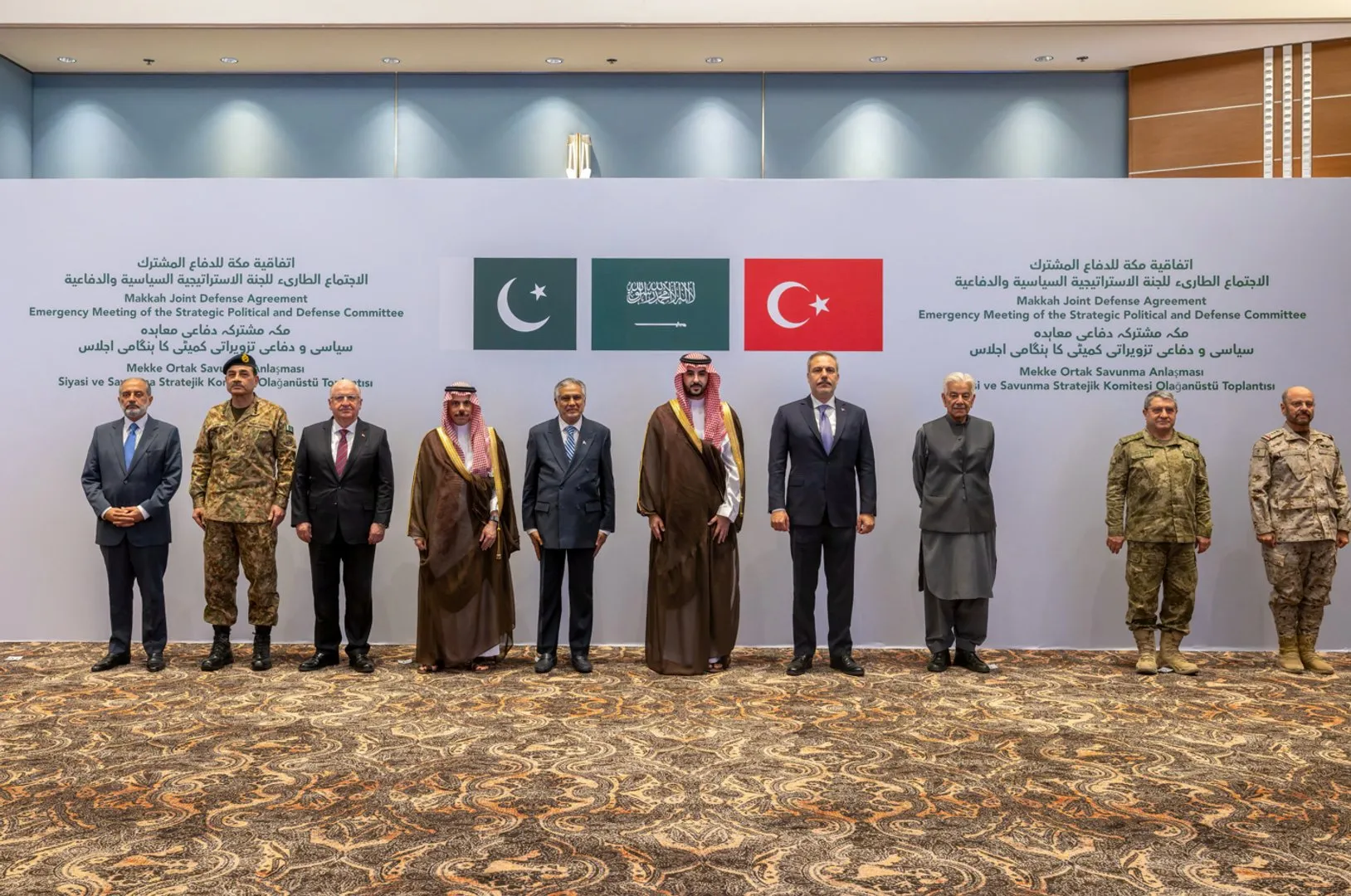
Pakistan and Turkiye on Monday agreed to activate “deterrence measures” under their mutual defence pact with Saudi Arabia and rapidly deploy forces to the Gulf kingdom to counter Houthi attacks.
During emergency talks in Riyadh, Turkiye and Pakistan agreed to send rapid deployment forces to Saudi Arabia. Yemen’s government forces, which are backed by Riyadh, launched a counter-offensive against the Houthis to regain lost territory.
The Mecca Alliance says it has agreed to trigger collective deterrence measures in response to “heinous attacks” by Yemen’s Houthi group against Saudi Arabia.
In a statement on Monday, the Pakistani Foreign Ministry said Saudi Arabia, Pakistan and Turkiye had decided to “provide the agreed military forces and capabilities and ensure their rapid deployment” to the kingdom.
Saudi Arabia’s Defence Minister, Khalid bin Salman, said the member countries agreed to trigger the alliance in response “to the attacks and all those responsible for them”.
The announcement comes as the Saudi-backed Yemeni government has launched a counteroffensive to push the Iran-aligned Houthis back from territory captured last month.
The agreement was reached during an emergency meeting of the Strategic Political and Defence Committee under the Mecca Alliance in Riyadh.
The mutual defence pact was signed in August, shortly before the Houthis launched their offensive in Yemen, which has included attacks against Saudi targets. Questions as to whether Islamabad and Ankara would agree to trigger the agreement have persisted since.
However, with hostilities increasing in Yemen, the committee agreed to “move immediately” to implement the collective defence measures to “ensure their rapid deployment in the Kingdom,” the joint statement reads.
The defence commitments will be executed under “approved arrangements” and the national laws of the three countries, the statement added.
Crown Prince Mohammed bin Salman says the kingdom ‘will not hesitate to respond firmly to any threat’.
Published On 30 Sep 202630 Sep 2026
Saudi Arabia’s Crown Prince Mohammed bin Salman (MBS) has promised not to compromise on the kingdom’s security in the face of attacks by the Houthi armed group, saying the Yemeni rebels chose “chaos and destruction, threatening the Yemeni people and the region”.
In a speech delivered Wednesday on behalf of King Salman bin Abdulaziz Al Saud during the opening of the third year of the ninth session of Saudi Arabia’s Shura Council, Prince Mohammed said the country “will not hesitate to respond firmly to any threat or attack aimed at undermining” its security.
He pointed to the trilateral Mecca Joint Defence Agreement with Turkiye and Pakistan that was formalised in August, saying the alliance shows the Saudi leadership’s intent “to strengthen regional stability, shield it from the repercussions of tensions and conflicts and coordinate efforts”.
At the same time, the crown prince said, Saudi Arabia is making “every possible effort to de-escalate tensions and support diplomatic solutions without the slightest compromise on preserving our security”.
Maritime coalition to defend Red Sea
MBS also addressed the targeting of vessels by the Houthis in the Red Sea along the Bab al-Mandeb strait, rejecting the use of international waterways as a tool for political or economic pressure.
He said a “multinational defensive maritime coalition” was set up to ensure “common interests” are protected in international waterways.
In recent weeks, the Houthis have ramped up attacks on Saudi Arabia, as they fight Yemen’s internationally recognised, Saudi-backed government forces.
Last week, Riyadh said it intercepted six ballistic missiles aimed at Taif in western Saudi Arabia and the Yanbu port area on the Red Sea.
The Houthis also said they attacked “a sensitive target” in the Saudi capital, Riyadh, and Saudi Aramco facilities in Yanbu.
On Tuesday, Pakistan’s Defence Minister Khawaja Muhammad Asif said Islamabad will make “whatever means” available to Saudi Arabia under the mutual defence pact if the Houthi attacks on the kingdom continue.
Saudi Arabia has restarted oil exports through its East-West pipeline after repairing damage from drone attacks earlier this month, restoring an important route that allows crude shipments to bypass the Strait of Hormuz, The Wall Street Journal reported Monday.
Saudi Arabia has used its address to the UN General Assembly to accuse Iran of flagrant attacks on civilian and economic targets across the region, while calling on the international community to condemn Houthi actions threatening Red Sea shipping.
France is sending its military to protect key Yanbu oil terminal; Pakistan and Turkiye to hold military talks with Riyadh.
By Al Jazeera Staff, AP, DPA and Reuters
Published On 25 Sep 202625 Sep 2026
Saudi Arabia’s allies are rallying to support the country as the Houthi rebels step up attacks.
France confirmed on Friday that it is sending troops to guard the major oil terminal at Yanbu. Meanwhile, Saudi officials are meeting with peers from Pakistan and Turkiye to discuss options under their mutual defence pact.
Recommended Stories
list of 4 itemsend of list
French President Emmanuel Macron told broadcasters TF1 and France 2 that Paris is to send “soldiers, radars, and defence systems” to the Red Sea port of Yanbu.
“Not to involve ourselves in any conflict, but to protect the site,” he said.
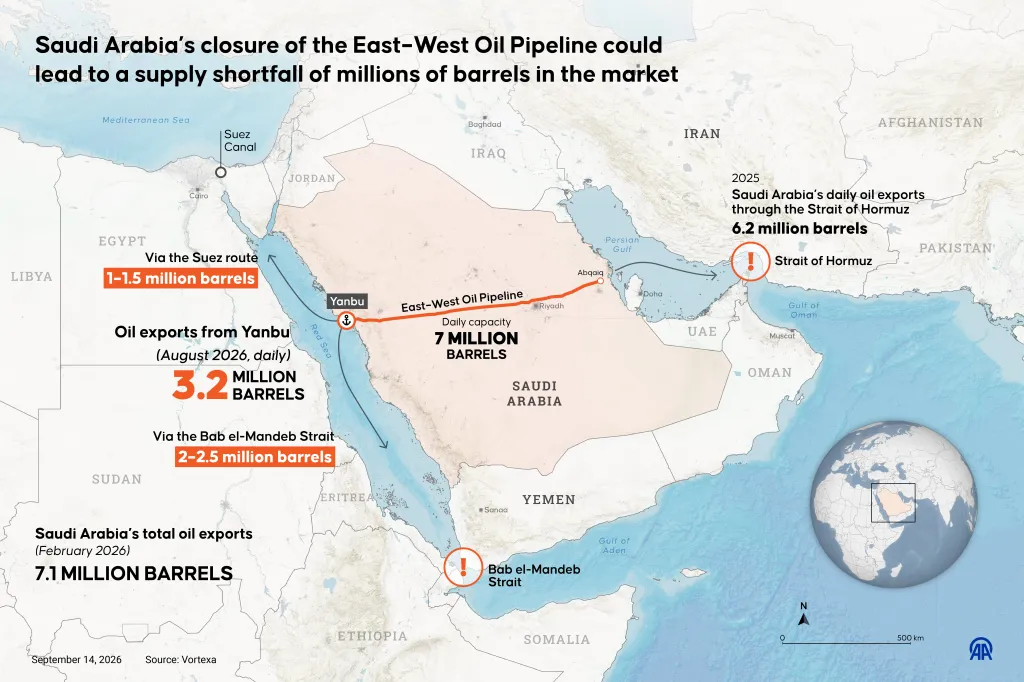
Yanbu hosts major oil storage and refining facilities and is connected by the East-West Pipeline, which can carry up to seven million barrels a day.
The Houthis, also known as Ansar Allah (supporters of God), have repeatedly fired missiles and drones into Saudi Arabia, disrupting oil flows from the world’s largest energy exporter.
On Thursday, the rebel group said it had struck the facilities of state oil firm Aramco in Yanbu, and a “sensitive target” in Riyadh. Saudi forces said they had intercepted six ballistic missiles. Authorities have not confirmed any damage.
The foreign ministers of Saudi Arabia, Pakistan and Turkiye met on Thursday to arrange an “urgent meeting” of their military chiefs of staff under the Mecca Joint Defence Agreement, which treats an attack on one member as an attack on all, the Saudi foreign ministry said in a statement.
They also condemned Houthi attacks that they claimed targeted Mecca and other civilian sites.
However, doubt persists over what action Turkiye and Pakistan might take under the pact, which is yet to be officially triggered. Both of the Saudi allies are heavily involved as mediators seeking to bring an end to the conflicts across the Middle East.
Saudi Arabia’s grand mufti called on soldiers to be ready to lay down their lives to fight the Houthis, according to the Saudi state news agency.
The Iran-aligned Houthis have been battling the Saudi-backed government of Yemen for more than a decade. That conflict has been rekindled amid Israel’s wars against the Iran-aligned Hamas group in Gaza and the Hezbollah group in Lebanon, and the United States war on Iran.
At the United Nations General Assembly in New York, Yemen’s Vice President Abdullah Abdulkader al-Alimi-Bawzer warned that the Houthis were using shipping security “as a tool for blackmail”.
“It is taking hostage the entire global economy,” he said.
The US has not renewed military involvement, but Saudi Foreign Minister Prince Faisal bin Farhan Al Saud said the kingdom was “continuing to work with our partners in the US”.
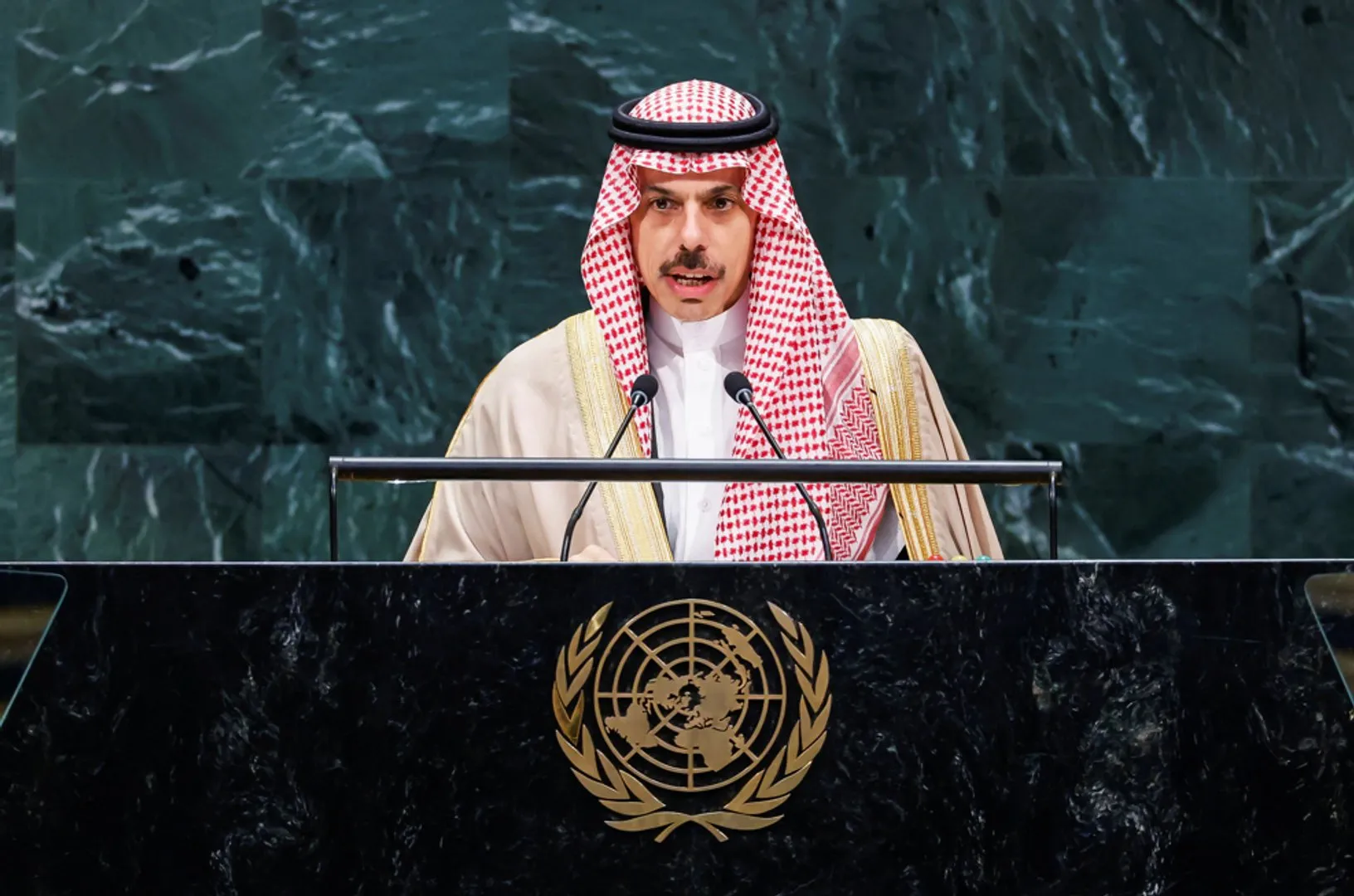
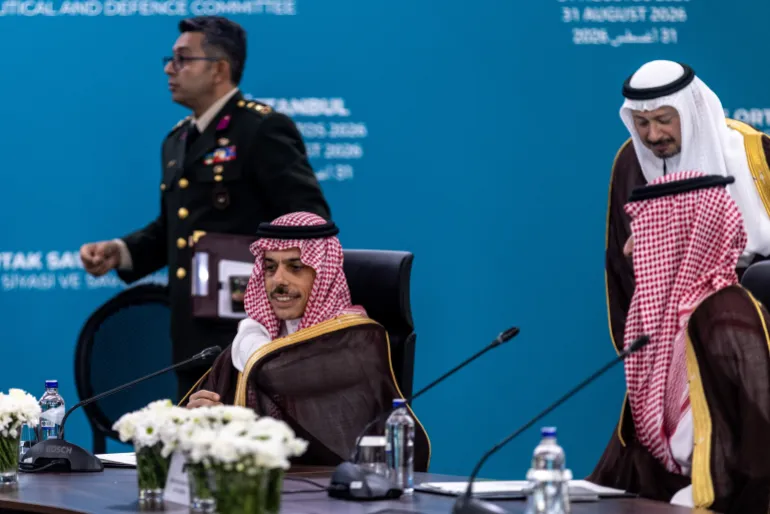
Saudi Foreign Minister Prince Faisal bin Farhan Al Saud in Istanbul, Turkiye [Burak Kara/Getty]
The Houthi targeting of Yanbu adds to the pressure on Saudi Arabia’s oil exports.
Earlier this month, the Houthis seized the Yemeni port of Mocha and several Red Sea islands, giving them significant control over the Bab al-Mandeb strait, which usually carries about 12 percent of global oil trade.
Strikes have also disrupted the operation of the East-West Pipeline linking Yanbu to export routes. Riyadh had been using it to export crude bypassing the Strait of Hormuz, which is restricted amid the Iran-US war.
However, the Houthis have now forced the Saudis to switch some exports back to Hormuz.
Brent crude rose more than 3 percent on Thursday, briefly topping $108 a barrel, before easing to $105.77 on Friday morning.
June Goh, a senior oil market analyst at Sparta Commodities in Singapore, said oil would likely stay above $100 a barrel as long as the war on Iran continued.
“With no clear resolution in sight, the gap in oil inventories globally is getting wider,” Goh told Al Jazeera.
In a live television interview Thursday night Paris time, French President Emmanuel Macron said he was sending an unspecified number of troops and equipment to the Saudi Arabia to protect the Yanbu energy hub, located on the Red Sea.
“This is the agreement we have finalized with the Saudis,” Macron explained. “We are going to send military resources, that is to say, soldiers, radar systems and defense systems, to protect this site — not to get us involved in any conflicts, but to protect this site.”
The French leader did not elaborate on the exact equipment he would send, how many troops, or when they would arrive. Nor did he address what would happen if French personnel were killed or injured or equipment damaged or destroyed. We have reached out to the French Embassy for further details. Based on his mention of radars and seeing that the threat to Saudi oil infrastructure is almost entirely from aerial attacks from drones and missiles, these will likely be air defense forces.
Nous agissons pour protéger nos compatriotes des conséquences de la crise au Moyen-Orient. Objectifs : sécuriser les approvisionnements et faire baisser les prix à la pompe. pic.twitter.com/kvrgHcV4E4
An infographic illustrating how Saudi Arabia has diverted oil from the Persian Gulf to the Red Sea. (Photo by Murat Usubali/Anadolu via Getty Images) Anadolu
Before Macron’s announcement on Thursday, the Houthis claimed they had carried out two more waves of attacks on Saudi targets, including one on the Saudi Aramco facility in Yanbu, “using a number of ballistic and cruise missiles, as well as drones.”
In addition, the Houthis claimed they struck Riyadh.
Earlier in the day, the Houthis said they struck “enemy command and control centers, operations rooms, weapon depots, missile launch platforms, and military sites belonging to Saudi-led enemy formations in Jizan,” a Red Sea port city.
“The Saudi-led military coalition in Yemen said on Thursday that it had shot down six ballistic missiles fired by the Iran-backed Houthi militia, in what appeared to be one of the largest cross-border attacks by the group since its conflict with Saudi Arabia [flared back up],” The New York Times reported.
The missiles were aimed at the Saudi cities of Taif and Yanbu, Maj. Gen. Turki al-Maliki, a spokesman for the Saudi-led coalition, claimed on X. “Escalations and violations by the terrorist Houthi militia will be dealt with firmly,” he stated, without specifying where the missiles were intercepted.
TWZ cannot independently verify any of these claims.
Today’s attacks are the latest in the escalating conflict between the Houthis and Saudi Arabia. Earlier this year, the Houthis imposed a blockade on the Bab al-Mandab Strait (BAM) and began striking Saudi ships in the southern part of the Red Sea as well as critical energy terminals on that body of water and Saudi refineries. Iranian proxies have also struck the vital East-West pipeline that carries oil to the Red Sea to bypass the Strait of Hormuz, where Iran vastly curtailed shipping after the launch of Operation Epic Fury. The East-West pipeline reportedly reopened after being shut down following a long-range drone attack.
The stark reality facing Macron is that if Saudi oil infrastructure and transport nodes near the Red Sea are destroyed or the pipeline that feeds it is shut down for months the last major oil lifeline from the region — and especially to Europe — will be closed off, sparking a deeper energy crisis.
Iran has already severely curtailed the flow of oil through the Strait of Hormuz since the U.S. and Israel attacked it on Feb. 28. The movement of oil has been further impeded by a U.S. blockade on Iranian ports. However, transits have been increasing as of late, thanks in large measure to U.S. military escorts that U.S. Central Command claims have allowed more than a billion barrels of crude to pass through the Strait of Hormuz. Still, the traffic is far below what it was before the war broke out.
Having both the Strait of Hormuz largely closed and energy exports out of the Red Sea shut down simultaneously is a nightmare scenario. By Thursday evening Eastern time, the per-barrel price of Brent crude oil shot up to nearly $107, according to OilPrice.com. It had fallen below $100 per barrel just two days earlier.
Given all this, the French president sought to offer reassurance about oil supplies, according to France 24.
“He said he had carried out ‘intense diplomatic activity,’ meeting in recent weeks with the leaders of Saudi Arabia, Iraq and Nigeria, all hydrocarbon suppliers, to ensure France keeps receiving the same volumes,” the publication noted.
“We have replenished gas stocks and also oil stocks” for the months ahead, the French president also said.
“Escalating tensions in the Gulf could have negative consequences here in the UK—such as rising prices, disruptions to energy supplies, and increased costs for British businesses,” the U.K. Defense Ministry (MoD) explained in announcing the deployment. “The Houthis pose a threat to stability in the Middle East; therefore, it is in the UK’s national interest—economically and in terms of security—that they do not succeed in their aims.”
“We unequivocally condemn Houthi attacks on Saudi Arabia, and our position is clear: both Saudi Arabia and the Yemeni government have the right to self-defense,” the ministry added.
The jet will operate from a U.K. air base in Cyprus and will begin air-to-air refueling operations in the coming days, the BBC reported.
A Royal Saudi Air Force Voyager aerial refueling jet. (Air Tanker)
The French and British deployments contrast decisions by the U.S. and other nations not to get involved with the Saudi-Houthi fight.
Last week, Trump turned down a direct plea from Saudi Crown Prince Mohammed bin Salman, the Kingdom’s de facto leader, to attack the Houthis. Meanwhile, Pakistan and Turkey, which signed the Mecca Joint Defense Agreement with Saudi Arabia, have yet to provide any direct military aid. The pact holds that an attack on one is considered an attack on all; however, it doesn’t stipulate exactly what actions should be taken.
The security situation in Yemen has drastically deteriorated since the launch of Epic Fury after the Houthis joined the U.S.-Iran conflict on the side of their major supporter.
The Houthis have been directly attacking Saudi Arabia over claims that the kingdom has imposed a blockade on them. Beyond that, the mostly dormant civil war between the Houthis and internationally recognized Yemeni government forces, backed by Saudi Arabia, reignited in the wake of operation Epic Fury. The Houthis have made large territorial gains in the renewed conflict, including capturing the port city of Mokha and two key islands in the Red Sea. This has strengthened the Houthi hold on the BAM. You can read more about that in our story here.
3. The Houthis have reportedly attempted to seize ROYG-controlled islands in the Red Sea from which Houthi fighters could launch attacks on international shipping. Houthi forces reportedly landed on the Hanish Islands in the southern Red Sea on the morning of September 10 after… pic.twitter.com/tiFPgNDOHZ
The civil war in Yemen erupted in 2014 and expanded a year later when a Saudi-led coalition joined forces with the government ousted by the Houthis. The fighting between Saudi-led forces and the Houthis largely abated after a tenuous ceasefire took hold in 2022. The Saudis held off on getting involved in the recent Red Sea conflict, which saw the U.S. and coalition warships duking it out with the Houthis and eventually led to a U.S.-led air campaign over Yemen. The United Kingdom was another significant player in that air campaign.
Meanwhile, exacerbating concerns about the flow of oil from the Red Sea, “a senior adviser to Iran’s supreme leader warned Thursday that Iranian forces and their Houthi allies in Yemen could respond to any new U.S. attacks by opening ‘a new front’ in its war with the U.S. by targeting energy supplies in the Red Sea,” CBS News reported.
The statements came after U.S. President Donald Trump on Wednesday once again threatened Iran.
“Will a deal be made with Iran that lets them rebuild and create a far greater country than it ever was before?” Trump asked rhetorically. “Or do I annihilate the Islamic Republic and do it quickly, never giving them a chance to kill and destroy people and countries again?”
Trump added that he believed he would make a peace deal with Iran after the upcoming U.S. midterm elections, which will decide the control of Congress.
The fact that France is sending forces to Saudi Arabia is an ominous development and another indication that the current spate of unrest that began with Epic Fury does not appear to show any signs of ending anytime soon.
The pact stipulates that an attack on one of the three countries is considered an attack on all of them.
Saudi Arabia, Turkiye and Pakistan have announced they are planning an urgent meeting of their chiefs of staff to discuss ways to support the kingdom under the Mecca Joint Defence Agreement.
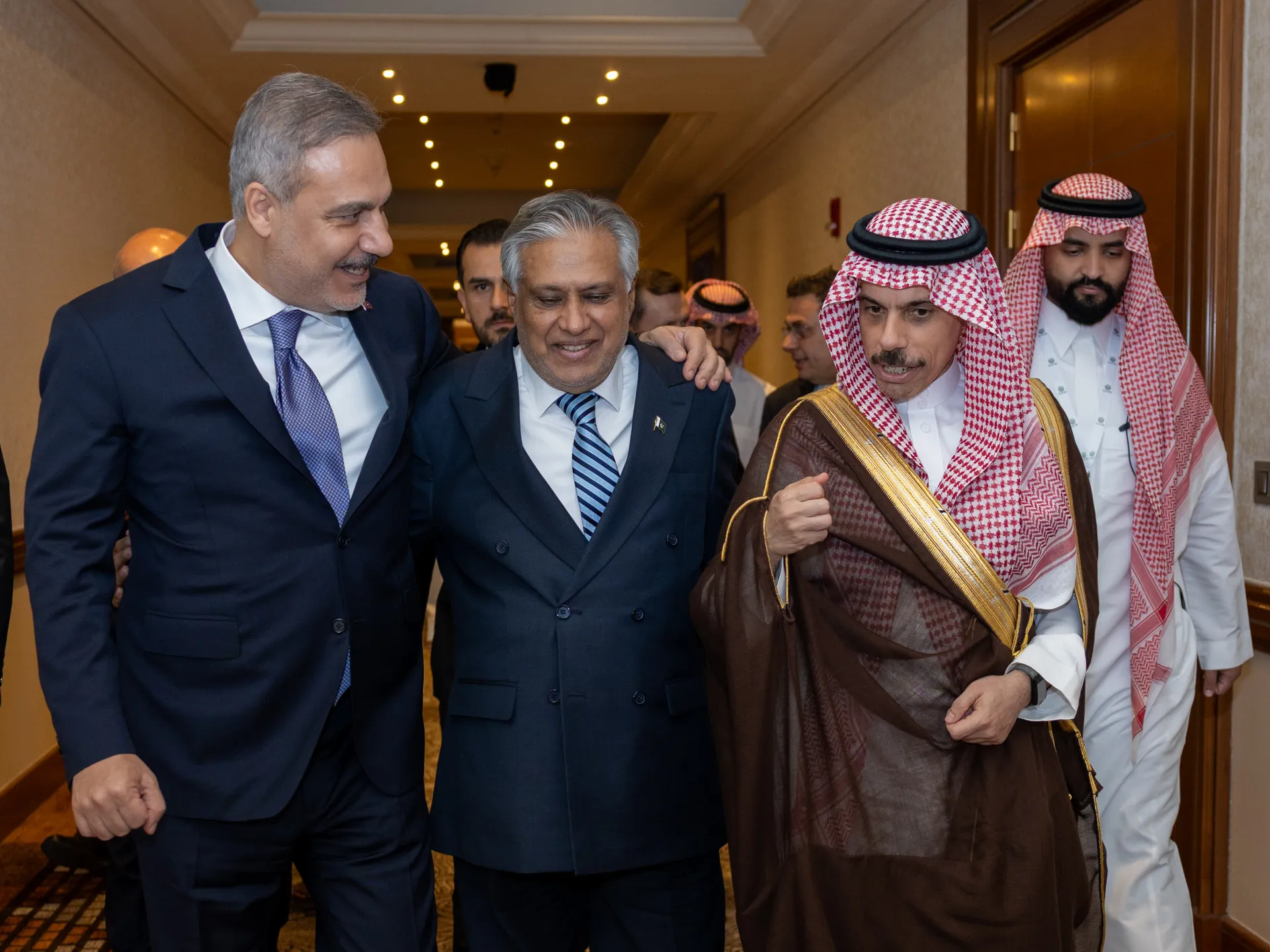
The announcement followed a meeting on Thursday in New York between Saudi Foreign Minister Prince Faisal bin Farhan Al Saud, Pakistan’s Deputy Prime Minister and Foreign Minister Ishaq Dar and Turkish Foreign Minister Hakan Fidan, according to the Saudi Press Agency.
Recommended Stories
list of 4 itemsend of list
The statement did not say when the military chiefs would meet or what form of support could be considered.
Saudi Arabia, Turkiye and Pakistan signed the Mecca Joint Defence Agreement on August 7 to strengthen collective deterrence and expand defence cooperation.
The pact stipulates that an attack on one of the three countries is considered an attack on them all.
The three countries have since begun setting up mechanisms under the pact. Their foreign and defence ministers and military chiefs met in Istanbul on August 31 for the first meeting of the Strategic Political and Defence Committee, agreeing to establish a secretariat in Saudi Arabia and to deepen military cooperation.
Thursday’s foreign ministers’ meeting also condemned attacks targeting Mecca as well as civilian and economic facilities in Saudi Arabia, and it affirmed the kingdom’s right to defend itself under Article 51 of the UN Charter.
The diplomatic moves came as Saudi Arabia reported a fresh wave of attacks from Yemen.
Saudi Arabia said its air defences shot down six ballistic missiles launched towards Taif and Yanbu on Thursday.
Major-General Turki al-Malki, the coalition spokesman, said further Houthi escalation would be “dealt with firmly”. Saudi Civil Defence authorities had issued alerts in several areas before later saying the danger had passed.
The Houthis separately claimed missile and drone attacks on a “sensitive target” in Riyadh and Saudi Aramco facilities in Yanbu.
France has also offered to provide defensive support to Saudi Arabia. President Emmanuel Macron said Paris would send military assets to help protect Yanbu.
“We are going to send military assets, meaning soldiers, radars and defence systems to protect this site,” Macron said in an interview with TF1 on Thursday.
Yemen clashes drive rising casualties and displacement
The cross-border attacks have coincided with some of the heaviest fighting inside Yemen since hostilities escalated again.
Fighting across several fronts in Yemen killed at least 150 Houthi fighters and members of government-aligned forces in the 24 hours leading into Friday, according to an AFP news agency tally.
The toll compiled by AFP included 98 fighters on the government side and 52 from the Houthis, with clashes reported around the Kahboub Mountains and areas between Lahj and Taiz overlooking the Bab al-Mandeb strait.
The Houthis have also expanded their presence along Yemen’s Red Sea coast, including by taking the port city of Mocha and strategic islands. The gains have strengthened the group’s position around Bab al-Mandeb, one of the world’s busiest shipping corridors. About 12 percent of global trade normally passes through the waterway, according to AP.
Yemen’s internationally recognised government has urged greater international involvement, warning at the UN General Assembly that Houthi control around the strait poses a wider economic risk.
Vice President Abdullah Abdulkader Al Alimi-Bawzer accused the Houthis of using freedom of navigation as leverage, saying their actions were “taking hostage the entire global economy”.
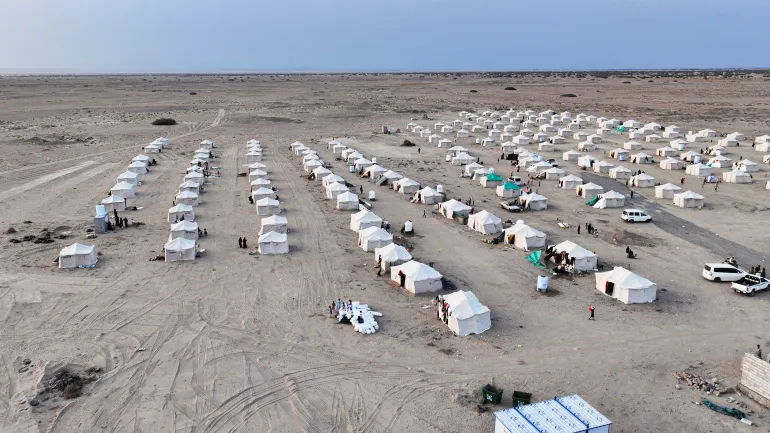
The renewed fighting has forced more than 230,000 people from their homes since the beginning of September, according to UNHCR, as clashes spread across multiple front lines. The agency said the latest displacement has added to about 5.2 million people already internally displaced across Yemen.
A drone view of a camp for internally displaced people, who fled fighting between the Houthis and government forces, erected near Aden, Yemen, September 19, 2026 [Stringer/Reuters]
UNHCR said families have been uprooted across governorates, including Hodeidah, Taiz, Lahj, Aden, Abyan, Marib, al-Dhalea and Shabwah, with many fleeing at short notice and leaving with few belongings.
Shelter, food, clean water, healthcare and protection services are among the most urgent needs, while host communities and displacement sites are becoming increasingly overstretched.
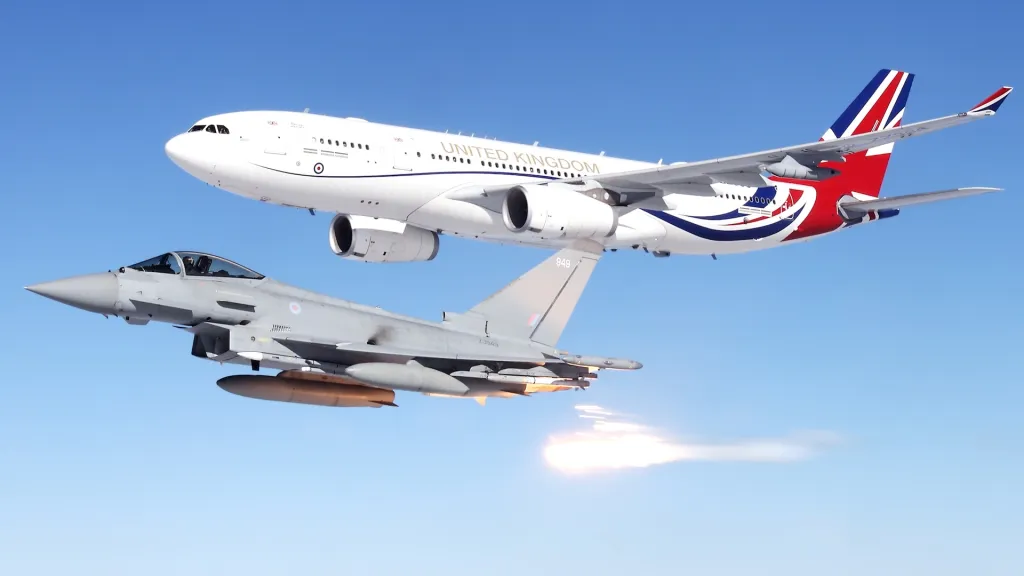
The Royal Air Force (RAF) is deploying one of its Voyager aerial refueling jets to help Saudi Arabia defend against ongoing attacks from the Iranian-backed Houthi rebels of Yemen. The decision marks the first publicly known international military assistance offered to Saudi Arabia specifically for its fight against the Houthis, which erupted over the summer. The move came hours before U.S. President Donald Trump told the United Nations General Assembly meeting that he believes a peace deal with Iran will be reached after the U.S. midterm elections in November.
The British action is significant because, while it involves just one tanker, other key Saudi allies have yet to heed the Kingdom’s request for military help specifically to battle the Houthis. Although it’s important to note some assets already deployed to defend against Iranian attacks could be helping with the Houthi threat now.
A Royal Air Force Typhoon FGR4 accompanies a Voyager tanker during a Quick Reaction Alert training scenario in March 2026. (Crown Copyright) Crown Copyright
Last week, Trump turned down a direct plea from Saudi Crown Prince Mohammed bin Salman, the kingdom’s de facto leader, to attack the Houthis. Meanwhile, Pakistan and Turkey, which signed the Mecca Joint Defense Agreement with Saudi Arabia, have yet to provide any direct military aid. The pact holds that an attack on one is considered an attack on all; however, it doesn’t stipulate exactly what actions should be taken.
At issue beyond protecting the Saudis is growing concern over the Bab al-Mandab Strait, a key chokepoint now largely controlled by the Houthis, who are preventing the Saudis from using it to ship oil.
Earlier this year, the Houthis imposed a blockade on the Strait, and began striking Saudi ships in the southern part of the Red Sea as well as critical energy terminals on that body of water. Iranian proxies have also struck the vital East-West pipeline that feeds oil to be transferred and shipped via the Red Sea in order to bypass the Strait of Hormuz, where Iran vastly curtailed shipping after the launch of Operation Epic Fury. The pipeline reportedly reopened today after being shut down following a long-range drone attack.
The stark reality is that if Saudi refineries are destroyed and the pipeline is shut down for months if not longer, the last major lifeline from the region, and especially to Europe, would be closed off, sparking a deeper energy crisis.
Concern over these factors spurred Britain to act, the Ministry of Defense (MoD) noted. It said it was acting on a request from Saudi Arabia and that the jet would “support Saudi Arabia’s defensive operations in aid of the legitimate Yemeni government.”
“Escalating tensions in the Gulf could have negative consequences here in the UK—such as rising prices, disruptions to energy supplies, and increased costs for British businesses,” the ministry explained. “The Houthis pose a threat to stability in the Middle East; therefore, it is in the UK’s national interest—economically and in terms of security—that they do not succeed in their aims.”
“We unequivocally condemn Houthi attacks on Saudi Arabia, and our position is clear: both Saudi Arabia and the Yemeni government have the right to self-defense,” the ministry added.
The jet will operate from a U.K. air base in Cyprus and will begin air-to-air refueling operations in the coming days, the BBC reported.
The MoD said the Voyager will fly only in support of missions to shoot down missiles and drones, though Saudi aircraft are also bombing Houthi ground positions in Yemen, in part to get at drone and missile launchers and storage sites. Houthi officials have accused the Saudis of killing civilians in some of these attacks.
It should be noted that, more than a decade ago, the U.S. was supporting the Saudi coalition’s previous bombing campaign against the Houthis by providing aerial refueling and intelligence. However, then-Defense Secretary James Mattis ended that in 2018 during the first Trump presidency after growing concerns over the large number of civilian casualties.
The Voyager can only refuel the Royal Saudi Air Force Eurofighter Typhoons, Panavia Tornados, and Italian Air Force Typhoons that have been in the Kingdom since before the fighting with the Houthis broke out, as well as any other similarly equipped allied aircraft. That’s because the tanker only has probe-and-drogue aerial refueling, not the boom required for gassing up other receptacle-equipped aircraft. You can read more about this in our story here.
The view from the cockpit of an A400M during air-to-air refueling with a Voyager KC3 using its probe and drogue system, via the fuselage refueling unit. Crown Copyright
The Voyager will not be the first British asset to be sent to help Saudi Arabia since the launch of Epic Fury. In March, the U.K. sent its Sky Sabre air defense system and troops to the Kingdom to help defend against attacks from Iran.
The British Army Sky Sabre state-of-the-art intermediate air defence system. (Corporal Adam J Wakefield) Corporal Adam J Wakefield
“This support builds upon the UK’s existing military contribution to Saudi air defense, which includes the deployment of an air defense system and British personnel to help protect against missile and drone attacks,” the MoD pointed out on Tuesday. “Saudi Arabia and Yemen are steadfast partners of the UK and play a vital role in regional stability. It is in the UK’s interest to safeguard regional stability, protect vital trade and energy supplies, and encourage a diplomatic resolution to the conflict in Yemen.”
The civil war in Yemen erupted in 2014 and expanded a year later when a Saudi-led coalition joined forces with the government ousted by the Houthis. The fighting between Saudi-led forces and the Houthis largely abated after a tenuous ceasefire was signed in 2022. The Saudis held off on getting involved in the recent Red Sea conflict which saw the U.S. and coalition warships duking it out with the Houthis, and eventually led to a U.S.-led air campaign over Yemen. The United Kingdom was the other significant player in that air campaign.
Tensions, as we noted earlier in this story, reignited in recent weeks after the Houthis joined the U.S.-Iran conflict on the side of their major supporter.
On Tuesday, Houthi spokesman Brig. Gen. Yahya Sare’e claimed that Saudi Arabia conducted 19 airstrikes across rebel-held territory in Yemen that involved the latest round of civilian casualties. The Saudis have not directly responded.
Brig. Gen. Yahya Sare’e. (Houthi Telegram)
As we stated earlier in this story, hours after the U.K. announced it was sending a Voyager tanker to Saudi Arabia, Trump addressed the ongoing conflict with Iran during his speech to the U.N. General Assembly in New York.
The American leader called for international isolation of Iran and repeated his stance that he was at an inflection point on deciding what course to take moving forward. The situation has settled into an uneasy pause interrupted by sporadic Iranian attacks on shipping in the Strait of Hormuz. It has been weeks since the U.S. last struck Iranian targets.
“Will a deal be made with Iran that lets them rebuild and create a far greater country than it ever was before?” Trump asked rhetorically. “Or do I annihilate the Islamic Republic and do it quickly, never giving them a chance to kill and destroy people and countries again?”
Trump added that he believes he will make a peace deal with Iran after the upcoming U.S. midterm elections, which could decide which party controls Congress. With gasoline and diesel price increases damaging the economy, the war and Trump’s handling of it have been very unpopular with voters.
In a CNN and SSRS poll, released Tuesday, 64% of those responding said the U.S. is not winning the war in Iran, while 36% disagreed. In addition, 78% of participants said Trump is not doing enough to end the conflict with Iran and 22% said he was.
“They want to talk to us,” he said. “They have been talking to us, even today they’ve been talking to us, and the relationship is developing. But we can’t let them – and they understand that – we can’t let them have a nuclear weapon.”
A U.S. negotiating team, including Steve Witkoff and Jared Kushner, met with Iranian officials on the sidelines of Tuesday’s U.N. meeting. That sideline session lasted about three hours and went well, according to Trump, who offered no details on the discussions.
Trump: US officials met with the Iranian delegation for three hours – “it was a good meeting”
For their part, the Iranians said they are willing to negotiate, but on their terms.
“A senior Iranian official said Iran could reopen the Strait of Hormuz to Gulf shipping within seven days if the U.S. fulfilled Tehran’s demands to ease military pressure and lift an American blockade on Iranian ports,” Reuters reported. “The official added that Tehran had conveyed its latest proposal to Washington via mediators last week.”
Ministers demand an end to maritime shipping attacks and urge Iran to stop arming the Yemeni group.
Published On 22 Sep 202622 Sep 2026
The foreign ministers of the Group of Seven (G7) nations have condemned what they called “unacceptable continued strikes” by Yemen’s Houthis against Saudi Arabia.
The ministers issued the statement on Monday following an informal meeting on the sidelines of the United Nations General Assembly in New York.
Recommended Stories
list of 3 itemsend of list
“We condemn in the strongest terms the unacceptable continued strikes carried out by the Houthis in Yemen and against the Kingdom of Saudi Arabia,” the ministers of the UK, Canada, France, Germany, Italy, Japan and the United States said in the statement.
The ministers urged the Houthis “to immediately cease all military actions, all threats and attacks against civilian shipping, and to return to the political process in good faith”.
They also called on Iran to stop arming and supporting the group, saying Tehran is in violation of past UN Security Council resolutions. They added that Iran’s backing of the Houthis constituted a dangerous pattern of escalation that risked undermining international trade and creating global instability.
The latest escalation in the Arab region’s most impoverished nation follows a period of relative calm that had largely held since the UN-brokered ceasefire in 2022 between the Iran-aligned group and the Saudi-backed Yemeni government.
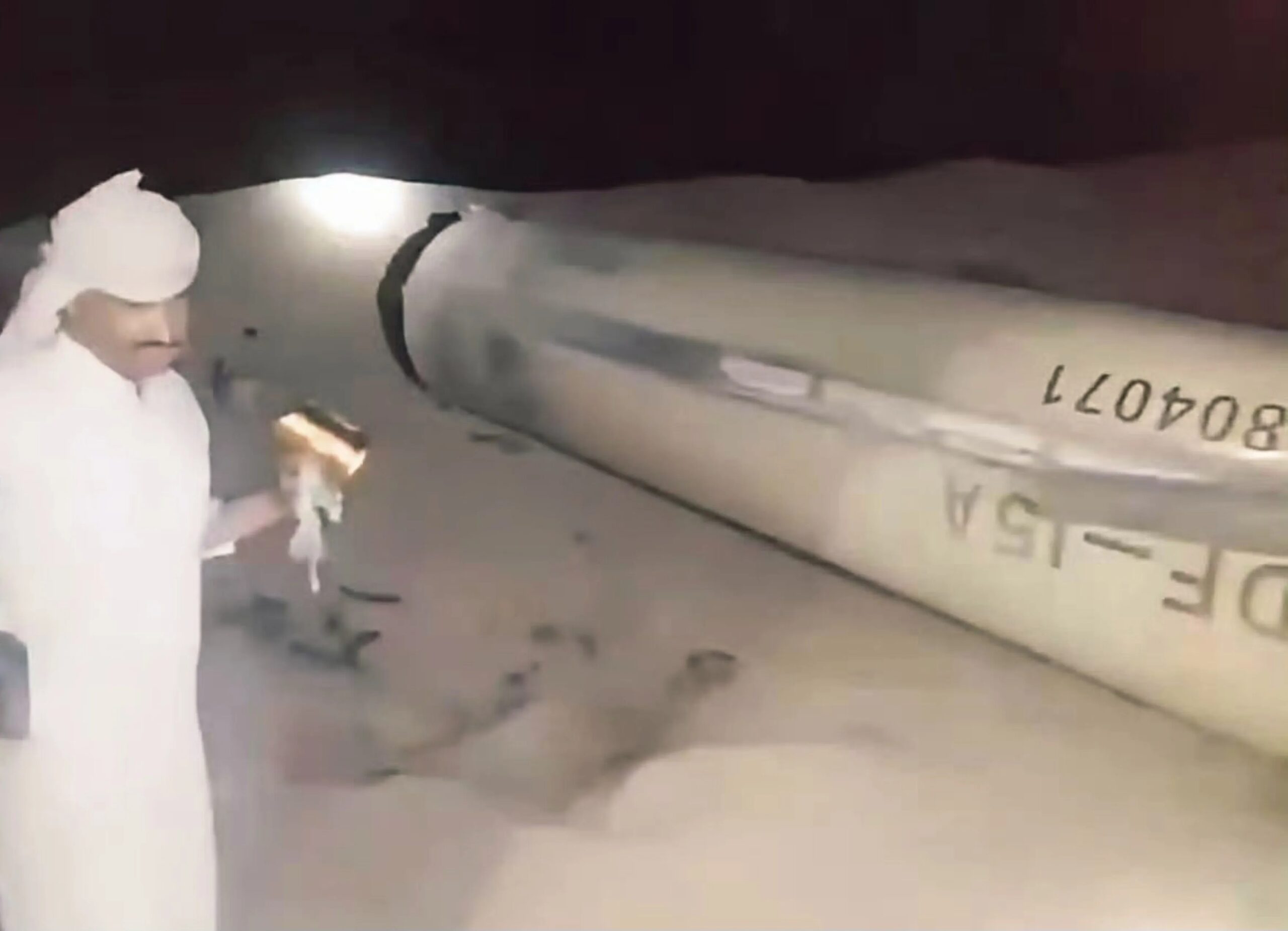
Debris from a Chinese-made ballistic missile found in Yemen could have inadvertently revealed a previously undisclosed addition to Saudi Arabia’s secretive ballistic missile arsenal. Imagery circulating online appears to show the wreckage of a Chinese DF-15A short-range ballistic missile (SRBM), potentially marking the first known Saudi combat use of a weapon in this class, although both the identification and ownership remain unconfirmed.
The booster stage of a Chinese-made DF-15A (Dong Feng-15A) ballistic missile operated by Saudi Arabia fell in Raghwan District, Marib Governorate, northern Yemen. pic.twitter.com/dfSXMOiCzQ
It is also unclear what happened to the missile itself. The debris suggests a stage separation or the missile broke apart or crashed before reaching its target. The Houthis are not known to possess any weapons that could have intercepted it.
A screenshot from a video clearly shows the DF-15A name applied on the side of the missile. via X
The development comes amid a sharp escalation in the long-running Saudi-Houthi conflict. After years of relative de-escalation following the 2022 truce, fighting has intensified in recent weeks as Houthi forces have dramatically overrun Saudi-backed Yemeni government positions, including around strategically important Marib and Taiz. The Houthis have also escalated missile and drone attacks against southern Saudi Arabia, targeting military and energy infrastructure while threatening the kingdom’s ability to move oil through the Red Sea. The group has declared the Bab el-Mandeb closed to Saudi oil traffic, adding a direct threat to one of Riyadh’s critical energy-export routes.
You can catch up with our latest coverage of the fighting here.
As for the DF-15, also known by its NATO designation CSS-6, this is a road-mobile, solid-fueled SRBM developed by China during the 1980s. The system formed part of Beijing’s effort to develop a new generation of conventionally armed mobile ballistic missiles, including systems primarily intended for export.
As you can read about here, the DF-15 family has evolved through several variants, although open-source information concerning their capabilities remains inconsistent.
The DF-15A reportedly entered Chinese service in the mid-1990s. Estimates of these missiles’ maximum range vary substantially, from roughly 600 kilometers (373 miles) for the original DF-15 to as much as 900 kilometers (559 miles) for later versions.
Among the later versions of the DF-15 family is the DF-15B. A more substantial redesign, its most obvious external change is its triconic reentry vehicle fitted with control fins, a configuration widely interpreted as incorporating a maneuverable reentry vehicle (MaRV) warhead. Photo by GREG BAKER / AFP via Getty Images GREG BAKER
China is the only confirmed operator of the DF-15 family. There have been longstanding reports of Chinese transfers of the DF-15 or the related M-9 export version to Egypt, Iran, Pakistan, and Syria, but in each case, the export record is heavily disputed, with some reports likely conflating the DF-15 with the broadly similar DF-11.
While Saudi Arabia has never publicly acknowledged operating the DF-15 family, it has a well-established history of acquiring Chinese ballistic missiles.
In 2013, Prince Fahd bin Abdullah bin Mohammed, Deputy Minister of Defense, visited the Strategic Missile Forces of Saudi Arabia, and was given this model. YEARS of speculation on the smaller missiles (The large is DF-3). Now we know – they are DF-15 and DF-15A. pic.twitter.com/oOn8qiCgye
Saudi Arabia imported Chinese ballistic missiles to expand its long-range strike options. Its desire for a land-based strategic deterrent was initially driven by concerns over Iran, regional missile proliferation, and nuclear hedging. More recently, however, it shifted toward fielding more accurate, mobile systems with greater conventional military utility.
Riyadh secretly obtained DF-3A missiles from China beginning in the late 1980s, establishing a strategic ballistic-missile capability that remained largely outside public view.
The kingdom has also subsequently been linked to the DF-21 family. Satellite imagery and other open-source intelligence have provided evidence of Chinese-designed ballistic-missile infrastructure in Saudi Arabia.
While the Houthis have their own ballistic-missile arsenal, this is principally associated with Iranian technology, captured Yemeni systems, and locally produced or modified weapons.
Saudi employment of an SRBM in the current fighting would represent a notable expansion of the kingdom’s response options. If Saudi Arabia did indeed do this, its main advantage would be speed and responsiveness. A solid-fueled ballistic missile could reach targets deep inside Yemen within minutes while keeping Saudi aircraft and crews out of the immediate engagement area, providing Riyadh with a rapid strike option against fixed Houthi targets. That could be particularly valuable as the conflict expands and Saudi forces face pressure to respond quickly to Houthi attacks on military and energy infrastructure.
Saudi F-15 Eagles Live Missile Firing in Pakistan | Naseem Al-Bahr 13 Exercise
Previous losses at the hands of Houthi ground-based air defenses could also dissuade Riyadh from relying on crewed aircraft to strike targets on the ground deep inside Yemen. Houthi air defenses, while pathed together in many ways, are capable enough to give even U.S. airpower a serious run for their money.
At the same time, a conventional SRBM like the DF-15A can deliver a large warhead at very high speed, imparting significant kinetic energy, making it particularly useful against fixed, high-value, or hardened targets.
Use of an SRBM would also be in line with the current pattern of escalation, with the Houthis conducting missile and drone attacks against Saudi military and energy targets while Saudi-backed Yemeni forces are engaged in renewed ground fighting. Riyadh’s demonstration of an SRBM capability in this campaign would also signal that it is is willing to draw more heavily on its strategic missile inventory as the conflict intensifies, potentially further raising the stakes of the confrontation.
Such a move would carry a message beyond Yemen. Using a previously unacknowledged ballistic missile capability in combat would signal to Iran that Riyadh is now willing to employ this arsenal, after decades of keeping it very much in the shadows.
If the evidence ultimately points to a Saudi DF-15A launch, the discovery would offer a rare look at the operational use of an extremely secretive part of the kingdom’s arsenal, and add a significant new dimension to the rapidly escalating Saudi-Houthi war.
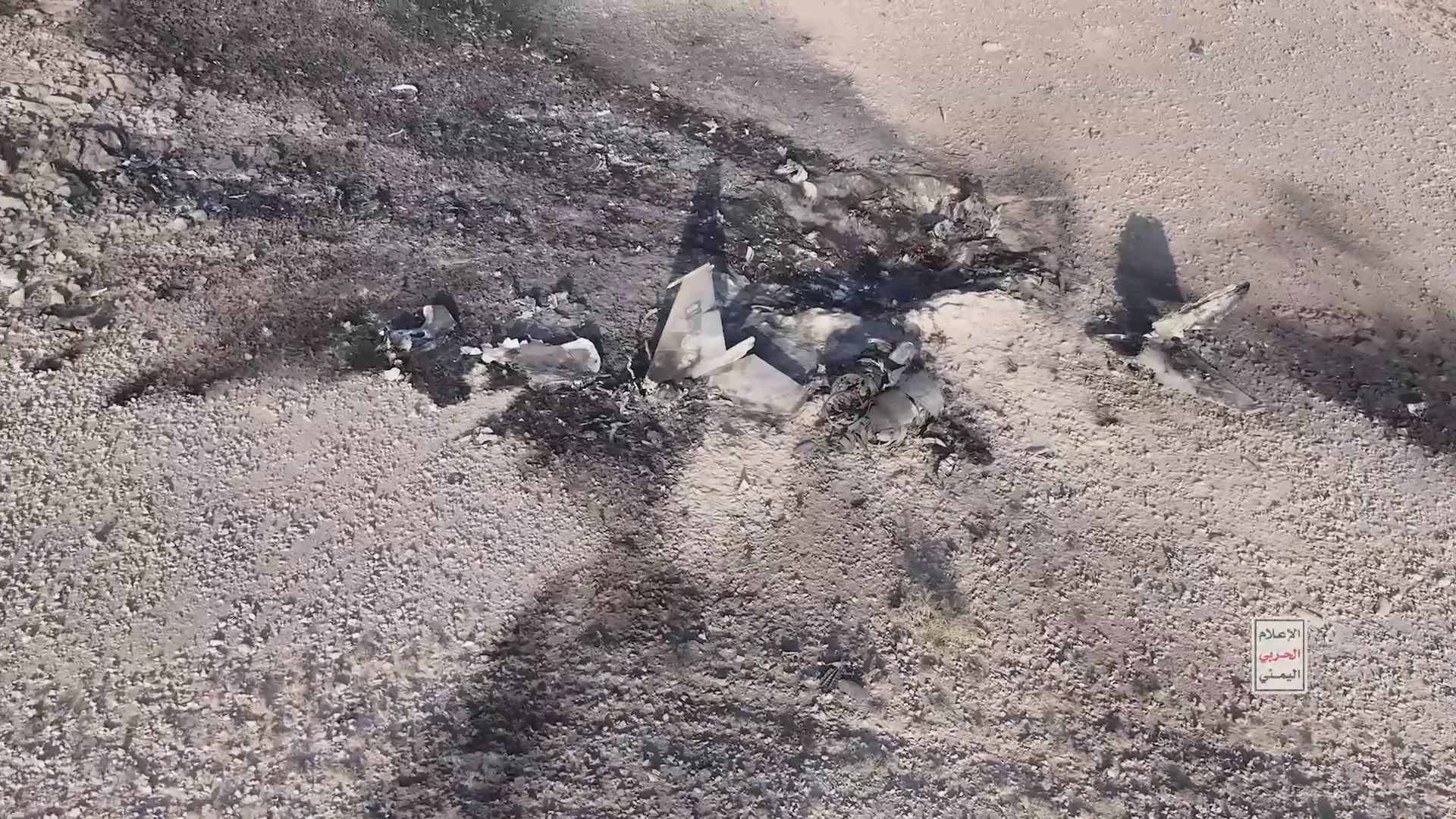
Yemen’s Houthi movement, formally known as Ansar Allah, has released imagery that it says shows the downing of a Royal Saudi Air Force F-15 fighter over Marib governorate. The material includes photos of the wreckage of an F-15 on the ground. At this stage, the fate of the two crew members is unclear. The incident comes amid a major escalation in fighting between Saudi Arabia and the Iran-aligned Houthi movement.
A video of what Ansar Allah says is the successful shootdown of the F-15 shows the typical ground-based forward-looking infrared (FLIR) systems we have seen in use by air defenses in Yemen previously, and, more recently, in Iran.
After a period of relative calm following the 2022 truce, fighting has intensified in recent weeks, with Houthi forces making significant advances against Saudi-backed Yemeni government positions, including around the strategically important coastal areas of Marib and Taiz. The group has also stepped up missile and drone attacks against southern Saudi Arabia, targeting military and energy infrastructure while strangling the kingdom’s ability to move oil through the Red Sea. The Houthis have further declared the Bab el-Mandeb closed to Saudi oil traffic, directly challenging one of Riyadh’s key energy-export routes.
An aerial view of the apparent impact site. Houthi-controlled mediaThe impact site seen from the ground. Houthi-controlled media
Prior to the release of imagery, earlier today the Houthi military spokesman Brig. Gen. Yahya Saree claimed that Houthi forces had shot down a Saudi F-15 while it was conducting operations in support of Saudi-backed forces in Marib. Saree said the aircraft was engaged by a locally manufactured surface-to-air missile, although he did not identify the weapon. Reuters likewise reported that the Houthis had claimed the shootdown but that the claim had not been independently verified.
Saree also claimed that Houthi air defenses subsequently engaged formations of Saudi F-15s and Eurofighter Typhoons that entered the area while attempting to locate the downed aircraft. According to the Houthi account, those aircraft were forced to withdraw. That portion of the claim has likewise not been independently verified.
Saudi Arabia has not, at the time of writing, publicly acknowledged the loss of an F-15. Reutersreported that the Saudi-led campaign had intensified considerably in recent days, with Saudi aircraft striking targets across Yemen while the Houthis have launched missiles and drones toward Saudi territory.
The aircraft appears to be an F-15SA, the most advanced variant of the Eagle operated by the Royal Saudi Air Force. Specifically, it appears to be tail number 5539, assigned to the 55th Squadron based at King Khalid Air Base.
A close-up of one of the tailfins with the apparent tail number 5539. Houthi-controlled mediaAnother view of one of the tailfins. Houthi-controlled media
The Royal Saudi Air Force received 84 of the new-build F-15SA. Meanwhile, the 68-strong fleet of earlier F-15S aircraft has been upgraded locally to a similar standard, also known as F-15SR (for Saudi Retrofit). Aircraft 5539 is understood to be among the latter.
The reported shootdown highlights the continuing threat posed by Houthi air defenses, which have proven considerably more capable and difficult to suppress than their improvised appearance might suggest.
As TWZ has previously detailed, the Houthi air-defense network includes mobile surface-to-air missile systems, repurposed infrared-guided R-73 and R-27 air-to-air missiles, and Iranian-derived systems such as the Saqr/358.
Houthi Thaqib-1 surface-to-air missiles (repurposed R-73s) in front of Thaqib-2s (repurposed R-27). Other Houthi air defense missiles are also seen at the rear. Houthi-controlled media
Of particular concern is the group’s use of passive infrared sensors for detection, tracking, and missile cueing. Unlike conventional fire-control radars, these sensors do not provide an aircraft’s electronic-warfare systems with an early warning that it has been detected or targeted. TWZhas noted that this combination of mobility and passive sensing can create a difficult problem even for highly sophisticated combat aircraft, with the Houthis having previously demonstrated the ability to threaten U.S. crewed and uncrewed aircraft.
That capability does not mean that Houthi air defenses constitute a conventional, integrated air defense network comparable to those operated by major state militaries. However, they can still be effective through a combination of concealment, mobility, passive detection, unconventional employment of missiles, and the difficult operating environment over Yemen.
Previous Saudi aircraft losses attributed to Houthi air defenses during the Yemen war from 2015 to 2022 include several helicopters, fixed-wing aircraft, and drones. Total Saudi losses to all causes in the conflict amount to around a dozen helicopters, five jets, and as many as 30 drones. A Saudi F-15 crashed in the Red Sea at the start of the war in 2015 and Eagles were also reportedly engaged and damaged by Houthi surface-to-air missiles in 2018, although they returned safely.
Video footage that emerged in 2021 shows Saudi troops on the ground watching an F-15 swoop in a relatively low level to knock down a Houthi Qasef-series suicide drone:
Saudi F-15 shooting down a Houthi Qasef-2K
In the past, Houthi forces have come close to engaging U.S. F-35s and have repeatedly demonstrated an ability to bring down MQ-9 Reaper drones. If the Saudi F-15 loss is ultimately confirmed, determining precisely how the aircraft was detected, tracked, engaged, and hit could therefore provide valuable insight into how this unusual air defense architecture is being employed against Saudi and other combat aircraft.
As we discussed at the time, the clear risk posed by Houthi air defenses is likely the main factor behind Saudi employment of a Chinese-made short-range ballistic missile (SRBM) in the current fighting with Yemen.
The timing of the reported shootdown is also notable. It comes amid a sharp escalation in the conflict, with Saudi Arabia conducting air operations against Houthi positions in Yemen and Ansar Allah launching missiles and drones toward targets inside Saudi Arabia. Reutersreported that the Houthis had attacked the Saudi Red Sea port of Yanbu and a southern airbase at Khamis Mushait, while Riyadh has reported intercepting Houthi drones.
The F-15 incident also follows a separate confrontation over an alleged Houthi drone attack near Mecca. Saudi authorities said their air defenses intercepted and destroyed a Houthi drone south of Mecca before it entered the restricted airspace over the city. The Houthis denied targeting the holy city.
Meanwhile, there are reports that U.S. officials met representatives of the Houthis in Oman over the weekend, with the Houthis apparently telling the U.S. officials that they had no intention of attacking American vessels and that they remained committed to the 2025 ceasefire with the United States unless they stepped in on behalf of Saudi Arabia. The Kingdom reportedly requested exactly this in recent weeks but was denied.
For the moment, the most that can be established from the available imagery is that a Saudi F-15 was destroyed, with Ansar Allah claiming responsibility.
This is a developing story and will be updated as additional imagery, official statements, or other independently verifiable information becomes available.
Fidan highlights Turkiye’s readiness to assist Saudi Arabia militarily, as Houthi attacks escalate in Yemen.
Published On 19 Sep 202619 Sep 2026
Turkish Foreign Minister Hakan Fidan has said that Saudi Arabia may have unmet military needs from the attacks by Yemen’s Houthi rebels and that Turkiye would consider how to support the kingdom as part of a trilateral defence pact.
Speaking to Turkish broadcaster NTV on Friday, Fidan said it was unacceptable for Saudi Arabia to be dragged into the US-Iran war, adding that Riyadh had no desire to join the conflict.
Recommended Stories
list of 3 itemsend of list
He added that proposals had been conveyed to all sides in an effort to end the fighting, without further elaborating.
The Iran-backed Houthi rebels and Saudi Arabia continue trading attacks in an escalating war in Yemen, as the Houthis press gains that have brought large stretches of the Red Sea coast, including the strategic Bab al-Mandeb Strait, under their control.
Pakistan has made a similar pledge to defend Saudi Arabia under the defence pact.
Lieutenant-General Ahmed Sharif Chaudhry, a spokesperson for Pakistan’s military, told Arab News on Thursday that Islamabad would defend Saudi Arabia “to any extent”, including “physically”, though he did not say whether Riyadh had asked for more Pakistani troops.
Pakistan’s Foreign Office has said no military response is currently under discussion under the pact, adding that Islamabad would act “when time comes”.
The trilateral agreement, known as the Mecca Joint Defence Agreement, was signed on August 7 in Mecca by Saudi Crown Prince Mohammed bin Salman, Turkish President Recep Tayyip Erdogan and Pakistani Prime Minister Shehbaz Sharif.
The three countries formally named the arrangement the Mecca Defence Alliance on August 31, after officials meeting in Istanbul agreed to set up a secretariat in Riyadh, to be headed initially by a Pakistani secretary-general.
Its founding principle is that an armed attack against any one of the three states will be treated as an attack against all three.
Fidan said at the time the alliance was built on “respecting the sovereignty of other states, territorial integrity and not intervening in internal affairs”, and remained open to other countries joining.
Analysts have questioned how much substance lies behind the pact so far, noting it lacks the integrated command structure and standing forces that underpin NATO.
Its institutional shape, including how the mutual defence clause would actually be triggered, remains unclear.
The trilateral pact was struck as Gulf states grow increasingly concerned about being pulled into the wider US-Iran war, which has continued for more than six months since Washington and Israel first struck Iran in February.
Iran-backed Houthi militants in Yemen say they carried out drone and ballistic missile attacks on the Saudi capital Riyadh, as well as energy sites on the country’s Red Sea coast.
Saudi authorities said they intercepted and destroyed a ballistic missile fired at Riyadh earlier that day, without confirming any further strikes or causalities.
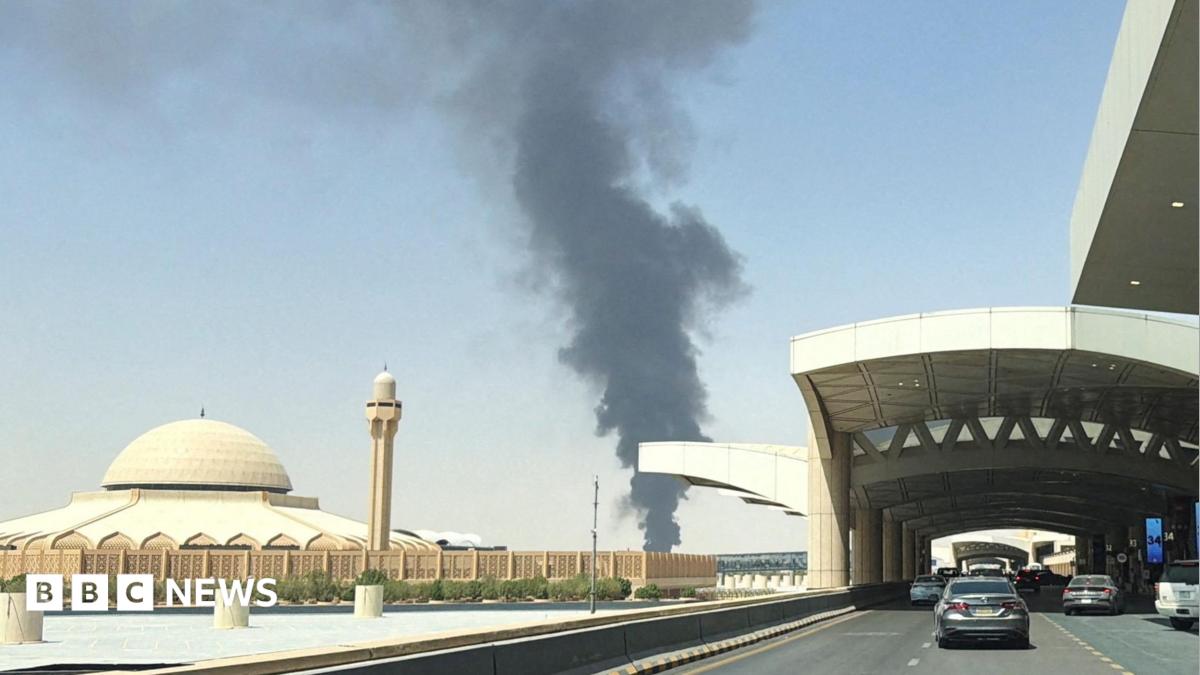
Earlier, a column of black smoke was seen rising from fuel tanks near the Saudi capital’s international airport, where flights were disrupted temporarily on Saturday.
Air raid alerts had sounded in the capital for the first time since the Iran-backed Houthis increased their attacks on Saudi Arabia in July.
Air defences also stopped “hostile attempts to target civilians” in the cities of Bish, Taif, Farasan and Yanbu, an official spokesperson for the Saudi-led coalition said in a statement.
In a statement posted online, Houthi military spokesman Yahya al-Sarea said a “large number of ballistic and cruise missiles and drones” had been used to attack “sensitive sites” in Riyadh and Aramco state oil and gas company facilities in Yanbu on the coast.
He added that the attacks were “in response to the Saudi enemy’s criminal attempts” to target the Yemeni capital Sanaa.
Earlier, Sarea had accused Saudi Arabia of carrying out 300 strikes across Yemen during the past week.
The Houthis are locked in a civil war with Yemen’s internationally recognised government, which is backed by Saudi Arabia.
They have attacked targets inside Saudi Arabia on several occasions in recent months, and said this week that they were responsible for downing a Saudi fighter jet over Yemen.
According to an unconfirmed report from AFP news agency, quoting military sources on both sides of Yemen’s civil war, fighting between the Houthis and Saudi-backed government forces claimed 48 lives on Saturday.
The Houthis said 31 of their fighters had been killed while government sources said their side had lost 17 soldiers, according to the news agency.
The war in Yemen intensifies with mounting clashes and reciprocal attacks between Saudi forces and the Houthis.
Published On 18 Sep 202618 Sep 2026
Yemen’s Houthi rebels have said Saudi Arabia carried out 26 strikes against areas under the group’s control in the past 24 hours, as the two sides continue trading attacks amid an escalating war in Yemen, according to the AFP news agency.
On Friday, the group claimed Saudi strikes on Houthi-held territory had reached 300 over the past week alone, hitting positions across the areas it controls, AFP reported.
Recommended Stories
list of 3 itemsend of list
Yemen’s government, backed by Saudi Arabia, said on Friday its forces had killed 30 Houthi rebels and wounded more than 60 in clashes in the al-Wazi’iyah district of Taiz province, one of several fronts where combat has picked up this week.
The exchange has come on the heels of a widening escalation of fighting in Yemen between the government’s military and the Houthi fighters.
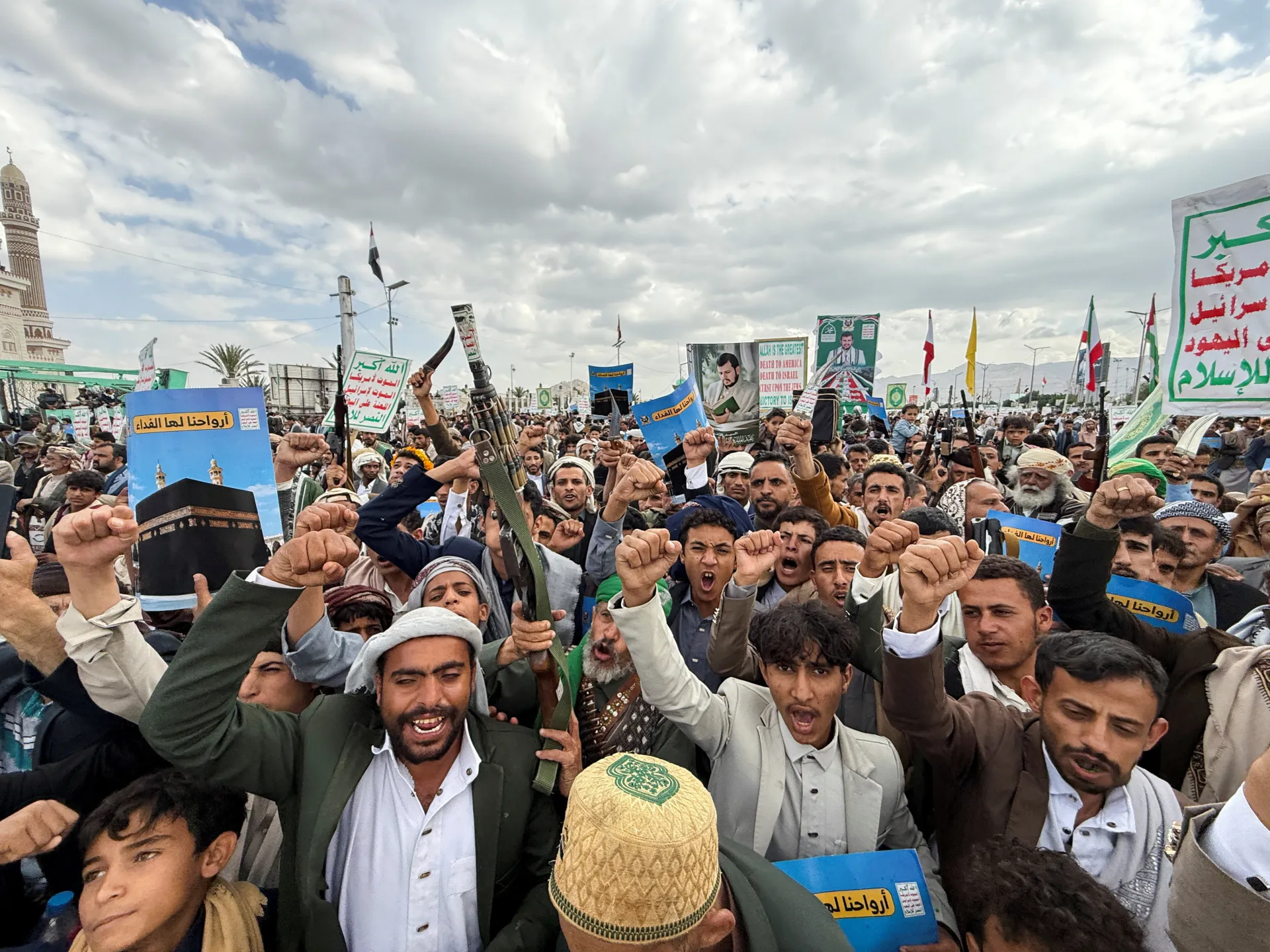
Tens of thousands marched through Sanaa on Friday in a show of support for the Iran-backed Houthis and against Saudi Arabia, as the rebels press gains that have brought large stretches of Yemen’s Red Sea coast, including the strategic Bab al-Mandeb Strait, under their control.
Earlier this week, the intensifying attacks between the Yemeni government and the Houthi rebels killed at least five people, including three children, according to reports from both sides.
Saudi Arabia said one person was killed in the Taif governorate after a Houthi drone was intercepted, while Houthi-linked media reported deaths from Saudi strikes in Taiz and the town of Abs.
The escalation has drawn in Washington, though reluctantly.
US officials met Houthi representatives at the US embassy in the Omani capital, Muscat, over the weekend after the group’s rapid territorial gains raised concern over shipping through Bab al-Mandeb, a vital corridor for global trade.
The Houthis reportedly assured Washington that vessels not linked to Saudi Arabia would not be targeted.
Despite appeals from Riyadh for US President Donald Trump to strike the Houthis directly, Washington has so far held back, wary of opening a new front while still fighting a costly war with Iran.
Meanwhile, European Union foreign policy chief Kaja Kallas said on Friday the bloc’s Red Sea naval mission, Operation Aspides, had raised its alert level as the situation in the region worsened, the Reuters news agency reported.
“Houthi attacks on Saudi Arabia are unacceptable and sabotage the global economy,” Kallas said in a post on X.
She added that she had spoken with Saudi Foreign Minister Prince Faisal bin Farhan Al Saud about diplomatic efforts to end the fighting in Yemen and restore freedom of navigation in the Strait of Hormuz.
The proposed deal, worth an estimated total cost of $24.3 billion, was announced as the Kingdom is in the midst of a fierce fight against the Houthi rebels of Yemen. It marks a major policy shift, with Washington previously being unwilling to export the advanced stealth fighters to Arab states and will likely serve as a reminder at a very challenging time for the Saudis of the unique security capabilities that only the U.S. can provide them.
In addition to the jets, which will be conventional takeoff and landing variants, Saudi Arabia has requested 49 Pratt & Whitney F135-PW-100 engines, support and other items.
Despite concerns from Israel that providing Saudi Arabia with the advanced fighters will tip the balance of power in the region, the proposed sale of this equipment and support “will not alter the military balance in the region,” the State Department noted.
The United States has a requirement to maintain Israel’s so-called qualitative military edge, which essentially guarantees that Israel will be prioritized for advanced U.S. weapons ahead of Arab states in the region. Among these advanced weapons, the stealthy F-35 is highly prominent.
You can read our past feature about the wide-ranging impacts of an F-35 sale to Saudi Arabia here.
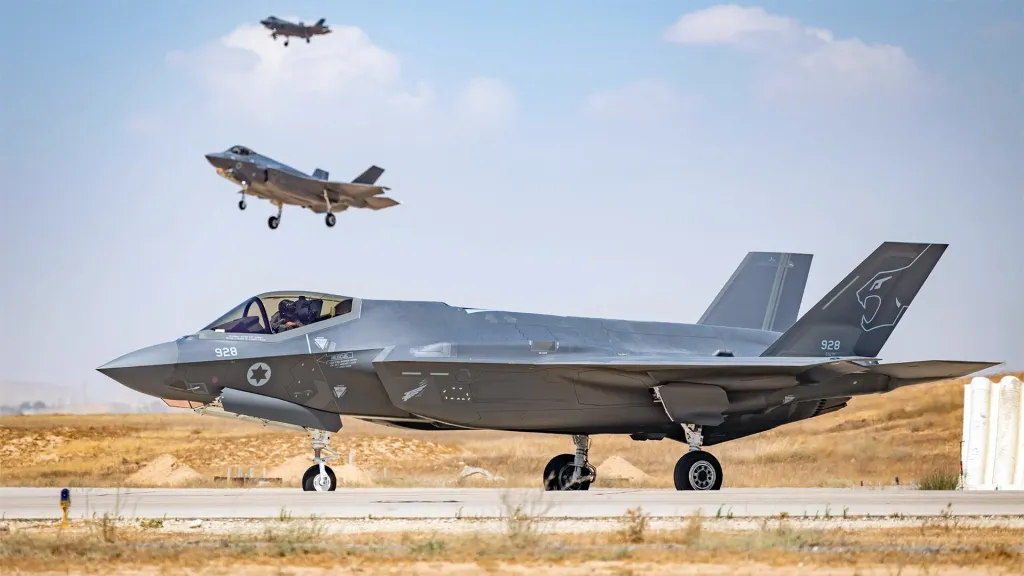
Israeli Air Force F-35i fighters. (Israeli Air Force)
“This proposed sale will support the foreign policy and national security objectives of the United States by improving the security of a major non-NATO ally that is a force for political stability and economic progress in the Gulf region,” the State Department wrote. “The proposed sale will improve Saudi Arabia’s capability to deter current and future threats by strengthening its homeland defense, and improving interoperability with U.S. forces, and other regional and NATO forces. The proposed sale will also augment Saudi Arabia’s operational aircraft and enhance its air-to-air, and air-to-ground self-defense capability. The Kingdom of Saudi Arabia will have no difficulty absorbing this equipment and services into its armed forces.”
In November, “President Trump approved a major defense sale package, including future F-35 deliveries, which strengthens the U.S. defense industrial base and ensures Saudi Arabia continues to buy American,” according to the White House.
Trump has pushed for closer ties between Israel and Saudi Arabia and wants the Kingdom to join the Abraham Accords initiative. This is a set of agreements that establish normalized diplomatic relations between Israel and different Arab states. Doing so would be a major breakthrough, following the United Arab Emirates, Bahrain, Morocco, and others.
A Saudi F-35 deal was also discussed under the Biden administration, as part of a broader deal that sought to normalize the Kingdom’s relations with Israel.
Intensifying attacks between Saudi Arabia and Yemen’s Houthis have reportedly killed at least five people in total, including three children.
At least one person – a Yemeni resident in Saudi Arabia – was killed, and two others were injured after a Houthi drone was intercepted in Saudi Arabia’s southwestern governorate of Taif on Thursday, according to the kingdom’s civil defence agency.
It is the first death announced in Saudi Arabia this month since Yemen’s Iran-allied Houthis intensified their attacks.
In Yemen on Thursday, the Houthis said “Saudi enemy warplanes targeted three telecommunications towers” in Taiz province.
One civilian was killed in Taiz and another injured in strikes on the town of Abs, Yemen, said Houthi-linked Almasirah television.
Houthi-backed media later reported that “three children were killed and several Yemeni nationals were injured in strikes by the Saudi-backed mercenaries”, a reference to the country’s internationally recognised government forces.
Houthis reject claim they attacked Mecca
The escalation comes as Saudi Arabia said a drone was launched by the Houthis towards Mecca before being intercepted and destroyed.
“It’s a heinous lie,” Houthi leader Abdel-Malik al-Houthi said in a live televised address on Thursday, calling Saudi claims that his group would target Islam’s holiest city “a great propaganda”.
“The sanctity of Mecca is particularly important to the people of Yemen,” he said while accusing Saudi Arabia of “weaponising lies” to serve its war objectives against the Houthis.
Reporting from the Yemeni capital Sanaa, Al Jazeera’s Yousef Mawry said: “Al-Houthi’s speech is not just directed towards the Yemeni people; it is directed to the world to set the record straight that the Houthis did not target the holy city of Mecca, as the Saudis claim.”
In his address, al-Houthi also said Saudi Arabia had initiated the latest round of conflict in Yemen and that Houthi forces are acting defensively.
Meanwhile, Rashad al-Alimi, the head of Yemen’s Saudi-backed Presidential Leadership Council, said that Houthi forces are suffering heavy blows on the fronts in Taiz, Marib, Lahj, al-Jawf, Hajjah, al-Bayda al-Dhale.
In a meeting with the French ambassador to Yemen, al-Alimi said that gains made by the Houthis along the Red Sea coast are temporary, the state-run Saba news agency reported.
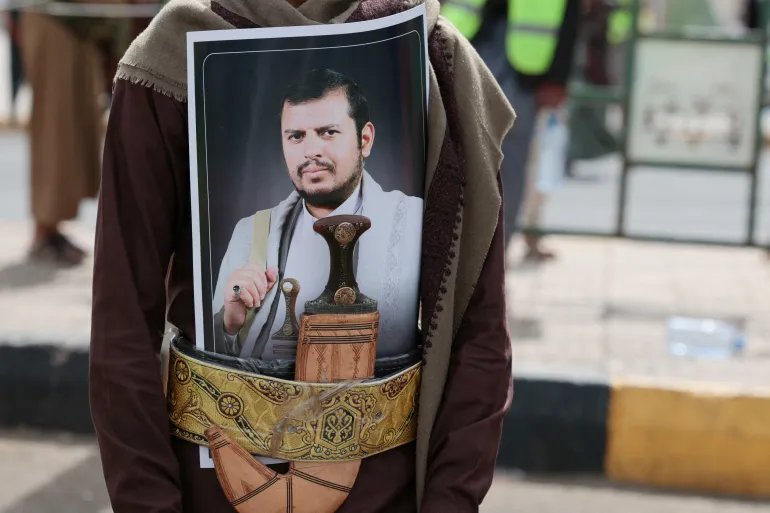
A Houthi supporter sports a poster of the group’s leader, Abdel-Malik al-Houthi, in his dagger’s belt, during a rally against the Saudi-led coalition [File: Khaled Abdullah/Reuters]
Aggression against Mecca ‘a condemned act’
Esmaeil Baghaei, Iran’s Ministry of Foreign Affairs spokesperson, said in a statement on X on Thursday that any aggression against Islamic holy sites, particularly Mecca, “is a condemned act”.
But he added that “a mere claim” of intercepting a drone “en route to Mecca” is not enough to accuse the Houthis of the act.
“Nor should we forget that our region has witnessed numerous instances of ‘false flag’ operations, particularly in recent months,” Baghaei said while pointing at Israel.
Meanwhile, China has privately asked Iranian officials to help rein in the Houthis after Saudi Arabia appealed to Beijing following recent Houthi attacks, anonymous sources in Iran told the Reuters news agency.
Beijing publicly called for restraint, dialogue and the restoration of safe navigation, but its private message went further than that, Reuters reported.
The escalation is also threatening to draw in other regional actors – specifically Saudi defence partners Pakistan and Turkiye, which signed a joint defence agreement with the kingdom last month.
Pakistan’s Defence Minister Khawaja Asif said the time has come to implement the Mecca agreement with Saudi Arabia and Turkiye due to recent Houthi attacks.
Asif’s comments to Pakistani media on Thursday were made as Iran’s Foreign Minister Abbas Araghchi said he’d held a phone conversation with Pakistan’s army chief Asim Munir to discuss “regional developments”.