Kyle MacLachlan is living up to his reputation as the Internet’s Dad.
It’s an especially warm day in August, and the bespectacled actor, best known for his many projects with the late auteur David Lynch, is approaching with a coffee (black, naturally) in one hand and a massive cookie in the other. The snack, it turns out, is meant for us to share.
On the Shelf
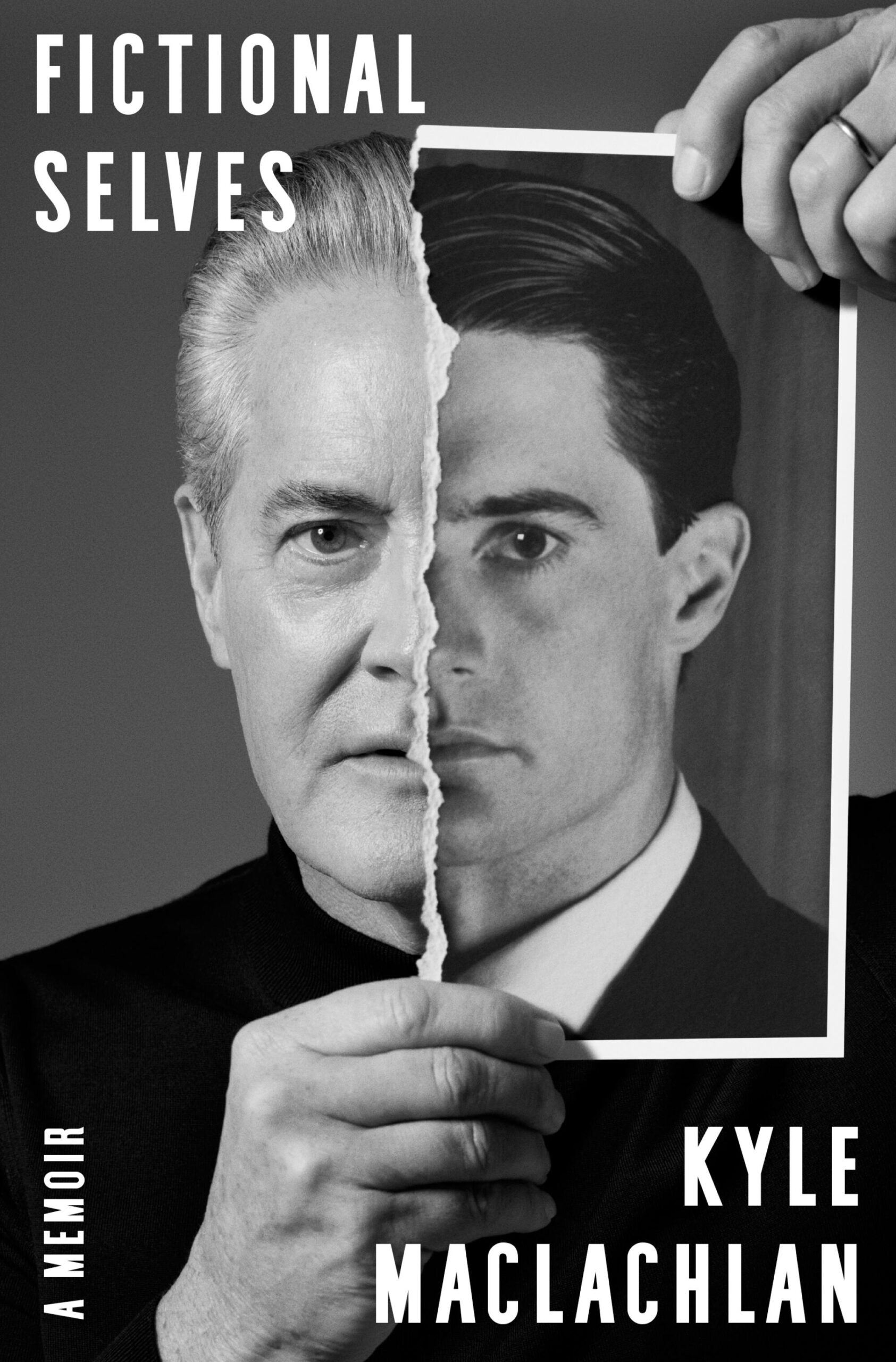
Fictional Selves: A Memoir
By Kyle Maclachlan Crown: 320 pages, $34
If you buy books linked on our site, The Times may earn a commission from Bookshop.org, whose fees support independent bookstores.
“Whatever it is, it’s very healthy,” he says when I ask what sort of confection he chose. “It’s cranberry, oatmeal and gluten-free. Who knows if there’s any sugar in there?”
At 67, MacLachlan isn’t necessarily a health nut. But he is highly amenable and willing to roll with my vegan cafe selection, which is conveniently located near our photo shoot location. “I come from Eastern Washington state — it’s a desert,” he says assuringly when I offer to move us to an indoor seat with air conditioning. Later, as we prepare to leave for the shoot, he clocks my car, a rare station wagon, and dubs it “spec-TAC-u-lar.”
That’s MacLachlan for you — all it takes is one word (he also drops an “Aces!” during our meeting) or enthusiastic gesture (very likely a swooping thumbs up) to channel the type of eccentric and upbeat characters he’s spent the last 40 years playing. Now, with the release of his thoughtful new memoir, “Fictional Selves,” MacLachlan gives us a much closer look at the man behind the chin-jutting grin, and, in doing so, introduces us to his doppelganger, “Other Kyle,” an image-conscious shadow figure constantly trailing behind, questioning his choices.
“There’s definitely another entity, an observer, the ego, the harder self,” MacLachlan says of how he would describe Other Kyle, whom ghostwriter Jon Sternfeld first identified after noticing the way MacLachlan tended to fall into conversation with himself while recounting his life. “[He’s] the kind of person that I’m not comfortable leading within the world. But he’s definitely in there commenting on the things that I do.”
Other Kyle first began to taunt MacLachlan after he saw himself on a gargantuan billboard for “Dune” in Times Square. (In his early 20s, MacLachlan was famously plucked from obscurity to lead David Lynch’s 1984 adaptation of Frank Herbert’s sci-fi epic.)
Well before his alter ego materialized, and well before Hollywood found him, MacLachlan was prone to anxiety and fears of never fitting in. Born in Yakima, Wash., MacLachlan grew up the oldest of three boys; his parents were solidly middle-class, with his father working as a lawyer, and then stockbroker. His mother was a homemaker known in the community for her civic involvement, particularly in local arts programs. In fact, it was MacLachlan’s mother who first encouraged him to try a “Teen Theater” program, drawing him in with the promise that there might also be girls in attendance.
But it took a minute for MacLachlan to genuinely embrace his calling. As a young adult, his father pushed him to study business, while his mother urged him to try PR or communications. His studies at the University of Washington weren’t going well, so he dropped out and worked at a manufacturing plant back in Yakima. It wasn’t until a girlfriend recommended a summer theater program in North Carolina that MacLachlan leaned back into his first real passion, eventually returned to school with a newfound focus, and was accepted into the University of Washington’s professional acting program.
Kyle MacLachlan at the glass and mirror shop LA Mirror Man on La Cienega Boulevard.
(Christopher Patey / For The Times)
Fast-forward 40 years, it’s impossible to imagine that MacLachlan would have anything else for Other Kyle to latch onto. For one, his acting resume is the stuff of thespian fantasy. Sure, “Dune” infamously flopped hard upon arrival, and all planned sequels were immediately canceled. But it wasn’t long before MacLachlan had teamed back up with his mentor, with whom he had developed an almost telepathic bond on “Dune,” to lead Lynch’s much more kindly received 1986 neo-noir arthouse entry, “Blue Velvet.” A few years later, the overwhelming success of the TV mystery series “Twin Peaks” propelled the actor to the upper stratosphere of celebrity.
“When we were working together creating Jeffrey in ‘Blue Velvet’ or [Coop in] ‘Twin Peaks,’ we would sit and talk or not talk, we melded together in some weird way, we were like one person,” MacLachlan says of his bond with Lynch, who died in early 2025 of cardiac arrest due to chronic obstructive pulmonary disease. “It was this very symbiotic kind of thing in front of the camera,” MacLachlan continues. “It was like this weird circular energy. … He’s the only director I share that with.”
And yet, breaking out of what MacLachlan refers to as “The Black Suit,” worn by his unceasingly chipper “Twin Peaks” character, Special Agent Dale Cooper, proved challenging. By the time “Twin Peaks” left the air in 1991, MacLachlan had grown ambivalent about the job that changed his life, partially because he felt Lynch didn’t fight hard enough to keep artistic control of the show’s second season, which saw the network upping its creative involvement and Lynch distancing himself until the final few episodes.
MacLachlan longed to diversify his output — to show that he was capable of being a mainstream Hollywood leading man, one who could interface with a variety of directors. In the book, he writes about jobs he comes so close to booking — roles in Robert Redford’s “A River Runs Through It” and Francis Ford Coppola’s “Dracula” — but losing out at the last minute.
Kyle MacLachlan explores his alter ego “Other Kyle” in his new memoir.
(Christopher Patey / For The Times)
He took these rejections hard at the time. Many decades later, however, he can see how he was the one holding himself back. “I felt like people were only seeing the black suit,” MacLachlan says. “Now, the truth is, they would probably have been more than happy to see me as somebody else, but I was not able to deliver. … I think there was a lot of insecurity,” he continues. “I was like, ‘Maybe it’s not the suit. Maybe it’s me.’”
As the 1990s played out, MacLachlan fought an on-again, off-again existential crisis regarding the type of actor he was really meant to be. His friend and former “Doors” co-star Val Kilmer urged him to accept a lead role in a BBC adaptation of Kafka’s “The Trial,” which didn’t move the cultural needle in the States, but did put him in the same room as enormously pedigreed actors like Anthony Hopkins and Alfred Molina. He snagged a role in a Paul Verhoeven film about topless dancers — a career risk he hoped would pay off but ultimately felt like “walking into a buzz saw,” as he writes in the book.
Despite the cult reappraisal of “Showgirls,” and the lasting popularity of “Sex and the City,” Other Kyle had a few things to say about both of these roles, but the Kyle sitting across from me has a much more measured approach, particularly to “Showgirls.”
“I think it’s fun that it’s still around,” MacLachlan says. “I’ll still argue with anyone that [says] it’s a good movie. It’s not a good movie, but it’s definitely an appreciated movie, and that is kind of where I leave it.”
In the early 2000s, his wife, Full Picture founder and chief executive Desiree Gruber, pushed him to accept a role in HBO’s “Sex and the City,” playing an Upper East Side doctor with erectile issues.
Portraying Trey MacDougal was a mixed bag for MacLachlan. On one hand, he was thrilled to be part of such a cultural juggernaut, and he delighted in the emphasis the show placed on female friendship and sexual agency.
“I want to keep being challenged,” says Kyle MacLachlan, looking ahead to the next chapter of his 40-year career.
(Christopher Patey / For The Times)
At the same time, he had mixed feelings about playing an old-money mama’s boy with a Freudian Madonna-whore complex. Not to mention the sheer ridiculousness of the things the writers would have him do: One scene had him bent over a bathroom sink, masturbating to a pornographic magazine. A passage of “Fictional Selves” also recalls the cringe-inducing moment when Trey gives his wife, Charlotte (Kristin Davis), a cardboard cutout of a baby in an effort to make light of their struggle to conceive.
In the book, MacLachlan recalls being utterly dumbfounded at having been asked to do something so oblivious at best and cruel at worst. Eventually, however, he writes that he realized the writers just needed a way to foist him off the show. (His and Davis’ characters get divorced soon after the cardboard baby incident.)
“Every time I got a script, I’d be like, ‘Oh boy, OK, what’s going to happen here?’” MacLachlan says. “And then it would be, like, whatever they’ve come up with, ‘how can I shape it? What is it that [Trey’s] wrestling with? What are the issues here? Then, you know, realizing that in some cases it was just going to be a sight gag. Like, the Juggs magazine is going to be a sight gag. And as I said in the book, in my mind, I would sort of float away. I would be like, ‘That’s not really me. I don’t know who that is down there doing that.’”
As MacLachlan moved into middle age, he gradually grew more comfortable with the clean-cut oddball characters he’d so often be asked to play: a refined but possibly murderous dentist on “Desperate Housewives,” an idiosyncratic boat obsessive on “How I Met Your Mother,” an over-the-top civic leader on “Portlandia,” and, once again, Special Agent Dale Cooper (plus his doppelgängers) on “Twin Peaks: The Return.”
The 2017 “Twin Peaks” reboot would be the last big project MacLachlan would work on with Lynch, but MacLachlan would frequently visit the director in their shared Hollywood Hills neighborhood. “It’s many things,” MacLachlan says when I ask what he misses most about his friend and mentor. “The voice on the phone — ‘HEY, KALE! Come on up for coffee!’” he continues in a pitch-perfect Lynch imitation. (“Kale” became Lynch’s nickname for MacLachlan, referencing “Dune” producer Dino De Laurentiis’ Italian pronunciation.)
“Towards the end, I would go to visit him, and I would sometimes take my phone and record things. I still have these stories loaded in my iPhone — about ‘Dune,’ or a story about a moment in ‘Blue Velvet,’ or a story about when he met John Huston, or when he got a kiss from Elizabeth Taylor. … I have these little gems, and I savor those.”
Lately, Other Kyle has been replaced by Online Kyle, a goofy, lighthearted version of MacLachlan who primarily lives on TikTok and Instagram — thus the wholesome, Gen Z title of “Internet’s Dad.” And when he’s not playing a father to Ella Purnell on Prime Video’s hit “Fallout,” or interviewing a younger generation of entertainers on his podcast, “What Are We Even Doing,” MacLachlan is also someone’s real dad. One of the most endearing moments in our afternoon happens when his teenage son, Callum, calls looking for something around the house. “Oh, it’s in the fridge in the gym. In a foil. And there’s chicken in the fridge. Love you too,” MacLachlan tells his son.
There’s certainly no doubt that this Kyle doesn’t get in his head — or in his own way — the way earlier versions did. He’s still eager to test his limits as an actor, but he’s comfortable with the thought that there is no plan. “I want to keep working with interesting people,” he says with his trademark buoyancy. “I want to keep doing fun things. I want to keep being challenged. … I don’t really know where I’m going, but something will excite me, and I’d be like, ‘OK, what the hell?’ And I jump in.”
Brodsky is an L.A. culture and music writer. Her biography of Stevie Nicks “Lessons & Lace” is out now.
It’s stunning to comprehend how much has changed since Russia began its invasion of Ukraine. The conflict quickly turned into one dominated by artillery, with both sides scrambling to source shells wherever possible. Drones have since replaced tubed artillery as the ‘king of battle’ along the front, but cannons still have an important place on the battlefield. The commander of a new combined drone-artillery brigade offered some fresh insights into how his guns are now being deployed to achieve effects that drones still can’t provide.
As we have frequently documented, the ubiquity of drones has changed the nature of combat, especially when it comes to artillery. Not only can drones hold artillery positions at risk, many are cheaper than shells and easier to produce at scale. Most types are also precision guided munitions capable of hitting moving targets with pinpoint accuracy and can also provide battlefield surveillance. However, they are not a panacea, especially amid the cat-and-mouse game of electronic warfare countermeasures and improving kinetic and passive defenses.
In a recent interview with the Ukrainian Oboronka news outlet, Lt. Col. Vitalii Korniienko, commander of the 7th Artillery Brigade, talked about the changing nature of artillery warfare. Korniienko, whose unit is part of the Ukrainian National Guard, explained what is being done to keep his array of domestically produced Bogdana 155mm systems, donated weapons like M777 howitzers, remaining Soviet-era 2S7 Pion 203mm self-propelled howitzers and other guns, relevant. Here are some takeaways from that discussion.
How The Game Changed
“Guns used to be massed at positions to create an ‘artillery wall’ and a barrage of fire,” the lieutenant colonel said. “That practice is gone now. So, how effective is artillery today? We can create an artillery barrage, but what is the point of mindlessly churning up the earth? I’d rather send 20 FPV drones to destroy the target. The cost of that mission is $20,000.”
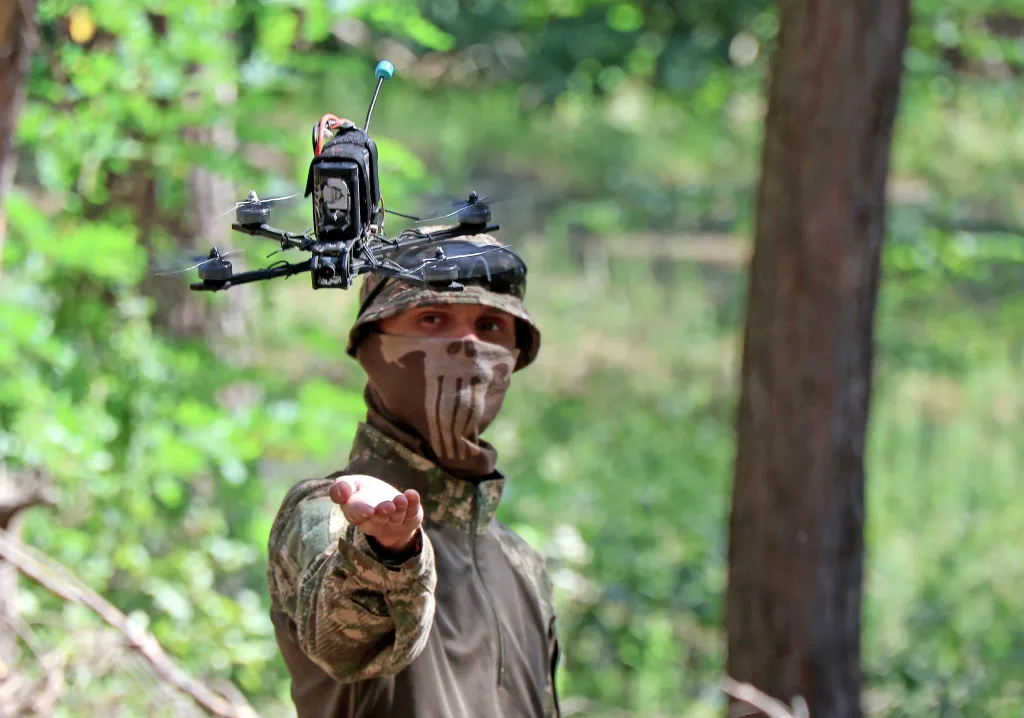
A soldier from the 13th Khartiia Brigade of Ukraine’s National Guard hones his FPV drone piloting skills during a training flight in the Kharkiv region, Ukraine. (Photo by Viacheslav Madiievskyi/Ukrinform/Future Publishing via Getty Images) Future Publishing
“Alternatively, I could fire 200 shells, but the cost would be astronomical,” he pointed out. “Plus, if we fired 100 shells from a gun in a single day, it likely wouldn’t survive until evening. The sky is full of drones; every shot gives away the position, leading to detection and an attempt to dismantle it using every available means. Nowadays, a typical mission involves a series of up to 10 shots. First, 3–5 shells for ranging, followed by fire on the target. That’s a minimum of five shells, with each costing at least $2,000.”
What Does The Drone-Artillery Brigade Do Differently?
“It is a concept of ours that was approved: combining artillery and drones within a single brigade,” Korniienko said. “Drones take out enemy artillery and logistics, while our guns provide cover for the infantry, destroy targets, and pin the enemy down in their dugouts. This way, we mitigate the limitations of both systems and boost overall effectiveness.”
Ukrainian troops firing a domestically produced 2S22 “Bogdana” self-propelled howitzer against Russian forces near the front line in the Zaporizhia direction. (Photo by Maksym Kishka/Frontliner/Getty Images) Frontliner#VIDEO
“Our primary operations are focused within the corps’ area of responsibility—targeting positions 10 kilometers deep or farther behind enemy lines. Of course, we will also engage closer targets if requested by the brigade holding the defense. In addition, we are shifting logistics tasks from pickup trucks to ground-based robotic systems. They are already transporting ammunition to drone and artillery positions, as well as food and fuel for generators.”
What Artillery Can Do That Drones Can’t
“Let’s be honest: 95% of strikes right now are carried out by drones,” Korniienko explained. “Yet, we cannot simply abandon artillery. The focus of our operations has shifted from merely striking the enemy to destroying, suppressing, and halting the actions of assault groups and armored columns—and the need for that remains as critical as ever. There are tasks that only artillery can handle.”
“For instance, we currently have several enemy targets in the Kupyansk sector that drones cannot reach due to electronic warfare (EW) interference, while slow fiber-optic drones are simply shot down,” the officer noted. “What do we do? We call in artillery. Nothing affects its shells. Fog, strong winds, snow, or headwinds—it makes no difference to artillery; it will operate regardless.”
Preparing Artillery For The Modern Battlefield
“At the beginning, both we and the Russians might have had two or three guns at a single position,” Korniienko proffered. “The enemy was doing this as late as 2023. Then it tapered off, because if you deployed six guns, an hour later they’d be gone. No one drives out into an open field anymore. Today, a gun wouldn’t even make it to the position without being spotted.”
Ukrainian National Guard troops prepare a ‘Bogdana-BG’ artillery installation from a dugout position. (Photo by Sofiia Bobok/Anadolu via Getty Images) Anadolu
As a result, the artillery crew’s deployment “is prepared in advance,” the officer stated. “First, anti-aircraft drone teams ‘clear’ the sky above the site of enemy reconnaissance assets. The position itself is a fully underground-dugout caponier with well-camouflaged access routes. We put a lot of effort into ensuring the artillery doesn’t get destroyed. Losing a gun is a huge blow to us.”
Short Range Versus Long Range Shells
“There is currently an ongoing debate about phasing out ‘short’ shells and switching entirely to long-range variants,” the officer stated. “This is intended to protect artillery from drone strikes.”
“What exactly is a ‘short’ shell, and should we stop using it?” he asked rhetorically. “The M107 155mm round is what is known as a ‘short’ shell. It is inexpensive and mass-produced; all our allies—and even our own country—manufacture it. We have sufficient stocks of them for combat operations. While accurate, its range is limited to 14–18 km, depending on the propellant used.”
Army
Long-range options “include the M795 and its foreign equivalents,” Korniienko explained. “These are longer, heavier, and significantly more expensive. With high-quality propellant, they can reach 30 km, or even further if equipped with a base-bleed unit. However, both these shells and the necessary propellants are in short supply.”
Army
“I do not believe abandoning the M107 is the right move,” the officer suggested. “Long-range shells cause faster barrel wear and compromise position concealment; firing a long-range charge produces a massive burst of flame from the muzzle—visible for kilometers at dusk or dawn.” “Besides,” he added, “18 km is a respectable range. If the gun is positioned 15 km back, it still has a 3-km margin to spare. That is sufficient for engaging frontline infantry. In my view, the ideal mix for most brigades would be 60% long-range shells and 40% standard M107 rounds.”
Big Versus Small Guns
“I operated 105mm guns in the Serebryanka area, on the Kharkiv axis,” Korniienko noted. “Based on intercepted communications, the enemy thought it was a mortar and searched for it within a five-to-six-kilometer range. But the howitzer was positioned eight or nine kilometers away and fired out to 10–12 kilometers.”
“There is almost no muzzle flash, just a bit of dust,” he added. “The shell arrives, and the enemy doesn’t even hear the sound of the shot. It’s compact and lightweight—you can transport it on a pickup truck. So yes, it would be useful.”
An L119 lightweight towed howitzer. (Via X)
“I’d also like to see the development of 203mm artillery; why move away from that caliber?” the officer wondered aloud. “Our ‘Pion’ systems fire a massive 100-kilogram shell capable of punching through at least two floors of a building or a bunker. And it’s reasonably accurate, too. You wouldn’t want to be on the receiving end when guns like that are firing at you. Overall, I believe we need competition. Right now, the ‘Bogdana’ is evolving under wartime conditions, which is good. But in a few years, momentum could stall. They might just keep producing the same system without significant upgrades because there’s no incentive to innovate. Yet, the nature of war doesn’t stand still.”
Wary Of Asian Shells
“We have a wide range of shells from different countries, and the ones coming from the West are fine,” Korniienko said. “However, their counterparts produced in certain Asian countries… the quality is frankly poor.”
“What is wrong with them?” queried Korniienko, who did not name the country in question. “On paper, the shell weight is listed as 46 kilograms, but when we weigh them, we find 46.9 or 45.4 kg. And that half-kilogram difference—give or take—has a huge impact on where the shell lands.”
As a result, “we no longer trust the standard firing tables provided with the shells; instead, we compile our own for each manufacturer. We weigh every batch and sort them by weight so that the difference between the ‘piles’ is minimal, ensuring a reasonably tight grouping. I can’t afford to make a mistake that causes a shell to land 2 kilometers off-target—right where our infantry guys are positioned. I should add that our artillerymen are actually wary of shells from one specific country. There have been instances where they tore off the muzzle brake or even caused the barrel to burst. A barrel burst is a disaster.”
Homegrown Is The Best
Korniienko said his unit was one of the first to test the Bogdana system, adding that he prefers it to other guns.
“We tested them and provided feedback to the manufacturer, which was then used to refine the design,” he explained. “It is a solid gun now, and it is my preferred choice. It might not be the absolute best, but I am very satisfied with the support and service.”
“If there’s a breakdown, the gun is back in position within a day or two,” he pointed out. “For instance, a gun broke down today, and we needed a repair team from the manufacturer. I know I’ll have it fixed by the day after tomorrow. They arrive in the morning, and by midday, the gun is ready. Then it takes another day or two to get it back to the position. That is very fast.”
That’s a very different experience than what he sees with donated weapons like the U.S.-made M777.
Ukrainian soldiers prepare to fire an M777 howitzer at Russian forces. (Photo by Diego Herrera Carcedo/Anadolu Agency via Getty Images) Anadolu
“As for the Western partners helping us—we are deeply grateful,” the officer avowed. “However, by the time you actually receive a part—say, a sensor—the gun might have been sitting idle for six months. And you can’t try to fix it yourself, because that would void the warranty.”
While artillery may no longer be the reigning weapon of war, as far as Ukraine is concerned, it has not been relegated to the dustbin of history yet either.
France will have a new face on the touchline for the first time in 14 years when they face Turkey on Friday.
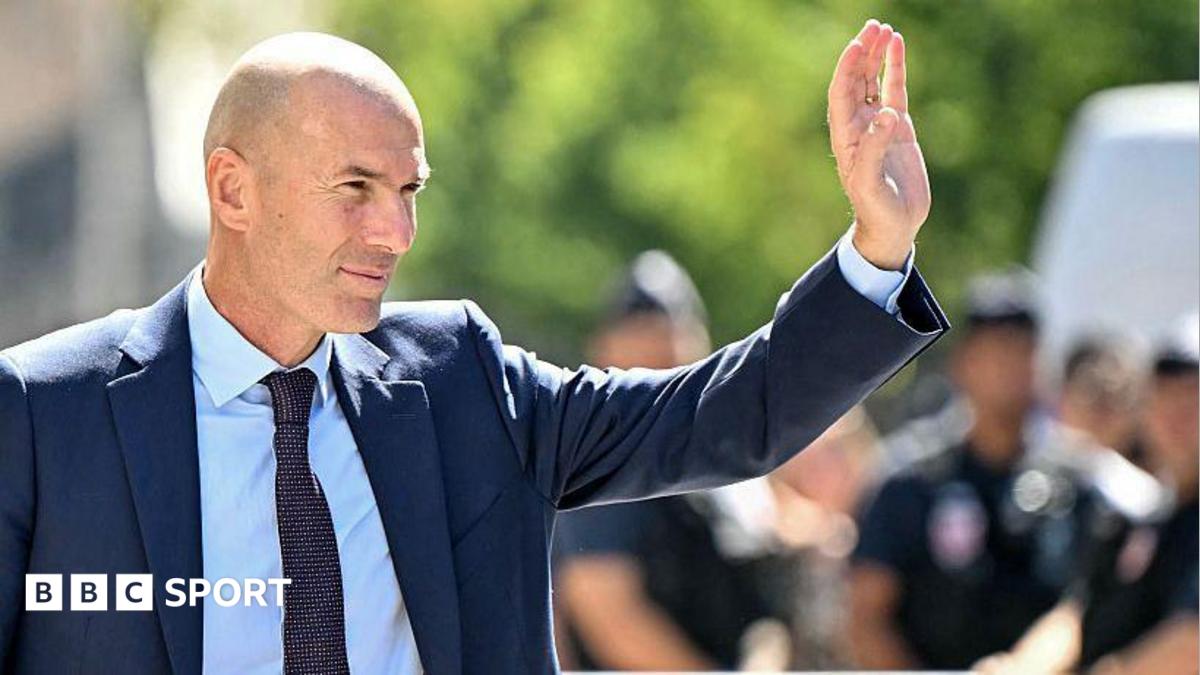
Zinedine Zidane replaced Didier Deschamps after France’s fourth-place finish at the World Cup, but his appointment had been an open secret long before Les Bleus’ third-place play-off loss to England.
Talks between the former Real Madrid manager and the French football authorities kicked off as early as February 2025 – after Zidane’s former team-mate Deschamps announced a few weeks earlier he would step down following the 2026 World Cup.
When he was unveiled in Paris, Zidane was keen to highlight the time he had spent waiting on the sidelines and preparing for the job.
“I had several offers in the last four or five years, but I turned them all down,” an emotional Zidane said. “The national team is the only thing I wanted.”
While his enthusiasm at taking the job was the overarching theme of his first news conference in the French capital, the midfield legend offered few clues to France fans as to how he would approach the role.
Even a question on Kylian Mbappe’s captaincy was bypassed: “The most important thing for him now is to rest, we’ll have the chance to speak in September.”
Mbappe, speaking to Spanish newspaper AS, has since said having the former Real Madrid star as his national team coach was “like a film”.
When asked about his preferred style of play, Zidane opted against going into tactical detail.
“I can’t explain to you in just a couple of words how we’re going win. I have to arrive, meet with the players, and explain my plans to them. After that, it’ll be up to me to keep this team winning.”
However, Zidane confirmed his intention “to do things differently” and he has called up five uncapped players for this international break.
He went on to signal that there would be a degree of “continuation” from the work of his predecessor, which he made sure to praise.
“I’m going to try do what I know how to, but it won’t be a complete break either.”
Sean Gunn has no plans to continue his motion capture role for “Guardians of the Galaxy” character Rocket raccoon.
The physical demands involved in creating Marvel Cinematic Universe’s masked bandit often included the 52-year-old actor being in a catcher’s crouch position, which hurt his ankles and feet due to constant pivoting, Gunn revealed in an interview on “The Brandon Davis Show.”
“I think it had a little bit of an effect on my physiology. My knees are fine, but since I turned 50 a couple years ago, I am retired from playing Rocket,” Gunn said in the podcast episode published Monday. “I don’t think I can do the motion reference anymore for Rocket. I think I’m too old.”
The veteran actor is now ready to pass on his deadly laser cannon to another rising star. Rocket’s creators should “give a younger actor a shot at it, right?” he said.
While actor Bradley Cooper has voiced the small, sharp-tongued creature since the first “Guardians of the Galaxy” film in 2014, Gunn has worked alongside animators behind the scenes to capture the subtle actions with motion capture technology, or mocap, which animates 2D or 3D computer characters using the actor’s physical movements.
Gunn described the process as a relay race in a 2024 interview with Adam Lupis; once a script is handed to him, he passes the baton to the visual effects team, who then tie it all together with Cooper’s voice acting.
“Rocket is sort of a character by committee in that way. I think he’s a good microcosm for movies where they get this whole community of people coming to make something with love and care,” Gunn shared in the interview with Lupis. “It’s been a crazy process.”
Alongside his role as on-set Rocket, Gunn also portrayed Ravager Clan space pirate Kraglin Obfonteri in “Guardians of the Galaxy”; its two sequels, “Vol. 2” and “Vol. 3”; “Avengers: Endgame”; and “Thor: Love and Thunder.” Rocket also appeared in 2018’s “Avengers: Infinity War.”
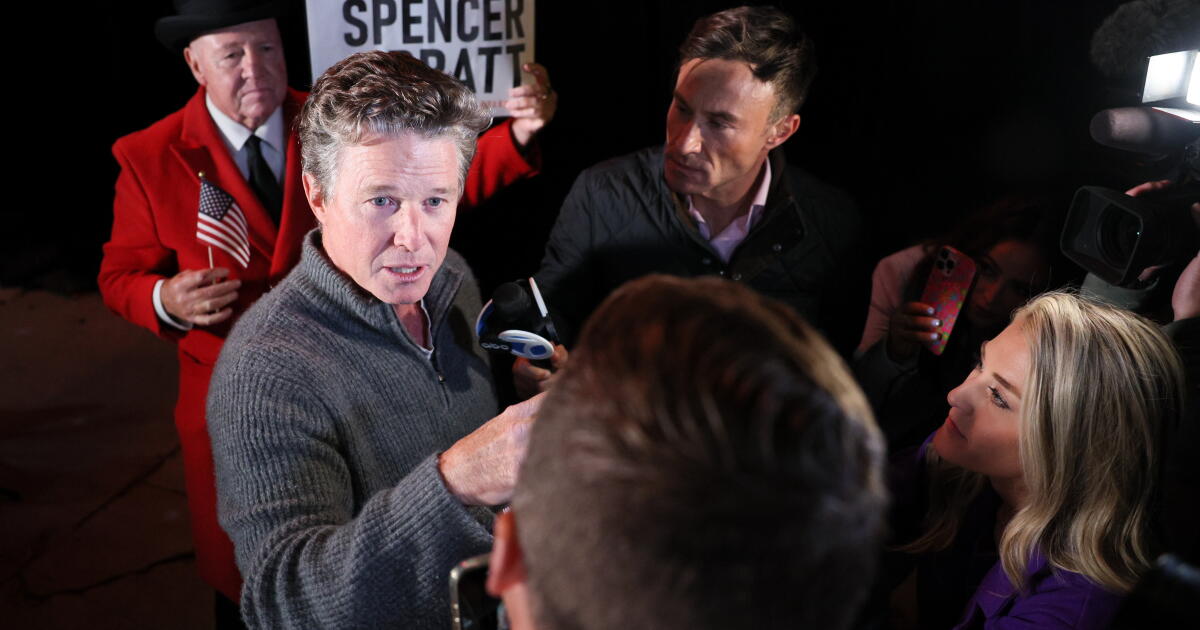
Former “Today” show host Billy Bush feel from grace a decade ago when a tape leaked of him giggling on a hot mic while then “Apprentice” star Donald Trump boasted about grabbing women.
This week it was announced that Bush was joining Fox News Media as a contributor covering pop culture, entertainment, and cultural issues.
Bush joins other right-leaning personalities who’ve rebuilt their careers at Fox following scandals elsewhere.
It’s not surprising that former “Today” host Billy Bush joined Fox News as a regular contributor this week. What is surprising is that it took so long.
Ten years have passed since Bush, cousin to former President George W. Bush, was caught on a hot mic giggling while then-“Apprentice” star Donald Trump boasted about grabbing women “by the pussy.” The “Access Hollywood” clip, filmed in 2005 when Bush hosted the entertainment news program, was leaked a month before the 2016 presidential election, meaning just about everyone in America saw it.
A disgraced Bush lost his job and reputation. Trump won the White House.
Once known for his boyish charm and impressive collection of cowboy boots, Bush spent a decade re-ingratiating himself to the public on the syndicated television news magazine “Extra,” a considerable step down from the “Today” show. He reported on Hollywood and celebrity culture before launching his own digital show and podcast more than a year ago.
Now he finally has gone where popular conservative public figures go following scandals, stumbles or mishaps that all but destroy their livelihoods: Fox News. Rupert Murdoch’s crown jewel has given a second chance to more than a few successful, right-leaning personalities who have been shamed by mainstream media or canceled by a public who doesn’t find sexual assault boasts particularly funny.
Jeanine Pirro’s political career was derailed in 2006 after tapped phone calls she had with former New York City Police Commissioner Bernard Kerik were revealed. She had been plotting to bug her then-husband’s yacht in an attempt to catch him in an affair. After the transcripts went public, she lost the race for state attorney general to Andrew Cuomo. The scandal marked the end of her political career in New York — but the start of her career as a Fox News contributor and host. She stayed with the network for two decades. Pirro left last year when Trump nominated her to serve as the U.S. attorney for the District of Columbia. She subsequently was confirmed by the Senate.
Pete Hegseth joined Fox News as a full-time host in 2017 after reportedly being forced out of leadership positions at two prominent veterans advocacy nonprofits, Veterans for Freedom and Concerned Veterans for America. Multiple disturbing accusations were made within the organizations about his sexual impropriety, financial misconduct and heavy drinking. Hegseth left Fox in 2024, when Trump announced him as the nominee for secretary of Defense. He subsequently was confirmed by the Senate.
The pipeline from scandal to Fox News to Capitol Hill was noted when Bush, now 52, made his debut Tuesday night on “Jesse Watters Primetime.” Host Watters joked that “Trump might hire you for the Cabinet” now that he had joined Fox News. Bush suggested a role for himself as White House press secretary. Watters countered that, saying, “Trump is expected to hire a woman.”
Bush joked that he has “female energy.”
The joke was tone deaf, even if Bush does deserve a second chance for his part as the dumb sidekick to Trump’s abhorrent comments during that “Access Hollywood” segment so long ago.
In a statement about his new role at the network, Fox said Bush would host “as a contributor, where he will appear across all platforms” The press release failed to mention his 2016 hot mic leak but managed to name-check Bush’s digital talk show and video podcast, “Hot Mics With Billy Bush.”
Bush may have dashed his chances of moving into Trump’s inner, or even outer, circle when on his “Hot Mics” show he said this of the president: “I had two relatives who served in that role and both had deep, deep, deep reverence for that office. The man that’s in there now has turned it into a bordello.”
He was taking issue with Trump’s ban on CNN, Politico and MS Now. The trio of news networks was denied access to the White House complex last week and had their press badges revoked after the president took issue with their coverage of him. In an unusual display of solidarity across the industry, more than 50 media organizations called for the immediate reversal of the ban. Bush praised the networks — including Fox — for their show of support.
How will Bush navigate his dislike for Trumpian policy at a news organization that’s devoted years of coverage to propping up Trump? By walking a fine line, apparently.
“I’m excited to join FOX News Media and its loyal audience to share my perspective on the people, ideas and moments shaping today’s culture … as well as the ones trying to undo it!” Bush said about his new job shaping culture.
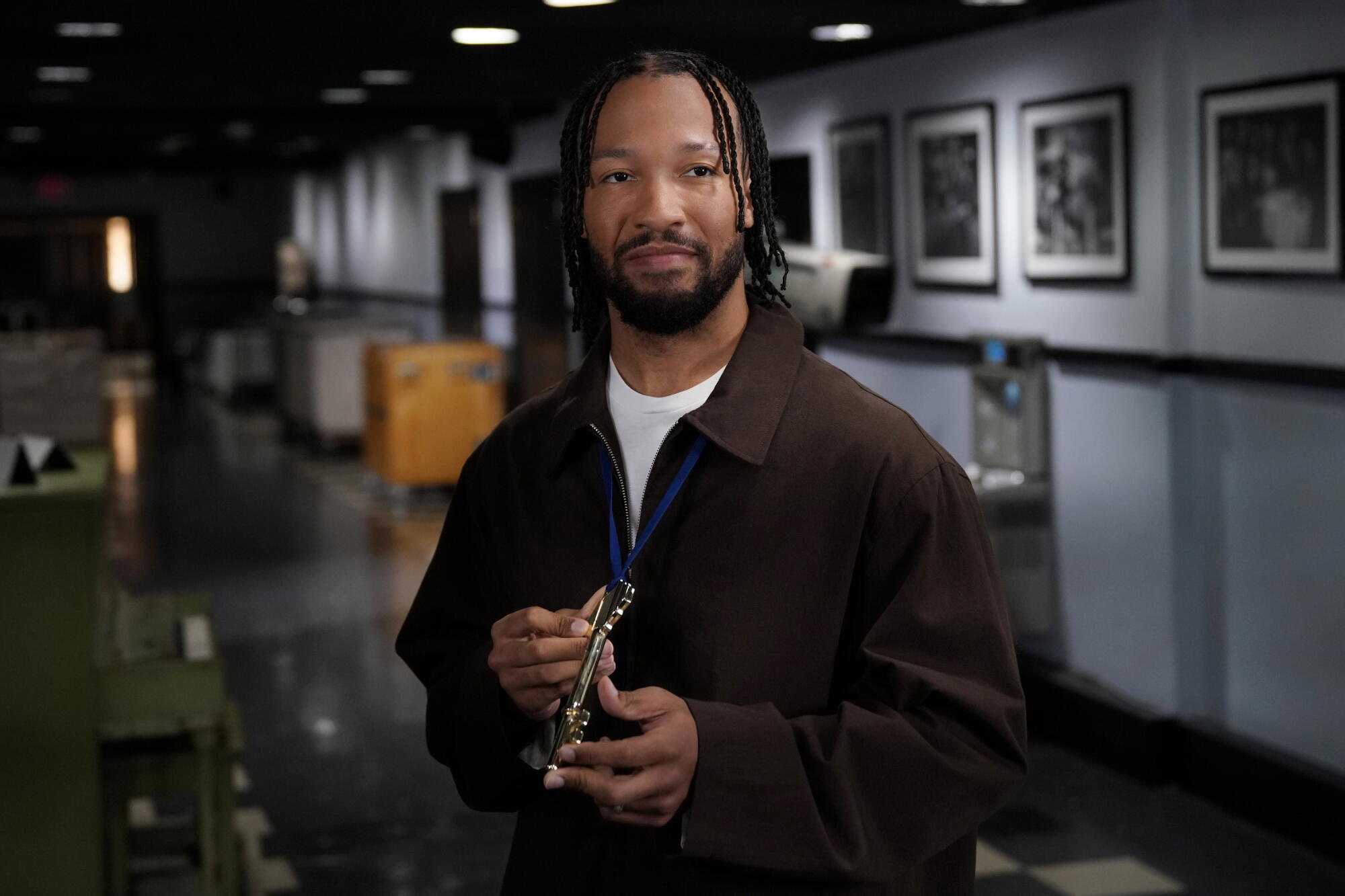
When the 52nd season premieres on Saturday at the usual time, usual place, “Saturday Night Live,” with host Jalen Brunson (of the champion Knicks) and musical guests Katseye, will again make history as the longest-running sketch comedy and variety show on television.
But week to week — multiplatform 50th-anniversary celebrations aside — the entertainment institution that is “SNL” does not dwell much on its history, focusing instead on trying to earn laughs sketch by sketch, moment by moment. Even when alumni like Tina Fey or Will Ferrell show up, it’s usually in the service of something topical, like a political cold open for a very recent event or happening. “SNL” lives in the now, and that can be a blessing and a curse, like when you feel like you’ve seen the same cold open lampooning President Trump 15 times already. James Austin Johnson is a brilliant impressionist, but read the room, guys.
“SNL” is the rare show for which quality is beside the point. As creator Lorne Michaels has said to cast members like Tina Fey, “The show doesn’t go on because it’s ready; it goes on because it’s 11:30.”
That focus on effort over polish has, surprisingly, helped it survive. For every online hater who tediously comments that “SNL” hasn’t been good since the Dana Carvey era or earlier, there are enough of us stalwarts who will every week obsess about the future of “Weekend Update,” rate the monologue (sometimes harshly) and wait breathlessly at the start of every new sketch, hoping we’re about to watch an all-timer.
For those in that camp — who never give up hope that a great sketch is just a commercial break away — here’s what you can expect from the new season.
The first four episodes
Season 52 will kick off with Knicks point guard Jalen Brunson as the first guest host.
(Rosalind O’Connor / NBC)
New “SNL” episodes usually arrive in batches of three and then the show takes a break for a few weeks. For Season 52, not only was the first trio of hosts and musical guests announced but also the lineup for a Halloween episode.
In addition to Brunson, who might bring along famous friends like Mariska Hargitay or Taylor Swift, actor Dakota Johnson will host, with rock group Turnstile as the musical guest on Oct. 3. On Oct. 10, “SNL” will roll the dice a third time with comedian Shane Gillis, who did not fare too well the last twotimes he hosted. He’ll be joined by musical guest Rosalía.
The Halloween episode will be hosted by newly minted horror queen Inde Navarrette from the hit film “Obsession,” joined by musical guest Gracie Abrams.
Cast changes and new faces
Over the summer, cast member Chloe Fineman — who had a knack for impressions of celebrities like Timothée Chalamet and Melania Trump — departed the show after seven seasons. It won’t be long before we see her onscreen again: She’s been cast in Netflix’s upcoming Harlan Coben adaptation, “Myron Bolitar.” Also departing was writer Martin Herlihy, the second member of the Please Don’t Destroy video trio to exit, leaving only Ben Marshall, who’s listed as a featured player. Last season, Herlihy did a few self-hosted video segments that tended to run late in the show.
Bowen Yang departed midway through Season 51, while Chloe Fineman announced her departure in July.(Jason Armond / Los Angeles Times)(Michael Loccisano / Getty Images)
Bowen Yang extended his run on “SNL” as his star was quickly rising in projects like “Wicked” and the “Las Culturistas Culture Awards,” but left midway through Season 51. Unlike previous transitions between seasons, no one was cut from the show, and those who left stepped away on their own.
Saidah Belo-Osagie, left, and Grace Reiter are the newest “Saturday Night Live” cast members.(Mike Klubeck)(Jill Petracek)
Reiter has already had a supporting role in Tim Robinson’s “The Chair Company” on HBO, and she stars in “Minimum Wage,” which started as a web series and is coming to Netflix in October for a 28–episode run. She was also the star of the very funny “The Hunger Games (But Better),” a low-budget re-creation of the series made over four days by a group of friends.
“SNL” tends to thrive in the run-up to national elections, and with the midterms upon us, the show has its pick of hot-button topics on the campaign trail, from the Iran war to gas prices to the backlash against data centers and AI billionaires.
Johnson’s impression of Trump is likely to be at the center of a lot of these sketches, but the show does well when he serves as a ringleader for characters like Defense Secretary Pete Hegseth (Colin Jost), Vice President JD Vance (Jeremy Culhane) and FBI Director Kash Patel (celebrity guest Aziz Ansari).
Jeremy Culhane as JD Vance, left, and James Austin Johnson as President Trump in a cold-open sketch.
(Lloyd Bishop / NBC)
Last season, Ashley Padilla emerged as a breakout star, carrying a heavy load of women’s roles after the departures of Ego Nwodim and Heidi Gardner. Even when she was giggling with Ryan Gosling because of a writers’ prank, Padilla was hilarious. She’s finally been upgraded to a repertory player and is likely to continue to play the lead in sketches featuring her grounded, emotionally shaky characters, some of whom have terrible haircuts.
Of the new featured players added last season, the two most likely to keep scoring are Culhane — who already has two great “Weekend Update” characters: Mr. On Blast and a masterful Tucker Carlson impression — and Veronika Slowikowska, who proved versatile whether she was portraying a “Guy’s girl” or a dryer with Sabrina Carpenter. Expect them both to be in more sketches this season.
Tommy Brennan, left, Jane Wickline and Ashley Padilla during the “Mom Confession” sketch featured in Season 51.
(Will Heath / NBC)
Marshall, the Please Don’t Destroy writer who joined the cast, has been fine as a utility player and straight man in sketches, but it’s hard to remember anything he was in last season apart from his role as Ron in “Heated Wizardry.”
Tommy Brennan and Kam Patterson both seem like they need to make their mark in sketches and do more than just perform as themselves in “Weekend Update” segments. Unless one or both of them is being groomed as a future “Update” co-host, time’s running out.
As for cast member Jane Wickline, who’s been described as “polarizing” but was also upgraded to repertory, we’re rooting for her. She brings musical talent, which the show needs plenty of, and her awkward vibes frequently add a different and unexpected dimension. An out-on-a-limb prediction: She’s going to have a great season.
What about Lorne?
Every discussion about the state of “SNL” must include a mention of how much longer the show’s steward, who is 81, will remain at the helm. This ongoing Lorne Watch, with predictions of his retirement and potential successors, began around Season 40 and continues. Many thought he’d exit at the end of Season 50, neatly capping an epic TV run.
That did not happen.
Creator Lorne Michaels has been at the helm of “Saturday Night Live” for much of its run.
(Jason Armond / Los Angeles Times)
So now the talk has shifted to what happens if Michaels’ run is interrupted because, you know, something happens to him?
The names suggested (and bet on) as potential replacements, should anything happen, continue to include producers like Steve Higgins; former cast members like Fey and Seth Meyers, who’ve stayed close to Michaels’ orbit; as well as Conan O’Brien and John Mulaney, all of whom seem like good comedic shepherds who could lead the show into its next era. Michaels himself has said publicly that Fey could “easily” do it. But, they all have their own careers and may not want the all-consuming grind that running “SNL” entails. It may take multiple people.
One outlier pick would be Kenan Thompson, the longest-running “SNL” cast member, starting his 24th season on the show this week. For sheer longevity, having been around for nearly half of “SNL’s” run, and because he’s probably not leaving anytime soon, Thompson might be the pick that makes the most sense.
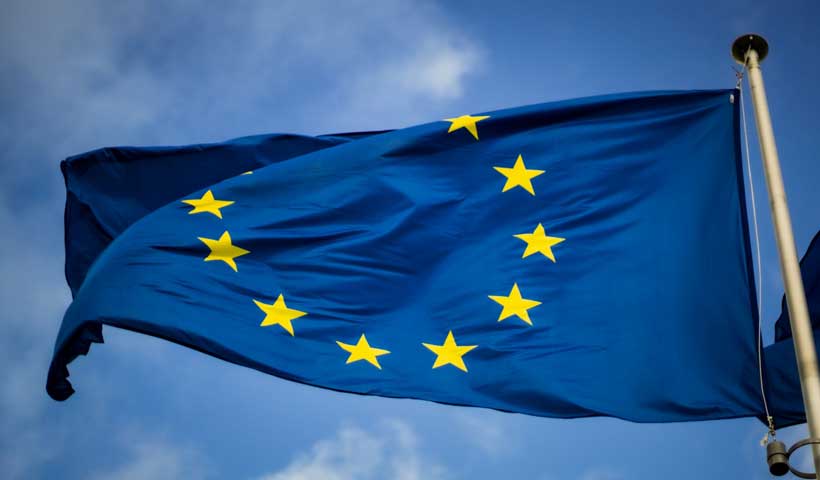
Britain is seeking a closer economic relationship with the European Union by asking to participate in the bloc’s “Made in Europe” industrial strategy, as Prime Minister Andy Burnham argues that the UK and EU face many of the same economic and industrial challenges.
Travelling to New York for his first United Nations General Assembly as prime minister, Burnham said Britain would seek to become a “trusted partner” in the initiative, which is intended to strengthen European production and reduce dependence on Chinese components.
“Europe’s argument is not with us,” Burnham told reporters on Monday. He said Britain and the EU faced similar pressures, particularly in industries such as steel, and argued that the UK should not face unintended consequences from a policy aimed at addressing dependence on China.
The British government has warned that excluding UK companies could disrupt established supply chains and create additional trade barriers between Britain and EU member states.
Stay ahead of the geopolitical week.
MD Briefing delivers expert analysis across five global fronts — the Indo-Pacific, energy, geoeconomics, European security, and the Middle East — every Monday morning. Free.
Why Britain wants access
The EU’s Made in Europe initiative is part of a broader effort to increase domestic industrial capacity and reduce reliance on overseas supply chains, particularly those involving China.
For Britain, exclusion could have consequences for sectors that remain closely integrated with European markets. The automotive industry, for example, relies on supply chains that cross the English Channel in both directions. Industry representatives have warned that excluding British manufacturers from European incentives and procurement opportunities could affect the competitiveness of both British and European companies.
British officials therefore want the EU to treat the UK as a partner in the initiative rather than as an external supplier.
Burnham has argued that British participation would reflect the practical connections that remain between the UK and European economies despite Brexit.
A wider attempt to rebuild UK EU ties
The dispute over Made in Europe is taking place as Burnham’s government seeks to deepen Britain’s relationship with the EU.
The UK government has already been pursuing closer cooperation with European countries in areas including defence, technology and manufacturing. Finance Minister John Healey recently urged EU counterparts not to exclude Britain from the bloc’s industrial strategy.
The government has also been seeking greater cooperation on European security. However, negotiations over British participation in the EU’s SAFE defence fund broke down, creating another obstacle to the government’s efforts to expand cooperation with Brussels.
Burnham has said he wants to move further and faster in rebuilding ties with the EU. His government has also been working toward a UK EU summit that was delayed following the change in prime minister.
The challenge inside Europe
Britain’s request for access is not simply a matter of negotiating with EU institutions. Member states also have different interests in how far the bloc’s industrial policies should extend to non member countries.
The proposed policy is intended to direct European economic activity toward European production and strengthen industrial resilience. Extending its benefits to British companies could therefore raise questions about what obligations Britain would have in return and how EU based businesses would compete with UK firms.
There are also broader questions about the meaning of the UK’s post Brexit relationship with the bloc. The British government is seeking closer economic and security cooperation without reversing the country’s decision to leave the EU.
That creates a difficult balance. London wants greater access to European programmes and markets, while Brussels must determine the conditions under which a non member state can participate in policies designed partly to strengthen the EU’s own industrial base.
What comes next?
Burnham’s immediate objective is to secure British participation in the Made in Europe framework while avoiding new barriers for industries whose supply chains remain closely connected to the continent.
The issue could become part of wider negotiations over the future of UK EU relations. Burnham has said his focus is on a renewed summit with European leaders, which he hopes can take place before the end of the year.
The outcome will indicate how far Britain and the EU can move toward closer economic cooperation without reopening the fundamental question of Britain’s membership.
For London, the argument is that Britain and Europe face shared challenges from global supply chain disruption and dependence on foreign production. For the EU, the question is how to strengthen European industrial capacity while determining the appropriate role for a neighbouring non member economy.
The debate over Made in Europe therefore reflects a broader post Brexit question: how closely can Britain integrate with European economic and security structures while remaining outside the bloc?
The actor is making his debut in the second episode of the new ITV drama, airing Monday, 21 September. He plays young police detective Lewis, set on helping Michelle’s character DI Emma Crane uncover the truth about the death of a young girl.
The six-part series dramatizes corruption and systemic misogyny in the police force, after shockwaves are sent through a quiet town when a teenager’s body is found in the woods. With officers turning on each other, DI Crane and Douglas’ character DI Tom Radley dig deeper and are left reeling at the secrets they discover within a tangled web of lies and cover-ups.
“As the clock ticks and trust fractures, Crane must navigate both a murder investigation and the treacherous politics inside her own team,” the synopsis goes on to tease.
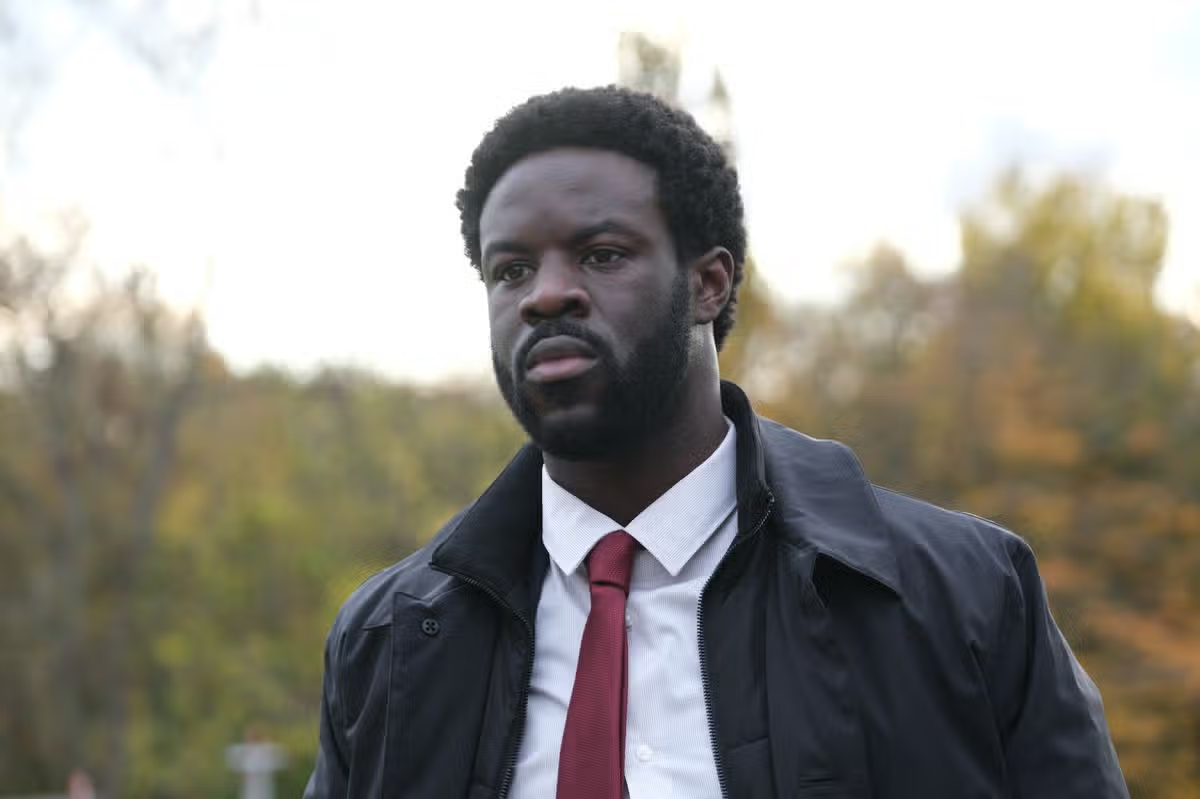
Nathan stars as DC Lewis Brimah, which marks his first TV role after working in commercial modelling and brand campaigns. Ahead of the new series airing, he teased his role on social media, writing: “GOD IS GOOD!!! First TV Series Job. Excited to get into this one with such an amazing cast.”
“Biggest congrats Nathan,” one fan replied. Another follower said: “Congratulations!! Bravo.” A third added: “wow! such a great cast, congrats,” while someone else wrote: “Yesss Nathannnnnn.”
Introducing his role in a Q&A during a press event, Nathan shared: “Lewis is a good guy, in fact, he’s a great guy… He’s coming to the system, going through the fast-track graduate scheme which means he hasn’t had the experience that a lot of the other officers and other detectives have.
“But he’s ambitious and he just wants to do a good job, like that is his focus. He’s by the book and he wholeheartedly believes in the job.
“He believes in the system, he believes in the people that he works with, and he has a very strong moral compass. He’s a very simple man, he believes things are black and white, there’s right and wrong, good and bad.
“For me, what I found really interesting is seeing someone like Lewis placed in an environment that is morally complicated, and how he navigates those areas without losing his integrity.”
Nathan went on: “He felt like me, like the new guy coming in, not necessarily seasoned but working with the vets. He just wants to do a good job and he really cares.”
The six-part series also marks the first time Michelle has played a police officer, as she revealed she couldn’t believe she’d not played one before. She previously shared a personal link to her role in The Blame, saying: “The thing is, my dad was in the police force, he was an inspector since he was 17.
“So I used to go to him and go, ‘Dad, what do you think about this?’ And when I was doing the meeting scenes, it was quite a high-up rank, so I was like, ‘How would you talk to people in the police force and how was your body language?’ I used to go to him quite a lot for resourcing.”
Michelle elsewhere revealed she was “hooked” on The Blame from the moment she read the script, and hailed her character as being “a strong female in a male-dominated environment”.
She went on: “She’s one of those girls that will take no nonsense, and it just felt exciting. We love to see it on screen and there’s not enough of it on screen.”
The Blame continues on Monday, 21 September at 9pm on ITV1 and ITVX
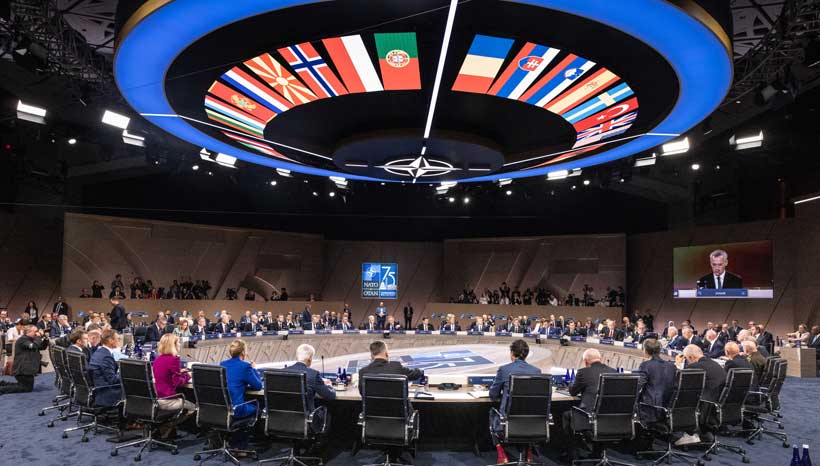
Denmark, Greenland and the United States are set to sign a security agreement that Copenhagen says will give NATO a larger role in protecting the Arctic, potentially shifting responsibility beyond the United States and Denmark alone.
The agreement is expected to be signed at the United Nations General Assembly in New York on Tuesday. Its full contents have not been made public, although US President Donald Trump has described it as giving Washington “permanent control” over Greenland’s security.
Denmark and Greenland have not endorsed Trump’s description. Both have said the agreement will benefit Greenland while respecting the island’s sovereignty.
The deal follows months of pressure from Trump, who has repeatedly argued that the United States should control Greenland and at times declined to rule out military or economic measures to acquire the semi autonomous Danish territory.
Stay ahead of the geopolitical week.
MD Briefing delivers expert analysis across five global fronts — the Indo-Pacific, energy, geoeconomics, European security, and the Middle East — every Monday morning. Free.
His demands triggered a diplomatic crisis within NATO and pushed Copenhagen and Nuuk into negotiations with Washington to address US security concerns while maintaining Greenland’s status within the Kingdom of Denmark.
A broader NATO role
Danish Foreign Minister Lars Lokke Rasmussen said the agreement would change the way Arctic security is handled.
“It will be in a form where responsibility for security in the Arctic is not only Danish or American,” Rasmussen told Danish broadcaster TV2 on Sunday. He added that NATO would play a major role in protecting the region.
A NATO spokesperson said the alliance welcomed the agreement, describing it as a step that could advance security, stability and cooperation in the Arctic.
Rasmussen travelled to New York for the signing but has declined to disclose the agreement’s details.
He said Denmark had been open from the beginning to addressing what he described as legitimate US security interests.
The negotiations therefore appear to have focused on finding a framework that can accommodate Washington’s strategic concerns without formally transferring Greenland’s sovereignty to the United States.
Trump’s claim raises questions
Trump has offered a different description of what the agreement means.
In a post on Truth Social on Friday, he said the deal gives the United States “permanent control over security, and all other needs” in Greenland. He also said no US adversary would be able to establish a base or military presence on the island without Washington’s written approval.
Copenhagen has not publicly responded to that characterization.
The difference between Washington’s description and Denmark and Greenland’s public statements leaves important questions about the agreement unresolved.
Among the most significant is whether it changes the 1951 US Denmark defence agreement, which provides the legal basis for the American military presence in Greenland.
The document’s provisions on US access, military infrastructure and the role of NATO have not been made public.
Greenland at the centre
The agreement comes as Denmark acknowledges that it underinvested in Greenland’s defence for decades.
Copenhagen has since pledged to increase its military presence on the island and strengthen Arctic surveillance, including through greater NATO involvement.
Greenland’s government has sought to reassure residents that the negotiations do not compromise the island’s sovereignty.
Erik Jensen, an opposition lawmaker in Greenland, said on Facebook that he had read the draft agreement and felt reassured by its contents. He also praised Greenland’s foreign minister for handling the negotiations.
For Greenland, the issue is particularly sensitive because the island has extensive autonomy within the Kingdom of Denmark and has long maintained a political debate over eventual independence.
What the agreement could mean for the Arctic
The deal could mark a significant change in the security architecture of the Arctic.
Greenland occupies a strategically important position between North America and Europe, making it valuable to the United States and NATO as competition over the Arctic increases.
A larger NATO role could provide a multilateral framework for responding to concerns about military activity and strategic infrastructure in the region. At the same time, the agreement’s precise legal and operational arrangements will determine how far that shift actually goes.
Until the text is released, it remains unclear whether the agreement represents a substantial restructuring of Greenland’s defence arrangements or primarily a political framework for closer cooperation.
What is clear is that the negotiations have moved Arctic security from a dispute centred on US ambitions for Greenland toward a broader discussion about NATO’s collective role in one of the world’s increasingly contested strategic regions.