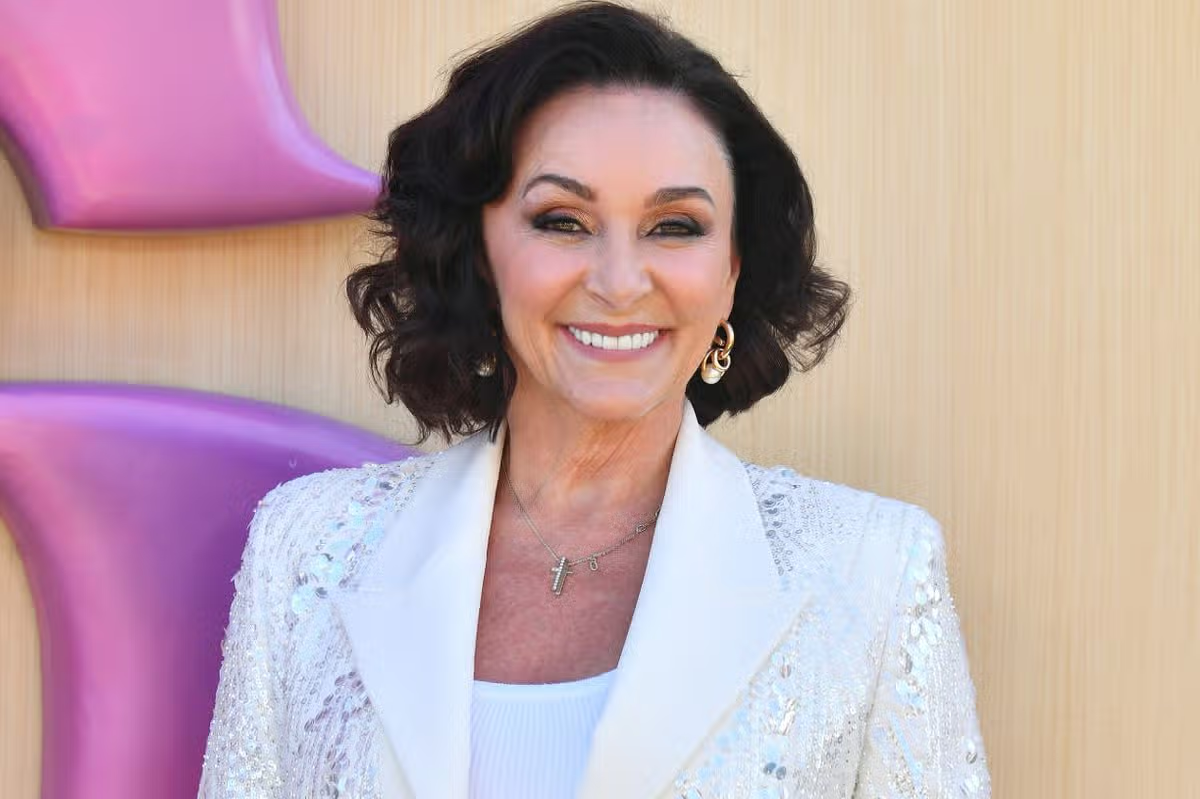
Strictly Come Dancing judge Shirley Ballas looks set to fly the nest and follow the likes of Bruno Tonioli to the stateside version of the show, Dancing With The Stars
22:10, 20 Oct 2026Updated 22:56, 20 Oct 2026
Shirley Ballas is reportedly set for a DWTS role(Image: Getty Images)
Shirley Ballas is getting ready to quickstep her way stateside with a new role on Dancing With The Stars, according to reports. The Strictly Come Dancing judge, 66, is said to be ready to follow the likes of Bruno Tonioli and Len Goodman to switch to the US version of the dance show.
It’s claimed she won’t give up her role on the BBC’s prime Saturday show, though. Instead, insiders claim she will fit filming in between the live Strictly shows.
“Shirley will fly to the US later this month after the Strictly live show finishes,” the source said. They added that, as DWTS is filmed throughout the week, she will then return in time for the live weekend shows.
To see more of the stories you love from The Mirror and to find them easily in Google then make us your preferred source. Free and easy-to-do, just click on the link here to find more from The Mirror at the top of your feed.
“It’s a whirlwind schedule, but she jumped at the chance to take part,” the source told The Sun. They went on to claim that, while it’s just a one-off for now, it could progress. They said: “If the US TV bosses think Shirley is a hit, they’re sure to see if she would come back.”
Shirley initially joined Strictly as head judge in 2017. But fellow judge Craig Revel Horwood recently joked she will never be able to fill the boots of late legend Len Goodman, who died in 2023 at the age of 78.
He also paid tribute to his genuine off-screen friendship with Len, saying viewers only ever saw one side of their famously fiery relationship. He went on: “I loved Len. If you looked at the TV, we were constantly fighting like cat and dog, but as soon as we came off stage, we’d have a pally drink together.
“‘We toured together. So I was stuck in a car with Len for hours and hours while he got out to look at another building, darling.”
The judge also revealed how Len helped him overcome his biggest fear when he first joined Strictly. ‘I am now the age Len was when he started Strictly.
“There was a twenty-year difference between us. I’ll let you into a little secret – when I started, I was having nightmares because I didn’t know ballroom and Latin.”
Len, who also appeared on DWTS, was given a huge tribute on the show following his death. The show announced in 2023 that they were officially renaming the famous mirrorball trophy to the Len Goodman Trophy.
Julianne Hough said at the time: “Len was on this panel for nearly all of our 32 seasons and although he’s irreplaceable we wanted to pay tribute to him… Len will always be going forward with us.”
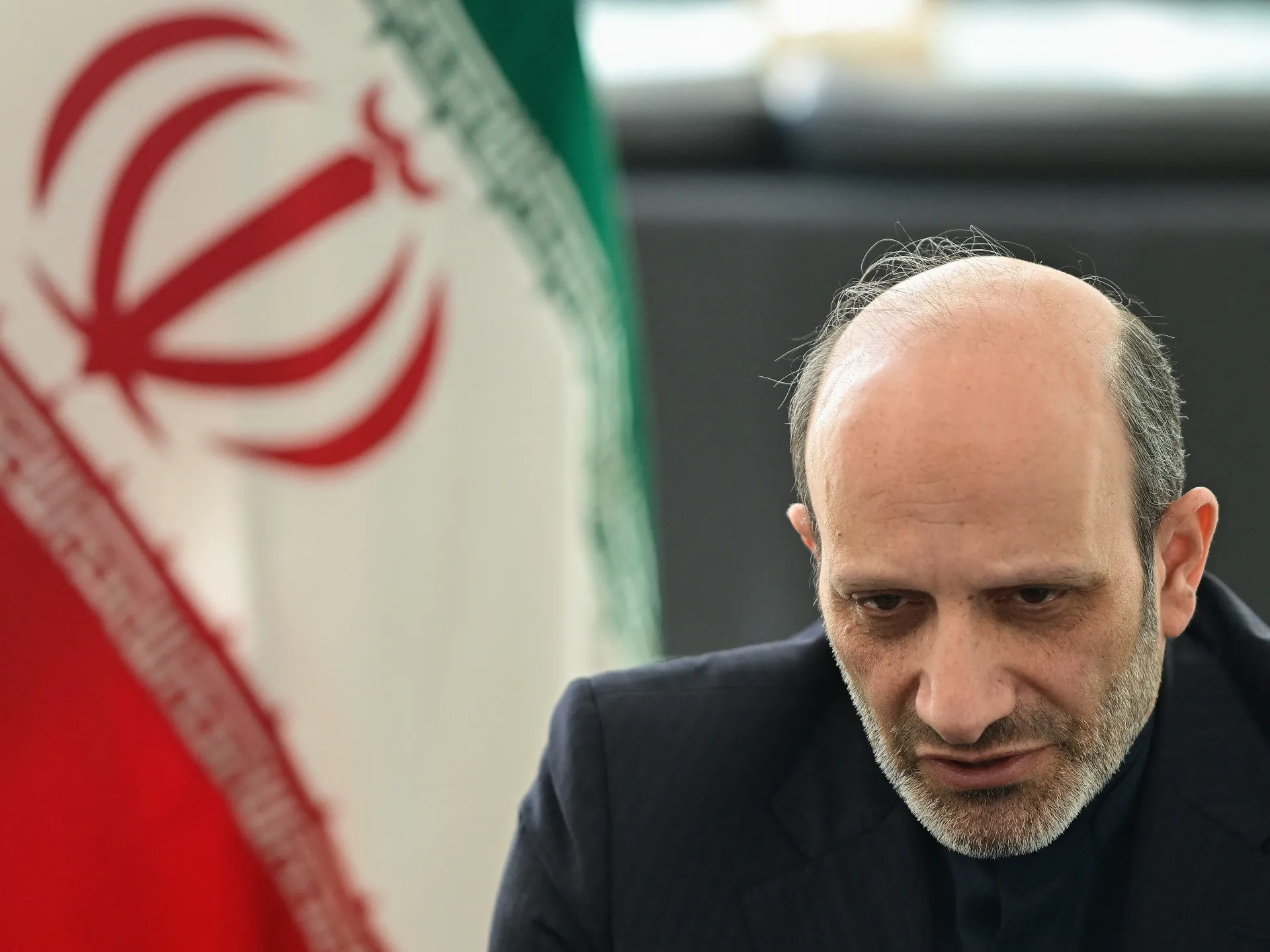
Tehran summons envoy in tit-for-tat move after Berlin summoned ambassador to Iran.
Published On 19 Oct 202619 Oct 2026
Iran’s Ministry of Foreign Affairs has summoned Germany’s ambassador after a court in Hamburg found two men guilty of plotting to kill two leaders of Jewish organisations at Tehran’s behest, accusing Berlin of leveling “baseless political allegations”.
The decision to summon envoy Axel Dittmann came after Germany summoned the Iranian ambassador, Majid Nili Ahmadabadi, on Monday over allegations that Tehran was behind the plot to assassinate the two pro-Israel public figures.
Recommended Stories
list of 3 itemsend of list
“Levelling security-related accusations against Iran has long been a tactic employed by the Zionist regime and certain Western nations,” Iran’s Foreign Ministry said in a statement broadcast by official news agency IRNA.
“Attempting to provide a judicial face to baseless political claims not only fails to lend any credibility to such allegations but also undermines the standing of the German judiciary itself,” the statement added.
Hamburg conviction
Berlin’s allegations stem from a court case involving two men, a Danish national and an Afghan national, who were convicted in a Hamburg court on Thursday for planning to target the president of Germany’s main group representing the Jewish community and the head of the German-Israeli society.
The German Foreign Ministry said on X that the Iranian ambassador had been summoned, adding Tehran would not be allowed to “threaten our free society”.
“The malicious assassination attempts against Josef Schuster and Volker Beck will have legal consequences,” it added.
“We do not tolerate attacks on Jewish life and on those who defend it anywhere, and certainly not in Germany.”
The Dane, partially identified as Ali Hassan S, was jailed for eight-and-a-half years. The Afghan, who was recruited as his accomplice, was sentenced to four-and-a-half years.
Iran’s intelligence service steered the two men, the court said. The pair were arrested in Denmark last year and extradited.
In sentencing the men, the judge said they were guilty of “terrorist activities orchestrated by Iran”.
At the time they were charged, the Iranian embassy in Berlin released a statement rejecting what it called “unfounded allegations made at the behest of Iran’s enemies”.
When coach JJ Redick announced his starters for the Lakers’ final preseason game Friday night, he was asked if those same players would start opening night Wednesday against the Golden State Warriors.
Quentin Grimes, who had started the first four preseason games and had been solid in his role, was not among them.
“I know that there’s a chance Quentin is gonna have an opportunity to start,” Redick said. “This was the original plan we were gonna have for the Sacramento game with Collin [Sexton] out. … We just wanna get a look on that tonight, and we’ll see. But nothing definitive for next week.”
Grimes averaged 12.3 points, 2.5 assists and shot 53.3%, including 41.2% from three-point range, in 24.3 minutes per game in the preseason.
Redick said he was “still open to both” when asked if he could start Grimes and stagger his time with the starters on the bench.
In his first five NBA seasons, Grimes has mostly been a reserve, starting 146 of 318 games.
Grimes started the second half for the Lakers and scored 11 points in a 121-106 loss to the Denver Nuggets at Crypto.com Arena.
“I think you’re looking for balance in lineups and you’re looking for players that complement and fit each other,” Redick said. “He’s going to start a lot of games for us. That’s just the reality of it. I don’t know who our base starting group is yet, but we’re going to look at this tonight.
“We wanted to get a look on this first game because Collin was out. That fourth ballhandler for us hasn’t been great. I said that the other night and talked to those guys … I don’t say anything out here that I don’t tell my players. So Quentin is also going to maybe have some looks as a ballhandler.”
Doncic, who didn’t play in the second half, finished with 15 points.
Reaves scored 19 points, Williams had 14, Kessler had six and Thybulle had seven.
Injury update
Sexton didn’t play in any preseason games because of a lower right leg injury. Redick said Sexton has been able to practice more.
“He continues to trend in the right direction,” Redick said.
Adou Thiero (maintenance) and Cameron Carr (contusion) didn’t play.
Al Jazeera has confirmed that White House press secretary Katie Zacharia is “transitioning out” of her role after less than a week on the job. President Donald Trump said he had told Zacharia she “should reconsider” her role, citing harsh media and public scrutiny.
President Trump’s new press secretary stepped to the podium, the eyes of a packed room of journalists — and many in their audiences — upon her. She smiled broadly at the sea of faces both probing and friendly. With that, Katie Zacharia went live and became the official voice of the world’s most powerful person.
Fourteen minutes and just three questioners later, she was done. In the aftermath, it was clear that the former Newsmax commentator accomplished at least one thing: She put the “brief” back in briefing.
In her debut Tuesday, Zacharia looked downward and often read directly from a script. She paused and grinned when she uttered the words “Department of War.” She stumbled on a question about her background and mixed up the words “husband” and “president.” The few questions she took were nonconfrontational and from media outlets that have been sympathetic to the Republican president. In short: She made no memorable impression — or at least, to hear some tell it, not the one she likely wanted.
This would not be an easy job under any circumstances. Trump most frequently serves as his own spokesman. And his antagonism toward the media has created a new layer of tension. Zacharia is finding out on day one that she, too, will be under constant watch. Some — including a few of those who have stood in her shoes — didn’t think it went all that well.
In fractured times, in a national media scrum unimaginable just a few decades ago, what is the proper way to approach a job like this? How do you speak effectively when your boss speaks for himself so often that he commandeers the news cycle multiple times a day — and sometimes late into the night — with remarks provocative, unexpected and sometimes incendiary?
For one, you realize for whom you work: not your audience of millions but your audience of one, and the absolute need for his approval.
“I get to do what I was doing on the outside already, which was hoping to amplify, multiply and expand upon President Trump’s incredible agenda for the American people,” Zacharia said. Nowhere did she mention the task of disseminating accurate information to Americans.
The press secretary role has been many things
Over the nearly 10 decades since former journalist George E. Akerson made his and the office’s debut as Herbert Hoover’s press secretary in 1929, the job has served many purposes: deliverer of information, amplifier of policy, jouster with journalists, protector of the presidential reputation and, sometimes, overlord of obfuscation.
Under Trump and his second-term press secretary so far — Karoline Leavitt, who resigned in August — the job has been primarily one of acting as the immovable object against an irresistible, and in Trump’s eyes sometimes treasonous, force.
Leavitt got to know this terrain well in her 17-month tenure. She took a smiling but combative stance against a press that was increasingly coming under Trump’s criticism for coverage — and was named in at least one lawsuit about White House media access. She was not shy about interdicting what she considered media bias. “What a stupid question,” she said to one reporter at a briefing last year.
Trump, outside the White House on Tuesday shortly after Zacharia’s briefing, praised her debut as “excellent.” She was standing behind him at the time.
Other early reviews were more critical. MS NOW quoted one unnamed White House official as saying of the performance: “She needs to get much better fast, otherwise she’ll break Scaramucci’s record.” Anthony Scaramucci, an early White House communications director for first-term Trump, lasted 11 days in 2017. Said Scaramucci on X Tuesday afternoon: “I hope she makes it.”
Joe Biden’s former press secretary, Jen Psaki, now the host of a show on MS NOW, put it more succinctly, posting on X: “Well that briefing was basically an SNL skit….except it wasnt.”
Talking up Trump but taking few questions
While Zacharia’s performance — and of course, that’s what every briefing is — may have been bumpy to some, it was also mostly content-free except for news she broke about the White House asking U.S. Ambassador to Greece Kimberly Guilfoyle to quit, which she immediately did.
Predictably, also like Leavitt before her, Zacharia spent a great part of her opening monologue praising Trump and giving an “up ‘til now”-style update on his second term’s priorities and accomplishments so far. Talking points included a “booming economy,” “his historic boom in energy production” and “a great relationship with Venezuela.”
She was also fond of superlatives, a trait that likely will resonate with a president whose remarks are often equally if not more expansive: “President Trump is working to secure the Western Hemisphere for centuries to come.”
When it came to questions, though, she was downright parsimonious. She allowed three questioners, then answered an additional one as she prepared to depart. The three called on during the briefing were Breitbart, Fox News and the Daily Mail, all of which have been friendly to Trump in varying degrees during periods of his two terms. And she said she would continue Leavitt’s policy of bringing “new media” in — which has often meant outlets more sympathetic to Trump.
“We love new media and we want to be able to embrace it,” she said. Currently, three major outlets — CNN, MS NOW and Politico — are fighting to regain White House access after Trump banished them last month, saying he didn’t like their coverage and calling it “fake news.”
How will Zacharia fare in coming days and weeks and, if it lasts, months? That, like so much else, depends on one thing: Donald Trump.
The late U.S. Sen. Howard Baker once famously said that, when being asked difficult things, handle it something like this: If you don’t like the question being asked, just answer a different question. On Tuesday, a half-century later, Katie Zacharia found a different way in — pick three nonconfrontational questioners, then defer to your boss and say: The End.
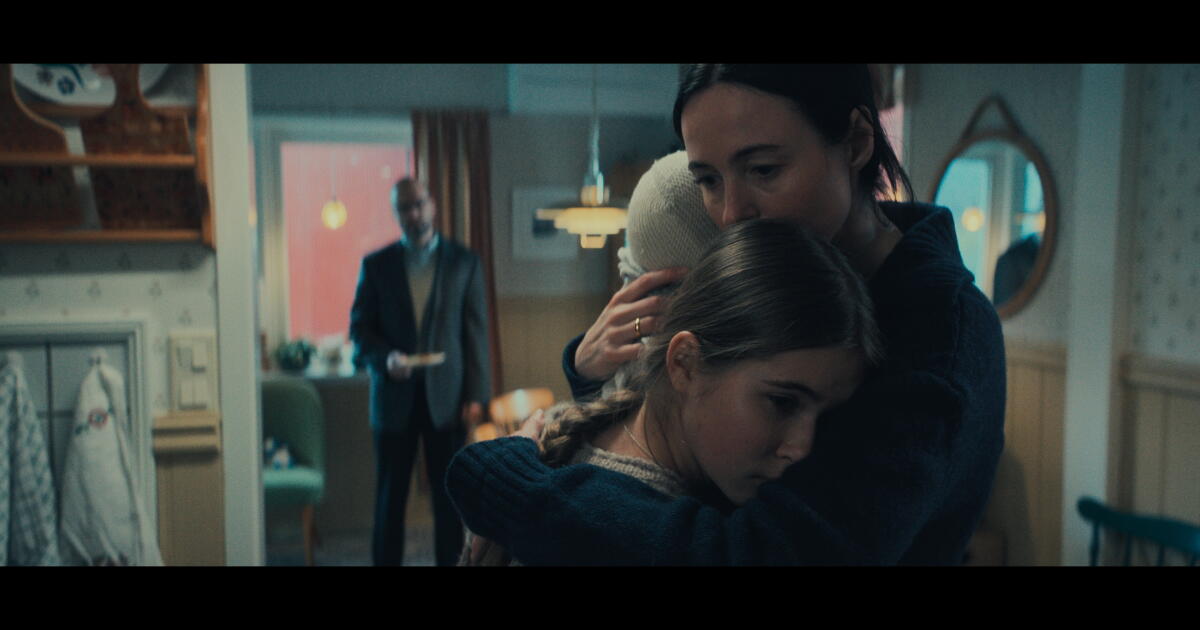
“We’re all hiding a little bit of our personality inside,” says director Cristian Mungiu of the characters in “Fjord,” a searing drama inspired by real Norwegian child welfare cases. “The film speaks about a limit of intimacy, after which you will need to make a choice not knowing precisely what happens. This is why I wanted the film to start at the end of a conversation in which you don’t really know what kind of punishments exist in this family.” Lighting and shallow focus deepen the uncertainty of a mother (Renate Reinsve) comforting her daughter (Vanessa Ceban) and a father (Sebastian Stan) waiting to have his say: “You need to admit when you’re wrong.” “You see the role of a mother who tries to play this more empathic part, while the father is the one playing the role of the educator who imposes his rules,” Mungiu says. “This shot speaks about our way of storytelling and designing everything to be ambiguous enough about their relationship. At the same time, this also speaks about a theme in the film: this idea that there isn’t anything like right and wrong and the truth. And we all believe that the truth belongs to us. And this is the problem.”
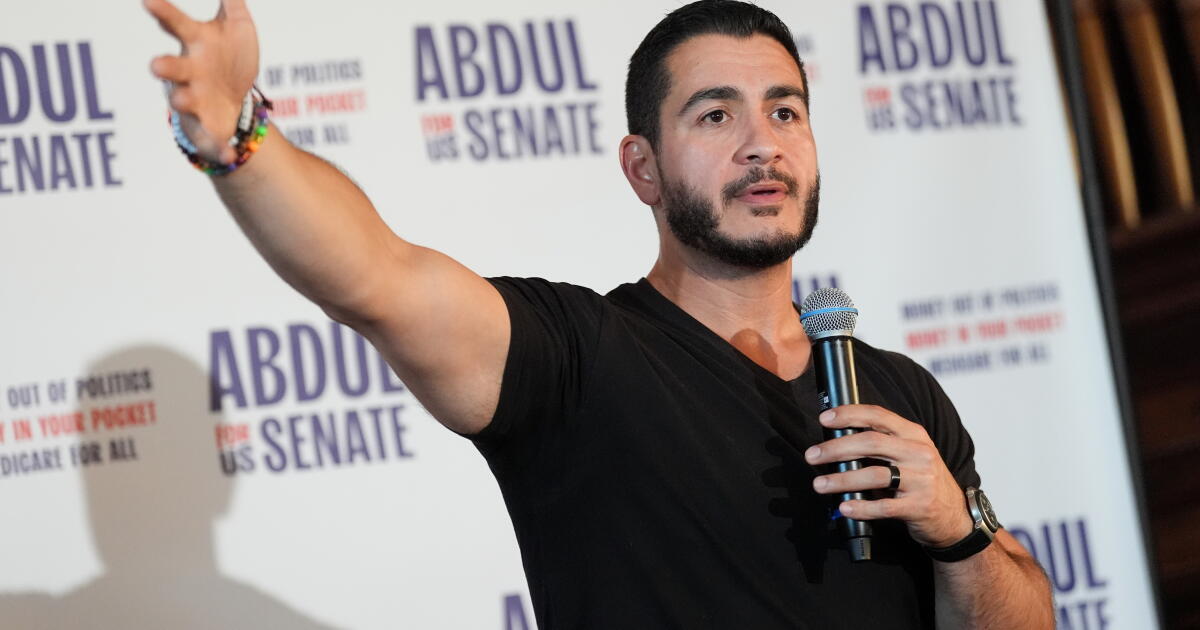
PORT HURON, Mich. — Abdul El-Sayed, holding a microphone and wearing his signature V-neck black T-shirt, slowly shook his head as a woman at his town hall described how she burned through her savings after undergoing emergency brain surgery.
“I’m really sorry for your experience, and I hope that you’re on the mend,” said El-Sayed, the Democratic nominee for U.S. Senate in Michigan, after outlining proposals for guaranteed healthcare and paid leave.
Later that night, while talking to reporters in the basement below the theater, his tone was far different. El-Sayed called his Republican opponent, Mike Rogers, a “coward” and said President Trump was “afraid” to visit the state, and he dismissed as “dumb” a question about whether Iran or Israel posed a greater threat to the United States.
The exchanges captured two sides of a candidate who is the central figure in one of the nation’s most consequential Senate races. El-Sayed would be the country’s first Muslim senator, and he’s crisscrossing the state to counter a Republican effort, fueled by tens of millions of dollars, to portray him as a dangerous radical. But he has also embraced his confrontational side by mocking and taunting Trump and Rogers.
“If they want to make me the main character in the midterms, I’m not shying away from it,” El-Sayed said in an interview. “Run against me. See how well that works out for you.”
El-Sayed’s resolute confidence rubbed some Democrats the wrong way during a divisive primary against Rep. Haley Stevens. The former public health official has shown little interest in toning it down, defending his progressive agenda and adversarial approach toward Republicans, emboldening supporters who believe he’s the right candidate for an angry electorate that has lost faith in the political establishment.
But his doubters fear he’ll cost Democrats control of the Senate by failing to unite his party’s disparate factions ahead of November.
“If you want their votes, you have to make nice with those people, and he’s not really doing that,” said Michigan political strategist Adrian Hemond, who supported Stevens. “Maybe he doesn’t have to. The entire theory of this candidacy has been he can remake what the electorate looks like.”
A Republican target
Even though Michigan backed Trump twice in his three presidential campaigns, no Republican has won a Senate race in the state since 1994.
The political landscape is no friendlier this year. Trump started an unpopular war with Iran, leading to higher gas prices and related inflation. Rogers has opted for a low-key campaign with fewer public events than El-Sayed as he tries to make the race all about his Democratic opponent.
As of Saturday, Republicans had outspent Democrats by $78 million to $63 million in the Michigan Senate race, according to AdImpact, which tracks political advertising. Around $40 million in Republican spending has gone toward negative advertisements, compared with around $20 million from Democrats.
The ads portray El-Sayed as “dangerously radical” and “too extreme,” highlighting his past calls to defund the police and relax immigration enforcement. Others tie him to Hasan Piker, a popular online streamer with whom El-Sayed has appeared and who has drawn criticism for past comments, including saying that “America deserved 9/11.”
On Friday, Rogers appeared alongside Louisiana Sen. John Kennedy, who told reporters that El-Sayed “sleeps in a Bin Laden jersey.” Rogers laughed.
Vice President JD Vance has called El-Sayed “evil.” In one social media post, Trump shared a photo of himself with First Lady Melania Trump alongside a photo of El-Sayed and his wife, who wears a hijab, with the caption: “Two VERY DIFFERENT America’s.”
Late Wednesday, Trump referred to El-Sayed as “Mohammed” and said he “goes back to the days of the Jihad.”
El-Sayed has hardly backed down. At the campaign stop in Port Huron, he taunted Trump and invited him to visit Michigan, suggesting Rogers and other Republicans were afraid the president would hurt their chances.
“Donald, if you’re watching, don’t wuss out, man,” El-Sayed said.
And he responded to Kennedy’s attack by suggesting the Republican is in the Ku Klux Klan.
“That’s rich coming from someone who wears his bed sheets out at night,” El-Sayed posted on social media.
A personal touch with voters
Before the Port Huron town hall, El-Sayed worked his way down a line of people who couldn’t fit inside the theater, shaking hands, taking photos and stopping for conversations.
Jeff Petrucella and his wife, Alice, traveled from Macomb County to see El-Sayed. They described themselves as politically “middle of the road” and said they had voted Republican in the past.
“I’m pretty done with the Republicans right now,” Jeff said.
Alice said she was “looking for a change that is better for my granddaughters,” pointing to El-Sayed’s support for Medicare for All. Nor was she put off by his more confrontational appearances on Fox News.
“I think he expresses himself well. You can tell he’s a well-spoken, educated man,” she said.
Pat Kreiner was among those who waited nearly an hour to see El-Sayed. Her children had persuaded her to support him in the Democratic primary.
“My son said to me, ‘I have been living with this trickle-down economy since the day I was born,’” Kreiner said. “‘It doesn’t work for me.’”
Kreiner also expressed anger about Trump’s trade war with Canada, just across the river from Port Huron.
“We are heartsick about our neighbors,” she said. “They used to come over a lot. We don’t see them now.”
Visiting smaller towns such as Port Huron has become central to El-Sayed’s campaign, with his team recently saying he’s held more than 500 events in over 100 cities across the state.
“Go everywhere. Talk to everyone. That’s what we do,” El-Sayed said in an interview.
The personal approach has not erased all the skepticism surrounding El-Sayed, including within his party.
His criticism of Israel and association with Piker have raised concerns among some Jewish Democrats. El-Sayed has held a series of private gatherings with undecided Jewish voters as he works to win their support.
He has also sought to strengthen his standing with Black voters. In the Democratic primary, Stevens drew more support in Wayne County, home to Detroit and its large Black population.
Ahead of Thursday’s debate, El-Sayed attended two events with Black leaders before stopping at a Black barbershop, where he moved from chair to chair talking with customers. He stopped at one point to speak with a pregnant woman, congratulating her and asking when her baby was due.
“November 8th? Make sure you vote early, huh?” the candidate joked.
A race about more than just Michigan
While El-Sayed has spent much of his campaign trying to win over Michigan voters, his candidacy has taken on significance far beyond the state. Republicans have made him a symbol of what they say is an increasingly radical Democratic Party, while progressives see his campaign as a chance to prove their politics can win in a closely divided state.
At a New York City fundraiser on Oct. 5, Rep. Alexandria Ocasio-Cortez cast his campaign as a test for progressives nationwide.
“If Abdul can win in Michigan, anybody can win anywhere,” said the New York Democrat, a potential presidential candidate.
Ocasio-Cortez plans to campaign with El-Sayed in Michigan this week, followed by former President Obama on Oct. 24.
The national stakes have also drawn renewed opposition. United Democracy Project, a super PAC affiliated with the pro-Israel group AIPAC, disclosed an initial $94,000 expenditure against El-Sayed on Friday, after spending nearly $30 million to oppose him in the Democratic primary.
And El-Sayed, while maintaining that the election should focus on Michigan voters and their economic struggles, has also embraced the larger implications of his candidacy.
“I am grateful for your support,” he told the audience at the New York fundraiser, according to remarks obtained by the Associated Press. He said he had two goals: “pick up a U.S. Senate seat” and “change the nature of our politics for the better.”
Movie stars are an endangered species. They still exist, sure. Their beautiful faces still fill 50-foot screens, beaming down on us. Yet, there is a shortage of, say, Michael Douglas. A man who, over the span of decades, played an American president, a troubled detective, and a Wall Street tycoon so convincingly that the FBI recruited the actor to do a PSA for investment bankers about the perils of financial fraud.
On the Shelf
One Helluva Ride
By Michael Douglas Grand Central Publishing: 496 pages, $35
If you buy books linked on our site, The Times may earn a commission from Bookshop.org, whose fees support independent bookstores.
The night before I meet Michael Douglas on Zoom, I have a hard time sleeping. I want to be well-rested before I meet the leading man — perhaps one of the last leading men from an era in Hollywood that felt limitless. What do I mean by that? He’ll tell you. His new memoir details his movie-making career as a prolific producer and actor, along with his affair with his “Romancing the Stone” co-star Kathleen Turner, mudslides in Mexico, snorting cocaine with O.J. Simpson, encounters with Princess Diana and screaming matches with Paul Verhoeven that end in blood. In short: the life of a movie star.
“People say to me: Michael Douglas. When I see your name, I don’t know what I’m going to get, but I know it’s going to be good,” Michael Douglas says.
(David Urbanke / For The Times)
Halfway through our conversation, something unanticipated happens: Douglas reveals that he doesn’t quite see himself as a movie star. After gentle pushback, he elaborates. Instead, Douglas sees himself as a chameleon.
“People say to me: Michael Douglas. When I see your name, I don’t know what I’m going to get, but I know it’s going to be good,” he says.
He’s speaking from his home in New York. Behind him is a moody 18th-century Orientalist painting, its scene too indistinct for me to make out. His smiling face — which, like most American moviegoers, I had watched 50 feet tall in the dark — glows with warmth even on my laptop screen. It seems abnormal even to witness him in miniature.
To be clear: Michael Douglas is a movie star, whether or not he wants to cop to it over Zoom. It’s in his blood. His father, Kirk Douglas — born Issur Danielovitch to Russian Jewish immigrant parents — was a legendary actor whose shadow Douglas struggled to escape, as he details in the early chapters of his memoir. He spent his childhood on movie sets, watching his father spar with iconic directors like Stanley Kubrick. Michael Douglas was subject to violent and angry outbursts as well. “Dad’s volatility kept us on edge,” he writes. He felt suffocated by his father’s legacy, often hoping to shake the title of “Kirk Douglas’ son.”
Early in his career, Douglas left his starring role on TV’s “The Streets of San Francisco” after producing his first film, “One Flew Over the Cuckoo’s Nest,” which became a breakout success. On that film, he had to deliver the shattering news to his father that he was too old to play the lead — essentially, firing his father from his dream role. It was a betrayal. Instead, the role went to Jack Nicholson, who would later win an Academy Award for his humanizing portrayal of Randle McMurphy. The film won multiple Academy Awards, launching Douglas’ career as a heavyweight producer and later an actor. Escaping the shadow of being Kirk Douglas’ son has been a lifelong battle for the actor.
(Grand Central Publishing)
Occasionally, inheritance can be a burden. In his own life, Douglas details how he was a distracted father and husband who lost sight of his son, Cameron Douglas. During Cameron’s childhood, Douglas was elsewhere — on location in the Mexican jungle in “Romancing the Stone,” then a disastrous film production in Morocco for “Jewel of the Nile” that included a fatal plane crash that resulted in three crew members’ deaths. To cope with the breakneck pace of show business, Douglas sought refuge in women, cocaine and work.
Cameron’s troubled youth reached a crescendo when he was sentenced to five years in federal prison for drug smuggling, with an additional sentence for drug possession in prison — serving seven years in the end. It was enormously painful for Douglas, who also struggled with addiction, and had sought out treatment to provide an example to his son.
In a late chapter, he recalls confiding in Rob Reiner, who also had a son who struggled with addiction issues. In the memoir, Douglas addresses the killing of Rob and Michelle Reiner in December 2025; their son Nick has been charged with murder. “We both had sons with serious drug issues and we both, at times, had been at the end of our rope,” Douglas writes. “It was a heartbreaking confessional for us, but I know we gave each other some measure of comfort during the hard times.”
Why trudge through movie history, turning over every stone and every wound, in a nearly 500-page memoir? Because, according to Douglas, it’s time.
“Your 80s may be a good time to share,” the actor says, who recently turned 82. “People interested in movies, we give them a certain insight into the process, and maybe they could learn something. For others, it’s just gossip.” His battle with Stage 4 oral cancer brought the contours of his life into stark relief, sharpened by seven weeks of radiation and chemotherapy. His official diagnosis was tongue cancer, but he told the public he had throat cancer, hoping to stall speculation in the press about the possibility of disfigurement — and, more specifically, the prospect of losing his tongue. It was isolating, and Shane Salerno — the memoir’s co-author — stayed by Douglas’ side.
Michael Douglas.
(David Urbanke / For The Times)
As much as Douglas’ memoir, “One Helluva Ride,” is a revealing and delightful account of a life in show business, it is also a love letter to California — a place where Douglas spent much of his adult life, beginning at UC Santa Barbara. The college travel brochure read: campus by the sea. “I remember the cover of it was a guy walking down the beach with a surfboard, two girls in two-piece bathing suits. In 1963, I never saw a two-piece bathing suit back east.” He was sold.
The California years made an impression. Douglas is still, at heart, a hippie. Raised in stiff East Coast prep culture, he was reborn in the California sunshine. “I transferred into becoming a hippie, influenced by the Maharishi Mahesh Yogi, hallucinatory drugs, and the world that existed in the early ‘60s in San Francisco.”
Strangely, Douglas argued that some of the utopic sentiments of the 1960s are returning. “People are beginning to look back at that time, and realize how important family is — cooperation, sharing,” he says. “Socialism is not a four-letter word or something that’s terrible. There are other things to pursue in life other than just making money.”
“Your 80s may be a good time to share,” Michael Douglas says.
(David Urbanke / For The Times)
Like the characters he portrayed, Douglas is far from perfect. He admits that he struggled — in his first marriage, and later as a father. After marrying Diandra Luker, Douglas was unfaithful, having relationships with co-stars, most notably Turner on the set of “Romancing the Stone” in the Mexican jungle. The two denied the relationship for years. Now, with Turner’s blessing, Douglas writes about their involvement in his memoir.
Before Turner, there was Diane Thomas, the film’s waitress-turned-screenwriter, with whom Douglas had an affair. Thomas’ life was tragically cut short in a car accident involving a Porsche that Douglas had gifted her.
Then there were the rumors. On the set of “Basic Instinct,” some speculated that Douglas and Sharon Stone were having an affair. They weren’t, he explains. Douglas was instead locked in a power struggle with director Verhoeven, who, during one particularly heated argument with the actor, suffered a burst artery in his nose, turning the confrontation into a bloody scene. Douglas, meanwhile, was involved with another co-star, Jeanne Tripplehorn. “They were so focused on a possible relationship between Sharon and me, they missed the real relationship happening between me and Jeanne,” he writes.
When he and his current wife, actor Catherine Zeta-Jones, made it official, Douglas went to the other room to make breakup calls to five other women. (By this point in the memoir, Douglas has enough goodwill to pass this off as charming.) “From the moment I met Catherine, and we formed our family, I was a new man,” he writes.
The memoir enshrines Douglas’ petty show-business grievances too: a repaired grudge against David Letterman, a TV co-star who stole his longtime girlfriend, and a bouquet sent to Julia Roberts to apologize for his drunken buffoonery. In Douglas’ words: “There’s two or three people that I share my hostilities with.” He clashed with Brian De Palma, who was originally attached to direct “Fatal Attraction” and tried to have Douglas fired. De Palma underestimated Douglas and was replaced by Adrian Lyne. Years later, De Palma apologized, but Douglas rejected it.
It is impossible to tell the story of Douglas’ career without the women he encountered. The films he championed helped establish a new type of female lead — in all their powerful, morally ambiguous and deranged glory. “An actress was not allowed to play a villain,” he says. In “One Flew Over the Cuckoo’s Nest,” the actor struggled to cast Nurse Ratched. “A whole number of leading actresses turned that part down until we found Louise Fletcher, who went on to win an Oscar.”
For Glenn Close, Sharon Stone and Kathleen Turner, acting opposite Michael Douglas was transformative. After her role as a murderous, sex-crazed bisexual in “Basic Instinct,” Stone became one of the biggest stars of the 1990s and earned an Oscar nomination for Martin Scorsese’s “Casino.” Close‘s portrayal of the mistress-turned-lovesick psychopath in “Fatal Attraction” earned the actor her first lead Oscar nomination after three supporting nods. Turner went from being primarily known as the sexy femme fatale of “Body Heat” to a Golden Globe-winning star with box-office clout after her collaboration with Douglas. Sure, she sued him, too, but their friendship survived.
However, it wasn’t until his role as Gordon Gekko, the fast-talking, impulsive tycoon in 1987’s “Wall Street,” that Douglas was in full force, winning an Academy Award for lead actor. Directed by Vietnam veteran Oliver Stone, Douglas delivered an unforgettable performance about the dangers of unchecked capitalism and greed. At an early New York screening, Douglas recalls Wall Street traders being stunned by the film’s stinging accuracy. “A lot of the Wall Street characters were there, very cocky at the time; they all were shocked because we caught them.”
To his surprise, Wall Street financiers approached him on the street to praise Gekko — anointing him as their hero. “I said, ‘I was the villain.’ ‘No, no, no,’” he said. “So it showed me a lot.”
It speaks to Douglas’ gifts as an actor that he could transcend the caricature of white male entitlement he portrayed with such precision. In “Falling Down,” filmed during the 1992 uprising triggered by the Rodney King verdict, Douglas plays an unemployed defense worker, a man so consumed by disillusionment and blinded by his own sense of victimhood that he cannot recognize the harm he inflicts on others. The character would prove eerily prescient, anticipating an archetype that would take shape in the decades to come. An entire generation mistaking the actor’s brilliance as an invitation.
Perhaps that is the strange thing about being a movie star: Audiences decide who you are, and what you mean to them. For a chameleon, an actor who spent a lifetime resisting other people’s definitions of him, that might be the ultimate paradox.
As our conversation winds down, I remind him of his immense contributions to filmmaking, through producing and acting. It seems redundant, but I say it anyway. His response is polite.
“Quirky,” he said. “‘Falling Down,’ ‘The War of the Roses’ — I love those quirky films.”
“I’m proud of my movies,” he says. “I’m very proud of my movies.”
Connors is a culture journalist in L.A. She covers books, food, entertainment and offbeat Los Angeles. She’s currently at work on a book of essays about tourism in all its forms.
Nicolas Cage is making it clear — he’s not an “AI-friendly actor.”
The 62-year-old actor spoke out against a tech giant during an appearance at New York Comic Con on Saturday. He alleged that he was asked to sign an artificial intelligence waiver for the television series “Spider Noir.”
“Amazon is a very AI-friendly company, to the tune of $50 billion invested in OpenAI,” Cage said on stage.
“I am not an AI-friendly actor, so it’s like, connect those dots! I’m not a member of their club. I didn’t sign the waiver to let him use AI on ‘Spider-Noir.’ I’m probably not going to be working with that studio again, but that’s OK.”
Amazon did not immediately respond to a request for comment.
“Spider-Noir,” which premiered in May, is a “Spider-Man” project that put a 1930s crime-thriller spin on the web-slinging superhero. The show was produced by both Sony Pictures Television and Amazon MGM Studios.
Cage’s part as “The Spider” marked his first leading role in a series. The Oscar-winning actor, whose home in Malibu was recently affected by a sinkhole, is known best for his roles in movies like “National Treasure,” “Moonstruck” and “The Rock.”
Upon its release, “Spider-Noir” received much praise from fans and critics alike. In its first six weeks of streaming, the series earned 2.6 billion minutes watched, according to Nielsen. It was also Amazon’s most-nominated show at this year’s Emmys, with 11 nominations and five wins.
Last month, Amazon announced that the show was canceled after only one season, leaving much of the industry in shock.
During his Comic Con panel, Cage also said he plans to keep working in TV. He announced that he will be joining the HBO series “True Detective.”
“My agent’s out there somewhere listening,” Cage said. “That’s OK that I’m the first to announce that, right?”
Defence coach Shaun Edwards has joined Argentina’s coaching staff on a deal that runs until the end of the 2027 Rugby World Cup in Australia.
The announcement ends any speculation that Edwards could be handed a role in Steve Borthwick’s England set-up, with the 59-year-old set to fulfil his consultancy role with England’s women’s team before joining Felipe Contepomi’s staff.
“I’m delighted to join Felipe Contepomi, his coaching staff and the Argentina rugby team at the end of this month until the World Cup next year in Australia,” said Edwards.
“I’ve always admired the ability and quality of Argentine players and I hope to bring some of my international experience to the team during the next year,” added the former Wigan rugby league great.
Englishman Edwards, who is one of the most decorated coaches in rugby union, left his position as France men’s defence coach earlier this year after helping them win three Six Nations titles.
Edwards and former Argentina head coach and hooker Mario Ledesma, who has been appointed to take charge of the forwards, will start work with the Pumas at the end of October.
Argentina are then set to face Ireland, Italy and France in November in Nations Championship matches.
Three-time semi-finalists Argentina have been drawn in a pool with Fiji, Spain and Canada at the World Cup which takes place between 1 October and 13 November in 2027.
Edwards, who also spent a successful 12 years with Wales and won four English titles and two Champions Cups while on Wasps’ staff, said in March that he was interested in coaching in the Rugby Championship, the southern hemisphere tournament contested by South Africa, New Zealand, Australia and Argentina.
He turned down a chance to coach his country in 2006, believing that the busier fixture list at Wasps would suit him better as he grieved the death of his brother.
The one consensus about Method acting is that it’s controversial. Other than that, everything’s up for debate: What is Method acting, exactly? Do actors and audiences love it or hate it? And, perhaps most importantly, who can afford to practice the technique?
Method acting is a technique in which an actor embodies a character absolutely, usually both on- and off-camera, for months at a time (and sometimes, as in the curious case of Austin Butler’s Elvis accent, beyond the project itself).
Some actors, like those in the list below — including Daniel Day-Lewis, Christian Bale and Robert De Niro — swear by it. But others — like Brian Cox, Toni Collette and Robert Pattinson — eschew the practice. (Collette called it “total bulls—” and “utter wankery,” and Jennifer Lawrence said that working with a Method actor would make her nervous.)
Female actors — like Charlize Theron, Kristen Stewart, Natalie Portman, Anya Taylor-Joy and Ellen Burstyn — have pointed out that it’s a luxury they can’t afford. (“I don’t think that children or partners would be very understanding of, you know, me making everyone call me ‘Jackie Kennedy’ all the time,” Portman said about portraying the first lady.) And Black actors — like Brian Tyree Henry and Omari Hardwick — have said they wouldn’t be able to do it safely. (“I’ve never gone full Method,” Hardwick said. “I don’t want to be pulled over while ‘driving while Method.’ … I’ll get in trouble for that. That’s scarier.”)
Jeremy Strong — who plays Mark Zuckerberg in “The Social Reckoning” — recently defended his commitment to Method acting. Here are some of the most extreme Method acting performances of all time.
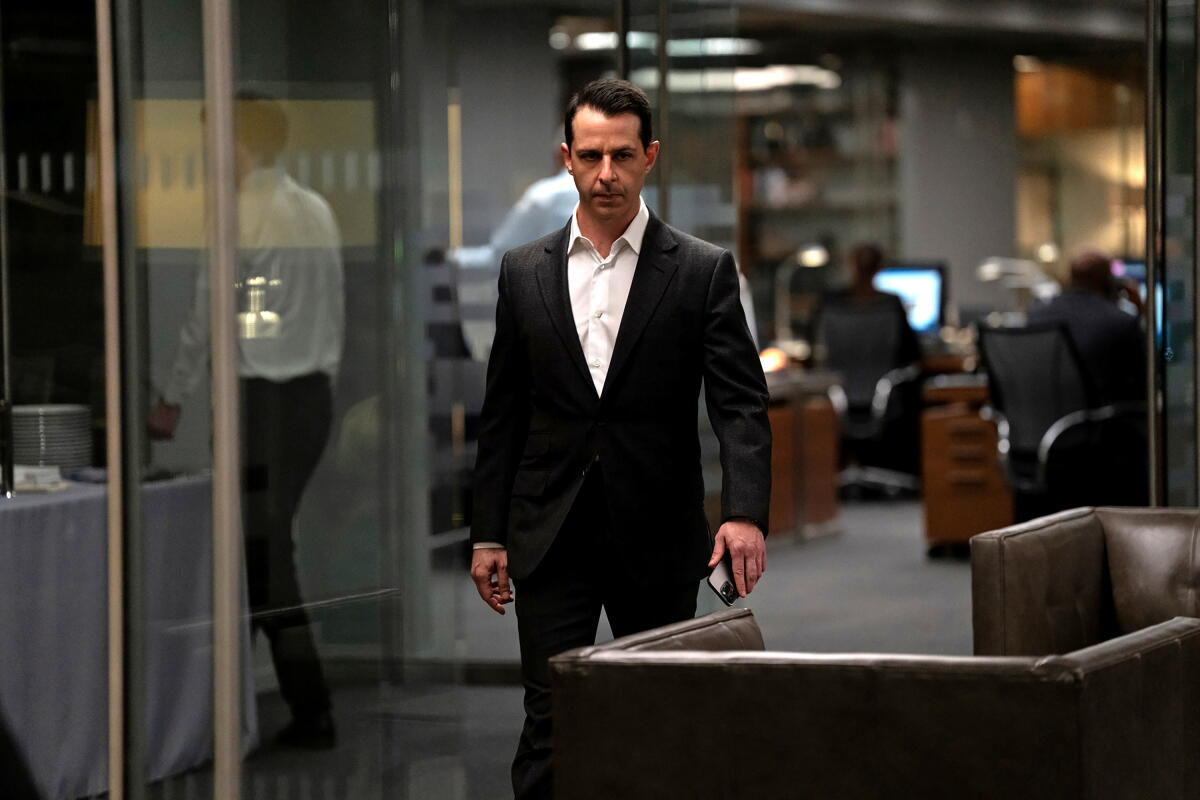
Jeremy Strong as Kendall Roy in “Succession.”
(Macall Polay / HBO)
Jeremy Strong (again)
Strong is known for his unrelenting adherence to Method acting, especially on the set of “Succession.” (“The result that Jeremy gets is always pretty tremendous,” his TV dad Cox told the New Yorker in 2021. “I just worry about what he does to himself. I worry about the crises he puts himself through in order to prepare. … It’s a particularly American disease, I think, this inability to separate yourself off while you’re doing the job.”)
This tendency held true on the set of “The Social Reckoning” too. “He showed up walking like Mark, talking like Mark,” director Aaron Sorkin told Entertainment Weekly. “I heard crew members on set call him Mark. I never heard him use his own voice until after I called ‘cut’ on his last shot.”
“I’ll be honest, I think this isn’t just the way he likes to do it,” Sorkin added. “I think it’s the only way he knows how to do it.”
Andrew Garfield as Father Sebastião Rodrigues in “Silence.”
(Kerry Brown / Paramount Pictures)
Andrew Garfield
Then there are those who argue that the Method is misunderstood — first by actors, and subsequently by public perception.
“I’m kind of bothered by this idea that ‘Method acting is f— bulls—,’” Andrew Garfield said on the “WTF With Marc Maron” podcast in 2022. “No, I don’t think you know what Method acting is if you’re calling it bulls—, or you just worked with someone who claims to be a Method actor who isn’t actually acting the Method at all. It’s also very private. I don’t want people to see the f— pipes of my toilet. I don’t want them to see how I’m making the sausage.”
Garfield employed the Method in Martin Scorsese’s 2016 historical drama “Silence,” in which he played a 17th-century Portuguese Jesuit missionary who goes to Japan. He studied Catholicism with Jesuit priest James Martin, partook in the 31-day Ignatian Spiritual Exercises and denied himself food and sex.
Al Pacino as Tony Montana in “Scarface.”
(Universal Studios / Universal Pictures)
Al Pacino
On that same podcast, Garfield praised two actors known for applying the Method well and seemingly with respect — to the craft and those around them: Al Pacino, especially in “Dog Day Afternoon,” and Robert De Niro, most notably in “The Mission.”
In “Dog Day Afternoon,” Pacino played Sonny Wortzik (based on John Wojtowicz), a first-time crook whose attempt to rob First Brooklyn Savings Bank goes awry and devolves into a hostage situation. Pacino backed out of the role three times before committing (though he later won a BAFTA Award for the performance).
Producer Martin Bregman attributed this hesitancy to Pacino’s Method acting, saying this might have been a world the actor didn’t want to explore, as “no major star had ever played a gay.”
“Scarface” drug kingpin Tony Montana is also considered the pinnacle of Pacino’s Method acting. “I’ve never been that committed to a role,” he said, also on “WTF With Marc Maron.” “I mean, I was there. I said, ‘I am this guy.’”
Robert De Niro as Travis Bickle in “Taxi Driver.”
(Columbia Pictures)
Robert De Niro
In “The Mission,” De Niro stars as Captain Rodrigo Mendoza, a mercenary, slave trader and guest of the Spanish governor of 18th-century Paraguay. Jeremy Irons co-stars as Jesuit priest Father Gabriel, who challenges Mendoza to undergo penance.
De Niro channeled real-life tension with Irons — who he didn’t want cast for the role — into on-screen animosity between the two characters.
And then there’s “Taxi Driver” — for which he got a real New York City cab license and drove 15 hours a day for a month — and “Raging Bull” — when he trained with the boxer he portrays, Jake LaMotta, for over 1,000 rounds — making him a quintessential Method actor.
Lady Gaga as Patrizia Reggiani in “House of Gucci.”
(Metro Goldwyn Mayer)
Lady Gaga
There are also counterexamples of the limitations Method acting often places on women and actors of color. (Theron told The Times in 2020 that, “I can’t do the Method thing. I did it once, for ‘Devil’s Advocate,’ and I was just exhausted. It was really hard to go to those deep, dark places because I was so tired.”)
Lady Gaga, though, lived as Italian socialite Patrizia Reggiani for a year and a half while working on “House of Gucci.” She spoke with a thick Italian accent for nine months, both on- and off-camera.
“I was either in my hotel room, living and speaking as Reggiani, or I was on set, living and speaking as her,” Gaga told British Vogue. “I remember I went out into Italy one day with a hat on to take a walk. I hadn’t taken a walk in about two months and I panicked. I thought I was on a movie set.”
Jared Leto as the Joker in “Suicide Squad.”
(Warner Bros. Pictures)
Jared Leto
Jared Leto also starred in “House of Gucci,” as Paolo Gucci, who aspires to be a designer, despite his apparent lack of talent.
“He works in a very similar fashion,” director Ridley Scott told Vulture. “Once he goes in, it’s like he’s immersed, and he doesn’t come out and breathe for air until he’s finished.”
Leto is infamous for his extreme and controversial approach to the Method. As the Joker in “Suicide Squad,” he sent bizarre “gifts” — a live rat, a dead pig, bullets, anal beads and used condoms — to co-stars Will Smith and Margot Robbie to create a dynamic of “surprise and spontaneity.”
“Leto’s Joker is the latest evidence that the prestige of method acting has dimmed,” essayist Angelica Jade Bastién wrote in the Atlantic, “thanks to the technique’s overuse by those seeking award-season glory or a reputation boost, as well as its history of being shaped by destructive ideas of masculinity.”
Joaquin Phoenix as the Joker in “Joker.”
(Niko Tavernise / Warner Bros. Pictures)
Joaquin Phoenix
The Joker seems to elicit intense psychological commitment like moths to a ghastly green flame. Joaquin Phoenix didn’t quite go Method to play him in “Joker” and “Joker: Folie à Deux,” but he did shed 52 pounds for the role.
“And, as it turns out, that then affects your psychology,” Phoenix told the Daily Beast. “You start to go mad when you lose that amount of weight in that amount of time.” (Heath Ledger walked that same fine line for “The Dark Knight.”)
For his role in “The Master,” as Freddie Quell, a World War II Navy veteran struggling to adjust to a postwar society, Phoenix forced himself to talk out of one side of his mouth by asking the dentistto fasten metal brackets to his teeth.
Jamie Foxx as Ray Charles in “Ray.”
(Nicola Goode / Universal Pictures)
Jamie Foxx
Taylor Hackford, the director of “Ray” — a biopic about Ray Charles — asked Jamie Foxx, who starred as the blind soul musician, to have his eyes glued shut. This was not Foxx’s idea (perhaps a key tenet of the Method), but he agreed to it.
“Imagine having your eyes glued shut for 14 hours a day,” Foxx told the New York Times. “That’s your jail sentence.” For the first two weeks of filming, the actor suffered panic attacks, until he eventually got used to the claustrophobic sensation.
Years later, on the set of “Django Unchained,” Foxx and co-star Leonardo DiCaprio discussed embracing Method acting to help both of them better handle the disturbing material. (DiCaprio plays the ruthless owner of a plantation where Foxx’s character’s wife is enslaved.)
Leonardo DiCaprio as Hugh Glass in “The Revenant.”
(Kimberley French / 20th Century Fox)
Leonardo DiCaprio
The film for which DiCaprio finally won an Oscar (after four previous lead actor nominations, plus one for supporting actor) was also his most Method approach. As fur trapper Hugh Glass in “The Revenant,” DiCaprio crawled inside of a prop horse carcass, ate raw bison liver (despite being a vegetarian) and endured freezing temperatures, his icy breath fogging up the camera lens.
Like Phoenix, DiCaprio might not be a traditional Method actor, but he comes quite close. In 2016, after his “Revenant” nom, director Agnieszka Holland — who directed DiCaprio in “Total Eclipse,” before he filmed “Romeo + Juliet” — reflected on this.
She said he has never been a classic American Method actor, instead relying on personal experience. “But he’s doing some trick which is pretty mysterious to everyone watching — frankly even for the director,” she told the BBC. “Look at him on screen and, for the moment of the shot, he really becomes the character.”
Montgomery Clift as George Eastman and Elizabeth Taylor as Angela Vickers in “A Place in the Sun.”
(Getty Images)
Montgomery Clift
And then there are the true, original Hollywood Method actors. Montgomery Clift, Marlon Brando and James Dean are considered to have christened the technique in the 1950s. Even Clift, though, expressed reservations about the term when asked about it — “Method acting,” as it turns out, is a contentious phrase.
Method acting began with Russian/Soviet theatermaker Konstantin Stanislavski in the 1930s. From there, acting coach and actor Lee Strasberg — who co-founded the Group Theater — largely coined “the Method” in America. Group members Stella Adler and Sanford Meisner eventually left and rejected parts of Strasberg’s technique. All three of them approached the Method slightly differently, and became prominent acting teachers.
Clift was among the first actors invited to study in the Actors Studio with Strasberg and Elia Kazan. His role as George Eastman, the poor nephew of a rich industrialist, in “A Place in the Sun” is considered a landmark Method acting performance.
Marlon Brando as Stanley Kowalski in “A Streetcar Named Desire.”
(Cineclassico / Alamy / Warner Bros. Pictures)
Marlon Brando
Clift and Brando were both contemporaries and, at times, acting rivals. But Brando was so moved by Clift’s performance in “A Place in the Sun” that he voted for him to win the 1952 Academy Award for lead actor — Clift, meanwhile, voted for Brando to win for his role as Stanley Kowalski in “A Streetcar Named Desire” the same year. (Humphrey Bogart ended up victorious for his role as Charlie Allnut in “The African Queen.”)
“A Streetcar Named Desire” — both the original 1947 Broadway production and the 1951 film adaptation — was directed by Actors Studio co-founder Kazan. Brando also starred in both versions, and, though his performance was temperamental, Kazan said: “Marlon was living on stage. … A performance miracle was in the making. What was there to do but be grateful?”
James Dean as Cal Trask and Julie Harris as Abra Bacon in “East of Eden.”
(Warner Bros. Pictures)
James Dean
James Dean only got the chance to star in three films — “East of Eden,” “Rebel Without a Cause” and “Giant” — before he died at 24, and the latter two were released after his death. Prior to all three, though, he also studied at the Actors Studio under Strasberg.
In “East of Eden,” also directed by Kazan, Dean played the wayward young man Cal Trask, who competes against his (favored) twin brother (played by Richard Davalos) for the affection of their pious father. Dean had a turbulent relationship with his own father, and his mother died when he was 9. (The Trask brothers’ mother is ostensibly dead too.)
“One of the things that made [Dean] noticed,” actor Martin Landau told PBS, “was his vulnerability. He understood a mother he didn’t have. … ‘East of Eden’ was like a chance to meet his mother again, if one accepts that.”
Ruth McCabe as Mary and Daniel Day-Lewis as Christy Brown in “My Left Foot.”
(Miramax)
Daniel Day-Lewis
Daniel Day-Lewis is perhaps the closest contemporary follower in Clift, Brando and Dean‘s footsteps. He has won a record three Academy Awards for lead actor, including in 1990 for his iconic performance as Irish writer and painter Christy Brown in “My Left Foot.” (Day-Lewis beat out Tom Cruise in “Born on the Fourth of July,” Morgan Freeman in “Driving Miss Daisy” and Robin Williams in “Dead Poets Society.”)
Brown, who was born with severe cerebral palsy, could not walk or talk, was wheelchair-bound and only had control of his left foot, which he used to paint and write. Day-Lewis refused to stand between takes, remaining in his wheelchair, and made production assistants feed him by hand. He is now renowned for his Method acting, grueling process and devotion to his roles.
Christian Bale as Trevor Reznik in “The Machinist.”
(Paramount Classics)
Christian Bale
Another Method actor who rejects the label, Christian Bale is oft-associated with extreme physical transformations and intense focus onset, including in “American Psycho” as serial killer Patrick Bateman and in “The Machinist” as sleepless industrial worker Trevor Reznik.
Bale lost more than 50 pounds in four months to play the machinist, paranoid and deluded after being unable to sleep for a year. Bale’s daily diet consisted of black coffee, an apple and a tin of tuna.
But in 2011, Bale told the Mirror: “At the end of the day, I’m faking it. Pure imagination. I never took any classes, I just go, ‘I better wing this one and make it up!’ Everybody talks about the process too much. The interesting thing about a movie is the movie.”
Austin Butler as Elvis Presley in “Elvis.”
(Warner Bros. Picture / Warner Bros. Pictures / AP)
Austin Butler
Eight months after “Elvis” hit theaters in June 2022, Austin Butler — who starred as the King of Rock and Roll — said he would finally drop Presley’s deep Southern twang. (That came after fans noticed the Elvis accent creeping in during his Golden Globes acceptance speech, “Saturday Night Live” monologue and “Jimmy Kimmel Live!” guest spot.)
“It’s funny to me because I don’t even think about it,” Butler told The Times after his Oscar nomination for the role. “I guess after three years of doing everything that I could to focus on this one goal of trying to bring life to Elvis in this film, I think that there’s certain muscular habits that must pop up.”
Once again, though, Butler wouldn’t use the term to describe himself. “I never have used the word ‘Method,’” he told the Hollywood Reporter. “I think that word gets thrown around a lot. It’s a very misunderstood thing that isn’t really what I do. … It’s more that I just like to immerse myself.”
NEW DELHI — Nana Patekar, an acclaimed Indian actor and filmmaker, died Thursday at his home in the western state of Goa. He was 75.
Patekar died of a suspected cardiac arrest, the Press Trust of India news agency reported, citing a doctor at the hospital where he was pronounced dead.
Born in 1951 in India’s western state of Maharashtra, Patekar built a career spanning nearly five decades in Hindi- and Marathi-language cinema. He was known for intense performances and roles that often portrayed complex or unconventional characters.
Patekar made his film debut in the 1978 Hindi film “Gaman” and later earned acclaim for “Parinda” and “Krantiveer.” Patekar became popular in mainstream Bollywood films, while also working in India’s “parallel cinema” movement, known for its focus on realism and social issues. He gained wider international recognition with filmmaker Mira Nair’s Oscar-nominated “Salaam Bombay!”
He won three National Film Awards, India’s highest film honors, and received the Padma Shri, one of the country’s highest civilian honors.
In 2018, during India’s #MeToo movement, a Bollywood actress accused Patekar of sexual harassment on a film set. Patekar denied the allegation. The case was among several that drew attention as women publicly spoke about sexual misconduct in India’s film industry.
Prime Minister Narendra Modi mourned Patekar’s death, praising his “intensity, individuality and unmistakable presence” as an actor.
“He brought remarkable versatility and creativity to every role and gave us characters that will be remembered for generations,” Modi wrote on X.
BECKY Hill has taken a swipe at The Voice bosses as she opened up about how she has missed out on becoming a coach on the show.
The Loose Control singer, 32, shot to fame on the first series of the ITV show back in 2012 when she was 18-years-old.
Becky Hill has revealed the reason why she won’t return to The Voice as a coachCredit: Capital FMThe singer took part in the ITV show when she was a teenager in 2012Credit: Handout
Capital FM host Jimmy Hill was interested to know if Becky would ever return to the singing programme after it was revealed Sir Tom was axed last month.
Sign up for the Showbiz newsletter
Thank you!
Jimmy asked her: “Would you ever go on The Voice as a coach?”
Becky replied: “I don’t think the show would have me on.”
Becky has become a huge pop star since starring on the showCredit: GettyBecky was coached by Jessie J (pictured with Cassius Henry, Ruth-Ann St Luce, Toni Warne, and Vince Kidd)Credit: BBC
She continued: “Because I had an interview with them a few years ago because they were having a fifth chair.
“And in the interview I said well I’m the only success story from The Voice and there is a reason for that because you have talented people on your show.
“You make a TV show out of them, and then you don’t help them out afterwards.
“I remember being 18 and having to knock on so many doors when I was that age, but there were so many people on that show in my year, that were contestants that didn’t have that experience, kind of came off the show feeling like they had a normal job.
“They were then shoved on TV in front of 12 million people and then they were just spat back out.
“And I would wonder whether me saying to The Voice I would like to help artists. I don’t just want to be employed to be like ‘When it was me, I know how you feel’.
“Because I know that that’s what they’re going to try and get me to do.
“I would love to help people out and make people into, introduce them to people.
“Never got a callback. So I don’t think it’s a case of ‘Would you do The Voice?’
“I think it’s a question of would The Voice do me?”
When Becky appeared on The Voice in 2012 the show aired on BBC One and was presented by Holly Willoughby and Reggie Yates.
The coaches were will.i.am, Sir Tom Jones, Jessie J and Danny O’Donoghue.
The series was won by Leanne Mitchell.
The Voice has now aired 14 series since then and it recently hit headlines after it was revealed that Sir Tom Jones was axed.
A source told us at the time “ITV absolutely love Sir Tom and they’re working very hard behind the scenes to make this work.”
Tonda Eckert let off with fine and reprimand but avoids ban and will continue in his role with the club.
Published On 8 Oct 20268 Oct 2026
Southampton boss Tonda Eckert has escaped major punishment for his role in the so-called “spygate” scandal after the English Football Association (FA) announced a suspended ban.
Eckert was fined 28,000 British pounds ($37,000) and given a reprimand but avoided a lengthy ban in the announcement on Wednesday, and he is free to continue in his role at the English Championship club.
The Saints were kicked out of last season’s Championship playoff final and were docked four points in the current campaign after admitting to three breaches of English Football League (EFL) regulations following being caught snooping on semifinal opponents Middlesbrough and two other teams.
An EFL independent disciplinary commission ruled in May that Eckert had “specifically authorised” the spying, throwing his future at the English second-tier club into doubt.
The 33-year-old accepted full responsibility and was charged by the FA with misconduct.
The German coach attended an FA hearing at the start of the current international break. The outcome means he can continue in his role against rivals Portsmouth on Sunday.
“Tonda Eckert subsequently admitted the charges, and an independent regulatory commission imposed a six-week suspension from all football and football-related activity, which is suspended until the end of the 2027-28 season, a £28,000 fine and a reprimand following a hearing,” the FA said in a statement on Wednesday.
“The suspended sanction will come into effect in the event he is found to have committed a breach of rules or regulations by requesting, authorising, taking, or using information from any observation of the training of another club, in whatever guise that observation may take.”
Southampton said in a statement that this brings a “regrettable period of our history to a conclusion”.
The club, which sits 13th in the Championship, said that “measures have been put in place to ensure that such errors in judgement never happen again at our club”.
Southampton owner Dragan Solak said, “I’m pleased that the independent panel has come to a decision and that we have an outcome.
“We have already suffered enough, and we appreciate the panel’s recognition of that.
“We are confident the manager has learned from this matter, and a suspended sentence allows him to continue in his role.”
Eckert was appointed permanent Southampton boss in December 2025, leading the club to fourth spot in the Championship table after a poor start to the season.
SAN FRANCISCO — This was never going to be a game for the Lakers to remember. But with nearly half of the roster sidelined because of injuries or resting, Adou Thiero at least tried to inject some life into a sleepy preseason back-to-back.
Thiero’s towering one-handed dunk over two Golden State defenders provided a highlight in the Lakers’ otherwise forgettable 124-98 preseason loss to the Warriors at Chase Center on Tuesday. The Lakers leaned on their depth to get through their second short-handed preseason game in as many nights.
Guard Quentin Grimes, the only player who started in the second consecutive game for the Lakers, had 12 points and three assists. Forward Sandro Mamukelashvili started at center and had 15 points and a trio of three-pointers. Thiero, getting a rare starting moment, scored seven points and grabbed four rebounds while Bronny James had four points and five assists in a starting role.
Star guard Luka Doncic sat out after scoring 21 points in one half Monday against the Sacramento Kings. After setting the tone defensively against the Kings, forwards Ziaire Williams and Matisse Thybulle watched from the sideline Tuesday. The Lakers were also without center Walker Kessler (finger), guards Austin Reaves (ankle) and Collin Sexton (lower body) and two-way forward Arthur Kaluma (lower body), who all missed their second consecutive preseason game.
Thiero has been prepared for this type of opportunity. The second-year forward is trying to take advantage of his first true NBA preseason after knee injuries marred his rookie season. He played in his first summer league games, showing incremental progress during games in San Francisco and Las Vegas.
Thiero started the summer moving too quickly through games, crashing into the lane and flying recklessly toward the rim. He even missed time from a minor wrist injury suffered during a fall. But as the summer progressed, he settled into the pace of the game. During a Las Vegas Summer League game, Thiero flashed his potential with 20 points, four rebounds, four assists, three steals and two blocks with zero turnovers in 30 minutes.
“I feel like that just came with playing more, and just understanding what I was supposed to do, understanding my role,” Thiero said this week of his progress during the summer. “I feel like my role during summer league is very different compared to my role during the season. I was on-ball more. Even creating the offense in summer league. And I didn’t have much experience with that at the time, but as summer league kept going on, I got more comfortable with it and realizing when to speed up and everything.”
Thiero is fighting for minutes in a deep wing group led by Williams and Thybulle. The Lakers have stocked their team with versatile perimeter defenders to help complement their offensive-minded backcourt of Doncic and Reaves. Thiero, whom Reaves described as “a freak-of-nature” athlete, could add a unique quality to the rotation.
“Our ceiling rises if he’s able to [contribute defensively] and be an impactful offensive player with crashing, with cutting, with touching the paint, playing off two feet,” coach JJ Redick said before Monday’s preseason game. “I’ve seen a lot of growth there from him over the last six, seven weeks. That’s exciting.”
Call the Midwife star Natalie Quarry has taken on a brand new role away from the BBC period drama
A Call the Midwife star has been cast in an Agatha Christie Drama(Image: BBC / Neal Street Productions / Andrea southam)
A Call the Midwife star is set to appear in another period drama.
The BBC has confirmed Natalie Quarry, who played Rosalind Clifford in beloved series, will star in the forthcoming six-part series, Hercule.
The exciting drama, which has commenced filming in Liverpool, will centre around three of Agatha Christie’s early stories, while also introducing Hercule Poirot to future friends and allies and one particular nemesis.
The show, from Mammoth Screen and Agatha Christie Limited, has been described as “an intimate study of Hercule Poirot, the man, and an epic portrait of Britain between the wars.”
Actor Edward Bluemel takes on the lead role of Hercule Poirot, and is best known for his roles in Killing Eve and A Discovery of Witches. He is the youngest to take on the role created by Agatha Christie back in 1916.
Also starring in the drama is Death in Paradise star Ralf Little who joins the star-studded cast alongside Emily in Paris star Paul Forman, It’s a Sin star Omari Douglas, The Beauty’s Jessica Alexander, and The Souvenir’s Honor Swinton Byrne.
Widely regarded as one of the greatest detectives in fiction, Hercule Poirot has sold over 750 million copies, captivating readers and audiences for more than a century.
Sharing excitement for the new Agatha Christie series, James Prichard, the great-grandson of the famous author, and executive producer for Agatha Christie Limited, said: “My father had the privilege of working with David Suchet for nearly 25 years, and I now have the good fortune of being able to share my great-grandmother’s brilliant stories with a new generation of viewers.”
He added: “Edward Bluemel is an extremely talented performer and will make a great addition to the long line of actors that have played this celebrated character, aided and abetted by Benji Walters’ thoughtful scripts. I cannot wait to see Edward on screen as Hercule Poirot.”
Who is Natalie Quarry?
Actress Natalie Quarry joined the Call the Midwife cast in its 13th season as a student midwife, Rosalind Clifford, and has since become a fully-fledged practitioner among the nuns and nurses at Nonnatus House.
In the most recent series, which concluded earlier this year, she became involved with the Women’s Liberation Movement and found love with local social worker Cyril Robinson (Zephryn Taitte), but their relationship has been a topic of discussion among the locals.
Away from the BBC period drama, Natalie has also starred in Doctors, Atlanta, and Blitz.
Bronny James laughed at the comment, because he found it funny to have a reporter tell him he’s tied for the third-longest tenure with the Lakers.
He is entering his third season, tied with Dalton Knecht and right behind Austin Reaves (entering his sixth season) and Jarred Vanderbilt (going on four-plus).
James is a veteran now and is looking to find his role with the Lakers.
“Crazy, right? AR keeps calling me a vet,” James said, chuckling. “I’m like, ‘I guess.’”
James is a naturally reserved person. But as a point guard, he admits his job is to speak up more, to help organize the offense, to make sure some of his nine new teammates understand what Lakers coach JJ Redick expects.
For his first two years with the Lakers, James didn’t say much because his dad, LeBron James, was the leader and powerful voice on the team.
As a 21-year-old, Bronny James leads in his own way, just as Redick wants all his players to do.
“Definitely coming in every day trying to get better and better myself as a point guard,” James said. “Just taking those steps, encouraging my guys, getting them in the right spots and stuff like that. Making sure we’re organized.
“For sure, that’s what a point guard is. You’ve got to be talking to your guys, got to be helping people get to where they need to be. I take pride in that, for sure. If anyone goes out — God forbid anyone goes out — I’ve got to be the guy to step up and be the primary ballhandler, and get my guys in the right spots. So, yeah, I’ve definitely got to lock in on that.”
James played in 42 regular-season games last season, averaging 2.9 points and shooting 40.9% from the field.
Though he didn’t put up big numbers in the playoffs, James was solid in his role, especially on defense. He played in eight postseason games, averaging 1.5 points and shooting 50% from the field.
This current Lakers team has depth and talent throughout the lineup.
James knows it’s going to take a lot of work to find a role on the team.
“Continuing to come in the gym and stay after practice, just working, competing, playing, just trying to make my mark,” James said. “I think just building on defensive instinct, how I was in the playoffs, picking up full court. They’ve been emphasizing that so I’ve been one of the guys that is picking up full court every possession, every time we get a bucket, just picking up full court.
“And then just being a primary ballhandler for my team. We’re playing against Luka [Doncic] and AR today, so me, Q[uentin Grimes], or J[aden] Hardy, guys were on the team, being primary ballhandlers, giving us confidence.”
Being a top-notched defender is what James strives to be for the Lakers.
Every day during these training camp sessions, James gets tested when he has to defend Doncic and Reaves, two of the NBA’s most dynamic guards.
But that can only help James.
“For sure, it’s going to make me better on the defensive end just picking them up full court,” James said. “I’m annoyed by them, they get annoyed with me in practice. Just continuing to do that will make me better for sure.”
James has worked on his jump shot. He looks more defined, a sign that he has worked on his body as well.
“Just continuing to come in and work on it. The jumper, I’ve been in the gym all summer working on fluidity and the speed of my release, stuff like that, moving,” James said. “Tied into that, just running a lot. I’m the same weight, 215 or 220-ish, but still slim so I can move fast. Just getting in the gym every day and continuing to keep a routine.”
The Lakers have had four days of practice, all of them intense, all of them full of energy.
They will play their first preseason games Monday at Sacramento and then Tuesday at Golden State.
That will give James and the rest of his teammates a chance to carve out roles.
“I definitely think it’s still a process. It’s definitely going to take a few games to get everyone situated,” James said. “We’re trying to figure out our own roles and those things, but also just trying to experiment with lineups. I’ve been here for a minute now, so I know kind of what my role is, but definitely for the new guys.”
“We thank Tony for his contributions over the past nine years and wish him the best moving forward,” CBS Sports said in a statement.
J.J. Watt, who has been filling in for Romo as the color commentator on CBS Sports’ lead NFL broadcast team, will continue in the role for the remainder of the season. Romo, a former four-time Pro Bowl quarterback for the Dallas Cowboys, has been booth partners with play-by-play announcer Jim Nantz since 2017.
“I’m proud of what I accomplished at CBS Sports over the last nine years,” Romo said in a statement released soon after CBS announced the move. “I approached my role as a game analyst the way I’ve approached everything in my life — with a desire to win and be the best that I can be.
“I’m going to use this time to take a break,” he added, “something I’ve never done before, and focus on my health and my family before moving on to my next opportunity.”
On Sept. 1, Romo entered a a no-contest plea to the OWI charge from his July 23 arrest in Wisconsin. A Milwaukee County judge found Romo guilty of the charge and took away his driving privileges for six months. Romo also was ordered to pay $834, and have an ignition interlock device installed on his vehicles for a minimum of one year.
Afterward, Romo said in a statement that multiple back injuries from his playing career led to “a dependence on pain medication, and my efforts to get off those medications led to an over-reliance on alcohol.”
“None of this is an excuse,” he wrote. “These are my failures, and I take responsibility for them.”
Derrin Horton’s first job was in public address announcing. His first passion was the Lakers. The longtime sports broadcaster’s new job is the marriage of both.
Horton will take over the mic as the Lakers’ home public-address announcer, the team announced Thursday, stepping into the role for legendary Lakers announcer Lawrence Tanter, who died last week.
“There’s no way you can fill his shoes,” Horton said in an interview with local reporters. “And so you just come here with a passion and a goal to be informative and entertaining and be a part of Showtime.”
Tanter, who provided the smooth, baritone soundtrack for Lakers home games for 43 seasons, suffered a stroke on March 17 and missed the final six regular-season home games and the playoffs last season. Tanter announced his retirement in June, transitioning to a game-day advisory role with the team. Horton, a former KTLA broadcaster who has worked as an anchor, reporter, host, play-by-play announcer and voice actor, reached out to the team about the opportunity.
Horton showed up to his audition and instinctively tried to emulate Tanter’s signature baritone voice. He wanted to sound like what he thought the classic PA announcers should sound like. Lakers president and chief business officer Lon Rosen stopped the tryout in mid-sentence.
“He said, ‘Hey! Knock it off! I want to hear your voice,’” Horton said. “And so I just was myself.”
Horton’s new role is a return to his roots. Before carving out a career in sports broadcasting and voice acting, Horton was just a teenaged high school basketball reject. Not good enough to play on the team, he found his first job in communications as the PA announcer for Holy Cross High in Queens. The New York City-raised Syracuse alumnus has been enamored with the Lakers since the Showtime Era. He doesn’t think enthusiasm will be a problem; Horton considers himself a diehard Lakers fan.
And he knows what Lakers fans want at a game.
“They’re there to see the Lakers,” Horton said. “So what I do is just try to enhance the experience like a little salt and pepper. Season it up a little bit.”
The Lakers have their first home preseason game Oct. 8 against the Sacramento Kings. Horton said he is focused on informing fans and mastering the fundamentals. He has been working on player names and practiced at several Sparks games to understand the rhythm of professional basketball. The broadcaster said he favors understated and professional PA announcing. The style that made Tanter famous.
Horton considered the Lakers announcing legend a friend. Tanter even recorded an introduction for Horton’s wedding, announcing the newlyweds as they entered the reception: “‘For the very first time,’” Horton said, dropping his voice low like Tanter’s “‘Mr. Derrin and Elise Horton!’”
Horton wished he could have spoken to Tanter ahead of the first game.
“We’re going to miss him,” Horton said, “and I hope I do him proud.”
Scouting department change
The Lakers hired Pooh Jeter as director of pro scouting, The Times confirmed Thursday. The L.A. native was the Portland Trail Blazers’ player development coach and the assistant general manager of the team’s G League affiliate Rip City Remix.
After an ownership change in 2025, the Lakers have worked to build out their front office, following the lead of the Dodgers. After adding more than 15 people to the front office, president of basketball operations Rob Pelinka said, the Lakers were still focused on adding more scouts.
Staff writer Broderick Turner contributed to this report.
CNN Chairman and Chief Executive Mark Thompson could remain in his role at the news network after Paramount completes its deal to acquire the news network’s parent company, Warner Bros. Discovery.
Thompson, 69, is said to be in early stages of a discussions with Paramount Skydance Chief Executive David Ellison about continuing in the job he has held since April 2023, according to two people familiar with the matter who were not authorized to discuss it publicly.
The Wall Street Journal was first to report Thursday that Thompson has been approached by Ellison about staying with the network. A representative for Paramount declined to comment.
Retaining Thompson in his role would provide short-term relief to CNN staffers who are concerned about the change in ownership. As Paramount pursued its $111-million deal to acquire Warner Bros. Discovery — which is moving forward following a judge’s decision to settle an antitrust suit filed by state attorneys general who wanted to block the deal — the Ellison family have reportedly had discussions with President Trump about altering the network’s coverage, which he has often deemed as unfair.
As part of the settlement, Paramount agreed to the formation of an editorial oversight board that will monitor adherence to editorial independence from its owners and shareholders. The editorial board is part of an agreement to end the states’ antitrust fight that threatened to delay the completion of the deal for months.
Keeping Thompson at CNN raises questions of how CBS News Editor-in-chief Bari Weiss will be integrated into the new company.
Weiss, who joined the storied news division after Paramount acquired her contrarian digital news site the Free Press last year, has made major changes at “CBS Evening News” and the top rated newsmagazine “60 Minutes,” with no audience gains to show for it.
CNN insiders have been skeptical over how Weiss could take over the vastly larger and more profitable news organization based on her CBS track record so far.
CNN and CBS News are expected to consolidate some of their operations, such as its overseas bureaus. But there are obstacles to a rapid consolidation, as many CBS News employees work under union contracts. Most of CNN is not unionized.
But if Thompson remains, its likely he we will have the task of reducing costs, as the traditional TV audience that provides the bulk of revenues for both CNN and CBS News continues to shrink.
Thompson has been behind a major effort to generate more revenue from CNN’s digital operations, which now include a subscription streaming service that makes the channel available without a cable or satellite TV package. He oversaw the New York Times’ successful transformation into a dominant digital news product during his run as president and chief executive from 2012 to 2020.
The Paramount-Warner deal will close soon after a judge signed a settlement that ended the antitrust lawsuit brought by Calif. Atty. General Rob Bonta and 11 other attorneys general. The detente , however, has not cooled tensions between CNN and the White House.
CNN was scheduled to provide press pool coverage of Trump’s trip to Texas and Oklahoma on Thursday. But the White House removed the network from the pool, despite a judge’s order last week to block the administration’s attempt to ban access for some media outlets.
Last week, CNN, MS NOW and Politico were banned from White House grounds. Trump cited the outlets’ ongoing negative coverage of him as the reason for the ban. The administration later tried to argue in court that their coverage was a threat to national security.
SYDNEY Sweeney fans have been left lost for words after realising that she has also appeared in a late 2000s teen drama.
The actress, 29, is arguably best known for her roles in Euphoria and White Lotus.
The actress, 29, is arguably best known for her roles in Euphoria and White LotusCredit: Shutterstock EditorialThe actress starred in 90201 in the 2000sCredit: Paramount+
But in 2010 she appeared on our screens during the sixth episode of the third season of 90201.
Although it was only a small part, in the scene, her character can be seen approaching a shirtless Liam (Matt Latner) and asks him for help.
Sign up for the Showbiz newsletter
Thank you!
Her character tells him: “We’d like to look at those jeans but they are too high up for us to reach.”
As he reaches for the trousers, her character cheekily touches his bum and she starts giggling to her friends.
The star appeared in a scene with Matt LatnerCredit: Paramount+Sydney has played Cassie Howard in Euphoria since 2019Credit: HBOSydney has appeared in various other TV shows and films since thenCredit: GettyShe owns her own lingerie brandCredit: Instagram/Syrn
The episode is called How Much Is That Liam in the Window.
One fan shared the scene on TikTok and said: “Sydney Sweeney before she was Sydney Sweeney.”
Many rushed to the comments section to share their shock over the fact they never noticed her before on the show.
One said: “I had no idea!”
Another confessed: “I didn’t recognise her so much she’s dressed.”
A third chimed in: “Omg I just watched this episode and didn’t even recognise her.”
90210 aired on The CT between 2008 and 2013.
It starred the likes of Rob Estes, Shenae Grimes, Jessica Stroup, Lori Loughlin, Michael Steger, Jessica Lowndes, Matt Lanter, Trevor Donovan, Gillian Zinser, Tristan Wilds, Tristan Wilds, Dustin Milligan and Ryan Eggold.
Sydney has appeared in a number of films over the years including Anyone but You, Spiders 3D, Clementine, Along Came the Devil, Eden and The Housemaid.
Meanwhile she’s landed telly roles including Grey’s Anatomy, Pretty Little Liars, Robot Chicken, Family Guy, Kickin’ It and Criminal Minds.
The United States-led Board of Peace (BoP) has said the United Nations agency for Palestinian refugees (UNRWA) will have no role in Gaza – echoing a longstanding Israeli demand to sideline the organisation considered a lifeline for millions of Palestinians.
The board, which has been tasked with overseeing the “ceasefire” and Gaza’s reconstruction, said on Friday it would work only with partners it deems reliable and who it believes can meet the needs of Gaza’s population – a standard it says UNRWA does not meet.
Recommended Stories
list of 3 itemsend of list
The move comes as the BoP unveiled a multibillion-dollar plan on Wednesday aimed at beginning Gaza’s reconstruction, nearly a year after a so-called “ceasefire” came into effect in the devastated Palestinian territory.
The plan, presented on the sidelines of the UN General Assembly (UNGA), comes as key elements of the “ceasefire” remain stalled, including the withdrawal of Israeli forces and the disarmament of Hamas.
UNRWA was established in 1949 to cater to tens of thousands of Palestinians displaced from their homes by Jewish militias from areas that currently form part of Israel.
BoP’s stance on UNRWA comes as Israel’s genocide in the coastal enclave continues, with Palestinians facing nonstop attacks, severe restrictions on humanitarian aid and stalled reconstruction plans.
So what has BoP said about UNRWA, and does it keep toeing the Israeli line on the future of Gaza?
What did the Board of Peace say?
The BoP unveiled a 66-project reconstruction blueprint on the sidelines of the UNGA, with $2.4bn proposed for projects aimed at beginning Gaza’s recovery.
UNRWA was left off the list of UN agencies the board identified as partners.
“The Board of Peace’s policy as it relates to UNRWA’s involvement in Gaza is unchanged,” the BoP said in a post on X on Friday.
“We will only work with trusted partners who will deliver for the people of Gaza and contribute to a deradicalised Strip. UNRWA fails on those litmus tests.”
However, a BoP official, speaking to The Associated Press news agency on condition of anonymity, confirmed that board members had met UNRWA officials several times.
The official said the agency’s programmes could continue if they served Gaza’s residents well, but maintained that “UNRWA’s days are over”.
The BoP, which US President Donald Trump launched earlier this year, was conceived to oversee the rebuilding of Gaza after nearly three years of Israel’s genocidal war on the Strip.
What has UNRWA said?
In an indirect response, UNRWA acting Commissioner-General Christian Saunders said on Friday in Gaza, “UNRWA remains an institution of considerable humanitarian and strategic value, with capabilities and expertise that are difficult to replicate today.”
“To disregard these capabilities at a moment of such profound need is neither logical nor responsible,” Saunders said in a statement.
Former UNRWA chief Philippe Lazzarini on Thursday warned that removing the agency would have a “devastating” effect on Palestinians.
“They want to get rid of the agency, but on the other hand they know that if you get completely rid of the agency today, it might have a further … devastating impact on the population,” Lazzarini told AP on Friday.
In a separate statement on X, Lazzarini said, “grandiose plans are what the Board of Peace does best”, noting widespread suffering across Gaza amid Israel’s ongoing genocide.
The agency has about 11,000 Palestinian employees in Gaza and remains heavily involved in healthcare, education, water and sanitation services. Its exclusion is particularly significant given the scale of displacement and the continuing restrictions on aid entering Gaza.
UNRWA has for decades provided aid and education services to Palestinians in Gaza, occupied East Jerusalem and the West Bank as well as Jordan, Syria and Lebanon – the neighbouring countries where the Palestinian refugees have been living.
Palestinians see the agency as safeguarding their right of return to their homeland, while Israel wants it dismantled.
Palestinians receive aid distributed by UNRWA, in Nusairat refugee camp, Gaza [File: Abdel Kareem Hana/AP photo]
What has been Hamas’ response?
Hamas accused the BoP of adopting Israel’s position.
Spokesperson Hazem Qassem on Saturday called the decision to exclude UNRWA “a complete alignment with the Zionist [Israeli] position”, saying it was aimed at ending the agency’s operations, preventing it from delivering aid and undermining Palestinian refugees’ right of return.
Qassem said it was “strange for the peace council to adopt this hostile stance towards UNRWA while simultaneously failing to provide aid to Gaza or compel the occupation to abide by the ceasefire agreement and halt the daily killings of Palestinians in the Strip”.
Does the Board of Peace toe the Israeli line?
Experts say the workings and demands of the BoP align closely with Israel’s vision of the Gaza Strip and the Palestinians.
UNRWA
Israel has for years sought to remove UNRWA from Gaza, accusing the agency of being infiltrated by Hamas.
The International Court of Justice, in an advisory opinion in October, said allegations that “a significant part of UNRWA’s employees are ‘members of Hamas … or other terrorist factions’” had not been substantiated.
The BoP’s position strengthens the Israeli efforts to dismantle the UN agency.
Hamas disarmament
Hamas and other Palestinian factions agreed in July to a roadmap under which weapons would be surrendered in stages as Israeli forces gradually withdrew. The two processes were explicitly linked.
But following an August meeting between Nickolay Mladenov, the BoP’s director-general, and Israeli Prime Minister Benjamin Netanyahu, the board said Israeli forces would not withdraw beyond the “Yellow Line” until Hamas’s decommissioning was complete, including “light weapons, heavy weapons, and the tunnels alike”.
Hamas maintains that it will not implement its obligations unless Israel fulfils its own.
Israel currently occupies more than 60 percent of Gaza while most of the territory’s 2.3 million people remain displaced.
Reconstruction
Article 17 of the BoP plan calls for “temporary reconstruction” beginning in areas designated free of Hamas control, including humanitarian compounds for unarmed civilians.
The proposed system would direct reconstruction, aid and shelter towards areas outside Hamas’s control while Israeli forces remain behind the so-called “Yellow Line”.
However, Israel has refused to allow the Palestinian technocratic committee into Gaza, open crossings or begin reconstruction until Hamas is completely disarmed.
After unveiling the reconstruction plan on the sidelines of the UNGA, BoP high representative Mladenov said once again the proposed plan depends on Hamas’s disarmament.
Displaced Palestinians live in a school run by UNRWA on Monday, June 23, 2025. Hundreds of UNRWA schools were destroyed or damaged in Israeli attacks [File: Jehad Alshrafi/AP Photo]
What is the situation in Gaza?
Almost a year after the October 2025 ceasefire, reconstruction has yet to begin on any meaningful scale and Israeli forces continue to occupy large parts of the Strip.
At least 1,451 Palestinians have been killed and 4,953 wounded in Israeli attacks since the “ceasefire” began in October 2025, according to Gaza’s Ministry of Health.
The healthcare system is on the verge of “total collapse”, the ministry said last week, while shortages of fuel, medical supplies and spare parts have disrupted hospitals, water and sanitation services.
The scale of destruction is also immense. More than half of Gaza’s hospitals and clinics remain nonfunctional, less than 1.5 percent of cropland is accessible and undamaged, and reconstruction needs have reached an estimated $71.5bn.
Nearly 84 percent of Gaza’s population – more than 1.76 million people – are living in displacement sites or damaged and inadequate shelters, the UN has said.
Palestinian children gather in the backyard of an UNRWA school in Sidon, Lebanon, on September 12, 2023 [File: Mohammed Zaatari/AP Photo]