Lots of people travel with easyJet, but there’s a certain rule passengers need to follow. If they don’t stick to it, they could end up having to pay more money
easyJet passengers should follow the rule (stock image)(Image: Peter Charlesworth, LightRocket via Getty Images)
If you’re set to travel soon, and you’re flying with easyJet, there are some crucial travel tips you need to come to terms with before you depart. This is information you don’t want to ignore, as failing to follow the guidelines could see you having to cough up extra cash during your journey.
Everyone wants to squeeze as much value as possible out of their holiday budget, so it pays to know exactly what baggage is included before you book. Many travellers tend to focus on the headline ticket price, but baggage fees can swiftly add a considerable sum to the total cost of a trip.
According to Ricky Durrance, travel expert at package holiday specialists Teletext Holidays, getting to grips with easyJet’s baggage rules can save you a tidy sum and help you make the most of your baggage allowance. The good news is that every easyJet passenger is allowed to bring one small bag on board without any extra charge.
However, that’s where things get complicated as, if your bag won’t fit beneath the seat in front of you, you’ll probably need to pay an additional fee.
Overhead locker space is restricted and frequently comes at a price, so it’s worth weighing up whether a checked bag represents better value. The easyJet website states: “Our low fares include one small cabin bag free of charge.
“Your bag can weigh up to 15kg, but we do ask that you’re able to lift and carry it yourself. You can purchase additional bags online when you make your booking or any time before you travel, via Manage bookings on our website or mobile app.
“Buying online is always cheaper than at the airport. Fees vary depending on the route selected, flight and time of booking.”
However, it’s crucial to remember that, if you wish to pay for a large cabin bag, charges can be steeper during busy travel periods. For couples and mates travelling together, it’s worth crunching the numbers to determine whether sharing a checked suitcase makes more financial sense before you book.
Things you may be overlooking
Managing your baggage allowance can be a right faff, and it becomes even trickier when your suitcase eats up a substantial chunk of the weight limit. easyJet’s large cabin bag allowance permits up to 15kg.
However, many hard-shell cabin cases tip the scales at between 3.5kg and 4.5kg when empty, meaning the usable space for clothes and other belongings can end up being considerably less than anticipated.
You may find yourself with as little as 10.5kg available for packing, which can disappear remarkably quickly. In contrast, a shared 23kg checked bag using a similarly weighted case still leaves upwards of 18.5kg free for packing, which can make a world of difference.
Ricky added: “It’s also worth knowing that booking your baggage allowance sooner rather than later can help save you money.”
easyJet’s baggage fees tend to be cheaper when added at the point of booking rather than closer to the departure date. For those booking a package holiday rather than directly through the airline, it’s worth checking this as early as possible, ideally at the time of booking.
When airlines levy extra charges for every kilogram and each bag, careful planning of your luggage before you travel is absolutely crucial, according to Ricky.
The Trump administration finalized a rollback of the Endangered Species Act on Friday, paving the way for drilling, mining and other human development across protected wildlife habitats.
The move redefines “harm” under the Endangered Species Act, the landmark conservation law that protects threatened and endangered plants and animals. For years, “harm” meant actions that injure or kill wildlife, as well as actions that destroy protected habitats.
Under the new rule, destroying those habitats is no longer illegal.
The decision aligns with the Trump administration’s ongoing effort to slash regulations in the name of economic growth. Interior Secretary Doug Burgum, whose department finalized the move, said the prior definition of harm “interfered with private property rights” and “turned routine activity into a regulatory trap.”
Environmental groups called the decision a disaster, saying it puts protected species on a path to extinction.
The move seems especially poised to hit California, the most biodiverse state in the country, where more than 6,700 species are spread across mountains, forests, deserts and oceans. Of the roughly 2,300 species protected by the Endangered Species Act, nearly 300 are found in California.
These species include amphibians such as tiger salamanders and Yosemite toads; birds such as California condors and northern spotted owls; fish such as Little Kern golden trout and Santa Ana suckers; insects such as Franklin’s bumble bees and Mission blue butterflies; mammals such as gray wolves and Santa Catalina Island foxes; and reptiles such as desert tortoises and green sea turtles.
The Endangered Species Act is widely credited with saving the California condor, which almost went extinct in the 1980s due to several factors, including habitat destruction. Thanks to a recovery program under the act, the condor population has since soared to several hundred. But under the new law, the logging and human development that led to their near demise is now allowed.
A handful of California species recoveries have been championed as success stories under the Endangered Species Act, including southern sea otters, peregrine falcons, humpback whales, bald eagles and green sea turtles.
According to a report from the Center for Biological Diversity, the El Segundo blue butterfly lost 90% of its oceanside habitat due to the construction of LAX and beachfront housing developments. The population dwindled to about 1,000 butterflies in the 1970s, when it was named an endangered species. Now, the population has climbed above 120,000.
In California, the rollback could pave the way for more farming, mining, logging and drilling in areas that were once forbidden due to the potential for wildlife habitat destruction. A report from Earthjustice estimates that expanded oil drilling in California could threaten five marine species including humpback whales, sea otters, leatherback sea turtles, marbled murrelets and wild salmon.
Several environmental groups are planning legal challenges to the ruling.
“For the first time ever, a presidential administration now claims that species protected by the Endangered Species Act shouldn’t be safe from habitat modification that destroys where they live, raise their young, or search for food,” Kristen Boyles, attorney for the environmental nonprofit Earthjustice, said in a statement. “Let’s be clear: there is no support for the Trump administration’s rule — no scientific support, no legal support, no public support. We will see the Trump administration in court.”
Ben Greuel, wildlife campaign manager at the Sierra Club, called the decision “an unlawful attempt to open the door for corporate polluters to degrade vitally important habitats.”
“For more than four decades, the definition of ‘harm’ recognized a simple truth: if you destroy the places wildlife need to survive, you are putting species on a path to extinction,” Greuel said in a statement.
It’s not the first time Trump has taken aim at California environmental regulation.
Earlier this year, Gov. Gavin Newsom, along with the governors of Washington and Oregon, submitted a formal opposition to the Trump administration’s plans to expand drilling off the Pacific Coast, with Newsom saying it leads to “dead wildlife.” In June, the Trump administration ordered a review of the California Coastal Commission, claiming the state’s “environmental extremism” obstructs spaceport development and offshore oil production.
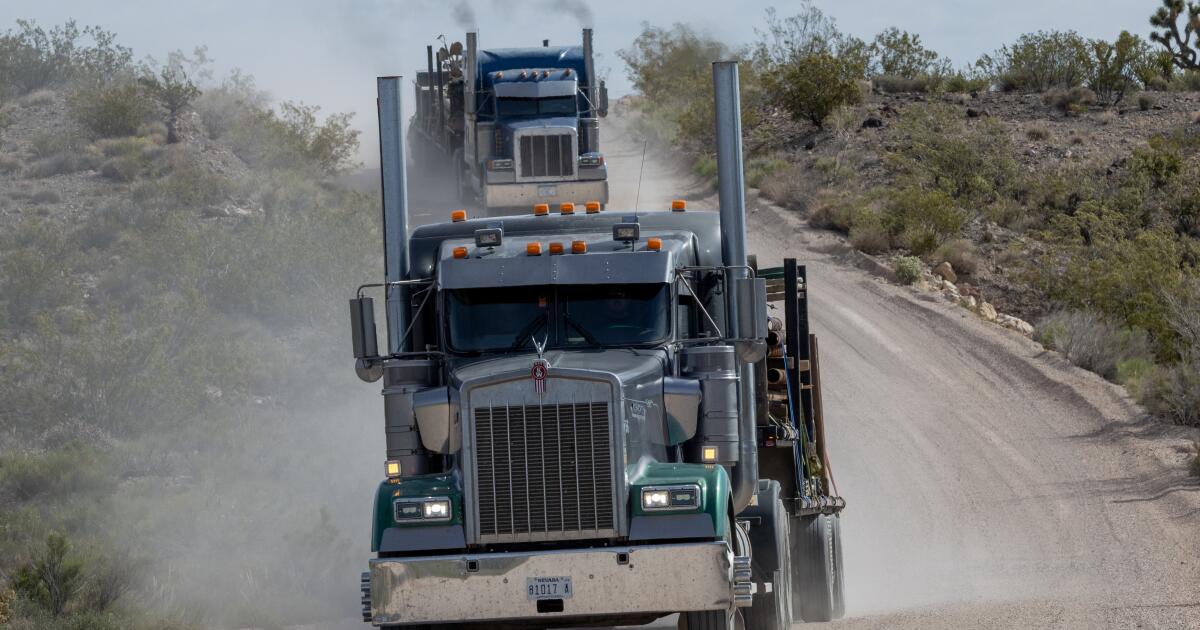
A day before the Endangered Species Act decision, the Trump administration signed off on a controversial plan to use an old oil pipeline to pump water from the Mojave Desert into cities. Environmental groups said the plan threatens springs and local wildlife, since six pumps would need to be built in desert tortoise habitats.
Regional health agency warns of increased risk of a disease outbreak after Venezuela’s twin earthquakes
Published On 9 Jul 20269 Jul 2026
Venezuela’s authorities say the death toll from twin earthquakes last month has risen to 3,889, as regional health agencies warn of an increased risk of disease.
Lawmaker Jorge Rodrigues said on Thursday at least 16,740 people had been injured and 17,907 displaced.
Recommended Stories
list of 3 itemsend of list
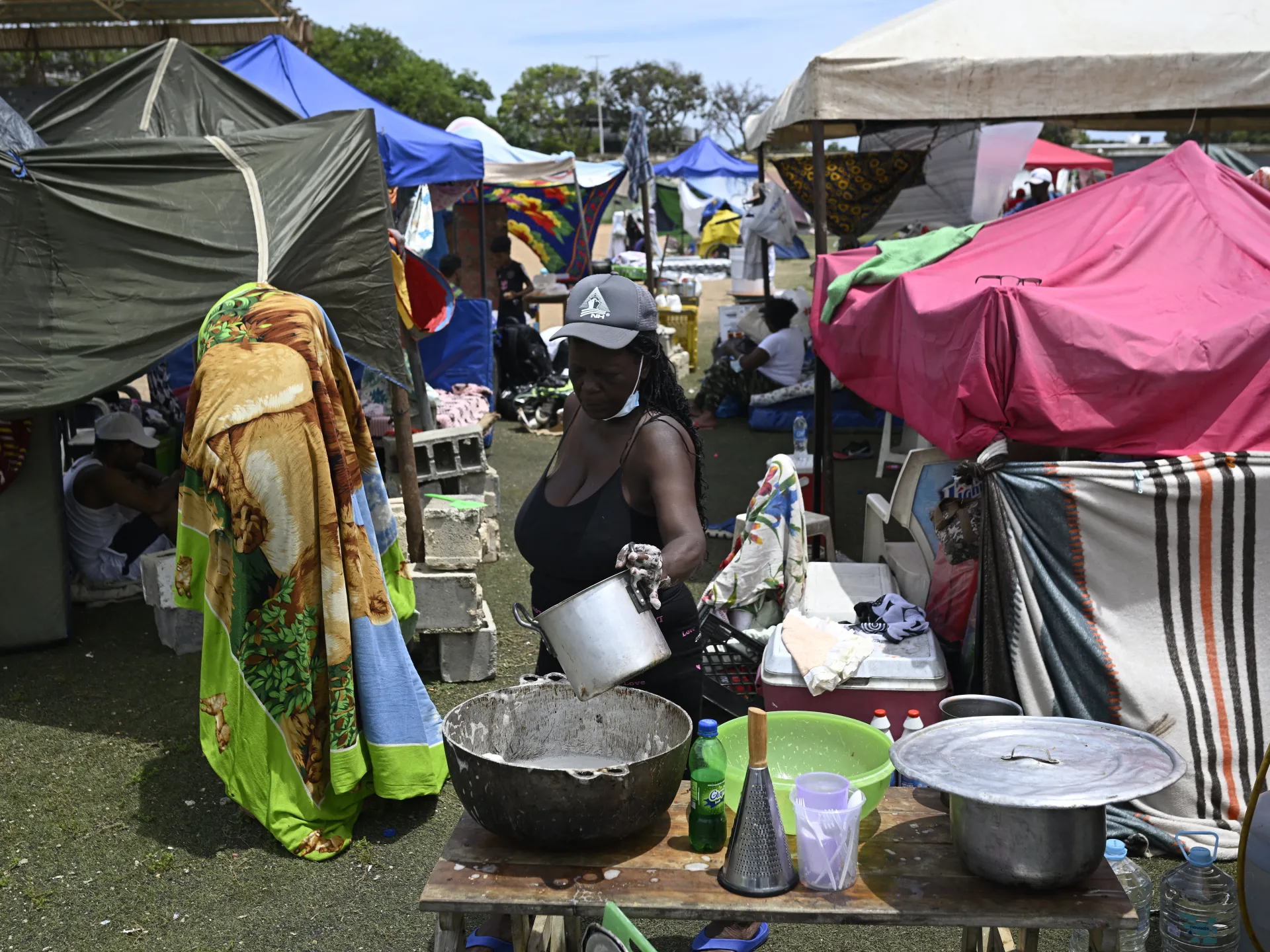
The Pan American Health Organization (PAHO) warned that displaced people across Venezuela’s northern coast, the area most affected by the tremors, are at risk of disease because of limited access to clean water and regular medical care.
“In the coming weeks, the greatest health risks may stem not only from injuries caused by the earthquakes, but also from disruptions to health services, overcrowded conditions, deficiencies in water and sanitation and reduced access to vaccination and routine healthcare,” PAHO’s director Jarbas Barbosa said.
The agency is working with Venezuela’s health ministry to improve vaccine access and trace any outbreaks of respiratory or digestive illnesses, especially in shelters set up for those who lost their homes.
The United Nations launched an appeal for roughly $300 million to assist 1.3 million people in urgent need of aid in Venezuela.
PAHO urged immediate disbursement of the remaining $15 million in requested emergency aid to repair damaged hospitals and to maintain basic sanitation in camps for the displaced to prevent a health emergency.
In the afternoon of May 31, 2026, the Anguwan Hausawa area of the Mokwa Local Government Area of Niger State, North-Central Nigeria, was thrown into mourning. The news of Abubakar Usman’s death in the lodge water had spread through the area, and people were trooping to the house to extend their condolences to his parents.
Abubakar, a 13-year-old, had gone out to play with his friends. Hours later, he was brought back lifeless while his other friend was rushed to the hospital, having drowned in floodwaters caused by a blockage the construction workers working on a culvert had put in to hold the water as they worked.
As the lastborn of his parents, Abubakar was the kind of boy whose presence lit up every corner of the community. He attended the Islamic school close to his house, and his teachers admired how brilliant he was. Residents say he was respectful, and the elders in his community often praised him as he never passed by without greeting people warmly—a rare quality that made him beloved by all.
His father, Usman Shekare, an elderly man in his late sixties, stood heartbroken at the sight, lying on a mat, fixing his gaze on his beloved son. The only words he had the courage to utter were, “God gave him to me, and He has collected him back.”
What broke him further was a simple question: “What message do you have for the government?” He instantly broke down in tears, unable to speak further.
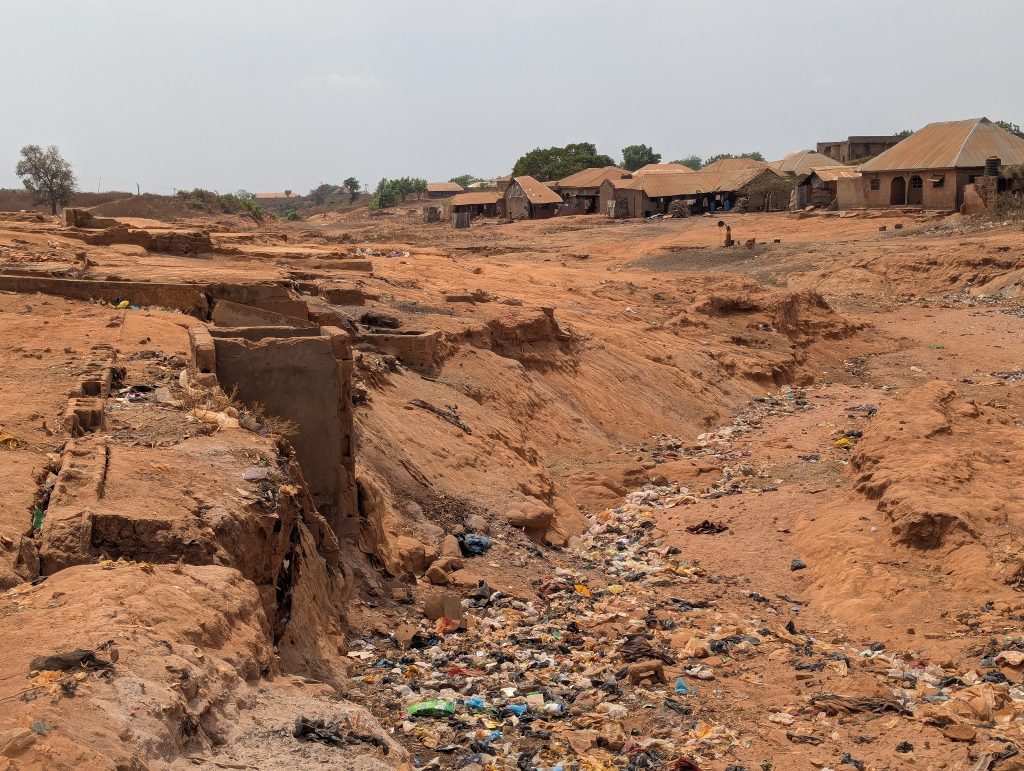
This tragedy is not an isolated incident. Just weeks earlier, residents told HumAngle that three boys fell into the clogged waters and were luckily rescued. The water continues to gather at last year’s Mokwa Flood site, fed by the heavy downpour flowing from the Zugurma and Yagbagba axis, and worsened by another source from gully erosion sites in nearby communities.
One of the flood zones along the Mokwa-Jebba Road in Mokwa LGA, Niger State. Photo: Isah Ismaila/HumAngle.
Hussaini Ibrahim, the Spokesperson of the Niger State Emergency Management Agency (NSEMA), told HumAngle almost a month after the incident that the agency is not aware of any loss of life due to the blockage but will reach out to the community leader and affected family for further actions.
In Mokwa, the echoes of last year’s devastating flood still haunt the community. Residents told HumAngle that farmers had raised alarm before last year’s disaster, warning that water was accumulating, but their concerns were ignored until after the flood struck. Now, the same warnings are being repeated, with little sign of preventive action.
“Barely a year after the flood, Mokwa is once again staring at water lodging in the same vulnerable zones,” Isah Mokwa, a community leader and activist in the community, told HumAngle. “The bridge and waterway reconstruction, meant to symbolise recovery, has inadvertently blocked water channels, creating a dangerous buildup. As we speak, the town is sitting on a ticking bomb.”
Residents told HumAngle how the first rainfall they witnessed in May made them apprehensive. That evening, they revealed, the sound of rushing water sent shivers down their spines. Mothers were seen rushing to gather their children as fathers stood at the site of collapsed structures, staring at the lodging of water in the same flood-prone channel that swallowed over 150 lives and many homes last year, with hopes of it not wreaking havoc again.
Studies indicate that the mental health and wellbeing of individuals, especially children affected by flooding in Nigeria, can deteriorate for extended periods, often lasting months or even years after the event.
The cumulative stress of rebuilding homes, restoring livelihoods, and coping with displacement has been shown to exert a heavier toll on affected populations than the initial impact of the flood, underscoring the need for comprehensive psychosocial support in disaster management strategies.
“The water was coming right from Yagbagba,” Ndako Usman, a resident, said. “It’s accumulating just behind the blockage. Once it gets bigger and more powerful, it could hit our homes again.”
Hussaini told HumAngle that the blockage was caused by construction workers working on the ongoing drainage construction, and the management has taken swift action to address the issue.
“During last year’s flood, we were taken unaware, but we have taken proactive measures to ensure that it does not repeat itself this year. We have a monitoring team, and also volunteers who constantly update us on the flow of water so that we take immediate action.”
“Regarding the culvert, we have written to relevant stakeholders, including the Ministry of Water Resources, to study and assess the situation of the culverts to see if they can handle the water volume in case of a flood-related disaster and advise appropriately,” Hussaini added.
A catastrophe remembered
The fear is not irrational. In May 2025, Mokwa was the epicentre of one of Nigeria’s deadliest flood disasters in recent memory. Torrential rains combined with structural failures to unleash devastation that claimed hundreds of lives, displaced thousands, and left the town grappling with hunger and grief.
Flooding has become one of Nigeria’s most persistent natural disasters, wreaking havoc on communities across the country almost every year. Heavy rainfall, poor drainage systems, deforestation, and the release of water from dams often combine to create devastating outcomes.
In 2024 alone, floods claimed over a thousand lives, displaced millions, and destroyed farmlands and infrastructure worth billions of naira, but the situation dropped in 2025, according to the National Emergency Management Agency (NEMA).
The agency revealed that floods killed 241 people and affected 459,995 residents across 27 states and 128 local government areas. Also, the disaster displaced 158,588 people, injured 839, and damaged 54,684 houses while destroying 96,649 farmlands.
Get our in-depth, creative coverage of conflict and development delivered to you every weekend.
Subscribe now to our newsletter!
The newly constructed culvert in the Anguwan Hausawa area of Mokwa, one of the hard-hit areas of last year’s flood. Photo: Isah Ismaila/HumAngle
Early warnings had been issued by the Nigerian Meteorological Agency (NiMet), but local authorities failed to act.
The disaster struck suddenly. Heavy rainfall battered Mokwa, but the real trigger was the collapse of a railway embankment and blocked drainage channels that redirected torrents into residential areas.
Within hours, homes were submerged, bridges collapsed, and farmlands were washed away. Reports varied, but estimates suggested between 200 and 700 people lost their lives, and about 3000 houses and properties were destroyed, leaving families stranded in makeshift camps.
In the wake of the disaster, the Minister of Information and National Orientation, Mohammed Idris, revealed that President Bola Tinubu approved the release of ₦16.7 billion for the immediate reconstruction of the Mokwa Bridge, which was destroyed by flooding, noting that the project would involve constructing a bridge with 10 spans.
In the months that followed, HumAngle published a damning investigation into the Mokwa flood, among other issues. Our findings painted a picture of systemic neglect. The investigation established that gully erosion in Mokwa has remained a destructive force despite years of significant financial allocations. The erosion continues to expand, damaging infrastructure and farmland and worsening during rainy seasons.
Equally, the report uncovered that billions of naira from ecological funds and World Bank loans were earmarked for erosion control, yet no substantial work has been executed. While officials claimed contractors were engaged, there was no evidence of transparent bidding processes. Field assessments confirmed that erosion control activities remain absent, exposing a gap between official pronouncements and actual implementation.
Last month, NEMA listed Mokwa among high flood-risk local government areas in Niger State for 2026. Yet on the ground, little seems to have changed.
Isah Mokwa, the activist based in Mokwa, confirmed to HumAngle that the bridge constructed to contain the water has proven inadequate. According to him, the community braces for the worst, fearing that heavier downpours could unleash destruction far greater than before.
“Nothing has changed. In fact, the situation has deteriorated even further. In the same direction where the water started gathering before the flood, farmers have raised the alarm that water is already accumulating,” he said.
“We believe there is no accountability for the funds contributed to the state government. What happened to the billions donated after the 2025 flood? Even the shelter that was promised for victims of last year’s flood has not been provided. Just recently, there was a flag-off ceremony, but no contractor has been mobilised to the site, no details were given about the number of houses to be built, and no project timeline was shared,” he said.
According to residents, some of the affected families who were lucky to receive ₦500,000 ($360) in financial support last year to rent houses have exhausted their funds, and the majority are now struggling to renew their rent.
For many in Mokwa, the suspicion is that the tragedy of 2025 has been reduced to a political talking point, while the lived reality of survivors remains ignored.
However, experts warn that Mokwa cannot afford another disaster.
Abbas Idris, the president of the Risk Managers Society of Nigeria (RIMSON), in an interview with HumAngle, said that before now, the government should have taken a proactive disaster management approach through risk assessment and hazard categorisation.
This, according to the risk expert, would help not only the government and state emergency management agency but also residents to put in place measures or tackle the disaster even before it strikes.
In the longer term, Abbas revealed that the Niger State government must enforce urban planning regulations, preventing construction on floodplains and investing in climate adaptation strategies.
“Neglecting risk assessments leaves communities defenceless when disaster hits,” Abbas stressed. “We must address corruption, weak governance, and poor ecological management as root causes of the crisis and pave the way for transparent, science-driven interventions to mitigate future disasters.”
It has been a year since the flood, and despite repeated appeals from the community, the state government, under the leadership of Umar Bago, has yet to provide a lasting solution. Families like the Shekare’s are still left to brace for waters that rise too quickly and claim too much.
And until their demands are met, Mokwa remains vulnerable — a place where the memory of one brilliant boy reminds everyone of both the fragility of life and the urgency for change.
From this week, there will be strict rules on the consumption of alcohol in two popular UK seaside towns, and anyone not careful could face a fine of up to a staggering £1,000
Two UK seaside towns will have a ‘booze ban’ in place under a new order(Image: Getty Images)
Two popular UK seaside towns have introduced a ‘booze ban’, with the risk of £1,000 fines for anyone caught flouting the rules.
In a bid to help manage anti-social behaviour in Kent, a new Public Spaces Protection Order (PSPO) has been approved for three years. Under this order, which will be in force from Wednesday, 1 July, there will be a year-round blanket ban on the consumption of alcohol in Margate and Ramsgate high streets.
Anyone caught breaking a PSPO, which is a criminal offence, could be fined up to around £100. This can be reduced if it’s paid within 10 to 14 days; however, if anyone avoids paying the fine, they could face prosecution and be fined up to a staggering £1,000.
Margate has long been a popular destination in Kent, thanks to its traditional Victorian charm, stretches of golden beach and close link to London, often earning the nickname of ‘Shoreditch-on-Sea’. Ramsgate is just as popular with its sprawling beaches, Royal Harbour and thriving independent food scene.
But it’s not just these seaside towns taking the brunt of the new order.
The PSPO also sets out that in areas across Broadstairs, Cliftonville West, Margate and Ramsgate, there will be bans on anti-social behaviour related to the consumption of alcohol and not handing over alcohol when asked by authorities. It comes after Kent Police said fights had erupted on Broadstairs and Margate beach last week, while people were also assaulted at Margate Railway Station.
Some businesses in Thanet told BBC Radio Kent that they had been forced to close early on occasions due to anti-social behaviour in the area. One even said they were planning to move out of the area as it had become intimidating.
The aim of the order is to “introduce targeted restrictions to curb alcohol-related disorder, public urination, and defecation for a period of three years”, the Thanet District Council website noted. According to the BBC, East Thanet MP Polly Billington said following approval on Thursday: “It’s vital for our economy that people feel confident about keeping their doors open to their shop, and actually, [it’s vital] for the wellbeing of our residents and our visitors that everybody feels safe.”
Meanwhile, before the order was approved, Councillor Heather Keen, Cabinet Member for Neighbourhoods, highlighted: “We are incredibly grateful to everyone who took the time to share their views. Our communities deserve safe, clean, and welcoming public spaces, and this overwhelming support shows how passionate local people are about protecting their environment.
“If Cabinet agrees to implement these proposals, our safety teams and the police will have an effective tool to address persistent issues impacting our towns. We have listened closely to feedback, and while enforcement would always be a last resort, these measures could significantly improve the quality of life across Thanet.”
Do you have a travel story to share? Email webtravel@reachplc.com
Tourists have been told they need change a key phone setting before travelling to airports. Failing to do so could land them with a “major problem”, so it’s best to act
15:41, 22 Jun 2026Updated 07:02, 28 Jun 2026
Tourists need to make a phone setting change (stock image)(Image: Getty Images)
There’s so much to think about when you travel abroad, but something that probably slips your mind is safely using your phone during your journey. It’s something you need to pay attention to, as you are required to follow a few rules to keep safe.
While it may be something that rarely crosses your mind, it should actually be on the top of your travel list, as making some simple mistakes can be super costly when you’re on a holiday adventure. We all use our mobile phones when we’re at airports but, little you may know, some dangers can come with making the decision to use them in certain ways.
Free airport Wi-Fi feels like a small win when you’re killing time before a flight. However, William Thackray, IT expert at AGT Computer Services, claims it’s one of the riskiest things you can do on your phone.
What you need to know
William explained: “The biggest threat isn’t the airport’s actual network. It’s the fake ones sitting right next to it.
“Criminals can set up a hotspot called something like ‘Heathrow Free Wi-Fi’ or ‘Gatwick Passenger Network’ that looks completely legitimate. The moment you connect, they can intercept your data including passwords, emails, anything you’re sending or receiving.”
This technique, known as an “evil twin” attack, is increasingly common in busy public spaces and airports and, with thousands of distracted travellers all hunting for a signal, they are prime targets.
You may not realise, but connecting to airport Wi-Fi can leave your personal data exposed to hackers in seconds. Criminals can set up fake networks designed to look identical to the real thing.
Airport Wi-Fi is rarely considered completely safe. While it is generally fine for browsing the news or checking your flight status, public networks leave you vulnerable to hackers, phishing attempts and rogue “evil twin” hotspots.
You should avoid online banking or entering passwords without taking precautions. This is why the guidance is so essential.
However, one simple phone setting can keep you protected without costing you a penny. It’s easy to sort out once you know what to do.
How to avoid a problem
The fix is straightforward. Before you leave for the airport, go into your phone’s Wi-Fi settings and turn off “Auto-Join” or “Auto-Connect” for public networks. On iPhone, you can also go to Settings > Wi-Fi and toggle off “Ask to Join Networks”.
That way your phone won’t go hunting for a signal without your say-so. “Better still, use your mobile data if you have it,” added William.
“It costs a little more, but it’s your own private connection. If you do need to use airport Wi-Fi, avoid logging into anything sensitive like banking, work email, anything with a password – until you’re somewhere you trust.”
The rule of thumb? If you didn’t set up the network yourself, treat it with caution. This is a rule that’s really worth paying attention to, as failing to follow it could lead to major problems.
In this week’s episode of The Envelope podcast, Rachel Sennott discusses finding the voice of “I Love L.A.” — and finding her footing as series creator — during a tumultuous time in her life.
Kelvin Washington: Welcome to The Envelope, Kelvin Washington alongside you know who, Yvonne Villarreal, Mark Olsen. Always great to have you two here and spend some time with you. We talked about it earlier, we had Emmy season — a few weeks ago we discussed it. But now Emmy nominations are on the way. Yvonne, I’ll start with you, just maybe someone, a show, a couple of things you’re looking at saying, “Hey, I would love to see this or that person nominated.”
Yvonne Villarreal: I wanna give some shout-outs to the women right now. I was really frustrated when Rhea Seehorn didn’t get love until the final season of “Better Call Saul,” and I’m hoping — and I do have a lot of hope — that she will be recognized for “Pluribus.” [I] was a really big fan of “The Comeback” this season. I would like to [see] Lisa Kudrow get in there. Show-wise, I would like to see “The Testaments” in there. I don’t know how much of a dark horse that one is, but that’s my pick for show.
Washington: You’ve been riding “The Testaments.” What about you, Mark?
Olsen: I’m sort of leapfrogging over nominations, and I’m just thinking about what would be exciting on the show. And last year, I remember Stephen Colbert won for talk show kind of right after his show had been canceled, and that seemed like a very exciting moment. And so this year, with Jimmy Kimmel, where this is the first Emmy cycle since he had his suspension last year, and really has been in the news, I just think if he were to be nominated and then to win, that just would be such an exciting moment at the show. What’s he gonna say? I just would really love to see that.
Washington: Yeah, he seems like he would have some things to say, right? Because just kind of the nature of who he is. We’ll have to wait and see. And just for me, a couple of people. Just a fan of this particular person, Janelle James is hilarious to me. She plays in “Abbott Elementary.” She plays that role great. And then this one is no real surprise, probably 50-plus-year career, but Martin Short. Every time I see him, he’s amazing, steals the scene. So those are folks that just jump off on the radar for me.
All right, I’ll get to you, Mark. You had a chance to sit down with Rachel Sennott of “I Love L.A.,” creator and star of it. Tell me a little bit more about that.
Olsen: She’s been kind of a real, like, bright light on the comedy scene for the last few years in films like “Shiva Baby,” “Bodies Bodies Bodies” and “Bottoms,” and, you know, she also was like a writer as well as a performer. And so with “I Love L.A.,” which is a look at sort of like the young creative class in Los Angeles, she is the star of the show, she created the show, she writes on the show, she’s executive producer, she actually made her directing debut with one of the episodes. And so it’s just exciting to see her sort of really like come into her voice and come into her own with this new show.
Washington: Kind of reminds me a little bit of, you know, now maybe a decade ago Issa Rae’s surge in L.A. and comedy creating, and then Riz Ahmed, who you spoke with last week — same thing creating and starring and stuff. Seems like that’s the energy [we’re] getting from a lot of the young talent. Well, here is Mark and Rachel now.
Rachel Sennott, creator and star of HBO’s “I Love L.A.”
(Evan Mulling / For The Times)
Mark Olsen: We’re here with Rachel Sennott, creator, executive producer, writer, star, and for the first time, director on the show “I Love L.A.,” as well as co-creator and writer on “Big Mistakes.” That’s a lot.
Rachel Sennott: When you say it like that, I’m like, “Oh, my God.” And I’m also a friend, daughter, let’s not forget girlfriend. Yeah, those are all things that I am doing. And I am so grateful and having so much fun doing that.
Olsen: Hopefully this isn’t something that just I get a kick out of, but we’re here at the L.A. Times offices in El Segundo, and the Randy Newman song “I Love L.A.,” one of the first lines in the song is “Rolling down the Imperial Highway.” And we are in fact on Imperial Highway.
Sennott: We’re here right now. We’re living it.
Olsen: Tell me about the title of the show, its relationship to the song and what was it that you liked about having the show called “I Love L.A.”
Sennott: We were between two titles for a while, “I Love L.A.” and “Climbers,” and the reason we went with “I Love L.A.” is because in the process of making the show, I moved here from New York and I had a hard time when I was first here. And in the process of filming the pilot, I really fell in love with L.A., and I think getting to make something here, I all of a sudden saw L.A. through this lens where everything was like a movie. I would go on my walks that I usually go on. I would walk through my neighborhood, I would go to my spots, and I just saw it through this different lens, and I was really falling in love with it in the process of making the show. And I think with “Climbers,” that title fell a little bit — it was a double meaning of like social climbers and then also, being the age that I am, where I feel like ever since I got to college, ever since I became an adult, there’s been this chaotic energy in the world and uncertain ground where things never felt expected. It was always unexpected events. Graduating into COVID and then there was a strike and everything. So I feel like Sisyphus, where you’re always pushing the rock up the hill and it’s never enough. But we were worried that “Climbers” would seem too negative … We didn’t want to set people up already judging the characters.
Olsen: And then what has it been like for you learning to be a showrunner in making “I Love L.A.”? It’s funny, your co-showrunner Emma Barrie, she mentioned how you were very organized, but she was struck that you had everything in a pink binder with horses on it. So it was you trying to learn this new thing while also holding on to your essence.
Sennott: I feel so grateful for everyone who works on the show with me. I learned a lot from Emma. I learned from Lorene [Scafaria], who inspired me so much as a director. Aida [Rodgers], our producer, Amy [Gravitt] and Allie [Wasserman] at HBO; Max [Silvestri], who’s one of our EPs and writers. Showrunning is a million different jobs, and some of the jobs I’d done before, some of them I hadn’t, and I felt like I got to see different people shine in certain things, people who are more talented or more skilled at structure than me, people who have directed before, people who understand shots and basically learn from everyone and see that everyone wants the show to be the best it can be. They’re bringing stuff to the table. And so I benefited from everyone else’s skills and talents and just being like, “If you know how to do this better than me, I’m gonna learn from you and watch you and hopefully take from that so I can do my job better.”
Olsen: In a lot of the press as you’ve been talking about the show, you’ve been talking a lot about the concept of the Saturn return and this sort of chaotic period people have in their late 20s. You yourself now are 30 —
Sennott: Yes, I made it. I literally just finished. I was relieved, but my Saturn return was the process, getting the show picked up and the first season of the show. That was my Saturn return.
Olsen: Can you already feel that something has settled or things are different somehow?
Sennott: Yes, a thousand percent. My Saturn return, the dates that it was the strongest were the month around when the show got picked up. Making the pilot was so amazing and I learned so much. And then I was in this moment where I had to pick — basically, I couldn’t take on acting jobs because I was gonna hopefully do the show, but I didn’t know if the show was picked up yet or not. And so I had to say no to certain things and kind of take this leap. At the same time I went through a breakup, and then I got arrested for having CBD in the Cayman Islands. And it was just a very chaotic month of my life where I was like in jail for six hours on a break with my boyfriend, so he, like, had no idea where I was, and I was like, I don’t even know if I have a show, I just said no to this other thing. I just felt like I didn’t know what was happening. I’m someone who it’s hard for me to take risks sometimes, and that was a big risk and leap into what I thought I should be doing. And then the rest of it was learning for the first season how to do a job I’d never done before. Obviously, I still have more to learn, but I think that was a big Saturn return for me, the roller coaster of it.
Olsen: It’s so interesting to hear you say that you think of yourself as a person who’s afraid of risk, because that’s not my impression of you.
Sennott: You’re like, “Stop taking risks. Chill on the risks, every second.” No, I think it’s more [that] I didn’t necessarily believe in myself as a creator on my own, and that was really scary for me. That was the risk, I think.
Olsen: Because especially in building up to making “I Love L.A.,” in your career, I feel like you’ve created this comedic persona for yourself. What is the biggest distinction between the Rachel I think I know and like the actual you?
Sennott: You mean the characters that I play? Or like the persona?
Olsen: These sort of hard-charging, very ambitious, but maybe not always understanding of themselves characters, and you. I’m just interested in how you see the distinction between that persona and the actual you.
Sennott: Well, I hope that the characters that I’ve played have been somewhat different from each other. I think “Shiva Baby,” that character, was a little bit more anxiety-inward. Alice in “Bodies” was way more outward and kind of no filter, said every inside thought. Maia on “I Love L.A.,” I think, is kind of bitter in the beginning of the first season and is pinning her failures, blaming them, on her friend. All of those characters, I always draw on some element of myself. I think all actors, you have to find some connection to the character. But I think I’m hopefully more grounded and balanced and mature than the character. I hope.
Olsen: You’ve talked about how “I Love L.A.” really explores the foibles and challenges that people have leading these very, like, online lives and the way that people nowadays are really sort of tethered to their phones all the time. Is that something that you feel like you grapple with yourself? Is it something you yourself have had to kind of get over?
Sennott: I would say I started my career on the internet, and I grew up on the internet, and basically, I created a different sort of persona on the internet that was based in truth of a time when I was in my early 20s in New York, and it was a lot more messy and a little chaotic, and I was just going through things in my life at that time [that inspired] — I say “writing,” but like the tweets, the jokes, the videos, whatever, that were coming out of me. And then I felt I changed, but I still wanted to kind of project that character. And so I actually ended up putting that character into Tallulah [played by Odessa A’zion]. And I think Maia was a little bit more the version of myself when I first moved to L.A. and I felt isolated and it was during COVID, and I felt I was kind of gripping onto my friends in a codependent way. And so I think the show is sort of dealing with, whether or not you’re an influencer or person online, anyone who’s grown up on the internet is projecting some sort of version of themselves. So I think it was that I was trying to explore.
Olsen: You mentioned that the character of Tallulah is this version of you that you used to be. So what was it like for you creating this character that was almost like your id unleashed?
Sennott: It felt like I was separating myself from her. At first, [it] maybe could have felt like a caricature. And then when we cast Odessa, who is so talented and just, as an actor, she has such depth and range, and I think she asked questions and brought so much to it. Then it actually made me sever myself from the character, and the character became its own thing that she brought to life.
Olsen: Your character, Maia, in some ways is the audience surrogate, she’s kind of the most “normal” character on the show. And considering that in “Bottoms” or “Bodies Bodies Bodies” you often were the outrageous character, what has it been like for you to play this character that’s a little more self-contained?
Sennott: It’s been fun. I think we sort of found her during the first season. I feel that Episodes 6 through 8 are really where the show finds its footing and where we find what’s the comedy of Maia. It takes a little for her to kind of crack open, what’s funny about her as a character, but also I think Tallulah is almost like an agent of change for her — Maia was set in her ways and sort of struggling and depressed, and I think Tallulah puts her on track, and she’s going through her Saturn return and all that stuff. And so I think we get to see at the end of the season and just having been writing Season 2, I think that we get see her do a lot more fun stuff.
Olsen: It’s funny, as viewers, a lot of times people say, “Oh, you know, there’s this show you should watch, it really gets going on like Episode 3” or whatever. And I don’t think I’ve ever heard a creator say before, like, “Oh, 6, 7, and 8, we figured it out.” Do you feel you knew that in the moment, or has that only come to you as you’ve been working on Season 2?
Sennott: I think as we were editing the first season. Tone is something that you can say, like, “We want it to be like, this needs this, and it’s that and that and the tone of that.” But tone is what you find in the edit. I think you shoot different versions of a line, of a scene, and then you piece it together. And I think for me, that’s when I felt like, “This is the tone of the show. This is the world of the show.” And in writing Season 2 as well, just living more in that world.
Olsen: You kind of touched on this, but the characters on the show, they kind of skirt this line between being endearing and annoying. What is it that you like about that?
Sennott: Because I think that’s how people are. I am not interested in seeing perfect people or people who are flawed in a way that’s not actually real. So I love all the characters. I think Alani [played by True Whitaker], for example, is someone where you could really easily be like, “Oh, a nepo baby, she’s so privileged, whatever.” I think she’s the character with the biggest heart. She’s the best friend out of the whole group. She cares for everyone. She’s so deeply sensitive. And she’s actually been through a lot of s— and she drops these little things, these clues where you’re like, “Gee, she went through something crazy but is choosing to look at life half-full,” and I think that’s fun. I like the characters who make you feel or expect something of them and then show you another side. Charlie [played by Jordan Firstman] I think does that as well, where you meet him and you think he’s a little acerbic, he’s a little judgmental, and then he goes through loss and grief when Lukas, spoilers, Lukas Landry dies, RIP Lukas. That’s really hard for him. I’ve been friends with Jordan for so long, and I love him so much. I think he’s so talented. But I think he showed a totally new side of himself with the character.
Olsen: I agree. I found those scenes very touching. There’s an emotion there that’s kind of unexpected. Another moment that I really like in the show is Odessa’s character, she wants to change a dinner reservation to five people at 8 o’clock. And then you have to spend hours trying to make that happen. And I really appreciated how it’s something that sounds like it should be simple, and for some people it’s no big deal. But then for other people, it’s the biggest hurdle imaginable. Did you like that the show explores this sort of proximity to ease? Sometimes you end up at this party in a big, big house, but it’s not your house. Was that something you wanted to explore about life in L.A.?
Sennott: Totally. There’s also something specific to L.A. and specific to the industry we’re exploring — which is the internet as opposed to Hollywood — that I would say is relatable to me, to anyone in their late 20s, early 30s. When you’re in your early 20s, everyone’s sort of grouped together or feels like they’re in the same bucket. It’s like, “Oh we’re all doing this same thing, we’re all roommates, we’re all in school together, we’re all whatever.” But people make decisions that you don’t even see. I feel like the first time I found out that one of my friends had a SEP IRA, I was like, “When did we all decide that we’re getting SEP IRAs?” And it was a friend who loves to party, and I was thrown. Now I’m panicking I didn’t do that. Or who’s getting in a serious relationship, whatever. People start making decisions in their late 20s, all of a sudden everyone’s off on different paths. It’s like, “Wait, you’re getting married, but you’re still partying the way that we did when we were in college.” This person is moving, this person is changing their career path. And so you all of a sudden feel a little bit betrayed or on your own, and it’s isolating, and that is something that, yes, we’re doing it through a specific lens of L.A. and this world and these characters, but I think it’s really relatable to people at that age.
Olsen: I’ve heard you describe yourself as a zillennial cusp.
Sennott: Yeah, I’m cusp, and I feel like I relate to a little bit of both.
Olsen: But do you feel a pressure for the show to feel like some sort of a generational statement, to capture these kind of big-picture things?
Sennott: No. Ayo [Edebiri] and I were texting each other because there’s always an article that’s like, “Turns out these b— are 30. Yeah. They’ve been lying the whole time. They said they’re Gen Z.” I’m like, “I didn’t say anything. I was born in ’95. I’m 30.” Call me what you want, but I was just writing to what I feel at the time. I think people who grew up on the internet in the way that I did will relate to it, but I think you can relate too if you’re older or you’re younger.
Olsen: As people are writing about the show, they very frequently are referencing “Girls,” “Insecure,” “Sex and the City.” But I’ve heard you reference “Entourage” quite a bit. Could you explain that?
Sennott: “Girls” and “Sex and the City” and “Insecure,” all of those shows, all HBO shows, are formative to me as an artist. I remember watching “Girls,” I was in high school and looking at colleges with my dad and we went and toured [New York University], and in the hotel room that night, he was like, “I heard so much about this new show, ‘Girls,’ we should watch it. And it was the episode with Patrick Wilson where they f— in his nice apartment the whole time, and we turned it on and my dad was like, “OK, you can watch this later on your own, this is for you.” And I remember going to bed being like, “I’ve gotta go to New York, like whoa, this is crazy.” I think naturally those were already gonna inspire me. “Entourage” and “Atlanta,” those were two references that I mentioned a lot when we were making the show. “Entourage” because I feel I got to come up in this industry with my friends, and when I’m with my friends I feel completely invincible, and so there was that aspect. It was like, “I wanna see ‘Entourage’ but from a different point of view and perspective and a slightly different industry.” And then “Atlanta,” there is already having a family relationship and friendship on top of managing. Like how [Earn] manages Paperboi. And then I think “Atlanta” did such a great job of capturing a city that has almost magical realism elements to it. And L.A., a lot of the time, there’s things that happen here that are crazy, that feel almost unreal, but they are real. So that was a big inspiration for the show as well. Like the opening of the show, sex during an earthquake. That’s happened to me, but it also feels a little ridiculous, but it happens in L.A.
Olsen: You mentioned earlier that in waiting for the show to come around, you felt you were having to turn things down or you were really having to sort of change your mindset in a way. Can you talk a little more about that? With the show “Big Mistakes” that you created with Dan Levy, is that one of the things that you had to step away from or readjust how you were gonna be involved because of the fact that you were going to have “I Love L.A.”?
Sennott: I was more talking about acting roles. When you step into a creator role, it’s a different mindset than acting jobs and you have to commit to a longer time period. When you’re just acting in things, you can pop in, pop out and you leave set and you’re like, “I love you guys so much. I’ll see you in a year at the premiere,” which is fabulous too — love doing that. But when you are creating something, you’re in it from beginning to end, and you really wanna give your all to it. So I think I was more talking about just, like, betting on myself as a creator, as opposed to just acting.
Olsen: And how has that felt now that you’re on the other side of it, with one season of “I Love L.A.” made? How do you feel about having made that decision, having bet on yourself like that?
Sennott: I think it’s changed me, in a way where I’m so happy I did it. And it’s sometimes harder and there’s more parts to it, but I feel more in myself creatively than I ever have before, I think.
Olsen: It changed you how?
Sennott: Just because you all of a sudden see all the different parts of the process of making something and all these different jobs that maybe I wasn’t as aware of before. And I think there’s also something beautiful about popping into something and acting and just being like, “I am present as my character. This is what I am thinking about. I’m thinking about what does the character want.” And that’s amazing too. But I feel so lucky to have been able to experience other parts of making something.
Olsen: What was it like learning how to switch hats, especially during production? I would imagine you have a producer brain, you have an actor brain, then for one episode you have a director brain.
Sennott: I had to like sort of take it day by day. There are days where it’s a lighter scene for me and I can be on the side approving locations, taking meetings during lunch. There was a day where I had two sex scenes, for Episodes 6 and 7. So we shot the end of 7, the fight scene with me and Josh [Hutcherson], and the sex scene where it’s Maia and Dylan but she’s fantasizing about Ben. It was a lot. And so I was like, to Emma and Max and Aida, “Let’s not do any other meetings today in the middle of the day,” and they were like, “Totally got you.” That day I was more focused. I really needed to be present in the scene and have this be my main focus. And then on a day where I’m shooting like, “you’re texting on your phone” and “you’re walking on your walking treadmill,” I can do other stuff. So I think it was just taking each day as it comes and having so much support from the rest of the team.
Olsen: It’s wild to think of just one day providing all this material for the show. Just a single day could be so pivotal.
Sennott: Yeah, totally. A lot can happen in a day and then other days you’re like, “I’m just opening doors.” You never know.
Olsen: How did you come to conceive of how you kind of wanted to depict the online world, how people text, whether they’re FaceTiming and things like that? The show obviously exists with that world, as part of it, but you didn’t spend a whole lot of time animating texts. How did you come to conceive of how to depict people’s online life?
Sennott: I wanted it to feel how it does in the real world, which is the internet is just a big part of everyone’s life, but people aren’t explaining it to each other all the time. So we wanted to have the internet feel like the real internet, but our own internet. We didn’t want to ever reference anything that would date us because the internet moves so fast. So, like, Coke Larry, for example, when Dylan gets made into a meme, whatever, that’s our own thing, but it moves the same way as the internet does. And we tried not to have too much phone screens, texting, whatever. Like for example you [just] see snippets of Tallulah making videos or posting or whatever. In “Entourage,” you don’t really see that much of Vince acting. You see all the stuff around it. So that was sort of our model for the show.
Olsen: You directed the final episode of the season. Do you expect to be directing more in Season 2?
Sennott: Yeah.
Olsen: And how did you find the experience? What did you like about it?
Sennott: I loved it. You’re just in every aspect of the process. You are thinking about everything, and it was so engaging and exciting, and afterwards I felt fried, and I like crawled onto the edit couch and I was like limp and it took a lot out of me. People describe it like giving birth. And then you’re like, “I gotta do it again.” So that’s kind of how I felt on the other end.
Olsen: Can you talk a little about that final episode? The show is called “I Love L.A.” You send the main characters to New York for the final episode, which has turned into kind of a controversial decision. A lot of people have talked about that. Can you talk just a little about deciding to end the season in New York?
Sennott: I think it was because it was sort of addressing the fact that these girls went to school in New York together. They lived in New York and they chose to move to L.A., and I think when you do that there’s always going to be the push and pull of the two cities, and going back to New York, it was almost like getting a chance to get back together with your ex and being like, “You know what, there’s a reason it didn’t work out.” And they end the episode with, “I miss L.A.” So I think that’s kind of what we were aiming to do.
Olsen: And then before we wrap up, I should be sure to ask, is there anything that you could tell us about Season 2? What can people look forward to?
Sennott: It’s sort of what we were talking about earlier, Episodes 6 through 8, I think, I just feel we’ve locked in to our tone, we get to see other sides of characters we haven’t before, we go deeper on certain characters. And I think there’s some fun stuff that we set up in the finale that we get to explore.
A weekend BASE jumping accident in a Utah canyon killed two people, one of them a daredevil athlete best known for performing onstage with Madonna at the 2012 Super Bowl, authorities said.
The Sheriff’s Office in Grand County, Utah, confirmed one of the dead was Andy Lewis, an extreme athlete known for feats in BASE jumping, a dangerous sport that involves parachuting to the ground after jumping from a tall fixed object such as a building, a bridge or a desert cliff overlooking a deep canyon.
In BASE jumping circles, Lewis had a huge following and a reputation for pushing the envelope — leaping into tighter spaces or deploying his parachute later than his peers would dare, said John McEvoy, a BASE jumping instructor in Twin Falls, Idaho, who has jumped with Lewis.
“He had an incredible level of athleticism and skill that was developed over years of practice,” McEvoy said. “But then he would take an incredible amount of risk.”
Lewis’ other sport made him an overnight celebrity, thanks to Madonna
Lewis was also a prominent figure in the niche sports of slacklining and tricklining, which combine elements of high-wire walking with aerial acrobatics — sometimes at perilous heights.
Lewis went from obscure athlete to overnight celebrity when he appeared onstage in Madonna’s 2012 Super Bowl halftime show. Dressed in a Roman toga, Lewis bounced and executed tricks on his inch-wide line as though it was a trampoline while Madonna sang behind him.
“My phone actually rang itself to death three days in a row,” Lewis said soon afterward in an appearance on Conan O’Brien’s late-night show.
Emergency responders were dispatched Sunday to a report of people injured in a BASE jumping attempt at Mineral Bottom, a remote desert area near the Utah-Colorado line, according to the Sheriff’s Office. Lewis and an unidentified 50-year-old man died at the scene, the office said in a news release.
Sheriff’s Lt. Al Cymbaluk confirmed to the Associated Press that it was Lewis the extreme athlete who died. He said he had no further details on the fatal accident.
BASE jumping is far more dangerous than skydiving
Though there’s no official tally of BASE jumping deaths, a list compiled by the website BASEaddict.com shows 540 total fatalities worldwide since 1981 — including 30 people killed last year. Prominent deaths include BASE jumper Dean Potter and his climbing partner, Graham Hunt, who were killed in 2015 while attempting a wingsuit flight in Yosemite National Park.
A study focused on BASE jumping in Norway, published in a medical journal in 2007, estimated that BASE jumping carried risks of injury or death five to eight times greater than skydiving.
Lewis openly acknowledged the sport’s inherent danger.
“It’s weird to think about how many people are dead, because it’s like a normal thing,” Lewis told documentary filmmaker Ella Warnick in an interview published last year.
Lewis owned BASE Jump Moab, a business that offered excursions to inexperienced customers using tandem jumps, in which the customer was harnessed to a guide wearing the parachute.
Sheriff’s spokesperson Cymbaluk said he didn’t know whether Lewis and the other man killed were performing a tandem jump.
Tandem BASE jumping carries additional risk because it straps together two people, one of whom generally lacks experience, under a single parachute, McEvoy said. But because they involve novices, they also tend to be the most low-risk, basic types of jumps.
“Within BASE, it’s a very controversial topic,” McEvoy said. “There’s a lot of people who say it’s the stupidest thing in the world and others arguing, `No, we’re giving people the experience of their lives.’”
No one immediately returned phone, text and Facebook messages left Monday for BASE Jump Moab.
Lewis won four straight world championships in competitive slacklining from 2008 through 2011. Lewis set a Guinness World Record for slackline surfing, swaying his feet side to side in a rocking motion that mimics surfing, while keeping his balance above China’s Diaoshuilou waterfall in 2011.
In 2014, he walked a slackline suspended between two hot air balloons more than 4,000 feet above the Nevada desert.
WASHINGTON — The Supreme Court agreed Monday to hear a Trump administration appeal and decide if “criminal aliens” may be held indefinitely while they fight deportation.
The case to be heard in the fall could give the administration more power to arrest and hold immigrants, including green card holders, who have criminal records.
The government’s lawyers say immigration laws call for deporting non-citizens with “aggravated felonies” on their records. And in such cases, they say these people may be held for months or even years while their claims are before the immigration courts.
Judges have been split on whether non-citizens fighting deportation have a right to a bond hearing and a chance to go free if they pose no risk to public safety.
The 2nd Circuit Court of Appeals in New York ruled for a pair of green card holders who faced deportation to the Dominican Republic and Jamaica. Both had been convicted of assaults that were characterized as aggravated felonies under the immigration laws.
However, the appeals court said their “prolonged detention” was unconstitutional if they were given no bond hearing and no chance to go free.
They were represented by the American Civil Liberties Union, whose lawyers urged the court to turn down the appeal.
“For the first time in this litigation, the government argues that civil detention ‘does not implicate any fundamental rights’ and so the Due Process Clause affords the detained men no protections—substantive or procedural,” they wrote.
In the past, they said the Supreme Court had accepted the “bedrock principle” that detained persons may have a right to seek their release on bond.
One of the two men had left this country and returned to Jamaica, the ACLU lawyers said. But Solicitor Gen. D. John Sauer urged the court to rule on the issue.
The detained men “have no procedural due-process right to a bond hearing on whether they are a flight risk or danger to the community,” he told the court. “Individualized findings about flight risk and danger are irrelevant” under the immigration laws which called for “mandatory detention based on their aggravated-felony convictions alone.”
Four out of five Brits surveyed didn’t know this passport rule, and even more surprisingly, a huge number don’t know the expiry date of their passport, which could leave them facing a last-minute panic
A shocking 80% of Brits did not know this passport rule(Image: Getty Images)
Holidaymakers are being urged by travel insurance specialists to check their passport details ahead of the busy summer season, as a survey showed a huge percentage of Brits were unaware of a basic passport rule.
The research, carried out by Saga Travel Insurance showed that many Brits didn’t know basic rules around passport validity, entry requirements, and travel regulations post-Brexit. Worryingly, 7% of the people surveyed had previously been denied entry to a country because they didn’t have enough time on their passport to cover the trip.
Saga surveyed 500 people, and found that four out of five (80%) were not aware that different countries have different passport validity requirements, while 50% mistakenly thought that every country requires a passport to have six months remaining before travel.
The travel insurance provider also highlighted that half of the Brits surveyed “are still not confident they understand the visa and travel requirements for visiting Europe after Brexit.” 16% didn’t know when their passport is due to expire, while 8% currently had expired passports gathering dust in a drawer.
One mum recently was left £700 out of pocket after getting caught out by passport rules for a holiday to Greece, meaning she couldn’t board her flight with her husband and children.
Michelle Cooper, Director of Travel Insurance at Saga, said: “Nobody should have their holidays ruined because of a simple passport error. A few quick checks can help people avoid unnecessary stress, unexpected costs and disruption at the airport.”
She added: “It’s important to check the specific rules of the country you’re travelling to so that you know how long you need remaining on your passport. Some destinations require three months remaining on your passport, while others require six months.”
For example, Brits heading to EU destinations such as Spain, Italy or Greece will need a passport that’s valid for at least three months after the date you plan to leave the Schengen area, and it must also be less than 10 years old on the day you enter. While Turkey’s validity requirements are at least 150 days after the date you arrive, countries such Australia simply ask that your passport is valid for the duration of your visit.
Michelle also reminded holidaymakers of the 10-year rule which continues to catch Brits out: “EU and Schengen countries require passports to be less than 10 years old on the day of entry. While all new passports last exactly ten years, passports issued before 2018 remain valid for 10 years and nine months. If you have an older passport, make sure you check both the issue date and expiry date before travelling to avoid problems at the border.”
Michelle also urged frequent flyers to check they have enough blank passport pages when they travel, saying: “People can sometimes focus entirely on expiry dates and forget to check how many blank pages they have left, but some destinations can refuse entry if there isn’t enough room for official stamps or visa documentation.
“If you’re a frequent traveller, you should regularly check how many blank pages you have remaining in your passport before booking a trip. You might also benefit from purchasing a passport with additional blank pages.”, she suggested.
Have a story you want to share? Email us at webtravel@reachplc.com
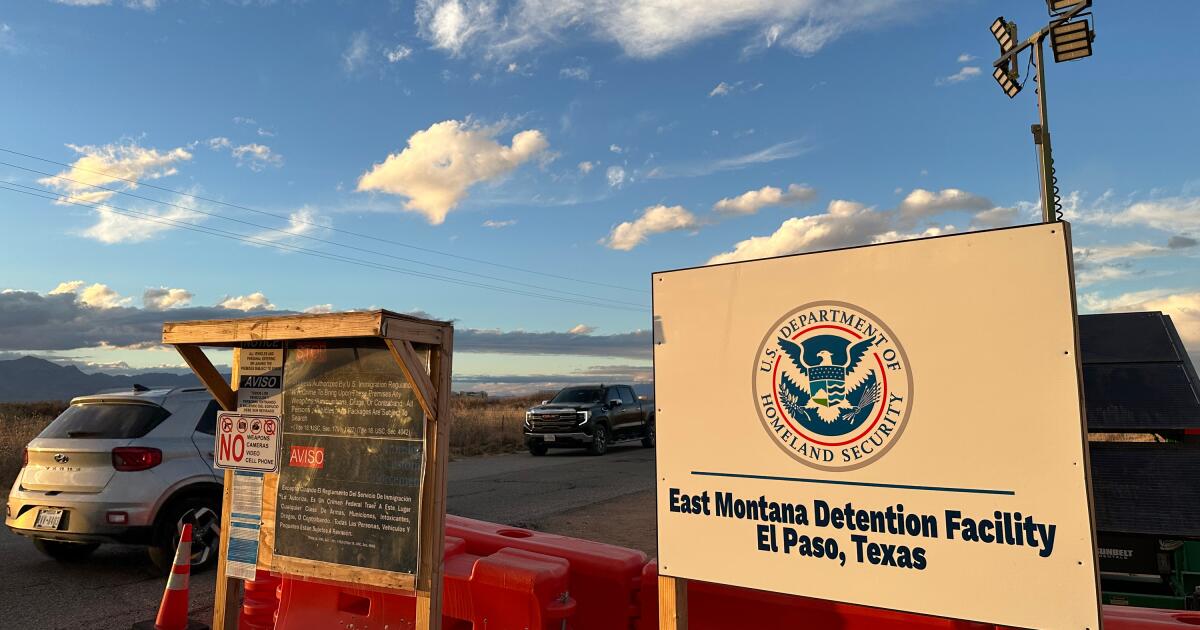
WASHINGTON — Mismanagement at a massive Immigration and Customs Enforcement facility in Texas created unsafe conditions that contributed to detainee deaths and suffering even as millions of wasted tax dollars enriched contractors, according to a federal report released Tuesday.
The Government Accountability Office report documents serious problems at Camp East Montana, a sprawling tent facility at Ft. Bliss in El Paso where three detainees have died in a little more than six months. Evidence in one of those deaths, of a 55-year-old Cuban migrant who died in January after being held down by guards, was “missing or destroyed,” the report found.
ICE rushed to open the camp in August before construction was complete and failed to conduct required oversight to ensure detainees were held in sanitary conditions and receiving adequate medical care, according to the report.
The Department of Homeland Security noted that ICE has replaced the contractor running the facility. “This new contractor will allow Camp East Montana to continue abiding by the highest detention standards with the ability to provide more medical care on-site,” said Homeland Security spokesperson Lauren Bis.
The GAO’s findings echo past reporting by the Associated Press and other news outlets about dangerous conditions at Camp East Montana, which quickly became the nation’s largest immigration detention facility.
But the government report also details previously undisclosed incidents, including a detainee escape in October due to what ICE called the contractor’s oversight failure. In January, a security guard lost a loaded firearm inside the facility that was never recovered.
The contractor failed to administer skin tests to screen detainees for tuberculosis, relying on a questionnaire instead, the report said. The inadequate screening allowed a detainee with tuberculosis to be housed with the general population, which later suffered an outbreak.
GAO is an independent, nonpartisan agency in Congress that investigates how federal funds are spent and evaluates whether programs and policies are operating effectively. The office opened its review into Camp East Montana at the request of Democrats in the House and Senate.
Sen. Dick Durbin of Illinois called the report’s findings “damning.”
“We now know even more details of how dangerous and irresponsible the Trump administration’s mass deportation campaign truly is,” said Durbin, the ranking Democrat on the Senate Judiciary Committee, adding that “those detained are experiencing conditions that shock the conscience.”
A rush to build led to an inexperienced contractor
Facing pressure to increase its detention capacity, the Trump administration routed the contract to build Camp East Montana through the Army to speed construction after ICE twice failed to successfully award one. That resulted in the selection of a small, little-known contractor, Acquisition Logistics, for the $1.3-billion deal despite it having no prior experience operating detention facilities and facing what ICE called a “significant learning curve.”
The Army — and later ICE after the camp was transferred to the agency — wasted millions of dollars paying for services it did not need because the contract did not account for fluctuations in the detainee population, the report said.
The Army blew as much as $11.5 million paying for guards, medical services, transportation and meals in the weeks before the camp held detainees. Millions more were wasted because the government was contracted to pay the cost of meals for the camp’s maximum population of 5,000, even when the number of detainees there dropped to around 1,600, the report said.
The facility did not meet ICE detention standards or the contract’s requirements in several ways when it opened, in part because it had not been inspected as required by ICE policy, the report said. The camp lacked security cameras on the perimeter and had other surveillance blind spots that raised the risk of sexual assaults or escapes.
The camp could not accommodate detainees using wheelchairs and had no showers compliant with the Americans With Disabilities Act, resulting in the disabled being held in medical care rooms.
The recreation area wasn’t available for several days, and after one yard was opened, it wasn’t enough space to provide required time for detainees. The law library, space to meet with attorneys and a visitation area did not open for weeks, resulting in detainees being deprived of legal resources and contact with family and friends, the report found.
The problems persisted as ICE began transporting more detainees there from across the country, the GAO found. While built to house up to 5,000 immigrants for short-term stays, its population has averaged about half of that from October until April, according to ICE’s most recent data.
Missing evidence and other problems
Detainees held at the facility didn’t receive comprehensive health assessments, which meant that those with chronic conditions received substandard care, the report said.
The contractor cleaned the dormitories weekly rather than daily as required, resulting in unsanitary conditions. Some guards offered detainees cookies if they would clean their own rooms. Acquisition Logistics didn’t reply to messages seeking comment.
The GAO report says investigations into the January death of Geraldo Lunas Campos were undermined after “evidence associated with the incident was missing or destroyed.” It did not elaborate. Campos died after he was restrained by guards and an outside autopsy report ruled the death a homicide due to asphyxia. The contractor at the facility did not provide use-of-force and death reports to ICE as required, according to the new report.
An investigation by ICE’s Office of Professional Responsibility into the death is on hold pending a criminal investigation by the FBI.
On Jan. 14, Nicaraguan detainee Victor Manuel Diaz, 36, died of suicide after staff put him in a medical holding room instead of suicide-resistant cell and left him unattended for intervals longer than 15 minutes, the report said. Staff could not see into the room because the contractor had failed to install vision panels that had been requested months earlier, it found.
“These are huge discrepancies in their failure to prevent suicides,” said Diaz family attorney Randall Kallinen, noting that the report strengthens a potential wrongful death claim he’s considering. “They are part of an entire laundry list of problems at Camp East Montana.”
Biesecker and Foley write for the Associated Press. Foley reported from Iowa City, Iowa.
The US defence department has reportedly raised its assessment of the espionage threat posed by Israel to the highest category of “critical”, according to media reports citing American intelligence and defence officials.
The assessment, first published by NBC News on Friday and followed by The New York Times, comes at a time when Washington is pursuing diplomatic engagement with Iran, while its ally Israel is opposed to the talks aimed at ending the conflict now 100 days long on Sunday.
Recommended Stories
list of 3 itemsend of list
US President Donald Trump and Israeli Prime Minister Benjamin Netanyahu have publicly diverged in their approach to the war – Washington wants to extricate itself amid political pressure, while Israel is still pushing to topple the Iranian government.
This is not the first time Israel has been accused of espionage against the US – its closest ally and benefactor – with which it maintains extensive security and intelligence cooperation.
Here is what you need to know:
What did the Pentagon say?
According to NBC News and The New York Times (NYT), citing anonymous current and former US officials, the Pentagon’s Defense Intelligence Agency (DIA) arm recently upgraded Israel’s counterintelligence threat level from “high” to “critical”, the most serious designation in its internal assessment system.
The warning was based on Israeli intelligence agencies intensifying efforts to collect information on US military personnel, government officials and policy discussions.
The news reports said the concern was focused on American officials involved in shaping Washington’s approach towards Iran, as the two foes continue to negotiate an end to the war that has sent global energy prices soaring.
“An intensified Israeli effort to learn about US positions in talks with Iran has crossed a line, according to some American officials,” the NYT said.
According to the news outlet, intelligence assessments pointed to increased Israeli surveillance efforts in recent weeks targeting US military and government figures.
They include Trump envoy and key negotiator Steve Witkoff; the Pentagon’s top policy official, Elbridge A Colby; and one of his deputies, Michael P DiMino IV, the NYT reported.
Witkoff was chief negotiator in the nuclear talks before Israel and the US launched the attack on Iran on 28 February.
The reports also referenced incidents in which US defence personnel working in Israel allegedly discovered software on their phones “to tap their communications had been surreptitiously installed on their phones”, the NYT added.
The newspaper said the DIA reports found Israeli spying on the US, which has occurred before, surged from late 2024 onwards, coinciding with US President Joe Biden’s administration stepping up pressure on Israel over its genocide in Gaza.
The reported increase in spying continued after Trump was elected to a second term in November 2024 and began shaping his administration’s policy towards Iran.
Tensions between Trump and Netanyahu have come to the surface in the past week, amid reports the US president called the Israeli prime minister “f****ing crazy”, due to Israel’s escalation in Lebanon. At least 3,500 people have been killed in Israeli attacks in Lebanon.
Trump has been pressing Israel to halt its attacks on Lebanon, but the bombardment in the south has continued, undermining a potential deal with Iran which insists both issues are inseparable.
While intelligence gathering between friendly nations is not unusual, some US officials reportedly believe recent Israeli activities have gone beyond what Washington traditionally considers acceptable among allies.
According to officials cited in the reports, US intelligence agencies have become increasingly concerned that Israel is seeking greater insight into US policy discussions and negotiating positions, specifically with Iran.
What has been the response from the Israeli and US governments?
Israel has denied the allegations.
According to NBC, the Israeli embassy in Washington said it was “completely false” that the country spies on US government officials or American institutions.
“Israel does not gather intelligence on American entities, let alone US government officials,” NBC quoted the spokesperson as saying.
A White House official also reportedly dismissed the NBC report, saying the “entire story is false and sourced to someone who doesn’t have any knowledge of what’s going on”.
Al Jazeera could not independently verify the media reports and the US and Israeli responses.
Has Israel previously spied on the US?
Yes. Israel has previously been involved in espionage cases targeting the US, although such incidents have not been spoken about much given their close ties.
The most famous example is the Jonathan Pollard affair. The civilian intelligence analyst working for the US Navy was arrested in 1985 after passing large quantities of classified information to Israel. He later pleaded guilty to espionage and served 30 years in prison before being released on parole in 2015.
The Pollard case remains one of the most significant espionage scandals in the history of US-Israeli relations and continues to shape perceptions within parts of the American intelligence community.
However, espionage between close allies is not uncommon, says academic Andreas Kreig.
“Israel has a particularly long track record of conducting intelligence operations inside the United States,” the professor at the Department of Security at King’s College London told Al Jazeera.
“Over decades, Israel has sought to penetrate US policymaking circles through both formal and informal networks, including intelligence and lobbying channels, in order to gain insight into American strategic thinking and decision-making,” he added.
Nevertheless, Washington has for years provided billions in military aid and weapons sales to Israel, including throughout the ongoing Israeli genocide in Gaza.
The US Congress is also currently debating a section of a new defence bill, which would integrate the two countries’ research and development for weaponry to an unprecedented degree. The US has also provided diplomatic cover to Israel at the UN and other international bodies.
Why has Israel allegedly ramped up its espionage activities in the US?
According to academic Kreig, Israel is “deeply concerned” about the trajectory of US negotiations with Iran.
“From the Israeli perspective, the recent conflict with Iran was effectively a joint US-Israeli war, yet the United States is now in a position to shape the diplomatic endgame,” he told Al Jazeera.
“The principal Israeli concern is that Washington could agree to a deal that establishes an enduring diplomatic framework, potentially lasting years or even decades, which would constrain Israeli freedom of military manoeuvre against Iran in the future. Israeli policymakers therefore have a strong incentive to stay ahead of US deliberations and understand negotiations in real time.”
Moreover, Kreig said Israeli intelligence gathering also serves a “strategic purpose”, which is to identify “opportunities to influence, derail, or undermine negotiations if Israeli leaders judge the process to be contrary to their security interests”.
“While Israel sees the United States as its indispensable patron and closest strategic partner, it has simultaneously treated the US as a legitimate intelligence target whenever interests diverge,” he added.
“What surprises many observers is the extent to which Israel, despite being heavily dependent on American military, diplomatic and financial support, has developed the capacity to penetrate multiple layers of US policymaking and cultivate influence across key institutions involved in American statecraft.”
According to analyst and Iran expert Negar Mortazavi, Israel’s reported espionage in the current context is not new and has past precedent. Israel’s opposition to US-Iran negotiations goes back to the time of US President Barack Obama when he signed a nuclear deal with Iran in 2015, which the US under Trump withdrew from in 2018.
“The Israeli Prime Minister Netanyahu did not want any deals or serious negotiations or normalisation between Tehran and Washington, and he tried to stop it publicly and privately in any way he could,” she told Al Jazeera.
Moreover, Mortazavi said the ongoing war on Iran was “not going as planned or as promised”, and that Trump wants “to exit the war and he has to do it through diplomacy”.
“At this point it is very clear that US interests and Israeli interests are no longer overlapping, they’re divergent,” she added.
A BBC expert has warned more than 270,000 people in England, Wales and Northern Ireland
Financial expert Laura Pomfret explained what the CCJ letters are and what to do about them(Image: BBC)
More than 270,000 people across England, Wales, and Northern Ireland have received letters through the post, according to a BBC expert – and those who ignore them could find themselves facing court action. Viewers of BBC Morning Live were recently warned about the thousands of letters connected to county court judgements that have been dispatched over the past 12 months.
Expert Laura Pomfret explained to viewers that a County Court Judgement (CCJ) is essentially a court order issued in England, Wales, and Northern Ireland when someone fails to repay a debt and the creditor pursues enforcement action. She noted it could come from a council, company, landlord or a private individual – and if left unpaid, it can appear on the person’s credit report.
She said: “I think that’s what a lot of people resonate with that they’ve heard of CCJs can be bad for your credit. They stay on your credit report for six years. It can impact you getting a mortgage, even getting um a rental property. Sometimes credit checks are done, even when getting a mobile phone contract.
“It’s definitely something to avoid if someone can avoid it, and worryingly, in the first quarter of this year, over 270,000 new CCJs were registered, and that’s 17.5% up on last year. So this is obviously showing that people are struggling and in the energy industry is something that you know it’s it’s getting bigger and bigger.” She explained that these are frequently issued to those falling behind on energy bills — with the latest Ofgem figures revealing debt standing at £4.5 billion — while Energy UK puts the figure even higher at £5.5 billion.
Content cannot be displayed without consent
She added: “That’s like such a big bill that lots of people are pay and people pay every month clearly struggling with it. And interestingly as well, credit card transactions in February were up 6% versus last February whereas debit transactions were only up 1%. And that also shows, you know, that people are having to rely on credit for even the most basic of bills.”
Ms Pomfret noted that receiving a CCJ typically follows a series of threatening letters, meaning the householder will already be feeling anxious. She said: “Firstly, it is upsetting to receive a formal document like that. If you get that through the post, it’s got a court seal on it it’s very formal. It might have followed you, you know, debt demand letters with red writing all over, which is overwhelming.”
“Firstly don’t be overwhelmed is easy to say but don’t be alarmed like it’s just a formal process it’s essentially a document asking you asking you for money and so it if it comes through the post you it will tell you what you owe it’ll tell you how to pay it and it will also tell you the deadline by which to pay so you have a few options when you receive a CCJ.” She explained that the first option was to repay the debt – and if someone does so within a month, it could be removed from their credit file. She said: “After that, it stays on your report, but it says that you paid it. So, please make sure you prioritise paying it.”
It’s also possible to vary the terms of a CCJ, she noted, which involves approaching the court to attempt to alter the conditions of the judgement. “Another thing that you may be able to do is apply for what’s called breathing space. So this is formerly called in England and Wales the debt respite scheme. “What this does is it gives you space from creditors, including the CCJ, and maybe gives you time to make a plan to pay it back or speak to a debt advisor, which is super helpful. The last thing that you may be able to do is you may actually be able to get the judgment or CCJ set aside. or recalled if you believed um that it’s an error.””
She stressed that there would need to be a legitimate reason to apply for it to be set aside, including submitting evidence, primarily that the individual doesn’t owe the money or that it’s a mistake. She added: “Another reason is that you didn’t receive the original claim form. So before a CCJ is issued or a decree is issued, you will get a claim form put forward and there’s an opportunity to respond.
“So you could have, for example, the wrong address, it could have been sent somewhere else. You may not have received it. Now, the court’s not going to take kindly to just saying, ‘I didn’t receive it.’ It’s kind of like the dog ate my homework sometimes for some people, but you may genuinely not have done. So that could be an option. Ultimately, you’re going to need evidence, you’re going to have to fill in the correct forms. You may have to pay fees to get it set aside, but you know, in the long run, it may be worth doing tha if you don’t want it to damage your credit.”
To find the steps and court forms involved in asking a court to vary the terms of a CCJ or decree, such as requesting to pay in instalments, or even how to get a judgment cancelled, you can click on the links below.
For England, Wales and Northern Ireland you can click here.
A few hours after Lionel Messi and the Argentine World Cup team checked into their training base in Kansas City, a series of thunderstorms pounded the area, knocking out power, felling trees and bringing flood and tornado warnings.
Hardly ideal conditions for the world’s biggest soccer tournament. Yet that’s likely just the opening salvo of a disruptive weather system that could affect the 38-day competition, which kicks off next week with games in Mexico, Canada and the U.S.
“It’s pretty safe to say climate change is going to have a mark on this World Cup,” said Kaitlyn Trudeau, a senior research associate of climate science for Sacramento-based Climate Central. “With climate change we know it’s not just going to be hotter, but it’s also going to increase the humidity as well.”
And that could make this summer’s World Cup one of the last of its kind. Tournament soccer in June and July has been a tradition dating to the first World Cup in 1930, but since then global temperatures in June have warmed by 1.89 degrees, according to the U.S. National Oceanic and Atmospheric Administration. That may not sound like a lot, but it takes many days and nights of extreme heat to move the needle that much.
“It can be a very dangerous situation,” Trudeau said.
As a result, FIFA President Gianni Infantino has already begun discussions on moving the start of the tournament from June to March or October after 2030. In the meantime, early kickoffs, cooling breaks, air-conditioned stadiums and regular weather-related delays will necessarily become common features of the tournament, according to “Pitches in Peril,” a detailed report on the impact of climate change on global soccer, released in the run-up to the World Cup.
“Football’s all of a sudden starting to reckon with the new climate realities,” said Elliot Arthur-Worsop, founding director of Football For Future, a pioneering U.K. nonprofit and co-publisher of “Pitches in Peril.”
“Extreme weather events are becoming more unpredictable,” he said. “The players, the spectators and the officials, they’re all at risk here, especially when it comes to extreme heat. How can we future-proof the game?
“Adaptation looks like moving the entire tournament to another time of year to deal with the extreme weather. Short term it could be moving the kickoff times, it could be introducing more drink breaks, having more heat protocols and safety regulations.”
Some climatologists fear summer events like the World Cup and Olympic Games are just one heatwave away from a major weather-related tragedy. In fact, Arthur-Worsop said his group’s study found that this men’s World Cup, the first held in North America in 32 years, will likely be the last played here.
“By the time the cycle of awarding the hosting rights would possibly come back, our climate projections show that the tournament in its current form would be unplayable due to extreme weather events,” he said. “Not only heat, but other compounding threats such as extreme wind and flooding and wildfires.”
Trudeau worries that whatever adaptations are eventually adopted won’t keep pace with a rapidly warming planet.
“We are basically pushing ourselves to a limit,” she said. “I’m not saying we’re going to absolutely lose the World Cup. But we are making it so much harder to find time to safely enjoy these kinds of events.
“This is not a safe environment and we should not be putting people’s lives at risk just to watch a game.”
FIFA did move the 2022 World Cup, pushing the start of the tournament in Qatar from June to November. Even then the games had to be played in air-conditioned stadiums, though. Three of the 16 venues to be used this summer — in Atlanta, Houston and Arlington, Texas — are domed and climate-controlled.
But the next World Cup, to be held in 2030, will be played mostly in Spain, Portugal and Morocco, where June and July temperatures frequently top 95 degrees. And just one of the likely venues is climate-controlled.
As for this summer’s tournament, a 2025 study published in the International Journal of Biometeorology found that conditions in 14 of the 16 World Cup host cities are likely to exceed the extreme Wet Bulb Globe Temperature (WBGT) threshold, an advanced index used to measure how the human body experiences heat stress.
A weather delay interrupts a Club World Cup match between Auckland City FC and Boca Juniors in Nashville in June 2025.
(Alex Grimm / Getty Images)
But you don’t have to do complicated math to know it’s hot because there’s also the “feels like” index, which registers how your body feels the heat. That can be vastly different from the reading on a thermometer. In Miami, for example, where seven World Cup games will be played, humidity will make an air temperature of 90 degrees “feel like” 109 degrees.
Under those conditions, it becomes more difficult for the body to cool itself.
“We talk about temperatures all the time, but that is only one part of the equation. It’s not including the amount of heat that you might feel from humidity,” Trudeau said. “It’s so important because once it gets too humid, then our body’s main cooling mechanism, sweating, is no longer possible.
“These are the kinds of situations where you have to be really careful. Not just players, but also people who maybe work at the stadiums, people who are watching the matches. It can be a very dangerous situation.”
Playing games in the cooler evening hours could alleviate that but FIFA, in a nod to TV viewers in Europe, scheduled 40 of the tournament’s 104 games, including the majority of games in the knockout rounds, to kick off at 3 p.m. or earlier local time. And though mandatory three-minute hydration breaks midway through each half have been added, Trudeau questions their impact.
“That’s kind of silly to be like, ‘Oh, we’re going to give an extra water break. But we’re going to be doing it at the hottest time of the day,’” she said. “It kind of sends mixed messages, right? What is the main priority of FIFA here? Is it to get the most views and the most revenue and the most whatever? Or is it to actually protect these players?
“We should not be having these in the hottest parts of the world at the hottest times of day,” she continued. “It’s just common sense.”
Chelsea’s Benoit Badiashile puts water on his face before a Club World Cup match against Esperance de Tunis in Philadelphia in June 2025.
(Francois Nel / Getty Images)
FIFA defended the schedule, saying in a statement that climate-related risks are assessed as part of overall tournament planning and managed in close coordination with the host cities, stadium authorities and national agencies.
“Building on experience from recent tournaments, a tiered heat-mitigation model will apply,” the statement continued. “When forecasts indicate elevated temperatures, venues will activate additional cooling capacity, including shaded areas, misting systems, cooling buses and expanded water distribution. Work-rest cycles for staff and volunteers are adapted accordingly, and first-aid readiness is reinforced with clear triage and escalation pathways for suspected heat illness. These measures scale dynamically based on real-time conditions before and during each event.”
Last summer’s FIFA Club World Cup, a 63-game tournament played in the U.S. as a kind of dress rehearsal for this year’s event, gives an indication of the problems ahead. That tournament was plagued not just by high heat and humidity, but also by thunderstorms and lightning that paused or delayed a half-dozen matches in Orlando, Fla.; Nashville; Cincinnati; Charlotte, N.C.; and East Rutherford, N.J.
“The heat is incredible,” said Argentine midfielder Enzo Fernandez, who played in last summer’s tournament with Chelsea. “I got a bit dizzy during a play. I had to lie down on the ground because I was really dizzy.
“Playing in this temperature is very dangerous.”
But if health risks are the primary concern of summer sporting events on a warming planet, they aren’t the only ones. The weather also affects the quality of play, said Norwegian defender Julian Ryerson, who played for Borussia Dortmund in last summer’s club tournament.
“Football is different when you play in this humidity and heat,” he said. “It is really tough. You take some precautions. That’s the only way to go about it.”
As the planet continues to bake, there are also increasingly fewer ways of going about staging a World Cup. You can play it nontraditional times and in nontraditional places. You can play it indoors in air-conditioned stadiums.
Or you can not play it at all.
“We’re running out of options,” Trudeau said. “We have to understand that unless we are going to address human-caused climate change, you’re going to start losing these things that are culturally important to us or economically important.
“We cannot keep doing these things at the rate we’re doing them and the times that we’re doing them in the ways that we’re doing them while we also continue to warm the planet.”
Anthropic is proposing that the world’s top artificial intelligence companies come up with a coordinated way to pause development of advanced AI systems, warning that the technology is improving so quickly that there’s a risk humans would lose control.
The company behind the Claude chatbot said in a blog post on Thursday that, as cutting-edge AI gets increasingly faster at carrying out tasks, “it would be good for the world to have the option to slow or temporarily pause” its development.
Anthropic said its internal research institute plans to explore the issue in collaboration with others and “take actions” to help build the systems for a credible slowdown or pause, without being more specific.
Anthropic rival OpenAI argued for a different approach in a report published on Wednesday, saying that “democratic governments — not private companies acting alone — must ultimately determine the rules, safeguards, and accountability mechanisms”.
“Our view is that decisions about the pace of AI innovation should not be left to any one lab, company, or special interest group,” it said.
AI models are getting faster, with rapid increases in how quickly they can carry out software tasks like coding on their own, Anthropic said in its post. Based on current trends and given enough computing power, an AI system could be able to design and develop its own successor, in what is known as “recursive self-improvement”.
Self-building AI would be a major technological milestone that would bring benefits in science, healthcare and other areas, Anthropic said, but it “also might increase the risks of humans losing control over AI systems”.
Some tech industry figures have long warned of such a scenario.
Anthropic’s post comes after a different warning this week from a team of researchers at the University of Toronto who showed how AI tools could be used to create a new kind of AI “worm” that adapts its hacking strategy as it spreads from device to device and takes over a vast computing network.
“I think it’s really important that people understand that it’s not just the biggest, most powerful language models that pose the security concerns,” lead researcher Nicolas Papernot said in an interview.
The authors of the Anthropic post, company cofounder Jack Clark and Marina Favaro, head of its research institute, said the pause would be used to enable “societal structures and alignment research” to keep up with AI advances. Alignment is industry shorthand for making sure the technology matches human values and intentions.
The proposed coordination would let advanced AI labs verify that global rivals have actually stopped or slowed their work, “and that a bad actor could not use the auspices of a coordinated slowdown to jump ahead in secret”.
The company said a coordinated global mechanism is needed because, without it, a slowdown in AI development could let the “least cautious” players catch up and add to pressure on companies and governments as they make tough choices about AI safety.
Fears that advanced AI systems may get out of human control and cause societal harm have risen as the technology becomes increasingly capable. Anthropic’s own Mythos model sent shockwaves through industries, including banking and software, earlier this year with its ability to find vulnerabilities in existing code.
But regulation has been slow, especially in the US, where most leading AI labs are based. A Trump administration executive order earlier this week put the onus on the labs themselves, asking them to voluntarily submit their most capable models for government cybersecurity testing before public release.
Safety focus
AI researchers have also urged a pause before, but have had little success. Elon Musk, who owns AI lab xAI, was among the backers of a 2023 push by the non-profit Future of Life Institute to halt AI development for six months to allow time for safety guardrails.
Anthropic has long positioned itself as a safety-focused AI lab. Earlier this year, it refused to let the US military use its models for domestic surveillance and fully autonomous weapons, prompting backlash from the government, which put it on a national security blacklist, set to take effect later in 2026.
Anthropic’s post comes as the company and ChatGPT-maker OpenAI race to sell shares on the stock market, in an IPO that could value Anthropic at nearly a trillion dollars.
Papernot notified Canadian cybersecurity authorities prior to releasing his report, which shows how researchers developed the worm in a laboratory by using an “open-source” AI tool that is easy for software developers to cheaply access and modify.
“In the past, cyber attackers would focus on targets that are very high value,” he said. “Banking systems, hospitals, electricity grids, water treatment systems, schools.”
Papernot agreed that there should be more collaboration between companies, government agencies and academic researchers to develop countermeasures as AI-powered hacking tools supercharge the search for computer vulnerabilities.
“That old laptop you have in your basement that you don’t check on regularly doesn’t seem like a very high-value target, but it can be used as a launch pad to attack these higher-value targets,” he said. “Anything connected to the internet is now at risk because of how low the cost has become to mount these cyberattacks.”
WASHINGTON — President Trump said Thursday that federal housing finance regulator Bill Pulte, his pick for acting director of national intelligence, would not be his “permanent” choice for the critical security post.
The Republican president’s disclosure that he was ruling out installing Pulte in the position full time came after bipartisan pushback on Capitol Hill in recent days over Pulte’s lack of national security experience. The position requires Senate confirmation, something that lawmakers indicated was unlikely if Pulte were the nominee.
“He’s not going to be permanent because, you know, I don’t think he’d want to be permanent,” Trump said while taking questions in the Oval Office after an event on coal. He called Pulte a “very smart guy” and said he may look at past elections that Trump claims, without credible evidence, were “rigged” against him.
Trump said other candidates were under consideration for nomination to the post. “We’re interviewing people right now,” he said.
Pulte, a grandson of the founder of PulteGroup, has been a source of controversy within the administration for his work as director of the Federal Housing Finance Agency and his oversight of the mortgage companies Fannie Mae and Freddie Mac.
Pulte has used his position to pursue Trump’s perceived political rivals for alleged mortgage fraud and has verbally attacked Jerome H. Powell, whose term as the Federal Reserve chairman recently ended after months of Trump and Pulte attacking him for not slashing the central bank’s benchmark rates. The federal housing finance regulator has also pitched a 50-year mortgage, an idea that backfired as it meant that the process of building wealth through homeownership would be slowed.
Both Republican and Democratic senators expressed concerns about Pulte and his lack of national security credentials in occupying a role coordinating 18 federal agencies involved in domestic and foreign security issues. Trump’s initial director of national intelligence, Tulsi Gabbard, resigned last month, citing her husband’s recent cancer diagnosis.
Senate Majority Leader John Thune, a Republican from South Dakota, said the national intelligence director job shouldn’t be “weaponized” and should be led by “professionals.”
Republican Sens. Thom Tillis of North Carolina, Bill Cassidy of Louisiana and John Cornyn of Texas, who are each leaving the chamber after this year’s elections, also expressed concerns about Pulte.
Democratic senators view Pulte as a risk even if he is serving only temporarily as the director of national intelligence while keeping his position at the FHFA.
Sen. Elizabeth Warren (D-Mass.) sent Trump a letter on Thursday calling on him to rescind Pulte’s national security appointment.
“Americans cannot trust him to protect our nation and refrain from misusing the sensitive information he will have access to,” Warren wrote, saying that giving Pulte the job on an acting basis was a risk because Trump’s own words suggested the federal agency could be used “to promote election denial theories.”
At a hearing on Wednesday, Treasury Secretary Scott Bessent confirmed reports that he had threatened to fight Pulte in September, a sign of the friction that the federal housing finance director had generated inside the administration.
But as a frequent traveler on Air Force One, Pulte has a close relationship with Trump.
“He’s a person who’s got high integrity,” Trump said Thursday about Pulte.
Looking ahead to the second half of the year, corporate finance chiefs are hardwiring contingency into strategy.
Global corporate finance leaders are entering the second half of 2026 facing the most complex operating environment of the post-pandemic era, requiring them to balance cost discipline, technology investment, and capital deployment against a backdrop of geopolitical volatility and renewed energy uncertainty.
At the center of that uncertainty is the Strait of Hormuz. Normally a conduit for around 20% of global oil and liquified natural gas (LNG) exports, the strait has remained largely blocked since war broke out in the Middle East in late February.
The conflict has added a new shock layer to an environment that was already fragile as a result of tariff turbulence, weakening demand, and declining consumer confidence.
The consequences for corporate finance professionals are direct and serious, forcing teams into defensive mode: conserving cash, deferring capital investment, and stress-testing portfolios against prolonged geopolitical disruption.
Macro Shocks Add Strain
Cost pressures were already elevated before the war, and are continuing their upward trajectory. According to the ACCA and IMA Global Economic Conditions Survey (GECS), the further rise likely reflects some early impacts of the surge in energy and other commodity prices since the outbreak of hostilities in the Persian Gulf. Among the CFOs surveyed, the proportion reporting increased operating costs eased slightly in the first quarter of 2026, but remains high by historical standards.
Confidence across finance teams, meanwhile, fell sharply in the first quarter, taking sentiment to a low point previously seen only at the onset of the Covid-19 pandemic in 2020. Since the GECS survey was conducted in the first half of March, the outbreak of hostilities would have been a major factor weighing on sentiment, owing to the surge in geopolitical uncertainty and the price jump in energy and some other commodities.
Logistics and energy are the most immediate concerns, according to findings of the Allianz Trade survey of 6,000 companies across 13 major economies: 60% said they are worried about supply chain disruption and rising commodity prices, with concern running highest in Vietnam, Poland, the UK, and the U.S.
One consequence of the war-induced shocks is that businesses are holding more inventory, adding to liquidity demand at precisely the moment rates are falling more slowly than expected, if at all.
Beyond Hedging
When it comes to sustaining readiness in the months ahead, Naresh Aggarwal, associate director, Policy and Technical at the Association of Corporate Treasurers, says the framework is simple: “plan for the worst, hope for the best.” In practice, this means larger, more committed credit facilities, greater use of derivatives, and hedge duration adjusted to circumstances.
Alex Ashby, group treasurer, WPP
The effects of the war are extending far beyond the energy, shipping, and chemical manufacturing sectors. Alex Ashby, group treasurer at WPP, says the ongoing volatility has driven material change at the global media company.
“Geopolitical volatility has led us to materially step up our focus on foreign exchange risk management,” he notes. “We have invested heavily in training across the organization to raise capability and accountability and introduced new monitoring and reporting so that FX exposures and outcomes are reviewed regularly at executive and board level. Alongside more frequent liquidity stress-testing, this ensures risks are identified earlier, decisions are taken closer to the underlying exposure, and we remain agile as conditions evolve.”
The world remains deeply interconnected, says Raphael Savalle, CFO at Montblanc, and so shocks travel fast and wide. Businesses are no longer operating in a world where companies can remove volatility by hedging, but one where operating models must be built to absorb it.
“This isn’t going away; if anything, it’s increasing,” he says. “It’s the butterfly effect, times 10. The key is to maintain long-term strategic direction while also building agility into how you operate – what I call dynamic P&L management, or dynamic resource allocation – and still be on the lookout every day for risks that may not at first seem relevant but turn out to be, because of the way the world is connected.”
What impact will this level of uncertainty have on the day-to-day in the coming months? Beyond a structured routine of information exchange, it demands the confidence to be candid about these less-obvious risks.
Reassessing the Tech Arsenal
The challenges of the coming months are also prompting some companies to review their technology needs. ERP systems are still the backbone of corporate finance, but their rigidity is fueling demand for smarter, more flexible tools to augment them.
Enterprise Performance Management (EPM) platforms are emerging as a viable contender, says Armand Angeli, AI and automation specialist and vice president of the Digital Transformation and AI Group at DFCG, the French network of CFOs, broadening their scope beyond finance to cover sales, purchasing, and logistics.
Major ERP transformation projects are stalling as companies wrestle with legacy integration, Angeli says; bridging old and new without discarding existing investment remains the central challenge.
“We can’t just abandon ERP,” he says. “We have to create bridges or APIs between AI tools and all the ERPs. So the question becomes, How do you create these bridges? It’s not easy.” While ERPs can be inflexible, they are still valuable tools, “thought through by experts, for CFOs.”
While the major ERP providers are working to embed AI in their offerings, corporate users are taking different routes, depending on individual views and budgets. In practice, then, AI adoption by corporate finance teams is advancing with extreme caution.
“If the pace of change for these tools is 100, the pace of change among individuals is 10, and for companies, it’s 1,” Angeli observes.
Predictive AI, built on auditable algorithms, has earned trust as a tool for reconciliations, fraud detection, and cash posting, while generative AI remains a source of deep skepticism. Hallucinations, compliance failures, and the risk of over-reliance are tangible concerns.
“We now see more and more suspicious posting, more and more duplicate payments,” says Angeli.
Agentic AI is further still from meaningful deployment, he adds: “CFOs don’t trust agentic AI. And given that studies show that hallucinations account for between 30% and 70% of Gen AI output, we don’t trust Gen AI, either. Maybe 1% or 2% of companies can say they have agents working.”
Aggarwal concurs, observing that corporate finance teams remain in the exploratory phase when it comes to AI, but with purpose. Companies are mandating structured upskilling; One treasury team of his acquaintance dedicates half a day every other week to some form of AI-related upskilling or evaluating AI processes, he says.
Data Integrity
The priority for the second half of this year, however, will be data integrity and learning which insights are genuinely actionable, Aggarwal predicts; truly agentic AI is a story for 2027.
Raphael Savalle, CFO, Montblanc
“The word I hear a lot in these circles is trust: trusted data, trusted algorithms, trusted outputs, trusted use of the outputs,” he says. Going forward, the deeper cultural question of if and when to remove the human from the loop will become harder to avoid as, presumably, AI systems accumulate error-free track records.
Progress may be cautious for now, but Gartner estimates that CFOs who get AI deployment right could unlock 10 additional margin points by 2029. It won’t be isolated pilots that deliver returns, however; the gains will come from managing technology as a portfolio. Three quarters of CFOs are already raising technology budgets for 2026, the research firm finds, with nearly half boosting them by 10% or more.
Quantifying return on investment is difficult for the majority of AI-based projects, however, and will continue to be so through this year, Angeli predicts: “We know that we have to implement AI and hope for financial ROI in the future, but most companies are not seeing it yet.”
Another aspect of the technology challenge that is intrinsically linked to wider geopolitical developments, says Montblanc’s Savalle, is digital sovereignty, or a nation’s ability to control, secure, and regulate its entire infrastructure: in accordance with its laws, but also its strategic interests. Different approaches to the governance of these technologies and the accompanying data have deepened geopolitical competition between the U.S., China, and the EU, according to the World Economic Forum.
“Many governments are now insisting that data centers sit within their own borders,” Savalle warns, “and increasingly, they’re looking at software dependency more broadly: not just AI, but email systems, video conferencing tools, the whole stack. As a CFO, you have to consider what that means for your IT architecture.” Under these circumstances, will the old ambition of a single global ERP still be viable in five years’ time? He is not so sure.
Permanent Contingency Thinking
Whether physical war or digital friction, geopolitical risks are forcing the finance function into a state of permanent contingency thinking. The closing of the Strait of Hormuz is an extreme case, but it sits within a pattern that was already familiar to CFOs and treasurers. The post-Covid supply chain collapse, the Russia-Ukraine war’s impact on energy and commodities, the Red Sea disruptions of 2024–25 — each forced treasury teams to rethink counterparty risk, liquidity buffers, FX exposure, and supply chain financing.
What’s different this time is that finance leaders are no longer treating the shocks as exceptional.
Aggarwal sees the broader geopolitical realignment as structural rather than cyclical, and doubts even a change in US administration can reverse it: “The genie is out of the bottle around using trade as a way of imposing sovereignty.” Looking ahead, he foresees continued pressure on the finance function to operate against a challenging backdrop.
“What I understand from my CFO network is that there is no going back,” Savalle observes. “This is the new normal, and, if anything, it will continue and expand. So the question is about how you adapt your operating model. Make sure that you get that feedback loop and keep an open mind, because you are going into uncharted territory. Things used to work in a certain world order. This is changing.”
For corporate finance leaders, the priority is no longer waiting for stability to return, but operating effectively in its absence. While keeping to a long-term strategy is vital, so is reconsidering some of the operating model assumptions that a world divided into regional blocs is calling into question. That could include maintaining higher liquidity buffers, diversifying supply chains geographically, stress-testing cash flow forecasts against energy price scenarios, and investing in planning and forecasting tools that allow the organization to model disruption faster.
For the corporate finance function, these are no longer crisis measures, but the baseline.
This article appears in the June 2026 issue of Global Finance Magazine.
With California facing increasingly destructive wildfires, experts and officials have long urged the strategic removal of dense, flammable vegetation that can erupt into particularly destructive flames from a lightning bolt or the spark of a power line.
But after years of record investment by the state in such wildfire risk mitigation, two key money sources are drying up, potentially reducing the state’s annual budget for vegetation removal by hundreds of millions of dollars.
Wildfire resiliency advocates are warning that the loss of these funds will leave the state vulnerable to devastation, and are calling on California’s next governor to take that threat seriously.
Late Friday, however, state officials adopted a new structure for the emissions program, called cap-and-invest, that analysts say will likely reduce wildfire mitigation funding by $200 million per year. At the same time, the governor’s latest budget proposal puts the state on track to allocate the majority of the climate bond’s $1.5 billion in wildfire prevention money within just three years.
As a result, California could go from routinely pulling more than $600 million a year from these sources, to just $150 million, according to an estimate from the Wildfire Solutions Coalition — a group of more than 80 organizations representing conservationists, business owners, fire officials and tribal leaders.
The coalition is urging the state to find new sources of funding for the work.
“We have the scientists, we have the technicians, we have the advocates,” said Michelle Decker, who is on the coalition’s executive committee and serves as president and CEO of the Inland Empire Community Foundation. “We see this problem. We can get ahead of this problem. It is a revenue issue.”
California wildfires have become increasingly costly. The 2025 L.A. fires alone caused an estimated $250 billion in damage and economic loss. Insurance companies have already paid out $22.4 billion.
In attempt to reduce the risk of damage to communities and ecosystems, the state has employed a wide range of tactics. These includes fortifying homes against wildfires, replanting fire-ravaged forests and thinning out vegetation with prescribed burns, goat grazing and manual thinning with heavy machinery to reduce the intensity of potential fires.
Research suggests wildfire mitigation work pays off. A recent analysis of 285 fires in the western U.S. found that every dollar spent on landscape projects saved about $3.75 in wildfire damage.
But as funding from cap-and-invest and the climate bond dwindle, the state must increasingly turn to Cal Fire, which devotes only a small portion of its budget to mitigation work.
“This is not an issue that can be pushed off to a timeline based solely on politics,” said Steve Frisch, a founding member of the coalition and president of the Sierra Business Council. “Fire happens whether we want it to or not.”
After a series of destructive wildfires in Northern California and the 2017 Thomas fire in Southern California, the state legislature began to explicitly focus on funding wildfire mitigation.
In 2018, lawmakers directed $200 million per year of cap-and-invest funds to wildfire mitigation projects.
As the Woolsey fire in Southern California and the Camp fire in Paradise raged later that fall, Trump accused the state of “gross mismanagement” of forest lands and threatened to cut off federal funds unless it was corrected.
Gov. Gavin Newsom and the legislature, with a significant budget surplus, began earmarking even more funds, leading to a peak of $1.1 billion in wildfire mitigation investments during the 2021-2022 fiscal year.
After the surplus dwindled, the legislature opted in 2024 to put a $10-billion climate bond in front of voters — $1.5 billion of which was dedicated specifically for wildfire mitigation work.
Newsom has since pointed to this high state funding to call on the federal government to step up its own investments into forest management work.
The federal government manages 57% of all forests in the state. While the U.S. Forest Service spent $3.1 billion mitigating wildfire conditions in the state over the last few years, California spent $4.3 billion, according to the California Forest Resilience and Wildfire Task Force.
However, the state has already allocated about $600 million of the climate bond’s wildfire mitigation pot for the 2024-2025 and current fiscal years. The latest budget proposal would allocate more than $300 million for this upcoming fiscal year. While many advocates support allocating the money quickly, it leaves little for future years.
Once that money is spent, California has to pay off the $10 billion bond with interest. The result is an estimated price tag of $16 billion, paid in roughly $400 million increments every year, for 40 years, according to the state’s Legislative Analyst’s Office.
As for the cap-and-invest funds, a fraught months-long debate at the California Air Resources Board on how to extend the program beyond 2030 resulted in a compromise that will cut the revenue it generates in half, the Legislative Analyst’s Office estimates.
Since other projects get priority — including $1 billion every year for California’s high-speed rail project — the new proposal would “likely leave no funding” for the wildfire and forest resilience line item, the Legislative Analyst’s Office found.
Cal Fire still holds a modest annual budget for wildfire mitigation work. In the 2024-2025 fiscal year, the agency had $500 million for forest management and fire prevention that was not directly tied to cap-and-invest or the bond — up from about $65 million two decades prior.
As for the federal government, independent analyses by Grassroots Wildland Firefighters and NPR found that Forest Service wildfire mitigation work is on the decline amid federal staffing cuts. The Forest Service claims the decrease in work was primarily due to poor weather conditions for activities like prescribed burns and staff being occupied with firefighting.
Both the state and federal government’s investments pale in comparison to the spending of California’s investor-owned utilities. In 2025 alone, the utilities planned to spend more than $9.2 billion on preventing their equipment from sparking the next devastating wildfire, primarily funded by Californians’ electricity bills.
Record heat. Raging fires. What are the solutions?
Get Boiling Point, our newsletter about climate change, the environment and building a more sustainable California.
By continuing, you agree to our Terms of Service, which include arbitration and a class action waiver. You agree that we and our third-party vendors may collect and use your information, including through cookies, pixels and similar technologies, for the purposes set forth in our Privacy Policy such as personalizing your experience and ads.
Times staff writer Hayley Smith contributed to this report.