

Rights

Amnesty International and rights groups issue a World Cup travel advisory for the U.S.

Amnesty International and dozens of U.S. civil and human rights groups issued a “ World Cup travel advisory” Thursday, warning tournament visitors of “rising authoritarianism and increasing violence” in the United States during President Trump’s aggressive immigration enforcement.

The groups said the advisory was necessary “in light of the deteriorating human rights situation in the United States and in the absence of meaningful action and concrete guarantees from FIFA, host cities, or the U.S. government.”

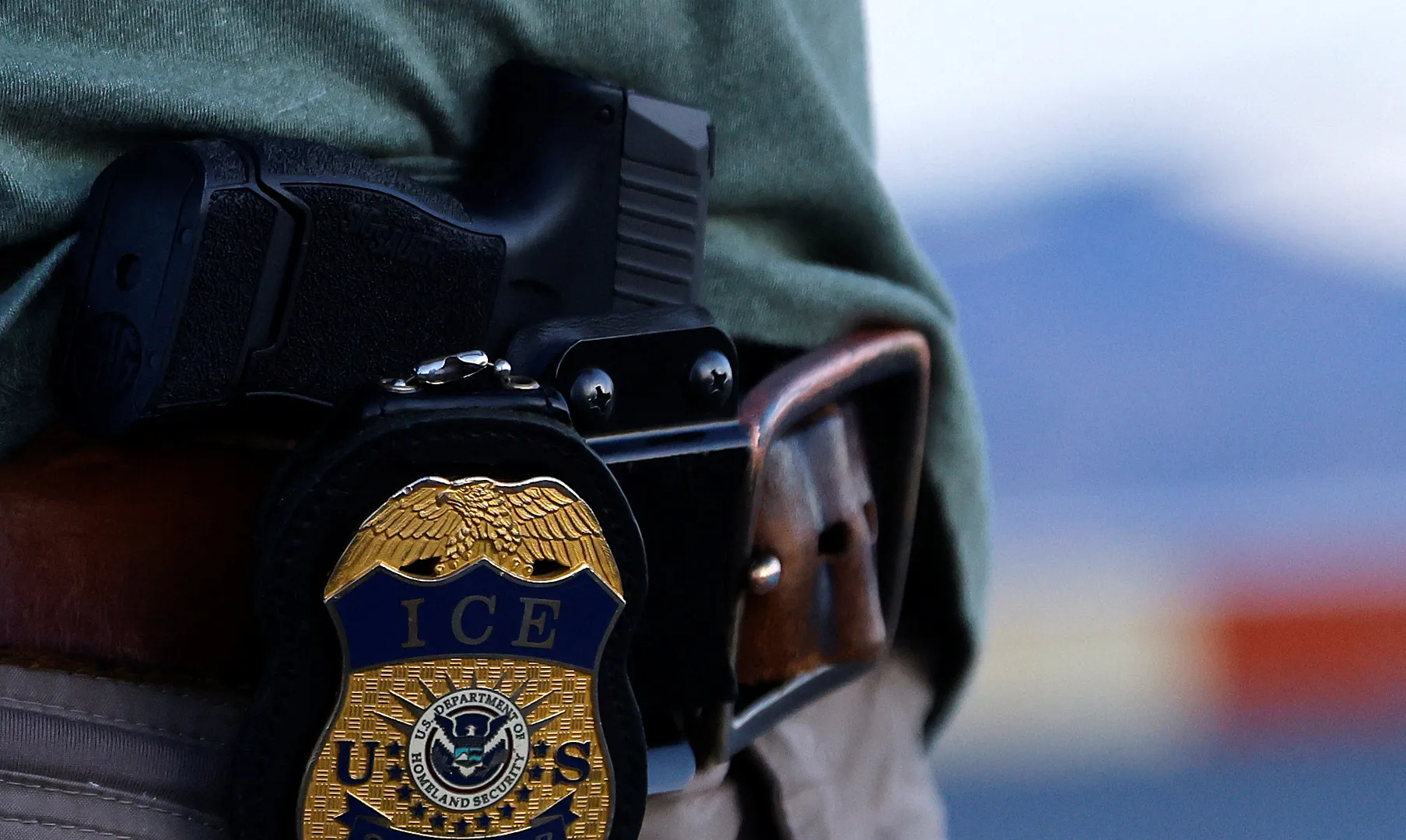
The advisory says visitors may be arbitrarily denied entry to the country, detained in “inhumane” conditions or subjected to invasive phone and social media searches. It points to the aggressive immigration surges in cities including Los Angeles, Chicago and Minneapolis that led to accusations of racial profiling and the violent suppression of protests.

The message was condemned by tourism officials, who said the groups were threatening the livelihoods of service industry workers in an attempt to achieve their political goals.

Geoff Freeman, president & CEO of the U.S. Travel Association, said there are legitimate concerns about U.S. entry policies but they’re being blown out of proportion. There were 67 million international travelers to the United States last year, he said in a statement.

“The notion that visiting America poses a meaningful safety risk is not a good-faith warning, it’s a political tactic designed to cause economic harm,” Freeman said.

A FIFA spokesperson pointed to several statements and policies, including the federation’s governing documents, which say, “FIFA is committed to respecting all internationally recognized human rights and shall strive to promote the protection of these rights.”

The U.S. has seen a decline in international travelers since Trump returned to the White House last year and offended U.S. allies with talk of making Canada a U.S. state, taking control of Greenland and questioning the value of NATO. The tourism industry is counting on a major boost from World Cup visitors, even as Trump’s travel ban for citizens of 19 countries has injected further uncertainty.

The administration is betting that its push to expedite visa processing for visitors and excitement about the tournament will outweigh concerns that Trump’s immigration messaging undercuts the theme of global unity that the World Cup is meant to represent.

The tournament kicks off June 11 with games spread across North America, including 11 stadiums in the U.S. along with two in Canada and three in Mexico.

Cooper writes for the Associated Press.

Source link

Civil rights groups condemn Southern Poverty Law Center’s indictment and prepare for legal fights

The criminal indictment of the Southern Poverty Law Center this week was met with much outrage but little surprise from civil rights leaders, who have for more than a year prepared for heightened legal scrutiny from the Trump administration, and how to mount a coordinated response.

In rounds of calls immediately following the indictment, civil rights leaders discussed how to support the SPLC, a Montgomery, Ala.-based civil rights group founded in 1971 that has tracked white supremacist groups and been outspoken on voting rights, immigration and policing. Organizers on one call agreed that winning in the court of public opinion would be crucial as judicial proceedings began, leading to dozens of public statements of support and planned rallies.

And legal advisors to civil rights groups urged organizers to prepare themselves for similar criminal indictments, protracted legal action that may exhaust their resources and audits of their staff and internal documents.

The flurry of behind-the-scenes coordination represented a marked escalation and mobilization of plans for activist groups that have been at odds with the Justice Department since President Trump’s return to the White House last year. Organizers say they are prepared to back the SPLC in its legal fight.

“It’s a blatantly obvious attack on civil rights and civil liberties to whitewash the foot soldiers of the great replacement theory and other extremists. This coalition isn’t going silent,” said Maya Wiley, president and chief executive of the Leadership Conference on Civil and Human Rights, an umbrella organization of hundreds of civil rights groups.

Without addressing the indictment, a coalition of more than 100 activist groups on Tuesday published a letter vowing solidarity with groups that are “unjustly targeted” by the federal government. SPLC was a signatory to the pact.

“An attack on one is an attack on all,” the coalition declared. “We will share knowledge, resources, and support with any organization threatened by abuses of power.”

DOJ alleges criminal conduct in SPLC’s longtime informant network

The Justice Department alleges that the SPLC, which rose to prominence for its work prosecuting and tracking hate groups like the Ku Klux Klan, violated federal law through its network of paid informants in extremist groups. The DOJ claims the payments funded hate groups and misled the SPLC’s donors.

The SPLC now faces charges of wire fraud, bank fraud and conspiracy to commit money laundering in the case brought in the federal court in Alabama, where the organization is based.

“The SPLC is manufacturing racism to justify its existence,” said acting Atty. Gen. Todd Blanche at a news conference announcing the charges. Blanche promised the department “will hold the SPLC and every other fraudulent organization operating with the same deceptive playbook accountable.”

Longtime civil rights activists found the claims to be a disingenuous and partisan move that may empower extremist groups.

“The indictment is nakedly political and represents the Justice Department turning on itself,” said Marc Morial, president of the National Urban League. “It places the Justice Department in the posture of, in effect, defending white supremacist groups like the Ku Klux Klan and others.”

Advocates also view the indictment as part of the administration’s broader upending of civil rights law and the Justice Department’s prosecution of Trump’s political opponents.

The SPLC in recent years became a bogeyman among conservatives who resented that the watchdog designated several rightwing organizations that engage in Republican politics as hateful or extremist.

In October, FBI Director Kash Patel canceled the agency’s longtime anti-extremism partnerships with the SPLC and the Anti-Defamation League, which combats antisemitism. Patel at the time called the SPLC a “partisan smear machine.”

The Justice Department and SPLC did not respond to requests for comment.

Indictment represents marked shift for civil rights work

Advocates dispute the DOJ’s characterization of the SPLC’s work, which civil rights activists credit to combating extremist groups across the country.

“The problem is that the indictment essentially claims that it was a fraud on SPLC’s donors to use their funds to fight the Klan, the neo-Nazis and other white supremacist groups, when that is exactly why people gave to the organization,” said Norm Eisen, founder of Democracy Defenders Action, a legal group that works with organizations in legal disputes with the Trump administration.

Eisen added: “The notion that there’s something wrong with using informants and protecting their identities to prevent white supremacist violence is belied by the fact that that is not only what the SPLC did, but it is also the stock and trade of the FBI itself.”

Civil rights organizations are now preparing for further legal action against other organizations that disagree with or actively oppose the Trump administration. Organizations have reviewed their document retention, tax compliance and auditing policies over the last year to safeguard against any probes or lawsuits.

Some civil rights organizations have also floated creating new organizational structures that may better withstand legal scrutiny. On another recent call, activists floated restructuring some groups into for-profit entities, or potentially crafting new financial conduits for donors to give through to ensure that staff could receive pay if an organization’s assets were seized or frozen.

The preparations represent a marked shift for many civil rights leaders, who in recent years counted the Justice Department under both Democratic and Republican administrations as a reliable ally in key civil rights battles.

“What we are seeing in real time is an administration seeking to leverage its position to target individuals and organizations that do not agree with its political thought,” said NAACP President Derrick Johnson, who said the Justice Department has been “weaponized by dangerous forces.”

But for other leaders, the SPLC indictment raised the specter of a return to a previous era, when the Justice Department monitored — and at times prosecuted — civil rights leaders to disrupt their activities.

“We’re not backing down, but we are clear-eyed. Everyone could be in some form of jeopardy if you’re in the crosshairs of this administration,” said Juan Proaño, CEO of the League of United Latin American Citizens, a civil rights group suing the Trump administration over executive orders addressing birthright citizenship and mail-in voting.

“That’s what they’re looking for; they want this to have a chilling effect,” Proaño said.

Brown writes for the Associated Press.

Source link

A Civil Rights Ruling Dear to South’s GOP

There is no little irony in the U.S. Supreme Court’s recent holding that racial redistricting is permissible as long as race is not the sole or dominant factor. With the Senate equally divided and Republicans holding a razor-thin advantage in the House of Representatives, the court’s ostensibly liberal ruling, one backed by civil rights organizations and opposed by the court’s four conservatives, could not be more dear to the hearts of Southern Republicans. The 5-4 decision will buttress GOP efforts to retain control of Congress by making the election and reelection of Republicans in the South easier after congressional districts are redrawn to reflect the 2000 census.

The strategy of racial redistricting, or creating “minority majority” congressional districts, was put into full play after the 1990 census. Racial gerrymandering isolates blacks, who vote overwhelmingly for liberal Democrats, in awkwardly shaped districts that often cut across the entire width of some states, particularly in the South. In turn, white conservative voters are placed in surrounding districts, which virtually guarantees the election of Republicans in those districts. As a result, although more minorities may be elected to Congress, fewer Democrats and more Republicans end up in the House of Representatives.

During the first Bush administration, the Department of Justice hit upon racial redistricting as a way to both increase minorities’ representation in Congress and elect more Republicans at the expense of the Democrats. The 1965 Voting Rights Act requires that all redistricting in Old South states not dilute black votes. Somewhat perversely, the department parlayed this standard into an affirmative action policy to benefit Republicans. By forcing Southern state legislatures to redistrict along racial lines, it slightly increased the number of minority-majority districts while greatly boosting the number of those disposed to vote Republican.

The Congressional Black Caucus welcomed the Bush administration’s innovative compliance with the Voting Rights Act, but white Democratic politicians in states like Virginia, North Carolina and Georgia were left in a no-win situation. On the one hand, they could not argue, at least vehemently in public, against the creation of such minority-majority districts without inviting charges of racism. On the other, they faced losing seats in districts that lacked their most reliable supporters.

Make no mistake, this affirmative action strategy worked for Republicans. Following the 1990 census, 26 new minority-majority districts were created. More blacks and Latinos were elected to Congress. But so were Republicans like Newt Gingrich; in 1994, the Grand Old Party won control of the House in large part because of their wins in the South.

Ever since, the Republican National Committee has pushed its self-serving version of affirmative action to maintain party hegemony in the South. Although not widely known, the committee has even developed computer programs and models–so-called “Max Black” plans–to help Southern legislatures draw racially gerrymandered districts for distribution to black politicians.

Ironically, during the last decade, the Supreme Court’s five most conservative justices voted to strike down such districts. The lead case, Shaw v. Reno (1993), involved a challenge to North Carolina’s 12th Congressional District. As redrawn in 1992, it was overwhelmingly black and slithered, snake-like, about 160 miles along Interstate 85, from Charlotte to Winston-Salem and to Durham. Writing for the court in that case, Justice Sandra Day O’Connor was joined by Chief Justice William H. Rehnquist and Justices Antonin Scalia, Anthony M. Kennedy and Clarence Thomas. She held that “bizarre,” ’tortured” and “irregular” minority-majority districts run afoul of the 14th Amendment’s equal protection clause.

O’Connor’s bare majority hung together in rejecting other racial gerrymandered districts in the 1990s. But she never completely ruled out race as a factor in redistricting. By contrast, Scalia and Thomas, the court’s most conservative justices, have held that race-based redistricting is never permissible.

The more liberal members of the court–Justices John Paul Stevens, David H. Souter, Ruth Bader Ginsburg and Stephen G. Breyer–steadfastly dissented. They argued for judicial self-restraint and deference to politics in determining the shape and composition of congressional districts.

The court’s latest ruling on North Carolina’s 12th Congressional District is its fourth. Redrawn three times since the 1993 case, the district is currently about 40% black and more compact, stretching across only one-third of the state, from Charlotte to Winston-Salem.

But this time, O’Connor abandoned her more conservative colleagues and joined with the more liberal dissenters. Race may be considered in redistricting, according to the court’s new majority, but only as long as it’s not the “predominate factor.” In other words, race may be a factor in redistricting but not the sole factor, and blacks apparently may not constitute a majority in the district.

With congressional redistricting underway, the decision in Hunt v. Cromartie could not be more timely. But it is certain to be a hollow victory for liberal Democrats, because, as O’Connor knows, it signals Republicans to press ahead with their brand of affirmative action in racial redistricting to hold onto their control of the House.

It’s noteworthy that the ruling turned on the vote of the justice with the most political experience and, arguably, the vote of the most political justice on the court. Before her appointment in 1981 by former President Ronald Reagan, O’Connor served on state courts and in Arizona’s state legislature, where she must have learned something about the politics of redistricting.

Moreover, she is at the court’s center stage, casting the pivotal vote on such hotly contested political issues as abortion and affirmative action. Recall, too, that on election night in November at a cocktail party, O’Connor reportedly became upset when news organizations initially announced that Vice President Al Gore had won the presidency. Her husband explained that she had planned to retire if Bush was victorious. Time will tell whether O’Connor will give President George W. Bush his first opportunity to make his mark on the Supreme Court.

Source link

High court to examine rights of green-card holders charged with crime

WASHINGTON, April 22 (UPI) — The Supreme Court will hear arguments Wednesday whether immigration officers can place permanent residents charged with a crime on parole if they leave and then re-enter the country.

In immigration, parole is a temporary, discretionary permission granted by the Department of Homeland Security that allows a person to enter or remain in the United States, even though they are not formally admitted.

Parole does not cancel a person’s green card, but essentially gives the Department of Homeland Security time to decide whether the person should be admitted or deported based on how the issue is resolved.

The court is poised to hear oral arguments in Blanche vs. Lau, which would determine when immigration officers can demote a permanent resident’s status to parole, a temporary status that can be revoked and result in deportation.

Lau is Chinese immigrant Muk Lau, a permanent resident with a green card. Blanche is Todd Blanche, the acting U.S. attorney general and named defendant in the case.

Typically, permanent residents are allowed to leave and re-enter the United States as they wish, with a few exceptions. If these immigrants have committed certain kinds of crimes, for example, officers can have them placed on parole when they return to the country after going abroad.

The case stems from an event on June 15, 2012, when 69-year-old Lau, who had gained permanent residency five years earlier, landed in a New York-area airport after traveling to China.

He presented his green card and passport to border control. His entry triggered an FBI match because a month earlier, Lau was charged with third-degree trademark counterfeiting for selling nearly $300,000 of fake designer shorts.

“I was arrested at a warehouse that contained some merchandise I had stored there,” Lau told the Customs and Border Protection agent, according to court documents. “I went to the warehouse to retrieve the merchandise because I had not paid rent, and when I got there, the cops were there and arrested me.”

The agent declared Lau inadmissible as a returning permanent resident due to the crime exception, and decided to let him in on parole, instead. A year later, Lau pled guilty to the counterfeiting, and in 2014, the Department of Homeland Security began deportation proceedings against him.

At the time, the Customs and Border Patrol agent did not know whether Lau was guilty — just that he had been charged with a crime. The crux of Lau’s case is whether the CBP agent needed “clear and convincing” evidence of a crime when placing him on parole or whether just charges were enough without such evidence.

Immigrant advocates argue the agent erred.

“Mr. Lau was absolutely, unequivocally, at that time, admissible,” said Jonathan Weinberg, who worked on the American Immigration Lawyers Association’s brief to the court. “He just was. He hadn’t been convicted of a crime. There was nothing else that would render him inadmissible.”

After an immigration judge and the Board of Immigration Appeals sided with the government, Lau appealed to the U.S. 2nd Circuit Court of Appeals. The appellate court, agreeing with Weinberg’s reasoning, granted Lau’s petition in March 2025.

The Federation for American Immigration Reform, a nonprofit advocating for lower immigration rates, also submitted a brief to the court. It argued that the border patrol officer did the right thing by paroling Lau into the country, and that the clear and convincing standard was too high.

“If you’re going to say that the officer in an airport is supposed to have all this information, you’re assigning that individual with an impossible task,” FAIR spokesman Ira Mehlman said. “You have thousands of people coming through the airports every day, and these are decisions that have to be made on the spot.”

Mehlman also said that the decision “shouldn’t be a problem” for green-card holders without any criminal history.

“When you come to the United States as a non-citizen, you are here on a conditional basis,” Mehlman said. “Even if you’re a green card holder, you’re subject to removal if you violate the terms of your presence here in the United States.”

There are nearly 13 million legal permanent residents in the United States. Legal immigrants, including green card holders, commit crimes at lower rates than natural-born citizens, according to research by the Migration Policy Institute. However, Weinberg said the ultimate decision would impact all legal permanent residents, including those who have not been convicted of any crime.

“If the government can admit Lau on parole, then the government can basically admit any returning green card holder on parole if it chooses to,” Weinberg said.

Lau’s case joins several immigration-related issues, including birthright citizenship and temporary protected status, which have made their way to the Supreme Court this spring.

“The immigrant advocacy community is, I think, fighting an uphill battle,” Weinberg said. “But that doesn’t mean you don’t give it your best shot.”

Source link

SPLC: Justice Department investigating the civil rights organization

April 21 (UPI) — The Southern Poverty Law Center announced via YouTube Tuesday that it is now the target of an investigation by the Department of Justice.

“Although we don’t know all the details, the focus appears to be on the SPLC’s prior use of paid confidential informants to gather credible intelligence on extremely violent groups,” said CEO Bryan Fair in the video. “This use of informants was necessary because we are no stranger to threats of violence. In 1983, our offices were firebombed, and in the years since, there have been countless credible threats against our staff.”

The Southern Poverty Law Center is a nonprofit advocacy and litigation organization that tracks White supremacist and other hate groups in the United States. Republicans have criticized the nonprofit for acting as a far-left entity that they say targets conservative organizations and people. It was founded in 1971 by Morris Dees, Joseph Levin Jr. and Julian Bond as a civil rights law firm in Montgomery, Ala.

The case is being led by the U.S. Attorney’s Office for the Middle District of Alabama, CBS News reported.

Fair said the probe is targeting the organization and its employees.

“For decades, we engaged in unprecedented litigation to dismantle the Klan and other hate groups. In light of that work, we sought to protect the safety of our staff and the public,” Fair said in the video. “We frequently shared what we learned from informants with local and federal law enforcement, including the FBI. We did not, however, share our use of informants broadly with anyone, to protect the identity and safety of the informants and their families.

“And while we no longer work with paid informants, we continue to take their safety seriously. These individuals risked their lives to infiltrate and inform on the activities of our nation’s most radical and violent extremist groups,” Fair said.

Fair said the organization will fight the allegations.

“We stood in the vanguard then, and we stand in the vanguard today,” he said. “We will not be intimidated into silence or contrition, and we will not abandon our mission or the communities we serve.”

Secretary of Health and Human Services Robert F. Kennedy, Jr. speaks during a House Appropriations Subcommittee on Labor, Health and Human Services, Education, and Related Agencies hearing on the budget for the Department of Health and Human Services in the Rayburn House Office Building near the U.S. Capitol on Thursday. Photo by Bonnie Cash/UPI | License Photo

Source link

Bush and Civil Rights: Words Matter, but Actions Talk

What exactly is President Bush trying to achieve on civil rights?

Against the backdrop of the racial controversy that cost Trent Lott (R-Miss.) his job as Senate majority leader, Bush’s own intentions have come under closer scrutiny. But the president has sent such mixed signals that some critics believe he’s playing a double game — moderate on decisions that can be traced directly to him and much more conservative on judicial appointments that will profoundly affect the reach of civil rights law, but only gradually and far away from the White House.

Bush drew praise even from his staunchest critics in the traditional civil rights community for his strong condemnation of Lott’s wink toward segregation. Indeed, while the White House always said publicly that Bush didn’t want Lott to resign, the president’s sharp rebuke during a speech in Philadelphia probably did more to doom the Mississippi senator than anything else that happened since Lott’s remarks at Strom Thurmond’s 100th birthday party Dec. 5.

But since Bush’s speech, the liberal civil rights community has repeatedly insisted that the president’s stirring words in defense of equal opportunity needed to be measured against his actions. Just minutes before Lott stepped down Friday, a coalition of civil rights groups held a news conference in Washington to pound at that message.

Conservatives rightly argue that support for the agenda of the liberal civil rights community isn’t the only measure of commitment to equal opportunity. But it’s reasonable for the civil rights groups to insist that a president’s actions should always be weighed more heavily than his words.

So far, Bush has moved cautiously on the civil rights issues most directly under his control. He has appointed conservatives to most key civil rights positions, and liberals charge that the administration isn’t enforcing the laws as aggressively as Bill Clinton did when he was president.

But Bush’s record hasn’t generated the intense conflict that characterized the liberal response to the enforcement of the civil rights laws under Ronald Reagan, and even Bush’s father. William L. Taylor, chairman of the Citizens’ Commission on Civil Rights, a leading liberal group, says that Bush’s record shows “a policy that is largely inert, not moving forward, and in a few areas is regressing.” Considering the source, that’s mild criticism.

Nor has Bush moved to retrench the key federal programs that promote affirmative action — policies meant to expand opportunities for minorities in hiring and government contracting. For years, conservative thinkers have viewed these programs as unfair to whites and counterproductive — a group entitlement that exacerbates social divisions.

But Bush has made no effort to repeal the executive order requiring federal contractors to establish goals and timetables for hiring women and minorities. Conservatives have long accused that program, which affects fully one-fifth of all workers in America, of encouraging quotas. Nor has the administration retrenched the programs providing minorities preferences in federal contracting. In all, Bush has done little to disturb the “mend it, don’t end it” balance on federal affirmative action programs that Clinton established in 1995.

Likewise, even before Lott, the administration was hesitant about joining a lawsuit opposing racial preferences in admissions at the University of Michigan now heading toward the Supreme Court. After Lott, officials say, it’s even less likely that Bush will use the suit to argue for a sweeping rollback of affirmative action.

Bush has had such a hands-off policy on these issues that conservatives are starting to grumble. “Conservatives are going to be very disappointed if two years from now there hasn’t been any positive movement,” says Roger Clegg, general counsel of the Center for Equal Opportunity, a conservative group.

Clegg probably shouldn’t hold his breath. While Bush has always declared himself against quotas and preferences, he’s never shown any enthusiasm for direct combat on this front. His calculation seems to be that conflict over affirmative action would eclipse efforts to reach minority voters on other issues, such as education and homeownership. “Once you enter this thing,” one Bush political advisor says, “it’s hard to move the ball on anything else.”

But liberal groups take little comfort in Bush’s cautious approach to direct action. Their fear is that Bush is filling the federal courts with conservative judges who will reshape the civil rights laws in ways he wouldn’t risk through executive or legislative initiatives that carry his fingerprints.

It’s not an unreasonable fear. Many of Bush’s judicial nominees have records on civil rights much more conservative than the views Bush has expressed. Civil rights groups argue that Bush appellate court nominees such as Carolyn Kuhl, Jeffrey Sutton and Charles W. Pickering Sr. have displayed a determination to narrow the way civil rights laws are enforced.

All of these nominations will generate fireworks in the new year (especially if Bush fulfills his promise to renominate Pickering, whom the Democratic Senate Judiciary Committee rejected last year largely around accusations of racial insensitivity). But this conflict will really come to a head if Bush receives an opportunity to nominate a Supreme Court justice.

“That’s the big one,” insists Ralph Neas, president of People for the American Way, a liberal advocacy group. “If they get a firm [conservative] Supreme Court majority, it will render the progressive agenda moot for decades. This is the whole ballgame for them. That’s why they are willing to make compromises legislatively or in the executive branch.”

Bush is under no obligation to support Neas’ agenda on civil rights. But voters have a right to demand accountability from elected officials. If Bush wants to roll back affirmative action, it’s hard to explain his executive actions; if he doesn’t, it’s hard to explain his court nominations.

Bush is sending dissonant signals, perhaps intentionally. But in the end, it’s his decisions on the courts that will speak loudest. Words matter, but words fade. When he condemns Lott, Bush is writing in sand. When he picks judges, he is carving in granite.

*

Ronald Brownstein’s column appears every Monday. See current and past Brownstein columns on The Times’ Web site at: www.latimes.com/brownstein.

Source link