At least 350 Palestinian children currently face “harsh conditions” in Israeli prisons.
Published On 15 Oct 202615 Oct 2026
Israeli forces have detained more than 2,000 Palestinian children since October 2023, the Palestinian Prisoner’s Society said.
In a report released on Wednesday, the Palestinian rights group said Israeli authorities continue to escalate their targeting of Palestinian children. At least 350 Palestinian children are currently facing “harsh conditions” in Israeli prisons.
Recommended Stories
list of 3 itemsend of list
On Tuesday, Israeli forces arrested at least six children from Hebron in the occupied West Bank, the report said.
The organisation said information regarding the number of children arrested in Gaza is unclear, given the thousands of missing persons in the besieged Gaza Strip, including children, and the ongoing policy of enforced disappearance.
The group said Israel’s policy of detention without charges or a release date constitutes “an additional violation and crime that leaves children facing the unknown and deprives them of family and educational stability”.
Cases of Palestinian children in prison
The report described Israeli practices that begin with “intimidation and arrest” and extend to “torture, starvation and denial of healthcare”.
The group highlighted the case of 15-year-old Mohammed Hamid, who contracted scabies, a contagious skin infestation, while he was detained in Ofer Prison, where rights groups have long documented abuses. He suffered severe infections, underwent heart surgery and was admitted to intensive care in critical condition. He subsequently had one of his legs amputated.
The organisation also highlighted the case of 17-year-old Walid Ahmed, who died in March 2025 after six months in Megiddo Prison. In December, an Israeli judge halted the investigation into his death, stating that although there was evidence of starvation, no definitive cause of death had been established.
American children in Israeli prisons
Ahmed was imprisoned in Megiddo with his friend Mohammed Ibrahim, a teenager from Florida. Ibrahim was released after months of advocacy from US-based organisations and appeals from high-ranking lawmakers.
Mohammed Ibrahim was not the only young American held in Israeli prison without charge – Israeli forces reportedly took Abdalkareem Issa Ahmed Safi from his West Bank home in a late-night raid in June. He turned 18 in detention, and authorities subsequently moved him from a youth holding area into an adult section at Ofer Prison.
Similarly, Israeli forces arrested 16-year-old Adam Wajeh Abdelfattah Karakrah, also an American, in July. Although he was set for release in August after his family secured bail, Israeli authorities abruptly reversed the decision to free him.
The Palestinian Prisoner’s Society called for “real international action” to ensure the release of arbitrarily detained children, enforce investigations and end torture, starvation and the denial of treatment in Israeli prisons.
Israeli forces have detained more than 25,000 Palestinians in the West Bank, and thousands more in Gaza, since Israel’s genocidal war began in October 2023.
The immigration agency has rejected a report from a government watchdog, making suggestions for improved body camera policy.
Published On 14 Oct 202614 Oct 2026
Immigration and Customs Enforcement (ICE), a United States agency that has taken a central role in President Donald Trump’s mass deportation campaign, has rejected a government report calling for its agents to wear body cameras that automatically activate.
On Wednesday, the Government Accountability Office, a nonpartisan agency that provides research to Congress, released a report recommending an update to ICE guidelines for camera usage.
Recommended Stories
list of 3 itemsend of list
It suggested that “automated camera activation” would be helpful in situations where “unexpected and unplanned incidents, unrelated to sensitive operations, result in use of force by or against personnel”.
“Given the important role of body-worn cameras in law enforcement activities, we maintain that additional controls are needed to help ensure that ICE personnel capture footage in accordance with policy,” the report said.
Automatic activation, it added, would address difficulties ICE agents face in manually turning on their cameras during enforcement operations.
But ICE has rejected the recommendation for automatic activation, which could be triggered by an agent pulling a gun or turning on a car siren. The agency cited privacy concerns.
But the Trump administration faces public pressure to improve transparency during its immigration raids.
Agents from ICE and other agencies such as Customs and Border Protection (CBP) have faced accusations of excessive force and civil liberties violations.
In January, two US citizens – Renee Good and Alex Pretti – were shot to death in separate shootings in Minneapolis, Minnesota, during immigration operations.
The New York Times estimated in July that immigration agents had opened fire on at least 25 people since the start of Trump’s second term. A CBS News review updated this week counts at least 30 shootings, with nine people killed and 13 others wounded.
ICE has often blamed such incidents on aggression against its agents, and it has argued that its officers have opened fire to defend themselves from danger.
But in several cases, that rationale has come under scrutiny.
Critics argued that video footage in Good’s fatal shooting disproved government statements alleging that she had weaponised her vehicle against agents. Her car, according to observers, appeared to be turning away from agents, not towards them.
In another case, ICE agent Christian Castro was accused of making false statements about a shooting that resulted in injury to Julio Cesar Sosa-Celis, a Venezuelan man living in Minneapolis.
Castro faces federal charges for allegedly lying about being attacked with a snow shovel and broom before the shooting, after video footage contradicted his account. Castro pleaded not guilty last month.
More recently, on October 8, immigration agents shot a man named Oscar Belgal in New York City while his five-year-old son was in the backseat of his car. ICE stated that Belgal appeared to be “going towards officers” in his car when they opened fire.
On Tuesday, a judge rejected the government’s effort to have Belgal deported.
Activists say better recording procedures for body camera footage could help clarify what happened in such incidents.
But the Trump administration has largely refused to implement reforms to ICE protocol.
Earlier this year, Democrats in Congress delayed funding for the Department of Homeland Security, which oversees ICE, on the basis that significant changes needed to be made to reduce incidents of excessive force.
The department said on Wednesday that automatically recording cameras could result in “the unauthorised recording of sensitive interactions with informants or victims”.
The agency added that all ICE offices had received body cameras as of August 5, but that training in their use was still ongoing and would be finished “soon”.
Mexico will require the digital platforms to protect minors from violent and sexual content.
Published On 14 Oct 202614 Oct 2026
Mexican President Claudia Sheinbaum signed a presidential decree requiring digital platforms, including TikTok, Meta and X, to protect children from violent, sexual and other harmful content online.
The decree establishes that digital platforms must, by design, restrict exposure to content involving violence, harassment or sexual abuse, as well as immediately remove any risky material from the profiles of minors.
Recommended Stories
list of 4 itemsend of list
Sheinbaum said on Wednesday that the government would back legislation to penalise companies that fail to implement the decree.
“If no progress is made, it would become a law,” she told a news conference on Tuesday.
“The goal is for digital platforms to take on some of the responsibility and refrain from disseminating, promoting, or spreading content related to this type of information — including criminal acts or violent behaviour,” Sheinbaum had said earlier when she indicated she would introduce the decree.
The decree comes after an attack by two 18-year-olds on their former high school in the northern state of Coahuila in early October that killed one and wounded three others.
Digital platforms will have one month to comply with the decree, government adviser Luisa Maria Alcalde said.
Officials said they had already discussed the matter with representatives of social media outlets and streaming platforms such as Meta, Microsoft, Apple, TikTok, Google, X and Huawei.
Instagram, TikTok, Snapchat, Kick, YouTube, Facebook, Twitch, Reddit, Threads and X applications are displayed on a mobile phone [File: Hollie Adams/Reuters]
Last August, Meta, for example, agreed to pay an $18bn settlement in a major US federal case accusing it of endangering children, and was forced to introduce new safety features to platforms including Instagram and Facebook. The lawsuit alleged Meta had violated the Children’s Online Privacy Protection Act by collecting, retaining, and using personal data from children under 13 without proper parental consent.
Mexico’s move follows a broader global push to protect minors online, with governments in Europe and Australia tightening oversight of digital platforms and US states pursuing a range of child-safety measures.
Brazil has also moved to strengthen protections for children online. Such measures have raised questions over how to protect minors while safeguarding privacy and freedom of expression.
The Cockroach Janta Party wants Chief Election Commissioner Gyanesh Kumar to quit over changes to voter lists.
Published On 10 Oct 202610 Oct 2026
India has deployed thousands of police and paramilitary personnel in central Delhi and restricted transport in and around the capital ahead of a youth-led protest demanding the resignation of Gyanesh Kumar, the country’s chief election commissioner.
Saturday’s rally, called by the Cockroach Janta Party (CJP), a youth-based political movement, is expected to be the biggest yet in a wave of near-daily protests over a revision of voter lists that critics say favours Prime Minister Narendra Modi’s ruling Bharatiya Janata Party (BJP).
Recommended Stories
list of 3 itemsend of list
Organisers have billed it as a protest to “Save Democracy”.
Shutdown of central Delhi
Police have not authorised a rally at Jantar Mantar in central Delhi, which authorities usually designate for protests, because they said the request was not made on time and that the CJP had violated undertakings given during earlier protests.
Police have also warned that protesters will face a forceful law enforcement response if they violate the ban.
Roads to the site are blocked with multiple layers of metal barricades, as authorities shut 57 metro stations from Friday night, cancelled several long-distance trains and suspended mobile internet within 4km (2.5 miles) of the protest area until Saturday night, the Indian news agency ANI reported.
India’s Supreme Court said on Friday that some trains must still run and that blanket closure of metro stations is unlikely.
“The dictator would rather shut down the entire national capital and inconvenience millions of citizens than allow a peaceful protest at a designated protest site,” CJP chief Abhijeet Dipke said on X.
The CJP says at least 10,000 people, including protesters travelling to Delhi by train, have been detained across the country.
“You can detain the people, you cannot detain the movement,” said Neha Bora, national president of the All India Students’ Association, who has emerged as a leading face of the protests.
What kicked off the protests
Protesters want Chief Election Commissioner Gyanesh Kumar to quit over a voter list revision that has removed more than 130 million names.
The Election Commission says the exercise removes duplicate and ineligible voters and aims to prevent “foreign illegal immigrants” from voting.
Critics say it has disproportionately affected marginalised and minority communities.
The protests escalated after the Indian Express reported that Kumar’s two deputies had formally raised concerns at least 14 times in the past 10 months over the revisions.
The Election Commission and the BJP have denied the allegations. The BJP says the opposition is misleading the country because it cannot win elections.
The CJP began online as political satire in May after Chief Justice Surya Kant called unemployed youth “cockroaches”, sparking nationwide outrage. Since then, the CJP has garnered a large following among India’s youth.
The July protests led Modi’s education minister to resign over exam paper leaks. The latest demonstrations come months before a series of state elections in early 2027, including in Uttar Pradesh, India’s most populous state, which the BJP governs.
SACRAMENTO — A private prison company is challenging a new California law requiring detention centers to provide medical care, privacy and other civil rights to people detained by federal immigration authorities.
GEO Group, a for-profit prison company, filed a complaint in federal court over Senate Bill 942, also called the Civil Detainees’ Bill of Rights Act of 2026. It mandates that immigrant and other detainees are afforded privacy, safety, hygienic living conditions and other rights.
Gov. Gavin Newsom signed the law last week as part of a package of bills to push back on the Trump administration’s immigration enforcement, which the Democratic governor described as “Orwellian.” GEO Group filed its complaint the day after Newsom signed the law.
SB 942 declares that detainees at state, local and privately run facilities have the right to medical, dental and mental health care; physical exercise; clean drinking water and functioning toilets; and other rights. It allows the attorney general to bring civil action against private and public entities that allegedly violate those rights.
GEO Group attorneys argue in the federal complaint that while California elected officials “may disagree with federal immigration policy,” the state “may not impose its preferred immigration-detention standards on federal detention operations, whether those standards would tighten, loosen, supplement, or otherwise alter the federal framework.”
According to its website, the company operates six detention facilities in California, four of which are housing detainees under contracts with Immigration and Customs Enforcement. That includes a shuttered state prison that began holding ICE detainees earlier this year.
GEO Group has had some previous success challenging laws seeking to undermine the private prison industry’s role in federal immigration enforcement. A federal court struck down a 2019 law that attempted to bar any “private detention facility within the state” after the company filed suit.
Representatives for GEO Group did not respond to a request for comment. Spokespeople for Newsom, Atty Gen. Rob Bonta and state Sen. Anna Caballero (D-Salinas), who authored the bill, did not immediately comment on the lawsuit.
More than 1,700 healthcare workers have been killed during the genocide in Gaza. Israel has detained hundreds more without charges. Doctors, nurses and paramedics who stayed to treat the wounded have themselves become casualties of this war.
When medical staff are killed, imprisoned or disappeared, it is not only they who pay the price. Patients lose the people they rely on to keep them alive.
This is something delegates who gather in Rotterdam this week for the General Assembly of the World Medical Association (WMA) must remember. The fate of their Palestinian colleagues should be put on the table, not as a debating point, but as a test of whether the world’s governing body of medical ethics still means what it says.
The WMA already recognised the seriousness of these issues last year by adopting a resolution on the protection of healthcare in conflict. That was an important step and a welcome reaffirmation of the principles of medical neutrality. The challenge now is to ensure this is followed by the commitment of every medical association to explicitly support it and to use its influence to pressure governments to act.
If the WMA Assembly needs a single face for this file, it could be the one of Dr Hussam Abu Safia, the paediatrician who was the head of Kamal Adwan Hospital, the last functioning hospital in northern Gaza until Israeli forces stormed it in December 2024.
He’s been held now for more than 22 months without charge under Israel’s Incarceration of Unlawful Combatants Law, which permits indefinite detentions. He reportedly continues to endure prolonged solitary confinement, beatings, severe weight loss and untreated pre-existing conditions. An international petition for his release has drawn the signatures of more than 970 medical professionals from 41 countries.
Alongside him stands Dr Mazen al-Rantisi, the 71-year-old family physician from Ramallah in the occupied West Bank, known as the “doctor of the poor”. He was arrested in June in a predawn raid on his home.
In addition, our longtime Doctors Without Borders (MSF) colleague, Dr Mohammed Hassan Ali Obeid, a respected 43-year-old Palestinian orthopaedic surgeon and father of three children, has been detained under the Unlawful Combatants Law in Israel for more than 600 days without charge.
Although detained health workers have been released, more than 80 remain in Israeli custody alongside at least a dozen arrested from the West Bank.
The World Health Organization (WHO) has recorded 1,000 attacks on healthcare, which have resulted in more than 1,000 deaths and 1,700 injuries in Gaza since October 7, 2023. Roughly 90 percent of Gaza’s health infrastructure has been destroyed or damaged. In August 2025, United Nations experts stated that the systematic destruction of the health system amounts to “medicide”.
In the West Bank, where no wartime emergency provides cover, the WHO also documented more than 1,000 attacks on healthcare since October 7, 2023, with 42 deaths and at least 218 injuries.
Ambulances are stopped at checkpoints and their crews taken. Medics trying to reach people injured in settler attacks have themselves been obstructed. Dialysis and oncologic patients stay home because the checkpoints make the journey to treatment impossible. Healthcare workers have been shot, detained and killed during Israeli military raids.
All of this represents Israel’s deliberate and systematic endeavour to dismantle Palestinians’ capacity to provide care. This is consistent with its clear and blatant disregard for Palestinian life.
The WMA Assembly should speak plainly about what is happening. It should call publicly for the release of detained Palestinian doctors, including Abu Safia, al-Rantisi and Obeid. It should press for independent access to those still being held. And it should back independent investigations into attacks on healthcare in Gaza and the West Bank with the findings made public regardless of where they lead.
This is an opportunity to collectively pressure fellow medical associations, political authorities and any relevant bodies to take action.
What lies before the Rotterdam assembly is a duty. One that reaffirms loudly, structurally, universally the founding proposition of the WMA: that membership carries an ethical responsibility, which does not flex with geography or alliances.
Healthcare workers are not targets. Either a white coat is worth protecting everywhere, or it is protected nowhere. The test is not simply whether we affirm these principles, but whether we uphold them when it matters most.
The views expressed in this article are the author’s own and do not necessarily reflect Al Jazeera’s editorial stance.
Memusi Lochede sits on a bed as her 24-year-old daughter Chaula lies motionless on the floor of their home in Archer’s Post, in the shadow of the training grounds. A donated wheelchair sits in the corner. Her daughter’s right leg is gone; metal rods brace a body so badly injured that she struggles to hold up her head.
“I have so much pain in my heart seeing my daughter in this condition,” 46-year-old Lochede tells Al Jazeera, wiping the drool from her daughter’s chin. “I feel ashamed that she needs so much help, and I don’t know how to help her.”
In 2019, Chaula, then a teenager, says she was hit by a speeding BATUK vehicle while crossing the road. Her leg was amputated and, her mother says, she was left paralysed and spent nearly three years in hospital.
A BATUK representative later came to see Lochede, she says.
“He apologised for what happened and said they don’t want a court case and would take care of my daughter — anything she needs,” she recounts.
The MOD said it “has not located a record of an approach having been made by a BATUK representative to the family.”
When her daughter was discharged, BATUK paid the hospital bills — without receipts or disclosing the amount — and disappeared, Lochede says. For years, Lochede called its community liaison officer, the Kenyan official tasked with receiving complaints like hers, who never answered. Eventually she gave up.
The MOD told Al Jazeera in August that BATUK is aware of the claim that one of its drivers “hit and injured a minor” in 2019, “resulting in permanent injuries”.
It said legal representatives have been in contact with the Kenya National Commission on Human Rights about the case and that a compensation offer has been made but the commission has not responded.
In late September, Al Jazeera asked the MOD what had been offered, when, and through whom. It did not provide those details, saying instead that BATUK “remains willing to engage with the child’s family, through an appropriate representative and on a without-prejudice basis,” but that “to date, we have been unable to establish contact with the family or an authorised representative”. Any resolution would have to rest on “verified medical and factual information” and, because the claim concerns a minor, be approved by a Kenyan court.
Ruth Getobai Nchagwa, a deputy director at the commission, says it has “never engaged with BATUK directly as our letters to them went unanswered”.
Chaula’s case “has not been addressed to date,” she notes, and the commission is not aware of any discussions about compensation. Lochede similarly says no one has ever approached her about compensation.
Before the accident, Lochede supported her five children by making beaded necklaces and selling them in Nairobi. Now she cannot leave her daughter’s side, and Chaula’s care costs about 30,000 Kenyan shillings ($230) a month — more than Lochede usually earns.
“It’s a shameful feeling to pick up the phone and call so many numbers for help, and no one picks up your call,” she explains, her lips quivering as she fights tears. “In those moments where I can’t provide for my daughter, I just lock myself inside the room and lie in my bed and cry.”
Her daughter, once healthy and active, now barely speaks.
“There are some days she wakes up and says just one word, like ‘food’ or ‘bathroom,’” Lochede says. “Those are the good days. Other days, she refuses to eat. I can see that she’s depressed and lonely. Inside, her soul is shattered.”
“These soldiers do these things because they know they can get away with it,” she adds sharply. “They know we don’t have money. We don’t have power. It’s extremely difficult for us to fight them.”
Cases like Chaula’s are far from isolated. Last year, a landmark two-year inquiry by Kenya’s parliamentary defence committee put decades of alleged BATUK abuses on the official record.
The 94-page report gathered testimony from hearings across Laikipia and Samburu, including a herder allegedly shot by a British sergeant; the alleged gang rape of 30 women at knifepoint in 1997; a boy who lost both arms and an eye to unexploded ordnance; and women with children their British fathers had never acknowledged.
BATUK declined to appear, citing its status and immunities under the defence arrangements. The committee condemned the refusal as contemptuous, calling it “emblematic of institutional contempt for the authority of Parliament and, by extension, the sovereignty of the people of Kenya”.
It concluded that BATUK “is increasingly seen as an occupying presence rather than a development partner”, with affected residents drawing parallels to colonial injustices. Witnesses told the committee that “suspected BATUK abuses are not only unpunished but actively covered up” — that whenever a BATUK member is implicated, police files often “go missing” and complainants are “intimidated into silence.”
An MOD spokesperson told Al Jazeera the UK “deeply” values its relationship with Kenya, “which has long been the UK’s defence partner of choice in East Africa”.
The MOD is “addressing concerns raised by Kenyan authorities and communities, focusing on legal accountability, ethical standards, environmental stewardship, economic benefit and social responsibility,” the spokesperson said.
Regarding road traffic incidents, the spokesperson said BATUK “cooperates fully with the local authorities and Kenyan Police”, that all such incidents are “investigated thoroughly” and that “where claims are made, BATUK submits to the jurisdiction of the Kenyan courts”.
When asked what progress the MOD had made on the concerns raised by the committee, and whether it was investigating any of the specific cases, it referred Al Jazeera to the written statement it submitted to the inquiry, which said it was “not aware of any evidence to support any allegation of collusion with security forces to suppress or dismiss complaints, or intimidate, bribe or coerce victims into silence”, and that any such evidence “would be taken extremely seriously and investigated accordingly”.
For Awino Okech, professor of feminist and security studies at SOAS University of London, the parliamentary report points beyond individual abuses. “This is no longer a case of a few bad apples but reckoning with what many will interpret as accepted militarised institutional culture,” she tells Al Jazeera.
“The fundamental question the British government is being asked to reflect on is their responsibility when there is a documented pattern of malbehaviour by their employees in a foreign country.”
Okech says the pattern cannot be separated from race. “We cannot ignore the racialised element. In this case, it is visible when crimes committed in Kenya are taken less seriously.”
India’s Cockroach Janta Party has launched a new protest demanding change after millions of voters were allegedly improperly removed from electoral rolls. Other protest movements joined the rallies, which led to scuffles and arrests in the capital.
Toronto, Canada: As Canadian Prime Minister Mark Carney races to make the country less dependent on the United States, attract billions in new investment and get major projects built faster, his economic overhaul is running into resistance from a group that says it wants many of the same things: organised labour.
The latest clash, over the right to strike, comes after months of mounting pressure on Ottawa from Washington, DC.
Recommended Stories
list of 4 itemsend of list
US President Donald Trump, since taking up a second term in office last year, has imposed steep tariffs on Canadian goods and weakened trade agreements – perilous moves as Canada has historically sent close to 80 percent of its exports to its southern neighbour. He has repeatedly piled on with the tariff threats to make Canada the 51st US state.
Canada has responded with retaliatory tariffs, while a broader movement to “Buy Canadian” has taken hold. The hockey-inspired “elbows up” — meaning a readiness to defend against an opponent — has become a national rallying cry.
With trade talks stalled since August, Carney has moved with urgency to shore up the economy and invite new investments. Last month, he announced Bill C-39, known as the Building Canada Strong Act, promising to bring “speed, certainty and predictability” to investors.
Along with measures to speed up approvals for major projects, the bill would also give Ottawa clearer powers to intervene in legal strikes and lockouts in federally regulated workplaces — a provision that has put Carney on a collision course with unions.
Canada’s largest unions have come together against the changes. The largest, the Canadian Union of Public Employees (CUPE), had its national executive go as far as voting to defy the bill’s proposed limits on the right to strike if it passes Parliament without amendments.
CUPE National President Mark Hancock credited Carney’s handling of Trump and said the union’s 800,000 members, who work everywhere from hospitals to schools to municipal services, want to be part of “Team Canada”.
“But at what cost?” he said in an interview with Al Jazeera.
A fight over the right to strike
The controversy centres on Section 107 of the Canada Labour Code, which already gives the Labour Minister broad powers to step into disputes if needed to maintain “industrial peace”, end work stoppages and force the two sides into a binding arbitration.
Beginning in 2024, Ottawa used the provision eight times to intervene in disputes involving airlines, Canada’s two largest railways, three major ports and Canada Post and again during the Air Canada dispute in 2025 when flight attendants went on strike.
Unions have challenged the use of that law in court and had hoped the proposed C-39 would restrict, if not repeal, that clause while businesses wanted it strengthened.
The bill does neither. Instead, it introduces two conditions that the government would have to fulfil first before turning to Section 107.
Before stepping in, the government would have to appoint a special mediator, wait for a public report and consider whether a work stoppage is hurting the “national interest”.
Once a strike or lockout is underway, the minister could direct the Canada Industrial Relations Board to get operations running again and impose a binding process, such as arbitration.
A protester carries an effigy depicting Canada’s Prime Minister Mark Carney as people march to protest against the Canada Investment Summit in Toronto in September [File: Carlos Osorio/Reuters]
The government says those steps put clearer guardrails around a power that already exists, and Carney has said the bill “absolutely reinforces the right to strike”, according to the Canadian Broadcasting Corporation.
Unions have rejected this defence, pointing out that the meaning of “national interest” would ultimately be decided by the minister. They also argue that the prospect of government intervention is bound to change what happens at the bargaining table.
“The political lesson that employers will draw from it is simple,” Larry Savage, a professor of labour studies at Brock University, told Al Jazeera. “Hold out long enough, emphasise the economic damage, and then Ottawa will remove the union’s leverage for you.”
Disruption, Savage said, is precisely what gives a strike its power. “Every effective strike is disruptive,” he said.
Unions say they have already seen employers expect Ottawa to intervene.
Teamsters Canada alleges the Canadian National Railway (CN) and the Canadian Pacific Kansas City (CPKC) railroad companies were counting on Ottawa to step in when they locked out thousands of workers in 2024. Section 107 was invoked within hours.
“Companies have gotten used to the idea that if there is a labour dispute, they can just wait for the government to intervene,” Christopher Monette, Teamsters Canada’s director of public affairs, told Al Jazeera.
CUPE said it saw a similar dynamic at Air Canada in August 2025. Hancock said bargaining stalled after more than 10,000 Air Canada flight attendants voted overwhelmingly to strike because the airline was “expecting the government of Canada to step in and end the strike” — an account Air Canada disputed.
Less than 12 hours after workers walked out, Ottawa invoked Section 107. Air Canada CEO Michael Rousseau later told BNN Bloomberg the airline had expected the provision to be enforced and did not expect a strike.
“That was why they didn’t have a strategy on how to deal with the strike,” Hancock said.
Building Canada faster
The fight over the right to strike is also part of a much bigger argument taking shape around Carney’s economic agenda: Who gets a say in how Canada should change, and how quickly, in the name of making itself less vulnerable to the US?
Critics accuse Carney of using the economic threat from the US to push through changes that go well beyond responding to Trump’s trade war.
New Democratic Party leader Avi Lewis has accused him of using the “fear and disorientation around the trade war to push through a series of unpopular measures that he did not run on, has no mandate for and would never get away with under normal circumstances”.
A protester carries an effigy depicting Canada’s Prime Minister Mark Carney outside the Canada Investment Summit in Toronto [File: Carlos Osorio/Reuters]
That tension was on display in Toronto just a week before C-39 was introduced. Inside Canada’s first national investment summit, hundreds of global investors met with government officials and executives as Carney pitched a country ready to build.
Outside, hundreds of protesters marched through downtown towards the summit’s opening gala under the banner “The Many vs The Money”. The rally brought together labour, Indigenous, environmental and migrant-rights groups, with signs and speeches taking aim at everything from fossil fuel and military projects to AI and the use of public money to attract private investment.
For unions, C-39 has sharpened that debate, pitting the government’s promise of greater certainty for investors against workers’ ability to exert pressure through strikes.
But Jim Stanford, an economist and director of the Vancouver-based Centre for Future Work, questions how much of an economic threat strikes actually pose.
While work stoppages can be costly for individual companies, Stanford said, “It is very, very rare that you would see a noticeable and sustained impact on GDP, employment or incomes.”
Production and transportation are often delayed rather than permanently lost, he added, with businesses catching up once work resumes.
Stanford also questioned the idea that strikes are driving away investment, noting that more than 95 percent of collective bargaining ends without a work stoppage and saying there is “no empirical evidence whatsoever” that strikes have reduced investment.
“This is more of the government giving some icing on the cake for business. It’s not that this has to happen or else our investment won’t work,” he said.
There is also an economic cost to weakening the right to strike, Stanford argued. Workers need bargaining power to win higher wages, which can support consumer spending, productivity and worker retention.
“It may seem like labour peace is a good thing, but if it means that a worker’s share of the pie shrinks, then this actually hurts the economy.”
For labour leaders, that’s where Carney’s economic push goes too far.
“Canada’s unions are part of Team Canada. We have our elbows up,” Canadian Labour Congress President Bea Bruske said in a statement. “But we can’t have our elbows up against Trump with our hands tied at the bargaining table.”
Savage said the government’s “Team Canada” rhetoric risks treating workers’ bargaining power as a national liability.
“I don’t think Canada becomes stronger by telling workers in ports or railways or airlines that their rights have to be surrendered whenever employers invoke competitiveness or the national interest,” he said.
Seven Minnesota judges face ethics complaint after speaking publicly about the US president’s immigration crackdown.
Published On 30 Sep 202630 Sep 2026
The United States Justice Department has filed a misconduct complaint against seven federal judges in Minnesota who spoke publicly about the pressure their courts came under during President Donald Trump’s immigration crackdown.
The judges spoke to The New York Times this month about dealing with a flood of cases during Operation Metro Surge, an immigration crackdown that led to thousands of arrests in the Minneapolis-St Paul area from December to February.
Recommended Stories
list of 4 itemsend of list
The Justice Department says it crossed an ethical line by talking publicly about the cases.
Attorney General Todd Blanche accused the judges of showing “obvious bias” against the Trump administration and called on them to step aside from any cases involving the Department of Homeland Security (DHS).
“When we have a situation like we have now, where you have a judge, a couple of judges, just not only violating the canons in our view but also showing bias in what they’re saying, we have no choice but to act,” Blanche told reporters.
The judges say they did nothing wrong. A spokesperson for Minnesota’s federal court system said legal experts had found that the judges were “well within the ethical rules” when they spoke to the newspaper.
The complaint is the latest in a series of clashes between the Trump administration and the judiciary, which has blocked some of the president’s policies and, in several cases, accused government lawyers of failing to follow court orders.
One of the judges named in the complaint, Patrick Schiltz, alleged that the government did not comply with nearly 100 court orders related to immigration enforcement in January alone.
In one ruling, he wrote that US Immigration and Customs Enforcement (ICE) “is not a law unto itself”.
Schiltz was nominated by Republican President George W Bush and previously clerked for conservative Supreme Court Justice Antonin Scalia.
He later told The New York Times that what happened in Minnesota’s federal courts during the crackdown “created a grave threat to the rule of law”.
Schiltz also pointed to guidance issued by a federal judicial ethics panel in February, saying that judges can speak publicly about issues such as the rule of law and judicial independence.
A United States immigration judge has ruled the leader of Wisconsin’s largest mosque can be deported under a controversial law that United States President Donald Trump’s administration has used against non-citizens advocating for Palestinian rights.
Judge Jayme Salinardi ruled on Wednesday that Palestinian-born Salah Sarsour, president of the Islamic Society of Milwaukee, can be removed from the US based in part on a memo by Secretary of State Marco Rubio that “his actions undermine US foreign policy to combat antisemitism around the world”, according to his lawyers.
Recommended Stories
list of 4 itemsend of list
Sarsour, who has lived in the US for more than three decades, called the ruling “deeply disappointing”.
“I will continue fighting to defend the right to free speech and to stay in the country I have called home for more than three decades,” he told The Associated Press news agency.
His lawyer, Patrick Taurel, strongly rejected the decision.
“I wish the world could see the evidence that we presented and hear the testimony that the court heard because the case we presented compels only one conclusion, which is that Salah is not deportable,” Taurel told reporters on Wednesday.
“He’s done nothing wrong. He should be given back his green card, frankly, with an apology for what’s being done to him.”
The ruling does not mean Sarsour will be immediately deported.
His lawyers have 60 days to argue that sending Sarsour back would put him at risk of torture, which could protect him from deportation under the Convention Against Torture. If they lose, they plan to appeal. Taurel said he can’t be deported while that appeal is pending and will remain in the US for the “foreseeable future”.
‘Extreme deference’
Sarsour was detained by Immigration and Customs Enforcement (ICE) officers in Milwaukee in March, nine months after Rubio issued a memo declaring him deportable on foreign policy grounds.
The June 2025 memo invoked a rarely-used US law that allows the Secretary of State to seek the deportation of non-citizens whose presence could have “potentially serious adverse foreign policy consequences.” The administration has used the same provision against pro-Palestinian activists Mahmoud Khalil and Mohsen Mahdawi.
Sarsour’s lawyers criticised the “extreme deference” Salinardi gave to Rubio’s memo. But Taurel said the judge believed his hands were tied by an earlier ruling in Khalil’s case, which found that a letter from the Secretary of State could be enough to make someone deportable on foreign policy grounds.
That meant Salinardi could not look behind Rubio’s decision to examine the evidence supporting it, Taurel said.
“If the Secretary of State says the person is deportable, it is game over,” he told reporters Wednesday.
The government did not win on all of its arguments.
Salinardi rejected its allegation that Sarsour had lied on his green card application. Taurel said the judge also rejected an allegation that Sarsour had falsely claimed to be a US citizen in order to vote.
Al Jazeera reached out to the State Department and the Department of Homeland Security but did not receive responses by the time of publication.
Decades-old convictions
Sarsour is separately fighting the Trump administration in federal court over his detention while his deportation case is ongoing.
A federal judge ordered his release from ICE custody in June after 81 days, questioning why decades-old convictions that US authorities had long known about suddenly justified detaining him. The judge found there was a “substantial” case that the government was retaliating against him for speaking out about Palestinian rights.
The Trump administration has appealed his release, arguing that Sarsour’s convictions in Israel make him a security threat. He was imprisoned in 1988 after confessing to throwing stones and a Molotov cocktail at Israeli military personnel, and was convicted again in 1995 over an attempt to hold weapons.
Sarsour denies the offences, and his lawyers say the confessions were forced through torture. His former lawyer, Jawad Boulos, testified in August that Sarsour was coerced into signing confessions and was not convicted of an offence tying him to a “terrorist” organisation.
Taurel criticised Salinardi for giving what he called “extreme deference” to Israeli government records submitted by ICE, which Sarsour’s lawyers argue were incomplete and relied on confessions obtained through torture.
“A great deal of evidence we presented was ignored,” Taurel said.
The evidence challenged Israel’s military court system, where he said secret evidence can be used and Palestinians can be denied access to lawyers for extended periods.
Luna Droubi, an attorney representing Sarsour, said the case raises broader questions about whether immigrants can speak freely on political issues without fear of being targeted by the government.
“Why raise these arrests now?” she said. “Do I have the right to speak out about issues that matter to me? What if I draw a political cartoon? Am I going to be arrested and detained because of that?”
‘The end of my life’
Sarsour said being deported to the occupied West Bank “means the end of my life”.
His lawyers argue his prior treatment in Israeli custody shows he could face torture if sent back. Taurel said Sarsour’s former lawyer testified that his case stood out because Sarsour told him that Shin Bet, Israel’s internal security agency, had taken him to hospital while in custody.
The judge also named Jordan as a possible destination. Sarsour travelled to the US on a Jordanian-issued document, but his lawyers say he is not a Jordanian citizen and has no right to live there. They believe he could ultimately be returned to the West Bank and Israeli custody if sent to Jordan.
Durban, South Africa – Bishop Raphael Bahebwa is in hiding, afraid he could be attacked for speaking out for the rights of foreigners in South Africa.
“I am in hiding now because they say they are going to kill me for speaking about the rights of foreigners,” he told Al Jazeera.
Bahebwa has lived in South Africa for 26 years, after arriving as a refugee from the Democratic Republic of the Congo (DRC).
In that time, he has watched antiforeigner sentiment flare repeatedly in the country he came to call home. But he says this year feels different.
A September 30 deadline declared by March and March, an anti-immigration movement that has led protests across South Africa this year, has renewed fears of violence among migrant communities.
The group has called for undocumented foreign nationals to leave South Africa and has warned of further demonstrations if its demands are not met.
For Bahebwa and other refugees in Durban, however, the distinction between documented and undocumented migrants offers little comfort. They say the hostility they experience on the streets rarely begins with a request to see their papers.
Fears of renewed violence
South Africa will hold local government elections on November 4, in a campaign in which migration has become an increasingly prominent political and social issue.
For months, Bahebwa was among hundreds of refugees and asylum seekers who slept on the pavement outside the Durban Refugee Reception Centre on Che Guevara Road.
Many were from the DRC and Burundi, with others from Uganda, Mozambique and Tanzania. They said they had fled their communities because they feared antiforeigner attacks.
They arrived outside the Department of Home Affairs (DHA) office seeking safety.
Instead, the pavement became their home.
For roughly four months, men, women and children slept outside, exposed to the elements and dependent on civil society organisations and volunteers for food and other necessities.
“It has been very tough,” Bahebwa said. “Never before have I experienced something like this.”
Some of the migrants told Al Jazeera that conditions became desperate. They described irregular access to food and medication and said one man who had tuberculosis died while living at the camp. Al Jazeera has not independently established the circumstances of his death.
The camp was also not far removed from the hostility its residents said they had fled.
On September 3, members of March and March confronted refugees and asylum seekers living outside the centre. Violence broke out, and police intervened. At least four people were reported injured.
At another protest days later, police officers stood between the two groups, forming a barrier as tensions rose.
March and March has described its mobilisation as a campaign against undocumented immigration, crime and deteriorating conditions in South African communities.
The group says the government’s response to immigration enforcement has been insufficient.
Its leaders have repeatedly rejected accusations that their campaign is xenophobic and insist their target is undocumented migration rather than foreign nationals generally.
Bahebwa said documented and undocumented migrants alike have been caught in the hostility.
Earlier this year, six refugees working in salons around Durban’s Warwick Street Market were beaten by men carrying sticks, according to public-interest news outlet GroundUp. Two were hospitalised.
Bahebwa said the migrants had also struggled to obtain help from the authorities after earlier attacks.
“Police said we can’t open cases because we are foreigners. We had nowhere to go,” he alleged. Police have not publicly responded to that specific allegation.
Nowhere obvious to return to
In mid-September, the government moved to clear the makeshift camp outside the refugee centre.
The refugees were given a choice: return to the communities they had fled or accept temporary accommodation at the Lindela facility in Gauteng, hundreds of kilometres from Durban. Lindela is a government-run immigration detention facility used to hold people facing deportation.
The choice divided them.
Malawi migrants to South Africa line up for supplies at an informal refugee camp in Sherwood, Durban, South Africa, after fleeing their homes amid fears of xenophobic attacks [File: EPA]
Some feared going to Lindela, a facility historically associated with immigration detention and repatriation. Others felt they could no longer endure life on the pavement.
On September 15, 274 people were transported by bus from Durban to Lindela. About 150 others chose to remain in Durban and began trying to find alternative accommodation.
For those who stayed behind, leaving the pavement did not resolve the problem that had brought them there in the first place.
Kafuti Muyumba, a small business owner from the DRC and a representative of the refugee community, said many were afraid to return to neighbourhoods where they had built businesses and lives.
People are afraid, he said. “Even the police allow March and March violence. They came with sticks and say we are attacking them,” Muyumba told Al Jazeera.
He said many refugees had lost their livelihoods during the months of upheaval and were now desperate to find accommodation.
“This is not the first time we are experiencing xenophobia,” he said. “In 2008 and then in 2015 we also experienced this.”
In 2008, xenophobic violence spread through townships and informal settlements, killing dozens and displacing thousands.
Further outbreaks of violence against foreign nationals followed in subsequent years.
For Muyumba, those memories make the rhetoric surrounding September 30 difficult to dismiss.
“We don’t trust the police. They are not being fair with us. Some of them are also saying we must go,” he said.
Police have said there are no plans to change their normal policing approach because of the September 30 deadline and that any protesters will be expected to remain within the law.
March and March said all it wants is for undocumented immigrants to leave the country and return home.
But Muyumba said returning to the DRC is not a viable alternative for many Congolese refugees.
“There is still war there,” he said.
A country tightening its borders
In response to ongoing protests, the South African government said it had intensified its immigration enforcement.
Between June 14 and August 20, authorities processed 86,596 foreign nationals for deportation and repatriation, according to the government’s Inter-Ministerial Committee on Migration.
Malawians made up the largest group, followed by Zimbabweans and Mozambicans.
Government data says 90 percent of those repatriated had entered South Africa illegally, while 95 percent were classified as having crossed the border outside official ports of entry.
The government says the operations form part of a broader effort to strengthen border management and enforce immigration law.
At the same time, officials have repeatedly warned private groups against taking immigration enforcement into their own hands.
March and March’s September 30 deadline has no legal authority. The government says common citizens cannot deport anyone from South Africa.
Protesters hold placards during an anti-immigration march in Durban, South Africa, calling for tighter border controls and the deportation of undocumented migrants [File: Thuli Dlamini/Reuters]
But deadlines do not need legal force to create fear, as was the case for an earlier deadline of June 30. For the refugees who spent months sleeping outside the DHA office in Durban, September 30 is another uncertainty layered on top of many others.
Some have been moved hundreds of kilometres away.
Others are trying to find new homes in the same communities they once fled. But among the migrants Al Jazeera spoke to, there is a shared anxiety that paperwork may offer limited protection when anger is directed first at being foreign.
Bahebwa has spent more than a quarter of a century in South Africa. For now, he says he is hiding and does not know what September 30 will bring.
“They are scapegoating us as foreigners,” he said. “It is not going to end on September 30. It has to do with the elections.”
Head of the Roman Catholic Church holds ’emotional’ two-hour meeting with seven abuse victims in French town of Lourdes.
Published On 27 Sep 202627 Sep 2026
Pope Leo XIV has thanked a group of survivors of clerical abuse “for their painful testimony” and “reaffirmed his commitment” to end harm by Catholic priests at a meeting in southwestern France, the Vatican said.
On Sunday, the pontiff visited the pilgrimage town of Lourdes, where he privately met seven survivors of child abuse, now adults, and promised to further efforts to reform the Church in the wake of the global sexual abuse scandal.
The group said in a later news conference that the meeting was emotional and touching.
“When he saw the state I was in, he took me into his arms,” survivor Jean-Marie Delbos said, adding, “It was an extraordinary moment.”
The 80-year-old was abused as a pupil at the nearby boarding school of Notre-Dame de Betharram, where staff have been accused of physical and sexual abuse over several decades.
The survivors said they felt heard and that they were impressed by Leo’s compassion and knowledge of their individual cases.
But they hoped the words would be accompanied by action.
Jerome Guillement, who has written about a priest abusing him as a teenager, said at the news conference that the pope understood the “systemic” nature of sexual abuse in the Church.
“From his point of view, the perpetrators are individuals, but what allows it to continue is the systemic dimension within the institution,” he said.
“He certainly believes that the Church has done a great deal in France, but he also believes that the Church in France still has a tremendous amount left to do.”
Pope Leo participates in a candlelight procession at the Sanctuary of Our Lady of Lourdes in Lourdes, France, September 27, 2026, as part of his four-day apostolic journey to France [Stephane Mahe/Reuters]
Local leaders hoped Leo’s visit would help repair the Church’s standing after a 2021 independent inquiry found that some 330,000 French children had been abused by Catholic clergy and lay leaders over seven decades.
The pope told an estimated 150,000 people gathered for a Mass in a field near the famed Catholic shrine in Lourdes earlier on Sunday that the Church must have the courage to face its past.
Veronique Garnier, another survivor who met with the pontiff, said she had found the Mass, in which Leo referred to abuse without directly apologising for it, troubling and wondered why she had attended.
But she said she was encouraged by her meeting with Leo.
“I do indeed believe there is hope – hope that there can be change and truly listening to us at a deep level, rather than just superficially with beautiful words that are never followed by any real action,” she said.
Leo also spoke about the abuse scandals in a closed-door meeting with French bishops on Sunday, according to a Vatican-provided text.
He was expected to visit the northeastern city of Metz on Monday before returning to Rome the same day.
The once simple message, “Get out the vote,” now has a corollary: “Protect the vote.”
That message was hammered home Saturday for dozens of voting rights groups, community organizations and unions attending a rally to recruit and train poll watchers for the November election.
Organizers for several groups brought together under the banner of Love Powers L.A. offered scenarios of the threats that could materialize on Nov. 3 — from ICE raids to intimidation by the Proud Boys — and detailed strategies to counter them.
Their goal was to raise a cadre of volunteers for a Neighborhood Vote Protection Program to observe 650 polling places throughout the 11 days of voting and to turn fear and confusion sought by election deniers into a celebration of the right to vote.
“We want to make it a season of excitement,” said Jeremy Payne of the social justice group Catalyst California.
1
2
1.David Gutierrez right, of Inner City Struggle, signs up Jocelyn Elizalde, 22, and Manuel Becerra, 19, from left, to help with outreach, during an event held by Love Powers LA, representing dozens of community groups and labor unions, provide education and training to Angelenos on how to protect their vote and respond to threats of election interference at East Los Angeles College on Saturday, September 26, 2026. (Christina House/Los Angeles Times)2.Participants including Evelyn Gonzalez, right, attend a workshop for activist dance and street activation during an event by Love Powers LA, representing dozens of community groups and labor unions, providing education and training to Angelenos on how to protect their vote and respond to threats of election interference, at East Los Angeles College on Saturday, September 26, 2026. (Christina House/Los Angeles Times)
The event kicked off with multicultural music by Native American, Korean and West African drum ensembles.
“L.A. is a target for retribution and spectacle,” said John Lee, also of Catalyst California. “When they try to steal an election, it is a sign they know they are losing.”
Godfrey Plata of L.A. Forward, left, and Jung Hee Choi of We Are California present skits on how to talk to neighbors about voting during the event Saturday.
(Christina House / Los Angeles Times)
The event, involving numerous nonprofit organizations, stayed away from endorsements or political messages aimed at the coming election. But speakers didn’t hold back on their views of President Trump.
“Trump is a chicken and a loser,” said Jung Hee Choi, of the umbrella group We Are California.
Choi described two personality types, skeptics and frozen, that the group is targeting.
She urged volunteers to hold ballot parties in their homes to move skeptics “from the couch to the poll” and routine voters from the “frozen mode to the fight mode.”
“We need people out at the polls,” she said. “You are the greatest tool to fight back and grow our movement.”
The groups held their event just a day after Trump’s latest move in his attempt to reshape voting in America.
The Supreme Court upheld Trump’s expanded use of government data to search for noncitizens who are registered to vote. The impact of the decision is likely to be limited, other than to highlight Trump’s distrust of elections and his unproven claims that a large number of illegal voters are casting ballots.
Love Powers L.A., representing dozens of community groups and labor unions, provides education and training to Angelenos including Azenith Morales, Marise Roxas, and Liezl Japona, from left, of the Filipino Workers Center, on how to protect their vote and respond to threats of election interference.
(Christina House/Los Angeles Times)
Breakout sessions covered how to plan a ballot party, activist dances and street activations.
Attendee Joe Pugh, who works for the community services organization ATAP, said she planned to host a block party to push the importance of voting in South-Central.
“They’re always talking about ‘my vote doesn’t count,’” she said.
During the poll monitoring session, Emma Olson Sharkey, a partner at the Political Law Group, outlined what poll watchers should look for and what they should do about it.
Their role, she said, is not to engage. They will observe and report any attempt to intimidate voters or poll workers.
The organization provides an online report form to report incidents.
“We hope it is boring,” Payne said. “In most cases, nothing will happen.”
Tulkarem, occupied West Bank – Hakim Mar’i spends his days lying on a single bed, his disfigured leg raised. The windows of Mar’i’s dilapidated apartment, his latest temporary shelter, are covered with old blankets. Unable to work, Mar’i has no money for electricity, so the blankets have to do. At night, his family lives in near darkness.
The apartment is just around the corner from mounds of rubble and gnarled iron structures that mark one entrance to the now-emptied Tulkarem refugee camp. For Mar’i and other Palestinians, the camp was a home once considered temporary. But now, even the physical structure – their home – that tied those generations together is gone.
Recommended Stories
list of 4 itemsend of list
The apartment is just around the corner from mounds of rubble and gnarled iron structures that mark one entrance to the now-emptied Tulkarem refugee camp. For Mar’i and other Palestinians, the camp was a home once considered temporary. But generations lived there, and now, the physical structure – their home – that tied his family together over the years is gone.
Impoverished, Hakim’s family is in disarray. With its debts mounting and its members facing another eviction, he said he has considered taking his life several times over the past year and a half.
Mar’i cannot afford treatment for his debilitating leg injury, which has developed severe infections. He said he sustained it while working as a labourer inside Israel in 2019. The wound worsened after Israeli soldiers severely beat him when they forced his family from the Tulkarem camp. Diabetes and other untreated conditions have piled on, but he is unable to pay for the needed medical care.
“This joint here is completely gone,” he said, gesturing at the swollen, blackened lower leg that prevents him from working.
“The medicine – by God, the medicine, I haven’t been able to get. My wife and kids tell me: get out travel. Go to America, Turkey – so I can the medical treatment I need… I’m a sick man.”
His mother, Salwa, sat beside him, less than a kilometre (0.6 miles) from their former four-storey home. She wept when asked about the family home that was built floor by floor after they were first displaced in 1948 from al-Khudayra, the Arabic name for Hadera, a city in Israel. “We really put a lot into that house,” she said.
After their removal, the Israeli military razed the Mar’i home so a road traversing the now-emptied camp could be built. “Seeing it destroyed was really painful for us – all of us,” she said.
It has been more than 20 months since Israeli forces emptied the Jenin, Tulkarem and Nur Shams refugee camps in a sweeping military operation in the northern West Bank, displacing tens of thousands of Palestinians whose families had already been refugees for three generations. Constantly renewed orders for a closed military zone now prevent their return.
Since January 2025, Hakim’s family has been forced to move four times. First, they fled to a converted youth centre before landing in a cramped apartment with their four children, all under 15.
Unable to pay rent, the family could see the landlord’s generosity run its course as this once-temporary housing arrangement now has no end in sight. Hakim owes money at the local shops for food he bought on credit. Some nights, the children eat at neighbours’ houses.
“I have children. I have food. I have drink,” he said. “My hands are empty. Nobody is with me. Nobody is standing beside me.”
Hakim Mar’i in his family’s apartment with his injured leg, which prevents him from working [Al Jazeera]
‘We’re already at the brink’
The Mar’i family is among more than 33,000 Palestinians forcibly removed from the Jenin, Nur Shams and Tulkarem camps by Israeli forces in early 2025. This is the largest single episode of forced displacement in the West Bank since Israel’s occupation began in 1967, according to the United Nations agency for Palestinian refugees (UNRWA).
UN satellite imagery shows that 20 percent of all buildings across the three camps have been destroyed and another 28 percent are damaged.
“The level of destruction we are seeing is severe and unprecedented,” said Roland Friedrich, director of West Bank affairs for the UN agency for Palestinian refugees, UNRWA.
According to Friedrich, 85 percent of those displaced have no regular income after many lost jobs when the camps were emptied. More than 80 percent of residents are renting, an unfamiliar expense for families who never paid for housing or utilities inside the camps.
The closed military zone covering the camps is renewed every two months, Friedrich said, with no indication of when – or whether – residents will be allowed to return. “What we saw there is forced displacement,” Friedrich said. “The UN’s position is very clear: People have to be allowed to return. The camps must be rebuilt.”
Unlike after the 2000-2005 second Intifada when the Jenin camp was rebuilt, displaced families and UNRWA staff fear there is no return plan this time.
The Israeli military stated the camps were emptied for “operational security” in its effort to root out fighters from the camps. Friedrich worried the aim of the military operations is to “change the geographical expression of the Palestinian refugee issue”.
Now more than 20 months into what was meant to be an emergency response, funding shortages have left UNRWA unable to cover the vast needs of the displaced population. It has moved some operations to keep schools and basic health clinics functioning. With funds dwindling, the agency has shifted to a “targeted approach”, leaving thousands without support.
Friedrich pointed to a rise in gender-based violence linked to the economic strain on families and to growing depression and anxiety among displaced children observed by UNRWA’s psychosocial teams. “We’re already at the brink now,” he declared.
Members of the Zbeidat family sit on couches outside. The room they stay in is on the left [Al Jazeera]
‘Everyone went their own way’
While Hakim’s displacement plays out in the shadow of the camp, the family of Khadija Zbeidat face their own imminent eviction on the outskirts of Tulkarem. They live in the neighbourhood of Dhinnaba, where sparse houses are interspersed with greenhouses. They are unable to afford a residence closer to the city centre.
As Khadija sat on a couch in the middle of the yard, her many children and grandchildren ran past a small patch of plants she has planted – one of her few remaining joys. “I love plants,” she said. “We had many flowers in our home in the camp. Having the plants here is all I have to feel like myself,” she told Al Jazeera.
Khadija, a widow, shares a tiny spartan room with nine family members, nearly all children, along with a small bathroom and a kitchen barely big enough for one person to cook in. A worn couch takes up one corner. The ceiling is peeling above it.
The room was given to them rent free by a relative of Khadija’s brother-in-law after they spent four months crammed into her daughter’s house with nine other people. “It got really cramped, the pressure on each other,” Zbeidat said. “And we became a burden too.”
Khadija’s family was displaced in January 2025 from the Tulkarem camp’s Haret al-Nadi section, a significant part of which has been destroyed, she said.
“The camp was excellent,” she said of their life before. “I swear, I wish they’d take us back. Everything was close to us, dear – … the closeness, that sense of belonging and the warmth, the company and the neighbours.”
The memories that she cherishes most dearly and that bring her to tears are of food: the stuffed grape leaves and the maamoul cookies made as a neighbourhood together for Eid. This year, there was none of it.
“Nothing. No cookies,” she said. “Nobody even had it in them to do anything any more. Everyone went their own way – scattered.”
Like the Mar’i family and others, they were not allowed to bring their belongings during their abrupt displacement. Some residents have since been allowed to retrieve belongings once or twice from their homes in the camps, but much of what they own remains left behind. Khadija’s daughter-in-law at one point returned to the ruins of the camp – at the risk of being shot – to retrieve a doll left behind that Khadija’s granddaughter Sandy would not stop crying about.
In Tulkarem, displaced families live either in the poorest areas closest to the camp, like the Mar’is, or on the cheaper outskirts, like the Zbeidats, remaining close enough to the health and schooling services that UNRWA still provides. But even a simple trip to buy groceries requires Khadija, who has no car, to travel 2km (1.2 miles).
At night, the family sits outside rather than in the stifling heat of the poorly ventilated room, watching Israeli military drones pass low overhead. “What to do? We’re used to seeing them, to having them around, to them raiding houses,” Khadija said. “It doesn’t matter any more.”
The military raids that always haunted life in the refugee camps have now come to wherever the displaced refugees have fled to. “We don’t feel safe,” Khadija said. “Nor the kids. It’s dangerous. When they want to go out somewhere, my heart stays busy until they come back.”
The kitchen and bathroom the Zbeidats have are in the same room they sleep in [Al Jazeera]
Waiting to be kicked out again
For months after the displacement, landlords, relatives and shopkeepers absorbed much of the shock, allowing families to stay for free or buy food on credit. But as the emergency stretches to almost two years now, that informal safety net is fraying. The pressure is felt particularly in economically moribund Tulkarem, where many families had relied on jobs inside Israel before Palestinian work permits were revoked after the Hamas-led attacks in southern Israel and the start of Israel’s genocidal war in Gaza in October 2023.
The owner of the property where Khadija’s family is staying recently sent his sister to tell Khadija’s family to leave. “They think it’s been too long,” Khadija explained. “They want the land, to benefit from the land and the room. … But where can we get money, where to pay from? The rent is very high, and we can’t afford it. We don’t know what to do if she comes again and kicks us out.”
Hakim’s family is on the brink of eviction too. Like others, he received from UNRWA a one-time rental subsidy of 3,000 shekels ($985) and a separate 1,700-shekel ($560) multipurpose cash payment for short-term assistance. “Every minute, I am waiting for the landlord to kick us out,” he said.
Khadija’s family survives on credit from shopkeepers who know their situation and, for now, still extend it – but patience is wearing thin.
Hakim said this goodwill is collapsing: “You tell them: ‘Give me a day, two days. Be patient with me.’ They won’t bear it.”
As distant as a return to her family’s lands in 1948 feels now, Khadija still hopes to return to the camp one day. But she worries that her children may inherit an even more precarious existence than the one that preceded this latest dispossession – refugees for generations displaced yet again. “Only God knows what tomorrow will bring us,” Khadija said.
If you or someone you know is at risk of suicide, theseorganisations may be able to help.
Tunis, Tunisia – For nine-year-old Yassar Naouar, visiting his father in prison has become an exercise in staying strong. He tries not to cry in front of Wael, fearing that seeing his son in tears would make an already painful situation harder for him. After leaving the prison, Yassar finds a corner where he can finally let the tears fall.
Hichem Naouar, Yassar’s grandfather, says the boy has changed since his father was detained. He now sleeps beside his mother after waking up screaming at night and his results at school have worsened. When Yassar told his mother that other children kept asking whether his father was a thief, she asked him what he thought.
“Never,” the nine-year-old replied.
Wael’s youngest child, four-year-old Sumud, is too young to understand why her father is in prison. Hichem says he took her to visit him. When she saw her father behind the glass, she leaned forward to embrace him, only to hit her head against the barrier.
Hichem spoke to Al Jazeera on Wednesday outside the Tunis Court of Appeal, where he had gone to follow the latest challenge to Wael’s detention. He repeatedly choked up as he described what he had seen during his most recent visit.
Wael was sitting with his hand against his cheek, his father said, his elbow trembling and his gaze fixed in the distance. He was struggling to see clearly and to keep water down without vomiting. He was dizzy and had difficulty controlling his left leg. Wael later told Hichem that other prisoners had said he sometimes wakes during the night calling out his youngest daughter’s name.
For his father, however, Wael’s story is also about the kind of person he has been. He recalled an incident during the Sumud land convoy in Libya in May, when armed men tried to kidnap another participant. Wael intervened, pulled the man away and helped him escape before returning to the men and telling them they could take him instead.
During the first Sumud flotilla, a female fell into the sea and was close to drowning. Wael immediately jumped in and rescued her.
“Wael’s strength is in the strength of his ideas and in his commitment to his people. Whenever he heard about any injustice against workers or employees, you would always find him at the forefront,” Hichem said.
The case and its wider fallout
Wael, 41, began a hunger strike on August 16 to protest his continued detention and was transferred to hospital as his condition deteriorated. He suspended his strike after 38 days following appeals from his lawyers and supporters, saying the decision did not mean abandoning his demands.
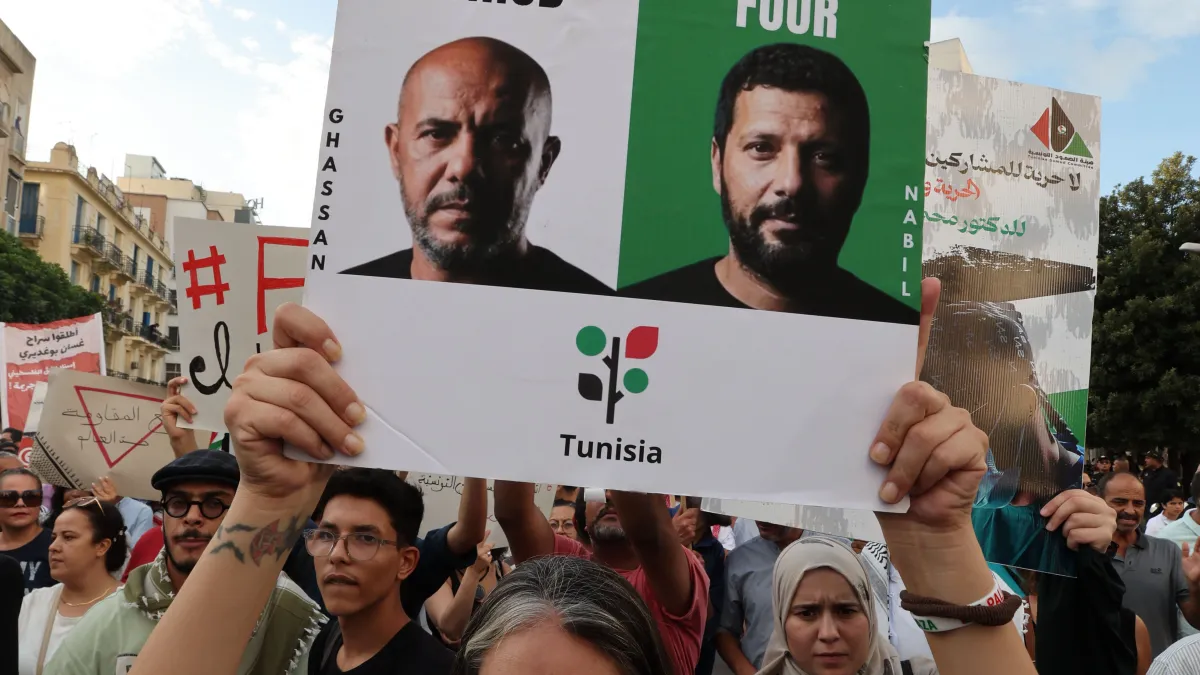
Four activists, Wael Naouar, Ghassan Henchiri, Ghassan Boughdiri and Nabil Channoufi, have been held since March following an investigation by Tunisia’s Economic and Financial Judicial Pole, a specialised body that handles financial and economic crimes. The investigation concerns alleged financial irregularities linked to fundraising for the Global Sumud Flotilla, an international campaign seeking to deliver aid to Gaza and challenge Israel’s blockade of the Palestinian territory.
The state-owned TAP news agency, citing judicial sources, reported that investigators are examining the origin and use of funds collected for the flotilla and whether any were diverted for other purposes. The activists and their defence team have repeatedly denied wrongdoing and maintain their innocence. None of the four has been convicted.
For their lawyers, the issue is also why the men should remain in prison while the investigation continues.
Ghassan Ghribi, a member of the defence committee, described the latest extension of their pretrial detention as an “exception to the exception”, arguing that freedom should be the rule and detention the exception. The four-month extension was ordered on September 11 and the defence challenged the decision before the Court of Appeal in Tunis.
“The investigating judge spent six months on the case without carrying out any investigative work, other than questioning the activists,” Ghribi told Al Jazeera. He said the extension should be based on clear reasons and that the four men were being made to pay the price for what he described as a lack of investigative work.
The Court of Appeal rejected the challenge on Wednesday, leaving the quartet in pretrial detention for another four months while the investigation continues. Henchiri, Boughdiri and Channoufi remain on hunger strike.
Authorities have presented the case as a financial investigation into the handling of funds raised for the flotilla, rather than a prosecution linked to the men’s political or pro-Palestinian activities. The government has rejected accusations that the judiciary is being used to silence opponents, saying the judiciary is independent and that legal proceedings are conducted according to the law.
The fallout has also widened beyond the four men. Fourteen people detained after the September 19 protest calling for their release have since been placed in pretrial detention, lawyer Rafed Rabbeh confirmed to Al Jazeera on Friday. Among them is a 17-year-old who was brought before a juvenile judge. Tunisia’s Child Protection Code says priority should be given to preventive and educational measures and that pretrial detention should be avoided as much as possible for children.
Rabbeh said the detainees face several charges, including participating in a gathering allegedly intended to disturb public order and commit an offence, publicly attributing unlawful acts to a public official without proof, and making public statements deemed to damage the reputation of a person or official body. The charges are based on several provisions of Tunisia’s Penal Code.
The toll on those left behind
Speaking by phone from Gafsa, Ghassan Henchiri’s father, Sebti, said his son remains conscious but is visibly exhausted after being on hunger strike since September 9.
“According to what his sister told me after visiting him, he is still holding up. The fatigue is visible. He is exhausted, but he is still conscious,” Sebti said.
Ghassan has not been taken outside the prison for further medical examination of a head injury sustained during his detention in Israel, Sebti told Al Jazeera. Ghassan and his family have raised the issue with both the prison administration and investigating judge. They were promised that he would receive the necessary medical examinations, but that has not happened, Sebti said.
“It could be a superficial injury, but with the conditions in prison and the high temperatures, it has exhausted him,” he said.
Ghassan also has other health problems, including living with one kidney and suffering from back problems, Sebti said. He has developed a skin rash that keeps him from sleeping, but his request to see a dermatologist was rejected because the prison doctor did not consider it serious, Sebti said.
“I will remain steadfast, I will not give up my right and these malicious accusations are false,” Ghassan told his father.
“He is my son, my brother, my companion, my whole life,” Sebti said. “Ghassan is a man of integrity. I am not saying that because I am his father. Everyone knows that about him.”
Ghassan’s detention has also reshaped family life. He had been working at a high school and was recently engaged, Sebti said.
He described Ghassan’s political commitment as something rooted in the family. He has been involved in student activism and later trade unions since 1978, campaigning for freedom, the right to organise and a better, more dignified life for Tunisians. Ghassan grew up with those principles and was influenced by his father’s activism.
“This is what Ghassan was raised on and what influenced him,” Sebti said.
Human Rights Watch has also raised concerns over the use of financial and money-laundering investigations against civil society actors in Tunisia.
For the Naouar and Henchiri families, the impact of the detentions is being felt at home, in prison visits, anxious phone calls and children asking when their fathers will return.
Yassar still asks about his father and has told his grandfather he is ready to go on hunger strike too.
Asked where her father is, four-year-old Sumud answers: “Palestine. Prison”.
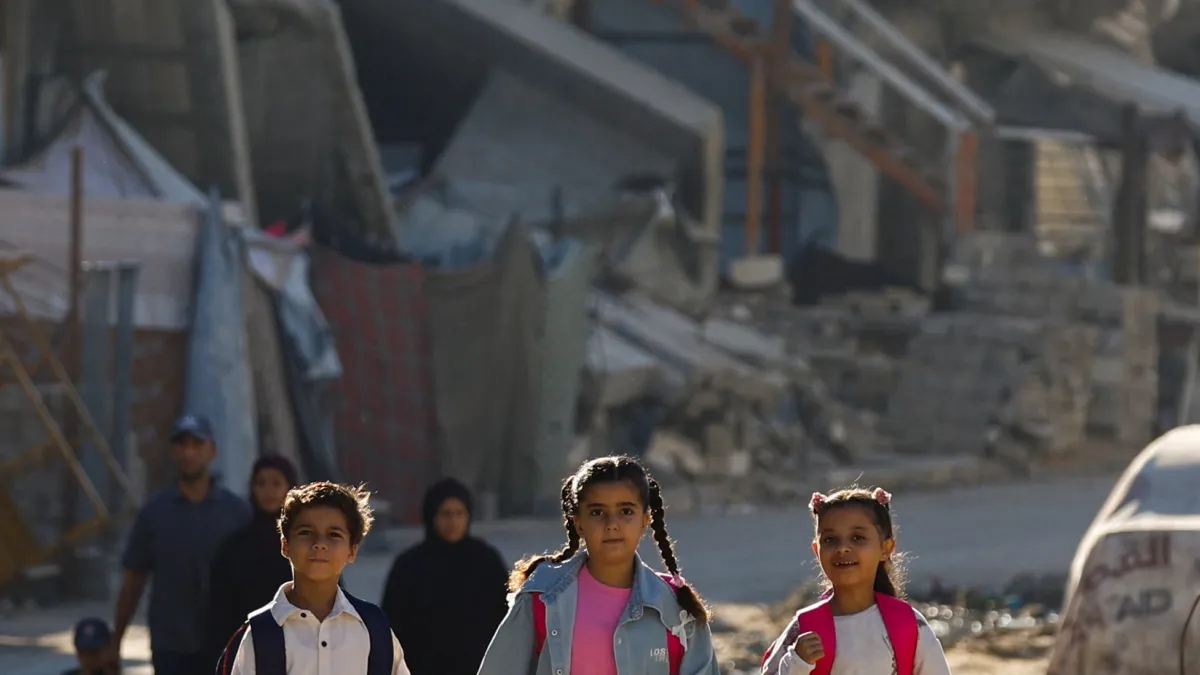

![Instagram, TikTok, Snapchat, Kick, YouTube, Facebook, Twitch, Reddit, Threads and X applications are displayed on a mobile phone. [File: Hollie Adams/Reuters]](https://i0.wp.com/occasionaldigest.com/wp-content/uploads/2026/10/2026-07-06T180423Z_238814398_RC2QCIAB6I5D_RTRMADP_3_USA-COURT-TEXAS-APP-STORES-1784172342.jpg?w=640&ssl=1)
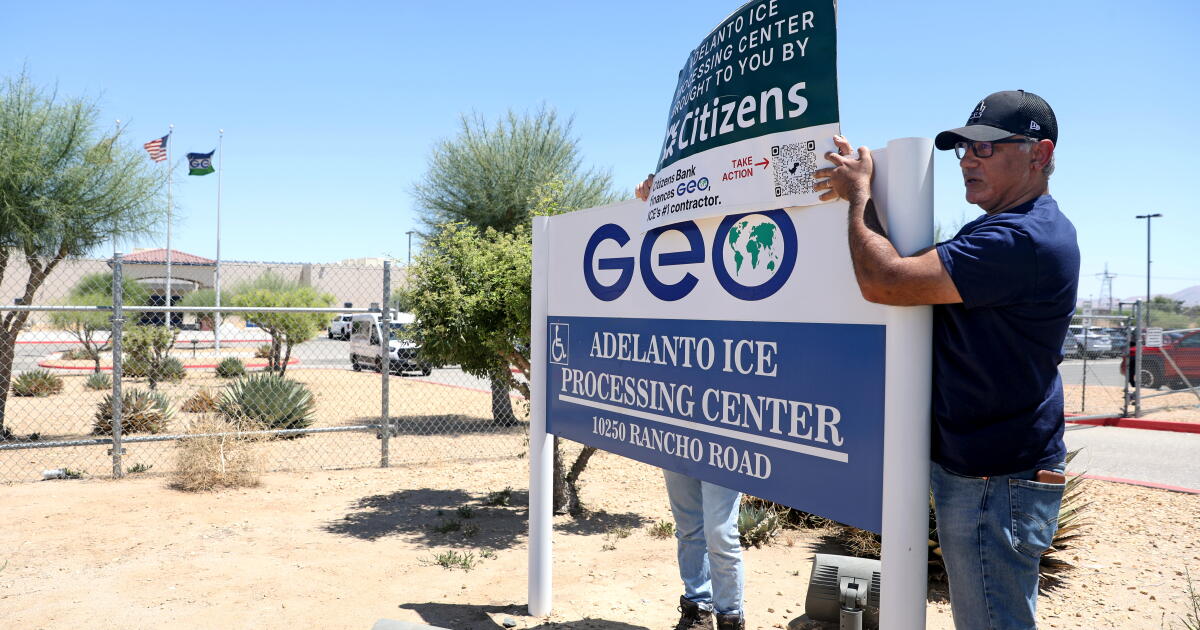
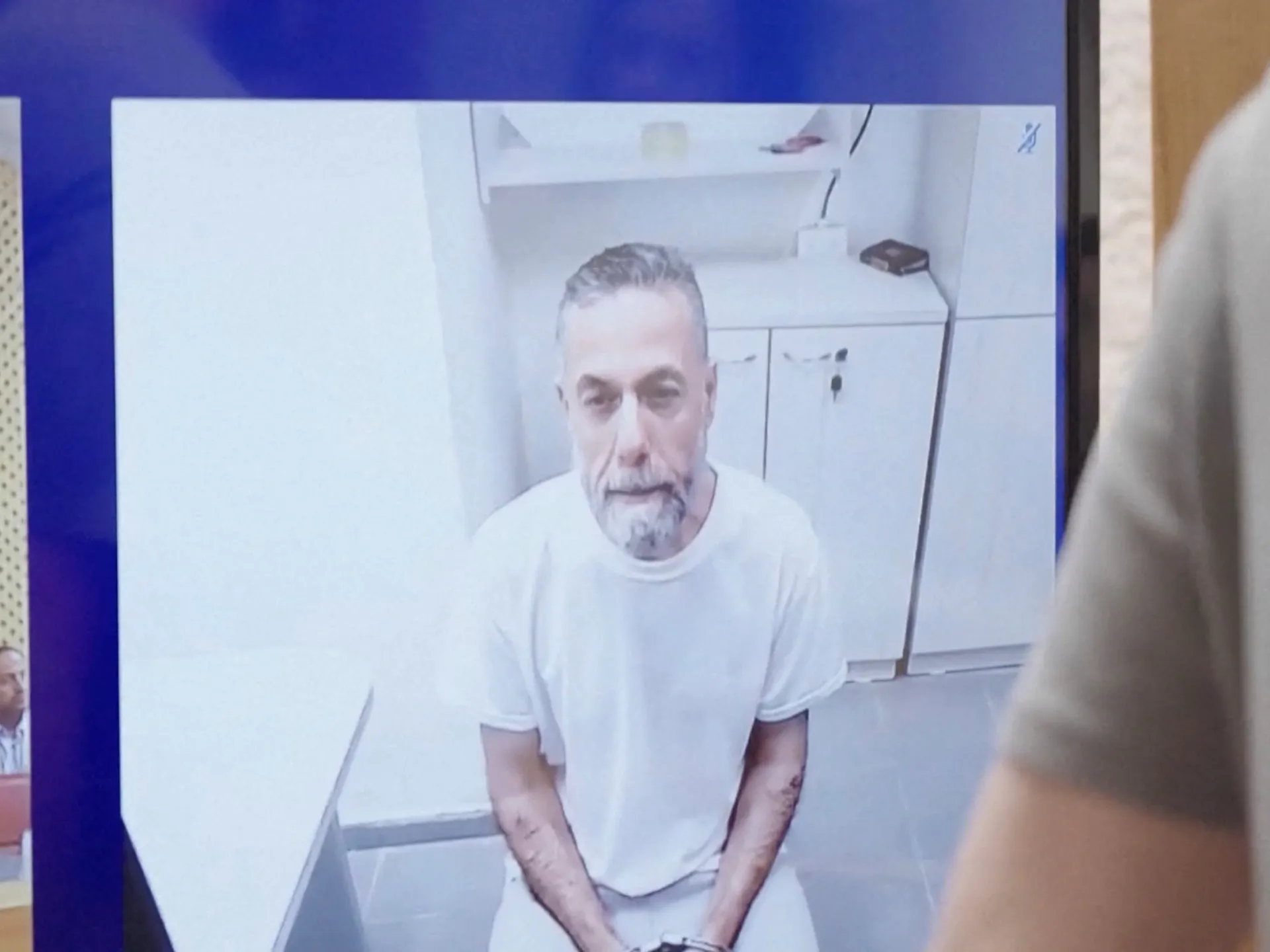
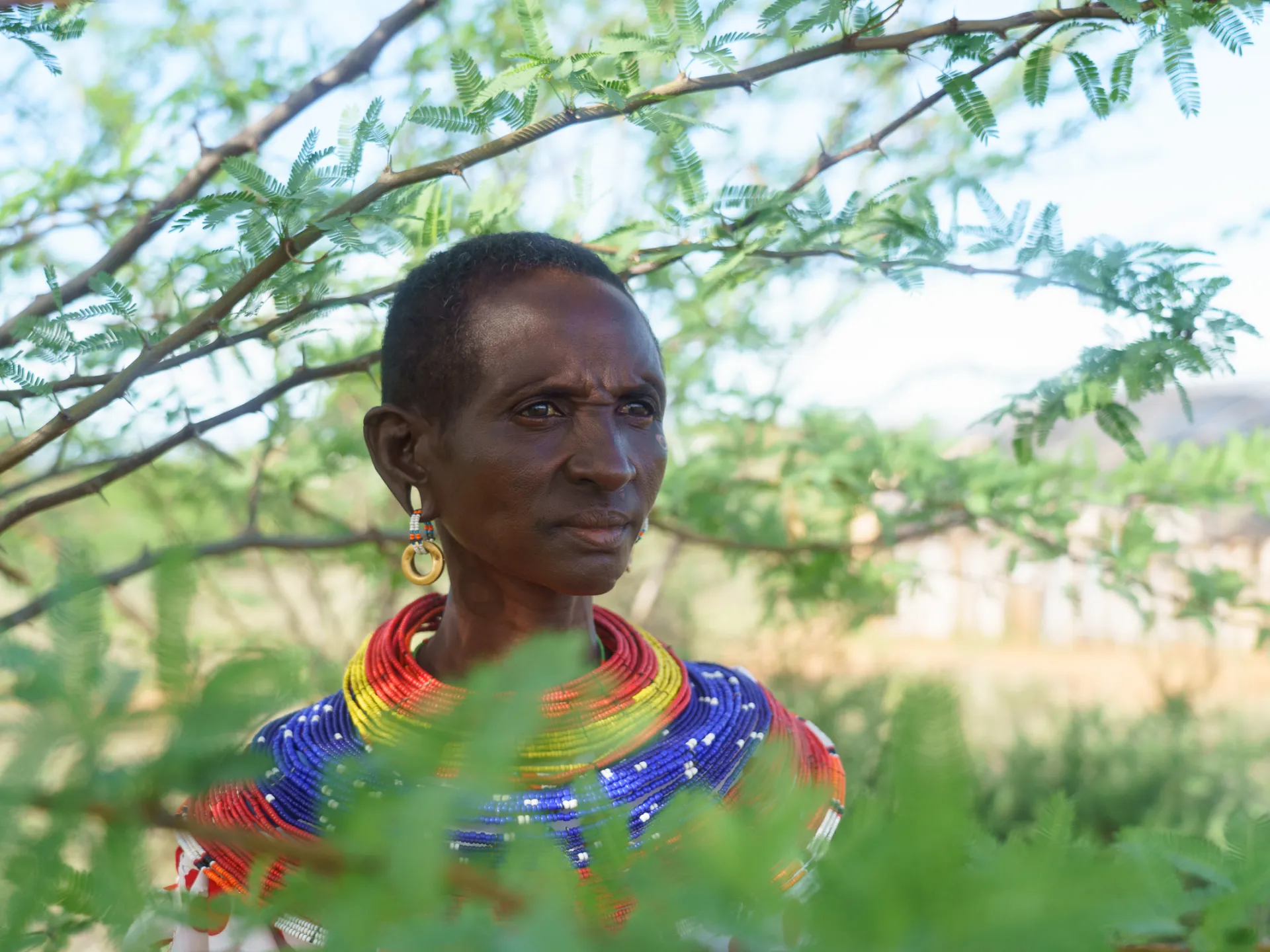
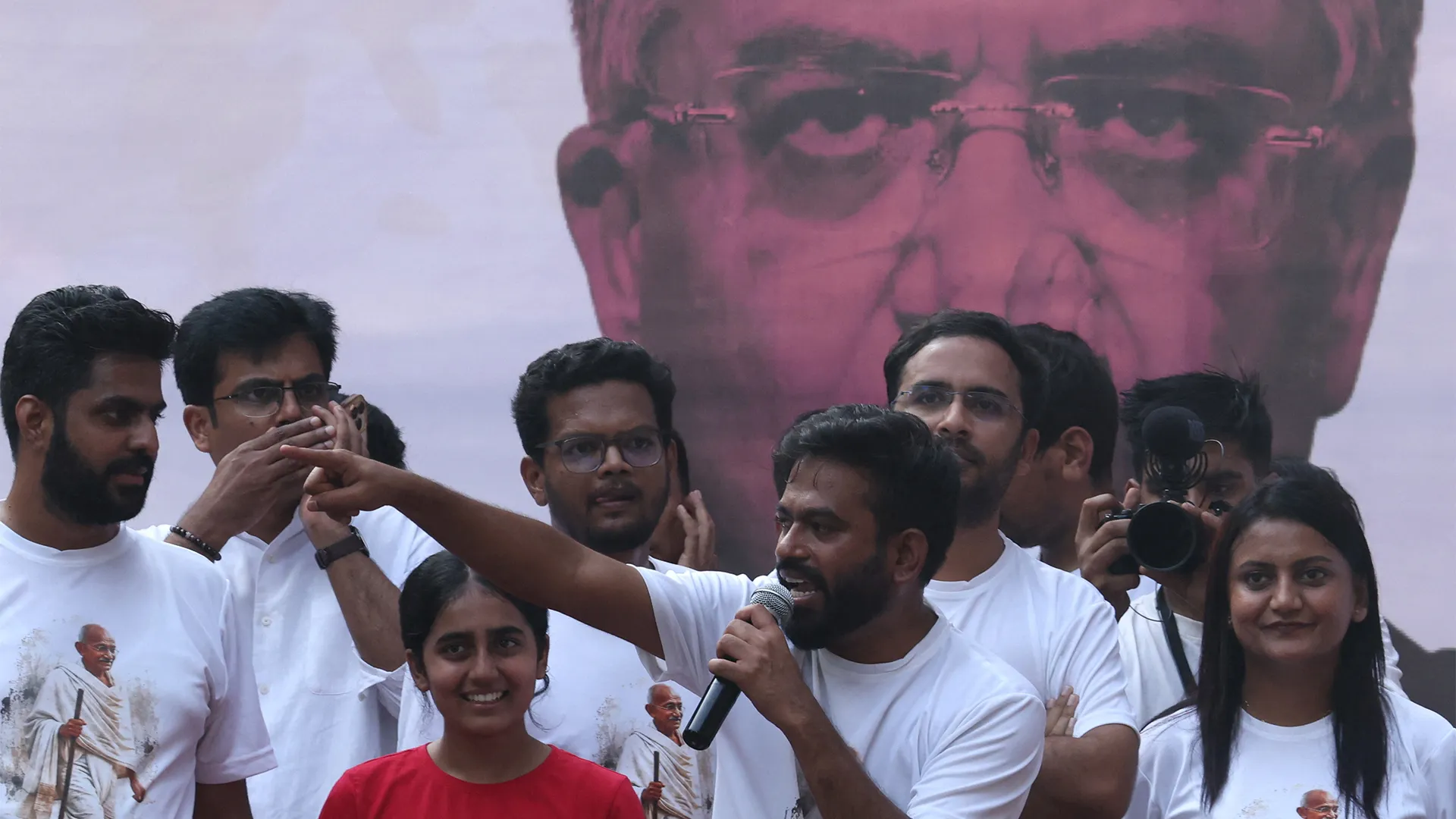
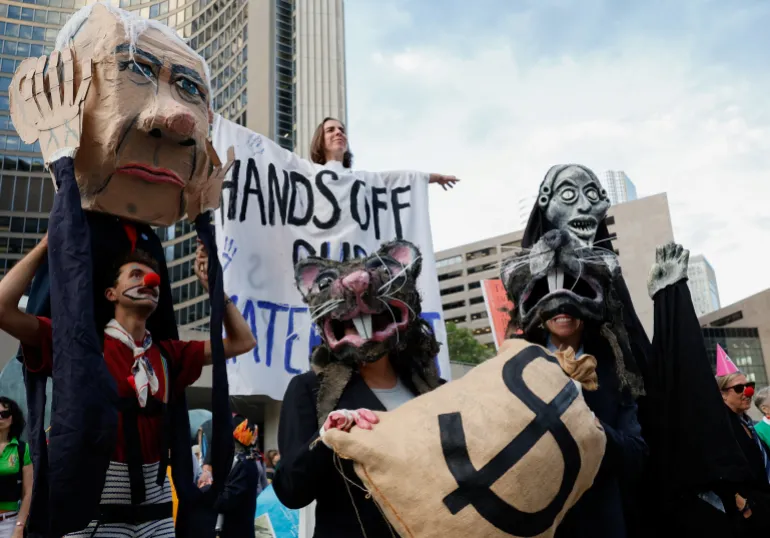


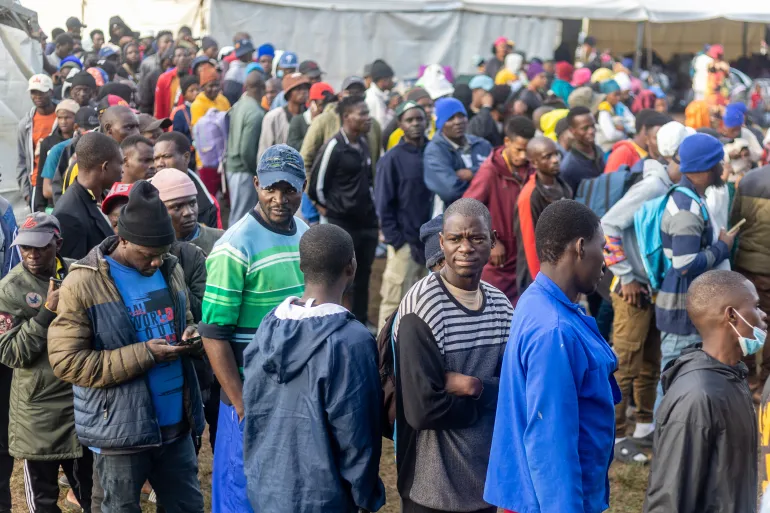

![Protesters hold placards during an anti-immigration march in Durban, South Africa, calling for tighter border controls and the deportation of undocumented migrants [Thuli Dlamini/Reuters]](https://i0.wp.com/www.aljazeera.com/wp-content/uploads/2026/06/2025-11-07T155727Z_1005019881_RC2NRHA84QWK_RTRMADP_3_SAFRICA-PROTEST-1782784993.jpg?w=640&ssl=1)
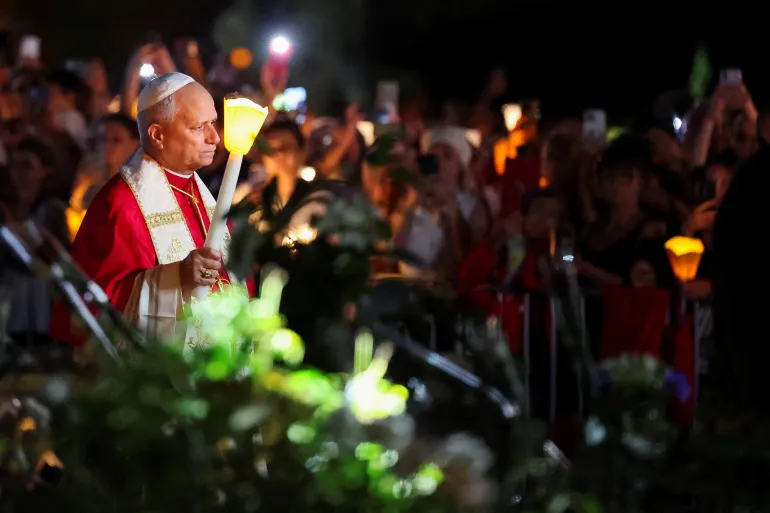
![Pope Leo participates in a candlelight procession at the Sanctuary of Our Lady of Lourdes as part of his four-day apostolic journey to France, in Lourdes, France, September 27, 2026 [Stephane Mahe/Reuters]](https://i0.wp.com/occasionaldigest.com/wp-content/uploads/2026/09/2026-09-27T202553Z_140704132_RC2VRNAYDPZJ_RTRMADP_3_POPE-FRANCE-1790546103.jpg?w=640&ssl=1)



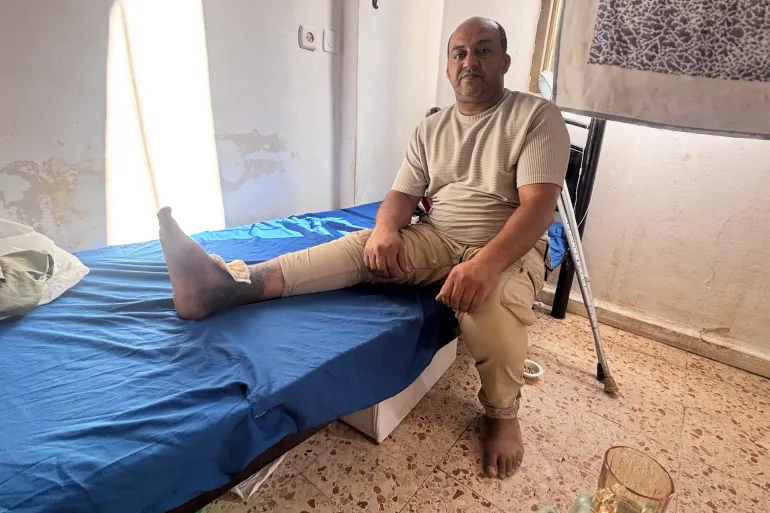
![Hakim Mar’i in his family’s apartment with his injured leg, which prevents him from working [Al Jazeera]](https://i0.wp.com/occasionaldigest.com/wp-content/uploads/2026/09/d9-1790406476.jpg?w=640&ssl=1)
![Members of the Zbeidat family sit on couches outside. The room they stay in is on the left [Al Jazeera]](https://i0.wp.com/occasionaldigest.com/wp-content/uploads/2026/09/s2-1790406485.jpg?w=640&ssl=1)
![The kitchen and bathroom the Zbeidats have are in the same room they sleep in [Al Jazeera]](https://i0.wp.com/occasionaldigest.com/wp-content/uploads/2026/09/s4-1790406489.jpg?w=640&ssl=1)